Dr Jitendra Singh advocates ‘Rule to Roll’ shift for result oriented governance

| Published on:

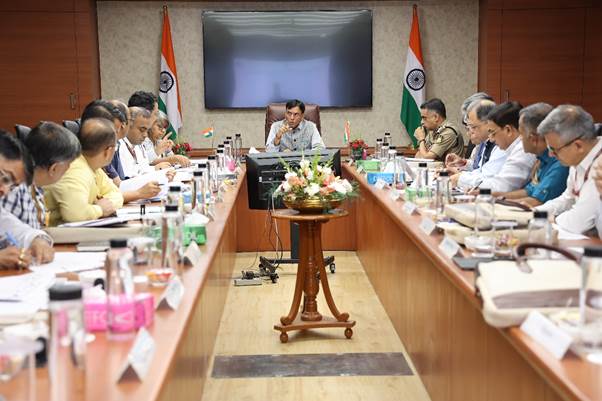
Union Minister of State (Independent Charge) for Science and Technology, MoS (I/C) for Earth Sciences, MoS PMO, Department of Atomic Energy, Department of Space, Personnel, Public Grievances and Pensions, Dr Jitendra Singh has strongly advocated ‘Rule to Role’ shift for result oriented governance.

Addressing the ‘Mission Karmayogi’ workshop here today, Dr Jitendra Singh highlighted a significant transformation in India’s governance approach, moving from a traditional rule-based system to a dynamic, role-based framework. He explained that this shift ensures civil servants are better equipped to align their skills with the specific responsibilities of their roles, making the government more adaptable and efficient. “India 2047 requires us to transcend rigid rules and adopt a flexible, role-based approach that enhances our global competitiveness,” Dr Singh stated.

The Minister credited Prime Minister Narendra Shri Narendra Modi for spearheading innovative governance reforms that have modernised the country’s administrative processes. Reforms such as the abolition of interviews for Group B and C positions and streamlining recruitment timelines have significantly improved the transparency and efficiency of the government’s functioning.

“These reforms are reflective of the Prime Minister’s vision for a modern, merit-based system that prioritises performance and delivery,” he said. Emphasising the need for results-driven governance, Dr Jitendra Singh noted, “The journey from optics to delivery is critical.” He stressed that the success of governance should not be measured by appearances but by tangible outcomes that serve the public. “Moving from process-driven to performance-driven governance is the way forward for India to meet its global aspirations,” he remarked.

Dr Jitendra Singh also referred to the introduction of ‘Mission Karmayogi Prarambh’, a key extension of ‘Mission Karmayogi’, designed to prepare new recruits for their roles from the moment they join the service. ‘Mission Prarambh’ ensures that new officers receive the necessary tools and training to transition smoothly into their positions, contributing to a more capable and motivated workforce across the government.

During the workshop, Dr Jitendra Singh launched four new features of the iGOT-Karmayogi platform, aimed at enhancing the learning experience for government officials. He also released 20 new domain-specific courses under the Annual Capacity Building Plan (ACBP) of the Department of Personnel and Training (DoPT) to further strengthen skill development across ministries. Additionally, the Minister unveiled the “Know Your Ministry” initiative for the DoPT and released new learning modules under Mission Karmayogi, all designed to bolster capacity-building efforts across the government.

The workshop saw the participation of several high-ranking officials, including Secretary, DoPT, Dr Vivek Joshi; Chairman, Capacity Building Commission, Shri Adi Zainulbhai; and CEO, Karmayogi Bharat, Smt V Lalitha Lakshmi, along with other senior officials from various ministries and departments.

In closing remark, Dr Jitendra Singh reaffirmed that these reforms and initiatives are vital steps in India’s journey towards achieving its vision for 2047. The emphasis on capacity building, technology-driven governance, and performance-oriented processes will shape the future of Indian governance, aligning it with the evolving needs of a modern, competitive world.

Dr. Mansukh Mandaviya Chairs 4th General Council Meeting of Khelo India Scheme

| Published on:

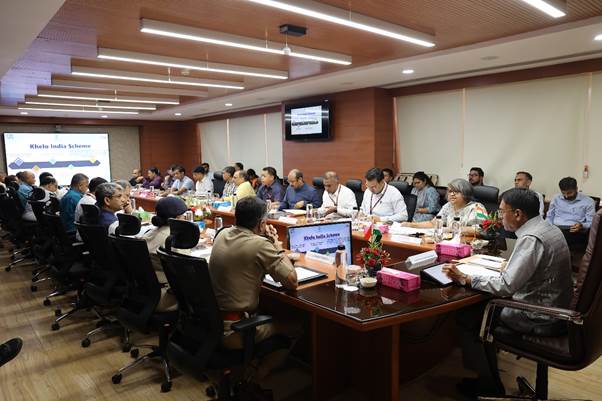
The 4th meeting of the General Council (GC) of the Khelo India Scheme was held under the chairmanship of Union Minister of Youth Affairs & Sports and Labour & Employment, Dr. Mansukh Mandaviya in New Delhi today. The meeting was attended by senior officials from States, prominent Sports Control Boards, National Sports Federations, and key representatives from Central Ministries.

In a significant announcement, the Union Minister informed that a Draft Sports Policy has been released on the Ministry’s website for public consultation. This policy aims to modernize and update the current framework in line with the evolving sports landscape of the country. Stakeholders, including the governments of States and Union Territories, as well as the general public, are invited to submit their feedback. Once finalized, this policy will also serve as a model for states that have yet to establish their own sports policies.

During the meeting, Dr. Mandaviya reviewed the progress of the Khelo India Scheme and held detailed discussions on improving sports infrastructure and facilities to enhance athlete performance. He emphasized the need for a Whole-of-Government Approach to ensure coordination among various agencies involved in talent identification and nurturing under different Central and State Government schemes, Public Sector Undertakings (PSUs), and National Sports Federations.

The Union Minister directed the reconstitution of sub-committees to focus on:

  1. Improving recruitment policies and procedures across Ministries and Departments to ensure better career progression for sportspersons.
  2. Enhancing welfare and support systems for athletes.
  3. Developing effective programs for talent identification at the grassroots level.

In another key decision, Union Minister announced the creation of a dedicated portal that will contain information on sports recruitment across Central Ministries. States will also be encouraged to use this platform to advertise sports quota vacancies, improving accessibility and transparency in recruitment.

The meeting also included a review of the progress on the unified sports infrastructure database under PM Gati Shakti. Dr. Mandaviya directed the collation of data from States, Sports Federations, and other entities to create a comprehensive inventory of all sports infrastructure in the country.

PM lays foundation stone and inaugurates various projects worth over Rs 80,000 crore in Hazaribag, Jharkhand

| Published on:

The Prime Minister, Shri Narendra Modi inaugurated and laid the foundation stone for various projects worth over Rs 80,000 crore in Hazaribag, Jharkhand today. Shri Modi launched Dharti Aaba Janjatiya Gram Utkarsh Abhiyan, inaugurated 40 Eklavya Model Residential Schools (EMRS) and laid the foundation stone for 25 EMRS, and inaugurated and laid the foundation stone for multiple projects under Pradhan Mantri Janjati Adivasi Nyaya Maha Abhiyan (PM-JANMAN).

Addressing the gathering, the Prime Minister expressed gratitude for becoming a part of Jharkhand’s development journey and recalled visiting Jamshedpur a few days ago to inaugurate development projects worth hundreds of crores. Shri Modi mentioned handing over pucca houses to thousands of poor from Jharkhand under PM Awas Yojna. Referring to today’s projects related to the empowerment and welfare of tribal communities worth more than Rs 80,000 crore, the Prime Minister said that it is proof of the government’s priority towards tribal communities. Prime Minister Modi congratulated the people of Jharkhand and India for the projects of today.

Noting the occasion of Mahatma Gandhiji’s birth anniversary, the Prime Minister said that his vision and ideas towards tribal welfare are India’s capital. Mahatma Gandhi believed, the Prime Minister said, that India can only progress when the tribal societies progress at a fast pace. Shri Modi expressed satisfaction that the present government is paying maximum attention to tribal upliftment and mentioned launching Dharti Aaba Janjati Gram Utkarsh Abhiyan today where 63,000 tribal-dominated villages will be developed in about 550 districts at a cost of about Rs 80,000 crore. Prime Minister Modi informed that work would be done to improve the socio-economic life in these tribal-dominated villages and the benefits would reach more than 5 crore tribal brothers and sisters of the country. “The tribal society of Jharkhand will also benefit greatly from this”, he added.

The Prime Minister expressed happiness that Dharti Aba Janjati Gram Utkarsh Abhiyan was being started from the land of Bhagwan Birsa Munda. PM also recalled that on the birth anniversary of Bhagwan Birsa Munda, PM-Janman Yojana was launched from Jharkhand. He announced that on 15th November 2024, on Janjati Gaurav Diwas, India will celebrate the first anniversary of PM-Janman Yojana. He added that through the PM-Janman Yojana, the fruits of development were reaching those tribal areas of the country which were left behind. Shri Modi highlighted that under PM-Janman Yojana, the foundation stone of development works worth about 1350 crore rupees was laid today. Speaking about the scheme, he underlined that facilities like education, health and roads will be built for a better life in the most backward tribal areas.

Highlighting the multiple achievements of PM-Janman Yojana in Jharkhand in its first year itself, Shri Modi said that the work of providing water to every house in more than 950 very backward villages was completed. He added that 35 Vandhan Vikas Kendras were also approved in the state. The Prime Minister also highlighted the work being done to connect remote tribal areas with mobile connectivity which would help transform the tribal society by providing equal opportunity for progress.

The Prime Minister emphasized that the tribal society will progress when tribal youth get education and opportunities. For this, Shri Modi said, the Government is engaged in a campaign to build Eklavya residential schools in tribal areas. Referring to the inauguration of 40 Eklavya residential schools and laying the foundation of 25 new ones today, the Prime Minister affirmed that Eklavya schools should be equipped with all modern facilities and impart a high standard of education. For this, he added, Government has also almost doubled the budget of every school.

The Prime Minister underlined that positive results are achieved when correct efforts are made. He expressed confidence that the tribal youth would move forward and the country would benefit from their capabilities.

Governor of Jharkhand, Shri Santosh Gangwar and Minister of Tribal Affairs, Shri Jual Oram were present on the occasion among others.

Background

In line with his commitment to ensure comprehensive and holistic development of the tribal communities across the country, the Prime Minister launched Dharti Aaba Janjatiya Gram Utkarsh Abhiyan with a total outlay of over Rs 80,000 crore. The Abhiyan will cover around 63,000 villages benefitting more than 5 crore tribal people in 549 districts and 2,740 blocks across 30 States and UTs. It aims to attain saturation of critical gaps in social infrastructure, health, education and livelihood through 25 interventions implemented by various 17 Ministries and Department of Government of India.

In order to boost the educational infrastructure for the tribal communities, the Prime Minister inaugurated 40 Eklavya Model Residential Schools (EMRS) and laid the foundation stone for 25 EMRS worth over Rs 2,800 crore.

The Prime Minister inaugurated and laid the foundation stone for multiple projects under Pradhan Mantri Janjati Adivasi Nyaya Maha Abhiyan (PM-JANMAN) worth over Rs 1360 crore. It includes more than 1380 km of road, 120 Anganwadis, 250 multi-purpose centers and 10 school hostels. Further, he also unveiled a series of landmark achievements under PM JANMAN, which include electrification of more than 75,800 Particularly Vulnerable Tribal Groups (PVTG) households in around 3,000 Villages, operationalization of 275 Mobile medical units, operationalization of 500 Anganwadi centers, establishment of 250 Van Dhan Vikas Kendras and saturation of more than 5,550 PVTG Villages with ‘Nal se Jal’.

PM participates in Swachh Bharat Diwas 2024

| Published on:

Marking the completion of 10 years of the launch of one of the most significant mass movements for cleanliness – the Swachh Bharat Mission, the Prime Minister, Shri Narendra Modi today participated in Swachh Bharat Diwas 2024 program on the occasion of 155th Gandhi Jayanti on 2nd October in Vigyan Bhawan, New Delhi. Shri Modi launched and laid the foundation stone for several sanitation and cleanliness projects worth over Rs 9600 crore including projects under AMRUT and AMRUT 2.0, National Mission for Clean Ganga and GOBARdhan Scheme. The theme for Swachhata Hi Seva 2024 is ‘Swabhav Swachhata, Sanskaar Swachhata’.

Addressing the occasion, the Prime Minister noted the birth anniversaries of Pujya Bapu and Lal Bahadur Shastri ji and paid his respects to the sons of Maa Bharti. Shri Modi underlined that today’s occasion is a source of inspiration to realize the dreams of Mahatma Gandhi and other great personalities in a collective manner.

The Prime Minister said that he is filled with a sense of duty yet he is emotional at the same time on the 2nd of October. Marking the completion of 10 years of Swachh Bharat Abhiyan, the Prime Minister said, “The journey of Swachh Bharat Mission is a symbol of the unwavering commitment of crores of Indians.” He highlighted the high public support garnered by this movement in the last 10 years and said that every citizen of the country made it their own mission – a part of their lives. On the milestone of 10 years of Swachh Bharat, the Prime Minister praised the efforts of safaimitras, religious leaders, athletes, celebrities, NGOs and the media among others in transforming the Swachh Bharat Mission into a huge public movement. He also noted the contributions of the President of India and the Vice President of India, both former and present, towards Swachh Bharat in the form of Shramdaan, and thanked them for inspiring the nation. The Prime Minister highlighted the numerous cleanliness activities taking place today in villages, cities, and colonies, and also noted the active participation of state ministers, leaders and representatives. He informed that crores of people have taken part in the Swachhta hi Seva program in this edition of Swachhta Pakhwada, he said  in the 15 days of Seva Pakhwada, more than 27 lakh programs were organized all over the country witnessing the participation of 28 crore people. Stressing the need for continuous efforts to keep India clean, the Prime Minister expressed gratitude towards every citizen of India.

Marking today’s important milestone, the Prime Minister highlighted that projects worth about Rs. 10,000 crore related to cleanliness have been started. He added that as part of ‘Mission Amrit’, water and sewage treatment plants would be set up in many cities. The Prime Minister underlined that be it the Namami Gange or the GobarDhan project of converting organic waste to biogas, will propel Swachh Bharat Mission to new heights. “The more successful the Swachh Bharat Mission is, the more our country will shine”, exclaimed Shri Modi.

The Prime Minister underscored that the Swachh Bharat Mission will be remembered even after 1000 years when a study on India will be conducted. “Swachh Bharat mission is this century’s biggest and most successful people’s movement with people’s participation and people’s leadership”, exclaimed Shri Modi. He added that this mission had revealed the true energy and potential of the people to him. Shri Modi remarked that for him, cleanliness had become a festival of realization of people’s power. The Prime Minister recollected how lakhs of people joined hands when the Swachhta Abhiyan was started, be it marriage or a public function or any other place, the message of cleanliness was spread effectively. He said there were instances where old mothers had sold their cattle to build a toilet, some women had sold their mangalsutra, few people had sold their land, some retired teachers had donated their pension, some retired army personnel had donated their retirement benefits for the mission of cleanliness. The Prime Minister remarked that if the same donation was given to a temple or in any function, then it would have been a major headline in newspapers. He added that the country should know that there are lakhs of people, whose face was never shown on TV or their name was never published in the newspaper, who had donated their money and valuable time to make this mission successful. Shri Modi said that all these instances reflect the character of India. Shri Modi highlighted that many people reignited the tradition of using jute and cloth bags while going to shop when he gave the clarion call to stop the usage of single-use plastic. He added that he was thankful to the people along with the industries involved in production of single-use plastic for joining hands and supporting the initiative. He also thanked the political parties which supported the initiative.

The Prime Minister noted the contributions of India’s film industry in the last 10 years in propagating the message of cleanliness in the form of films and underlined that such work should be carried out not just once but from one generation to the other. He gave the example of raising the issues of cleanliness around 800 times in his Mann Ki Baat program where people brought it to the forefront.

The Prime Minister noted the efforts of the people towards cleanliness today and said, “The path towards cleanliness was shown by Mahatma Gandhi during the freedom struggle”, as he raised the issue of neglect towards Swachhta by previous governments since India’s independence. He said those who used Mahatma Gandhi for their political benefits and vote bank have now forgotten his subject of interest. He said that filth and lack of toilets were never considered as a national issue. As a result, said the Prime Minister, there were no discussions about it in society and dirt became a part of life. He also recalled facing criticism after raising this issue from the ramparts of the Red Fort. He said, “Prime Minister’s first priority is to make the lives of common citizens easier”, as he underlined his responsibility to talk about toilets and sanitary pads. He added that its results can be witnessed today.

Pointing out that more than 60 percent of India’s population was compelled to defecate in the open due to a lack of toilets until ten years ago, the Prime Minister said that it was against human dignity and disrespectful towards the country’s poor, dalits, tribals and backward communities which continued from one generation to the other. Shri Modi noted the sufferings of mothers, sisters and daughters due to the lack of toilets and also pointed out the threats to their health and safety. He said that the filth caused by open defecation had endangered the lives of children and was a major cause of child mortality.

Remarking that it was difficult for the nation to continue in such a pitiful situation, Shri Modi said that they decided that things will not continue as they are. He added that this Government considered it a national and human challenge and launched a campaign to solve it and this was where the seed of Swachh Bharat Mission was sown. He further added that within no time, crores of Indians did wonders. The Prime Minister highlighted that more than 12 crore toilets were built in the country and the scope of toilet coverage reached 100 percent from previously less than 40 percent.

The Prime Minister underlined that the impact of Swachh Bharat Mission on the lives of common people of the country was priceless. Quoting a recent study from a famous international journal conducted jointly by scientists from International Food Policy Research Institute Washington, University of California and Ohio State University, Shri Modi said that it has come to light that Swachh Bharat Mission is saving the lives of 60 to 70 thousand children every year. He added that according to WHO, between 2014 and 2019, 3 lakh lives were saved, which would have been lost due to diarrhea. Quoting UNICEF reports, he underlined that due to the construction of toilets in the house, now more than 90 percent of women felt safe and the diseases caused by infection in women had also reduced considerably due to Swachh Bharat Mission. Shri Modi further added that due to the construction of separate toilets for girls in lakhs of schools, the dropout rate had reduced. Quoting another study by UNICEF, he noted that due to cleanliness, an average of 50 thousand rupees was being saved every year by families in  villages which earlier was spent as out of pocket expenditure to cure diseases.

Highlighting the public awareness brought about by the Swachh Bharat Mission, the Prime Minister gave the example of child deaths in Gorakhpur due to brain fever that were addressed with emphasis on cleanliness.

The Prime Minister underlined that the rise in the prestige of cleanliness has brought about a huge psychological change in the country. He mentioned the change in thinking brought by the Swachh Bharat Mission and gave the example of people involved in cleaning work who were looked down upon earlier. “When the cleaners got respect, they too felt proud of their role in changing the country. Swachh Bharat Abhiyan has brought pride to lakhs of Safai Mitras”, the Prime Minister remarked noting the government’s commitment to a dignified life and safety for Safai Mitras. Shri Modi endeavoured to eliminate the problems arising due to manual entry in septic tanks and informed that the government is working together with the private and public sectors in this regard. “We are also encouraging professionals and startups”, he added.

Highlighting the widely expanding scope of Swachh Bharat Abhiyan, Shri Modi remarked that it was not just a cleanliness program and today cleanliness was creating a new path to prosperity.

He added that Swachh Bharat Abhiyan was also creating employment on a large scale in the country and in the past years, many sectors have benefited from the construction of crores of toilets and many people were employed. He further added that many people like masons, plumbers, labourers were employed in villages. Shri Modi noted that UNICEF estimates that about 1.25 crore people were employed in one form or another due to this mission. He highlighted that a new generation of women masons was a huge outcome of Swachh Bharat Abhiyan and our youth were also getting better jobs and better opportunities through clean-tech. He added that currently about 5 thousand start-ups related to clean-tech were registered. Shri Modi emphasized that many new opportunities were being created in the water and sanitation sector, be it waste to wealth, collection and transportation of waste, reuse and recycling of water. He added that it was estimated that by the end of this decade, 65 lakh new jobs would be created in this sector and Swachh Bharat Mission would definitely play a significant role in this.

“Swachh Bharat Mission has given a significant boost to the circular economy in India”, the Prime Minister said highlighting that waste generated from households is now being converted into valuable resources. He said that compost, biogas, electricity, and materials like charcoal used in road construction are being produced from household waste. The Prime Minister spoke on the success of the Gobardhan Yojana, which has been a key driver of change in rural and urban areas alike and informed that hundreds of biogas plants have been installed across villages under the Gobardhan Yojana where animal waste is being converted into biogas. He further added that hundreds of Compressed Biogas plants have also been set up nationwide. Today, several new CBG plants were inaugurated, and new projects were also laid out to further expand this initiative.

Addressing future challenges, PM Modi emphasized the importance of adapting to the fast-paced changes in the economy and urbanization. He stressed enhancing strategies to ensure efficient waste management to counter rapid urbanization and waste generation. He also stressed the need for the development of technologies in construction that promote the use of recycled materials and designs for housing complexes that ensure zero or minimal waste discharge. Shri Modi emphasized making efforts to ensure water is not misused and wastewater is treated before use. Terming the Namami Gange Mission as a model for river cleanliness, the Prime Minister said that Ganga river is significantly cleaner today. He noted Amrit Mission and Amrit Sarovar initiatives bringing about substantial change and underscored the importance of continued investment in new technologies for water conservation, treatment, and river cleanliness. PM Modi highlighted the link between cleanliness and tourism, noting that clean tourist destinations and heritage sites can enhance the visitor experience. He said that it is vital to keep our tourist spots, places of faith, and heritage sites clean and well-maintained.

Reflecting on the progress made over the last decade, the Prime Minister remarked, “We have achieved much in these ten years of Swachh Bharat, but our mission is not yet complete. True change happens when every citizen embraces cleanliness as their duty and responsibility.” Prime Minister Modi reaffirmed the government’s unwavering commitment to the Swachh Bharat Mission and called for the continued participation of every citizen to achieve a cleaner India. He said that the mission of cleanliness is not a one-day ritual but a lifelong ritual and must be brought forward from generation to generation. Cleanliness should be an instinct of every citizen and it should be done every day”, the Prime Minister said. He exhorted the children of the next generation to not stop until India becomes truly clean.

The Prime Minister also called upon state governments to intensify their efforts by implementing cleanliness initiatives at the district, block, village, and local levels. He suggested conducting competitions for the cleanest schools, hospitals, and offices across districts and blocks. He said that municipalities must ensure well-maintained public toilets and that the cleanliness systems do not revert to old practices. He also urged local bodies to prioritize sanitation infrastructure and its upkeep. PM Modi encouraged all citizens to take a pledge to maintain cleanliness wherever they are, whether at home, in their neighborhood, or at their workplace. “Just as we keep our places of worship clean, we must instill the same sense of devotion to cleanliness in our surroundings”, he said, highlighting the role of cleanliness in the journey toward Viksit Bharat. Concluding the address, the Prime Minister expressed confidence in achieving the objectives and exhorted the citizens to pay tributes to Mahatma Gandhi by following his principles with new energy and enthusiasm.

Union Minister for Housing and Urban Affairs, Shri Manohar Lal Khattar, Union Minister for Jal Shakti, Shri C R Patil, Union Minister of State for Housing and Urban Affairs, Shri Tokhan Sahu and Union Minister of State for Jal Shakti, Dr Raj Bhushan Choudhary were present on the occasion.

Background

During the programme, the Prime Minister launched and laid the foundation stone for several projects related to sanitation and cleanliness, worth over Rs 9600 crore. It will include projects worth over Rs 6,800 crore, aimed at enhancing urban water and sewage systems under AMRUT and AMRUT 2.0, 10 projects worth over Rs 1550 crore focused on improving water quality and waste management in Ganga basin areas under National Mission for Clean Ganga and 15 Compressed Biogas (CBG) Plant projects worth over Rs 1332 crore under GOBARdhan Scheme.

The Swachh Bharat Diwas program showcases India’s decade-long sanitation achievements and those in the recently concluded Swachhata Hi Seva campaign. It will also set the stage for the next phase of this national endeavour. It will also include nationwide participation from local government bodies, women’s groups, youth organizations and community leaders ensuring the spirit of Sampoorna Swachhata reaches every corner of India.

The theme for Swachhata Hi Seva 2024, ‘Swabhav Swachhata, Sanskaar Swachhata’, has once again united the nation in its commitment to cleanliness, public health, and environmental sustainability. Under Swachhata Hi Seva 2024, over 19.70 lakh programs have been completed with public participation of more than 17 crore people. Transformation of around 6.5 lakh Cleanliness Target Units has been achieved. Nearly 1 lakh SafaiMitra Suraksha Shivirs have also been organized, benefitting over 30 lakh Safai Mitras. Further, over 45 lakh trees have been planted under the Ek Ped Maa ke Naam campaign.

PM takes part in cleanliness drive with youngsters

| Published on:

The Prime Minister, Shri Narendra Modi today took part in a cleanliness drive with young school children in Delhi and interacted with them marking 10 years of Swachh Bharat Abhiyan.

Upon the Prime Minister’s enquiry about the benefits of cleanliness, the student mentioned prevention from ailments and the vision to create awareness about a cleaner and healthier India. A student also mentioned the rise in the spread of diseases due to the absence of toilets. Shri Modi informed that most people were compelled to defecate in the open earlier which led to the widespread of a multitude of diseases, and was extremely disadvantageous for women. The Prime Minister informed that the first steps were taken with the Swachh Bharat Abhiyan where separate toilets were built for girls in schools which led to a sharp reduction in their dropout rates.

The Prime Minister further discussed today’s occasion of the birth anniversaries of Mahatma Gandhi ji and Lal Bahadur Shastri ji. Shri Modi expressed satisfaction with the growing number of youth engaging in Yoga and also highlighted the benefits of asana. A few children also demonstrated a few asanas to the Prime Minister drawing huge applause. He also stressed the need for good nutrition. Upon the Prime Minister’s enquiry about the PM-Sukanya Yojna, a student elaborated on the scheme and said that it enables opening up a bank account for girls to assist them financially when they grow up to become adults. The Prime Minister explained that a PM Sukanya Samruddhi account can be opened for girls as soon as they are born and suggested depositing Rs 1000 every year which can be used for education and marriage later in life. He informed that the same deposit would rise to Rs 50,000 in 18 years with an interest received of about Rs 32,000 to Rs 35,000. PM Modi said that girls receive interest up to 8.2 percent.

The Prime Minister also took a walkthrough of the exhibition featuring the works of children focussed on cleanliness. He shared his experience of a school in a barren region in Gujarat where each student was assigned a tree and asked to water it every day by urging them to carry water from their kitchens. The Prime Minister said that he had witnessed an unprecedented transformation in the form of greenery when he visited the same school after 5 years. The Prime Minister also threw light on the benefits of waste segregation to produce compost and encouraged the students to follow this practice at home. He also suggested creating awareness about the ills of plastic in their community and substituting it with a cloth bag.

Further interacting with the children, Shri Modi pointed to the spectacles of Gandhiji on a display board and impressed upon the children that Gandhiji keeps a watch on whether cleanliness is maintained or not. He said Gandhiji worked towards cleanliness throughout his life. Sharing an anecdote, Shri Modi told the children that when Gandhiji was given a choice between freedom and cleanliness, Gandhiji chose cleanliness over freedom as he valued cleanliness more than everything. Upon enquiring the students whether cleanliness should be a programme or a habit, the children answered cleanliness should be a habit in unison. He informed the children that cleanliness is not a responsibility of a single individual or a single family or a one-time event, but it is a continuous process until an individual is alive. He informed the students that the mantra of “I will not dirty my surroundings” should be adopted by every citizen of the country. The Prime Minister made the children take a pledge of cleanliness.

PM pays tributes to Lal Bahadur Shastri on his birth anniversary

| Published on:

The Prime Minister Shri Narendra Modi today paid tribute to former Prime Minister Shri Lal Bahadur Shastri on his birth anniversary.

In a post on X, he stated:

“देश के जवान, किसान और स्वाभिमान के लिए अपना जीवन समर्पित करने वाले पूर्व प्रधानमंत्री लाल बहादुर शास्त्री जी को उनकी जयंती पर आदरपूर्ण श्रद्धांजलि।”

PM pays tributes to Mahatma Gandhi on his birth anniversary

| Published on:

The Prime Minister Shri Narendra Modi today greeted the citizens on occasion of Gandhi Jayanti.

In a post on X, he wrote:

“सभी देशवासियों की ओर से पूज्य बापू को उनकी जन्म-जयंती पर शत-शत नमन। सत्य, सद्भाव और समानता पर आधारित उनका जीवन और आदर्श देशवासियों के लिए सदैव प्रेरणापुंज बना रहेगा।”

PM to visit Jharkhand on 2nd October

| Published on:

Prime Minister Narendra Modi will visit Jharkhand on 2 October 2024. At around 2 PM, he will lay the foundation stone, launch and inaugurate various projects worth over Rs. 83,300 crore in Hazaribag, Jharkhand.

In line with his commitment to ensure comprehensive and holistic development of the tribal communities across the country, Prime Minister will launch Dharti Aaba Janjatiya Gram Utkarsh Abhiyan with a total outlay of over Rs 79,150 crore. The Abhiyan will cover around 63,000 villages benefitting more than 5 crore tribal people in 549 districts and 2,740 blocks across 30 States and UTs. It aims to attain saturation of critical gaps in social infrastructure, health, education, livelihood, through 25 interventions implemented by various 17 Ministries and Department of Government of India.

In order to boost the educational infrastructure for the tribal communities, Prime Minister will inaugurate 40 Eklavya Model Residential Schools (EMRS) and lay the foundation stone for 25 EMRS worth over Rs 2,800 crore.

Prime Minister will inaugurate and lay the foundation stone for multiple projects under Pradhan Mantri Janjati Adivasi Nyaya Maha Abhiyan (PM-JANMAN) worth over Rs 1360 crore. It includes more than 1380 kms of road, 120 Anganwadis, 250 multi purpose centres and 10 school hostels. Further, he will also unveil a series of landmark achievements under PM JANMAN, which include, electrification of more than 75,800 Particularly Vulnerable Tribal Groups (PVTG) households in around 3,000 Villages, operationalization of 275 Mobile medical units, operationalization of 500 Anganwadi centres, establishment of 250 Van Dhan Vikas Kendras and saturation of more than 5,550 PVTG Villages with ‘Nal se Jal’.

‘Kharge ji’s statement reflects the hatred and fear of Congress leaders towards Modi ji’

| Published on:

Senior BJP leader and Hon’ble Union Home Minister and Minister of Cooperation Shri Amit Shah strongly criticized the statement made by Congress Party President Mallikarjun Kharge regarding his health and Hon’ble Prime Minister Shri Narendra Modi. Shri Shah said that Kharge Ji has unnecessarily dragged the Hon’ble Prime Minister Narendra Modi Ji into his personal health matter. 

Shri Shah made a scathing comment on the social media X and wrote that yesterday, the Congress President Shri Mallikarjun Kharge Ji has outperformed himself, his leaders and his party in being absolutely distasteful and disgraceful in his speech. In a bitter display of spite, he unnecessarily dragged Hon’ble Prime Minister Shri Narendra Modi ji into his personal health matters by saying that he would die only after removing Hon’ble PM Shri Modi from power. 

Union Home Minister Shri Shah said that it just shows how much hate and fear these Congress people have of Hon’ble Prime Minister Shri Narendra Modi ji, they are thinking of him constantly.  As for the health of Kharge Ji, Hon’ble Prime Minister Shri Narendra Modi ji, I and we all pray that he lives a long and healthy life. Mr Shah expressed his wishes that Kharge ji becomes a witness to the developed India being built by respected Prime Minister Mr Narendra Modi by 2047.

PM congratulates Mithun Chakrabarty on being conferred Dadasaheb Phalke Award

| Published on:

Prime Minister Shri Narendra Modi today congratulated Shri Mithun Chakrabarty on being conferred the prestigious Dadasaheb Phalke Award for his unparalleled contributions to Indian cinema. Lauding the actor, Shri Modi said that he is a cultural icon, admired across generations for his versatile performances.

Responding to Union Minister Shri Ashwini Vaishnav’s message on X, he wrote:

“Delighted that Shri Mithun Chakraborty Ji has been conferred the prestigious Dadasaheb Phalke Award, recognizing his unparalleled contributions to Indian cinema. He is a cultural icon, admired across generations for his versatile performances. Congratulations and best wishes to him.”

PM lays foundation stone and inaugurates various projects in Maharashtra worth Rs 11,200 crore

| Published on:

The Prime Minister, Shri Narendra Modi laid the foundation stone, inaugurated and dedicated to the nation various projects in Maharashtra worth over Rs 11,200 crore via video conferencing today.

Addressing the occasion, the Prime Minister recalled the cancellation of his event in Pune due to bad weather two days ago and credited technology for today’s virtual event saying that this land of inspiration of great personalities is witnessing a new chapter of Maharashtra’s development. Shri Modi mentioned the inauguration of the Pune Metro section of District Court to Swargate and laying the foundation stone for Swargate-Katraj Extension of Pune Metro Phase-1 today. He also touched upon laying the foundation stone for Memorial for Krantijyoti Savitribai Phule’s First Girls’ School at Bhidewada and expressed satisfaction with the fast progress towards increasing ease of living in Pune.

“Devotees of Bhagwan Vitthal have also received a special present today”, the Prime Minister said, referring to the inauguration of Solapur Airport to establish direct air connectivity to the city. He informed that the terminal capacity has increased and new services and facilities have been created for the passengers after the completion of the upgradation work of the existing airport, thereby increasing convenience for the devotees of Bhagwan Vitthal. He further added that the airport would also give a boost to businesses, industries and tourism and congratulated the people of Maharashtra for today’s development projects.

“Today, Maharashtra needs big goals with new resolutions ”, the Prime Minister remarked, emphasizing the need to make cities like Pune a center of progress and urban development. Talking about Pune’s progress and the pressure of the growing population, the Prime Minister said steps need to be taken now to augment development and capacity . To achieve this goal, the Prime Minister said that the present state government is working with the approach of modernizing Pune’s public transport and giving a boost to connectivity as the city expands.

The Prime Minister recalled that discussions about Pune Metro began in 2008 but its foundation stone was laid in 2016 when quick decisions were taken by his government. As a result, the Prime Minister said, today Pune Metro is gaining speed and expanding. Referring to today’s projects, Shri Modi said on the one hand Pune Metro section of District Court to Swargate has been inaugurated while on the other hand foundation stone for Swargate to Katraj line has also been laid. He recalled inaugurating the metro service from Ruby Hall Clinic to Ramwadi in March this year. The Prime Minister lauded the work done for the expansion of Pune Metro from 2016 till now because of faster decision-making and removing obstacles. He pointed out that the present government has prepared a modern network of metro in Pune while the previous government could barely construct a single Metro pillar in 8 years.

Shri Modi underscored the importance of development-driven governance in ensuring Maharashtra’s progress, emphasizing that any disruption in this continuity leads to significant losses for the state. He highlighted various stalled projects, from Metro initiatives to the Mumbai-Ahmedabad bullet train and critical irrigation projects for farmers, which were delayed before the advent of the double-engine government.

The Prime Minister spoke about the Bidkin Industrial Area, a vital component of the Auric City conceptualized during the tenure of the then Chief Minister Devendra Fadnavis. The project, located on the Delhi-Mumbai Industrial Corridor had faced obstacles but was revived under the leadership of the double-engine government headed by Chief Minister Eknath Shinde. Shri Modi announced the dedication of the Bidkin Industrial Node to the nation, highlighting its potential to bring significant investments and employment opportunities to the region. “With the development of the Bidkin Industrial Area across 8,000 acres, thousands of crores of investment will flow into Maharashtra, creating jobs for thousands of youth,” said the Prime Minister. He emphasized that the mantra of creating jobs through investment is becoming a major strength of the youth in Maharashtra today. Shri Modi reiterated that modernization should be based on the country’s core values and emphasized that India will modernize and develop while carrying forward its rich heritage. He said both future-ready infrastructure and the benefits of development reaching every section are equally important for Maharashtra and underlined that it can become a reality when every section of society participates in the development of the country.

The Prime Minister emphasized the pivotal role of women’s leadership in societal transformation. He paid tribute to Maharashtra’s legacy of women’s empowerment, particularly the efforts of Savitribai Phule, who initiated the movement for women’s education by opening first girls’ school. The Prime Minister laid the foundation stone for the Savitribai Phule Memorial, which will include a skill development center, a library, and other essential facilities. Shri Modi expressed confidence that the memorial will serve as a lasting tribute to the social reform movement and inspire future generations.

The Prime Minister highlighted the immense challenges faced by women in pre-independence India, particularly in accessing education, and praised visionaries like Savitribai Phule for opening the doors of education for women. The Prime Minister noted that despite gaining independence, the country struggled to fully shed the mindset of the past and pointed out the previous governments who restricted women’s access in many sectors. He said that a lack of basic infrastructure like toilets in schools would lead to a high dropout rate for girls. Shri Modi said that the present government transformed the outdated systems, including the admission of women in Sainik Schools and roles within the armed forces and also addressed the issue of pregnant women having to quit their work. The Prime Minister outlined the significant impact of the Swachh Bharat Abhiyan and said that its biggest beneficiaries are daughters and women who have been freed from the hardship of open defecation. He also noted that school sanitation improvements have reduced the dropout rate for girls. Shri Modi  touched upon strict laws for the safety of women and Nari Shakti Vandan Adhiniyam which ensures women’s leadership in India’s democratic process. “When the door of every sector opens up for our daughters, only then do the real doors of progress open for the country”, Shri Modi said expressing confidence that Savitribai Phule Memorial will give further energy to these resolutions and the campaign for women empowerment.

Concluding the address, the Prime Minister reaffirmed his belief in Maharashtra’s pivotal role in guiding the nation towards development and said, “Together we will achieve this goal of ‘Viskit Maharashtra, Viksit Bharat”.

Governor of Maharashtra, Shri C P Radhakrishnan, Chief Minister of Maharashtra, Shri Eknath Shinde, Deputy Chief Ministers of Maharashtra, Shri Devendra Fadnavis and Shri Ajit Pawar and other dignitaries were virtually present.

Background

The Prime Minister inaugurated the Pune Metro section of District Court to Swargate which will also mark the completion of Pune Metro Rail Project (Phase-1). The cost of the underground section between District Court to Swargate is around Rs 1,810 crore. Further, the Prime Minister laid the foundation stone for Swargate-Katraj Extension of Pune Metro Phase-1 to be developed at the cost of around Rs 2,955 crore. This southern extension of around 5.46 km is completely underground with three stations namely Market Yard, Padmavati and Katraj.

The Prime Minister dedicated to the nation Bidkin Industrial Area, a transformative project covering an expansive 7,855 acres under the National Industrial Corridor Development Program of Govt. of India, situated 20 kms south of Chhatrapati Sambhajinagar in Maharashtra. The project developed under Delhi Mumbai Industrial Corridor holds immense potential as a vibrant economic hub in the Marathwada region. Central Government has approved this project with an overall project cost of over Rs 6,400 crore for development in 3 phases.

The Prime Minister also inaugurated the Solapur Airport which would significantly improve connectivity, making Solapur more accessible to tourists, business travellers and investors. The existing terminal Building of Solapur has been revamped to serve around 4.1 lakh passengers annually. Further, the Prime Minister laid the foundation stone for the Memorial for Krantijyoti Savitribai Phule’s First Girls’ School at Bhidewada.

PM’s address in the 114th Episode of ‘Mann Ki Baat’

| Published on:

My dear countrymen, Namaskar. Once again we have the opportunity to connect in Mann Ki Baat. This episode today is going to make me emotional. It’s flooding me with a lot of old memories… The reason is that this journey of ours in Mann Ki Baat is completing 10 years. 10 years ago Mann Ki Baat started on the day of Vijayadashami on the 3rd of October. And what a divine coincidence it is that this year on the 3rd of October when 10 years of Mann Ki Baat are completed, it will be the first day of Navratri. There are many phases in this long journey of Mann Ki Baat that I can never forget. Crores of listeners of Mann Ki Baat have been our companions in this journey, whose continuous support I have kept receiving. They provided information from every corner of the country.

The listeners of Mann Ki Baat are the real anchors of this show. A commonly held belief has become so ingrained that as long as there are no spicy or negative conversations, it does not receive much attention. But Mann Ki Baat has proved that how hungry the people of the country are, for positive information. People like positive stories, inspiring examples, encouraging stories very much. Just as there is a bird called Chakor about which it is said that it drinks only raindrops. In Mann Ki Baat we saw that like the Chakor bird, people too listen with great pride to the achievements of the country, the collective achievements of the people. The 10 year long journey of Mann Ki Baat has created a garland of sorts, in which, every episode encompasses new sagas, new records; new personalities get added. Whatever work is taking place in our society with a sense of collectiveness, it gets recognition through ‘Mann Ki Baat’. My heart also swells with pride when I read the letters that come for ‘Mann Ki Baat’.

There are so many talented people in our country… How much passion they have, to serve the country and society. They dedicate their entire life to serving people selflessly. Knowing about them fills me up with energy. This whole process of Mann Ki Baat for me is like, going to the temple to have a Darshan of The Almighty. When I remember each and every thing, each and every incident, each and every letter connected with Mann Ki Baat, I feel as if I am having a Darshan of the Janata Janaardan, the people, who are like the Almighty to me.

Friends, today I will appreciate all people associated with Doordarshan, Prasar Bharati and All India Radio. On account of their tireless efforts, ‘Mann Ki Baat’ has reached this important milestone. I am also thankful to various TV channels, regional TV channels who have consistently broadcast it. Many media houses also ran campaigns on the issues that we raised through Mann Ki Baat. I also thank the Print media for taking it to every home. I would also like to thank those Youtubers who did many programs on Mann Ki Baat. This program can be heard in the country’s 22 languages, besides 12 foreign languages ​​as well. I love it when people say that they, listened to the Mann Ki Baat program in their local language. Many of you might know that, a quiz competition based on the Mann Ki Baat program is also going on, in which any person can take part. By visiting MyGov.in and win prizes too. Today, at this important juncture, I once again seek your blessings – With a pure heart and complete dedication… May I continue singing songs of the greatness of the people of India… May we all continue to celebrate the collective power of the nation in this way… This is my prayer to God, this is my prayer to the people.

My dear countrymen, for the last few weeks it has been raining heavily in different parts of the country. This rainy season reminds us how important ‘water conservation’ is… how important it is to save water.

Water saved during rainy days helps a lot during water scarcity months, and that’s the spirit of campaigns like ‘Catch The Rain’. I am happy that many people are taking new initiatives to conserve water. One such effort has been witnessed in Jhansi, Uttar Pradesh.

You know that ‘Jhansi’ is in Bundelkhand, whose identity is linked with water scarcity. Here, in Jhansi, some women have given a new lease of life to the Ghurari river. These women are associated with a Self Help Group and they have led this campaign by becoming ‘Jal Saheli’. No one would have ever imagined the way these women have saved the dying Ghurari river. These Jal Saheli created a check dam by filling sand in sacks, stopped the rain water from getting wasted and filled the river to the brim with water. These women have enthusiastically contributed to the construction of hundreds of reservoirs and their revival. This has not only solved the water problem of the people of this area; Happiness too has returned to their faces.

Friends, at some places woman power enhances water power whereas at other places water power also strengthens woman power. I have come to know about two very inspiring efforts from Madhya Pradesh. Here in Raipura Village of Dindori, construction of a large pond has raised the groundwater level considerably. The women of this village benefited from this. Here the women associated with ‘Sharada Aajeevika Self Help Group’ have also entered into a new occupation of fish farming. These women have also started a Fish Parlour where their income is also enhancing through the sale of the fish. The efforts of women in Chhatarpur, Madhya Pradesh are also commendable. When the big pond of Khomp village started drying up, the women took the initiative to rejuvenate it. The women of ‘Hari Bagiya Self Help Group’ removed a large amount of silt from the pond… they used the silt removed from the pond on barren land to set up a fruit forest.

Due to the hard work of these women, not only has the pond been filled with water, but the crop yield has also increased substantially. Such efforts of water conservation being done in every nook & corner of the country will prove very helpful in dealing with the water crisis. I fully trust that you too will definitely join such efforts happening around you.

My dear countrymen, there is a border village ‘Jhala’ in Uttarkashi of Uttarakhand. The youth here have started a special initiative to keep their village clean. They are running a campaign, ‘Dhanyvaad Prakriti’ or ‘Thank you nature’ in their village. As part of this, the village is cleaned for two hours every day. The garbage scattered in the streets of the village is collected and dumped at a designated place outside the village. Due to this, Jhala village is also turning clean and people are becoming aware as well. Just imagine, if every village, every street, every locality in your area starts a similar ‘Thank You’ campaign, how much change can come about!

Friends, a cleanliness drive is being promoted aggressively on the beach of Puducherry too. Here, a woman named Ramya ji is leading a team of youth from Mahe Municipality & its surrounding area. The people of this team, through their efforts, are cleaning the Mahe Area, especially the beaches in the vicinity.

Friends, I have discussed only two efforts here. But if we look around, we will find that in every part of the country, some unique effort or the other is definitely going on, associated with ‘cleanliness’. Just a few days later, on the 2nd of October, the Swachh Bharat Mission is completing 10 years. This is an occassion to commend those who turned it into such a big mass movement in Indian history. It is also a befitting tribute to Mahatma Gandhi, who dedicated his entire life to this cause.

Friends, today it is the success of the ‘Swachh Bharat Mission’ that the Waste to Wealth’ mantra is becoming popular among people. People have started talking about Reduce, Reuse and Recycle, citing their examples as well. Like I just came to know about a great effort in Kozhikode, Kerala. Here, Seventy four (74) years old Subramanian ji has repaired more than 23 thousand chairs and thus made them re-usable again. People also call him ‘Reduce, Reuse and Recycle’, that is, RRR, (Triple R) Champion. His unique efforts can also be seen at the offices of Kozhikode Civil Station, PWD & LIC.

Friends, we have to connect as many people as possible with the ongoing campaign for cleanliness. And this is not a campaign for one day or one year; it is a task to be undertaken continuously for ages. This is work to be done until ‘cleanliness’ becomes our nature. I request all of you to take part in the cleanliness campaign along with your family, friends, neighbors or colleagues. I once again congratulate all of you on the success of the ‘Swachh Bharat Mission’.

My dear countrymen, we are all very proud of our heritage. And I always say ‘Development as well as Heritage’. That is why I am getting a lot of messages about a particular aspect of my recent visit to the US. Once again, there is a lot of discussion about the return of our ancient artefacts. I can understand your feelings about this and I would also like to tell the listeners of Mann Ki Baat about it.

Friends, during my visit to the US, the US government has returned around… 300 Ancient Artefacts to India. US President Biden, very affectionately, showed me some of these artefacts in his private residence at Delaware. Returned Artefacts are made of materials such as Terracotta, Stone, ivory, wood, copper and bronze. Many of these are four thousand years old. The US has returned artefacts dating back to 4000 years… those from the 19th century as well.

These include vases, terracotta plaques of gods and goddesses, statues of Jain Tirthankaras, as well as statues of Bhagwan Buddha and Bhagwan Shri Krishna are among the returned artefacts. Several animal statuettes are also among the returned items. From Jammu and Kashmir, terracotta tiles bearing male and female figures are very interesting. These include bronze idols of Bhagwan Ganesha from Southern India as well. A large number of images of Bhagwan Vishnu are also among the returned artefacts. These are mainly from Northern and Southern India. Looking at these artefacts, one realises how much attention our ancestors paid to intricate detailing. They had a great understanding of art. Many of these artefacts were taken out of the country through smuggling and other illegal means – this is a serious crime… in a way it is like destroying our heritage, but I am very happy that in the last decade, many such artefacts and many elements of our ancient heritage have been brought back home. Today, India is also working with many countries as well in this direction. I believe that when we are proud of our heritage, the world also respects it, and as a result of that, today many countries of the world are returning to us such artefacts that were taken away from here.

My dear friends, if I ask you which language a child learns most easily and quickly – your answer will be ‘mother tongue’. In our country almost twenty thousand languages ​​and dialects are there and each one of them is surely a  mother tongue of someone or the other. There are some languages ​​which are used by very few people, but you will be happy to know that today, unique efforts are being made to preserve those languages. One such language is our ‘Santhali’ language. A campaign has been started to give a new identity to Santhali with the help of digital innovation. ‘Santhali’ is spoken by the people of the Santhal tribal community residing in many states of our country.

Apart from India, tribal communities speaking Santhali are also present in Bangladesh, Nepal and Bhutan. Shriman Ramjeet Tudu, resident of Mayurbhanj, Odisha is running a campaign to create an online identity of the Santhali language. Ramjeet ji has prepared a digital platform where literature related to the Santhali language can be read and written in Santhali language. Actually, a few years ago when Ramjit ji started using the mobile phone, he was saddened by the fact that he could not send messages in his mother tongue. After that, he started exploring the possibilities of typing ‘Ol Chiki’, script of the Santhali language. With the help of some of his friends, he developed the technique of typing in ‘Ol Chiki’. Today, due to his efforts, articles written in Santhali language are reaching millions of people.

Friends, when there’s a confluence of our strong resolve and collective participation, it leads to amazing results for the entire society. Its most recent example is ‘Ek Ped Maa Ke Naam’ – this was an amazing campaign; such an example of public participation is truly inspiring. People in every nook & corner of the country have done wonders in this campaign which was started for conservation of the environment. Uttar Pradesh, Gujarat, Madhya Pradesh, Rajasthan and Telangana have created a new record by planting more saplings than the set target. Under this campaign, more than 26 crore saplings have been planted in Uttar Pradesh. The people of Gujarat planted more than 15 crore saplings. More than 6 crore saplings were planted in Rajasthan in the month of August alone. Thousands of schools in the country are also participating in this campaign with great enthusiasm.

Friends, many examples related to tree planting campaigns keep coming to the fore in our country. One such example is that of K.N. Rajasekhar ji of Telangana. His commitment to planting trees amazes us all. About four years ago, he started a tree planting campaign. He decided that he would certainly plant a tree every day.

He followed this campaign like a strict vow. He has planted more than 1500 saplings. The most remarkable point is that even after becoming a victim of a mishap this year, he did not waver from his resolve. I heartily appreciate all such efforts. I also request you to join this sacred campaign ‘Ek Ped Maa Ke Naam’.

My dear friends, you must have seen… there are some people around us who do not lose patience in any adversity, rather they learn from it. Subhashri, one such lady, with her efforts, has created a wonderful garden of rare and very useful herbs. She is a resident of Madurai in Tamil Nadu. Though she is a teacher by profession, she also has great affinity towards medicinal herbs. This affection of hers started in the eighties when her father was bitten by a poisonous snake. At that time, traditional herbs helped her father recover to quite an extent. After this incident, she started exploring traditional medicines and herbs. Today, she has a unique herbal garden in Verichiyur village of Madurai, in which there are more than 500 rare medicinal plants. She has worked very hard to prepare this garden… In search of every plant, she travelled far and wide, gathered information and many a time asked for help from other people. During Covid, she made available to the people immunity boosting herbs. Today people come from far and wide to see her herbal garden. She imparts information about herbal plants and their uses to everyone. Subashree is carrying forward our traditional heritage, which has been a part of our culture for hundreds of years. Her herbal garden connects our past to the future. Our best wishes to her.

Friends, in these changing times, the nature of jobs is changing and new sectors are emerging… Such as gaming, animation, reel making, film making or poster making. If you can perform well in any of these skills… your talent can get a very big platform… if you are a part of a band or working for a community radio, then also there is a huge opportunity for you.

In order to promote your talent and creativity, The Ministry of Information and Broadcasting, Government of India has started 25 challenges under the theme, ‘Create in India’. You will surely find these challenges interesting. Some challenges even focus on music, education and even on anti-piracy. There are many professional organisations associated with this objective and are providing full support to these challenges. In order to participate, you can log in to wavesindia.org. I specially urge the creators in the country to ensure participation and bring their creativity to the fore.

My dear countrymen, this month marks the culmination of 10 years of another important campaign. The success of this campaign includes the contribution of the country’s big industries as well as small shopkeepers. I am talking about ‘Make in India’. Today, it gives me immense joy to see that the poor, the middle class and MSMEs are getting a lot of benefit from this campaign. This campaign has provided an opportunity to people of every class to showcase their talent. Today, India has become a manufacturing powerhouse and it is because of the youth power of the country that the whole world is looking up to us. Be it automobiles, textiles, aviation, electronics or defence… every sector in the country’s exports are constantly on the rise. The continual rise of FDI in the country is narrating the success saga of Make In India. Now we are mainly focussing on two things… The first is ‘Quality’, that is, goods made in our country should be of global standards… and the other is ‘Vocal for Local. That means, local products should get maximum promotion. In ‘Mann Ki Baat’ we’ve also discussed #MyProductMyPride’. How the people of the country can benefit from promoting local products can be understood through an example.

In Bhandara district of Maharashtra, there is an old textile tradition of, ‘Bhandara Tussar Silk Handloom’. Tussar Silk, is known for its colour, design and strength. In some areas of Bhandara, more than 50 ‘Self Help Groups are working to preserve it. Women have a huge participation in that. This silk is fast becoming popular and empowering local communities… and that is the spirit of ‘Make in India’.

Friends, in this festive season you can once again reiterate your old resolves. Anything you buy, should necessarily be ‘Made in India’… Anything you gift that too should be Made In India. Merely buying earthen lamps is not ‘Vocal for Local’. You should promote local products made in your area more and more. Any such product, that has been made with the sweat of an Indian artisan, that is made on Indian soil, is our pride – we always have to lend glory to this pride.

Friends, in this episode of ‘Mann ki Baat’ I really enjoyed connecting with you. Please send us your thoughts and suggestions related to this program. I am waiting for your letters and messages. Just a few days later, the festival season is about to begin. It will begin with Navratri and then for the next two months, this atmosphere of worshipping, fasting, festivals, joy and happiness will prevail all around. I extend my greetings to all of you on the upcoming festivals. Enjoy the festivals with your family and your loved ones and include others too in your joy. Next month ‘Mann Ki Baat’ will connect with you bringing in some new topics. I thank, all of you.