
PM inaugurates and lays foundation stone for various projects worth over Rs 32,800 crore in Maharashtra

| Published on:

The Prime Minister, Shri Narendra Modi inaugurated and laid the foundation stone for various projects worth over Rs 32,800 crore in Thane, Maharashtra today with a key focus on boosting urban mobility in the region.

Addressing the gathering, the Prime Minister remarked that the Central Government has conferred Classical Language status to Marathi and emphasized that it is not just respect towards Maharashtra and the Marathi language but an ode to the tradition which gave India a rich culture of knowledge, philosophy, spirituality and literature. Shri Modi congratulated all Marathi speakers across the globe.

Noting the inauguration and foundation stone laying of multiple projects on the occasion of Navratri, the Prime Minister mentioned visiting Washim earlier today where he disbursed PM Kisan Samman Nidhi to 9.5 crore farmers of the country and initiated several development projects. He said that new milestones are being achieved in Thane towards modern development of Maharashtra and highlighted that today’s occasion gives a glimpse of the state’s bright future. Shri Modi informed that Mumbai MMR projects worth more than Rs 30,000 crore have been initiated today and the foundation stone for Thane Integral Ring Metro Rail Project worth more than Rs 12,000 crore has been laid today. Referring to the development projects of today, the Prime Minister said that it would give a modern identity to Mumbai and Thane.

The Prime Minister announced that the aqua line metro from Mumbai’s Aarey to BKC was also starting off today. He added that people of Mumbai were anticipating this metro line for quite a long time now. Shri Modi thanked the Government of Japan and Japanese International Corporation Agency (JICA) in particular for their support of the Aqua metro line. Therefore, he said “this metro line is also a symbol of India-Japan friendship”.

Shri Modi remarked that Shri Bala Saheb Thackeray had special affection for Thane. He added that Thane was the city of late Shri Anand Dighe as well. “Thane gave India’s first female doctor, Dr. Anandi Bhai Joshi”, exclaimed Shri Modi. He added that with the developmental works today we are fulfilling the dreams of all these visionaries. The Prime Minister congratulated the people of Thane, Mumbai and Maharashtra for the developmental works started today.

“Viksit Bharat is the goal of every Indian today”, exclaimed Shri Modi. He said that every decision, resolution and dream of our Government is dedicated to Viksit Bharat. The Prime Minister remarked that to achieve the goal of Viksit Bharat, it is necessary to make cities like Mumbai, Thane etc. to be future-ready. He added that the Government had to double its efforts as it had to take care of the development as well as manage the pitfalls of the previous Governments. Talking about the previous governments, he said that despite growing population and rising traffic density in Mumbai, there were no solutions undertaken to solve the issues. He added that there were apprehensions of bringing the financial capital of India, Mumbai to a grinding halt, due to the burgeoning issues. Shri Modi highlighted that the current Government has tried to resolve the issues and today, there was a metro network of 300 kilometers being developed. He added that the time taken to travel from Marine drive to Bandra was reduced to 12 minutes due to the coastal road, while Atal Setu had cut short the distance between North and South Mumbai. He also noted that the Orange gate to Marine Drive underground tunnel project had also gained momentum. Listing the various projects of the city like Versova to Bandra Sea Bridge Project, Eastern Free-way, Thane-Borivali Tunnel, Thane Circular Metro Rail Project, Shri Modi emphasized that the developmental projects are changing the face of Mumbai and will immensely benefit the people of Mumbai by reducing the problems of Mumbai and the surrounding cities. He added that these projects will also create new employment opportunities along with the growth of industries.

The Prime Minister underlined that the present state government considers the development of Maharashtra as its sole objective. He also lamented the dilly-dallying approach of the past governments which led to Mumbai Metro being delayed for 2.5 years leading to a cost overrun of Rs 14,000 crore. “This money belonged to the hardworking taxpayers of Maharashtra”, the Prime Minister asserted.

The Prime Minister stated that the track record of the previous government is proof that they are anti-development and gave examples of protests against Atal Setu, conspiracy to shut down the Mumbai-Ahmedabad bullet train and stalling of water-related projects in drought areas of the state. The Prime Minister suggested learning lessons from the past and cautioned against those indulging in appeasement politics.

Concluding the address, the Prime Minister stressed the need for a government with honest and stable policies for the country and Maharashtra. He highlighted that the present government has not only built modern infrastructure but has also strengthened social infrastructure. “We have also set a record for the development of highways, expressways, railways and airports, and have also lifted 25 crore people out of poverty. We still have to take the country much further”, the Prime Minister said, expressing confidence that every citizen of Maharashtra stands with this resolution.

Governor of Maharashtra, Shri C P Radhakrishnan, Chief Minister of Maharashtra, Shri Eknath Shinde, Deputy Chief Ministers of Maharashtra, Shri Devendra Fadnavis and Shri Ajit Pawar,

Background

In a major push to boost urban mobility in the region, the Prime Minister inaugurated and laid the foundation stone of key metro and road projects. The Prime Minister inaugurated the BKC to Aarey JVLR section of Mumbai Metro Line – 3 worth around Rs 14,120 crore. This section will have 10 stations, of which 9 will be underground. Mumbai Metro Line – 3 is a key public transport project that will improve commuting between Mumbai city and Suburbs. Fully operational line-3 is expected to cater to about 12 lakh passengers daily.

The Prime Minister laid the foundation stone of Thane Integral Ring Metro Rail Project to be constructed at the cost of around Rs 12,200 crore. The total length of the project is 29 km with 20 elevated and 2 underground stations. This ambitious infrastructure project is a key initiative to address the growing transportation needs of Thane, a major industrial and commercial hub in Maharashtra.

The Prime Minister also laid the foundation stone of Elevated Eastern Freeway Extension from Chheda Nagar to Anand Nagar, Thane worth around Rs 3,310 crore. The project will provide seamless connectivity from South Mumbai to Thane.

Further, the Prime Minister laid the foundation stone of Phase-1 of Navi Mumbai Airport Influence Notified Area (NAINA) project worth around Rs 2,550 crore. The project comprises construction of major arterial roads, bridges, flyovers, underpasses and integrated utility infrastructure.

The Prime Minister also laid the foundation stone for Thane Municipal Corporation to be constructed at a cost of around Rs 700 crore. The high rise administrative building of Thane Municipal Corporation will provide benefits to citizens of Thane by accommodating most Municipal offices at a centrally located building.

PM launches various initiatives related to the agricultural and animal husbandry sector worth around Rs 23,300 crore in Maharashtra

| Published on:

The Prime Minister, Shri Narendra Modi launched various initiatives related to the agricultural and animal husbandry sector worth around Rs 23,300 crore in Washim, Maharashtra today. The initiatives include disbursing the 18th installment of the PM-KISAN Samman Nidhi, launching the 5th installment of NaMo Shetkari Mahasanman Nidhi Yojana, the dedication of more than 7,500 projects under the Agriculture Infrastructure Fund (AIF), 9,200 Farmer Producer Organizations, five solar parks across Maharashtra with a total capacity of 19 MW and the launch of Unified Genomic Chip for cattle and indigenous sex-sorted semen technology

Addressing the gathering, the Prime Minister bowed before Poharadevi Mata from the auspicious land of Washim and mentioned performing darshan and pooja at the temple of Mata Jagdamba earlier today. He also spoke about seeking blessings from Sant Sevalal Maharaj and Sant Ramrao Maharaj at their samadhi and paid reverence to the great saints. The Prime Minister also noted the birth anniversary of the great warrior queen of Gondwana, Durgavati ji and recalled the nation celebrating her 500th birth anniversary last year.

The Prime Minister noted the ongoing polling in Haryana today and appealed to the people of the state to vote in large numbers. He said that their vote would take Haryana to new heights.

Highlighting the disbursement of the 18th installment of the PM-KISAN Samman Nidhi worth about Rs 20,000 crore to around 9.5 crore farmers today, the Prime Minister said that the state government strives to provide double benefits to its farmers. Shri Modi also touched upon NaMo Shetkari Mahasanman Nidhi Yojana where about 90 lakh farmers from Maharashtra have been handed financial assistance of approximately Rs 1900 crore. He mentioned dedicating multiple projects concerning Farmer Producer Organizations worth hundreds of crores. On providing assistance to beneficiaries of Ladki Bahin Yojna today, the Prime Minister underlined that the scheme is empowering the capabilities of  Narishakti. Shri Modi congratulated all citizens of Maharashtra and India for today’s projects.

Referring to the inauguration of Banjara Virasat Museum in Poharadevi today, the Prime Minister said that the newly inaugurated museum would introduce future generations to the ancient culture and vast heritage of the Banjara community. Recalling his interaction with the Banjara community in Poharadevi, the Prime Minister highlighted the sense of satisfaction and pride on their faces as their heritage has received recognition through this museum. Shri Modi congratulated the community on the Banjara Heritage Museum.

“Our Banjara society has played a big role in  India’s social life and journey of development ”, the Prime Minister said. He lauded the community’s resilience and its invaluable role in India’s development across diverse fields, including art, culture, spirituality, and trade. Shri Modi paid tribute to several revered figures from the Banjara community, such as Raja Lakhi Shah Banjara, who endured immense hardship under foreign rule, dedicating his life to serving society. He also remembered other spiritual leaders like Sant Sewalal Maharaj, Swami Hathiram Ji, Sant Ishwarsingh Bapuji, and Sant Lakshman Chaityan Bapuji, whose contributions have given India’s spiritual consciousness boundless energy. “Our Banjara community has given many such saints who have given immense energy to the spiritual consciousness of India,” he remarked. Prime Minister Modi highlighted their tireless efforts in preserving and nurturing the country’s cultural legacy over centuries and also lamented the historical injustice when British rule unjustly branded the entire Banjara community as criminals during India’s freedom struggle.

The Prime Minister reminded the people of the attitude of the previous governments amidst the efforts of the present Government. He added that the works of the Poharadevi temple development project began during Shri Devendra Fadnavis’ tenure but was stopped by Maha agadhi Government, only to be restarted by the Government headed by Shri Eknath Shinde. He added that Rs 700 crore was being spent on Poharadevi temple development project. Shri Modi remarked that this project would help in the betterment of the pilgrimage center, along with ease of travel to the pilgrims as well as rapid progress of the nearby places.

Reminding the people of impending dangers acting against the development and progress of India, Shri Modi remarked “Unity amongst people alone can save the country from such challenges”. The Prime Minister also warned the people against drug addiction and its dangers and sought their help to win this battle together.

“Our government’s every decision, every policy is committed to Viskit Bharat, and our farmers are a major foundation of this vision,” Prime Minister Modi said. Throwing light on the major steps taken to strengthen the farmers of India, the Prime Minister mentioned the dedication of 9,200 Farmer Producer Organizations (FPOs) and several key agricultural infrastructure projects to bolster the storage, processing, and management capabilities of agricultural products, thereby increasing the income of the farmers. “In Maharashtra, farmers are getting double the benefit under the present government,” Shri Modi added, praising the zero electricity bill policy for farmers by Chief Minister Shri Eknath Shinde’s government.

Sympathizing the farmers of Maharashtra and Vidarbha who have faced great hardships for many decades, the Prime Minister remarked that the previous governments had made the farmers miserable and poor. He lambasted that the grand coalition government as long as it was in power in Maharashtra, functioned with only two agendas, namely to stop the projects related to farmers and to commit corruption in the money of these projects. Shri Modi remarked that the funds which were sent from the Center were being diverted away from the beneficiaries. Reminding the people that, like the present Mahayuti government of Maharashtra which gives separate money along with the Kisan Samman Nidhi to the farmers, the BJP government used to give the same in Karnataka, the Prime Minister said that now it had been stopped with the new Government in power. Shri Modi also added that the farmers of Telangana are today questioning the state Government on the poll-promise of loan waivers.

The Prime Minister also reminded the citizens about the delays in irrigation projects by the past government and pointed out that fast-paced work began only after the advent of the present government. He mentioned the project approval to link the Wainganga-Nalganga rivers at a cost of about Rs 90,000 crore which would solve the water shortage issues in Amravati, Yavatmal, Akola, Buldhana, Washim, Nagpur and Wardha. He also touched upon the state government providing financial assistance of Rs 10,000 to farmers cultivating cotton and soybeans. He further added that the foundation stone of a textile park in Amravati has also been laid recently which would be of great help to cotton farmers.

The Prime Minister acknowledged that Maharashtra has immense potential to lead the country’s economic progress and said that it can become a reality only when the campaign for the empowerment of the poor, farmers, labourers, dalits and the deprived continues strongly. Concluding the address, the Prime Minister expressed confidence in realizing the dream of a Viksit Maharashtra and Viksit Bharat.

Governor of Maharashtra, Shri C P Radhakrishnan, Chief Minister of Maharashtra, Shri Eknath Shinde, Deputy Chief Ministers of Maharashtra, Shri Devendra Fadnavis and Shri Ajit Pawar, Union Minister for Agriculture and Farmers’ Welfare, Shri Shivraj Singh Chauhan, and Union Minister of Fisheries, Animal Husbandry and Dairy, Shri Rajiv Ranjan were present on the occasion among others.

Background

In line with his commitment to empowering farmers, the Prime Minister disbursed the 18th installment of the PM-KISAN Samman Nidhi worth about Rs 20,000 crore to around 9.4 crore farmers. With the 18th installment release, the total funds released to farmers under PM-KISAN will be around Rs 3.45 lakh crore. Further, the Prime Minister also launched the 5th installment of NaMo Shetkari Mahasanman Nidhi Yojana disbursing about Rs 2,000 crore.

The Prime Minister dedicated to the nation more than 7,500 projects under the Agriculture Infrastructure Fund (AIF), worth over Rs 1,920 crore. The major projects include custom hiring centers, primary processing units, warehouses, sorting and grading units, cold storage projects, and post-harvest management projects among others.

The Prime Minister also dedicated to the nation 9,200 Farmer Producer Organizations (FPOs) with a combined turnover of around Rs 1,300 crore.

Further, the Prime Minister launched the Unified Genomic Chip for cattle and indigenous sex-sorted semen technology. This initiative aims to increase the availability of sex sorted semen at affordable prices to farmers and reduce the cost by around Rs 200 per dose. Unified Genomic Chip, GAUCHIP for indigenous cattle and MAHISHCHIP for buffaloes, have been developed along with genotyping services. With the implementation of genomic selection, young high-quality bulls can be identified at an early age.

Further, the Prime Minister dedicated five solar parks with a total capacity of 19 MW across Maharashtra under Mukhyamantri Saur Krushi Vahini Yojana – 2.0. During the programme, he also honoured beneficiaries of the Mukhyamantri Majhi Ladki Bahin Yojana.

Banjara Virasat Museum in Poharadevi is a commendable effort to celebrate Banjara culture : PM

| Published on:

The Prime Minister Shri Narendra Modi today inaugurated the Banjara Virasat Museum in Poharadevi. He urged all those who are passionate about history and culture to visit the museum.

In a post on X, he wrote:

“Banjara Virasat Museum in Poharadevi is a commendable effort to celebrate Banjara culture. Happy to have inaugurated it. I urge all those who are passionate about history and culture to visit the museum.”

In a post on X, he stated:

“पोहरादेवी येथील बंजारा वारसा संग्रहालय म्हणजे बंजारा संस्कृती साजरी करण्याचा स्तुत्य प्रयत्न आहे. त्याचे उद्घाटन केल्याचा आनंद आहे. ज्यांना इतिहास आणि संस्कृतीची आवड आहे त्यांनी या संग्रहालयाला भेट द्यावी असे आवाहन मी करतो.”

Prime Minister prays at the Pohara Devi temple in Washim

| Published on:

The Prime Minister Shri Narendra Modi today prayed at the Pohara Devi temple in Washim district of Maharashtra.

In a post on X, he wrote:

“This morning, had the special opportunity to pray at the Poharadevi Temple in Washim district, Maharashtra. May Maa Jagdamba bless us all with happiness and good health.”

DRDO successfully flight-tests 4th Generation Very Short Range Air Defence System

| Published on:

Defence Research and Development Organisation (DRDO) successfully conducted three flight-tests of the 4th Generation, technically-advanced miniaturised Very Short Range Air Defence System (VSHORADS) at the Pokhran Field Firing Ranges in Rajasthan on October 03 & 04, 2024. The tests were carried out against high speed target, demonstrating very critical parameters of maximum range and maximum altitude interception. These development trials showcased repeatability of hit-to-kill capability of the weapon system in various target engagement scenarios covering approaching, receding and crossing modes.

The development of VSHORADS missiles has been completed and two production agencies have been engaged in the Development cum Production Partner (DcPP) mode. In these trials, the missiles realised through DcPPs have been successfully used, thus paving the way for early User trials and Production in a short time span in line with Prime Minister Shri Narendra Modi-led Government’s vision of ‘Aatmanirbhar Bharat’.

VSHORADS is a Man Portable Air Defence System designed and developed indigenously by Research Centre Imarat (RCI) in collaboration with other DRDO laboratories and DcPPs. The three Services have been associated with the project right from the beginning and participated during the developmental trials.

Raksha Mantri Shri Rajnath Singh has congratulated DRDO, Armed Forces and the Industry involved in the successful development trials. This new missile equipped with modern technologies will give further technological boost to the Armed Forces against aerial threats, he said.

Secretary, Department of Defence R&D and Chairman DRDO Dr Samir V Kamat also congratulated the DRDO team, industry partners and users for the successful flight-tests.

PM addresses third edition of Kautilya Economic Conclave in New Delhi

| Published on:

The Prime Minister, Shri Narendra Modi addressed the Kautilya Economic Conclave in New Delhi today. Organized by The Institute of Economic Growth in partnership with the Ministry of Finance, the Kautilya Economic Conclave will focus on themes such as financing the green transition, geo-economic fragmentation and the implications for growth, and principles for policy action to preserve resilience among others.

Addressing the gathering, the Prime Minister expressed gratitude for being present in the third edition of the Kautilya Economic Enclave. He underlined that the conclave will hold multiple sessions for the next three days where various issues related to the economy are going to be discussed. Shri Modi expressed confidence that these discussions will prove helpful in accelerating India’s growth.

Noting that the conclave is being organized at a time when two major regions of the world are engaged in a war, the Prime Minister pointed out the importance of the regions for the global economy, especially in terms of energy security. “Amidst such a huge global uncertainty, we are here discussing the Indian Era”, the Prime Minister remarked, highlighting the increase in trust towards India and its self-confidence today.

“India is the fastest growing major economy in the world today”, exclaimed the Prime Minister. He added that currently India is the fifth largest economy in terms of GDP. Shri Modi highlighted that today, India is number one in terms of global FinTech adoption rate as well as in terms of smartphone data consumption. He said India is number two in the world in terms of internet users while nearly half of the world’s real-time digital transactions are happening in India. Shri Modi highlighted that at present India has the world’s third largest start-up ecosystem and also ranked number four in terms of renewable energy capacity. Speaking on manufacturing, the Prime Minister pointed out that India is the world’s second largest mobile manufacturer, the largest manufacturer of two-wheelers and tractors. “India is the youngest country in the world”, emphasized Shri Modi. He emphasized that India has the third largest pool of scientists and technicians in the world and be it science, technology or innovation, India is clearly present at a sweet spot.

“Government is following the mantra of Reform, Perform and Transform and continuously taking decisions to move the country forward”, the Prime Minister said as he credited its impact for the reelection of a government for the third consecutive time after 60 years. He said that people get the confidence of the country moving on the right path when their lives are transformed for good. This feeling, the Prime Minister said, is visible in the mandate of the people of India and the confidence of 140 crore countrymen is a huge asset of this government. The Prime Minister underlined the Government’s commitment to carrying out structural reforms to make India developed and highlighted the work done in the first three months of the third term. He gave examples of bold policy changes, strong commitment towards jobs and skills, focus on sustainable growth and innovation, modern infrastructure, quality of life and continuity of fast growth. “This is a reflection of our policies of the first three months”, the Prime Minister said, informing that decisions worth more than Rs 15 trillion or 15 lakh crore rupees have been taken during this period. He further added that work has started on many mega infrastructure projects in India including the creation of 12 industrial nodes in the country and the approval for construction of 3 crore new houses.

Shri Modi emphasized that the inclusive spirit of India, was another notable factor in India’s growth story. While it was earlier believed that inequality increases with growth, however the opposite, that is, inclusion is increasing along with growth in India, he added. Consequently, 25 crore or 250 million people have moved out of poverty in the last decade, the Prime Minister highlighted. He said along with India’s rapid progress, the Government was also ensuring that there is reduction in inequality and the benefits of development reach everyone.

Highlighting the predictions related to India’s growth today, the Prime Minister said that their confidence points to the direction in which India is headed and it can also be supplemented by the data of the last few weeks and months. Underlining that India’s economy performed better than every prediction last year, the Prime Minister said all institutions, be it the World Bank, IMF or Moody’s, have upgraded their forecasts related to India. “All these institutions are saying that despite global uncertainty, India will continue to grow at a rate of seven plus. However, we Indians have full confidence that India will perform even better than this”, Shri Modi added.

Underlining that there were some solid reasons behind this confidence of India, the Prime Minister remarked that be it manufacturing or service sector,  today the world is considering India as a preferred place for investment. He added that this was not a coincidence, but a result of major reforms done in the last 10 years, which have transformed the macroeconomic fundamentals of India. Mentioning an instance of the reforms, Shri Modi said that India’s banking reforms have not only strengthened the financial conditions of banks, but also increased their lending capacity. He added that similarly, Goods and Service Tax (GST) had integrated various central and state indirect taxes while Insolvency and Bankruptcy Code (IBC) had developed a new credit culture of responsibility, recovery and resolution. Further elaborating on the reforms, Shri Modi highlighted that India had opened many sectors like mining, defense, space for private players and young entrepreneurs of India. He added that the Government had liberalized the FDI policy to ensure creation of ample opportunities for global investors. The Prime Minister also informed that the Government was focusing on modern infrastructure to reduce the logistics cost and time. He added that there was an unprecedented increase in investments in infrastructure  in the last decade.

“India has made ‘process reforms’ a part of the government’s continuous activities”, the Prime Minister said, informing that the government has eliminated more than 40,000 compliances and decriminalized the Companies Act. He gave examples of reforming dozens of provisions that made it difficult for business and the creation of a national single window system to ease the clearance process for starting and closing a company. He also stressed on encouraging state governments to speed up ‘process reforms’ at the state level.

The Prime Minister highlighted the impact of Production Linked Incentives to accelerate manufacturing in India in many sectors today. Throwing light on its impact in the last 3 years, the Prime Minister informed about an investment of about Rs 1.25 trillion or Rs 1.25 lakh crore leading to production and sales of about Rs 11 trillion or Rs 11 lakh crore. Noting that India’s space and defence sectors have been recently opened up, the Prime Minister highlighted their spectacular growth  and informed that more than 200 start-ups have come up in the space sector while 20 percent of India’s total defence manufacturing contribution now comes from private defence companies.

Touching upon the growth story of the electronics sector, the Prime Minister pointed out that India was a big importer of most mobile phones till 10 years ago while more than 33 crore mobile phones are being manufactured in the country today. He stressed that all sectors in India have excellent opportunities for investors to earn high returns on their investments.

Discussing India’s focus on critical technologies like AI and semiconductors currently, Shri Modi stressed that there was huge investment by the Government in both sectors. He informed that India’s AI mission would increase both research and skills in the field of AI. Speaking of the India Semiconductor Mission, Shri Modi pointed out that an investment of Rs 1.5 trillion or one and a half lakh crore rupees was being made and very soon, India’s 5 semiconductor plants would start delivering Made in India chips to every corner of the world.

Prime Minister Modi emphasized India’s emergence as the world’s largest source of affordable intellectual power. He highlighted that over 1,700 Global Capability Centres are currently operating in India and employing more than 2 million highly skilled Indian professionals. Shri Modi stressed the importance of harnessing India’s demographic dividend through a strong focus on education, innovation, skills, and research. He highlighted the key reforms brought about by the New National Education Policy and informed that a new university has been established every week and two new colleges have opened every day over the last decade. He further added that the number of medical colleges in our country has doubled in the last 10 years.

The Prime Minister underlined that the Government is not only increasing the quantity of educational institutions but are also raising the bar for quality. He said that the number of Indian institutions in the QS World University Rankings have tripled over this period, reflecting the country’s growing emphasis on academic excellence. He also touched upon a special package for skilling and internship for crores of youth in this year’s budget. Speaking about the PM Internship Scheme, the Prime Minister explained that one crore young Indians will be given the opportunity to gain real-world experience in major companies. He further added that 111 companies registered to participate on the first day of the scheme thereby showcasing the enthusiastic response of the industry.

Touching upon India’s research ecosystem, Shri Modi highlighted that research output and patents had grown rapidly in the last decade. The Prime Minister noted that in less than a decade, India’s ranking in the Global Innovation Index Rankings had moved from Eighty First to Thirty Ninth position. Stressing that India had to tread forward from here, Shri Modi highlighted that a research fund of Rs One Trillion was created to strengthen India’s research ecosystem.

“Today, the world looks to India with great expectations when it comes to green jobs and a sustainable future,” the Prime Minister remarked, highlighting the vast opportunities it presents. Referring to the success of India’s G20 Presidency, Prime Minister Modi mentioned the new momentum for green transition that emerged from the summit and proudly announced India’s initiative in launching the Global Biofuel Alliance during the Summit receiving wide support from member nations. He also highlighted India’s ambitious target of producing 5 million tons of green hydrogen by the end of this decade. Prime Minister Modi underlined India’s commitment to expanding solar power production at the micro level and mentioned PM SuryaGhar Free Electricity Scheme, a rooftop solar initiative funded by the government that has already registered over 13 million or 1 crore 30 lakh families. “This scheme is not just large in scale, but revolutionary in its approach, turning every family into a solar energy producer”, he said. The Prime Minister further explained that on average, families are expected to save Rs 25,000 annually, while also helping to prevent the emission of 50-60 tons of carbon dioxide for every three kilowatts of solar power produced. The Prime Minister stated that this scheme will create a large army of skilled youth where around 17 lakh jobs will be created giving way to new investment opportunities.

The Prime Minister underlined that the Indian economy is going through huge transformational change and is on the path of sustained high growth based on strong economic fundamentals. “Today, India is not only preparing to reach the top, but is also working hard to remain there”, PM Modi said, expressing confidence that many valuable inputs will come from the ongoing discussions. He stressed that the inputs received in such discussions, especially the do’s and don’ts, are religiously followed in the government systems and made part of the policy and the governance. The Prime Minister concluded his address by highlighting the importance, expertise and experience of the industry leaders and thanked them for their contributions. Shri Modi also thanked Shri N K Singh, President of Institute of Economic Growth, and his entire team for their efforts.

Union Minister of Finance, Smt Nirmala Sitharaman and President of Institute of Economic Growth, Shri N K Singh were present on the occasion among others

Background

The third edition of the Kautilya Economic Conclave is being held from the 4th to the 6th of October. Some of the most important issues confronting the Indian economy and economies of the Global South will be discussed by both Indian and international scholars and policymakers. The conclave will witness the participation of speakers from across the world.

PM interacts with IPS probationers

| Published on:

The Prime Minister Shri Narendra Modi interacted with the Indian Police Service (IPS) probationers today.

Shri Modi discussed the transformation of policing over the years and importance of tackling new challenges like cyber crime.

The Prime Minister posted on X:

“Interacted with IPS Probationers of 76 RR earlier today. Wished them the very best in their endeavour of serving people. Discussed how policing has changed over the years and how it has become important to tackle new challenges like cyber crime. @svpnpahyd”

India’s vision for Indo-Pacific is based on fostering partnerships through sustainable development, economic growth & mutual security: Raksha Mantri

| Published on:

“India’s vision for the Indo-Pacific is based on Prime Minister Shri Narendra Modi’s idea of SAGAR (Security and Growth for All in the Region) as we believe in fostering partnerships that prioritise sustainable development, economic growth and mutual security,” said Raksha Mantri Shri Rajnath Singh while addressing the Indo-Pacific Regional Dialogue (IPRD) 2024 in New Delhi on October 04, 2024. Raksha Mantri emphasised that India’s engagement with its partners is guided by the understanding that true progress can only be achieved through collective action & synergy, and due to these efforts, it is now considered as a credible & preferred security partner and first responder in the region.

Shri Rajnath Singh reiterated India’s unwavering resolve to a rule-based international order, respect for international law, and adherence to the principles enshrined in the UN Convention on the Law of the Sea, describing them as the cornerstones of foreign policy. “India has consistently advocated for a peaceful resolution to disputes and has sought to promote cooperation among nations in the Indo-Pacific, with a strong emphasis on the centrality of ASEAN in fostering regional dialogue, stability & collective growth,” he said.

Raksha Mantri also underscored India’s commitment to ensuring the safety and security of the vital international maritime routes. He added that the engagement with regional partners, including joint exercises and information-sharing initiatives, is aimed at strengthening the collective maritime security framework.

Shri Rajnath Singh underlined that the Indian Armed Forces, especially Navy, has been at the forefront of cooperative endeavours with countries of the region, and are continuously working towards building their capacity and capabilities. “While India’s endeavour for maritime cooperation continues, its interests are not in conflict with any other country. At the same time, interests of any other nation should not come in conflict with other nations. This is the spirit in which we must work together,” he added.

Raksha Mantri pointed out that the rapidly evolving global maritime landscape is shaped by shifting power dynamics, resource competition & emerging security threats. He added that the emergence of the Indo-Pacific theatre reflects a visible balancing of global power. “The Indo-Pacific region has emerged as the world’s most dynamic geopolitical zone and is the centre of gravity of the economic & strategic interests. It also carries a degree of pre-existing international tension, rivalry and conflict. While some challenges are of local nature, many challenges have global ramifications. With respect to marine resources, we are witnessing a significant increase in geopolitical competition. As populations continue to grow, the demand for marine resources has surged, leading to heightened tensions and competition among nations,” he added.

Sharing insights on the subject of ‘Global Commons’, the natural resources such as the ocean, outer space, climate, clean air, etc., which is shared by all of humanity, Shri Rajnath Singh stated that these are essential to maintain a sustainable planet. He stressed on the need to create a balance of competing interests, which can offer numerous ecological, economic, and social benefits transcending national boundaries.

Raksha Mantri also touched on the concept of ‘tragedy of the commons’, a scenario where individuals, acting in their own self-interest, deplete shared resources, leading to collective ruin. He termed it as a looming threat, which can only be dealt with if the international community comes together and acts swiftly for sustainable management of shared global commons.

“Evidence of this tragedy, including environmental degradation, over-extraction of certain resources, and increasing geopolitical tensions is already visible. We are witnessing localised incidents of conflict and a wider undercurrent of international tension in recent years. As the world transforms from an industrial world to a technological world, from a fossil fuel-based economy to renewables, this threat is only going to increase, unless we take pre-emptive steps to control possible damage,” said Shri Rajnath Singh.

Raksha Mantri expressed concern over certain attempts to monopolise and weaponise critical resources for strategic reasons, terming these tendencies as not conducive for the global good. He underscored peaceful coexistence and comity among nations, and drew upon the ancient Indian philosophy of humankind’s symbiotic existence in harmony with nature as a way ahead in the exploration and management of marine resources.

In his address, Chief of the Naval Staff Admiral Dinesh K Tripathi emphasised the relevance of the oceanic spaces, specifically the Indo-Pacific, for India’s economic growth and security. Stressing that India’s maritime policy of SAGAR envisioned collective prosperity and security for all in the region, he advocated collaboration and cooperation as the principal means to achieve this end-state.

On the occasion, Raksha Mantri also released a book titled ‘Maritime India: Temporal and Spatial Continuum’, published by the National Maritime Foundation (NMF). Chief of Defence Staff General Anil Chauhan; Chief of the Army Staff General Upendra Dwivedi; Chief of the Air Staff Air Chief Marshal AP Singh; Chairman, NMF Admiral Karambir Singh (Retd); DG, NMF Vice Admiral Pradeep Chauhan (Retd); senior officials of Ministry of Defence, foreign delegates and representatives of think-tanks of India & abroad attended the event.

The IPRD is an annual apex-level regional strategic dialogue of the Indian Navy which aims to sequentially flesh-out the seven spokes of the Indo-Pacific Oceans Initiative (IPOI). This year, the three-day conference opened on a vibrant and intellectually stimulating note on October 03, 2024. Through its central theme of ‘Resource-Geopolitics and Security in the Indo-Pacific’, this year’s conference focuses on ‘Marine Resources’ and ‘Maritime Security’ pillars of IPOI.

The IPRD-2024 is being organised by the Indian Navy in association with NMF as its knowledge partner. Established in 2005, the NMF is one of India’s foremost maritime think-tanks that concentrates its research upon issues relevant to India’s maritime interests, and has gained significant international traction for conduct of independent, original, and policy-relevant research on all ‘matters maritime’.

Union Home Minister inaugurates the Hiramani Arogyadham Day-Care Hospital in Gandhinagar

| Published on:

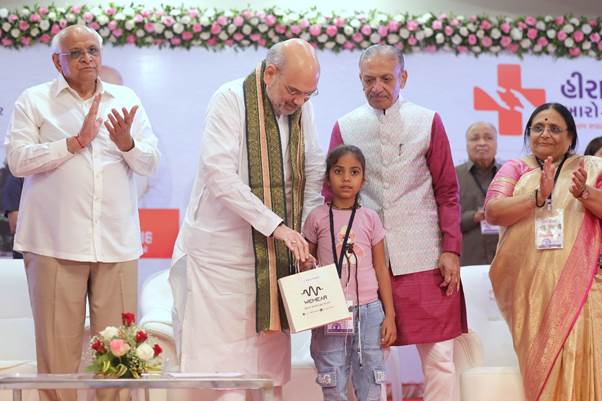
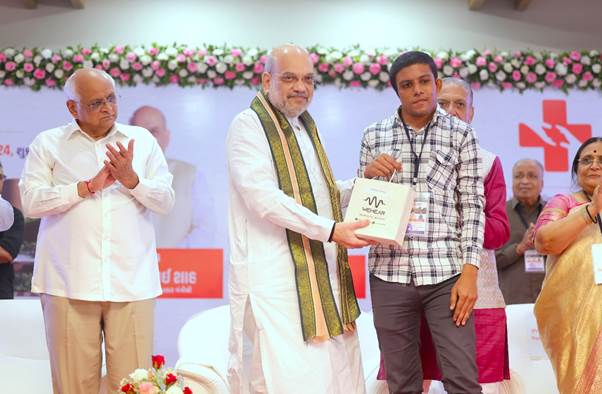
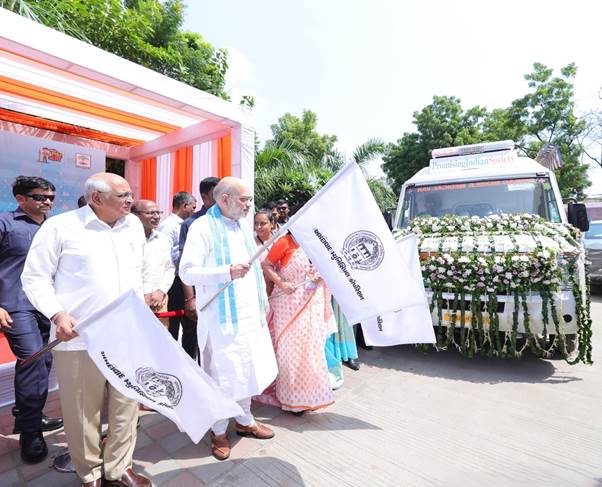
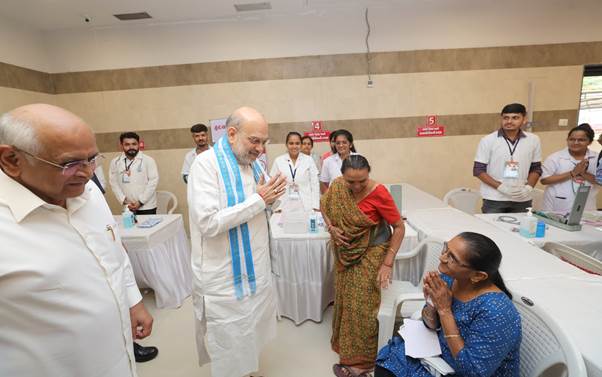
Union Home Minister and Minister of Cooperation Shri Amit Shah today inaugurated the Hiramani Arogyadham Day-Care Hospital in Gandhinagar, Gujarat. On this occasion, several dignitaries, including Gujarat Chief Minister Shri Bhupendra Patel, were present.

In his address, Shri Amit Shah said that the then Chief Minister of Gujarat, and now the Prime Minister of the country, Shri Narendra Modi, made numerous efforts to improve healthcare facilities in Gujarat and make them accessible to the public. He mentioned that Shri Narhari Amin has consistently worked to serve society and solve problems. Shri Shah highlighted that Narhari Ji established infrastructure for athletes across Gujarat through the state’s cricket association. Moreover, through schools, he has made significant efforts to provide quality education to around 4,000 children and contribute to their overall development. Shri Shah further noted that after establishing old age homes and the Annapurna Trust, Narhari Ji has now built this Hiramani Arogyadham in memory of his parents, which is truly commendable.

Union Home Minister said that modern lifestyles, fast-paced lives, pollution, and other factors that lead to various diseases affecting our bodies, requiring long-term treatment. He mentioned that these ailments often need multiple therapies, dialysis, physiotherapy, and other treatments to reduce the suffering caused by the diseases. Shri Shah pointed out that such treatments are usually very expensive and are less accessible to the poor, middle class, and people in rural areas. Keeping these challenges in mind, Shri Narhari Ji has built the Hiramani Arogyadham, which was inaugurated today. Shri Shah highlighted that Narhari Ji has taken a holistic approach to address people’s health concerns.

Shri Amit Shah said that Prime Minister Shri Narendra Modi launched the Swachh Bharat Mission keeping public’s health in mind, helping people avoid many diseases caused by unhygienic conditions. He further mentioned that after this, the government ensured access to clean drinking water in every household, which helped prevent waterborne diseases. Following that, toilets were built in every home, and International Yoga Day was introduced to make regular exercise a part of people’s daily routine. Shri Shah added that through the Pradhan Mantri Ayushman Card, PM Modi has provided comprehensive healthcare coverage of up to five lakh rupees to millions of people, freeing them from the burden of expensive treatments.

Union Home Minister stated that while a plan can be formulated by the government, comprehensive healthcare is not possible without adequate infrastructure. He mentioned that to address this, Prime Minister Narendra Modi initiated the construction of health infrastructure across the country. Shri Shah noted that the Modi government has set a target to increase the number of medical seats by 75,000 in the next 10 years. He also highlighted that the government has established a mechanism to provide generic medicines to relieve people from the burden of expensive drugs, allowing them to access medicines at about 10 to 30 percent lower prices compared to the market.

Shri Amit Shah stated that the entire healthcare setup is built by integrating approximately 37 different schemes. He mentioned that by combining these 37 various initiatives, an effort has been made to address the health concerns of the country’s 1.4 billion people. Shri Shah emphasized that This is a prime example of creating plans with sensitivity and foresight to alleviate the suffering of the people.

Union Home Minister stated that if facilities for daily treatments for chronic illnesses, such as dialysis and physiotherapy, are available nearby and at affordable rates, then poor people can benefit from them. He mentioned that at Hiramani Arogyadham, therapies, dialysis, and physiotherapy for various ailments have been made available for the general public at affordable rates.

Govt is committed to make defence industry export-oriented : Raksha Mantri

| Published on:

Raksha Mantri Shri Rajnath Singh has reaffirmed the Government’s commitment to empower India’s defence industry by working hand-in-hand with them, and realise Prime Minister Shri Narendra Modi’s vision of making the country a global manufacturing hub. Addressing the seventh annual session of Society of Indian Defence Manufacturers (SIDM) in New Delhi on October 04, 2024, Raksha Mantri described the ongoing Russia-Ukraine conflict as a reminder to build a strong defence industrial base, which can be bolstered and expanded with time.

Shri Rajnath Singh asserted that the Government, in its third consecutive term, will provide a renewed thrust to its ongoing efforts towards developing a robust, innovative and self-reliant defence ecosystem. He enumerated the steps taken to attain ‘Aatmanirbharta’ in defence, including creation of defence industrial corridors in Uttar Pradesh & Tamil Nadu, issuance of positive indigenisation lists (PILs), corporatisation of Ordnance Factory Board, handholding of private industries by DRDO, and unveiling of Defence Acquisition Procedure 2020.

On the 10 PILs notified with over 5,500 items, Raksha Mantri stated that the idea is to equip the Armed Forces with platforms/equipment manufactured on Indian soil. Terming the lists as dynamic & not static, he exhorted the industry to achieve complete self-reliance for these items within the stipulated time, and keep shortening the list. He also urged them to assess and identify products that can be added to the PILs in view of the rapid changes being witnessed in the field of defence across the globe.

Shri Rajnath Singh emphasised that due to the Government’s efforts, an environment conducive to ease of doing business in the country has been created, and a target set for making India’s defence industry export-oriented. While he lauded the major contribution of the private sector in taking the defence exports to a record high of over Rs 21,000 crore in Financial Year (FY) 2023-24, he called upon the industry to keep in mind the export and import figures, and strive to reduce the ratio between the two with a target-oriented approach.

Raksha Mantri expressed happiness over the fact that the annual defence production touched a record high of Rs 1.27 lakh crore in FY 2023-24. While the share of DPSUs was Rs one lakh crore, private companies contributed with about Rs 27,000 crore. He stated that there is a huge scope for increasing the share of private industries, and the next target should be to bring their participation to at least half of the total defence production. He promised full support of the Government in achieving this target.

Highlighting the Government’s focus to encourage foreign companies and Original Equipment Manufacturers (OEMs) to invest in India or open joint ventures with the private industry, Shri Rajnath Singh called upon SIDM to prepare a roadmap for collaboration on a firm-to-firm basis. He was of the view that the Indian industry has the potential of bringing niche technologies or processes to India.

Recognising the potential of small & medium enterprises (SMEs) and start-ups in the defence sector, Raksha Mantri acknowledged the challenges they face in achieving ease of doing business. He urged SIDM to work closely with the government to address ground-level issues & help these enterprises to play a larger role in defence manufacturing. “It is important to ensure that our policies translate into ease of doing business at the ground level. SIDM can help in identifying the practical challenges faced by start-ups and SMEs so that we can address them,” he said.

Shri Rajnath Singh urged the industry to invest more in cutting-edge technologies, such as artificial intelligence (AI), cyber defence, & autonomous systems. “India’s defence industry must keep pace with global trends and focus on high-end technology. There is a need to increase investments in areas like AI & autonomous systems, which will define the future of warfare. The government is ready to provide all necessary support,” he said.

During the session, Raksha Mantri also presented the SIDM Champion Awards, which recognise outstanding achievements in defence manufacturing. He termed the awards as a reflection to the dedication & excellence of Indian manufacturers, which will serve as a benchmark for best practices in the sector.

Chief of Defence Staff General Anil Chauhan, Secretary (Defence Production) Shri Sanjeev Kumar, SIDM President Shri Rajinder Singh Bhatia and captains of the industry were among those present on the occasion. The theme of the session was Empowering Indian Defence Industry: Catalysing Exports and Indigenous Innovation. It served as a forum for stakeholders to discuss India’s growing role as a global defence exporter and innovation hub.

Northeast to hold first ever India International Science Festival showcasing PM’s vision for the Region: Dr Jitendra Singh

| Published on:

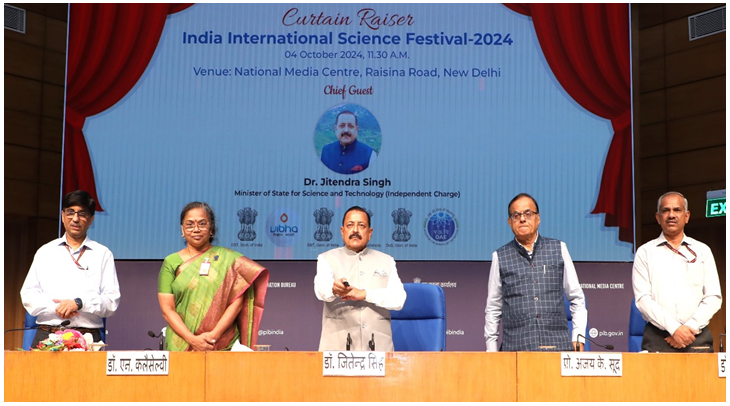
Union Minister of State (Independent Charge) for Science and Technology, MoS (I/C) for Earth Sciences, MoS PMO, Department of Atomic Energy, Department of Space, Personnel, Public Grievances and Pensions, Dr. Jitendra Singh announced here today that Northeast will hold first-ever International Science Festival.

At a press briefing at National Media Centre, Dr. Jitendra Singh disclosed that the 10th edition of the India International Science Festival (IISF) will be held at Guwahati, marking a significant milestone in the region’s journey towards becoming a hub for scientific and technological innovation. The festival, to be hosted at IIT Guwahati from November 30th to December 3rd 2024, is a testimony to the Government’s commitment to the Northeast and aligns with Prime Minister Narendra Modi’s focus on the region as a key player in India’s growth story.

Highlighting the unique importance of the venue, Dr Jitendra Singh said, “IIT Guwahati is not only one of the leading institutes of the country but also a symbol of how the Northeast is emerging as a focal point of India’s scientific advancements. Hosting IISF 2024 in the Northeast is not just about celebrating science; it’s about placing the region at the heart of India’s scientific future.”

The decision to host the festival in Guwahati reflects the Government’s broader strategy to promote inclusive development, particularly in regions that have been historically underrepresented. Prime Minister Modi has consistently underscored the importance of bringing the Northeast closer to the rest of India and creating opportunities for it to play a critical role in the country’s progress. “The Northeast is rich in natural resources and talent, and this festival is an opportunity for the rest of the nation to recognize and engage with the potential that lies here,” Dr. Jitendra Singh added.

The 10th edition of IISF carries the theme “Transforming India into an S&T driven Global Manufacturing Hub” reflecting the government’s ambition to merge science and technology with industrial growth, propelling India towards self-reliance and global leadership in manufacturing. The theme aligns closely with national initiatives like ‘Make in India’ and ‘Atmanirbhar Bharat,’ and will spotlight emerging technologies such as artificial intelligence, robotics, and biotechnology, says the Minister.

Dr. Jitendra Singh also emphasized the role of science in driving India’s economic future, stating, “The next wave of India’s economic growth will be fuelled by advancements in biotechnology, bioeconomy, and space technology. This festival is a chance to highlight how science will shape the future of our economy, environment, and employment.”

Dr. Jitendra Singh emphasized that IISF-2024 will not only celebrate the country’s scientific achievements but also create opportunities for collaboration and innovation. “This platform will bring together scientists, industry leaders, students, and the public to explore the transformative power of science. IISF-2024 will fuel discussions that will shape India’s future as a global leader in science and technology.”

In addition to its core emphasis on science-led industrial growth, IISF-2024 will serve as a key platform for engaging young minds nationwide. The festival will provide students with the chance to connect with top scientists, take part in science competitions, and experience groundbreaking innovations up close, the Minister stated.

Reflecting on India’s scientific progress under the leadership of Prime Minister Shri Narendra Modi, Dr. Jitendra Singh noted the significant advancements the country has made in areas such as space exploration, biotechnology, and digital technology. He reiterated that IISF-2024 will reaffirm India’s commitment to becoming a global manufacturing powerhouse, driven by scientific innovation.

The IISF-2024 is being coordinated by the Council of Scientific and Industrial Research (CSIR) and involves all the major scientific departments and ministries of the Government of India in collaboration with Vijnana Bharati. The event will feature a range of exhibits, panel discussions, and international collaborations aimed at addressing pressing global challenges like climate change, food security, and sustainable development.

With 30% of the festival’s registrations reserved for participants from the Northeast, the event will offer a unique opportunity for local talent to engage with some of the brightest minds in the scientific community. This, Dr. Jitendra Singh noted, is part of a broader effort to bring India closer to the Northeast by creating more platforms for exchange and collaboration.

Dr. Jitendra Singh concluded by urging more people from across the country to visit the Northeast and experience its vibrant culture, vast resources, and innovative spirit. “It’s time we bring the rest of India closer to the Northeast. The region has so much to offer in terms of natural resources, sustainable practices, and progressive culture. This festival will showcase that to the nation.”

Prof. A.K. Sood, Principal Scientific Advisor to the Government of India; Dr N Kalaiselvi, Director General, CSIR; Dr M. Ravichandran, Secretary, Ministry of Earth Sciences; Dr Abhay Karandikar, Secretary, Department of Science & Technology; and Dr Shiv Kumar Sharma, National Organising Secretary, Vijnana Bharati; along with senior officials, participated in the event.

Union Home Minister inaugurates and lays foundation stone of projects worth ₹919 cr in Gujarat

| Published on:

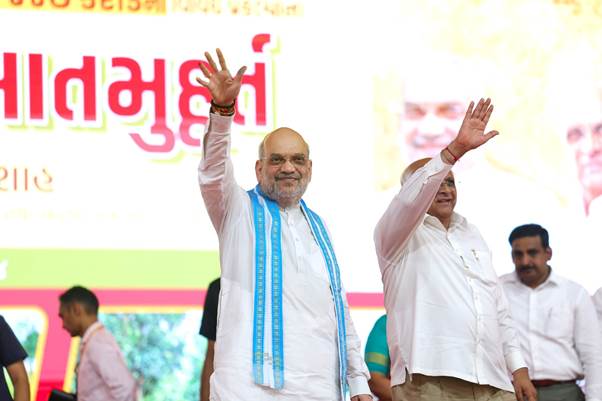
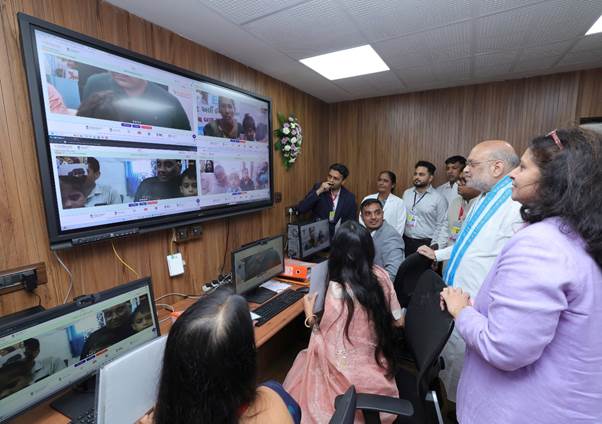
Union Home Minister and Minister of Cooperation, Shri Amit Shah today inaugurated and laid foundation of projects worth Rs. 919 crore in Gujarat including various development works of Ahmedabad Municipal Corporation (AMC).  On this occasion Chief Minister of Gujarat, Shri Bhupendra Patel and many other dignitaries were also present.

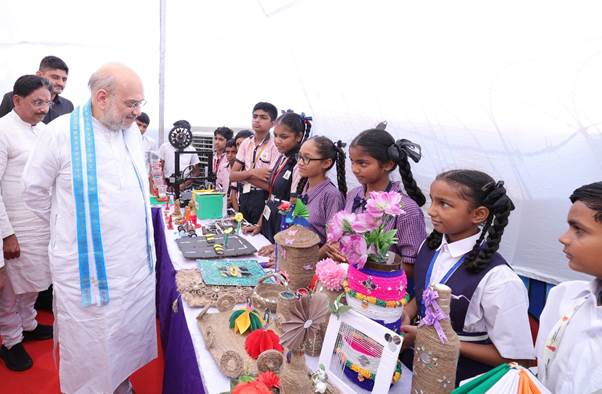
Beginning his address with Navratri greetings, Shri Amit Shah said that today, development projects worth ₹919 crore have been inaugurated and laid the foundation for, which include works related to health, education, libraries, parks, and small street vendors. He stated that the most significant of these is the construction of modern schools by the Municipal Nagar Prathmik Siksha Samiti. Shri Shah expressed his gratitude towards AMC, stating that due to the corporation’s efforts, all municipal primary schools in his parliamentary constituency have successfully been transformed into model schools.

Union Home Minister and Minister of Cooperation said that if children properly benefit from the initiatives of the Primary Education Committee, there will be no doubt that India’s future is bright. He added that when we see children from poor families taking an interest in subjects like science, art, music, and many others, all the despair in life disappears, and we feel confident that India’s future is bright.

Shri Amit Shah said that today, development projects worth approximately ₹472 crore have been inaugurated and laid the foundation for in the Gandhinagar Lok Sabha constituency. Additionally, development projects worth around ₹446 crore have been inaugurated and launched in Ahmedabad East Lok Sabha constituency of MP Shri Hasmukhbhai Patel and in Ahmedabad West Lok Sabha constituency of MP Shri Dineshbhai Makwana. He mentioned that all these development projects will enhance facilities for the residents of Ahmedabad city.

Shri Shah further said that Gujarat Chief Minister Shri Bhupendra Patel, over the past few years, has approved projects worth ₹23,951 crore in Ahmedabad city, Kalol and Sanand taluka, some areas of Ahmedabad city, and the Gandhinagar Lok Sabha constituency. Moreover, Prime Minister Shri Narendra Modi has also inaugurated development projects worth around ₹14,000 crore. He added that in the past five years, a total of ₹37,000 crore worth of development projects have been carried out in just one Lok Sabha constituency.

Union Home Minister and Minister of Cooperation said that numerous development initiatives have been undertaken in seven assembly constituencies of Ahmedabad. These include efforts related to child nutrition, exercise facilities, libraries to enhance knowledge for adolescents, water collection ponds, the planting of 4 million saplings in a year, the construction of roads, overbridges, street lights, hospitals, primary health centers, and primary schools.

Shri Amit Shah said that AMC has decided to bring Ahmedabad to the forefront in the cleanliness campaign competition. He emphasized that efforts should be made to bring Ahmedabad to the top in the upcoming cleanliness survey. Shri Shah acknowledged that it might not be possible to achieve the first position this time, but we should set a goal to make a fresh start and work towards creating an Ahmedabad that reaches the top position in cleanliness among all municipal corporations in India by next year.

Union Home Minister stated that after Mahatma Gandhi, Prime Minister Shri Narendra Modi is the only national leader who has turned the cleanliness campaign into a people’s movement. Prime Minister Modi envisioned that every home in the country should have toilet facilities. After 70 years of independence, Prime Minister Shri Narendra Modi initiated this campaign. His aim was to ensure that clean drinking water is available in every household, and that our homes, societies, streets, cities, and villages are clean, fostering a culture of cleanliness among citizens. Union Home Minister mentioned that Shri Narendra Modi is the only Prime Minister who has spoken about the construction of toilets from the ramparts of the Red Fort.

Shri Amit Shah said that Prime Minister Shri Narendra Modi has worked to promote the cleanliness campaign and its values across the entire country, from Nagaland to Kerala and from Uttar Pradesh to Assam.