Prime Minister interacts with champions of Paris Paralympic Games

| Published on:

Prime Minister: Today, I want to listen to you. What were your experiences? You must have met many people there; surely some positive things must have happened. I would love to hear about them.

Kapil Parmar: Namaskar, Sir. Har-Har Mahadev.

Prime Minister: Har-Har Mahadev.

Kapil Parmar: Sir, I am Kapil Parmar, and I compete in Blind Judo in the 60kg category. Since 2021, I’ve participated in many competitions—16 in total. Out of these, I have won medals in 14, including eight golds. I also earned a silver at the Brown Silver Asian Games, a bronze at the World Games, and another bronze at the World Championship. Because of this experience, my fear disappeared, and I wasn’t too worried about the Olympics, as I had already played in numerous competitions. However, I did feel a bit of pressure. But Devendra Bhai Sahab Jhajharia Ji advised me to focus on giving my best, and he told me to replicate what I do during practice.

Sir, my coach, Manoranjar Ji, has also blessed me tremendously. It’s not just difficult but almost impossible to manage us. We often bump into things, and if someone bumps into me, I ask them whether they are blind or if I am! Sir, such incidents happen frequently. I often hold my coach’s hand to walk, and with the limited vision I have, I manage to do my work. Sir, your blessings have always been with me.

Prime Minister: Well, Kapil, you mentioned that the noise from the stadium that day was so overwhelming that you couldn’t hear your coach’s instructions. I want to experience that myself. Where is your coach? Sir, please explain the challenge!

Coach: In blind judo, the most important thing is the instructions we give from outside, which we code into their training. We instruct them beforehand on what to do when we say certain things because they can’t see anything on the mat. On that day, there were two mat areas. Our match was on one mat, while France’s match was on the other. The crowd was so loud during the French fight—there were about 15,000 to 18,000 spectators. So, when Kapil went to play the semi-finals, he couldn’t hear my instructions due to the noise. Additionally, there was the pressure of the semi-finals, and Kapil had lost to the Iranian player in the Asian Games semi-finals. Naturally, there was pressure from that as well. Unfortunately, because of these factors, we were unable to win the gold medal for India that day.

Prime Minister: So the opposing coach would also be guiding his players in the same way?

Coach: Yes, but that varies from coach to coach. Our relationship with our players is such that we observe how each coach teaches, so we develop our own strategies based on that.

Prime Minister: So, the coach must keep his instructions a secret from the others as well.

Coach: Absolutely. If we use the same language as the opposing coach, our player won’t understand the difference.

Prime Minister: If you wanted to instruct Kapil to attack from the left, how would you communicate that?

Coach: That’s exactly how we direct, Sir.

Prime Minister: Kapil, this is how it works, right?

Kapil Parmar: Sir, I often say I’m going to strike, but when I do attack, sometimes the move doesn’t land, and I step back.

Coach: We use specific names for the techniques. The position of the feet, whether forward or backward, is part of the instruction. So, we mention the name of the technique that has been taught, and then the player applies it. It depends on where the opponent’s balance is—whether it’s forward or backward—then we give the appropriate technique.

Prime Minister: So, do you also inform them about the position of their opponent?

Coach: Yes, exactly. We observe the opponent’s movements. If they shift their weight forward and move ahead, we use a forward technique. Similarly, if they lean back or are positioned in a backward stance, we apply a backward technique. These techniques help us gain points.

Prime Minister: When you’re seated there, you must feel the tension as well?

Coach: Absolutely, and we cannot step onto the mat as coaches.

Kapil Parmar: Sir, during the semi-final, the referee who was guiding me by the hand was trembling. In such a high-stakes match, he even made a wrong decision. Just like a third umpire reviews decisions in cricket, in my case, the decision was made hastily without proper review. That was also partly my fault; I lost momentum in the semi-final. But Sir, I promise you I will do better next time.

Prime Minister: No, you’re doing an excellent job, many congratulations.

Kapil Parmar: Thank you, Sir. Thank you so much.

Coach: Jai Hind, Sir. I am a soldier, and my wife is Simran Sharma, and we have Preeti. I am both an athletics coach and a para-athletics coach. I coach two athletes, both of whom compete in the 100 and 200 metres. The first track medals in athletics were won by my athletes, and we secured three medals in total. We learned a lot from the experience, Sir. For instance, in one event – 100 metres, we won two medals. Now, imagine, two athletes sharing the same room, both competing in 100 metres for the first time, and both winning track medals for the country for the first time. When two medals are kept in one room, and the second athlete’s event hasn’t even started yet, the pressure mounts on me as both a coach and a husband. I understand how it feels. The other athlete hasn’t yet competed, and the pressure builds knowing that two medals are already in the room. To help relieve that pressure, I had to keep him engaged throughout the day, ensuring he remained focused. We lost the 100 metres, but we gained a lot of experience, Sir.

Prime Minister: Well, you’ve spent your time there, but what will happen to you when you get home, Simran?

Simran: Sir, he isn’t as virtuous as he’s pretending to be. Before we came here, we had a discussion. We used to talk about who would bring the first track medal. When the event list came out, we realised Preeti’s event was first, so we were confident she would win the first medal. Before we arrived, this Gajju—meaning this coach—said he would give me a month’s rest. But once we got here, we were chatting in the morning, and now he’s telling me that I’ll only get a week’s rest, no more. I asked him why, and he said, “This is what you get for a bronze medal.”

Prime Minister: Well, now you won’t be getting any food!

Coach: Thank you, Sir.

Player: This was my third Paralympics. I had the honour of meeting you at the last one as well, and you motivated me immensely, but perhaps I still fell short this time. I finished fourth in the Rio Paralympics, fourth in Tokyo, and now fourth again in Paris, Sir. It seems the number four has a strong connection with me. However, I take this fourth position as a source of motivation, and I think that my next Paralympics, my fourth, will be the one where I truly achieve something. Sir, I don’t consider myself a failure. In fact, I am the only para-athlete, not just in India but globally, to have reached this level at such a prestigious event so many times!

There are many similar stories in Olympic history. For example, there’s a discus thrower from France who won a silver medal in his fifth Olympics. There’s also a triple jumper, I believe from the USA, who won a medal in his fifth Olympics. So I use these stories to motivate myself and aim to become the first para-athlete to inspire others by saying, “If I can finish fourth and not give up, why should you quit after your first attempt?” There are athletes, like Gudiya, who have finished fourth, and many feel disheartened by it. But I find comfort knowing that their coaches look at me as an example.

Prime Minister: I believe that your outlook on life is probably your greatest strength. You can look at it this way: by consistently finishing fourth, you’ve helped push nine others ahead of you, contributing significantly to the world.

Player: Sir, it doesn’t matter to me right now; this is the time for disciples. We are three athletes who are now mentoring our own disciples. Devendra Bhai Sahab’s disciple won gold, Soman Rana’s disciple won bronze, and while I am not Navdeep’s official coach, I am his mentor. My journey in javelin, from the beginning until now, has been as his elder brother and guide. This time, I told Navdeep, “It’s your turn, take it.” But Sir, I promise you, the next time will be mine. I’ve been part of the last three Paralympics, and I’ve noticed that people always say these countries are big, so the competition is expected to be fierce. But Sir, I believe that if India hosts the 2036 Olympics and Paralympics, it will be the biggest event ever held on Earth. And Sir, even as we grow older, Devendra Bhai Sahab will remain our inspiration. We will strive to play in those games, even if it means keeping our bones and legs intact just to make it through.

Prime Minister: Your outlook on life is truly inspiring. The fact that you remain committed to achieving something in the future and never give up is commendable. I congratulate you.

Player: Thank you, Sir.

Coach: Namaskar, Sir.

Prime Minister: Namaskar Ji.

Radhika Singh: I am Radhika Singh, the mental coach for the shooting team. You asked us to share our experiences, and I believe the most important aspect is the bond of love within the group. In the shooting team, no one competes against each other; everyone competes with themselves. They focus on improving their own abilities, regardless of their strengths or weaknesses, and their love for the sport drives them forward. The team remained closely connected, and even though I was coaching two athletes for the same event, there was no sense of rivalry. Instead, the mutual respect and care for one another helped them grow. This love is clearly reflected in their performance, Sir.

Prime Minister: And when you work on mental health, what exactly do you focus on?

Radhika Singh: Sir, we work on transforming any weaknesses that lie within the subconscious mind, which makes up 90% of the mind. We focus on bringing forward their strengths, connecting them to their personalities, and helping them progress.

Prime Minister: Do you provide any specific training related to yoga or meditation?

Radhika Singh: Yes, Sir, yoga is also part of their training. Our team practised yoga regularly, and they meditated every morning. In the evenings, the athletes would reflect on what they had learned during the day, and this mental training was a daily routine. Along with their practice on the range, they incorporated yoga into their training, which brought a great sense of discipline and order to the team, Sir.

Prime Minister: Athletes from many countries around the world may not be familiar with yoga and meditation. What difference does this make in the quality of our athletes?

Radhika Singh: Yes, it makes a significant difference. When you gain control over your inner mind, it allows you to take your game to the next level. By promoting yoga in our country, you’ve done something truly remarkable, and I believe it should be introduced as a subject in schools. The power of science behind yoga is unparalleled, Sir.

Prime Minister: Congratulations.

Coach: First of all, it is a great honour that Kapil has won India its first medal, not only in para judo but also in able-bodied judo. Until now, there had been no medal in either able-bodied or para judo, and Kapil has made history by becoming the first to secure a medal for India in any sport for the visually impaired. So, congratulations to all of us for this achievement. The top judo officials in the world personally stepped down from the podium to congratulate us, saying they had not expected such a rapid rise in para judo. Hats off to everyone involved.

Sir, we could not have achieved this alone. We have received tremendous support from SAI, OGQ, and of course, the Government of India, which goes without saying. So, thank you very much. Coaches from the UK, USA, and Korea, who are our good friends, all approached us and said, “We knew you were on the rise, but we didn’t realise you would progress so quickly.” We felt incredibly proud. Thank you to the entire team that has supported us throughout. Thank you so much, Sir.

Prime Minister- Many congratulations.

Coach: I would like to say something for Sandeep Chaudhary ji – “Only the horsemen fall in the battlefield; how can a child fall, who walks on their knees.” So, you have shown everyone that only those who ride the horse can fall, children never fall. This is a big statement for you. And, Sir, I would like to speak about Harvinder as well. Sheetal, Harvinder and I am from archery, and as madam mentioned, Harvinder is the first archer to win a medal in the Paralympics. He won bronze in Tokyo and made history by shooting equivalent to able-bodied archers, scoring 28, 28, and 29. In the last arrow, Sir, you must have seen that it was very close. Had it hit 10, we would have shot on par with Kim Woojin and Brady Ellison.

Amisha: Namaste, Sir. My name is Amisha, and I am from Uttarakhand. This was my first Paralympics, and I am very grateful that in just 2 years since I started my game, I gained such a big experience. It has only been 2 years, and I have learned a lot in life. Thank you to my coach, who gave me the confidence that I could do it, because I was very scared. You had said to observe the people there.

Prime Minister: Now people must be scared; earlier you were scared, now people must be scared of you.

Amisha: You had told me to observe people, so I did that a lot, and I learned a great deal.

Prime Minister: What is the response from your family now? What do your family members say?

Amisha: Now the family is very happy. They always supported me, but now they support me even more.

Prime Minister: They are giving you even more support.

Sumit Antil: Namaste, Sir. My name is Sumit Antil, and I have won back-to-back second gold medal. I still remember, Sir, when I brought gold medal from Tokyo, you took a promise from me that you wanted two more gold medals like that. So, this second one is for you, Sir. Before the Paralympics, we were quite nervous because I was reading articles and my name popped up among those athletes who were favourites to defend the gold medal. But on 20th August, when I spoke to you, it reminded me of the Tokyo moment, that this time I had to perform well again. My entire team—my physio, my coach, all of us—are very grateful to you, Sir, because we feel that when we bring a medal, we will meet you, we will talk to you personally. Thank you very much, Sir.

Prime Minister: Congratulations!

Athlete: Most of us are sponsored athletes by the government or different organisations. So, sometimes there is pressure to perform. When you say, “Go and just play, winning and losing are part of the game”, when the Prime Minister of your country motivates you, these pressures seem very small. Last time, Sir, when I spoke to you, my performance in Tokyo wasn’t that good; I ranked 8th. Still, I asked you a question about how you feel when you visit foreign countries, whether you feel nervous. Your response was that you represent the entire country, and that instills confidence. With those words in mind, I went this time, feeling confident, with no pressure like before. I was very confident this time. Our team, the government, our coach, and everyone supported us well, and it was a great experience to compete. Thank you, Sir!

Prime Minister: Congratulations!

Coach and Athlete: Sir, Namaskar. The 16 years of dedication I put in has finally paid off, and my student Dharambir, who won the gold medal, is a part of that success. We are both competitors, and I personally trained him to this point. After talking to you on the 20th, I felt a very positive vibe, knowing that I had to give my best. As a coach, there’s no greater feeling than this, and perhaps I am the only athlete in the world who competed against his own student on the field. My dedication was fulfilled through Dharambir’s medal and the contribution of our entire team played a huge role in this success. We have the most severe disability in our category, but SAI (Sports Authority of India) and the Ministry made key decisions by increasing the number of support staff. Initially, only 33% of the support staff was allowed inside, but thanks to Devendra Jhajharia Bhai ji’s decision, they rotated the support staff so that when our event took place, our people were allowed inside while others were rotated out. It is the result of this smart combination that we won so many medals. There were issues with food, especially for vegetarians, but SAI made special arrangements for a healthy diet at the village itself, and no one faced any problems with food. Thank you so much, Sir, for motivating our entire team. Thank you so much, Sir.

Prime Minister: Congratulations!

Athlete: I had participated in the Asian Games but couldn’t win a medal. When you met the medallists, you passed by very close to me, but I didn’t get the chance to meet you personally, which left a teasing feeling inside. After that, I was determined to meet you, and that drive pushed me after the Asian Games. I gave my all, and I think that inspiration helped me succeed. It has been six months since I last met my children, and I haven’t been home. My son is still young, and whenever I took him out, we used to use GPS on the phone to find the way. He now says, “Mama, you’ve forgotten the way home. At least use the GPS and come back home.” So, Sir, thank you so much for all your support and blessings. It’s because of you, our team, and our coaches that we have been able to achieve this. Thank you so much, Sir.

Prime Minister: Many congratulations!

Sharad Kumar: Sir, I am Sharad Kumar, and this is my second medal. I’ve been to the Paralympics three times now.

Prime Minister: If I ask both Sharad and Sandeep to give speeches, who will do a better job?

Sharad Kumar: Sir, Sandeep speaks very well, maybe that’s why he came in fourth (jokingly). But as an athlete, I want to say that I’ve been part of the para movement since it started, and today, seeing all the athletes at this level makes me feel proud. When we go abroad with our coaches, physiotherapists, and the entire team, people see India differently now. Earlier, they would wonder, “Can these athletes really rise to the top?” But now, they’ve categorized India as a sporting nation, even in para sports. This journey started with the image created by SAI (Sports Authority of India). With time, the support staff grew, and positivity spread among the athletes. Sir, the best part is meeting you. Before leaving, when you speak to us, and after returning, when you meet all of us—it’s something every medallist and athlete dreams of experiencing. Sir, people still haven’t fully embraced para sports the way you have.

Palak Kohli: Namaste Sir, I am Palak Kohli, and this was my second consecutive Paralympics. In Tokyo, I finished fourth, and here I finished fifth. But the journey to both Paralympics was completely different. After the Tokyo Paralympics, in 2022, I was diagnosed with a bone tumour, stage 1 cancer, and for nearly one and a half years, I didn’t compete in any tournaments or do anything. Last year, in 2023, I made a comeback, and I am very happy and proud, thanks to the support and guidance of my coaches and Gaurav Sir, I was able to qualify for Paris. I missed many major tournaments after Tokyo, like the World Championship because I had to give a walkover, and in the Asian Games, I suffered from COVID. This year, I qualified for the World Championship and won a bronze medal, then I qualified for Paris back-to-back. My world ranking had dropped to 38 because I hadn’t played in any tournaments, but now I am back in the top 4, and I qualified for Paris. It is disappointing that I couldn’t win a medal, but with your blessings and everyone’s support, I am looking forward to LA 2028. I definitely want to have a picture with you on the podium, Sir. Thank you, Sir!

Prime Minister: Last time, your training took place in Lucknow, right?

Palak Kohli: Yes, Sir.

Prime Minister: I had spoken to your parents as well.

Palak Kohli: Yes, Sir, before I went to Tokyo.

Prime Minister: How are you feeling this time?

Palak Kohli: Sir, I am training in Lucknow under Gaurav Sir, and it was under his guidance that I discovered para-badminton. When I was diagnosed with a bone tumour, many people said that Palak’s career in sports was over. The doctors told me they couldn’t assure me if I would even be able to live a normal life. After the tumour, there were many complications. I already had a heart condition, and after the tumour, I developed a disability in my leg, causing a difference in leg length and other complications. But my family always wants to see me happy, and with their blessings, they’ve made sure I don’t lose hope.

Prime Minister: Look, Palak, your story is such that you can inspire many people. Despite so many hardships, you stayed on track, faced interruptions in your life, but never gave up on your goal. That is a huge achievement. Congratulations to you!

Palak Kohli: Thank you so much, Sir!

Shyam Sundar Swami: Namaste Sir, I am Shyam Sundar Swami, and I come from Bikaner, Rajasthan. I’m a para-archer. In our Bikaner, Karni Singh participated in five Olympics. I have learned a lot from Devendra Bhaiya because after 40 years, I participated in the Tokyo Olympics. I saw how Bhaiya played and thought, “This is how the game is played.” Before joining para sports, I used to compete in able-bodied sports. In 2016, I found out about para sports because I saw a huge picture of Bhaiya in the newspaper. Learning from him, I participated in the Tokyo Olympics after 40 years.

Athlete: This time, I learned a lot, especially from Nitesh Kumar ji, the gold medallist in my category. Throughout his life, he had never won a match against the person he beat to win gold. And I defeated him earlier due to Nitesh ji. From him, I learned that if he can do it, I can definitely defeat him again, and I can beat anyone in the world.

Prime Minister: Congratulations!

Athlete: Thank you, Sir.

Coach: My name is Dr. Satyapal, and I am a para-athletics coach. There might not be any coach here who started training para-athletes before me. I began training para-athletes in 2005-06.

Prime Minister: How did you get the idea to start this?

Coach: Sir, I used to go to Nehru Stadium to train athletes, and I saw a few athletes there with limb deficiencies. I observed them, read about their conditions, and then heard about Devendra ji, who won a gold medal in the 2004 Athens Olympics. That’s when I started studying more about it and began training para-athletes bit by bit. Initially, all the coaches at Nehru Stadium used to look at me strangely because I would push Deepa Malik ji’s wheelchair or guide Ankur Dhama by holding his hand while walking around the stadium. They thought I was wasting my time. But today, those same para-athletes and the same coaches who once criticized me now want to train para-athletes. I’m saying this from the bottom of my heart because I’ve worked in this field. I’m very happy, and I promise you, Sir, that next time, we won’t just bring back 29 medals—we will bring back 50 medals because we are working that hard.

Prime Minister: Well done!

Coach: Thank you, Sir.

Prime Minister: See friends, it’s true that in every sport, the support staff or coaches have to work hard. But when working with individuals who have disabilities, before teaching them, one must prepare mentally to live and understand their life from the heart. You have to put yourself in their position, absorb the challenges they face in your own life, only then can you guide them. Otherwise, it’s easy to just say, “Run!” But the athlete might say, “I can’t run.” A coach understands why they can’t run and figures out the right way to approach it. That’s why I believe that coaches who train para-athletes are extraordinary; they have extraordinary strength within them. Few people can truly understand this, but I fully recognize it. I’ve mentioned this in many conversations I’ve had, even over the phone. While regular athletes need only to be taught technique, para-athletes need to be taught how to live as well. This is a form of deep dedication, and I believe those of you doing this work deserve the highest praise.

Coach: Sir, it’s been 30 years since I started participating in international competitions, both as an athlete and administrator. There was a time when not a single Indian flag could be seen. Now, the Indian flag is being raised and our players are coming back saying, “We can win medals because of para sports.” Earlier, the focus was just on participation, but now that concept has changed. I want to thank you, Sir. I tell many people, our brand ambassador is none other than our Modi ji—you are our brand ambassador. And Sir, India can win more medals in able-bodied sports as well. I’ve been to East Germany and Chennai, and now we have very good facilities in India. We just need to utilize them properly, activate the physical education teachers, and 100%, we will bring more medals. Thank you, Sir!

Nishad Kumar: Sir, my name is Nishad Kumar, and I compete in the T47 high jump. I have won silver medals in back-to-back Paralympics. Sir, I want to share my experience. When our team arrived in Tokyo, there was COVID, so we competed without any audience. But this time, at the Paris Paralympics, the stadium was completely packed. On the day I competed, the entire audience was cheering “India, India,” which was very motivating. It gave me a push to perform well and secure a medal. The next day was my medal ceremony. After receiving the medal, I went to support my other team members in the high jump. The medal was around my neck, and a French family was watching me. They had been hoping for a chance to take a photo with me. As soon as the competition ended, I went down to take photos, and they asked for a photo, their children, who looked to be around 6 or 7 years old were thrilled to see the medal. The children had been cheering for me, and now they were standing with me and taking photos. The mother of the children told me that coming to Paris and watching the competition was successful because you are here with our children, taking photos and giving autographs. The whole family was very happy. This was a wonderful experience for me, Sir.

Prime Minister: Very good.

Vishal Kumar- Thank you, Sir.

Yogesh Kathuniya: Namaskar, Sir! My name is Yogesh Kathuniya. I am a two-time silver medallist. I want to share one thing about my experience—it’s not just about experience, but about consistency. This consistency has come because of you, as the different schemes you have launched in India, whether it’s the TOPS scheme, Khelo India schemes, or NSUs, are all because of you. This time, we have won 29 medals, and Sir, I want to add one more thing for the others: for you, PM means Prime Minister, but for us, PM means Param Mitra (Best Friend).

Prime Minister: Wow. I am very pleased with the title you have given me. I also wish to work with you as a true friend.

Navdeep: Sir, my name is Navdeep.

Prime Minister: This time, the most popular reels were from you and Sheetal.

Navdeep: Sir, I compete in javelin throw in the F41 category. This is my second Paralympics. My event was on the last day, and I went there around the 21st. As soon as the medals started coming in, I began to feel anxious about what would happen with mine. But, Sir, I gained experience by interacting with senior athletes like Sumit Bhai, Ajit Bhai, Sandeep Bhai, and Devendra Sir, learning how they felt and what I should do. By the end, I was able to compete with a completely free mind.

Prime Minister: Wonderful.

Navdeep: Thank you, Sir.

Rakshitha Raju: Namaskar Sir, I am Rakshitha Raju, a visually impaired athlete. This was my first Olympics. I am very happy and have gained a lot of experience. I am a two-time gold medallist at the Para Asian Games. I am thankful to my guide runners and my coach, Rahul Balakrishna Sir. He is with me right here. Without a guide runner, I can’t run. I feel very happy and am determined to win a gold medal at the Paralympics in 2028.

Prime Minister: Wow, congratulations and wish you all the best.

Rakshitha Raju: My guide runner and my coach motivated me a lot. I am very, very thankful because they spent time with me morning and evening without any expectation. Thank you so much, Sir.

Prime Minister: Well, friends, I am very pleased to have had the opportunity to talk to all of you. This time when you went, I couldn’t meet you physically because many of you were training in different places and there were some time constraints. So, I tried to connect with you virtually, and I had mentioned something that day which I hope you remember. I said that I am here to convey a message from the people of the country, and that message was “Vijayi Bhava” (Victory Be Yours). You took to heart the sentiments of the nation that we expect you to achieve. I understand that this is a very significant thing in itself. Secondly, I am observing that, because I am somewhat more connected with you, it seems that perhaps the divine has given you an extra quality. There might be some physical limitations, but the divine has given you something extra in your personality. I see that you have endured many personal challenges, struggled through those, and perhaps faced mockery and ridicule at times. You have experienced various kinds of hardships, and I see that in sports, the impact of victory or defeat doesn’t seem to affect your spirit. This is a remarkable trait. Otherwise, a defeated person, if they don’t win a medal, often feels burdened. None of you seem to carry that burden, which is a great achievement in life and gives you the strength to move forward. I want more people to join this sport and win more medals; that would be great and it should happen. However, through you, I want to create a culture in the country. This culture should be one where every citizen, when looking at people with disabilities, changes their perspective. They should see them with respect, not with pity. We don’t want pity; we want respect, and I want this mindset to be created in the country. Whether or not they play sports, there’s no need for them to feel disheartened. For me, your participation and the effort you put in, waking up at 4:00 or 5:00 in the morning and sweating it out for many years, will never go to waste. I assure you of that.

Because now, a new environment is beginning to be created in society for all Divyangjans (people with disabilities). The systems are also evolving. Everyone feels that they should also help and support. If I am sitting and someone else is standing, I should stand and offer them a seat. This change happens. Your contribution is not just about winning medals; it’s about changing the mindset of the entire society. You are creating an environment where every person with a disability feels that they are not any less. I believe we need to continue this in the same spirit. Ultimately, medals and their numbers are counted in today’s age. But the spirit with which a nation of 140 crore people stand up to play and not just win is significant. This attitude of being a performer rather than just a participant is what becomes the strength of the country. You are adding energy to that strength. So, from my side, many congratulations to all of you. I’m happy to see the mood of everyone. Otherwise, I have seen some people who do not even smile until the next Olympics because they were stuck on their previous performance. I do not see that here; I feel like you have already won the next Olympics. I can read that in your eyes; I see the confidence within you. So, friends, I wish you all the best. Congratulations once again. Thank you.

DISCLAIMER: This is the approximate translation of PM’s speech. Original speech was delivered in Hindi.

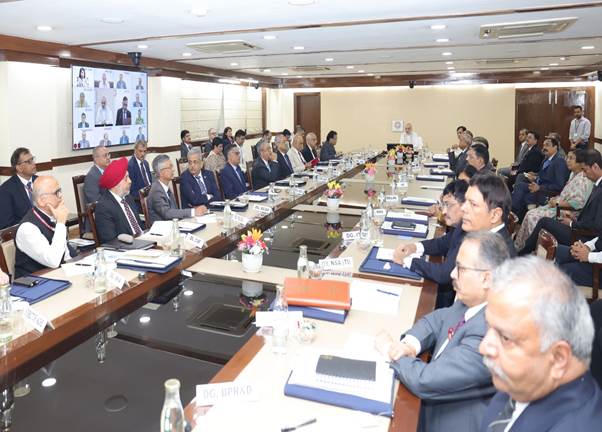
Union Home Minister inaugurates 7th National Security Strategies Conference – 2024 

| Published on:

Union Home Minister and Minister of Cooperation, Shri Amit Shah inaugurated the two-day National Security Strategies Conference – 2024 in New Delhi today.

Prior to the inauguration, Union Home Minister laid a wreath at the Martyrs column and paid homage to the valorous martyrs who made the supreme sacrifice in the line of duty.

In order to implement the decisions taken during the annual DGsP/IGsP Conference chaired by Prime Minister Shri Narendra Modi, Union Home Minister today launched the DGsP/IGsP Conference Recommendations’ Dashboard developed by the NCRB.

In the two-day conference, the roadmap to solutions to emerging national security challenges will be chalked out with the top police leadership of states, UTs, CAPFs, and CPOs.

The idea of National Security Strategies Conference was conceived by the Prime Minister Shri Narendra Modi during the DGsP/IGsP Conference with the objective of finding solutions to major National Security challenges through discussions amongst a unique mix of senior police leadership managing national security challenges, young police officers working at the cutting-edge level and domain experts of specialised fields. During the DGsP/IGsP Conference – 2020, the Prime Minister Modi had directed that the Conference be held in a hybrid mode for wider participation.

Over 750 officers are participating in the Conference from across the country, which is being held in a hybrid format combining physical and virtual modes. Shri Nityanand Rai and Shri Bandi Sanjay Kumar, Ministers of State for Home Affairs, Union Home Secretary Shri Govind Mohan, Additional/Deputy NSA’s and Heads of CAPFs and CPOs are attending the Conference in Delhi. DGsP of States and UTs as also young police officers at the cutting-edge level and domain experts from specialised fields joined the conference from the respective state capitals through the virtual mode.

PM’s addresses the 2nd Asia Pacific Civil Aviation Ministers Conference in New Delhi

| Published on:

I extend a heartfelt welcome to all the dignitaries from different countries. Over the past two days, you have discussed several important topics related to this sector. I believe that we have some of the brightest minds in the civil aviation sector here, which reflects our collective commitment and the potential of the Asia Pacific Region. This organisation has completed 80 years, and under the guidance and leadership of our Minister Shri Naidu, a major initiative of planting 80,000 trees, with ‘Ek Ped Maa Ke Naam’ (one tree for mother) has been undertaken. However, I would like to draw your attention to another matter. In our country, when a person reaches the age of 80, it is celebrated in a special way. According to our ancestors, reaching the age of 80 means having had the opportunity to see one thousand full moons. In a sense, our sector’s organisation has also witnessed one thousand full moons and has experienced seeing it closely. Thus, this 80-year journey in the earth wave is a memorable, successful, and commendable journey.

Friends,

Civil aviation has a significant role behind the current ongoing growth. Among the fastest-growing sectors in Bharat’s economy, aviation is one of them. We are connecting our people, culture, and prosperity through this sector. With 4 billion people, a rapidly growing middle class, and the resulting increase in demand, this is a significant driving force for the sector’s development. We are moving forward with the goal of creating a network of opportunities in this region—one that will drive economic growth, promote innovation, and strengthen peace and prosperity. Securing the future of aviation is our shared commitment. You have all seriously deliberated on opportunities related to civil aviation. Thanks to your efforts, the Delhi Declaration is now before us. This Declaration will advance our commitment to regional connectivity, innovation, and sustainable growth in aviation. I am confident that actions will be taken swiftly on every point. We will implement this Declaration and reach new heights with collective strength. The Asia Pacific Region’s collaboration in increasing aviation connectivity and sharing knowledge, expertise, and resources among us will likely further enhance our strength. We will also need more investment in infrastructure, and it must remain a natural priority for all relevant countries. However, infrastructure alone will not suffice; a continuous process of skilled manpower and upgraded technology is crucial for development, and I believe this is another type of investment we need. Our goal is to make air travel accessible to the common citizen. We need to make air travel safe, affordable, and accessible to everyone. I am confident that this Declaration, our collective efforts, and our extensive experience will be very beneficial.

Friends,

I would like to share Bharat’s experience with you today. Today Bharat has become a strong pillar in the world’s top civil aviation ecosystems. The growth in our civil aviation sector has been unprecedented. Bharat has shown a significant transformation in just one decade. Over these years, Bharat has evolved from being an aviation-exclusive country to an aviation-inclusive one. There was a time when air travel in Bharat was exclusive to a few people. Only a few major cities boasted good air connectivity, and a few resourceful people constantly took advantage of air travel. The weaker and middle classes only travelled occasionally, often out of necessity, but it was not a common part of their lives. However, today, the situation has completely changed in Bharat. Now, citizens from our tier-2 and tier-3 cities are also taking flights. In this regard, we have taken several initiatives, made policy changes, and developed systems to achieve this. I am confident that you will study Bharat’s UDAN scheme, which has made aviation inclusive in Bharat. This scheme has brought air travel to smaller cities and lower middle-class individuals in Bharat. Under this scheme, 14 million passengers have travelled so far, and many of whom have seen an airplane from the inside for the first time. The demand created by the UDAN scheme has led to the establishment of new airports in many small cities and hundreds of new routes. You will be amazed to know and as Naidu ji mentioned, the number of airports in Bharat has doubled in the past 10 years. We are also progressing rapidly in other spheres as well. On one hand, we are building airports in small cities, and on the other, we are working swiftly to modernise airports in large cities.

Bharat is set to become one of the most connected regions in the world in terms of air connectivity. Our airlines are also aware of this. That is why our Indian airlines have ordered over 1,200 new aircraft. The growth of civil aviation is not limited to planes and airports. The aviation sector is also accelerating job creation in Bharat. Skilled pilots, crew members, engineers, and many other jobs are being created. We are also making decisions to strengthen maintenance, repair, and overhaul (MRO) services. This is leading to the creation of high-skilled jobs. Bharat is moving forward with the goal of becoming a leading aviation hub by the end of this decade, with a $4 billion MRO industry. We have also developed MRO policies for this purpose. Air connectivity in tier-2 and tier-3 cities will turn hundreds of new cities in Bharat into centres of growth.

You are all familiar with innovations like multiport. This is a model of air transport that is enhancing ease of travel in cities. We are also preparing Bharat for advanced air mobility. The day is not far when air taxis will become a reality and a common mode of transport. Women-led development is our commitment, and you may have noticed that a significant decision made at the G20 Summit was regarding women-led development. Our aviation sector is greatly supporting our mission of women-led development. Nearly 15% of pilots are women in Bharat, compared to a global average of just 5%. Bharat has also implemented necessary advisories to make this sector more women-friendly, including return-to-work policies for women and special leadership and mentorship programs.

Friends,

I would like to share Bharat’s experience with you today. Today Bharat has become a strong pillar in the world’s top civil aviation ecosystems. The growth in our civil aviation sector has been unprecedented. Bharat has shown a significant transformation in just one decade. Over these years, Bharat has evolved from being an aviation-exclusive country to an aviation-inclusive one. There was a time when air travel in Bharat was exclusive to a few people. Only a few major cities boasted good air connectivity, and a few resourceful people constantly took advantage of air travel. The weaker and middle classes only travelled occasionally, often out of necessity, but it was not a common part of their lives. However, today, the situation has completely changed in Bharat. Now, citizens from our tier-2 and tier-3 cities are also taking flights. In this regard, we have taken several initiatives, made policy changes, and developed systems to achieve this. I am confident that you will study Bharat’s UDAN scheme, which has made aviation inclusive in Bharat. This scheme has brought air travel to smaller cities and lower middle-class individuals in Bharat. Under this scheme, 14 million passengers have travelled so far, and many of whom have seen an airplane from the inside for the first time. The demand created by the UDAN scheme has led to the establishment of new airports in many small cities and hundreds of new routes. You will be amazed to know and as Naidu ji mentioned, the number of airports in Bharat has doubled in the past 10 years. We are also progressing rapidly in other spheres as well. On one hand, we are building airports in small cities, and on the other, we are working swiftly to modernise airports in large cities.

Bharat is set to become one of the most connected regions in the world in terms of air connectivity. Our airlines are also aware of this. That is why our Indian airlines have ordered over 1,200 new aircraft. The growth of civil aviation is not limited to planes and airports. The aviation sector is also accelerating job creation in Bharat. Skilled pilots, crew members, engineers, and many other jobs are being created. We are also making decisions to strengthen maintenance, repair, and overhaul (MRO) services. This is leading to the creation of high-skilled jobs. Bharat is moving forward with the goal of becoming a leading aviation hub by the end of this decade, with a $4 billion MRO industry. We have also developed MRO policies for this purpose. Air connectivity in tier-2 and tier-3 cities will turn hundreds of new cities in Bharat into centres of growth.

You are all familiar with innovations like multiport. This is a model of air transport that is enhancing ease of travel in cities. We are also preparing Bharat for advanced air mobility. The day is not far when air taxis will become a reality and a common mode of transport. Women-led development is our commitment, and you may have noticed that a significant decision made at the G20 Summit was regarding women-led development. Our aviation sector is greatly supporting our mission of women-led development. Nearly 15% of pilots are women in Bharat, compared to a global average of just 5%. Bharat has also implemented necessary advisories to make this sector more women-friendly, including return-to-work policies for women and special leadership and mentorship programs.

Bharat has launched a very ambitious drone project in rural areas, especially in the agriculture sector. We have created a pool of trained drone pilots through the village-to-village ‘Drone Didi’ campaign. A new and unique feature of Bharat’s aviation sector is the Digi Yatra initiative, which is a digital solution for smooth and seamless air travel. It uses facial recognition technology to relieve passengers from various checkpoints at the airport, saving time. Digi Yatra is not only efficient, and convenient, but it offers a glimpse into the future of travel. Our region boasts a rich history, traditions, and diversity. We are wealthy in ancient cultural heritage and great traditions. Our culture and traditions are thousands of years old. The world is attracted to us for these reasons. We should also help promote tourism among our countries. Many countries worship Lord Buddha. Bharat has developed a Buddhist circuit and built an international airport in Kushinagar. If we undertake a campaign to connect Buddhist pilgrimage sites across Asia, we can create a win-win model for the aviation sector in related countries, and travellers in general. We should make efforts in that direction. Developing a comprehensive model for transporting passengers from one country to another can guarantee significant benefits to all related countries. If we develop an international Buddhist circuit, it would greatly benefit travellers and economies of all countries involved. The Asia Pacific countries can enhance cooperation in another area as well.

The Asia Pacific Region is now becoming a business hub. Executives or employees from around the world are coming to this region in large numbers. Naturally, some people have established offices here, leading to increased frequent travel. What common routes do these professionals frequently use? Can we re-route these routes with a comprehensive approach to better cater to their needs and make travel more convenient? I would like you to consider this direction as well, as the region’s development is assured, and the convenience for professionals will accelerate work progress. We are celebrating the 18th anniversary of the International Civil Aviation Organisation and the Chicago Convention. We need to renew our commitment to a resident and inclusive aviation sector. I am also aware of your concerns regarding cybersecurity and data security. While technology presents challenges, solutions also come from technology. We need to strengthen international collaboration, share technology and information openly, and thereby keep these systems secure. This Delhi Conference will reinforce our resolve to move forward with unity and shared purpose. We must work towards a future where the skies are open to all, where every person’s dream of flying is fulfilled. Once again, I welcome all the guests and express my heartfelt gratitude for your participation in this important summit. I extend my best wishes to all of you.

Tarang Shakti Exercise will strengthen cooperation, coordination & trust with friendly countries: Raksha Mantri

| Published on:

Raksha Mantri Shri Rajnath Singh has termed Multinational Exercise ‘Tarang Shakti’ as an effort to strengthen cooperation, coordination and trust with the partner countries. Addressing the gathering at the Distinguished Visitors’ Day event in the second phase of the multinational exercise in Jodhpur, Shri Rajnath Singh said that through Tarang Shakti, India has further strengthened its defence ties with all partner countries and instills confidence among them that whenever the need arises, we all will stand together.

Reiterating India’s vision of mutual coexistence and cooperation, Raksha Mantri said that our nation believes in all nations marching together holding each others hands. “When an exercise of such complexity and large magnitude takes place, soldiers with different work cultures, air combat experiences and war fighting principles learn a lot from each other,” Raksha Mantri said.

Raksha Mantri said, “Today’s landmark event is an opportunity to celebrate the grand achievements of the Indian Air Force. We are not only celebrating the achievements of being the fastest growing economy, but also taking pride that our armed forces are now being considered as one of the most powerful in the world.”

Elaborating further, Raksha Mantri said, “At the time of independence the Indian Air Force had only six squadrons of two types of aircraft. Similarly, the rest of the war equipment was not only old but also limited in number. But today, equipped with the best and modern aircrafts from around the world and next generation equipment, the Indian Air Force has transformed itself.”

Referring to the recent collaboration of Hindustan Aeronautics Limited with the French company Safran Helicopter Engines, Raksha Mantri said that we have transformed ourselves from being only an importer of arms and equipment to a nation which today exports arms and equipment to about 90 countries.  He further said, “Domestic defence sector has taken strong steps towards indigenisation in the manufacturing of weapons, platforms, aircraft etc. Today we have become self-reliant to a greater extent in the manufacturing of Light Combat Aircraft, Sensors, Radars and in executing electronic warfare.”

Minister of Culture and Tourism Shri Gajendra Singh Shekhawat also graced the Distinguished Visitors’ Day event at Exercise Tarang Shakti. Chief of Defence Staff (CDS) Gen Anil Chauhan, Chief of Air Staff (CAS) Air Chief Marshal VR Chaudhari, Chief of Army Staff (COAS) Gen Upendra Dwivedi, Chief of Naval Staff (CNS) Adm Dinesh K Tripathi, and senior military leaders from friendly foreign nations attended the event.

The event showcased a display by the Agniveer Vayu Women Air Warrior Drill Team (AWDT) and demonstrations from the LCA Tejas, LCH Prachand, Sarang & SKAT teams.

Later in the day, Raksha Mantri inaugurated the prestigious International Defence and Aerospace Expo (IDAX-24), which showcased India’s commitment to indigenous defence manufacturing and aerospace innovation.

The event saw enthusiastic participation from startups, MSMEs, and major aeronautical industries, with sixty-eight industry players presenting cutting-edge defence technologies. With participation from seven nations and twenty-one observer countries in phase two of the exercise, IDAX-24 underscored international collaboration, fostering dialogue, cooperation, and the exchange of expertise, further strengthening India’s global standing in defence and aerospace.

PM inaugurates SEMICON India 2024 in Greater Noida, Uttar Pradesh

| Published on:

The Prime Minister, Shri Narendra Modi inaugurated SEMICON India 2024 at India Expo Mart in Greater Noida, Uttar Pradesh today. Shri Modi took a walkthrough of the exhibition showcased on the occasion. The three-day conference from 11 to 13th September will showcase India’s semiconductor strategy and policy which envisions making India a global hub for semiconductors.

Addressing the gathering, the Prime Minister expressed gratitude to all members of SEMI saying that India is the eighth country in the world to organize an event related to the global semiconductor industry. “This is the right time to be in India. You are at the right place at the right time”, PM Modi emphasized, “In 21st-century India, the chips are never down.” He further added that the India of today assures the world, “When the chips are down, you can bet on India.”

Highlighting the connection between the semiconductor industry and a diode where energy traverses only in one direction, the Prime Minister said that India’s semiconductor industry is equipped with special diodes where energy flows in both directions. He explained that while industries invest and create value, the government on the other hand provides stable policies and Ease of Doing Business. The Prime Minister said that India provides an integrated ecosystem drawing parallels with an integrated circuit used in the semiconductor industry and highlighted the much-discussed talent of India’s designers. Informing that India’s contribution to the world of designing is 20 percent and is growing continuously, PM Modi said that India is creating a semiconductor workforce of 85,000 technicians, engineers and R&D experts. “India is focused on making its students and professionals industry ready”, the Prime Minister remarked, recalling the first meeting of the Anusandhan National Research Foundation which aims to give new direction and energy to India’s research ecosystem. He also mentioned a special research fund of Rs 1 trillion.

Prime Minister Modi underlined that such initiatives are bound to increase the scope of semiconductors and innovations in the science sector and also highlighted the government’s emphasis on semiconductor infrastructure. Explaining that India holds a three-dimensional power namely the present reformist government, the country’s growing manufacturing base and the nation’s aspirational market which is aware of the technological trends, the Prime Minister said that this base of 3D power is difficult to find elsewhere.

Highlighting the uniqueness of India’s aspirational and tech-oriented society, the Prime Minister said that the meaning of chips in India is not just limited to technology but is a medium to fulfill the aspirations of crores of citizens. Underlining that India is a huge consumer of such chips, PM Modi emphasized that the world’s finest digital public infrastructure was built upon it. “This small chip is doing big things to ensure last-mile delivery in India”, PM Modi said. Recalling the coronavirus crisis when the strongest banking systems of the world collapsed, Shri Modi said that banks in India were running continuously. “Be it India’s UPI, Rupay Card, Digi Locker or Digi Yatra, multiple digital platforms have become a part of the everyday life of the people of India”, he noted. To become self-reliant, the Prime Minister said that India is increasing manufacturing in every sector, making green transition on a large scale and the demand for data centers is also increasing. “India is set to play a big role in driving the global semiconductor industry”, he added.

The Prime Minister said there is an old saying – ‘Let the chips fall where they may’, that means whatever is going on…let it go on like that but today’s young and aspirational India does not follow this sentiment, he added, saying that  “India’s new mantra is increasing the number of chips produced in India”. Pointing out the numerous steps taken by the government to promote semiconductor manufacturing, Shri Modi highlighted that the government is offering 50% financial support for setting up semiconductor manufacturing facilities, with state governments also playing a key role in this effort. Because of these policies, he said, India has attracted investments worth more than Rs 1.5 trillion in a very short time and many more projects are in the pipeline. Shri Modi also shed light on the comprehensive approach of the Semicon India Program which provides financial support for front-end fabs, display fabs, semiconductor packaging and other critical components of the supply chain. “Our dream is that every device in the world will have an Indian-made chip,” he recalled declaring from the Red Fort this year. He reiterated India’s ambition to do whatever it takes to become a semiconductor powerhouse.

The Prime Minister also discussed the government’s focus on securing critical minerals needed for the semiconductor industry and mentioned the recently announced Critical Mineral Mission to boost domestic production and overseas acquisition. He underlined that India is working rapidly on customs duty exemptions and mining auctions for critical minerals. Shri Modi further revealed plans to establish a Semiconductor Research Center at the Indian Institute of Space Sciences, in collaboration with IITs, to produce not only high-tech chips for today but also next-generation chips. Talking about international collaborations the Prime Minister recalled ‘Oil Diplomacy’ and said that the world today is moving forward to an era of ‘Silicon Diplomacy.’  Prime Minister informed that India has been chosen as Vice Chair of the Indo-Pacific Economic Framework’s Supply Chain Council and is a key partner in the QUAD Semiconductor Supply Chain Initiative. Additionally, agreements have been signed with countries like Japan and Singapore, and India is deepening its cooperation with the United States in the semiconductor sector, he added.

The Prime Minister also urged those who question India’s focus on semiconductors to study the success of the Digital India Mission. He noted that the Digital India Mission aimed to provide the country with a transparent, effective and leakage-free governance and its multiplier effect can be experienced today. For the success of Digital India, the Prime Minister said that necessary reforms and infrastructure were initiated to make mobile handsets and data affordable in India. He noted that India was one of the largest importers of mobile phones a decade ago while today, it is the world’s second-largest producer and exporter of mobile phones. He cited India’s rapid progress, particularly in the 5G handset market and stated that India is now the second-largest market for 5G handsets globally, just two years after the rollout of 5G.

With India’s electronics sector now valued at over $150 billion, the Prime Minister outlined a larger goal to grow the country’s electronics sector to $500 billion and create 6 million jobs by the end of this decade. He said that this growth will directly benefit India’s semiconductor sector. “Our goal is that 100% of electronic manufacturing should happen in India. India will make semiconductor chips and the finished product too”, he added.

Prime Minister Modi emphasized, “India’s semiconductor ecosystem is a solution not just for India’s challenges but also for global challenges”. Drawing from the field of design, the Prime Minister referenced a metaphor—‘single point of failure’ and explained that design students are taught to avoid this flaw mainly due to the system’s dependence on just one component. He added that this principle applies equally to supply chains. “Whether it was Covid or war, there hasn’t been a single industry to remain unaffected by supply chain disruptions,” he remarked. Stressing the importance of a resilient supply chain, the Prime Minister expressed pride in India’s central role in building resilience across sectors, positioning the country as a key player in the global mission to safeguard supply chains.

Speaking about the relationship between technology and democratic values, the Prime Minister said that the positive power of technology is amplified when it is combined with democratic values. He also cautioned that the withdrawal of democratic values from technology results in harm in quick time. Shri Modi reaffirmed India’s focus on creating a world that remains functional even in times of crisis, saying, “Whether it is mobile manufacturing, electronics, or semiconductors, our focus is clear—we want to build a world that doesn’t stop or pause in times of crisis but keeps moving forward.” Concluding the address, the Prime Minister expressed confidence in India’s ability to strengthen global efforts and extended his best wishes to all stakeholders involved in this mission.

Chief Minister of Uttar Pradesh, Shri Yogi Adityanath, Union Minister for Electronics and Information Technology, Shri Ashwini Vaishnaw, Union Minister of State for Electronics and Information Technology, Shri Jitin Prasad, President and CEO of SEMI, Shri Ajit Manocha, President and CEO of Tata Electronics, Dr Randhir Thakur, CEO of NXP Semiconductors, Mr Kurt Sievers, CEO of Renesas, Mr Hidetoshi Shibata and CEO of IMEC, Mr Luc Van Den Hove were present on the occasion among others.

Background

It has been the vision of the Prime Minister to position India as a global hub for semiconductor design, manufacturing and technology development. Under this vision, SEMICON India 2024 is being organized from 11 to 13th September with the theme “Shaping the Semiconductor Future”. The three-day conference will showcase India’s semiconductor strategy and policy which envisions making India a global hub for semiconductors. It will witness the participation of top leadership of global semiconductor giants and will bring together global leaders, companies and experts from the semiconductor industry. More than 250 exhibitors and 150 speakers are taking part in the conference.

PM addresses second International Conference on Green Hydrogen

| Published on:

The Prime Minister, Shri Narendra Modi addressed the International Conference on Green Hydrogen via video message today.

The Prime Minister began his address by extending a warm welcome to all dignitaries at the 2nd International Conference on Green Hydrogen and said that the world is going through a crucial transformation. He emphasized the growing realization that climate change is not just a matter of the future but its impact can be felt now. “The time for action is here and now”, Shri Modi exclaimed. He noted that energy transition and sustainability have become central to global policy discourse.

Underlining the nation’s commitment towards creating a cleaner and greener planet, the Prime Minister informed that India was among the first G20 nations to fulfill its Paris commitments on green energy. He said these commitments were fulfilled  9 years ahead of the target of 2030. Throwing light on the advancements in the past 10 years, the Prime Minister said that India’s installed non-fossil fuel capacity increased nearly 300% and solar energy capacity got over a 3,000%  boost.Shri Modi underlined that we are not resting on these achievements and the nation remains focused on strengthening  existing solutions while also looking at new and innovative areas, saying this is where the of Green Hydrogen comes into the picture.

“Green Hydrogen is emerging as a promising addition to the world’s energy landscape”, the Prime Minister remarked, adding that it can help in decarbonizing industries which are difficult to electrify. He gave examples of refineries, fertilizers, steel, heavy-duty transportation and several other sectors that would benefit from it. PM Modi also suggested that Green Hydrogen can be used as a storage solution for surplus renewable energy. Reflecting on the National Green Hydrogen Mission launched in 2023, the Prime Minister outlined India’s goals to make it a global hub for the production,  utilization and export of Green Hydrogen. “The National Green Hydrogen Mission is giving an impetus to innovation, infrastructure, industry and investment”, PM Modi said. He highlighted the investments in cutting-edge research and development, partnerships between industry and academia and encouragement for start-ups and entrepreneurs of the domain. He also touched upon the great potential for the development of a green jobs eco-system and highlighted the government’s effort towards skill development for the nation’s youth in this sector.

Noting the global concerns of climate change and energy transition, the Prime Minister said that the answers to such concerns should be global as well. He stressed the critical need for International partnerships to promote Green Hydrogen’s impact on decarbonization and stated that scaling up production,  minimizing costs and building infrastructure can happen faster through cooperation. He also expressed the need to jointly invest in research and innovation to push technology further. Recalling the G20 Summit held in India in September 2023,  the Prime Minister highlighted the special focus on Green Hydrogen and underlined that The New Delhi G-20 Leaders’ declaration adopted five high-level voluntary principles on Hydrogen that are helping in the creation of a unified roadmap. “All of us must remember – the decisions we make now will decide the lives of our future generations”, he added.

Prime Minister Modi today called for greater global cooperation in advancing the Green Hydrogen sector and urged the domain experts and the scientific community to lead the way. “In such a crucial sector, it is important for domain experts to lead the way and work together,” he said, emphasizing the need for collective expertise to address the challenges facing the Green Hydrogen industry. The Prime Minister also encouraged scientists and innovators to propose public policy changes that would further support the sector. Shri Modi posed critical questions to the global scientific community, asking, “Can we improve the efficiency of electrolysers and other components in Green Hydrogen production? Can we explore the use of seawater and municipal wastewater for production?” He highlighted the need to address these challenges, particularly in using Green Hydrogen for public transport, shipping, and inland waterways. “Exploring such topics together will greatly help the green energy transition across the world,” the Prime Minister stated, expressing confidence that forums like the 2nd International Conference on Green Hydrogen would drive meaningful exchanges on these issues.

Reflecting on humanity’s history of overcoming challenges, the Prime Minister said, “Each time, we overcame adversities through solutions that were collective and innovative.” He emphasized that the same spirit of collective action and innovation would guide the world toward a sustainable future. “We can achieve anything when we are together,” Shri Modi remarked, urging global efforts to accelerate the development and deployment of Green Hydrogen. Concluding the address, the Prime Minister extended his best wishes to all participants of the 2nd International Conference on Green Hydrogen. “Let us work together to accelerate the development and deployment of Green Hydrogen,” he said, reinforcing the need for collaboration in building a greener and more sustainable world.

PM remembers Swami Vivekanand on 132nd anniversary of Chicago speech

| Published on:

The Prime Minister Shri Narendra Modi today shared the famous speech delivered by Swami Vivekananda in Chicago, USA, in 1893.

Shri Modi said that Vivekananda introduced India’s ages old message of unity, peace, and brotherhood, which continue to inspire generations.

The Prime Minister posted on X:

“On this day in 1893, Swami Vivekananda delivered his iconic address in Chicago. He introduced India’s ages old message of unity, peace and brotherhood to the world. His words continue to inspire generations, reminding us of the power of togetherness and harmony.”

PM chairs Semiconductor Executives’ Roundtable

| Published on:

Prime Minister Shri Narendra Modi chaired the Semiconductor Executives’ Roundtable at his residence at 7, Lok Kalyan Marg earlier today.

During the meeting, Prime Minister said that their ideas will not only shape their business but also India’s future. Mentioning that the coming time will be technology driven, Prime Minister said semiconductor is the basis of the Digital Age and the day is not far when the semiconductor industry will be the bedrock for even our basic necessities.

Prime Minister emphasised that democracy and technology together can ensure the welfare of humanity and India is moving ahead on this path recognizing its global responsibility in the semiconductor sector.

Prime Minister talked about the pillars of development which include developing social, digital and physical infrastructure, giving boost to inclusive development, reducing compliance burden and attracting investment in manufacturing and innovations. He underscored that India has the capability to become a trusted partner in a diversified semiconductor supply chain.

Prime Minister talked about India’s talent pool and the immense focus of the government on skilling to ensure that trained workforce is available for the industry. He said that India’s focus is to develop products which are globally competitive. He highlighted that India is a great market for investing in hi-tech infrastructure and said the excitement shared by the leaders of the semiconductor sector today will motivate the government to work harder for this sector.

Prime Minister assured the leaders that the Indian government will follow a predictable and stable policy regime. With the focus of Make In India and Make for the World, Prime Minister said that the government will  continue to support the industry at every step.

The CEOs appreciated India’s commitment to the growth of the semiconductor sector and said that what has transpired today is unprecedented wherein leaders of the entire semiconductor sector have been brought under one roof. They talked about the immense growth and future scope of the semiconductor industry. They said the centre of gravity of the semiconductor industry is starting to shift towards India, adding that the country now has a suitable environment for the industry which has put India on the global map in the semiconductor sector. Expressing their belief that what is good for India will be good for the world, they said India has amazing potential to become a global power house in raw materials in the semiconductor sector.

Appreciating the business friendly environment in India, they said that in the world of complex geopolitical situation, India is stable. Mentioning their immense belief in India’s potential, they said there is unanimous consensus in the industry that India is the place to invest. They recalled the encouragement given by the Prime Minister in the past as well and said the enormous opportunities present in India today were never seen earlier and they are proud to partner with India.

The meeting was attended by CEOs, Heads and representatives of various organisations including SEMI, Micron, NXP, PSMC, IMEC, Renesas, TEPL, Tokyo Electron Ltd, Tower, Synopsys, Cadence, Rapidus, Jacobs, JSR, Infineon, Advantest, Teradyne, Applied Materials, Lam Research, Merck, CG Power and Kaynes Technology. Also present in the meeting were Professors from Stanford University, University of California San Diego and IIT Bhubaneswar.

PM chairs First meeting of Governing Body of Anusandhan National Research Foundation

| Published on:

Prime Minister Shri Narendra Modi chaired the first meeting of the Governing Board of Anusandhan National Research Foundation at his residence at 7, Lok Kalyan Marg earlier today. The meeting focussed on discussion about India’s Science and Technology landscape and redesigning of research and development programmes.

During the meeting, Prime Minister said that today a new beginning has been made with the first meeting of the Governing Body of Anusandhan National Research Foundation. Prime Minister stressed on the need to identify and remove obstacles in the research ecosystem of the country. He talked about setting big targets, focusing on attaining them and doing path breaking research. He said that research should focus on finding new solutions to existing problems. He emphasised that problems might be global in nature but their solutions must be localised in accordance with Indian needs.

Prime Minister discussed the need for upgradation and standardisation of institutions. He suggested preparing a list of domain experts on the basis of their expertise. He also talked about developing a dashboard where information related to research and development happening in the country can be easily tracked.

Prime Minister stressed upon the need for Scientific monitoring of utilisation of resources for research and innovation. Saying that this is an ambitious beginning, he said the scientific community of the country should have faith that there will be no dearth of resources for their endeavours. Discussing the positive impacts of Atal Tinkering Labs, Prime Minister suggested that grading of these labs can be done. He also discussed research in various areas like looking for new solutions to the environment change, battery ingredients for EVs, lab grown diamonds, among others.

During the meeting, the Governing Body decided to launch a programme in hub and spoke mode by pairing universities where research is at nascent stage with top tier established institutions in mentorship mode.

Governing Body also discussed several areas of strategic interventions of ANRF which include global positioning of India in key sectors, aligning R&D with national priorities, promoting inclusive growth, capacity building, driving scientific advances and innovation ecosystem, as well as bridging the gap between academic research and industrial applications through industry-aligned translational research.

The ANRF will launch programmes on solution-focussed research in mission mode in select priority areas like Electric Vehicle (EV) mobility, Advanced Materials, Solar Cells, Smart Infrastructure, Health & Medical Technology, Sustainable Agriculture and Photonics. The Governing Body observed that these efforts would impactfuly supplement our march towards Aatmanirbhar Bharat.

While underscoring the translational research with active participation from the industry, the Governing Body also emphasized on promoting fundamental research for advancement of knowledge. It was decided to set up Centers of Excellence to support interdisciplinary research in humanities and social sciences. It was also agreed that there was a need to empower our researchers with flexible and transparent funding mechanism towards achieving ease of doing research.

The Governing Body also directed that the ANRF strategies should align with the goals of Viksit Bharat 2047 and implementation should follow global best practices adopted by research and development agencies across the world.

The meeting was attended by Shri Dharmendra Pradhan, Union Minister of Education as the Vice-President of Governing Body, Principal Scientific Adviser to the Government of India as Member Secretary, Member (Science), NITI Aayog and Secretary, Department of Science & Technology, Department of Biotechnology, Department of Scientific & Industrial Research and Department of Higher Education as its ex-officio members. Other prominent participants included Prof. Manjul Bhargava (Princeton University, USA), Dr. Romesh T Wadhwani (Symphony Technology Group, USA), Prof. Subra Suresh (Brown University, USA), Dr. Raghuvendra Tanwar (Indian Council of Historical Research), Prof. Jayaram N. Chengalur (Tata Institute of Fundamental Research) and Prof. G Rangarajan (Indian Institute of Science).

About Anusandhan National Research Foundation

Anusandhan National Research Foundation (ANRF) has been established to promote research and development and foster a culture of research and innovation throughout India’s Universities, Colleges, Research Institutions, and R&D laboratories. ANRF acts as an apex body to provide high-level strategic direction of scientific research in the country as per recommendations of the National Education Policy.  ANRF forges collaborations among the industry, academia, and government departments and research institutions.

‘Cyber security is not limited to the digital world only but is an important aspect of national security’

| Published on:

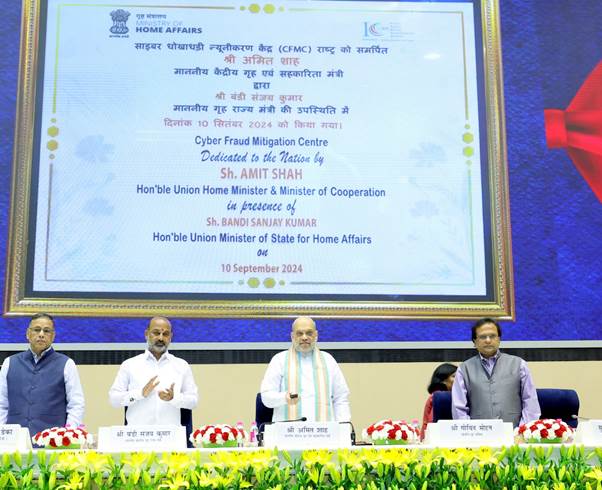
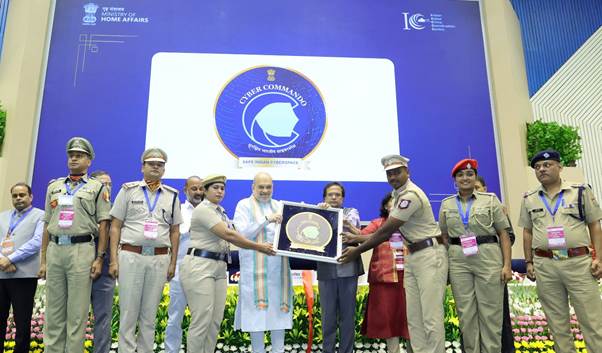
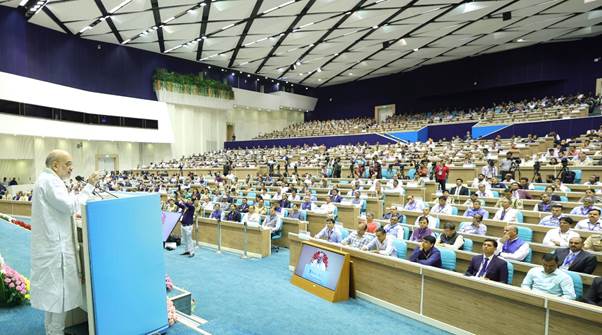
Union Home Minister and Minister of Cooperation Shri Amit Shah addressed the first Foundation Day program of the Indian Cyber Crime Coordination Centre (I4C) as the Chief Guest at Vigyan Bhavan in New Delhi today and launched key initiatives for prevention of cyber crime. The Home Minister dedicated the Cyber ​​Fraud Mitigation Centre (CFMC) to the nation and launched the Samanvay platform (Joint Cyber ​​Crime Investigation Facility System). Shri Amit Shah also inaugurated the ‘Cyber ​​Commandos’ program and Suspect Registry. The Union Home Minister also unveiled the new logo, vision and mission of I4C. Union Minister of State for Home Affairs Shri Bandi Sanjay Kumar, Union Home Secretary Shri Govind Mohan, Director IB, Special Secretary (Internal Security), Chief Secretaries and Director Generals of Police/Senior Police Officers of various States/Union Territories, officials from various government organisations, senior officials from various banks/financial intermediaries, FinTech, Media, Cyber ​​Commandos, NCC and NSS cadets were present on the occasion.

In his address, Shri Amit Shah underlined that I4C was established in 2015 under the ‘Safe Cyber ​​Space’ campaign on the initiative of Prime Minister Shri Narendra Modi, since then it is continuously moving towards becoming a strong pillar of a cyber secured India. He added that in the 9-year journey from 2015 to 2024, this idea turned into an initiative and then into an institution and now it is moving towards becoming a huge pillar of a cyber secured India.

Union Home Minister said that development of any country is impossible without cyber security. He said that technology proves to be a blessing for human life and today technology is being used extensively in all new initiatives. He said that the increasing use of technology is also creating many threats and that is why cyber security is no longer limited to the digital world but has also become an important aspect of national security. Shri Shah said that platforms like I4C can make a huge contribution in dealing with such threats. He called upon I4C to continue awareness, coordination and joint efforts with the concerned stakeholders. The Home Minister said that no single institution can keep cyber space secured single-handedly. This is possible only when many stakeholders come on the same platform and move forward on the same method and path.

Shri Amit Shah said that four major cyber platforms of I4C have also been launched here today. He said that Cyber ​​Fraud Mitigation Centre (CFMC) was a vision of Prime Minister Shri Narendra Modi, which has been launched today. He said that along with this, Cyber ​​Commando, Samanvay platform and Suspect Registry have also been inaugurated today.

Union Home Minister said that in a vast country like India, having a separate Cyber Suspect Registry for each state would not serve any purpose because states have their own boundaries but cyber criminals have no boundaries. He said that it was the need of the hour to create a Suspect Registry at the national level and connect states with it to create a common platform to fight cyber crime. Shri Shah added that this initiative will help us a lot in preventing cyber crimes in the coming days.

Shri Amit Shah said that from today onwards, I4C is also starting a public awareness campaign. He said that efforts will be made to speed up this campaign through more than 72 TV channels, 190 Radio FM channels, cinema halls and many other platforms in the country. He said that this campaign cannot be successful unless the victim knows how to avoid cyber crime. Shri Shah said that creating awareness about the cyber crime helpline 1930 and other platforms of I4C will increase its utility and help us prevent cyber crimes. The Home Minister requested all the state governments to join this campaign and spread awareness in villages and cities.

Union Home Minister and Minister of Cooperation said that CFMC has also been inaugurated with the idea of ​​​​bringing banks, financial institutions, telecom companies, Internet Service Providers and police on a single platform and this will become a major platform for prevention of cyber crime in the coming days. He said that CFMC should work to identify the modus operandi (MO) of cyber criminals using different data and prevent it. Shri Shah said that under the Cyber ​​Commando programme, a target has been set to prepare about 5 thousand cyber commandos in 5 years.

Shri Amit Shah said that ‘duty to share’ instead of ‘need to know’ is the need of the hour and for this nothing can be more effective than the Samanvay platform. He added that the Samanvay platform has been taken forward with a data-driven approach and this is the first attempt in the country to create a shared data repository. The Home Minister said that the four initiatives launched today have been taken together by I4C and the police across the country, they will make a huge contribution in making the fight against cyber crime more robust, effective and successful.

Union Home Minister said that the number of internet users in the country was 25 crores on 31 March 2014, which is 95 crores on 31 March 2024. He said that due to the increase in downloading speed and reduction in cost, data consumption has also increased a lot. He said that earlier the average usage was 0.26 GB which has increased by almost 78 times to 20.27 GB today. Shri Shah added that due to the Digital India initiative, many facilities have become online in the country. He said that 35 crore Jan Dhan accounts, 36 crore Rupay debit cards, transactions worth Rs 20 lakh 64000 crore have been done digitally in 2024. He said that 46% of the world’s digital transaction volume is taking place in India today. Home Minister added that when digital accounts and digital transactions increase, the need for protection from digital fraud also increases a lot.

Shri Amit Shah said that in 2014, only 600 panchayats of the country were connected to the internet, whereas 2,13,000 panchayats are connected with the internet today. He said that with the increase in digital transactions and use of digital data, the responsibility of securing it from cyber fraud has also increased. He said that we are facing many challenges like sale of important personal data by cyber criminals, online harassment, women and child abuse, fake news and tool kits, misinformation campaigns and, even today, we need to do a lot to deal with them.

Union Home Minister said that in three new criminal laws – Bharatiya Nyaya Sanhita (BNS), Bharatiya Nagrik Suraksha Sanhita (BNSS) and Bharatiya Sakshya Adhiniyam (BSA) – all legal arrangements have been made to make our country cyber secured. He said that through many technology driven initiatives, they have been given a legal form. He said that many efforts have been made to ensure that investigation is based on scientific methods and to improve the quality of probe.

Shri Amit Shah said that I4C has done a great job in its journey of 9 years and in the short span of one year after becoming an official part of the Ministry of Home Affairs. He said that the biggest achievement of I4C is the 1930 national helpline number and it is the responsibility of all state governments and stakeholders to popularise it. Home Minister suggested organising an awareness fortnight to popularise the 1930 helpline. He said that all state governments and the Ministry of Home Affairs should take the initiative and organise an awareness fortnight after six months. Shri Shah said that if a campaign to popularise 1930 is run simultaneously on all platforms, then definitely the victims of fraud will feel safe, it will be stopped immediately and a fear will also be created in the minds of fraudsters.

Shri Amit Shah said that so far I4C has issued more than 600 advisories, blocked a wide range of websites, social media pages, mobile apps and accounts operated by cyber criminals. He said that a National Cyber ​​Forensic Laboratory has also been set up in Delhi under I4C. Shri Shah said that so far more than 1100 officers have been trained in cyber forensics and this is our very important and ambitious program to take this campaign down to the districts and tehsils.

Union Home Minister said that keeping in mind the complaints of cyber crime,  7 Joint Cyber ​​Coordination Teams have been formed at Mewat, Jamtara, Ahmedabad, Hyderabad, Chandigarh, Visakhapatnam and Guwahati and they have yielded very good results. He said that I4C has also launched an effective awareness campaign on various social media handles under Cyber Dost. Shri Shah said that with all these efforts we have definitely reached a point but our goals are still far away. He said that to achieve the goal, we will have to make a precise strategy and move forward together in the same direction.

Cyber Fraud Mitigation Centre (CFMC): CFMC has been established at Indian cybercrime Coordination Centre (14C) in New Delhi with representatives of major banks, Financial Intermediaries, Payment Aggregators, Telecom Service Providers, IT Intermediaries and States/UTs Law Enforcement Agencies (LEAs). They will work together for immediate action and seamless cooperation to tackle online financial crimes. CFMC will serve as an example of “Cooperative Federalism” in law enforcement.

Samanvay Platform (Joint Cybercrime Investigation Facilitation System):  The platform is a web-based module that will act as a one stop portal for data repository of cybercrime, data sharing, crime mapping, data analytics, cooperation and coordination platform for Law Enforcement Agencies across the country.

‘Cyber Commandos’ Program: Under this program a special wing of trained ‘Cyber Commandos’ in States/UTs and Central Police Organizations (CPOs) will be established to counter threats of cyber security landscape in the country. Trained Cyber Commandos will assist States/UTs and Central Agencies in securing the digital space.

Suspect Registry: As part of this initiative a Suspect Registry of various identifiers is being created based on National Cybercrime Reporting Portal (NCRP), in collaboration with banks and financial intermediaries for strengthening fraud risk management capabilities of financial ecosystem.

PM welcomes Crown Prince of Abu Dhabi

| Published on:

The Prime Minister, Shri Narendra Modi today welcomed His Highness Sheikh Khaled bin Mohamed bin Zayed Al Nahyan, Crown Prince of Abu Dhabi in New Delhi. Both leaders held fruitful talks on wide range of issues.

Shri Modi lauded Sheikh Khaled’s passion to enhance the India-UAE friendship.

The Prime Minister posted on X;

“It was a delight to welcome HH Sheikh Khaled bin Mohamed bin Zayed Al Nahyan, Crown Prince of Abu Dhabi. We had fruitful talks on a wide range of issues. His passion towards strong India-UAE friendship is clearly visible.”

PM urges people to nominate inspiring personalities for the Padma Awards

| Published on:

The Prime Minister, Shri Narendra Modi has urged the people of India to actively participate in the nomination process for the prestigious Padma Awards.

Shri Modi emphasized the importance of recognizing grassroots-level heroes who have made significant contributions to society. Emphasising the transparent and participatory approach of the nomination process, Shri Modi has expressed his happiness at the number of nominations already received and urged more people to nominate deserving candidates for the prestigious Padma Awards through the official portal at awards.gov.in.

In a X post, the Prime Minister said;

“Over the last decade, we have honoured countless grassroots level heroes with the #PeoplesPadma. The life journeys of the awardees have motivated countless people. Their grit and tenacity are clearly visible in their rich work. In the spirit of making the system more transparent and participative, our Government has been inviting the people to nominate others for various Padma awards. I am happy that several nominations have come. The last day to nominate is the 15th of this month. I urge more people to nominate inspiring personalities for the Padma Awards. You can do so on- awards.gov.in