PM speaks with Prime Minister of Nepal

| Published on:

Prime Minister Narendra Modi had a telephone conversation with the Rt. Hon’ble Mr. Pushpa Kamal Dahal ‘Prachanda’, Prime Minister of Nepal today.

The two leaders reviewed various aspects of the India-Nepal bilateral cooperation and followed-up on discussions held during Prime Minister Prachand’s recent visit to India from 31 May to 3 June 2023, so as to advance the bilateral partnership and to further strengthen the deep bonds of friendship between the two countries.

Nepal, a close and friendly neighbor, is a key partner in India’s ‘Neighbourhood First’ policy.

This telephone conversation continues the tradition of high level exchanges between the two countries.

Under the leadership of PM, importance has been given to infrastructure development in the country: Amit Shah

| Published on:

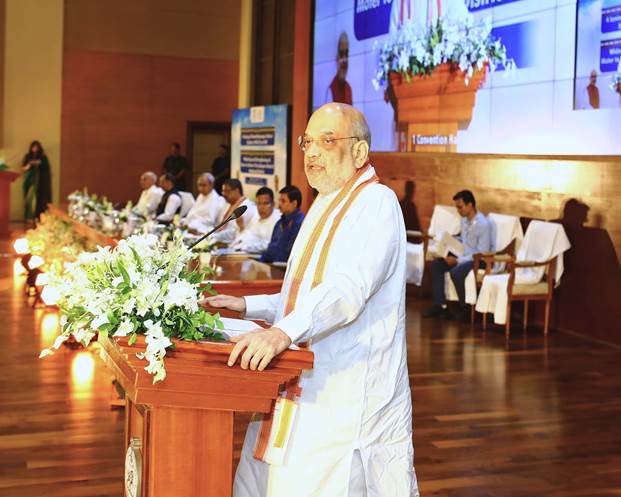
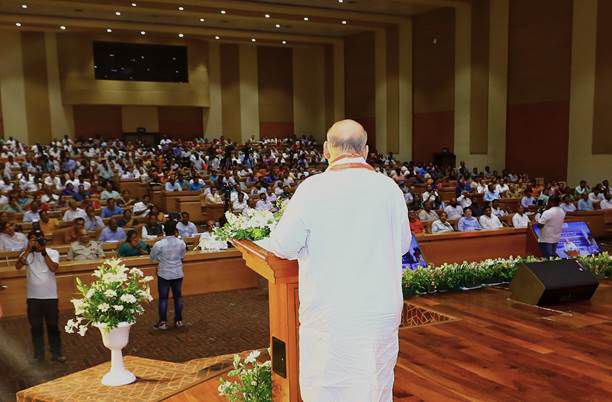
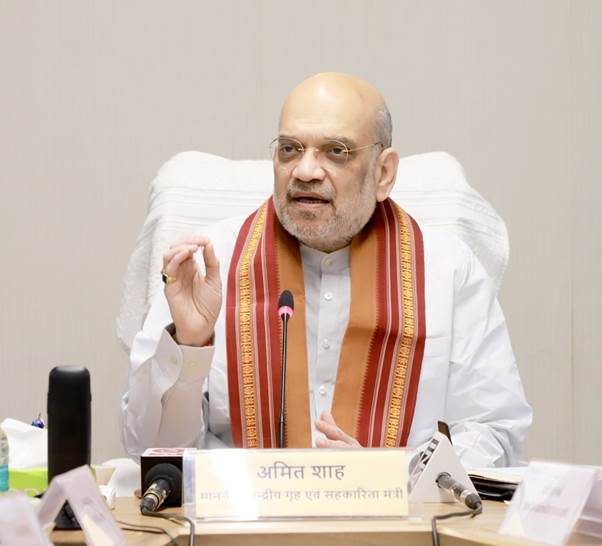
Union Home Minister and Minister of Cooperation, Shri Amit Shah dedicated the widening of Kamakhyanagar-Duburi section to 4 lanes at a cost of Rs. 761 crore and laid the foundation stone of widening and strengthening of road from Motar to Baner via Ladugaon at a cost of Rs. 34 crore in Bhubaneshwar, Odisha today. Several dignitaries including Chief Minister of Odisha, Shri Naveen Patnaik and Union Minister of Education and Skill Development, Shri Dharmendra Pradhan were present on the occasion.

Union Home Minister said that on August 5, 2019 Prime Minister Shri Narendra Modi took a historic decision to abrogate Article 370 and integrate Kashmir with India forever. He said that today Kashmir has not only joined the mainstream but the path of development along with peace has also been paved there.

Shri Amit Shah said that the widening of Kamakhyanagar-Duburi to four lanes has been dedicated to the nation today. 761 crore has been spent on this 51 kilometer long section. The highway will be important in connecting the mineral-rich Angul and Dhenkanal districts of Odisha with the rest of the state and the country through the National Highway. He said that the country’s  development and growth of the economy are linked with the highways. Shri Shah said that Prime Minister Shri Narendra Modi has done a lot of work for the development of highways in the country in the last 9 years. He said that today the widening and strengthening of the road from Moter in Kalahandi to Baner via Ladugaon has also started. The work on this 15 kilometre long road will be done at a cost of Rs 34 crore.

Union Home Minister and Minister of Cooperation said that in the last 9 years, under the leadership of Prime Minister Shri Narendra Modi, a lot of importance has been given to infrastructure development in the country and there is no shortage of budget for this. He said that Prime Minister Modi believes that the country cannot develop without the development of infrastructure. Shri Shah said that the Modi government has accelerated the pace of construction of highways by adopting a scientific approach for faster toll collection through fast tag, efficiency in land acquisition process, speedy resolution of disputes, emphasis on information technology and finding alternative methods of funding. He said that construction of highways boosts economic activities in the country.

Shri Amit Shah said that the Modi government has started many development projects for Odisha which have given a boost to the state’s economy. He said that in 2014 Prime Minister Shri Narendra Modi had said that until the eastern part of the country is developed, the country cannot be fully developed. He said that when we bring the eastern and western regions of the country on equal footing on the scale of development, then only the country can develop. For this, the government led by Prime Minister Shri Narendra Modi has always given importance to the eastern region and has also given special attention to Odisha. Shri Shah said that once upon a time this entire region was affected by Naxalism, but in the last 9 years, the Modi government, along with the state governments, has successfully tried to crack down on Naxalism and it has yielded results also. Shri Shah said that Odisha and the Chief Minister of the state, Shri Naveen Patnaik have always supported the Central Government in cracking down on Naxalism. He added that the Modi government is determined to fight a strong battle against Naxalism.

Union Home Minister and Minister of Cooperation, said that the Narendra Modi government has done a lot of work for Odisha. He said that Rs 1,14,000 crore was given under Devolution and Grant-in-aid by the  previous government at the Centre, while the Modi government has given Rs 4,57,000 crore under both the heads. In addition, the Modi government has done the work of increasing the total allocation from Rs 3 lakh crore to Rs 18 lakh crore which is more than 6 times. He said that Prime Minister Modi gave Rs 10,000 crores for the railways in Odisha, provided Indian Oil pipeline  at a cost of Rs 800 crores, built IIT-Bhubaneswar, opened Indian Science Education and Research Centre, ESI Hospital Bhubaneswar was upgraded and 1500 bedded AIIMS Bhubaneswar was also established in the state.

Shri Amit Shah said that the Narendra Modi government does not want to leave any stone unturned for the development of Odisha. He said that under the Kisan Samman Nidhi Yojana, 40 lakh farmers of the state got benefited, under Jal Jeevan Mission pure drinking water reached 54 lakh houses, 90 lakh toilets were built, 3.25 Crore people are getting 5 kg rice per person per month free of cost, 6 lakh Ujjwala connections have been given and the work of building houses for 17 lakh villagers has also been done by the Narendra Modi government. He said that Odisha is a natural disaster prone state but Chief Minister Shri Naveen Patnaik has implemented every disaster management initiative of the Government of India. Along with this, the Odisha government itself has taken many new initiatives in the field of disaster management and has told the whole country that when the central and state governments work together, natural disasters can also be mitigated.  Shri Shah said that thousands of people had lost their lives in the cyclone that hit Odisha in 1999, but today whenever a cyclone hits Odisha, there are zero casualties, which is appreciated all over the world. He said that Prime Minister Shri Narendra Modi has made disaster management an important part of governance through NDRF and NDMA and Odisha government has given full support in this.

FM lays the foundation stone for the ‘Iconic Site Museum’ in Tamil Nadu

| Published on:

Union Finance Minister Tmt. Nirmala Sitharaman visited Adichanallur, an ancient and historical Iron-age burial site located in Thoothukudi District Tamil Nadu on Saturday, set along the banks of the Tamirabarani (Porunai) river. This archaeological site was one of five declared to be developed as ‘Iconic Sites’ in the Union Budget 2020-21.

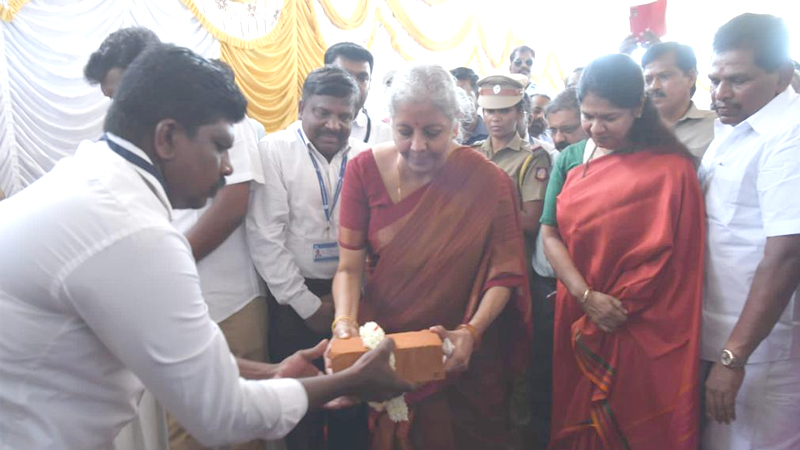
On the occasion, the Union Finance Minister also laid the foundation stone for the ‘Iconic Site Museum’ at the Adichanallur site.

Distinguished guests included Tmt Kanimozhi Karunanidhi, Member of Parliament, Thoothukudi Constituency; Thiru Anitha Radhakrishnan, Minister for Fisheries-Fishermen Welfare & Animal Husbandry – Government of Tamil Nadu; The District Collector of Thoothukudi Dr. K. Senthil Raj and the Director-General of the Archaeological Survey of India (ASI) Thiru KK Basha, Director (Archaeology) ASI   Dr. T. Arun Raj participated.

Tmt Sitharaman, in her remarks during the ceremony, noted the unique and rich history encapsulated by the Adichanallur site. Various objects dating back to 467 BCE and food grains such as millets and paddy dated 665 BCE have been unearthed here. The upcoming ASI Museum will showcase all these artefacts ‘in-situ’, providing a world-class experience to visitors and researchers alike.

The Finance Minister reminded the public that the Central Government, under Prime Minister Narendra Modi’s leadership, has committed funds to develop this museum, fulfilling an initiative outlined in the Budget 2021. The government envisions this site as a stop for pilgrims travelling to Tiruchendur, contributing to the cultural heritage and tourism of the region.

The FM shared that plans are in place for the ASI to construct an amphitheatre equipped with a light and sound show to further enhance the visitor experience. This initiative aligns with the broader efforts of PM Modi’s government to ensure the cultural integrity of the nation by celebrating and organising events such as the Kashi Tamil Sangaman and Saurashtra Tamil Sangaman.

As part of a concerted effort to preserve India’s rich cultural heritage, Tmt Sitharaman shared that the government is working tirelessly to repatriate artefacts belonging to Adichallanur from abroad, with a focus on items currently held in Berlin. Thus far, the government’s efforts have resulted in the return of over 350 ancient artefacts and items of historical importance to India.

Union Finance Minister highlighted various comprehensive efforts of the Central Government to honour, preserve, and showcase India’s rich cultural heritage for present and future generations.

Under PM Modi’s leadership, numerous heritage sites, including the Somnath, Kashi Vishwanath Temple, and more, have been revitalised. In line with this, several tourism circuits under the Swadesh Darshan Scheme, such as the Buddhist Circuit, Ramayana Circuit, Coastal Circuit, Desert Circuit, and Himalayan Circuit, are being established to promote tourism and bring due recognition to these places.

The Finance Minister also spoke on the ongoing development of five sites, known as ‘Panchtheerth’, based on Babasaheb Ambedkar’s life, along with the construction of the National War Memorial and National Police Memorial in Delhi, a tribute to India’s security forces. Tmt Sitharaman also mentioned that ten new Tribal Freedom Fighter Museums are being established across the country.

Union Finance Minister further highlighted that in the realm of knowledge preservation, over 3.3 lakh manuscripts containing 3.4 crore pages have been digitised. Furthermore, a plan for a new National Museum in Delhi, with 950 rooms spread across the North and South Blocks, has been announced. This National Museum will feature eight thematic segments, showcasing India’s civilizational culture spanning over 5,000 years.

Union Finance Minister also said that the ‘Pradhanmantri Sangrahalaya’, another notable project, has been established as a tribute to every Prime Minister of India since Independence. This museum serves as a narrative record of their contributions to the nation’s development over the past 75 years.

Raksha Mantri inaugurates 132nd Durand Cup in Kokrajhar, Assam

| Published on:

The 132nd edition of Durand Cup kicked off in Kokrajhar, Assam on August 05, 2023. Raksha Mantri Shri Rajnath Singh graced the opening ceremony, which marked the grand beginning of the annual football competition for the first time in the Assamese city. The tournament is organised by the Armed Forces and supported by the Government of Assam.

Addressing the enthusiastic crowd at the Sai Stadium, the Raksha Mantri complimented the efforts of the Armed Forces and Bodoland Territorial Council (BTC) for creating a positive environment in Kokrajhar which resulted in the event being organised in the city for the first time. He commended the people of the Northeast for their excitement and love for football, terming ‘the beautiful game’ as not just a sport, but an emotion. Stating that Assam has produced many football talents in recent times, Shri Rajnath Singh exuded confidence that the Durand Cup will encourage the youth to join the sport with renewed vigour.

Assam Chief Minister Shri Himanta Biswa Sarma spoke at length about the rich sports culture of the region and extended his best wishes to all participating teams. He thanked the Indian Army for organising the tournament in Kokrajhar and appreciated the efforts of BTC for its assistance.

The opening ceremony was witnessed by nearly 12,000 football fans from across the state and the region. Main attractions of the ceremony included a flypast by Sukhoi-30 MKI aircraft and Mi-17 helicopter, martial displays, Gatka and Bhangra along with the display of Bodo cultural dance by the local troupe.

Minister of Power, Sports and Youth Welfare, Cooperation & ITFC (Archaeology), Assam Smt Nandita Gorlosa; Minister of Handloom & Textile, Soil Conservation & Welfare of Bodoland Shri Urkhao Gwra Brahma; Chief Executive Member, BTC Shri Pramod Boro; Chief of the Army Staff Gen Manoj Pande; GOC-in-C Eastern Command Lt Gen RP Kalita; AOC-in-C, Eastern Air Command Air Marshal SP Dharkar; General Officer Commanding, Gajraj Corps Lt Gen Manish Erry; General Officer Commanding, Red Horns Division Maj Gen S Murugesan and President, All India Football Federation Shri Kalyan Chaubey were among those present on the occasion.

The inaugural ceremony was followed by the opening match of the tournament between Bodoland FC and Rajasthan United FC. Kokrajhar will witness eight group matches and one quarter-final to be played on August 24, 2023. A total of 24 teams, including two foreign teams from Nepal and Bangladesh, all three teams of Indian Armed Forces and the local team of Bodoland FC will clash at three venues in Kolkata, Guwahati and Kokrajhar during the tournament.

Prime Minister applauds digital health facilities

| Published on:

The Prime Minister, Shri Narendra Modi expressed great satisfaction that crores of people are getting full benefits from digital facilities of health.

In a tweet, Union Health Minister, Dr Mansukh Mandaviya informed that more than 5 crore Ayushman Bharat Health Accounts (ABHA) have been created through NCD portal under the National Program for Non-Communicable Diseases.

Responding to the tweet of Union Minister, the Prime Minister tweeted;

“बहुत अच्छी जानकारी! देशभर के हमारे गरीब भाई-बहनों को बेहतर स्वास्थ्य सुविधाएं मिलें, ये हमारी प्राथमिकता है। यह अत्यंत संतोष की बात है कि डिजिटल हो रही इन सुविधाओं से करोड़ों लोगों तक इनका भरपूर लाभ पहुंच रहा है।”

PM to lay foundation stone for redevelopment of 508 railway stations across the country on 6th August

| Published on:

In a historic initiative, Prime Minister Shri Narendra Modi will lay the foundation stone for redevelopment of 508 railway stations across the length and breadth of the country on 6th August at 11 AM via video conferencing.

Prime Minister has often laid stress on provision of state-of-the-art public transport. Noting that railways is the preferred mode of transport of people across the country, he has emphasised on the importance of providing world class amenities at railway stations. Guided by this vision, the Amrit Bharat Station Scheme was launched to redevelop 1309 stations across the country.

As part of this scheme, the foundation stone for redevelopment of 508 stations is being laid by the Prime Minister. These stations will be redeveloped at a cost of more than Rs 24,470 crores. Master Plans are being prepared for development of these stations as ‘City Centres’, with proper integration of both sides of the city. This integrated approach is driven by the holistic vision of overall urban development of the city, centred around the railway station.

These 508 stations are spread across 27 states and union territories, including 55 each in Uttar Pradesh and Rajasthan, 49 in Bihar, 44 in Maharashtra, 37 in West Bengal, 34 in Madhya Pradesh, 32 in Assam, 25 in Odisha, 22 in Punjab, 21 each in Gujarat and Telangana, 20 in Jharkhand, 18 each in Andhra Pradesh and Tamil Nadu, 15 in Haryana, 13 in Karnataka among others.

The redevelopment will provide modern passenger amenities along with ensuring well designed traffic circulation, inter-modal integration and well designed signage for guidance of passengers. The design of the station buildings will be inspired by local culture, heritage and architecture.

Union Cooperation Minister transfer funds to the genuine depositors of Sahara Group of Cooperative Societies

| Published on:

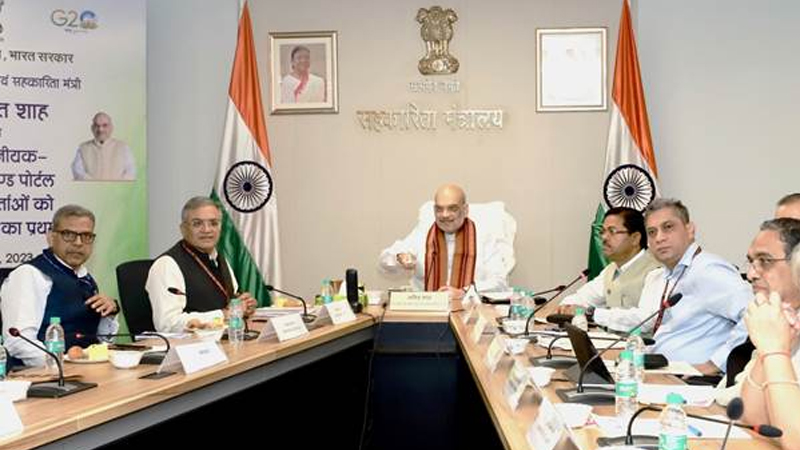
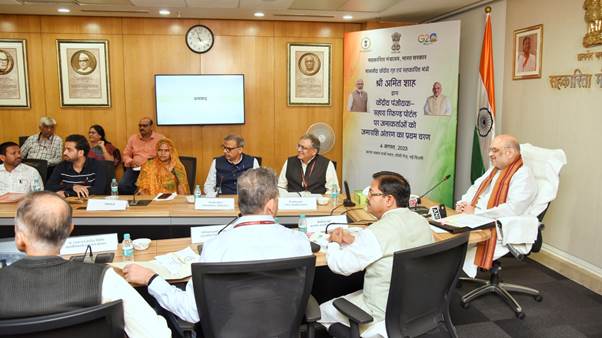
Union Home Minister and Minister of Cooperation, Shri Amit Shah launched the transfer of funds to the genuine depositors of Sahara Group of Cooperative Societies through CRCS-Sahara Refund Portal in New Delhi today. On this occasion, Union Minister of State for Cooperation, Shri BL Verma, former Supreme Court Judge Shri R. Subhash Reddy, Secretary, Ministry of Cooperation Shri Gyanesh Kumar, four Senior Officers on Special Duty (OSD) deputed to assist in the refund process and some depositors who received refunds were also present.

In his address, Shri Amit Shah said that under the leadership of Prime Minister Shri Narendra Modi, the Government of India is committed to protect the rights of every poor and middle class person of the country and to address the problems of the poorest and underprivileged section of the society. Ministry of Cooperation has achieved a big success in this direction today. He added that all the agencies have done commendable work to get back the deposited money of depositors in record time, with this the depositors are getting back their money. At the time of launch of CRCS-Sahara Refund Portal on July 18, 2023, it was informed that the amount would be paid to the genuine depositors within 45 days of registering on the portal, but the committee constituted by the Supreme Court and all the agencies of the Government of India, working together, have done commendable work in record time.  The process of transfer of funds has started in less than a month, due to which Rs. 10,000 are being deposited to  bank accounts of each of 112 beneficiaries. Shri Shah said that this initiative of the Ministry of Cooperation has instilled satisfaction and confidence in the minds of crores of investors.

Union Home Minister and Minister of Cooperation said that at the time of the formation of the Ministry of Cooperation, the ministry had various challenges like the task of restrengthening the cooperative structure, making timely changes in the cooperative laws made about 75 years ago, and re-establishing the lost faith in cooperatives among the public. The Ministry of Cooperation has worked to solve all these challenges. The efforts were made to help crores of investors of the country to refund crores of rupees stuck in the four co-operative societies of Sahara Group since last about 15 years. Shri Shah said that around 33 lakh investors have been registered on the CRCS-Sahara refund portal.

Shri Amit Shah said that about a year back, the Ministry of Cooperative started a series of meetings to refund the money of investors stuck in four cooperative societies of Sahara Group. By bringing all the stakeholders together, the Ministry of Cooperation along with all the departments filed a petition in the Supreme Court.  The Supreme Court gave a historic judgment that a committee headed by a former Supreme Court Judge will be formed and the process of refund to genuine depositors to be done in a transparent manner.

Union Home Minister and Minister of Cooperation said that today 112 investors with an amount of Rs 10,000  are being paid as the small investors have the first right on the amount to be refunded. But in the coming time, all the investors will get their money back for sure. He said that the release of next instalment of payment will take even lesser time as the audit process have been completed. Shri Shah said that it is the responsibility of the country’s government and administration to secure the deposits of every citizen of the country and return their stuck deposits by using the rights under the constitution to enact law. Shri Shah assured the investors of cooperative societies of Sahara Group that the Modi government is making constant efforts to get back every single Rupee of their hard earned money. Shri Amit Shah thanked the former Supreme Court Judge, Shri R. Subhash Reddy, Secretary, Ministry of Cooperation Shri Gyanesh Kumar, Special Secretary Shri Vijay Kumar and officials of the Ministry of Cooperation and all concerned agencies for initiating the process of transfer of funds in record time. The depositors of Sahara Group expressed their gratitude for the efforts made by the Ministry of Cooperation, under the leadership of Prime Minister Shri Narendra Modi and guidance of Union Home Minister and Minister of Cooperation Shri Amit Shah to refund their money.

Today, in the first phase, 112 depositors of Sahara Group’s cooperative societies paid Rs 10,000 each through their Aadhaar linked bank accounts. Based on the analysis of the first stage, “SOP (Standard Operating Procedure)” is being prepared by the auditor with the help of Amicus curiae for verification of claims.

Union Home Minister and Minister of Cooperation, Shri Amit Shah had launched the Central Registrar of Cooperative Societies (CRCS)-Sahara Refund Portal https://mocrefund.crcs.gov.in on 18th July 2023. This portal has been developed for submission of claims by genuine depositors of Cooperative Societies of Sahara Group – Sahara Credit Cooperative Society Limited, Saharayan Universal Multipurpose Society Limited, Hamara India Credit Cooperative Society Limited and Stars Multipurpose Cooperative Society Limited.

Hon’ble Supreme Court vide its order dated 29th March 2023 directed that Rs. 5000 Crores be transferred out of the “Sahara-SEBI Refund Account”, to the Central Registrar of Cooperative Societies (CRCS) for disbursement against the legitimate dues of the genuine depositors of the Sahara Group of Cooperative Societies. The whole process of disbursement is being supervised and monitored by Justice R. Subhash Reddy, Former Judge of Hon’ble Supreme Court with the assistance of Shri Gaurav Agrawal, learned Advocate, Amicus Curiae as per directions of Hon’ble Supreme Court. Four senior Officers on Special Duty (OSDs) have been appointed for each of the above Societies for assisting in the refund process.

The online Portal developed for submission of claims is user friendly, efficient and transparent. The entire process is digital. Necessary checks and balances have been incorporated in the Portal to ensure that only the legitimate deposits of the genuine depositors are refunded. The portal can also be accessed through Ministry of Cooperation website. The genuine depositors of these Societies have to submit their claims by filling online application form available on the portal and upload requisite documents. The depositors will be verified through Aadhaar card to ensure their identity. After the verification of their claims and uploaded documents by the appointed Societies Auditors and OSDs, the payment to the genuine depositors will be credited in their Bank account within 45 days after filing their online claims, subject to availability of funds and they will be intimated the status through SMS/Portal. The genuine depositors of the Societies are requested to ensure that they have Aadhar linked mobile number and Bank Account along with requisite documents as proof of their claim and deposits.

Piyush Goyal emphasizes upon need for enhanced collaboration and trust-building between India and Latin American & Caribbean region

| Published on:

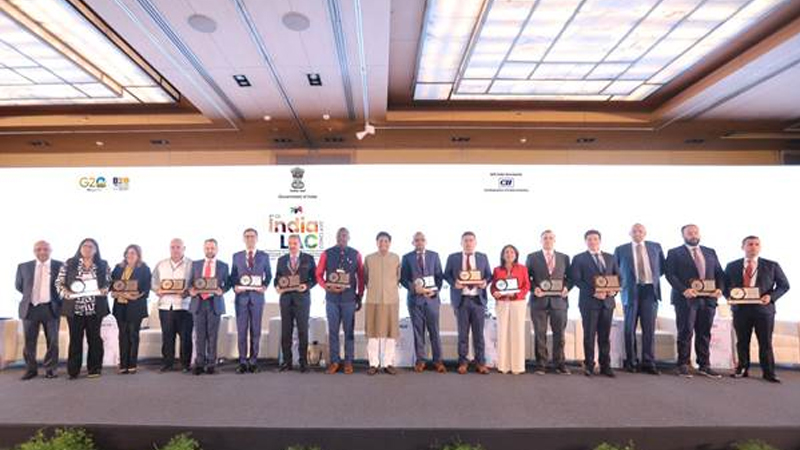
Union Minister for Commerce and Industry, Consumer Affairs, Food & Public Distribution and Textiles, Shri Piyush Goyal emphasized upon the need for enhanced collaboration and trust-building between India and the Latin American & Caribbean (LAC) region. While addressing the Special Ministerial Session at the ‘9th CII India-LAC Conclave’ held yesterday in New Delhi, the Minister said that India and LAC region share cultural ties and have emerged out of the shadows of colonial past.

Shri Goyal said that India is keen for faster economic growth through enhanced trade and investment, integration of businesses through collaborations and Free Trade Agreements (FTA). He presented a comprehensive four-point agenda aimed at fostering deeper cooperation between India and LAC region: (i) Boosting Trade Flows, (ii) Leveraging Bilateral Partnership, (iii) Healthcare and Pharmaceuticals Cooperation and (iv) Addressing Global Issues.

For boosting trade flows, Shri Goyal advocated for the formulation of a well-structured roadmap that capitalizes on the comparative and competitive strengths of each country. He said that this strategic approach would facilitate the augmentation of trade flows between India and the LAC nations. He said that India and the LAC region must work towards larger Global South cooperation in various multilateral forums.

To leverage bilateral partnership, the Minister highlighted the potential for bilateral collaboration to stimulate greater investment inflows. He emphasized upon the importance of integrating supply chains, particularly in sectors such as tourism, hospitality, and healthcare. Shri Goyal said that by pooling resources, India and the LAC region can develop cost-effective solutions with global implications.

For healthcare and pharmaceuticals cooperation, the Minister underlined the significance of mutual recognition agreements in the pharmaceutical sector, coupled with the adoption of smarter regulatory practices. Shri Goyal said that this approach aims to prevent reliance on high-cost medicines and paves the way for collaborative solutions to complex challenges.

To address global issues, the Minister conveyed his belief that collective efforts between India and the LAC region could lead to innovative solutions for even the most intricate global problems. Shri Goyal said that contemporary global challenges call for all of us to work together by forging partnerships, integrating supply chains and utilising our mineral resources, technology, skills, labour force, etc. in a collaborative manner. The Minister said that this would help address challenges of poverty, climate change, inequality, etc.

Shri Piyush Goyal highlighted India’s aspiration to achieve a USD 35 trillion economy by 2047 under the leadership of the Prime Minister, Shri Narendra Modi. He expressed his confidence that this ambitious goal would open up numerous avenues for robust India-LAC partnerships, which could serve as a catalyst for positive global impact. The Minister invited the LAC nations to join the development journey of India to work together as trusted partners and expand shared interests.

Shri Goyal said that India and the LAC region must work together towards making the world a better place for the future generations. The Minister said that efforts must be made to build an atmosphere of trust and work towards exponential growth of trade between India and the LAC region. He highlighted that infrastructural development, digital connectivity, strong macroeconomic fundamentals, etc. along with demographic dividend presents India as a leading partner for economic growth.

The session featured insights from various dignitaries from the LAC region: H.E. Johann Álvarez, Vice Minister of Foreign Trade and Investment Promotion, Ministry of Popular Power of Economy and Finance and Foreign Trade, Venezuela; H.E. Mr. Alexandre Corona Quintero, Governor of the People’s Power of the Cienfuegos Province, Republic of Cuba; H.E. Mr. Samuel Alejandro García Sepúlveda, Governor of Nuevo Leon State, Government of Mexico; H.E. Mr. Rodolfo Pastor de Maria y Campos, Secretary of State in the office of the Presidency, Republic of Honduras; H.E. Mr. Henry Charles Fernandez, Minister of Tourism, Civil Aviation, Transportation and Investment, the Government of Antigua & Barbuda; H.E. Mr. Sergio Armando Cusicanqui Loayza, Minister of Development Planning, Plurinational State of Bolivia; and H.E. Mr. Andy Joseph Williams, Minister for Mobilisation, Implementation and Transformation, Government of Grenada.

Overall, the session underscored the shared vision of India and the LAC region to forge closer ties, capitalize on each other’s strengths, and collectively contribute to global welfare and progress. The ‘9th CII India-LAC Conclave’ encompassed discussions across 12 distinct sectors, embodying the overarching theme of ‘Furthering Economic Partnerships for Shared & Sustainable Growth.’ This theme underscores the collective goal of nurturing strong and lasting economic ties for mutual prosperity.

Under the trade and investment outreach strategy of the Department of Commerce, the CII India-LAC Conclave is scaled up with the collaboration of Invest India, Export Promotion Councils such as EEPC, Pharmexcil, Chemexcil, ESC, ACMA and SIAM. On the sidelines of the Conclave, the Department of Commerce hosted bilateral meetings with the Latin American and Caribbean countries.

Our cost of producing renewable energy is the cheapest in the world: R. K. Singh

| Published on:

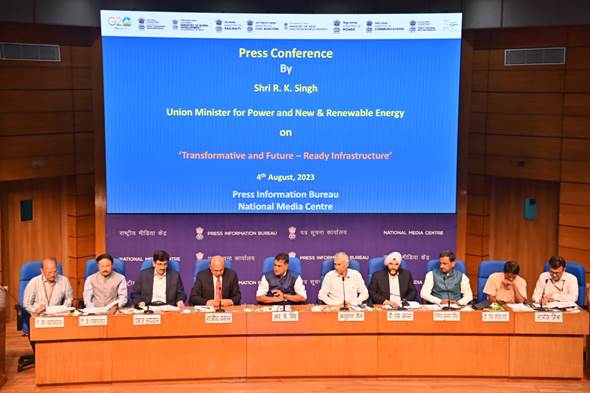
The Union Minister for Power and New & Renewable Energy Shri R. K. Singh has said that the fact that India was a developing country is a thing of the past and that we are now vying with the best in the world and the same is true for the infrastructure sector as well. The Minister was addressing a press conference on “Transformative and Future-Ready developments in the infrastructure sector”, in New Delhi today. “The story of transformation in infrastructure is mind-boggling. Now, we are transforming our country into a developed country, a future-ready infrastructure is the basic requirement for a developed country. We are modernizing at a very rapid pace,” the Minister added. The Union Power & NRE Minister  briefed the media about infrastructure developments in Power, New & Renewable Energy, Roads & Highways, Rural Connectivity, Railways, Civil Aviation, Shipping, Ports & Waterways, and Telecom sectors. Secretaries and Senior Officers of concerned Ministries were also present for the press conference.

The Minister said that India recovered faster than anybody after the COVID-19 pandemic. “We have been growing at 7.2%, the fastest in the world, while other developed countries have been growing at 1.2% – 1.5%. Our rate of inflation is 5% – 6%, while that of developed countries was 9% approximately. This is because we planned for it, of which one major part is investment in modernizing infrastructure.” The Minister recalled that budgetary allocation for capital expenditure increased nearly five times from 2014 onwards, tripling in the last four years. In 2019-20, it was Rs. 3.4 lakh crores and in 2023-24, it is now Rs. 10 lakh crores, he added.

Shri Singh said that not only has the capital expenditure increased but the efficiency of capital utilization has also increased due to better planning through PM Gati Shakti, based on a “Whole-of-Government” approach. He added that project monitoring mechanisms like PRAGATI also help resolve issues fast. Infrastructure has been built at a speed and scale never seen before.

The following are the key achievements in infrastructure sectors which have been highlighted by the Minister, spanning across various domains including road transport, shipping, rural connectivity, telecom, power and renewable energy.

Power

  • 1,90,285 MW of electricity generation capacity has been added Since 2014 transforming the country from power deficit to power surplus.
  • The current installed electricity generation capacity of 4,21,901 MW is close to double the peak demand and power is being exported to neighbouring countries.
  • 1,82,801 circuit kilometers of transmission lines have been added since 2014 connecting the whole country into one integrated grid running on one frequency.
  • Transmission lines in India deploy some of the most cutting-edge technologies in the world such as 800 KV HVDC and span some of the most challenging terrain in the world.
  • On the 15th of August, 2015, Hon’ble Prime Minister announced from the ramparts of the Red Fort the target of electrifying every village in 1000 days.  The target was achieved in 987 days – 13 days ahead of the target date.  The International Energy Agency called this the biggest news of the energy sector in 2018 in the world.
  • The Hon’ble Prime Minister launched the Pradhan Mantri Sahaj Bijli Har Ghar Yojana – SAUBHAGYA in October 2017 with the objective to achieve universal household electrification. A total 2.86 crores homes were connected with electricity.  This was the largest expansion of access in such a short time frame in the history of the energy sector of the world as stated by the International Energy Agency.
  • The distribution systems were strengthened on a scale which is unprecedented.  Schemes for strengthening the distribution system in all States were implemented at a sanctioned cost of Rs.2,01,722 crores.
  • The average availability of power in rural areas – which was 12½ hours in 2014 is 20 ½ hours today.   In urban areas, the average is 23 ½ hours.

New and Renewable Energy

  • India has achieved its NDC target of 40% of the installed electricity capacity from non-fossil energy sources 9 years ahead of schedule, in 2021.
  • During 2014-23, 64.3 GW solar capacity was added which is 23 times of capacity installed as on 31.03.2014.
  • About 90 lakh solar lighting systems were distributed during 2014-23, which is 3.8 times of total systems distributed as on 31.03.2014.
  • 5.3 lakh solar pumps have been provided to farmers during last 9 years, which is 45 times of the total pumps installed as on 31.03.2014.
  • Share of renewable energy (excluding large hydro) in the electricity mix increased from 6.4% in 2013-14 to 12.5% in 2022-23.
  • Solar tariff has reduced from over Rs. 6/ unit in 2014 to less than Rs. 2/unit (Rs. 1.99/ unit) in 2020-21.
  • Solar module manufacturing capacity has increased by 10 times, from 2.4 GW/ annum in 2014 to 25 GW/ annum in 2023. Indigenous solar cell manufacturing capacity of 6 GW/ annum has also been installed in the country in last 9 years.
  • Wind turbine manufacturing capacity has increased by 1.5 times, from 10 GW/ annum in 2014 to 15 GW/ annum in 2023.
  • Foreign Direct Investment (FDI) in renewable energy sector increased by 3.7 times, with FDI of USD 11.1 billion coming in last 9 years as compared to FDI of USD 3.0 billion received as on 31.03.2014.
  • Loan disbursement by IREDA for renewable energy projects increased by about 6 times, from Rs. 14,320 Crore as on 31.03.2014 to Rs. 82,777 Crore during last 9 years.

Roads and Highways

  • The capital expenditure in Roads sector has increased by almost 5 times from Rs. 51,204 cr in 2013-14 to Rs. 2,41,028 cr in 2022-23.
  • The total length of National Highways has increased by 59% from  91,287 km in 2013-14 to 1,45,240 km in March 2023).
  • In 2013-14, the pace of NH construction was about 11.6 km/ day which increased to about 28.3 km/ day in 2022-23.
  • The increase in work awards and construction for NH is 241% and 142% respectively between 2013-14 and 2022-23.
  • The length of Four-lane highways more than doubled from 18,371 km in 2013-14 to 44,654 km at present.
  • The length of High Speed Corridors increased from 353 km in 2014 to 3106 km in 2023. Access Controlled Corridors of about 9000 km are under various stages of implementation.
  • The NH length in the North-Eastern states has increased by 32% between FY 2014-15 and FY2022-23, from ~11,000 km as on 1st April 2014 to ~14,400 km currently.
  • With the introduction of FASTag, the waiting time at the toll plazas has reduced from 12.23 minutes in 2014 to 47 seconds in 2023.

Rural Roads – PMGSY

  • A total 7,42,398 Km road length constructed @ 91 Km per day, as on July, 2023, by incurring an expenditure of Rs. 3,06,358 Crores as compared to 3,81,393 Km @ 80 Km per day as on March, 2014 with an expenditure of Rs. 1,11,325 Crores.
  • Now, rural roads upto 5.5 m width are also being constructed under the scheme to cater higher traffic density and transportation requirements of rural growth hubs.
  • During 2021-22, an expenditure of Rs. 27,834crore was incurred for implementation of the scheme, which is the highest expenditure in a financial year since inception.
  • Focus on New and Green technology: 1,38,060 Km road length sanctioned and 85,583 km constructed as on July, 2023 from 12,686 Km sanctioned and 2,133 km completed as on March, 2014.
  • New initiative of monitoring of maintenance of rural roads: eMARG launched for electronic monitoring of maintenance which is a performance-based evaluation of upkeep of PMGSY roads in all circumstances under Defect Liability Period (DLP) (upto 5 year post-construction) with effect from 1st April, 2020.
  • There has been substantial improvement in overall quality of road works after introduction of IT tools for inspections. Numbers of inspection increased by National Quality Monitors (NQMs) results unsatisfactory grading of works have reduced from 15% to 9%.
  • Mobile Application ‘Meri Sadak’ for Citizen Feedback on PMGSY Projects launched on 20th July 2015 to enable citizens to register their feedback/complaints about PMGSY projects alongwith geo-referenced photographs.

Railways

  • Indigenously developed semi high speed, Vande Bharat trains with best riding quality and fastest acceleration (100 Kmph in 52 second) were introduced on 15.02.2019.  So far 25 train sets have been started covering all the States having electrified tracks across India. 150 services are targeted to be rolled out in the current year. More than 800 trains are planned by 2030.
  • Station re-development: Railway stations are being developed as city centres connecting both side of the city. 1309 stations have been further identified under Amrit Bharat Station Scheme & works on more than 900 stations started.
  • Freight Loading: Highest ever freight loading of 1,512 MT was achieved (i.e. 150%) in 2022-23 as compared to 1,058 MT in 2013-14. Infrastructure is being developed to create the capacity for doubling the freight loading by 2030-31.
  • CAPEX: Highest ever Capital Expenditure of Rs.2,03,983 cr (i.e. about 4 times) was achieved in 2022-23, as compared to Rs 53,989 Cr in 2013-14 . Railways’ CAPEX has increased from Rs. 53,989 cr in 2013-14 to Rs. 2,60,200 cr in 2023-24 (highest ever).
  • Gross Budgetary Support to Railways for capex has increased from Rs. 28,174 cr in 2013-14 to Rs. 2,40,000 cr in 2023-24 (i.e more than 8 times).
  • Yearly average Capital Expenditure during 2014-23 is Rs. 1,32,781 cr/year (Cumulative Rs 11,95,031 cr), which is 3 times the average capital expenditure during 2009-14 (Rs. 45,980 per year).
  • Track Construction: Highest ever 5,243 Km (New Line, doubling & Gauge Conversion) track was commissioned (which is more than rail network of countries like Austria) in 2022-23 as compared to 1,610 Km in 2013-14 (i.e. more than 3 times).
  • Highest ever electrification of 6,565 RKm (i.e. more than 10 times) was achieved in 2022-23 as compared to 610 RKM in 2013-14.
  • 91% Broad Gauge network has been electrified till date. 100% electrification of Broad Gauge will be achieved in current financial year.
  • High Speed Rail: First high speed track in India for length of 508 km between Mumbai-Ahmadabad was sanctioned 2015. Civil works in Gujarat portion are near completion. Land acquisition in Maharashtra is completed and civil works started.
  • Dedicated Freight Corridor: Dedicated freight corridors (EDFC & WDFC) -2,843 RKm were planned in 2006 to de-congest trunk routes from Delhi-Mumbai & Delhi-Howrah. However the work could not take-up at desired pace and no section was commissioned till 2014. From 2014 to 2023, total 2196 RKm (i.e. 77% ) has been commissioned. The Eastern DFC and Western DFC will be completed in current year except small portion of Vaitarna to JNPT.
  • USBRL Project: The Udhampur-Srinagar-Baramulla Rail Link Project of 272 Km started in 2004 will be completed in current financial year to connect Kashmir valley with rest of India by Rail link.
  • Connectivity to North Eastern States: All the north-eastern states are connected with Broad Gauge network except Sikkim (where work is in progress). Three state capitals (Assam, Tripura, Arunachal Pradesh) are already connected and Mizoram will also be connected in current year. The works for connectivity of remaining capitals (except Meghalaya) are also under progress.
  • KAVACH: Indigenously developed KAVACH was adopted as National Automatic Train Protection System. It was successfully rolled out over 1,465 RKm from 2016 onwards. KAVACH works are in progress on 3,000 RKm and preparation of DPR is being done for another 6,000 RKm.
  • Elimination of Unmanned Level Crossing Gates (UMLC):  Number of accidents were taking place at Unmanned Level Crossing Gates. All the Unmanned Level crossing Gates were eliminated over Indian Railways by 31.1.2019.

Ports and Shipping

  • Port Capacity: Major Port Cargo Handling Capacity more than doubled from ~8,710 Lakh Tonnes to more than 16,100 Lakh Tonnes per annum
  • Logistics Efficiency: As per World Bank’s Logistics Performance Index Report- 2023, India’s Container Vessel Turnaround Time has reduced to less than 1 day, better than advanced nations such as USA, Germany, Singapore, etc. ; Container Dwell Time reduced to less than 3 days, ahead of Germany, USA, etc.
  • Private Investment: Private Investment in the Ports Sector more than doubled from INR 16,000 Cr. to more than INR 40,000 Cr. with 2,700 Lakh tonnes capacity addition by private investment.
  • Inland Waterways Cargo Transportation: Cargo Handled by Inland Waterways increased by more than 17 times from 69 Lakh tonnes to more than 1,260 Lakh tonnes per annum
  • Coastal Shipping: Cargo Handled by Coastal Shipping nearly doubled from 870 lakh tonnes to more than 1,500 lakh tonnes per annum during last nine years
  • Operationalization of Waterways: Number of National Waterways Operationalized increased by 7 times from just 3 to 24; 111 National Waterways identified for development
  • River Cruise: Ganga Vilas- world’s largest river cruise operationalized, number of national waterways for river cruise operations increased by more than 2 times from 3 to 10
  • Cruise Tourism: Number of Cruise Tourism Passengers tripled from 1 lakh to more than 3 lakhs; Number of Cruise Ships calling at Indian Ports doubled from ~130 to more than 270
  • New Avenues for Tourism: Number of Lighthouse with Tourism Facilities more than tripled from 6 to more than 20 with passenger footfall more than tripled from 3.84 Lakhs to more than 13 Lakhs per annum
  • Indigenous Aircraft Carrier: Promoting Aatmanirbharta, Indigenous  Aircraft Carrier, INS Vikrant delivered by Cochin Shipyard Limited to Indian Navy
  • Indian Seafarers: Number of Indian Seafarers more than doubled from ~ 1 Lakh to more than 2.5 Lakhs

Civil Aviation

  • India is the 3rd largest domestic aviation market after USA & China
  • No of operational airports doubled from 74 in 2014 to 148 in 2023
  • The aircraft fleet size has increased from 395 in 2014 to 729 in 2023
  • Domestic passengers more than doubled from 61 million in 2013-14 to 136 million in 2022-23
  • International passengers increased from 43 million in 2013-14 to 54 million in 2022-23
  • Under UDAN, 479 routes have been operationalized so far

Telecom

  • Number of Mobile Subscribers have increased from 90.45 Crore (2014) to 114.4 Crore (2023) – about 24 crores new mobile subscribers added.
  • Number of Mobile Broadband subscribers have increased from 4.56 crore (2014) to 81.19 crore (2023) – have multiplied more than 17 times.
  • Mobile data tariff has reduced from Rs. 269 /GB (2014) to Rs. 10.1/GB (2023) – Tariff for mobile services reduced exponentially
  • Data Usage per mobile subscriber has increased from 0.27 GB per month (2014) to 17.11 GB per month (2023) – Data usage exponentially increased
  • Average Broadband speed has increased from 1.7 Mbps (2014) to 30.9 Mbps (2023) – 18 times increase in speed
  • Number of Mobile Towers has increased from 4 lakhs (2014) to 9.9 lakhs (2023) – increased by 150%
  • Fixed Broadband Subscribers has increased from 1.52 cr (2014) to 3.46 (2023) – almost doubled.
  • Optical Fibre Cable laid down has increased from 11.05 lakh kms (2014) to 38.06 lakh kms (2023)– increased by more than 2 times.
  • Out of 2.5 lakh no. of Gram Panchayats (GP) planned, 2.05 lakh no. of GP have been connected by OFC
  • India has the third lowest Avg. Data Tariff (per GB)
  • India jumped to 10th rank (2020) from 47th (2018) in Global Cybersecurity Index (GCI)
  • India improved to 61st (2022) from 67th (2021) in Network Readiness Index (NRI)
  • India jumped 50 spots to 55 (June 23) from 105 (Nov 22) in Speed-test Global Index for mobile data
  • Latest technology 5G networks have been rolled out at the fastest ever pace to enable high-speed broadband services.
  • Fastest rollout of 5G services in the world. 5G services are available in more than 700 districts.
  • As an Atmanirbhar Bharat initiative, C-DOT has Indigenously developed complete 4G & 5G Non-Stand Alone (5G NSA) Solutions, thereby reducing dependence on technology imports
  • Initiatives have been taken to lead the development of 6G standards. Hon’ble Prime Minister launched the ‘Bharat 6G Vision’ document
  • India followed the world in 4G, marched with the world in 5G and now aims to lead the world in 6G.
  • Mobile as well as internet services in the flight and ships have been allowed in India
  • License for LEO/MEO Satellite broadband services has been given for providing services in hilly/inaccessible areas

India-Japan partnership is a defining partnership for the future of Asia, Indo-Pacific & the world: Rajeev Chandrasekhar

| Published on:

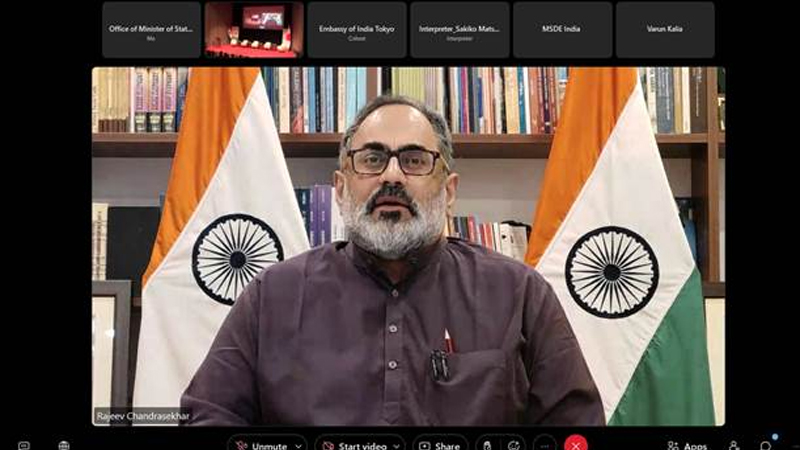
Union Minister of State for Skill Development & Entrepreneurship and Electronics & IT Shri Rajeev Chandrasekhar virtually addressed the 1st India-Japan Skill connect conference, held in Tokyo at the Indian Embassy. He emphasized the strong partnership between India and Japan, which has expanded beyond traditional areas like security, trade, and economics to include technology and talent.

The minister said that today, the world is going through a deep rooted and decisive structural, global and economic change. With the tailwind of digitization and technology, supply chains are transforming around the world. India-Japan partnership is a defining partnership for the future of Asia, Indo-Pacific & the World. Under PM Shri Narendra Modi and HE PM Fumio Kishida, this partnership spans security, trade, economics and is now expanding into Technology and Talent.

The Minister highlighted a recent Memorandum of Understanding (MoU) between India and Japan on semiconductors. He emphasized the importance of trusted partnerships around the world, where skilling and talent play a significant role as emerging technologies are becoming more prominent.

He further said that trusted partnerships are coming to the fore. Trends in digitization, emerging new technologies and the disruptions that these are bringing in whether it is AI, future of the internet, semiconductors or electronics have increased. Skilling and talent are playing a more significant role in our country’s success and economic prosperity. In India, talent and skill are a deep priority. In 2015, PM Shri Narendra Modi started focusing on creating capabilities and capacities of skilling, reskilling and upskilling of our young Indians to make them more future ready for upcoming opportunities and challenges that our economy will face, he added.

The Minister reiterated the government’s commitment to working with Japanese industries to establish skill hubs that align with their requirements, including language skills. This way, Indian professionals can be industry-ready and deployable in Japan without additional certification and training.

The Minister informed that we have an extensive network today of skill centers and in recent years our Higher Education network has been integrated into a skilling network. Skills are a passport to opportunities and prosperity for Young Indians. He reiterated that the Government is keen on working with the Japanese industries and building skill hubs that are specifically aimed at delivering capacities and capabilities that the Japanese industry requires. This will also include language skills. The Japanese industries can look at the Indian skilling system as something that will be future ready and industry ready. Without having to go through any additional certification and training in Japan, he further added.

The conference was attended by various Japanese government ministers, officials, and representatives from Japanese companies, along with the Indian Ambassador Sibi George and a delegation from the Confederation of Indian Industry (CII).

PM speaks with President of South Africa

| Published on:

Prime Minister Narendra Modi had a telephone conversation today with His Excellency, Mr. Matemela Cyril Ramaphosa, President of the Republic of South Africa.

The two leaders positively assessed the progress in bilateral cooperation, including in the context of the thirtieth anniversary of establishment of bilateral diplomatic relations being celebrated in 2023.

President Ramaphosa invited PM for the BRICS Summit being hosted by South Africa on August 22-24, 2023 and briefed him on the preparations for the same. PM accepted the invitation and conveyed that he looked forward to his visit to Johannesburg to participate in the Summit.

They also exchanged views on a number of regional and global issues of mutual interest.

President Ramaphosa conveyed his full support to India’s initiatives as part of its ongoing G-20 Presidency and said that he looked forward to visiting India to attend the G-20 Summit.

The two leaders agreed to remain in touch.

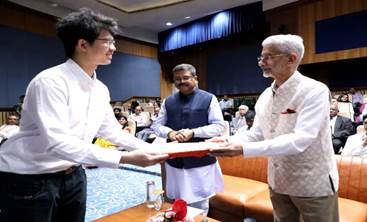
Dharmendra Pradhan and Dr S. Jaishankar jointly launch Study in India (SII) Portal

| Published on:

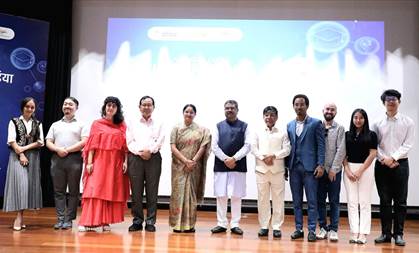
In line with Prime Minister Shri Narendra Modi’s vision of re-establishing India as a global hub of education, Union Education and Skill Development & Entrepreneurship Minister Shri Dharmendra Pradhan and Union External Affairs Minister Dr. S. Jaishankar jointly launched Study in India Portal in New Delhi today. Minister of State for Education Dr Subhas Sarkar; Minister of State for Education, Smt Annpurna Devi; Minister of State for Education and External Affairs Shri Rajkumar Singh; Member of Parliament, Dr Mahesh Sharma; senior officials of Ministry of Education and Skill Development and Ambassadors of more than 10 countries attended the event.

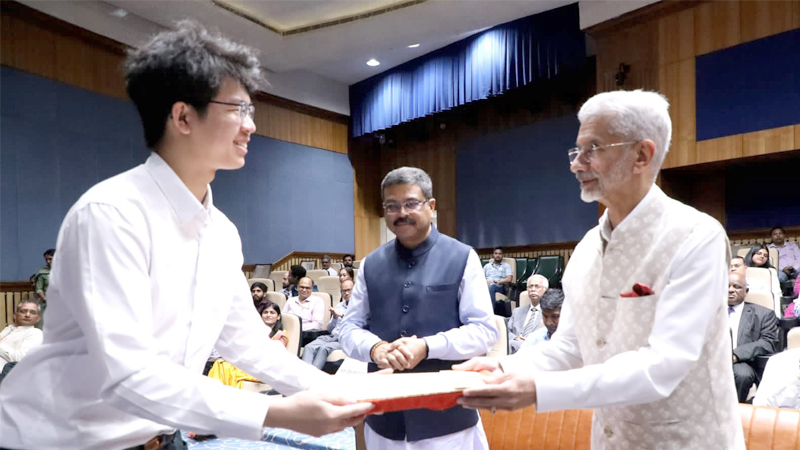
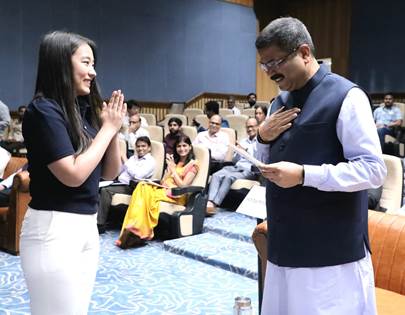
On the occasion, students from Russia, Thailand, Japan, Ethiopia, Ecuador, Kazakhstan and Republic of Korea who are currently studying in India, presented souvenirs from their culture as token of respect to dignitaries.

Study in India Portal is a dedicated website that will provide comprehensive information about the Indian Higher Education Institutions (HEIs). The website will illustrate academic programs covering but not limited to undergraduate (UG), postgraduate (PG), Doctoral level programs as well as courses in Indian Knowledge System like Yoga, Ayurveda, classical arts etc. The website-portal will present information about the academic facilities, research support, and related information. The new website will now have the provision for students to apply in more than one institute/course of their choice. The new portal will provide an integrated one-stop solution for student registration and visa application process.

Speaking on the occasion Shri Pradhan said that SII Portal is a one-stop platform that will simplify international students’ academic journey in India. Guided by the NEP, the SII Portal reflects our commitment to make India a preferred education destination as well as to blur academic boundaries for shaping a prosperous future, he added. Shri Pradhan further said with the vision of the Prime Minister Shri Narendra Modi of making education transcend geo-political boundaries, Study In India Portal is going to be a pivotal step in making India a preferred destination for higher education among students worldwide, he added.

While addressing the gathering, Dr. S. Jaishankar said that the portal signifies the Government’s commitment to make India a global hub of education by welcoming students of diverse backgrounds. It will establishing a strong international footprint of brand ‘India’ in the education sphere. From registration to visa approval and selecting desired courses or institutions, the portal will simply the entire journey of the international students wishing to study in India, he added. The Minister further said that the presence of international students will also benefit the domestic students by connecting them more closely to globalizing world and prepare them better form the global workplace. He mentioned how implementation of NEP2020 has already initiated entrance of foreign universities in India and opening of international campuses of our premier institutions.

Key Features:

Partnership with Premier Education Institutes: The Study in India programme involves partnership with educational institutes fulfilling one of the following criteria:

  • National Institutional Ranking Framework (NIRF)ranking (<=100)
  • National Assessment and Accreditation Council (NAAC) accreditation score (>=3.01)
  • Institutes of National Importance (INI)

This ensures premier institutions being the partner to enrolling international students coming to study in India.

The Study in India programme offers a streamlined and well-organized application process for international students seeking higher education opportunities in Indian Higher Education Institutes. From registration to visa approval, the online platform simplifies the entire journey, enabling students to choose their desired courses, receive institute offer letters, and successfully pursue their academic dreams in India. By providing a seamless experience, the SII programme continues to attract talented and ambitious students from around the world to study in India’s vibrant and culturally diverse academic environment.

Study in India is a flagship program of the Government of India, under the aegis of the Ministry of Education (MoE). The Study in India programme aims to increase the number of international students in India. The program also envisions promoting India as the preferred study destination, providing affordable and quality education comparable with global standards thereby contributing to improving the overall quality improvement in higher education. India being one of the largest higher education system in the world, our universities offer a diverse range of courses catering to the evolving needs of the global workforce. The Study in India programme seeks to facilitate international students’ access to these courses and showcase the country’s academic excellence.