India’s success is case study in using technology to transform citizens’ lives: Rajeev Chandrasekhar

| Published on:

Union Minister of State for Skill Development & Entrepreneurship and Electronics & IT Shri Rajeev Chandrasekhar addressed the World Bank Digital Economy Conclave 2023, where he highlighted India’s success as a case study in using technology to transform citizens’ lives. He emphasised the milestones achieved through Digital India in the past nine years, which catalysed the country’s rapid progress towards a five trillion US dollar economy by 2026.

The Minister said, “In 2015, through the launch of Digital India, Prime Minister Shri Narendra Modi set unconventional expectations through three broad goals –  technology should improve the lives of citizens, impact governance and democracy and further expand and create an architecture for an innovation economy. Over the past nine years, India has taken a lead in creating technologies as opposed to being a mute spectator and consumer of technology.”

Shri Rajeev Chandrasekhar also highlighted how digitisation of government services has facilitated the formalisation of informal sectors who now use digital payments and micro-credit. These services which are part of the India stack are now being offered to countries who are keen on digitising Governance.

“The digitisation of government services has facilitated the formalisation of informal sectors, like street vendors, who now use digital payments and micro-credit. The transformation brought about by the India stack, including initiatives like UPI and Aadhaar, has not only improved governance but also created a vibrant innovation ecosystem. India’s success in deploying technology to transform lives has drawn interest from other countries looking to digitise their economies and governance. The India stack, with its innovative ecosystem, is being offered as a partnership to these countries,” the Minister further added.

The Minister, during his interaction with executives from World Bank, spoke about how the Government was revived from dysfunctional Governance that prevented distribution of resources to people living in remote areas.

“For many years, the narrative about India, despite being a tech country with talented people, revolved around the issue of dysfunctional governance that failed to reach the people. This described the challenges India faced in governance. However, in 2015, when Digital India was launched, an architecture and framework for technology’s expectations and outcomes were introduced and understood. This has significantly boosted the confidence of a whole new generation of young Indians,” the Minister explained.

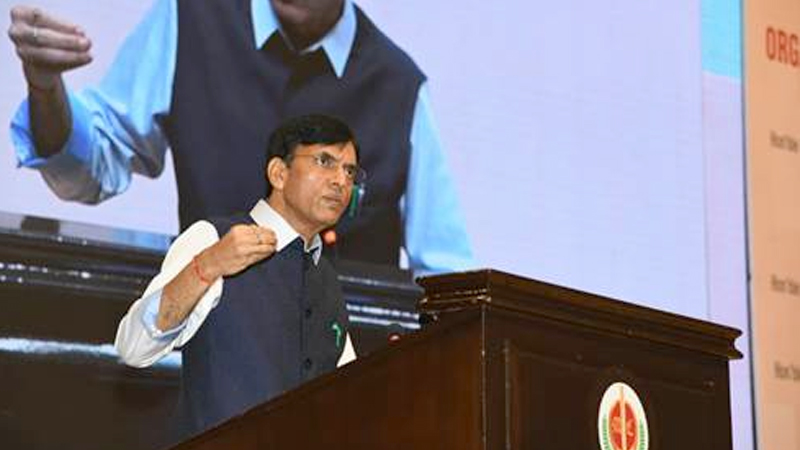
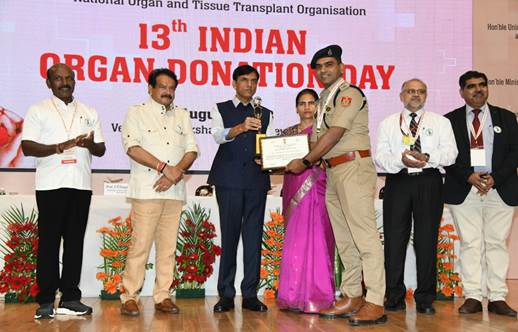
Dr. Mansukh Mandaviya delivers keynote address at the 13th Indian Organ Donation Day ceremony

| Published on:

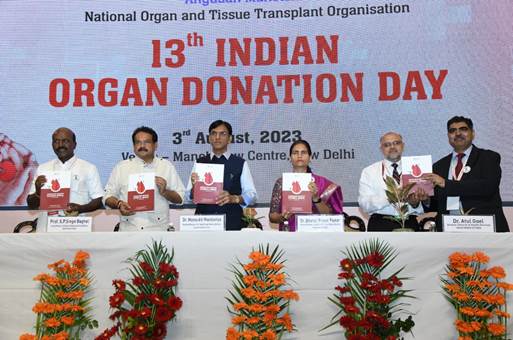
“There cannot be a greater service to humanity than giving life to another person”. This was stated by Dr Mansukh Mandaviya, Union Minister for Health and Family Welfare during his address at the 13th Indian Organ Donation Day (IODD) ceremony, here today. Dr Bharati Pravin Pawar and Prof S P Singh Baghel, Union Ministers of State for Health and Family Welfare and Shri Ma Subramanian, Minister of Health, Tamil Nadu were also present. The 13th IODD ceremony was held to felicitate deceased donor families for their brave decision of donating organs of their loved ones, to spread awareness on deceased organ donation and to recognize the contribution of medical professionals working in the field of organ donation and transplantation by awarding them.

Addressing the gathering, Dr Mandaviya stated that it is important to recognize and appreciate the contribution of all the people who have been a part of this endeavour. The Union Minister highlighted that “in 2013, around 5000 people came forward to donate their organs. Now there are over 15,000 organ donors annually”.

The Union Minister informed that the Union Govt has taken several steps towards increasing organ donations in the country. He said that leave duration for organ donors have been increased from 30 days to 60 days, age limitations of 65 years have been removed and the process of organ donation has been further streamlined. He further stated that the Govt is committed to bring in more policies and reforms to popularise organ donation in the country.

Appreciating the contribution of organ donors, their family members and members from the civil society, Dr Mandaviya applauded their motivation and dedication. In this context, the Minister also urged the organ recipients to promote this noble service and encourage others to also donate their organs for the service of mankind.

An e-News Letter of National Organ and Tissue Transplant Organization (NOTTO); Transplant Manual and National Curriculum for Transplant Coordinator Course were released on the occasion. During the event, ‘Make in India’ Products like Novel Hemophilia A Rapid Card Test and Von Willebrand Disease Rapid Card Test’ of ICMR and an eCARe portal (e-clearance of afterlife remains) of International Health division of the Ministry of Health and Family Welfare were also launched by the Union Health Minister.

eCARe Portal: When a person passes away in other country, it leads to lot of paperwork and processes to bring the mortal remains of the deceased back to India which leaves the family and friends in dismay. Understanding the sensitivity of this issue and following the principle of minimum government and maximum governance, Ministry of Health & Family Welfare, Government of India launched the eCARe (e-clearance of afterlife remains) portal to streamline and expedite the process of transporting human remains to India from different countries.

Haemophilia A and von Willebrand Disease Diagnostic Kits: Haemophilia A and von Willebrand Disease are the two most common lifelong inherited bleeding disorders. The common clinical manifestations include bleeding into the joints causing swelling and pain, bleeding into the skin (bruising) or muscle and soft tissue bleeding. ICMR-National Institute of Immunohematology (ICMR-NIIH), Mumbai has developed for the first time in the world; a Kit for diagnosis of Haemophilia A and von Willebrand Disease. The present kit is likely to change the diagnostic landscape of bleeding disorders not only in our country but in several other developing countries where diagnostic facilities are either lacking or not up to the acceptable standards.

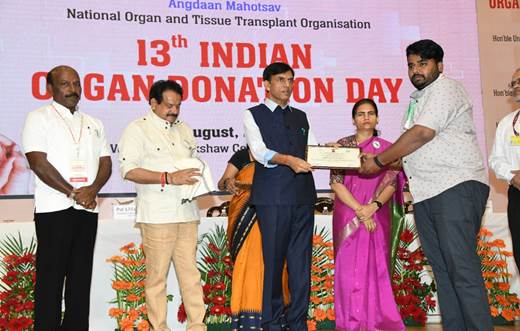
The Union Health Minister also felicitated donor families, transplant professionals, transplant coordinators, athletes of World Transplant Games and teams from MyGov, MoCA (Ministry of Civil Aviation), Delhi Police and Indigo Airlines during the occasion.

Background:

Indian Organ Donation Day (IODD) is observed annually since 2010, to augment awareness about brain stem death and organ donation, dispel myths and misconceptions associated with organ donation and motivate and encourage the citizens of the country to donate organs and tissues after death, as well as to imbibe the values of organ donation in their lives. To reduce the demand for organ transplantation campaign activities also promote healthy lifestyles & wellness.

This year as part of Azadi Ka Amrit Mahotsav, an awareness campaign for organ donation “Angdaan Mahotsav” has been kick-started. Angdaan Mahotsav is being observed all over the country reaching from city to village level with involvement of Central Government Ministries, State/UT Government/Hospitals/Institutions and medical Colleges, NGOs and other stakeholders. As part of the campaign, the month of July 2023 was observed as the Organ Donation month. Various activities towards promotion of organ and tissue donation namely National Webinar, Cyclothon, Walkathon, Organ donation pledging and National Slogan competition through Government of India’s digital platform, MyGov have been initiated.

Every donated organ is precious, lifesaving and a national resource. A person after his death can give new life to up to 8 people by donating vital organs namely Kidney, Liver, Lung, Heart, Pancreas and Intestine and improve quality life of many more by donating tissues like cornea, skin, bone and heart valve etc. The 13th IODD is an opportunity to motivate people to donate organs in order to bridge the existing gap between the number of people in need of organs for transplant and the number of donors. People are encouraged to come forward to pledge for a noble cause and contribute in this national endeavour. For any information on organ donation and transplantation one can visit the website of NOTTO www.notto.mohfw.gov.in or call tollfree helpline number 180114770. Online pladging facility is available at aforesaid NOTTO website and also at https://pledge.mygov.in/organ-donation/.

The event was also attended by Dr Atul Goel, Director General of Health Services, Dr Anil Kumar, Director, NOTTO, donor families, organ recipients, students as well as senior officials from the Ministry of Health and Family Welfare.

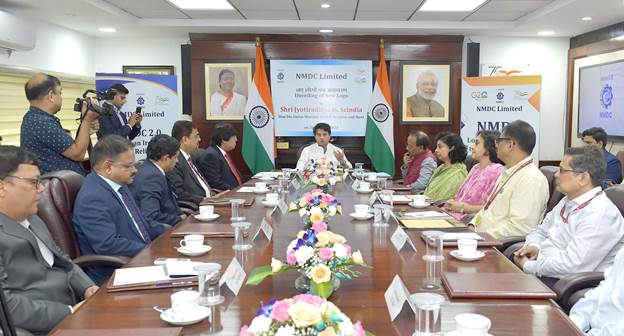
Jyotiraditya M. Scindia unveils the new logo of NMDC

| Published on:

Union Minister of Steel and Civil Aviation Sh. Jyotiraditya M. Scindia unveiled the new logo of NMDC at New Delhi today. On this occasion, Sh. Nagendra Nath Sinha, Secretary, Ministry of Steel, Sh. Amitava Mukherjee, CMD, NMDC and other officials of Ministry of Steel and NMDC were also present.

The Minister congratulated Team NMDC on their dynamic new logo and added that the unveiling of the logo is a seminal part of the journey of any organization, symbolizing its values and goals. “We have seen the NMDC’s evolution from its early days and its earlier logo symbolized the journey of India in the last 75 years, where India was growing with a focus on reducing its dependence and becoming self-reliant.”, the Minister mentioned while highlighting the significance of the old logo.

The Union Minister said that NMDC’s new logo represents how India’s largest producer of iron ore, is all set for the mining at a global scale in a sustainable and green environment. This logo communicates the responsibilities of NMDC towards mining in harmony with nature and people, towards ensuring mineral security & building mineral accountability, and towards infusing self-reliance in our sector.

“India’s position in the world has seen a transformation from a developing nation to a developed one due to herculean efforts of the Prime Minister of India. India’s position has also improved from being a follower to that of a leader”, the Minister added. He also highlighted that India is at an inflection point where the nation as a whole is ready to take up not just the responsibilities of its citizens but also at global level.

While highlighting the achievements of NMDC, the minister said that the NMDC has achieved a record-breaking production for the period up to July 2023 and has already crossed 40 MT of annual production last year.

On this occasion, Secretary, Ministry of Steel, Sh, Nagendra Nath Sinha also congratulated NMDC for their forward-looking new logo which symbolizes their harmonious relationship with nature. He also mentioned that NMDC will play an important role in realizing the National Steel Policy, 2017 to create a self-sufficient industry that is technologically advanced, globally competitive and promotes inclusive growth.

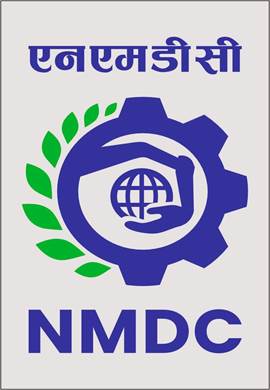
Earlier, the CMD, NMDC, during his welcome address, spoke about how the new logo is a manifestation of NMDC’s vision of NMDC 2.0. He said that “As a homage to our heritage, we have retained the blue cog representing the mineral mining cycle, symbolizing the steadfastness and trust we have earned over the decades”. At the center of the logo, a hand cradling the earth signifies NMDC’s commitment towards sustainable & responsible mining and also the global aspirations. The vibrant green color symbolizes growth, renewal, and harmony with nature.

PM addresses G20 Ministerial Conference on Women Empowerment

| Published on:

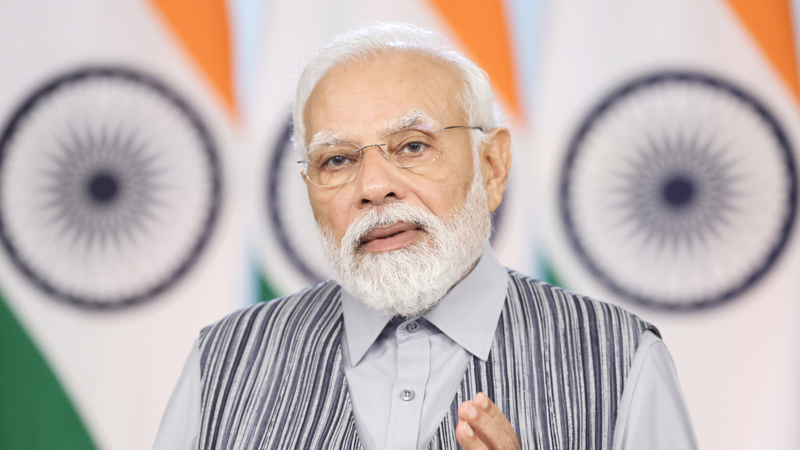
The Prime Minister, Shri Narendra Modi addressed the G20 Ministerial Conference on Women Empowerment held in Gandhinagar, Gujarat via video message today.

Addressing the gathering, the Prime Minister welcomed the dignitaries to Gandhinagar, a city named after Mahatma Gandhi on its formation day and expressed delight that they are getting the opportunity to visit Gandhi Ashram in Ahmedabad. Underlining the need to find urgent and sustainable solutions for issues like climate change and global warming, the Prime Minister said that one can witness first-hand the simplicity of Gandhiji’s lifestyle and his visionary ideas of sustainability, self-reliance and equality at Gandhi Ashram. Shri Modi expressed confidence that the dignitaries will find it inspirational. He also mentioned visiting the Dandi Kuteer Museum and informed that Gandhiji’s famous spinning wheel or Charkha was found by a woman named Gangaben at a village nearby. Since then, the Prime Minister said that Gandhiji started wearing Khadi which became a symbol of self-reliance and sustainability.

“When women prosper,  the world prospers”, the Prime Minister remarked as he noted that their economic empowerment fuels growth and their access to education drives global progress. He further added that their leadership fosters inclusivity and their voices inspire positive change. The Prime Minister underlined that the most effective way to empower women is through a women-led development approach and India is making huge strides in this direction.

The Prime Minister emphasized that India’s President Smt Droupadi Murmu is setting an inspiring example herself. He underlined that she leads the world’s largest democracy and serves as the Commander-in-Chief of the world’s second-largest defence force even though she comes from a humble tribal background. In this Mother of Democracy, the Prime Minister said, the ‘Right to Vote’ was granted equally to all citizens including women by the Indian Constitution right from the beginning and the right to contest elections was also granted based on equality. The Prime Minister noted that elected women representatives have been key agents of economic, environmental and social change and informed that 46% of elected representatives in rural local bodies in India are women numbering 1.4 million. Underlining that the mobilization of women into self-help groups has also been a powerful force for change, the Prime Minister highlighted the self-help groups and elected women representatives emerging as pillars of support for our communities during the pandemic. The Prime Minister gave examples of their achievements and mentioned the manufacturing of masks and sanitisers, and creating awareness about prevention of infection. “More than 80% of nurses and midwives in India are women. They were our first line of defence during the pandemic. And, we are proud of their achievements”, he added.

Underlining that women-led development has been a key priority for the government, the Prime Minister mentioned that around 70% of the loans up to one million rupees to support micro-level units under the Pradhan Mantri Mudra Yojana have been sanctioned to women. Similarly, 80% of beneficiaries under Stand-Up India are women, availing bank loans for green field projects. Noting that clean cooking fuel directly impacts the environment and improves the health of women, the Prime Minister highlighted the Pradhan Mantri Ujjwala Yojana and informed that nearly 100 million cooking gas connections have been provided to rural women. He also informed that the number of women in technical education in Industrial Training Institutes has doubled since 2014, nearly 43 percent of STEM (Science, Technology, Engineering, and Mathematics) graduates in India are women, and about one-fourth of space scientists in India are women. “Behind the success of our flagship programmes like Chandrayaan,  Gaganyaan and Mission Mars lies the talent and hard work of these women scientists”, he said. Today, the Prime Minister said, more women are enrolling in higher education than men in India. He also pointed out that India has one of the highest percentages of female pilots in civil aviation while female pilots in the Indian Air Force are also flying fighter aircrafts. Shri Modi noted that women officers are being deployed in operational roles and fighting platforms in all our armed forces.

The Prime Minister highlighted the pivotal roles played by women as the backbone of rural agricultural families and as small traders and shopkeepers. Underlining their close association with nature, the Prime Minister said that women hold the key to innovative solutions to climate change. He recalled how women led the first prominent climate action in India in the 18th century when the Bishnoi community of Rajasthan led by Amrita Devi started the ‘Chipko Movement’ to prevent unregulated logging. The Prime Minister informed that she along with several other villagers laid down her life for the cause of nature. “Women in India have also been brand Ambassadors for ‘Mission LiFE –   Lifestyle for Environment’”, the Prime Minister said as he highlighted their traditional wisdom to reduce,  reuse,  recycle, and re-purpose. Under various initiatives, the Prime Minister added, women are actively getting trained in making solar panels and lights. He mentioned the ‘Solar Mamas’ initiative that has been successful in collaborating with partner countries in the Global South.

“Women entrepreneurs are significant contributors to the global economy”, the Prime Minister said as he emphasized the role of women entrepreneurs in India. Decades ago, he said, in 1959 seven Gujarati women in Mumbai came together to create a historic cooperative movement – Shri Mahila Grih Udyog which has transformed the lives of millions of women and their families. Shri Modi highlighted their most famous product, Lijjat Papad, and said that it will probably be on the food menus in Gujarat! He also gave the example of the dairy sector and informed that there are 3.6 million women involved in this sector in Gujarat alone. Shri Modi pointed out that in India, about 15% of unicorn startups have at least one woman founder and the combined value of these women-led unicorns is over 40 billion dollars. The Prime Minister stresses the need to create a level platform where women achievers become the norm. He emphasized working towards removing the barriers that restrict their access to markets, global value chains,  and affordable finance while ensuring that the burden of care and domestic work is appropriately addressed at the same time.

Concluding the address, the Prime Minister lauded the focus of the Ministerial Conference on women’s entrepreneurship, leadership and education and expressed delight at the launch of the ‘Tech-Equity Platform’ to enhance digital and financial literacy for women. He also mentioned that under India’s G20 Presidency, a new Working Group on ‘Women Empowerment’ is being established. He expressed confidence that untiring efforts in Gandhinagar will give immense hope and confidence to women around the world.

Governor of Sikkim calls on Prime Minister

| Published on:

The Governor of Sikkim, Shri Lakshman Prasad Acharya called on the Prime Minister, Shri Narendra Modi today.

The Prime Minister’s office tweeted;

“The Governor of Sikkim, Shri Lakshman Prasad Acharya, met PM @narendramodi.”

PM lays foundation stone and inaugurates various development projects in Pune, Maharashtra

| Published on:

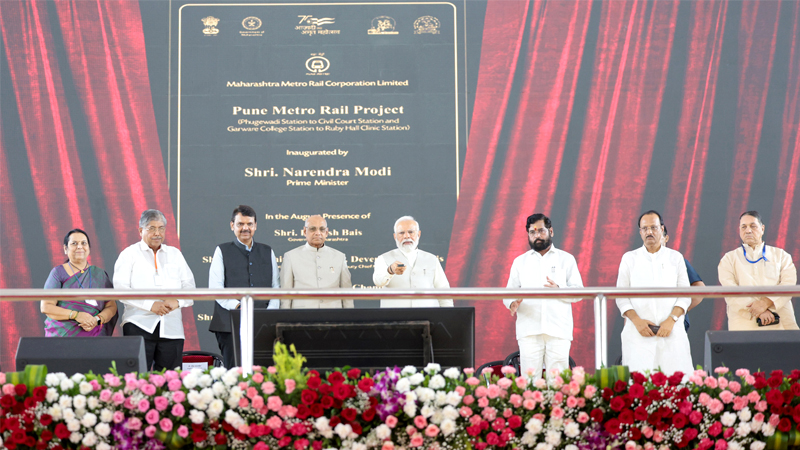
The Prime Minister, Shri Narendra Modi flagged off metro trains marking the inauguration of completed sections of Pune Metro today. He also handed over more than 1280 houses constructed under Pradhan Mantri Awas Yojana by Pimpri Chinchwad Municipal Corporation (PCMC) and more than 2650 PMAY houses constructed by Pune Municipal Corporation to the beneficiaries. He laid the foundation stone for around 1190 PMAY houses to be constructed by PCMC and over 6400 houses constructed by Pune Metropolitan Region Development Authority. The Prime Minister also inaugurated a Waste to Energy Plant under PCMC developed at a cost of about Rs 300 crores.

Addressing the gathering, the Prime Minister said that August is the month of celebrations and revolutions. Highlighting the contributions of Pune city in the freedom struggle, the Prime Minister said that the city has given numerous freedom fighters to the country including Bal Gangadhar Tilak. He also informed that today is the birth anniversary of the great Anna Bhau Sathe who was a social reformer and was inspired by the ideals of Dr Babasaheb Ambedkar. Even today, the Prime Minister informed that many students and academicians conduct research on his literary works, and his work and ideals are a source of inspiration for everyone.

“Pune is a vibrant city that gives momentum to the economy of the country and fulfills the dreams of the youth of the entire country. Today’s projects with about 15 thousand crore will further strengthen this identity”, the Prime Minister said.

The Prime Minister underlined the seriousness of the government about the quality of life of the urban middle class. Recalling the start of the Metro work five years ago, the Prime Minister said that the 24 km Metro network has already started functioning in this period.

Shri Modi emphasized the need to improve public transport infrastructure to improve the quality of life of people living in every city. Therefore, the Prime Minister said, the metro network is being expanded, new flyovers are being constructed, and emphasis is being laid on reducing the number of traffic lights. The Prime Minister informed that before 2014, the country had only 250 km of metro network and most of the metro lines were limited to Delhi whereas today, the metro network has gone beyond 800 km and work is already underway for 1000 km of new metro lines in the country. Before 2014, the Prime Minister informed, the metro network was limited to only 5 cities in India whereas today, the metro is functional in 20 cities including Pune, Nagpur and Mumbai where the network is being expanded. “The metro is becoming a new lifeline for the cities in modern India”, the Prime Minister remarked as he stressed the need for metro expansion to tackle climate change in a city like Pune.

Shri Modi emphasized the role of cleanliness in improving the quality of urban life. Swachh Bharat Abhiyan, he said, is not limited to toilet access but waste management is also a big focus area. Mountains of garbage are being removed in mission mode. He explained the benefits of the Waste to Energy Plant under Pimpri Chinchwad Municipal Corporation (PCMC).

“The industrial development of Maharashtra has paved the way for the industrial development of India since independence”, the Prime Minister remarked. Highlighting the need to further industrial development in the state, the Prime Minister highlighted the unprecedented investments being made by the government in Maharashtra. He gave examples of the development of new expressways, railway routes and airports in the state. For the expansion of Railways, the Prime Minister informed that there has been a twelve-fold rise in expenditure when compared to before 2014. Various cities of Maharashtra are also connected to the economic hubs of neighboring states. The Prime Minister gave examples of the Mumbai-Ahmedabad High-Speed Rail which will benefit both Maharashtra and Gujarat, the Delhi-Mumbai Economic Corridor which will connect Maharashtra with Madhya Pradesh and other states in North India, National Dedicated Freight Corridor which will transform the rail connectivity between Maharashtra and North India, and transmission line network to connect the state with Chhattisgarh, Telangana, other neighboring states which will benefit the industries, oil and gas pipelines, Aurangabad Industrial City, Navi Mumbai Airport, and Shendra Bidkin Industrial Park. He said that such projects have the capacity to enthuse new energy into the economy of Maharashtra.

The Prime Minister said that the government is moving ahead with the mantra of the nation’s development through the state’s development. “When Maharashtra will develop, India will develop. When India will grow, Maharashtra will also reap benefits”, he said. Referring to India’s growing identity as the hub of innovation and startups, the Prime Minister informed that India has crossed 1 lakh startups compared to a few hundred 9 years ago. He credited the expansion of digital infrastructure for this success and praised Pune for its role in the foundation of India’s digital infrastructure. “Cheap data, affordable phones and Internet facilities reaching every village has strengthened the sector. India is among the countries with the fastest rollout of 5G services ”, he said. He continued that strides made by the youth in fintech, biotech and agritech are benefitting Pune.

The Prime Minister expressed concern for the consequences of political selfishness for Karnataka and Bengaluru. He also lamented the stalling of development in Karnataka and Rajasthan.

Shri Modi said that “to take the country forward, policies, intentions and rules (Niti Nishta and Niyam) are equally important.” This is a determining condition for development, he said. He informed that in the 10 years before 2014, only 8 lakh houses were constructed in two schemes of that time. More than 2 lakh such houses, including 50 thousand in Maharashtra, were rejected by the beneficiaries due to poor quality, he informed.

The Prime Minister underlined that the government started working with the right intention and changed the policy after coming to power in 2014. In the last 9 years, the Prime Minister informed that the government has constructed more than 4 crore pucca houses for the poor in villages and cities where more than 75 lakh houses have been built for the urban poor. He also highlighted the transparency introduced in the construction and the improvement in their quality. He also highlighted that for the first time in the country, most of the houses registered today are in the name of women. Noting that the cost of these houses is several lakh rupees, the Prime Minister emphasized that crores of women in the country have now become ‘lakhpatis’ in the last 9 years. The Prime Minister congratulated and conveyed his best wishes to all those who have found their new homes.

“Be it poor or middle-class family, to fulfill every dream is Modi’s guarantee”, he said. He underlined that the realization of one dream initiates the beginning of multiple resolutions and it becomes a driving force in that person’s life. “We care about your children, your present and your future generations”, he added.

Concluding the address, the Prime Minister quoted a Marathi saying and explained that it is the government’s endeavor to make not just a better today but an even better tomorrow as well. He said that the resolve to build a developed India is a manifestation of this feeling. Shri Modi emphasized the need to work together just like so many different parties that have come together with the same cause here in Maharashtra. “The aim is that better work can be done for Maharashtra with everyone’s participation, Maharashtra should develop at a faster pace” the Prime Minister concluded.

Governor of Maharashtra, Shri Ramesh Bais, Chief Minister of Maharashtra, Shri Eknath Shinde, Deputy Chief Ministers of Maharashtra, Shri Devendra Fadnavis and  Shri Ajit Pawar, and Ministers from Maharashtra Government were present on the occasion among others.

Background

The Prime Minister flagged off Metro trains marking inauguration of services on completed sections of the two corridors of Pune Metro Phase I. These sections are from Phugewadi station to Civil Court station and Garware College station to Ruby Hall Clinic station. The foundation stone of the project was also laid by the Prime Minister in 2016. The new sections will connect important places of Pune city like Shivaji Nagar, Civil Court, Pune Municipal Corporation office, Pune RTO and Pune Railway Station. The inauguration is an important step towards realizing the vision of the Prime Minister to provide the citizens with modern and environment-friendly mass rapid urban transport systems across the country.

The design of some of the metro stations on the route draws inspiration from Chhatrapati Shivaji Maharaj. The Chhatrapati Sambhaji Udyan Metro Station and Deccan Gymkhana metro stations have a unique design resembling the headgear worn by soldiers of Chhatrapati Shivaji Maharaj – also known as ‘Mavala Pagadi’. The Shivaji Nagar underground Metro station has a distinctive design which reminds of the forts built by Chhatrapati Shivaji Maharaj.

A unique feature is that the Civil Court metro station is one of the deepest metro stations in the country, having the deepest point at 33.1 m. The station roof is made in such a manner that direct sunlight falls on the platform.

Moving ahead towards the mission of achieving Housing for All, the Prime Minister handed over more than 1280 houses constructed under Pradhan Mantri Awas Yojana by PCMC along with more than 2650 PMAY houses constructed by Pune Municipal Corporation. Further, the Prime Minister also laid the foundation stone of around 1190 PMAY houses to be constructed by PCMC, and of over 6400 houses constructed by Pune Metropolitan Region Development Authority.

The Prime Minister inaugurated the Waste to Energy Plant under Pimpri Chinchwad Municipal Corporation (PCMC). Developed at a cost of about Rs 300 crores, it will use up about 2.5 lakh MT of waste annually to produce electricity.

PM conferred Lokmanya Tilak National Award in Pune, Maharashtra

| Published on:

The Prime Minister, Shri Narendra Modi was conferred the Lokmanya Tilak National Award in Pune, Maharashtra today. The Award was constituted by Tilak Smarak Mandir Trust in 1983 to honor the legacy of Lokmanya Tilak. The Prime Minister donated the cash prize to the Namami Gange Project.

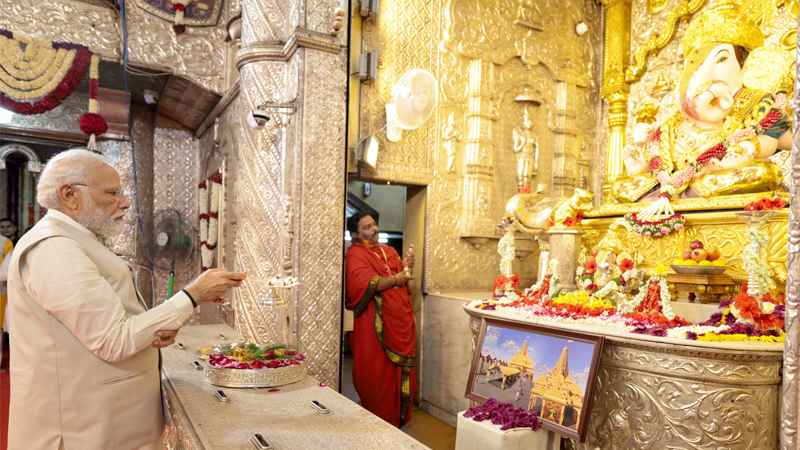
The Prime Minister paid floral tributes at the statue of Lokmanya Tilak after arriving at the venue. Addressing the gathering, the Prime Minister paid tributes to Lokmanya Tilak on his punya tithi and said that it is a special day for him. Highlighting his feelings for the occasion, the Prime Minister said that today marks the punya tithi of Lokmanya Tilak and the birth anniversary of Anna Bhau Sathe. “Lokmanya Tilak ji is the ‘tilak’ of India’s freedom struggle”, the Prime Minister said. He also underlined the extraordinary and unparalleled contributions of Anna Bhau Sathe towards the betterment of society. The Prime Minister paid tribute to the land of Chhatrapati Shivaji, Chapekar Brother, Jyotiba Phule and Savitribai Phule. Earlier the Prime Minister sought blessings at the Dagdusheth Temple.

The Prime Minister described the honor bestowed on him today by the place and institution directly linked with the Lokmanya as ‘unforgettable’. The Prime Minister mentioned the commonalities between Kashi and Pune as both are centers of scholarship. The Prime Minister said that when one receives an award, then the responsibilities come especially when the name of Lokmanya Tilak is attached to the award. The Prime Minister dedicated the Lokmanya Tilak Award to the 140 crore citizens of India. He assured them that the government will leave no stone unturned to help them achieve their dreams and aspirations. The Prime Minister also informed about his decision to donate the cash prize to Namami Gange Project.

The Prime Minister said that the contribution of Lokmanya Tilak to the Independence of India can not be confined to a few words or events as his influence was evident on all the leaders and events of the freedom struggle. “Even Britishers had to call him ‘Father of the Indian unrest” the Prime Minister pointed out. Shri Modi pointed out that Lokmanya Tilak changed the direction of the freedom struggle with his ‘Swarajya is my birthright’ claim. Tilak also proved British labeling of Indian traditions as backwards wrong. Mahatma Gandhi himself called him the architect of modern India, the Prime Minister recalled.

The Prime Minister paid tribute to the institution-building capabilities of Lokmanya Tilak. His collaboration with Lala Lajpat Rai and Bipin Chandra Pal is a golden chapter of India’s freedom struggle. The Prime Minister also remembered Tilak’s use of newspapers and Journalism. Kesari is still published and read in Maharashtra. “All this bears testimony to strong institution building by Lokmanya Tilak”, the prime Minister added.

Shifting from Institution building, the Prime Minister also highlighted Tilak’s nurturing of traditions and mentioned the start of Ganpati Mahotsava and Shiv Jayanti to celebrate the ideals of Chhatrapati Shivaji. “These events were both a campaign of stitching India into a cultural thread as well as a complete conception of Poorna Swaraj. This has been the speciality of India where leaders fought for big goals like Independence and carried the campaign of social reforms also”, he said.

Referring to Lokmany Tilak’s faith in the youth of the country, the Prime Minister recalled his mentoring of Veer Savarkar and his recommendation to Shyamji Krishna Varma who was running two scholarships in London – Chatrapati Shivaji Scholarship and Maharana Pratap Scholarship. The establishment of New English School, Fergusson College and Deccan Education Society in Pune is part of that vision. “Vision of system building to institution building, institution building to individual building, and individual building to nation building is like a roadmap for a nation’s future and the country is following this roadmap in an effective manner”, the Prime Minister said.

Highlighting the special bond between the people of Maharashtra with Lokmanya Tilak, the Prime Minister said that the people of Gujarat also share a similar bond with him. He recalled the time when Lokmanya Tilak spent roughly one and a half months in Sabarmati Jail in Ahmedabad and informed that more than 40,000 people had turned up to welcome him and listen to his views in 1916 including Sardar Vallabhbhai Patel. He further added that the impact of the speech led to Sardar Patel installing a statue of Lokmanya Tilak in Ahmedabad when he was heading the Ahmedabad Municipality. “One can find the iron fist identity of Lokmanya Tilak in Sardar Patel”, the Prime Minister remarked. Speaking about the location of the statue in Victoria Garden, the Prime Minister informed that the ground was developed by the British to commemorate the diamond jubilee celebrations of Queen Victoria in 1897 and emphasized the revolutionary act of Sardar Patel to install a statue of Lokmanya Tilak. Even after facing resistance from the British, the Prime Minister said that the statue was inaugurated by Mahatma Gandhi in 1929. Speaking about the statue, the Prime Minister said that it is a magnificent statue where Tilak Ji can be seen sitting in a resting posture as if contemplating the bright future of independent India. “Even during the period of slavery, Sardar Saheb challenged the entire British rule to honor the son of India”, the Prime Minister remarked as he lamented the situation of today when some people make hue and cry when the government tries to change the name of even a single road to an Indian personality instead of a foreign invader.

The Prime Minister touched upon Lokmanya’s faith in Gita. Even in the face of incarceration in distant Mandalay, Lokmanya continued his study of Gita and gave an invaluable gift in the form of Gita Rahasya.

The Prime Minister talked about Lokmany’s capacity to instill self-confidence in everybody. Tilak restored people’s confidence in their fight for Independence, history, and culture. He had faith in people, workers and entrepreneurs. “Tilak broke the myth of inferiority complex among Indians and showed them their capabilities”, he said.

The Prime Minister emphasized that the development of the country is not possible in an environment of mistrust. He recalled reading a tweet by a gentleman from Pune, Shri Manoj Pochat ji who mentioned the PM and reminded him of the visit to Pune 10 years ago. The Prime Minister recalled speaking about the trust deficit in India at that time at Fergusson College which was founded by Tilak ji. The Prime Minister expressed gratitude for raising the issue of trust deficit and said that the country has moved from Trust Deficit to Trust Surplus.

The Prime Minister gave examples of this trust surplus in the major changes effected in the last 9 years. He mentioned India becoming the 5th largest economy as a result of this trust.  He also talked about countries’ trust in itself and mentioned successes like Made in India Corona Vaccine, a feat in which Pune played a big role. He also talked of collateral-free loans under Mudra Yojana as a token of trust in the hard work and integrity of Indians. Similarly,  most of the services are available on mobile now and people can self-attest their documents. He also emphasized that due to this trade surplus, the Swachta campaign and Beti Bachao-Beti Padhao became a people’s movement. All this is creating a positive atmosphere in the country, he added.

Recalling that lakhs of people had given up the gas subsidy when the Prime Minister had made a call to those who can give it up during his address from the Red Fort, he informed that a survey was conducted of many countries which revealed India has the most faith in their government. Shri Modi emphasized that increasing public trust is becoming the medium of progress for the people of India.

Concluding the address, the Prime Minister underlined that after 75 years of independence, the country is looking at Amrit Kaal as the Kartvaya Kaal where every citizen is working from their own level keeping in mind the dreams and resolutions of the country. That’s why, the Prime Minister said, today the world is also witnessing the future in India as our efforts of today are becoming an assurance for the entire humanity. The Prime Minister said that the citizens will definitely turn the dream of a strong and prosperous India into a reality with the power of Lokmanya Tilak’s thoughts and blessings. The Prime Minister expressed confidence that Hind Swarajya Sangh will continue to play an important role in connecting people with the ideals of Lokmanya Tilak.

Governor of Maharashtra, Shri Ramesh Bais, Chief Minister of Maharashtra, Shri Eknath Shinde, Deputy Chief Ministers of Maharashtra, Shri Devendra Fadnavis and Shri Ajit Pawar, Member of Parliament, Shri Sharadchandra Pawar, President of Tilak Smarak Trust,  Dr Deepak Tilak, Vice President of Tilak Smarak Trust, Dr Rohit Tilak, and Trustee of Tilak Smarak Trust, Shri Sushilkumar Shinde among others were present on the occasion among others

Background

The Award was constituted by Tilak Smarak Mandir Trust in 1983 to honor the legacy of Lokmanya Tilak. It is awarded to people who have worked for the progress and development of the nation and whose contribution can only be seen as remarkable and extraordinary. It is presented every year on the 1st of August – Lokmanya Tilak’s death anniversary.

The Prime Minister became the 41st recipient of the award. It has previously been presented to luminaries such as Dr Shankar Dayal Sharma, Shri Pranab Mukherjee, Shri Atal Bihari Vajpayee, Mrs Indira Gandhi, Dr Manmohan Singh, Shri N. R. Narayana Murthy, Dr E. Sreedharan among others.

PM performs Darshan and Pooja at Dagdusheth Mandir in Pune, Maharashtra

| Published on:

The Prime Minister, Shri Narendra Modi performed Darshan and Pooja at Dagdusheth Mandir in Pune, Maharashtra today.

The Prime Minister tweeted:

“Feeling blessed to pray at the Shreemant Dagdusheth Halwai Ganpati Mandir in Pune. 🙏🏼”

G20 EMPOWER summit inaugurated at Gandhinagar, Gujarat

| Published on:

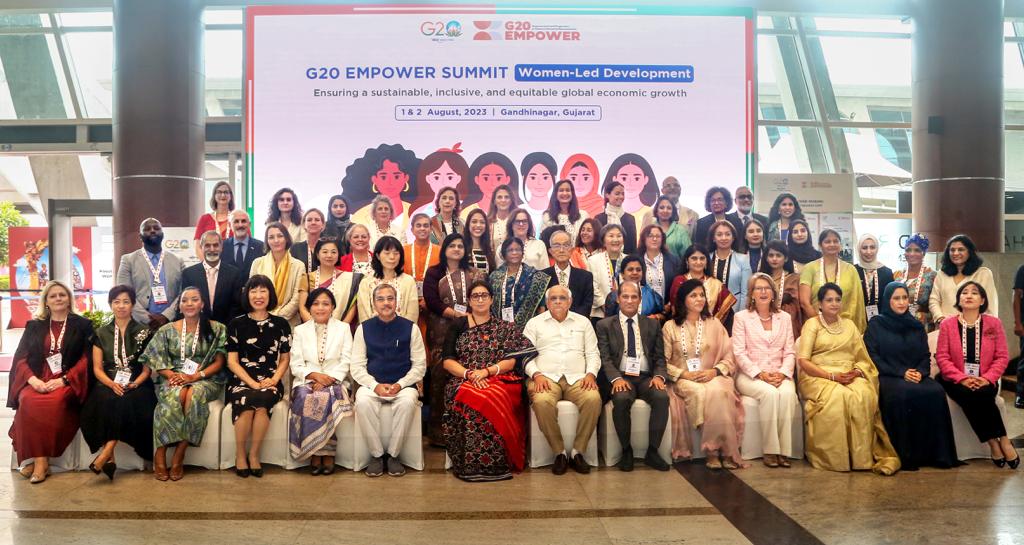
The G20 EMPOWER Summit took place in Gandhinagar, Gujarat on 1st August 2023.  This followed on from the Inception Meeting held in Agra, Uttar Pradesh on 11th and 12th February 2023 and the 2nd meeting in Thiruvananthapuram, Kerala on 5th and 6th April 2023. During India’s G20 Presidency, women-led development has emerged as a crucial focus area on a life-course approach basis marking a shift from women’s empowerment alone.

The Summit had a total participation of over 300 participants (263 domestic participants and 70 international delegates). The international delegates were from 13 G20 and 4 guest countries and 8 International Organisations. These included Argentina, Australia, Brazil, France, Indonesia, Italy, Japan, Mexico, Republic of Korea, Saudi Arabia, South Africa, UK, USA, Bangladesh, The Netherlands, Spain, UAE, WTO, ISA, UN Women, UN, UNICEF, ILO, World Bank and ADB.

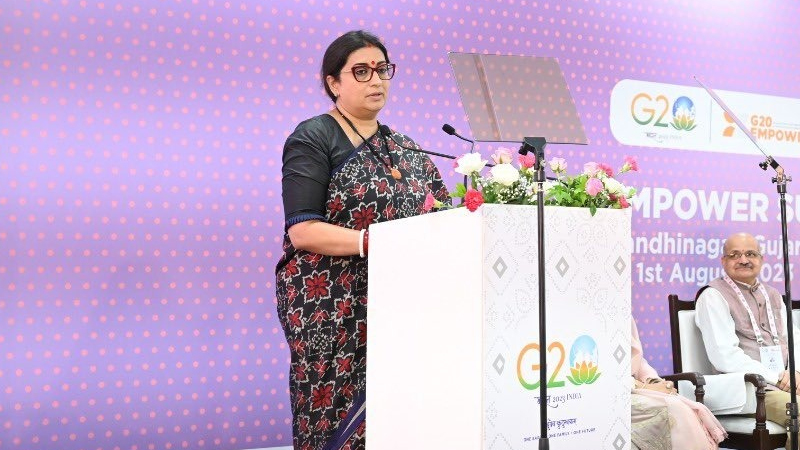
The Inaugural session of the EMPOWER Summit was addressed by Union Minister for Women & Child Development and Minority Affairs, Smt Smriti Zubin Irani;  Chief Minister of Gujarat, Shri Bhupendra Patel; Minister of State for Women & Child Development, Dr Munjpara Mahendrabhai; CEO NITI Aayog, Shri B.V.R. Subramanyam; Secretary, Women & Child Development, Shri Indevar Pandey; Chair, G20 EMPOWER, Dr Sangita Reddy; Chief of Staff, Office of Executive Director, UN Women, Mr Mohammad Naciri; and President FICCI, Mr Subhrakant Panda.

The Summit marked the achievement of tangible outcomes alongside identification of commitments and recommendations encompassing all three themes of G20 EMPOWER under the Indian presidency – Education: A Game-changing Pathway to Women’s Empowerment, Women’s Entrepreneurship: A Win-Win for Equity and Economy, and Creating a Partnership for Promoting Women’s Leadership at all Levels including Grassroots. An essential enabler for all three has been Digital Inclusion. Over this year, G20 EMPOWER scaled up several ongoing initiatives, while also developing concrete new outputs.

Chief of Staff, Office of Executive Director, UN Women, Mr Mohammad Naciri lauded India for undertaking a women-led development approach. He highlighted that this shift in semantics from development for women to women-led development creates a seismic shift in power which turns women from beneficiaries to contributors. To the ‘One Earth, One Family, One Future’ motto of G20 announced by India, he added ‘One Chance’ to signify that we have one more chance to get back on track to a future that is sustainable and the key to doing so lies in gender equality.

The Minister of State, Women & Child Development, Dr Munjpara Mahendrabhai recognized that narrowing the digital gender divide is crucial for empowering women to contribute more effectively to economic growth and for that, we need to focus on improving women’s access to basic and advanced digital resources, education, entrepreneurship opportunities, and leadership roles for women and girls. There is also an urgent need to collect gender-disaggregated data to understand the dynamics of the digital gender gap.

Union Minister for Women & Child Development and Minority Affairs, Smt Smriti Zubin Irani, expressed the hope that TechEquity, Digital Inclusion platform developed and launched at the Summit under India’s G20 Presidency would be of value and use for women around the world in education and subsequently as an enabler for transition and progression in careers, particularly in STEM. The platform has been designed to enable women from across the world to educate and upskill themselves on digital literacy, financial literacy and technical areas through training programs and resources provided on the platform. With courses being submitted by G20 Members and Guest Countries, it is envisaged that these courses will be available in 120 international and Indian languages. The platform envisages an outreach of 1 million users, internationally.

G20 EMPOWER serves as a platform to learn from insights and best practices across industries and businesses and strengthen knowledge sharing across the public and private sectors. Towards this end, the G20 EMPOWER Best Practices Playbook has been substantially scaled up under India’s Presidency. With extensive outreach and surveys, 149 best practices from 19 G20 countries have been added to the Playbook. The Playbook has been digitised to make it easily accessible. With the Indian Presidency having focused on women entrepreneurs and community leaders at the local level as a key theme, a fourth new focus area was added to the Playbook for encouraging the private sector to increase initiatives for women at local or grassroots level.

While congratulating the G20 EMPOWER team for its various successes, the  Minister for Women & Child Development and Minority Affairs, Smt Smriti Zubin Irani observed that India’s presidency has given a voice to women at the grassroots by successfully focusing on India’s SHG revolution wherein 80 million women in 8 million Self Help Groups manage 34 billion dollars of monetary value. She observed that the Playbook would now provide a glimpse into the lives and achievements of women at grassroots, stories which would otherwise have been unheard. For the first time, the KPI Dashboard would also for the first time look at the role of women in Small and Medium Enterprises.

Chair, G20 EMPOWER, Dr Sangita Reddy highlighted that to truly empower women, there is need to nurture their roles in leadership and decision-making across all levels of society, with the G20 EMPOWER recommendations representing a significant stride towards that goal.

Working Groups under EMPOWER have developed three papers on important themes – corporate women empowerment, STEM and financial inclusion.

In order to drive the participation and progression of women, G20 EMPOWER has onboarded advocates from amongst CEOs and organisation heads to promote the G20 EMPOWER messages within their companies, sectors, networks and countries. Under India’s Presidency, the number of advocates has increased from 380 to 544, with over 100 of the additions coming from India.

The Chair G20 EMPOWER, Dr Sangita Reddy also remarked that the measures proposed by EMPOWER are about enabling women entrepreneurs to become strong pillars of the economy. EMPOWER is encouraging the private sector to step up, not only as financiers and procurers but also as mentors and enablers of growth. A mentorship platform has been designed to bring together mentors and mentees as an outcome of the EMPOWER alliance.

As a first under India’s Presidency, 73 Inspirational Stories from 9 countries have been curated on the G20 EMPOWER Website to highlight success stories of women achievers from across G20 nations and invited countries to motivate the next generation of girls and women.

India has emphasized Citizens’ Engagement across its policy action. With the goal of making this a truly people’s G20, 51 Jan Bhagidari or citizen engagement events were held under EMPOWER to disseminate the message of women’s empowerment and underlying actions to over 100,000 people.

Shri Indevar Pandey, Secretary Women and Child Development remarked that the Hon’ble Prime Minister, Shri Narendra Modi, envisions a new India where women play an equal and pivotal role in driving robust, sustainable, and inclusive growth. During India’s presidency, there has been a strong determination to uphold the commitment to global progress, with women at the core of achieving success in the interconnected pillars of People, Planet, and Prosperity.

Chief Minister of Gujarat, Shri Bhupendra Patel highlighted various schemes and initiatives of the Government of Gujarat towards the empowerment of women. He highlighted the centrality of women’s empowerment towards achieving inclusive and sustainable growth. He also emphasized on the need to bridge the gender digital divide and empowering women with the digital skills needed to succeed in the evolving job market being conditioned by new technologies.

Through the several commitments and initiatives, the G20 EMPOWER outcomes, commitments and recommendations will accelerate the creation of a world where women have the necessary skills, access to resources, supportive infrastructure and environment, and mentorship for a transformational shift towards women-led development.

Union Minister for Women & Child Development and Minority Affairs, Smt Smriti Zubin Irani concluded the inaugural session with her inspiring words “Make women a priority if you want to grow with equity and equality. Make women a priority if you want an empowered future”.

₹1,65,105 crore gross GST revenue collected for July 2023

| Published on:

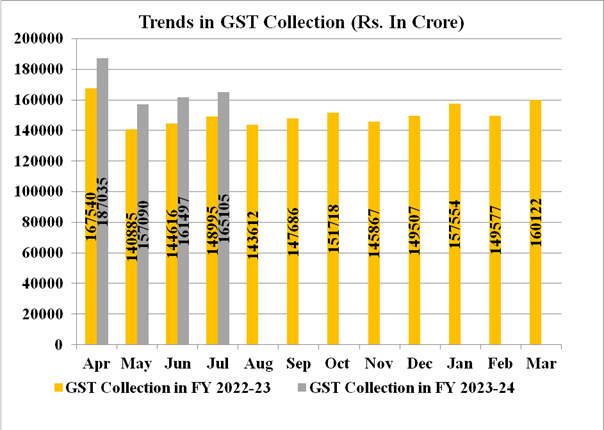
The gross GST revenue collected in the month of July, 2023 is ₹1,65,105 crore of which CGST is ₹29,773 crore, SGST is ₹37,623 crore, IGST is ₹85,930 crore (including ₹ 41,239 crore collected on import of goods) and cess is ₹11,779 crore (including ₹ 840 crore collected on import of goods).

The government has settled ₹39,785 crore to CGST and ₹33,188 crore to SGST from IGST. The total revenue of Centre and the States in the month of July 2023 after regular settlement is ₹69,558 crore for CGST and ₹70,811 crore for the SGST.

The revenues for the month of July 2023 are 11% higher than the GST revenues in the same month last year. During the month, the revenues from domestic transactions (including import of services) are 15% higher than the revenues from these sources during the same month last year. It is for the fifth time, the gross GST collection has crossed Rs. 1.60 lakh crore mark.

The chart below shows trends in monthly gross GST revenues during the current year. The table-1 shows the state-wise figures of GST collected in each State during the month of July 2023 as compared to July 2022 and table-2 shows the SGST and SGST portion of the IGST received/settled to the States/UTs in July’2023.

PM’s address in the 103rd Episode of ‘Mann Ki Baat’

| Published on:

My dear countrymen, Namaskar.

A warm welcome to all of you in ‘Mann Ki Baat’. The month of July means the month of monsoon, the month of rain. The past few days have been full of anxiety and hardships on account of natural calamities. Owing to flooding in many rivers including the Yamuna, people in many areas have had to suffer. Landslides have also occurred in hilly areas. Meanwhile, in the western part of the country, Biparjoy cyclone also hit the areas of Gujarat some time ago. But friends, in the midst of these calamities, all of us countrymen have once again brought to the fore the power of collective effort. The local people, our NDRF jawans, those from the local administration have worked day and night to combat such calamities. Our capabilities and resources play a big role in dealing with any disaster – but at the same time, our sensitivity and the spirit of hand-holding is equally important. This spirit of Sarvajan Hitaaya is the hallmark of India as well as the strength of India.

Friends, this phase of rain is equally important for ‘tree plantation’ and ‘water conservation’. More than 60 thousand Amrit Sarovars built during the ‘Azaadi ka Amrit Mahotsav’ are increasingly radiating their glow. Presently, the work of building more than 50 thousand Amrit Sarovars is going on. Our countrymen are making novel efforts for ‘water conservation’ with full awareness and responsibility. You might remember, sometime ago, I had gone to Shahdol, M.P. There I met tribal brothers and sisters of Pakaria village. At the same time, I had a discussion with them to save nature and water. Now I have come to know that the tribal brothers and sisters of Pakaria village have already started working on this. Here, with the help of the administration, people have converted about a hundred wells into water recharge systems. Rain water now flows into these wells, and from the wells, the water enters the ground. This will gradually improve the ground water level in the area. Now all the villagers have set a target of using about 800 wells in the entire area for recharging. One such encouraging news has come in from U.P. A few days ago, in Uttar Pradesh, a record of planting 30 crore trees in a single day has been made. This campaign was started by the state government; it was completed by the people there. Such efforts are great examples of public participation as well as public awareness. I would like all of us to be a part of these efforts to plant trees and save water.

My dear countrymen, at present the holy month of ‘Saawan’ is going on. Along with worshiping Sadashiv Mahadev, ‘Sawan’ is associated with greenery and joy. That’s why, ‘Sawan’ has been very important from the spiritual as well as cultural point of view. The swings of Sawan, the mehendi of Sawan, the festivities of Sawan… that is, ‘Sawan’ itself means joy and enthusiasm.

Friends, there is yet another facet to this faith and these traditions of ours. These festivals and traditions of ours make us dynamic. Many devotees undertake the Kanwar Yatra to worship Shiva in Sawan. These days numerous devotees are reaching the 12 Jyotirlingas on account of ‘Sawan’. You would also be happy to know that the number of people reaching Banaras is also breaking records. Now more than 10 crore tourists are reaching Kashi every year. The number of devotees visiting pilgrimages like Ayodhya, Mathura, Ujjain is also increasing rapidly. Due to this lakhs of poor are getting employment; their livelihood is being taken care of. All this is the result of our collective cultural awakening. Now, for ‘darshan’, people from all over the world are coming to our pilgrimage sites. I have come to know about two such American friends who had come here from California to perform the Amarnath Yatra. These foreign guests had heard somewhere about the experiences of Swami Vivekananda related to the Amarnath Yatra. They got so inspired that they themselves came for the Amarnath Yatra. They consider it as the blessings of Lord Bholenath. This is the specialty of India that she accepts everyone, gives something or the other to everyone. Similarly there is a woman of French origin – Charlotte Chopin. Recently, when I had gone to France, I had met her. Charlotte Chopin is a Yoga Practitioner, Yoga Teacher, and she is more than a 100 years old. She has crossed a century. She has been practicing yoga for the last 40 years. She gives credit for her health and this age of 100 years only to yoga. She has become a prominent face of India’s science of yoga and its strength, in the world. Everyone should learn from her. Let us not only embrace our heritage, but also present it responsibly to the world. And I am happy that one such effort is going on in Ujjain these days. Here 18 painters from all over the country are making attractive picture story books based on the Puranas. These paintings will be made in many distinctive styles such as the Bundi style, Nathdwara style, Pahari style and Apabhramsh style. These will be displayed in Ujjain’s Triveni Museum… after some time, when you visit Ujjain; you will be able to see another divine site along with Mahakal Mahalok.

Friends, while referring to these paintings being made in Ujjain, I am reminded of another unique painting. This painting had been made by Prabhat Singh Modbhai Barhat, an artist from Rajkot.

This painting was based on an incident in the life of Chhatrapati Veer Shivaji Maharaj. Artist Prabhat Bhai had depicted that Chhatrapati Shivaji Maharaj was going to visit his Kuldevi ‘Tulja Mata’ after the coronation, and what the atmosphere there at that time was. To keep our traditions, our heritage alive, we have to save it, live it, teach it to the next generation. I am happy that, today, many efforts are being made in this direction.

My dear countrymen,

Many a time, when we hear words like Ecology, Flora, Fauna, Bio Diversity, some people think that these are specialized subjects; subjects related to experts. But it is not so. If we really love nature, we can do a lot even with our small efforts. Suresh Raghavan ji is a friend from Vadavalli in Tamil Nadu. Raghavan ji is fond of painting. You know, painting is a work related to art and canvas, but Raghavan ji decided that he would preserve the information about plants and animals through his paintings. He documents the information related to them by making paintings of varied Flora and Fauna. Till now he has made paintings of dozens of such birds, animals, orchids, which are on the verge of extinction. This example of serving nature through art is really amazing.

My dear countrymen, today I want to tell you one more interesting thing. A few days ago an awesome craze appeared on social media. America has returned to us more than a hundred rare and ancient artefacts. After this news came to the fore, there was a lot of discussion on social media about these artefacts. The youth displayed a sense of pride in their heritage. These artefacts returned to India are 2500 to 250 years old. You will also be happy to know that these rare items are related to different regions of the country. These have been made using Terracotta, Stone, Metal and Wood. Some of these are such that they will fill you with wonder. If you have a look at them, you will be left mesmerised. You will also get to see a beautiful sandstone sculpture of the 11th century among these. This is an artwork of an ‘Apsara’ dancing, which belongs to Madhya Pradesh. Many idols of the Chola era are also part of these. The idols of Devi and Lord Murugan date back to the 12th century and are associated with the rich culture of Tamil Nadu. Nearly a thousand year old bronze statue of Lord Ganesha has also been returned to India. An idol of Uma-Maheshwara in Lalitasan is said to be of the 11th century, in which both of them are seated on Nandi. Two stone idols of Jain Tirthankaras have also come back to India. Two idols of Bhagwan Surya Dev will also enthrall you. One of these is made of Sandstone. Among the items returned is a panel made of wood, which brings to the fore the story of the churning of the ocean. This panel of 16th-17th century is associated with South India.

Friends, I have mentioned just a few names here, whereas, if you see, this list is very long. I would like to thank the American government, who have returned this valuable heritage of ours. Even when I visited America in 2016 and 2021, many artefacts were returned to India. I am sure that with such efforts, awareness will increase across the country to stop the theft of our cultural heritage. This will further deepen the attachment of the countrymen with our rich heritage.

My dear countrymen, the letters written by some mothers and sisters of Devbhoomi Uttarakhand to me are touchingly heart-warming. They have given many blessings to their son, their brother. They have written that – ‘They had never imagined that our erstwhile cultural heritage ‘Bhojpatra’ could become a means of their livelihood. You must be wondering what the entire matter is!

Friends, this letter has been written to me by the women of Niti-Mana valley in Chamoli district. These are the women who had presented me a unique artwork on Bhojpatra in October last year. I was also overwhelmed on receiving this gift. After all, since ancient times, our scriptures and books have been preserved on these Bhojpatras. Mahabharata was also written on the Bhojpatra. Today, these women of Devbhoomi are making very beautiful artefacts and souvenirs from the Bhojpatra. During my visit to Mana village, I had appreciated his unique effort. I had appealed to the tourists coming to Devbhoomi to buy as many local products as possible during their visit. It has had a great impact there. Today, the products of Bhojpatra are very much liked by the pilgrims coming here and are also buying it at good prices. This ancient heritage of Bhojpatra is filling new hues of happiness in the lives of the women of Uttarakhand. I am also happy to know that the state government is also imparting training to women to make novel products from Bhojpatra.

The state government has also started a campaign to preserve the rare species of Bhojpatra. The areas which were once considered as the last point of the land are now being developed considering them as the first villages of the country. Along with preserving our tradition and culture, this effort is also becoming a means of economic progress.

My dear countrymen, I have also received a large number of such letters this time in ‘Man Ki Baat’ that give a lot of satisfaction to the mind. These letters have been written by those Muslim women who have recently come from Haj pilgrimage. This journey of theirs is very special in many ways. These are the women, who have performed Hajj without any male companion or mehram, and the number is not fifty or hundred, but more than four thousand – this is a huge transformation. Earlier, Muslim women were not allowed to perform ‘Hajj’ without Mehram. Through Mann Ki Baat, I also express my heartfelt gratitude to the Government of Saudi Arabia. Women coordinators were specially appointed for women going on ‘Haj’ without Mehram.

Friends, the changes that have been made in the Haj Policy in the last few years are being highly appreciated. Our Muslim mothers and sisters have written a lot to me about this. Now, more and more people are getting the chance to go for ‘Haj’. The blessing given by the people who have returned from Haj pilgrimage, especially our mothers and sisters through their letters, is very inspiring in itself.

My dear countrymen, whether be the Musical Nights in Jammu -Kashmir, Bike Rallies at High Altitudes, local clubs in Chandigarh, and the many sports groups in Punjab,… it sounds like we are talking about entertainment and adventure. But it’s something different…, this event is also related to a ‘common cause’. And this common cause is the awareness campaign against drugs. To save the youth of Jammu and Kashmir from drugs, many innovative efforts have been visible. Programs like Musical Night, Bike Rallies are happening there. To spread this message in Chandigarh, Local Clubs have been linked with it. They call these VADA clubs. VADA means Victory Against Drug Abuse. Many sports groups have also been formed in Punjab, which are running awareness campaigns to focus on fitness and get rid of drug addiction. The increasing participation of youth in the campaign against drug abuse is very encouraging. These efforts lend a lot of strength to the campaign against drugs in India. If we want to save the future generations of the country, we have to keep them away from drugs. With this thought, ‘NashaMukt Bharat Abhiyan’ was launched on the 15 August 2020. More than 11 crore people have been connected with this campaign. Two weeks ago, India has taken a huge action against drugs. After seizing about 1.5 lakh kg consignment of drugs, it has been destroyed. India has also created a unique record of destroying 10 lakh kg of drugs. The cost of these drugs was more than Rs 12,000 crore. I would like to appreciate all those who are contributing in this noble campaign of de-addiction. Drug addiction becomes a big problem not only for the family, but for the whole society. In such a situation, for this danger to end forever, it is necessary that we all move forward in this direction in unison.

My dear countrymen, while talking about drugs and the young generation, I would also like to tell you about an inspiring journey from Madhya Pradesh. This is the Inspiring Journey of Mini Brazil. You must be thinking that from where Mini Brazil came in Madhya Pradesh, well, that is the twist. In MP, Bicharpur is a village in Shahdol. Bicharpur is called Mini Brazil. ‘Mini Brazil’, since, today this village has become a stronghold of the rising stars of football. When I had gone to Shahdol a few weeks ago, I met many such football players there. I felt that our countrymen and especially our young friends must know about this.

Friends, The journey of Bichharpur village to become Mini Brazil commenced two-and-a-half decades ago. During that time, Bicharpur village was infamous for illicit liquor,… it was in the grip of intoxication. The biggest brunt of this kind of environment was being borne by the youth here. Raees Ahmed, a former national player and coach, recognized the talent of these youngsters. Raees ji did not have many resources, but he started teaching football to the youth with full dedication. Within a few years, football became so popular that Bicharpur village itself was identified with football. Now a program called Football Kranti is also going on here. Under this program, youth are connected with this game and they are given training. This program has been so successful that more than 40 national and state level players have emerged from Bicharpur. This football revolution is now slowly spreading in the entire region. More than 1200 football clubs have been formed in Shahdol and its surrounding areas. A large number of players are emerging from here, who are playing at the national level. Today, many noted former football players and coaches are imparting training to the youth here. Just imagine a tribal area which was known for illicit liquor, infamous for drug addiction, has now become the Football Nursery of the country. That’s why it is said – where there is a will, there is a way. There is no dearth of talent in our country. There is certainly a need to find and nurture them. Subsequently, these youth also bring laurels to the country and lend direction to the development of the country as well.

My dear countrymen, on the occasion of completion of 75 years of independence, all of us are celebrating ‘Amrit Mahotsav’ with full enthusiasm. About two lakh programs have been organized in the country during the ‘Amrit Mahotsav’. These programs were adorned with a spectrum of colours… were full of diversity. The beauty of these events has been that a record number of youth participated them. During this, our youth got to know a lot about the great personalities of the country. If we talk about just the first few months, we got to see many interesting programs related to public participation. One such program was – ‘Writers’ Meet’ organized for Divyang writers. The participation of a record number of people was observed. At the same time, ‘National Sanskrit Conference’ was organized in Tirupati, Andhra Pradesh. We all know the importance of forts in our history. A campaign depicting this, ‘Qile aur Kahaniyan’ i.e. stories related to Forts were also liked by people.

Friends, in the midst of the ongoing reverberations of Amrit Mahotsav and the 15th of August round the corner, another great campaign is on the verge of being launched in the country. ‘Meri Mati Mera Desh’ campaign will be launched to honour our martyred braveheart men and women. Under this, many programs will be organized across the country in the memory of our immortal martyrs. In the memory of these luminaries, special inscriptions will also be installed in lakhs of village panchayats of the country. Under this campaign, ‘Amrit Kalash Yatra’ will also be organised across the country. This ‘Amrit Kalash Yatra’ carrying soil in 7500 urns from every corner of the country will reach Delhi, the capital of the country. This journey will also carry with it saplings from different parts of the country. ‘Amrit Vatika’ will be built near the National War Memorial by fusing the soil and saplings that would arrive in 7500 urns. This ‘Amrit Vatika’ will also become a grand symbol of ‘Ek Bharat Shresth Bharat’. I had talked about ‘Panch Prana’ for the next 25 years of Amritkal from Red Fort last year. By participating in the ‘Meri Mati Mera Desh’ campaign, we will also take an oath to fulfil these ‘five resolves’. All of you should certainly upload your selfies on yuva.gov.in while taking oath, holding the sacred soil of the country. Last year on the occasion of Independence Day, the whole country came together for ‘Har GharTiranga Abhiyan’,… similarly this time too we have to hoist the Tricolor at every house, and continue this tradition. With these efforts, we will realize our duties… we will realize the innumerable sacrifices made for the freedom of the country; we will realize the value of freedom. Hence, every countryman must join in these efforts.

My dear countrymen, that’s all for today in ‘Mann Ki Baat’.

In a few days we will be a part of this great festival of independence on the 15th of August. We should always remember those who laid down their lives for the freedom of the country. We have to work day and night to make their dreams come true and ‘Mann Ki Baat’ is just the medium to bring this hard work and collective efforts of the countrymen to the fore. See you next time, with some new topics.

Thank you very much

PM inaugurates Akhil Bhartiya Shiksha Samagam at Bharat Mandapam in Delhi

| Published on:

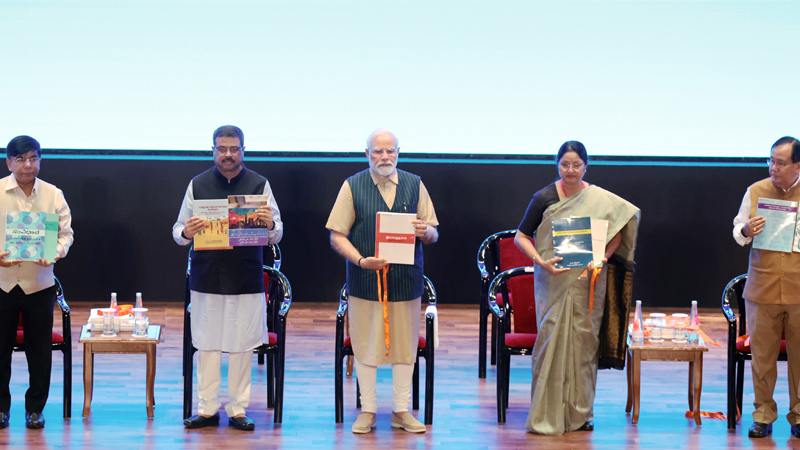
The Prime Minister, Shri Narendra Modi inaugurated Akhil Bhartiya Shiksha Samagam at Bharat Mandapam in Delhi today. It coincides with the 3rd anniversary of National Education Policy 2020. He also released the first installment of funds under the PM SHRI Scheme. 6207 schools received the first installment with a total amounting to 630 crore Rupees. He also released education and skill curriculum books translated into 12 Indian languages. The Prime Minister also took a walkthrough of the exhibition showcased on the occasion.

Addressing the gathering, the Prime Minister underlined the primacy of education among the factors that can change the destiny of the nation. “Our education system has a huge role in achieving the goals with which 21st century India is moving”, he said. Emphasizing the importance of the Akhil Bhartiya Shiksha Samagam, the Prime Minister said that discussion and dialogue are important for education. The Prime Minister mentioned the coincidence of the last Akhil Bhartiya Shiksha Samagam taking place in the newly constructed Rudraksha convention center of Varanasi and this year’s Akhil Bhartiya Shiksha Samagam taking place in the brand new Bharat Mandapam. This is the first event at the Mandapam after its formal inauguration.

From the Rudraksha of Kashi to the modern Bharat Mandapam, the Prime Minister said that there is a hidden message in the journey of Akhil Bhartiya Shiksha Samagam of amalgamation of ancient and modern. He said that on the one hand, the educational system of India is preserving the ancient traditions of the land while on the other hand, the nation is fast progressing in the field of science and technology. The Prime Minister congratulated those who have contributed to the education sector for the progress made so far. Noting that today marks the third anniversary of the National Educational Policy, the Prime Minister thanked the intellectuals, academicians and teachers for taking this up as a mission and contributing towards the immense progress. Speaking about the exhibition showcased on the occasion, the Prime Minister highlighted the display of skills and education and innovative techniques. He touched upon the transforming face of education and schooling in the country where small children are learning via playful experiences and expressed optimism for the same. He also urged the guests to explore the exhibition.

The Prime Minister said that epoch-making changes take some time. Recalling the vast canvas to be covered at the time of the inauguration of the NEP, the Prime Minister praised the dedication and willingness to embrace new concepts of all the stakeholders. He said that in NEP traditional knowledge and futuristic technologies have been given the same importance. He mentioned the hard work of the stakeholders from the world of education for the new curriculum in primary education, books in regional languages, for higher education and for strengthening the research ecosystem in the country.  He said students now understand that in place of the 10+2 system now the 5+3+3+4 system is in operation. Education will begin at the age of 3 bringing uniformity in the entire country. He also informed that the Cabinet has approved the introduction of the National Research Foundation Bill in the Parliament.  The National Curriculum Framework under the NEP will come soon. The framework for 3-8 years old students is ready. The entire country will have a uniform syllabus and NCERT is preparing new course books for this. The Prime Minister informed that new books of about 130 various subjects are coming up for classes 3 to 12 in 22 different languages as a result of education being imparted in regional languages.

The Prime Minister pointed out that the biggest injustice to any student is judging them based on their language instead of their capabilities. “Education in the mother tongue is initiating a new form of justice for the students in India. It is also a very significant step towards social justice”, the Prime Minister remarked. Noting the multitude of languages in the world and their importance, the Prime Minister underlined that many developed nations of the world have got the edge owing to their local language. Giving the example of Europe, the Prime Minister said that most countries make use of their own native languages. He lamented that even though India has an array of established languages, they were presented as a sign of backwardness, and those who could not speak English were neglected and their talents were not recognised. As a result, the Prime Minister said, the children of the rural areas remained most affected. He emphasized that the country has now begun to shun this belief with the advent of the National Educational Policy. “Even at the UN, I speak in Indian language”, Shri Modi added.

The Prime Minister underlined that subjects ranging from social science to engineering will now be taught in Indian languages. “When the students are confident in a language, their skills and talent will emerge without any restrictions”, Shri Modi said. He also pointed out that those who try to politicize language for their own selfish interests will now have to shut their shops. “National Educational Policy will give due respect and credit to every language in the country”, he said.

The Prime Minister said that we have to create an energetic new generation in the next 25 years of Amrit Kaal. A generation free from the mentality of slavery, eager for innovations and ready to bring laurels in fields from science to sports, willing to skill themselves as per the needs of the 21st century, a generation filled with a sense of duty. “NEP will play a big role in this”, he said.

The Prime Minister said among the various parameters of quality education, India’s big effort is for equality. “Priority of NEP is that every youth of India should get the same education and the same opportunity for education”, he said, emphasizing that this is not limited to opening schools.  He emphasized that equality should be extended to resources along with education. This, he said, means that every child should get options as per choice and capacity. “Equality in education means that no child is deprived of education due to place, class, region”, he said. He pointed out that thousands of schools are being upgraded under the PM SHRI Scheme. “In the age of 5G, these modern schools will be a medium of modern education”, he added. He mentioned Eklavya Schools in tribal villages, Internet facilities in villages and students receiving education through modes like DIKSHA, SWAYAM and Swayamprabha. “Now, In India, the gap of resources needed for education is being covered rapidly”, he said.

The Prime Minister highlighted the steps for integrating vocational education with general education and the ways of making education more interesting and interactive. Pointing out that the facility of labs and practicals were limited to a handful of schools earlier, the Prime Minister threw light on Atal Tinkering Labs where more than 75 lakh students are learning about science and innovation. “Science is simplifying itself for everyone. It is these young scientists that will shape the future of the country by leading significant projects and turn India into a research hub of the world”, he said.

“Any reform requires courage, and the presence of courage leads to the birth of new possibilities”, Shri Modi said as he underlined that the world is looking at India as a nursery of new possibilities. The Prime Minister gave examples of software technology and space tech and said that it is not easy to compete with India’s capability. Speaking about defence technology, the Prime Minister said that India’s model of ‘low cost’ and ‘best quality’ is sure to be a hit. He emphasized that the respect for India’s education system has significantly increased in the world with the increase in India’s industrial reputation and startup growth ecosystem. He noted that the number of Indian institutes is increasing in all the global rankings and informed about two IIT campuses opening up in Zanzibar and Abu Dhabi. “Many other countries are also urging us to open IIT campuses in their own countries”, he said. He also touched upon many global universities willing to open their campuses in India due to the positive changes coming in the education ecosystem. He informed that two Australian universities are about to open their campuses in Gujarat’s GIFT City. Shri Modi emphasized strengthening educational institutions continuously and working towards making them future-ready. He stressed the need to make India’s institutes, universities, schools and colleges as the center of this revolution.

The Prime Minister emphasized that “building capable youth is the biggest guarantee of building a strong nation” and parents and teachers play a major role in that. He appealed to teachers and parents to prepare students for confident curiosity and flights of imagination. “We have to keep an eye on the future and think with a futuristic mindset. We have to free the children from the pressure of books”, he said.

The Prime Minister talked about the responsibility that growing global curiosity in a strong India places on us.  He reminded about acquainting the students of the importance of Yoga, Ayurveda, art and literature. He concluded by reminding the teachers about the importance of the current generation of students in India’s journey to a ‘Viksit Bharat’ in 2047.

Union Minister for Education and Skill Development and Entrepreneurship, Shri Dharmendra Pradhan was present on the occasion among others.

Background 

Guided by the vision of the Prime Minister, NEP 2020 was launched with a view to groom the youth and prepare them for leading the country in Amrit Kaal. It aims to prepare them for meeting the challenges of the future while keeping them grounded in basic human values. During the three years of its implementation the policy has brought radical transformation in the realms of school, higher and skill education. The two-day programme, being held on 29th and 30th July, will provide a platform for academics, sector experts, policymakers, industry representatives, teachers and students from schools, higher education and skilling institutions, among others, to share their insights, success stories and best practices in implementing the NEP 2020 and work out strategies for taking it further ahead.

The Akhil Bhartiya Shiksha Samagam will include sixteen sessions, in which discussions will be held on themes including Access to Quality Education and Governance, Equitable and Inclusive Education, Issues of Socio-Economically Disadvantaged Group, National Institute Ranking Framework, Indian knowledge System, Internationalisation of Education, among others.

During the programme, the Prime Minister released the first installment of funds under the PM SHRI Scheme. These schools will nurture students in a way that they become engaged, productive, and contributing citizens for building an equitable, inclusive, and plural society as envisaged by National Education Policy (NEP) 2020. The Prime Minister also released education and skill curriculum books translated into 12 Indian languages.