PM undertakes aerial survey of flood affected areas of Punjab

| Published on:

Prime Minister Shri Narendra Modi visited Punjab on 9th September 2025 and reviewed the flood situation and damage caused due to cloudbursts and heavy rain in affected areas of Punjab.

Prime Minister conducted an aerial survey of flood affected areas in Punjab. Thereafter, he had an official review meeting in Gurdaspur with officials and elected representatives. PM Modi reviewed the relief and rehabilitation measures undertaken as well as assessed the damage that has occurred in Punjab.

The Prime Minister announced a financial assistance of Rs. 1600 crore for Punjab in addition to the Rs 12,000 crore already in the state’s kitty. There will be advance release of the second instalment of SDRF and PM Kisan Samman Nidhi.

The Prime Minister emphasized the need for a multi-dimensional approach to help the entire region and its people recover. This would include measures such as rebuilding homes under the PM Awas Yojana, restoring national highways, reconstructing schools, providing relief through the PMNRF, and distributing mini kits for livestock.

Recognizing the critical need to support the agricultural community, additional assistance will be provided specifically targeted at farmers who currently lack power connections. For bores which have been silted over or swept away, support for refurbishing would be extended under Rashtriya Krishi Vikas Yojana on project mode, as per specific proposal from the State Government.

For bore pumps that are running on diesel, convergence with MNRE for solar panels & support will be facilitated for micro irrigation under Per Drop More Crop guidelines.

Under the Pradhan Mantri Awaas Yojana – Gramin, financial assistance will be extended under “Special Project’’ submitted by Government of Punjab for reconstruction of houses in rural areas to eligible households whose houses have been damaged due to floods.

Government schools damaged in the recent  floods  in Punjab will be financially supported under the Samagra Shiksha Abhiyan. The State Government is required to provide all requisite supporting information as per guidelines.

Construction of recharge structures for water harvesting will be undertaken extensively in Punjab under the Jal Sanchay Jan Bhagidari program. This will be aimed to repair damaged recharge structures and construct additional water harvesting structures. These efforts will enhance rainwater harvesting and ensure long-term water sustainability.

The Union Government has also sent Inter-Ministerial Central teams to visit Punjab to assess the extent of damage, and based on their detailed report further assistance will be considered.

Prime Minister expressed his condolences to the family members of those who have lost their lives in the natural calamity and stated that the Union Government will work closely with the State Governments in this difficult time and extend all possible assistance.

Prime Minister also met families from Punjab who were affected by the calamities and floods. He expressed his complete solidarity with all those who had suffered and expressed deep sorrow who had lost their close ones.

PM Modi also announced an ex-gratia of Rs.2 lakh to the next of kin of the deceased and Rs.50,000 to the seriously injured in the floods and natural calamity.

The Prime Minister announced that children orphaned due to the recent floods and landslides will be extended comprehensive support under the PM CARES for Children scheme. This will ensure their long-term welfare.

Prime Minister stated that all assistance under disaster management rules are being made including advance disbursements to the States. He appreciated the efforts of the personnel of NDRF, SDRF, Army, State administration and other service-oriented organisations for making efforts in immediate relief and response. The Central government will further review the assessment based on the memorandum of the State as well as the report of the Central teams.

Prime Minister acknowledged the gravity of the situation and assured that the Central Government will make all efforts to address the situation.

PM undertakes aerial survey of flood and rain affected areas of Himachal Pradesh

| Published on:

Prime Minister Shri Narendra Modi visited Himachal Pradesh on 9th September 2025 to review the flood situation and damage caused due to cloudbursts, rains and landslides in affected areas of Himachal Pradesh.

Prime Minister first conducted an aerial survey of flood affected areas of Himachal Pradesh. Thereafter, PM Modi had an official meeting in Kangra to review the relief and rehabilitation measures undertaken as well as assess the damage that has occurred in Himachal Pradesh. PM Modi announced a financial assistance of Rs. 1500 crore for Himachal Pradesh. There will be advance release of the second instalment of SDRF and PM Kisan Samman Nidhi.

PM asked for a Multi-dimensional view to be taken to get the entire region and people back on its feet. These would be done through multiple ways, like rebuilding homes through PM Awas Yojana, restoration of national highways, rebuilding schools, provision of relief under PMNRF along with release of Mini Kits for livestock.

Recognizing the critical need to support the agricultural community, additional assistance will be provided specifically targeted at farmers who currently lack power connections.

Under the PM Awas Yojana, geotagging of damaged houses will be done. This will help in accurate damage assessment and faster delivery of aid to those affected.

To ensure uninterrupted education, schools will be able to report and geotag damages, enabling timely assistance under the Samagra Shiksha Abhiyan.

Construction of recharge structures for water harvesting to help collect and store rainwater will be done. These efforts will improve groundwater levels and support better water management.

The Union Government has already sent Inter-Ministerial Central teams to visit Himachal Pradesh to assess the extent of damage, and based on their detailed report further assistance will be considered.

Prime Minister also met families who were affected by the calamity. He expressed his condolences and deep sorrow to the family members of those who have lost their lives. He stated that the Union Government will work closely with the State Government at this difficult time and extend all possible assistance.

PM Modi also announced an ex-gratia of Rs.2 lakh to the next of kin of the deceased and Rs.50,000 to the seriously injured in the floods and natural calamity.

The Prime Minister announced that children orphaned due to the recent floods and landslides will be extended comprehensive support under the PM CARES for Children scheme. This will ensure their long-term welfare.

Prime Minister also stated that all assistance under disaster management rules are being made including advance disbursements to the States. He appreciated the efforts of the personnel of NDRF, SDRF, Army, State administration and other service-oriented organisations for making efforts in immediate relief and response. The Central government will further review the assessment based on the memorandum of the State as well as the report of the Central teams.

Prime Minister acknowledged the gravity of the situation and assured that the Central Government will make all efforts to address the situation.

Jyotiraditya Scindia launches historic UPI–UPU Integration at the Universal Postal Congress in Dubai

| Published on:

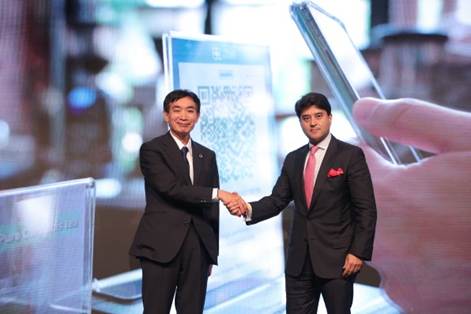
Union Minister for Communications and Development of North Eastern Region, Shri Jyotiraditya M. Scindia, today unveiled the UPI–UPU Integration project at the 28th Universal Postal Congress in Dubai, a landmark initiative set to transform cross-border remittances for millions worldwide.

The initiative, developed by the Department of Posts (DoP), NPCI International Payments Limited (NIPL), and the Universal Postal Union (UPU), integrates India’s Unified Payments Interface (UPI) with the UPU Interconnection Platform (IP), combining the reach of the postal network with the speed and affordability of UPI.

Calling it “more than a technology launch, but a social compact”, Shri Scindia said, “The reliability of the postal network combined with the speed of UPI means families across borders can send money faster, safer and at much lower cost. It reaffirms that public infrastructure built for citizens can be linked across borders to serve humanity better.”

He outlined India’s vision for a modern, inclusive postal sector, anchored in four verbs. “To connect through seamless data-driven logistics; to include by delivering affordable digital financial services to every migrant and digital enterprise; to modernise with AI, DigiPIN and machine learning; and to cooperate through South–South partnerships with a UPU-backed technical cell.”

Under the vision of Prime Minister Shri Narendra Modi’s Digital India and working towards a Viksit Bharat, India Post stands as a powerful example of the scale and inclusion. Highlighting this,  Shri Scindia added, “With Aadhaar, Jan Dhan and India Post Payments Bank, we have opened over 560 million accounts, most in women’s names. India Post delivered over 900 million letters and parcels last year. This is the scale and spirit of inclusion we bring to the global stage.”

Shri Scindia announced financial support committing 10 million dollars during this cycle to channel technology into innovation, with special focus on e-commerce and digital payments. Taking forward the motto of ‘Sabka Saath, Sabka Vikas, Sabka Vishwas, Sabka Prayas’ he reiterated how India stands ready with resources, expertise and friendship.

Shri Scindia also announced India’s candidature for the Council of Administration and the Postal Operations Council of the UPU, reaffirming its commitment to building a connected, inclusive, and sustainable future for the global postal community.

He concluded his speech at the 28th Universal Postal Congress in Dubai saying “India comes to you not with proposals, but with partnership. We believe in resilience, enabling interoperable solutions that avoid costly fragmentation, and in trust, linking payments, identity, addressing and logistics so that global commerce becomes seamless.”

PM appreciates the efforts of all those associated with the practice of physiotherapy

| Published on:

The Prime Minister, Shri Narendra Modi has appreciated the efforts of all those associated with the practice of physiotherapy on the occasion of World Physiotherapy Day, today.”It is commendable how they contribute to the wellbeing of people, especially the elderly, by ensuring mobility, dignity and a better quality of life”, Shri Modi stated.

The Prime Minister posted on X;

“World Physiotherapy Day is an occasion to appreciate the efforts of all those associated with the practice of physiotherapy. It is commendable how they contribute to the wellbeing of people, especially the elderly, by ensuring mobility, dignity and a better quality of life.”

Dr. Jitendra Singh Inaugurates International Conference on Space 2025

| Published on:

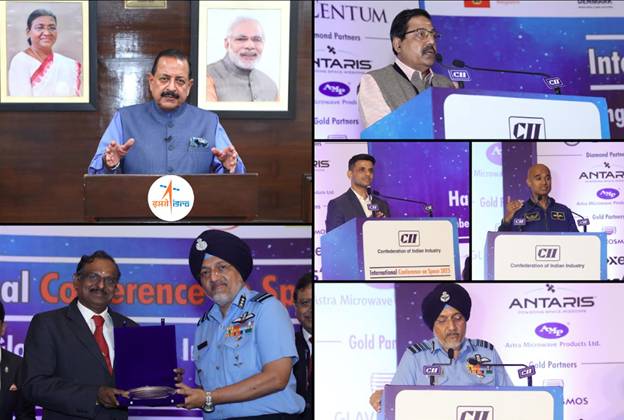
Union Minister of State (Independent Charge) for Science and Technology; Earth Sciences and Minister of State for PMO, Department of Atomic Energy, Department of Space, Personnel, Public Grievances and Pensions, Dr. Jitendra Singh today said that India is entering a transformative phase in its space journey, with ambitious goals ranging from a Bharatiya Space Station by 2035 to landing an Indian astronaut on the Moon by 2040. He was speaking virtually at the inaugural session of the International Conference on Space 2025, themed “Harnessing Space for Global Progress: Innovation, Policy, and Growth.”

Highlighting recent milestones, the Minister referred to the success of Chandrayaan-3, which placed India among the leading spacefaring nations by becoming the first to land near the lunar south pole. He also pointed to the achievements of Group Captain Shubhanshu Shukla, the first Indian Air Force officer to travel to the International Space Station, and outlined India’s upcoming exploration missions to Mars, Venus, and asteroids, alongside the human spaceflight programme Gaganyaan.

Dr. Jitendra Singh underscored the role of reforms initiated under Prime Minister Narendra Modi’s leadership, which have opened the sector to private participation, startups, and academia. Over 300 startups are currently active in areas including launch vehicles, satellites, and ground systems. This, he said, is not only fostering innovation but also generating jobs, investments, and opportunities for young professionals.

He noted that the true value of space lies in its applications across everyday life — from agriculture and health to education, urban development, and governance. “Space must empower every sector and serve the common citizen,” he said.

The Minister also emphasized India’s commitment to international collaboration. He cited recent partnerships such as the joint NASA–ISRO Synthetic Aperture Radar (NISAR) mission with the United States, and the upcoming Chandrayaan-5 lunar mission with Japan. Such cooperation, he added, demonstrates how space can serve as a powerful platform for global engagement.

Skill development, he said, remains a critical pillar of India’s space strategy. Through ISRO outreach programmes, academic Centres of Excellence, and industry–academia collaborations, the country is nurturing talent in fields such as satellite design, propulsion, AI-driven applications, and space law.

The conference, organized by the Confederation of Indian Industry (CII), has drawn over 500 delegates from India and abroad, including government representatives, academics, industry leaders, and startups. Dr. Jitendra Singh commended CII for creating a platform that brings together stakeholders to discuss innovation, policy, and growth in the sector.

Dr. Jitendra Singh also recalled Prime Minister Narendra Modi’s vision that the 21st century belongs to India, with space emerging as a frontier where the nation’s leadership will be globally recognized. He stressed that the application of space technologies will not only transform agriculture, health, and education but also strengthen governance and public service delivery. The Minister welcomed the formation of CII’s National Committee on Space, which he said would serve as a vital platform to bring together established enterprises and new-age startups for building a stronger ecosystem.

Concluding his address, the Minister reiterated India’s vision of using space for sustainability, equity, and global progress. “India’s space journey is one of perseverance and innovation. Let us dream together, innovate together, and build together — transforming space from a distant frontier into a shared horizon of unity and progress,” he said.

India stands united to overcome global challenges; focus on Swadeshi and Atmanirbhar Bharat essential: Piyush Goyal

| Published on:

No matter how big the problem arises in the global situation, India stands together as a nation said Union Minister of Commerce and Industry, Shri Piyush Goyal, while addressing the 56th EEPC India National Awards today. He added that the country has the strength to overcome any crisis. Shri Goyal further emphasised that businesses should focus on swadeshi products, as this will not only help India’s growth but also strengthen the country’s financial security. He cautioned that recently it has been seen that any country can impose export controls or restrict important products from reaching India, which can create hurdles for businesses. Therefore, he said, there is a need to focus more on Atmanirbhar Bharat. He described it as a call to action that everyone must accept.

Shri Goyal also recalled that on 15th August, Prime Minister Narendra Modi gave a clarion call for swadeshi products, stressing the importance of innovation. He said that India’s 1.4 billion people, businesses and trade should focus on Made in India products. Businesses that are import dependent, he suggested, can look into products that can be procured and made in India.

The Hon’ble President of India, Smt. Droupadi Murmu, graced the occasion as the Chief Guest. In her address, she spoke about India’s engineering exports and their advancement over the decades. She emphasised the importance of exports in strengthening the country’s economy and enhancing India’s global standing.

Shri Goyal highlighted that India’s strength relies on trade and the MSME sector, which form the backbone of the country’s businesses. He said that India’s self-confidence is so strong that it will only grow stronger and will not bow in front of anyone. Referring to EEPC’s journey, he pointed out that in 1955 exports were at USD 10 million, while today they stand at USD 116 billion. With time, he said, the engineering sector will grow further with bigger goals and greater strength.

The Minister said that he has full confidence that India, with the motto of “Zero Defect, Zero Effect,” will grow bigger. He underlined the need to ensure that good quality products are made in India and sold across the world. He added that the world today considers India a trusted partner, and it is important to maintain that status. He also stated that India is a nation conscious of sustainability. As a responsible global citizen, India is mindful of Mother Nature, and with its NDC commitments under COP21 in Paris, India has ranked in the top three for consecutive years in global sustainability efforts.

Shri Goyal said that under the leadership of Prime Minister Narendra Modi, India has transformed from a fragile five economies to one of the top five economies. He noted that India has been the fastest growing economy for the last four years. In the last quarter, the country achieved 7.8 percent GDP growth, which he described as a world record.

The Minister said that with GST rate cuts and simplification, Prime Minister Narendra Modi has given a boost to domestic demand. He noted that new opportunities for employees and increases in income will follow. He further said that when infrastructure spending and consumer demand grow on the strong base of the economic system, no power in the world can stop India from becoming a world power.

Shri Piyush Goyal concluded by stating the importance of equitable economic benefits, he highlighted that the advantages of GST rate cuts must be fully passed on to consumers, ensuring that growth reaches every citizen and strengthens the foundation of India’s economy. The Minister said that when India works together as a united family, supporting each other across sectors, inclusive growth will naturally follow. He expressed confidence that the country can become a global role model for sustainable and inclusive development.

PM congratulates Indian Men’s Hockey Team for their splendid win in the Asia Cup 2025

| Published on:

The Prime Minister, Shri Narendra Modi has congratulated the Indian Men’s Hockey Team for their splendid win in the Asia Cup 2025 held in Rajgir, Bihar. “This win is even more special because they have defeated the defending champions, South Korea”, Shri Modi stated.

The Prime Minister posted on X;

“Congratulations to our Men’s Hockey Team for their splendid win in the Asia Cup 2025 held in Rajgir, Bihar. This win is even more special because they have defeated the defending champions, South Korea!

This is a proud moment for Indian hockey and Indian sports. May our players continue to scale even greater heights and bring more glory to the nation!”

Prime Minister recalls vision of Sree Narayana on his birth anniversary

| Published on:

The Prime Minister, Shri Narendra Modi has recalled the vision of Sree Narayana  on his birth anniversary and its impact on our social as well as spiritual landscape.”His teachings of equality, compassion and universal brotherhood resonate widely”, Shri Modi stated.

The Prime Minister posted on X;

“On the birth anniversary of Sree Narayana Guru, we recall his vision and impact on our social as well as spiritual landscape. His teachings of equality, compassion and universal brotherhood resonate widely. His call for social reform and furthering education continues to inspire generations.”

NEP-2020 Unlocking Potential of Young Minds: Dr. Jitendra Singh

| Published on:

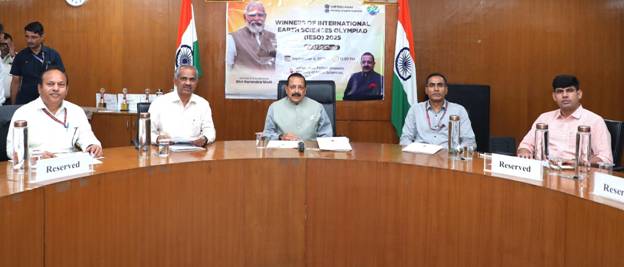
Union Minister of State (Independent Charge) for Science & Technology, Earth Sciences, Minister of State for Prime Minister’s Office, Personnel, Public Grievances, Pensions, Atomic Energy and Space, Dr. Jitendra Singh felicitated the student winners comprising the Indian team at the 18th “International Earth Science Olympiad” (IESO-2025) held at Jining, China from 8–16 August 2025.

Team India put up a stellar performance by securing a total of seven medals – 1 Gold, 4 Silver and 2 Bronze – along with a 3rd Prize in the International Geoscience Youth Movement (I-GYM) Reporter category.

The winning students included:• Rayansh Gupta (Sat Paul Mittal School, Ludhiana, Punjab) – Gold, Silver & I-GYM 3rd Prize • Charuvrat Bains (M.G.N. Public School, Kapurthala, Punjab) – 2 Silver, 1 Bronze • Apam Nidhi Pandey (PM Shri K.V. No.1, Jaipur, Rajasthan) – 1 Silver • Priyanshi Ghanghas (MD Indraprastha Sr. Sec. Public School, Delhi) – 1 Bronze

The students were guided by mentors Prof. Devesh Walia and Prof. Hema Achyuthan, with Dr. Jagvir Singh, Scientist-G, as observer.

Speaking on the occasion, Dr. Jitendra Singh lauded the young achievers for bringing glory to the nation and said the results reflect the new aspirational spirit among youth, particularly from Tier-2 and Tier-3 cities, after India’s startup revolution in the last decade.

The Minister underlined that the National Education Policy (NEP-2020) has unleashed the creative potential of young minds by freeing them from the limitations of rigid subject streams and enabling them to explore diverse disciplines. This, he said, is encouraging a paradigm shift from conventional courses towards cutting-edge fields such as Earth Sciences, Biotechnology, Space Technology and Start-up led self-employment.

Dr. Jitendra Singh appealed to students to actively leverage opportunities being provided by the Government through initiatives such as Vigyan Jyoti, scholarships, fellowships and research grants, to scale their ideas and make them beneficial for society.

Secretary, Ministry of Earth Sciences, Dr. M. Ravichandran highlighted that the Ministry supports students for IESO every year by conducting the Indian National Earth Science Olympiad (INESO) across 300 centres in India. From nearly 30 shortlisted students, four are selected to represent India at the international level. He noted that in recent years, India’s performance at IESO has been highly encouraging.

Dr. Jitendra Singh also urged the students not to limit their pursuit to winning competitions, but to broaden their horizons and apply their innovations to solve real-life problems for the larger good of citizens.

The International Earth Science Olympiad (IESO), established in 2003 by the International Geoscience Education Organization (IGEO), is an annual competition for secondary school students (Class IX–XII) worldwide. India has been participating since 2007 and hosted the 10th edition at Mysore in 2013.

Dr Mansukh Mandaviya cycles along with MPs in New Delhi as part of Fit India Sundays on Cycle

| Published on:

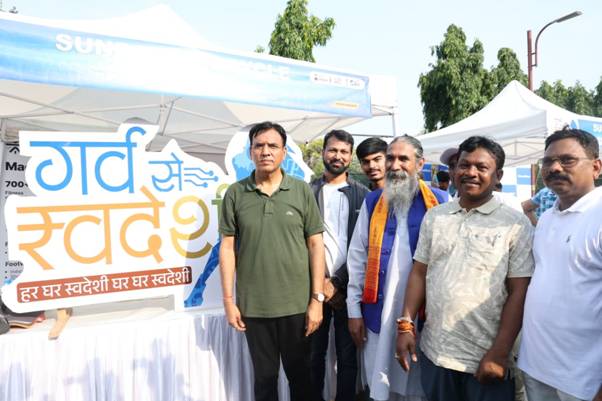
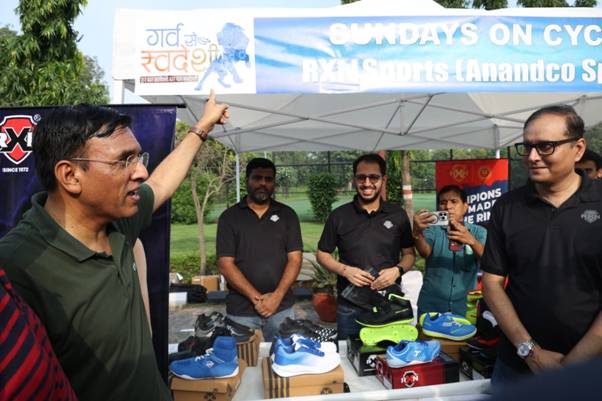
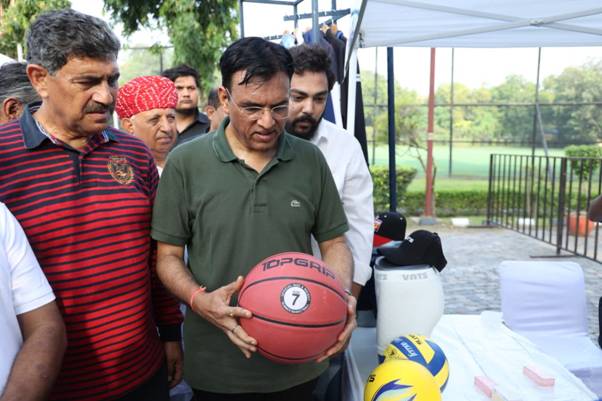
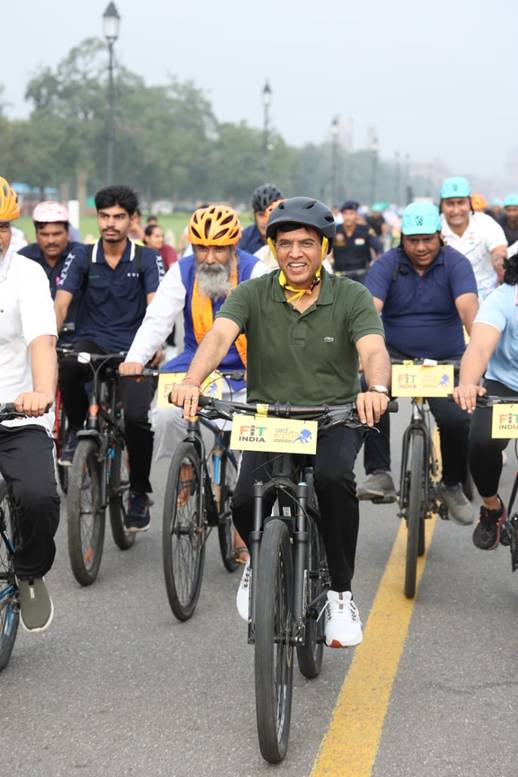
Union Minister of Youth Affairs & Sports, Dr. Mansukh Mandaviya rode a bicycle alongside Members of Parliament around the iconic India Gate and Kartavya Path as part of the ongoing ‘Fit India Sundays on Cycle’ initiative with the special theme of ‘Garv se Swadeshi’, promoting Indian-made products.

The 39th edition of the Fit India Sundays on Cycle was organised at 8000 locations across the country in partnership with the Indian Railways. In New Delhi, the event was flagged off by Olympic medallist Sakshi Malik at 7 AM from the Major Dhyan Chand National Stadium with more than 1500 cyclists and fitness enthusiasts in attendance. This edition of Sundays on Cycle saw a new addition: the celebration of ‘Garv Se Swadeshi’, in which Indian sportswear and fitness brands put up their stalls with Swadeshi goods for the participants.

The Members of Parliament who participated in the event were Bhagirath Chowdhury, Minister of State for Agriculture, Sanjay Seth, Minister of State for Defence, Navin Jindal, Purushottam Rupala, Prabhubhai Vasava, Hemang Joshi, Subhash Barala, Bhojraj Nag and Ramesh Bidhuri, among others.

The event paid tribute to the Indian Railways, one of the world’s largest railway networks in terms of track length. More than 250 employees of the Indian Railways participated in the cycling initiative.

Speaking after completing the cycling route, Dr. Mandaviya said: “I am pleased to see the growing participation of our citizens in the Sundays on Cycle event. It has grown into a mass movement and has created significant awareness about adopting an active lifestyle. Today, I cycled along with MPs under the theme of ‘Garv se Swadeshi.’ I take this occasion to urge all citizens to use Made in Bharat products.”

On the recent GST cut on sports goods, Dr. Mandaviya said, “We are thankful to Prime Minister Narendra Modi for this reduction in Goods and Services Tax (GST) from 12 per cent to 5 per cent on majority of sports goods. This will make these items affordable for the citizens and motivate them to participate more actively in sports and fitness activities. A higher demand will also boost the production of Indian sports goods manufacturing units and strengthen the sporting ecosystem.”

Minister of State for Youth Affairs & Sports, Smt. Raksha Nikhil Khadse said on X: “Honoured to join the 39th edition of #SundaysOnCycle at Delhi’s Major Dhyan Chand National Stadium — a remarkable fitness movement led by Hon’ble Union Minister Dr. Mansukh Mandaviya ji. The event brought together Hon’ble MPs, Olympic champion Sakshi Malik & dignitaries from SAI & Indian Railways in a vibrant show of unity. Together, we pledged “#GarvSeSwadeshi”, reaffirming our commitment to an Atmanirbhar & Fitter Bharat.”

Olympic medallist Sakshi Malik expressed her joy after taking part in the Sundays on Cycle movement. She highlighted the Government’s efforts in promoting fitness among the country’s population and support for sportspersons to win laurels for the nation.

“I am glad to be part of the Fit India Sundays on Cycle initiative. Today, it is being organised at more than 8000 locations across the country by the Government of India and Sports Ministry. Our Hon’ble Prime Monister started Fit India back in 2019 and our Sports Minister Dr. Mansukh Mandaviya began the Sundays on Cycle initiative in December 2024. This was my first experience to cycle alongside thousands of people and especially our Members of Paliament. I would like to tell everyone to dedicate an hour every day for fitness and their physical health,” Sakshi said.

The ‘Fit India Sundays on Cycle’ is organised by the Ministry of Youth Affairs and Sports (MYAS), in collaboration with the Cycling Federation of India (CFI), Yogasana Bharat and MY Bharat. The cycling drive is organised simultaneously in capitals of all States and Union Territories besides SAI Regional Centres, National Centres of Excellence (NCOEs), SAI Training Centres (STCs), Khelo India State Centres of Excellence (KISCEs) and Khelo India centres (KICs) across various age groups.

Prime Minister addresses National Awardee Teachers

| Published on:

Prime Minister Shri Narendra Modi addressed the National Awardee Teachers at New Delhi, today. Shri Modi lauded the natural respect Indian society holds for teachers, calling them a powerful force in nation-building. He emphasized that honoring teachers is not merely a ritual but a recognition of their lifelong dedication and impact.

The Prime Minister extended his heartfelt congratulations to all recipients of the National Teachers’ Awards. He stated that their selection is a recognition of their hard work and unwavering dedication. The Prime Minister highlighted that teachers not only shape the present but also mould the future of the nation making their role one of the highest forms of national service. He further noted that millions of teachers across the country, like this year’s awardees, are devoted to education with sincerity, commitment, and a spirit of service. On this occasion, he also paid tribute to the contributions of all such educators involved in nation-building.

The Prime Minister  lauded the enduring role of teachers in India’s progress, stating that the nation has always revered the Guru-Shishya tradition. In India, a Guru is not merely a provider of knowledge but a guide for life. “As we move forward with the vision of building a developed India, this tradition remains our strength. Teachers like you are living embodiments of this heritage. You are not only imparting literacy but also instilling the spirit of living for the nation in the younger generation,”  Shri Modi stated.

The Prime Minister emphasized that teachers are the foundation of a strong nation and an empowered society. He noted that teachers are also sensitive to the need for timely changes in curricula and syllabi, aligning education with the evolving demands of the time. “This same spirit is reflected in the reforms being undertaken for the nation. Reforms must be continuous and relevant to the times, this is the firm commitment of our government,” he added.

Recalling his commitment from the Red Fort to make India self-reliant through structural reforms, the Prime Minister stated, ““I had promised that before Diwali and Chhath Puja, there would be a double celebration for the people. In line with that spirit, the GST Council has taken a landmark decision. GST has now become even simpler. There are now mainly two GST slabs, 5% and 18%. These new rates will come into effect from Monday, 22nd September, the first day of Navratri.” The Prime Minister emphasized that from the beginning of Navratri, essential items for crores of families will become more affordable. He added that this year’s Dhanteras will be more vibrant, as tax on dozens of goods has been significantly reduced.

Shri Modi stated that GST was one of the biggest economic reforms in independent India. It freed the country from a complex web of multiple taxes. Now, as India advances into the 21st century, this new phase of GST reform being referred to by some in the media as ‘GST 2.0’ is truly a double dose of support and growth. The reform offers dual benefits of  increased savings for common families and strengthening of economic momentum. “The move is expected to provide substantial relief to the poor, neo-middle class, middle class, farmers, women, students, and youth.Young professionals starting new jobs will especially benefit from the reduction in vehicle tax.This decision will make it easier for families to manage household budgets and improve their quality of life,”  Shri Modi said.

Prime Minister Narendra Modi  underscored the transformational tax reforms undertaken by the NDA government, stating that massive GST reductions have significantly lowered the financial burden on Indian households. Shri Modi highlighted that prior to 2014, under the Congress-led government, essential goods and daily-use items were heavily taxed. Products like toothpaste, soap, utensils, bicycles, and even children’s candy attracted tax rates ranging from 17% to 28%. Basic services such as hotel stays also incurred steep taxes, including additional state-level levies. “If the same tax regime had continued, people would still be paying ₹20–₹25 in taxes for every ₹100 spent. In contrast, under the BJP-led NDA government, GST on such goods and services has been reduced to just 5%, ensuring direct relief for millions of families across the country” Shri Modi stated.

The Prime Minister emphasized that these reforms reflect the government’s unwavering commitment to boosting household savings and easing the cost of living, especially for the middle class, farmers, women, and young professionals.

The Prime Minister noted that before 2014, medical treatment remained out of reach for many, with the Congress government imposing a 16% tax on diagnostic kits. This has now been reduced to just 5%, making basic healthcare more accessible to the poor and middle class. “Under the previous regime, building a home was a costly affair. Cement was taxed at 29%, and appliances like ACs and TVs at 31%. Our government has brought these rates down to 18%, easing the cost of living for millions”, Shri Modi stated.

The Prime Minister also addressed the plight of farmers under the earlier tax regime, where essential equipment like tractors, irrigation tools, and pumping sets attracted 12%–14% taxes. Shri Modi underscored that today, most of these items are taxed at either 0% or 5%, significantly reducing farming costs and supporting rural livelihoods. The reforms are part of the government’s broader commitment to improving household budgets, empowering farmers, and enhancing quality of life across the country.

The Prime Minister stated that sectors employing a large workforce like textiles, handicrafts, and leather have been given significant relief through reduced GST rates. These reforms will not only benefit workers and entrepreneurs in these industries but also lead to lower prices for essential goods like clothing and footwear. “For startups, MSMEs, and small traders, the government has combined tax reductions with streamlined procedures, ensuring ease of business and enhanced operational flexibility”, Shri Modi added. Recognizing the growing focus on wellness, the Prime Minister announced lower GST on services like gyms, salons, and yoga, encouraging fitness among the youth. Shri Modi emphasised that these reforms are part of the broader agenda to build a Viksit Bharat, where youth, enterprise, and health are key national priorities.

The Prime Minister  described the latest GST reforms as a historic step forward in India’s economic transformation, stating that the reforms have added “five key gems” to the country’s thriving economy. “First, the tax system has become significantly simpler.  Second, the quality of life for Indian citizens will further improve.  Third, consumption and economic growth will receive a new booster.

Fourth, ease of doing business will strengthen, leading to more investments and job creation.  Fifth, the spirit of cooperative federalism, partnership between the Centre and the States will be further reinforced, which is vital for a Developed India”, Shri Modi underscored.

Prime Minister Narendra Modi today reiterated the government’s guiding principle, “Nagarik Devo Bhava” (Citizen is God), emphasizing its commitment to the welfare of every Indian. He highlighted that this year, tax relief has not only come through reductions in GST but also significant cuts in income tax. Income up to ₹12 lakh is now tax-free, providing substantial relief to taxpayers.

Shri  Modi  emphasized that inflation in India is currently at a very low and controlled level, reflecting true pro-people governance. As a result, India’s growth rate has reached nearly eight percent, making it the fastest-growing major economy in the world. This remarkable achievement is a testament to the strength and determination of 140 crore Indians.

 The Prime Minister reaffirmed the government’s commitment to continue the journey of reforms aimed at making India self-reliant. “ Aatmanirbhar Bharat (Self-Reliant India) is not just a slogan but a committed movement”, Shri Modi said. He called upon all teachers across the country to continually sow the seeds of self-reliance in every student. The Prime Minister highlighted the crucial role of educators in explaining the importance of a self-reliant India in simple language and local dialects. He urged teachers to inspire students to understand that a nation dependent on others can never progress as rapidly as its true potential allows. The Prime Minister encouraged teachers to engage students in exercises that highlight the presence of imported products in daily life and promote the use of indigenous alternatives. He cited the example of India spending over ₹1 lakh crore annually on edible oil imports, stressing that self-reliance is essential for national development.

Referring to Mahatma Gandhi’s legacy of promoting Swadeshi, the Prime Minister said it is now this generation’s duty to complete that mission. Shri Modi  stressed that every student should ask themselves, “What can I do to fulfill any of the needs of my country? It is very important to connect oneself with the needs of the nation. It is this country that takes us forward in life, that gives us so much  and that is why every student must always carry this thought in their heart: What can I give to my country, and which of the nation’s needs can I help fulfill?”, Shri Modi added.

Prime Minister Narendra Modi applauded the rising interest of Indian students in innovation, science, and technology, crediting the success of the Chandrayaan mission for inspiring millions to become scientists and innovators. He recalled how Group Captain Shubanshu Shukla’s return from a space mission energized his school community, underscoring the vital role of teachers in shaping and guiding youth beyond academics.

The Prime Minister highlighted the support now available through the Atal Innovation Mission and Atal Tinkering Labs, with over 10,000 labs already established nationwide. The government has approved the creation of an additional 50,000 labs to provide young innovators across India more opportunities to innovate. “The success of these initiatives depends greatly on the dedicated efforts of teachers nurturing the next generation of innovators” Shri Modi underscored

Shri Modi highlighted the government’s dual focus on empowering youth digitally while safeguarding them from the harmful effects of the digital world. He referenced the recently passed law in Parliament regulating online gaming, aimed at protecting students and families from addictive, financially exploitative, and violent content.

The Prime Minister urged teachers to raise awareness among students about these risks. He emphasized the government’s commitment to promoting India’s presence in the global gaming sector, especially by leveraging traditional Indian games and supporting innovative startups. “By educating students about responsible gaming and digital opportunities, the government envisions creating promising career options for the youth in this expanding industry,” Shri Modi added.

Prime Minister Shri Narendra Modi urged the educators to play a vital role in the ‘Vocal for Local’ campaign, which encourages embracing indigenous products as symbols of India’s pride and self-respect. He emphasized involving students in school projects and activities that identify and celebrate ‘Made in India’ items.

The Prime Minister suggested assignments that help students and their families recognize the use of local products at home, raising awareness from an early age. He also encouraged the use of indigenous materials in art and craft classes and school celebrations to nurture a lifelong sense of pride in Indian-made goods.

Shri Modi called upon schools to organize initiatives like ‘Swadeshi Week’ and ‘Local Product Day’ where students bring local products from their families and share their stories. He emphasized discussions on the origin, makers, and national importance of these products to foster deeper awareness. “There should be interaction between students and local artisans, highlighting the value of indigenous crafts and manufacturing passed down through generations. Made in India gifts can be encouraged for occasions like birthdays to instill pride in local products. Such efforts will nurture patriotism, self-confidence, and respect for labor among youth, linking their personal success to national progress”, Shri Modi added.

The Prime Minister expressed confidence that teachers will continue to advance this mission of nation-building with dedication.  Shri Modi concluded by congratulating all award-winning teachers for their exemplary contribution.

India Singapore Joint Statement

| Published on:

Joint Statement on the Roadmap for the Comprehensive Strategic Partnership between India and Singapore on the occasion of the Official Visit of His Excellency Mr. Lawrence Wong, Prime Minister of the Republic Of Singapore, to the Republic of India

1. At the invitation of H.E. Shri Narendra Modi, Prime Minister of the Republic of India, H.E. Mr. Lawrence Wong, Prime Minister of the Republic of Singapore, paid an Official Visit to India from 2 to 4 September 2025.

2. On 4 September 2025, Prime Minister Modi and Prime Minister Wong held wide-ranging discussions. Thereafter, the leaders witnessed the exchange of various Memoranda of Understanding. Prime Minister Wong attended the Banquet Lunch hosted by Prime Minister Modi. He also called on President of India, H.E. Smt Droupadi Murmu. Prime Minister Wong also visited Raj Ghat to pay floral tributes to Mahatma Gandhi. External Affairs Minister, Dr. S. Jaishankar called on Prime Minister Wong.

3. This year marks the 60th anniversary of the establishment of diplomatic relations between the two countries. Both Prime Ministers acknowledged India and Singapore’s long tradition of friendship based on trust and mutual respect, and extensive cooperation across a wide range of areas. They reviewed and expressed satisfaction over the progress in the bilateral relationship, including through the recent high-level engagements such as the Official Visit of Prime Minister Modi to Singapore in September 2024, the State Visit of the President of the Republic of Singapore H.E. Mr. Tharman Shanmugaratnam to India in January 2025 and the 3rd India-Singapore Ministerial Roundtable in New Delhi in August 2025. The ties have developed into an all-round cooperation, including in the areas of political, economic, security, technology, education, people-to-people and cultural links.

4. Both Prime Ministers recalled the agreement to elevate bilateral relations to a Comprehensive Strategic Partnership (CSP), during Prime Minister Modi’s Official Visit to Singapore in September 2024. Building on this, they agreed to adopt a forward-looking and substantive roadmap for the CSP that would set the vision and direction for the next phase of bilateral relations, and deepen cooperation in eight areas: (i) Economic Cooperation; (ii) Skills Development; (iii) Digitalisation; (iv) Sustainability; (v) Connectivity; (vi) Healthcare and Medicine; (vii) People-to-People and Cultural Exchanges; and (viii) Defence and Security Cooperation.

ROADMAP FOR THE CSP

Economic Cooperation: Strengthening Economic Ties and Enhancing Collaboration in New and Forward-Looking Areas

· Deepen bilateral trade and access to markets, including through building on the Comprehensive Economic Cooperation Agreement (CECA), and taking into consideration both countries’ trade priorities through the annual Meeting of Joint Working Group on Trade and Investments;

· Both sides will continue to engage in dialogue and make progress on initiation of the Third Review of CECA and achieve substantial Review of the ASEAN India Trade in Goods Agreement (AITIGA) in 2025;

· Support the growth of India’s semiconductor industry and ecosystem including through cooperation under the India-Singapore Semiconductor Policy Dialogue; facilitating partnerships with Singapore companies; advancing resilient semiconductor supply chains; exploring mutually beneficial research and development collaborations; promoting workforce development; and encouraging business-to-business cooperation through information sharing, exchange of best practices, direct investments, and potential partnerships between Indian and Singapore firms;

· Jointly develop sustainable industrial parks and next-generation industrial parks with advanced manufacturing capabilities, including through facilitating ventures and partnerships, government-to-government cooperation in knowledge sharing, capacity training, green standards implementation, master planning, and promotion;

· Jointly enhance India-Singapore capital market connectivity and build on the close collaboration on joint initiatives such as the NSE-IFSC-SGX GIFT Connect;

· Strengthen partnerships and collaboration between the business communities in India and Singapore, especially in areas that complement the bilateral cooperation agenda, and deepen business-to-business engagement such as through the India-Singapore Business Roundtable (ISBR);

· Promote joint collaboration in the space sector, including between the Indian National Space Promotion and Authorisation Centre (IN-SPACe) and the Office for Space Technology & Industry, Singapore and both countries’ space industries; in space policy and law; and in research and development activities in areas of mutual interest such as Earth observation and satellite communication technologies and applications;

· Enhance legal and dispute resolution cooperation, where possible, with a view to addressing the businesses’ needs of both sides, through the involvement of the relevant Ministries of India and Singapore;

Skills Development: Partnering in Skills Development and Capacity Building

· Jointly develop a National Centre of Excellence in Chennai, Tamil Nadu on Advanced Manufacturing, which will focus on boosting industry connection and collaborating on standards in curriculum, train-the-trainers, developing a skills certification framework, and periodic review and assessment to maintain quality; and collaborating with the private sector to develop skill centres in sectors of mutual interest, including Advanced Manufacturing, Aviation and Maintenance Repair and Overhaul (MRO);

· Promote cooperation in capability development in Technical Vocational Education and Training (TVET) and skills development; collaboration in the field of technical education between Higher Education institutes; exchange of information and best practices with regard to reskilling and upskilling the workforce; student and staff exchanges; facilitation of student internships and faculty industrial attachments, and teacher training. Both sides will establish a Joint Working Group to facilitate and review progress across the education and skills development agenda;

· Build on strong existing collaboration between the Singapore skilling ecosystem and India, to support state level skilling cooperation with Singapore, such as the Singapore-Assam Nursing Talent Skills Cooperation;

Digitalisation: Deepening Cooperation in Digital and Financial Technologies

· Strengthen Digital Finance and Fintech cooperation between India and Singapore, as well as cyber security and capital market linkages, including through the Fintech Joint Working Group;

· Share experiences and exchange technical expertise in digital solutions, and explore their implementation through pilot projects;

· Enhance collaboration between start-up and Small and Medium Enterprise ecosystems of both sides with the aim of facilitating partnerships in the digital domain;

· Strengthen cooperation between stakeholders on both sides on cyber policies, CERT-CERT information exchange, cyber security capacity building and cybersecurity related issues;

· Regarding GIFT City-Singapore cooperation, officials from relevant agencies and regulatory authorities in India and Singapore to convene a Joint Working Group to kickstart discussions on the framework as well as to identify and trial potential use cases such as data types where the framework could apply to;

· Explore collaboration opportunities in critical and emerging technologies, to promote innovation, inclusive and sustainable economic growth; under the existing Joint Working Group on Digital Technologies;

· Explore cooperation on Artificial Intelligence through the sharing of best practices for developing AI-ready data sets and building data-driven AI use cases in sectors such as agriculture, health care, and education;

· Expand and maximise the potential of paperless and secure cross-border merchant and personal payments using the UPI-PayNow Linkage as a foundation;

· Strengthen the adoption of the TradeTrust framework between India and Singapore for interoperable e-Bills of Lading and facilitating more reliable and secure trade documents;

Sustainability: Exploring Collaboration Opportunities in Sustainable Development and Green Trade

· Step up cooperation in ongoing and new areas including green hydrogen and ammonia production and trade;

· Explore cooperation in the area of urban water management;

· Explore avenues of cooperation in the civil nuclear domain;

· Work towards a mutually beneficial bilateral cooperation framework under Article 6.2 of the Paris Agreement to address the challenge of climate change;

· Collaborate on green and sustainable initiatives in relevant multilateral frameworks such as the International Solar Alliance and Global Biofuels Alliance, of which Singapore is a member;

· Deepen cooperation on food security such as through promoting the exports of food products between India and Singapore and to third countries, including by exploring country-level accreditation for select exports;

Connectivity: Expanding Maritime and Aviation Connectivity

· Support the establishment of an India-Singapore Green and Digital Shipping Corridor (GDSC) between the Port of Singapore and ports in India to deepen maritime connectivity and work towards the establishment of a green maritime fuel corridor;

· Deepen ecosystem collaboration in India’s growing aviation and aerospace MRO sectors through the partnerships between Indian and Singapore companies in these sectors, including the sharing of Singapore’s expertise and the provision of upskilling opportunities;

· Both Prime Ministers recognized the growth in travel demand between the two countries, and encouraged the civil aviation authorities of both countries to discuss expanding the bilateral Air Services Agreement to enhance air connectivity;

· Explore partnerships in capacity building and airport development, including the exchange of experience and expertise in airport consultancy and management services for Indian airports;

· Both sides committed to enhancing cooperation on Sustainable Aviation Fuel (SAF) towards promoting cleaner and sustainable energy solutions in the aviation sector;

Healthcare and Medicine: Strengthening Healthcare and Medicine Cooperation

· Deepen collaboration in health and medicine fields under the MoU on Cooperation in the Field of Health and Medicine, including human resource development, digital health intervention and disease surveillance, maternal and child health and nutrition, health policy, with a focus on access to medical products and regulatory facilitation of collaborative research, combatting communicable and non-communicable disease, health safety and security, and research and innovation;

· Regularly convene the Joint Working Group on Health Cooperation;

· Deepen cooperation in the area of nursing skills development through the exchange of information and knowledge in nursing skills training, and enhancing the employability in Singapore, which is currently taking place under the MoU between Singapore and Assam on Nursing Talent Skills Cooperation;

· Deepen ongoing collaboration in Collaborative Industrial Research & Development and support new joint research projects in the area of Digital Health/Medical Technologies;

People-to-People and Cultural Exchanges: Supporting People-to-People and Cultural Linkages

· Further strengthen the long-standing social, cultural and people-to-people linkages between India and Singapore including through exploring cooperation across areas of mutual interest in maritime heritage;

· Promote and expand student exchanges, including students of Industrial Training Institutes (ITIs), through various initiatives including immersion programmes under the Singapore-India Partnership Foundation (SIPF) and internships, including attachments of Singaporean interns to India-based companies under the Confederation of Indian Industry-Enterprise Singapore India Ready Talent (IRT) Programme;

· Encourage deeper parliamentary engagement through exchange programmes;

· Facilitate public service exchanges and training at the senior officials’ level including via study visits;

· Continue regular dialogue on consular matters between the respective concerned authorities, including ad-hoc consultations to address issues promptly;

· Encourage a sustained level of engagement and interaction between think tanks, academia, educational and research institutions in both countries;

· To continue to promote cultural exchanges including of artists, art groups and exhibitions;

Defence and Security Cooperation: Strategic Cooperation to Promote Regional Peace and Stability

· Encourage continued exchanges and engagement on defence and security cooperation at all levels, including regular meetings between the two Defence Ministers through the Defence Ministers’ Dialogue and between senior Defence ministry officials through the Defence Policy Dialogue; · Continue military cooperation and exchanges through the joint conduct of army, naval, and air force exercises in various formats;

· Deepen defence technology cooperation in emerging areas such as Quantum Computing, AI, Automation and Unmanned Vessels;

· Continue the cooperation in maritime security and submarine rescue, as well as working closely within regional security architectures in line with the principles and areas of cooperation of the ASEAN Outlook on the Indo-Pacific and the Indo-Pacific Oceans Initiative;

· Strengthen cooperation in Maritime Domain Awareness between respective Information Fusion Centres, including through International Liaison Officers;

· Singapore acknowledges with appreciation India’s interest in the Malacca Straits Patrol;

· Reaffirming strong commitment to combat terrorism, including cross-border terrorism, in all its forms and manifestations, and reiterating zero-tolerance to terrorism, both countries will strengthen cooperation to fight against global and regional terrorism and terror organizations, including those proscribed by the UNSC 1267 Sanctions Committee and against terror financing, through bilateral mechanisms, FATF and other multilateral platforms;

· Strengthen cooperation under the bilateral Mutual Legal Assistance Treaty, which facilitates cooperation between the two countries in criminal investigations and proceedings;

· Regularly review the progress in bilateral relations through the Foreign Office Consultations between the Ministry of Foreign Affairs of Singapore and the Ministry of External Affairs of India;

5. The two Prime Ministers agreed to institutionalise the India-Singapore Ministerial Roundtable as a foremost mechanism to annually monitor the progress in the implementation of the Comprehensive Strategic Partnership.