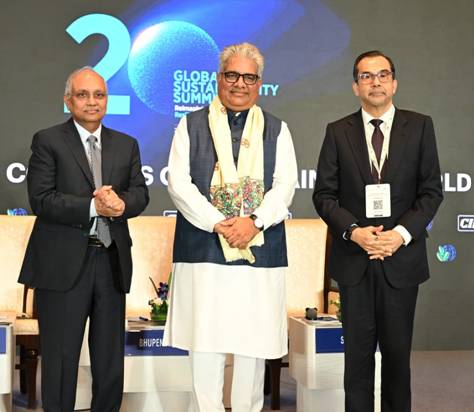
Shivraj Singh Chouhan visits flood-affected areas of Punjab

| Published on:

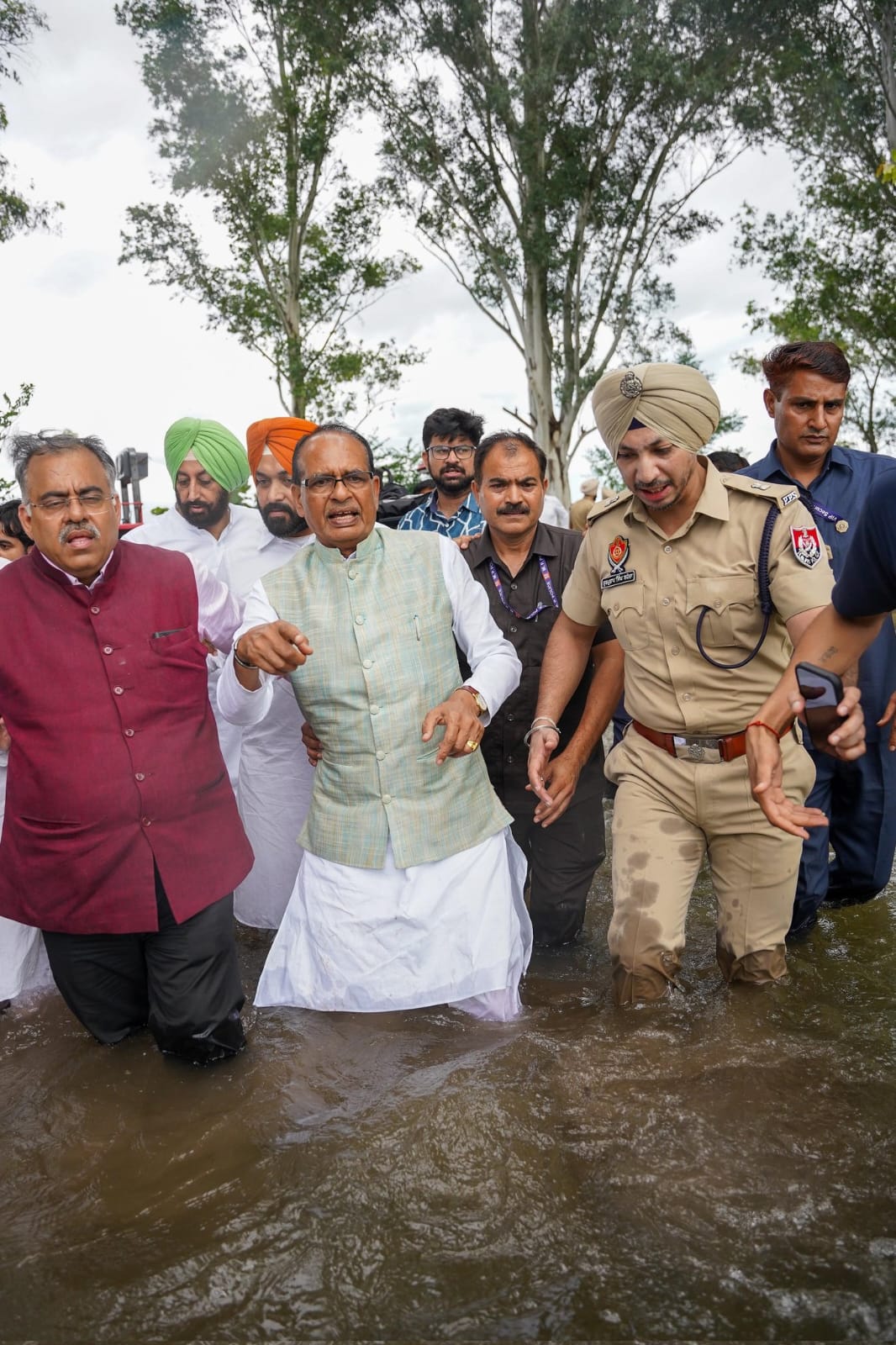
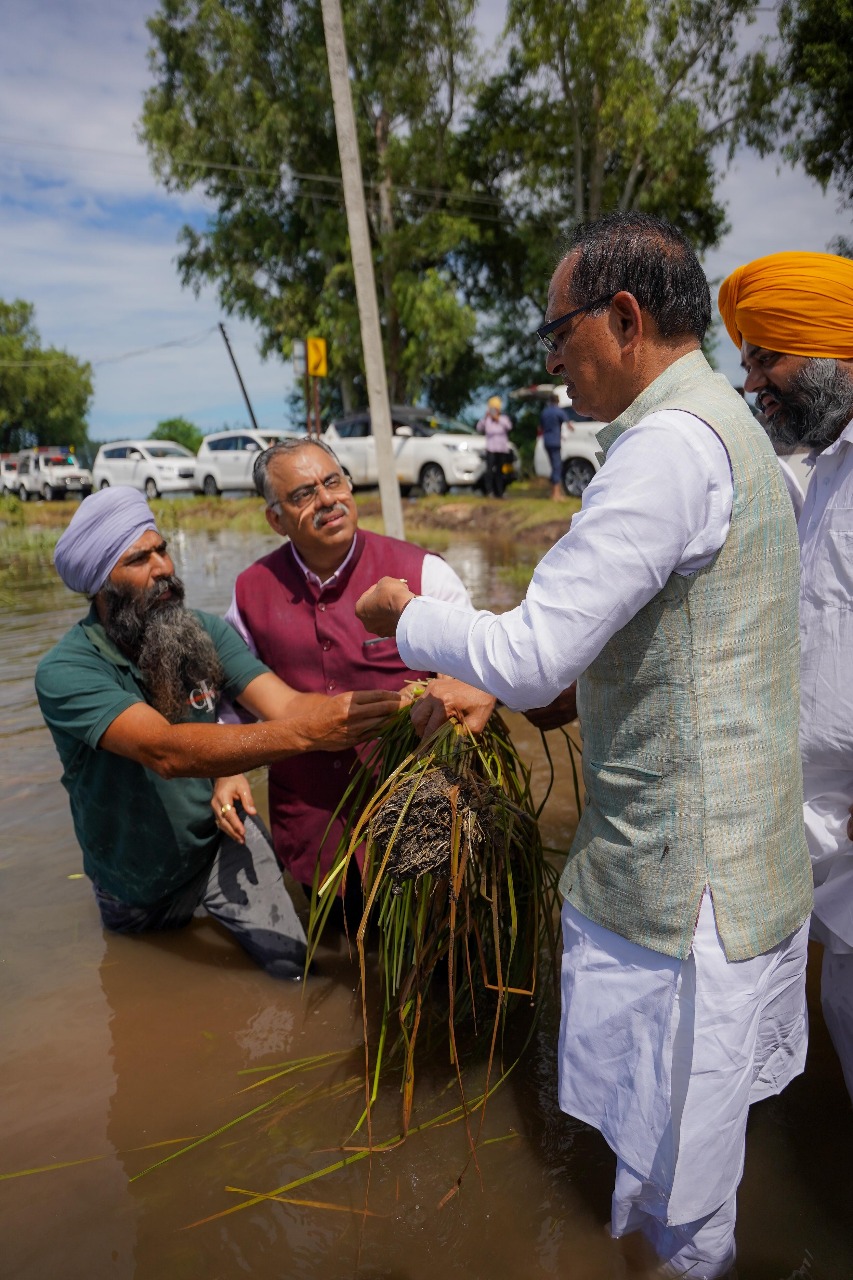
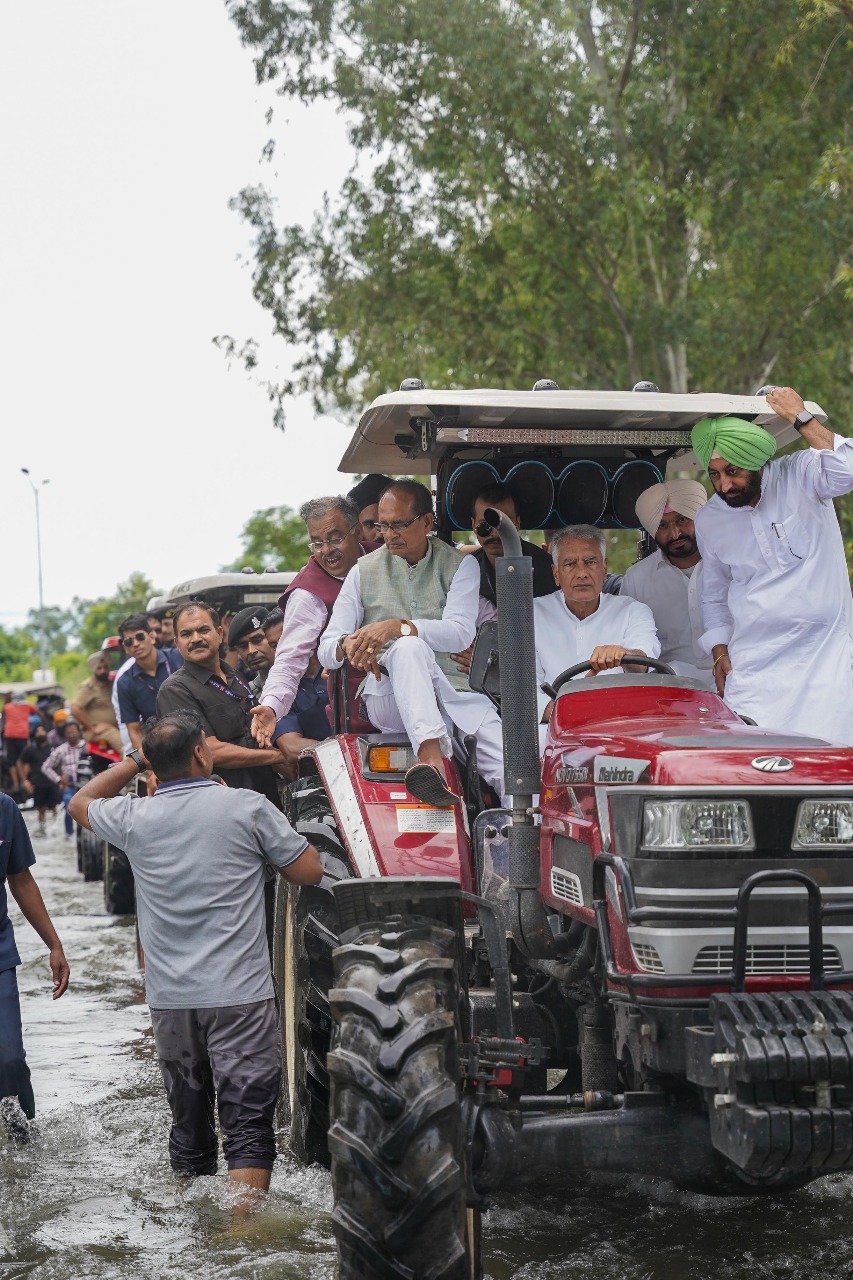
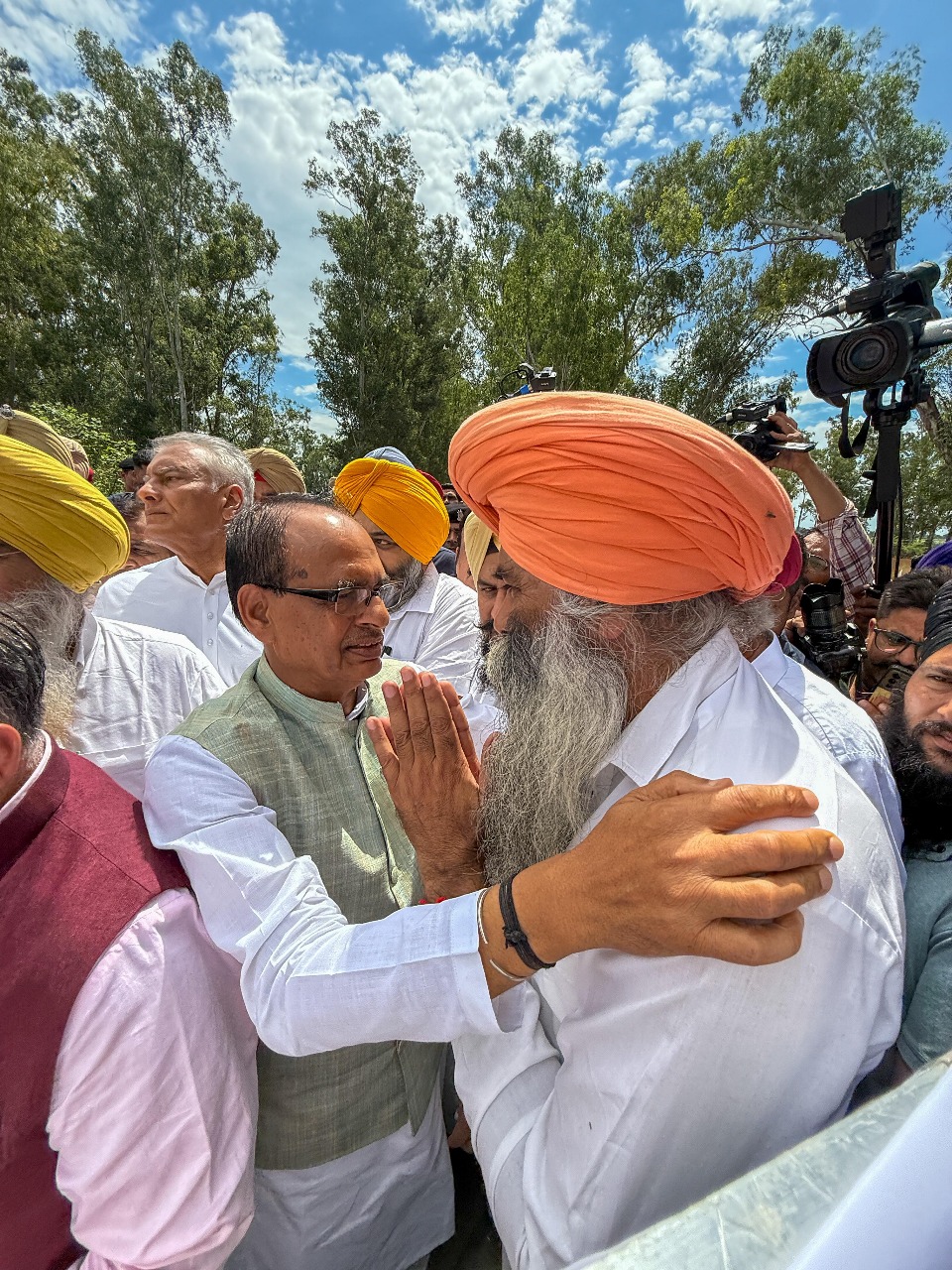
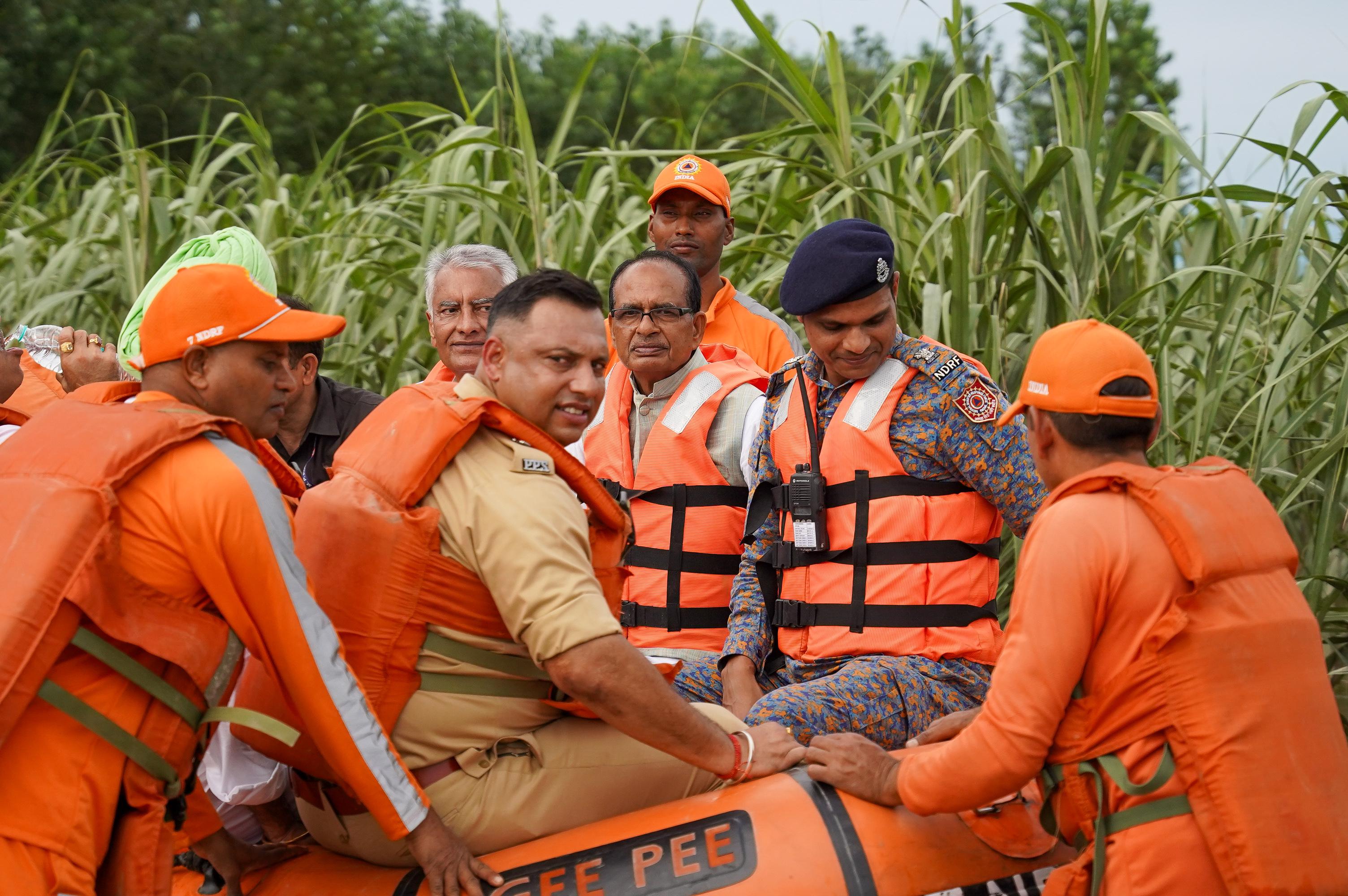
Union Minister of Agriculture & Farmers’ Welfare and Rural Development, Shri Shivraj Singh Chouhan today visited the flood-affected areas of Punjab. The Union Minister went to Ghonewal village in Amritsar district, Begowal in Kapurthala district, Dharamkot Randhawa village and Behrampur village in Gurdaspur district, interacted  with the farmers and inspected the crop losses by stepping into water-filled fields. During the visit, the farmers informed the Union Minister about heavy loss to crops and shared their grievances.

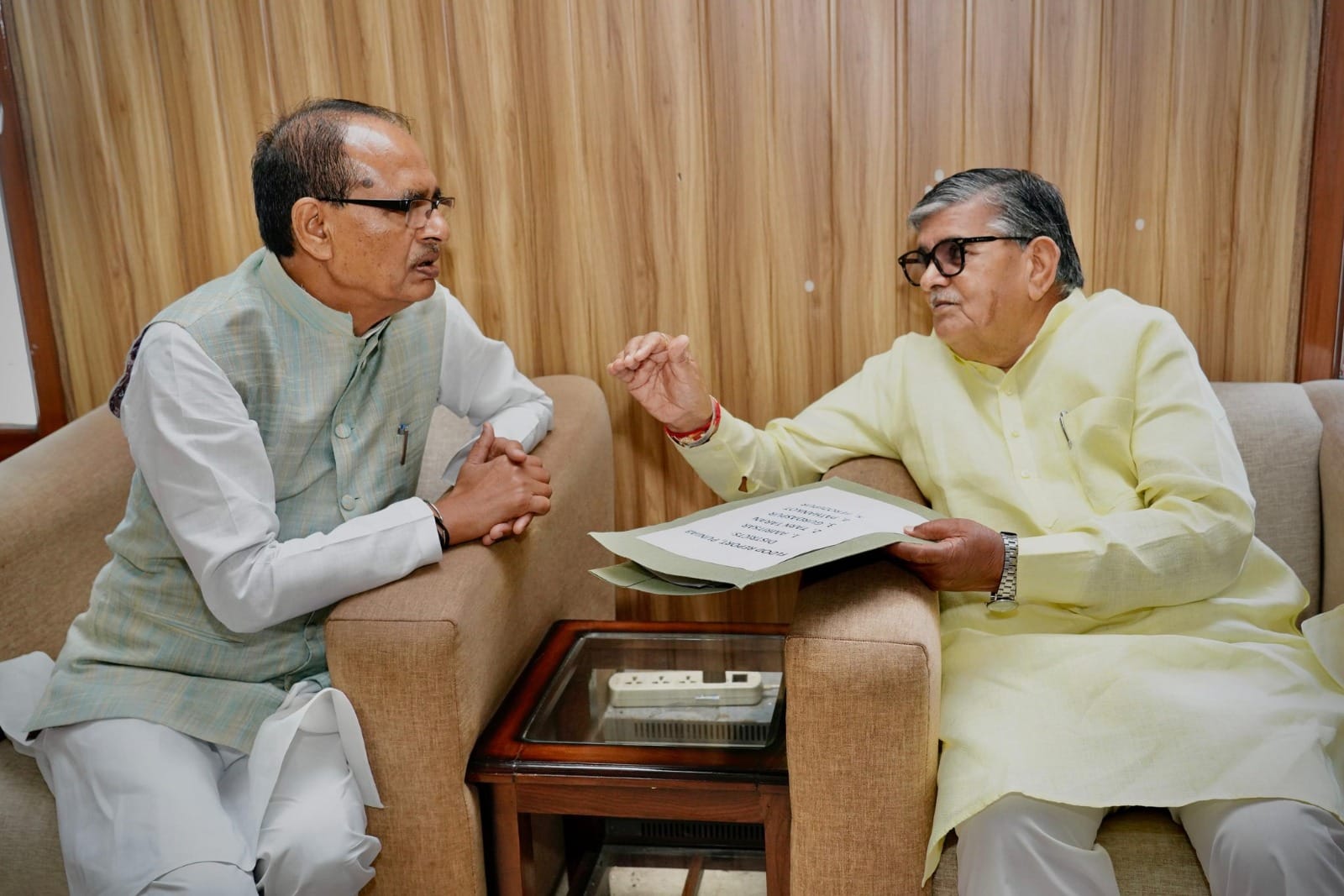
Governor of Punjab Shri Gulab Chand Kataria, also paid a courtesy visit to the Union Minister at Amritsar airport and handed over a detailed report on the floods.

While visiting flood-affected areas, Union Agriculture Minister Shri Shivraj Singh Chouhan said that the situation is very grim and the crisis is dreadful. Due to the deluge, the crops are submerged and completely destroyed and ruined, and 1,400 villages are completely affected. “Floodwater has inundated the fields here since August 26. The water of Ravi is still flowing into the fields. There is no soil under the feet, only silt, which has accumulated. This crops have been completely destroyed, and there is also a crisis on the next crop. The pain and loss cannot be estimated. It’s heartbreaking to see the situation. But we will definitely bring our farmer brothers and sisters out of this problem. This is challenging, but every possible effort will be made and complete help will be provided to deliver relief,” the Minister said.

The Union Agriculture Minister informed that, on the instructions of Prime Minister Shri Narendra Modi, the Central Government has sent two high-level teams to Punjab to assess the situation, which include officers from the Ministries of Agriculture, Rural Development, Roads, Energy, Finance, and Jal Shakti. He also said that these teams will visit the affected areas, assess the situation, and submit their report to the Government of India. The Union Minister said the affected people will be consulted to understand the ground situation, and a detailed report will be submitted to Prime Minister Shri Narendra Modi. The state government will also conduct its own assessment.

The Union Agriculture Minister said that the whole country is proud of Punjab as the state has always stood as a shield of the nation in times of crisis. “I only want to say that I have come here on the instructions of the Prime Minister, and in this hour of crisis, the government is firmly standing with Punjab, with our farmer brothers and sisters of Punjab, with the people of Punjab. The government will definitely bring the farmers out of this disaster,” Shri Chouhan said.

Piyush Goyal Inaugurates India MedTech Expo 2025

| Published on:

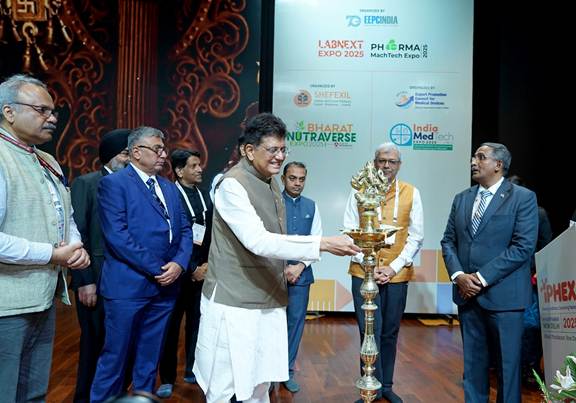
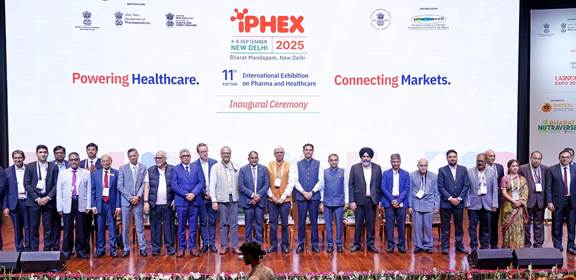
Union Minister for Commerce and Industry, Shri Piyush Goyal today inaugurated the Second Edition of the India MedTech Expo 2025 at Bharat Mandapam, Pragati Maidan, New Delhi. The event is being organized by the Department of Pharmaceuticals, Ministry of Chemicals and Fertilizers, in association with the Ministry of Commerce and Industry, Export Promotion Council for Medical Devices (EPCMD), and Central Drugs Standard Control Organisation (CDSCO) under the Ministry of Health & Family Welfare.

In his address, Shri Goyal termed the recent GST reforms as a progressive step towards achieving the vision of Atmanirbhar Bharat, and called upon 140 crore Indians to unite with the collective resolve to make India a Viksit Bharat by 2047.

“Yesterday’s GST reforms are a step in the direction of ensuring an Atmanirbhar Bharat—a self-reliant India that cares for 140 crore Indians coming together with the collective resolve to make India Viksit Bharat by 2047, a developed and prosperous nation where everybody gets opportunity, where everybody becomes a participant of India’s inclusive and sustainable growth story,” he said.

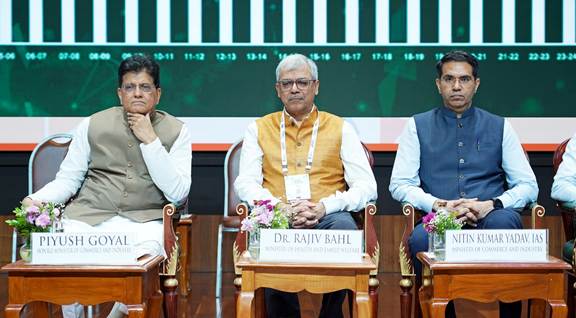
Delivering the keynote address, Dr. Rajiv Bahl, Secretary, Department of Health Research, Ministry of Health and Family Welfare, and Director General, Indian Council of Medical Research (ICMR), highlighted the importance of greater collaboration between industry and academia to reinforce India’s standing as the Pharmacy of the World.

“Indian Council of Medical Research is very keen to collaborate with all of you—academia, research laboratories, whether it is bioengineering or pharmaceutical or medical academia. ICMR, through its MedTech Mitra and Patent Mitra, is going to play a very important role in bringing together the academia and industry, and together we all are going to contribute to Viksit Bharat,” Dr. Bahl said.

Reflecting the approach of the Ministry of Commerce and Industry, Shri Nitin Kumar Yadav, Additional Secretary, stated that India is actively engaging with trading partners across the world to reduce tariffs, harmonize regulations, and open up new opportunities for Indian exporters.

“We aim to be the healthcare and wellness hub of the world, extending our strengths not only in pharmaceuticals but also in medical devices, Ayurveda, yoga, nutraceuticals and healthcare services,” he added.

Describing India’s recent steps on the regulatory front, Dr. Rajiv Singh Raghuvanshi, Drugs Controller General of India (DCGI), CDSCO, emphasized the government’s commitment to ease of doing business while ensuring strong execution.

“Our aim is to make regulation lighter and execution stronger. We have taken a lot of initiatives in the recent past to demonstrate our intent towards making our regulations lighter and more industry-friendly. The world has recognized India as a powerhouse for healthcare supplies,” Dr. Raghuvanshi said.

Speaking at the expo, Mr. Praveen Kumar Mittal, Executive Director, EPCMD, noted that India’s medical devices sector, valued at nearly USD 15 billion, is projected to double by 2030, driven by over 800 start-ups, robust R&D, and a growing manufacturing base.

“India MedTech Expo 2025 will serve as a catalyst to showcase this growth story and foster collaborations to transform healthcare access in India and worldwide,” he stated.

The three-day India MedTech Expo 2025, from 4–6 September 2025, is being held at Bharat Mandapam, Pragati Maidan, New Delhi. The event is themed ‘India: Global MedTech Manufacturing Hub – Precision Engineering yet Affordable’ and showcases a wide range of innovations and initiatives by MSMEs, start-ups, research institutions, state showcases, future innovation pavilions, and central government departments.

The expo is witnessing participation from over 150 international buyers representing more than 30 countries, offering a unique platform for global stakeholders to explore partnerships and investments in India’s expanding MedTech ecosystem.

With strong support from leading industry associations including AIMED, ADMI, MTAI, AMTZ, AMCHAM, APACMED, ADVAMED, APMEI, ASSOCHAM, CII, FICCI, INVEST INDIA, PHDCCI, NATHEALTH, USIBC, and USISPF, the expo serves as a collective platform to shape the future of medical technology and reinforce India’s position as a global MedTech manufacturing hub.

Ashwini Vaishnaw inaugurates State-of-the-art Advanced Lithium-ion Battery Plant in Sohna, Haryana

| Published on:

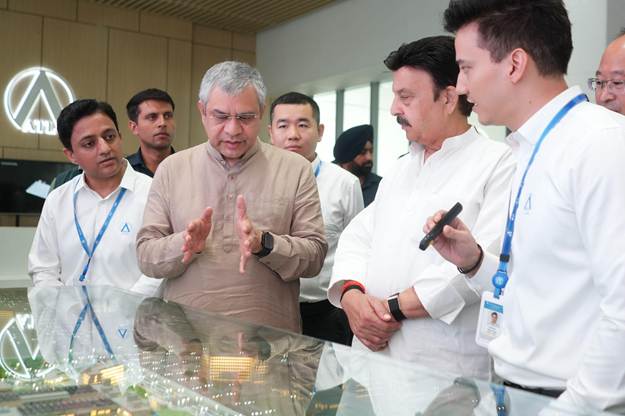
Union Minister of Electronics and Information Technology Shri Ashwini Vaishnaw today inaugurated TDK Corporation’s Advanced Technologies Lithium-ion (Li-ion) Battery Manufacturing Plant at Sohna, Haryana.

Underlining it as another turning point in India’s electronics journey, the Minister said, “ This is a very important milestone for us as we fulfil the Prime Minister Shri Narendra Modi’s vision of Atmanirbhar Bharat. Whether it is camera modules, PCB assembly, semiconductors or batteries—every component will be manufactured in our country over the coming years. The arrival of such advanced technology in India is a major milestone for our self-reliance in electronics.”

He noted that the first made-in-India chips were presented to the Prime Minister during Semicon India 2025. With the launch of this facility, Li-ion batteries used in mobile phones, wearables, hearables such as watches, earbuds, AirPods, and laptops will be manufactured domestically. The state-of-the-art plant will produce about 20 crore (200 million) battery packs every year, covering nearly 40% of India’s annual requirement of 50 crore packs. With a huge scope for expansion, the facility is poised to strengthen the country’s electronics manufacturing ecosystem.

Shri Vaishnaw underlined that the factory has been established under the Electronics Manufacturing Cluster (EMC) Scheme of the Government of India. Highlighting the employment potential, Shri Vaishnaw said the plant will provide direct jobs to about 5,000 people, with meticulous training already imparted at the AT Bawal plant. The Minister also thanked the Haryana government for the support in facilitating the establishment of electronics manufacturing facilities in the state.

The inauguration of the Sohna plant marks yet another step in India’s steady march towards building a complete electronics manufacturing ecosystem. With each milestone—whether in semiconductors, batteries, PCB assemblies or camera modules—India is moving closer to becoming a global hub for electronics production, reducing import dependence and strengthening its position as a trusted partner in the global value chain.

About TDK Corporation

TDK is a leading electronic components company operating more than 250 manufacturing, R&D and sales sites in over 30 countries and regions worldwide.

PM hails the GST Council for collectively agreeing to the proposals submitted by the Union Government on GST rate cuts & reforms

| Published on:

The Prime Minister Shri Narendra Modi has expressed his happiness that the GST Council, comprising the Union and the States, has collectively agreed to the proposals submitted by the Union Government on GST rate cuts & reforms, which will benefit the common man, farmers, MSMEs, middle-class, women and youth. “The wide ranging reforms will improve lives of our citizens and ensure ease of doing business for all, especially small traders and businesses”, Shri Modi stated.

The Prime Minister posted on X:

“During my Independence Day Speech, I had spoken about our intention to bring the Next-Generation reforms in GST.

The Union Government had prepared a detailed proposal for broad-based GST rate rationalisation and process reforms, aimed at ease of living for the common man and strengthening the economy.

Glad to state that @GST_Council, comprising the Union and the States, has collectively agreed to the proposals submitted by the Union Government on GST rate cuts & reforms, which will benefit the common man, farmers, MSMEs, middle-class, women and youth.

The wide ranging reforms will improve lives of our citizens and ensure ease of doing business for all, especially small traders and businesses.”

Prime Minister meets the Foreign Minister of Germany

| Published on:

The Prime Minister Shri Narendra Modi met today with German Foreign Minister Johann Wadephul. “India and Germany are celebrating 25 years of Strategic Partnership. As vibrant democracies and leading economies, we see immense potential to scale up mutually beneficial cooperation in trade, technology, innovation, sustainability, manufacturing and mobility”, Shri Modi stated.
The Prime Minister posted on X:

“Delighted to meet German Foreign Minister Johann Wadephul. India and Germany are celebrating 25 years of Strategic Partnership. As vibrant democracies and leading economies, we see immense potential to scale up mutually beneficial cooperation in trade, technology, innovation, sustainability, manufacturing and mobility. We share a vision for a multipolar world, peace and UN reforms. Reiterated my invitation to German Chancellor for an early visit to India.

Modi government is determined to make the country free from Naxalism by March 31, 2026: Amit Shah

| Published on:

Union Home Minister and Minister of Cooperation Shri Amit Shah met and felicitated the CRPF, Chhattisgarh Police, DRG and Cobra jawans in New Delhi, who successfully carried out ‘Operation Black Forest’ on Karreguttalu hill. Chhattisgarh Chief Minister Shri Vishnu Dev Sai and Deputy Chief Minister Shri Vijay Sharma were also present on the occasion.

Union Home Minister and Minister of Cooperation congratulated the jawans for showing valour in making the biggest anti-Naxal operation ‘Operation Black Forest’ ever conducted on Karreguttalu hill, a success. He said that the bravery and valour of the jawans during ‘Operation Black Forest’ will be remembered as a golden chapter in the history of the anti-naxal operations.

Shri Amit Shah said that the Modi government will not rest until all the Naxalites either surrender, are caught or eliminated. He said that under the leadership of Prime Minister Shri Narendra Modi, we will make India Naxal-free.

Union Home Minister said that despite the heat, altitude and the danger of IEDs at every step, the security forces made the operation successful with high spirits and destroyed the base camp of the Naxalites. He said that the material dump and supply chain of the Naxalites built on the Karreguttalu hill were valorously destroyed by the jawans of Chhattisgarh Police, CRPF, DRG and Cobra.

Shri Amit Shah said that Naxalites have caused great damage to the least developed areas of the country, shutting down schools, hospitals and not allowing government schemes to reach the people. He said that due to anti-Naxal operations, there has been a new sunrise in the lives of 6.5 crore people in the area from Pashupatinath to Tirupati. Shri Shah said Modi government is making every effort in making lives of the security forces smooth, who have suffered serious physical injuries in anti-Naxal operations. He said that the Modi government is committed to make the country free from Naxalism by March 31, 2026.

Cabinet approves Rs.1,500 crore Incentive Scheme to promote Critical Mineral Recycling in the country

| Published on:

The Union Cabinet chaired by the Prime Minister Shri Narendra Modi today approved a Rs.1,500 crore Incentive Scheme to develop recycling capacity in the country for the separation and production of critical minerals from secondary sources.

This scheme is part of the National Critical Mineral Mission (NCMM), which is aimed at building the domestic capacity of and supply chain resilience in critical minerals. The critical mineral value chain comprising exploration, auction and mine operationalization, and acquisition of foreign assets, has a gestation period before they could supply critical minerals to Indian industry. A prudent way to ensure supply chain sustainability in the near term is through the recycling of secondary sources.

The Scheme will have a tenure of six years from FY 2025-26 to FY 2030-31. Eligible feedstock is e-waste, Lithium Ion Battery (LIB) scrap, and scrap other than e-waste & LIB scrap e.g. catalytic convertors in end-of-life vehicles. Expected beneficiaries will be both large, established recyclers, as well as small, new recyclers (including start-ups), for whom one-third of the scheme outlay has been earmarked. The Scheme will be applicable to investments in new units as well as expansion of capacity / modernization and diversification of existing units. The Scheme will provide incentive for the recycling value chain which is involved in actual extraction of critical minerals, and not the value chain involved in only black mass production.

The incentives under the Scheme will comprise 20% Capex subsidy on plant & machinery, equipment and associated utilities for starting production within specified timeframe, beyond which reduced subsidy applicable; and Opex subsidy, which will be an incentive on incremental sales over the base year (FY 2025-26) viz. 40% of eligible Opex subsidy in the 2nd year and balance 60% in the 5th year from FY 2026-27 to FY 2030-31 on achievement of specified threshold incremental sales. In order to ensure greater number of beneficiaries, total incentive (Capex plus Opex subsidy) per entity will be subject to an overall ceiling of Rs.50 crore for large entities and Rs.25 crore for small entities, within which there will be a ceiling for Opex subsidy of Rs.10 crore and Rs.5 crore respectively.

In terms of key outcomes, the Scheme incentives are expected to develop at least 270 kilo ton of annual recycling capacity resulting in around 40 kilo ton annual critical mineral production, bringing in about Rs.8,000 crore of investment and creating close to 70,000 direct and indirect jobs. Several rounds of consultations with industry and other stakeholders have been held through dedicated meetings, seminar sessions, etc. before formulating the Scheme.

Dr. Jitendra Singh Chairs High-Level Review Meeting of Science Secretaries at Kartavya Bhavan

| Published on:

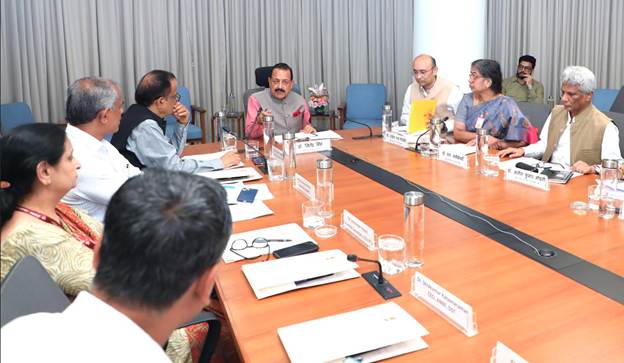
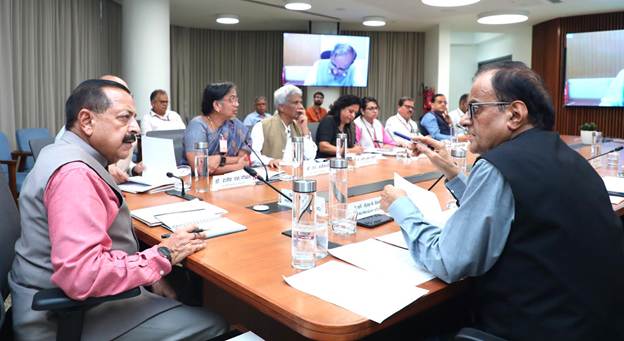
Union Minister of State (Independent Charge) Science & Technology, Earth Sciences, Minister of State PMO, Personnel, Public Grievances, Pensions, Atomic Energy and Space, Dr. Jitendra Singh, today chaired a high-level periodic review meeting of all the Science Secretaries at the newly inaugurated Kartavya Bhavan, New Delhi. This was the first such combined meeting in the new premises after the Ministry’s shift from North Block.

The meeting was attended by Principal Scientific Adviser to the Government of India, Prof. Ajay Kumar Sood, along with Science Secretaries and senior officials from the Department of Atomic Energy, Department of Space, Department of Science & Technology (DST), Department of Biotechnology (DBT), Council of Scientific & Industrial Research (CSIR), Ministry of Earth Sciences (MoES), and Indian Space Research Organization (ISRO).

Reviewing the preparations for the upcoming Indian International Science Festival (IISF), Dr. Jitendra Singh directed all departments to handhold and nurture startups, ensuring their integration into national science festivals. IISF, held annually in different parts of the country, has emerged as a people-centric platform for promoting inclusive growth in science and technology.

Dr. Jitendra Singh also gave detailed inputs on the upcoming Emerging Science, Technology, and Innovation Conclave (ESTIC), India’s flagship annual platform that brings together ministries, innovators, Nobel Laureates, global experts, and young leaders.

He said ESTIC will showcase cutting-edge research, deep-tech breakthroughs, and thought-provoking discussions, igniting a new era of scientific leadership towards “Viksit Bharat 2047.”

During the review, Dr. Jitendra Singh recalled Prime Minister Narendra Modi’s emphasis on the Bio-E3 (Bio-Economy, employment, environment) Policy and called upon all departments to step up efforts in biotechnology and related sunrise sectors, which hold immense potential for value addition to the Indian economy.

The Minister reviewed the functioning of the Ministry of Earth Sciences (MoES) and the India Meteorological Department (IMD) in the backdrop of heavy rains across several regions. He stressed the importance of strengthening real-time information dissemination and early warning systems to ensure better preparedness and public safety.

Dr. Jitendra Singh took a comprehensive review of the action taken by DST, DBT, CSIR, ISRO, and MoES on directions given in the previous monthly meeting. A special presentation on enhancing science communication from the government was also made, followed by a brainstorming session with all Secretaries.

Participants at the meeting included Dr. Ajit Kumar Mohanty, Secretary, Department of Atomic Energy; Dr. Rajesh Gokhale, Secretary, Department of Biotechnology; Dr. M. Ravichandran, Secretary, Ministry of Earth Sciences; Dr. V. Narayanan, Chairman, ISRO (who joined virtually); Sh. Sunil Kumar, Additional Secretary, DST; and Dr. Mrityunjay Mohapatra, Director General, IMD, along with senior officials from DST, DBT, CSIR, ISRO, MoES, and other science departments.

PM inaugurates Semicon India 2025 in New Delhi

| Published on:

The Prime Minister Shri Narendra Modi inaugurated the ‘Semicon India – 2025’, aimed at catalysing India’s Semiconductor ecosystem, at Yashobhoomi in New Delhi today. Addressing the gathering, the Prime Minister acknowledged the presence of semiconductor industry CEOs and their associates from India and abroad. He welcomed distinguished guests from various countries, entrepreneurs associated with start-ups, and young students who had come from different states across the nation.

Shri Modi stated that he returned last night from his visit to Japan and China, and today he is present among the audience in Yashobhoomi, a hall filled with aspirations and confidence. Mentioning his passion for technology has always been natural and well-known, the Prime Minister said that during his recent visit to Japan, he had the opportunity to visit the Tokyo Electron factory along with Japanese Prime Minister H.E. Mr. Shigeru Ishiba. He mentioned that the CEO of that company is present among the audience today. The Prime Minister emphasized that his inclination towards technology repeatedly brings him among such gatherings. He expressed that being present among the audience today brings him great joy.

Noting the presence of semiconductor sector experts from across the globe, with representation from over 40 to 50 countries, Shri Modi emphasized that India’s innovation and youth power are also visibly present at the event. He stated that this unique combination sends a clear message, “The World trusts India, the World believes in India and the World is ready to build the Semiconductor Future with India”. The Prime Minister welcomed all distinguished guests attending Semicon India and affirmed that they are important partners in India’s journey towards a developed and self-reliant nation.

Pointing to the GDP figures for the first quarter of this year that were released recently, the Prime Minister said, “Once again, India has outperformed every expectation, every estimate, and every forecast”. He noted that while economies around the world are facing concerns and challenges driven by economic self-interest, India has achieved a growth rate of 7.8 percent. Shri Modi emphasized that this growth is visible across all sectors—manufacturing, services, agriculture, and construction—with enthusiasm evident everywhere. He remarked that India’s rapid growth is infusing new energy across industries and among every citizen. He affirmed that this trajectory of growth is propelling India swiftly towards becoming the third largest economy in the world.

Remarking that in the world of semiconductors, it is often said, ‘Oil was black gold, but chips are digital diamonds’, the Prime Minister stated that oil shaped the previous century, and the fate of the world was determined by oil wells. The global economy fluctuated based on how much petroleum was extracted from these wells. However, he emphasized that the power of the 21st century is now concentrated in the small chip. Though tiny in size, these chips possess the potential to accelerate global progress significantly. Shri Modi highlighted that the global semiconductor market has already reached $600 billion, and in the coming years, it is expected to surpass $1 trillion. He expressed confidence that, given the pace at which India is advancing in the semiconductor sector, India will hold a significant share in this $1 trillion market.

Stating that he wished to highlight the speed at which India is progressing, Shri Modi recalled that in 2021, the Semicon India programme was launched. He added that by 2023, India’s first semiconductor plant had been approved, in 2024, several more plants received approval and in 2025, five additional projects were cleared. He further stated that in total, ten semiconductor projects are now underway, involving an investment of over eighteen billion dollars —more than ₹1.5 lakh crore. The Prime Minister emphasized that this reflects the growing global trust in India.

Emphasising that in the semiconductor sector, speed matters, Shri Modi said, “the shorter the time from file to factory, and the lesser the paperwork, the sooner wafer work can begin”. He stressed that the government is working with this very approach. The National Single Window System has been implemented, enabling all approvals from both the Centre and States to be accessed on a single platform. As a result, investors have been freed from extensive paperwork, he further added. The Prime Minister highlighted that semiconductor parks are being developed across the country under a plug-and-play infrastructure model, which offer facilities such as land, power supply, port and airport connectivity, and access to a skilled worker pool. He remarked that when such infrastructure is combined with incentives, industrial growth is inevitable. Whether through PLI incentives or Design Linked Grants, India is offering end-to-end capabilities. This is why investment continues to flow in, he emphasised. Affirming that India is moving beyond backend operations and progressing towards becoming a full-stack semiconductor nation, Shri Modi reiterated that the day is not far when India’s smallest chip will drive the world’s biggest change. He stated, “Our journey began late… but nothing can stop us now.” The Prime Minister informed that CG Power’s pilot plant commenced operations on August 28, just 4–5 days ago. He added that the pilot plant of Kaynes is also about to begin. Test chips from Micron and Tata are already in production. He reiterated that commercial chip production will begin this year, underscoring the rapid progress India is making in the semiconductor sector.

Emphasizing that India’s semiconductor success story is not confined to a single vertical or a single technology, Shri Modi stated that India is building a comprehensive ecosystem—one that encompasses designing, manufacturing, packaging, and high-tech devices, all within the country. He clarified that the Semiconductor Mission is not limited to establishing a single fab or producing a single chip. Rather, India is creating a robust semiconductor ecosystem that will make the nation self-reliant and globally competitive, the Prime Minister added.

Underlining another key feature of India’s semiconductor mission, Shri Modi said that the country is advancing in this sector alongside the world’s most advanced technologies. He stated that India’s focus is to empower emerging technologies through chips manufactured domestically. The Prime Minister noted that design centers being developed in Noida and Bengaluru are working on some of the world’s most advanced chips—capable of storing billions of transistors. He emphasized that these chips will power the immersive technologies of the 21st century. Addressing the challenges faced by the global semiconductor sector, the Prime Minister affirmed that India is actively working to overcome them. He remarked that while towering buildings and impressive physical infrastructure are visible in cities, their foundation lies in steel. Similarly, the foundation of India’s digital infrastructure is built on critical minerals. Shri Modi stated that India is currently working on the National Critical Mineral Mission and is committed to meeting its demand for rare minerals domestically. He added that over the past four years, significant progress has been made on critical minerals projects.

Underscoring that the government envisions a significant role for start-ups and MSMEs in the growth of the semiconductor sector, the Prime Minister highlighted that India contributes 20 percent of the world’s semiconductor design talent, and that the country’s youth represent the largest human capital factory for the semiconductor industry. Addressing young entrepreneurs, innovators, and start-ups, Shri Modi urged them to come forward, assuring that the government stands shoulder to shoulder with them. He emphasized that the Design Linked Incentive Scheme and the Chips-to-Startup Programme are specifically designed for them. He also announced that the Design Linked Incentive Scheme is being restructured to better serve its objectives. The Prime Minister stated that the government is committed to developing Indian intellectual property (IP) in this sector. He added that the recently launched National Research Fund will also support this effort through strategic tie-ups. Noting that several states are actively participating in the semiconductor mission, with many having formulated special policies for the sector, the Prime Minister said that these states are focusing on developing dedicated infrastructure. He called upon all states to engage in healthy competition with one another to build semiconductor ecosystems and enhance the investment climate within their regions.

“India has reached this stage by following the mantra of Reform, Perform, and Transform. A new phase of next-generation reforms will soon be initiated”, stated the Prime Minister affirming that work is underway on the next phase of the India Semiconductor Mission. Addressing all investors present, he expressed India’s readiness to welcome them with an open heart and said, “Design is ready. Mask is aligned. Now is the time for precision execution and delivery at scale”. He emphasized that India’s policies are not short-term signals but long-term commitments and assured that every investor’s needs will be met. “The day is not far when the world will say: Designed in India, Made in India, Trusted by the World”, said the Prime Minister. He concluded by expressing his wish that every bit of India’s efforts be successful, every byte be filled with innovation, and the journey remain error-free and high-performance.

Union Ministers, Shri Ashwini Vaishnaw, Shri Jitin Prasada, Chief Minister of Delhi, Smt Rekha Gupta, Chief Minister of Odisha, Shri Mohan Charan Majhi were present among other dignitaries at the event.

Background

Semicon India – 2025 is a three-day Conference, from 2nd to 4th September, will focus on advancing a robust, resilient, and sustainable semiconductor ecosystem in India. It features sessions on the progress of the Semicon India Programme, semiconductor fab and advanced packaging projects, infrastructure readiness, smart manufacturing, innovations in R&D and artificial intelligence, investment opportunities, state-level policy implementation, among others. Additionally, the event will highlight initiatives under the Design Linked Incentive (DLI) scheme, the growth of the startup ecosystem, international cooperation, and the future roadmap for India’s semiconductor sector.

Over 20,750 attendees will participate including more than 2,500 delegates from over 48 countries, over 150 speakers, including over 50 global leaders, and more than 350 exhibitors. It will also include 6 countries Round Table discussions, country pavilions and dedicated pavilions for Workforce Development & Start-Ups among others.

Empowered women are foundation of Viksit Bharat: PM

| Published on:

Prime Minister Shri Narendra Modi launched the Bihar Rajya Jeevika Nidhi Saakh Sahkari Sangh Limited via video conferencing today. Addressing the occasion, the Prime Minister stated that on this auspicious Tuesday, a highly promising initiative is being launched. He announced that mothers and sisters in Bihar are being provided with a new facility through the Jeevika Nidhi Saakh Sahkari Sangh. This initiative will enable women associated with Jeevika across villages to access financial support more easily, helping them advance their work and businesses, stated the Prime Minister. He expressed his happiness that the Jeevika Nidhi system is fully digital, eliminating the need for physical visits—everything can now be done via mobile phone. He congratulated the mothers and sisters of Bihar on the launch of the Jeevika Nidhi Saakh Sahkari Sangh and commended Shri Nitish Kumar and the government of Bihar for this remarkable initiative.

“Empowered women are a major foundation of a developed India”, exclaimed Shri Modi emphasizing that to empower women, it is essential to reduce the difficulties in their lives. He highlighted that the government is undertaking numerous initiatives to make the lives of mothers, sisters, and daughters easier. He noted that crores of toilets have been constructed for women to free them from the compulsion of open defecation. The Prime Minister pointed out under the PM Awas Yojana, crores of permanent houses have been built, with special attention given to ensuring that these houses are registered in the names of women. He remarked that when a woman becomes the owner of the house, the weight of her voice also increases.

Highlighting that to resolve the issue of access to clean drinking water, the government launched the Har Ghar Jal initiative, Shri Modi emphasized that to ensure mothers and sisters do not face difficulties in accessing healthcare, the Ayushman Bharat scheme was introduced, offering free treatment up to ₹5 lakh. The Prime Minister noted that the central government is also running a free ration scheme, which has relieved every mother from the worry of how to feed her children each day. To enhance women’s income, he highlighted initiatives such as Lakhpati Didi, Drone Didi, and Bank Sakhi, which are empowering women across the country. He described these schemes as part of a grand campaign dedicated to serving mothers and sisters. Shri Modi assured the audience that in the coming months, their government in Bihar will further accelerate this mission.

“Bihar is a land where the reverence for maternal power—matrushakti—and the honour of mothers has always held the highest place”, stated the Prime Minister. He highlighted that in Bihar, deities such as Ganga Maiya, Kosi Maiya, Gandaki Maiya, and Punpun Maiya are worshipped with deep devotion. He remarked that Janaki Ji is a daughter of Bihar, nurtured in its cultural ethos—Siya Dhiya of this land, who is revered across the world as Sita Mata. Shri Modi noted that offering prayers to Chhathi Maiya is considered a blessing for all. He mentioned that the sacred festival of Navratri is approaching, during which the nine forms of Maa Durga are worshipped across the country. He added that in Bihar and the Purvanchal region, there is also a generational tradition of Satbahini Puja—worshipping seven sisters as manifestations of the divine mother. He emphasized that this deep faith and devotion towards the mother is a defining identity of Bihar. Quoting a local verse, the Prime Minister underscored that no one, however dear, can ever take the place of a mother.

Emphasising that for his government, the dignity, respect, and pride of mothers is a matter of utmost priority, Shri Modi remarked that a mother is the very essence of our world, and she embodies our self-respect. Referring to Bihar’s rich cultural tradition, he expressed deep anguish over a recent incident that, he said, he could not have imagined. The Prime Minister stated that from a platform of the opposition’s alliance in Bihar, abusive remarks were made against his mother. He emphasized that these insults were not just an affront to his mother, but an insult to every mother, sister, and daughter of the nation. Shri Modi acknowledged the pain felt by the people of Bihar, especially its mothers, upon witnessing and hearing such remarks. He shared that the sorrow he feels in his heart is equally shared by the people of Bihar and was sharing this grief with the people today.

The Prime Minister stated that he has been serving society and the nation for nearly 55 years, emphasising that every day, every moment, he has worked with full dedication for the country. He acknowledged the significant role his mother played in this journey. Shri Modi remarked that in order to serve Maa Bharati, his birth mother had released him from familial obligations. He expressed deep sorrow that the very mother who had blessed him for national service and let him go, and who is no longer physically present in this world, was abused from a platform of the opposition alliance. He described this as extremely painful, distressing, and deeply hurtful.

Stressing that every mother raises her children through immense sacrifice, and for her, nothing is greater than her children, Shri Modi  shared that he had seen his own mother in this very form since childhood—enduring poverty and hardship to nurture her family and children. He recalled how, before the onset of the monsoon, his mother would work to ensure the roof didn’t leak, so her children could sleep peacefully. Even when ill, she would still go to work, knowing that if she rested even for a day, her children would have to suffer. He noted that she never bought a new saree for herself, saving every penny to stitch a pair of clothes for her children. The Prime Minister emphasized that a poor mother, through lifelong sacrifice, imparts education and strong values to her children. He affirmed that this is why a mother’s place is considered above even the gods. Referring to Bihar’s cultural ethos by quoting a verse, Shri Modi stated that the abuse hurled from the opposition platform was not just directed at his mother—it was an insult to crores of mothers across the country.

Describing that the sacrifice of a poor mother and the pain of her son cannot be understood by those born into royal dynasties, Shri Modi  remarked that these privileged individuals were born with silver and gold spoons and view power in Bihar and across the country as their family inheritance. He said they believe that the seat of power is their birthright. However, the Prime Minister emphasized that the people of India blessed the son of a poor mother—a hardworking individual—and made him the Prime Minister. He asserted that this reality is difficult for the privileged class to accept. He added that the opposition has never tolerated the rise of the backward and extremely backward sections of society. Shri Modi further added that these individuals believe they have the right to insult those who work hard, and thus resort to a barrage of abuses. He noted that even during the Bihar elections, he was addressed with disrespect and abusive language, repeatedly exposing the elitist mindset of these individuals. The Prime Minister stated that it is this very mindset that has now led them to hurl abuses at his late mother from their political platform.

The Prime Minister stated that the mindset which abuses mothers and sisters is one that views women as weak and treats them as objects of exploitation and oppression. He emphasized that whenever such an anti-women mentality has come to power, it is women who have suffered the most. He remarked that no one understands this reality better than the people of Bihar. Recalling the opposition era in Bihar, the Prime Minister said that during that time, crime and criminals were unchecked, and incidents of murder, extortion, and rape had become commonplace. He alleged that the then government provided protection to murderers and rapists, and it was Bihar’s women who bore the brunt of that regime. Shri Modi added that women were not safe stepping outside their homes, and families lived in constant fear—unsure if their husbands or sons would return home alive by evening. He described how women lived under the threat of losing their families, selling their jewellery to pay ransom, being abducted by mafia elements, or losing their marital happiness. The Prime Minister affirmed that Bihar has fought a long battle to emerge from that darkness. He credited the women of Bihar for playing a major role in removing and repeatedly defeating the opposition. He asserted that this is why, today, the opposition parties are most agitated against the women of Bihar. Shri Modi urged every woman in Bihar to understand their intent clearly, stating that these parties seek revenge and want to punish them.

Pointing out that certain opposition parties have consistently opposed the advancement of women, which is why they strongly resist initiatives such as women’s reservation, Shri Modi remarked that even when a woman from a poor household rises to prominence, their frustration becomes evident. He cited the example of opposition repeatedly insulting the President of India, Smt. Droupadi Murmu—a daughter of a tribal and economically disadvantaged family. The Prime Minister emphasized that this politics of hatred and contempt towards women must be curbed. He noted that Navratri will begin in 20 days, followed by the sacred festival of Chhath in 50 days, when prayers will be offered to Chhathi Maiya. Addressing the people of Bihar, the Prime Minister said that while he may forgive those who insulted his mother, the soil of India has never tolerated disrespect towards mothers. He asserted that the opposition parties must seek forgiveness from Satbahini and Chhathi Maiya for their actions.

The Prime Minister called upon the people of Bihar, especially its sons, to take responsibility for responding to the insult directed at mothers. He stated that wherever leaders of the opposition parties go—be it any street or city—they must hear the voice of the people saying that the insult to mothers will not be tolerated and any attack on dignity will not be accepted. He stated that the oppression and assault by opposition parties will not be tolerated and accepted.

The Prime Minister reaffirmed that empowering the women of India is the highest priority of his government. He emphasized that their government is continuously working to reduce the hardships faced by women and will continue to do so with full commitment. He urged the people to continue blessing their government and concluded by offering his respectful salutations to every mother of the nation.

Recalling the recent national sentiment from Independence Day, where the slogan “Har Ghar Tiranga” echoed across villages and streets, the Prime Minister reiterated that the current need of the hour is “Har Ghar Swadeshi, Ghar-Ghar Swadeshi.” He emphasized that this new mantra is essential to empower mothers and sisters and build an Atmanirbhar Bharat. He appealed to women for their blessings in this mission. The Prime Minister urged every shopkeeper and trader to display boards proudly declaring, “This is Swadeshi”, stressing on Vocal for Local and ‘Made in India’ products. He concluded by affirming that India must move forward strongly on the path of self-reliance.

The Chief Minister of Bihar, Shri Nitish Kumar, Deputy Chief Ministers Shri Samrat Choudhary, Shri Vijay Kumar Sinha were present among other dignitaries at the event.

Background

Prime Minister Shri Narendra Modi launched the Bihar Rajya Jeevika Nidhi Saakh Sahkari Sangh Limited. The objective of establishing the Jeevika Nidhi is to provide easy access to funds at affordable interest rates to community members associated with Jeevika. All registered cluster-level federations of Jeevika will become the members of the Society. For the operation of this institution, the Government of Bihar as well as the Central government will contribute funds.

Entrepreneurship has flourished among women associated with Jeevika’s self-help groups over the years, leading to the establishment of numerous small enterprises and producer companies in rural areas. However, women entrepreneurs have often been compelled to depend on microfinance institutions charging high interest rates of 18%–24%. The Jeevika Nidhi has been conceived as an alternative financial system to reduce dependence on MFIs and ensure the timely availability of larger loan amounts at lower interest rates.

The system will operate entirely on a digital platform, ensuring faster and more transparent fund transfers directly into the bank accounts of Jeevika Didis. To facilitate this, 12,000 community cadres are being equipped with tablets.

This initiative is expected to strengthen entrepreneurship development among rural women and accelerate the growth of community-led enterprises. Around 20 lakh women from across the state of Bihar will witness this event.

Bhupender Yadav addresses the 20th Global Sustainability Summit in New Delhi

| Published on:

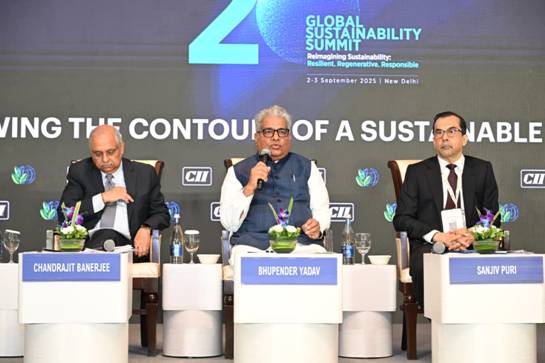
At the 20th Global Sustainability Summit, organized by the CII-ITC Centre of Excellence for Sustainable Development, Union Minister for Environment, Forest and Climate Change, Shri Bhupender Yadav, described India’s journey towards resilient, regenerative and responsible growth. Dignitaries on dais included Shri Chandrajit Banerjee, DG, Confederation of Indian Industry (CII) and Shri Sanjiv Puri, Immediate Past President, CII. The gathering included representatives from over 10 countries and stalwarts from the industry.

Addressing global delegates in New Delhi today, Shri Yadav underlined that India’s model of development is deeply rooted in balancing economic progress with ecological stewardship. “Sustainability should not be considered as a goal or an objective. I believe it is a lifestyle choice, an evolving commitment to be resilient, regenerative, and responsible,” he said. The Minister highlighted that the prevailing global trade tensions, policy uncertainties, geopolitical conflicts, and barriers to global financial investments by major economies, collectively create a fragile environment. The Minister called upon all countries to make sustainability foundational to growth by embracing economy-wide solutions that encompass circular economy models, nature positive actions, green manufacturing and advancing behaviour change for responsible practices.

Shri Yadav highlighted that under the leadership of Prime Minister, Shri Narendra Modi, the Ministry has recently issued very critical notifications with the aim of building a sustainable future. He informed that on 29th August 2025, the Government of India notified the Environment Audit Rules, 2025, which create a formal framework for environmental auditing across the country. These rules establish a two-tiered system of auditors and set up a dedicated agency to transparently oversee the process. “These rules are designed to supplement the existing monitoring and inspection framework of the government, not to replace it”, Shri Yadav stated.

The Minister further informed the gathering about the notification of a revised methodology for the Green Credit Programme on 29th August 2025. Originally launched in October 2023 to encourage voluntary environmental action, the programme has now been strengthened with provisions that allow direct participation by private entities, establish minimum restoration commitments, mobilize private capital for climate action, and utilizate Earned Green Credits. The revised methodology ensures that the Green Credit Programme becomes a catalyst for meaningful eco-restoration, the Minister explained.

In addition, Shri Yadav highlighted that on 31st August 2025, the Ministry amended the Forest (Conservation and Augmentation) Rules, 2023 to facilitate the objectives of achieving self-reliance in the Critical Mineral sector under the newly launched National Critical Mineral Mission, 2025. Under this mission, 24 minerals have been identified as critical and strategic, and 29 others have been recognized as important for strengthening the country’s economy and national security. The amended rules simplify the approval process for mining these minerals in forest areas for both public and private entities.

Reflecting on India’s broader sustainability achievements, Shri Yadav observed that the country has emerged as the fastest-growing major economy while also leading global efforts on climate action. “India is the only country that has successfully adapted sustainable growth across the policy landscape through targeted scheme implementation, infrastructure investment, local commitment and tangible achievements on multilateral commitments,” he noted.

A clear testament of India’s sustainable development commitment, Shri Yadav stated, is the significant progress it has made towards fulfilling NDCs under the Paris Agreement. Recent achievements include achieving ambitious climate targets ahead of schedule; accelerated deployment of renewable energy capacity; promotion of corporate accountability through environmental, social, and governance indicators and advancement of innovative waste management practices leading to circular economy. India is one of leading countries to establish a robust framework of Expended Producer Responsibility (EPR), ensuring disposal of end-of-life products in environmentally sustainable manner, he added.

Pointing to India’s progress in expanding forest cover, launching innovative campaigns like ‘Mission LiFE’, ‘Ek Ped Maa Ke Naam’, enhancing carbon sinks, and advancing circular economy practices, Shri Yadav added, “Our enduring economic progress is founded on resilience, regeneration and responsibility—values that the world must now embrace as the foundation of sustainable growth”. The Minister informed that one of the most significant interventions under the resilience pillar is the upcoming launch of India’s National Adaptation Plan (NAP). “Driven by science-led evidences and guided by grassroot realities, NAP will act as a blueprint for embedding adaptation into national development policies across sectors, ensuring a systematic and long-term approach. It will contribute to build resilience and reduce vulnerabilities to climate- related risks across regions”, he said.

Bringing the focus on a collective global strategy to tackle Climate Change, Shri Yadav stated, “India’s policy roadmap and growth model exemplifies how Nations can harmonize economic growth with sustainability to cultivate resilient, low-carbon development pathways. This integrated approach provides valuable lessons for countries in the Global South seeking sustainable, inclusive and realistic growth models. Developed economies experiencing growth stagnation can undergo transformative recalibration of their development paradigms and shift focus to sustainability, social equity and enduring resilience”, he said.

The Minister concluded with a call to industry and global stakeholders to join hands in this transformative journey. “Industry must transcend conventional goals and weave sustainability seamlessly into their corporate policy by aligning with national aspirations for resilience and inclusion. By embracing resilience, regeneration, and responsibility, let us chart a course towards a more sustainable world,” he said.  Shri Yadav expressed confidence that in the next two days, the Summit would deliberate on pioneering transformative pathways that ensure a thriving, inclusive future.

Prime Minister meets President of the Russian Federation

| Published on:

Prime Minister Shri Narendra Modi met today with the President of the Russian Federation, H.E Mr. Vladimir Putin on the sidelines of the Shanghai Cooperation Organization Summit in Tianjin, China.

The leaders discussed bilateral cooperation, including in the economic, financial, and energy sectors and expressed satisfaction with the sustained growth in bilateral ties in these areas.

The two leaders also discussed regional and global issues, including the latest developments concerning Ukraine. Prime Minister reiterated his support for the recent initiatives that have been taken to address the conflict in Ukraine, and emphasized the need to expedite a cessation of the conflict, and find a durable peace settlement.

The two leaders reaffirmed their support for further strengthening of the Special and Privileged Strategic Partnership between the two countries. Prime Minister conveyed to President Putin that he was looking forward to receiving him in India for the 23rd Annual Summit later this year.