PM greets everyone on the occasion of Ganesh Chathurthi

| Published on:

The Prime Minister Shri Narendra Modi greeted everyone on the occasion of Ganesh Chathurthi today.

In a post on X, he wrote:

आप सभी को गणेश चतुर्थी की ढेरों शुभकामनाएं। श्रद्धा और भक्ति से भरा यह पावन अवसर हर किसी के लिए शुभकारी हो। भगवान गजानन से प्रार्थना है कि वे अपने सभी भक्तों को सुख, शांति और उत्तम स्वास्थ्य का आशीर्वाद दें। गणपति बाप्पा मोरया!

PM inaugurates the green mobility initiatives in Hansalpur, Gujarat

| Published on:

Taking large strides towards becoming Aatmanirbhar in the field of green energy, the Prime Minister Shri Narendra Modi inaugurated the green mobility initiatives in Hansalpur, Gujarat today. Addressing the gathering, the Prime Minister noted that amid the festive spirit of Ganeshotsav, a new chapter is being added to India’s ‘Make in India’ journey. He remarked that this marks a significant leap towards the shared goal of “Make in India, Make for the World.” Shri Modi highlighted that starting today, electric vehicles manufactured in India will be exported to 100 countries. He further announced the commencement of Hybrid Battery Electrode manufacturing in the country. Emphasising that today also brings a new dimension to the friendship between India and Japan, the Prime Minister extended his heartfelt congratulations to all citizens of India, to Japan, and to Suzuki Motor Corporation.

Recalling that the seeds of India’s success story were sown 12–13 years ago, Shri Modi said that in 2012, during his tenure as Chief Minister, land was allotted to Maruti Suzuki in Hansalpur. He emphasized that even at that time, the vision was of Aatmanirbhar Bharat and Make in India. He remarked that those early efforts are now playing a significant role in fulfilling the nation’s current resolutions.

Expressing his heartfelt remembrance of the late Mr. Osamu Suzuki, the Prime Minister stated that the Government of India had the honour of conferring the Padma Vibhushan upon him. He remarked that he is pleased to witness the vast expansion of the vision Mr. Osamu Suzuki had envisioned for Maruti Suzuki India.

“India possesses the strength of democracy and the advantage of demography; India also has a vast pool of skilled workforce, creating a win-win situation for every partner”, emphasised Shri Modi. He pointed out that Suzuki Japan is manufacturing in India, and the vehicles produced here are being exported back to Japan. The Prime Minister remarked that this reflects not only the strength of India-Japan relations but also the growing trust of global companies in India. He stated that companies like Maruti Suzuki have effectively become brand ambassadors of Make in India. Noting that for four consecutive years, Maruti Suzuki has been India’s largest car exporter, the Prime Minister announced that from today, EV exports will also begin on the same scale. He affirmed that in dozens of countries around the world, the EVs that will run will proudly bear the label—Made in India.

Underlining that the most critical component of the EV ecosystem is the battery, the Prime Minister said that until a few years ago, batteries in India were entirely imported. He added that to strengthen EV manufacturing, it was essential for India to begin domestic battery production. Shri Modi recalled that in 2017, the foundation of the TDSG battery plant was laid with this vision. He announced that under a new initiative by TDSG, three Japanese companies will jointly manufacture battery cells in India for the first time. He added that battery cell electrodes will also be produced locally within India. The Prime Minister emphasized that this localization will empower India’s self-reliance. He remarked that this will accelerate the growth of the hybrid electric vehicle sector. He extended his best wishes for this historic beginning.

Mentioning that until a few years ago, EVs were viewed merely as an alternative option, the Prime Minister emphasized his belief that EVs offer concrete solutions to multiple challenges. He recalled that during his visit to Singapore last year, he had proposed converting old vehicles and ambulances into hybrid EVs. Shri Modi commended Maruti Suzuki for accepting this challenge and developing a working prototype within just six months. He shared that he personally reviewed the prototype of the hybrid ambulance and said that these hybrid ambulances align perfectly with the PM E-DRIVE scheme. The Prime Minister noted that under this ₹11,000 crore scheme, a dedicated budget has been allocated for e-ambulances. He highlighted that hybrid EVs will help reduce pollution and offer a viable option to transform old vehicles.

Affirming that clean energy and clean mobility represent the future of India, Shri Modi emphasized that through such efforts, India is rapidly emerging as a reliable hub for clean energy and clean mobility.

The Prime Minister noted that at a time when the world is grappling with supply chain disruptions, India’s policy decisions over the past decade are proving highly effective. Recalling that in 2014, upon receiving the opportunity to serve the nation, preparations for this transformation were initiated, the Prime Minister highlighted the launch of the Make in India campaign and the creation of a conducive environment for both global and domestic manufacturers. He stated that India is working to make its manufacturing sector efficient and globally competitive. He added that industrial corridors are being developed to support this vision as well as plug-and-play infrastructure and logistics parks are being established across the country. The Prime Minister further noted that manufacturers in several sectors are being provided benefits under the Production Linked Incentive scheme.

Stressing that through major reforms, longstanding challenges faced by investors have been resolved, Shri Modi remarked that these reforms have made it easier for investors to invest in Indian manufacturing. He highlighted the tangible outcomes of these efforts, noting that in this decade alone, electronics production in India has increased by nearly 500 percent. Emphasising that mobile phone production has surged by up to 2,700 percent compared to 2014, the Prime Minister added that defence production has also witnessed growth of over 200 percent in the past decade. He stated that this success is motivating all states across India and a healthy competition has emerged among states regarding reforms and investment, benefiting the entire nation. Shri Modi urged the states to come up with pro-development policies and reforms with enhanced ease of doing business facilities to attract global investors.

“India will not stop here; in sectors where India has performed well, the goal is to achieve even greater excellence”, asserted the Prime Minister underlining that the government is prioritizing Mission Manufacturing to drive this progress. He highlighted that India’s focus will now shift towards futuristic industries. Talking about how the semiconductor sector is taking off, with six plants set to be established across the country, Shri Modi affirmed the commitment to further advance semiconductor manufacturing in India.

Shri Modi added that the Government of India is also attentive to the challenges faced by the auto industry due to shortages of rare earth magnets. To strengthen national capabilities in this area, he mentioned  the launch of the National Critical Mineral Mission. Under this mission, over 1,200 exploratory campaigns will be conducted across various locations in India to identify critical minerals.

Prime Minister announced that he will be visiting Japan next week,  emphasising that the relationship between India and Japan goes far beyond diplomatic ties—it is rooted in culture and mutual trust. He remarked that both nations see their own progress in each other’s development. Pointing out that the journey initiated with Maruti Suzuki has now reached the speed of a bullet train, Shri Modi highlighted that the major initiative to realize the industrial potential of the India-Japan partnership began in Gujarat. Recalling the past, the Prime Minister noted that when the Vibrant Gujarat Summit was launched 20 years ago, Japan was a key partner. He appreciated the warmth with which the people of Gujarat cared for their Japanese counterparts. The Prime Minister shared that industry-related rules and regulations were printed in Japanese to facilitate ease of understanding. He added that arrangements were made for Japanese cuisine to ensure comfort for Japanese guests. He acknowledged the Japanese fondness for golf and stated that 7–8 new golf courses were developed keeping their interests in mind. Shri Modi further noted that colleges and universities in India are now prioritizing Japanese language education.

“India’s ongoing efforts are strengthening the people-to-people connect between India and Japan. Both nations are now able to meet each other’s needs in skill development and human resources”, highlighted the Prime Minister. He urged companies like Maruti Suzuki to actively participate in such initiatives and promote youth exchange programmes.

Emphasising the need to continue advancing in all key sectors in the coming years, the Prime Minister expressed confidence that today’s efforts will elevate the foundation of a developed India by 2047. He concluded by affirming his belief that Japan will remain a trusted partner in achieving this goal.

The Chief Minister of Gujarat, Shri Bhupendrabhai Patel, Japan’s Ambassador to India, H. E. Mr. Ono Keiichi, officials from Suzuki Motor Corporation were present among other dignitaries at the event.

Background

Prime Minister inaugurated two historic milestones at Suzuki Motor plant in Hansalpur, Ahmedabad. Together, these landmark initiatives underscore India’s emergence as a global hub for green mobility while advancing Prime Minister’s commitment to Make in India and Aatmanirbhar Bharat.

In a major example of the success of Make in India, Prime Minister inaugurated and flagged off the “e VITARA”, Suzuki’s first global strategic Battery Electric Vehicle (BEV). The Made-in-India BEVs will be exported to more than one hundred countries, including advanced markets such as Europe and Japan. With this milestone, India will now serve as Suzuki’s global manufacturing hub for electric vehicles.

Prime Minister also inaugurated the next phase of India’s battery ecosystem with the start of local production of hybrid battery electrodes at TDS Lithium-Ion Battery plant in Gujarat. The plant, a joint venture of Toshiba, Denso and Suzuki, will boost domestic manufacturing and clean energy innovation. This development ensures that more than eighty percent of the battery value will now be manufactured within India.

INS Udaygiri & INS Himgiri are shining examples of Govt’s self-reliance resolve:

| Published on:

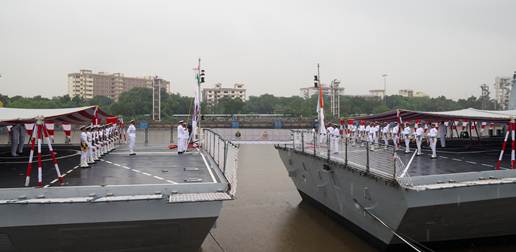
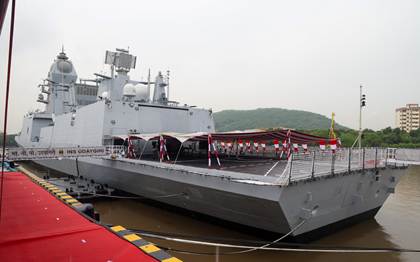
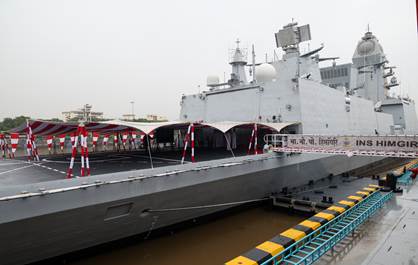
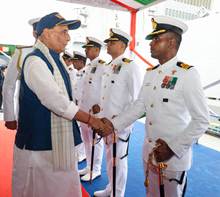
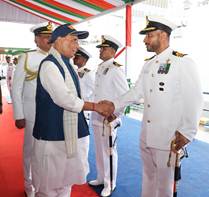
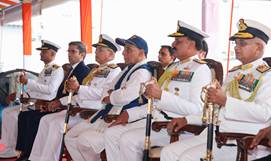
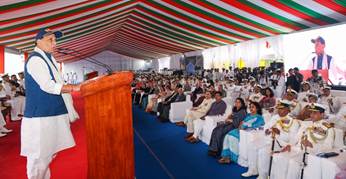
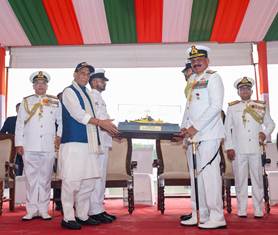
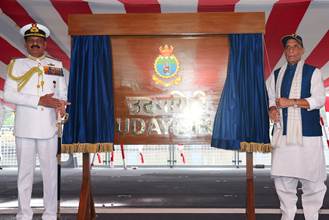
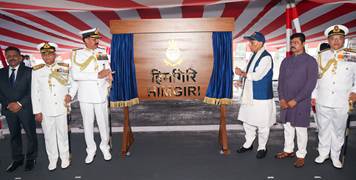
As a testimony to India’s growing shipbuilding prowess and its march towards self-reliance, two multi-mission stealth frigates of Project 17A – INS Udaygiri and INS Himgiri – were commissioned into the Indian Navy in the presence of Raksha Mantri Shri Rajnath Singh at the Naval Base, Visakhapatnam on August 26, 2025. It was for the first time that two frontline surface combatants indigenously constructed by two different shipyards – Mazagon Dock Shipbuilders Limited (MDL), Mumbai [INS Udaygiri] and Garden Reach Shipbuilders & Engineers Limited (GRSE), Kolkata [INS Himgiri] – were commissioned simultaneously.

In his address, Raksha Mantri exuded confidence that these warships will not only strengthen the security system and safeguard maritime interests, but will also assist in Humanitarian Assistance & Disaster Relief missions. He stated that the commissioning bolsters India’s policy of Neighbourhood First and MAHASAGAR (Mutual and Holistic Advancement for Security & Growth for All in the Region). These frigates, which will enhance the capability of the Indian Navy, send a message that India is fully capable of protecting its maritime borders and is ready to respond immediately to any situation,” he added.

Aatmanirbhar Navy

INS Udaygiri and INS Himgiri follow INS Nilgiri, the lead ship of the successor class to Project 17 (Shivalik class). They incorporate improved stealth features, reduced radar signatures, advanced surveillance radars and electronic warfare suites, supersonic surface-to-surface missiles, surface-to-air missiles and rapid-fire gun systems. Both ships feature Combined Diesel or Gas propulsion plants and a state-of-the-art Integrated Platform Management System, enabling higher speeds and improved fuel efficiency.

These are the 100th and 101st warships designed in-house by the Warship Design Bureau of the Indian Navy, and built in India, reflecting the Navy’s continuous effort to enhance indigenous content and self-reliance. High indigenous content — exceeding 75% — has been achieved through the participation of numerous MSMEs and the procurement of major weapons and sensors from Indian Original Equipment Manufacturers.

Raksha Mantri described the commissioning as a giant stride towards the realisation of Prime Minister Shri Narendra Modi’s dream of Aatmanirbhar Bharat, and a proof of the Government’s vision & commitment. “INS Udaygiri & INS Himgiri are the shining examples of the Government’s firm resolve towards self-reliance, symbols of a transformative movement, and testament to the vision that the nation will touch greater heights & obtain the goal of self-reliance with concerted efforts of all stakeholders,” he said, commending the seamless collaboration between MDL and GRSE in constructing and delivering the two potent warships.

Blue Water Navy

The multi-mission frigates are crucial operational enablers that will enhance the Navy’s ability to safeguard national interests across the full spectrum of maritime missions. They are equipped with next-generation weapons, sensors and integrated platform management systems, are ready to perform anti-air, anti-surface and anti-submarine warfare, sea-control and humanitarian operations.

Shri Rajnath Singh asserted that the commissioning of INS Udaygiri and INS Himgiri not only strengthens the Navy’s combat potential but reinforces its role as a “First Responder” and “Preferred Security Partner” in the Indian Ocean Region. “From combating piracy, fighting against smuggling and illegal trafficking, curbing maritime terrorism, or providing relief after a natural disaster, these warships will prove to be a game-changer in complex and risky operations,” he said.


Raksha Mantri dubbed the Indian Navy as a symbol of India’s maritime power as it is safeguarding the country’s interests amidst the Naval activities being witnessed from Arabian Sea to Middle East and eastern African seaboard. “The geo-strategic condition is such that it has the capability to directly impact our economic development. Our energy requirements, oil and natural gas depend to a large extent on the security of this region. Our Navy has emerged as a major pillar of our national economic security,” he said.

Ever-ready Navy

Appreciating the prompt planning and execution of the Indian Navy during Operation Sindoor, Shri Rajnath Singh stated that “the adversary realises the strength and capability of our Navy and what it can do”. He termed the seamless synergy among the three Services and other security agencies/departments during the operation as a proof that the nation stands united in every challenge and tackles it effectively.

“India does not believe in aggressive expansionism. We never attack any country or provoke anyone. But, this doesn’t mean we bow before those who mean to harm us. When our security is threatened, we know how to give a befitting reply. Innocent civilians were killed in Pahalgam. We gave an effective, measured and precise response through Operation Sindoor. We pledged to destroy terrorist hideouts and successfully achieved our goals. I want to reiterate that the operation is not over, it is merely a pause. Today, the entire nation is united against terrorism under the leadership of PM Modi, and this national unity, discipline, sacrifice & dedication are our real strength,” added Raksha Mantri.

Future-ready Navy

On the rapidly-evolving nature of warfare, Shri Rajnath Singh stated that new technologies, strategies and equipment are being witnessed in every conflict, and it has become necessary to not only keep updating oneself, but also explore the unexplored and achieve the unexpected. “Old thinking won’t work in today’s era. We need to anticipate new threats and keep finding solutions, which is why our government is giving priority to research and development in the defence sector. Earlier, only a few countries were manufacturing high-tech equipment, which now India is producing on its own soil,” he said.

Raksha Mantri voiced the Government’s unwavering resolve to strengthen the Armed Forces under a futuristic vision, terming it as a big achievement of the Aatmanirbhar Bharat campaign. “Today, we are protecting not only land, sea and sky, but also space, cyberspace, economic space and social space. Self-reliance is no longer just a slogan; it is becoming a ground reality. And this is due to the hard work of our scientists, officers of the Armed Forces and every person who works diligently day and night,” he stated.

Speaking on the occasion, Chief of the Naval Staff Admiral Dinesh K Tripathi described the double-commissioning as a clear testimony to the continued progress and dynamic expansion of India’s maritime power. He also highlighted the Indian Navy’s ability to deliver overwhelming force from the sea in the present age of uncertainties and competition, terming it as a credible deterrence against the nation’s enemies. “We demonstrated this brilliantly during Operation Sindoor when swift deployment and aggressive posturing of our units, effectively constrained the Pakistan Navy, and forced them to request a cease of kinetic actions,” he said.

Recalling PM Modi’s call for manufacturing indigenous equipment to generate uniqueness and a surprise element in the security apparatus of the country, the Chief of the Naval Staff stated that INS Himgiri and INS Udaygiri, with over 75% indigenous content, are milestones on the road to achieving self-reliance in defence production.

Admiral Dinesh K Tripathi congratulated the Commanding Officers of INS Udaygiri and INS Himgiri, and the Commissioning Crew, who have worked tirelessly shoulder to shoulder with all the stakeholders to achieve this important milestone.

Flag Officer Commanding-in-Chief, Eastern Naval Command Vice Admiral Rajesh Pendharkar, other senior officers of the Navy and naval veterans were among the dignitaries present on the occasion.

More about INS Udaygiri & INS Himgiri

In keeping with the Navy’s tradition of rechristening new ships after their illustrious predecessors, the new Udaygiri and Himgiri carry forward the proud names of earlier frigates that served the nation for decades. The modern Udaygiri pays tribute to the erstwhile INS Udaygiri, which was in commission from 1976 to 2007, while Himgiri honours the erstwhile Himgiri that served from 1974 to 2005. The commissioning of the new ships thus links India’s rich maritime heritage with promising future aspirations.

The simultaneous induction of two major combatants highlights the Navy’s growing operational focus on the Eastern Seaboard. Both frigates will join the Eastern Fleet under the Eastern Naval Command, significantly enhancing India’s ability to respond rapidly to maritime contingencies and to secure sea lanes in the Bay of Bengal and beyond.

The event underscored India’s growing confidence in its indigenous shipbuilding capabilities and reaffirmed its resolve to build and operate complex platforms at par with global standards. With the induction of INS Udaygiri and INS Himgiri, the Indian Navy has added two potent multi-mission frigates to its order of battle, further strengthening the nation’s maritime posture and capability to project power and provide security across the Indian Ocean Region.

INS Udaygiri’s keel was laid on May 07, 2019 and the ship was launched on May 17, 2022. INS Himgiri’s keel laid on November 10, 2018 and the ship was launched on December 14, 2020. Both ships underwent a comprehensive schedule of trials in harbour and at sea prior delivery to the Indian Navy on July 01, 2025 and July 31, 2025 respectively. The balance four ships of the Class are at various stages of construction at MDL & GRSE and would be delivered to the Indian Navy by mid-2026.

Union Home Minister addresses the two-day Vibrant Villages Programme (VVP) workshop in New Delhi 

| Published on:

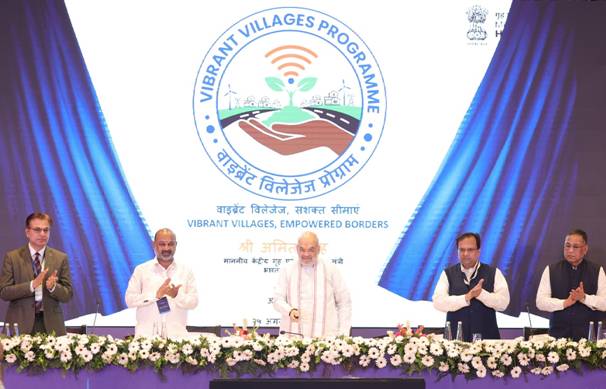
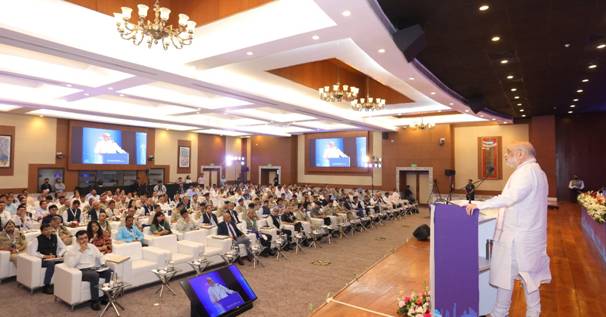
Union Home Minister and Minister of Cooperation Shri Amit Shah  addressed the inauguration session of the two-day Vibrant Villages Programme (VVP) workshop as the chief guest. The workshop is being organized by the Border Management Division, Ministry of Home Affairs (MHA) in New Delhi. On this occasion, Union Home Minister Shri Amit Shah also launched the logo of the Vibrant Villages Program. Union Minister of State for Home Shri Bandi Sanjay Kumar, Home Secretary, Director of Intelligence Bureau (IB), Border Management Secretary, Chief Secretaries of border states included in the first and second phase of VVP, Directors General of security forces deployed for border protection, and District Magistrates of the concerned districts, along with many other dignitaries, were present.

In his address, Union Home Minister Shri Amit Shah stated that the Vibrant Villages Programme is based on three key points: preventing migration from border villages, ensuring that every citizen of border villages receives cent per cent benefits of central and state government schemes, and developing the villages under VVP into strong tools to strengthen border and national security. He said that when Prime Minister Shri Narendra Modi presented the idea of the Vibrant Villages Programme, it was decided that it would be implemented in a phased manner. Not only would every border village be equipped with all facilities, but every citizen living in these border villages would be provided with all the schemes of the Government of India and state governments to improve the lives of the people living there. Additionally, these villages would be developed as strong tools for the security of the country and its borders. He further stated that Prime Minister Shri Narendra Modi, by designating the last village of the country as the first village, has changed our perspective towards border villages.

Shri Amit Shah said that the villages identified early under the Vibrant Villages Programme in a few years will prove to be very significant tools in the security of our country and its borders. He stated that through this programme, efforts have been made to promote infrastructure development, preserve and enhance culture, generate employment through tourism, and make village life vibrant in every way, with a vision of multi-dimensional and multi-sectoral development.

Union Home Minister and Minister of Cooperation said that it is the responsibility of the Chief Secretaries of state governments, District Collectors of villages included in the VVP, and all Central Armed Police Forces (CAPFs) to not limit themselves to the VVP alone and to consider what additional steps can be taken beyond the programme to achieve its objectives. He emphasized that to fulfill the goals of the VVP, it is essential for all departments of the Government of India and state governments to work together to transform these border villages into truly significant tools for security.

Shri Amit Shah stated that to realize the vision of the Vibrant Villages Programme, it is necessary to achieve 100 per cent saturation of government schemes, promote essential public facilities for tourism, and encourage cooperative institutions to create employment opportunities. He said that if initiatives like homestays are extended to border villages and state tourism departments make proper arrangements for bookings, every household in these border villages will have employment. Shri Shah emphasized that the rural development departments of states must work towards establishing the pride of these villages, with District Collectors playing a crucial role in this effort. He noted that if villages have all facilities and employment opportunities, local residents will not wish to migrate. The Home Minister further stated that young District Collectors should ensure that, despite challenging geographical conditions, citizens do not abandon their villages, migration is prevented, and the village population also increases.

Union Home Minister said that after implementing the Vibrant Villages Program in Arunachal Pradesh, the population in many border villages has increased. This is a message for all our country’s border villages that this trend of reverse migration to these villages is moving in the right direction.

Home Minister Shri Amit Shah said that on the occasion of Independence Day, Prime Minister Shri Narendra Modi had said from the ramparts of the Red Fort that demographic changes are a matter of concern. He said that the collectors of districts included in the Vibrant Villages Program need to address this issue with seriousness and attention to detail. Demographic changes in border areas directly impact the security of the country and its borders. The Home Minister said that it should not be assumed that this is happening due to geographical conditions; rather, it is occurring as part of a deliberate design. He added that the Chief Secretaries of states and the CAPFs also need to pay attention to this issue.

Shri Amit Shah said that for achieving 100% saturation of government schemes, district collectors should consider whether they can coordinate with the Central Armed Police Forces (CAPFs). He said that the CAPFs can provide assistance in the areas of health, sports, and education. Shri Shah said that in Arunachal Pradesh, the ITBP has successfully experimented with purchasing daily essentials such as milk, vegetables, eggs, and grains from Vibrant Villages. He emphasized the need to implement this experiment on the ground in every border village. Shri Shah also said that the army deployed at the borders should take responsibility for generating employment in Vibrant Villages in coordination with the Ministry of Home Affairs and the Ministry of Defence.

Union Home Minister and Minister of Cooperation, Shri Amit Shah, said that it is the responsibility of the Central Armed Police Forces (CAPFs) and district collectors to establish dairy cooperatives to meet the milk requirements of the CAPFs and the army directly from the villages. This will aid in employment generation. Shri Shah said that this experiment should be developed as an effective model and implemented in every Vibrant Village, with the Ministry of Home Affairs, all CAPFs, the army through the Ministry of Defence, and district collectors taking the lead. He added that employment generation will automatically curb migration.

Shri Amit Shah said that border villages should have facilities for telecommunications, road connectivity, education, healthcare, and clean drinking water. He emphasized that the Vibrant Villages Program (VVP) should not remain just a government program but should become the spirit of administration. The Home Minister said that the program’s objective can only be achieved when it becomes ingrained in the administrative ethos. He suggested that under the VVP, possibilities such as constructing new ponds under MGNREGA, intensive afforestation, and building permanent infrastructure should also be considered.

Union Home Minister said that in Vibrant Villages Program-1, efforts were limited to the program itself, but in Vibrant Villages Program-2, there is a need to change the administrative approach. He urged collectors of border districts to take appropriate action to remove illegal religious encroachments, stating that these encroachments are part of a deliberate design. He stressed that all illegal encroachments within at least a 30-kilometer radius from the border should be removed. Shri Shah highlighted that Gujarat has done commendable work in this regard, having cleared numerous encroachments along both maritime and land borders.

Dr. Jitendra Singh Releases RTI Journal and Launches E-Journal on NFICI Website

| Published on:

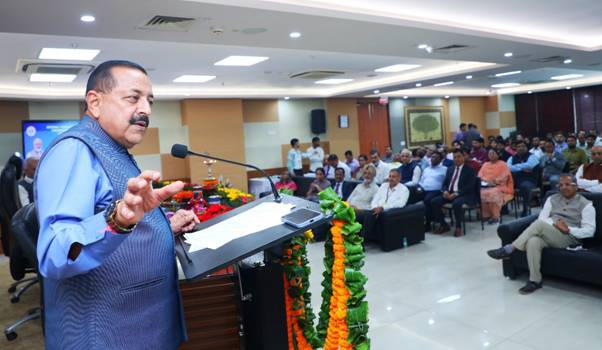
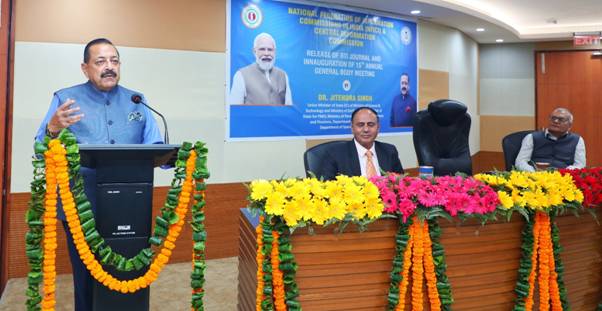
Union Minister of State (Independent Charge) for Science & Technology, Earth Sciences, MoS Personnel, Public Grievances and Pensions, MoS PMO, Department of Space, Department of Atomic Energy, Dr. Jitendra Singh today released the latest edition of the RTI Journal and unveiled an E-Journal on the website of the National Federation of Information Commissions in India (NFICI).

The Minister was addressing the Inaugural Session of the 15th Annual General Body Meeting of NFICI at the Central Information Commission (CIC), New Delhi.

The meeting was attended by the Chief Information Commissioner of Central Information Commission Heeralal Samariya, State Chief Information Commissioners and Information Commissioners from across the country.

Highlighting some of the landmark DoPT reforms since 2014, Dr. Jitendra Singh recalled the abolition of over 1600 obsolete rules, starting with the practice of getting documents attested by gazetted officers. “This reform sent out a message that this Government trusts the youth of this country, who comprise 70% of the population,” he said.

Dr. Jitendra Singh underlined the enormous push given by the Government over the last decade to foster transparency, accountability and public disclosure of information for citizen-centric governance. He recalled how, under Prime Minister Narendra Modi’s dictum of “Maximum Governance, Minimum Government”, transformational changes were introduced to enhance credibility, disposal rates, and transparency through technology-driven options.

He praised the CIC and State Commissions for achieving almost 100% disposal of RTI cases, even during the COVID-19 lockdown, when sittings were conducted remotely to ensure uninterrupted functioning. “This speaks volumes of the kind of tools that are now available and effectively used to strengthen transparency,” he noted.

Highlighting some of the landmark DoPT reforms since 2014, Dr. Jitendra Singh recalled the abolition of over 1600 obsolete rules, starting with the practice of getting documents attested by gazetted officers. “This reform sent out a message that this Government trusts the youth of this country, who comprise 70% of the population,” he said.

Similarly, the abolition of interviews for government recruitment was a bold step to eliminate subjectivity and favouritism and nepotism, making the process more objective, transparent, and merit-based. Dr. Singh said this decision, though initially questioned, ultimately strengthened public trust and credibility in governance.

Dr. Jitendra Singh also spoke about the innovative ‘Human Desk’ experiment introduced to enhance satisfaction levels. “Disposal is important, but so is the citizen’s happiness index. After every RTI disposal, a personal call for counselling or feedback ensures that applicants feel heard and engaged,” he added.

The Minister stressed that most government orders and decisions are already placed in the public domain on official websites, reducing the need for repetitive RTI queries. He suggested that efforts must be made to filter out avoidable or repetitive applications, while strengthening norms and SOPs for efficient redressal.

Dr. Jitendra Singh also appreciated the NFICI for emerging as a platform for coordination, mutual consultation, and sharing of best practices among Information Commissions. He urged Information Commissioners to be more forthcoming with suggestions during their tenure, so that their insights can be implemented in real time.

“RTI and Information Commissions play a pivotal role in reorienting governance towards greater transparency and accountability. With digital platforms like CPGRAMS and technology-driven mechanisms, we are moving closer to a governance system that is both transparent and citizen-friendly,” Dr. Jitendra Singh said.

A person standing at a podium with a microphone and people in the backgroundAI-generated content may be incorrect.

A group of men holding papersAI-generated content may be incorrect.

PM inaugurates, lays the foundation stone and dedicates development works worth Rs 5,400 crore in Ahmedabad, Gujarat

| Published on:

Prime Minister Shri Narendra Modi inaugurated, laid the foundation stone and dedicated to the nation development works worth Rs 5,400 crores in Ahmedabad, Gujarat today. Addressing the gathering, Prime Minister remarked that the entire nation is currently immersed in the fervour of Ganeshotsav. He highlighted that with the blessings of Ganpati Bappa, today marks the auspicious beginning of several development projects linked to Gujarat’s progress. He stated that he has had the privilege of dedicating multiple projects at the feet of the people and extended heartfelt congratulations to all citizens for these development initiatives.

Noting that during this monsoon season, several regions of Gujarat are experiencing heavy rainfall with cloudbursts at few places in India, Shri Modi expressed his condolences to all affected families. He remarked that this fury of nature has become a challenge for the entire country. The PM emphasised that the Central Government, in coordination with all State Governments, is actively engaged in relief and rescue operations.

Highlighting that Gujarat is the land of two Mohans, the Prime Minister  referred to the first as the wielder of the Sudarshan Chakra—Dwarkadhish Shri Krishna. He described the second as the bearer of the spinning wheel—Sant of Sabarmati, Pujya Bapu. “India is becoming stronger today by following the path shown by Sudarshan Chakradhari Mohan and Charkhadhari Mohan”, stated Shri Modi. He highlighted that Sudarshan-Chakradhari Mohan taught us how to defend the nation and society, adding that the Sudarshan Chakra became a shield of justice and security—capable of punishing enemies even in the depths of the underworld. The Prime Minister asserted that this spirit is reflected in India’s decisions today. He emphasized that today, India does not spare terrorists or their handlers, regardless of where they hide. Shri Modi stated that the world has seen how India avenged the Pahalgam attack. He cited Operation Sindoor as a symbol of the valour of India’s armed forces and the nation’s resolve inspired by Sudarshan-Chakradhari Mohan.

Invoking the legacy of Charkhadhari Mohan—Pujya Bapu—who showed the path of India’s prosperity through Swadeshi, the Prime Minister  noted that the Sabarmati Ashram stands as a witness to the actions and inactions of the party that enjoyed power for decades in Bapu’s name. He questioned what that party did with the mantra of Swadeshi. Criticising the party, which ruled the country for sixty to sixty-five years, kept India dependent on foreign nations, Shri Modi alleged that this was done to manipulate imports and enable corruption. The Prime Minister stated that today, India has made self-reliance the foundation of building a developed nation. Emphasising that India is rapidly progressing on this path through the strength of its farmers, fishermen, livestock rearers and entrepreneurs, Shri Modi highlighted that Gujarat has a large number of livestock rearers. He stated that India’s dairy sector is a source of strength and has made the country self-reliant in this domain. The Prime Minister cautioned that the world is witnessing politics driven by economic self-interest. From the soil of Ahmedabad, Shri Modi affirmed that the welfare of small entrepreneurs, shopkeepers, farmers, and livestock rearers is paramount for him. He assured that his government will not allow any harm to the interests of small entrepreneurs, farmers, or livestock rearers.

“Gujarat is providing tremendous momentum to the Aatmanirbhar Bharat campaign. This progress is the result of two decades of dedicated effort”, emphasised Shri Modi. He added that today’s youth have not witnessed the days when curfews were a frequent occurrence in the region. Recalling that conducting trade and business used to be extremely difficult, the Prime Minister noted that the atmosphere was one of unrest. However, he highlighted that today, Ahmedabad stands among the safest cities in the country, crediting the people for making this transformation possible.

Underlining that the atmosphere of peace and security established in Gujarat is yielding positive outcomes across the state, the Prime Minister highlighted, “today, all types of industries are expanding in Gujarat”. He remarked that the entire state takes pride in Gujarat’s emergence as a manufacturing hub. Recalling his recent visit to Dahod, where powerful electric locomotive engines are being manufactured at the rail factory, Shri Modi noted that metro coaches made in Gujarat are now being exported to other countries. He added that Gujarat is witnessing large-scale production of motorcycles and cars. The Prime Minister stated that major national and international companies are setting up factories in the state. He mentioned that Gujarat has already been producing and exporting various aircraft components. He announced that Vadodara has now begun manufacturing transport aircraft. Emphasizing that Gujarat is becoming a major centre for electric vehicle manufacturing, the Prime Minister shared that he will be visiting Hansalpur tomorrow, where a significant initiative in electric vehicle manufacturing is being launched. Highlighting that modern electronic devices cannot be made without semiconductors, Shri Modi stated that Gujarat is poised to become a prominent name in the semiconductor sector. The Prime Minister noted that Gujarat has established its identity in textiles, gems, and jewellery. He further remarked that in the domain of pharmaceutical production—including medicines and vaccines—nearly one-third of the country’s exports originate from Gujarat.

“India is rapidly advancing in the fields of solar, wind, and nuclear energy and Gujarat’s contribution in this progress is the highest”, emphasised the Prime Minister highlighting that Gujarat is also emerging as a major hub for green energy and petrochemicals. He remarked that Gujarat plays a significant role in meeting the country’s petrochemical requirements. Noting that the plastic industry, synthetic fibre, fertilizers, medicines, paint industry, and cosmetics—all rely heavily on the petrochemical sector, Shri Modi stated that in Gujarat, traditional industries are expanding and new industries are being established. He affirmed that all these efforts are strengthening the Aatmanirbhar Bharat initiative. He added that this growth is continuously generating employment opportunities for the youth of Gujarat.

Prime Minister stated that whether it is industry, agriculture, or tourism—excellent connectivity is essential for all sectors. He highlighted that in the past 20–25 years, Gujarat’s connectivity has undergone a complete transformation. He further remarked that today, several road and rail-related projects have been inaugurated and foundation stones laid. Noting that the Circular Road, known as Sardar Patel Ring Road, is now being widened, Shri Modi stated that it is being developed into a six-lane road. He emphasized that this expansion will help reduce traffic congestion in the city’s most crowded areas. He added that the widening of the Viramgam–Khudrad–Rampura Road will benefit farmers and industries in the region. He remarked that the newly constructed underpasses and railway overbridges will further enhance the city’s connectivity.

Recalling that there was a time when only old red-coloured buses operated in the region, Shri Modi noted that today, BRTS Janmarg and AC-electric buses have introduced modern facilities. He highlighted that the metro rail network is also expanding rapidly. The Prime Minister stated that this has ensured ease of travel for the people of Ahmedabad. He remarked that every city in Gujarat is surrounded by a major industrial corridor. However, he pointed out that until ten years ago, there was a lack of proper rail connectivity between ports and such industrial clusters. Shri Modi stated that after becoming Prime Minister in 2014, he began addressing this issue in Gujarat. Sharing that in the past eleven years, nearly 3,000 kilometres of new rail tracks have been laid across the state, Shri Modi emphasized that Gujarat’s entire railway network has now been fully electrified. He noted that the railway projects announced today for Gujarat will benefit farmers, industries, and pilgrims alike.

Affirming that his government is committed to ensuring a life of dignity for the urban poor, Shri Modi cited Ramapir No Tekro as direct evidence of this commitment. He recalled that Pujya Bapu always emphasized the dignity of the poor and highlighted that the newly constructed homes near Sabarmati Ashram stand as a living example of this vision. The Prime Minister stated that the allocation of 1,500 permanent houses to the poor marks the foundation of countless new dreams. He remarked that this Navratri and Diwali, the joy on the faces of those residing in these homes will be even greater. He added that alongside this initiative, the renovation of Bapu’s Ashram is also underway as a true tribute to Pujya Bapu.

Prime Minister stated that the grand statue of Sardar Vallabhbhai Patel has been successfully completed. He remarked that since being elected as PM, he has been able to pursue the renovation of Sabarmati Ashram. He emphasized that just as the Statue of Unity has become a source of inspiration for the nation and the world, once the renovation of Sabarmati Ashram is complete, it will become the greatest global symbol of peace. Urging everyone to mark his words, Shri Modi said Sabarmati Ashram will emerge as the world’s foremost inspiration for peace, once renovation is completed.

“Ensuring a better life for labour families has been a core mission of his government”, exclaimed the Prime Minister. He recalled that several years ago, the initiative to build permanent gated societies for slum dwellers in Gujarat was undertaken. He highlighted that over the years, numerous such housing projects have been completed, replacing slums with dignified living spaces, and this campaign will continue.

Stressing that he worships the ones who are neglected, Shri Modi  emphasized that improving the lives of urban poor remains a major priority for his government. He noted that street vendors and footpath workers were previously neglected. To support them, the Prime Minister stated that the government launched the PM SVANidhi scheme. He shared that under this scheme, nearly seventy lakh street vendors and cart-pullers across the country have been able to access financial assistance from banks. He added that lakhs of beneficiaries in Gujarat have also received support through this initiative.

Prime Minister highlighted that in the past eleven years, 25 crore people have overcome poverty which is a matter of pride for India while its a matter of discussion among the economic institutions of the globe. He remarked that these individuals have contributed to the emergence of a new middle class in the country. “Our government is continuously working to empower both the neo middle class and the traditional middle class”, stressed Shri Modi. He highlighted that annual income up to ₹12 lakh has been made tax-free. He further announced that the government is now undertaking reforms in the GST system. The Prime Minister stated that these reforms will support small entrepreneurs and reduce taxes on many items. He affirmed that this Diwali, both the trading community and families across the nation will receive a double bonus of happiness.

Underlining that under the PM Surya Ghar Muft Bijli Yojana, electricity bills are being brought down to zero, Shri Modi highlighted that nearly six lakh families in Gujarat have already joined this scheme. He noted that more than ₹3,000 crore has been provided by the government to these families in Gujarat alone. The Prime Minister remarked that this has led to significant monthly savings on electricity bills for the beneficiaries.

Shri Modi stated that Ahmedabad city is now becoming a city of dreams and resolutions. Recalling that there was a time when people mocked Ahmedabad by calling it “Gardabad”, Shri Modi described how flying dust and dirt had become the city’s misfortune. He expressed happiness that today, Ahmedabad is earning national recognition for its cleanliness. He credited this achievement to the collective efforts of every resident of Ahmedabad.

Mentioning that today’s youth have not witnessed the earlier days when the Sabarmati River resembled a dry drain, the Prime Minister highlighted that the people of Ahmedabad resolved to change this situation. He remarked that the Sabarmati Riverfront now enhances the pride of the city. Shri Modi recalled that the water of Kankaria Lake used to be green and foul-smelling due to weeds, which made even walking nearby difficult, and the area had become a preferred spot for anti-social elements. He stated that today, the lake has transformed into one of the finest recreational destinations. He mentioned boating in the lake and the Kids City as spaces where fun and learning converge for children. The Prime Minister emphasized that all these developments reflect the changing face of Ahmedabad. He added that the Kankaria Carnival has now become a new identity of the city.

Underscoring that Ahmedabad is emerging as a major tourism hub, Shri Modi highlighted that Ahmedabad is recognized as a UNESCO World Heritage City. He remarked that whether it is the historic gates, the Sabarmati Ashram, or the city’s rich heritage—Ahmedabad is now shining on the global map. The Prime Minister noted that modern and innovative forms of tourism are rapidly developing in the city. He stated that Ahmedabad has become a significant centre for the concert economy. He recalled the recent Coldplay concert held in the city, which garnered global attention. Shri Modi emphasized that Ahmedabad’s stadium, with a seating capacity of one lakh, has become a major attraction. He affirmed that this demonstrates Ahmedabad’s capability to host large-scale concerts as well as major sports events.

Reiterating his earlier reference to the festive season, noting that the country is now entering a period of celebrations including Navratri, Vijayadashami, Dhanteras, and Diwali, Shri Modi emphasized that these festivals are not only cultural celebrations but should also be seen as festivals of self-reliance. The Prime Minister once again urged citizens to ensure that all purchases, gifts, and decorative items brought home during the festive season are Made in India. He reminded everyone that a true gift is one that is made in India—crafted by the hands of Indian citizens. He also appealed to shopkeepers to sell Indian-made products with pride. The Prime Minister stated that through these small yet meaningful efforts, these festivals will become grand celebrations of India’s prosperity. He concluded with congratulations to all citizens for the development initiatives.

The Governor of Gujarat, Shri Acharya Devvrat, the Chief Minister of Gujarat, Shri Bhupendrabhai Patel, Union Minister, Shri C R Patil were present among other dignitaries at the event.

Background

In line with his commitment to world class infrastructure and connectivity, Prime minister dedicated multiple railway projects worth over Rs 1,400 crore to the Nation. It includes doubling of the 65 km Mahesana-Palanpur Rail Line worth over Rs 530 crore, gauge conversion of the 37 km Kalol-Kadi-Katosan Road Rail Line and 40 km Bechraji-Ranuj Rail Line worth over Rs 860 crore. With the addition of broad-gauge capacity, these projects will ensure smoother, safer and more seamless connectivity in the region. This will significantly ease travel for daily commuters, tourists and businesses, while promoting regional economic integration. Further, flagging off the passenger train between Katosan Road & Sabarmati will provide improved access to religious destinations and stimulate economic activity at the grassroots level. The car-loaded freight train service from Bechraji will enhance connectivity to the state’s industrial hubs, strengthening the logistics network and generate employment opportunities.

Furthering his vision to improve connectivity, enhance commuter safety, and accelerate regional development, Prime Minister inaugurated widening of Viramgam–Khudad–Rampura road. He also laid the foundation stone for construction of six-lane vehicle underpasses on the Ahmedabad–Mehsana–Palanpur road; railway overbridge on the Ahmedabad–Viramgam road among others. Collectively, these initiatives will boost industrial growth, improve transport efficiency and economic opportunity in the region.

In a major boost to power sector in the state, Prime Minister inaugurated power distribution projects in Ahmedabad, Mehsana and Gandhinagar under Uttar Gujarat Vij Company Limited (UGVCL), aimed at reducing losses, modernizing the network and strengthening infrastructure under the Revamped Distribution Sector Scheme. The projects, worth over Rs 1000 crore, will reduce power breakdowns and outages during adverse weather, improve public safety, transformer protection and reliability of the electricity supply network.

Prime Minister inaugurated Development of Slums situated at Sector-3 of Ramapir No Tekro under In Situ Slum Rehabilitation Component of PMAY (U). He also laid the foundation stone for major road widening projects being implemented on the Sardar Patel Ring Road around Ahmedabad to ease traffic flow and improve connectivity. He laid the foundation stone of key urban infrastructure projects to strengthen water and sewerage management systems.

Strengthening administrative efficiency and public service delivery, Prime Minister laid the foundation stone of key infrastructure projects in Gujarat. It will include the construction of a new Stamps and Registration Building in Ahmedabad West, aimed at improving citizen-centric services, and the establishment of a State-Level Data Storage Centre at Gandhinagar, designed to enhance secure data management and digital governance capabilities across Gujarat.

India-Fiji Joint Statement: Partnership in the spirit of Veilomani Dosti

| Published on:

At the invitation of the Hon’ble Prime Minister, Shri Narendra Modi, the Hon’ble Prime Minister of the Republic of Fiji, Mr. Sitiveni Rabuka, paid an Official Visit to the Republic of India from 24 to 26 August 2025. Prime Minister Rabuka, who is on his first visit to India in his current capacity, is visiting New Delhi, and is accompanied by his spouse; Hon’ble Mr. Antonio Lalabalavu, the Minister for Health and Medical Services; and a delegation of senior officials of the Government of the Republic of Fiji.

Prime Minister Modi warmly welcomed Prime Minister Rabuka and his delegation. The Leaders held comprehensive and forward-looking discussions on the full spectrum of bilateral matters, and regional and global issues of mutual interest. Both Leaders expressed satisfaction at the growth of the relationship and reaffirmed their resolve to build a broad-based, inclusive, and forward-looking partnership in areas such as defence, health, agriculture, agro-processing, trade and investment, development of small and medium enterprises, cooperatives, culture, sports, education and skill development.

The Leaders noted with satisfaction the momentum gained in bilateral exchanges in recent years, including the historic first-ever visit of the President of India, Smt. Droupadi Murmu, to Fiji in August 2024. They recalled the successful hosting of the 12th World Hindi Conference in Nadi, Fiji, in February 2023, which celebrated the shared linguistic and cultural heritage between India and Fiji.

The Leaders reaffirmed the deep-rooted and long-standing relationship and strong people-to-people ties between India and Fiji. They acknowledged the contribution of the Girmitiyas, over 60,000 Indian indentured labourers who arrived in Fiji between 1879 and 1916, in shaping Fiji’s multicultural identity, diverse society and economy. Prime Minister Rabuka appreciated the visit of the Minister of State for External Affairs and Textiles, Shri Pabitra Margherita, to the Republic of Fiji to attend the 146th Girmit Day commemoration in May 2025.

The Leaders noted the successful convening of the 6th round of Foreign Office Consultations in July 2025, which provided an important platform for reviewing progress and identifying new areas of cooperation.

Both Leaders agreed to strengthen cooperation against terrorism and condemned terrorism in all its forms and manifestations. Both Leaders condemned in strongest terms the Pahalgam terrorist attack which took the lives of 26 innocent civilians; reiterated zero tolerance to terrorism and rejected double standards on terrorism. Both countries acknowledged the need to counter radicalization; combat financing of terrorism; prevent the exploitation of new and emerging technologies for terrorist purposes and tackle terrorist recruitment and transnational organized crime through joint efforts and capacity building. Both sides agreed to work together at the UN and other multilateral fora to combat terrorism.

The Leaders reaffirmed their commitment to climate action, resilience building, and sustainable development in the spirit of India’s Mission LiFE and the 2050 Strategy for the Blue Pacific Continent. Prime Minister Modi appreciated Fiji’s membership in the International Solar Alliance (ISA), the Coalition for Disaster Resilient Infrastructure (CDRI) and the Global Biofuels Alliance (GBA). The Leaders welcomed the growing collaboration within ISA, including the upcoming establishment of a STAR-Centre at Fiji National University through a tripartite Memorandum of Understanding with ISA, and signing of the Country Partnership Framework to scale solar deployment across priority sectors in Fiji. Prime Minister Modi reiterated India’s commitment to support Fiji’s national resilience goals within the CDRI Framework through technical assistance, capacity building, and advocacy on global platforms.

The Leaders reaffirmed their shared commitment to promoting biofuels as sustainable energy solution within the framework of the Global Biofuels Alliance (GBA). As founding and active members of the Alliance, both sides underscored the vital role of biofuels in enhancing energy security, reducing greenhouse gas emissions, and fostering inclusive rural development. They also agreed to strengthen cooperation on capacity building, technical assistance, and policy frameworks to support the scale-up of sustainable biofuel production and deployment in Fiji.

The Leaders acknowledged the steady growth in bilateral trade and recognized the substantial untapped potential for trade and investment between India and Fiji. They expressed their intent to deepen sectoral cooperation in areas of mutual interest to further consolidate economic partnership, diversify trade portfolios and enhance resilience of supply chains. Prime Minister Modi welcomed the grant of market access to Indian ghee by the Government of Fiji.

Reiterating their shared vision for a robust, inclusive, and sustainable Indo-Pacific economic architecture, both Leaders committed to working closely to promote mutual prosperity. Both Leaders acknowledged India’s growing engagement with the Pacific Island Countries, including Fiji, carried out under the Act East Policy, through the action-oriented Forum for India-Pacific Islands Cooperation (FIPIC) and India’s participation as Dialogue Partner in the Pacific Islands Forum (PIF). Recalling the outcomes of the 3rd FIPIC Summit held in May 2023, Prime Minister Modi reaffirmed India’s commitment to development partnership in the region through wide-ranging initiatives keeping priorities of Fiji at the centre. Reaffirming healthcare as a key priority area, both Leaders welcomed the signing of the Memorandum of Understanding on design, construction, commissioning, operation and maintenance of a 100-bedded Super Specialty Hospital in Suva which is the largest project undertaken by India under its Grant-in-Aid Programme in the Pacific Region.

Prime Minister Modi welcomed the signing of the Memorandum of Understanding on Recognition of Indian Pharmacopoeia in May 2025 which will strengthen collaboration in the pharmaceutical sector and ensure improved access to quality and affordable healthcare products and services in the Republic of Fiji. He also reaffirmed India’s support for the establishment of Jan Aushadhi Kendras (Peoples’ Pharmacies) in Fiji to provide low-cost generic medicines. The Leaders welcomed the holding of the 3rd Joint Working Group on Health between the Republic of India and the Republic of Fiji on 13 August 2025 during which collaboration under India’s flagship telemedicine initiative, e-Sanjeevani, to facilitate remote healthcare services and enhance digital health connectivity between India and Fiji was discussed. Strengthening heath cooperation, Prime Minister Modi announced the 2nd Jaipur Foot Camp to be organized in Fiji. India will also extend specialized/tertiary medical care services in Indian hospitals for upto 10 Fijians under the ‘Heal in India’ programme to supplement Fiji’s Overseas Medical Referral programme.

Reaffirming Development Partnership as a cornerstone of India–Fiji cooperation, the Leaders welcomed the signing of a Memorandum of Understanding for the Tubalevu Village Ground Water Supply Project for the first Quick Impact Project (QIP) in the Republic of Fiji as announced by India at the 53rd Pacific Islands Forum Leaders Meeting held in Tonga in 2024, which will enable the provision of clean drinking water for local communities.

Both Leaders acknowledged the growing momentum in bilateral defence ties. They emphasized the importance of their shared interests in advancing regional peace, stability, and prosperity. Prime Minister Modi reaffirmed India’s commitment to advancing the priority areas of cooperation outlined in the Memorandum of Understanding on Defence Cooperation signed in 2017, and to supporting Fiji’s strategic priorities in these areas. The Leaders welcomed the outcomes of the inaugural Joint Working Group (JWG) on Defence, including enhanced cooperation in areas such as United Nations Peacekeeping Operations (UNPKO), Military Medicine, White Shipping Information Exchange (WSIE), and capacity building for Republic of Fiji Military Forces.

The Leaders expressed satisfaction with the ongoing defence collaboration and reaffirmed their commitment to further strengthen these ties, emphasising the need to enhance defence and maritime security cooperation. Prime Minister Rabuka stressed the significance of ensuring security of Fiji’s Exclusive Economic Zone (EEZ) and welcomed India’s assurance to extend assistance to meet the security needs of the Republic of Fiji. Prime Minister Rabuka welcomed the planned port call by an Indian Naval Ship to Fiji which will enhance maritime cooperation and interoperability.

Both Leaders reaffirmed their commitment to further deepening defence cooperation through new initiatives aimed at accelerating bilateral defence efforts and designed to promote mutual benefits and advance peace, stability, and prosperity in the region. Prime Minister Modi announced the gifting of two ambulances to the Republic of Fiji Military Forces and the establishment of the defence wing in the High Commission of India in Suva. In view of cyber security being an emerging area of cooperation between both countries, the Leaders welcomed the establishment of Cyber Security Training Cell (CSTC) in Fiji. They emphasized the significant potential for collaboration on addressing current and emerging challenges, particularly in the maritime, humanitarian assistance and disaster relief (HADR), and technology sectors.

The Leaders underscored the importance of a free, open, secure, and inclusive Indo-Pacific region. They announced their intent to collaborate on strengthening regional maritime security, contributing to peace and stability in the Indo-Pacific.

The Leaders recognized people-to-people ties as a natural foundation and multiplier for deepening India-Fiji relationship, especially economic and cultural ties. Both Leaders welcomed the signing of the Declaration of Intent on Migration and Mobility between India and Fiji. This will facilitate mobility of professionals, and students between the two countries.

The Leaders welcomed the deputation of a Hindi-cum-Sanskrit teacher to the University of Fiji to support the development of the Centre for Hindi Studies which will further promote linguistic and cultural ties. Prime Minister Modi further extended India’s support for training to a cohort of Pundits from Fiji in India who would also participate in the ‘International Geeta Mahotsav’ (IGM 2025) in India later this year. An International Geeta Mahotsav event will also be organized in Fiji coinciding with IGM 2025 celebrations in India.

The Leaders recognized capacity building as an important pillar of India’s partnership with the Republic of Fiji. Prime Minister Modi affirmed that India will continue to provide capacity building opportunities for government professionals of Fiji through the Indian Technical and Economic Cooperation (ITEC) Programme.

The Leaders recognised the significance of agriculture and food security as key areas for bilateral cooperation. Prime Minister Rabuka thanked Prime Minister Modi for the assistance of 5MT of high-quality cowpea seeds sent by India in July 2025 to support food security and agricultural resilience in Fiji.

Prime Minister Modi announced gifting of 12 agricultural drones and 2 mobile soil testing laboratories under India’s Grant-in-Aid Programme which will promote innovation and enhance productivity in Fiji’s sugar sector. To further support the sector, Prime Minister Modi announced the intention to send an ITEC expert to the Fiji Sugar Corporation, along with the organization of specialized ITEC training programmes for Fijian sugar sector professionals.

The Leaders stressed on the growing sports connections between both countries, especially the increasing enthusiasm for cricket in Fiji and for rugby in India. At the request of Fiji, an Indian cricket coach will support the Fiji cricket teams through local talent development, thus promoting youth engagement in sports.

Prime Minister Modi expressed appreciation for the allocation of land by the Government of the Republic of Fiji for the construction of Chancery-cum-Cultural Centre for the High Commission of India in Suva and welcomed the handover of the Lease Title. Land has already been allocated in New Delhi in 2015 for the Government of the Republic of Fiji to construct its High Commission Chancery.

The Leaders welcomed the signing of the following aimed at deepening cooperation in key sectors: (i) Memorandum of Understanding between the Fiji Development Bank (FDB) and the National Bank for Agriculture and Rural Development (NABARD) of India to enhance collaboration in rural development, agricultural financing and financial inclusion; (ii) Memorandum of Understanding on Cooperation in the field of Standardization between the Bureau of Indian Standards (BIS) and the Department of National Trade Measurement and Standards (DNTMS) of the Republic of Fiji; (iii) Memorandum of Understanding between National Institute of Electronics and Information Technology (NIELIT) under the Ministry of Electronics and Information Technology (MeitY), India and Pacific Polytechnic, Fiji, for cooperation in the field of human capacity building, skilling, and upskilling; (iv) Memorandum of Understanding between the Confederation of Indian Industry (CII) and Fiji Commerce and Employers Federation (FCEF) to further economic and commercial ties; and (v) Agreement between M/s. HLL Lifecare Ltd. and Ministry of Health and Medical Services, Republic of Fiji on supply of medicines under Jan Aushadhi Scheme.

Both Leaders underlined the importance of Parliamentary exchanges as a step toward strengthening democratic and legislative exchanges. Prime Minister Modi welcomed the proposed visit by a delegation of Parliamentarians from Fiji to India in 2026. Prime Minister Rabuka underlined the important role played by the Great Council of Chiefs (GCC) in promoting social cohesion and community development in Fiji. Prime Minister Modi welcomed the proposed visit by a delegation of the GCC to India to further strengthen people-to-people ties between the two countries.

The Leaders exchanged views on regional and international developments and reiterated their shared commitment to peace, climate justice, inclusive development, and amplifying the voice of the Global South. Prime Minister Rabuka appreciated the leadership role of India in Global South. They expressed appreciation for the valued mutual support extended in multilateral forums.

Both Leaders agreed on the urgent need for comprehensive reforms of the United Nations, including through the expansion of the UN Security Council in both categories of membership to better reflect contemporary geopolitical realities. Fiji reaffirmed its support for India as a Permanent Member in a reformed and expanded UN Security Council as well as its support to India’s candidature for the UNSC non-permanent membership for the term 2028-29.

The Leaders reaffirmed continued strengthening of South-South cooperation as a necessary step in effectively addressing contemporary global challenges and agreed to work together on issues of common concern to the Global South, including enhanced, equitable representation in institutions of global governance. Prime Minister Rabuka appreciated India’s initiative and leadership in organising the Voice of Global South Summits, which serve as a crucial platform to deliberate on shared concerns, challenges and developmental priorities of developing countries. Prime Minister Modi appreciated Fiji’s active participation in the Voice of Global South Summits and thanked Prime Minister Rabuka for his participation in the Leaders’ Session of the Summit. Both Leaders welcomed Fiji’s continued engagement with the Global South Centre of Excellence, DAKSHIN, in finding unique development solutions rooted in the shared experience of Global South countries.

Both Prime Ministers reaffirmed their commitment to supporting an open, inclusive, stable and prosperous Indo-Pacific where sovereignty and territorial integrity are respected. Prime Minister Rabuka expressed Fiji’s interest in joining the Indo-Pacific Oceans Initiative (IPOI). Prime Minister Modi welcomed Fiji into this partnership with like-minded countries which seek to manage, conserve and sustain the maritime domain. Prime Rabuka highlighted the concept of the ‘Ocean of Peace’ which emphasizes building a peaceful, stable, secure, and sustainable future and well-being for our region. Prime Minister Modi commended Prime Minister Rabuka for his leadership in championing ‘Ocean of Peace’ in the Pacific Region.

Prime Minister Rabuka expressed heartfelt appreciation to the Government and people of India for the warm hospitality extended to him and his delegation. He extended an invitation to Prime Minister Modi to undertake a visit to Fiji.

People in border areas provided full support to the Armed Forces during Operation Sindoor: Raksha Mantri

| Published on:

“People in border areas provided full support to the Armed Forces during Operation Sindoor, which is testament to the fact that the security of the nation is not just the responsibility of the Government or the military, but of every citizen,” said Raksha Mantri Shri Rajnath during the inauguration of a Defence & Sports Academy in Jodhpur, Rajasthan on August 25, 2025. He emphasised that the country can face any difficulty and become stronger, if citizens, especially the youth, remain aware & dedicated towards their duties.

Raksha Mantri commended the zeal and determination demonstrated by the youth during Operation Sindoor, during which the Indian Armed Forces gave a befitting reply to the cowardly terror attack in Pahalgam and achieved the set goals with precision. Stressing that India does not discriminate on the basis of caste and religion, he stated that while the terrorists killed innocent people in Pahalgam on the basis of their dharma, the Indian Armed Forces destroyed those who provided shelter to terrorists based on their karma. He described the operation as the identity of New India.

Underscoring the importance of initiatives such as the Defence & Sports Academy, Shri Rajnath Singh asserted that the amalgamation of defence, education and sports is crucial to building a secure & strong nation. “Education provides knowledge while defence ensures security. Qualities like perseverance, discipline, patience and determination are as important to a soldier as they are to a sportsperson. Students who are products of this confluence of defence, education and sports can make the country proud both at national and international levels,” he said, exhorting the citizens to build a nation which is at the forefront of the world in knowledge, culture and power.

While Raksha Mantri noted the vital contribution of the state’s soldiers in protecting the country, he pointed out that the region is not producing officers in the same proportion as jawans. He urged the people to join the Armed Forces as officers, and contribute in further bolstering national security.

Union Minister of Culture and Tourism Shri Gajendra Singh Shekhawat presided over the function with other dignitaries present on the occasion.

Union Health Minister Inaugurates New Government Medical Colleges in Sheopur and Singrauli

| Published on:

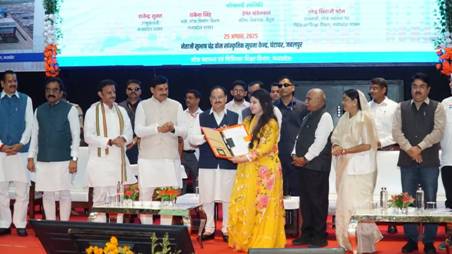
Union Minister of Health and Family Welfare, Shri Jagat Prakash Nadda inaugurated new Government Medical Colleges in Sheopur and Singrauli, along with a series of centrally sponsored health programmes aimed at strengthening public health and community outreach in Madhya Pradesh. Dr Mohan Yadav, Chief Minister, Madhya Pradesh; Shri Rajendra Shukla, Deputy Chief Minister, Public Health and Medical Education Department, Madhya Pradesh and Shri Hemant Khandelwal, MLA, Betul, Madhya Pradesh were also present.

Speaking on the occasion, Shri J P Nadda highlighted the Government’s vision of expanding access to quality medical education and healthcare services, while ensuring that citizens across the country benefit from modern facilities and preventive health initiatives.

As part of the programme, the following initiatives were launched:

  • Inauguration of New Government Medical Colleges in Sheopur and Singrauli: These colleges will significantly expand opportunities for medical education and healthcare delivery in underserved regions.
  • Distribution of 8 lakh Vay Vandana PVC Cards: Aimed at facilitating access to health services for beneficiaries.
  • Launch of ‘Ayushman Sakhi’ Smart Chatbot: An interactive platform designed to provide citizens with easy access to information and support under health schemes.
  • Milestone under Swasthya Yakrit Mission (Healthy Liver Mission): Achievement of 1 crore screenings under the mission was formally announced.
  • ‘Asha Samvaad’ initiative: A new platform enabling direct interaction between ASHA workers and the Ministry was inaugurated.
  • Maternal and Child Health promotion: Release of communication material on maternal nutrition, along with the introduction of the new Mother and Child Protection (MCP) Card.

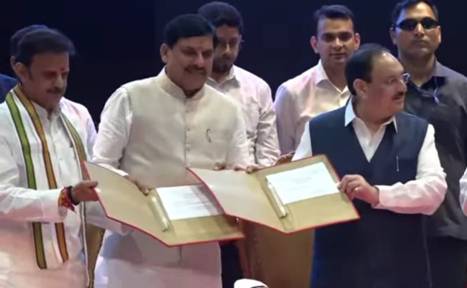
On the occasion, agreements were also signed for the establishment of four new Medical Colleges under the Public–Private Partnership (PPP) mode with the support of the Union Health Ministry, further expanding opportunities for medical education and service delivery in the state.

These initiatives mark a significant step towards expanding medical education, strengthening preventive healthcare, empowering frontline health workers, and improving maternal and child health outcomes in Madhya Pradesh.

Shri Nadda noted that with 17 Government Medical Colleges and 13 private colleges, Madhya Pradesh is emerging as a strong performer in the health sector. He highlighted that under the leadership of Prime Minister Shri Narendra Modi, the focus of India’s national health policy is to develop a “holistic health care system”, which not only focuses on curative part in health care but also emphasises on the preventive care, palliative care, rehabilitative care, geriatric care and promotional health care.

The Union Health Minister stated that in the last decade, the government has created a robust health system. “Every year, nearly 2 crore children and 2.5 crore pregnant women are monitored under our healthcare system. I salute our dedicated ASHA workers, whose tireless efforts have ensured that healthcare truly reaches the last mile. From the moment a woman conceives, she receives five antenatal check-ups within the government healthcare system – a clear reflection of the strength and robustness of our public health framework. Today, institutional deliveries have risen to 89%, a remarkable achievement in ensuring safe motherhood”, he said.

Shri Nadda highlighted the sharp decline achieved by the country in maternal and child mortality. The Maternal Mortality Ratio (MMR) has fallen from 130 per 1 lakh live births to 93 per 1 lakh, while the Under-5 Mortality Rate (U5MR) has declined by 42% – far higher than the global average decline of 14%. Similarly, neonatal mortality has reduced by 39%, compared to the global decline of 11%.

Under the National Non-Communicable Diseases Programme, screening efforts have reached unprecedented levels:

  • Hypertension: More than 39 crore individuals screened, with 5.2 crore diagnosed.
  • Diabetes: 39 crores screened, with 3.5 crore diagnosed.
  • Oral Cancer: 33 crores screened, with 1.52 crore diagnosed.
  • Cervical Cancer: 10.3 crore screened, with 90,000 diagnosed.
  • Breast Cancer: 17 crores screened, with 42 lakhs diagnosed.

These figures highlight the scale and seriousness with which the Union Government is addressing the challenge of non-communicable diseases and cancer detection, he stated.

The Union Health Minister informed that the Ayushman Bharat scheme has emerged as the world’s largest health coverage programme, with 50 crore beneficiaries. Over time, schemes such as Vay Vandana have been added to extend protection to citizens above 70 years of age, irrespective of their economic or social status.

Shri Nadda highlighted the significant strides in medical education, stating, “In 2014, there were 387 medical colleges in the country. Today, that number has increased to 780, reflecting the government’s commitment to strengthening healthcare infrastructure. Likewise, the number of undergraduate (UG) medical seats has grown from 56,000 to 1,70,000. Looking ahead, our goal is to add another 75,000 UG and PG seats over the next five years”. “Additionally, out-of-pocket expenditure on healthcare has significantly reduced — from 62% earlier to 39% now”, he added.

Shri Nadda also emphasized the transformative steps taken to democratize access to medical education and strengthen India’s global health leadership. “We introduced the NEET exam in 13 languages, enabling students from rural and remote areas to pursue medical careers. In the past, it took 20–28 years for India to develop or access vaccines like tuberculosis, tetanus, and polio, and nearly 100 years for the Japanese encephalitis vaccine. However, during the COVID-19 pandemic, India developed two indigenous vaccines in just 9 months — a remarkable scientific achievement. Through the Vaccine Maitri initiative, these vaccines were delivered to over 100 countries, 48 of which received them free of cost, showcasing India’s commitment to global health and humanitarian values.”

Dr Mohan Yadav highlighted the significant progress made in the health sector during the last decade. He stated, “Before 2003, there were only 5 medical colleges in the state. Today the number has grown to 17 government medical colleges and 13 private medical colleges. AIIMS Bhopal was also recently established in the state. Now, with the recent approval letters for 2 more medical colleges, the total number of government medical colleges has reached 19. We are confident and hopeful that this number will rise to 26 in the coming years.”

He stated that the inauguration of two medical colleges in Sheopur and Singrauli goes on to show the commitment of the government for tribal population. He also credited the Ayushman Bharat PMJAY scheme that gives 5 lakhs of financial help for the downtrodden. “To provide land for medical colleges at Rs. 1/- per acre has been monumental step for PPP model colleges and hospital”, he further stated.

Background:

Community participation is essential in the implementation of all our health programmes.
ASHA workers are the crucial link between the health department and the community. In Madhya Pradesh, the total number of ASHAs and ASHA facilitators is around 70,000.
For ongoing long-term programmes, it is necessary to directly convey health messages, orient the training provided, showcase good work in an inspiring manner to encourage others and to resolve difficulties related to the programmes as well as provide quick and appropriate answers to their queries, a medium of communication is required.  This is a continuous process, for which a platform is necessary to connect with more than 72,000 people at the same time. To fulfil this objective, the ASHA Samvaad YouTube channel has been created. Through this channel, every Thursday, for 20 minutes, the health department will establish direct contact and communication with all ASHAs.

In line with the Central Government’s anti-obesity campaign and the Fit India Movement, NHM in Madhya Pradesh has screened more than 1 crore citizens, setting a milestone through the “Swasthya Yakrit Mission” (Healthy Liver Mission). This is a golden step towards the vision of a Healthy Madhya Pradesh and a Fit India. The mission has established a new benchmark for preventive healthcare services in the country. It is a pledge to provide timely screening, treatment, and a healthy future to millions of lives.

To ensure smooth maintenance of maternal and child health services in the state, the Mother and Child Protection (MCP) Card has been revised. In the current card, only ANMs (Auxiliary Nurse Midwives) and CHOs (Community Health Officers) could record data related to the health services provided to pregnant women and children. In the revised MCP card, along with ANMs and CHOs, doctors can now also record management and sonography details, as well as services provided under PMSMA (Pradhan Mantri Surakshit Matritva Abhiyan) and at health facilities.

Additionally, the revised card enables monitoring of newborn health during home visits and systematic documentation of child development. The card now covers a wide range of maternal health services such as sonography tests, hemoglobin, HIV, syphilis, sickle cell, blood pressure, urine tests, provision of Iron Sucrose and FCM injections for anemia management, and other essential investigations.

Regular and timely consumption of Iron-Folic Acid (IFA) and calcium tablets from pregnancy till six months after childbirth is extremely important for the health of both mother and child. With this perspective, seven posters have been developed to promote IFA and calcium consumption, dietary diversity, health checkups, and the support of husbands/mothers-in-law in the community. These are as follows:

  • Importance of iron consumption during pregnancy
  • Husband’s participation in iron intake and dietary diversity
  • Importance of dietary diversity and IFA & calcium intake for lactating mothers
  • Role of husbands in IFA, calcium, and health checkups during pregnancy
  • Correct method of IFA and calcium consumption
  • Support of mothers-in-law in iron intake, nutrition, and care
  • Nutritional preparedness before conception

For the development of these posters, detailed discussions were held at the community level with pregnant and lactating mothers, their family members, and frontline health workers. Inputs and experiences of district and state-level officials were also incorporated. These posters can be displayed on social media platforms, at Anganwadi centers, and in hospital waiting rooms.

Medical Colleges at Sheopur and Singrauli, Madhya Pradesh

Both Government Medical Colleges at Sheopur and Singrauli were approved under phase-III of the Centrally Sponsored Scheme (CSS) for ‘Establishment of new medical colleges attached with district/referral hospitals’ in academic year 2019-20 with an approved cost of Rs. 325 crore each. Out of central share of Rs. 195 crores, an amount of Rs. 113.4 crore for each college has been released to the State.

Union Home Minister, in an interview, shared his views on several important issues including the Constitution (130th Amendment) Bill 2025

| Published on:

Union Home Minister and Minister of Cooperation Shri Amit Shah, in an interview to a news agency, shared his views on several important issues including the Constitution (130th Amendment) Bill 2025. Union Home Minister said that Prime Minister Shri Narendra Modi clearly believes that any minister, Chief Minister or Prime Minister in the country cannot run government from jail. There is a provision in the Constitution (130th Amendment) Bill 2025 that if the Prime Minister, Chief Minister, Minister of the Government of India or Minister of the State Government is arrested under any serious charge and is not granted bail within 30 days, then they will be relieved from their post. He said that if this does not happen then they will be automatically relieved from their post, legally. Shri Shah said that the opposition should not oppose tabling any bill or constitutional amendment before the house, by the elected government

Shri Amit Shah said that he himself had made it clear that this constitutional amendment will be referred to the Joint Parliamentary Committee of the two Houses. He said that a two-third majority is required for the passage of this bill and when voting takes place, all parties can give their views on it. Shri Shah said that not allowing any bill or constitution amendment bill of the government from being presented in the House is not an appropriate behavior exhibited by the opposition in a democracy. He said that both the Houses of the country’s Parliament are for debate and discussion and not for noise and uproar. The Home Minister said that this mentality of not allowing the bill to be presented is not democratic, and the opposition will have to explain their actions to the people of this country.

Union Home Minister and Minister of Cooperation said that this bill is not against any opposition party and it also brings our Chief Ministers under its ambit. He said that the opposition is misleading the public by saying that FIRs are not filed against the people in the government. He said that there is a provision that if bail is granted within 30 days, then there will be no action as per the bill. Also, if there is a fake case, the courts of the country are there to grant bail. Shri Shah said that in any case, the High Court and the Supreme Court have the right to grant bail and if bail is not granted, then the person will have to quit. He asked whether any Chief Minister, Prime Minister or Minister should run the government while being in jail? Is this good for the democracy of the country? He said that if bail is granted after 30 days, then they can take oath again.

Union Home Minister said that the provision of imprisonment was not made by our Government, it has been going on for years. He said that in the 130th Constitutional Amendment, serious crime has been defined as where there is a provision of punishment of more than 5 years, then the person will have to resign. It is not right that ministers, chief ministers or prime ministers who are accused of corruption or crimes punishable with more than 5 years of imprisonment should run the government from jail. He said that even today there is a provision in the Representation of People Act of India that if any elected representative is sentenced to two years or more, he will be relieved of his position as an MP. He said that this law has been in place since independence to determine moral grounds. Shri Shah said that the membership of many people were terminated and were also revived upon acquittal.

Shri Amit Shah said that since independence, many leaders, ministers and chief ministers have resigned and gone to jail. But now this trend has started that even after going to jail, they did not resign. Some ministers of Tamil Nadu, and Chief Minister and ministers of Delhi did not resign. He said that will the Secretary of the Government, DGP, Chief Secretary go to them in jail to get orders? Shri Shah said that there should be concern and discussion on this issue.

Union Home Minister and Minister of Cooperation said that Prime Minister Modi has himself brought the office of Prime Minister under the ambit of this constitutional amendment. He said that the then Prime Minister of the main opposition party had brought the 39th Constitutional Amendment in which she kept herself out of the scope of lawsuits along with the President and Vice President. Shri Shah said that Prime Minister Shri Narendra Modi himself introduced a constitutional amendment mandating that even the Prime Minister must resign if sent to jail. He said that there will be no delay in the court in this law because the court will have to intervene immediately. This will lead to a quick decision because our courts also understand the seriousness of the law.

Shri Amit Shah said that Prime Minister Shri Narendra Modi Ji very clearly believes that no Minister, Chief Minister or Prime Minister in the country can run the government while being in jail. He said that when the Constitution was made, the Constitution makers would not have imagined that any Chief Minister would go to jail and still remain the Chief Minister. He said that we should not let the level of our moral values ​​fall. This law will give a base to the level of moral values ​​and will definitely strengthen our democracy. He said that our courts are sensitive and when someone could lose their positions, then definitely the courts will decide on bail within the time limit.

Union Home Minister said that it does not suit the main opposition party to talk about vendetta. He said that during the time of the opposition government, CBI investigation was done after the court’s order in at least 12 cases and many people got trapped. He said that if any party boycotts it even after the decision to form a JPC on the proposed law, then there is no other option available before the government. Shri Shah said that this bill is important and after consulting members of all parties, a considered opinion should be arrived at before the JPC. He said that the government gives the opposition a chance to present its views but it seems the opposition does not want to present its views, and the people of the country are witnessing it. The Home Minister said that if someone is neck deep in corruption, then he will be arrested, he will have to go to jail and will also have to resign.

Shri Amit Shah said that the opposition should not teach him lessons on morality. Shri Shah said that when he was accused and the CBI sent him a summon, he resigned the very next day. The case went on and the judgment also came that he was completely innocent. He said that it was said in that judgment that it was completely a case of political vendetta and he had no involvement in that case, whatsoever. Shri Shah said that he was not acquitted on the basis of doubt but the case against him was dismissed. Shri Shah said that he was granted bail on the 96th day but even then, he did not take oath to become the Home Minister. Not only this, he did not take oath for any constitutional post until all the charges against him were dismissed.

Shri Amit Shah said that the standard of morality is not tied to electoral victory or defeat; rather, it remains constant, like the sun and the moon, always in their place. He said that all our allies are completely in agreement with this law. Shri Shah said that it is not only the ruling party that decides how the Parliament should function. If the opposition does not create a healthy environment for any bill or constitutional amendment, then the people of the country are watching all this. He expressed confidence that this bill will be passed and there will be many people in the opposition who will support it on the basis of morality.

Dharmendra Pradhan chairs 56th Meeting of the Council of Indian Institutes of Technology (IITs) in Delhi

| Published on:

The 56th Meeting of the Council of the Indian Institutes of Technology (IITs) was convened on 25th August 2025 at IIT Delhi, under the Chairmanship of Shri Dharmendra Pradhan, Union Minister of Education.

The Council unanimously resolved to take forward PM’s vision of ‘Atmanirbharta se Samridha Bharat’ across its all stakeholders.

Shri Dharmendra Pradhan emphasised positioning IIT education as a catalyst for an Atmanirbhar and Samriddha Bharat. He stressed the PM’s directive that the country is not aiming for incremental change but for quantum jump and encouraged the IITs to take lead in this direction. He specifically urged the IITs to promote Indian languages by introducing regional languages in addition to English as the medium of instruction of courses for inclusive growth. He highlighted that IITs must produce job creators, not job seekers, by solving real-world problems, and promoting translational research in critical technologies of national importance.

Underscoring the transformative role of IITs in advancing technological self-reliance and global leadership, The Minister pointed to their growing impact on entrepreneurship and innovation, aligned with the Prime Minister’s vision of Reform, Perform, Transform. With over 6,000 start-ups, 56 unicorns, and nearly 5,000 patents, IITs have emerged as engines of economic growth and symbols of India’s aspirations in the Amrit Kaal. Supported by initiatives such as the PM Research Fellowship, Centres of Excellence in AI, and vibrant research parks, IITs are driving world-class research and industry partnerships.

Speaking on the occasion,  Dr Sukanta Majumdar, Minister of State for Education and DoNER underlined the pivotal role of IITs in shaping India’s higher education and innovation ecosystem. He emphasized that IITs are not just centres of learning but engines of Innovation, Inclusion, and Transformation, driving India’s journey towards Viksit Bharat by 2047. Highlighting their global impact, the Minister said IITs have produced world-class technologists, entrepreneurs, and leaders who are transforming industries and societies worldwide. He noted that with 23 IITs, international campuses, and a thriving startup ecosystem, IITs are at the forefront of research, innovation, and nation-building, ensuring India continues to R.I.S.E. through Research, Innovation, Skills, and Entrepreneurship.

The meeting also witnessed the participation of dignitaries including Members of Parliament Dr. Rabindra Narayan Behera and Shri Tanuj Punia, Dr. K. Radhakrishnan, former Chairman of ISRO; Dr. Sridhar Vembu, CEO of Zoho Corporation; Shri Senapathy ‘Kris’ Gopalakrishnan, Chairman of the Council of IISc Bangalore;  Prof. Anil D. Sahasrabudhe, Chairman-Executive Committee, NAAC and Chairman NETF; Prof. M. Jagadesh Kumar, former UGC Chairman; Shri Chamu Krishna Shastry, Founder of Samskrita Bharati; Ms. Debjani Ghosh, Distinguished Fellow, NITI Aayog; Shri Deepak Bagla, CEO (Atal Innovation Mission); Dr. Vineet Joshi, Secretary, Department of Higher Education; Shri Neeraj Mittal, Secretary, Department of Telecommunications; Prof. Abhay Karandikar, Secretary, Department of Science and Technology; Dr. Rajesh S. Gokhale, Department of Biotechnology; Shri S. Somanath, former Secretary, ISRO& Secretary , Department of Space; Dr. Sekhar C. Munde, foremer Secretary, DSIR & Director General, CSIR; Prof. T.G. Sitharam, Chairman AICTE; Shri T.V. Narendran, Chairman IIT Kharagpur; Dr. Pawan Goenka, Chairman IIT Madras; Shri Adil Siraj Zainulbhai, Chairman IIT Ropar; Shri A.S. Kiran Kumar, Chairman IIT Jodhpur; Dr. B.V.R. Mohan Reddy, Chairman IIT Hyderabad; Shri Sanjiv Puri, Chairman IIT Gandhinagar; Adv. Harish Salve, Chairman IIT Delhi; Prof. Prem Vrat, Chairman IIT(ISM) Dhanbad; Dr. Rajendra Prasad Singh, Chairman IIT Bhubaneswar; Shri Ramesh Venkateswaran, Chairman IIT Palakkad; Shri Sharad Kumar Saraf, Chairman IIT Jammu; Dr. Suresh Haware, Chairman IIT Bhilai as well Directors of the IITs and senior officials of the Ministry of Education.

short 5 minute movie was presented to learn from the hon’ble Prime Minister’s vision articulated on this Independence Day on how technology, research and entrepreneurship, can drive aatmanirbharta and contribute to the realisation of a Samridha Bharat.

The Council then deliberated on key strategic issues shaping the future of the IITs and their role in national development.

Discussions were held on reforming Ph.D. education to enhance quality, global relevance, and research outcomes, boost global rankings, attract top-tier talent, and strengthen the IITs’ reputation as hubs of advanced research. Extensive deliberations were held on the commercialisation of research within HEIs.

The Council also highlighted adapting the curriculum and pedagogy on real time basis with the advent of Artificial Intelligence. It was decided to constitute a Task Force to come up with detailed action plan for Higher and School Education for the country.

Further, the socio-economic and global impact of IITs was acknowledged, particularly through their alumni, who have evolved into global leaders, innovators, and wealth creators. The Council emphasised the importance of leveraging alumni networks for mentorship, industry linkages, and student development.

The importance of Mental Wellbeing was stressed, and various models adopted by different IITs were shared. It was also suggested to promote healthy living habits inside the campuses, as well as to have an annual health check up.

The role of IITs in translational research aligned with national priorities and societal needs was underscored. The need of a strong connect between Industry, Academia and Policy makers was underlined. Various suggestions and practices were mentioned. It was decided to come up with a policy within a period of 1 month, suggesting various practical methods, so that translational research and product development can happen in Indian Campuses to make Bharat Atmanirbhar.

Strategic roadmap, IITs@2047, was discussed to guide the future development of IITs in accordance with the aspirations of a resurgent and Viksit Bharat. Additionally, measures for pushing recruitment as per CEI Act within IITs were examined. The Council also recognized the need to elevate the IIT R&D Fair into a globally renowned platform to encourage innovation, strengthen industry and international collaborations, and attract investment. Discussions also included support for international students participating in internship programs at IITs and addressing challenges faced by foreign faculty members.

It was further shared that IITs are actively promoting regional and Indian languages through courses, translated materials, mentoring, and support centers like Shivani, as well as tools like Bhashini, to foster inclusivity. The Council resolved to take every step to facilitate learners from different bhasha backgrounds so that they are able to learn effectively.

PM addresses the foundation stone laying ceremony of Sardardham Phase-II, Kanya Chhatralaya, Ahmedabad

| Published on:

Prime Minister Shri Narendra Modi addressed the foundation stone laying ceremony of Sardardham Phase-II, Kanya Chhatralaya in Ahmedabad, Gujarat via a video message today. Addressing the gathering, the Prime Minister remarked that the name of Sardardham is as sacred as its work, highlighting the inauguration of a hostel dedicated to the service and education of daughters. He further stated that the girls who will reside in this hostel will carry aspirations and dreams, and will be provided with numerous opportunities to fulfill them. Shri Modi emphasized that once these daughters become self-reliant and capable, they will naturally play a vital role in nation-building, and their families will also become empowered. Extending his best wishes, the Prime Minister conveyed his heartfelt greetings to all the daughters who will have the opportunity to stay in this hostel, and also to their family members for a bright future.

Expressing gratitude for being given the opportunity to lay the foundation stone of Girls Hostel Phase 2, Shri Modi highlighted that through the dedicated efforts of society, a grand facility with excellent arrangements is now available for 3,000 daughters. He noted that hostel construction for 2,000 students is also underway in Vadodara and nearing completion. The Prime Minister remarked that similar centres for education, learning, and training are being developed in Surat, Rajkot, and Mehsana. He extended congratulations to all contributors involved in these initiatives, stating that the nation progresses through the strength of society and paid tributes to Sardar Vallabhbhai Patel.

Recalling his tenure as Chief Minister of Gujarat, the Prime Minister stated that he always believed Gujarat’s development was essential for India’s progress. He noted that today, the lessons learned from Gujarat are contributing to national development. He reflected on the situation 25–30 years ago, when Gujarat faced concerning indicators and had to channel its strength into overcoming social challenges. Shri Modi shared that upon becoming Chief Minister, he was struck by the fact that daughters lagged significantly in education and many families did not send their daughters to school, and those who enrolled often dropped out early. He credited public support 25 years ago for transforming this situation. The Prime Minister reminded the audience of the “Kanya Shiksha Rath Yatra,” recalling the scorching temperatures of 40–42°C in mid-June, when they visited villages and homes, personally escorting daughters to school. He emphasized the scale of the school enrollment due to the yatra and expressed pride in the substantial benefits these efforts yielded. As a result, the Prime Minister stated, school infrastructure was developed, modern facilities were introduced, systems were strengthened, and teachers were recruited. Society actively participated and fulfilled its responsibilities. He noted that many of the children enrolled during that time have now become doctors and engineers, dropout rates have declined, and a hunger for learning has spread across Gujarat.

Addressing another major concern, Shri Modi condemned the sin of female foeticide, calling it a grave stigma. He recalled the societal anxiety around the issue and the support he received to launch a movement against it. He mentioned the journey from Surat to Umiya Mata, which helped strengthen the sentiment of gender equality. The Prime Minister emphasized that Gujarat, a land that worships feminine power—be it Umiya Mata, Khodiyar Mata, Kali Mata, Amba Mata, or Bahuchar Mata—must not bear the stain of female foeticide. He stated that once this sentiment awakened and received widespread support, Gujarat began to successfully narrow the gap in the male-female child ratio.

“When efforts are undertaken with noble intentions and purity for the welfare of society, divine support follows—and society itself becomes a divine force”, stated Shri Modi, affirming that such efforts yield results, and today a new awakening has emerged within society. He highlighted that people are now proactively coming forward to educate daughters, enhance their dignity, and create facilities for them, including the construction of grand hostels. The Prime Minister remarked that the seeds sown in Gujarat have now grown into a nationwide movement—“Beti-Betiyon, Beti Padhao”—which has become a public campaign. He emphasized that historic work is being carried out across the country for women’s safety and empowerment.

Referring to Operation Sindoor, the Prime Minister noted that the voices and capabilities of daughters are being heard and recognized. He cited the example of “Lakhpati Didis” in villages, stating that out of the 3 crore target, 2 crore have already been achieved. He further added that initiatives like “Drone Didi” have transformed societal perspectives towards women in villages. Shri Modi also mentioned schemes such as “Bank Sakhi” and “Bima Sakhi,” highlighting that these programs are actively driving rural economic growth through the efforts of India’s maternal power.

Emphasising that the foremost objective of education is to nurture individuals who contribute positively to society and to enhance their capabilities, the Prime Minister stated that in today’s fast-paced environment, this goal has become even more relevant. He called for a competitive spirit in skills and talent, noting that the true strength of society lies in its skill base. Shri Modi highlighted the global demand for India’s skilled manpower and criticized the outdated education system implemented by previous governments for decades. He stated that his government has brought significant reforms, moving away from obsolete methods and transforming the educational landscape.

Underscoring that the new National Education Policy places its strongest emphasis on skill development, the Prime Minister said that under the Skill India Mission, the government is working to prepare millions of youth as skilled manpower across various fields. He noted that the world is facing a major challenge of aging populations and requires young talent—an area where India has the capacity to lead. Shri Modi remarked that when youth are skilled, it opens up vast employment opportunities, builds self-confidence, and fosters self-reliance. He reiterated the government’s strong focus on creating maximum employment opportunities for youth.

Recalling that 11 years ago, India had only a handful of startups, whereas today the number is approaching 200,000, Shri Modi noted that startups are now emerging even in Tier 2 and Tier 3 cities. He highlighted the launch of the Mudra Yojana, which enabled youth to receive bank loans without guarantees. As a result, ₹33 lakh crore has been disbursed to youth for self-employment. He stated that this initiative has empowered lakhs of youth to become self-reliant and also provide employment to others. Referring to his Independence Day address, the Prime Minister mentioned the announcement and immediate implementation of the Pradhan Mantri Viksit Bharat Rojgar Yojana—a ₹1 lakh crore scheme. Under this initiative, if someone is hired in the private sector, the government provides ₹15,000 towards their initial salary.

“Infrastructure development across the country is progressing at a record pace”, affirmed the Prime Minister, stating that under the PM Surya Ghar Muft Bijli Yojana, large-scale installation of solar systems is being actively carried out. He remarked that India is witnessing continuous growth in the drone and defence industries. The Prime Minister emphasized that the government’s foremost focus is on mission-driven manufacturing. He noted that all these initiatives are also generating new employment opportunities in Gujarat.

“The world today holds India’s labour and talent in high regard and recognizes its value. As a result, numerous opportunities are emerging across various countries”, stated Shri Modi. He highlighted that Indian youth are leaving a remarkable impression globally in sectors such as healthcare, education, and space—astonishing the world with their capabilities and achievements.

Reiterating his strong emphasis on self-reliance and indigenous production, as highlighted in his Independence Day address from the Red Fort, the Prime Minister urged that India must become self-sufficient and called upon society to embrace swadeshi products with conviction.

Addressing the gathering, the Prime Minister acknowledged the contributions of the people, stating that while he may have earned merit by assigning tasks in the past, it is they who have fulfilled those tasks and delivered results. He affirmed that in his entire public life so far, there has never been an instance where his expectations were not met, and this trust continues to fuel his desire to assign new responsibilities.

Shri Modi remarked that in today’s unstable global environment, the best path forward for India is to become self-reliant. He clarified that self-reliance means prioritizing indigenous goods and increasing enthusiasm for the Make in India initiative. “Swadeshi movement is not a century-old relic but a campaign that strengthens the future, and its leadership must come from society—especially the youth”, emphasised the Prime Minister. He called upon families to resolve that no foreign item should enter their homes. He cited examples where people cancelled weddings abroad and chose to celebrate in India after hearing his appeal for Made in India. He noted that such reflections naturally awaken patriotic sentiments.

“Success in Make in India and Atmanirbhar Bharat belongs to all and is a collective strength. It is the foundation of future generations”, exclaimed Shri Modi. He urged that once people begin choosing Indian products, quality will automatically improve due to market competition, better packaging, and affordability. He stressed that allowing Indian currency to flow out of the country is not appropriate.

Expressing confidence, the Prime Minister said that the small task he has entrusted will be fulfilled by society through awareness and will give new strength to the nation. He appealed to traders as well, noting that society today is not just agrarian but also entrepreneurial. He suggested that traders display boards stating “Only Swadeshi Products Sold Here,” encouraging customers to buy Indian goods and committing themselves to selling only swadeshi items. Shri Modi affirmed that this, too, is an act of patriotism—not just Operation Sindoor, but embracing swadeshi is also a form of national service. Conveying this sentiment to the people, the Prime Minister requested their promise and contribution. Concluding his address, the Prime Minister expressed deep gratitude for the opportunity to be among the people, extended his best wishes to all, and offered heartfelt blessings to the daughters.

Union Minister Shri Amit Shah, Chief Minister of Gujarat, Shri Bhupendrabhai Patel were present among other dignitaries at the event.