PM extends greetings on the sacred occasion of the Parkash Purab of Sri Guru Granth Sahib Ji

| Published on:

The Prime Minister, Shri Narendra Modi has extended warm greetings on the sacred occasion of the Parkash Purab of Sri Guru Granth Sahib Ji.

The Prime Minister said the timeless teachings of the Sri Guru Granth Sahib Ji continue to illuminate lives across the world, reminding us of the values of compassion, humility and service. He added that these teachings inspire humanity to strengthen the spirit of unity and harmony.

Shri Modi expressed the hope that we may always walk the path of wisdom shown by the Sri Guru Granth Sahib Ji and strive to build a better planet.

The Prime Minister said in a X post;

“Warm greetings on the sacred occasion of the Parkash Purab of Sri Guru Granth Sahib Ji.

The timeless teachings of the Sri Guru Granth Sahib Ji continue to illuminate lives across the world, reminding us of the values of compassion, humility and service. The teachings inspire humanity to strengthen the spirit of unity and harmony.

May we always walk the path of wisdom shown by the Sri Guru Granth Sahib Ji and strive to build a better planet.”

Raksha Mantri felicitates Gaganyatris in New Delhi

| Published on:

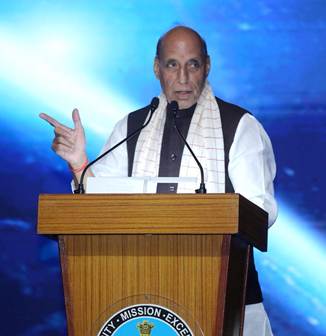
Raksha Mantri Shri Rajnath Singh felicitated Group Captain Shubhanshu Shukla, Group Captain PB Nair, Group Captain Ajit Krishnan, and Group Captain Angad Pratap who are part of Gaganyaan, ISRO’s maiden space flight mission, during an event in New Delhi on August 24, 2025. Speaking on the occasion, Raksha Mantri described the four Gaganyatris as gems of the country and pioneers of national aspirations.

Highlighting the expanding presence of India in space, Shri Rajnath Singh said “We do not see space only as a field of research, but as the future of tomorrow’s economy, security, energy, and humanity. We’re steadily advancing beyond the Earth’s surface into new frontiers of space. We’ve already marked our presence from Moon to Mars, and today, the nation stands fully prepared for missions like Gaganyaan”.

Raksha Mantri termed the achievement as not merely a technological milestone, but a new chapter in Aatmanirbhar Bharat. “India proudly stands tall among the world’s leading space powers. Its space programme is not confined to laboratories and launch vehicles. It’s a reflection of our national aspirations and global vision. From Chandrayaan to Mangalyaan, we have demonstrated that even with limited resources, an unlimited willpower can transform the most challenging goals into remarkable accomplishments,” he said.

A person standing at a podium with microphonesDescription automatically generated

Shri Rajnath Singh pointed out that the technologies derived from space, be it communication satellites, weather monitoring or disaster management are delivering services to every village and every field across India and emphasised that India cannot stay behind in the space journey. In the coming times, space mining, deep space exploration, and planetary resources will redefine the course of human civilisation, he said.

Raksha Mantri added that the world has entered an era where space is no longer a symbol of military power or technical prowess, but a new stage in the collective journey of human civilisation. “India has always given the message of Vasudhaiva Kutumbakam to the world. And, today, our scientists and astronauts are taking the same message to new heights,” he said.

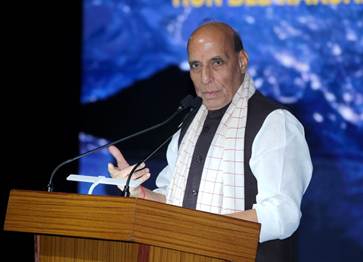
Commending Group Captain Shubhanshu Shukla for his successful space mission, Shri Rajnath Singh highlighted the officer’s determination and courage which reflect the spirit of India, making him a source of national pride. “Completing a two-and-a-half year’s training in just two-and-a-half months, Group Captain Shukla’s remarkable testament showcased his personal dedication and the perseverance of the Indian people. His extraordinary feat is not just a technological achievement, it is a message of faith and dedication. It is not just India’s pride, it is proof of the progress of entire humanity,” he said.

A person standing at a podiumDescription automatically generated

Raksha Mantri described Group Captain Shukla as a symbol of civil-military fusion. “Though he wears the uniform of the Indian Air Force, his journey into space was not merely on behalf of the Armed Forces or India alone, but as a representative of all humanity. His contribution to the civil sector, through this historic mission, will forever be recorded in history,” he said.

Underlining the need to prepare astronauts physically, mentally, emotionally, and psychologically, Shri Rajnath Singh highlighted the pivotal role played by Institute of Aerospace Medicine in this training. “Group Captain Shubhanshu Shukla is a shining embodiment of that institute’s success,” he said.

As part of the event, Group Captain Shukla shared his extraordinary experience of travelling to the International Space Station as part of the Axiom Mission 4. Chief of Defence Staff General Anil Chauhan and Chief of the Air Staff Air Chief Marshal AP Singh were also present during the felicitation ceremony.

Union Home Minister inaugurates Sardar Dham Girls Hostel Phase-2 in Ahmedabad

| Published on:

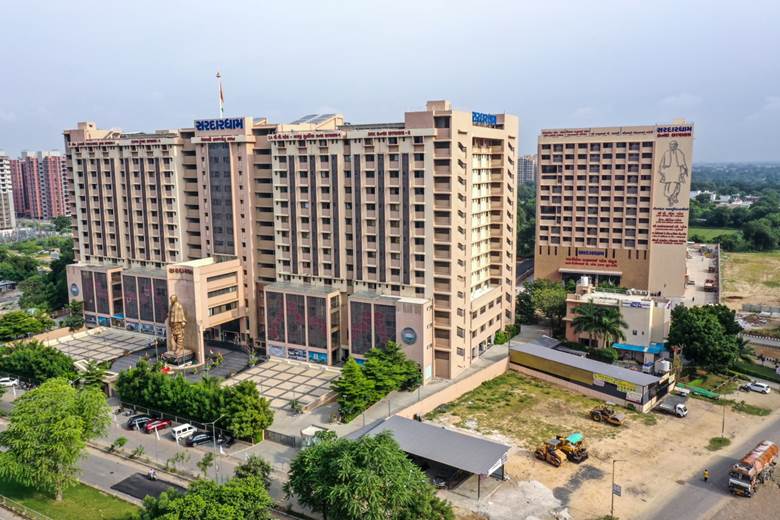
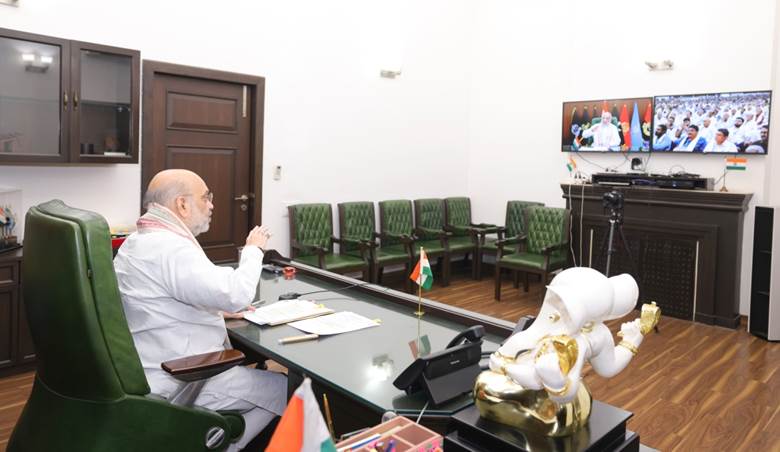
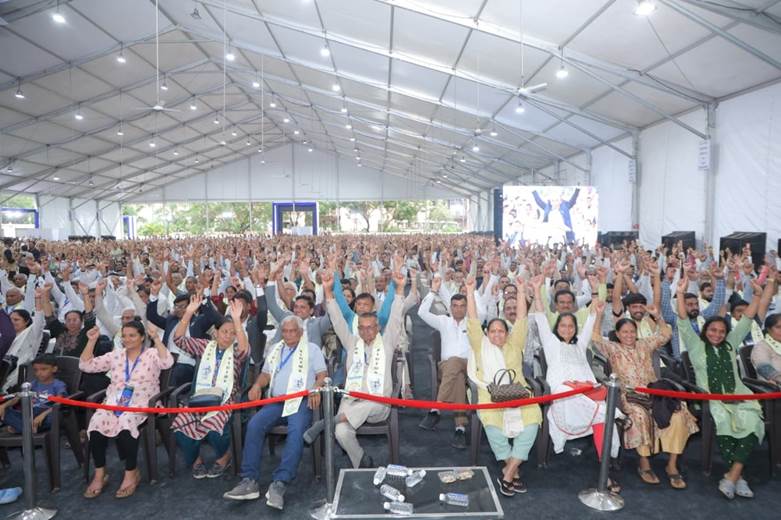
Union Home Minister and Minister of Cooperation Shri Amit Shah inaugurated Sardar Dham Girls Hostel Phase-2 in Ahmedabad through video conferencing from New Delhi. Many dignitaries including Gujarat Chief Minister Shri Bhupendra Patel were present at the event held in Ahmedabad.

Addressing the program, Shri Amit Shah said that this noble work done in his parliamentary constituency will contribute significantly in helping thousands of daughters get education and brighten their career. He said that Sardar Dham Trust has done a commendable job of collecting Rs 200 crore and providing guidance to thousands of sisters and daughters of the society in their educational and professional path as well as making excellent arrangements for housing for them. For this, he expresses his heartfelt gratitude to the Trust.

Shri Amit Shah said that for the last several years, especially since our government was formed and especially since Shri Narendra Modi Ji became the Chief Minister of Gujarat, there has been such unprecedented development in all areas from civilization to culture, from farmers to youth, and from villages to metropolises in the state. He said that Prime Minister Shri Narendra Modi Ji had laid the foundation for the creation of a strong Gujarat during his tenure as the Chief Minister of Gujarat. Whether it is rural development, urban development, tribal areas, or coastal areas, Modi Ji laid the foundation for the overall development of all areas. He said that Modi Ji is also credited with the Gujarat model, in which the strength of the economy is automatically achieved through strong infrastructure.

Union Home Minister Shri Amit Shah said that a strong economy brings facilities and prosperity in the life of every citizen. The Gujarat model has played an important role in establishing not only the state but also India as a global gateway on the global stage. He said that Prime Minister Shri Narendra Modi has made an unprecedented contribution in bringing Gujarat to this position today by implementing everything from small schemes to grand events like Vibrant Gujarat.

Shri Amit Shah said that such excellent arrangements have been made in the girls’ hostel built at a cost of about Rs 200 crore that three thousand daughters can live there at a time and pursue their education and career. He said that once the donors of the Patidar community make a resolution, they carry forward the community’s initiatives like Bhamashah, no matter how large the required amount may be. And this Shakriben Patel Bhawan is its biggest example, which has become a reality in front of us today.

Union Home Minister Shri Amit Shah said that Sardar Dham Phase-2 Girls Hostel will provide accommodation to meritorious students at an annual fee of just Rs 1. Spread over an area of ​​10000 square yards and 6,32,000 square feet, this 12-storey building, with 440 rooms and 2 basements, is an important initiative for the youth of Gujarat, especially for civil service training. He said that the youth of Gujarat are progressing in every field, but the names of Gujaratis are rarely seen in the list of services like IPS, IAS, IRS, and Custom Service. If they are trained in a planned manner, their number can increase. A complete complex has been developed in this hostel with facilities like library, e-library, reading room. He said that in the coming time, Sardar Dham Trust will start many projects in Vadodara, Central Gujarat, Surat in South Gujarat, Rajkot in Saurashtra, and Mehsana in North Gujarat.

Shri Amit Shah said that Sardar Dham has set a target of training about 10,000 students to prepare for UPSC, GPSC, Defence Services, and Judicial Services exams. So far, training has been provided to about 52,000 candidates. He said that the Government of India and the Government of Gujarat will provide all possible support to Sardar Dham in this program of training the youth of Gujarati society. We will not step back at any moment and will contribute to the career building of Gujarati youth by standing firmly with the society. He said that the upcoming 10-year project of Sardar Dham Trust includes five major goals with an investment of Rs 1,000 crore. These include a training institute for 10,000 students, residential complex, training programs for UPSC, GPSC, Defence, and Judicial Services, Global Patidar Business Summit, and Global Patidar Youth Organization. It is believed that all these five goals will be accomplished and this will serve the entire society and the youth of Gujarat with excellence.

Referring to Sardar Vallabhbhai Patel, Shri Amit Shah said that Sardar Patel worked to unite the country, if Sardar Saheb was not there, the map of India that has been made today would not have been possible. From Kashmir to Kanyakumari and from Dwarka to Kamakhya, even after so many years, the youth, the elderly and every citizen of the country bow down to Sardar Saheb with one feeling and respect him. Sardar Saheb’s contribution to the history of the country, even in Gujarat, is invaluable. Since the formation of Gujarat in 1960 till today, the development of Gujarat and the development of the Patidar community, both have grown in parallel. The Patidar community has contributed a lot to the development of Gujarat and the country without looking back in every field including girl education, trade and industry, agriculture.

Shri Amit Shah said that it is a great thing that the people of Patidar society who have achieved success, who have been blessed by Lakshmiji, have all become Bhamashah and have started a campaign to take the rest of the society forward. Many institutions have been established across the state and have contributed a lot to social welfare. If there is an example in the whole country  of society achieving success and develop rapidly and their daughters studying, then it is Patidar society. Shri Shah assured full support from the Central and State Governments to Sardar Dham, which is working to realize the great resolution of Sardar Dham through various units across the state, and extended his best wishes.

DRDO successfully conducts maiden flight-tests of Integrated Air Defence Weapon System

| Published on:

Defence Research and Development Organisation (DRDO) successfully conducted the maiden flight-tests of Integrated Air Defence Weapon System (IADWS) off the coast of Odisha at around 1230 hrs on August 23, 2025. IADWS is a multi-layered air defence system comprising all indigenous Quick Reaction Surface to Air Missiles (QRSAM), Advanced Very Short Range Air Defence System (VSHORADS) missiles and a high-power laser-based Directed Energy Weapon (DEW).

Integrated operation of all the weapon system components is controlled by a Centralised Command and Control Centre developed by Defence Research & Development Laboratory being nodal laboratory of the programme. VSHORADS and DEW are developed by Research Centre Imarat & Centre for High Energy Systems and Sciences respectively.

During the flight-tests, three different targets including two high-speed fixed wing Unmanned Aerial Vehicle targets and a multi-copter drone were simultaneously engaged and destroyed completely by the QRSAM, VSHORADS and High Energy Laser weapon system at different ranges and altitudes. All the weapon system components including the missile systems and drone detection & destruction system, weapon system command & control along with communication and radars, performed flawlessly which was confirmed by Range instruments deployed by Integrated Test Range, Chandipur to capture the flight data. The test was witnessed by senior scientists from DRDO and representatives from the Armed Forces.

Raksha Mantri Shri Rajnath Singh complimented DRDO, Armed forces and the Industry for successful development of IADWS. He stated that this unique flight-tests has established the multi-layered air-defence capability of the country and is going to strengthen area defence for important facilities against enemy aerial threats.

Secretary, Department of Defence R&D and Chairman DRDO Dr Samir V Kamat has congratulated all teams involved in the successful flight-tests.

PM lays foundation stone, inaugurates multiple development projects worth over Rs 5,200 crore at Kolkata, WB

| Published on:

The Prime Minister Shri Narendra Modi laid the foundation stone and inaugurated multiple development projects worth over Rs 5,200 crore in Kolkata at West Bengal today. Addressing the gathering, the Prime Minister stated that he once again had the opportunity to accelerate the development of West Bengal. Sharing his experience of the Kolkata Metro journey from Noapara to Jai Hind Airport, Shri Modi said that during this visit, he interacted with many colleagues and noted that everyone expressed happiness over the modernization of Kolkata’s public transport system. The Prime Minister also laid the foundation stone for the six-lane elevated Kona Expressway. He extended heartfelt congratulations to the people of Kolkata and all citizens of West Bengal for these multi-thousand crore rupee projects.

“Cities like Kolkata are a rich embodiment of both India’s history and its future, as India moves towards becoming the world’s third-largest economy, cities such as Dum Dum and Kolkata will play a pivotal role”, said Shri Modi. He stated that the message of today’s programme goes beyond the inauguration of the metro and the foundation stone of the highway. The Prime Minister noted that this event is a testament to how modern India is transforming its urban landscape. He emphasized that efforts are underway across Indian cities to promote green mobility, while the number of electric charging points and electric buses is being increased. He further added that under the ‘Waste to Wealth’ initiative, cities are now generating electricity from urban waste. Highlighting that metro services are expanding and metro networks are being extended, Shri Modi expressed pride in the fact that India now has the world’s third-largest metro network. He pointed out that before 2014, the country had only 250 kilometres of metro routes, while today, the metro network in India has expanded to over 1,000 kilometres. He stated that Kolkata too has witnessed continuous expansion of its metro system. The Prime Minister informed that approximately 14 kilometres of new lines are being added to Kolkata’s metro rail network, while seven new stations are being integrated into the Kolkata Metro. He affirmed that all these developments will enhance the Ease of Living and Ease of Travel for the people of Kolkata.

“21st-century India requires a 21st-century transport system. Therefore, today across the country, modern transport facilities—from railways to roads, metros to airports—are being developed and interconnected”, emphasised Shri Modi. He highlighted that the government’s effort is not only to connect one city to another, but also to ensure seamless transport access near people’s homes. He remarked that a glimpse of this vision can be seen in Kolkata’s multi-modal connectivity. The Prime Minister noted that two of the country’s busiest railway stations—Howrah and Sealdah—are now connected via metro. He pointed out that travel time between these stations, which earlier took around one and a half hours, will now take only a few minutes by metro. He added that the Howrah Station subway is also ensuring multi-modal connectivity. Noting that earlier, passengers had to take long detours to catch trains from Eastern Railway or South Eastern Railway, Shri Modi said with the construction of this subway, interchange time will be significantly reduced. The Prime Minister announced that Kolkata Airport is now connected to the metro network, which will make it easier for people from distant parts of the city to reach the airport.

Affirming that the Government of India is making every possible effort for the development of West Bengal, Shri Modi underlined that West Bengal is now among the states where 100% railway electrification has been achieved. He acknowledged the long-standing demand for a MEMU train between Purulia and Howrah, and confirmed that the Government of India has fulfilled this public demand. The Prime Minister informed that nine Vande Bharat trains are currently operating on various routes in West Bengal with two additional Amrit Bharat trains also running for the people of the state.

Stating that over the past 11 years, the Government of India has completed several major highway projects in the region, the Prime Minister noted that work is ongoing on many other infrastructure projects. He highlighted that once the six-lane Kona Expressway is completed, it will significantly improve port connectivity. He concluded by adding that this enhanced connectivity will strengthen the foundation for a better future for Kolkata and West Bengal.

The Governor of West Bengal, Dr. C.V. Ananda Bose, Union Ministers Shri Shantanu Thakur, Shri Ravneet Singh Bittu, Dr. Sukanta Majumdar were present among other dignitaries at the event.

Background

In line with his commitment to world class infrastructure and developed urban connectivity, Prime Minister inaugurated metro railway projects in Kolkata. A 13.61 km long newly constructed metro network will be inaugurated and metro services will be launched on these routes. He visited the Jessore Road Metro Station, where he will flag off the Noapara–Jai Hind Bimanbandar metro service from Jessore Road. In addition, through video conferencing, he will also flag off the Sealdah–Esplanade metro service and the Beleghata–Hemanta Mukhopadhyay metro service. He also undertook a metro ride from Jessore Road Metro Station to Jai Hind Bimanbandar and back.

At the public function, Prime Minister inaugurated these metro sections and a newly constructed subway at Howrah Metro Station. The Noapara–Jai Hind Bimanbandar metro service will significantly improve the access to the airport. The Sealdah–Esplanade metro will reduce the travel time between the two points from nearly 40 minutes to only 11 minutes. The Beleghata–Hemanta Mukhopadhyay metro section will play a crucial role in enhancing connectivity with the IT hub. These metro routes will connect some of Kolkata’s busiest areas, bring a notable reduction in travel time, and strengthen multimodal connectivity, benefiting lakhs of daily commuters.

In a major boost to road infrastructure in the region, Prime Minister also laid the foundation stone of 7.2 km long six-lane elevated Kona Expressway worth over Rs 1,200 crore. It will enhance connectivity between Howrah, surrounding rural areas, and Kolkata, saving hours of travel time and giving significant boost to trade, commerce, and tourism in the region.

PM lays foundation stone, inaugurates multiple development projects worth Rs 12,000 crore in Gaya, Bihar

| Published on:

Prime Minister Shri Narendra Modi laid the foundation stone and inaugurated multiple development projects worth Rs 12,000 crore at Gaya in Bihar today. The Prime Minister offered salutations to Gaya ji, the sacred city of knowledge and liberation and extended greetings to all from the glorious land of the Vishnupad Temple. Shri Modi remarked that the land of Gaya ji is a land of spirituality and peace. He highlighted that this sacred soil is where Lord Buddha attained enlightenment. “Gaya ji’s spiritual and cultural heritage is both ancient and immensely rich”, stated Shri Modi. Noting that the people of the region wished for the city to be referred to not merely as “Gaya,” but respectfully as “Gaya ji”, the Prime Minister congratulated the Bihar Government for honoring this sentiment. He expressed happiness that their Governments at Centre and Bihar are consistently working towards the rapid development of Gaya ji.

Highlighting that today, from the sacred land of Gaya ji, projects worth ₹12,000 crore have been inaugurated and foundation stones laid in a single day, Shri Modi said that these projects span key sectors including energy, healthcare, and urban development. He remarked that these initiatives will strengthen Bihar’s industrial capacity and create new employment opportunities for the youth and congratulated the people of Bihar for these transformative projects. The Prime Minister further informed that a hospital and research centre have been inaugurated today to enhance healthcare facilities in the state. He noted that with this, the people of Bihar now have an additional facility for cancer treatment.

Affirming that removing hardships from the lives of the poor and making the lives of women easier brings him the greatest satisfaction as a servant of the people, the Prime Minister reiterated that providing pucca houses to the poor is one of his major commitments. He declared that until every needy person receives a pucca house, he will not rest. He highlighted that, following this resolve, over the past 11 years, 4 crore pucca houses have been built for the poor across the country. Noting that more than 38 lakh houses have been constructed in Bihar alone, and over 2 lakh families in Gaya district have received their own pucca homes, Shri Modi emphasized that these are not just houses, but symbols of dignity for the poor. He stated that these homes come equipped with electricity, water, toilets, and gas connections—ensuring that poor families also live with convenience, safety, and dignity.

Prime Minister stated that continuing this initiative, over 16,000 families in Bihar’s Magadh region have now received their pucca homes. He remarked that this year, Diwali and Chhath Puja celebrations in these households will be even more vibrant. Extending congratulations to all beneficiary families who have received their homes, Shri Modi assured those who are still awaiting benefits under the Pradhan Mantri Awas Yojana that the campaign will continue until every poor citizen receives a pucca house.

“Bihar is the land of Chandragupta Maurya and Chanakya. Whenever India has faced challenges from its enemies, Bihar has stood as a shield for the nation”, stated Shri Modi emphasizing that any resolve taken on the soil of Bihar never goes unfulfilled. Referring to the terrorist attack in Pahalgam, Kashmir, where innocent civilians were killed after being asked their religion, the Prime Minister recalled that it was from the land of Bihar that he had vowed to eliminate terrorism. He asserted that today, the world is witnessing the fulfillment of that resolve taken on Bihar’s soil. Shri Modi reminded the nation that while Pakistan was launching drone and missile attacks, India was intercepting and neutralizing those missiles mid-air like straw in the wind. He affirmed that not a single missile from Pakistan was able to cause harm to India.

“Operation Sindoor has drawn a new line in India’s defence strategy”, exclaimed Shri Modi asserting that now, no one can escape after sending terrorists into India or orchestrating attacks. He remarked that even if terrorists hide in the depths of the earth, India’s missiles will bury them there.

“The rapid development of Bihar is a major priority for the NDA government at the Centre”, emphasised the Prime Minister remarking that Bihar is now progressing on the path of comprehensive development. He underlined that in recent years, solutions have been found for longstanding problems, and new avenues for progress have been created. Recalling the dire conditions during the “lantern regime”, Shri Modi stated that during that period, the region was gripped by red terror, and due to Maoist activities, movement after sunset was extremely difficult. He noted that cities like Gaya ji remained engulfed in darkness under the lantern regime. The Prime Minister pointed out that thousands of villages lacked even basic infrastructure like electricity poles. He asserted that those who governed during the lantern era pushed Bihar’s future into darkness. He further emphasized that there was neither education nor employment, and generations of Biharis were forced to migrate due to these conditions.

Shri Modi stated that the opposition and its allies view the people of Bihar merely as a vote bank. He remarked that they have no concern for the joys and sorrows of the poor, nor for their dignity and respect. The Prime Minister recalled that a former Chief Minister from a certain party had once publicly declared from a stage that people from Bihar would not be allowed to enter his state. Strongly criticizing the deep hatred and contempt towards the people of Bihar by such leaders, Shri Modi stated that despite witnessing such mistreatment, the opposition party’s leadership remained in deep slumber.

Prime Minister Shri Narendra Modi stated that the current Bihar government is responding to the divisive campaign of opposition alliances. He emphasized that efforts are underway to ensure that the sons and daughters of Bihar find employment within the state. Underlining that major projects are now being developed across Bihar, Shri Modi informed that the largest industrial area in Bihar is being established in Dobhi, Gaya ji district and a technology centre is also being set up in Gaya ji. He also mentioned the inauguration of the Buxar Thermal Power Plant today. Recalling that just a few months ago, he laid the foundation stone for the Nabinagar Super Thermal Power Project in Aurangabad, Shri Modi further stated that a new thermal power plant will be constructed in Pirpainti, Bhagalpur. He added that these power plants will significantly enhance electricity supply in Bihar. Acknowledging that increased power generation leads to improved electricity availability in homes and greater supply for industries, Shri Modi said that this expansion in energy infrastructure will also create new employment opportunities.

Stating that the Chief Minister Shri Nitish Kumar has launched a major campaign to provide permanent government jobs to the youth of Bihar, Shri Modi remarked that it is because of Shri Nitish Kumar’s leadership that teacher recruitment in the state has been conducted with full transparency. He emphasized that efforts are being made to ensure that a maximum number of young people in Bihar find employment within the state itself, without having to migrate for jobs. Highlighting that a new initiative by the Central Government will significantly support this goal, the Prime Minister said that in his Independence Day speech, the Pradhan Mantri Viksit Bharat Rojgar Yojana was announced. Under this scheme, when young individuals take up their first job in the private sector, the Central Government will provide ₹15,000 directly to them. He added that private companies offering employment to youth will also receive financial support. The Prime Minister affirmed that this scheme will greatly benefit the youth of Bihar.

Criticising the opposition parties and their governments for never valuing public money, Shri Modi said that for them, public funds were merely a means to fill their own coffers. He highlighted that under the opposition’s rule, projects remained incomplete for years. The longer a scheme was delayed, the more money they made from it. The Prime Minister asserted that this flawed mindset has now been changed by their  government. He emphasized that after a foundation stone is laid, efforts are made to complete the work as quickly as possible. Citing today’s programme as an example of this approach, Shri Modi recalled that he had laid the foundation stone for the Aunta–Simaria section, and now he is inaugurating it himself. He stated that this bridge will not only connect roads but will also link North and South Bihar. He noted that heavy vehicles, which earlier had to take a 150-kilometre detour via Gandhi Setu, will now have a direct route. The Prime Minister remarked that this will accelerate trade, strengthen industries, and make travel easier for pilgrims. He affirmed that development projects initiated under their government will be completed—this is a certainty.

Prime Minister stated that their governments at Centre and State are working rapidly to advance railway development in Bihar. He highlighted that under the Amrit Bharat Station Scheme, Gaya ji Railway Station is being modernized to offer airport-like facilities to passengers. Shri Modi noted that Gaya is now a city with access to Rajdhani, Jan Shatabdi, and Made-in-India Vande Bharat trains. He emphasized that the direct rail connectivity from Gaya ji through Sasaram, Prayagraj, and Kanpur to Delhi is creating new opportunities for Bihar’s youth and entrepreneurs.

Expressing gratitude for their blessings and the nation’s unwavering trust, which enabled him to begin his tenure as Prime Minister in 2014—a tenure that continues uninterrupted, Shri Modi affirmed that in all these years, not a single stain of corruption has been found on his government. In contrast, he remarked that opposition governments which ruled for six to six-and-a-half decades after Independence, have a long list of corruption cases adding that the corruption by opposition parties is known to every child in Bihar. The Prime Minister stated clearly that to take the fight against corruption to its logical conclusion, no one should be outside the scope of action. He pointed out the current law under which even a junior government employee is automatically suspended if held in custody for 48 hours. He questioned how it is possible that a Chief Minister or Minister can enjoy the privileges of power even while in jail. He cited recent instances where files were being signed and official orders issued directly from jail. Shri Modi said that if this is the attitude of political leaders, then how can the fight against corruption be effectively pursued.

Emphasising that the Indian Constitution expects honesty and transparency from every public representative, the Prime Minister stressed that the dignity of the Constitution must not be allowed to be torn apart. He announced that their government is bringing a stringent anti-corruption law that will apply even to the Prime Minister of the country. He added that Chief Ministers and Ministers will also be covered under this law. Explaining it further, Shri Modi said that once this law is enacted, any Prime Minister, Chief Minister, or Minister who is arrested will be required to secure bail within 30 days. If bail is not granted, they will have to vacate their position on the 31st day. He affirmed that the government is moving forward with the intent to enact such a strict law.

Criticising the opposition parties for opposing this legislation, Shri Modi remarked that their anger stems from fear—those who have committed wrongdoings may hide them from others, but they themselves are aware of their actions. He stated that some leaders from opposition parties are out on bail, while others are entangled in legal proceedings related to scams and these individuals fear that if they go to jail, their political dreams will be shattered. He said this is why they are opposing the proposed law. The Prime Minister reflected that leaders like Rajendra Babu and Dr. Babasaheb Ambedkar could never have imagined that power-hungry individuals would commit corruption and cling to office even while in jail. He asserted that under the new law, corrupt individuals will not only go to jail but will also lose their positions of power. “The  resolve to free India from corruption is a collective commitment of crores of citizens—and this resolve will be fulfilled”, stated the PM.

Mentioning that he had raised a serious concern from the Red Fort—one that affects Bihar as well, Shri Modi remarked that the rising number of infiltrators in the country is a matter of grave concern. He highlighted that the demographic profile of Bihar’s border districts is changing rapidly and affirmed that their government has resolved not to let infiltrators decide the future of the nation. The Prime Minister stressed that infiltrators will not be allowed to snatch employment opportunities from Bihar’s youth. He emphasized that facilities meant for Indian citizens will not be looted by infiltrators. To address this threat, the Prime Minister announced the launch of a Demography Mission, which will begin operations very soon. He asserted that every infiltrator will be expelled from the country, urging the people of Bihar to remain vigilant against those within the country who support infiltrators. Shri Modi strongly criticized the opposition parties for attempting to deprive Biharis of their rights and hand them over to infiltrators. He stated that for appeasement and vote-bank politics, those parties were willing to go to any extent. The Prime Minister called upon the people of Bihar to remain extremely alert.

Stressing that Bihar must be protected from the harmful intentions of the opposition parties, Shri Modi emphasized that this is a very crucial time for Bihar. He expressed hope that the dreams of Bihar’s youth will be fulfilled and added that the aspirations of the people of Bihar must be given new wings. Highlighting that the Central Government is working shoulder to shoulder with Shri Nitish Kumar for this purpose, the Prime Minister  concluded by affirming that to maintain the pace of development in Bihar, their Governments at Center and State are continuously working hard, adding that today’s development projects are an important step in this direction.

The Governor of Bihar, Shri Arif Mohammed Khan, Chief Minister of Bihar, Shri Nitish Kumar, Union Ministers Shri Rajiv Ranjan Singh, Shri Jitan Ram Manji, Shri Giriraj Singh, Shri Chirag Paswan, Shri Nityanand Rai, Shri Ram Nath Thakur, Dr. Raj Bhushan Choudhary, Shri Satish Chandra Dubey were present among other dignitaries at the event.

Background

In line with his commitment to improving connectivity, Prime Minister inaugurated the 8.15 km long Aunta – Simaria bridge project on NH-31, including the 1.86 km long 6 lane Bridge on river Ganga, constructed at a cost of over Rs 1,870 crore. It will provide direct connectivity between Mokama in Patna and Begusarai.

The bridge has been constructed parallel to an old 2-lane dilapidated rail-cum-road bridge “Rajendra Setu” which is in poor condition forcing heavy vehicles to re-route. The new bridge will reduce this extra travel distance of more than 100 km for the heavy vehicles travelling between North Bihar (Begusarai, Supaul, Madhubani, Purnea, Araria etc) and South Bihar areas (Sheikhpura, Nawada, Lakhisarai etc). It will also help reduce issues of traffic jams in other parts of the region due to the detour which these vehicles were forced to take.

It will boost economic growth in the adjoining areas, especially in North Bihar, which are dependent on South Bihar and Jharkhand for getting necessary raw material. It will also provide better connectivity to the famous pilgrimage place of Simaria Dham, which is also the birthplace of famous poet Late Shri Ramdhari Singh Dinkar.

Prime Minister also inaugurated the four-lane Bakhtiyarpur to Mokama section of NH-31, worth around Rs 1,900 crore, which will ease congestion, reduce travel time, and enhance passenger and freight movement. Further, improvement to the two-lane with paved shoulders of Bikramganj–Dawath–Nawanagar–Dumraon section of NH-120 in Bihar will improve connectivity in rural areas, providing new economic opportunities for the local population.

Strengthening the power sector infrastructure in Bihar, Prime Minister will inaugurate Buxar Thermal Power Plant (660×1 MW) worth around Rs 6,880 crore. It will significantly enhance power generation capacity, improve energy security, and meet the growing electricity demand of the region.

In a major boost to health infrastructure, Prime Minister inaugurated the Homi Bhabha Cancer Hospital & Research Centre at Muzaffarpur. The centre includes advanced Oncology OPD, IPD wards, operation theatres, modern lab, blood bank, and a 24-bed ICU (Intensive Care Unit) and HDU (High Dependency Unit). This state-of-the-art facility will provide advanced and affordable cancer care to patients in Bihar and neighbouring states, reducing the need to travel to distant metros for treatment.

Furthering his vision of Swachh Bharat and ensuring Aviral and Nirmal Dhara of river Ganga, Prime Minister inaugurated the Sewerage Treatment Plant (STP) and Sewerage Network at Munger constructed under Namami Gange worth over Rs 520 crore. It will help reduce pollution load in the Ganga and improve sanitation facilities in the region.

Prime Minister also laid the foundation stone for a series of urban infrastructure projects worth around Rs 1,260 crore. These include the STP and Sewerage Network at Daudnagar in Aurangabad, and Jehanabad; STP and interception and diversion works at Barahiya in Lakhisarai, and Jamui. Under AMRUT 2.0, he will lay the foundation stone of Water Supply Projects at Aurangabad, Bodhgaya and Jehanabad. These projects will provide clean drinking water, modern sewerage systems, and improved sanitation thereby improving health standards and quality of life in the region.

Boosting rail connectivity in the region, Prime Minister l flagged off two trains. Amrit Bharat Express between Gaya and Delhi which will improve passenger convenience with modern facilities, comfort, and safety. And Buddhist Circuit Train between Vaishali and Koderma which will give a boost to tourism and religious travel across key Buddhist sites in the region.

Grih Pravesh ceremony of 12,000 rural beneficiaries under PMAY-Gramin and 4,260 beneficiaries under PMAY-Urban also took place with the symbolic handing over of keys to a few beneficiaries by the Prime Minister, thus  fulfilling the dream of owning a house of thousands of families.

Women officers are torchbearers of change: Raksha Mantri

| Published on:

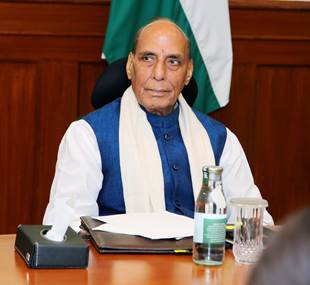
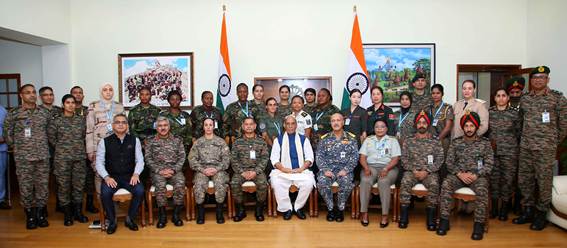
Raksha Mantri Shri Rajnath Singh, on August 22, 2025, interacted with the women officers of 15 countries alongside India, who are participating in a nearly two-week long United Nations Women Military Officers Course (UNWMOC-2025) being held at Manekshaw Centre, New Delhi. Organised by the Centre for United Nations Peacekeeping under the aegis of Ministry of Defence and Ministry of External Affairs from August 18-29, 2025, the course aims to build professional capacity of women military officers for effective participation in multidimensional UN missions.


Addressing the officers at South Block, Raksha Mantri stated that, as the largest contributor to UN peacekeeping missions, India has been a strong supporter of women’s participation & their integration into these missions, and through initiatives such as UNWMOC, it prepares women officers for complex peacekeeping environments.

“We are strengthening policies to encourage women’s participation in our Armed Forces and peacekeeping contingents, ensuring they have equal opportunities to lead & serve. We will continue to work with the UN and troop-contributing countries to advance gender parity, foster inclusive leadership, and create a world where peace is not just sustained but thrives through diversity and equality,” added Shri Rajnath Singh.

UNWMOC-2025 has brought together participants from Armenia, DR Congo, Egypt, Ivory Coast, Kenya, Kyrgyz Republic, Liberia, Malaysia, Morocco, Nepal, Sierra Leone, Sri Lanka, Tanzania, Uruguay and Vietnam, alongside 12 Indian women officers and five interns, making the course a vibrant international platform for training and exchange.

Raksha Mantri described the presence of officers from 15 countries as a reflection of a microcosm of the UN and its enduring spirit of unity & cooperation. You are the torchbearers of change. Your dedication strengthens not only peacekeeping but also the very fabric of global security. India stands with you, proud of your contributions and steadfast in its commitment to support your journey,” he told the officers.

On the vision of UN to increase the participation of women officers in peacekeeping missions, Shri Rajnath Singh stated that this commitment stems from the recognition that women peacekeepers are essential to making missions more effective, inclusive, and sustainable. “Women officers bring invaluable perspectives and approaches to peace operations. They are often able to foster deeper trust with local communities, particularly with women and children, whose voices are vital in rebuilding societies torn by conflict. Their presence has been shown to help prevent sexual violence, improve access to humanitarian assistance and increase gender equality on the ground. Moreover, women peacekeepers serve as powerful role models, inspiring local women and girls to see themselves as active participants in peace and security,” he said, adding that India’s own journey in peacekeeping reflects this very belief in the power and potential of women officers.

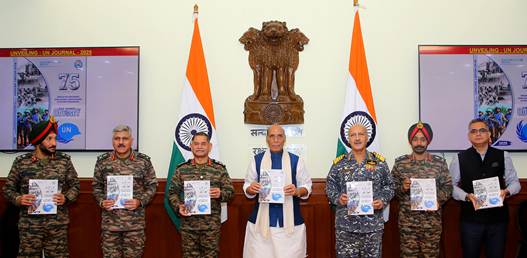
During the event, Raksha Mantri also unveiled the UN Journal 2025 – ‘Blue Helmet Odyssey: 75 Years of Indian Peacekeeping’ – a Platinum Jubilee edition which captures India’s legacy, innovations, and future vision in UN Peacekeeping. Reflecting on the blue colour of the helmets, he stated that, like the sky, the UN Peacekeepers offer protection and a sense of security, and like the oceans, they build connections across borders and cultures. Chief of the Army Staff General Upendra Dwivedi and other senior officers were present during the interaction.

The curriculum of UNWMOC-2025 includes key aspects of modern peacekeeping such as International Humanitarian Law, Refugees and Internally Displaced People, Protection of Civilians, Conduct and Discipline, Conflict-Related Sexual Violence and Child Protection in conflict. Distinguished speakers from the United Nations, the Ministry of External Affairs, international organisations and senior Indian Army veterans are addressing the participants. A field demonstration by an Infantry Battalion nominated for UN will further enhance practical understanding.

The stagnant development model arising from Left ideology is hindering Kerala’s growth: Amit Shah

| Published on:

Union Home Minister and Minister of Cooperation, Shri Amit Shah, addressed the Manorama News Conclave 2025 in Kochi, Kerala today. Union Home Minister said that, despite the adoption of a multi-party parliamentary democratic system with good intentions, several flaws began polluting the democratic process from the third decade of independence. He highlighted that three issues—casteism, dynastic politics, and appeasement—were affecting the country’s mandate like a festering wound. Moreover, the fourth issue, corruption, was not only hindering the nation’s progress but also mocking the people’s mandate.

Shri Amit Shah said that due to an atmosphere of instability, the country was deprived of long-term policies. After Shri Narendra Modi became Prime Minister in 2014, a new era of politics of performance began, replacing casteism, dynastic politics, and appeasement, and the entire country is experiencing this transformation today. He said that Prime Minister Shri Narendra Modi has successfully eliminated corruption both systemically and through policy measures. Shri Shah emphasized that due to the stability in the country, whether it is ensuring internal and external security, initiating a new phase of infrastructure development, or making the nation prosperous, PM Modi has ushered in a new era of long-term and clear policies in every field. Eleven years ago, the people of the country had a question in their minds: What will be the future of this nation? Today, there is no confusion in the minds of 140 crore people. Everyone believes that by 2047, India will be at the forefront of the world, and no one can stop us.

Union Home Minister and Minister of Cooperation said that earlier, the country was a victim of economic instability. Former Prime Minister Atal Bihari Vajpayee successfully brought our economy to the 11th position globally. Former Prime Minister Manmohan Singh did commendable work and ensured that the economy did not slip from the 11th to the 12th position, maintaining its stability. He said that over the past 11 years, PM Modi has elevated our economy from the 11th position to one of the top four economies in the world. Significant progress has been made in every sector, whether it is infrastructure development, leading in new economies and technologies that will influence the global economy over the next 25 years, or creating a robust support system for start-ups to provide opportunities for the youth to project themselves on the global stage.

Shri Amit Shah said that the Modi government has implemented reforms in every sector, taken decisive actions, and executed seemingly impossible tasks like GST with minimal controversy and in an exemplary manner. As a result, the country’s economy is now among the top four economies in the world. Shri Shah said that on the security front, the military has been fully modernized, emphasis has been placed on self-reliance in defence modernization, and robust and sustainable policies have been established for internal security.

The Home Minister said that the Northeast, Left-wing extremism, and Jammu & Kashmir were persistent challenges to internal security. In these three areas, there has been a 70 percent reduction in violent incidents, a 70 percent reduction in mortality rates, and a 74 percent reduction in the deaths of security forces. Shri Shah added that the country now has full confidence that within a very short time, we will be permanently free from these three problems. He said that this confidence has been instilled by PM Modi.

Union Home Minister said that we have developed a robust mechanism to combat terrorism, which has yielded positive results. He said that during the three terms of PM Modi’s government, several attempts were made to attack from across the border—first Uri, then Pulwama, and then Pahalgam. Each time, we responded decisively. First with a surgical strike, then an airstrike, and this time with ‘Operation Sindoor,’ the Indian Army not only entered Pakistan-occupied Kashmir but also penetrated deep into Pakistan to destroy terrorist headquarters. This sent a powerful message to the entire world.

The Home Minister said that whenever the history of the country is rewritten, the 11 years of Narendra Modi ji’s governance will be inscribed in golden letters from the perspective of peace and development. He said that Kerala, where it stood 11 years ago, remains in the same position today. Kerala has immense potential, but a peculiar kind of ideological apathy is hindering the exploration and harnessing of these opportunities. Shri Shah said that the apathetic development model stemming from Left ideology is obstructing Kerala’s progress. He expressed hope that in the coming days, Kerala will also embark on a campaign to join this journey of development.

Shri Amit Shah said that the people of Kerala do not tolerate corruption. Due to vote-bank politics, national security has been compromised here. The state of law and order has also deteriorated to a low level. He said that an organization named PFI, involved in anti-national activities, had spread from Kerala to Uttar Pradesh, Bihar, and Gujarat. Shri Shah questioned why this organization was not stopped in time. He remarked that if the Modi government had not been in power, perhaps the Kerala government would still not have banned PFI.

Union Home Minister and Minister of Cooperation said that Kerala is the most literate state in the country, with a 100 per cent literacy rate, yet why is there so much unemployment here? He said that Kerala has the highest literacy rate in the country, and also the highest unemployment. Shri Shah said that Kerala has immense potential, but it has not been harnessed. The people of Kerala want the establishment of IT, semi-conductor, port, and knowledge-based industries for development. He said that so far, the focus has been only on benefiting the cadre, not the public. Shri Shah said that the people of Kerala have now decided they want a government that works for the people, not one that serves the cadre.

Shri Amit Shah said that the development model created by PM Modi is a model of politics free from casteism and appeasement, which can be called the ‘politics of performance.’ The youth of Kerala will move forward with this politics of performance. He said that from 2004 to 2014, the central government provided Kerala with 1,342 crore rupees for disaster management, whereas Modi ji provided 5,100 crore rupees in 10 years.

In response to a question about delimitation, Union Home Minister Shri Amit Shah said that the apprehensions being raised in Tamil Nadu regarding delimitation are baseless. He said that the purpose of raising these apprehensions is to divert the attention of Tamil Nadu’s people from the rampant corruption, lawlessness in the state, and the Chief Minister’s intention to make his son the Chief Minister. He clarified that the census will be completed in 2027, and only after that will the Delimitation Act be implemented. Shri Shah said that he wants to assure all voters in the southern states that whenever delimitation takes place, no injustice will be done to the southern states. This is our government’s promise to the people of the southern states.

Responding to a question about the recently introduced Constitution (One Hundred and Thirtieth Amendment) Bill, 2025, Union Territory (Amendment) Bill, 2025, and Jammu and Kashmir Reorganisation (Amendment) Bill, 2025 in Parliament, Union Home Minister Shri Amit Shah asked whether the people of the country want a Chief Minister to run the government from jail? Would the public want a Prime Minister to govern from jail? He said that this is a matter of morality, and when the Constitution was framed, no one could have imagined individuals who, despite being jailed, would refuse to resign. Shri Shah said that over the past 75 years, several Chief Ministers and Ministers have gone to jail, but all of them resigned before doing so. He pointed out that a few months ago, the then Chief Minister of Delhi continued to run the government from jail. Shri Shah emphasized that both the ruling party and the opposition share the responsibility of maintaining the moral standards of democracy.

Regarding a question on SIR (Special Intensive Revision), Shri Amit Shah said that if any party or citizen has objections, they can appeal to the Returning Officer of the concerned Assembly. If not satisfied there, they can appeal to the District Collector, and if still unsatisfied, they can approach the Chief Electoral Officer (CEO). A three-tier system has been established for this purpose. He added that, to date, the main opposition party has not registered a single complaint regarding SIR. The Election Commission has decided to implement SIR across the country, which is a routine process. Shri Amit Shah said that there were 22 lakh people in Bihar’s voter list who had passed away. This created the possibility of fraudulent voting using their names. Should their names not be removed? He said that they too will go among the public and explain that the kind of language being used against constitutional institutions and the country’s Prime Minister is inappropriate. He appealed to opposition parties to present their concerns before the Election Commission if they find any shortcomings in the process.

On ‘One Nation, One Election,’ Union Home Minister Shri Amit Shah said that it will apply equally to all parties. He said that if there are any objections or issues, they can be raised in the Joint Parliamentary Committee (JPC) and discussed.

Union Home Minister said that for the past six years, his party’s government was in power in Manipur, during which there were no bandhs, no strikes, and no ethnic violence. However, ethnic violence erupted due to a court decision. He said that during the main opposition party’s rule, even greater ethnic violence was witnessed, which lasted for one, one-and-a-half, or two-and-a-half years each time. Now, peace has been established there. Shri Shah said that the Ministry of Home Affairs (MHA) held four separate meetings with both communities and also organized a joint meeting. He expressed hope that normalcy would soon be restored. He said that their first goal was to restore peace, which has been achieved. The violence in Manipur has no connection to religion; it was ethnic violence.

Shri Amit Shah said that in the Northeast, more than 20 agreements have been signed, resulting in 10,000 people laying down arms and returning to the mainstream. He said that dialogue is not possible with those who hold weapons. Discussions can only take place when insurgents abandon their weapons and come within the framework of the Constitution, which is our firm policy.

Regarding the three new criminal laws, Shri Amit Shah said that the laws made during British rule aimed to strengthen the British government in India, not to ensure the safety of our citizens. Therefore, the Indian Penal Code has now been renamed the Bharatiya Nyaya Sanhita (BNS). He said that when these three laws are fully implemented, the Indian criminal justice system will be the most modern justice system in the world. The Home Minister said that the new laws include legal definitions to incorporate technology for the coming years. Now, the entire hearing process will be online, appearances will be online, and several measures have been taken to ensure that justice is delivered within three years of an FIR being filed. He described this as the most significant reform of the 21st century.

Speaking about the personality of Prime Minister Shri Narendra Modi, Shri Amit Shah said that PM Modi is the most successful Chief Minister, the most successful Prime Minister, and the longest-serving leader of both a state and the nation. He is a selfless individual and an excellent listener. He said, Modi Ji is an ideal example of service to the nation by renouncing family and home for politics.  Shri Shah said that in this era of dynastic politics, he has observed Modi Ji’s family and how they live their lives. Adhering to such stringent standards of public life is extremely challenging. He said that PM Modi has no personal family; everyone is his own, and the 140 crore people of India are his family.

Piyush Goyal, reviews functioning of Plantation Boards

| Published on:

Union Minister of Commerce & Industry, Shri Piyush Goyal, reviewed the functioning of the Plantation Boards under the Department of Commerce – Spices Board, Tea Board, Rubber Board, Coffee Board and Turmeric Board. Senior officers of the Department of Commerce and the respective Boards attended the meeting.

The Minister emphasized the need to expand export opportunities through market diversification, promotion of value-added products, maintenance of quality standards, and optimum utilization of the benefits available to India under various Free Trade Agreements (FTAs). He stressed on the promotion of brand ‘India’ by the Boards in collaboration with the India Brand Equity Foundation (IBEF), with each contributing equally. He suggested the establishment of a ‘Bharat Pavilion’ in all major international and domestic fairs to enable the Boards to collectively showcase their products. The Minister also directed that all Boards should promote their Geographical Indication (GI) products with ‘India’ incorporated as part of their logo.

Shri Goyal urged the Boards to ensure the welfare of growers, workers and their families through existing schemes. He underlined the need for skilling programmes for them and directed the Boards to coordinate with the Ministry of Skill Development and Entrepreneurship in this regard. He expressed satisfaction that capacity building and training programmes were already being undertaken to promote good agricultural practices, quality, and organic production. He further emphasized that all stakeholders of the Boards should be supported through ease of doing business measures, sensitization and outreach programmes.

The Minister also called upon the Boards to explore the creation of a common incubation centre, on the lines of the Atal Innovation Mission, to encourage research, innovation and start-ups.

PM congratulates people of Assam on establishment of IIM in the State

| Published on:

The Prime Minister, Shri Narendra Modi has congratulated the people of Assam on the establishment of an Indian Institute of Management (IIM) in the State.

Shri Modi said that the establishment of the IIM will enhance education infrastructure and draw students as well as researchers from all over India.

Responding to the X post of Union Minister of Education, Shri Dharmendra Pradhan about establishment of the IIM in Assam, Shri Modi said;

“Congratulations to the people of Assam! The establishment of an IIM in the state will enhance education infrastructure and draw students as well as researchers from all over India.”

Chief Minister of Goa meets Prime Minister

| Published on:

The Chief Minister of Goa, Dr. Pramod Sawant met Prime Minister, Shri Narendra Modi today in New Delhi.

The Prime Minister’s Office handle posted on X;

“CM of Goa, @DrPramodPSawant met Prime Minister @narendramodi.

@goacm”

PM to visit Bihar and West Bengal on 22nd August

| Published on:

Prime Minister Shri Narendra Modi will visit Bihar and West Bengal on 22nd August. He will lay the foundation stone and inaugurate multiple development projects worth around Rs 13,000 crore at Gaya in Bihar at around 11 AM. He will also flag off two trains and address the gathering. Thereafter, he will visit and inaugurate Aunta – Simaria bridge project on River Ganga.

Prime Minister will flag off metro train services on the newly constructed sections in Kolkata at around 4:15 PM and undertake a metro ride from Jessore Road Metro Station to Jai Hind Bimanbandar and back. Further, he will lay the foundation stone and inaugurate multiple development projects worth over Rs 5,200 crore at Kolkata. He will also address the gathering on the occasion.

PM in Bihar

In line with his commitment to improving connectivity, Prime Minister will inaugurate the 8.15 km long Aunta – Simaria bridge project on NH-31, including the 1.86 km long 6 lane Bridge on river Ganga, constructed at a cost of over Rs 1,870 crore. It will provide direct connectivity between Mokama in Patna and Begusarai.

The bridge has been constructed parallel to an old 2-lane dilapidated rail-cum-road bridge “Rajendra Setu” which is in poor condition forcing heavy vehicles to re-route. The new bridge will reduce this extra travel distance of more than 100 km for the heavy vehicles travelling between North Bihar (Begusarai, Supaul, Madhubani, Purnea, Araria etc) and South Bihar areas (Sheikhpura, Nawada, Lakhisarai etc). It will also help reduce issues of traffic jams in other parts of the region due to the detour which these vehicles were forced to take.

It will boost economic growth in the adjoining areas, especially in North Bihar, which are dependent on South Bihar and Jharkhand for getting necessary raw material. It will also provide better connectivity to the famous pilgrimage place of Simaria Dham, which is also the birthplace of famous poet Late Shri Ramdhari Singh Dinkar.

Prime Minister will also inaugurate the four-lane Bakhtiyarpur to Mokama section of NH-31, worth around Rs 1,900 crore, which will ease congestion, reduce travel time, and enhance passenger and freight movement. Further, improvement to the two-lane with paved shoulders of Bikramganj–Dawath–Nawanagar–Dumraon section of NH-120 in Bihar will improve connectivity in rural areas, providing new economic opportunities for the local population.

Strengthening the power sector infrastructure in Bihar, Prime Minister will inaugurate Buxar Thermal Power Plant (660×1 MW) worth around Rs 6,880 crore. It will significantly enhance power generation capacity, improve energy security, and meet the growing electricity demand of the region.

In a major boost to health infrastructure, Prime Minister will inaugurate the Homi Bhabha Cancer Hospital & Research Centre at Muzaffarpur. The centre includes advanced Oncology OPD, IPD wards, operation theatres, modern lab, blood bank, and a 24-bed ICU (Intensive Care Unit) and HDU (High Dependency Unit). This state-of-the-art facility will provide advanced and affordable cancer care to patients in Bihar and neighbouring states, reducing the need to travel to distant metros for treatment.

Furthering his vision of Swachh Bharat and ensuring Aviral and Nirmal Dhara of river Ganga, Prime Minister will inaugurate the Sewerage Treatment Plant (STP) and Sewerage Network at Munger constructed under Namami Gange worth over Rs 520 crore. It will help reduce pollution load in the Ganga and improve sanitation facilities in the region.

Prime Minister will also lay the foundation stone for a series of urban infrastructure projects worth around Rs 1,260 crore. These include the STP and Sewerage Network at Daudnagar in Aurangabad, and Jehanabad; STP and interception and diversion works at Barahiya in Lakhisarai, and Jamui. Under AMRUT 2.0, he will lay the foundation stone of Water Supply Projects at Aurangabad, Bodhgaya and Jehanabad. These projects will provide clean drinking water, modern sewerage systems, and improved sanitation thereby improving health standards and quality of life in the region.

Boosting rail connectivity in the region, Prime Minister will flag off two trains. Amrit Bharat Express between Gaya and Delhi which will improve passenger convenience with modern facilities, comfort, and safety. And Buddhist Circuit Train between Vaishali and Koderma which will give a boost to tourism and religious travel across key Buddhist sites in the region.

Grih Pravesh ceremony of 12,000 rural beneficiaries under PMAY-Gramin and 4,260 beneficiaries under PMAY-Urban will also take place with the symbolic handing over of keys to a few beneficiaries by the Prime Minister, thus  fulfilling the dream of owning a house of thousands of families.

PM in West Bengal

In line with his commitment to world class infrastructure and developed urban connectivity, Prime Minister will inaugurate metro railway projects in Kolkata. A 13.61 km long newly constructed metro network will be inaugurated and metro services will be launched on these routes. He will visit the Jessore Road Metro Station, where he will flag off the Noapara–Jai Hind Bimanbandar metro service from Jessore Road. In addition, through video conferencing, he will also flag off the Sealdah–Esplanade metro service and the Beleghata–Hemanta Mukhopadhyay metro service. He will also undertake a metro ride from Jessore Road Metro Station to Jai Hind Bimanbandar and back.

At the public function, Prime Minister will inaugurate these metro sections and a newly constructed subway at Howrah Metro Station. The Noapara–Jai Hind Bimanbandar metro service will significantly improve the access to the airport. The Sealdah–Esplanade metro will reduce the travel time between the two points from nearly 40 minutes to only 11 minutes. The Beleghata–Hemanta Mukhopadhyay metro section will play a crucial role in enhancing connectivity with the IT hub. These metro routes will connect some of Kolkata’s busiest areas, bring a notable reduction in travel time, and strengthen multimodal connectivity, benefiting lakhs of daily commuters.

In a major boost to road infrastructure in the region, Prime Minister will also lay the foundation stone of 7.2 km long six-lane elevated Kona Expressway worth over Rs 1,200 crore. It will enhance connectivity between Howrah, surrounding rural areas, and Kolkata, saving hours of travel time and giving significant boost to trade, commerce, and tourism in the region.