‘The purpose of this bill is to elevate the declining standards of morality in public life and bring integrity to politics’

| Published on:

Union Home Minister and Minister of Cooperation, Shri Amit Shah today introduced the Constitution (One Hundred and Thirtieth Amendment) Bill, 2025, the Union Territories (Amendment) Bill, 2025, and the Jammu and Kashmir Reorganisation (Amendment) Bill, 2025 in the Lok Sabha.

Union Home Minister and Minister of Cooperation stated in a series of posts on ‘X’ that, considering the Modi government’s commitment against political corruption in the country and the public outrage, he introduced a Constitutional Amendment Bill in Parliament today with the consent of the Lok Sabha Speaker. This bill ensures that individuals holding important constitutional positions, such as the Prime Minister, Chief Ministers, and Ministers of the Central and State Governments, cannot run the government while in jail. He further stated that the purpose of this bill is to elevate the declining standards of morality in public life and bring integrity to politics.

Shri Amit Shah stated that the laws resulting from these three bills will ensure the following:

  1. No person, while under arrest and in jail, can govern as Prime Minister, Chief Minister, or Minister of the Central or State Government.
  2. When the Constitution was framed, its architects could not have imagined that in the future, there would be political figures who would refuse to resign on moral grounds before being arrested. In recent years, an astonishing situation has arisen in the country where Chief Ministers or Ministers have unethically run the government from jail without resigning.
  3. This bill includes a provision that allows an accused politician to seek bail from the court within 30 days of arrest. If they fail to secure bail within 30 days, on the 31st day, either the Prime Minister at the Center or the Chief Ministers in the states will remove them from their positions; otherwise, they will automatically become legally disqualified from performing their duties. If such a leader is granted bail after the legal process, they may resume their position

Union Home Minister and Minister of Cooperation stated that now the people of the country must decide whether it is appropriate for a minister, chief minister, or prime minister to run the government from jail? He said that on one hand, Prime Minister Shri Narendra Modi has introduced a constitutional amendment to bring himself within the ambit of the law, while on the other hand, the entire opposition, led by the main opposition party, has opposed it, as they wish to remain outside the law’s ambit, run governments from jail, and cling to power.

Shri Amit Shah stated that the country still remembers the time when, during the Emergency in this very esteemed House, the then Prime Minister, through the 39th Constitutional Amendment, granted special privileges to the Prime Minister, ensuring that no legal action could be taken against them. On one hand, this reflects the work culture and policy of the main opposition party, which seeks to place the Prime Minister above the law through constitutional amendments. On the other hand, our party’s policy is to bring our own government’s Prime Minister, Ministers, and Chief Ministers within the ambit of the law.

Union Home Minister and Minister of Cooperation stated that today in the House, a leader of the main opposition party made a personal remark about him, claiming that when the main opposition party falsely implicated and arrested him in a fabricated case, he did not resign. Shri Shah added that he wants to remind the main opposition party that he had resigned before his arrest, and even after being released on bail, he did not take up any constitutional position until he was fully acquitted by the court. The court dismissed the false case against him, stating that it was motivated by political vendetta, he added.

Shri Amit Shah stated that our party and the NDA have always been advocates of moral values. Shri Shah said it was clear from the beginning that this bill would be placed before the Joint Parliamentary Committee (JPC) of Parliament, where it would be thoroughly discussed. Despite this, abandoning all shame and decency, the opposition alliance opposed the bill with crude behavior to protect corrupt individuals, thereby completely exposing themselves before the public.

EPFO Records All-Time Highest Net Addition of Nearly 22 Lakh Members during June 2025

| Published on:

The Employees’ Provident Fund Organization (EPFO) has released provisional payroll data for June 2025, revealing a net addition of 21.89 lakh members, marking the highest recorded addition since payroll data tracking began in April 2018. This figure depicts an increase of 9.14 % in net payroll additions during the current month as compared to the previous month of May 2025.

Further, the year-on-year analysis reveals a growth of 13.46 % in net payroll additions in June 2025 compared to June 2024, signifying increased employment opportunities and heightened awareness of employee benefits, bolstered by EPFO’s effective outreach initiatives.

Key highlights of the EPFO Payroll Data (June 2025) are as follows:

New Subscribers:

EPFO enrolled around 10.62 lakh new subscribers in June 2025, representing a 12.68% increase over May 2025 and a growth of 3.61% compared to June 2024. This increase in new subscribers can be attributed to growing employment opportunities, increased awareness of employee benefits, and EPFO’s successful outreach programs.

Age Group 18-25 Leads Payroll Addition:

A noticeable aspect of the data is the dominance of the 18-25 age group. EPFO added 6.39 lakh new subscribers in the 18-25 age group, constituting a significant 60.22% of the total new subscribers added in June 2025. New subscribers in the 18-25 age group added in the month show an increase of 14.08% compared to the previous month of May 2025.

Further, the net payroll addition for the age group 18-25 for June 2025 is approximately 9.72 lakh, reflecting an increase of 11.41% from the previous month of May 2025 and a growth of 12.15% from the previous year in June 2024. This is in consonance with the earlier trend which indicates that most individuals joining the organized workforce are youth, primarily first-time job seekers.

Rejoined Members:

Approximately 16.93 lakh members, who had exited earlier, rejoined EPFO in June 2025. This figure depicts a 5.09% increase over May 2025. It also displays a significant 19.65% year-over-year growth compared to June 2024. These members switched their jobs and re-joined the establishments covered under the ambit of EPFO and opted to transfer their accumulations instead of applying for final settlement thus safeguarding long-term financial well-being and extending their social security protection.

Growth in Female Membership:

Around 3.02 lakhs new female subscribers joined EPFO in June 2025. It reflects an increase of 14.92% compared to the previous month of May 2025. It also depicts year-over-year growth of 1.34% compared to June 2024.

Further, the net female payroll addition during the month stood at around 4.72 lakh, with a month-on-month increase of 11.11% compared to May 2025 and a significant year over year growth of 10.29% compared to June 2024. The growth in female member additions is indicative of a broader shift towards a more inclusive and diverse workforce.

State-wise Contribution:

State-wise analysis of payroll data denotes that the top five states/ UTs constitute around 61.51% of net payroll addition, adding a total around 13.46 lakh net payroll during the month. Of all the states, Maharashtra is leading by adding 20.03% of net payroll during the month. The states/UTs of Maharashtra, Karnataka, Tamil Nadu, Gujarat, Haryana, Delhi, Uttar Pradesh and Telangana individually added more than 5% of the total net payroll during the month.

Industry-wise Trends:

Month-on-month comparison of industry-wise data displays significant growth in the net payroll addition working in establishments engaged in the industries viz.

  • SCHOOL
  • EXPERT SERVICES
  • BUILDING AND CONSTRUCTION INDUSTRY
  • UNIVERSITY, COLLEGE, SCHOOL. ETC.
  • ELEC, MECH OR GEN ENGG PRODUCTS
  • TRADING – COMMERCIAL ESTABLISHMENTS
  • OTHERS
  • FINANCING ESTABLISHMENT

Out of the total net membership, around 42.14% addition is from expert services, out of which manpower suppliers constitute around 51.31%. Further, segregation of expert services is as follows:

Sub-Classification of Expert Services Net Payroll
EXPERT SERVICES (NOT CLASSIFIED) 126903
Manpower Suppliers 473277
Miscellaneous Activities 130925
Normal Contractors 90104
Security Services 101241
Total 922450


The above payroll data is provisional since data generation is a continuous exercise, as updating employee record is a continuous process. The previous data gets updated every month on account of:

  1. ECRs being filed for previous months after generation of payroll report.
  2. ECRs filed earlier being modified after generation of payroll report.
  3. Date of exit for previous months being marked after generation of payroll report.

From the month of April 2018, EPFO has been releasing payroll data covering the period September 2017 onwards. In monthly payroll data, the count of members joining EPFO for the first time through Aadhaar validated Universal Account Number (UAN), existing members exiting from coverage of EPFO and those who exited but re-joined as members, is taken to arrive at net monthly payroll.

Chinese Foreign Minister Wang Yi calls-on PM

| Published on:

Today, Prime Minister Shri Narendra Modi received Mr Wang Yi, Member of the Politburo of the Communist Party and Foreign Minister of China.

Mr. Wang Yi handed over message and invitation from President Xi to Prime Minister for the SCO Summit being held in Tianjin. He also shared his positive assessment of bilateral meeting with EAM Dr. S. Jaishankar and 24th Meeting of the Special Representatives, which he co-chaired with NSA Shri Ajit Doval during his visit.

Prime Minister emphasised the importance of maintaining peace and tranquillity on the border, and reiterated India’s commitment to a fair, reasonable and mutually acceptable resolution of the boundary question.

Prime Minister welcomed the steady and positive progress in bilateral ties since his meeting with President Xi in Kazan last year, guided by mutual respect, mutual interest and mutual sensitivity, including the resumption of the Kailash Manasarovar Yatra.

Prime Minister thanked President Xi for the invitation to the SCO Summit and conveyed his acceptance. He expressed support for China’s Presidency of the SCO Summit and said that he looked forward to meeting President Xi in Tianjin. PM underlined that stable, predictable, and constructive ties between India and China will contribute significantly to regional and global peace and prosperity.

Prime Minister interacts with Astronaut Shubhanshu Shukla

| Published on:

The Prime Minister Shri Narendra Modi interacted with Astronaut Shubhanshu Shukla in New Delhi yesterday. Reflecting on the transformative experience of space travel, the Prime Minister remarked that after undertaking such a significant journey, one must feel a change and he sought to understand how astronauts perceive and experience this transformation. Responding to the Prime Minister, Shubhanshu Shukla stated that the environment in space is distinctly different, with the absence of gravity being a key factor.

The Prime Minister asked whether the seating arrangement remains the same during the journey. Shukla confirmed this, saying, “Yes sir, it remains the same.” Shri Modi further noted that astronauts have to spend 23–24 hours in the same setup. Shukla affirmed this and added that once in space, astronauts can unfasten their seats and harnesses, and move freely within the capsule.

Continuing the interaction with astronaut Shubhanshu Shukla, delving into the physical and psychological impact of space travel, the Prime Minister inquired whether the capsule offered sufficient space. Shubhanshu Shukla responded that while it wasn’t very spacious, there was some room available. The Prime Minister remarked that the capsule seemed more comfortable than a fighter jet cockpit. Shukla affirmed, “It is even better than that, sir.”

Further, Shri Modi was briefed on the physiological changes that occur upon reaching space. Shukla highlighted that the heart rate slows down significantly, and the body undergoes several adjustments. However, within four to five days, the body acclimatizes and normalizes in the space environment. Shukla further explained that upon returning to Earth, the body experiences the same set of changes again. Regardless of one’s fitness level, walking becomes difficult initially. He shared his personal experience, stating that although he felt fine, he stumbled while taking his first steps and had to be supported by others. Even though one knows how to walk, the brain takes time to reorient and understand the new environment. The Prime Minister emphasized that space travel requires not just physical training but mental conditioning as well. Shukla agreed, stating that while the body and muscles possess strength, the brain requires rewiring to comprehend the new environment and recalibrate the effort needed to walk and function normally.

Discussing the exploration of the duration of space missions, Shri Modi inquired about the longest duration astronauts have spent in space. Shubhanshu Shukla informed that currently, individuals are staying up to eight months at a time, a milestone initiated with the present mission. The Prime Minister asked about the astronauts Shukla met during his mission. Shukla confirmed that some of them are scheduled to return in December.

Shri Modi sought insights into the significance of Shukla’s experiments on growing Moong and Methi aboard the space station. Shukla expressed surprise that many people were unaware of certain developments. He highlighted that food remains a major challenge aboard space stations due to limited space and expensive cargo. The focus is on packing maximum calories and nutrition in minimal space. He explained that various experiments are underway, and growing certain foods is remarkably simple in space. Using minimal resources, such as a small dish and a bit of water, sprouts began emerging within eight days—an experiment Shukla personally witnessed aboard the station. Shukla emphasized that India’s unique agricultural innovations are now reaching microgravity research platforms. He noted the potential of these experiments to address food security challenges—not only for astronauts but also for vulnerable populations on Earth.

The Prime Minister asked how international astronauts reacted upon meeting an Indian astronaut. Shukla shared that over the past year, wherever he went, people were genuinely happy and excited to meet him. They frequently asked about India’s space activities and were well-informed about the country’s progress. Many were particularly enthusiastic about the Gaganyaan mission, inquiring about its timeline. Shukla’s crewmates even requested signed notes, expressing their desire to be invited to the launch and to travel aboard India’s spacecraft.

Shri Modi further asked why others referred to Shukla as a genius. Shukla humbly responded that people were kind in their remarks. He attributed their appreciation to his rigorous training—first in the Indian Air Force and later as a space pilot. Initially believing that academic study would be minimal, Shukla discovered that the path required extensive learning. Becoming a space pilot, he explained, is akin to mastering an engineering discipline. He underwent years of training under Indian scientists and felt well-prepared for the mission.

Prime Minister Shri Narendra Modi reviewed the progress of the “homework” he had earlier assigned to astronaut Shubhanshu Shukla. Shukla reported that the progress has been excellent. He affirmed that the task was indeed given and was very important, stating that his journey itself was meant to create awareness. He emphasized that while the mission was successful and the team returned safely, it was not the end—it was only the beginning. The Prime Minister reiterated that this was the first step. Shukla echoed the sentiment, saying, “Yes sir, it is the first step.” He emphasized that the core objective of this initiative was to learn as much as possible and bring those insights back.

The Prime Minister highlighted the need to build a large pool of astronauts in India, suggesting that 40–50 individuals should be ready for such missions. He noted that until now, very few children may have considered becoming astronauts, but Shukla’s journey would likely inspire greater belief and interest.

Shukla reflected on his childhood, recalling that when Rakesh Sharma went to space in 1984, the idea of becoming an astronaut never occurred to him due to the absence of a national program. However, during his recent mission, he interacted with children on three occasions—once through a live event and twice via radio. In each of these events, at least one child asked him, “Sir, how can I become an astronaut?”. Astronaut Shukla stated that this achievement is a major success for the country, emphasizing that today’s India no longer needs to merely dream—it knows that spaceflight is possible, that options exist, and that becoming an astronaut is achievable. “Representing India in space was a great opportunity, and now it is his responsibility to help more people reach this milestone”, added Shukla.

Prime Minister Shri Narendra Modi remarked that India now has two major missions ahead—Space Station and Gaganyaan and highlighted that Shukla’s experience would be of great value in these upcoming endeavours.

Shukla responded affirmatively, noting that this is a major opportunity for the country, especially given the sustained commitment of the Government under Prime Minister Modi’s leadership. He pointed out that despite setbacks such as Chandrayaan-2 not being successful, the Government continued to support the space program with consistent budgeting, leading to the success of Chandrayaan-3. He emphasized that such support, even after failures, is being observed globally and reflects India’s capability and positioning in the space domain. Shukla stated that India can acquire a leadership role and that a space station led by Bharat, with participation from other nations, would be a powerful tool.

Shukla further referred to the Prime Minister’s remarks on Independence day on Atmanirbharta in space manufacturing and said that all these elements are interconnected—the vision for Gaganyaan, the Space station, and the moon landing—forming a vast and ambitious dream. Prime Minister Modi affirmed that if India pursues these goals with self-reliance, it will succeed.

Cabinet approves development of Green Field Airport at Kota-Bundi (Rajasthan)

| Published on:

The Cabinet Committee on Economic Affairs chaired by the Prime Minister Shri Narendra Modi today has approved the proposal of Airports Authority of India (AAI) for development of Green Field Airport at Kota-Bundi (Rajasthan) at an estimated cost of Rs.1507.00 Crore.

Kota, situated on the banks of the Chambal River, is recognised as the industrial capital of Rajasthan. In addition, Kota is renowned as the Educational Coaching Hub of India.

The Government of Rajasthan has transferred 440.06 hectares of land to AAI for development of a Greenfield Airport, suitable for operation of A-321 type aircraft. The project includes construction of a Terminal Building spanning an area of 20,000 sqm capable of handling 1000 Peak Hour Passengers (PHP) with annual capacity of 2 Million Passengers Per Annum (MPPA), Runway 11/29 of dimensions 3200m x 45m, Apron with 07 parking bays for A-321 type aircraft, two Link Taxiways, ATC cum Technical Block, Fire Station, car park and allied works.

Kota’s prominence in educational and industrial sectors makes the Greenfield Airport a critical infrastructure project, aimed at addressing the anticipated traffic growth in the region.

The existing Kota Airport is under the ownership of Airports Authority of India (AAI). It comprises a runway (08/26) of dimensions 1220 m x 38 m, suitable for Code ‘B’ aircraft (such as DO-228), and an apron capable of accommodating two such aircraft. The terminal building spans an area of 400 sqm and is capable of handling 50 passengers during peak hours. The existing airport cannot be developed for commercial operations due to inadequate land availability and urbanization around the airport.

Cabinet approves construction of 6-Lane Access-Controlled Capital Region Ring Road in Odisha at capital cost of Rs.8307.74 crore

| Published on:

The Cabinet Committee on Economic Affairs chaired by the Prime Minister Shri Narendra Modi today has approved construction of 6-Lane Access-Controlled Capital Region Ring Road (Bhubaneswar Bypass – 110.875 km) in Odisha on Hybrid Annuity Mode (HAM) at a total capital cost of Rs.8307.74 crore.

Currently, connectivity between Rameshwar to Tangi on existing National Highway experience significant congestion due to high traffic volumes, passing through highly urbanized cities Khordha, Bhubaneswar and Cuttack. To address these challenges, the project is proposed to be developed as 6-Lane Access-Controlled Greenfield Highway. The project will provide significant benefit to Odisha and other eastern States by diverting heavy commercial traffic away from Cuttack, Bhubaneswar and Khordha Cities. This will enhance the efficiency of freight movement, reducing logistics cost and driving socio-economic growth in the region.

The project alignment integrates with 3 major National Highways (NH-55, NH-57 and NH-655)  and 1 State Highway (SH-65), providing seamless connectivity to key economic, social, and logistics nodes across Odisha. Additionally, the upgraded corridor will enhance multi-modal integration by connecting with 10 Economic Nodes, 04 Social Nodes and 05 Logistic Nodes, providing enhanced multimodality with 1 Major Railway Station, 1 Airport, 1 proposed Multi-Modal Logistics Park (MMLP), and 2 major Ports thereby facilitating faster movement of goods and passengers across the region.

Upon completion, the bypass will play a pivotal role in regional economic growth, strengthening connectivity between major religious and economic centers and opening new avenues for trade and industrial development. The project will also generate approximately 74.43 Lakhs person-days of direct and 93.04 lakh person-days of indirect employment, and will open new avenues of growth, development and prosperity in surrounding regions.

Appendix – I: Project Details

Feature Details
Project Name 6-Lane Access-Controlled Greenfield Capital Region Ring Road (Bhubaneswar Bypass) from Rameshwar to Tangi
Corridor Kolkata – Chennai
Length (km) 110.875
Total Civil Cost (Rs Cr.) 4686.74
Land Acquisition Cost (Rs Cr.) 1029.43
Total Capital Cost (Rs Cr.) 8307.74
Mode Hybrid Annuity Mode (HAM)
Bypasses Instant Project of Length 110.875 km
Major Roads Connected National Highways – NH-55, NH-655 & NH-57.

State Highways – SH-65

Economic / Social / Transport Nodes Connected Airports: Bhubaneswar

Railway Stations: Khordha

Port: Puri & Astrang

Economic Nodes: SEZ, Mega Food Park, Textile & Pharma Cluster, Fishing Cluster

Social Nodes: Aspirational District, Tribal District and LWE Affected District.

Major Cities / Towns Connected Khordha, Bhubaneswar, Cuttack and Dhenkanal.
Employment Generation Potential 74.43 Lakhs Man-Days (direct) & 93.04 lakh Man-Days (indirect)
Annual Average Daily Traffic (AADT) in FY-25 Estimated at 28,282 Passenger Car Units (PCU)

Dr. Jitendra Singh presents “National Anubhav Awards” to retirees

| Published on:

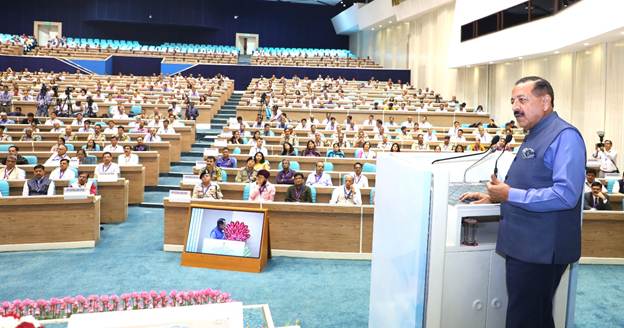
At the 8th “National Anubhav Awards” ceremony and the 57th Pre-Retirement Counselling Workshop held at Vigyan Bhawan, Union Minister of State (Independent Charge) for Science and Technology; Earth Sciences and Minister of State for PMO, Department of Atomic Energy, Department of Space, Personnel, Public Grievances and Pensions, Dr. Jitendra Singh underlined the importance of drawing upon the wisdom and experience of retired government employees, calling them “partners in nation building even beyond superannuation.”

Addressing the gathering, Dr. Jitendra Singh said the Anubhav Awards, launched in 2015, were conceived not only to honour retiring officials but also to build an institutional memory of governance through their recorded experiences. He stressed that candid feedback from retirees provided valuable insights for improving transparency, citizen-centric governance, and human resource management. “Those who have lesser stakes after retirement can speak more boldly, more candidly. Their observations help us course-correct our policies and ensure better service delivery,” he noted.

The Minister also highlighted efforts to integrate technology with institutional learning. He said artificial intelligence would be increasingly deployed to analyse memoirs submitted on the Anubhav portal, helping identify systemic gaps in areas such as transfers, promotions, and grievance redressal. “We are moving towards a hybrid model, where human intelligence and artificial intelligence together will guide policy reforms,” Dr. Jitendra Singh remarked.

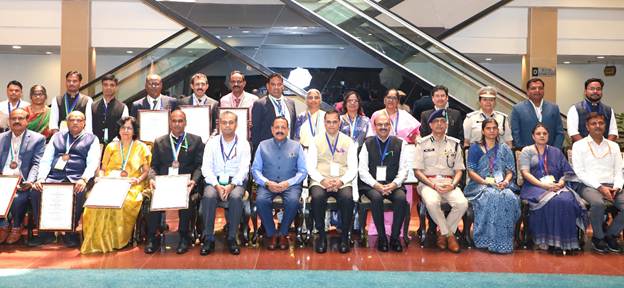
This year’s awards mark a decade of the initiative, with more than 12,500 memoirs published on the Anubhav portal so far. Fifteen awardees from 11 ministries and departments were felicitated, including for the first time officers from a public sector bank and a central public sector enterprise.

Prominent “National Anubhav Award” winners were M. Venkatesan who, superannuating after 35 distinguished years as civil servant, documented his services during critical times including the 2014 Kashmir floods and the Ukraine evacuation of 2022, Hukum Singh Meena, who spearheaded the digitisation of land records in over 6.4 lakh villages; Shalini Kacker of SBI, who drove Direct Benefit Transfer, pension reforms and Digital Life Certificate campaigns in banking.

O. Virupakshappa of the Department of Posts, who expanded postal savings and insurance schemes to rural communities; and Saju P.K. of the CRPF, who served in sensitive operational areas ranging from Assam to Pulwama. The Jury Awardees included Jai Prakash Srivastava (BHEL), Vinod P. and Dr. Sabu Sebastian (DRDO), Dr. Jolly Dhar (ISRO), Sunitha Cherodath(Telecom), S. Meenakshi Sundaram and Balam Singh Rawat(CRPF), Velaga Kumari (CWC), Sheela Rani Poddar (CRPF), and Santosh Gawli (ITBP), reflecting the wide range of services represented.

The ceremony was attended by senior officials including V. Srinivas, Secretary (Pension); Shri Vitul Kumar, Special DG, CRPF; Smt. Roli Singh, Additional Secretary & DG, CGHS; Shri Raj Kumar Arora, CGDA; and Shri DhrubajyotiSengupta, Joint Secretary (Pension), among others, who joined Dr. Jitendra Singh in felicitating the awardees and releasing new initiatives such as the Guidelines for the nation-wide Digital Life Certificate Campaign 4.0 and a Coffee Table e-Book of success stories from Special Campaign 2.0 . Notably, one-third of the awardees this year were women, reflecting a growing presence of women officials in governance.

Dr. Jitendra Singh urged the awardees not to consider retirement as the end of their service but as the beginning of a new chapter. He cited examples of senior citizens leading successful start-ups in the food and agriculture sector, encouraging retirees to channel their skills into entrepreneurship, advisory roles, or social service. “You may retire on paper, but you never retire from serving the nation,” he said.

The day-long event also included pre-retirement counselling sessions on pension procedures, health benefits, investment options, and income tax matters, aimed at equipping soon-to-retire employees for life after government service.

As the Anubhav Awards enter their tenth year, the initiative continues to evolve, with feedback-based evaluation criteria and a broader participation base, including public sector banks and enterprises. Officials said the awards had become a repository of governance lessons, bridging the past and the future of public administration.

PM Narendra Modi speaks with President Putin

| Published on:

Prime Minister Shri Narendra Modi received a telephone call today from the President of the Russian Federation, H.E. Mr. Vladimir Putin.

President Putin shared his assessment of his meeting with the President of the United States, H.E. Donald Trump in Alaska last week.

While thanking President Putin, Prime Minister underlined India’s consistent position for a peaceful resolution of the conflict through diplomacy and dialogue. He reiterated that India supports all efforts in this regard.

The two leaders also touched upon a number of issues of bilateral cooperation with a view to further strengthen the Special and Privileged Strategic Partnership between India and Russia.

The two leaders agreed to remain in close touch.

PM inaugurates two major National Highway projects worth Rs.11,000 crore

| Published on:

Prime Minister Shri Narendra Modi inaugurated two major National Highway projects worth a combined cost of nearly Rs.11,000 crore at Rohini, Delhi today. Addressing the gathering, the Prime Minister remarked on the significance of the location, stating that the name of the expressway is “Dwarka,” and the programme is being held at “Rohini.” He highlighted the festive spirit of Janmashtami and noted the coincidence that he himself hails from the land of Dwarkadhish. The Prime Minister observed that the entire atmosphere has become deeply infused with the essence of Lord Krishna.

Highlighting that the month of August is imbued with the colours of freedom and revolution, Shri Modi remarked that amid the celebrations of Azadi Ka Mahotsav, the national capital Delhi is today witnessing a development revolution. He informed that earlier in the day, Delhi received enhanced connectivity through the Dwarka Expressway and Urban Extension Road which will improve convenience for the people of Delhi, Gurugram, and the entire NCR region. He added that commuting to offices and factories will become easier, saving time for everyone. The Prime Minister emphasized that traders, entrepreneurs, and farmers will greatly benefit from this connectivity. He extended his congratulations to all residents of Delhi-NCR for these modern road infrastructure developments.

Recalling his address from the ramparts of the Red Fort on 15th August 2025, where he spoke in detail about the nation’s economy, self-reliance, and self-confidence, the Prime Minister said, “today’s India is defined by its aspirations, dreams, and resolutions—elements that the entire world is now experiencing”. He stated that when the world looks at India and evaluates its progress, its first glance falls upon the national capital, Delhi. Shri Modi emphasized the need to develop Delhi as a model of growth, where everyone can truly feel that this is the capital of a developing and confident India.

Stating that over the past 11 years, the government has consistently worked at various levels to achieve this progress, the Prime Minister  highlighted that in terms of connectivity, Delhi-NCR has witnessed unprecedented improvement over the last decade, noting the presence of modern and wide expressways in the region. “Delhi-NCR is now among the most connected areas in the world in terms of metro network”, said Shri Modi. He further added that the region is equipped with advanced systems like the Namo Bharat rapid rail. He emphasized that in the past 11 years, commuting in Delhi-NCR has become significantly easier compared to earlier times.

Affirming that the commitment to transform Delhi into a world-class city is ongoing, Shri Modi stated that today, everyone has witnessed this progress firsthand. Referring to the Dwarka Expressway and the Urban Extension Road, the Prime Minister remarked that both roads have been constructed to excellent standards. He noted that following the Peripheral Expressway, the Urban Extension Road will now provide significant support to Delhi’s infrastructure and connectivity.

Underlining a key feature of the Urban Extension Road, stating that it is also helping to free Delhi from its garbage mounds, the Prime Minister informed that millions of tonnes of waste material have been used in the construction of the Urban Extension Road. He remarked that by reducing the garbage mounds, the waste material has been repurposed for road construction. Pointing out the nearby Bhalswa landfill site and acknowledging the severe problems faced by families living in its vicinity, Shri Modi emphasized that the government is actively working to free Delhi residents from such challenges.

Prime Minister expressed satisfaction that under the leadership of Smt. Rekha Gupta, the Delhi government is consistently engaged in cleaning the Yamuna River. He shared that 16 lakh metric tonnes of silt have already been removed from the Yamuna. Shri Modi further noted that within a short span of time, 650 DEVI (Delhi Electric Vehicle Interconnector) electric buses have been launched in Delhi. He added that the fleet of electric buses in the city is soon expected to cross 2,000, emphasising that this initiative strengthens the mantra of “Green Delhi–Clean Delhi.”

Noting that after many years, their party has formed the government in the national capital, Delhi, the Prime Minister criticised the previous dispensations for the poor pace of development in Delhi. He acknowledged that although it is an arduous task to uplift Delhi from the mess of previous governments, the current Government will strive and restore the pride and development of Delhi. Shri Modi highlighted the unique alignment wherein our governments are currently in place in Delhi, Haryana, Uttar Pradesh, and Rajasthan. He remarked that this reflects the immense blessings the entire region has bestowed upon their party and its leadership. Shri Modi emphasized that, recognizing this responsibility, the government is fully committed to the development of Delhi-NCR. He pointed out that certain political parties are still unable to accept the public’s mandate. He stated that these parties have distanced themselves from both public trust and ground realities. Recalling how, a few months ago, conspiracies were hatched to pit the people of Delhi and Haryana against each other, the Prime Minister mentioned that false claims were made alleging that Haryana residents were poisoning Delhi’s water supply. He asserted that Delhi and the entire NCR have now been freed from such negative politics, reaffirming the government’s resolve to transform the NCR and expressed confidence that this vision will be successfully realized.

“Good governance is the hallmark of our governments and in our administrations, the people are paramount”, said Shri Modi. He remarked that the consistent effort of our party is to make citizens’ lives easier. He noted that this commitment is reflected in the party’s policies and decisions. Referring to past governments in Haryana, the Prime Minister observed that there was a time when even a single appointment was difficult without influence or recommendation. He highlighted that under their government in Haryana, lakhs of youth have received government jobs through a fully transparent process. He commended Shri Nayab Singh Saini for continuing this initiative with dedication.

Prime Minister stated that in Delhi, those who once lived in slums without permanent housing are now receiving pucca homes. He highlighted that areas previously lacking basic amenities such as electricity, water, and gas connections are now being equipped with these essential services. Speaking about the national progress, Shri Modi remarked that in the past 11 years, a record number of roads have been constructed across the country. He noted the ongoing transformation of railway stations and expressed pride in modern trains like Vande Bharat, adding that airports are now being developed in smaller cities. Referring to the NCR region, the Prime Minister pointed out the significant increase in the number of airports. He mentioned that flights are now operating from Hindon Airport to several cities, further informing that the Noida airport is also nearing completion.

Shri Modi stated that such progress has only been possible because the country has changed its outdated approaches over the past decade. He emphasized that the level of infrastructure the nation required, and the pace at which it needed to be built, was not achieved in the past. Referring to the Eastern and Western Peripheral Expressways, the Prime Minister noted that Delhi-NCR had felt the need for these roads for several decades. He mentioned that during the previous government, files related to these projects began moving, but actual work commenced only when the people gave their party the opportunity to serve. He highlighted that the roads became a reality when our governments were formed at both the Centre and in Haryana. The Prime Minister proudly stated that today, these expressways are serving the nation with distinction.

Highlighting that the indifference towards development projects was not limited to Delhi-NCR, but was prevalent across the entire country, Shri Modi pointed out that earlier, the budget allocated for infrastructure was very low, and even the sanctioned projects would take years to complete. He underlined that in the past 11 years, the infrastructure budget has been increased more than sixfold. The Prime Minister emphasized that the current focus is on the rapid completion of projects, which is why initiatives like the Dwarka Expressway are now being realized. He remarked that the substantial investment in these projects is not only creating facilities but also generating large-scale employment. Explaining that massive construction activities provide work to lakhs of individuals—from labourers to engineers, Shri Modi added that the use of construction materials boosts employment in associated factories and shops. He also noted that the transport and logistics sectors are witnessing increased job opportunities due to these developments.

Prime Minister Shri Modi stated that previously those who governed for long periods viewed ruling over the people as their primary objective. He emphasized that their party’s effort is to eliminate both pressure and interference of the government from the lives of citizens. He cited an example to illustrate past conditions, referring to the sanitation workers in Delhi who shoulder a major responsibility in maintaining cleanliness, were treated as if they were enslaved. Shri Modi revealed a shocking truth, stating that under the Delhi Municipal Corporation Act, there was a provision that if a sanitation worker failed to report to duty without prior notice, they could be imprisoned for one month. The Prime Minister questioned the mindset behind such laws, asking how sanitation workers could be subjected to jail for a minor lapse. He criticized those who now speak of social justice, pointing out that they had maintained such unjust laws in the country. Shri Modi declared that it is their government that is actively identifying and abolishing such regressive laws. He informed that the government has already repealed hundreds of such laws, and the campaign continues.

“For us, reform means the expansion of good governance”, exclaimed the Prime Minister, emphasising that continuous focus is being placed on reforms. He announced that in the coming days, several major reforms will be introduced to make both life and business easier. “As part of this effort, a next-generation reform in GST is being planned. This Diwali, citizens will receive a double bonus through the GST reform”, stated Shri Modi. Informing that the complete framework has been shared with all states, Shri Modi expressed hope that all states will cooperate with this initiative of the Government of India. He urged for the swift completion of the process so that this Diwali can be made even more special. Adding that the government aims to simplify GST further and revise tax rates, the Prime Minister highlighted that the benefits of this reform will reach every household, especially the poor and middle class. He added that entrepreneurs of all scales, as well as traders and businesspersons, will gain from these changes.

Underscoring that one of India’s greatest strengths is its ancient culture and heritage, Shri Modi emphasized that this cultural legacy embodies a profound philosophy of life. He remarked that within this philosophy, we encounter both the “Chakradhari Mohan” and the “Charkhadhari Mohan.” He noted that from time to time, the nation experiences the essence of both these figures. Explaining that “Chakradhari Mohan” refers to Lord Shri Krishna, who demonstrated the power of the Sudarshan Chakra, the Prime Minister added that “Charkhadhari Mohan” refers to Mahatma Gandhi, who through the spinning wheel, awakened the nation to the strength of Swadeshi.

“To empower India, we must draw inspiration from Chakradhari Mohan, to make India self-reliant, we must follow the path of Charkhadhari Mohan”, exclaimed the Prime Minister urging that “Vocal for Local” should become a life mantra for every citizen. He remarked that this mission is not difficult for the nation, as India has always delivered whenever it has taken a resolution. Citing the example of Khadi, which was once on the verge of extinction, Shri Modi recalled his appeal to the nation, which led to a collective resolve and visible results. He informed that in the past decade, Khadi sales have increased nearly sevenfold.He noted that the people of India embraced Khadi with the spirit of “Vocal for Local.” The Prime Minister further highlighted the trust shown by citizens in Made in India mobile phones. “Eleven years ago, India imported most of its mobile phones. Today, the majority of Indians use Made in India phones. India now manufactures and exports 30 to 35 crore mobile phones annually”, stated the PM.

Noting that India’s Made in India UPI has today become the world’s largest real-time digital payment platform, the Prime Minister highlighted that Indian-made rail coaches and locomotives are now witnessing growing demand in other countries.

Prime Minister remarked that when it comes to road infrastructure and overall infrastructure, India has developed the Gati Shakti platform. He highlighted that the platform contains 1,600 layers of data. He stated that for any project, the platform provides instant access to all relevant conditions and regulatory requirements—whether it involves wildlife, forest areas, rivers, or drains, noting that all such information is available within minutes, enabling projects to progress rapidly. Shri Modi informed that a dedicated university for Gati Shakti has now been established. He emphasized that Gati Shakti has become a powerful and transformative pathway for the nation’s progress.

Recalling that a decade ago, even toys were being imported into India, Shri Modi said when Indians resolved to embrace “Vocal for Local,” not only did domestic toy production increase significantly, but India also began exporting toys to over 100 countries worldwide.

Urging all citizens to place their trust in products made in India, the Prime Minister appealed to the people to choose Indian-made goods, stating, “If you are Indian, buy what is made in India.” Referring to the ongoing festive season, Shri Modi encouraged everyone to share the joy of local products with their loved ones. He called upon citizens to make a conscious decision to gift only those items that are made in India and crafted by Indians.

Addressing shopkeepers across the country, acknowledging that some may have sold foreign-made goods in pursuit of slightly higher profits, the Prime Minister clarified that they have done nothing wrong, but urged them to now embrace the mantra of “Vocal for Local.” He emphasized that this single step will benefit the nation and every item sold will support an Indian labourer or a poor citizen. Emphasising that the money from each sale will remain within India and benefit fellow Indians, Shri Modi said that this will enhance the purchasing power of Indian citizens and strengthen the economy. He appealed to shopkeepers to sell Made in India products with pride.

“Delhi is emerging as a capital that bridges India’s glorious past with its promising future”, stated the Prime Minister highlighting the recent inauguration of the new Central Secretariat—Kartavya Bhavan—and the completion of the new Parliament building. He noted that Kartavya Path now stands before the nation in its renewed form. Shri Modi remarked that modern conference centres like Bharat Mandapam and Yashobhoomi are enhancing Delhi’s stature. He emphasized that these developments are positioning Delhi as a premier destination for business and commerce. The Prime Minister concluded by expressing confidence that with the strength and inspiration of these initiatives, Delhi will rise as one of the finest capitals in the world.

Union Minister Shri Nitin Gadkari, Lieutenant Governor of Delhi, Shri Vinai Kumar Saxena, Chief Minister of Delhi, Smt Rekha Gupta, Chief Minister of Haryana, Shri Nayab Singh Saini, Union Ministers of State, Shri Ajay Tamta, Shri Harsh Malhotra were present among others at the event.

Background

The projects — the Delhi section of the Dwarka Expressway and the Urban Extension Road-II (UER-II) — have been developed under the Government’s comprehensive plan to decongest the capital, with the objective of greatly improving connectivity, cutting travel time, and reducing traffic in Delhi and its surrounding areas. These initiatives reflect Prime Minister Modi’s vision of creating world-class infrastructure that enhances ease of living and ensures seamless mobility.

The 10.1 km long Delhi section of Dwarka Expressway has been developed at a cost of around Rs. 5,360 crore. The section will also provide Multi-modal connectivity to Yashobhoomi, DMRC Blue line and Orange line, upcoming Bijwasan railway station and Dwarka cluster Bus Depot.  This section comprises:

  • Package I: 5.9 km from Shiv Murti intersection to the Road Under Bridge (RUB) at Dwarka Sector-21.

  • Package II: 4.2 km from Dwarka Sector-21 RUB to the Delhi-Haryana Border, providing direct connectivity to Urban Extension Road-II.

The 19 km long Haryana section of the Dwarka Expressway was earlier inaugurated by the Prime Minister in March 2024.

Prime Minister also inaugurated the Alipur to Dichaon Kalan stretch of Urban Extension Road-II (UER-II) along with new links to Bahadurgarh and Sonipat, built at a cost of Rs. around 5,580 Crores. It will ease traffic on Delhi’s Inner and Outer Ring Roads and busy points like Mukarba Chowk, Dhaula Kuan, and NH-09. The new spurs will give direct access to Bahadurgarh and Sonipat, improve industrial connectivity, cut city traffic, and speed up goods movement in the NCR.

Dharmendra Pradhan calls upon IIT Delhi students to drive innovation for Atmanirbhar Bharat

| Published on:

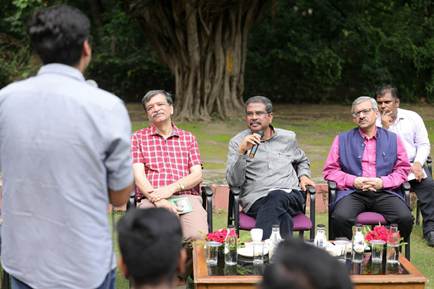
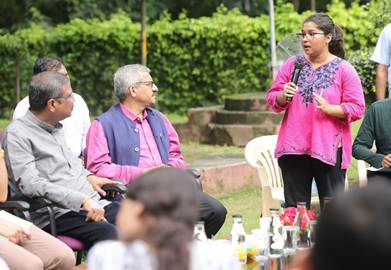
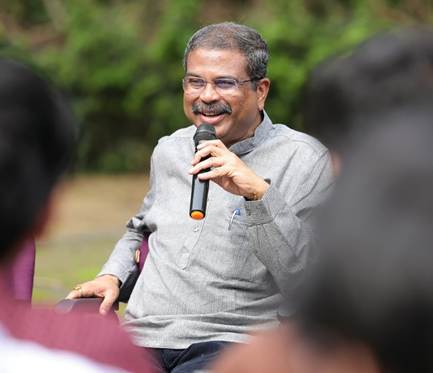
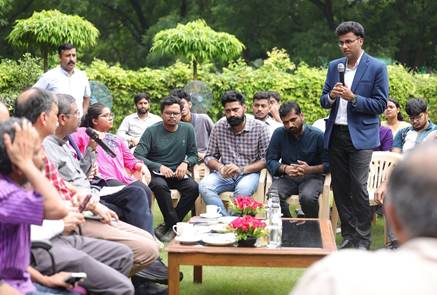
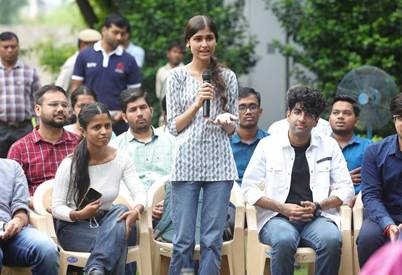
Union Minister for Education, Shri Dharmendra Pradhan, visited the Indian Institute of Technology (IIT) Delhi today, where he interacted with undergraduate, postgraduate and doctoral students, as well as innovators and researchers. Secretary, Department of Higher Education Dr. Vineet Joshi; Director, IIT Delhi, Prof. Rangan Bannerjee; and senior officials of the Ministry of Education and IIT Delhi were present on the occasion.

During the interaction, the Minister underlined the importance of self-reliance in line with the vision of the Prime Minister Shri Narendra Modi in his Independence Day address, this year. He stressed that the present moment offers a unique opportunity to to emphasize on the need for achieving self-reliance, ignite collective action for driving national priorities and fulfilling the vision of ‘Samridhh Bharat’ by 2047.

Image

A person holding a microphone in front of a group of peopleAI-generated content may be incorrect.

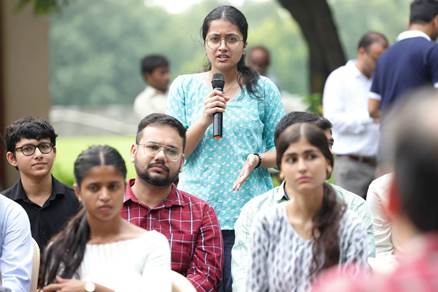
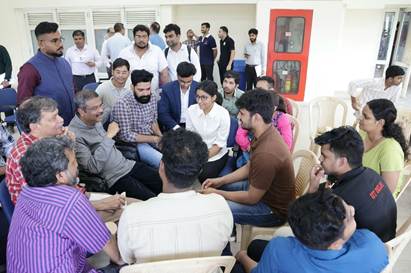
The Minister engaged with students to learn more about their dreams, aspirations, areas of research, the technological challenges they are currently pursuing, and their perspectives on the challenges and opportunities outlined by the Prime Minister. He also shared his views on enhancing capabilities and expanding the spirit of innovation.

The Minister encouraged the students to bring forward their innovative ideas, work on the challenges and keep hustling until we achieve self-reliance in every sphere.

He stated that the Government stands shoulder to shoulder with India’s innovators and researchers for shaping a brighter future for our coming generations and also for establishing India as a global hub of solutions.

A person speaking to a group of peopleAI-generated content may be incorrect.

A person holding a microphoneAI-generated content may be incorrect.

Sharing his thoughts on the occasion, the Minister his confidence that the talent, tenacity and resolve of our youth coupled with the pursuit of self-reliance will pave the way for strengthening Bharat’s capabilities as well as enhancing her technological and economic sovereignty.

He highlighted the crucial role of IITs as the bedrock of a self-reliant India. Backed by the rock solid support of PM Shri Narendra Modi, the talented YuvaShakti are going to rewrite the rules of technology, innovation and entrepreneurship and build a ‘Samridhh and self-reliant Bharat’.

A person speaking into a microphone in front of a group of peopleAI-generated content may be incorrect.

A person speaking to a group of peopleAI-generated content may be incorrect.

A group of people sitting in chairsAI-generated content may be incorrect.

The Minister also informed that he would revisit the Institute to review the innovations being developed by the students.

Speaking on the occasion, Secretary, Department of Higher Education, Dr. Vineet Joshi reiterated the Prime Minister’s Independence Day message on the role of youth in making the country self-reliant. He underlined that the Department is extending all possible support to higher education institutions in advancing innovation, strengthening research capacities and addressing national challenges in line with the vision of Atmanirbhar Bharat. He expressed confidence that IIT Delhi, through its students and faculty, will continue to play a leading role in developing technologies and solutions of global relevance.

Prevention, Not Just Medication, Key to Tackling Obesity & Diabetes: Dr. Jitendra Singh

| Published on:

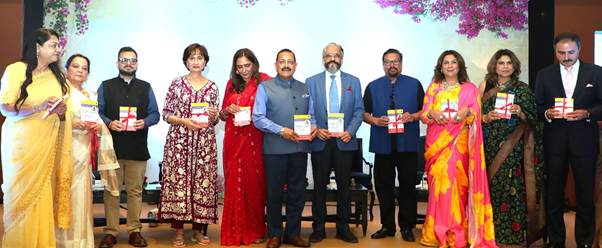
Union Minister of State (Independent Charge) for Science & Technology, Earth Sciences, Minister of State PMO, Personnel, Public Grievances, Pensions, Atomic Energy and Space, Dr. Jitendra Singh today addressed the launch of the book “The Weight Loss Revolution – Weight Loss Drugs and How to Use Them” authored by eminent endocrinologist Dr. Ambrish Mithal along with Mr. Shivam Vij.

The event was graced by legendary cinema personality Sharmila Tagore and media baron Shobhana Bhartia.

Dr. Jitendra Singh, himself a Professor of Medicine, renowned Diabetologist and author of several books, said this book has come at the right time when India is witnessing a surge in obesity and the related metabolic disorders. While awareness and the right kind of information needs to be propagated, he cautioned against disinformation.

He underlined that India, once called the diabetes capital of the world, is now also emerging as the obesity capital, ranking third globally in childhood obesity.

Dr. Jitendra Singh, in his address, highlighted the growing health challenge of obesity and related metabolic disorders such as diabetes mellitus, dyslipidaemia, hypertension, coronary heart disease, and fatty liver disease. He pointed out that there is a sudden awakening across the country about these issues and cautioned against the unchecked spread of disinformation through unscientific diet charts and fad regimens.

Diet prescriptions, the Minister stressed, must always be guided by scientifically validated principles of quantity, quality, and distribution of food intake.

Emphasizing the need for “Indian data for Indian patients”, the Minister observed that central obesity—fat deposition around the abdomen—poses a more serious risk for Indians than Western populations. “Sometimes a simple inch tape around the waist may be more meaningful than a fanciful BMI chart,” he remarked. He also underscored the importance of lifestyle interventions, referring to Indian studies that show regular yoga practice can reduce the incidence of type-2 diabetes by up to 40%. He urged for greater integration of lifestyle modification, modern medicine, and traditional practices to provide holistic solutions.

On the subject of emerging weight loss drugs such as Ozempic and Mounjaro, Dr. Jitendra Singh advised caution, noting that while global experience may be encouraging, clinical outcomes often take decades to manifest. Drawing a parallel with the refined oils episode in India, he said hasty conclusions could be misleading.

Concluding his address, Dr. Jitendra Singh called for prevention-driven strategies, particularly in view of India’s young demographic. With more than 70% of the population below the age of 40, he stressed that the country cannot afford to let their potential be compromised by lifestyle diseases, and therefore, prevention must remain the mainstay of all future health programs.

Quoting Mark Twain, Dr. Jitendra Singh remarked that “economics is too serious a subject to be left to an economist,” adding that in the same way, diabetes and obesity are too serious to be left only to a Diabetologist. He emphasized that unless there is mass awareness, optimum outcomes in tackling these lifestyle diseases cannot be achieved.

The Minister also praised Dr. Ambrish Mithal for producing a timely and authoritative book which, he said, will not only serve as a valuable guide for medical professionals but will also help the public sift through fact and misinformation in an age dominated by social media and quick fixes.

Dr Mansukh Mandaviya gives a clarion call to citizens to contribute towards a fitter India

| Published on:

Union Minister of Youth Affairs & Sports and Labour & Employment, Dr Mansukh Mandaviya gave a clarion call to all citizens to adopt an active lifestyle by participating in the Fit India Sundays on Cycle initiative from his home village Hanol in Palitana, Gujarat.

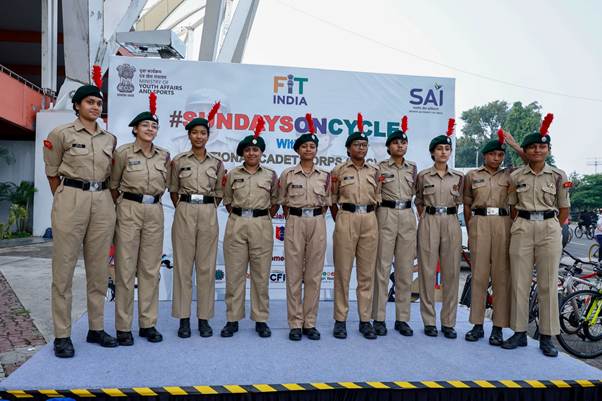
Started by the Minister in December 2024, the cycling initiative has been organised across more than 46,000 locations till date with an overall participation of 8 lakh-plus individuals. Continuing its mission to build a healthier, pollution-free India, the Ministry of Youth Affairs and Sports organised a special edition of ‘Fit India Sundays on Cycle’ today in partnership with the National Cadet Corps across 5000 locations nationwide. Around 3000 Namo Fit India Clubs also participated in the event.

A group of people in uniformDescription automatically generated

Dr Mandaviya urged fellow citizens from villages to download the FIT India mobile app and utilise the carbon credit feature.

“I would urge everyone to download the FIT India mobile app and check how much carbon is being saved by cycling to work or going around the village. The app has been developed such that it gives you all information about your health from the distance and time taken to the heart rate, and other parameters beneficial to monitor one’s health. Cycling is a great tool for fighting obesity and is a solution to pollution. I would ask everyone to become part of our Fit India Sundays on Cycle movement,” Dr Mandaviya said in Hanol.

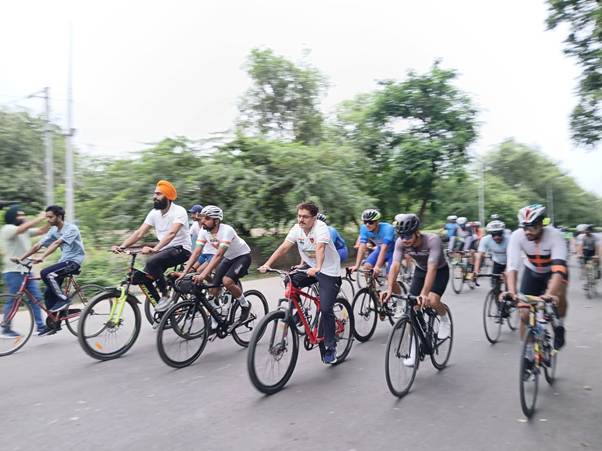
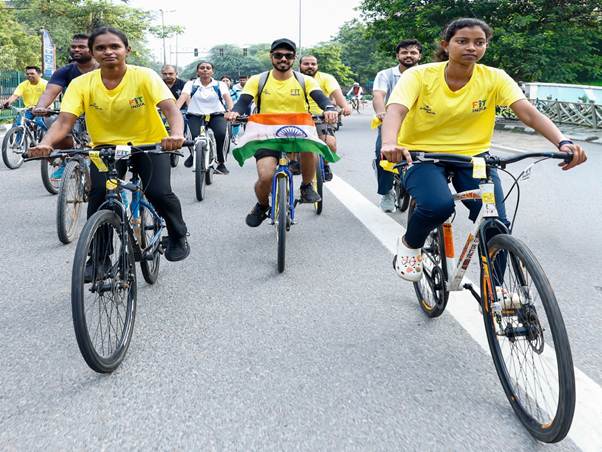
In Delhi, the 1200 plus enthusiastic cyclists rode around the Jawaharlal Nehru Stadium and enjoyed participating in Zumba, meditation and yoga sessions, alongside rope skipping activity organised by Dr Shikha Gupta. Further, fencers Naziya Shaik and Beni Quebha pledged their support for the cycling movement, highlighting its role in spreading much-needed awareness in Tier 1 and Tier 2/3 cities about the bad effects of obesity and air pollution.

A group of people riding bicyclesDescription automatically generated

A group of people riding bicyclesDescription automatically generated

“This is my first experience of cycling with such a huge crowd. I am very happy to be part of it. Fit India Sundays on Cycle is a great initiative to make people aware about lifestyle diseases like obesity, and air pollution. It was so nice to see people enjoying different physical activities from Zumba, yoga, rope skipping to badminton, net cricket etc. at one place. The morning began with high energy and the message was clear to everyone that we have to adopt an active lifestyle to remain fit and healthy,” said Beni Quebha, a National Games medallist in fencing.

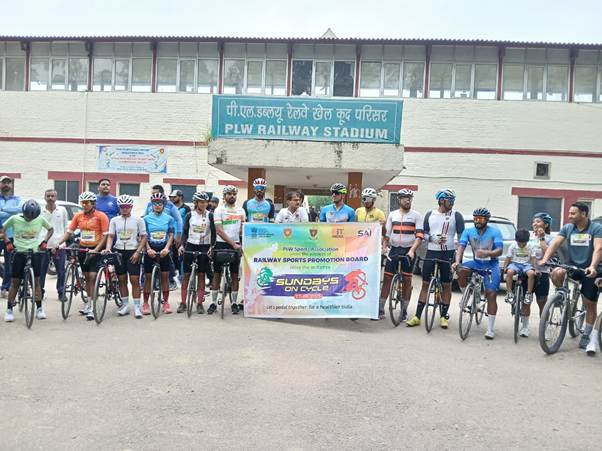
Meanwhile, more than 100 riders from the Railway Sports Promotion Board (RSPB) actively participated in the Fit India Sundays on Cycles at the Patiala Locomotive Works (PLW). The event was organized in collaboration with Indian Railways’ cycling training camp currently being held at PLW. This successful event not only promoted physical fitness but also reflected RSPB’s unwavering commitment to encouraging a healthy and active lifestyle among its athletes and employees.

A group of people on bicyclesDescription automatically generated

The ‘Fit India Sundays on Cycle’ is organised by the Ministry of Youth Affairs and Sports (MYAS), in collaboration with the Cycling Federation of India (CFI), Raahgiri Foundation, My Bikes and MY Bharat. The cycling drive is organised simultaneously in capitals of all States and Union Territories besides SAI Regional Centres, National Centres of Excellence (NCOEs), SAI Training Centres (STCs), Khelo India State Centres of Excellence (KISCEs) and Khelo India centres (KICs) across various age groups.