
PM inaugurates, lays foundation stone of metro projects worth around Rs 22,800 crore in Bengaluru, Karnataka

| Published on:

Prime Minister Shri Narendra Modi inaugurated the Yellow Line of Bangalore Metro worth around Rs 7,160 crore and laid the foundation stone of Bangalore Metro Phase-3 project worth over Rs 15,610 crore in Bengaluru, Karnataka today. He also flagged off three Vande Bharat Express trains at KSR Railway Station, Bengaluru. Addressing the gathering on the occasion, he remarked that upon setting foot on the land of Karnataka, he felt a sense of belonging. Highlighting the richness of Karnataka’s culture, the affection of its people, and the sweetness of the Kannada language, which deeply touches the heart, Shri Modi began by paying respects at the feet of Bengaluru’s presiding deity, Annamma Thayi. Recalling that centuries ago, Nadaprabhu Kempegowda laid the foundation of Bengaluru city, the Prime Minister noted that Kempegowda envisioned a city rooted in tradition while also reaching new heights of progress. “Bengaluru has always lived that spirit and preserved it and today, Bengaluru is realizing that very dream”, stated the PM.

“Today, Bengaluru is emerging as a city that has become a symbol of New India’s rise”, stated Shri Modi, describing it as a city whose soul embodies philosophical wisdom, and whose actions reflect technological expertise. He highlighted that Bengaluru is a city which has proudly placed India on the global IT map, crediting the success story of Bengaluru to the hard work and talent of its people.

“In the 21st century, urban planning and urban infrastructure are critical needs for our cities”, emphasised the Prime Minister, stating that cities like Bengaluru must be prepared for the future. He highlighted that in recent years, the Government of India has launched projects worth thousands of crores for Bengaluru and today, this campaign is gaining new momentum. Shri Modi inaugurated the Bangalore Metro Yellow Line and laid the foundation stone for Metro Phase-Three. He also flagged off three new Vande Bharat trains connecting different parts of the country.  He added that the commencement of Vande Bharat service between Bengaluru and Belagavi will boost trade and tourism in Belagavi. Additionally, Vande Bharat Express trains were launched between Nagpur and Pune, and between Shri Mata Vaishno Devi Katra and Amritsar. The Prime Minister noted that these services will benefit lakhs of devotees and promote tourism. He congratulated the people of Bengaluru, Karnataka, and the entire nation for these projects and the new Vande Bharat trains.

Mentioning that this is his first visit to Bengaluru following Operation Sindoor, Shri Modi highlighted the success of Indian forces in Operation Sindoor, noting their capability to destroy terrorist hideouts deep across the border. He emphasized India’s strength in forcing Pakistan, who came to defend the terrorists, to its knees within hours. “The entire world has witnessed this new face of New India”, remarked the Prime Minister, attributing the success of Operation Sindoor to the power of technology and the strength of Make in India in the defence sector. He acknowledged the significant contribution of the youth of Bengaluru and Karnataka in this achievement, and extended his congratulations to all for their role in this success.

Noting that Bengaluru is now recognized alongside major global cities, the Prime Minister emphasized that India must not only compete globally but also lead. He remarked that progress will come only when our cities are smart, fast, and efficient, underscoring the government’s strong focus on completing modern infrastructure projects. Shri Modi announced the commencement of the Yellow Line of Bangalore Metro from RV Road to Bommasandra, which will connect several key areas of Bengaluru.  He noted that travel time between Basavanagudi and Electronic City will now be significantly reduced. This, he said, will enhance ease of living and ease of working for lakhs of people.

The Prime Minister announced that alongside the inauguration of the Yellow Line, the foundation stone for Bangalore Metro’s Phase Three —namely, the Orange Line—has also been laid. He stated that once operational, the Orange Line, in conjunction with the Yellow Line, will facilitate daily travel for 25 lakh passengers. This, he said, will empower Bengaluru’s transport system and elevate it to new heights. Shri Modi further remarked that Bangalore Metro has introduced a new model for public infrastructure development in the country. He highlighted that companies like Infosys Foundation, Biocon, and Delta Electronics have provided part-funding for several key metro stations. He praised this innovative use of CSR as a source of inspiration and extended congratulations to the corporate sector for their contribution.

“India is currently the fastest-growing major economy in the world. In the past eleven years, India’s economy has risen from the 10th position to the top five globally, and is rapidly progressing toward becoming one of the top three economies”, highlighted Shri Modi. He attributed this momentum to the spirit of “Reform, Perform and Transform,” driven by clear intent and honest efforts. Reflecting on infrastructure growth, the Prime Minister recalled that in 2014, metro services were limited to just five cities. Today, he added, metro networks span over 1,000 kilometers across 24 cities, making India the third-largest metro network globally. Shri Modi also pointed out that prior to 2014, only about 20,000 kilometers of railway routes had been electrified. In the last eleven years alone, more than 40,000 kilometers of railway routes have been electrified, marking a significant leap in sustainable transport development.

Emphasising that India’s achievements are soaring not just on land but also in the skies, the Prime Minister highlighted that in 2014, India had only 74 airports, and today, the number has increased to over 160. He also pointed out the remarkable progress in waterway infrastructure stating that in 2014, only three national waterways were operational; this number has now risen to thirty.

Discussing the significant leap made by India in the health and education sectors, Shri Modi highlighted that until 2014, the country had only 7 AIIMS and 387 medical colleges, while today, 22 AIIMS and 704 medical colleges are serving the people. The Prime Minister stated that in the past 11 years, over one lakh new medical seats have been added across the country. He emphasized the impact of this expansion, noting how middle-class children have greatly benefited from the increased opportunities. Shri Modi further highlighted that in the last 11 years, the number of IITs has increased from 16 to 23, IIITs from 9 to 25, and IIMs from 13 to 21. He stated that today, students have access to significantly more opportunities in higher education.

Affirming that today as the nation progresses rapidly, the lives of the poor and marginalized are transforming at the same pace, the Prime Minister  highlighted that under the Pradhan Mantri Awas Yojana, over 4 crore pucca houses have been provided. He announced that the government is now set to construct 3 crore more houses. Shri Modi remarked that in just 11 years, more than 12 crore toilets have been built across the country. He emphasized that this initiative has granted dignity, cleanliness, and safety to crores of mothers and sisters.

“The rapid pace of development in the country is strongly driven by India’s economic growth”, underlined Shri Modi, highlighting that before 2014, India’s total exports had reached only $468 billion whereas today, that figure has risen to $824 billion. The Prime Minister remarked that earlier, India used to import mobile phones, but now, the country is among the top five exporters of mobile handsets. He noted that Bengaluru has played a significant role in this transformation. Shri Modi further highlighted that before 2014, India’s electronics exports stood at approximately $6 billion, which has now increased to nearly $38 billion.

Highlighting that eleven years ago, India’s automobile exports stood at approximately $16 billion, the Prime Minister cited that today, that figure has more than doubled, making India the fourth-largest automobile exporter globally. He stated that these achievements strengthen the resolve of Aatmanirbhar Bharat and affirmed that together, the nation will move forward and build a  developed India.

“The journey to a Viksit Bharat will move forward hand in hand with Digital India”, exclaimed Shri Modi, noting that through initiatives like the India AI Mission, India is advancing toward global AI leadership. He added that the Semiconductor Mission is also gaining momentum, and India will soon have its own Made-in-India chip. The Prime Minister stated that India has become a global example of low-cost, high-tech space missions. He emphasized that India is progressing in all areas of futuristic technology, and the most remarkable aspect of this advancement is the empowerment of the poor. Pointing out that digitization has now reached every village in the country, the Prime Minister said through UPI, India accounts for over 50% of the world’s real-time transactions. He remarked that technology is helping bridge the gap between government and citizens, mentioning that today, over 2,200 government services are available on mobile platforms. He added that through the UMANG app, citizens can complete government tasks from home, while with DigiLocker, the hassle of managing government certificates has been eliminated. The Prime Minister stated that India is now investing in technologies like AI-powered threat detection. He emphasized that the goal is to ensure the benefits of the digital revolution reach the last person in society. He acknowledged that Bengaluru is actively contributing to this national effort.

“Our next big priority should be becoming self-reliant in technology”, declared the Prime Minister, highlighting that Indian tech companies have made a mark globally, developing software and products for the entire world. He stressed that it is now time to prioritize India’s own needs more strongly and must accelerate the development of new products, especially as software and apps are now being used across every domain. Shri Modi stated that it is essential for India to reach new heights in this space. Calling for focused efforts to lead in emerging fields, the Prime Minister stressed the need to strengthen Bengaluru and Karnataka’s presence in Make in India and the manufacturing sector. He urged that India’s products must adhere to the Zero Defect, Zero Effect standard, meaning they should be flawless in quality and have no negative impact on the environment. He expressed confidence that Karnataka’s talent will lead the vision of Aatmanirbhar Bharat.

Shri Modi stated that whether it is the central government or state governments, all are committed to serving the people, emphasizing the need for collaborative efforts to improve the lives of citizens. He highlighted that a key responsibility in this direction is the implementation of new reforms. The Prime Minister noted that over the past decade, the central government has consistently advanced reforms. As an example, he cited the passage of the Jan Vishwas Bill to decriminalize laws, and announced that Jan Vishwas 2.0 is also being introduced. He encouraged state governments to identify laws with unnecessary criminal provisions and work toward eliminating them. Shri Modi mentioned the Mission Karmayogi initiative, aimed at providing competency-based training to government employees. He suggested that states can adopt this learning framework for their officials as well. Highlighting the focus on the Aspirational Districts Programme and the Aspirational Block Programme, the Prime Minister urged states to similarly identify regions that require special attention. He concluded by calling for continuous reform efforts at the state level, expressing confidence that these joint initiatives will take Karnataka to new heights of development and affirmed that together, we will fulfill the vision of Viksit Bharat.

Governor of Karnataka, Shri Thaawarchand Gehlot, Chief Minister of Karnataka, Shri Siddaramaiah, Union Ministers Shri Manohar Lal, Shri H.D. Kumaraswamy, Shri Ashwini Vaishnaw, Shri V. Somanna, Sushri Shobha Karandlaje were present among other dignitaries at the event.

Background

Prime Minister Shri Narendra Modi inaugurated the Yellow line from RV Road (Ragigudda) to Bommasandra of Bangalore Metro Phase-2 project having a route length of over 19 km with 16 stations worth around Rs 7,160 crore. With the opening of this yellow line, the operational metro network in Bengaluru will increase to over 96 km serving a large population in the region.

Prime Minister also laid the foundation stone of Bangalore Metro Phase-3 project worth over Rs 15,610 crore. The total route length of the project will be more than 44 km with 31 elevated stations. This infrastructure project will address the growing transportation needs of the city catering to residential, industrial, commercial and educational areas.

Prime Minister also flagged off 3 Vande Bharat Express trains from Bengaluru. It includes trains from Bengaluru to Belagavi, Amritsar to Sri Mata Vaishno Devi Katra and Nagpur (Ajni) to Pune. These high-speed trains will significantly enhance regional connectivity, reduce travel time and provide a world-class travel experience to the passengers.

Operation Sindoor is proof that India possesses the capability to defeat its enemies with home-grown strength: Raksha Mantri

| Published on:

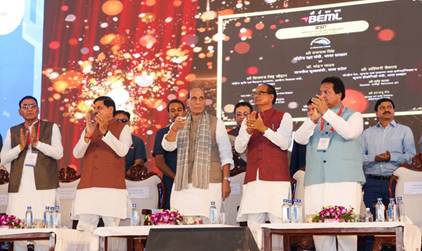
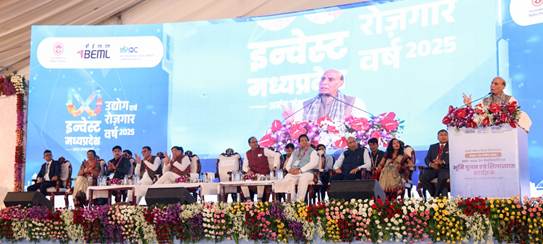
Operation Sindoor is proof that India possesses the capability to defeat its enemies with home-grown strength,” said Raksha Mantri Shri Rajnath Singh while laying the foundation stone of BEML Rail Hub for Manufacturing (BRAHMA), a Greenfield Rail Manufacturing facility at Umariya, Madhya Pradesh on August 10, 2025. He termed the operation as a befitting reply to the heinous and cowardly terrorist attack on innocent civilians in Pahalgam, J&K, emphasising that India’s decisive response sent a loud and clear message that it no longer tolerates an attack on its integrity and sovereignty. “We do not provoke anyone, but those who provoke us will not be spared” he added.

Describing Operation Sindoor as a symbol of India’s self-reliance and self-confidence, Raksha Mantri asserted that the Armed Forces effectively utilised indigenous equipment, which played a pivotal role in the success of the operation. “India was able to reach this position only because it has taken the pledge to become Aatmanirbhar in the defence sector,” he said.

Crediting the dynamic leadership and vision of Prime Minister Shri Narendra Modi for the transformation of the defence sector, Shri Rajnath Singh stated that, today, India is not only manufacturing equipment on its soil, but is also catering to the security needs of friendly countries. “Our defence production and exports are increasing at an unprecedented pace and have touched record figures. This is the new defence sector of the new India,” he said. It may be recalled that, in the Financial Year 2024-25, annual defence production soared to an all-time high figure of Rs 1.51 lakh crore and defence exports touched a record Rs 23,622 crore.

Raksha Mantri shed light on the economic development and economic self-reliance witnessed by the nation in the last decade, pointing out that India’s economy is growing at a rate of about 6.5% and the nation is poised to become the third largest economy in the world. He added that persistent efforts are being made by the “double engine government” to take the economy forward at an even faster pace, and exuded confidence of achieving the goal of Viksit Bharat by 2047.

A person speaking into a microphoneDescription automatically generated

About BEML Rail Hub for Manufacturing

The BRAHMA facility will be developed across 148 acres as a world-class manufacturing unit for rolling stock and is expected to be completed in about two years. BEML plans to invest Rs 1,800 crore in the next few years in a phase-wise manner to fully establish the integrated manufacturing unit. Initially producing 125-200 coaches per year, its capacity will scale up to 1,100 coaches annually within five years. The unit will manufacture Vande Bharat trainsets, metro cars, Electrical Multiple Units, high-speed rail coaches, and other advanced rolling stock for domestic & export markets. It is expected to create over 5,000 direct and indirect jobs, catalyse local supply chains, and encourage MSMEs in Madhya Pradesh’s industrial belt particularly in Singrauli, Satna, Rewa, and Katni.

A group of people standing on a stageDescription automatically generated

In line with India’s green manufacturing goals, the facility will incorporate zero liquid discharge systems, solar and renewable energy integration, rainwater harvesting, and green landscaping. The use of recycled and sustainable building materials will ensure compliance with the highest environmental and safety standards, including statutory environmental clearances and green factory norms.

Shri Rajnath Singh dubbed the initiatives like BRAHMA as critical in building the industrial and technological base needed for both national security and economic growth. He lauded the role of BEML in strengthening the defence sector, adding that the BRAHMA project would bolster the DPSU’s position as a global supplier of mobility solutions. “BEML stands as a pillar in India’s journey towards industrial and defence self-reliance. Projects like BRAHMA reaffirm our economic resolve to be self-reliant, globally competitive, and future ready. This is how we will build a strong, secure, and prosperous India,” he stated. While Raksha Mantri acknowledged the contribution of BEML in fulfilling the needs of both defence and civilian sectors, he called for further strengthening the area of research and development as it is the foundation for any industry.

A group of people sitting on a stageDescription automatically generated

The ceremony was also attended by Minister of Agriculture, Farmers Welfare and Rural Development Shri Shivraj Singh Chouhan; Minister for Railways, Information & Broadcasting, and Electronics & IT Shri Ashwini Vaishnaw (virtually); Chief Minister of Madhya Pradesh Dr Mohan Yadav; Secretary (Defence Production) Shri Sanjeev Kumar; Chairman & Managing Director, BEML Shri Shantanu Roy; and other senior state & central officials.

PM Modi’s Leadership Roars Behind Project Lion’s Triumph: Bhupender Yadav

| Published on:

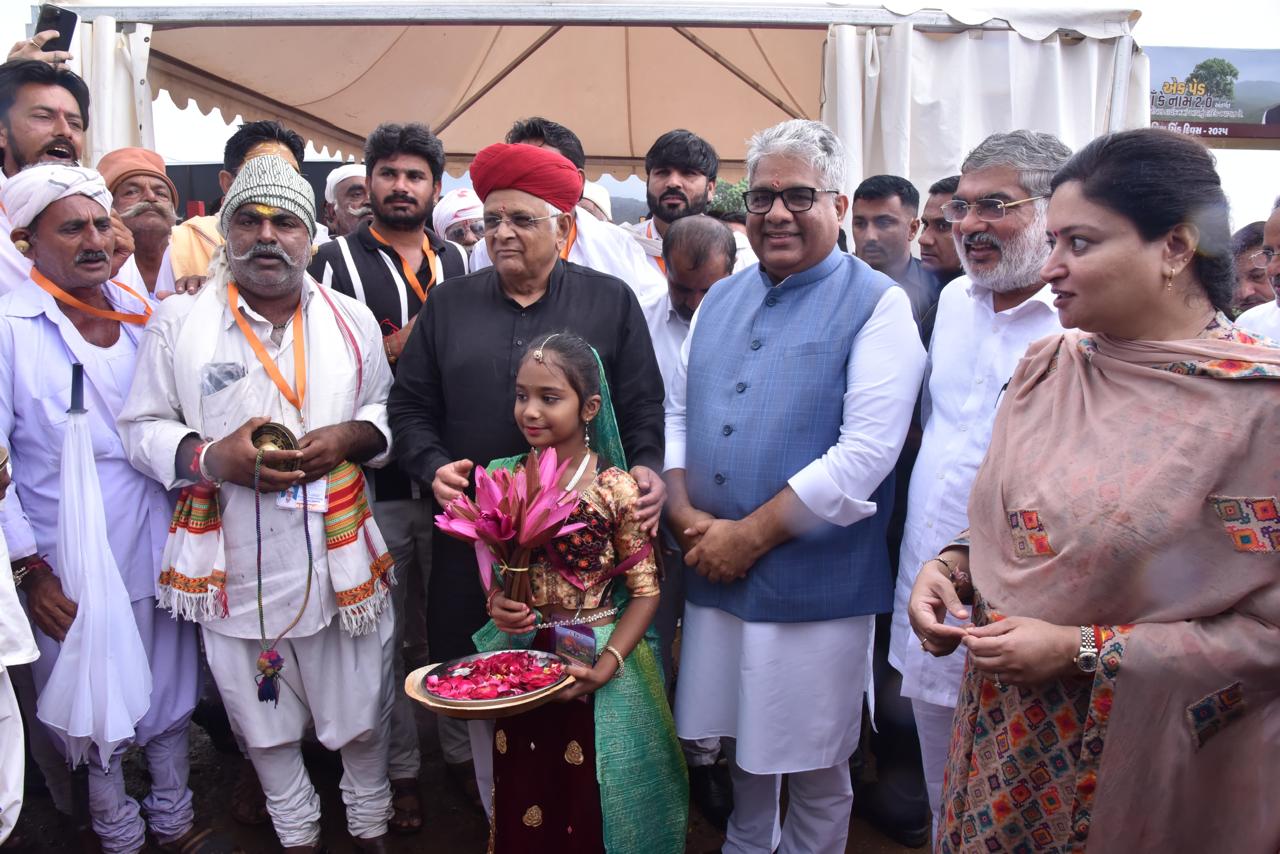
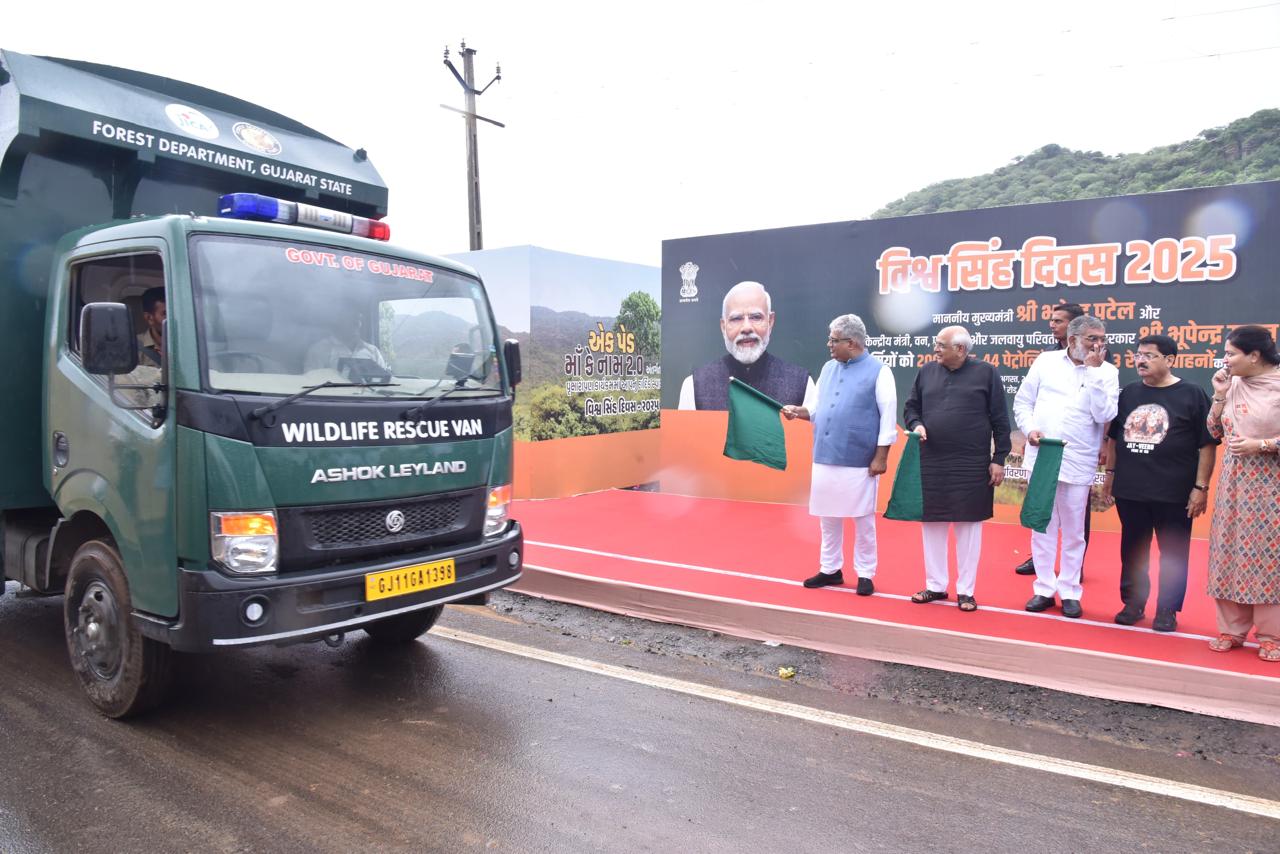
The Ministry of Environment, Forest and Climate Change in collaboration with the Forest and Environment Department, Government of Gujarat celebrated today World Lion Day – 2025 at Barda Wildlife Sanctuary, Devbhumi Dwarka district, Gujarat. The celebration was graced by Gujarat Chief Minister Shri Bhupendra Patel, Union Minister for Environment, Forest and Climate Change Shri Bhupender Yadav, along with Gujarat Forest Minister Shri Mulubhai Bera, Members of Parliament, State legislators, and other public representatives.

Addressing the gathering, Union Minister for Environment, Forest and Climate Change, Shri Bhupender Yadav expressed happiness over the significant rise in India’s lion population, which has grown to 891, up from 674 in 2020.  Union Minister Shri Yadav further said, “The Asiatic Lion (Panthera leo persica) is a global symbol of successful wildlife conservation, and on this World Lion Day, we celebrate their remarkable recovery. From just 284 lions in 1990, the population has now risen to 891 in 2025 — a 32% increase since 2020 and over 70% growth in the past decade.”

Calling it an “astounding success of conservation,” the Minister credited this achievement to the visionary leadership of Prime Minister Shri Narendra Modi, who, first as Chief Minister of Gujarat and later as Prime Minister, made Project Lion a priority area of action.

Union Minister Shri Yadav congratulated every forest official, wildlife lover, and environment enthusiast for their role in this success story. “It is heartening to note that such remarkable growth has been made possible through collective will, dedication, and policies rooted in co-existence,” he said.

The Minister reaffirmed the government’s commitment towards building a Viksit Bharat where humans and wildlife flourish together, ensuring that the conservation momentum continues for generations to come.

Shri Yadav also said, “It is a matter of immense national pride that if the Asiatic lion exists anywhere in the world today, it is in Gir, Gujarat. Our relentless conservation efforts have doubled their population in the past decade, giving hope to global wildlife protection. Let today’s inauguration inspire all to protect this majestic animal—the true symbol of Gujarat’s heritage and India’s ecological strength.”

Speaking on the occasion, Chief Minister Shri Bhupendra Patel reiterated Gujarat’s commitment to the protection and growth of the Asiatic lion population, stating that the state continues to serve as the global home of this iconic species.

The Chief Minister informed that under the visionary guidance of Prime Minister Shri Narendra Modi, the lion population in Gujarat has increased from 674 to 891 over recent years through scientific conservation measures and sustained community participation.

Shri Bhupendra Patel noted that the inauguration of new habitats, advanced veterinary care facilities, and eco-tourism infrastructure worth ₹180 crore marks a significant milestone for lion conservation in the state. He said that, after 143 years, lions have returned to the Barda region—restoring ecological balance and adding to the state’s natural heritage.

He emphasised that Gujarat will continue to lead with proactive habitat management, human–wildlife conflict mitigation, and livelihood opportunities for local communities, ensuring that “the roar of the Asiatic lion remains the pride of Gujarat and the heritage of India.”

The Chief Minister commended the Forest Department, local communities, and conservation partners for their role in achieving these milestones.

World Lion Day, celebrated annually on August 10, aims to raise awareness about the conservation and protection of lions worldwide. In Gujarat, the Asiatic Lion is a unique ecological and cultural treasure, found only in the Saurashtra region. The Ministry and state’s consistent efforts under Project Lion and the leadership of the Gujarat government have made significant strides in ensuring the survival and growth of this iconic species.

On August 15, 2020, during the 74th Independence Day address from the Red Fort, Prime Minister Shri Narendra Modi announced Project Lion to ensure the long-term conservation of Asiatic Lions. The Ministry of Environment, Forest and Climate Change, Government of India, has approved a 10-year project with a total budget of ₹2,927.71 crore for lion conservation. A National Referral Centre for wildlife healthcare has been approved by the Ministry of Environment, Forest and Climate Chage, with 20.24 hectares of land allocated by the state government at New Pipliya in Junagadh District for this purpose. The project is currently under progress.

The grand celebrations of ‘World Lion Day’ was also organized across 11 districts of Saurashtra, Gujarat, to promote awareness about the conservation and protection of the ‘King of the Jungle’—the Asiatic Lion. These majestic animals roam freely in their natural habitat across approximately 35,000 sq. km in 11 districts of Saurashtra. The lion population in Gujarat has increased by 32% since 2020, rising from 674 in 2020 to 891 as per the May 2025 lion population estimation.

The Barda Wildlife Sanctuary spans 192.31 sq. km across Porbandar and Devbhumi Dwarka districts. Barda is emerging as a second home for Asiatic Lions. After the natural migration of lion to the area in 2023, the lion population has grown to 17, including 6 adults and 11 cubs. The sanctuary is a significant biodiversity hotspot and a key area for the conservation of Asiatic Lions. Being in the vicinity of the Dwarka- Porbandar-Somnath tourist circuit, the Barda area holds a significant tourism potential. A safari park in about 248 Ha area is planned to be initiated for which land have been allocated by the State Government. Wildlife conservation works amounting to about Rs 180.00 crore will also be launched at the event.

The Government of India has also granted in-principle approval for the development of the Barda Safari Park and Zoo, which will strengthen ecotourism in the region while providing a significant boost to lion conservation efforts within the Barda landscape.

The event was also joined through satellite communication by the lakhs of students from the schools and colleges across the 11 districts of the Greater Gir Lion Landscape. During 2024, 18.63 lakh students participated in the event on World Lion Day.

Cycling Ensures Fitness, Becomes ‘Pollution Ka Solution’, and Connects to Spirit of Aatmanirbhar Bharat: Dr. Mansukh Mandaviya

| Published on:

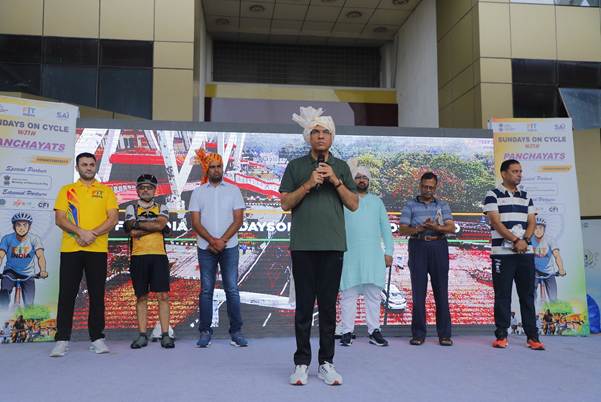
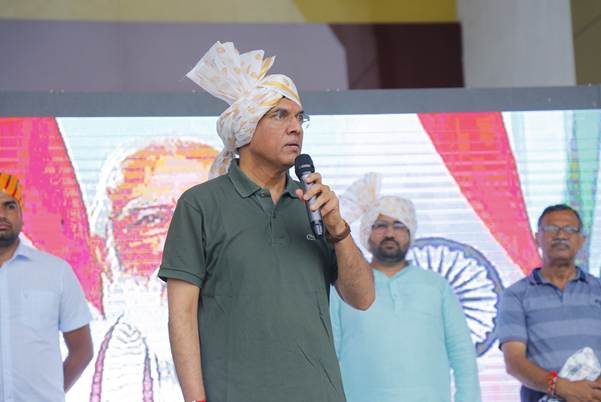
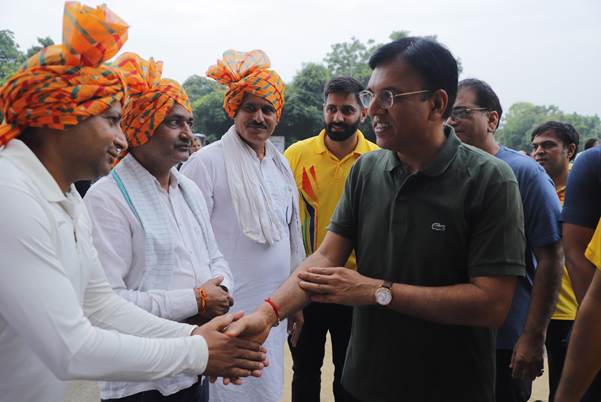
Union Minister for Labour & Employment and Youth Affairs & Sports, Dr. Mansukh Mandaviya pedalled alongside citizens in the national capital this morning as the chief guest for the 35th edition of Fit India Sundays on Cycle, held just days ahead of Independence Day.

The event, which flagged off at the Jawahar Lal Nehru (JLN) Stadium here, is part of a nationwide cycling movement that began in December 2024 and has grown into a weekly fitness phenomenon. This week, over 2.5 lakh Gram Panchayats across India were invited to join the movement.

Addressing participants before the flag off, Dr. Mandaviya highlighted the diverse benefits of cycling, both on an individual’s health as well as the health of the environment. “Cycling keeps one fit, while also being Pollution ka Solution. Further, cycling connects us to the spirit of Aatmanirbhar Bharat,” he emphasised.

“Prime Minister Narendra Modi’s Fit India Mission has emerged as a major movement in the country in the form of ‘Sundays on Cycle’. Today, in more than 50,000 villages across the nation, panchayat representatives have participated and given the message of Fit India, connecting their villages to this movement,” Dr. Mandaviya said. He urged citizens to adopt cycling wholeheartedly, not just on Sundays, but as a part of daily life, to make it a popular mode of transport while spreading the message of Fit India.

Three-time Olympian and Arjuna Award-winning rifle shooter Sanjeev Rajput joined as the special guest in the national capital. “Cycling is the best option for those who cannot run because of cervical issues. Cycling also builds a strong mind–body connection. The energy today is truly contagious; it makes me want to join every Sunday” Rajput, who is also the coach of the junior national rifle team, said.

He added that there is a dedicated 6-7 km track at the Dr. Karni Singh Shooting Range, which is used by shooting campers for their daily dose of cycling.

The Fit India Sundays on Cycle event in Delhi today also saw participation from panchayat sarpanches Jitender (Pali Gaon, Haryana), Pardeep Kumar (Khaleta Gaon, Haryana) and Kishan Kumar (Keria Gaon, Haryana). Also present were actors Rishi Bhutani and Naresh Gosain. There was also representation from MYBharat and URJA, the apex body of Resident Welfare Associations (RWAs) based in Delhi. The Delhi event also included yoga, Zumba, rope skipping, badminton and interactive games for children like carrom, chess, and ludo.

Since its inception, the Fit India Sundays on Cycle movement has reached over seven lakh individuals across more than 40,000 locations nationwide. It is spearheaded by the Ministry of Youth Affairs and Sports, in collaboration with the Cycling Federation of India (CFI), Rope Skipping team led by Dr. Shikha Gupta, Raahgiri Foundation, MYBharat, and My Bikes. The drive runs concurrently across all State and Union Territory capitals, Sports Authority of India (SAI) Regional Centres, National Centres of Excellence (NCOEs), SAI Training Centres (STCs), and Khelo India centres.

Prime Minister speaks with President Putin

| Published on:

Prime Minister Shri Narendra Modi had a telephone conversation today with the President of the Russian Federation, H.E. Mr. Vladimir Putin.

President Putin briefed PM on the latest developments concerning Ukraine.

While thanking President Putin for his detailed assessment, Prime Minister reiterated India’s consistent position for peaceful resolution of the conflict.

The two leaders also reviewed progress in the bilateral agenda, and reaffirmed their commitment to further deepen the Special and Privileged Strategic Partnership between India and Russia.

Prime Minister invited President Putin to India later this year for the 23rd India-Russia Annual Summit.

Union Home Minister performs the Bhoomi Pujan for the comprehensive development of Punaura Dham temple in Sitamarhi, Bihar

| Published on:

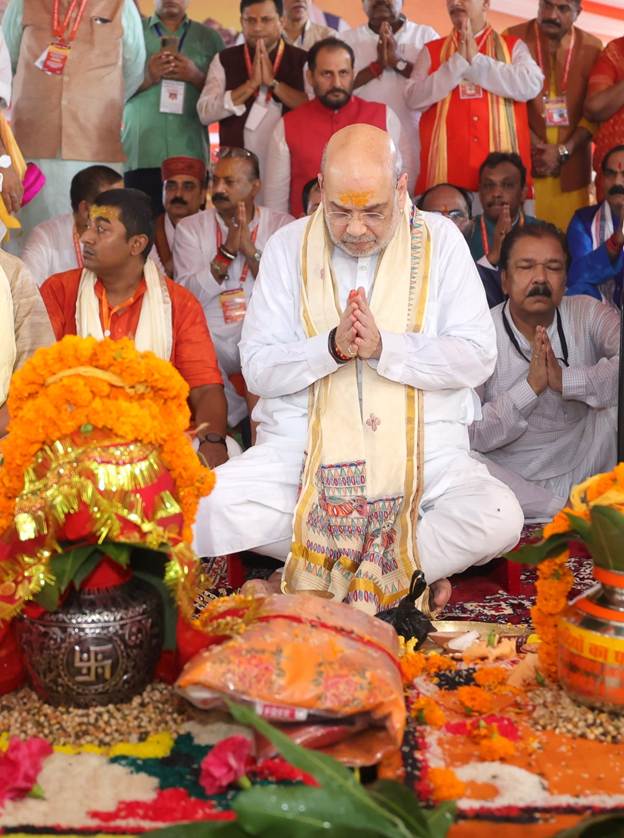
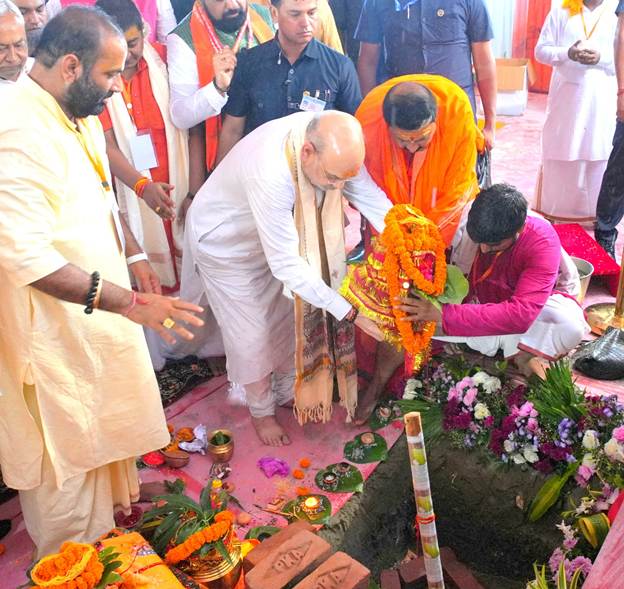
Union Home Minister and Minister of Cooperation Shri Amit Shah performed the Bhoomi Pujan for the comprehensive development of Punaura Dham temple and complex, the birthplace of Mata Sita in Sitamarhi district of Bihar today. Shri Amit Shah also flagged off the Amrit Bharat train from Sitamarhi to Delhi through video conferencing. Many dignitaries including Bihar Chief Minister Shri Nitish Kumar were present on this occasion.

In his address, Union Home Minister and Minister of Cooperation Shri Amit Shah said that today, laying the foundation stone for the development of the Punaura Dham temple complex, the birthplace of Mata Janaki, is a very auspicious occasion not only for Sitamarhi, Mithila and Bihar but also for the entire country and the world. He said that Bihar Chief Minister Shri Nitish Kumar has done the work of developing the Punaura Dham temple and its entire complex at the birthplace of Sita Mata with crores of rupees. This is a matter of joy not only for the devotees of Mithila and Bihar but also for the entire country.

Shri Amit Shah added that the grand temple of Shaktiswarupa Jagatjanani Mata Janaki will be built in Punaura Dham in an area of more than 68 acres at a cost of approximately Rs 890 crore. He said that out of this, Rs 137 crore will be spent on the renovation of the existing temple of Mata Sita and Rs 728 crore will be spent on the ‘Parikrama Path’ and other structures. He said that the life lessons from the life of Mata Sita and the stories of Ramayana will be told in the Parikrama Path, Dhyan Kendra Vatika, reconstruction of religious water sources, Dharamshalas, canteens, medical facilities and digital gallery. He said that through the 3D experience, our young generations will be able to see all the inspiring incidents from the life of Mata Janaki along with Shri Ram Chandra Ji.  Shri Amit Shah said that this project will also include development work of Valmiki Nagar of Ramayana Circuit with Rs 52 crore, development of Pulhar in Madhubani with Rs 31 crore, Panth Pakar in Sitamarhi with Rs 24 crore, Ahilya spot with Rs 23 crore, Ram Reka Ghat with Rs 13 crore and Sita Kund in Munger Gaya with Rs 7 crore.

Union Home Minister said that today the Sitamarhi-Delhi Amrit Bharat train has also been started. He added that earlier Rs 1132 crore was spent every year for the development of railways in Bihar, but Prime Minister Shri Narendra Modi ji has spent Rs 10,066 crore for railways in Bihar only in 2025-26.

Shri Amit Shah said that the life story of Mata Sita will be dedicated to the women power of the country by reviving all the places from the first meeting of Mata Sita with Shri Ram to the birthplace of Luv-Kush, the last residing place of Mata Sita and Panth Pakar. He said that Mata Sita has a unique place in the culture of India. Mata Janaki had played the roles as an ideal wife, an ideal daughter, an ideal mother and an ideal Raj Mata (queen) in her life. Shri Amit Shah said that Mithila occupies centre place in our culture as evident from our scriptures like Valmiki Ramayana, Mahabharata, in Buddhist scriptures and in Jain literature. Mithila has been a great abode of knowledge, of theology, astrology, music, literature, grammar, language and tantra knowledge. He said that this grand temple being built on the birthplace of Mata Janaki underscores prosperity and development of Mithila region and Bihar. He said that today, the process of making Mithila a centre of learning and culture is being started from there.

Union Home Minister said that during the Modi government Mithila has been respected in many ways. He said that former Prime Minister Shri Atal Bihari Vajpayee ji had included Maithili in the Eighth Schedule and Prime Minister Modi ji has taken the art of Mithila to the global stage. Shri Shah said that our culture has always been to respect the ‘Maatri Shakti’ (women power) and we have always worshipped ‘Maatri Shakti’ in this country. He said that Prime Minister Shri Narendra Modi ji built a grand Ram temple in Ayodhya, built the Kashi Vishwanath Corridor and the Mahakal Corridor in Ujjain. Also, the temple of Shri Somnath is being built again of gold and Prime Minister Modi ji has renovated many religious places.

Shri Amit Shah said that Prime Minister Shri Narendra Modi Ji is committed to the security of India. Earlier there used to be bomb blasts in the country and terrorists used to escape to Pakistan after carrying out the blasts. The Home Minister said that after Modi Ji’s government came to power, we did surgical strike after Uri attack, air strike after Pulwama attack and after Pahalgam attack, through Operation Sindoor, we wiped out terrorists deep inside Pakistan. He said that the opposition was against Operation Sindoor in the Parliament but they should know that this is Shri Narendra Modi Ji’s government which does not give anyone the right to breach the security of the country.

Union Home Minister and Minister of Cooperation said that before the Bihar elections, the news that is being published in all the newspapers is whether Special Intensive Revision (SIR) should be done or not. He asked the public shouldn’t the infiltrators be removed from the voter list, and should the Election Commission be stopped from conducting ‘SIR’. Shri Shah said that the opposition wants to save those who entered India from Bangladesh and have taken away jobs of our youth. He said that the opposition wants the votes of the infiltrators but the people of Bihar will not accept it. Shri Shah said that the opposition should stop vote-bank politics. He said that electoral roll revision is not happening for the first time, it happened during Jawaharlal Nehru and it was done in 2003 also, but there was never any protest. He hinted that the opposition appears to be pre-emptively explaining to the public the reasons for its anticipated loss in the upcoming Bihar elections, given its repeated electoral defeats.

Home Minister said that our Constitution does not give the right to vote to those who are not born in India. He said that infiltrators should not take part in the electoral process of this country and the opposition is opposing SIR because such infiltrators are their vote bank.

Shri Amit Shah said that the opposition has done nothing for the development of Mithila region except hooliganism providing protection to the mafia, kidnapping and ransom. He said that Prime Minister Modi Ji has given 83 thousand crore rupees for the development of Bihar in his last 6 visits. He said that Sitamarhi’s National Highway 527 is being made completely of concrete and it is being made so strong that when it is ready after 2 years, even a plane will be able to land on it. Sitamarhi-Sursand-Jaynagar-Nirmali railway section is being built with Rs 2400 crore, Sitamarhi-Jaynagar-Naraiya road is being doubled with Rs 474 crore. Work is going on for the road from Bahargaon to Sitamarhi-Sursand worth Rs 201 crore and Khagaria-Purnia section is being constructed on National Highway 31 with Rs 1600 crore. Shri Shah said that double gauge conversion of Jaynagar, Darbhanga, Narkatiaganj and Bhikhana is being done with Rs 1193 crore. Samastipur-Darbhanga line is being doubled with Rs 624 crore and 10 railway stations of Bihar are being made Amrit Stations. He said that new line is being built from Sitamarhi to Shivhar at a cost of Rs 567 crore, Muzaffarpur to Sitamarhi railway line is being built with Rs 71 crore, Muzaffarpur-Sugoli line is being doubled with Rs 1465 crore. The Home Minister also said that Modi ji has also done welfare of Makhana farmers by forming Makhana Board. He said that Riga sugar mill has been started in Sitamarhi, financial assistance for Western Kosi Nagar has been approved by the Government of India. Also, 8 new medical colleges have been built and today the biggest work has been accomplished in the form of foundation stone laying of Mata Janaki temple.

Cabinet approves Rs 30,000 crore as compensation to Public Sector Oil Marketing Companies

| Published on:

The Union Cabinet chaired by the Prime Minister, Shri Narendra Modi, has approved compensation amounting to Rs.30,000 crore to the three Public Sector Oil Marketing Companies (IOCL, BPCL & HPCL) for the under- recoveries incurred on sale of domestic LPG.  The distribution of the compensation within the OMCs will be done by the Ministry of Petroleum and Natural Gas. The compensation will be paid in twelve tranches.

Domestic LPG Cylinders are supplied at regulated prices to consumers by the public sector Oil Marketing companies namely, IOCL, BPCL, HPCL.

The international prices of LPG remained at high levels during 2024-25 and continue to remain high. However, to insulate consumers from fluctuations in international LPG prices, the increase in cost was not passed on to consumers of domestic LPG which led to significant losses for the three OMCs. Despite the losses, the Public Sector Oil Marketing Companies have ensured continuous supplies of domestic LPG in the country at affordable prices.

This compensation will allow the OMCs to continue meeting their critical requirements such as crude and LPG procurement, servicing of debt, and sustaining their capital expenditure, thereby ensuring uninterrupted supply of LPG cylinders to households across the country.

This step also underlines the Government’s commitment to protect consumers from volatility in global energy markets while maintaining the financial health of these PSU OMCs. It also reaffirms the objective of ensuring the widespread availability of clean cooking fuel to all consumers of domestic LPG, including those under flagship schemes like PM Ujjwala Yojana.

Cabinet approves continuation of Targeted Subsidy for Pradhan Mantri Ujjwala Yojana Consumers

| Published on:

The Union Cabinet chaired by the Prime Minister, Shri Narendra Modi, has approved the targeted subsidy of Rs.300 per 14.2 kg cylinder for up to 9 refills per year (and proportionately pro-rated for 5 kg cylinder) to the beneficiaries of Pradhan Mantri Ujjwala Yojana (PMUY) during FY 2025-26 at an expenditure of Rs 12,000 crore.

Pradhan Mantri Ujjwala Yojana: Pradhan Mantri Ujjwala Yojana (PMUY) was launched in May, 2016 with an objective to provide deposit-free LPG connection to adult women from poor households across the country. As on 01.07.2025, there are about 10.33 crore PMUY connections across the country.

All PMUY beneficiaries receive deposit-free LPG connection which includes Security Deposit (SD) of Cylinder, Pressure Regulator, Suraksha Hose, Domestic Gas Consumer Card (DGCC) booklet and installation charges. As per the existing modalities of Ujjwala 2.0, the first refill and stove is also provided free of cost to all beneficiaries. PMUY beneficiaries are not required to make any payments for the LPG connection or the first refill or stove as the cost for these is borne by the Government of India/OMCs.

Targeted Subsidy to Pradhan Mantri Ujjwala Yojana consumers: India imports about 60% of its LPG requirement. To shield PMUY beneficiaries from the impact of sharp fluctuations in international prices of LPG and to make LPG more affordable to PMUY consumers, thereby ensuring sustained usage of LPG by them, Government started a targeted subsidy of Rs.200/- per 14.2 kg cylinder for up to 12 refills per annum (and proportionately pro-rated for 5 kg connections) to the PMUY consumers in May 2022. In October 2023, Government increased targeted subsidy to Rs.300 per 14.2 kg cylinder for up to 12 refills per annum (and proportionately pro-rated for 5 kg connections).

Improved LPG consumption by PMUY Households: Average Per Capita Consumption (PCC) of PMUY consumers which was only about 3 refills in 2019-20 and 3. 68 refills in 2022-23 has improved to about 4.47 during FY 2024-25.

PM addresses the M.S. Swaminathan Centenary International Conference

| Published on:

Prime Minister Shri Narendra Modi inaugurated and addressed the M.S. Swaminathan Centenary International Conference at ICAR PUSA in New Delhi today. Paying tribute to Professor M. S. Swaminathan, the Prime Minister described him as a visionary whose contributions transcend any single era. He added that Professor Swaminathan was a great scientist who transformed science into a medium of public service. Shri Modi highlighted that Professor Swaminathan dedicated his life to ensuring food security for the nation. Noting that Professor Swaminathan awakened a consciousness that will continue to guide India’s policies and priorities for centuries to come. He extended his best wishes to all on the occasion of the Swaminathan Birth Centenary Celebrations.

The Prime Minister acknowledged the occasion of National Handloom Day and highlighted that in the past ten years, the handloom sector has gained new recognition and strength across the country. He extended his greetings to all, especially to those associated with the handloom sector, on National Handloom Day.

Sharing his association with Dr. M. S. Swaminathan spanned many years, Shri Modi recalled the earlier conditions in Gujarat, where agriculture faced severe challenges due to droughts and cyclones. Noting that during his tenure as Chief Minister, work began on the Soil Health Card initiative, he remembered Professor Swaminathan showing great interest in the initiative, offering open-hearted suggestions that significantly contributed to its success. Shri Modi mentioned visiting Professor Swaminathan’s Research Foundation Centre in Tamil Nadu nearly twenty years ago. He stated that in 2017, he had the opportunity to release Professor Swaminathan’s book, ‘The Quest for a World Without Hunger’. He added that in 2018, during the inauguration of the International Rice Research Institute’s Regional Centre in Varanasi, Professor Swaminathan’s guidance was invaluable. The Prime Minister remarked that every interaction with Professor Swaminathan was a learning experience. He recalled Professor Swaminathan once saying, “Science is not just about discovery, but delivery,” and affirmed that he proved this through his work. Shri Modi emphasized that Professor Swaminathan not only conducted research but also inspired farmers to transform agricultural practices. He stated that even today, Professor Swaminathan’s approach and ideas are visible throughout India’s agriculture sector. Describing him as a true gem of Mother India, Shri Modi expressed his privilege that Professor Swaminathan was conferred the Bharat Ratna during his government’s tenure.

“Dr. M. S. Swaminathan led the campaign to make India self-reliant in food production”, emphasised the Prime Minister stating that Professor Swaminathan’s identity extended beyond the Green Revolution. He highlighted that Professor Swaminathan consistently raised awareness among farmers about the risks of increasing chemical use and monoculture farming. Shri Modi noted that while Professor Swaminathan worked to boost grain production, he was equally concerned about the environment and Mother Earth. To balance both objectives and address emerging challenges, the Prime Minister said that Professor Swaminathan introduced the concept of the Evergreen Revolution. He added that Professor Swaminathan proposed the idea of Bio-Villages to empower rural communities and farmers. The Prime Minister remarked that Professor Swaminathan promoted innovative ideas such as Community Seed Banks and Opportunity Crops.

“Dr. M. S. Swaminathan believed the solutions to climate change and nutritional challenges lie in the very crops that have been forgotten”, said the Prime Minister highlighting Professor Swaminathan’s focus on drought tolerance and salt tolerance in agriculture. He noted that Professor Swaminathan worked on millets or Shri Anna at a time when they were largely overlooked. Shri Modi recalled that years ago, Professor Swaminathan had suggested transferring the genetic qualities of mangroves into rice, which would help make crops more climate-resilient. He emphasized that today, as climate adaptation becomes a global priority, it is evident how far-sighted Professor Swaminathan’s thinking truly was.

Prime Minister stated that while biodiversity is a topic of global discussion and governments are taking various steps to preserve it, Dr. M. S. Swaminathan went a step further by introducing the idea of biohappiness. He remarked that the gathering today is a celebration of that very idea. Quoting Dr. Swaminathan, who believed that the power of biodiversity could bring transformative change to the lives of local communities, Shri Modi highlighted that through the use of local resources, new livelihood opportunities could be created for people. He noted that true to his nature, Dr. Swaminathan had a unique ability to translate ideas into ground-level action. The Prime Minister emphasized that through his Research Foundation, Dr. Swaminathan consistently worked to ensure that the benefits of new discoveries reached farmers. He stated that small farmers, fisherfolk, and tribal communities greatly benefited from Dr. Swaminathan’s efforts.

Expressing happiness over the launch of the M. S. Swaminathan Award for Food and Peace, instituted to honour the legacy of Professor Swaminathan, the Prime Minister stated that this international award will be conferred upon individuals from developing countries who have made significant contributions in the field of food security. He emphasized that the relationship between food and peace is not only philosophical but also deeply practical. Quoting a verse from the Upanishads, Shri Modi  underlined the sanctity of food, asserting that food is life itself, and must never be disrespected or neglected. Warning that any crisis of food inevitably leads to a crisis of life, and when the lives of millions are endangered, global unrest becomes inevitable, Shri Modi underscored the importance of the M. S. Swaminathan Award for Food and Peace in today’s world. The Prime Minister congratulated Professor Adenle of Nigeria, the first recipient of the award, describing him as a talented scientist whose work exemplifies the spirit of the honour.

“Witnessing the current heights of Indian agriculture, Dr. M. S. Swaminathan would surely feel proud wherever he may be”, stated Shri Modi highlighting that India today ranks first in the production of milk, pulses, and jute. He noted that India is second in the world in the production of rice, wheat, cotton, fruits, and vegetables and added that India is also the world’s second-largest fish producer. The Prime Minister shared that last year, India achieved its highest-ever food grain production. He emphasized that India is setting records in oilseeds as well, with soybean, mustard, and groundnut production reaching record levels.

“Welfare of farmers is the nation’s highest priority”, affirmed the Prime Minister declaring that India will never compromise on the interests of its farmers, livestock rearers, and fisherfolk. He reiterated the government’s continuous efforts to increase farmers’ income, reduce agricultural expenses, and create new sources of revenue.

“The government has always considered the strength of farmers as the foundation of national progress”, affirmed the Prime Minister, stating that the policies formulated in recent years were not merely about assistance, but about instilling confidence among farmers. He highlighted that the PM-Kisan Samman Nidhi has empowered small farmers through direct financial support, while PM Fasal Bima Yojana has provided farmers with protection against agricultural risks and irrigation challenges have been addressed through the PM Krishi Sinchai Yojana. Shri Modi further emphasized that the creation of 10,000 Farmer Producer Organizations (FPOs) has strengthened the collective power of small farmers. He stated that financial support to cooperatives and self-help groups has given fresh momentum to the rural economy. Mentioning the e-NAM platform, Shri Modi said it has made it easier for farmers to sell their produce while the PM Kisan Sampada Yojana has accelerated the development of new food processing units and storage infrastructure. He informed that the recently approved PM Dhan Dhanya Yojana aims to uplift 100 districts where agriculture has lagged behind. “By providing facilities and financial assistance in these districts, the government is instilling new confidence in farming”, said the PM.

“21st century India is fully committed to becoming a developed nation and this goal will be achieved through the contribution of every section of society and every profession”, emphasised Shri Modi. Drawing inspiration from Dr. M. S. Swaminathan, the Prime Minister stated that India’s scientists now have another opportunity to create history. He highlighted that the previous generation of scientists ensured food security, stressing that the current focus must shift towards nutritional security. Calling for the large-scale promotion of bio-fortified and nutrition-rich crops to improve public health, Shri Modi advocated for reducing the use of chemicals in agriculture. He urged for greater promotion of natural farming, stating that more urgency and proactive efforts are required in this direction.

Acknowledging that the challenges posed by climate change are well known, the Prime Minister stressed on the need to develop a greater number of climate-resilient crop varieties. He highlighted the importance of focusing on drought-tolerant, heat-resistant, and flood-adaptive crops. Shri Modi called for increased research on crop rotation and soil-specific suitability and further stressed the need to develop affordable soil testing tools and effective nutrient management techniques.

Emphasizing the need to intensify efforts towards solar-powered micro-irrigation, the Prime Minister stated that drip systems and precision irrigation must be made more widespread and effective. Posing the question of integrating satellite data, AI, and machine learning into agricultural systems, Shri Modi asked whether a system can be developed that forecasts crop yields, monitors pests, and guides sowing practices and whether such a real-time decision support system can be made accessible in every district. The Prime Minister urged experts to continuously guide agri-tech startups. He noted that a large number of innovative youth are working to solve agricultural challenges and  remarked that with guidance from experienced professionals, the products developed by these youth will be more impactful.

“India’s farming communities possess a rich repository of traditional knowledge. By combining traditional Indian agricultural practices with modern science, a holistic knowledge base can be created”, emphasised the Prime Minister. Underlining that crop diversification is a national priority, Shri Modi stressed the need to inform farmers about its importance. He stated that farmers must be made aware of the benefits of diversification, as well as the consequences of not adopting it. He remarked that experts can play a highly effective role in this effort.

Recalling his visit to the PUSA campus on 11 August 2024, where he had urged for intensified efforts to take agricultural technology from lab to land, Shri Modi expressed happiness over the launch of the “Viksit Krishi Sankalp Abhiyan” during the months of May and June 2025. He highlighted that, for the first time, over 2,200 teams of scientists participated across more than 700 districts. Noting that more than 60,000 programmes were conducted, the Prime Minister stated that these efforts directly connected scientists with approximately 1.25 crore farmers. He commended the initiative as a highly commendable effort to expand scientific outreach to farmers.

“Dr. M. S. Swaminathan taught us that agriculture is not just about crops, it is about life”, stated Shri Modi emphasizing that farming is the livelihood of people. He highlighted that the dignity of every individual connected to the field, the prosperity of every community, and the protection of nature form the strength of the government’s agricultural policy. Stressing the need to connect science and society through a common thread, the Prime Minister stated that the interests of small farmers must be given top priority. He emphasized the importance of empowering women working in the fields. Concluding his address, the Prime Minister affirmed that the nation must move forward with this vision and remarked that the inspiration of Dr. Swaminathan continues to guide all.

Union Minister, Shri Shivraj Singh Chouhan; Member, Niti Aayog, Dr. Ramesh Chand; Chairperson of M.S. Swaminathan Research Foundation, Ms. Soumya Swaminathan and other dignitaries were present at the event.

Background

Prime Minister Shri Narendra Modi inaugurated M.S. Swaminathan Centenary International Conference today at ICAR PUSA in New Delhi.

The theme of the conference “Evergreen Revolution, The Pathway to Biohappiness” reflects Prof. Swaminathan’s lifelong dedication to ensuring food for all. The conference will provide an opportunity to scientists, policymakers, development professionals, and other stakeholders to discuss and deliberate on furthering the principles of ‘Evergreen Revolution’. Key themes include sustainable management of biodiversity and natural resources; sustainable agriculture for food and nutrition security; strengthening climate resilience by adapting to climate change; utilizing appropriate technologies for sustainable and equitable livelihoods; and engaging youth, women and marginalized communities in developmental discourses.

To honour his legacy, the M.S. Swaminathan Research Foundation (MSSRF) and The World Academy of Sciences (TWAS) launched the M.S. Swaminathan Award for Food and Peace. Prime Minister also gave the first award to the recipient on the occasion. This international award will recognise individuals from developing countries who have made outstanding contributions to improving food security and advancing climate justice, equity, and peace for vulnerable and marginalised communities through scientific research, policy development, grassroots engagement, or local capacity building.

PM addresses Kartavya Bhavan inauguration program at Kartavya Path, New Delhi

| Published on:

The Prime Minister Shri Narendra Modi addressed the inauguration program of Kartavya Bhavan-3 at Kartavya Path, New Delhi today. Speaking on the occasion, he remarked that August, the month of revolution, has brought yet another historic milestone ahead of 15th August. He highlighted that India is witnessing, one after the other, key achievements associated with the making of a modern India. Referring to New Delhi, Shri Modi listed recent infrastructural landmarks: Kartavya Path, the new Parliament Building, the new Defence Offices Complex, Bharat Mandapam, Yashobhoomi, the National War Memorial dedicated to the martyrs, and the statue of Netaji Subhash Chandra Bose and now the Kartavya Bhavan. Emphasising that these are not merely new buildings or regular infrastructure, the Prime Minister said that in the Amrit Kaal, the policies shaping a developed India will be formulated in these very structures, and in the coming decades, the nation’s trajectory will be determined from these institutions. He extended congratulations to all citizens on the inauguration of Kartavya Bhavan and also expressed gratitude to the engineers and Shramjeevis involved in its construction.

Shri Modi stated that the building was named ‘Kartavya Bhavan’ after deep contemplation, pointing out that both Kartavya Path and Kartavya Bhavan echo the core spirit of India’s democracy and its Constitution. Quoting the Bhagavad Gita, the Prime Minister recalled Lord Shri Krishna’s teachings that one must rise above thoughts of gain or loss and act in the spirit of duty alone. He emphasized that in Indian culture, the word ‘kartavya’ is not limited to responsibility alone but embodies the essence of India’s action-oriented philosophy. The Prime Minister further described it as a grand perspective that goes beyond the self to embrace the collective, representing the true meaning of kartavya. Remarking that Kartavya is not merely the name of a building, the Prime Minister highlighted that it is the sacred ground for realizing the dreams of crores of Indian citizens. “Kartavya is both the beginning and the destiny, bound by compassion and diligence, Kartavya is the thread of action, it is the companion of dreams, the hope of resolutions, and the pinnacle of effort”, said Shri Modi. He expressed that Kartavya is the force of will that lights a lamp in every life, underlining that Kartavya is the foundation for safeguarding the rights of crores of citizens. He further stated that Kartavya is the carrier of the life energy of Maa Bharati and  is the chanting of the mantra ‘Nagarik Devo Bhava’. He further added that every act done with devotion towards the nation is Kartavya.

Highlighting that for decades after Independence, India’s administrative machinery operated from buildings constructed during the British colonial era, the Prime Minister acknowledged the poor working conditions in these old administrative buildings, which lack adequate space, lighting, and ventilation. He remarked that it is difficult to imagine how an important ministry like the Ministry of Home Affairs has functioned for nearly 100 years from a single building with insufficient infrastructure.  Pointing out that various ministries of the Government of India currently operate from 50 different locations across Delhi, Shri Modi said that many of these ministries are functioning out of rented buildings. He underlined that the annual expenditure on rental costs alone is staggering—amounting to ₹1,500 crore. Prime Minister stated that such a large sum is being spent merely on rent for scattered government offices, emphasizing another challenge: the logistical movement of personnel due to this decentralization. He noted that an estimated 8,000 to 10,000 employees travel daily between ministries, resulting in the movement of hundreds of vehicles, generating high expenditure and increasing traffic congestion. He asserted that the resultant loss of time directly impacts administrative efficiency.

Emphasizing that 21st century India requires 21st century modern buildings, Shri Modi underlined the need for structures that are exemplary in terms of technology, security, and convenience. He noted that such buildings should enable a comfortable environment for staff, facilitate swift decision-making, and ensure seamless delivery of services. Stating that large-scale buildings like Kartavya Bhavan are being constructed around Kartavya Path with a holistic vision, the Prime Minister noted that while the first Kartavya Bhavan has been completed, the construction of several other Kartavya Bhavans is progressing rapidly. He highlighted that once these offices are shifted to the new complexes, employees will benefit from an improved working environment along with access to necessary amenities, which in turn will enhance their overall work output. Shri Modi remarked that the government will also save the ₹1,500 crore currently being spent on rent for scattered ministry offices.

“The grand Kartavya Bhavan and other major infrastructure projects, including the new Defence Complexes, are not only a testament to India’s pace but also a reflection of its global vision”, exclaimed the Prime Minister. He stated that the vision India is offering to the world is being adopted within the country as well, and this is evident in its infrastructure development. Highlighting India’s global contributions such as Mission LiFE and the ‘One Earth, One Sun, One Grid’ initiative, Shri Modi affirmed that these ideas carry the hope for humanity’s future. He pointed out that modern infrastructure like Kartavya Bhavan embodies a pro-people spirit and a pro-planet structure. Underlining that rooftop solar panels have been installed in Kartavya Bhavan, the Prime Minister  noted that advanced waste management systems have also been integrated into the building with the vision of green buildings now expanding across India.

Affirming that the government is engaged in nation-building with a holistic vision, the Prime Minister emphasised that no part of the country is untouched by the stream of development today. He noted that while Delhi has witnessed the construction of the new Parliament building, over 30,000 Panchayat Bhavans have been built across the nation. Shri Modi pointed out that alongside landmark buildings like Kartavya Bhavan, over four crore pucca houses have been constructed for the poor. He added that the National War Memorial and Police Memorial have been established, while more than 300 new medical colleges have been built across the country. The Prime Minister further mentioned that while Bharat Mandapam has come up in Delhi, more than 1,300 Amrit Bharat Railway Stations are being developed nationwide. He added that the grandeur of Yashobhoomi reflects the scale of transformation, as seen in the construction of nearly 90 new airports over the past 11 years.

Recalling Mahatma Gandhi’s belief that rights and duties are intrinsically linked, and that the fulfillment of duties strengthens the foundation of rights, Shri Modi stated that while duties are expected from citizens, the government too must uphold its responsibilities with utmost seriousness. He emphasized that when a government sincerely fulfills its duties, it is reflected in its governance. The Prime Minister affirmed that the last decade has been marked as a decade of Good Governance in the country. He stated that the stream of good governance and development stems from the riverbed of reforms, describing reforms as a consistent and time-bound process, adding that India has continuously undertaken major reforms. “India’s reforms are not only consistent but also dynamic and visionary”, stated Shri Modi highlighting the ongoing efforts to strengthen government-citizen relations, enhance Ease of Living, prioritize the underserved, empower women, and improve administrative efficiency. He remarked that the country has been innovating continuously in these areas. “Over the past 11 years, India has developed a governance model that is transparent, sensitive, and citizen-centric”, highlighted the Prime Minister.

Highlighting that in every country he visits, the JAM Trinity—Jan Dhan, Aadhaar, and Mobile—is widely discussed and appreciated globally, the Prime Minister emphasized that JAM has made the delivery of government schemes in India transparent and leakage-free. He remarked that people are often astonished to learn that across schemes such as ration cards, gas subsidies, and scholarships, there were nearly 10 crore beneficiaries whose existence was unverifiable—many of whom had not even been born. Noting that previous governments were transferring funds in the names of these fake beneficiaries, resulting in funds being diverted to illegitimate accounts, Shri Modi affirmed that under the present government, all 10 crore fraudulent names have been eliminated from beneficiary lists. He shared the latest figure indicating that this action has saved the nation over ₹4.3 lakh crore from falling into the wrong hands and this substantial amount is now being channelled into developmental initiatives. The Prime Minister added that both the genuine beneficiaries are satisfied and national resources have been safeguarded.

Emphasizing that beyond corruption and leakages, outdated rules and regulations have long been a source of hardship for citizens and have hindered governmental decision-making, Shri Modi noted that to address this, over 1,500 obsolete laws—many remnants of the colonial era—have been repealed, as they continued to obstruct governance for decades. He further highlighted that compliance burdens had also posed significant challenges citing that for even basic undertakings, individuals were previously required to submit numerous documents. The Prime Minister informed that in the last 11 years, more than 40,000 compliances have been eliminated, and this rationalization continues at a steady pace. The Prime Minister observed that earlier, overlapping responsibilities across departments and ministries led to delays and bottlenecks. To streamline functioning, several departments were integrated, duplication was eliminated, and where necessary, ministries were either merged or newly created. Shri Modi cited the formation of key ministries such as, Ministry of Jal Shakti for ensuring water security, Ministry of Cooperation to empower the cooperative movement, Ministry of Fisheries, created for the first time to prioritize the sector and Ministry of Skill Development and Entrepreneurship to focus on youth empowerment. He affirmed that these reforms have enhanced the efficiency of governance and accelerated the delivery of public services.

Underlining that efforts are underway to upgrade the working culture of the government, the Prime Minister highlighted initiatives such as Mission Karmayogi and digital platforms like i-GOT, which are empowering government employees with technical and professional training. He emphasized that systems such as e-Office, file tracking, and digital approvals are revolutionizing administrative processes—making them not only faster, but also fully traceable and accountable.

Stating that moving into a new building inspires a renewed sense of enthusiasm and significantly elevates one’s energy, the Prime Minister urged all present to carry forward their responsibilities in the new building with the same vigour and dedication. He encouraged every individual—regardless of position—to strive to make their tenure truly memorable. The Prime Minister emphasized that when one eventually demits from here, it should be with the sense of pride that they have given their hundred percent in the service of the nation.

Underscoring the need to change  perspective towards files and documentation, Shri Modi observed that while a file, a grievance, or an application may appear routine, but for someone, that piece of paper may represent their deepest hope. A single file could be intricately linked to the lives of countless individuals. Illustrating the point, the Prime Minister stated that if a file which concerns one lakh citizens is delayed by even one day, it results in the loss of one lakh human days. He urged officials to approach their responsibilities with this mindset, recognizing the immense opportunity to serve beyond convenience or routine thought. The Prime Minister emphasized that generating a new idea could potentially lay the foundation for transformative change. He called upon all public servants to remain deeply committed to nation-building with a spirit of duty, reminding them that India’s dreams of development are nurtured in the womb of responsibility.

Prime Minister remarked that while this may not be the moment for criticism, it certainly is one for introspection. He pointed out that several nations which gained independence around the same time as India have advanced rapidly, whereas India’s progress was comparatively slower due to various historical challenges. Shri Modi emphasized that it is now our responsibility to ensure that these challenges are not passed on to future generations. Reflecting on past efforts, the Prime Minister stated that within the walls of older buildings, important decisions and policies were made due to which 25 crore citizens came out of poverty. He asserted that with enhanced efficiency in new buildings, the mission is to completely eradicate poverty and realize the dream of a developed India. Shri Modi called upon all stakeholders to work collectively towards making India the world’s third-largest economy, encouraging everyone to contribute to the success stories of initiatives like Make in India and Atmanirbhar Bharat. He urged a commitment to scaling up national productivity, ensuring that when tourism is discussed, India becomes a global destination, when brands are mentioned, the world turns its gaze toward Indian enterprises and when education is sought, students from across the globe choose India. He added that  strengthening India’s capabilities must become a shared pursuit and personal mission.

Stating that when successful nations move forward, they do not abandon their positive legacy but preserve it, Shri Modi affirmed that India is advancing with the vision of ‘Vikas aur Virasat’. Following the inauguration of new Kartavya Bhavans, the Prime Minister announced that the historic North and South Blocks will now be transformed into part of India’s living legacy. These iconic buildings will be converted into public museums named “Yuge Yugeen Bharat Sangrahalaya,” allowing every citizen to witness and experience India’s rich civilizational journey, he said. The Prime Minister concluded by  expressing confidence that as people enter the new Kartavya Bhavan, they will carry with them the inspiration and heritage embodied in these spaces. He extended heartfelt congratulations to the citizens of India on the inauguration of Kartavya Bhavan.

Union Ministers, Parliamentarians and officials of the Government of India were present among other dignitaries at the event.

Background

Prime Minister Shri Narendra Modi earlier today inaugurated the Kartavya Bhavan at Kartavya Path in Delhi.

This marks a major milestone in the Government’s commitment to the Prime Minister’s vision of modern, efficient, and citizen-centric governance. Kartavya Bhavan – 03, which is being inaugurated, is part of the broader transformation of the Central Vista. It is the first among several upcoming Common Central Secretariat buildings that aim to streamline administrative processes and enable agile governance.

The project embodies the government’s broader administrative reform agenda. By co-locating Ministries and adopting cutting-edge infrastructure, the Common Central Secretariat will improve inter-ministerial coordination, accelerate policy execution, and foster a responsive administrative ecosystem.

Currently, many key Ministries function from aging buildings like Shastri Bhawan, Krishi Bhawan, Udyog Bhawan, and Nirman Bhawan, constructed between the 1950s and 1970s, which are now structurally outdated and inefficient. The new facilities will reduce repair and maintenance costs, boost productivity, improve employee well-being, and enhance overall service delivery.

Kartavya Bhavan – 03 has been designed to foster efficiency, innovation, and collaboration by bringing together various Ministries and Departments currently scattered across Delhi. It will be a state-of-the-art office complex spanning an area of around 1.5 lakh square meters across two basements and seven levels (Ground + 6 floors). It will house offices of the Ministries/Departments of Home Affairs, External Affairs, Rural Development, MSME, DoPT, Petroleum & Natural Gas, and the Principal Scientific Adviser (PSA).

The new building will exemplify modern governance infrastructure featuring IT-ready and secure workspaces, ID card-based access controls, integrated electronic surveillance, and a centralized command system. It will also lead in sustainability, targeting a GRIHA-4 rating with double-glazed façades, rooftop solar, solar water heating, advanced HVAC (Heating, Ventilation, and Air Conditioning) systems, and rainwater harvesting. The facility will promote eco-consciousness through zero-discharge waste management, in-house solid waste processing, e-vehicle charging stations, and extensive use of recycled construction material.

As a zero-discharge campus, Kartavya Bhavan treats and reuses wastewater to meet a major chunk of water needs. The building uses recycled construction and demolition waste in masonry and paving blocks, lightweight dry partitions to reduce topsoil use and structural load, and features an in-house solid waste management system.

The building is designed to use 30% less energy. It has special glass windows to keep the building cool and reduce outside noise. Energy-saving LED lights, sensors that switch off lights when not needed, smart lifts that save power, and an advanced system to manage electricity use will all help save energy. Solar panels on the roof of Kartavya Bhavan – 03 will generate over 5.34 lakh units of electricity every year. Solar water heaters meet more than a quarter of the daily hot water need. Charging stations for electric vehicles are also provided.

PM dedicates Kartavya Bhawan to the Nation

| Published on:

The Prime Minister, Shri Narendra Modi dedicated Kartavya Bhawan to the nation, calling it a symbol of unwavering resolve and continuous efforts towards public service.

He stated that the Kartavya Bhawan will not only help in faster delivery of policies and schemes but will also give fresh momentum to the nation’s development.

Shri Modi said that Kartavya Bhavan reflects our commitment to build a developed and self-reliant India. Today, the nation has witnessed the tireless hard work and determination of our Shramyogis who have shaped it. He has also expressed happiness while interacting with them.

The Prime Minister noted that the building has been developed with full attention given to environmental protection.

On the occasion, PM also planted a sapling in the premises of Kartavya Bhawan.

In a series of X posts, the Prime Minister said;

“कर्तव्य पथ पर कर्तव्य भवन जन-जन की सेवा के प्रति हमारे अटूट संकल्प और निरंतर प्रयासों का प्रतीक है। यह ना केवल हमारी नीतियों और योजनाओं को लोगों तक तेजी से पहुंचाने में मददगार बनने वाला है, बल्कि इससे देश के विकास को भी एक नई गति मिलेगी। अत्याधुनिक इंफ्रास्ट्रक्चर की मिसाल बने इस भवन को राष्ट्र को समर्पित कर बहुत ही गौरवान्वित हूं।”

Sarbananda Sonowal Urges Innovation & Imagination to Repurpose Maritime Ecosystem for Viksit Bharat

| Published on:

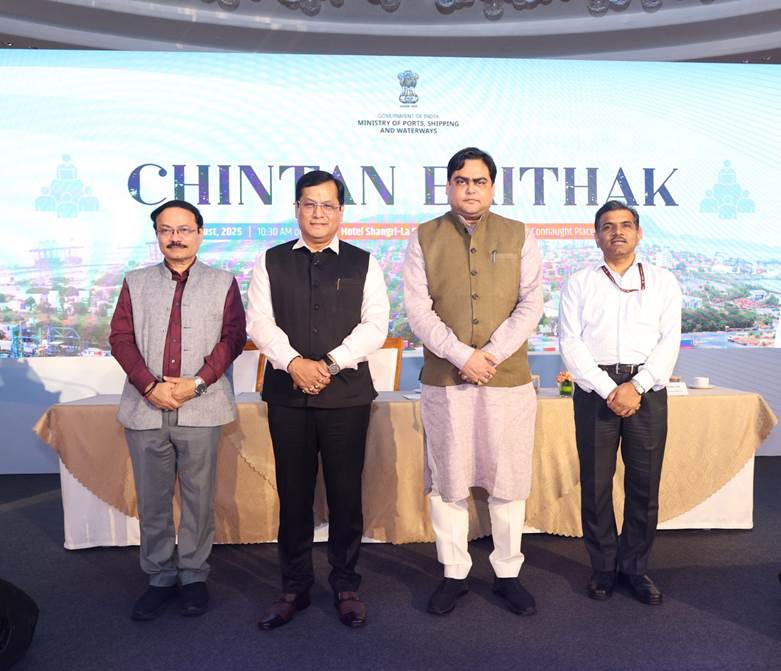
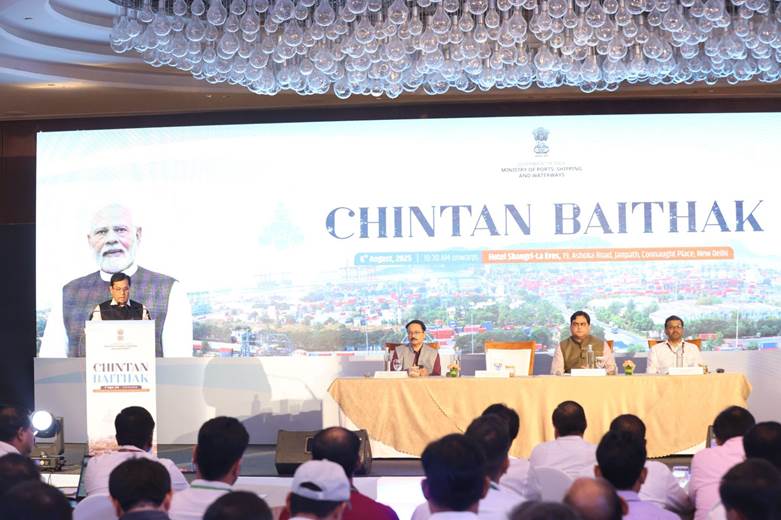
The Union Minister of Ports, Shipping & Waterways (MoPSW), Shri Sarbananda Sonowal delivered an address at the Chintan Baithak of the Ministry here today. The Union Minister called on officials to lead with purpose, innovation and reform-driven thinking to drive India’s maritime transformation and repurpose the Maritime Ecosystem for Viksit Bharat by 2047.

“This Baithak reminds us that reform begins not with a directive, but with dialogue,” Shri Sarbananda Sonowal said, urging all departments to align their work with the spirit of national ambition.

Over the past decade, the Ministry has led significant developments across India’s maritime sector. Under the Sagarmala Programme, more than 800 projects have been identified to reduce logistics costs and unlock port-led growth. The implementation of the Major Port Authorities Act, 2021 has provided ports with greater financial and operational autonomy, enhancing global competitiveness.

“The visionary leadership of Prime Minister Shri Narendra Modi ji has inspired us to reimagine and reform India’s maritime sector by replacing archaic, colonial-era policies with a modern, future-ready framework,” said Union Minister Shri Sarbananda Sonowal. “Through our Ministry’s sustained efforts, we are aligning our maritime governance with global standards, enabling efficiency, sustainability, and strategic growth. These reforms are not just policy updates—they are bold steps towards building an Atmanirbhar Bharat and realising the larger national vision of Viksit Bharat.”

Cruise tourism has gained momentum. Inland waterway operations under the Jal Marg Vikas Project are also progressing, offering multimodal transport alternatives to traditional road and rail routes. India is also making strides in sustainable shipping. Initiatives such as shore power, LNG bunkering and energy-efficient vessels reflect the country’s commitment to global decarbonisation. International outreach has expanded through India’s active role in the Global Maritime India Summit (GMIS), Indian Maritime Week (IMW) and the International Maritime Organization (IMO).

The Minister stressed the need to strengthen institutional capacity. Key focus areas include digitising clearances, modernising human resources, expediting port corporatization and improving dispute resolution mechanisms. “Aligning India’s maritime standards with global benchmarks remains a priority,” Shri Sonowal underlined.

Calling the Baithak a forum for open exchange, the Minister encouraged officers to share field-level insights, challenges and solutions. “India’s maritime resurgence is no longer a vision—it is a movement,” Shri Sonowal said. “Every official, every decision, contributes to our national progress. Lead not by precedent, but by purpose. Let us be the Ministry that sets benchmarks—not only for infrastructure, but for imagination,” Shri Sonowal urged the officials of the ministry.