
PM Modi’s 79th I-Day Address: A Vision for a Viksit Bharat 2047

| Published on:

On the 79th Independence Day, PM Modi delivered his longest and most decisive address from the Red Fort, lasting 103 minutes, charting a bold roadmap for a Viksit Bharat by 2047. With a sharp focus on self-reliance, innovation, and citizen empowerment, the Prime Minister highlighted India’s journey from a nation dependent on others to a globally confident, technologically advanced, and economically resilient country.

Key Highlights and Announcements:

  1. No Blackmail, No Compromise: PM Modi hailed Operation Sindoor, conducted after the Pahalgam attack, as a demonstration of India’s strategic autonomy. Using Made-in-India weapons, the operation dismantled terror networks and Pakistan-based infrastructure, signalling a new era where India will no longer accept nuclear blackmail or threats on foreign terms.
    • On the issue of the Indus Waters Treaty, he made it unequivocally clear: “India has now decided, blood and water will not flow together. The people have realized that the Indus Waters Treaty was unjust. Water from the Indus River system irrigated enemy lands while our farmers suffered.”
    • This statement reaffirmed that India will no longer compromise on its national interests, and the operation underscored the country’s ability to act swiftly and decisively, relying entirely on indigenous technology and defence platforms.
  2. Atmanirbhar Bharat, Strengthening Technology, Industry: PM Modi said, “Dependence on others raises questions about a nation’s independence. It is unfortunate when dependence becomes a habit, a dangerous one. That’s why we must remain aware and committed to becoming self-reliant. Self-reliance is not just about exports, imports, the rupee, or the dollar. It is about our capabilities, our strength to stand on our own.”
    • That is why he announced that India will roll out its first Made-in-India semiconductor chip by 2025 and is opening the nuclear sector to private players, creating unprecedented opportunities in energy and technology.
    • He urged every citizen, especially the youth, to take part in nation-building by innovating and producing jet engines, social media platforms, fertilisers, and other critical technologies indigenously, forging a future where India stands self-reliant, powerful, and globally respected.
    • PM Modi also highlighted India’s bold steps to secure resources critical for its future. Through the National Critical Minerals Mission, the country is exploring 1,200 sites to ensure access to minerals essential for energy, industry, and defence.
    • He emphasized that controlling these minerals strengthens India’s strategic autonomy, keeping its industrial and defence sectors truly self-reliant. Complementing this, the National Deepwater Exploration Mission will harness India’s offshore energy resources, boosting energy self-reliance and reducing dependence on foreign fuel imports, marking another step toward a fully independent and powerful India.
  3. PM Modi urged the nation to achieve self-reliance in medicines and innovation, highlighting India’s strength as the “pharmacy of the world”. He asked, “Shouldn’t we be the ones providing the best and most affordable medicines for the welfare of humanity?”
  • He emphasized India’s growing prowess in domestic pharmaceutical innovation and the urgent need to develop new medicines, vaccines, and life-saving treatments entirely within India. Drawing inspiration from India’s COVID-19 response, where indigenous vaccines and platforms like CoWin saved millions of lives globally, he called on the nation to expand this spirit of innovation.
  • Researchers and entrepreneurs were urged to secure patents for new drugs and medical technologies, ensuring that India not only meets its own healthcare needs but also becomes a global hub of medical self-reliance and innovation, demonstrating the country’s ability to lead in science, technology, and human welfare.
  1. Mission Sudarshan Chakra, Enhancing Strategic Defence: To strengthen India’s offensive and deterrent capabilities, PM Modi launched Mission Sudarshan Chakra, drawing inspiration from India’s rich cultural and mythological heritage. He said, “India is launching Mission Sudarshan Chakra to create a powerful weapon system to thwart any attempt by enemies to attack us.”
  • The initiative is designed to enhance rapid, precise, and powerful defence responses, reinforcing India’s strategic autonomy. PM Modi added, “All public places will be covered by an expanded nationwide security shield by 2035,” ensuring comprehensive protection for the nation while showcasing India’s commitment to self-reliant defence.
  1. Next-generation Reforms: PM Modi announced the formation of a Task Force for Next-Generation Economic Reforms, aimed at overhauling laws, rules, and procedures that govern economic activity.
  • He highlighted that the government has already abolished over 40,000 unnecessary compliances and 1,500 outdated laws, and in the latest parliamentary session, over 280 provisions were removed. Looking ahead, Next-Generation GST reforms by Diwali will reduce taxes on daily essentials, benefiting MSMEs, local vendors, and consumers, while simultaneously stimulating economic growth and creating a more efficient, citizen-friendly economy.
  1. PM Viksit Bharat Rozgar Yojana, Empowering Youth: To strengthen India’s demographic dividend and ensure that the nation’s youth play a central role in its growth, PM Modi launched the PM Viksit Bharat Rozgar Yojana, a ₹1 lakh crore employment scheme under which newly employed youth will receive ₹15,000, targeting 3 crore young Indians.
  • He emphasized that this initiative will transform India’s demographic potential into real economic and social prosperity, strengthening the bridge from Swatantra Bharat to Samriddha Bharat and empowering the youth to actively contribute to the nation’s progress and development.
  1. Energy and Nuclear Self-Reliance: PM Modi also highlighted India’s bold steps to secure resources critical for its future. Through the National Critical Minerals Mission, the country is exploring 1,200 sites to ensure access to minerals essential for energy, industry, and defence.
  • He emphasized that controlling these minerals strengthens India’s strategic autonomy, keeping its industrial and defence sectors truly self-reliant. Complementing this, the National Deepwater Exploration Mission will harness India’s offshore energy resources, reducing dependence on foreign fuel imports and boosting energy self-reliance, marking another step toward a fully independent and powerful India.
  • Highlighting India’s remarkable achievements in clean energy, PM Modi noted that the country had already reached its 50% clean energy target in 2025, five years ahead of schedule.
  • He also announced plans to increase India’s nuclear power generation capacity tenfold by 2047, with 10 new nuclear reactors underway, ensuring energy security and sustainable growth. He added that if India were not dependent on energy imports, the money saved could be used for the welfare of farmers, further strengthening the backbone of the nation’s prosperity.
  1. Space Sector Independence, Pioneering Innovation: PM Modi highlighted India’s growing prowess in space science. Preparations for India’s own space station are underway, building on the success of the Gaganyaan mission. Over 300 startups are now innovating in satellite technology, space exploration, and cutting-edge research, demonstrating that India is not only participating in the global space arena but leading with indigenous solutions.
  2. Farmers, Backbone of India’s Prosperity: PM Modi declared, “India will not compromise on their interests.” He emphasized that he has stood as a wall for the farmers and livestock keepers against any detrimental policy, protecting their rights and livelihoods.
  • He said that Agriculture remains a cornerstone of India’s development, with India ranked No. 1 in milk, pulses, and jute, and No. 2 in rice, wheat, cotton, fruits, and vegetables. Agricultural exports have crossed ₹4 lakh crore, reflecting the nation’s global competitiveness.
  • To further empower farmers, he launched the PM Dhanya Dhanya Krishi Yojana for 100 backward farming districts, complementing ongoing support through PM-Kisan, irrigation schemes, and livestock protection programs, ensuring that India’s backbone of prosperity remains strong and resilient.
  1. High-Powered Demography Mission, Safeguarding National Integrity: PM Modi also addressed the importance of safeguarding India’s demographic integrity. He warned of challenges posed by illegal infiltration, stressing the need to protect border areas and citizens’ livelihoods. To address these concerns, he announced the High-Powered Demography Mission, aimed at ensuring India’s unity, integrity, and security, tackling both strategic and social challenges.

Looking ahead, PM Modi outlined his vision for a Viksit Bharat 2047, emphasizing that India’s progress is built on self-reliance, innovation, and citizen empowerment.

He reminded citizens that India’s strength lies in its people, innovation, and commitment to self-reliance, urging every Indian to contribute to nation-building, whether by buying India-made products or participating in scientific, technological, and entrepreneurial ventures to ensure a prosperous, powerful, and Viksit Bharat by the nation’s centenary of independence.

On Partition Horrors Remembrance Day, PM pays tribute to the grit and resilience of those affected by the Partition

| Published on:

Prime Minister Shri Narendra Modi today observed Partition Horrors Remembrance Day, solemnly recalling the immense upheaval and pain endured by countless individuals during one of the most tragic chapters in India’s history.

The Prime Minister paid heartfelt tribute to the grit and resilience of those affected by the Partition, acknowledging their ability to face unimaginable loss and still find the strength to rebuild their lives.

In a post on X, he said:

“India observes #PartitionHorrorsRemembranceDay, remembering the upheaval and pain endured by countless people during that tragic chapter of our history. It is also a day to honour their grit…their ability to face unimaginable loss and still find the strength to start afresh. Many of those affected went on to rebuild their lives and achieve remarkable milestones. This day is also a reminder of our enduring responsibility to strengthen the bonds of harmony that hold our country together.”

भारत आज विभाजन विभीषिका स्मृति दिवस के माध्यम से देश के बंटवारे की त्रासदी को याद कर रहा है। यह हमारे इतिहास के उस दुखद अध्याय के दौरान असंख्य लोगों द्वारा झेले गए दुख और पीड़ा को स्मरण करने का दिन है। यह दिन उनके साहस और आत्मबल को सम्मान देने का भी अवसर है। इन्होंने अकल्पनीय कष्ट सहने के बाद भी एक नई शुरुआत करने का साहस दिखाया। विभाजन से प्रभावित ज्यादातर लोगों ने ना सिर्फ अपने जीवन को फिर से संवारा, बल्कि असाधारण उपलब्धियां भी हासिल कीं। यह दिन हमें अपनी उस जिम्मेदारी की भी याद दिलाता है कि हम सौहार्द और एकता की भावना को सुदृढ़ बनाए रखें, जो हमारे देश को एक सूत्र में पिरोकर रखती है।

PM hails India’s milestone towards self-reliance in achieving 100 GW Solar PV Module Manufacturing Capacity

| Published on:

The Prime Minister Shri Narendra Modi today hailed the milestone towards self-reliance in achieving 100 GW Solar PV Module Manufacturing Capacity and efforts towards popularising clean energy.

Responding to a post by Union Minister Shri Pralhad Joshi on X, the Prime Minister said:

“This is yet another milestone towards self-reliance! It depicts the success of India’s manufacturing capabilities and our efforts towards popularising clean energy.”

Union Home Minister hoists the tricolour at his residence in New Delhi under ‘Har Ghar Tiranga’ campaign

| Published on:

Union Home Minister and Minister of Cooperation Shri Amit Shah hoisted the tricolour at his residence in New Delhi today under ‘Har Ghar Tiranga’ campaign.

In a post on X platform, Union Home Minister and Minister of Cooperation Shri Amit Shah said that the ‘Har Ghar Tiranga’ campaign, started under the leadership of Prime Minister Shri Narendra Modi, has today become a mass campaign to bind the country in the thread of unity and strengthen the feeling of patriotism. Home Minister said this campaign shows that countless freedom fighters had realized the dream of independent India through their sacrifice, penance and dedication, 140 crore countrymen are determined to make it developed and best.

Union Agriculture Minister holds Tiranga Yatra

| Published on:

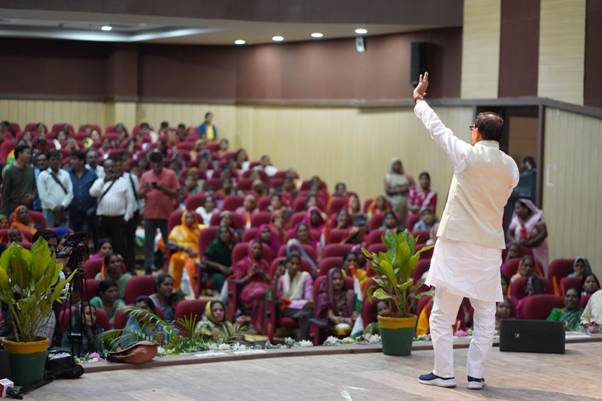
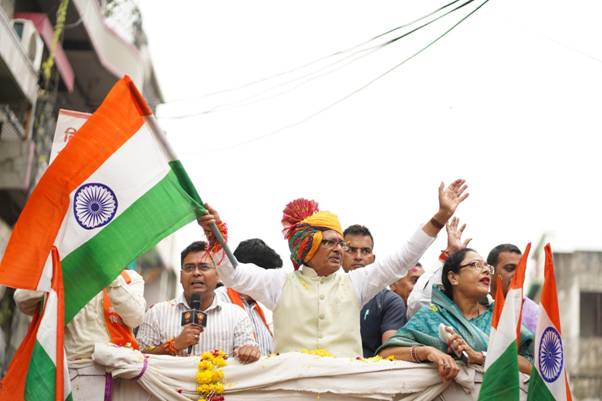
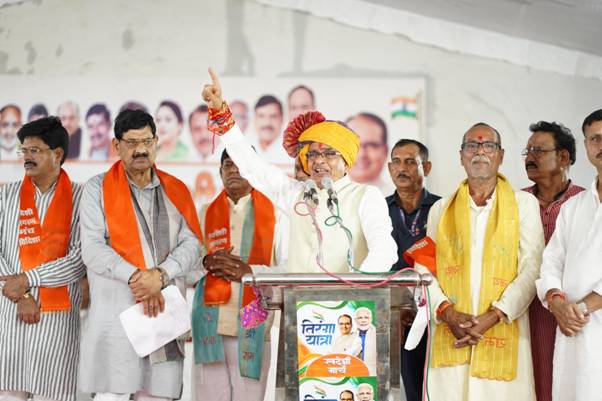
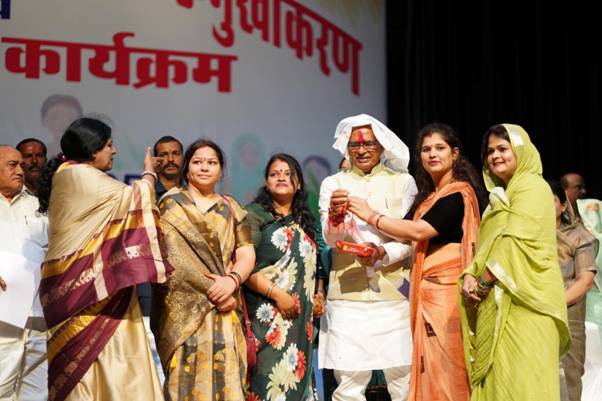
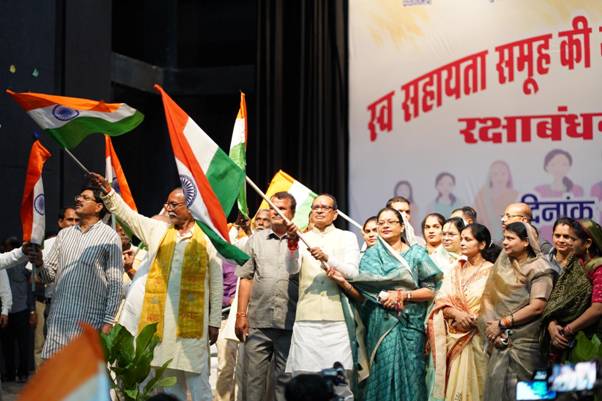
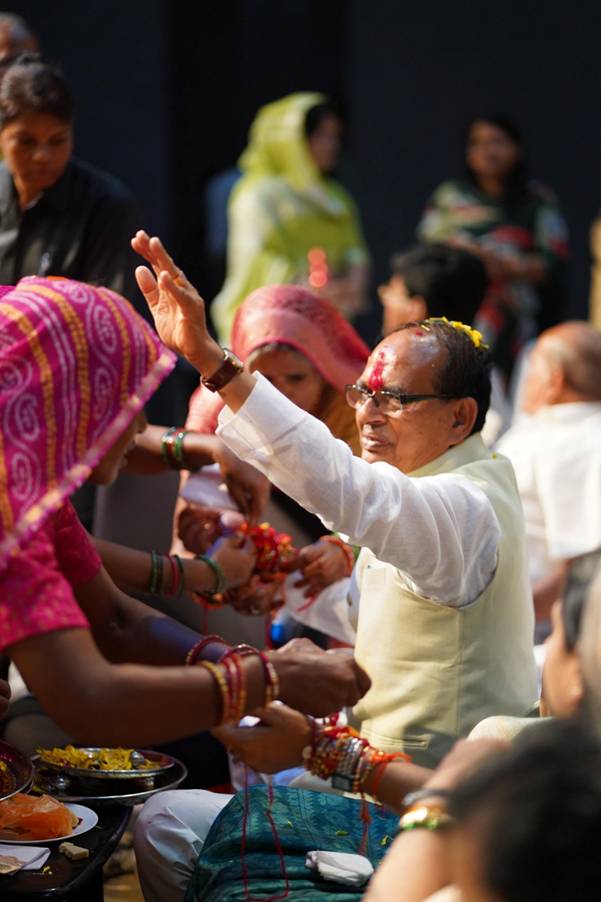
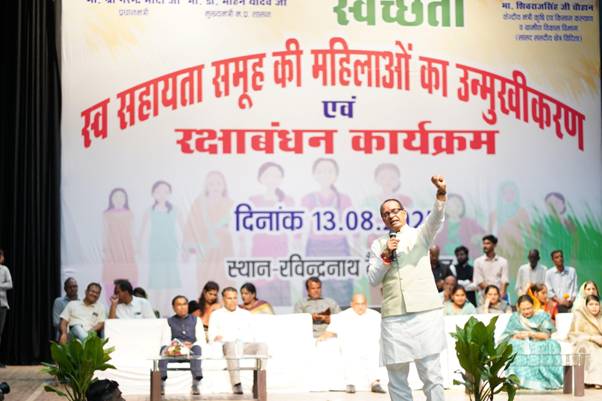
Union Agriculture Minister Shri Shivraj Singh Chouhan today organised a Tiranga Yatra and Swadeshi March in his parliamentary constituency Vidisha–Raisen in Madhya Pradesh. Before the march, Shri Chouhan celebrated Raksha Bandhan in Vidisha with members of women’s self-help groups (SHGs). Shri Chouhan appealed to the people to hoist the national flag at their homes on Independence Day and took a pledge with them to adopt Swadeshi (indigenous products).

Shri Chouhan said he was happy that under Prime Minister Shri Narendra Modi’s leadership, 3 crore women in the country are set to become Lakhpati Didis (earning ₹1 lakh annually). He said nearly 2 crore are already on the verge of achieving this, and they will meet the target ahead of time.

During the march, Shri Chouhan urged people to pledge to buy only ‘Made in India’ items — whether it’s from SHGs, local markets, or national producers. “I pledge to buy only products that are made in India for my daily life, and I will urge everyone in my family, neighbourhood, and village to do the same as well,” he appealed.

Further, speaking on India’s foreign policy on Pakistan, he said, “The Indus Waters Treaty is no longer the issue — the issue is Pakistan-occupied Kashmir. It is ours, and it will remain ours.”


Sarbananda Sonowal Launches ‘Har Ghar Tiranga’ Campaign in Dibrugarh

| Published on:

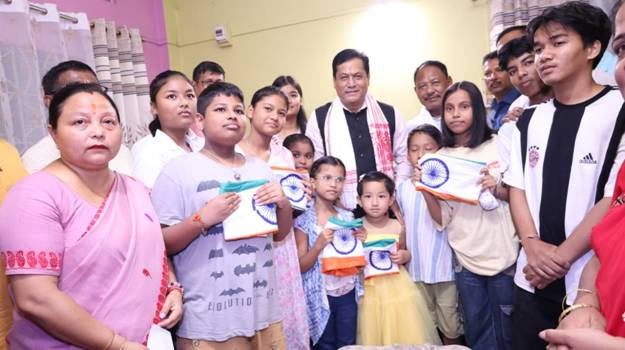
Union Minister of Ports, Shipping & Waterways (MoPSW) Shri Sarbananda Sonowal launched the Har Ghar Tiranga (Tricolor in Every Home) campaign in Dibrugarh on Wednesday, ahead of India’s 79th Independence Day.

Shri Sonowal, who represents the Dibrugarh Lok Sabha constituency, visited the residences of former BJP Dibrugarh district president and retired Dibrugarh University professor Dr Harendra Narayan Dutta; noted folk artist Shri Ramchandra Sanchoni; and senior advocate Shri Asim Dutta, the founding president of the Rashtriya Swayamsevak Sangh (RSS) in Dibrugarh.

During the visits, senior BJP leader Shri Sarbananda Sonowal exchanged greetings and presented each of them with the national flag, urging them to join in the ‘Har Ghar Tiranga’ campaign. He also distributed flags to students, encouraging them to embrace patriotism.

Earlier in the day, Shri Sonowal paid tribute at the statue of Netaji Subhas Chandra Bose in Shantipara, Dibrugarh, honouring his contribution and patriotism in India’s freedom struggle.

BJP Dibrugarh district president Shri Dulal Bora, general secretary Shri Sushil Tasa, Assam Tourism Development Corporation (ATDC), Chairman Shri Rituparna Baruah, Dibrugarh Municipal Corporation (DMC), Mayor Shri Saikat Patra, Deputy Mayor, Shri Ujjal Phukan, Dibrugarh Development Authority (DDA), Chairman, Shri Asim Hazarika, BJP Mahila Morcha, district president, Smt. Mamun Gogoi Mitra, and Dibrugarh Zila Parishad chairperson Pushpanjali Sonowal were among those present.

PM addresses the 18th International Olympiad on Astronomy and Astrophysics

| Published on:

Prime Minister Shri Narendra Modi addressed the 18th International Olympiad on Astronomy and Astrophysics via a video message today. On the occasion, the Prime Minister expressed joy in connecting with more than 300 participants from 64 countries, and warmly welcomed them to India for the International Olympiad. “In India, tradition meets innovation, spirituality meets science, and curiosity meets creativity. For centuries, Indians have been observing the skies and asking big questions”, said Shri Modi. He cited the example of Aryabhatta, who in the 5th Century invented zero and was the first to state that the Earth rotates on its axis. “Literally, he started from zero and made history!” the Prime Minister noted.

“India hosts one of the world’s highest Astronomical Observatories in Ladakh, situated at 4,500 metres above sea level. It is close enough to shake hands with the stars!”, Shri Modi remarked. He further highlighted the Giant Metrewave Radio Telescope in Pune, describing it as one of the world’s most sensitive radio telescopes, aiding in decoding the mysteries of pulsars, quasars and galaxies. The Prime Minister stated that India proudly contributes to global mega-science projects like the Square Kilometre Array and LIGO-India. He recalled that two years ago, Chandrayaan-3 made history by becoming the first mission to successfully land near the Moon’s South Pole. Shri Modi added that India has also set its sights on the Sun with the Aditya-L1 solar observatory, which monitors solar flares, storms, and the Sun’s mood swings. He shared that last month, Group Captain Shubhanshu Shukla completed his historic mission to the International Space Station, calling it a proud moment for all Indians and an inspiration for young explorers.

Affirming that India is deeply committed to nurturing scientific curiosity and empowering young minds, the Prime Minister highlighted that over 10 million students are understanding STEM concepts through hands-on experimentation in Atal Tinkering Labs, thereby creating a culture of learning and innovation. To make access to knowledge more democratic, Shri Modi informed that the ‘One Nation One Subscription’ scheme has been launched. It provides access to reputed international journals, free of cost, to millions of students and researchers. He remarked that India is a leading country in the participation of women in STEM domains. The Prime Minister stated that under various initiatives, billions of dollars are being invested in the research ecosystem. He extended an invitation to young minds from across the world to study, research, and collaborate in India. “Who knows the next big scientific breakthrough may well be born from such partnerships!” he added.

Encouraging participants to align their efforts with the goal of benefiting humanity, Shri Modi urged young explorers to consider how space science can further improve lives on Earth. He posed critical questions: How can farmers be provided even better weather forecasts? Can we predict natural disasters? Can we monitor forest fires and melting glaciers? Can we build better communication for remote areas? The Prime Minister emphasized that the future of science lies in the hands of young minds, and in solving real-world problems with imagination and compassion. He urged them to ask “what is out there?” and also reflect on how it can help us improve the lives of people here on earth.

“India believes in the power of international collaboration, and that this Olympiad reflects that spirit”, exclaimed the Prime Minister, noting that this edition of the Olympiad is the largest so far. He thanked the Homi Bhabha Centre for Science Education and the Tata Institute of Fundamental Research for making the event possible. Shri Modi encouraged participants to aim high and dream big. “And remember, in India, we believe that the sky is not the limit, it’s just the beginning!”, concluded the Prime Minister.

Prime Minister receives a telephone call from the President of Uzbekistan

| Published on:

Prime Minister Shri Narendra Modi received a telephone call today from the President of the Republic of Uzbekistan, H.E. Mr. Shavkat Mirziyoyev.

President Mirziyoyev conveyed his warm greetings and felicitations to Prime Minister and the people of India on the upcoming 79th Independence Day of India.

The two leaders reviewed progress in several key areas of bilateral cooperation, including trade, connectivity, health, technology and people-to-people ties.

They also exchanged views on regional and global developments of mutual interest, and reiterated their commitment to further strengthen the age-old ties between India and Central Asia.

The two leaders agreed to remain in touch.

Cabinet approves Lucknow Metro Rail Project of Phase-1B with an outlay of Rs.5,801 crore

| Published on:

The Union Cabinet chaired by the Prime Minister, Shri Narendra Modi, has approved the Phase-1B of Lucknow Metro Rail Project, Uttar Pradesh with corridor for a length of 11.165 Km with 12 stations – 7 Underground and 5 Elevated. On operationalization of Phase-1B, Lucknow city will have 34 Km of active Metro Rail Network.

Benefits and Bolstering Growth:

The Phase-1B of Lucknow Metro Rail Project represents a significant advancement in the city’s infrastructure development. Phase-1B acts as a major expansion of the Metro Rail Network in the city.

Enhanced Connectivity:

Phase-1B of the Lucknow Metro project will introduce approximately 11.165 Km of new metro lines, significantly improving public transportation in the oldest and most densely populated areas of the city, which currently lack efficient connectivity.

This phase aims to seamlessly integrate key zones of Old Lucknow, including:

  • Commercial hubs such as Aminabad, Yahiyaganj, Pandeyganj, and Chowk
  • Critical healthcare facilities, most notably the King George’s Medical University (Medical College)
  • Major tourist attractions, including Bara Imambara, Chota Imambara, Bhool Bhulaiya, Clock Towerand Rumi Darwaza
  • Culinary destinations known for the city’s rich and historic food culture

By bridging these vital areas with the metro network, Phase-1B will not only enhance connectivity but also stimulate economic activity, tourism, and ease urban mobility for both residents and visitors.

  • Reduction in Traffic Congestion: Metro Rail as an efficient alternate road transport and with Phase-1B as an extension to the Metro Rail network in the Lucknow city is expected to alleviate traffic congestion and will be particularly impactful on heavily congested routes of the Old Lucknow. Reduction in road traffic can lead to smoother movement of vehicles, reduction in travel time, increasing overall road safety etc.
  • Environmental Benefits: The addition of Phase-1B Lucknow Metro Rail Project and increase in overall Metro Rail Network in Lucknow city, will significantly reduce carbon emissions compared to traditional fossil fuel-based transport.
  • Economic Growth: Reduced travel times and improved access to different parts of the city such as Airport, Railway Stations and Bus Depots can enhance productivity by allowing individuals to reach their workplaces and destinations more efficiently. Also, the enhanced connectivity can stimulate local businesses, especially in areas near new metro stations which can also attract investment and development in previously less accessible regions.
  • Social Impact: The expansion of Phase-1B Metro Rail network in Lucknow will provide more equitable access to public transport, benefiting diverse socio-economic groups and reducing transport disparities which will contribute to a higher quality of life by reducing commute times and improving access to essential services.

The Phase-1B Lucknow Metro Rail Project is set to be a transformative development for the city. It promises to deliver enhanced connectivity, reduced traffic congestion, environmental benefits, economic growth, and improved quality of life. By addressing key urban challenges and providing a foundation for future expansion, Phase-1B will play a crucial role in shaping the city’s development trajectory and sustainability.

Cabinet approves semiconductor manufacturing units in ODISHA, PUNJAB and ANDHRA PRADESH with an outlay of Rs.4600 crore

| Published on:

The Union Cabinet chaired by Prime Minister Shri Narendra Modi approved four more semiconductor projects under India Semiconductor Mission (ISM).

Momentum is building up in semiconductor ecosystem in India with the six approved projects already in various stages of execution. These four proposals approved today are from SiCSem, Continental Device India Private Limited (CDIL), 3D Glass Solutions Inc., and Advanced System in Package (ASIP) Technologies.

These four approved proposals will setup semiconductor manufacturing facilities with cumulative investment of around Rs.4,600 crore and are expected to generate a cumulative employment for 2034 skilled professionals which would catalyse the electronic manufacturing ecosystem resulting in creation of many indirect jobs. With these four more approvals today, total approved projects under ISM reaches to 10 with cumulative investments of around Rs.1.60 lakh crore in 6 states.

Given the growing demand of semiconductors in telecom, automotive, datacentres, consumer electronics and industrial electronics, these four new approved semiconductors projects would significantly contribute to making Atmanirbhar Bharat.

SiCSem and 3D Glass will be set up in Odisha.  CDIL is located in Punjab  and ASIP will be set up in Andhra Pradesh.

SicSem Private Limited is collaborating with Clas-SiC Wafer Fab Ltd., UK, to establish integrated facility of Silicon Carbide (SiC) based Compound Semiconductors in Info Valley, Bhubaneshwar, Odisha. This will be 1st commercial compound fab in the country. The project proposes to manufacture Silicon Carbide devices. This compound semiconductor fab will have an annual capacity of 60,000 wafers and packaging capacity of 96 million units. The proposed products will have applications in Missiles, Defence equipment, Electric Vehicles (EVs), Railway, Fast Chargers, Data Centre racks, Consumer Appliances, and Solar Power Inverters.

3D Glass Solutions Inc. (3DGS) will be setting up a vertically integrated advanced packaging and embedded glass substrate unit in Info Valley, Bhubaneshwar, Odisha.  This unit will bring world’s most advanced packaging technology to India. Advanced packaging brings the next generation of efficiency to semiconductor industry. The facility will have a large variety of advanced technologies including glass interposers with passives and silicon bridges, and 3D Heterogeneous Integration (3DHI) modules. Planned capacity of this unit will be approximately 69,600 glass panel substrates, 50 million assembled units, and 13,200 3DHI modules per annum. The proposed products will have significant applications in defence, high-performance computing, artificial intelligence, RF and automotive, photonics and co-packaged optics etc.

Advanced System in Package Technologies (ASIP) will setup a semiconductor manufacturing unit in Andhra Pradesh, under technology tie-up with APACT Co. Ltd, South Korea, with an annual capacity of 96 Million units. The manufactured products will find applications in mobile phones, set-top boxes, automobile applications, and other electronic products.

Continental Device (CDIL) will expand its discrete semiconductor manufacturing facility at Mohali, Punjab. The proposed facility will manufacture high-power discrete semiconductor devices such as MOSFETs, IGBTs, Schottky Bypass Diodes, and transistors, both in Silicon and Silicon Carbide. The annual capacity of this brownfield expansion will be to the tune of 158.38 million units. The devices manufactured by these proposed units will have applications in Automotive electronics including EVs and its charging infrastructure, Renewable energy systems, Power conversion applications, industrial applications and communication infrastructure.

With the approval of these projects, semiconductor ecosystem in country would get significant boost as these projects include country’s first commercial compound fab as well as highly advanced glass-based substrate semiconductor packaging unit.

These would complement the growing world class chip design capabilities coming up in the country which are propelled by design infrastructure support provided by Government to 278 academic institutions and 72 start-ups.

Already more than 60,000 students have availed the benefits of talent development programme.

PM inaugurates newly constructed flats for Members of Parliament in New Delhi

| Published on:

Prime Minister Shri Narendra Modi inaugurated 184 newly constructed Type-VII Multi-Storey Flats for Members of Parliament at Baba Kharak Singh Marg, New Delhi today. Addressing the gathering on the occasion, the Prime Minister said that recently he had inaugurated the Common Central Secretariat, known as Kartavya Bhavan, at Kartavya Path and today, he had the opportunity to inaugurate a newly constructed residential complex for Members of Parliament. He highlighted the four towers of the complex—Krishna, Godavari, Kosi, and Hooghly—named after four great rivers of India, remarking that these rivers, which give life to millions, will now inspire a new stream of joy in the lives of public representatives. He added that the tradition of naming rivers binds the nation in a thread of unity.  Shri Modi stated that the new complex will enhance the ease of living for MPs in Delhi. He noted that the availability of government housing for MPs in Delhi will now increase. The Prime Minister extended congratulations to all Members of Parliament and  also commended the engineers and shramjeevis involved in the construction of the flats, appreciating their dedication and hard work in completing the project.

Prime Minister shared that he had the opportunity to visit a sample flat from the newly constructed residential complex for Members of Parliament. He noted that he has also had occasions to observe the condition of older MP residences. Shri Modi remarked that the old accommodations often suffered from neglect and deterioration,  highlighting the frequent difficulties faced by MPs due to the poor condition of their previous residences. He stated that the new housing will free MPs from such challenges upon entering their new homes. The Prime Minister emphasized that when MPs are free from personal housing issues, they will be able to devote their time and energy more effectively to resolving public concerns.

Acknowledging the challenges faced by first-time elected MPs in securing housing in Delhi, Shri Modi stated that the newly constructed buildings will help eliminate these difficulties. He informed that over 180 MPs will reside together in these multi-storey buildings and underscored the significant economic dimension of the new housing initiative. Recalling the inauguration of Kartavya Bhavan, the Prime Minister noted that several ministries were operating from rented buildings, incurring nearly ₹1,500 crore in annual rent, describing it as a direct waste of public funds. Similarly, he highlighted that the lack of adequate MP housing also led to increased government expenditure. Shri Modi pointed out that despite the shortage of MP residences, not a single new housing unit was constructed for Lok Sabha MPs between 2004 and 2014. He stated that post-2014, our government undertook this task as a mission and including the newly inaugurated flats, approximately 350 MP residences have been constructed since 2014. The Prime Minister remarked that with the completion of these residences, public money is now being saved.

“21st-century India is as eager for development as it is sensitive to its responsibilities”, exclaimed the Prime Minister, remarking that while the nation builds Kartavya Path and Kartavya Bhavan, it simultaneously fulfills its duty of delivering piped water to millions of citizens. He added that as the country completes new housing for its MPs, it also facilitates homeownership for 4 crore poor families through the PM Awas Yojana. Shri Modi emphasized that while the nation constructs a new Parliament building, it is also establishing hundreds of new medical colleges. He affirmed that the benefits of these initiatives are reaching every section of society.

Expressing satisfaction that the newly constructed MP residences have incorporated key elements of sustainable development, Shri Modi  stated that this initiative aligns with the nation’s pro-environment and future-safe approach. The Prime Minister highlighted the inclusion of solar-enabled infrastructure in the housing complex. He further noted that India is consistently advancing its vision of sustainable development, as reflected in its achievements and new records in solar energy.

Prime Minister made several appeals to Members of Parliament during the inauguration of the new residential complex. He noted that MPs from various states and regions of the country will now reside together, and their presence should symbolize the spirit of ‘Ek Bharat, Shreshtha Bharat’. Shri Modi encouraged collective celebrations of regional festivals within the complex to enhance its cultural vibrancy. He suggested inviting constituents to participate in these events, fostering greater public engagement. The Prime Minister urged MPs to teach and learn words from each other’s regional languages, promoting linguistic harmony. He emphasized that sustainability and cleanliness should be defining features of the complex, and this commitment must be shared by all. He added that not just the residences, but the entire premises should be maintained in a clean and hygienic manner.

Prime Minister concluded by expressing hope that all Members of Parliament will work together as a team and the collective efforts will serve as a role model for the nation. He also urged the ministry and housing committee to organise Swacchata competitions between various residential complexes of MPs. With this resolve, he once again extended his congratulations to all MPs.

Lok Sabha Speaker Shri Om Birla, Union Ministers and Members of Parliament were present among other dignitaries at the event.

Background

On this occasion of inauguration of 184 newly constructed Type-VII Multi-Storey Flats for Members of Parliament at Baba Kharak Singh Marg, New Delhi, Prime Minister planted a Sindoor sapling at the residential premise. The Prime Minister also interacted with shramjeevis on this occasion.

The complex is designed to be self-sufficient and is equipped with a full range of modern amenities to address the functional needs of the members of the Parliament. Incorporating green technology, the project adheres to the standards of the GRIHA 3-star rating and complies with the National Building Code (NBC) 2016. These environmentally sustainable features are expected to contribute to energy conservation, renewable energy generation, and effective waste management. The use of advanced construction technology—specifically, monolithic concrete with aluminum shuttering—enabled timely completion of the project while ensuring structural durability. The complex is also Divyang-friendly, demonstrating a commitment to inclusive design.

The development of the project was necessitated due to shortage of adequate housing for Members of Parliament. Owing to the limited availability of land, there has been a sustained emphasis on vertical housing developments aimed at optimizing land use and minimizing maintenance costs.

Each residential unit offers approximately 5,000 square feet of carpet area, providing ample space for both residential and official functions. The inclusion of dedicated areas for offices, staff accommodation, and a community center will support members of Parliament in fulfilling their responsibilities as public representatives.

All buildings within the complex are constructed to be earthquake-resistant, in accordance with modern structural design norms. A comprehensive and robust security system has been implemented to ensure the safety of all residents.

PM Modi speaks with President Zelenskyy

| Published on:

Prime Minister Shri Narendra Modi had a telephone conversation today with the President of Ukraine, H.E. Mr Volodymyr Zelenskyy.

President Zelenskyy shared his views on the recent developments related to Ukraine.

Prime Minister thanked President Zelenskyy and reaffirmed India’s steadfast and consistent position for peaceful settlement of the conflict and support for efforts aimed at earliest restoration of peace. PM reiterated India’s commitment to extend all possible support in this regard.

The leaders also reviewed progress in the India-Ukraine bilateral partnership and discussed ways to further enhance cooperation in areas of mutual interest.

They agreed to remain in touch.