Nari Shakti played a crucial role in India’s effective action against terrorism during Operation Sindoor: Raksha Mantri

| Published on:

“Women pilots and other female soldiers played a crucial role in the effective action taken by India against terrorism in Pakistan and PoK during Operation Sindoor,” said Raksha Mantri Shri Rajnath Singh while addressing the flag-in ceremony of INSV Tarini in Goa on May 29, 2025. Raksha Mantri asserted that ever since the participation of women in the Armed Forces has increased, they have performed exceptionally well in every role and fulfilled every responsibility.

“From the heights of Siachen to the depths of the ocean, Indian women are fulfilling many responsibilities, which has further bolstered the security circle of the country. Today, the doors of Sainik Schools are open for girls and 17 women are passing out from National Defence Academy this month. Operation Sindoor witnessed active and effective participation of women in every branch of the Indian Armed Forces,” said Shri Rajnath Singh.

As the two brave Indian Navy Women officers – Lt Cdr Dilna K and Lt Cdr Roopa A – returned home after the successful completion of ‘Navika Sagar Parikrama II’, Raksha Mantri commended their courage, commitment and endurance in completing the historic circumnavigation expedition. He termed their voyage as the epitome of Nari Shakti.

The duo, in the second edition of the expedition, has become the first from India to accomplish such a feat in double-handed mode. The officers covered a distance of 25,600 nautical miles over a period of eight months with port calls at Fremantle (Australia), Lyttleton (New Zealand), Port Stanley (Falkland Islands) and Cape Town (South Africa).

Shri Rajnath Singh praised the duo for facing physical & mental obstacles head on, overcoming them with strength and proving to the world that they are the brave daughters of India. He commended the mental strength of the women officers as they successfully dealt with the feeling of loneliness during their eight-month-long voyage. He stated that not everyone can accomplish the feat achieved by Lt Cdr Dilna K and Lt Cdr Roopa, which speaks volumes of their grit, determination & strength.

On the warm welcome received by the duo during various port calls by the natives and Indian expatriates alike, Raksha Mantri said the two women officers have made the nation proud by waving the Tricolour all over the world.

“You must document the experiences of this journey with the same spirit with which you completed it. Record your bitter-sweet experiences and learnings so that the future generation, especially our young women, are inspired by it,” Shri Rajnath Singh told the courageous duo.

Raksha Mantri recalled his virtual conversation with the women officers days before the flag-in, stating that the interaction had filled him with emotions. He expressed happiness on being part of the welcome ceremony in Goa, terming it as a matter of great pride for the country.

Describing the expedition as the testament to Indian Navy’s bravery and resilience in overcoming varied challenges, Shri Rajnath Singh congratulated the personnel who contributed to the expedition. He credited the instructors, technical team, and the resources of the Navy for the successful completion of Navika Sagar Parikrama II.

In his address, Chief of the Naval Staff Admiral Dinesh K Tripathi praised the duo’s exemplary resilience, perseverance and indomitable spirit. Highlighting their journey as a tribute to the glorious maritime legacy and a significant step in fostering national maritime consciousness, he recounted their story as an inspiration to every Indian redefining the spirit of Nari Shakti.

As part of the event, a photo Essay Book titled ‘Breaking Waves, Making History‘ chronicling the extraordinary circumnavigation expedition was released. The book provides a narrative of the remarkable voyage with illustrated photographs and insights into life at sea with a unique perspective on maritime adventure and seafaring exploration.

The successful completion of Navika Sagar Parikrama II reinforces Indian Navy’s commitment to nurturing talent, promoting adventure and showcasing India’s self-reliance in oceanic exploration. The expedition was flagged off from INS Mandovi, Goa, by the Chief of the Naval Staff on October 02, 2024. The first edition of the expedition was completed by a six-member women crew in 2017-18.

Chief Secretary of Goa government Dr V Candavelou; Director General, Armed Forces Medical Services Vice Admiral Arti Sarin; Flag Officer Commanding-in-Chief, Southern Naval Command Vice Admiral V Srinivas; other senior Naval officers; Commander Abhilash Tomy (Retd) and the families of Lt Cdr Dilna K & Lt Cdr Roopa attended the flag-in ceremony.

Union Health Minister Chairs High-Level meeting to review the progress made on TB and Measles-Rubella Elimination

| Published on:

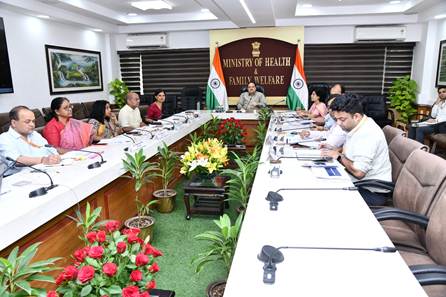
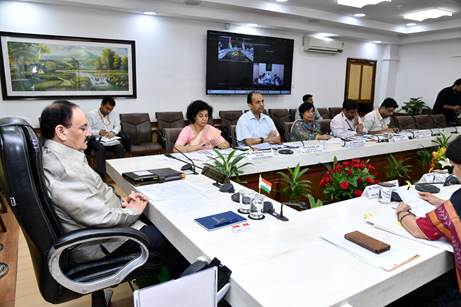
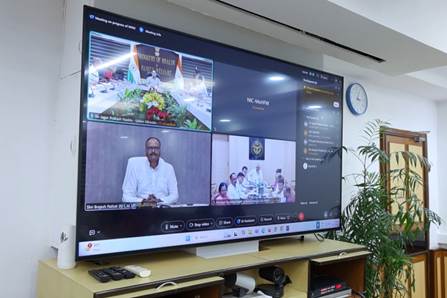
Union Minister of Health and Family Welfare, Shri Jagat Prakash Nadda, held a high-level meeting with Health Ministers of 8 States and Union Territories to review the progress made on TB and Measles-Rubella elimination and utilization of funds under PM-ABHIM (Ayushman Bharat Health Infrastructure Mission) and 15th Finance Commission.

States Health Ministers who joined the meeting included Shri N. Rangasamy, Chief Minister, Puducherry; Shri Brajesh Mishra, Deputy Chief Minister, Uttar Pradesh; Dr. (Col.) Dhani Ram Shandil, Health Minister, Himachal Pradesh; Shri Biyuram Wahge, Health Minister, Arunachal Pradesh; Shri Vishwajit Pratapsingh Rane, Health Minister, Goa; Shri Gajendra Singh Khimsar, Health Minister, Rajasthan; Dr Balbir Singh, Health Minister, Punjab and Dr Irfan Ansari, Health Minister, Jharkhand.

The Union Minister complimented states for their enthusiastic participation during the 100-day Intensified TB-Mukt Bharat Abhiyaan where 12.97 crore people were screened for TB, with over 7.19 lakh TB patients notified across India, including 2.85 lakh patients who were asymptomatic. Now this campaign has been extended to all districts across the country. He took cognisance on key metrics like presumptive TB case examination, NAAT coverage, treatment success and uptake of nutrition support schemes for TB patients, and urged state health ministers to review these key metrics on a regular basis.

Under the TB-Mukt Bharat Abhiyan, states are playing a proactive role in screening vulnerable populations for TB, irrespective of whether they present symptoms, using portable chest x-ray machines and patients who are TB-suggestive are tested using a NAAT test (Nucleic acid amplification test).

The Union Health Minister called for greater Jan Bhagidari to bring about impactful and lasting change in the fight against TB. He urged states/UTs to integrally involve elected representatives from Panchayati Raj Institutions, Municipal Corporations etc in the TB-Mukt Bharat Abhiyan.

Shri J.P. Nadda emphasized the urgent need to reduce both the incidence and mortality rates of TB through early and comprehensive screening. He stated that the national goal is to bring down the TB incidence rate to 47 cases per lakh population and the mortality rate to below 3 per lakh population.

To achieve these targets, the Minister called on states to re-strategize their TB campaigns, placing a sharper focus on vulnerable and high-risk communities. He also stressed the importance of expanding access to rapid diagnostic tools, particularly NAAT testing.

In addition, states were encouraged to promote greater uptake of flagship nutritional support initiatives for TB patients and their families, such as the Ni-kshay Poshan Yojana and the Ni-kshay Mitra initiative. The Union Minister noted that the participation and benefits under these schemes remain suboptimal in several regions and must be significantly improved to ensure holistic care and support for those affected.

Shri Nadda commended states on their efforts towards completely eliminating measles-rubella. However, since some districts in many states are still yet to be free of measles-rubella, he underlined the importance of enhancing immunisation to achieve the goal of elimination of measles-rubella.

Shri Nadda highlighted that health infrastructure under PM-ABHIM and 15th Finance Commission needs to be implemented under war footing to ensure that the funds that have been commissioned are spent efficiently as only one year is left for their utilisation.

States represented their efforts and achievements in the programmes that were discussed. They also shared their best practices.

Smt. Punya Salila Srivastava, Union Health Secretary and senior officials of the Union Health Ministry were present at the meeting.

PM addresses the celebrations of 20 years of Gujarat Urban Growth story

| Published on:

The Prime Minister Shri Narendra Modi addressed the celebrations of 20 years of Gujarat Urban Growth Story in Gandhinagar, Gujarat today. During the occasion, he launched the Urban Development Year 2025, marking 20 years of the Urban Development Year 2005. Addressing the gathering, he said that over the past 2 days during his visit to Vadodara, Dahod, Bhuj, Ahmedabad and Gandhinagar, he has been experiencing the fervor of patriotism with the roar of success of Operation Sindoor and flying tricolors. He added that it was a sight to behold and this feeling was not just in Gujarat, but across every nook and corner of India and in the heart of every Indian. “India had made up its mind to weed out the thorn of terrorism and did it with utmost conviction”, stated the Prime Minister.

Recalling the first terrorist attack on India in 1947, right after the partition of India into 3 parts, Shri Modi said one part was usurped by Pakistan harboring the terrorists. He recalled Sardar Patel’s vision, emphasizing that the Indian Army should not have halted until Pakistan-occupied Kashmir (PoK) was reclaimed. However, he stated that Patel’s advice was not followed. Shri Modi stressed that this legacy of terrorism has continued for the last 75 years and the terror attacks in Pahalgam was another horrific form of it. He asserted that despite playing diplomatic games, Pakistan repeatedly faced India’s military strength in war. He noted that on three occasions, India’s armed forces decisively defeated Pakistan, making it clear that Pakistan could not triumph in direct military conflict. Acknowledging Pakistan’s realization of its limitations, Shri Modi stated that the neighboring country resorted to proxy warfare. He explained that trained militants were infiltrated into India through systematic military training, aiming to target innocent and unarmed civilians, including those undertaking peaceful pilgrimages.

Highlighting India’s deep-rooted cultural values, emphasizing the philosophy of Vasudhaiva Kutumbakam, which regards the entire world as one family, the Prime Minister stated that India has upheld this tradition for centuries and continues to seek peaceful and harmonious relations with its neighbors. The Prime Minister remarked that while India has always advocated for peace and stability, the repeated challenges to its strength have necessitated firm responses. He stated that historically, what was termed proxy war has now evolved, especially after the events of May 6. He asserted that given recent developments, referring to such acts as proxy war would be a mistake. He emphasized that nine identified terrorist bases were eliminated within 22 minutes, with full transparency ensured through camera documentation, so that no evidence could be questioned domestically. The Prime Minister categorically stated that the recent incidents prove that this is no longer mere proxy warfare, but a deliberate and calculated military strategy of Pakistan. He highlighted that following the May 6 actions, terrorist funerals were conducted in Pakistan with full honors, their coffins draped in national flags, and even saluted by the Pakistani military—clear indicators that these were not isolated militant activities but part of a structured war approach. He added that if such strategies are employed, an equally decisive response will be given.

The Prime Minister emphasized that India has always pursued progress and the welfare of all, offering assistance in times of crisis. However, he remarked that despite these efforts, the nation has often faced violent retaliation. Addressing the younger generation, he urged them to recognize how the country has been undermined over the decades. Talking about the Indus Water treaty which was put on abeyance, the Prime Minister highlighted issues related to water resources in Jammu and Kashmir, pointing out that although dams were constructed on rivers, proper maintenance and desilting were neglected for sixty years. He remarked that gates meant for water regulation were left unopened, leading to a drastic reduction in storage capacity—from full utilization to merely two to three percent. He asserted that Indians must receive their rightful access to water and stated that while significant steps have yet to be taken, initial measures have begun.

Emphasising that India seeks no hostility and aspires for peace and prosperity, Shri Modi highlighted the nation’s commitment to progress and contributing to global well-being. He stated that with firm determination, India remains dedicated to the welfare of its citizens. Reflecting on May 26, Shri Modi noted that it marked the anniversary of his first oath-taking as the Prime Minister in 2014. At that time, India ranked 11th in the global economy. He acknowledged the challenges faced, including the battle against COVID-19, difficulties with neighboring nations, and natural calamities. Despite these obstacles, he highlighted India’s rapid economic growth, rising from the 11th to the 4th position globally. The Prime Minister reaffirmed the country’s vision for development and its unwavering commitment to progress. He recalled his roots in Gujarat, emphasizing the lessons and values he gained from his upbringing. He expressed gratitude for the aspirations and dreams that the citizens have entrusted in him, vowing to continue working diligently for their betterment.

Expressing happiness over Gujarat Government’s commitment to urban development, the Prime Minister noted that the state launched this initiative in 2005 and was now marking two decades of progress. He highlighted that rather than merely celebrating achievements, the government has utilized its learnings from the past 20 years to create a future-focused roadmap for urban development tailored to the next generation. The Prime Minister remarked that this roadmap, now presented to the people of Gujarat, signifies a structured vision for sustainable progress. He congratulated the state government, the Chief Minister, and their team for their dedicated efforts in shaping a forward-looking urban development strategy.

Underscoring India’s significant economic rise, highlighting that surpassing global competitors is a moment of pride, Shri Modi recalled the excitement among citizens when India climbed from sixth to fifth in the world economy rankings, particularly noting the enthusiasm of young people. He emphasized that overtaking the United Kingdom—India’s former colonial ruler—was a historic milestone. Shri Modi stated that while India is now the fourth-largest economy, the pressure to reach the third position is intensifying. He reaffirmed that by 2047, India must become a fully developed nation, marking 100 years of independence with global recognition as a prosperous, strong country. Drawing parallels to the freedom movement, Shri Modi reflected on the sacrifices made by leaders like Bhagat Singh, Rajguru, Netaji Subhas Chandra Bose, Veer Savarkar, Shyamji Krishna Varma, Mahatma Gandhi, and Sardar Patel. He noted that had the 25-30 crore population of the time not been determined to fight for independence, achieving freedom in 1947 might not have been possible. He asserted that if past generations could drive out colonial rulers in 20-35 years, today’s 140 crore citizens can realize the dream of a developed India within the next 25 years. Looking ahead to 2035, Shri Modi emphasized the importance of planning for Gujarat’s 75th anniversary. He stressed that preparations should begin now to shape the state’s future across sectors like industry, agriculture, education, and sports. He called for a collective resolve to ensure Gujarat’s progress aligns with the country’s growth trajectory. He also mentioned India’s aspirations for hosting the Olympics in 2036, underscoring the nation’s readiness for global leadership.

The Prime Minister reflected on Gujarat’s remarkable journey since its formation. He recalled the skepticism that surrounded its early years when many questioned the state’s potential for development, citing its geographic and economic limitations. However, he highlighted Gujarat’s transformation from a land known for salt production to a global leader in the diamond industry, attributing this success to structured planning and strategic initiatives. The Prime Minister also discussed the challenges of governance, emphasizing that siloed government departments often hinder progress. He stressed the importance of a whole-of-government approach, where different ministries collaborate effectively. He cited Gujarat’s model of dedicating specific years to focused initiatives, such as urban development in 2005, education for girls in another year, and tourism at another stage. He recalled the campaign “Kuch Din Toh Gujaro Gujarat Mein”, which helped boost tourism, leading to the development of destinations like Somnath, Dwarka, and Ambaji. The Prime Minister further shared his experiences in urban development, particularly in Ahmedabad, where transportation expansion was met with initial resistance. He narrated how early efforts to introduce Ahmedabad’s red buses beyond the city were met with bureaucratic and political hurdles, but persistence led to significant infrastructural growth. Similarly, he mentioned the challenges of clearing encroachments for city-wide improvements, explaining how initial opposition turned into widespread public support once people saw the benefits.

The Prime Minister recalled the extensive resistance to urban redevelopment efforts in Gujarat, particularly from political opponents and media scrutiny. However, he emphasized that when leaders make decisions with integrity and for the public good, long-term results validate those choices. He noted that despite initial fears of electoral setbacks, the government’s urban transformation initiatives resulted in electoral victories and widespread appreciation. The Prime Minister reaffirmed India’s commitment to continued progress. He acknowledged growing expectations for India to advance from the fourth-largest economy to the third and reassured that such ambitions would be pursued with determination.

Emphasising the need for urban centers to evolve into economic growth hubs rather than simply expanding due to population increase, Shri Modi stated, “cities must function as dynamic centers for economic activity, and municipal bodies must actively plan for their transformation”. He urged municipal and metropolitan authorities across the country to set economic growth targets for their respective cities. Shri Modi encouraged them to assess the current state of their local economy and strategize ways to enhance it within a year, focusing on improving the quality of manufactured goods and identifying new avenues for economic activities. He pointed out that rather than simply constructing shopping complexes, urban bodies should conduct thorough studies to support agro-based industries and implement value-added initiatives within local markets. He remarked that while large industries traditionally thrived around metropolitan regions, the emergence of nearly two lakh startups—mostly located in tier-2 and tier-3 cities—demonstrates a significant shift. He acknowledged with pride that many of these ventures are being led by women, signaling a new wave of economic and entrepreneurial revolution. Shri Modi also highlighted similar progress in education and sports. He added that India’s focus on urban economic transformation will accelerate the nation’s journey from the fourth to the third-largest global economy by reaffirming that strengthening local economies will be key to achieving this milestone.

Underscoring the importance of a strong governance model, noting that certain entrenched mindsets have historically sought to undermine India’s potential, the Prime Minister highlighted how ideological opposition has often led to resistance against developmental policies, with criticism of initiatives becoming a recurring pattern. He reaffirmed the government’s commitment to urban development and described how the Aspirational Districts Program was launched to overcome bureaucratic hurdles. He noted that nearly 100 districts were identified based on about 40 developmental parameters, and dedicated officers were deployed with a long-term strategy. He stated that this initiative has now become a model for developing nations, offering valuable insights on effective governance.

The Prime Minister emphasized the significance of tourism in driving economic growth, citing Gujarat’s transformation as an example. He remarked on how Kutch, once overlooked due to its desert landscape, is now a sought-after tourist destination. He pointed out that large-scale initiatives, such as the world’s tallest statue, have reshaped perceptions and boosted regional economies. He further highlighted the historical importance of sites like Vadnagar, describing its museum as an internationally recognized heritage center. Referring to India’s maritime legacy, Shri Modi spoke about Lothal, which now hosts one of the largest maritime museums in the world. He recalled the initial skepticism surrounding the GIFT City concept, which has now become a benchmark for financial hubs. He stressed that pioneering ideas must be implemented with conviction to yield impactful results. He cited several successful large-scale projects, including the Sabarmati Riverfront, the construction of the world’s largest stadium, and the Statue of Unity, showcasing India’s ability to execute transformative initiatives. He reiterated his unwavering optimism about India’s potential, expressing confidence in the country’s capacity to drive significant progress.

The Prime Minister thanked the Gujarat Government for the opportunity to revisit past initiatives and emphasized Gujarat’s crucial role in leading India’s development. He urged the state to continue setting high standards for the nation and reaffirmed his belief in India’s bright future.

Highlighting the significance of Operation Sindoor, initiated on May 6, emphasizing that it will extend beyond its original scope, symbolizing a lifelong commitment to national progress, Shri Modi reaffirmed India’s resolve to become a developed nation as it prepares to celebrate 100 years of independence in 2047. He underscored India’s ambition to shift from the fourth-largest economy to the third, stressing the importance of reducing reliance on foreign goods. Shri Modi urged citizens to assess their daily consumption, identifying foreign products and replacing them with locally made alternatives. He cited instances where even traditionally revered items, such as idols for religious festivals, were being imported, emphasizing the need to prioritize domestic production. “Operation Sindoor is not merely a military initiative but a responsibility shared by every Indian citizen”, reaffirmed Shri Modi, stressing on the necessity of economic self-reliance, advocating for the One District, One Product strategy to enhance local manufacturing and support indigenous industries. He recalled how, in the past, foreign goods were sought after, but today, India has the capability to produce world-class products domestically.

Encouraging national pride, the Prime Minister urged citizens to take pride in Made in India products and celebrate their country’s advancements. Concluding his address, he reiterated that every Indian must contribute to strengthening the nation’s economy and ensuring its global standing. He also extended his gratitude to the Gujarat government, acknowledging its leadership in urban development and its role as a guiding force for the nation’s infrastructural growth.

The Governor of Gujarat, Shri Acharya Devvrat, Chief Minister of Gujarat, Shri Bhupendrabhai Patel, Union Ministers Shri Manohar Lal & Shri C.R. Patil were present among other dignitaries at the event.

Background

Urban Development Year 2005 in Gujarat was a flagship initiative launched by the then Chief Minister Shri Narendra Modi with the aim of transforming Gujarat’s urban landscape through planned infrastructure, better governance, and improved quality of life for urban residents. Marking 20 years of the Urban Development Year 2005, Prime Minister launched the Urban Development Year 2025, Gujarat’s urban development plan and State Clean Air Programme in Gandhinagar. He will also inaugurate and lay the foundation stone for multiple projects related to urban development, health and water supply. He also dedicated more than 22,000 dwelling units under PMAY. He also released funds of Rs 3,300 crore to urban local bodies in Gujarat under the Swarnim Jayanti Mukhyamantri Shaheri Vikas Yojana.

Prime Minister attends the Civil Investiture Ceremony

| Published on:

Prime Minister, Shri Narendra Modi, today, attended the Civil Investiture Ceremony-II, where the Padma Awards were presented. “The Padma awardees have made notable contributions to our society. The life journeys of those who were conferred the Padma are deeply motivating”, Shri Modi added.

The Prime Minister posted on X :

“Attended the Civil Investiture Ceremony-II, where the Padma Awards were presented. The Padma awardees have made notable contributions to our society. The life journeys of those who were conferred the Padma are deeply motivating.”

Union Home Minister addresses the 150th anniversary celebrations of Shri Laxmi Narayan Mandir in Maharashtra

| Published on:

Union Home Minister and Minister of Cooperation Shri Amit Shah today addressed the 150th anniversary celebrations of Shri Laxmi Narayan Mandir at Madhavbag in Mumbai, Maharashtra. Many dignitaries including Maharashtra Chief Minister Shri Devendra Fadnavis and Deputy Chief Minister Shri Eknath Shinde were present on the occasion.

In his address, Union Home Minister and Minister of Cooperation Shri Amit Shah said that for the past 150 years, all the members of the trust have been spreading faith as well as a strong sense of social service among the people. He said that in those days, Shri Varjivandas and Shri Narottambhai had established this institution with a big heart and by showing their generous spirit towards the society.  He said, only great people could revive social consciousness by building a temple in 1875 during the period of foreign rule.

Shri Amit Shah said that many types of social trends have been going on in Laxminarayan temple and educational work, practice of Gita and once upon a time a Sanskrit school also used to run here. He said that Madhavbag Trust was formed from the confluence of purity, balance and good deeds. This tradition has been going on for 150 years and it is a matter of great pride for all of us. Shri Shah said that we have to think that when we celebrate the completion of 200 years, what will be the form of this trust. He said that can we convert this trust into a religious center that removes all the worries of the middle class society. Shri Shah said that by providing many types of health facilities, a Sanjeevani Center can also be built here for the sick citizens of the middle class.

Union Home Minister said that just yesterday, Shri Narendra Modi completed 11 years as Prime Minister and for the last 11 years, Prime Minister Modi has been taking the country’s development journey forward. He said that Prime Minister Modi has done such work that people feel proud of being Indian. For many decades after independence, many problems could not be solved due to lack of political will in the country. Shri Shah said that a strong political will was needed to build a grand temple of Lord Ram in Ayodhya after 550 years, which was shown by Prime Minister Modi. He said that the work of increasing the glory of Kashi Vishwanath today by building the corridor of Kashi Vishwanath which was demolished by Aurangzeb is the result of the same strong political will. Shri Shah said that Shri Narendra Modi has done the work of taking yoga to every home in the world. He said that Prime Minister Modi has given the confidence to make India fully developed and leader in every field by 2047. Home Minister said that now India neither needs to look back nor stop.

Shri Amit Shah said that by naming the recent military strike as Operation Sindoor, Modi Ji showed the importance of Sindoor. He said India raised the head of its women power with pride by entering the territory of the terrorists and destroying their headquarters.

India has initiated the process to develop E-Hansa, a next-generation two-seater electric trainer aircraft: Dr Jitendra Singh

| Published on:

India has initiated the process to develop Electric Hansa (E-Hansa), a next-generation two-seater electric trainer aircraft.

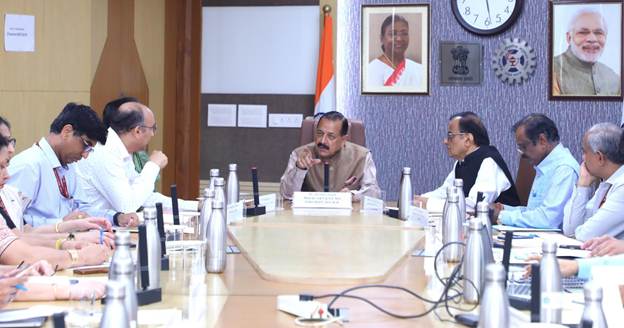
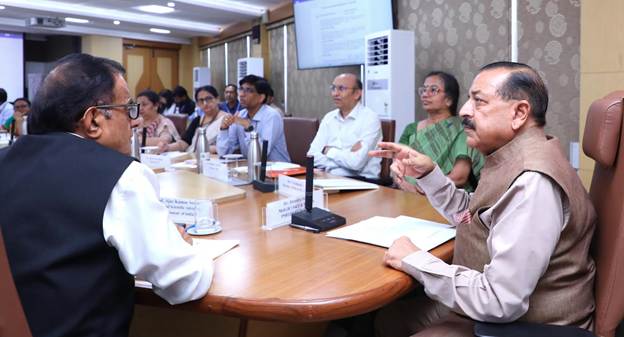
This was disclosed here today by Dr Jitendra Singh, Union Minister of State (Independent Charge) for Science & Technology, while chairing a high-level monthly review meeting with the secretaries of all major science departments at the Science Centre here.

In his capacity as Vice President of CSIR (Council of Scientific & Industrial Research), Dr Jitendra Singh said, it is a matter of pride that the new aircraft is being indigenously developed by the CSIR institute of  “National Aerospace Laboratories” (NAL) Bengaluru.

The Electric Hansa (E-HANSA) trainer aircraft, developed by CSIR-NAL, is expected to cost significantly less than imported alternatives, possibly around Rs 2 crore. This is roughly half the price of a comparable imported trainer aircraft.

The E-HANSA is part of the larger HANSA-3 (NG) trainer aircraft program, which is designed to be a cost-effective and indigenous option for pilot training in India.

India’s E-Hansa aircraft will also mark a key step toward India’s green aviation goals and use of green or clean energy fuel in running our aircrafts, said the Minister.

Further, the meeting focused on performance assessment, implementation status of prior decisions, and setting the course for transformative reforms in India’s science and technology ecosystem.

Stressing the need for commercialization of indigenous technologies, Dr. Jitendra Singh called for greater public-private partnerships (PPP). He directed the National Research Development Corporation (NRDC) to emulate the successful models of DBT-BIRAC and IN-SPACe for technology transfer and private sector engagement.

Dr. Jitendra Singh, Union Minister of State (Independent Charge) for Science and Technology, Minister of State (Independent Charge) for Earth Sciences, MoS PMO, Department of Atomic Energy and Department of Space, MoS Personnel, Public Grievances and Pensions said “Private players should not just be knowledge partners, but also investment partners,” advocating a hub-and-spoke PPP model supported by AI-driven tech/IP exchange platforms and regional NTTOs to ensure wider sectoral and geographic outreach.

Dr. Jitendra Singh reiterated the importance of standardized tech transfer protocols, ease of doing business, and promoting Indian R&D under the ethos of “Vasudhaiva Kutumbakam”.

Commending ISRO for the successful SPADEX mission, he noted that the docking and undocking capability tested is vital to India’s upcoming Gaganyaan human spaceflight. He also lauded ISRO’s substantial role in Operation Sindoor, stating, “Every Indian is proud of you.” He shared that ISRO is currently collaborating with 40 Union Ministries and 28 State Governments, with a series of upcoming missions lined up.

Regarding India’s contribution to the Axiom Space Mission, Dr. Jitendra Singh informed that Group Captain Subhash Shukla’s visit to the International Space Station (ISS) will include seven microgravity experiments, further boosting India’s space science profile.

In alignment with Prime Minister Narendra Narendra Modi’s ‘Viksit Bharat’ vision, Dr. Jitendra Singh emphasized a Whole-of-Science and Whole-of-Government approach. Following the success of the Chintan Shivir organized by the Ministry of Earth Sciences in NIOT, Chennai, he directed that region-wise Chintan Shivirs be organized across the country. These will include DST, DBT, CSIR, ISRO, Earth Sciences, and Atomic Energy departments in each region to promote integrated planning and synergy.

To strengthen India’s biomanufacturing capabilities, the Minister proposed the creation of a “Global Science Talent Bridge” to attract the best global researchers and innovators. Highlighting the PM’s Mann Ki Baat announcement that opened all 37 CSIR labs to students, he shared that an enthusiastic response had to be temporarily paused due to recent security concerns but would resume soon.

Dr. Jitendra Singh also acknowledged global interest in setting up bilateral science collaboration centres, with countries like Switzerland and Italy exploring partnerships similar to the Indo-French and Indo-German Science Centres.

The meeting was attended by prominent officials including Prof. Ajay Kumar Sood, Principal Scientific Advisor to the Government of India; Dr. N. Kalaiselvi, DG and Secretary CSIR; Dr. V. Narayanan, Chairman ISRO and Secretary DoS; Dr. Abhay Karandikar, Secretary DST; Dr. Rajesh Gokhale, Secretary DBT; Dr. M. Ravichandran, Secretary Earth Sciences; Dr. M. Mohapatra, DG IMD; and Commodore Amit Rastogi (Retd), CMD NRDC, along with senior officials from the Department of Atomic Energy.

PM lays foundation stone, inaugurates development projects worth over Rs. 53,400 crore in Bhuj, Gujarat

| Published on:

The Prime Minister Shri Narendra Modi laid the foundation stone, inaugurated and dedicated to the nation multiple development projects worth over Rs 53,400 crore in Bhuj, Gujarat today. Addressing the gathering, he extended heartfelt greetings to the people of Kutch and paid deep respects to revolutionaries and martyrs, particularly the great freedom fighter Shri Shyamji Krishna Varma. The Prime Minister conveyed his regards to the sons and daughters of Kutch, acknowledging their resilience and contributions.

Shri Modi paid homage to Ashapura Mata, acknowledging her divine presence on the sacred land of Kutch. He expressed gratitude for her continuous blessings upon the region and extended his respects to the people.

Reflecting on his deep connection with Kutch, Shri Modi recalled his frequent visits across the district and emphasized how the land had shaped his life’s direction. He remarked that while living conditions have improved significantly, the past presented considerable challenges. He also recalled how fortunate he was when the waters of River Narmada reached the Kutch region. Even before assuming the role of Chief Minister, he often visited Kutch, engaging in various programs at the district office. Shri Modi also highlighted the unwavering determination of the farmers in Kutch, noting that their spirit has always been remarkable. He stated that his years of experience in the region greatly contributed to his efforts toward its development.

Emphasizing that Kutch has demonstrated the power of hope and relentless effort in achieving remarkable success, the Prime Minister recalled the devastating earthquake that once led many to doubt the region’s future. However, he had unwavering faith that Kutch would rise from the ashes—and the people made it happen. “Today, Kutch stands as a major hub for trade, commerce, and tourism”, stated the Prime Minister, highlighting that in the coming years, the region’s role will expand further. He expressed his joy in witnessing Kutch’s rapid development and supporting its progress. During his visit, projects worth over ₹50,000 crore were inaugurated and launched, focusing on infrastructure and economic growth. The Prime Minister noted that these initiatives will contribute significantly to India’s emergence as a leading blue economy and a global center for green energy. He extended his congratulations to the people of Kutch for these transformative developments.

“Kutch is emerging as the world’s largest hub for green energy”, highlighted Shri Modi, stressing on the transformative potential of green hydrogen, describing it as the fuel of the future. He remarked that cars, buses, and streetlights will soon be powered by green hydrogen, revolutionizing India’s energy landscape. Shri Modi noted that Kandla is one of the three designated green hydrogen hubs in the country. He announced the foundation stone-laying for a new green hydrogen plant in Kutch, underscoring that the technology used in this facility is entirely “Made in India.” Furthermore, Shri Modi stressed Kutch’s central role in India’s solar revolution, pointing out that one of the world’s largest solar power projects is being developed in the region. With the establishment of the Khavda complex, Kutch has firmly positioned itself on the global energy map, he added.

Reaffirming the government’s commitment to ensuring adequate electricity supply while reducing power costs for citizens, the Prime Minister highlighted the launch of the PM Surya Ghar Muft Bijli Yojana, which has already benefited lakhs of families in Gujarat. He emphasized the economic significance of coastal regions, noting that maritime prosperity has been a key factor in the growth of many nations. Citing Dhola Vira and Lothal—ancient port cities—as prime examples of India’s rich heritage and their role in historical trade and development, the Prime Minister said, “inspired by this legacy, the government is advancing its vision for port-led development by expanding cities around ports”. He added that India is actively fostering a new coastal ecosystem encompassing seafood, tourism, and trade. The Prime Minister remarked that significant investments are being made to modernize and expand ports, yielding remarkable results. For the first time, major ports have collectively handled a record 15 crore tonnes of cargo in a year, with Kandla Port playing a crucial role. He noted that nearly one-third of India’s maritime trade is managed by Kutch’s ports. Recognizing the importance of infrastructure, the Prime Minister stated that capacity and connectivity at Kandla and Mundra ports are being continuously enhanced. On this occasion, multiple shipping-related facilities were inaugurated, including a new jetty and an expanded cargo storage facility to streamline operations. The Prime Minister further highlighted the government’s increased focus on the maritime sector, announcing the creation of a special fund for its development in this year’s budget. He also stressed the importance of shipbuilding, noting that India will manufacture large vessels not only for domestic needs but also for global demand. These initiatives, he remarked, will generate significant employment opportunities for the nation’s youth in the maritime sector.

Emphasizing Kutch’s deep respect for its heritage, Shri Modi noted how this legacy has now become a driving force behind the region’s development. He highlighted the remarkable growth witnessed in the past two decades across various industries, including textiles, food processing, ceramics, and salt production in Bhuj. Shri Modi remarked on the widespread recognition of Kutch’s traditional crafts, such as Kutch embroidery, block printing, bandhani fabric, and leatherwork and praised Bhujodi village as a living museum of handloom artistry and acknowledged the unique tradition of Ajrakh printing, which has now secured a Geographical Indication (GI) tag, officially establishing its origin in Kutch. He underscored the significance of this recognition, particularly for tribal families and artisans, as it strengthens their cultural identity and craftsmanship. Additionally, Shri Modi highlighted key provisions in the Union Budget that support the leather and textile industries, reaffirming the government’s commitment to boosting these sectors.

Paying tribute to the hardworking farmers of Kutch, acknowledging their perseverance in overcoming challenges, the Prime Minister recalled a time when groundwater levels in Gujarat had drastically declined, posing severe difficulties. However, with the blessings of Narmada Ji and the dedicated efforts of the government, the situation has transformed. The Prime Minister highlighted the critical role of the canal extending from Kevadiya to Modkuba in reshaping Kutch’s fortunes. He noted that today, agricultural produce such as mangoes, dates, pomegranates, cumin and dragon fruit from Kutch are reaching global markets. Reflecting on the region’s past, PM remarked that Kutch once faced forced migration due to limited opportunities. However, with the remarkable progress achieved, local youth are now finding employment within Kutch itself, signifying the region’s growing prosperity.

Shri Modi reaffirmed that providing employment opportunities for India’s youth remains a key priority for their government. He emphasized that tourism is a sector capable of generating large-scale employment, and Kutch, with its rich history, cultural heritage, and natural beauty, is well-positioned for expansion in this field. Expressing satisfaction over the growing popularity of Kutch’s Rann Utsav, which continues to reach new heights, Shri Modi highlighted the Smriti Van memorial, noting that UNESCO has recognized it as one of the world’s most beautiful museums. He remarked that Kutch’s tourism industry will see further growth in the coming years and pointed out that Dhordo village has earned international recognition as one of the best tourism villages globally. Additionally, Mandvi’s sea beach is emerging as a major attraction for visitors, Shri Modi urged the Chief Minister of Gujarat to organize a Beach festival in Mandvi during the Rann Utsav to further enhance the potential of tourism. He also mentioned that the Namo Bharat Rapid Rail between Ahmedabad and Bhuj will further boost tourism in the region.

Prime Minister remarked that May 26 holds special significance as it marks the day he first took the oath as Prime Minister in 2014, adding that today India has become the 4th largest economy in the world since 2014 when it was 11th largest. He reaffirmed India’s strong belief in tourism as a means to connect people, contrasting it with nations like Pakistan that foster terrorism instead of tourism. “Terrorism is a grave global threat and India has a zero-tolerance policy against it”, he reiterated. Highlighting Operation Sindoor, the Prime Minister stated that the mission underscores India’s firm stance against terrorism. He asserted that any attempt to harm Indian citizens will be met with a resolute response in the same language and emphasized that those who dare to challenge India will face consequences at any cost.

“Operation Sindoor is a mission to protect humanity and eradicate terrorism”, described the Prime Minister. He recalled his words from a rally in Bihar after April 22 where he had vowed to destroy the terror outfits and infrastructure. He also mentioned that Indian Armed forces were given a free hand to respond when Pakistan did not initiate any action against the terror outfits even after a fortnight of Pahalgam attacks. He stated that India precisely targeted terrorist headquarters, demonstrating the capability and discipline of its armed forces. He remarked that India has shown the world that it can eliminate terrorist hideouts with precision. The Prime Minister further noted Pakistan’s panic following India’s decisive action, pointing out that Pakistan attempted attacks on Indian civilians, but India retaliated with double the strength, striking their military positions with remarkable precision. “India’s destruction of Pakistan’s airbases and military installations stunned the world”, he added. He also lauded the armed forces for their exceptional professionalism, bravery and precision.

Recalling the historic 1971 war, during which the Pakistani army attacked Bhuj Air Base, Shri Modi hailed the exceptional bravery of the women of Bhuj, who played a crucial role in restoring the airbase under dire circumstances. He recounted how, amid relentless Pakistani bombings, the women of Bhuj rebuilt the airbase within 72 hours, enabling its swift operational recovery. He shared that he had the opportunity to meet these courageous women earlier, acknowledging their resilience and contribution.

“India’s fight is against cross-border terrorism and those who sponsor it”, exclaimed the Prime Minister, asserting that India’s enmity lies with the forces nurturing terrorism, not with the people of any nation. Addressing the citizens of Pakistan from Kutch, the Prime Minister urged them to recognize the reality of their situation. He cautioned that their government and military actively support terrorism, using it as a means to generate revenue. He called upon the people of Pakistan to reflect on whether this path is truly in their best interests. He highlighted that power-driven agendas are putting Pakistani lives at risk and pushing their children’s future into darkness. The Prime Minister underscored that if Pakistan is to rid itself of the scourge of terrorism, its people must take a stand and contribute to its eradication.

Reaffirming India’s clear direction and emphasizing that the nation has chosen the path of development, peace, and prosperity, Shri Modi expressed confidence that the spirit of Kutch will serve as an inspiration in India’s journey towards becoming a developed nation. Looking ahead, Shri Modi extended his advance wishes for the upcoming Ashadhi Beej, marking the Kutchi New Year. He concluded by once again congratulating the people of Kutch for their remarkable progress and ongoing developmental achievements.

The Chief Minister of Gujarat, Shri Bhupendrabhai Patel, Union Minister for Power and Housing and Urban Affairs, Shri Manohar Lal were present among other dignitaries at the event.

Background

Prime Minister laid the foundation stone and inaugurated multiple development projects worth over Rs 53,400 crore at Bhuj, Gujarat. The projects from the power sector include transmission projects for evacuating renewable power generated in the Khavda Renewable Energy Park, transmission network expansion, Ultra super critical thermal power plant unit at Tapi, among others. It also includes projects of the Kandla port and multiple road, water and solar projects of the Government of Gujarat, among others.

PM lays foundation stone, inaugurates and dedicates various development projects worth over Rs 24,000 crore in Dahod, Gujarat

| Published on:

The Prime Minister Shri Narendra Modi laid the foundation stone, inaugurated and dedicated to the nation multiple development projects worth over Rs 24,000 crore in Dahod, Gujarat today. Addressing the gathering, he remarked that May 26 holds special significance as it marks the day he first took the oath as Prime Minister in 2014. He acknowledged the unwavering support and blessings of the people of Gujarat, who entrusted him with the responsibility of leading the nation. The Prime Minister highlighted that this trust and encouragement have fueled his dedication to serving the country day and night. Over the years, India has taken decisions which were unprecedented and unimaginable, breaking free from decades-old constraints and advancing across every sector. “Today, the nation has emerged from an era of despair and darkness into a new age of confidence and optimism”, he added.

“140 crore Indians are united in building a Viksit Bharat”, exclaimed Shri Modi, emphasising the importance of manufacturing essential goods within India, stating that self-reliance is the need of the hour. He remarked that India is advancing rapidly in the global manufacturing sector, noting that both domestic production and exports are increasing consistently. India is now exporting a wide range of products, including smartphones, automobiles, toys, defense equipment, and medicines. He further stated that India is not only manufacturing rail and metro technology but also exporting it globally. Citing Dahod as a prime example of this progress, where major projects worth thousands of crores were inaugurated and launched, Shri Modi highlighted the Dahod Electric Locomotive Factory as a significant achievement. He recalled laying its foundation stone three years ago and expressed pride that the first electric locomotive has now been successfully manufactured. He flagged off the locomotive, marking a moment of pride for Gujarat and the entire nation. Additionally, he announced that Gujarat has achieved 100% electrification of its railway network, calling it a remarkable milestone and congratulated the people of Gujarat for this achievement.

Reflecting on his long-standing connection with Dahod and recalling the many memories associated with the region, the Prime Minister remarked that he has been visiting Dahod for decades, and during his early years, he often explored the area on a bicycle. He highlighted that these experiences allowed him to understand both the challenges and potential of Dahod. Even after assuming office as Chief Minister, he continued to visit the region multiple times and took decisive steps to address its issues. He emphasized that every development initiative in Dahod brings him immense satisfaction, and today is yet another meaningful day for him.

Highlighting the rapid development of India’s railway sector over the past 10-11 years, Shri Modi emphasized the expansion of metro services and the introduction of semi-high-speed trains, transforming connectivity across the country. He remarked that Vande Bharat trains now operate on nearly 70 routes, further strengthening India’s transportation network. He announced the commencement of a new Vande Bharat Express between Ahmedabad and Veraval. Shri Modi further stated that the rise of modern trains in India is due to the country’s advancements in technology. He emphasized that coaches and locomotives are now manufactured domestically, reducing reliance on imports. “India has emerged as a leading exporter of railway equipment”, stated Shri Modi, noting that India exports metro coaches to Australia and train coaches to England, Saudi Arabia, and France. He added that Mexico, Spain, Germany, and Italy also import railway-related components from India. Shri Modi further remarked that Indian passenger coaches are being used in Mozambique and Sri Lanka, and ‘Made in India’ locomotives are being exported to multiple countries. He stated that this reflects the continuous expansion of the ‘Make in India’ initiative, reinforcing national pride.

“A strong railway network enhances convenience and boosts industries and agriculture”, remarked the Prime Minister, highlighting that several regions in India received railway connectivity for the first time in the past decade. He remarked that many areas in Gujarat previously had only small, slow-moving trains, but several narrow-gauge routes have now been expanded. Announcing the inauguration of multiple railway routes, including the new express train between Dahod and Valsad, which will greatly benefit the tribal belt, the Prime Minister stated that factories create large-scale employment opportunities for youth. He highlighted that Dahod’s rail factory will manufacture 9,000-horsepower locomotives, significantly enhancing the power and capacity of India’s trains, noting that every locomotive produced in Dahod will bear the name of the city. The Prime Minister remarked that hundreds of locomotives will be built in the coming years, generating substantial employment for local youth. He emphasized that the factory will also support small-scale industries producing railway components, leading to economic growth in surrounding areas. He stated that employment opportunities extend beyond the factory, benefiting farmers, livestock owners, shopkeepers, and laborers, ensuring widespread economic progress.

Shri Modi highlighted that Gujarat has made remarkable progress across multiple sectors, including education, IT, semiconductors, and tourism. He emphasized that the state has established itself as a leader in various industries. He remarked that a major semiconductor plant is being set up in Gujarat with an investment of thousands of crores, further strengthening India’s position in the global semiconductor industry. He stated that these initiatives are creating new employment opportunities for lakhs of youth in Gujarat, contributing to the state’s economic growth and development.

Underlining that Dahod, Vadodara, Godhra, Kalol, and Halol have collectively established a high-tech engineering and manufacturing corridor in Gujarat, the Prime Minister remarked that Vadodara is rapidly advancing in aircraft manufacturing, with the Airbus assembly line inaugurated a few months ago. He noted that Vadodara is also home to India’s first Gati Shakti University. He emphasized that Savli already has a major rail-car manufacturing factory, while Dahod now hosts a facility producing India’s most powerful locomotives—9,000-horsepower engines, marking a moment of pride for the nation. The Prime Minister stated that Godhra, Kalol, and Halol have a significant presence of manufacturing units, small industries, and MSMEs, contributing to Gujarat’s industrial growth. Envisioning a future where this region of Gujarat will be known for producing everything—from bicycles and motorcycles to railway engines and aircraft, the Prime Minister remarked that such a high-tech engineering and manufacturing corridor is rare globally, reinforcing Gujarat’s position as an industrial powerhouse.

“The development of tribal regions is essential for building a developed India”, emphasised Shri Modi,  underlining that unprecedented efforts have been made over the past 11 years to uplift tribal communities. He remarked that his long experience working in Gujarat’s tribal areas has contributed to national-level initiatives. Shri Modi recalled a time when tribal children in Gujarat faced challenges in studying science. He highlighted that today, the entire tribal belt has access to quality education, with good colleges, ITIs, medical colleges, and two dedicated tribal universities serving these communities. Stating that the network of Eklavya Model Schools has strengthened significantly over the past 11 years, ensuring better educational opportunities for tribal students, Shri Modi noted that Dahod itself has several Eklavya Model Schools, further supporting tribal education.

Highlighting the significant efforts being made for the development of tribal communities across the country, the Prime Minister stated that for the first time in independent India’s history, a major scheme has been launched to uplift tribal villages. He remarked that the ‘Dhartii Aaba Janjati Gram Utkarsh Abhiyan’ is a landmark initiative, with the Central Government investing approximately ₹80,000 crore to implement the program. He stated that under this scheme, development work is being carried out in more than 60,000 villages across the country, including Gujarat. The Prime Minister highlighted that these villages are being equipped with electricity, water, roads, schools, and hospitals to improve the quality of life. He emphasized that pucca houses are being built for tribal families, ensuring better living conditions for the community.

Shri Modi emphasized his commitment to uplifting the most marginalized tribal communities, stating that his government prioritizes those who have long been overlooked. He highlighted that for the first time, the government has introduced the PM Janman Yojana to support particularly vulnerable tribal groups who have been deprived of essential facilities for decades. Shri Modi remarked that under this scheme, new infrastructure and amenities are being developed in tribal villages, and new employment opportunities are being created, ensuring greater economic and social inclusion for these communities.

Highlighting the launch of a national mission to free tribal communities from sickle cell anemia, the Prime Minister stated that millions of tribal citizens have already undergone screening under this initiative. He emphasized that the government is committed to accelerating the development of regions that have lagged behind. He noted that over 100 districts were previously classified as backward, with many of them being tribal-dominated areas. He remarked that Dahod was one such district, but today, it is progressing as an Aspirational District, undergoing a transformation with modern infrastructure and smart facilities. The Prime Minister highlighted that South Dahod faced severe water shortages, but now, hundreds of kilometers of pipelines have been laid, ensuring Narmada water reaches every household. He stated that over the past years, 11 lakh acres of land from Umargam to Ambaji have been connected to irrigation, making agriculture easier for tribal communities.

Acknowledging the overwhelming presence of thousands of women in Vadodara, who gathered to honor the nation and its armed forces, Shri Modi expressed his deep respect and gratitude to the women of India for their unwavering support. He highlighted that Dahod is a land of sacrifice and dedication, recalling that Maharishi Dadhichi gave up his life on the banks of the Dudhimati River to protect creation. Shri Modi also noted that this region supported freedom fighter Tatya Tope in times of crisis and that Mangarh Dham stands as a symbol of the sacrifices made by Govind Guru and hundreds of tribal warriors. Emphasizing that India’s cultural values demand action against injustice, questioning whether the nation could remain silent after the terrorist attack in Pahalgam, Jammu & Kashmir, Shri Modi stated, “Operation Sindoor was not just a military action but a reflection of India’s values and emotions”. He remarked that terrorists had no idea of the consequences of their actions, recalling the brutality of killing a father in front of his children. He stated that such images still ignite anger across the nation, as 140 crore Indians were challenged by terrorism. Shri Modi declared that he fulfilled his responsibility as the nation’s leader, giving full freedom to India’s armed forces, who then executed an operation unseen in decades. He highlighted that nine major terror hubs across the border were identified and destroyed in 22 minutes, and stated that Pakistan’s military attempted retaliation but was decisively defeated by Indian forces. Shri Modi reiterated his deep respect for the valor of India’s armed forces, saluting their courage and dedication from the sacred land of Dahod.

Prime Minister remarked that the country born after partition has focused on hostility towards India and causing harm. “India, on the other hand, is committed to eradicating poverty, strengthening its economy, and achieving development”, he added. The Prime Minister highlighted that a developed India can only be built when both its armed forces and economy are strong. He stated that the government is continuously working in this direction, ensuring national security and economic growth go hand in hand.

Highlighting the immense potential of Dahod, stating that the event is just a glimpse of its capabilities, Shri Modi expressed full confidence in the hardworking people of Dahod, emphasizing that they will make the best use of the newly developed facilities and transform Dahod into one of the most developed districts in the country. He concluded by congratulating the people of Dahod once again, reaffirming his belief in their dedication and progress.

The Chief Minister of Gujarat, Shri Bhupendrabhai Patel, Union Minister for Railways, Information and Broadcasting & Electronics and Information Technology, Shri Ashwini Vaishnaw were present among other dignitaries at the event.

Background

In line with his commitment to enhancing connectivity and building world-class travel infrastructure, Prime Minister inaugurated the Locomotive Manufacturing plant of the Indian Railways in Dahod. This plant will produce electric locomotives of 9000 HP for domestic purposes and for export. He also flagged off the first electric locomotive manufactured from the plant. The locomotives will help in increasing freight loading capacity of Indian Railways. These locomotives will be equipped with regenerative braking systems, and are being designed to reduce energy consumption, which contributes to environmental sustainability.

Thereafter, the Prime Minister laid the foundation stone and inaugurated multiple development projects worth over Rs 24,000 crore in Dahod. The projects include rail projects and various projects of the Government of Gujarat.  He also flagged off Vande Bharat Express between Veraval and Ahmedabad & Express train between Valsad and Dahod stations.

Union Home Minister performs Bhoomi Pujan of ‘Swasti Nivas’ in Maharashtra

| Published on:

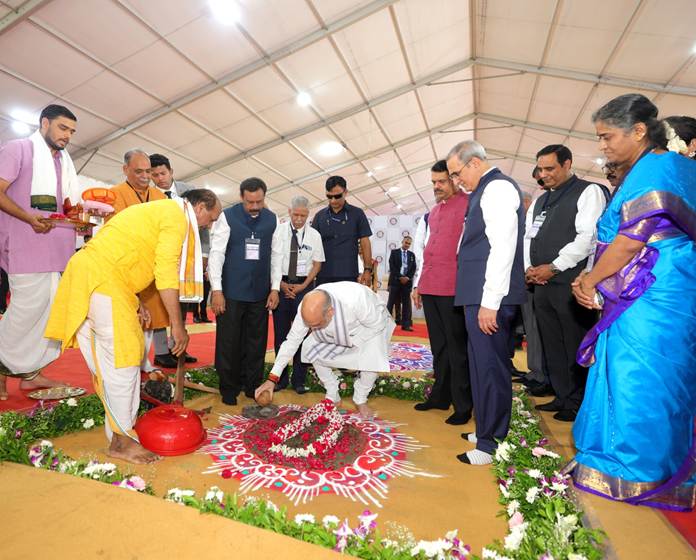
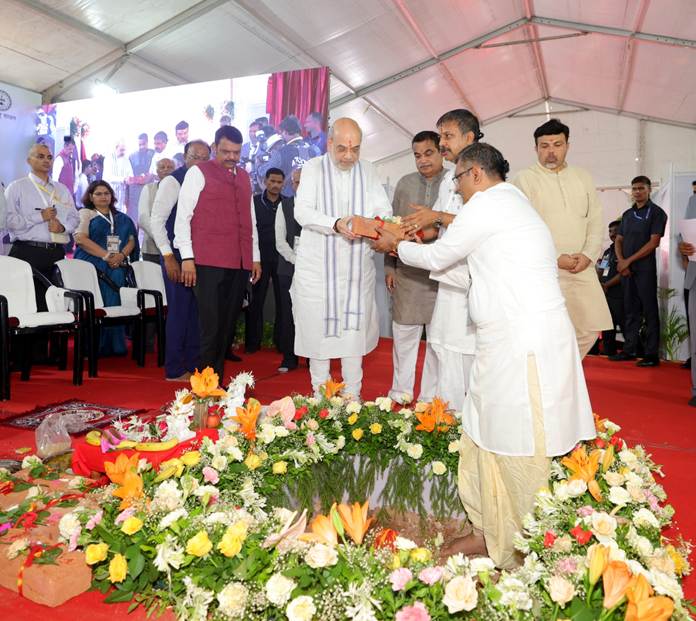
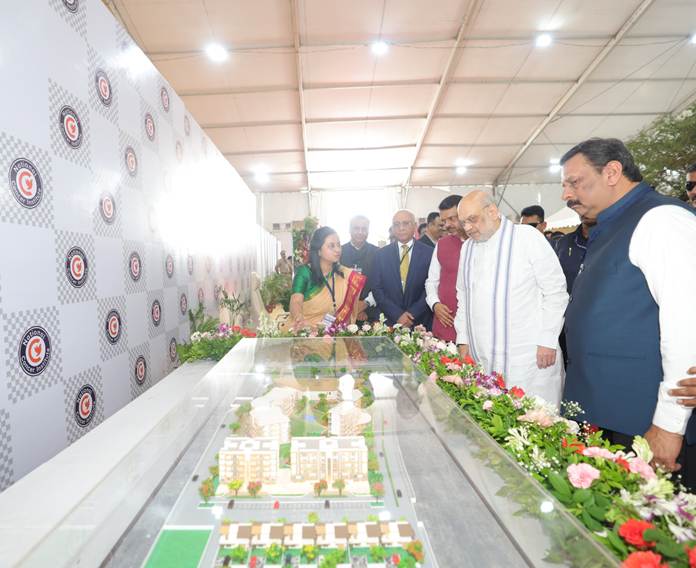
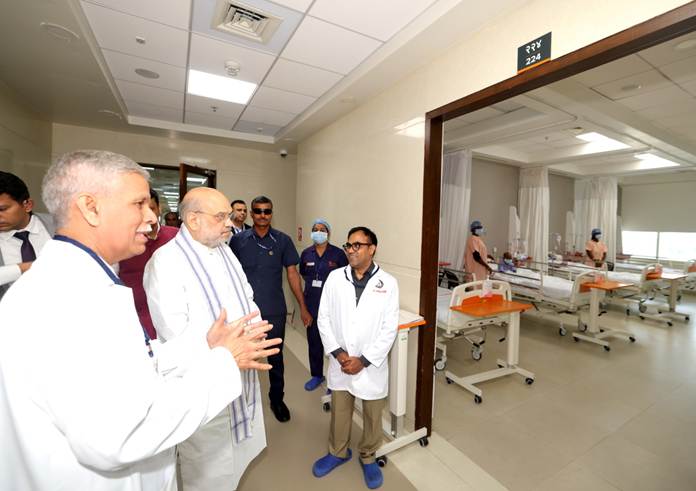
Union Home Minister and Minister of Cooperation, Shri Amit Shah, performed the Bhoomi Pujan (groundbreaking ceremony) of the ‘Swasti Nivas’, which is being constructed for patients and their relatives in the premises of the National Cancer Institute (NCI) in Nagpur, Maharashtra today. Many dignitaries including the Chief Minister of Maharashtra, Shri Devendra Fadnavis, were present on this occasion.

Union Home Minister also performed the Bhoomi Pujan of the permanent campus of the National Forensic Science University (NFSU), Nagpur and inaugurated the temporary campus virtually.

In his address, Union Home Minister and Minister of Cooperation Shri Amit Shah said that in the coming days, the name of this cancer institute will be included among the best cancer institutes in the country. He said that its foundation is based on a spirit of service, there are dedicated people behind it, and it is being run with the vision that no one in society remains unhappy. He said that such institutions are the ones that flourish, grow, and serve society for a very long time.

Shri Amit Shah said that when a noble resolve is blessed by God and society, that seed grows into a banyan tree standing before us. Today, this cancer institute, having fully evolved, is working to remove the suffering from the lives of thousands of people. He said that the concept of hospitals in Western countries is different, and the structure of our society, family system, and culture of attachment to relatives is different. Abroad, when someone falls ill, the patient is admitted to the hospital, but here, when someone becomes sick, the entire family connects with them emotionally and with attachment. Shri Shah said that here, with the vision of ‘Swasti Nivas’, the team of this cancer institute has presented a new idea in the field of hospital construction in India, which will keep alive the sensitivities of our families in the coming days. He said that whoever comes here as a patient, their relatives will be able to meet them and stay overnight here at minimal cost. Shri Shah added that Aabaji Thatte, along with Pujya Guruji and Pujya Balasaheb Deoras, dedicated his entire life to the reconstruction of India.

Union Home Minister and Minister of Cooperation said that India has the highest number of oral cancer cases in the world in terms of percentage. He said that due to cervical cancer, one person dies every 8 minutes in India. A few years ago, cancer was considered an incurable disease, but in the last 15 years, many good cancer institutes have been established across the country, and through them, efforts have been made to make cancer treatment accessible. Shri Shah said that this service institution, situated at the crossroads of the poorest regions of Madhya Pradesh, Telangana, Chhattisgarh, and Maharashtra, primarily serves patients from the middle, lower-middle, and economically disadvantaged classes. The Home Minister said that the foundation stone of this institute was laid on February 28, 2015, it was inaugurated in 2023, and today efforts are being made to complete it with ‘Swasti Nivas’.

Shri Amit Shah said that over the past 11 years, under the leadership of Prime Minister Shri Narendra Modi, the country’s healthcare landscape has undergone positive transformation. He said that Prime Minister Modi has made health treatment up to Rs 5 lakh free for millions of poor people of the country. He said that if the amount given by the state is added to this, then a poor person does not need to spend anything up to the treatment of about Rs 25 lakh. Shri Shah said that this has instilled courage in the lives of millions of poor people in the country to fight during illness and has given them hope to recover and live with their families again. He said that Prime Minister Modi has not only provided free treatment up to 5 lakh rupees but has also established a chain of affordable medicine shops.

Union Home Minister said that in 2014, there were 7 AIIMS in the country, and now 23 have been approved. There were 387 medical colleges, which have now increased to 780. MBBS seats were 51,000, and today, 1.18 lakh MBBS doctors graduate annually, while Post Graduate (PG) seats have risen from 31,000 to 74,000. He stated that the previous government’s tenure, health budget in 2013-14 was 37,000 crore rupees, which PM Modi has increased to 1.35 lakh crore for 2025-26. He added that with an annual expenditure of 10,000 crore rupees on affordable medicines, PM Modi has brought significant transformation to the country’s healthcare landscape. He emphasized that no government alone can keep society healthy, and institutions driven by social service are the backbone of the nation’s healthcare sector.

Dr. Jitendra Singh Unveils One of the World’s First Indigenously Developed High-Resolution ‘Bharat Forecast System’

| Published on:

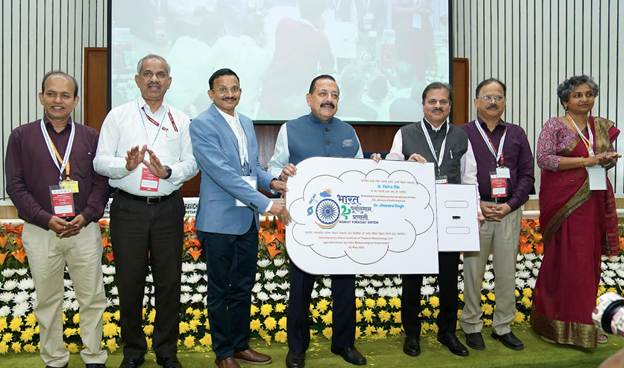
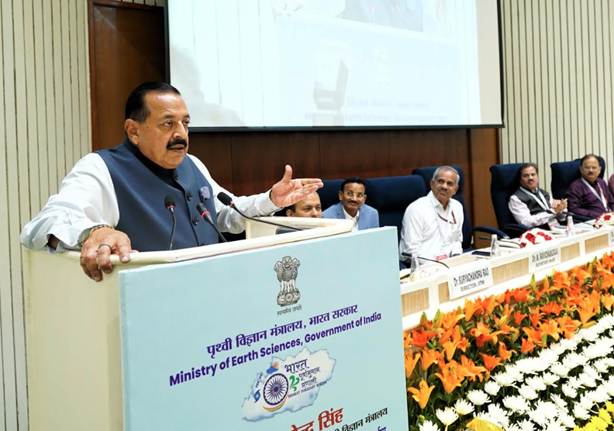
Union Minister of Earth Sciences Dr. Jitendra Singh today dedicated one of the world’s first indigenously developed high-resolution weather forecast systems — the Bharat Forecast System — at a launch ceremony held at Vigyan Bhawan today.

Speaking on the occasion, the Minister said, as India celebrates the rise of her economy to Rank 4 and looks forward to move up to Rank 1, our forecast precision aims to supplement the economic growth by reducing potential losses and simultaneously adding potential gains.

Developed by the Indian Institute of Tropical Meteorology (IITM), Pune, the cutting-edge system enhances India’s weather prediction resolution from 12 km to 6 km, enabling every village in India to access more precise and location-specific forecasts. This advancement marks a quantum leap in India’s weather services and is a significant milestone under the ‘Atmanirbhar Bharat’ and ‘Make in India’ initiatives.

Union Minister of State (Independent Charge) for Science and Technology, Minister of State (Independent Charge) for Earth Sciences, Minister of State in the Prime Minister’s Office, Department of Atomic Energy, Department of Space, and Personnel, Public Grievances, and Pensions, Dr. Jitendra Singh said “This indigenous breakthrough positions India among global leaders in weather prediction. It’s a proud testament to our rise as the world’s 4th largest economy and showcases our ability to develop state-of-the-art, self-reliant scientific solutions is another feather in the Nation’s Cap.”


In a heartening revelation, Dr. Jitendra Singh shared that the Bharat Forecast System is being spearheaded by four women scientists, reflecting Prime Minister Narendra Modi’s vision of ‘Nari Shakti’. “Science Ministries no longer empower women — we are being empowered by them,” he noted.

Highlighting the nationalistic spirit behind the project, Dr. Jitendra Singh said: “The efforts are Indian, the technology is Indian, and the beneficiaries are Indian. This is true Atmanirbharta. Moreover, this system will also benefit other tropical regions globally, which face the most complex and variable weather challenges.”

Emphasizing the tribute to ‘Vikas Se Virasat’ and the government’s commitment to using modern technology to support traditional sectors like agriculture, Dr. Singh said the system would help reduce crop loss and anomalies by improving extreme weather predictions — with a 30% improvement in extreme rainfall forecasts and a 64% enhancement in core zones, using real-time modeling based on the ‘Triangular Cubic Octahedral Grid model.’

He lauded the seamless collaboration between IITM, India Meteorological Department (IMD), ISRO, and other institutions as a “Whole of Science” and “Whole of Government” approach, reinforcing India’s cohesive scientific strategy.


“The last few years have seen a quantum leap in IMD’s forecasting capacity,” he recalled, referencing PM Modi’s participation in IMD’s 150th-anniversary celebrations and the recently launched Mission Mausam, with a budget allocation of ₹2000 crore to upgrade India’s climate forecasting infrastructure.

Dr. Jitendra Singh underscored the role of the Ministry of Earth Sciences and IMD in enhancing ease of living and doing business, with over 20 ministries, including agriculture, space, and transport, relying daily on weather services. He emphasized the government’s commitment to last-mile delivery of forecasts, enabling both citizens and farmers to make informed decisions and mitigate risks.

At the event, Dr. Jitendra Singh also launched IITM’s Hindi Rajbhasha magazine “Indradhanush”, celebrating linguistic inclusion in science communication.

PM chairs the NDA Chief Ministers’ Conclave in Delhi

| Published on:

The Prime Minister Shri Narendra Modi chaired the NDA Chief Ministers’ Conclave in Delhi today. He emphasised the need to add momentum to our development trajectories and ensure the benefits of a double-engine government reach the people in an effective manner.

In a thread post on X, he wrote:

“Participated in the NDA Chief Ministers’ Conclave in Delhi. We had extensive deliberations about various issues. Various states showcased their best practices in diverse areas including water conservation, grievance redressal, strengthening administrative frameworks, education, women empowerment, sports and more. It was wonderful to hear these experiences.”

“I emphasised the need to add momentum to our development trajectories and ensure the benefits of a double-engine government reach the people in an effective manner. Spoke about building stronger synergies in key areas be it cleanliness, sanitation, healthcare, youth empowerment, agriculture, technology and more.”

BJP National President addresses a press conference at the conclusion of NDA Chief Ministers’ Conclave

| Published on:

Hon’ble Bharatiya Janata Party National President and Union Minister Shri Jagat Prakash Nadda addressed a press conference at the conclusion of NDA Chief Ministers’ Conclave held in New Delhi, on Sunday. In his address, Shri Nadda stated that under the leadership of Hon’ble Prime Minister Shri Narendra Modi Ji, NDA Chief Ministers and Deputy Chief Ministers periodically come together for this conference. The meeting was attended by 20 Chief Ministers and 18 Deputy Chief Ministers. Shri Nadda shared that two resolutions were passed during the conclave. The first resolution was in support of ‘Operation Sindoor,’ carried out under the leadership of Hon’ble Prime Minister Shri Narendra Modi Ji. The second resolution has been related to the caste-based census, which was approved by the Union Cabinet. The resolution emphasized that while we do not believe in caste-based politics, it is crucial to integrate the deprived, oppressed, marginalized, and Dalit communities into the mainstream of society.

Shri Nadda said that under the leadership of Hon’ble Prime Minister Shri Narendra Modi Ji, Operation Sindoor was successfully accomplished. In this mission, the way Indian armed forces and brave soldiers served the nation has been appreciated. The valour displayed by our army has also received widespread praise. In this context, a resolution was unanimously passed, which highlights the leadership abilities of Hon’ble Prime Minister Shri Narendra Modi Ji in Operation Sindoor, as well as the ongoing efforts towards a Strong India (Sashakt Bharat), Capable India (Samarth Bharat), and Self-Reliant India (Atmanirbhar Bharat). It can also be said that the exactness with which our army struck terrorism in Pakistan with precision and lethal efficiency was also discussed in detail in this resolution.

Shri Nadda stated that the cabinet, under the leadership of Hon’ble Prime Minister Shri Narendra Modi Ji, has approved the caste-based census. This has been part of our vision from the very beginning. The Government of Bihar, especially under the leadership of Shri Nitish Kumar, was the first to propose this initiative. Building upon that foundation, the proposal was passed. This decision was widely appreciated, and Hon’ble Prime Minister Shri Narendra Modi Ji received heartfelt commendation from all quarters. Through this resolution, we have sent a clear message that our politics is not driven by caste divisions. Our core objective is to ensure the inclusion of the deprived, the oppressed, the marginalized, the Dalits, and all those who have remained outside the mainstream of society. The caste-based census is a significant step in this direction, and we are committed to taking it forward with determination.

Hon’ble BJP National President stated that with regard to ‘Operation Sindoor’, the Hon’ble Prime Minister described it as a symbol of the indomitable courage of our soldiers. He also said that India must move rapidly towards development and be made strong and self-reliant, and special focus is needed in this direction. A detailed discussion was also held on the campaign launched against Naxalism. In this discussion, Chhattisgarh Chief Minister Shri Vishnu Deo Sai explained how his government has fought effectively against Naxalism and is achieving success. During the meeting, Chhattisgarh Home Minister Shri Vijay Sharma shared that rehabilitation efforts are ongoing in Naxal-affected areas, with special emphasis on integrating people into the mainstream. The schemes being implemented in this context were also reviewed and discussed. Union Home Minister Shri Amit Shah elaborated on the government’s strategy, provided guidance, and briefed all Chief Ministers and Deputy Chief Ministers on how this issue has been addressed.

BJP National President stated that the resolution on Operation Sindoor was introduced by Rajasthan Chief Minister Shri Bhajanlal Sharma and supported by Maharashtra Deputy Chief Minister Shri Eknath Shinde. The resolution received unanimous approval from all NDA member parties. Then, the resolution concerning the caste-based census was presented by Haryana Chief Minister Shri Nayab Singh Saini and was supported by Andhra Pradesh Deputy Chief Minister Shri Pawan Kalyan.

Shri Nadda stated that there was an in-depth discussion on how various states, particularly all states, have developed best practices in administrations. Deliberations were also held on the innovations that have been implemented to advance India and the new elements introduced in governance. The NDA focused specifically on seven best practices. For instance, the Olympics organized in the Bastar region of Chhattisgarh were highlighted. Chhattisgarh Chief Minister Shri Vishnu Deo Sai elaborated on how the event was conducted by incorporating the culture, sports, cuisine, literature, and traditions of the tribal communities of Bastar. All these aspects were presented in a competitive format during the event.

Union Minister Shri Jagat Prakash Nadda mentioned that the efforts made in water conservation across drought-affected regions of Bihar were an important point of discussion. Bihar’s Deputy Chief Minister Shri Samrat Choudhary provided a comprehensive overview of the ‘Jal Jeevan Hariyali’ project and its implementation. The meeting also addressed the actions taken in Assam to curb child marriage. Assam Chief Minister Shri Himanta Biswa Sarma spoke on the matter and proposed the formation of a dedicated study team to analyze the positive outcomes achieved in the state. He recommended that the team visit Assam for an in-depth evaluation of the on-ground situation. The success of the Pradhan Mantri Suryaghar Yojana in Gujarat was also appreciated. Gujarat Chief Minister Shri Bhupendra Patel provided detailed information about the free electricity being provided to the public under this scheme and the income generated from it. Hon’ble Prime Minister Shri Narendra Modi Ji had stated that “We are a responsive, responsible, and accountable government.” In this context, Meghalaya Chief Minister Shri Conrad Sangma gave a presentation on the CM Connect programme. The presentation focused on how governance can be made more accountable and responsible in remote and widespread areas. A movie was also shown on this topic. He explained how administrative accountability can be enhanced through CM Connect.

BJP National President stated that Uttarakhand Chief Minister Shri Pushkar Singh Dhami gave a detailed presentation on the implementation of the Uniform Civil Code in the state. He explained the steps taken for its implementation, the obstacles that were overcome, and how the Code is helping to integrate people into the mainstream. Serious deliberation and discussion took place on this subject. A presentation was also made on the administrative reform efforts undertaken by Maharashtra. It was suggested that a few representatives from each state be selected to study Maharashtra’s experience and implement it in their respective states. Uttar Pradesh Chief Minister Shri Yogi Adityanath provided information about the work being carried out under Project Alankar. Through this project, efforts have been made to bring the infrastructure of Government Senior Secondary Schools and +2 Colleges to the saturation point. The objective is to strengthen infrastructure for higher and secondary education. The address of Hon’ble Prime Minister Shri Narendra Modi was also conveyed to all, in which he said that study groups should be formed to examine the best practices discussed, so that every state can implement them locally. Emphasizing the need for a self-reliant India, he stated that this should not be just a government initiative but embraced as a mass movement. Participation of all citizens is essential in this endeavour.

Shri Nadda stated that Hon’ble Prime Minister Shri Narendra Modi placed special emphasis on environmental conservation, urging state governments to give particular attention to the monitoring and maintenance of the Amrit Sarovars that have been created. This is not a one-time effort, but that their effective use and upkeep must be ensured. Hon’ble Prime Minister Shri Narendra Modi Ji also suggested that a study should be conducted to assess how much water recharge has taken place from these water sources. Along with this, our traditional water sources such as wells and stepwells, should be cleaned and revitalized as a campaign. Cleanliness should be a continuous part of our lives; it is not a 10 or 15-day program, but a sustainable process in which we all must participate. Hon’ble Prime Minister Shri Narendra Modi Ji also called upon all state governments to plan minimal and innovative programs on the occasion of Environment Day on June 5, which bring positive changes in the environmental sector of the state. Additionally, the NDA government, led by the Hon’ble Prime Minister Shri Narendra Modi Ji, is about to complete 11 years in office. On this occasion, Hon’ble Prime Minister Shri Narendra Modi Ji urged all Chief Ministers of NDA-ruled states on June 9 to consider how to celebrate the 11th year, what programs should be organized, and how the progress India has made in these 11 years can be presented to the public. He requested all state governments to deliberate on these matters.

Shri Jagat Prakash Nadda stated that it will be our responsibility to reach out to the people of the country. A series of programs will be organized for this purpose. A small committee will be formed to discuss this matter. First, Environment Day will be observed on June 5, then the NDA government will complete 11 years on June 9, and International Yoga Day will be celebrated on June 21, which has now entered its 10th year. International Yoga Day was initiated in 2015. On the occasion of this 10th year, a small group from the NDA will come together to decide the programs. This program is not of any one government, but a program for society, the country, and the entire world. Special attention will be given to how it can reach as many people as possible. Additionally, on June 25-26, the 50th anniversary of the Emergency will be observed. On this occasion, the NDA will also inform the public about those who attempted to strangle democracy and suppress democratic values.

Shri Nadda stated that extensive discussions have taken place on these four important programs. All our sub-groups will discuss these topics in detail and prepare comprehensive action plans to present the programs. Hon’ble Prime Minister Shri Narendra Modi Ji had said yesterday that we must work as Team India. In the same spirit, all NDA Chief Ministers and Deputy Chief Ministers should unite with full strength and harmony to advance this development journey and fulfill the resolve of ‘Viksit Bharat’.