
India’s fight against terrorism is now part of national defence doctrine: Raksha Mantri

| Published on:

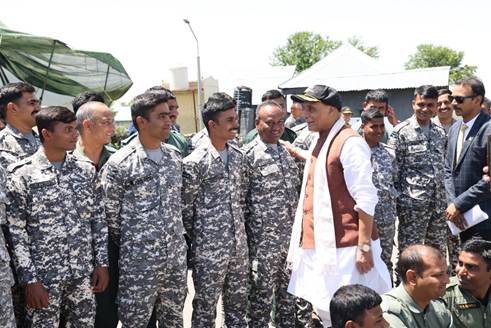
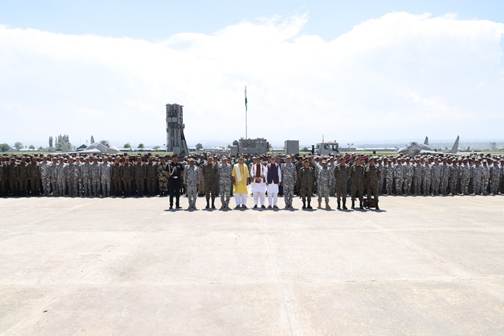
“India’s fight against terrorism is not just a matter of security, it has now become a part of the national defence doctrine, and we will root out this hybrid & proxy warfare,” said Raksha Mantri Shri Rajnath Singh while addressing the air warriors at the Bhuj Air Force Station in Gujarat on May 16, 2025. He asserted that the current ceasefire means that India has kept Pakistan on probation on the basis of its behavior. If the behavior improves, it is fine; but if there is any disturbance, harshest punishment will be given, he said.

Raksha Mantri made it clear that Operation Sindoor is not yet over. “Our actions were just a trailer, we will show the full picture, if need be. ‘Attacking and eliminating terrorism’ is the new normal of New India,” he said.

Stating that Pakistan has again started to rebuild its terror infrastructure destroyed by India, Shri Rajnath Singh called upon the International Monetary Fund (IMF) to reconsider its one-billion-dollar assistance to Islamabad and refrain from providing any support in future as well. “Pakistan will spend the tax collected from its citizens to give around Rs 14 crore to Masood Azhar, the head of Jaish-e-Mohammed terrorist organisation, even though he is a UN-designated terrorist. The Pakistan government has also announced financial assistance to rebuild the terror infrastructure of Lashkar-e-Taiba and Jaish-e-Mohammed located in Muridke and Bahawalpur. Certainly, a large part of IMF’s one billion dollars assistance will be used to fund the terror infrastructure. Will this not be considered indirect funding by IMF, an international organisation? Any financial assistance to Pakistan is no less than terror funding. The funds India gives to IMF should not be used, directly or indirectly, to create terror infrastructure in Pakistan or any other country,” he said.

Raksha Mantri commended the effective role played by the Indian Air Force (IAF) in Operation Sindoor which is being appreciated by the world. Lauding the air warriors for eliminating the terror camps in Pakistan and PoK in just 23 minutes, he said “when missiles were dropped inside the enemy territory, the world heard the echoes of India’s valour and might”. He added that IAF spearheaded this campaign against terrorism, and during the operation, it not only dominated the enemy, but decimated them.
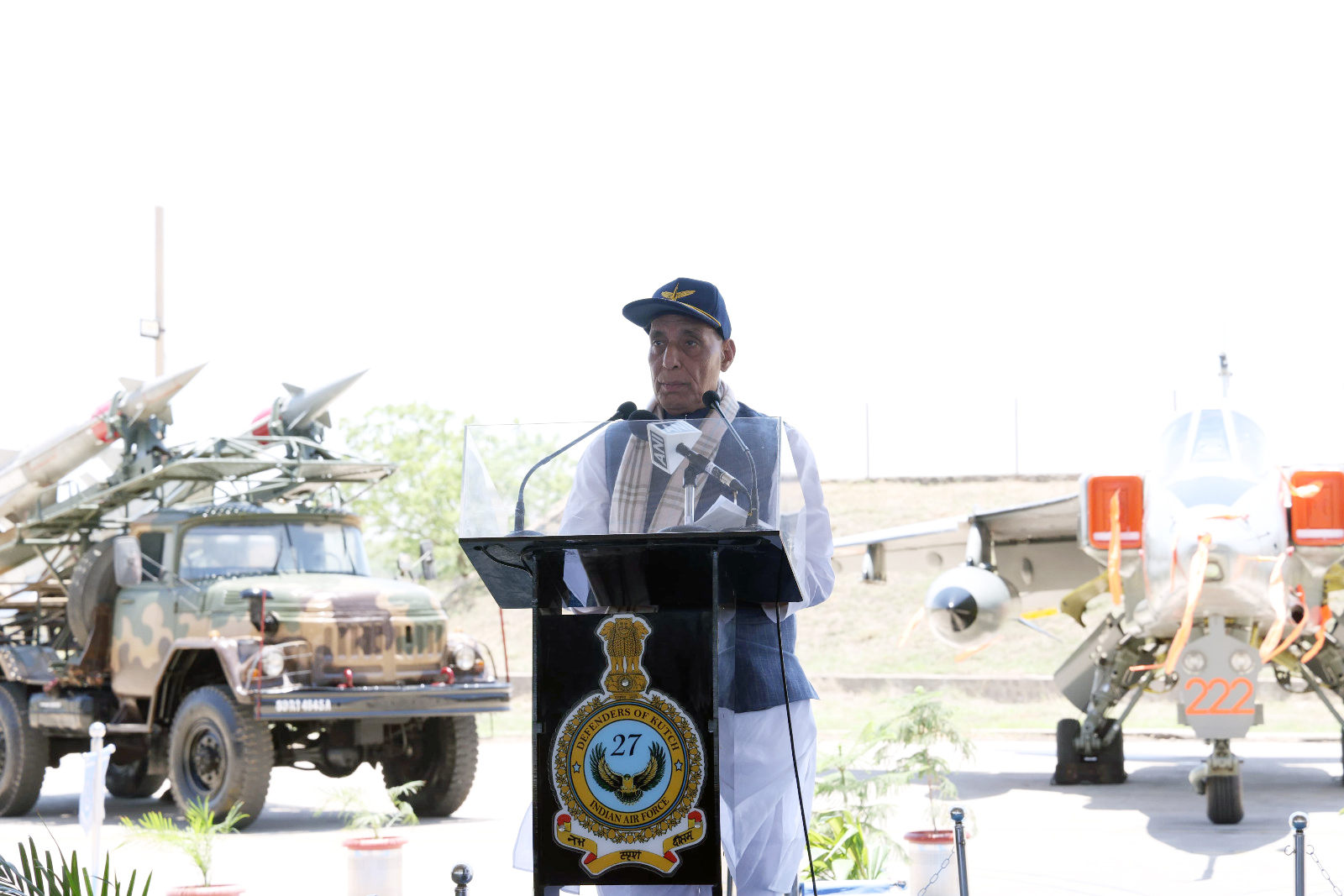
Shri Rajnath Singh highlighted that India’s fighter aircraft are capable of striking every corner of Pakistan without crossing the border. “The world has witnessed how IAF destroyed terror camps and later Pakistan’s airbases. IAF gave the proof that India’s war policy and technology have changed. They conveyed the message of New India that we are not just dependent on weapons and platforms imported from aboard, but Made in India equipment have become a part of our military power. The weapons manufactured in India are also impenetrable,” he said.

Raksha Mantri added that Pakistan has itself accepted the power of the ‘BrahMos’ missile. This Made in India missile showed Pakistan the light of day in the darkness of night, he said, also lauding India’s air defence system, in which Akash and other radar systems made by DRDO have played a tremendous role.

On his interaction with the brave Indian Army soldiers at Badami Bagh Cantt in Srinagar yesterday, and the air warriors & soldiers in Bhuj today, Raksha Mantri stated that he is, once again, convinced that India’s borders are completely safe. “I’ve witnessed the highest level of enthusiasm and patriotism among the soldiers on both the fronts. What our forces did during Operation Sindoor has filled the country with pride,” he said.
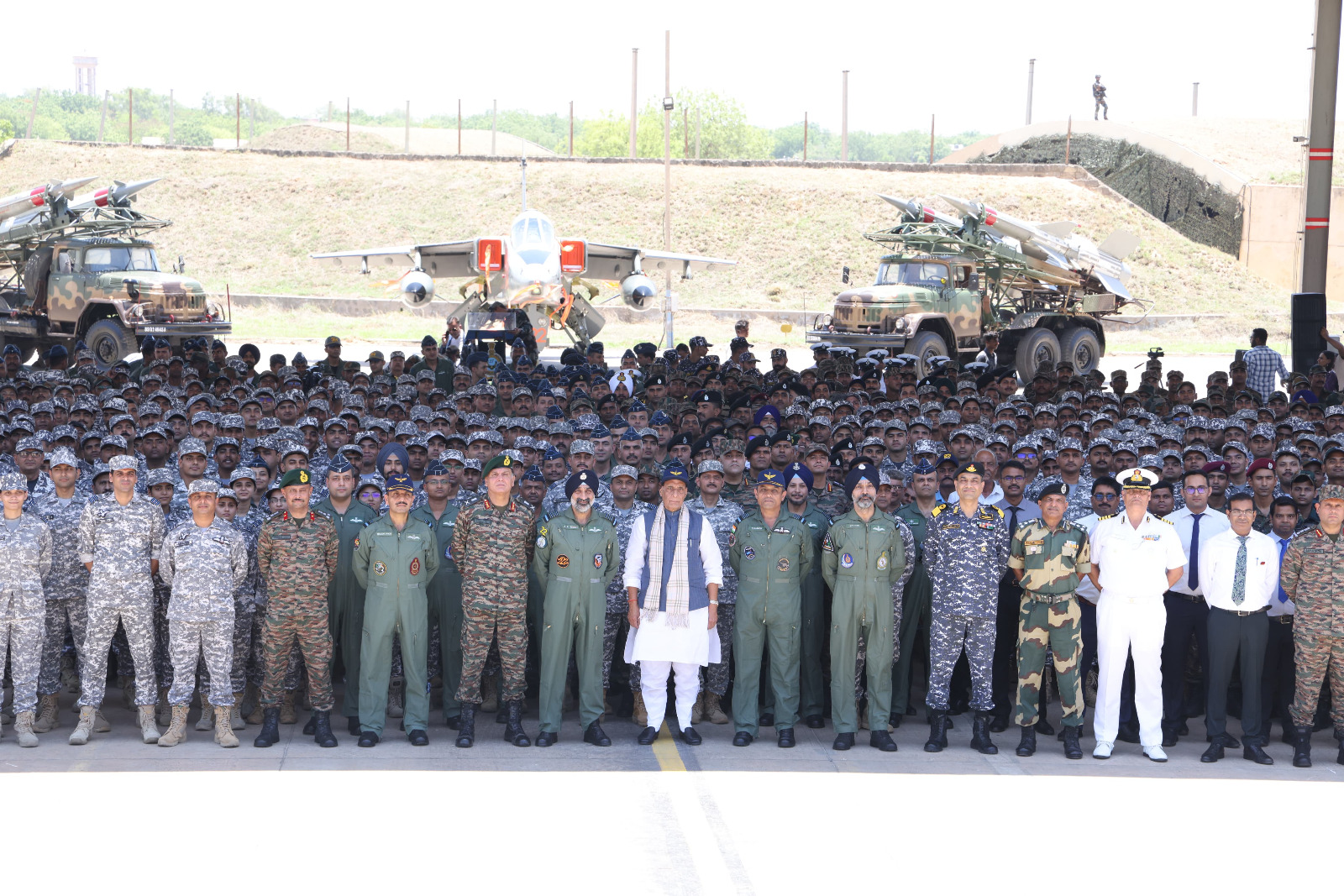
Raksha Mantri stated that Bhuj has been witness to India’s victory over Pakistan in 1965, 1971 and now. He termed Bhuj as a land of patriotism where soldiers stand tall with an unshakable resolve to protect national interests. He expressed gratitude to the air warriors and other brave soldiers of the Armed Forces and BSF for their service to the motherland.

Reiterating the Government’s commitment to continuously equip the Armed Forces with latest weapons/platforms and modern infrastructure, Shri Rajnath Singh stated a strong nation respects its military and provides it with resources, technology and every support. He highlighted that, earlier, India was heavily dependent on imports, but today it is indigenously manufacturing equipment such as artillery systems, radar systems, missile shields, drones and counter drones. “We are becoming exporters from importers; and this is just the beginning,” he said.

Shri Rajnath Singh stated that the people of India, the Government, the Armed Forces and other security agencies displayed unity and understanding in this fight against terrorism, with every citizen participating like a soldier. He stated that the Government and the people stand shoulder-to-shoulder with its forces at every step, expressing confidence that “Together, we will completely eradicate terrorism from the region, and no one dares to cast an evil eye on the sovereignty of the nation”.

Raksha Mantri began his address by paying homage to the innocent lives lost in Pahalgam and the soldiers who made the supreme sacrifice during Operation Sindoor. He wished a speedy recovery to the injured soldiers.

Chief of the Air Staff Air Chief Marshal AP Singh and other senior IAF officials were present on the occasion.

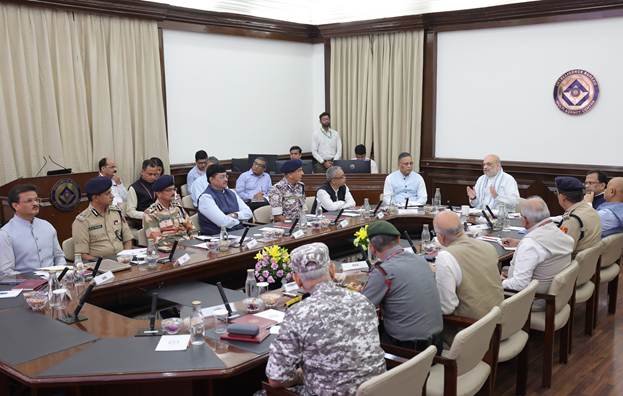
Union Home Minister inaugurates the new Multi Agency Centre (MAC) at North Block in New Delhi

| Published on:

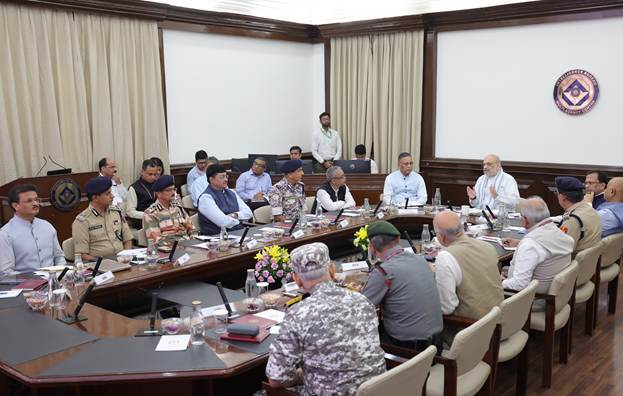
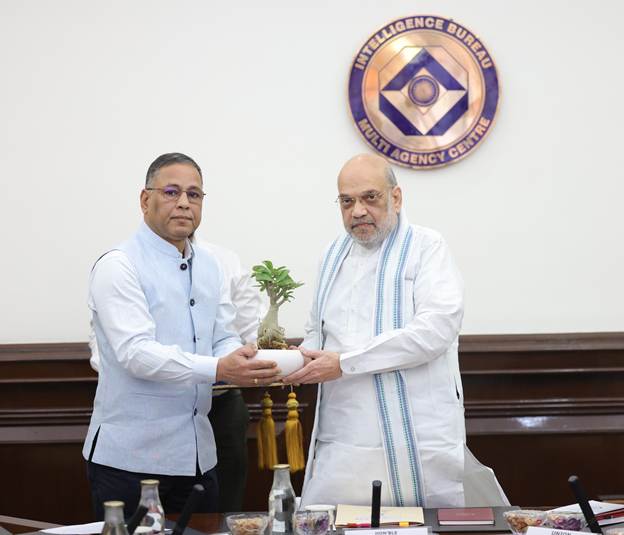
Union Home Minister and Minister of Cooperation, Shri Amit Shah inaugurates the new Multi Agency Centre (MAC) at North Block in New Delhi, today. On this occasion, Union Home Minister Shri Amit Shah said that Operation Sindoor is a unique symbol of the firm political will of Prime Minister Shri Narendra Modi ji, accurate information of intelligence agencies and the infallible strike capability of our three armed forces. He said that India is proud of its three armed forces, Border Security Force and all security agencies.

Speaking about the historic anti-Naxal operations conducted by Central Armed Police Forces (CAPFs) in Karregattalu Hills (KGH) at Chhattisgarh-Telangana border recently, the Union Home Minister said that these historic operations against Naxalites demonstrate the excellent coordination between our security forces. Shri Shah said that similar coordination was also seen during Operation Sindoor, which shows that there is a very good coordination in the process and thinking of our intelligence agencies and the three armed forces in carrying out the work.

Union Home Minister Shri Amit Shah said that the new MAC will provide a seamless and integrated platform for synergising the efforts of all the agencies in addressing the complex and interconnected national security challenges being faced in today’s environment. He expressed hope that this new network will strengthen the country’s efforts to tackle serious threats like terrorism, extremism, organised crime and cyber attacks.

Shri Amit Shah lauded the new MAC network and expressed satisfaction at the successful completion of hardware and software related tasks in record time. He said that it incorporates futuristic capabilities such as embedded AI/ML techniques to harness the potential of the vast database with MAC and GIS services. He also laid the future roadmap by emphasising the need to integrate other significant databases housed with different central agencies in different silos, on this platform for leveraging the advanced data analytics made available with new MAC. Shri Shah said that this new network is expected to elevate the quality of data analytics generated on the MAC network to a higher level, enabling accurate trend analysis, hotspot mapping and timeline analysis to give predictive and operational outcomes. The new MAC will go a long way in combating the terror ecosystem having intricate linkages with the organised crime.

As India’s foremost intelligence fusion centre, the Multi Agency Centre (MAC) has been in existence since 2001 and the Union Home Minister has been actively guiding the technological upgradation of MAC continuously. Housed with the Intelligence Bureau, new MAC has connected all the intelligence, security, law enforcement and investigative agencies. Executed at a cost of over 500 Crores, the new MAC network has undergone both qualitative and quantitative transformation. The new MAC network spanning the length and breadth of the country, has weaved-in country’s Island territories, insurgency affected areas and mountainous high altitude terrain ensuring last mile connectivity down to the level of district SP’s in the remotest areas with a fast and standalone secure network.

Dr. Jitendra Singh Highlights transformative journey of Governance over the past decade under PM

| Published on:

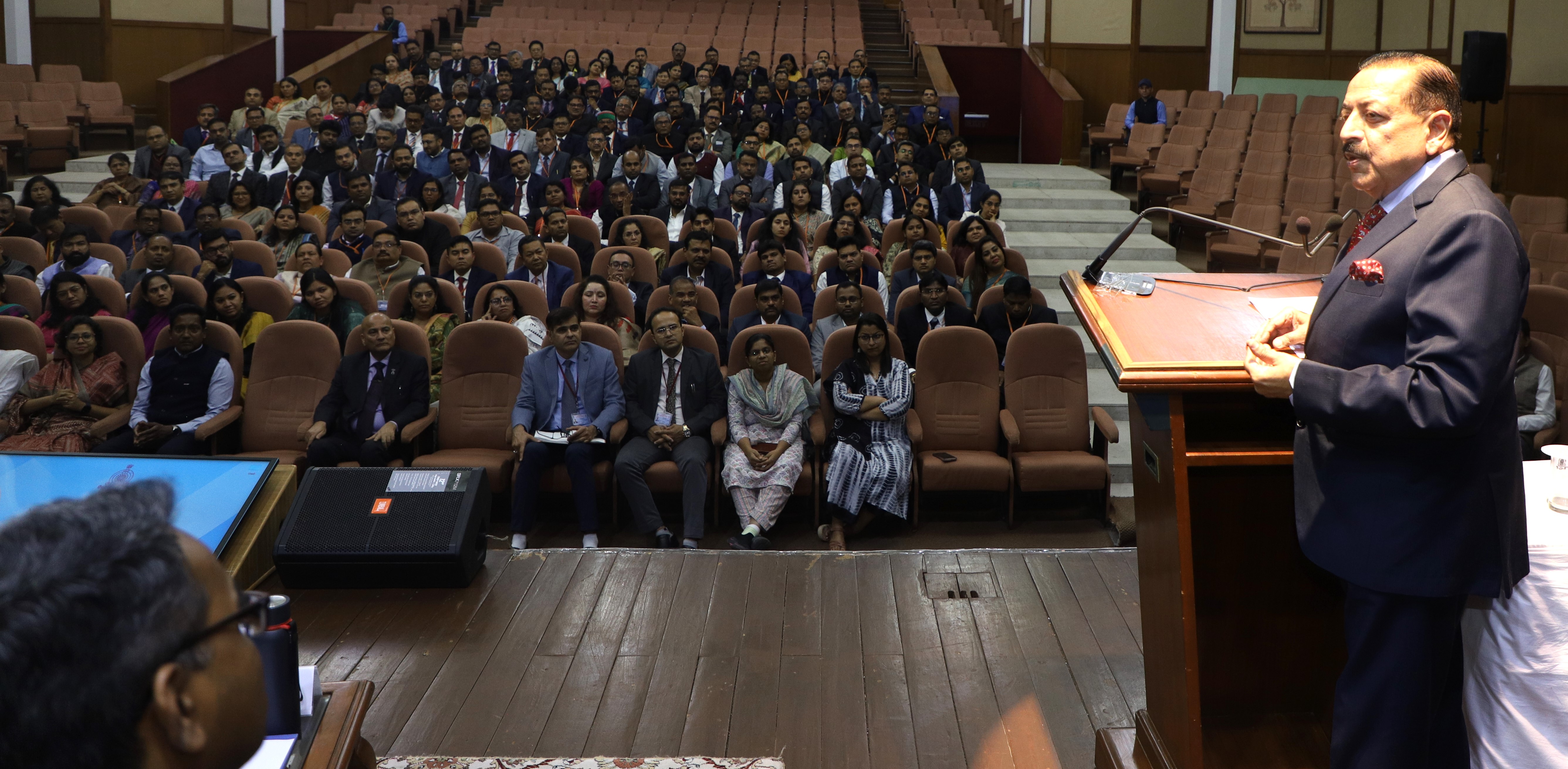
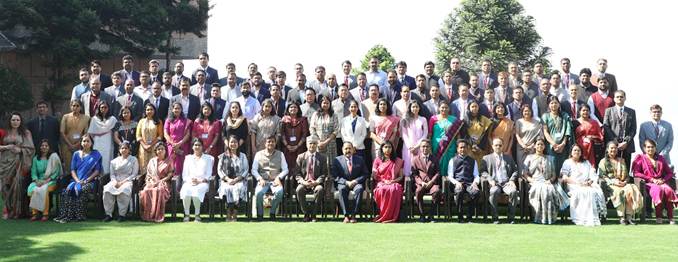
Union Minister Dr. Jitendra Singh, addressed IAS trainees and civil servants at the Lal Bahadur Shastri National Academy of Administration (LBSNAA), Mussoorie, highlighting the transformative journey of governance over the past decade under PM Narendra Modi.

Dr. Jitendra Singh, Union Minister of State (Independent Charge) for Science & Technology, Minister of State (Independent Charge) for Earth Sciences, MoS PMO, Department of Atomic Energy and Department of Space, MoS Personnel, Public Grievances and Pensions emphasized the democratization of service delivery, noting that prior to 2014, a residual colonial hangover continued to shape administrative roles and mindsets.

“The role of the ‘Collector’ has evolved from being a revenue collector for the King during British times to becoming a District Development Commissioner in a welfare state,” the Minister stated.

Addressing the programme, Dr. Jitendra Singh highlighted that the government has introduced several groundbreaking reforms to enhance transparency, accessibility, and efficiency in public service delivery. The Digital Life Certificate Campaign has revolutionized pension disbursal by enabling elderly pensioners to verify their identity using facial recognition technology, eliminating the need for physical visits to bank branches. Significant strides have also been made in simplifying administrative processes, including the introduction of a single pension form, a unified fellowship application portal, and the abolition of over 1,600 outdated rules.

To promote inclusivity, Dr Jitendra Singh said, government recruitment exams are now conducted in 13 regional languages, with plans to extend this to all 22 scheduled languages recognized by the Constitution. Further ensuring a level playing field, interviews for certain Group B and C posts have been abolished, promoting merit-based selection. Additionally, Rozgar Melas—large-scale employment fairs—have been launched to provide job opportunities and raise aspirations among the youth.

Dr. Jitendra Singh underscored the significance of the Swachhata Campaign, which not only optimized office space but also generated more than ₹250 crore in revenue from the disposal of scrap materials. The Minister reiterated the “Whole-of-Government” and “Whole-of-Nation” approach, referencing Operation Sindoor as an example of national unity and coordination.

Highlighting initiatives for young officers, Dr. Singh spoke about the Assistant Secretaryship Programme, where IAS officers work in central ministries for two months. “During the COVID-19 pandemic, officers who had undergone this programme displayed greater confidence and adaptability,” he noted.

Dr Jitendra Singh also mentioned the Prime Minister’s Awards for Excellence in Public Administration, which now emphasize initiative and impact, rather than individual recognition. Over two dozen regional conferences have been conducted by the ministry across the country—from Leh to Kanyakumari, emphasizing decentralized governance and participatory development.

Dr. Jitendra Singh credited Prime Minister Modi’s 2016 Digital India vision for ensuring uninterrupted governance during the pandemic. “By 2020, 70-80% of our work was already online. During COVID, there was zero disruption, even for a single day,” he said.

Referring to his article “Changing Face of Civil Services in India,” Dr. Singh observed a diverse, inclusive trend in UPSC selections—with toppers emerging from remote, rural backgrounds and government schools, thanks to technology as a great equalizer.

He encouraged a retrospective study on the effectiveness of coaching centres, noting that aspirants from traditionally underrepresented states like Haryana and Punjab are now making it to the top ranks.

“These governance reforms are not just bureaucratic—they are profound socio-economic reforms,” he remarked, calling this era under PM Modi as “The Best Times for India.”

In conclusion, Dr. Jitendra Singh addressed the young civil servants with optimism: “You are the blessed generation, and in 2047, when India celebrates its centenary of Independence as a Viksit Bharat, you will be in your prime to witness and shape India’s glory.”

The session began with a welcome address and report by Sriram Taranikanti, Director, LBSNAA.

PM chairs high-level meeting to review the progress of the fisheries sector

| Published on:

Prime Minister Shri Narendra Modi chaired a high-level meeting to review the progress of the fisheries sector, with focus on Fishing in the Exclusive Economic Zone(EEZ) and High Seas, at his residence at Lok Kalyan Marg earlier today.

Prime Minister emphasized the extensive use of satellite technology to harness better use of fish resources and give safety instructions to fishermen.

Prime Minister stressed on modernization of the sector through smart harbours and markets, use of drones in transportation of the catch and its marketing. He said that there is a need to move toward a healthier system of functioning so as to add value in the supply chain.

Further, Prime Minister suggested exploration of the usage of drones, as per technical protocols, for transportation of fresh fish from production centres to big nearby markets in cities / towns in consultation with civil aviation.

Prime Minister underlined the need for improvements in processing and packaging of the produce. Facilitation of investments from the private sector was also discussed.

Regarding the use of technology, Prime Minister said that similar to agro tech in the agriculture sector, adoption of fish tech in the fisheries sector should be enhanced for improving the production, processing and marketing practices.

Prime Minister said that taking up fisheries production in Amrit Sarovars will not only improve the sustenance of these water bodies but also improve the livelihoods of the fishermen. He also highlighted that ornamental fisheries also needs to be promoted as an avenue for income generation.

Prime Minister said that a strategy should be worked out to serve the needs of landlocked areas where there is high demand for fish but not enough supply.

Prime Minister suggested that usage of seaweeds for fuel purposes, as nutritional inputs, in pharmaceuticals and other sectors should be explored. He said that all the departments concerned should work together and use technology to create the required outputs and outcomes in the seaweed sector, ensuring complete ownership.

Prime Minister also suggested undertaking capacity building of fishermen in modern fishing practices. He also suggested maintenance of a negative list of items that hinder the growth of the sector so that action plans can be made to overcome these and further enhance Ease of Doing Business and Ease of Living of the fishermen.

During the meeting, a presentation was also done on the progress made in important initiatives, compliances to the suggestions given during the last review, and the proposed enabling framework for sustainable harnessing of fisheries from the Indian Exclusive Economic Zone(EEZ) and High Seas.

Since 2015, Government of India has stepped-up investment to Rs. 38,572 crore through various GoI schemes and programs namely Blue Revolution Scheme, Fisheries and Aquaculture Infrastructure Development Fund (FIDF), Pradhan Mantri Matsya Sampada Yojana (PMMSY), Pradhan Mantri Matsya Samridhi Sah Yojana (PM-MKSSY) and Kisan Credit Card (KCC). India has registered an annual fish production of 195 lakh tons in 2024-25 with sectoral growth rate of more than 9%.

The meeting was attended by the Union Minister of Fisheries, Animal Husbandry and Dairying Shri Rajiv Ranjan Singh alias Lalan Singh, Principal Secretary to PM Dr. P.K. Mishra, Principal Secretary-2 to PM Shri Shaktikanta Das, Advisor to PM Shri Amit Khare, Secretary of the Department of Fisheries and senior officials.

Pakistan will pay a heavier price if it continues to support terrorism: Raksha Mantri

| Published on:

“Prime Minister Shri Narendra Modi has redefined India’s policy against terrorism which now says that any attack on Indian soil will be considered as an act of war,” said Raksha Mantri Shri Rajnath Singh while addressing the brave Indian Army soldiers at Badami Bagh Cantt, Srinagar on May 15, 2025. Raksha Mantri emphasised that India has always prioritised peace and never supported war, however, when its sovereignty is attacked, it is necessary to respond. If Pakistan continues to support terrorism, it will pay a heavier price, he said.

Shri Rajnath Singh termed Operation Sindoor as the biggest action taken by India against terrorism in history, and a testament to the nation’s commitment to go to any extent to eliminate the menace. “Operation Sindoor was a commitment demonstrated by India of not just carrying out defence, but taking bold decisions whenever needed. It was a dream of every soldier that we will reach every terrorist hideout and destroy them. Terrorists killed Indians based on their religion, we killed them for their deeds. It was our dharma to eliminate them. Our forces gave the right direction to their anger and took revenge for Pahalgam with great courage & discretion,” he said.

Raksha Mantri added that Operation Sindoor has sent a loud and clear message to the terrorist organisations hiding in Pakistan and their masters that they are not safe anywhere. “Our forces have shown to the world that their aim is precise & pin-point and the task of counting is left to the enemies,” he said.

Shri Rajnath Singh added that India’s unwavering resolve against terrorism can be gauged from the fact that it was not deterred by Pakistan’s nuclear blackmail, pointing out that the world has witnessed how irresponsibly Islamabad has issued nuclear threats to New Delhi several times. “I raise this question before the world: Are nuclear weapons safe in the hands of such an irresponsible and rogue nation? Pakistan’s nuclear weapons should be taken under the supervision of the International Atomic Energy Agency (IAEA),” he said.

Shri Rajnath Singh stated that through the Pahalgam incident, an attempt was made to break the social unity of India, and the Armed Forces responded to the terror attack by hitting the heart of the adversary. He recalled Pakistan’s declaration about 21 years ago in front of the then Prime Minister late Atal Bihari Vajpayee that terrorism will no longer be exported from its land. Raksha Mantri said Pakistan has been deceiving India, and it must stop sheltering anti-India and terrorist organisations & not allow its land to be used against India, he said.


Raksha Mantri added that Pakistan has reached a state where it has sought loan from the International Monetary Fund (IMF), while India falls in the category of those countries which provide funds to IMF so that they can help poor countries.

Shri Rajnath Singh reasserted that no unwarranted action should be taken from across the border, which is the base of the understanding reached between the two countries. He reiterated Prime Minister Modi’s views that terrorism & talks cannot go together, and if talks are held, it will only be on terrorism and PoK.

Raksha Mantri paid homage to the innocent civilians who were killed in a terror attack in Pahalgam, and the soldiers who made the supreme sacrifice in the service of the motherland during Operation Sindoor. He commended the courage of the injured soldiers and wished for their speedy recovery.

Shri Rajnath Singh expressed gratitude to the brave soldiers who destroyed the Pakistani posts & bunkers across the border, sending a clear message to the enemy. “I come here today with a message from the people of India: ‘We are proud of our Forces’,” he added.

While Raksha Mantri praised the valour and dedication of the Armed Forces, he reiterated the Government’s commitment to continue equipping the soldiers with advanced weapons & platforms and modern infrastructure. “Our Government has ensured that our forces are prepared for every situation. Many new generation equipment like modern rifles, missile defence shields, and drones are being rapidly manufactured in India itself. Connectivity has been ensured along LoC and LAC like never before. The devotion and readiness with which our soldiers serve the country, the government is trying to serve you,” he said.

Shri Rajnath Singh added that the Government and the people of the country stand shoulder-to-shoulder with the Armed Forces at every step, in every situation. He exuded confidence that with the cooperation of the military, India will soon eradicate terrorism in the region, so that no one dares to cast an evil eye on the sovereignty of the nation.

Lieutenant Governor of Jammu & Kashmir Shri Manoj Singh, J&K Chief Minister Shri Omar Abdullah, Chief of the Army Staff General Upendra Dwivedi and other senior officials of the Indian Army were present on the occasion.
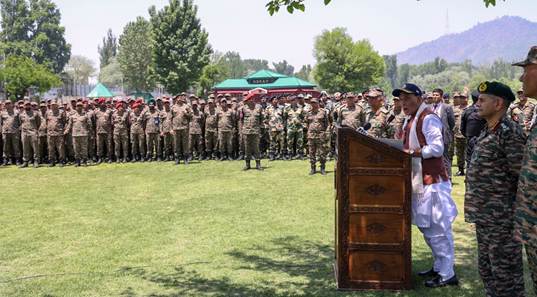
Union Home Minister meets security personnel injured during anti-naxal operation

| Published on:

Union Home Minister and Minister of Cooperation Shri Amit Shah visited AIIMS Trauma Centre, Delhi today, and met the security personnel who were injured during anti-Naxal operations eliminating 31 Naxalites in the Karegutta Hills across the Chhattisgarh and Telangana border.

In a X post Shri Amit Shah said, Our security forces are wiping out every trace of Naxalism with their valour. Today, visited AIIMS Trauma Centre, Delhi, and met the security personnel who were injured during anti-Naxal operations eliminating 31 Naxalites in the Karegutta Hills across the Chhattisgarh and Telangana border. Inquired about their health and assured them of the trust and pride the nation takes in them.

Shri Amit Shah said the brave soldiers carried out an operation for 21 continuous days on the Chhattisgarh-Telangana border and killed 31 Naxalites.  The whole country is proud of the bravery and courage of these soldiers, he added.

India to Study Sustainability of Human Life in Space: Dr. Jitendra Singh

| Published on:

In a historic announcementDr. Jitendra Singh, Union Minister of State (Independent Charge) for Science & Technology, Minister of State (Independent Charge) for Earth Sciences, MoS PMO, Department of Atomic Energy and Department of Space, MoS Personnel, Public Grievances and Pensions revealed that India is set to conduct its first-ever biological experiments aboard the International Space Station (ISS) to study the sustainability of Human life in Space, as an important initiative under the BioE3 Biotechnology policy launched by PM Sh Narendra Modi.

These unique experiments, spearheaded by the Indian Space Research Organisation (ISRO) in collaboration with the Department of Biotechnology (DBT), will be carried out as part of the upcoming International Space Station (ISS) mission AXIOM-4, with Indian astronaut Group Captain Shubhanshu Shukla as a crew member.

Dr. Jitendra Singh shared that the first experiment at the International Space Station will examine the impact of microgravity and space radiation on the growth of edible microalgae, a nutrient-rich potential food source for long-duration space missions. Rich in proteins, lipids, and bioactive compounds, microalgae are promising for safe and sustainable space-based nutrition.

This project is a joint initiative of ISRO, NASA, and DBT and aims to analyze key growth parameters and changes in transcriptomes, proteomes, and metabolomes of different algal species in space, as compared to Earth-based controls. The results will help identify the most suitable microalgal species for use in space environments, he added.

Microalgae offer several key advantages that make them ideal candidates for sustaining life in space. They have an extremely short life cycle, with some species growing in as little as 26 hours, allowing for rapid biomass production. Their high photosynthetic efficiency enables them to absorb carbon dioxide and produce oxygen effectively, contributing to air revitalization in closed environments like spacecraft. Additionally, microalgae can generate a higher biomass yield in photobioreactors compared to traditional plants, making them a more efficient and space-saving option for producing food and oxygen during long-duration space missions.

The second experiment at the International Space Station will study the growth and proteomic responses of cyanobacteria, such as Spirulina and Synechococcus, under microgravity conditions using urea- and nitrate-based media.

Dr. Jitendra Singh emphasized the need to recycle carbon and nitrogen from human waste during prolonged space travel to achieve self-sustainability in spacecraft and future extraterrestrial colonies. Cyanobacteria, due to their fast growth and efficient photosynthesis, are ideal agents for such recycling systems.

According to the Minister of State for Space, the experiment aims to explore Spirulina as a “superfood” due to its high protein and vitamin content, compare growth of cyanobacterial cells in urea versus nitrate environments, and study the effect of space conditions on their metabolic profiles.

The experiments have been developed in association with scientists from the International Centre for Genetic Engineering and Biotechnology (ICGEB), New Delhi, under the broader ISRO-DBT research collaboration.

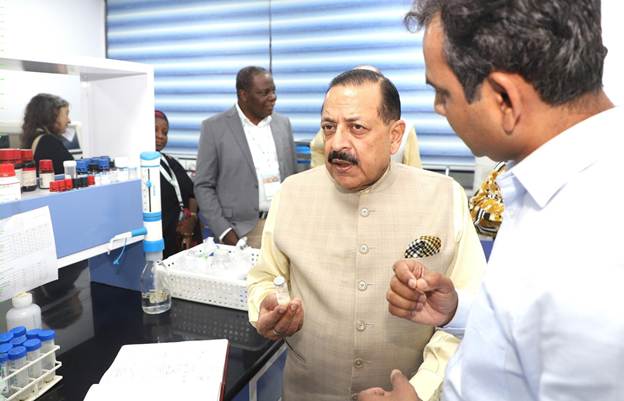
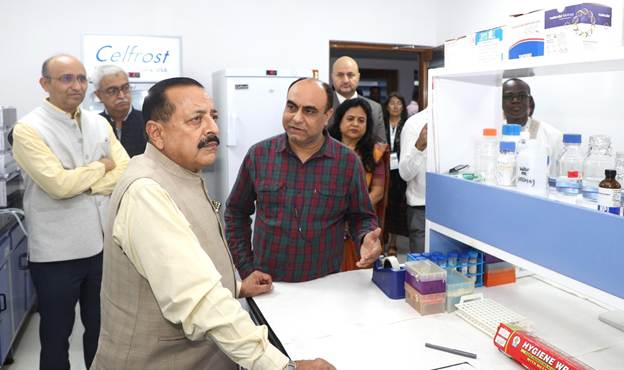
The Minister shared these developments during his formal visit to the newly inaugurated DBT-ICGEB Biofoundry, a state-of-the-art facility funded by the Department of Biotechnology and hosted at ICGEB, New Delhi. The Biofoundry was virtually inaugurated by Dr. Singh during the 31st Meeting of the ICGEB Board of Governors.

The DBT-ICGEB Biofoundry will operate on the principle of the Design, Build, Test, and Learn (DBTL) cycle. The Design component of the Biofoundry includes the use of AI, big data, computational biology, and bioinformatics, as well as specific domain knowledge for DNA sequencing, pathway analysis, host selection, and experimental design. The Build component includes DNA assembly, combinatorial assembly, and organism transformation.

The Biofoundry supports microbial platforms such as bacteria and yeast and aims to develop biotech products for food, agriculture, chemicals, pharmaceuticals, and energy sectors. With an in-house production capacity of up to 20 liters, the facility is equipped to scale innovations to industrial levels and enable technology transfer to startups and manufacturers.

Dr. Jitendra Singh credited Prime Minister Narendra Modi for his visionary leadership and unwavering support in elevating India’s biotechnology sector to a position of global leadership.

He also highlighted the significance of the BioE3 (Biotechnology for Economy, Environment & Employment) Policy, approved by the Union Cabinet in 2024, which aims to accelerate high-performance biomanufacturing. This national framework supports innovation and scale-up across six priority sectors, such as bio-based chemicals and enzymes, smart proteins and functional foods, precision therapeutics, climate-resilient agriculture, carbon capture and utilization, and marine and space research.

President ICGEB Board of Governors, Dr Jelena Begovic appreciated India’s efforts in ushering Space biotechnology.

Dr Rajesh Gokhale and Sr Adviser, DBT, Dr Alka Sharma; Dr Ramesh Sonti, Director, ICGEB New Delhi were also present during the visit and briefing.

We are fully committed to establishing peace in the Naxal-affected areas: PM

| Published on:

The Prime Minister, Shri Narendra Modi has stated that the success of the security forces shows that our campaign towards rooting out Naxalism is moving in the right direction. “We are fully committed to establishing peace in the Naxal-affected areas and connecting them with the mainstream of development”, Shri Modi added.

In response to Minister of Home Affairs of India, Shri Amit Shah, the Prime Minister posted on X;

“सुरक्षा बलों की यह सफलता बताती है कि नक्सलवाद को जड़ से समाप्त करने की दिशा में हमारा अभियान सही दिशा में आगे बढ़ रहा है। नक्सलवाद से प्रभावित क्षेत्रों में शांति की स्थापना के साथ उन्हें विकास की मुख्यधारा से जोड़ने के लिए हम पूरी तरह से प्रतिबद्ध हैं।”

PM attends the swearing in ceremony of Justice Bhushan Ramkrishna Gavai as the Chief Justice of the Supreme Court

| Published on:

The Prime Minister, Shri Narendra Modi today, attended the swearing-in ceremony of Justice Bhushan Ramkrishna Gavai as the Chief Justice of the Supreme Court of India.

The Prime Minister posted on X:

“Attended the swearing in ceremony of Justice Bhushan Ramkrishna Gavai as the Chief Justice of the Supreme Court of India. Wishing him the very best for his tenure.”

Cabinet approves semiconductor unit in Uttar Pradesh

| Published on:

The Union Cabinet chaired by the Prime Minister Shri Narendra Modi today approved the establishment of one more semiconductor unit under India Semiconductor Mission.

Already five semiconductor units are in advanced stages of construction.  With this sixth unit, Bharat moves forward in its journey to develop the strategically vital semiconductor industry.

The unit approved today is a joint venture of HCL and Foxconn.  HCL has a long history of developing and manufacturing hardware.  Foxconn is a global major in electronics manufacturing.  Together they will set up a plant near Jewar airport in Yamuna Expressway Industrial Development Authority or YEIDA.

This plant will manufacture display driver chips for mobile phones, laptops, automobiles, PCs, and myriad of other devices that have display.

The plant is designed for 20,000 wafers per month.  The design output capacity is 36 million units per month.

Semiconductor industry is now shaping up across the country.  World class design facilities have come up in many states across the country.  State governments are vigorously pursuing the design firms.

Students and entrepreneurs in 270 academic institutions and 70 startups are working on world class latest design technologies for developing new products.  20 products developed by the students of these academic students have been taped out by SCL Mohali.

The new semiconductor unit approved today will attract investment of Rs 3,700 crore.

As the country moves forward in semiconductor journey, the eco system partners have also established their facilities in India.  Applied Materials and Lam Research are two of the largest equipment manufacturers.  Both have a presence in India now.  Merck, Linde, Air Liquide, Inox, and many other gas and chemical suppliers are gearing up for growth of our semiconductor industry.

With the demand for semiconductor increasing with the rapid growth of laptop, mobile phone, server, medical device, power electronics, defence equipment, and consumer electronics manufacturing in Bharat, this new unit will further add to Prime Minister Shri Narendra Modiji’s vision of Atmanirbhar Bharat.

Jyotiraditya M. Scindia chairs curtain raiser event for Rising North East Investor Summit

| Published on:

The Union Minister of Communications and Minister for Development of North Eastern Region, Shri Jyotiraditya Scindia chaired a press meet for the Rising North East Investor Summit today.

Hon’ble Minister of State, Ministry of DoNER – Shri Sukanta Majumdar, Secretary, Ministry of DoNER – Shri Chanchal Kumar, ADG, PIB – Ms. Manisha Verma, Statistical Advisor, Ministry of DoNER – Shri Dharmvir Jha, and other senior officials of the Ministry were present at the event.

In his address to the media, Union Minister Jyotiraditya Scindia welcomed everyone to the curtain raiser for the North Eastern Investors Summit 2025 and said that the greatest potential for India in the future is our wonderful North Eastern regions. Shri Jyotiraditya Scindia said, “The event will showcase our wonderful Ashta Lakshmi – our eight states, which stand at the heart of the transformative growth that our country represents.”

“The Prime Minister’s resolve, his commitment, his vision, to ensure that the Northeastern region becomes the pivot for the future growth and the future path of India as she advances towards her goal of Vikisit Bharat by 2047,” said the Union Minister.

The Minister said whether it is the 10% of gross budgetary support (GBS) amounting to almost one lakh crore a year that’s been ploughed into the Northeast, whether it’s tax devolution, or different arms and the private sector and others taking that leap forward, today the Northeast, which was always considered the periphery of India prior to a decade ago, has become the center of India’s growth story.

“North East’s cultural tapestry along with the reservoir of natural resources and the strategic geographical positioning of the Northeast, translated the region into the most powerful gateway in the world to Southeast Asia,” he added.

The Minister said, “The last 10 years of committed investment, the last 10 years of the Prime Minister’s resolve on infrastructure, on health care, on education, on submarine cable, today has set the platform for that rise of the Northeast into the economic power that it portends to be, not only for India, but for the world.” He added that the North East is not waiting for the future but it is building it.

“I invite all of you to join in witnessing the dawn of this new era for this magnificent region, an era that promises prosperity, not only for the Northeast, but the rest of India, and  the rest of Southeast Asia,” said the Union Minister.

Shri Jyotiraditya Scindia informed that Prime Minister Narendra Modi has consented to grace the occasion. The Rising North East investment summit will witness participation from different Ministries of the Government of India, MPs, diplomats, and Hon’ble Chief Ministers of North Eastern States, among others

Shri Chanchal Kumar, Secretary MDoNER, presented key investment opportunities spanning all eight Northeastern states during the event.  A presentation by Shri Chanchal Kumar highlighted various investor roadshows organized by MDoNER in different Indian cities, including Mumbai, Bengaluru, Ahmedabad, Chennai, Hyderabad, Kolkata, Guwahati, and New Delhi, to promote investment in the NER.

MDoNER Secretary informed that the pre-summit activities organized by MDoNER have attracted investment proposals worth more than Rs. 1 lakh crore across all the Northeastern states. In the run-up to the summit, an Ambassadors’ Meet was organized in coordination with the Ministry of External Affairs on 15th April 2025 at Sushma Swaraj Bhawan, to give exposure to foreign investors to the region. The event saw unprecedented participation at the level of Ambassadors and High Commissioners of more than 75 countries, showcasing the enormous interest of the missions to explore the region. The purpose is to give boost to investment system of north east. Many industry houses, investors have already committed large amount of investment interest. More than one lakh crore MOUs and Letter on Intent have been signed.

The Rising North East Investor Summit is the culmination of various pre-summit activities, such as investment roadshows, ambassador meets, bilateral chamber meets, etc., to promote investment in the North East region. The focus sectors of the summit include Tourism & Hospitality, Agro-Food Processing & allied sectors; Textiles, Handloom and Handicrafts, Healthcare; Education and Skill Development; IT/ITeS; Infrastructure and Logistics; Energy; and Entertainment & Sports.

MDoNER has been undertaking several initiatives to present NER as a land of opportunity, attracting global and domestic investment, bringing together key stakeholders, investors, and policymakers on a single platform. A business-friendly ecosystem, bolstered by government-driven infrastructure upgrades and targeted skill development initiatives, has ignited a fervent race among industrial titans to tap into the region’s vast potential.

Looking ahead to Vision 2047, the Government aims to position the North East as India’s most prosperous region — a global hub for startups, a leading exporter of exotic horticultural products, and the crown jewel of Indian tourism.

Further information related to the Rising North East Investor Summit can be accessed at the following links:

Website:  https://risingnortheast.in/

Facebook: https://www.facebook.com/MdonerIndia

Instagram: https://www.instagram.com/donerindia/?next=%2F

Dr. Jitendra Singh describes India as the emerging global biotech destination

| Published on:

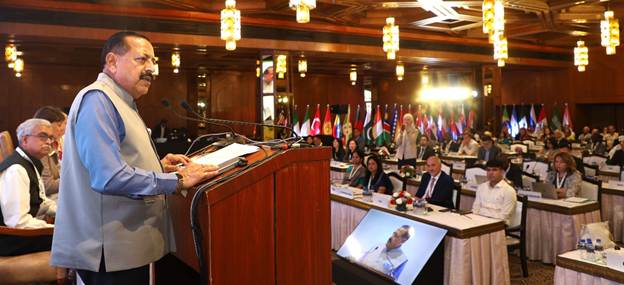
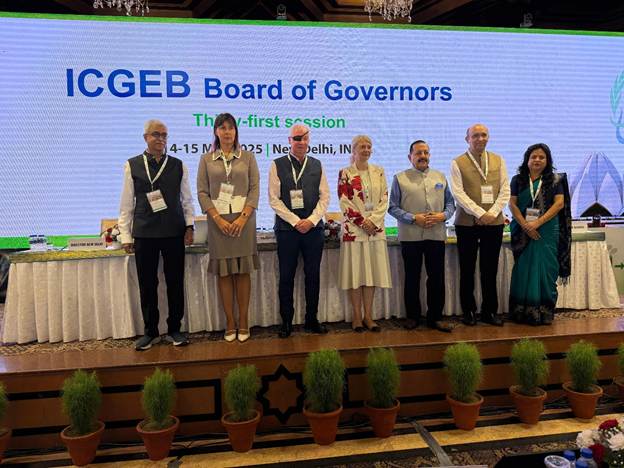
Addressing the “International Centre for Genetic Engineering and Biotechnology” (ICGEB) Board Meeting of Governors here today, Dr. Jitendra Singh, Union Minister of State (Independent Charge) for Science & Technology, Minister of State (Independent Charge) for Earth Sciences, MoS PMO, Department of Atomic Energy and Department of Space, MoS Personnel, Public Grievances and Pensions described India as the emerging global biotech destination and said, this is the most appropriate venue for such deliberations at a time when India has much to contribute to the world community.

The Meeting was being attended by representatives from more than 60 countries of the world.

On the occasion, the Minister dedicated India’s first of its kind public funded DST-ICGEB ‘Bio-foundry’ at the 31st Board Meeting of Governors of the International Centre for Genetic Engineering and Biotechnology (ICGEB) in New Delhi.

Founded in 1983, the International Centre for Genetic Engineering and Biotechnology (ICGEB) is a premier intergovernmental organization dedicated to advancing research in the life sciences. India is one of the founding members of ICGEB. The organization operates through three main centres: New Delhi (India), which focuses on research and biotechnology applications; Trieste (Italy), which serves as the headquarters and coordinates global operations; and Cape Town (South Africa), which functions as a key hub for research, development, and international collaboration.

ICGEB has 69 member countries and plays a key role in biotechnology-led sustainable global development through research, training, and technology transfer.

Addressing the Board of Governors Dr. Jitendra Singh said “This milestone aligns with the Government of India’s BioE3 Policy (Biotechnology for Economy, Environment & Employment), approved under the visionary leadership of Prime Minister Narendra Modi.”

Dr. Jitendra Singh reaffirmed that under the Modi Government, India’s bioeconomy has seen an exponential rise — from $10 billion in 2014 to $165.7 billion in 2024, with a target to achieve $300 billion by 2030. He emphasized that India is at the right time, in the right place, with a highly enabling political ecosystem to lead the next global biotechnology revolution.

Dr. Jitendra Singh highlighted India’s remarkable progress in the biotechnology sector. He noted that India now ranks 12th globally in biotechnology and holds the 3rd position in the Asia-Pacific region. The country has emerged as the largest vaccine producer in the world and is home to the 3rd largest startup ecosystem globally. A testament to this growth is the exponential rise in biotech startups, which have surged from just 50 in 2014 to over 10,000 in 2024.

Recalling the success of Mission COVID Suraksha, Dr. Jitendra Singh noted the development of the world’s first DNA-based vaccine.He proudly stated that India gifted these vaccines to the world under the Vaccine Maitri initiative, showcasing its commitment to global health equity.

Dr. Jitendra Singh mentioned the development of India’s 1st of its kind Indigenous generation antibiotic for monotherapy in bacterial pneumonia Nafithromycin, backed in part by DBT-BIRAC. He also cited the creation of diagnostic kits for Dengue and HIV.

Emphasizing the national importance of biomanufacturing he lauded the BioE3 Policy, approved by the Union Cabinet in August 2024, as a game-changing step to build a resilient ecosystem for bio-based products and promote high-performance biomanufacturing. He stated that India is now poised to lead the next wave of industrial revolution with sustainable biotech-driven manufacturing practices.

Dr. Jitendra Singh expressed pride in ICGEB New Delhi’s pioneering role in implementing the BioE3 Policy, especially through the newly dedicated Bio-foundry. The facility will serve as a platform for scaling up bio-based innovations in collaboration with startups and researchers.

He shared that 105 international students from 29 countries have earned PhDs, along with 112 postdoctoral researchers, reflecting its global academic excellence. He also highlighted the signing of an MoU between DBT and IN-SPACe for advancing space biotechnology and space medicine.

Dr. Singh underscored the importance of maintaining a strong focus on five key sectors to drive the next phase of India’s biotechnology growth. These include bioenergy, bio-industrial, bio-plantation, biomedical, and biomanufacturing. He emphasized that strategic development in these areas will not only strengthen India’s bioeconomy but also contribute significantly to sustainable development and global competitiveness.

The Minister reiterated, “India has the most enabling milieu today for biotechnology. The time is right, the ecosystem is ripe, and we have visionary leadership steering us toward becoming a global bioeconomy leader.”

The ICGEB Board was represented by Dr. Jelena Begovic, President of the ICGEB Board of Governors, who underscored the critical importance of biotechnology in addressing the needs of today’s rapidly changing world.

Dr. Lawrence Banks, Director General of ICGEB (Italy), lauded India’s exceptional commitment and impressive strides in the biotech sector.

Marianna Maculan, Secretary of the ICGEB Board of Governors, was also present during the proceedings.

Dr. Rajesh Gokhale, Secretary of the Department of Biotechnology (DBT), highlighted India’s growing leadership in the biomedical and bio-industrial sectors, emphasizing recent initiatives that are shaping the future of these domains. Dr. Alka Sharma, Senior Adviser at DBT and Dr Ramesh Sonti, Director, ICGEB were also present at the 31st Board Meeting.