Through Operation Sindoor, India used its ‘Right to Respond’ to the attack on its soil: Raksha Mantri

| Published on:

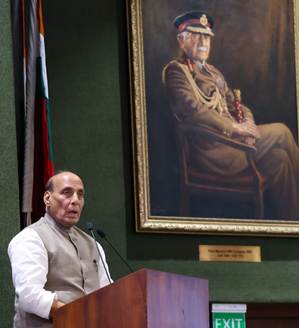
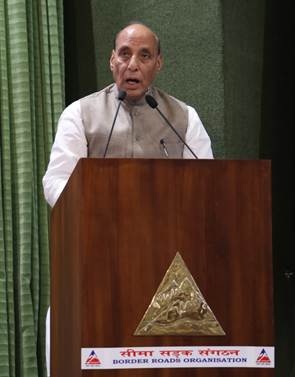
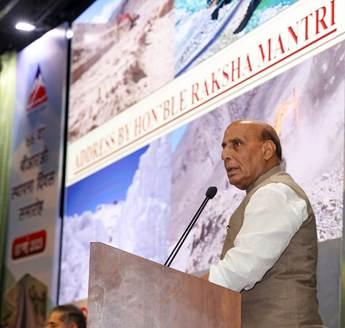
“Through Operation Sindoor, India has used its ‘Right to Respond’ to the attack on its soil, and the Armed Forces scripted history by acting with precision, precaution & compassion to destroy the camps used to train terrorists in Pakistan and PoK,” said Raksha Mantri Shri Rajnath Singh while addressing the 66th Raising Day event of Border Roads Organisation (BRO) at Manekshaw Centre, Delhi Cantt on May 07, 2025. Raksha Mantri asserted that, as per the plan, the targets were destroyed and no civilian population was harmed. He commended the Armed Forces by giving a befitting reply under the leadership of Prime Minister Shri Narendra Modi.

“The whole world has witnessed what our Armed Forces have done today. The action was carried out very thoughtfully and in a measured manner. It was limited only to the camps and other infrastructure used for training terrorists, with the aim of breaking their morale. I congratulate the Armed Forces on behalf of the whole country. I also congratulate Prime Minister Shri Narendra Modi for providing complete support to the forces,” added Shri Rajnath Singh.

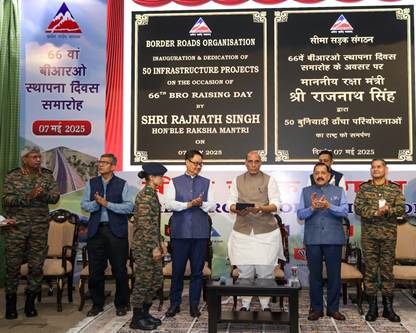
The event also witnessed the virtual dedication of 50 strategically-significant infrastructure projects of BRO – 30 bridges, 17 roads and three other works – to the nation by Raksha Mantri. These projects, constructed at a total cost of Rs 1,879 crore, are spread across six border States and two Union Territories – Jammu & Kashmir, Ladakh, Arunachal Pradesh, Himachal Pradesh, Sikkim, Mizoram, West Bengal & Rajasthan – reinforcing India’s security, connectivity and development in remote regions. In the last two years alone, BRO has completed a record 161 infrastructure projects worth Rs 5,600 crore, including 111 projects last year.  In the last four years, BRO has completed 456 infrastructure projects with a total expenditure of Rs 13,743 crore.

Shri Rajnath Singh exuded confidence that the projects e-inaugurated today will enhance connectivity, strengthen national security and promote economic prosperity of all these regions. “These projects will enhance defence preparedness and boost transportation, tourism & economic activity in these areas. These are not just infrastructure assets; they are pathways to a brighter future,” he added.

Underlining the strategic importance of BRO’s work, Raksha Mantri stated that modern defence capability depends not just on weaponry but also on the infrastructure that supports it. “You can have the fastest tank or the most advanced aircraft, but if they can’t reach where they are needed on time, they serve no purpose. BRO plays a critical role in making sure our military is always ready and well-positioned,” he said, commending BRO Karmayogis who work behind the scenes and contribute to national security.

Shri Rajnath Singh emphasised on the need to build new generation infrastructure for the Armed Forces in view of the current geopolitical scenario. BRO must ensure that the preparations are at war-level, he said.

Raksha Mantri reiterated the Government’s commitment to ensure border area development, making special mention of Sela Tunnel which has become a symbol of this resolve to enhance connectivity in strategically-important areas. He highlighted the vision of Prime Minister Shri Narendra Modi to revitalise border villages, stating that initiatives like the Vibrant Villages Programme under which the Government is increasing connectivity by building about 35 kilometers of roads every day.

In his address, Director General Border Roads (DGBR) Lt Gen Raghu Srinivasan highlighted the growing national importance of BRO, stating that the organisation has emerged as the agency of choice for key central ministries for executing infrastructure projects in the most challenging terrains. He reaffirmed the BRO’s commitment to the well-being and dignity of its workforce, including GREF personnel and Casual Paid Labourers.

Minister of Parliamentary Affairs and Minister of Minority Affairs Shri Kiran Rijiju, Minister of State (Independent Charge) Science & Technology; Earth Sciences, MoS PMO, PP/DoPT, Atomic Energy and Space Dr Jitendra Singh, Chief of the Army Staff Gen Upendra Dwivedi, Defence Secretary Shri Rajesh Kumar Singh and other senior officials of Ministry of Defence were present at the venue.

Himachal Pradesh Governor Shri Shiv Pratap Shukla, Arunachal Pradesh Governor Lt Gen Kaiwalya Trivikram Parnaik, Rajasthan Governor Shri Haribhau Kisanrao Bagde, Arunachal Pradesh Chief Minister Shri Pema Khandu, Mizoram Chief Minister Shri Lalduhoma, Jammu & Kashmir Lt Governor Shri Manoj Sinha, Lt Governor Ladakh Brig. (Dr) BD Mishra (Retd) joined the event virtually.

Union Home Minister chairs a security review meeting with the CMs and LGs of border states adjoining Pakistan and Nepal

| Published on:

Union Home Minister and Minister of Cooperation, Shri Amit Shah, today chaired a security review meeting in New Delhi with the Chief Ministers and Lieutenant Governors of border states adjoining Pakistan and Nepal. The meeting was attended via video conferencing by the Lieutenant Governors of Jammu and Kashmir and Ladakh, Chief Ministers of Uttar Pradesh, Uttarakhand, Punjab, Rajasthan, Gujarat, and West Bengal, and a representative from the Sikkim government. Senior officials from the Ministry of Home Affairs (MHA), including the Union Home Secretary, Director of Intelligence Bureau (IB), Director General of Border Security Force (BSF), and Director General of Central Industrial Security Force (CISF), were also present.

In the meeting, Union Home Minister Shri Amit Shah said that after the heinous terrorist attack in Pahalgam, Kashmir, on April 22, 2025, Prime Minister Shri Narendra Modi had said that the country would give a befitting reply to the perpetrators and supporters of the terror attack. The Home Minister expressed gratitude for Prime Minister Shri Narendra Modi’s firm resolve and decision regarding Operation Sindoor. He stated that Operation Sindoor is a befitting reply from Bharat to those who dare to challenge India’s borders, military, and citizens. All Chief Ministers and Lieutenant Governors present in the meeting congratulated Prime Minister Modi and the three armed forces for the success of Operation Sindoor.

Union Home Minister said that, without ignoring the Pahalgam terrorist attack, an appropriate response was given through Operation Sindoor, sending a strong message to the world. He said that Operation Sindoor, launched by the Indian armed forces against terrorist camps after specific inputs, is a testament to the Modi government’s zero tolerance policy against terrorism to the entire world. Shri Shah said that the unity shown by the country at this time has boosted the morale of the countrymen.

Shri Amit Shah said that in the intervening night of May 6-7, 2025, the Indian armed forces attacked nine specific locations linked to terrorists, destroying their infrastructure. The Home Minister said that in the operation carried out by Indian armed forces, terrorist training camps, weapon bases, and hideouts of organizations such as Lashkar-e-Taiba, Jaish-e-Mohammed, Hizbul Mujahideen, and other terrorist groups were completely destroyed.

Union Home Minister said that all states should make their preparations as per the guidelines issued for the mock drill. He said that arrangements should be made for smooth operation of essential services like hospitals, fire brigade etc. and uninterrupted supply of essential goods should be ensured. The Home Minister asked the states to keep SDRF, Civil Defence, Home Guards, NCC etc. on alert to deal with any situation. He said that efforts should be made to ensure public participation through citizens and non-governmental organisations.

Shri Amit Shah said that strict vigil should be kept on anti-national propaganda by unwanted elements on social and other media platforms and prompt action should be taken in coordination with state governments and central agencies. The Home Minister said that every effort should be made to maintain seamless communication and the security of vulnerable points should also be further strengthened. He asked the states to stop spreading unnecessary fear among the public and take steps to spread awareness among the people against rumours. He said that coordination between the local administration, army and paramilitary forces should be further enhanced.

Prime Minister addresses ABP Network India@2047 Summit

| Published on:

The Prime Minister Shri Narendra Modi participated in the ABP Network India@2047 Summit in the Bharat Mandapam, New Delhi today. Addressing the gathering, he said that the event at Bharat Mandapam has been abuzz since this morning. He noted his interaction with the organizing team and highlighted the rich diversity of the summit. He acknowledged the participation of several distinguished individuals who have contributed to the event’s dynamism. The Prime Minister expressed confidence that all attendees had a highly positive experience. Emphasizing the significant presence of youth and women at the summit, he specifically highlighted the inspiring experiences shared by Drone Didis and Lakhpati Didis. He noted that their stories serve as a source of motivation.

Describing the summit as a reflection of a transforming India that is asserting itself in every sector, Shri Modi emphasized that the nation’s greatest aspiration is to become a developed country by 2047. Highlighting India’s strength, resources, and determination, he invoked Swami Vivekananda’s words, urging people to rise, awaken, and persist until they reach their objectives. He noted that this unwavering spirit is visible in every citizen today. Shri Modi underscored the role of such summits in the pursuit of a developed India. He commended the organizers for hosting an outstanding summit and extended congratulations to Shri Atideb Sarkar, Shri Rajnish, and the entire ABP Network team for their efforts.

Mentioning that today marks a historic moment for India, the Prime Minister shared that he had a conversation with the Prime Minister of the United Kingdom and expressed happiness over the finalization of the India-UK Free Trade Agreement. He emphasized that this agreement between two major open-market economies will add a new chapter in trade and economic cooperation, benefiting the development of both nations. He noted that this is great news for India’s youth, as it will boost economic activity and open new opportunities for Indian businesses and MSMEs. Prime Minister also mentioned that India has recently signed trade agreements with the UAE, Australia, and Mauritius. He underscored that India is not only implementing reforms but actively engaging with the world to position itself as a vibrant hub for trade and commerce.

Emphasising that bold decision-making and goal achievement require putting the nation’s interests first and having confidence in its potential, Shri Modi noted that, unfortunately, for decades, India was caught in a conflicting approach that hindered progress. He highlighted how, in the past, major decisions were delayed due to concerns over global opinions, electoral calculations, and political survival. He pointed out that self-interest often took precedence over necessary reforms, causing setbacks for the country. He stressed that no nation can advance if its decisions are dictated by short-term political considerations. True progress, he affirmed, happens when the sole criterion for decision-making is “Nation First.” He stated that over the past decade, India has adhered to this principle, and the country is now witnessing the results of this approach.

“Over the past 10-11 years, our government has taken a series of decisive actions to address long-pending issues that lacked political will and remained unresolved for decades”, said the Prime Minister, citing the banking sector as a key example, emphasizing that banking is the backbone of the economy. He recalled that before 2014, India’s banks were on the brink of collapse, and every financial summit inevitably discussed banking losses. However, he noted that today, India’s banking sector is among the strongest in the world, with banks reporting record profits and depositors benefiting from these reforms. The Prime Minister credited his government’s continuous efforts in the banking sector for these achievements, highlighting key reforms, mergers of small banks in the national interest, and measures to strengthen financial institutions. He also referred to the past condition of Air India, noting that the airline was sinking, costing the country thousands of crores, while previous governments hesitated to take corrective steps. He asserted that his government made the necessary decisions to prevent further losses. “For our government, the nation’s interest remains paramount”, he reaffirmed.

Underlining a significant governance transformation, recalling a former Prime Minister’s admission that only 15% of government funds meant for the poor actually reached them, Shri Modi noted that despite changing governments over the years, no concrete steps were taken to ensure direct financial assistance to beneficiaries. He stated that their government introduced the Direct Benefit Transfer (DBT) system to ensure that every rupee meant for the poor reached them without leakage. He emphasized that this reform eliminated inefficiencies in government schemes and enabled direct financial benefits for intended recipients. He revealed that government records previously contained 10 crore fraudulent beneficiaries who never existed, yet were receiving benefits. These names were embedded in a system created by past administrations. Shri Modi asserted that his government removed these 10 crore false entries from official records and ensured that funds were transferred directly to the bank accounts of the rightful beneficiaries through DBT. He underscored that this reform has prevented over ₹3.5 lakh crore from falling into the wrong hands.

Prime Minister highlighted the decades-long delay in implementing the One Rank One Pension (OROP) scheme. He noted that previous governments rejected the proposal citing financial burden, but his government prioritized the interests of those who dedicated their lives to national security. He stated that OROP has benefited millions of military families. He emphasized that his government has disbursed over ₹1.25 lakh crore to former servicemen under the scheme, ensuring their rightful entitlements. The Prime Minister also addressed the issue of reservation for economically disadvantaged families, noting that despite years of discussions, no concrete steps were taken. He affirmed that his government took decisive action to implement this policy. Regarding the 33% reservation for women in the Lok Sabha and State Assemblies, the Prime Minister recalled past political obstacles that hindered its progress. He asserted that vested interests delayed this crucial reform, but his government upheld the principle of national interest by enacting legislation to empower women through political representation.

Highlighting that several crucial issues in the past were deliberately avoided due to political concerns over vote banks, Shri Modi cited the example of Triple Talaq, which had devastating consequences for countless Muslim women, yet previous governments remained indifferent to their plight. He stated that his government prioritized women’s rights and the well-being of Muslim families by enacting legislation against Triple Talaq, ensuring justice and empowerment. He also addressed the longstanding need for reforms in the Waqf Act, noting that necessary amendments were delayed for decades due to political considerations. Shri Modi affirmed that his government has now introduced key changes that will genuinely benefit Muslim mothers, sisters, and economically disadvantaged sections of the community.

Underlining a significant initiative undertaken by his government—the interlinking of rivers, the Prime Minister pointed out that for decades, water disputes dominated discussions, but his administration, in collaboration with state governments, has launched a major campaign to connect rivers. The Prime Minister cited key projects such as the Ken-Betwa Link Project and the Parvati-Kalisindh-Chambal Link Project, emphasizing that these initiatives will benefit millions of farmers by ensuring water accessibility. He noted the ongoing media discourse on water resources, underscoring the past scenario where India’s rightful share of water was flowing beyond its borders. “India’s water will remain within the nation, serving its rightful purpose for the country’s development”, he affirmed.

Shri Modi highlighted that while the construction of the new Parliament building is widely discussed, a crucial achievement often overlooked is the establishment of the Dr. Ambedkar National Memorial in Delhi. He noted that the initiative was originally introduced during Atal Bihari Vajpayee’s government, but the construction remained stalled for a decade. He emphasized that his government not only completed the memorial but also developed key sites associated with Babasaheb Ambedkar into the Panchteerth, ensuring global recognition of his legacy.

Recalling the circumstances in which his government was formed in 2014, at a time when public trust in governance was severely shaken, the Prime Minister noted that some had even begun to question whether democracy and development could coexist. “Today’s India stands as a testament to the power of democracy, proudly demonstrating that Democracy Can Deliver”, he asserted. The PM highlighted that over the past decade, 25 crore people have risen out of poverty, sending a strong message to the world about the effectiveness of democratic governance. He pointed out that millions of small entrepreneurs who received loans under the Mudra Yojana have experienced firsthand the positive impact of democracy. Additionally, numerous districts once labeled as backward have transformed into Aspirational Districts, excelling in key developmental parameters—further reinforcing that democracy can produce tangible results. Prime Minister further emphasized that India’s tribal communities, including some of the most marginalized groups, were historically left out of development. With the implementation of the PM Janman Yojana, these communities are now accessing government services, strengthening their belief in democracy’s ability to uplift. He affirmed that true democracy ensures that development and national resources reach the last citizen without discrimination, and his government remains committed to this fundamental objective.

Stressing that India is building a future defined by rapid development, enriched by progressive thinking, strong resolve, and deep compassion, Shri Modi underlined the shift towards Human-Centric Globalization, where growth is not solely driven by markets but by ensuring dignity and the fulfillment of people’s aspirations. “Our government is moving beyond a GDP-centric approach toward GEP-Centric Progress—Gross Empowerment of People—focusing on the collective upliftment of society”, he exclaimed. Outlining key measures that exemplify this vision, He noted that when a poor family receives a permanent home, their empowerment and self-respect grow. When sanitation facilities are built, individuals are freed from the indignity of open defecation. When beneficiaries of Ayushman Bharat receive free healthcare up to ₹5 lakh, their biggest financial worries are alleviated. He asserted that numerous such initiatives are strengthening the path of inclusive and sensitive development, ensuring that every citizen is empowered.

Reiterating the government’s core philosophy of ‘Nagarik Devo Bhava’, emphasizing the commitment to serving the people, the Prime Minister stated that his administration views citizens as central to governance rather than adhering to the old “Mai-Baap” culture. He highlighted the shift towards a service-oriented approach, where the government proactively ensures accessibility for citizens. He pointed out that earlier, people had to repeatedly visit government offices just to get their documents attested, whereas now, self-attestation has made the process more convenient. He noted the presence of numerous young individuals at the event and underscored how digital advancements have streamlined administrative processes, making public services more efficient and citizen-friendly.

Shri Modi highlighted the transformation in government processes, making them more accessible and citizen-friendly. He recalled the challenges faced by senior citizens, who previously had to visit offices or banks every year to provide proof of their existence. He emphasized that his government introduced a digital system, allowing senior citizens to submit their life certificates remotely. He pointed out how routine tasks, such as obtaining electricity connections, installing water taps, paying bills, booking gas cylinders, and receiving deliveries, used to require repeated visits and even taking leave from work. He noted that today, many of these services have been streamlined through online platforms, reducing inconvenience for citizens. Shri Modi reaffirmed his government’s commitment to making every government-citizen interaction—whether for passports, tax refunds, or other services—simple, fast, and efficient. He stated that this approach aligns with the principle of ‘Nagarik Devo Bhava’, strengthening the foundation for a developed India by 2047.

Underlining India’s unique approach of advancing both tradition and progress simultaneously, emphasizing the nation’s commitment to “Vikas bhi, Virasat bhi”, the Prime Minister pointed out that India is demonstrating how tradition and technology can thrive together. He noted that the country ranks among the global leaders in digital transactions while also taking yoga and Ayurveda to the world stage. He remarked that India has become a highly attractive destination for investment, with record FDI inflows in the past decade. He also emphasized the return of stolen artifacts and heritage items in unprecedented numbers, reflecting India’s growing global stature. Prime Minister stated that India is now the world’s second-largest mobile phone manufacturer and a leading producer of superfoods like millets. Additionally, he highlighted the country’s achievement in solar energy, surpassing 100 GW of production capacity—reinforcing India’s leadership in renewable energy.

Shri Modi emphasized that progress does not require abandoning one’s cultural roots. He stated that the deeper India remains connected to its heritage, the stronger its integration with modern advancements will be. He highlighted that India is preserving its ancient legacy while ensuring it remains a source of strength for the future. He underscored that every step in the journey toward a developed India by 2047 holds immense significance. He pointed out that often, people fail to realize the multiplier effect of government decisions. He cited the example of the media and content creation sector, recalling that a decade ago, when he spoke about Digital India, many expressed skepticism. Today, he noted, Digital India has seamlessly integrated into daily life. Shri Modi credited affordable data and domestically manufactured smartphones with revolutionizing the digital space. While Digital India has enhanced ease of living, he highlighted its impact on content and creativity, which often goes unrecognized. He also shared examples of how digital platforms have empowered individuals. He cited examples of a rural woman who has achieved success with millions of subscribers, a tribal youth showcasing traditional art to a global audience, and a student explaining technology in innovative ways. Referring to the recent Waves Summit in Mumbai, where global leaders from media, entertainment, and the creative industries convened, Shri Modi noted that YouTube alone has paid Indian content creators ₹21,000 crore over the last three years, further proving that smartphones have evolved beyond communication tools into powerful instruments for creativity and income generation.

Emphasising that the vision of a developed India by 2047 is closely linked to the Aatmanirbhar Bharat initiative, the Prime Minister stated, “self-reliance has always been a fundamental part of India’s economic DNA”. He added that yet for years, the country was perceived only as a market rather than a manufacturer. He asserted that this narrative is now changing and highlighted India’s emergence as a major defense manufacturer and exporter, with defense products being supplied to over 100 countries. He noted the continuous rise in defense exports and underscored the strength of India’s indigenous naval fleet, including INS Vikrant, INS Surat, and INS Nilgiri, built entirely through domestic capability. Prime Minister pointed out that India is excelling in sectors previously considered outside its strengths, such as electronics manufacturing. He noted that in recent years, the country has become a significant exporter of electronic products, with local innovations reaching global markets. He referred to recent export figures, stating that India’s total exports reached a record $825 billion last year, nearly doubling in a decade. To further accelerate this momentum, he announced the launch of Mission Manufacturing in the latest budget, aimed at taking India’s production capabilities to new heights. “India’s growing manufacturing prowess is shaping its people’s identities as creators, innovators, and disruptors on the global stage”, he added.

Underscoring that this decade will define India’s trajectory for centuries to come, Shri Modi described it as a pivotal period in shaping the nation’s destiny. He expressed confidence that the spirit of transformation is evident in every citizen, institution, and sector across the country. Noting that the discussions at the summit reflected this shared vision of progress, Shri Modi concluded by extending congratulations to ABP Network for successfully organizing the summit.


India’s first human Space mission “Gaganyaan” programme has entered its final phase: Dr. Jitendra Singh

| Published on:

India’s first human Space mission “Gaganyaan” programme has entered its final phase, with the first human spaceflight now scheduled for the first quarter of 2027.

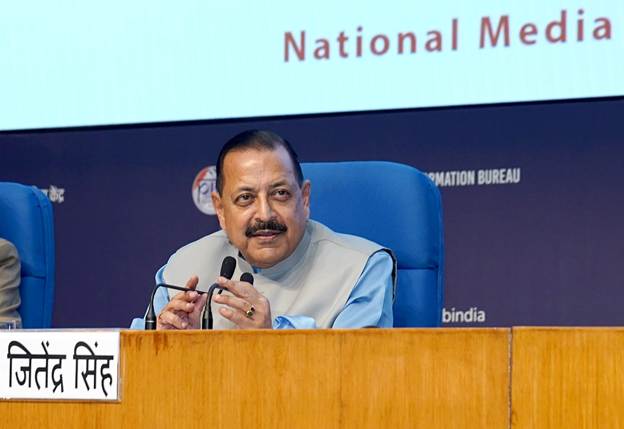
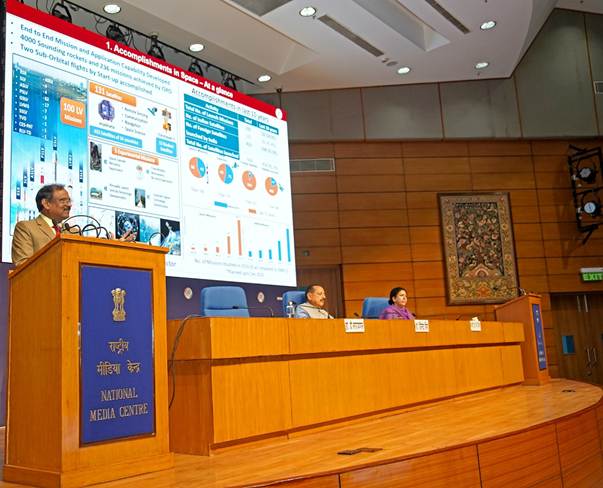
Disclosing this while speaking at a media interaction at National Media Centre here today, Union Minister of State (Independent Charge) for Science and Technology; Earth Sciences and Minister of State for PMO, Department of Atomic Energy, Department of Space, Personnel, Public Grievances and Pensions, Dr. Jitendra Singh provided detailed updates on the mission’s current status, technological progress, and the broader economic dividends emerging from India’s cost-effective space programme.

ISRO and Secretary, Department of Space, Dr V. Narayanan also accompanied the Minister.

Dr. Jitendra Singh said, the successful completion of the TV-D1 mission and the first uncrewed Test Vehicle Abort Mission earlier this year have laid a strong foundation for the upcoming test schedule. The second Test Vehicle mission (TV-D2) is slated for later in 2025, followed by the uncrewed orbital flights of Gaganyaan. These milestones will culminate in India’s maiden human spaceflight in 2027, launching Indian astronauts into orbit aboard an Indian rocket from Indian soil.

Calling it a “historic mission,” Dr. Jitendra Singh underlined that the Gaganyaan programme goes far beyond scientific achievement. “It represents India’s rise as a global space power built on indigenous technology, fiscal prudence, and visionary political leadership,” he said. He also recalled that Prime Minister Narendra Modi had clearly laid out India’s long-term ambitions in space, including setting up the Bharatiya Antariksha Station by 2035 and sending the first Indian to the Moon by 2040.

The Human-rated LVM3 vehicle, the Crew Escape System, and the Crew Module and Service Module are all undergoing final stages of testing and integration. He confirmed that the uncrewed orbital Gaganyaan mission is on track for launch later this year, with recovery trials already conducted with the Indian Navy and more sea recovery simulations planned.

Training of astronauts is also progressing steadily.

The media was informed that the four Indian Air Force pilots, selected as astronaut-designates, have completed training in Russia and are undergoing further mission-specific training in India. Their health, psychological fitness, and simulation-based operational readiness are being continuously assessed at India’s astronaut training facility.

While sharing these technical advancements, both Dr. Jitendra Singh emphasised the cost-efficiency of the mission. “The expenditure being incurred on the Gaganyaan project is minimal when compared to similar human spaceflight missions conducted by other countries,” the Minister said. He added that the mission’s returns, both in terms of technological innovation and economic stimulus, far exceed the costs involved.

The programme has already given rise to multiple spinoffs—advancements in robotics, materials, electronics, and medicine—and is fostering deeper collaboration with Indian industry. “Today, Gaganyaan is not just ISRO’s mission. It is India’s mission,” Dr. Jitendra Singh said, noting the vital role played by the private sector and startups following policy reforms initiated by the government.

The Chairman too echoed the view that Gaganyaan is catalysing India’s emergence as a self-reliant space power, inspiring a new generation of scientists, engineers, and entrepreneurs. With the crewed mission expected in 2026, India is poised to join an elite group of nations that have independently developed the capability for human spaceflight.

As Gaganyaan advances with focused precision, it serves not just as a leap in scientific capability but as a powerful symbol of India’s long-term economic and strategic aspirations in space.

Raksha Mantri holds bilateral meeting with his Japanese counterpart in New Delhi

| Published on:

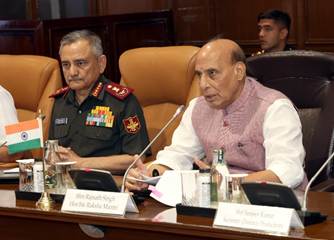
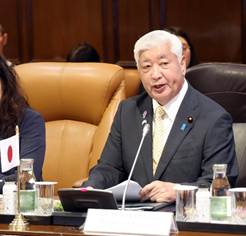
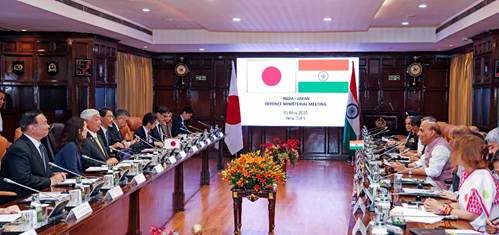
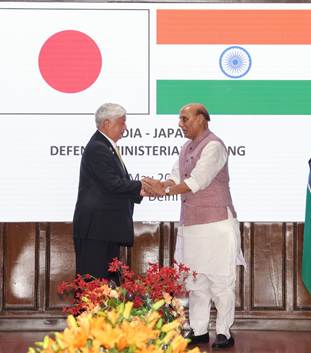
Raksha Mantri Shri Rajnath Singh held a bilateral meeting with Minister of Defense of Japan Mr Gen Nakatani at Manekshaw Centre, New Delhi on May 05, 2025. During the meeting, both sides condemned terrorism in all its forms and emphasised the need for global cooperation in this regard.

Raksha Mantri condemned Pakistan’s state policy of cross-border terrorism against India, perpetrated through state and non-state actors. He stated that such attacks destabilise regional peace and security. Shri Rajnath Singh called for a unified stand against terrorism and the state-sponsored actions that perpetuate it.

The Japanese Defense Minister expressed his condolences for the tragic terrorist attack which took place in Pahalgam, Jammu & Kashmir on April 22, 2025 and offered full support to India.

Both the Ministers reviewed the defence and security pillars of the India-Japan Special Strategic and Global Partnership. They reaffirmed their commitment towards strengthening the bilateral relations and contributing towards regional peace. The Ministers welcomed the growing diversity and frequency of defence exercises & exchanges between the two countries, and concurred to enhance the scope & complexity of these engagements. Both leaders agreed to add new dimensions to the robust maritime cooperation between India and Japan.

Shri Rajnath Singh outlined the capability of Indian defence industry particularly its potential to collaborate with the Japanese side on new areas including Tank engines and Aero Engines. He highlighted the capabilities in the areas of Maintenance Repair and Overhaul operations. Both sides agreed to enhance industry cooperation, including exploring collaboration in niche domains such as automation and Artificial Intelligence. The two Ministers also decided to take forward the cooperation in emerging areas like Cyber and Space.

India and Japan share a long-term friendship, which has further gained qualitative momentum after the elevation of this collaboration to Special Strategic & Global Partnership in 2014. The Dialogue ended with strong commitment by both sides to enhance the bilateral defence cooperation.

Earlier, the Japanese Defense Minister laid a wreath at National War Memorial and paid homage to the fallen heroes. He was accorded a ceremonial welcome with a Tri-Services Guard of Honour prior to the dialogue at Manekshaw Centre.

Dr. Jitendra Singh Reviews DST Projects, calls for AI led innovations

| Published on:

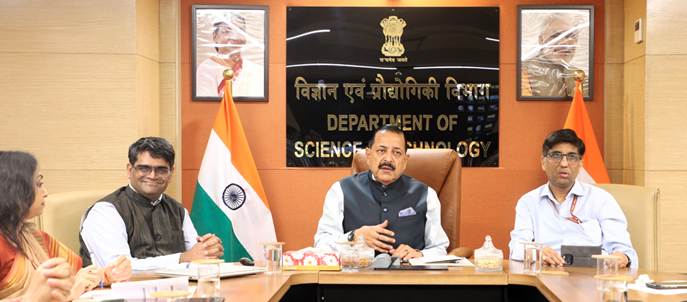
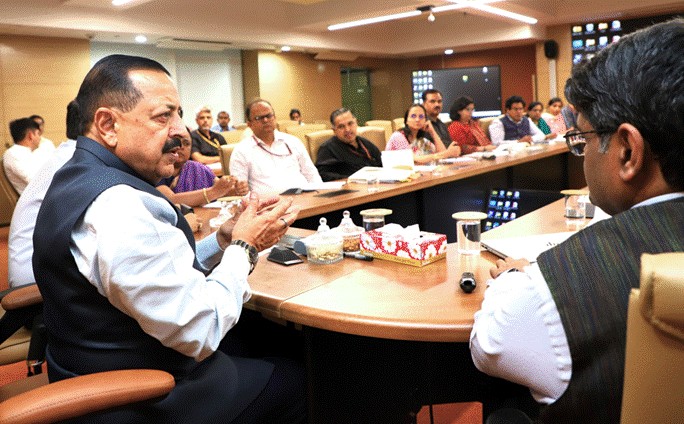
Union Minister of State (Independent Charge) for Science and Technology; Earth Sciences and Minister of State for PMO, Department of Atomic Energy, Department of Space, Personnel, Public Grievances and Pensions, Dr. Jitendra Singh on Monday chaired a comprehensive review of the Department of Science and Technology (DST), calling for bold new directions in science-driven growth, including AI-led innovations, deep tech StartUps and enhanced infrastructure sharing.

The meeting saw the Minister focus particularly on the evolving role of the newly constituted Anusandhan National Research Foundation (ANRF), as well as ongoing national missions like the Geospatial initiative.

Dr. Jitendra Singh held detailed discussions with Prof. Abhay Karandikar, ANRF’s newly appointed CEO, Dr. Shivkumar Kalyanaraman and other senior officials of the Ministry. During the meeting, Dr. Kalyanaraman presented an ambitious vision for the ANRF, promising catalytic funding mechanisms, deep integration with private industry, and strategic missions modeled on globally successful institutions such as the National Science Foundation (NSF) and DARPA.

In a significant step aimed at boosting indigenous innovation, ANRF is preparing to launch a “Small Business Deep Tech Innovation” programme, which will empower startups and MSMEs to scale breakthrough technologies for real-world applications.

Recognizing the need to better utilize existing national research infrastructure, the Minister reviewed ANRF’s plan to create a “Cloud of Research and Innovation Infrastructure,” a digital platform that would offer deep-tech startups and academic institutions access to underused scientific equipment and facilities across the country. This move is expected to democratize research capabilities, especially for smaller players who often lack access to high-end lab tools.

Among the major scientific thrusts discussed, the ANRF’s “AI-for-Science” initiative took centre stage. The programme aims to leverage artificial intelligence to accelerate discoveries in physics, chemistry, and biology by using machine learning to model complex scientific equations.

The Minister directed the ANRF leadership to kickstart a few select projects under this initiative and demonstrate tangible outcomes in the near term. He also encouraged the CEO to engage with university Vice Chancellors to raise awareness about the ANRF mission and opportunities for collaboration.

In another key direction, Dr. Jitendra Singh asked the ANRF to explore the possibility of helping medical colleges establish their own medical research parks — a move that could boost clinical innovation and local biotech entrepreneurship. The Minister further underscored the importance of building an indigenous “India AI Open Stack” — a foundational AI architecture embedded with science and engineering models tailored for Indian researchers. This, he noted, could position India as a global frontrunner in AI-driven scientific applications.

Dr. Jitendra Singh also revisited the concept of “deep science-to-deep tech acceleration,” urging the ANRF to focus on converting academic research — such as publications and patents — into commercial technologies. He emphasized the need for partnerships with top-tier industry players and the creation of venture-builder models to ensure that discoveries don’t remain confined to laboratories.

The Minister concluded by asking the ANRF to prioritize key areas of national relevance, including climate forecasting, material science, aerospace, biochemistry, and drug development. He stressed that the time has come for India to move from isolated innovation to a more integrated, impact-driven ecosystem that links research, startups, and industry.

PM addresses the inaugural ceremony of 7th Khelo India Youth Games

| Published on:

The Prime Minister Shri Narendra Modi addressed the inaugural ceremony of 7th Khelo India Youth Games via videoconferencing today. Addressing the athletes, coaches, and staff members present at the event, he remarked that players from across the country had gathered, showcasing exceptional talent and determination. He highlighted their dedication and hard work, acknowledging their contribution to the sporting spirit of the nation. Emphasizing the remarkable skills and commitment of the athletes, the Prime Minister affirmed that their passion for sports and continuous pursuit of excellence bring pride to the nation. He extended his best wishes to them for their future endeavors.

Highlighting the extensive competitions to be held across multiple cities in Bihar during the Khelo India Youth Games, including Patna, Rajgir, Gaya, Bhagalpur, and Begusarai, Shri Modi noted that in the coming days, over six thousand young athletes would participate, carrying their dreams and aspirations with them. He extended his best wishes to all the players, emphasizing that sports in India is now evolving into a distinct cultural identity. “As India’s sporting culture grows, so will the country’s soft power on the global stage”, said Shri Modi, underscoring the significance of the Khelo India Youth Games in providing a major platform for the nation’s youth.

Underscoring the importance of continuous improvement for athletes, emphasizing the necessity of playing more matches and participating in more competitions to refine their skills, the Prime Minister reiterated that their government has always given top priority to this aspect in its policies. He highlighted that various sporting events under Khelo India—University Games, Youth Games, Winter Games, and Para Games—are held throughout the year at multiple levels nationwide. These consistent competitions, he remarked, boost athletes’ confidence and bring their talent to the forefront. Citing an example from cricket, the Prime Minister lauded Bihar’s own Vaibhav Suryavanshi for his outstanding performance in the IPL at such a young age. He emphasized that while Vaibhav’s hard work was crucial, the exposure to multiple competitions also played a key role in shaping his talent. The Prime Minister asserted that the more an athlete plays, the more they thrive. He remarked that the Khelo India Youth Games provide young athletes with an opportunity to understand the nuances of national-level sports and gain valuable experience.

Stressing that hosting the Olympics in India has been a long-cherished dream of every citizen, Shri Modi underlined India’s efforts to bring the Olympics to the country in 2036, reaffirming the nation’s commitment to strengthening its presence in international sports. He underscored the government’s focus on identifying sporting talent at the school level and providing them with structured training. He remarked that initiatives like Khelo India and the Target Olympic Podium (TOP) scheme have contributed to building a robust sports ecosystem, benefiting thousands of athletes across Bihar and the rest of the country. He stressed the importance of giving athletes opportunities to explore diverse sports. He noted that Khelo India Youth Games has incorporated traditional and indigenous games like Gatka, Kalaripayattu, Kho-Kho, Mallakhamb, and even Yogasana to promote India’s rich sporting heritage. Shri Modi also acknowledged the growing presence of Indian athletes in new and emerging sports. He highlighted recent commendable performances in disciplines such as Wushu, Sepak Takraw, Pencak Silat, Lawn Bowls, and Roller Skating. He recalled the historic moment when India’s women’s team secured a medal in Lawn Bowls at the 2022 Commonwealth Games, bringing global recognition to the sport in India.

The Prime Minister highlighted the government’s focus on modernizing India’s sports infrastructure, noting that in the past decade, the sports budget has increased more than threefold, reaching approximately ₹4,000 crore this year, with a significant portion allocated to infrastructure development. He remarked that over 1,000 Khelo India Centers are operational across the country, including more than three dozen in Bihar. He emphasized that Bihar is benefiting from the Union and State governments, with the state government expanding several initiatives at its level. The Prime Minister acknowledged the establishment of the Khelo India State Centre of Excellence in Rajgir and institutions like Bihar Sports University and the State Sports Academy. He highlighted the ongoing construction of a Sports City along the Patna-Gaya Highway and the development of sports facilities in Bihar’s villages. He affirmed that the Khelo India Youth Games will further strengthen Bihar’s presence on the national sports map.

“The world of sports and its associated economy extend far beyond the playing field, sports are creating new avenues for employment and entrepreneurship for young individuals”, said Shri Modi. He noted various emerging fields such as physiotherapy, data analytics, sports technology, broadcasting, e-sports, and management, which offer diverse career opportunities. He remarked that young professionals could explore roles as coaches, fitness trainers, recruitment agents, event managers, sports lawyers, and media experts. “Today, a stadium is no longer just a venue for matches but has become a source of thousands of jobs”, stated Shri Modi, underlining the growing possibilities in sports entrepreneurship, with initiatives like the establishment of National Sports Universities and the integration of sports into mainstream education through the new National Education Policy. Shri Modi stressed the importance of sportsmanship in every aspect of life, highlighting how sports instill teamwork, collaboration, and perseverance. Encouraging the athletes, he urged them to perform at their best and represent the spirit of ‘Ek Bharat, Shreshtha Bharat’ as brand ambassadors. He expressed confidence that the athletes would carry fond memories from Bihar. He also encouraged those visiting from outside the state to savor the taste of Litti Chokha and Bihar’s famous Makhana.

Expressing hope that the Khelo India Youth Games would elevate both the spirit of sportsmanship and patriotism among the participants, the Prime Minister officially announced the commencement of the seventh edition of the Khelo India Youth Games.

The Chief Minister of Bihar, Shri Nitish Kumar, Union Ministers Shri Mansukh Mandaviya, Smt Raksha Khadse, Shri Ram Nath Thakur were present among other dignitaries at the event.

Prime Minister congratulates Mr. Lawrence Wong on Election Victory

| Published on:

Prime Minister Shri Narendra Modi extended his congratulations to Mr. Lawrence Wong on his victory in the elections. He emphasized the strong and multifaceted partnership, underpinned by close people-to-people ties between India and Singapore.

In a post on X, he wrote:

“Heartiest congratulations @LawrenceWongST on your resounding victory in the general elections. India and Singapore share a strong and multifaceted partnership, underpinned by close people-to-people ties. I look forward to continue working closely with you to further advance our Comprehensive Strategic Partnership.”

PM condoles the loss of lives due to a stampede in Shirgao, Goa

| Published on:

Prime Minister Shri Narendra Modi today condoled the loss of lives due to a stampede in Shirgao, Goa.

The PMO India handle in post on X said:

“Saddened by the loss of lives due to a stampede in Shirgao, Goa. Condolences to those who lost their loved ones. May the injured recover soon. The local administration is assisting those affected: PM @narendramodi”

PM lays foundation stone, inaugurates development works worth over Rs 58,000 crore in Amaravati, Andhra Pradesh

| Published on:

The Prime Minister Shri Narendra Modi inaugurated, laid the foundation stone and dedicated to the nation multiple development projects worth over Rs 58,000 crore in Amaravati, Andhra Pradesh today. The Prime Minister expressed that standing on the sacred land of Amaravati, he does not see just a city but a dream coming true—a new Amaravati, a new Andhra. “Amaravati is a land where tradition and progress go hand in hand, embracing both the peace of its Buddhist heritage and the energy of building a developed India”, remarked the Prime Minister. He added that today, foundation stones and inaugurations have been laid for projects, and these projects are not just about concrete structures but the strong foundation of Andhra Pradesh’s aspirations and India’s vision for development. Prime Minister Modi extended his greetings to the people of Andhra Pradesh, offering prayers to Bhagwan Veerabhadra, Bhagwan Amaralingeshwara, and Tirupati Balaji. He also conveyed his best wishes to Chief Minister Shri Chandrababu Naidu and Deputy Chief Minister Shri Pawan Kalyan.

Remarking that Indra Lok’s capital was once called Amaravati, and now Amaravati is the capital of Andhra Pradesh, Shri Modi  emphasized that this is not a mere coincidence but a positive sign for the creation of ‘Swarna Andhra’, which will strengthen India’s path toward development. The Prime Minister highlighted that Amaravati will energize the vision of ‘Swarna Andhra’, making it a center for progress and transformation. “Amaravati is not just a city, it is a force, it is the strength that will transform Andhra Pradesh into a modern state and a power that will transform Andhra Pradesh to an advanced state”, stated Shri Modi in Telugu.

Envisioning Amaravati as a city where the dreams of Andhra Pradesh’s youth will come true, the Prime Minister highlighted that in the coming years, Amaravati will emerge as a leading city in Information Technology, Artificial Intelligence, Green Energy, Clean Industry, Education, and Healthcare. The Prime Minister remarked that the Central Government is fully supporting the State Government in rapidly developing the necessary infrastructure to accelerate growth across these sectors.

Shri Modi lauded Shri Chandrababu Naidu’s acumen for envisioning future tech on a large scale and implementing it swiftly. He recalled that in 2015, he had the privilege of laying the foundation stone for Praja Rajadhani, emphasising that over the years, the Central Government has extended comprehensive support for Amaravati’s development, ensuring all necessary steps for basic infrastructure. He remarked that with Shri Naidu’s leadership, the new state government has accelerated development efforts. He highlighted that key institutions, including the High Court, Assembly, Secretariat, and Raj Bhavan, are now being prioritized for construction.

“NTR Garu envisioned a developed Andhra Pradesh”, exclaimed the Prime Minister, urging collective efforts to make Amaravati and Andhra Pradesh the growth engine of a developed India, reaffirming the commitment to fulfilling NTR Garu’s dream. Addressing the Chief Minister and Deputy Chief Minister, the Prime Minister said in Telugu that it is our responsibility and something we must achieve together.

Emphasising that over the past 10 years, India has focused extensively on physical, digital, and social infrastructure, Shri Modi highlighted that India is now among the fastest-modernizing infrastructure nations in the world, and Andhra Pradesh is benefiting significantly from this progress. He noted that thousands of crores worth of road and rail projects have been allocated to Andhra Pradesh, accelerating its development. “Andhra Pradesh is witnessing a new era of connectivity, which will enhance district-to-district links and improve connectivity with neighboring states”, he stated, stressing that farmers will find it easier to access larger markets, and industries will benefit from improved logistical efficiency. Shri Modi also highlighted that the tourism and pilgrimage sectors will also gain momentum, making key religious sites more accessible. He cited the Renigunta-Naidupeta Highway as an example, stating that it will significantly ease access to Tirupati Balaji shrine, allowing devotees to visit Lord Venkateswara Swami in much less time.

Prime Minister emphasized that countries that have rapidly developed have given immense importance to their railway networks. He highlighted that the past decade has been a transformational period for Indian Railways, with the Government of India allocating record funds for railway development in Andhra Pradesh. The Prime Minister pointed out that between 2009 and 2014, the combined railway budget for Andhra Pradesh and Telangana was less than ₹900 crore, whereas today, Andhra Pradesh alone has a railway budget exceeding ₹9,000 crore, marking an increase of more than tenfold. “With the enhanced railway budget, Andhra Pradesh has achieved 100% railway electrification”, stated the Prime Minister, noting that the state now operates eight pairs of modern Vande Bharat trains, along with the Amrit Bharat train, which passes through Andhra Pradesh. He further highlighted that over the past 10 years, more than 750 rail flyovers and underpasses have been constructed across the state. Additionally, the Prime Minister stated that over 70 railway stations in Andhra Pradesh are being modernized under the Amrit Bharat Station Scheme, ensuring world-class infrastructure for passengers.

Underscoring the multiplier effect of infrastructure development, highlighting its direct impact on the manufacturing sector, Shri Modi  noted that raw materials such as cement, steel, and transportation services benefit significantly from large-scale infrastructure projects, strengthening multiple industries. He stressed that infrastructure development directly benefits India’s youth, creating more employment opportunities. He remarked that thousands of young people in Andhra Pradesh are gaining new job prospects through these ongoing infrastructure projects.

“The foundation of a developed India rests on four key pillars—the poor, farmers, youth, and women empowerment”, the Prime Minister reiterated his statement from his address at Red Fort. He emphasised that these pillars remain central to their government’s policies, with special priority given to farmers’ welfare. He highlighted that to reduce the financial burden on farmers, the Government of India has spent nearly ₹12 lakh crore over the past 10 years to provide affordable fertilizers. He remarked that thousands of new and advanced seed varieties have been distributed to farmers, boosting agricultural productivity. The PM said that under the PM Fasal Bima Yojana, farmers in Andhra Pradesh have received claim settlements worth ₹5,500 crore. Additionally, under the PM Kisan Samman Nidhi, more than ₹17,500 crore has been directly transferred to the accounts of lakhs of farmers in Andhra Pradesh, ensuring financial support for their livelihoods, he added.

Emphasising that India is rapidly expanding irrigation projects across the country, along with launching river-linking initiatives to ensure water reaches every farm and farmers do not face water shortages, Shri Modi underlined that with the formation of the new state government, the Polavaram Project has gained fresh momentum. He stated that millions of people in Andhra Pradesh will see their lives transformed by this project. He reaffirmed that their government is fully supporting the state government to accelerate the completion of the Polavaram Project.

Underlining Andhra Pradesh’s pivotal role in establishing India as a space power over the decades, the Prime Minister said that every mission launched from Sriharikota fills millions of Indians with pride, inspiring the country’s youth toward space exploration. He announced a major development in India’s defense sector, stating that a new defense institution has been established. He also mentioned that the foundation stone has been laid for DRDO’s new missile testing range. The Prime Minister emphasized that the Nava Durga Testing Range in Nagayalanka will serve as a force multiplier for India’s defense capabilities, drawing strength from Maa Durga’s divine power. He extended his congratulations to the nation’s scientists and the people of Andhra Pradesh for this landmark achievement.

“India’s strength lies not just in its weaponry but in its unity”, said the Prime Minister, highlighting that this spirit of unity is further reinforced through Ekta Malls, which are being set up in cities across the country. He announced that Visakhapatnam will soon have its own Ekta Mall, where artisans and craftsmen from across India will have their products showcased under one roof. He noted that these malls will connect people with India’s rich diversity, while boosting the local economy and strengthening the “Ek Bharat, Shreshtha Bharat” vision.

The Prime Minister announced that this year’s International Day of Yoga (21st June) marking the 10th edition will be celebrated at Andhra Pradesh and he would also attend it. He urged the people to undertake more activities on Yoga in the next 50 days and set a world record. Remarking that Andhra Pradesh neither has shortage of dreamers nor achievers, the Prime Minister expressed confidence that the state is on the right path and has picked up the right speed for growth. He urged for sustained momentum in accelerating Andhra Pradesh’s progress and concluded by reassuring his unwavering support, stating that he will stand shoulder to shoulder with them.

The Governor of Andhra Pradesh, Shri Syed Abdul Nazeer, Chief Minister of Andhra Pradesh, Shri N. Chandrababu Naidu, Union Cabinet Ministers were present among other dignitaries at the event.

Background

In line with his commitment to ensure world-class infrastructure and connectivity across the country, Prime Minister inaugurated 7 National Highway projects in Andhra Pradesh. These Projects include widening of various sections of National Highways, construction of Road over bridge and subway among others. These projects will further enhance road safety; create employment opportunities; provide seamless connectivity to religious and tourist places like Tirupati, Srikalahasti, Malakonda and Udayagiri Fort among others.

Prime Minister also dedicated to the nation railway projects aimed at enhancing connectivity and boosting capacity. These projects are doubling of the rail line between Bugganapalle Cement Nagar and Panyam stations, enhancing connectivity between Rayalaseema and Amaravati and construction of a third rail line between New West Block Hut Cabin and Vijayawada stations.

Prime Minister also laid the foundation stone of 6 National Highway projects and one Railway project. These Projects include widening of various sections of National highways; construction of elevated corridor,  half clover leaf and Road over bridge among others. These projects will improve connectivity, inter-state travel, reduce congestion and improve overall logistics efficiency. Construction of Rail over Rail between Guntakal West and Mallappa gate stations aims to bypass freight trains and reduce congestion at the Guntakal Junction.

Prime Minister laid the foundation stone for multiple infrastructure projects that include the Legislative Assembly, High Court, Secretariat, other administrative buildings and housing buildings for over 5,200 families, worth over Rs 11,240 crore. It will also include trunk infrastructure and flood mitigation projects featuring a 320 km world-class transport network with underground utilities and advanced flood management systems, worth over Rs 17,400 crore. The Land Pooling Scheme Infrastructure projects will cover 1,281 km of roads equipped with central medians, cycle tracks, and integrated utilities across the capital city of Amaravati, worth over Rs 20,400 crore.

Prime Minister also laid the foundation stone of Missile Test Range at Nagayalanka in Andhra Pradesh worth around Rs 1,460 Crore.  It will comprise a launch center, technical instrumentation facilities, Indigenous Radars, Telemetry and Electro-Optical systems enhancing the country’s defence preparedness.

Prime Minister also laid the foundation stone of PM Ekta Mall at Madhurawada in Visakhapatnam. It has been envisioned with the objective of fostering national integration, supporting the Make in India initiative, promoting One District One Product, generating employment opportunities, empowering rural artisans, and enhancing the market presence of indigenous products.

PM dedicates Vizhinjam International Seaport in Kerala worth ₹8,800 crore to the nation

| Published on:

Prime Minister Shri Narendra Modi dedicated Vizhinjam International Deepwater Multipurpose Seaport worth Rs 8,800 crore to the nation today in Thiruvananthapuram, Kerala. Addressing the gathering on the auspicious occasion of the birth anniversary of Bhagwan Adi Shankaracharya, the Prime Minister highlighted that three years ago, in September, he had the privilege of visiting the revered birthplace of Adi Shankaracharya. He expressed his joy that a grand statue of Adi Shankaracharya has been installed in the Vishwanath Dham complex in his parliamentary constituency, Kashi. He emphasized that this installation stands as a tribute to the immense spiritual wisdom and teachings of Adi Shankaracharya. He further highlighted that he also had the honor of unveiling the divine statue of Adi Shankaracharya at the sacred Kedarnath Dham in Uttarakhand. The Prime Minister noted that today marks another special occasion as the doors of the Kedarnath temple have been opened to devotees. Prime Minister Modi underscored that Adi Shankaracharya, originating from Kerala, established monasteries in different corners of the country, awakening the consciousness of the nation. He emphasized that his efforts laid the foundation for a unified and spiritually enlightened Bharat.

Shri Modi highlighted the vast ocean, rich with immense possibilities, standing on one side, while on the other, nature’s breathtaking beauty adds to the grandeur. Amidst all this, he emphasized that the Vizhinjam Deep-Water Sea Port has now emerged as a symbol of new age development. He extended his congratulations to the people of Kerala and the entire nation on this remarkable achievement.

Underscoring that the Vizhinjam Deep-Water Sea Port has been developed at a cost of ₹8,800 crore, the Prime Minister remarked that the capacity of this transshipment hub will triple in the coming years, enabling the smooth arrival of some of the world’s largest cargo ships. He pointed out that 75% of India’s transshipment operations were previously conducted at foreign ports, leading to significant revenue loss for the country. Emphasizing that this situation is now set to change, he asserted that India’s money will now serve India and the funds that once flowed outside the country will now generate new economic opportunities for Kerala and Vizhinjam’s people.

Shri Modi remarked that before colonial rule, India witnessed centuries of prosperity, emphasising that at one point, India held a major share in the global GDP. He highlighted that what set India apart from other nations during that era was its maritime capacity and the economic activity of its port cities. Noting that Kerala played a significant role in this maritime strength and economic growth, he highlighted Kerala’s historical role in maritime trade, emphasizing that through the Arabian Sea, India maintained trade links with multiple nations. He noted that ships from Kerala carried goods to various countries, making it a vital hub for global commerce. “Today, the Government of India is committed to further strengthening this channel of economic power”, he added and asserted, “India’s coastal states and port cities will become key centers for the growth of a developed India”.

“The port economy reaches its full potential when infrastructure and ease of doing business are promoted together”, emphasised the Prime Minister, stating that over the past 10 years, this has been the blueprint of the Government of India’s port and waterways policy. He highlighted that the government has accelerated efforts for industrial activities and holistic development of states. He further remarked that the Government of India, in collaboration with state governments, has upgraded port infrastructure under the Sagarmala Project and strengthened port connectivity. He noted that under PM Gati Shakti, waterways, railways, highways, and airways are being rapidly integrated for seamless connectivity. He added that these reforms in ease of doing business have led to greater investment in ports and infrastructure sectors. The Prime Minister stated that the Government of India has also reformed regulations concerning Indian seafarers, yielding significant results. He pointed out that in 2014, the number of Indian seafarers was below 1.25 lakh. Today, this figure has surged beyond 3.25 lakh. He emphasized that India now ranks among the top three countries globally in terms of seafarer numbers.

Highlighting that a decade ago, ships faced long waiting times at ports, significantly delaying unloading operations, Shri Modi noted that this slowdown affected businesses, industries, and the overall economy. He stressed that the situation has now transformed  and over the past 10 years, India’s major ports have reduced ship turn-around time by 30%, improving operational efficiency. He remarked that due to enhanced port efficiency, India is now handling greater cargo volumes in shorter durations, strengthening the nation’s logistics and trade capabilities.

“India’s maritime success is a result of a decade-long vision and effort”, exclaimed the Prime Minister, underlining that over the past 10 years, India has doubled the capacity of its ports and expanded its National Waterways eightfold. He noted that today, two Indian ports are among the global top 30 ports, while India’s ranking on the Logistics Performance Index has also improved. Additionally, he pointed out that India is now among the top 20 countries in global shipbuilding. The Prime Minister further remarked that after strengthening the country’s basic infrastructure, the focus has now shifted towards India’s strategic position in global trade. He announced the launch of Maritime Amrit Kaal Vision, which outlines India’s maritime strategy to achieve the goal of a developed India. He recalled the G-20 Summit, where India collaborated with several major countries to establish the India-Middle East-Europe Economic Corridor, highlighting Kerala’s critical role in this corridor, emphasizing that the state will greatly benefit from this initiative.

Underscoring the critical role of the private sector in elevating India’s maritime industry to new heights, Shri Modi said that under Public-Private Partnerships, thousands of crores have been invested over the past 10 years. He emphasized that this collaboration has not only upgraded India’s ports to global standards but has also made them future-ready. He noted that private sector participation has driven innovation and enhanced efficiency.

Prime Minister highlighted that India is advancing towards the establishment of a shipbuilding and repair cluster in Kochi. He emphasized that once completed, this cluster will create numerous new employment opportunities, providing Kerala’s local talent and youth with a platform for growth. The Prime Minister further stated that India is now setting ambitious targets to strengthen its shipbuilding capabilities. He noted that this year’s Union Budget introduced a new policy to promote the construction of large ships in India, which will significantly boost the manufacturing sector. He emphasized that this initiative will have direct benefits for MSMEs, generating a large number of employment and entrepreneurship opportunities across the country.

“True development is achieved when infrastructure is built, trade expands, and basic needs of the common people are met”, stressed the Prime Minister, remarking that the people of Kerala have witnessed rapid progress over the past 10 years, not just in port infrastructure, but also in highways, railways, and airports. He highlighted that projects like the Kollam Bypass and Alappuzha Bypass, which had been stalled for years, were advanced by the Government of India. He also noted that Kerala has been provided with modern Vande Bharat trains, further strengthening its transport network and connectivity.

Shri Modi emphasized that the Government of India firmly believes in the principle that Kerala’s development contributes to India’s overall growth. He remarked that the government operates with the spirit of cooperative federalism, ensuring Kerala’s progress across key social parameters over the past decade. He highlighted several initiatives that have benefited the people of Kerala, including Jal Jeevan Mission, Ujjwala Yojana, Ayushman Bharat, and Pradhan Mantri Suryagarh Free Electricity Scheme.

Reiterating that the welfare of fishermen remains a top priority, the Prime Minister noted that under Blue Revolution and Pradhan Mantri Matsya Sampada Yojana, projects worth hundreds of crores have been sanctioned for Kerala. He further highlighted the modernization of fishing harbors, including Ponnani and Puthiyappa. Additionally, he remarked that thousands of fishermen in Kerala have been provided Kisan Credit Cards, enabling them to receive financial assistance worth hundreds of crores.

Underlining that Kerala has always been a land of harmony and tolerance, Shri Modi highlighted that centuries ago, Saint Thomas Church, one of the oldest churches in the world, was established here. He acknowledged the recent moment of grief that has touched people across the world when Pope Francis passed away a few days ago, leaving behind a profound legacy. He added that President Droupadi Murmu represented India at his funeral, paying respects on behalf of the nation. Shri Modi once again expressed his condolences to all those mourning this loss from the sacred land of Kerala.

Paying tribute to Pope Francis, acknowledging his spirit of service and his efforts to ensure inclusivity within Christian traditions, the Prime Minister remarked that the world will always remember his contributions. He shared his personal experiences, expressing his gratitude for having had multiple opportunities to meet Pope Francis. He noted that he received special warmth from him and cherished their discussions on humanity, service, and peace, which will continue to inspire him.

Extending his best wishes to all present at the event, Shri Modi envisioned Kerala as a major center for global maritime trade, leading to the creation of thousands of new jobs. He reaffirmed the commitment of the Government of India, working alongside the state government, to advance this goal. Shri Modi concluded by expressing confidence in the capabilities of Kerala’s people and stated, “India’s maritime sector will reach new heights”.

The Governor of Kerala, Shri Rajendra Vishwanath Arlekar, Chief Minister of Kerala, Shri Pinarayi Vijayan, Union Ministers, Shri Suresh Prabhu, Shri George Kurien were present among other dignitaries at the event.

Background

Vizhinjam International Deepwater Multipurpose Seaport worth Rs 8,800 crore is country’s first dedicated container transshipment port that represents the transformative advancements being made in India’s maritime sector as part of the unified vision of Viksit Bharat.

Vizhinjam Port, having strategic importance, has been identified as a key priority project which will contribute in strengthening India’s position in global trade, enhance logistics efficiency, and reduce reliance on foreign ports for cargo transshipment. Its natural deep draft of nearly 20 meters and location near one of the world’s busiest sea trade routes further strengthens India’s position in global trade.

Bhupender Yadav Participates in Ministerial Round table on “Means of Implementation” at BRS COP

| Published on:

On the second day of the High-Level Segment of the meetings of the Conferences of the Parties to the Basel, Rotterdam and Stockholm Conventions (BRS COPs), Union Minister for Environment, Forest and Climate Change, Shri Bhupender Yadav participated in the Ministerial Interactive Panel discussion on the theme “Means of Implementation.”

During the Ministerial Interactive Panel discussion, Shri Yadav presented a summary of key points emerging from the round table discussions with other countries held on 30th April, 2025. The summary of the round table discussions included emphasis on the importance of predictable international financing mechanisms and the mobilization of domestic resources through tools such as progressive taxation, carbon levies, and Extended Producer Responsibility (EPR).

The roundtable also discussed the need for innovative financing solutions, including green bonds, debt-for-nature swaps, chemical certificates, and green loans, as critical tools to attract private investment—particularly in countries with constrained fiscal capacity or those emerging from crises.

The necessity of coherent and transparent regulatory frameworks that incentivize private sector engagement through supportive policies such as bans on single-use plastics and tax incentives for green technologies was suggested. The importance of cross-sectoral alignment of environmental goals to drive transformative outcomes was also highlighted.

The roundtable discussion highlighted the role of strong institutional mechanisms, with participating ministers emphasizing inter-agency coordination, capacity building, and empowerment of environment ministries to effectively lead the implementation of Multilateral Environmental Agreements (MEAs). The need for robust data infrastructure and transparent monitoring systems was recognized as essential for evidence-based decision-making and building public confidence.

Ministers also agreed on the importance of regional cooperation, including the strengthening of regional centers to enable technical exchange, shared infrastructure, and capacity development. Special attention was drawn to the needs of conflict-affected nations and countries with limited institutional capacities. Proposals included direct access to international financing, conflict-sensitive programming, and tailored technical partnerships to ensure inclusive and equitable implementation.

On the sidelines of the BRS COPs in Geneva, Shri Yadav also engaged in key bilateral meetings:
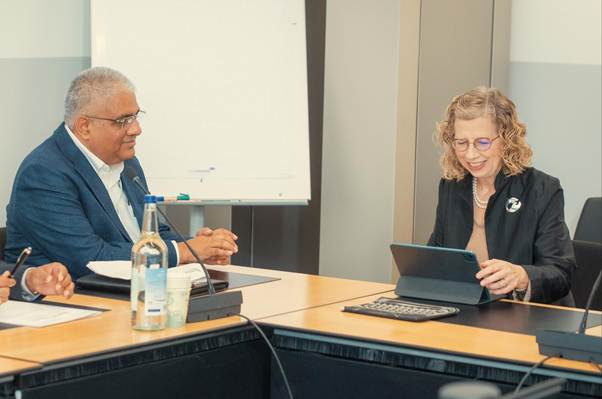
Union Minister Shri Yadav met with Ms. Inger Andersen, Executive Director, United Nations Environment Programme (UNEP) to discuss issues related to the upcoming Intergovernmental Negotiating Committee (INC-5.2) for developing a legally binding international instrument on plastic pollution, including its impact on the marine environment.

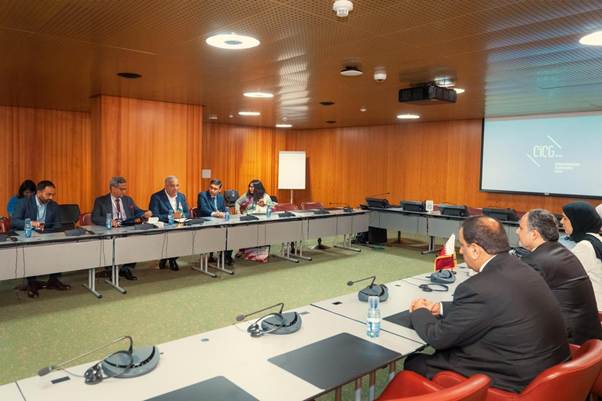
With H.E. Dr. Abdulla bin Abdulaziz bin Turki Al Subaie, Minister of Environment and Climate Change, Qatar, Shri Yadav held a productive discussion focused on enhancing bilateral cooperation in environmental protection and biodiversity conservation. Qatar was invited to participate in the International Solar Alliance (ISA).

In addition, Shri Yadav met with Mr. Rolph Payet, Executive Secretary of the Basel, Rotterdam and Stockholm Conventions; Ms. Ivonne Higuero, Secretary General of CITES; Ms. Musonda Mumba, Secretary General of the Ramsar Convention; Prof. Celeste Saulo, Secretary General of the World Meteorological Organization; and Ms. Monika Stankiewicz, Executive Secretary of the Minamata Convention during a dinner hosted at India House in Geneva. There was wide acknowledgment of the positive impact India is making in climate action and wildlife conservation under the leadership of Prime Minister Shri Narendra Modi. The leaders expressed keen interest in deepening their engagement with India, recognizing its proactive role in advancing global environmental priorities.

India’s participation in the 2025 BRS High-Level Segment reaffirms its unwavering commitment to “Viksit Bharat by 2047”, with environmentally sound management of chemicals and waste as a cornerstone of its sustainable development strategy.