India Gross Expenditure in R&D (GERD) has doubled in last one decade: Dr. Jitendra Singh

| Published on:

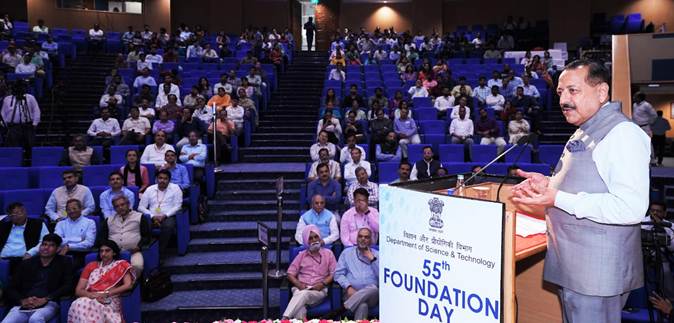
Marking the 55th Foundation Day of the Department of Science and Technology (DST), Union Minister of State (Independent Charge) for Science and Technology; Earth Sciences and Minister of State for PMO, Department of Atomic Energy, Department of Space, Personnel, Public Grievances and Pensions, Dr. Jitendra Singh outlined India’s evolving scientific landscape, emphasizing the need for increased industry involvement to the extent of industry led innovation, changes in approach and long-term innovation to position the country among leading global players.

Addressing a packed audience that included leading innovators, academicians, researchers and former Secretaries, Dr. Jitendra Singh traced the DST’s journey since its inception on May 3, 1971, crediting it with catalyzing India’s evolution into a science and technology powerhouse.

“The founding of DST mirrors the march of post-independence India in the field of science,” he said, highlighting how the department has bridged research and governance, turning vision into verifiable outcomes’.

The Minister hailed DST’s efforts in nurturing a nationwide research ecosystem, particularly through mission-mode programmes such as the National Supercomputing Mission, Cyber-Physical Systems, and the recent National Quantum Mission. Dr. Jitendra Singh emphasized that DST’s interventions have not only advanced science but also driven grassroots development, with focused efforts on women, children, and marginalized communities.

The Minister spotlighted India’s rising global rankings as a measure of DST’s impact — from a dramatic leap in the Global Innovation Index (from 81st in 2015 to 39th in 2024), to securing the 3rd spot globally in start-up numbers, PhDs in science and engineering, and research publications. India is now also ranked 6th worldwide in intellectual property filings.

But the core of Dr. Jitendra Singh’s message was forward-looking: science must align with market forces. Advocating for “industry-determined innovation research,” he argued that sustainable innovation must be both driven and funded by private players. “In India, knowledge partnerships alone don’t work — industry must have skin in the game,” he quipped, underlining that private sector buy-in is essential for enduring scientific success.

He also highlighted the role of the newly formed statutory body, ANRF (Anusandhan National Research Foundation), as a transformative force aimed at democratizing research funding and boosting university participation. Two major schemes — the ₹1 lakh crore Research, Development and Innovation Fund and the National Geospatial Mission — are now housed under DST’s leadership.

Calling out a quiet revolution, Dr. Jitendra Singh pointed to the “digitalisation of mind” that has ignited India’s scientific temper, reshaped India’s socio-scientific fabric. “Even a semi-literate person today prefers WhatsApp over writing down a number — that’s the extent of behavioural change,” he said, stressing that the real transformation lies not only in numbers but in the rise of aspiration and confidence among ordinary Indians.

The Minister didn’t shy away from calling for a strategic return of talent from abroad, urging scientists to plan their overseas journeys with a return timeline. “India today has everything to offer. It’s time we built a reverse pipeline for global talent,” he said.

Concluding on a note of optimism, Dr. Jitendra Singh declared, “This is one of the best times for science and research in India — and the best is yet to come.” The Foundation Day celebrations saw participation from Principal Scientific Adviser to the Government of India Prof. Ajay Kumar Sood, DST Secretary Prof. Abhay Karandikar, Dr. Sharad Sharma of iSPIRT, and Adil Zainulbhai, Chairman, CBC reflecting a strong convergence of scientific, institutional, and industry leadership.

Prime Minister inaugurates WAVES 2025

| Published on:

Prime Minister Shri Narendra Modi inaugurated the WAVES 2025, India’s first-of-its-kind World Audio Visual and Entertainment Summit at the Jio World Centre, Mumbai today. Addressing the gathering on the occasion, he greeted everyone on the occasion of Maharashtra day and Gujarat Statehood day being celebrated today. Acknowledging the presence of all international dignitaries, ambassadors, and leaders from the creative industry, the Prime Minister highlighted the significance of the gathering, emphasizing that over 100 countries’ artists, innovators, investors, and policymakers have come together to lay the foundation for a global ecosystem of talent and creativity. “WAVES is not merely an acronym but a wave representing culture, creativity, and universal connectivity”, he remarked, further underlining that the summit showcases the expansive world of films, music, gaming, animation, and storytelling, offering a global platform for artists and creators to connect and collaborate. The Prime Minister congratulated all participants on this historic occasion and extended his warm welcome to the distinguished guests from India and abroad.

Reflecting on India’s rich cinematic history at the WAVES Summit, Shri Modi noted that on May 3, 1913, India’s first feature film, Raja Harishchandra, was released, directed by the pioneering filmmaker Dadasaheb Phalke. He recalled that Phalke’s birth anniversary was celebrated just a day earlier. He underscored the impact of Indian cinema over the past century, stating that it has successfully taken India’s cultural essence to every corner of the world. He highlighted the popularity of Raj Kapoor in Russia, the global recognition of Satyajit Ray at Cannes, and the Oscar-winning success of RRR, emphasizing how Indian filmmakers continue to shape global narratives. He also acknowledged the cinematic poetry of Guru Dutt, the social reflections of Ritwik Ghatak, the musical genius of A.R. Rahman, and the epic storytelling of S.S. Rajamouli, stating that each of these artists has brought Indian culture to life for millions worldwide. Shri Modi also remarked that Indian cinema legends were honored through commemorative postage stamps, paying tribute to their contributions to the industry.

Emphasising the importance of India’s creative capability and global collaboration, the Prime Minister remarked that over the years, he has engaged with professionals from gaming, music, filmmaking, and acting, discussing ideas and insights that deepened his understanding of the creative industries. He highlighted a unique initiative undertaken during Mahatma Gandhi’s 150th birth anniversary, where singers from 150 countries came together to perform ‘Vaishnav Jan To’, a hymn written by Narsinh Mehta nearly 500-600 years ago. He stated that this global artistic effort created a significant impact, bringing the world together in harmony. He further noted that several individuals present at the summit had contributed to the Gandhi One Fifty initiative by creating short video messages, advancing Gandhi’s philosophies. He remarked that the collective strength of India’s creative world, combined with international collaboration, has already demonstrated its potential, and that vision has now materialized as WAVES.

Shri Modi praised the resounding success of the first edition of the WAVES Summit, stating that from its very first moment, the event has captured global attention and is “roaring with purpose.” He acknowledged the dedication and efforts of the summit’s Advisory Board, emphasizing their role in making WAVES a landmark event in the creative industry. He highlighted the large-scale Creators Challenge and Creatosphere initiative, which saw participation from approximately 100,000 creative professionals across 60 countries. He remarked that out of 32 challenges, 800 finalists have been selected, recognizing their talent and congratulating them on their achievement. He encouraged the finalists, stating that they now have the opportunity to make their mark on the global creative stage.

The Prime Minister expressed enthusiasm for the creative developments showcased at the Bharat Pavilion during the WAVES Summit. He remarked that significant innovation has been achieved, and he looked forward to witnessing these creations firsthand. The Prime Minister highlighted the WAVES Bazaar initiative, noting its potential to encourage new creators and connect them with emerging markets. He praised the concept of linking buyers and sellers in the art industry, stating that such initiatives strengthen the creative economy and provide fresh opportunities for artists.

Reflecting on the deep-rooted connection between creativity and human experience, stating that a child’s journey begins with the lullaby of a mother, their first introduction to sound and music, Shri Modi remarked that just as a mother weaves dreams for her child, creative professionals shape the dreams of an era. He underscored that the essence of WAVES lies in bringing together such visionary individuals who inspire and influence generations through their art.

Reaffirming his belief in collective efforts, stating that the dedication of artists, creators, and industry leaders will elevate WAVES to new heights in the coming years, Shri Modi urged his industry counterparts to continue the same level of support and handholding that made the first edition of the summit a success. He remarked that many exciting waves are yet to come and announced that WAVES Awards will be launched in the future, establishing themselves as the most prestigious honors in the world of art and creativity. He emphasized the need for sustained commitment, stating that the goal is to win the hearts of people across the world and inspire generations through creativity.

Highlighting India’s rapid economic progress, stating that the nation is on its way to becoming the world’s third-largest economy, the Prime Minister remarked that India holds the number one position in global fintech adoption, is the second-largest mobile manufacturer, and has the third-largest startup ecosystem worldwide. He emphasized that India’s journey toward becoming a developed nation has only begun and has much more to offer. “India is not only home to a billion-plus population but also a billion-plus stories”, he added. Referencing the country’s rich artistic history, he recalled that two thousand years ago, Bharata Muni’s Natya Shastra emphasized the power of art in shaping emotions and human experiences. He noted that centuries ago, Kalidasa’s Abhijnana-Shakuntalam introduced a new direction in classical drama. Prime Minister underscored the deep cultural roots of India, stating that every street has a story, every mountain carries a song, and every river hums a tune. He remarked that India’s six lakh villages each have their own folk traditions and unique storytelling styles, with communities preserving their histories through folklore. He highlighted the spiritual significance of Indian music, noting that whether it is bhajans, ghazals, classical compositions, or contemporary tunes, every melody carries a story, and every rhythm holds a soul.

Shri Modi underscored India’s deep-rooted artistic and spiritual heritage at the WAVES Summit, highlighting the concept of Naad Brahma, the divine sound. He remarked that Indian mythology has always expressed divinity through music and dance, citing Lord Shiva’s Damru as the first cosmic sound, Goddess Saraswati’s Veena as the rhythm of wisdom, Lord Krishna’s Flute as an eternal message of love, and Lord Vishnu’s Shankha as a call for positive energy. He emphasized that the mesmerizing cultural presentation at the summit also reflected this rich heritage. Declaring that “this is the right time,” Shri Modi reiterated India’s vision of Create in India, Create for the World, asserting that the country’s storytelling tradition offers an invaluable treasure spanning thousands of years. He highlighted that India’s stories are Timeless, Thought-Provoking, and Truly Global, encompassing not just cultural themes but also science, sports, courage, and bravery. He remarked that India’s storytelling landscape blends science with fiction, and heroism with innovation, forming a vast and diverse creative ecosystem. He called upon the WAVES platform to take on the responsibility of sharing India’s extraordinary stories with the world, bringing them to future generations through new and engaging formats.

Drawing parallels between the People’s Padma awards and the vision behind the WAVES Summit, stating that both initiatives aim to recognize and uplift talent from every corner of India, the Prime Minister remarked that while Padma Awards started a few years after independence, they truly transformed when India embraced the People’s Padma, recognizing individuals serving the nation from remote areas. This shift, he emphasized, turned the awards from a ceremony into a national celebration. Similarly, the Prime Minister stated that WAVES will serve as a global platform for India’s immense creative talent across films, music, animation, and gaming, ensuring that artists from every part of the country find recognition on an international stage.

Underscoring India’s tradition of embracing diverse ideas and cultures, referencing a Sanskrit phrase, Shri Modi emphasized that India’s civilizational openness has welcomed communities like Parsis and Jews, who have thrived in the country and become an integral part of its cultural fabric. He acknowledged the presence of ministers and representatives from various countries, noting that every nation has its own successes and contributions. He remarked that India’s strength lies in respecting and celebrating global artistic achievements, reinforcing the country’s commitment to creative collaboration. He emphasized that by creating content that reflects the accomplishments of different cultures and nations, WAVES can strengthen the vision of global connectivity and artistic exchange.

The Prime Minister extended an invitation to the global creative community, assuring them that engaging with India’s stories would reveal narratives deeply resonant with their own cultures. He emphasized that India’s rich storytelling tradition carries themes and emotions that transcend borders, creating a natural and meaningful connection. He remarked that international artists and creators who explore India’s stories will experience an organic bond with the nation’s heritage. He stated that this cultural synergy will make India’s vision of Create in India even more compelling and accessible to the world.

“This is the time of dawn of Orange Economy in India, Content, Creativity and Culture – the three pillars of Orange Economy”, exclaimed Shri Modi, remarking that Indian films have now reached audiences in over 100 countries, with global viewers increasingly seeking to understand Indian cinema beyond surface-level appreciation. He highlighted the growing trend of international audiences watching Indian content with subtitles, signaling deeper engagement with India’s stories. Shri Modi also noted that India’s OTT industry has witnessed tenfold growth in recent years, stating that while screen sizes may be shrinking, the scope of content is infinite, with micro screens delivering mega messages. He observed that Indian cuisine is becoming a global favorite and expressed confidence that Indian music will soon gain similar worldwide recognition.

Emphasizing the immense potential of India’s creative economy, stating that in the coming years, its contribution to the country’s GDP is set to increase significantly, the Prime Minister remarked, “India is emerging as a global hub for film production, digital content, gaming, fashion, and music”. He noted the promising growth opportunities in the live concert industry and the vast potential in the global animation market, which currently stands at over $430 billion and is projected to double in the next decade. The Prime Minister highlighted that this presents a significant opportunity for India’s animation and graphics industry, urging stakeholders to leverage this expansion for greater international reach.

Calling upon India’s young creators to drive the nation’s Orange Economy forward, acknowledging that their passion and hard work are shaping a new wave of creativity, Shri Modi emphasized that whether they are musicians from Guwahati, podcasters from Kochi, game designers in Bengaluru, or filmmakers in Punjab, their contributions are fueling India’s growing creative sector. He assured that the government stands firmly behind creative professionals, supporting them through initiatives like Skill India, Startup Support, policies for the AVGC Industry, and global platforms like WAVES. He remarked that every effort is being made to build an environment where innovation and imagination are valued, fostering new dreams and empowering individuals to bring those dreams to life. Shri Modi highlighted that WAVES will serve as a major platform where Creativity meets Coding, Software blends with Storytelling, and Art merges with Augmented Reality. He urged young creators to make the most of this opportunity, dream big, and dedicate their efforts to realizing their visions.

The Prime Minister expressed his unwavering confidence in India’s content creators, highlighting that their free-flowing creativity is redefining the global creative landscape. He emphasized that the youthful spirit of India’s creators knows no barriers, boundaries, or hesitation, allowing innovation to thrive. He remarked that through his personal interactions with young creators, gamers, and digital artists, he has witnessed firsthand the energy and talent emerging from India’s creative ecosystem. He acknowledged that India’s massive young population is driving new creative dimensions, from reels, podcasts, and games to animation, stand-up, and AR-VR formats. The Prime Minister asserted that WAVES is a platform designed specifically for this generation—one that enables young minds to reimagine and redefine the creative revolution with their energy and efficiency.

Underscoring the importance of Creative Responsibility in a technology-driven 21st century, Shri Modi emphasised that as technology increasingly influences human lives, extra efforts are needed to preserve emotional sensitivity and cultural richness. He remarked that the creative world holds the power to foster human compassion and deepen societal consciousness. He asserted that the goal is not to create robots but to nurture individuals with heightened sensitivity, emotional depth, and intellectual richness—qualities that cannot stem from information overload or technological speed alone. Shri Modi stressed on the importance of art, music, dance, and storytelling, noting that these forms have kept human sensibilities alive for thousands of years. He urged creatives to reinforce these traditions and build a more compassionate future. He also highlighted the need to protect young generations from divisive and harmful ideologies, stating that WAVES can serve as a vital platform to uphold cultural integrity and instill positive values. He warned that neglecting this responsibility could have grave consequences for future generations.

Emphasising the transformative impact of technology on the creative world, the Prime Minister highlighted the importance of global coordination to harness its full potential. He remarked that WAVES will serve as a bridge connecting Indian creators with global storytellers, animators with global visionaries, and transform gamers to global champions. He invited international investors and creators to embrace India as their content playground and explore the country’s vast creative ecosystem. Addressing global creators, the Prime Minister urged them to dream big and tell their story. He encouraged investors to invest not just in platforms, but in people, and called on Indian youth to share their one billion untold stories with the world. He concluded by extending his best wishes to all participants of the inaugural WAVES Summit.

The Governor of Maharashtra Shri C. P. Radhakrishnan, Chief Minister of Maharashtra, Shri Devendra Fadnavis, Union Ministers, Shri Ashwini Vaishnaw, Dr. L. Murugan were present among other dignitaries at the event.

Background

WAVES 2025 is a four-day summit with tagline “Connecting Creators, Connecting Countries” is poised to position India as a global hub for media, entertainment, and digital innovation by bringing together creators, startups, industry leaders, and policymakers from across the world.

In line with Prime Minister’s vision of leveraging creativity, technology, and talent to shape a brighter future, WAVES will integrate films, OTT, gaming, comics, digital media, AI, AVGC-XR, broadcasting, and emerging tech, making it a comprehensive showcase of India’s media and entertainment prowess. WAVES aims to unlock a $50 billion market by 2029, expanding India’s footprint in the global entertainment economy.

At WAVES 2025, India is also hosting the Global Media Dialogue (GMD) for the first time, with ministerial participation from 25 countries, marking a milestone in the country’s engagement with the global media and entertainment landscape. The Summit will also feature the WAVES Bazaar, a global e-marketplace with over 6,100 buyers, 5,200 sellers, and 2,100 projects. It aims to connect buyers and sellers locally and globally, ensuring wide-reaching networking and business opportunities.

Prime Minister visited the Creatosphere and interacted with creators, selected from the 32 Create in India Challenges launched nearly a year ago, which garnered over one lakh registrations. He will also visit the Bharat Pavilion.

WAVES 2025 will witness participation from over 90 countries, with more than 10,000 delegates, 1,000 creators, 300+ companies, and 350+ startups. The summit will feature 42 plenary sessions, 39 breakout sessions, and 32 masterclasses spanning diverse sectors including broadcasting, infotainment, AVGC-XR, films, and digital media.

Union Home Minister addresses a Programme on Gujarat Day and Maharashtra Day in New Delhi

| Published on:

Union Home Minister and Minister of Cooperation Minister Shri Amit Shah today addressed a program on the occasion of Gujarat and Maharashtra Day in New Delhi. Many dignitaries including Union Minister Dr. Mansukh Mandaviya, Lieutenant Governor of Delhi Shri VK Saxena and Chief Minister of Delhi Smt. Rekha Gupta were present on the occasion.

In his address, Union Home Minister and Minister of Cooperation Shri Amit Shah said that Prime Minister Shri Narendra Modi has taken steps to preserve the purity and sanctity of Yamuna water from Yamunotri to Prayagraj and to build a riverfront on the lines of Sabarmati in Delhi. He said that purification of Yamuna is of utmost importance not only for the people of Delhi and its neighboring states but also for all Indians who worship Shri Krishna and Yamuna ji.

Union Home Minister said that today is the foundation day of both Gujarat and Maharashtra. He said that Gujarat and Maharashtra have set an excellent example of how two states formed out of one state can lead the country through their development by respecting each other and with a healthy competition between them without any bitterness. He said that people who wanted to divide the country by making the issues of boundaries, language and culture were succeeding in their ill intentions but Prime Minister Shri Narendra Modi ji foiled all these evil ideas. He said Shri Narendra Modi has taken the resolution of Ek Bharat, Shreshtha Bharat, the result of which is that today every language and culture draws strength from each other.

Shri Amit Shah said that there is no competition between Marathi and Gujarati and both are great languages ​​in their own places. He said that the idea of Ek Bharat Shreshtha Bharat is an ideal example of how one can fight against those that adversely impact our unity. He said that on May 1, 1960, two states were born from the state of Mumbai, one became glorious Gujarat and the other became great Maharashtra. He said that both the states have contributed a lot in solving every problem of the country and taking development forward for many years.

Union Home Minister and Minister of Cooperation said that Maharashtra, the land of Veer Chhatrapati, carried forward his tradition and from Bajirao Peshwa to other generals, gave a strong fight to the Mughals and raised the flag of mother language, self rule and self religion.

He said that the first idea of ​​complete independence was put forward by young Shivaji Maharaj and when the British rule came it was taken forward by Lokmanya Bal Gangadhar Tilak Maharaj who gave the slogan of Swaraj is my birthright. Shri Shah said that whether it is Bhakti movement or the progressive path of social reform, Jyotiba Phule, Babasaheb Dr. Bhimrao Ambedkar Ji, all showed the way not only to Maharashtra but to the entire country. He said that Veer Savarkar ji became the source of inspiration for crores of youth across the country as a dedicated patriot.

Shri Amit Shah said that Gujarat was also the karmabhoomi of Shri Krishna and the birthplace of Swami Dayanand Saraswati. He said that many strong empires were born in Gujarat and in the freedom struggle, Mahatma Gandhi and Sardar Patel worked to give shape to the entire freedom movement. He said that after independence, India has been able to cover such a long distance today only under the leadership of Prime Minister Shri Narendra Modi in achieving the goal of development and uniting the country and strengthening it to reach the highest position in the world.

Union Home Minister said that the contribution of both Maharashtra and Gujarat in the development of India has been huge before and after independence. He said that today Garba is celebrated with the same enthusiasm in Maharashtra and during Ganesh Utsav in Gujarat, Ganpati is brought to every house with respect. He said that this is the biggest strength of our country. Shri Shah said that both the states are standing as very strong pillars of the country’s economic development. He said that Maharashtra has always been the economic capital of the country and even today it is the country’s largest economy. Home Minister said that Gujarat’s GSDP has also crossed 30 lakh crores and it is the third largest economy of the country. Gujarat has the largest port, the largest refinery, Asia’s largest renewable energy park, the first bullet train will go from Gujarat, the first GIFT city and now Dholera Smart City is also being built in Gujarat. He said that Vibrant Gujarat and Magnificent Maharashtra have become strong pillars of the country’s development. He said that under the leadership of Prime Minister Modi, both the states have finalized the roadmap for their development till 2047.

Shri Amit Shah said that Gujarat and Maharashtra have accepted modernity while preserving their heritage and have contributed a lot to the unity and integrity of the country. He said that in Modi ji’s vision of a great India, both the states have accepted the formula of healthy competition between the states and the development of the country through it. Shri Shah said that when a developed India will be formed in 2047, both the states will have the biggest contribution in it.

Jyotiraditya Scindia Holds Investor Interactions in Mumbai

| Published on:

A meeting to promote investment in the North Eastern Region was held with industry leaders under the chairpersonship of Union Minister for Communications and Minister of Development of North Eastern Region (MDoNER), Shri Jyotiraditya M. Scindia

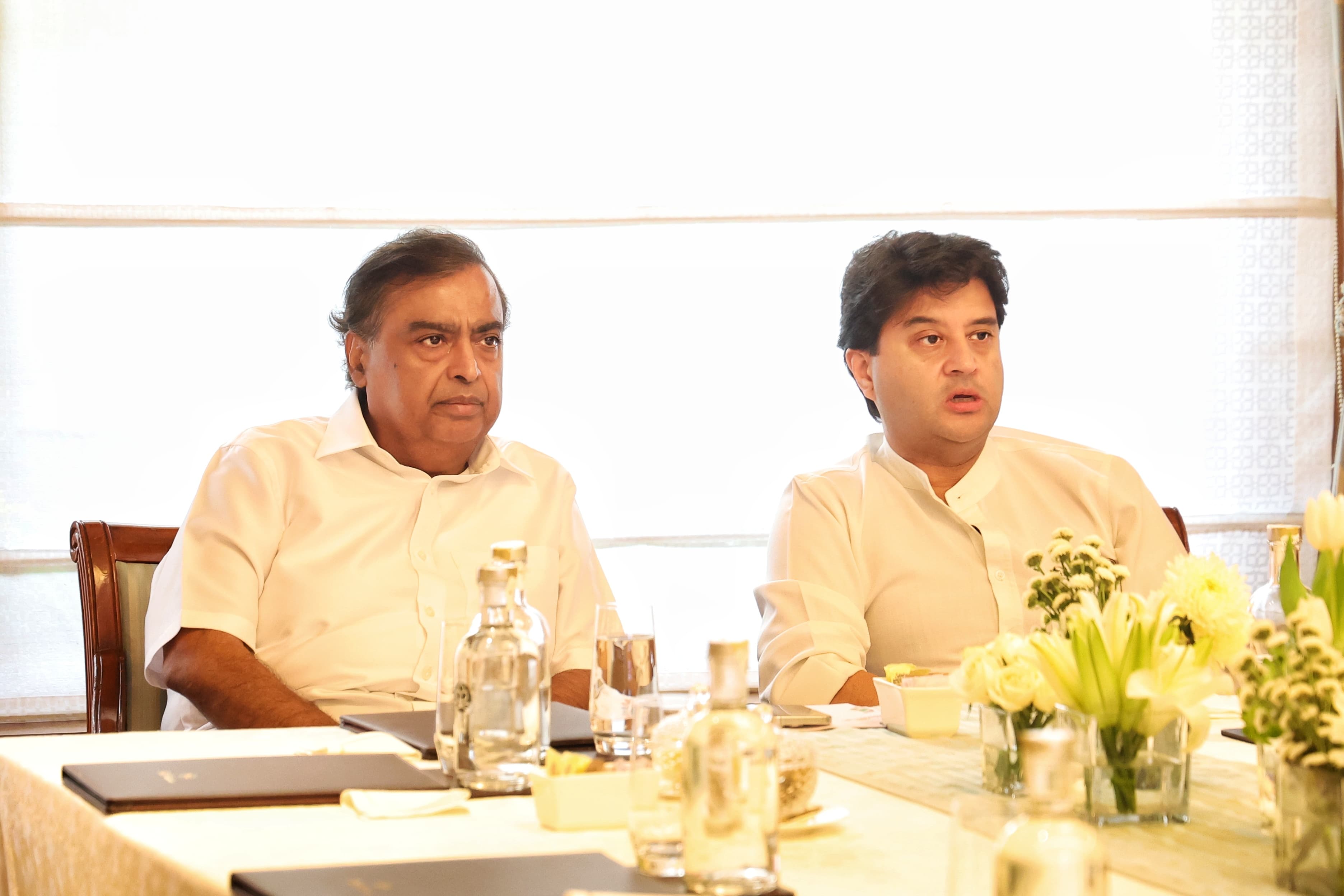
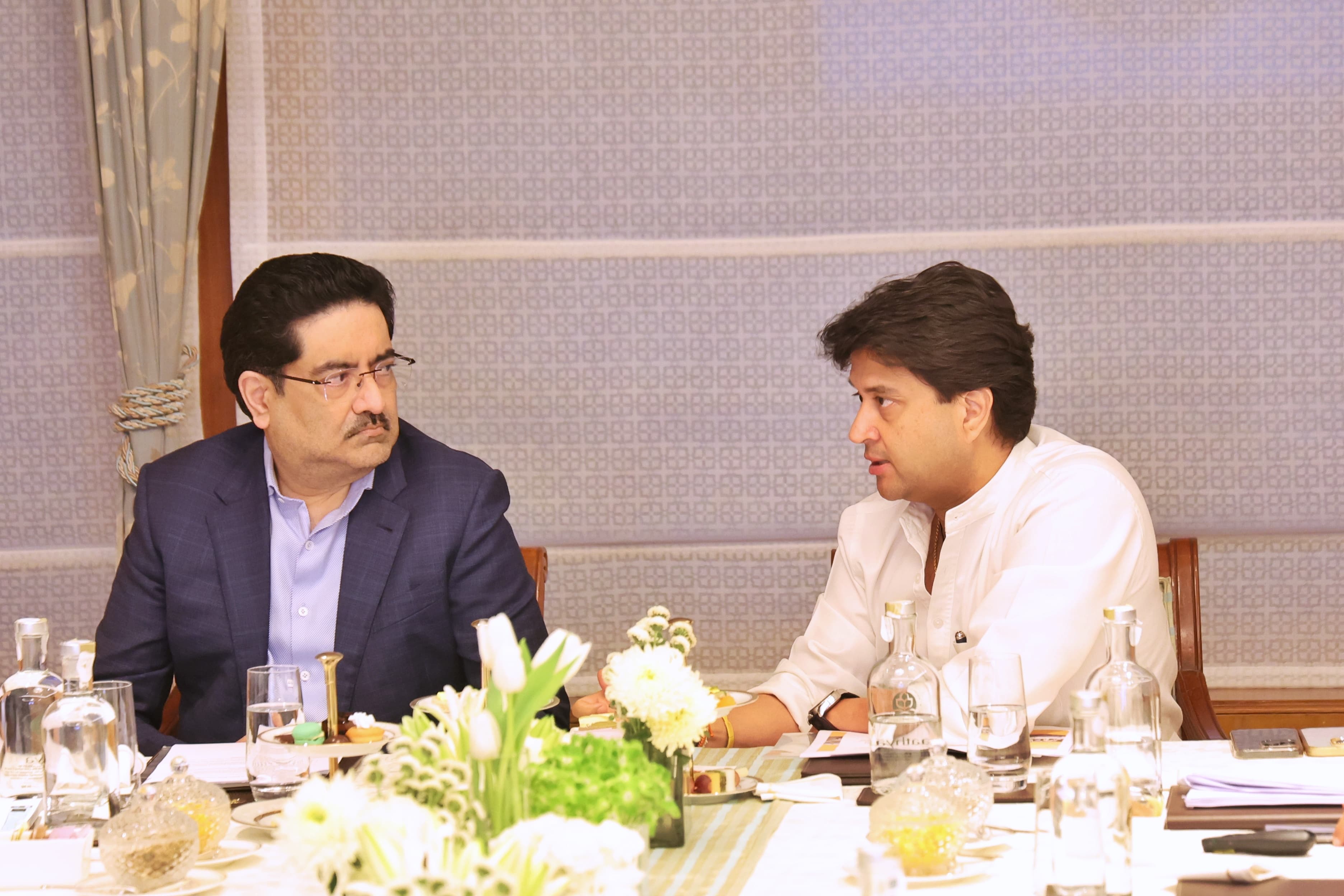
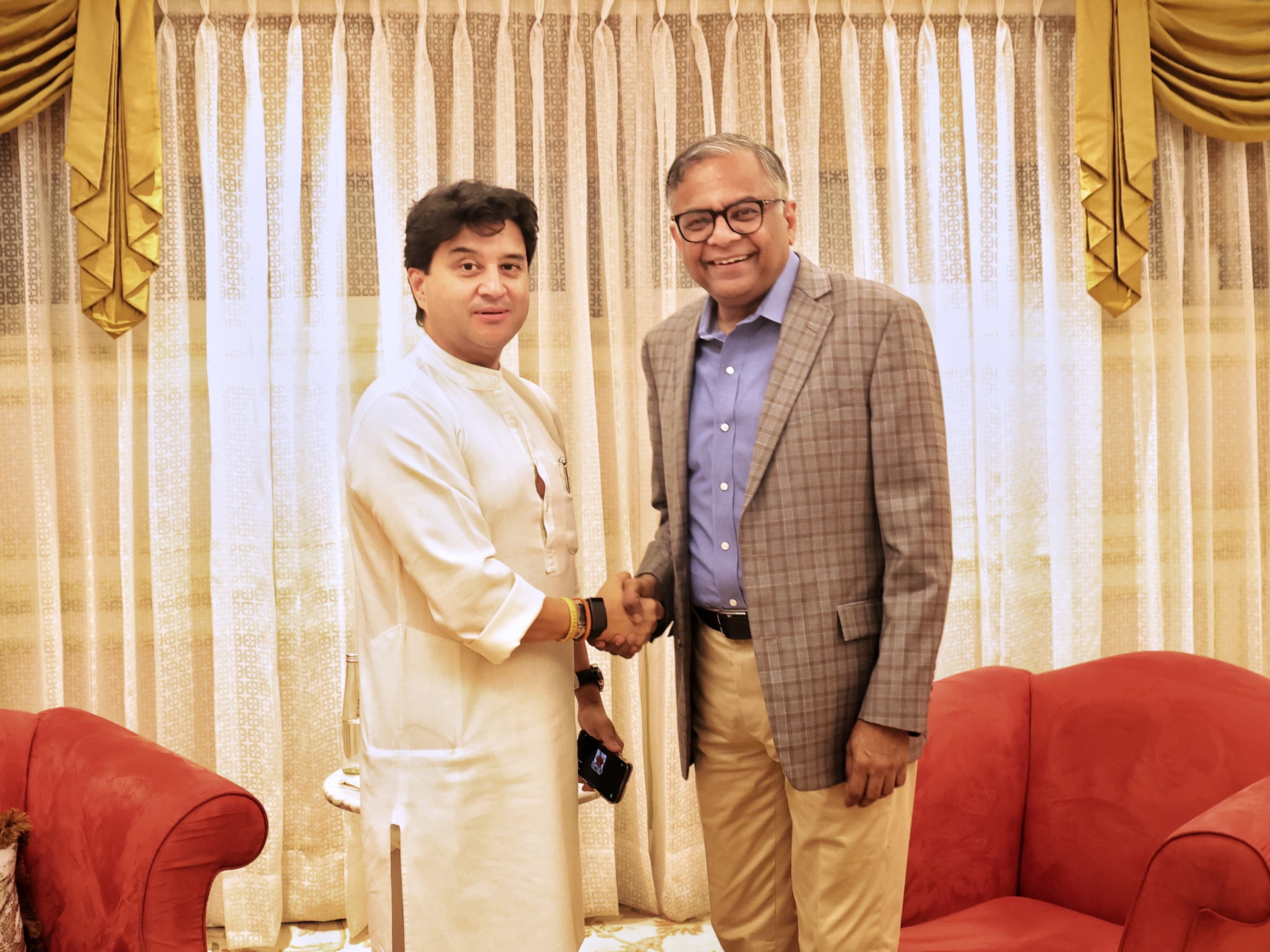
The Union Minister held a series of meetings in Mumbai on Wednesday (April 30, 2025), with leading industrialists, including Mukesh Ambani (Reliance Industries), Kumar Mangalam Birla (Aditya Birla Group), and N. Chandrasekaran (Tata Sons). The meetings were part of the ongoing engagement ahead of the Investment Summit, “Rising Northeast Summit 2025”, scheduled for May 23-24, 2025, at Delhi.

Union Minister Shri Jyotiraditya M. Scindia emphasized the Government of India’s strategic vision to position the Northeast as a new growth engine for the country. “The goal is to integrate the eight states into one unified development goal as India’s growth engine,” he said. He also underlined the role of public-private partnerships in accelerating sustainable development in the region.

The Minister further shared with the industrialists some of the key initiatives undertaken by MDoNER, which included the formation of a High-Level Task Force with the Chief Ministers of all eight Northeastern states, the establishment of Investment Promotion Agencies (IPAs) in each state, among others.

Shri Dharmvir Jha, Statistical Advisor Ministry of DoNER, presented key investment opportunities spanning all eight Northeastern states.

The interactions focused on region-specific growth sectors, including agro-based industries, textiles, and tourism.

The Rising Northeast Summit 2025 will continue this momentum by bringing together key stakeholders, investors, and policymakers on one platform to unlock the region’s economic potential. The summit is scheduled to be held at Bharat Mandapam in Delhi on May 23-24, 2025

PM chairs 46th PRAGATI Interaction

| Published on:

Prime Minister Shri Narendra Modi earlier today chaired a meeting of the 46th edition of PRAGATI, an ICT-based multi-modal platform for Pro-Active Governance and Timely Implementation, involving Centre and State governments.

In the meeting, eight significant projects were reviewed, which included three Road Projects, two projects each of Railways and Port, Shipping & Waterways. The combined cost of these projects, spread across different States/UTs, is around Rs 90,000 crore.

While reviewing grievance redressal related to Pradhan Mantri Matru Vandana Yojana (PMMVY), Prime Minister directed that all Ministries and Departments should ensure that the identification of beneficiaries is done strictly through biometrics-based Aadhaar authentication or verification. Prime Minister also directed to explore the potential for integrating additional programmes into the Pradhan Mantri Matru Vandana Yojana, specifically those aimed at promoting child care, improving health and hygiene practices, ensuring cleanliness, and addressing other related aspects that contribute to the overall well-being of the mother and newly born child.

During the review of infrastructure project concerning the development of a Ring Road, Prime Minister emphasized that the development of Ring Road should be integrated as a key component of broader urban planning efforts. The development must be approached holistically, ensuring that it aligns with and supports the city’s growth trajectory over the next 25 to 30 years. Prime Minister also directed that various planning models be studied, with particular focus on those that promote self-sustainability, especially in the context of long-term viability and efficient management of the Ring Road. He also urged to explore the possibility of integrating a Circular Rail Network within the city’s transport infrastructure as a complementary and sustainable alternative for public transportation.

During the review of the Jal Marg Vikas Project, Prime Minister said that efforts should be made to establish a strong community connect along the stretches for boosting cruise tourism. It will foster a vibrant local ecosystem by creating opportunities for business development, particularly for artisans and entrepreneurs associated with the ‘One District One Product’ (ODOP) initiative and other local crafts. The approach is intended to not only enhance community engagement but also stimulate economic activity and livelihood generation in the regions adjoining the waterway. Prime Minister stressed that such inland waterways should be drivers for tourism also.

During the interaction, Prime Minister reiterated the importance of leveraging tools such as PM GatiShakti and other integrated platforms to enable holistic and forward-looking planning. He emphasized that the use of such tools is crucial for achieving synergy across sectors and ensuring efficient infrastructure development.

Prime Minister further directed all stakeholders to ensure that their respective databases are regularly updated and accurately maintained, as reliable and current data is essential for informed decision-making and effective planning.

Up to the 46th edition of PRAGATI meetings, 370 projects having a total cost of around Rs 20 lakh crore have been reviewed.

Cabinet approves Caste enumeration in the upcoming Census

| Published on:

Cabinet Committee on Political Affairs chaired by the Prime Minister Shri Narendra Modi has decided to include caste enumeration in the upcoming census. This demonstrates that the present government is committed to the holistic interests and values of the nation and society.

As per Article 246 of the Constitution of India, Census is a union subject listed at 69 in the Union List in the Seventh Schedule. While some states have conducted surveys to enumerate castes, these surveys have varied in transparency and intent, with some conducted purely from a political angle, creating doubts in society. Considering all these circumstances, and to ensure that our social fabric does not come under political pressure, it has been decided that caste enumeration should be included in the main census instead of being conducted as a separate survey.

This will ensure that society becomes stronger economically and socially, and the country’s progress continues without hindrance. It is noteworthy that when a provision of 10 percent reservation was made for the economically weaker sections of society, it did not create tension in any section of society.

Caste was excluded from all census operations conducted since independence. In 2010, then Prime Minister Late Dr. Manmohan Singh assured the Lok Sabha that the matter of caste census would be considered in the Cabinet. A Group of Ministers was formed to deliberate on this subject, and most political parties recommended conducting a caste census. Despite this, the previous government opted for a survey instead of a caste census, known as the Socio-Economic and Caste Census (SECC).

Prime Minister addresses YUGM Innovation conclave in New Delhi

| Published on:

Prime Minister Shri Narendra Modi addressed the YUGM Innovation Conclave at Bharat Mandapam in New Delhi today. Addressing the gathering on the occasion, he highlighted the significant gathering of government officials, academia, and science and research professionals, emphasizing the confluence of stakeholders as a “YUGM”—a collaboration aimed at advancing future technologies for a developed India. The Prime Minister expressed confidence that the efforts to enhance India’s innovation capacity and its role in deep-tech would gain momentum through this event. He remarked on the inauguration of super hubs at IIT Kanpur and IIT Bombay, focusing on AI, intelligent systems, and biosciences, biotechnology, health, and medicine. He also mentioned the launch of the Wadhwani Innovation Network, which reaffirms the commitment to advancing research in collaboration with the National Research Foundation. The Prime Minister congratulated the Wadhwani Foundation, IITs, and all stakeholders involved in these initiatives. He also extended a special appreciation to Shri Romesh Wadhwani for his dedication and active role in fostering positive changes in the country’s education system through collaboration between the private and public sectors.

Quoting the scriptures in Sanskrit meaning true life is lived in service and selflessness, Shri Modi remarked that science and technology should also serve as mediums for service. He expressed his satisfaction  witnessing institutions like the Wadhwani Foundation, and the efforts of Shri Romesh Wadhwani and his team, steering science and technology in the right direction in India. He highlighted Mr. Wadhwani’s remarkable journey, marked by struggles, including the aftermath of partition, displacement from his birthplace, battling polio in childhood, and rising above these challenges to build a massive business empire. Shri Modi commended Shri Wadhwani for dedicating his success to India’s education and research sectors, calling it an exemplary act. He acknowledged the foundation’s contributions to school education, Anganwadi technologies, and Agri-Tech initiatives. He noted his earlier participation in events like the establishment of the Wadhwani Institute of Artificial Intelligence and expressed confidence that the foundation would continue achieving numerous milestones in the future and extended his best wishes to the Wadhwani Foundation for their endeavors.

Underlining that the future of any nation depends on its youth and marking the importance of preparing them for the future, the Prime Minister remarked that the education system plays a crucial role in this preparation and underscored efforts to modernize India’s education system to meet 21st-century needs. He highlighted the introduction of the New National Education Policy, designed with global education standards in mind, and noted the significant changes it has brought to the Indian education system. He remarked on the development of the National Curriculum Framework, Learning Teaching Material, and new textbooks for classes one to seven. He highlighted the creation of AI-based and scalable digital education infrastructure platform – ‘One Nation, One Digital Education Infrastructure’ under PM e-Vidya and DIKSHA platforms, enabling the preparation of textbooks in over 30 Indian languages and seven foreign languages. The Prime Minister remarked that the National Credit Framework has made it easier for students to study diverse subjects simultaneously, providing modern education and opening new career paths. He stressed the importance of strengthening India’s research ecosystem to achieve national goals, highlighting the doubling of gross expenditure on R&D from ₹60,000 crore in 2013-14 to over ₹1.25 lakh crore, the establishment of state-of-the-art research parks, and the creation of Research and Development Cells in nearly 6,000 higher education institutions. He remarked on the rapid development of an innovation culture in India, citing the increase in patent filings from around 40,000 in 2014 to over 80,000, reflecting the support provided by the intellectual property ecosystem to the youth. The Prime Minister further highlighted the establishment of the ₹50,000 crore National Research Foundation to promote research culture and the One Nation, One Subscription initiative, which has facilitated access to world-class research journals for higher education students. He emphasised on the Prime Minister’s Research Fellowship, which ensures that talented individuals face no obstacles in advancing their careers.

Shri Modi highlighted that the youth today excel not only in Research & Development but have become Ready and Disruptive themselves, emphasizing the transformative contributions of India’s young generation to research across various sectors. He cited milestones like the commissioning of the world’s longest hyperloop test track, a 422-meter hyperloop developed at IIT Madras in collaboration with Indian Railways. He remarked on groundbreaking achievements such as nanotechnology developed by scientists at IISc Bangalore to control light at the nano-scale and the ‘brain on a chip’ technology, capable of storing and processing data across 16,000+ conduction states in a molecular film. He further highlighted the development of India’s first indigenous MRI machine just weeks ago. “India’s university campuses are emerging as dynamic centres where Yuvashakti drives breakthrough innovations”, said Shri Modi, showcasing India’s representation in Higher Education Impact Rankings, with over 90 universities listed among 2,000 institutions globally. He noted the growth in QS world rankings, where India moved from having nine institutions in 2014 to 46 in 2025, alongside the increasing representation of Indian institutions among the world’s top 500 higher education institutes over the past decade. He also remarked on Indian institutions establishing campuses abroad, such as IIT Delhi in Abu Dhabi, IIT Madras in Tanzania, and upcoming IIM Ahmedabad in Dubai. He underscored that leading global universities are also opening campuses in India, promoting academic exchange, research collaboration, and cross-cultural learning opportunities for Indian students.

“The trinity of Talent, Temperament and Technology will transform India’s future”, stressed the Prime Minister, highlighting initiatives such as Atal Tinkering Labs, with 10,000 labs already operational, and the announcement of 50,000 more in this year’s budget to provide early exposure to children. He noted the launch of the PM Vidya Lakshmi scheme to provide financial support to students and the establishment of internship cells in over 7,000 institutions to transform students’ learning into real-world experience. He remarked that every effort is being made to develop new skills among the youth, whose combined talent, temperament, and technological strength will lead India to the pinnacle of success.

Underscoring the importance of meeting the goal of a developed India within the next 25 years, the Prime Minister said, “it is crucial that the journey from idea to prototype to product is completed in the shortest time possible”. He stressed that reducing the distance from lab to market ensures faster delivery of research outcomes to the people, motivates researchers, and provides tangible incentives for their work. This accelerates the cycle of research, innovation, and value addition. The Prime Minister called for a robust research ecosystem, urging academic institutions, investors, and industry to support and guide researchers. He highlighted the potential role of industry leaders in mentoring youth, providing funding, and collaboratively developing new solutions. He reaffirmed the government’s commitment to simplifying regulations and fast-tracking approvals to further these efforts.

Emphasising the need to consistently promote AI, quantum computing, advanced analytics, space tech, health tech, and synthetic biology, Shri Modi highlighted India’s leading position in AI development and adoption. He mentioned the launch of the India-AI Mission to build world-class infrastructure, high-quality datasets, and research facilities. He remarked on the increasing number of AI Centres of Excellence being developed with the support of leading institutions, industries, and startups. He reiterated the commitment to the vision of “Make AI in India” and the goal to “Make AI work for India.” He further noted the budgetary decision to expand IIT seat capacities and introduce Meditech courses, combining medical and technology education, in collaboration with IITs and AIIMS. The Prime Minister urged the timely completion of these initiatives, with a focus on positioning India among the “best in the world” in future technologies. Concluding his address, the Prime Minister remarked that initiatives like YUGM, a collaboration between the Ministry of Education and Wadhwani Foundation, can revitalize India’s innovation landscape. He expressed gratitude to the Wadhwani Foundation for their continued efforts and highlighted the significant impact of today’s event in furthering these objectives.

Union Ministers Shri Dharmendra Pradhan, Dr. Jitendra Singh, Shri Jayant Chaudhary, Dr. Sukanta Majumdar were present among others at the event.

Background

YUGM (meaning “confluence” in Sanskrit) is a first-of-its-kind strategic conclave convening leaders from government, academia, industry, and the innovation ecosystem. It will contribute to India’s innovation journey, driven by a collaborative project of around Rs 1,400 crore with joint investment from the Wadhwani Foundation and Government Institutions.

In line with Prime Minister’s vision of a self-reliant and innovation-led India, various key projects will be initiated during the conclave. They include Superhubs at IIT Kanpur (AI & Intelligent Systems) and IIT Bombay (Biosciences, Biotechnology, Health & Medicine); Wadhwani Innovation Network (WIN) Centers at top research institutions to drive research commercialization; and partnership with Anusandhan National Research Foundation (ANRF) for jointly funding late-stage translation projects and promoting research and innovation.

The conclave will also include High-level Roundtables and Panel Discussions involving government officials, top industry and academic leaders; action-oriented dialogue on enabling fast-track translation of research into impact; a Deep Tech Startup Showcase featuring cutting-edge innovations from across India; and exclusive networking opportunities across sectors to spark collaborations and partnerships.

The Conclave aims to catalyze large-scale private investment in India’s innovation ecosystem; accelerate research-to-commercialization pipelines in frontier tech; strengthen academia-industry-government partnerships; advance national initiatives like ANRF and AICTE Innovation; democratize innovation access across institutions; and foster a national innovation alignment toward Viksit Bharat@2047.

PM congratulates Mr. Mark Carney on being elected as Prime Minister of Canada

| Published on:

Prime Minister Shri Narendra Modi today extended his congratulations to Mr. Mark Carney on his election as the Prime Minister of Canada and to the Liberal Party on their victory. He highlighted the shared democratic values, unwavering commitment to the rule of law, and vibrant people-to-people ties that bind India and Canada together.

In a post on X, he wrote:

“Congratulations @MarkJCarney on your election as the Prime Minister of Canada and to the Liberal Party on their victory. India and Canada are bound by shared democratic values, a steadfast commitment to the rule of law, and vibrant people-to-people ties. I look forward to working with you to strengthen our partnership and unlock greater opportunities for our people.”

PM’s address in the 121st Episode of ‘Mann ki Baat’

| Published on:

My dear countrymen, Namaskar. Today as I speak to you in ‘Mann Ki Baat’, there is a deep anguish in my heart. The terrorist incident that took place in Pahalgam on the 22nd of April has hurt every citizen of the country. Every Indian holds deep sympathies for the affected families. No matter which state one belongs to, no matter which language one speaks, one is feeling the pain of those who have lost their loved ones in this attack. I can feel that the blood of every Indian is on the boil after seeing the pictures of the terrorist attack. This attack in Pahalgam shows the desperation of the patrons of terrorism; displays their cowardice… at a time when peace was returning to Kashmir, there was a vibrancy in schools and colleges, construction work had gained unprecedented pace, democracy was getting stronger, the number of tourists was increasing at a record rate, people’s income was increasing, new opportunities were being created for the youth. The enemies of the country, the enemies of Jammu and Kashmir, did not like that. The terrorists and the masterminds of terror want Kashmir to be destroyed again and hence they executed such a big conspiracy. In this war against terrorism, the unity of the country, the solidarity of 140 crore Indians, is our biggest strength. This unity is the basis of our decisive fight against terrorism. We have to strengthen our resolve to face this challenge that has surfaced before the country. We have to demonstrate strong willpower as a nation. Today the world is watching, after this terrorist attack, the whole country is speaking in one voice.

Friends, the anger that we the people of India feel, that anger is there in the whole world. After this terrorist attack, condolences are continuously pouring in from all over the world. Global leaders have called me up as well; written letters and sent messages too. Everyone has strongly condemned this heinous terrorist attack. They have expressed condolences to the families of the deceased. The whole world stands with 140 crore Indians in our fight against terrorism. I once again assure the affected families that they will get justice, and justice will be done. The perpetrators and conspirators of this attack will be served with the harshest response.

Friends, two days ago we lost the country’s great scientist Dr. K. Kasturirangan ji. Whenever I met Kasturirangan ji, we discussed topics like the talent of Indian youth, modern education, Space-Science. His contribution in lending newer heights to science, education and India’s Space Program shall always be remembered. ISRO attained a new identity under his leadership. The Space Programs that moved forward under his guidance gave global recognition to India’s efforts. Many of the satellites that India uses today were launched under the supervision of Dr. Kasturirangan.

There was one more special facet to his personality, which the younger generation can learn from. He always accorded importance to innovation. The vision of learning, knowing and doing something new is very inspiring. Dr. K. Kasturirangan also played a major role in formulating the new National Education Policy of the country. Dr. Kasturirangan came up with the idea of ​​forward looking education according to the modern needs of the 21st century. His selfless service to the country and contribution to nation building will always be remembered. Very humbly, I pay my tribute to Dr. K. Kasturirangan.

My dear countrymen, this month of April marks 50 years of the launch of the Aryabhatta Satellite. Today, when we look back and remember this journey of 50 years, we realize how far we have come. This flight of India’s dreams in space once commenced with just conviction. Some young scientists with the passion to do something for the nation … they neither had the modern resources like today, nor the access to world technology as such. If at all they had anything, it was talent, dedication, hard work and the passion to do something for the country. You must have seen pictures of our scientists carrying critical equipment themselves on bullock carts and bicycles. It is the result of that very dedication and spirit of service to the nation that so much has changed today. Today India has become a Global Space Power. We have created a record by launching 104 Satellites simultaneously. We have become the first country to reach the South Pole of the Moon.

India has launched the Mars Orbiter Mission and we have reached pretty close to the Sun through the Aditya – L1 Mission. Today India is leading the most cost effective but successful Space Program in the entire world. Many countries of the world take help of ISRO for their Satellites and Space Missions. Friends, when we see a Satellite launch by ISRO, we are filled with pride. I had a similar feeling when I witnessed the launch of PSLV-C-23 in 2014. I was also present at the ISRO Center in Bengaluru during the landing of Chandrayaan-2 in 2019. At that time Chandrayaan failed to achieve the expected success, it was a very difficult time for the scientists. But I could see with my own eyes the patience of the scientists and their zeal to achieve something. And a few years later, the whole world too noticed how the same scientists made Chandrayaan-3 a success.

Friends, now India has opened her Space Sector for the private sector as well. Today many youth are attaining new milestones in the field of Space Startups. 10 years ago, there was only one company, but today there are more than 325 Space Startups working in the country. The times to come are ushering in a lot of new possibilities in Space. India is going to scale new heights. The country is busy preparing for many important missions like Gaganyaan, SpaDeX and Chandrayaan-4. We are also working on the Venus Orbiter Mission and Mars Lander Mission. Our Space Scientists are going to fill the countrymen with new pride through their innovations.

Friends, you certainly must have seen the horrific pictures of the earthquake that struck Myanmar last month. The earthquake caused huge devastation there… every breath, every moment was precious for the people trapped under the debris. That is why India immediately started Operation Brahma for our brothers and sisters in Myanmar. From Air Force aircraft to Navy ships, everything was sent to help Myanmar. The Indian team set up a field hospital there. A team of engineers helped in assessing the damage to important buildings and infrastructure. The Indian team supplied blankets, tents, sleeping bags, medicines, food items and many other things. During all of that, the Indian team also received a lot of appreciation from the people there.

Friends, in this crisis, many heart-touching examples of courage, patience and ingenuity came to light. The Indian team rescued an elderly woman of more than 70 years of age who was buried under the debris for over 18 hours. Those who are watching ‘Mann Ki Baat’ on TV right now, you must be able to see the face of that elderly woman. The team from India provided every treatment facility, from stabilizing her oxygen level to treatment of fractures. When this elderly woman was discharged from the hospital, she expressed her gratitude to our team. She expressed that she had got a new life because of the Indian rescue team. Many people told our team that because of them they were able to locate their friends and relatives.

Friends, after the earthquake, there was a possibility of many people being trapped in a monastery in Mandalay, Myanmar. Our team also carried out relief and rescue operations there, that resulted in them receiving a lot of blessings from Buddhist monks. We are very proud of all those who participated in Operation Brahma. We have our tradition, our values, the sentiment of ‘Vasudhaiva Kutumbakam’ – the whole world is one family. India’s readiness as the Vishwa-Mitra in times of crisis and India’s commitment to humanity is becoming the hallmark of our identity.

Friends, I have come to know about an innovative effort of NRIs in Ethiopia, Africa. Indians living in Ethiopia have taken the initiative to send children who are suffering from heart disease since birth to India for treatment. Many such children are also being helped financially by Indian families. If the family of a child is unable to come to India on account of lack of money, our Indian brothers and sisters are making arrangements for that too. The effort is to ensure that every needy child of Ethiopia suffering from a serious ailment receives better treatment. This noble work of NRIs is being appreciated a lot in Ethiopia. You know that medical facilities are constantly improving in India. Citizens of other countries are also benefitting from that.

Friends, just a few days ago, India has also sent a large quantity of vaccine for the people of Afghanistan. These vaccines will be useful in preventing dangerous diseases like Rabies, Tetanus, Hepatitis B and Influenza. This week, on Nepal’s request, India has sent a large consignment of medicines and vaccines there. This will ensure better treatment for patients of thalassemia and sickle cell disease. Whenever it comes to serving humanity, India has always been at the forefront and will always be at the forefront in every such need in the future as well.

Friends, we were just referring to Disaster Management and the most important thing in dealing with any natural disaster is your alertness. You can now get help in this alertness from a special APP on your mobile. This APP can save you from getting trapped in any natural disaster and its name too is ‘Sachet’. The ‘Sachet APP’ has been developed by India’s National Disaster Management Authority (NDMA). Be it flood, cyclone, land-slide, tsunami, forest fire, avalanche, storm, hurricane or lightning, ‘Sachet APP’ tries to keep you informed and protected in every way. Through this APP, you can receive updates related to the weather department. The special thing is that ‘Sachet APP’ also provides a lot of information in regional languages. You too should take advantage of this APP and share your experiences with us.

My dear countrymen, today we see India’s talent being appreciated all over the world. India’s youth has changed the world’s view towards India and the interest of the youth of any country shows what the future of the country would be like. Today, India’s youth is moving towards science, technology and innovation. Even in those regions, which were earlier known for backwardness and other factors, the youth have set examples that give us new confidence. A Science Centre at Dantewada in Chhattisgarh is drawing everyone’s attention these days. Until some time ago, Dantewada was known only for violence and unrest, but now, the Science Centre there has become a new ray of hope for children and their parents. Children are enjoying going to this Science Centre. They are now learning everything from making new machines to technology.

Through making new machines and using technology, they are learning to make new products now. They have got the opportunity to learn about 3D printers and robotic cars as well as other innovative things. Some time ago, I also inaugurated Science Galleries at Gujarat Science City. These galleries provide a glimpse of the potential of modern science, and how much science can do for us. I have been informed that the children there are very excited about these galleries. This growing attraction towards science and innovation will surely take India to new heights.

My dear countrymen, the biggest strength of our country is our 140 crore citizens, their capability, their will power. And when crores of people join a campaign together, its impact is huge. An example of this is ‘Ek Ped Maa Ke Naam’ – this campaign is in the name of the mother who gave birth to us and it is also for Mother Earth who ensconces us in her lap. Friends, On the 5th of June, on ‘World Environment Day’, this campaign is completing one year. During this one year, under this campaign, more than 140 crore trees have been planted in the name of the mother across the country. Observing this initiative of India, people outside the country have also planted trees in the name of their mother. You too should become a part of this campaign, so that on completion of one year, you can be proud of your participation.

Friends, all of us know that trees provide coolness… we get relief from heat in the shade of trees. But recently I came across another news related to this which caught my attention. During the last few years, more than 70 lakh trees have been planted in Ahmedabad city of Gujarat. These trees have increased the green area in Ahmedabad to a great extent. Along with that, the number of water bodies has also increased here due to the construction of the River Front on the Sabarmati river and reconstruction of some lakes like Kankaria lake. Now news reports say that in the last few years, Ahmedabad has become one of the major cities fighting against global warming.

The people there are also feeling this change; the coolness in the environment. The trees planted in Ahmedabad are becoming the reason of bringing myriad shades of happiness there. I again urge all of you to plant trees to maintain the health of the earth, to deal with the challenges of climate change, and to secure the future of your children. ‘Ek Ped – Maa Ke Naam’.

Friends, there is an old saying ‘where there is a will there is a way’. When we decide to do something new, we certainly reach our destination. You must have eaten a lot of apples grown in the mountains. But, if I ask you whether you have tasted the apples of Karnataka, you will be surprised. Usually, we think that apples are grown only in the mountains. But Shri Shail Teli ji, who lives in Bagalkot, Karnataka, has grown apples in the plains. In his Kulali village, apple trees have started bearing fruits even in temperatures above 35 degrees. Actually since, Shri Shail Teli was fond of farming, so he tried apple farming as well and he attained success in it. Today, a lot of apples grow on the trees planted by him and he is earning a good income by selling them.

Friends, now that we are talking about apples, you must have heard the name of Kinnauri apple. Saffron production has started in Kinnaur, famous for apples. Generally, saffron cultivation was little in Himachal, but now it has commenced in the beautiful Sangla valley of Kinnaur. One such example is Wayanad in Kerala.

Success has been achieved in growing saffron there as well. And in Wayanad, this saffron is not being grown in any field or soil; rather with the help of the Aeroponics Technique. Something astonishingly similar has happened with the production of litchi. We had been hearing that litchi grows in Bihar, West Bengal or Jharkhand. But now litchi is being grown in South India and Rajasthan as well. Thiru Veera Arasu of Tamil Nadu used to cultivate coffee. He planted litchi trees in Kodaikanal and after 7 years of hard work, those trees have started bearing fruit. The success in growing litchi has inspired other farmers in the area. Jitendra Singh Ranawat has succeeded in growing litchi in Rajasthan. All these examples are very inspiring. If we decide to do something new and persist despite difficulties, even the impossible can be made possible.

My dear countrymen, today is the last Sunday of April. The month of May is beginning in a few days. I will take you around 108 years back from today. The year 1917… these two months of April and May… a unique battle for independence was being fought in the country. The atrocities of the British were at their peak. The exploitation of the poor, the deprived and the farmers had crossed inhuman levels. On the fertile land of Bihar, the British were forcing the farmers to grow indigo. The farmers’ fields were becoming barren due to indigo cultivation, but the British government was least concerned. In such a situation, Gandhiji reached Champaran in Bihar in 1917.

The farmers told Gandhiji – “our land is dying, we are not getting food grains to eat.” The pain of lakhs of farmers made a resolve come up in Gandhiji’s mind. From there the historic Satyagraha of Champaran started. ‘Champaran Satyagraha’ was the first big experiment by Bapu in India. The entire British rule was shaken by Bapu’s Satyagraha. The British had to suspend the law that forced farmers to cultivate indigo. This was a victory that infused new confidence in the freedom struggle. All of you must be aware that another son of Bihar also contributed a lot to this Satyagraha, who became the first President of the country after independence. The great personality was – Dr. Rajendra Prasad. He also wrote a book on the ‘Champaran Satyagraha’ – ‘Satyagraha in Champaran’… every young person should read this book. Brothers and sisters, many more indelible chapters of the freedom struggle are associated with April itself. Gandhiji’s ‘Dandi March’ culminated on the 6th of April itself. This March which commenced on the 12th of March and continued for 24 days had shaken the British. The Jallianwala Bagh massacre took place in April itself. The marks of this blood stained history are still present on the soil of Punjab.

Friends, in a few days, on the 10th of May, the anniversary of the first freedom struggle would also be there. The spark that arose in that first battle for freedom, later became a torch for millions of freedom fighters.

On the 26th of April, we observed the death anniversary of the great hero of the 1857 revolution, Babu Veer Kunwar Singh. The entire country derives inspiration from this great freedom fighter of Bihar. We have to keep alive the immortal inspirations of lakhs of such freedom fighters. The energy we receive from them provides renewed strength to our resolve of Amritkaal.

Friends, in this long journey of ‘Mann Ki Baat’, you have formed an intimate relationship with this programme. The achievements that the countrymen want to share with others are conveyed to the people through ‘Mann Ki Baat’. Next month, we will again meet and talk about the diversity, glorious traditions and new achievements of the country. We will learn about people who are bringing about a change in the society with their dedication and spirit of service. As always, keep sending us your thoughts and suggestions. Thank you, Namaskar.

Prime Minister addresses Rozgar Mela

| Published on:

The Prime Minister Shri Narendra Modi addressed the Rozgar Mela and distributed more than 51,000 appointment letters to newly appointed youth in various Government departments and organizations via videoconferencing today. Addressing the gathering, he emphasized that today marks the beginning of new responsibilities for these youth in different departments of the Government of India. He remarked that their duties include strengthening the nation’s economic framework, bolstering internal security, contributing to the construction of modern infrastructure, and bringing transformative changes to the lives of workers. The Prime Minister underscored that the sincerity with which they fulfill their responsibilities will have a positive impact on India’s journey towards becoming a developed nation. Expressing confidence, he stated that these young individuals will carry out their duties with utmost dedication.

“The foundation of any nation’s progress and success lies in its youth, when the youth actively participate in nation-building, the nation experiences rapid development and establishes its identity on the global stage”, emphasised Shri Modi. “India’s youth are showcasing their immense potential to the world through their hard work and innovation”, he further highlighted, stating that the government is ensuring, at every step, that employment and self-employment opportunities for the country’s youth continue to grow. He pointed out that initiatives like Skill India, Startup India, and Digital India are creating new opportunities for the youth. Through these campaigns, the government is providing an open platform for India’s youth to showcase their talents. Shri Modi noted that as a result of these efforts, in this decade, India’s youth have propelled the nation to the forefront in the fields of technology, data, and innovation. He highlighted the success of digital platforms like UPI, ONDC, and GeM (Government e-Marketplace), which demonstrate how the youth are leading transformative changes in the digital economy. He further remarked that India now leads the world in real-time digital transactions, and a significant share of this achievement is credited to the youth.

“The Manufacturing Mission announced in this budget, aims at promoting the ‘Make in India’ initiative and providing India’s youth with opportunities to create globally standardized products. This initiative will not only support millions of MSMEs and small entrepreneurs across the country but will also open up new employment opportunities nationwide”, remarked the Prime Minister, adding that this is an unprecedented time of opportunities for India’s youth. He noted that the IMF recently stated that India will remain the world’s fastest-growing economy. He emphasized that this growth has multiple facets, with the most significant being the increase in job opportunities across all sectors in the coming days. The Prime Minister pointed out that in recent times, the automobile and footwear industries have achieved new records in production and exports, creating substantial employment opportunities for the youth. He also highlighted that, for the first time, products from Khadi and Village Industries have surpassed a turnover of ₹1.70 lakh crore, generating millions of new jobs, especially in rural areas. He remarked on the recent achievement in Inland Water Transport, noting that before 2014, only 18 million tons of cargo were moved annually through Inland Water Transport. This year, cargo movement has exceeded 145 million tons. He attributed this success to India’s consistent policy-making and decision-making in this direction. The Prime Minister highlighted that the number of National Waterways in the country has increased from just 5 to over 110 and the operational length of these waterways has grown from approximately 2,700 kilometers to nearly 5,000 kilometers. He stressed that these achievements are creating new opportunities for the youth across the nation.

“Mumbai will soon host the World Audio Visual and Entertainment Summit (WAVES) 2025.This event places the youth at its core, providing young creators with such a platform for the first time. This summit offers an unprecedented opportunity for innovators in media, gaming, and entertainment to showcase their talent”, said Shri Modi. He noted that entertainment startups will have the chance to connect with investors and industry leaders, making it the largest platform to present their ideas to the world. He emphasized that youth will gain exposure to AI, XR, and immersive media through various workshops organized during the event. “WAVES will energize India’s digital content future”, he added. He lauded the inclusivity of India’s youth, highlighting that every section of society is contributing to the nation’s achievements. He remarked that daughters of India are leading the way, citing the recent UPSC results where the top two positions were secured by women, and three out of the top five toppers were women. “Women are reaching new heights in fields ranging from bureaucracy to space and science. Our government is focused on empowering rural women through initiatives like Self-Help Groups, Bima Sakhis, Bank Sakhis, and Krishi Sakhis, which have created new opportunities”, said Shri Modi. He further noted that thousands of women are now working as Drone Didis, ensuring prosperity for their families and villages, adding that over 90 lakh Self-Help Groups are active in the country, involving more than 10 crore women. To strengthen these groups, the government has increased their budget fivefold and introduced a provision for collateral-free loans of up to ₹20 lakh. Shri Modi highlighted that women are the largest beneficiaries of the Mudra Yojana and noted that over 50,000 startups in the country have women as directors. He remarked that such transformative changes across sectors are strengthening India’s resolve for development and creating more opportunities for employment and self-employment.

Addressing the youth who received their employment letters today, the Prime Minister underlined that the positions achieved by individuals are a result of their hard work and dedication. He stressed that it is now time to dedicate the next phases of their lives not only to themselves but also to the nation. He highlighted that the spirit of public service must remain paramount. The Prime Minister stated that when one works with the highest regard for their service, their efforts gain the strength to guide the nation in a new direction. He underscored that the fulfillment of duties, innovation, and commitment of individuals will directly contribute to improving the lives of every citizen in India.

Remarking that when individuals reach positions of responsibility, their duties and roles as citizens become even more significant, Shri Modi emphasized the need for awareness in this direction. He highlighted the ongoing campaign, ‘Ek Ped Maa Ke Naam,’ and encouraged everyone to plant a tree in their mother’s name as a gesture of gratitude and service to nature. He urged individuals to involve more people in this campaign at their workplaces. Noting that the International Yoga Day, coming up in June, is a great opportunity to begin a healthy life alongside a successful career, he emphasized that health is not only essential for individuals but also crucial for work efficiency and the nation’s productivity. The Prime Minister encouraged individuals to utilize the Mission Karmayogi initiative to enhance their capabilities. He stated that the purpose of their roles is not merely to hold positions but to serve every citizen of India and contribute to the nation’s progress. Recalling the mantra of ‘Nagrik Devo Bhava,’ shared on Civil Services Day, and emphasizing that serving citizens is akin to divine worship, Shri Modi concluded by expressing confidence that with sincerity and dedication, India will become a developed and prosperous nation. He urged the youth to work for achieving the dreams and aspirations of 140 crore Indians.

Background

In line with Prime Minister’s commitment to accord highest priority to employment generation, the 15th Rozgar Mela will be held at 47 locations across the country. It will provide meaningful opportunities to the youth for their empowerment and effectively contributing to national development.

The new recruits, selected from across the country will be joining the Central Government in various Ministries/Departments including Department of Revenue, Ministry of Personnel and Public Grievances and Pensions, Ministry of Home Affairs, Department of Posts, Department of Higher Education, Ministry of Railways, Ministry of Labour & Employment among others.

Andhra Pradesh Chief Minister meets Prime Minister

| Published on:

The Chief Minister of Andhra Pradesh, Shri N. Chandrababu Naidu met Prime Minister, Shri Narendra Modi, today.

The Prime Minister’s Office posted on X :

“Chief Minister of Andhra Pradesh, Shri @ncbn, met Prime Minister @narendramodi.”

@AndhraPradeshCM

Prime Minister condoles passing of Dr. K. Kasturirangan

| Published on:

Prime Minister, Shri Narendra Modi, today, condoled  passing of Dr. K. Kasturirangan, a towering figure in India’s scientific and educational journey. Shri Modi stated that Dr. K. Kasturirangan served ISRO with great diligence, steering India’s space programme to new heights. “India will always be grateful to Dr. Kasturirangan for his efforts during the drafting of the National Education Policy (NEP) and in ensuring that learning in India became more holistic and forward-looking. He was also an outstanding mentor to many young scientists and researchers”, Shri Modi added.

The Prime Minister posted on X :

“I am deeply saddened by the passing of Dr. K. Kasturirangan, a towering figure in India’s scientific and educational journey. His visionary leadership and selfless contribution to the nation will always be remembered.

He served ISRO with great diligence, steering India’s space programme to new heights, for which we also received global recognition. His leadership also witnessed ambitious satellite launches and focussed on innovation.”

“India will always be grateful to Dr. Kasturirangan for his efforts during the drafting of the National Education Policy (NEP) and in ensuring that learning in India became more holistic and forward-looking. He was also an outstanding mentor to many young scientists and researchers.

My thoughts are with his family, students, scientists and countless admirers. Om Shanti.”