PM’s Departure Statement on the eve of his visit to the Kingdom of Saudi Arabia

| Published on:

Today, I embark on a two-day State visit to the Kingdom of Saudi at the invitation of Crown Prince and Prime Minister, His Royal Highness Prince Mohammed bin Salman.

India deeply values its long and historic ties with Saudi Arabia that have acquired strategic depth and momentum in recent years. Together, we have developed a mutually beneficial and substantive partnership including in the domains of defence, trade, investment, energy and people to people ties. We have shared interest and commitment to promote regional peace, prosperity, security and stability.

This will be my third visit to Saudi Arabia over the past decade and a first one to the historic city of Jeddah. I look forward to participating in the 2nd Meeting of the Strategic Partnership Council and build upon the highly successful State visit of my brother His Royal Highness Prince Mohammed bin Salman to India in 2023.

I am also eager to connect with the vibrant Indian community in Saudi Arabia that continues to serve as the living bridge between our nations and making immense contribution to strengthening the cultural and human ties.

Prime Minister hosts the U.S. Vice President and family

| Published on:

Prime Minister Shri Narendra Modi met with the Vice President of the United States of America, the Honorable J.D. Vance today, accompanied by the Second Lady Mrs. Usha Vance, their children, and senior members of the U.S. Administration.

Prime Minister fondly recalled his visit to Washington D.C. in February and his fruitful discussions with President Trump, which laid down the roadmap for close cooperation between India and the U.S., leveraging the strengths of Make America Great Again (MAGA) and Viksit Bharat 2047.

Prime Minister and Vice President Vance reviewed and positively assessed the progress in various areas of bilateral cooperation.

They welcomed the significant progress in the negotiations for a mutually beneficial India-U.S. Bilateral Trade Agreement focused on the welfare of the people of the two countries. Likewise, they noted continued efforts towards enhancing cooperation in energy, defence, strategic technologies and other areas.

The two leaders also exchanged views on various regional and global issues of mutual interest, and called for dialogue and diplomacy as the way forward.

Prime Minister extended his best wishes to the Vice President, Second Lady and their children for a pleasant and productive stay in India.

Prime Minister conveyed his warm greetings to President Trump and said that he looked forward to his visit to India later this year.

Prime Minister addresses 17th Civil Services Day

| Published on:

The Prime Minister, Shri Narendra Modi addressed Civil Servants on the occasion of 17th Civil Services Day at Vigyan Bhawan in New Delhi today. He also conferred the Prime Minister’s Awards for Excellence in Public Administration. Addressing the gathering, the Prime Minister congratulated everyone on the occasion of Civil Services Day and highlighted the significance of this year’s celebration, as it marks the 75th year of the Constitution and the 150th birth anniversary of Sardar Vallabhbhai Patel. Recounting Sardar Patel’s iconic statement on April 21, 1947, where he referred to civil servants as the ‘Steel Frame of India’, Shri Modi emphasized Patel’s vision of a bureaucracy that upholds discipline, honesty, and democratic values, serving the nation with utmost dedication. He underscored the relevance of Sardar Patel’s ideals in the context of India’s resolve to become a Viksit Bharat and paid a heartfelt tribute to Sardar Patel’s vision and legacy.

Reflecting on his earlier statement from the Red Fort, emphasizing the need to strengthen the foundation of India for the next thousand years, Shri Modi noted that 25 years have already passed in this millennium, marking the 25th year of the new century and the new millennium. “The policies we are working on today, the decisions we are making, are going to shape the future of the next thousand years”, he highlighted. Quoting ancient scriptures, he said just as a chariot cannot move with a single wheel, success cannot be achieved solely by relying on fate without effort. Underscoring the importance of collective effort and determination in achieving the goal of a developed India, he urged everyone to work tirelessly, every day and every moment, towards this shared vision.

Mentioning the rapid changes occurring globally, noting how even within families, interactions with younger generations can make one feel outdated due to the fast pace of change, the Prime Minister highlighted the swift evolution of gadgets every two to three years and how children are growing up amidst these transformations. He emphasized that India’s bureaucracy, work processes, and policymaking cannot operate on outdated frameworks. He remarked on the significant transformation initiated in 2014, describing it as a grand endeavor to adapt to the fast-paced changes. He highlighted the aspirations of India’s society, youth, farmers, and women, stating that their dreams have reached unprecedented heights and stressed the need for extraordinary speed to fulfill these extraordinary aspirations. The Prime Minister outlined India’s ambitious goals for the coming years, including energy security, clean energy, advancements in sports, and achievements in space exploration, emphasizing the importance of raising India’s flag high in every sector. Underscoring the immense responsibility on civil servants to ensure that India becomes the world’s third-largest economy at the earliest, he urged them to prevent any delays in achieving this critical objective.

Expressing happiness over the theme of this year’s Civil Services Day, ‘Holistic Development of India’, Shri Modi emphasized that this is not just a theme but a commitment and a promise to the people of the nation. “Holistic development of India means ensuring that no village, no family, and no citizen is left behind”, he stressed, remarking that true progress is not about small changes but about achieving a full-scale impact. He outlined the vision of holistic development, which includes clean water for every household, quality education for every child, financial access for every entrepreneur, and the benefits of the digital economy for every village. He highlighted that quality in governance is not determined by the mere launch of schemes but by how deeply these schemes reach the people and their real impact. The Prime Minister noted the visible impact in districts like Rajkot, Gomati, Tinsukia, Koraput, and Kupwara, where significant progress has been made, from increasing school attendance to adopting solar power. He congratulated the districts and individuals associated with these initiatives, acknowledging their excellent work and the awards received by several districts.

Highlighting that over the past 10 years, India has progressed from incremental change to impactful transformation, the Prime Minister emphasized that the country’s governance model is now focused on Next Generation Reforms, leveraging technology and innovative practices to bridge the gap between the government and citizens. He noted that the impact of these reforms is evident in rural, urban, and remote areas alike. He remarked on the success of Aspirational Districts and emphasized the equally remarkable achievements of Aspirational Blocks. He recalled that the program was launched in January 2023 and has shown unprecedented results in just two years, highlighting significant progress in indicators such as health, nutrition, social development, and basic infrastructure across these blocks. Citing examples of transformational changes, he said that in the Peeplu Block of Tonk district, Rajasthan, measurement efficiency for children in Anganwadi centers increased from 20% to over 99%, while in the Jagdishpur Block of Bhagalpur, Bihar, registration of pregnant women during the first trimester surged from 25% to over 90%. He further added that in the Marwah Block of Jammu & Kashmir, institutional deliveries rose from 30% to 100% and in the Gurdih Block of Jharkhand, tap water connections grew from 18% to 100%. He emphasized that these are not just statistics but evidence of the government’s resolve for last-mile delivery. “With the right intent, planning, and execution, transformation is possible even in remote areas”, he added.

Underlining India’s achievements over the past decade, emphasizing transformative changes and the nation’s attainment of new heights, Shri Modi remarked, “India is now recognized not merely for its growth but for setting new benchmarks in governance, transparency, and innovation”. He identified India’s G20 Presidency as a significant example of these advancements, noting that, for the first time in G20’s history, over 200 meetings were held across more than 60 cities, creating a broad and inclusive footprint. He underscored how the approach of public participation transformed the G20 into a people’s movement. “The world has acknowledged India’s leadership; India is not just participating, it is leading”, he affirmed.

The Prime Minister highlighted the growing discussions around government efficiency, emphasizing that India is 10-11 years ahead of other nations in this regard. He remarked on the efforts made over the past 11 years to eliminate delays, introduce new processes, and reduce turnaround time through technology. He noted that over 40,000 compliances have been removed, and more than 3,400 legal provisions have been decriminalized to promote ease of business. He recalled the resistance faced during these reforms, with critics questioning the need for such changes. However, he emphasized that the government did not succumb to pressure, asserting that new approaches are essential for achieving new results. He further highlighted the improvement in India’s Ease of Doing Business Rankings as a result of these efforts and noted the global enthusiasm for investing in India. The Prime Minister urged the need to capitalize on this opportunity by eliminating red tape at the state, district, and block levels to achieve set goals effectively.

“The successes of the past 10-11 years have laid a strong foundation for a developed India”, said Shri Modi, remarking that the nation is now beginning to construct the grand edifice of a developed India on this solid base but acknowledged the significant challenges ahead. He noted that India has become the most populous country in the world, emphasizing the prioritization of saturation in basic amenities. He urged a strong focus on last-mile delivery to ensure inclusivity in development. He highlighted the evolving needs and aspirations of the citizens, remarking that the Civil Service must adapt to contemporary challenges to remain relevant. Shri Modi stressed the need for setting new benchmarks, moving beyond comparisons with previous benchmarks. He urged measuring progress against the vision for a developed India by 2047, examining whether the current pace of achieving goals in every sector is adequate, and accelerating efforts wherever necessary. He underscored the advancements in technology available today and called for leveraging its power. Highlighting the accomplishments of the past decade, Shri Modi mentioned the construction of 4 crore houses for the poor, with a target of building 3 crore more, connecting over 12 crore rural households to tap water within 5-6 years, with the aim of ensuring every village household has a tap connection soon. He further mentioned the building of over 11 crore toilets for the underprivileged in the past 10 years, while targeting new goals in waste management and providing free treatment up to ₹5 lakh for millions of underprivileged individuals. Shri Modi emphasized the need for renewed commitments to improve nutrition for citizens and declared that the ultimate goal must be 100% coverage and 100% impact. He highlighted that this approach has lifted 25 crore people out of poverty in the past decade and expressed confidence that it will lead to a poverty-free India.

Reflecting on the past role of bureaucracy as a regulator that controlled the pace of industrialization and entrepreneurship, the Prime Minister emphasized that the nation has moved beyond this mindset and is now fostering an environment that promotes enterprise among citizens and helps them overcome barriers. “Civil Services must transform into an enabler, expanding its role from merely being the keeper of rule books to becoming a facilitator of growth”, he said. Citing the example of the MSME sector, he highlighted the importance of Mission Manufacturing and how the success of this mission is heavily reliant on MSMEs. The Prime Minister pointed out that amidst global changes, MSMEs, startups, and young entrepreneurs in India have an unprecedented opportunity. He stressed the necessity of becoming more competitive in the global supply chain and noted that MSMEs face competition not just from smaller entrepreneurs but also globally. He remarked that if a small country provides better ease of compliances to its industries, it could outpace Indian startups. Thus, he emphasized the need for India to continuously evaluate its position in global best practices. The Prime Minister asserted that while the goal of Indian industries is to create globally best products, the goal of India’s bureaucracy must be to provide the world’s best ease of compliance environment.

Emphasising the need for civil servants to acquire skills that not only help them understand technology but also enable its use for smart and inclusive governance, Shri Modi remarked, “In the age of technology, governance is not about managing systems; it is about multiplying possibilities.” He stressed the importance of becoming tech-savvy to make policies and schemes more efficient and accessible through technology. He highlighted the need for expertise in data-driven decision-making to ensure accurate policy design and implementation. Observing the rapid advancements in Artificial Intelligence and Quantum Physics, predicting a forthcoming revolution in technology that will surpass the digital and information age, Shri Modi urged civil servants to prepare for this technological revolution to deliver the best services and fulfill citizens’ aspirations. Underscoring the importance of enhancing the capabilities of civil servants to build a future-ready civil service, he highlighted the significance of Mission Karmayogi and the Civil Service Capacity Building Program in achieving this goal.

The Prime Minister stressed the need to closely monitor global challenges in rapidly changing times, highlighting that food, water, and energy security remain major issues, particularly for the Global South, where ongoing conflicts are exacerbating difficulties, impacting daily lives and livelihoods. He further stressed the importance of understanding the growing interconnection between domestic and external factors. He identified climate change, natural disasters, pandemics, and cybercrime threats as critical areas requiring proactive action, urging India to stay ten steps ahead in addressing these challenges. He underlined the need to develop localized strategies and build resilience to effectively tackle these emerging global issues.

Reiterating the concept of “Panch Pran” introduced from the Red Fort, emphasizing the resolve for a developed India, liberation from the mindset of servitude, pride in heritage, the power of unity, and the honest fulfillment of duties, Shri Modi remarked that civil servants are the key carriers of these principles. He stated, “Every time you prioritize integrity over convenience, innovation over inertia, or service over status, you propel the nation forward.” He expressed his complete trust in the civil servants. Addressing young officers embarking on their professional journeys, he highlighted the societal contributions to individual success. He remarked that everyone seeks to give back to society in their own capacity. He emphasized the privilege civil servants have in being able to contribute significantly to society, urging them to make the most of this opportunity provided by the nation and its people.

The Prime Minister emphasized the need to reimagine reforms for civil servants, calling for an accelerated pace and expanded scale of reforms across sectors. He highlighted key areas such as infrastructure, renewable energy goals, internal security, terminating corruption, social welfare schemes, and targets related to sports and the Olympics, urging the implementation of new reforms in every domain. He remarked that the achievements so far must be surpassed manifold, setting higher benchmarks for progress. The Prime Minister stressed the importance of human judgment in a technology-driven world, urging civil servants to remain sensitive, listen to the voices of the underprivileged, understand their struggles, and prioritize resolving their issues. Concluding his address, he invoked the principle of “Nagrik Devo Bhava,” likening it to the ethos of “Atithi Devo Bhava,” and called on civil servants to see themselves not just as administrators but as architects of a developed India, fulfilling their responsibilities with dedication and compassion.

Union Minister of State for Ministry of Personnel, Public Grievances and Pensions, Dr Jitendra Singh, Principal Secretary – 2 to Prime Minister, Shri Shaktikanta Das, Cabinet Secretary, Shri T V Somanathan and Secretary, Department of Administrative Reforms & Public Grievances, Shri V Srinivas were present on the occasion.

Background

Prime Minister has always encouraged Civil Servants across India to dedicate themselves to the cause of citizens, be committed to public service and strive towards excellence in their work. This year, 16 awards were given by the Prime Minister in the categories of Holistic Development of Districts, Aspirational Blocks Programme and Innovation to civil servants. They were recognised for work done for the welfare of common citizens through this.

PM condoles the passing of His Holiness Pope Francis

| Published on:

The Prime Minister Shri Narendra Modi today condoled the passing of His Holiness Pope Francis. He hailed him as beacon of compassion, humility and spiritual courage.

He wrote in a post on X:

“Deeply pained by the passing of His Holiness Pope Francis. In this hour of grief and remembrance, my heartfelt condolences to the global Catholic community. Pope Francis will always be remembered as a beacon of compassion, humility and spiritual courage by millions across the world. From a young age, he devoted himself towards realising the ideals of Lord Christ. He diligently served the poor and downtrodden. For those who were suffering, he ignited a spirit of hope.

I fondly recall my meetings with him and was greatly inspired by his commitment to inclusive and all-round development. His affection for the people of India will always be cherished. May his soul find eternal peace in God’s embrace.”

Soldiers must excel in combat skills while being proficient in mental stability & spirituality to tackle complex challenges: Raksha Mantri

| Published on:

“To deal with challenges emanating from today’s constantly-evolving nature of warfare, our soldiers must excel in the skills of combat while being equally proficient in mental stability and spiritual empowerment,” said Raksha Mantri Shri Rajnath Singh while addressing an event organised at the Brahma Kumaris Headquarters in Mount Abu, Rajasthan on April 21, 2025. He emphasised that, now-a-days, wars are being fought on cyber, space, information & psychological fronts and there is a need for the soldiers to become mentally strong as the nation can be protected with not just weapons, but also with strong personality, enlightened consciousness and awareness.

Shri Rajnath Singh pointed out that while physical strength is fundamental for a soldier, mental strength is equally vital. He stated that soldiers protect the nation while serving in difficult conditions, and these challenges are overcome through an energy born out of a strong inner-self. He added that prolonged stress, uncertainty and working in difficult conditions could affect the mental health, which calls for strengthening the inner self. The Brahma Kumaris’ campaign to bolster the mental health of soldiers is a commendable step in that direction, he said.

Raksha Mantri added that this initiative will further strengthen the minds of the soldiers in view of the present global geopolitical scenario. “The theme of the campaign ‘Self-Empowerment – Through Inner Awakening’ is extremely interesting and relevant in today’s times. Self transformation through meditation, yoga, positive thinking and self-dialogue will provide mental, emotional & spiritual strength to our brave soldiers. Self transformation is the seed, national transformation is its fruit. In an atmosphere of global uncertainty, India can spread the message that protection of inner-self and borders is possible together,” he said.

Shri Rajnath Singh described spirituality and yoga, which are ingrained in India’s culture, as the biggest means to enhance mental well-being and deal with stress, anxiety and emotional turmoil. He said, an alert and strong security personnel becomes a lighthouse for the nation, which can face any storm with determination. He acknowledged the Security Service Wing of the Brahma Kumaris organisation for bolstering the security forces through residential, field & online programmes, special campaigns and force specific projects.

As part of the event, an MoU was signed between the Department of Ex-Servicemen Welfare, Ministry of Defence and Headquarters SSW, Rajyoga Education and Research Foundation of Brahma Kumaris in the presence of Shri Rajnath Singh. The aim is to guide Ex-Servicemen Contributory Health Scheme (ECHS) beneficiaries towards achieving better mental health and reducing dependency of medicines.

Union Health Minister leads the “Liver Health Pledge Ceremony” in New Delhi

| Published on:

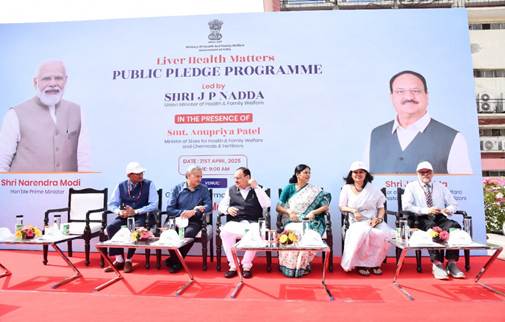
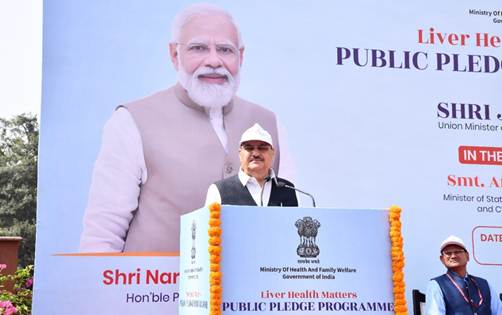
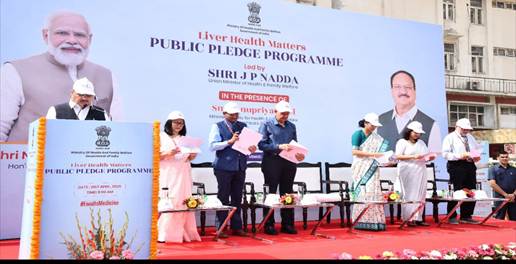
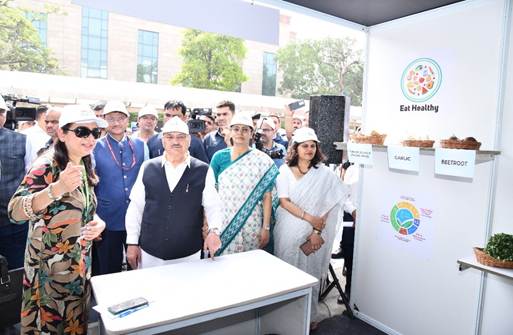
In observance of World Liver Day 2025, the Union Minister of Health and Family Welfare, Shri Jagat Prakash Nadda led the “Liver Health Pledge Ceremony” at the health camp organized by the Ministry, at Nirman Bhawan, today. Smt. Anupriya Patel, Union Minister of State for Health and Family Welfare, Ms. Punya Salila Srivastava, Union Health Secretary, Prof. (Dr.) Atul Goel, Director General of Health Services, Prof. (Dr.) S.K. Sarin, Director of Institute of Liver and Biliary Sciences, Shri G. Kamala Vardhana Rao, CEO, Food Safety and Standards Authority of India (FSSAI) were also present at the occasion.

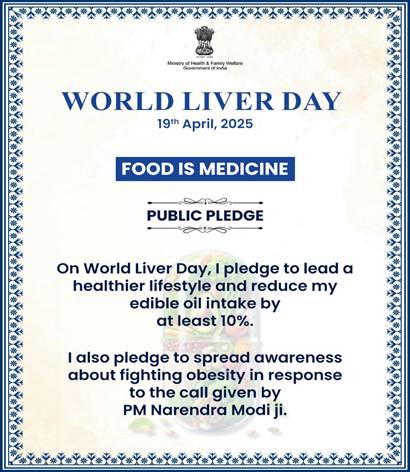
This year’s World Liver Day theme “Food is Medicine”—emphasizes the critical connection between nutrition and liver health.

Addressing the gathering, Union Health Minister stated that “As we all know, the liver is one of the most vital organs of our body that performs essential functions like digestion, detoxification, and energy storage. If the liver is not healthy, the entire body suffers.”

Underlining the importance of Liver health, Shri Nadda stated that “Fatty liver not only impacts liver function but also significantly increases the risk of heart disease, diabetes, hypertension, and even cancer.” He also added that “The good news is that fatty liver is preventable and, to a great extent, reversible through the adoption of a healthy lifestyle and healthy food-habits.”

He emphasized that “Recently, Prime Minister Shri Narendra Modi ji, during his address in “Mann Ki Baat,” appealed to the nation to reduce oil usage in cooking by at least 10%. This small yet powerful step can go a long way in ensuring better liver health and in reducing the burden of Non-Communicable Diseases (NCDs) in the country.” Shri Nadda called upon everyone to take the pledge for “taking care of liver health, get it checked regularly, and adopt a healthy lifestyle.”

At the camp, all participants pledged to make informed food choices, lead healthier lifestyle, reduce edible oil intake by at least 10% and spread awareness about fighting obesity in response to the call given by PM Narendra Modi.

The Ministry, in collaboration with FSSAI and the Institute of Liver and Biliary Sciences (ILBS) and hosted a comprehensive Liver Health Camp for officials and staff of the Ministry. In the Camp, the multidisciplinary team from ILBS—comprising expert doctors, nurses, and technicians offered the following services: clinical examination (including BMI, waist-hip ratio, and blood pressure); laboratory tests (fasting blood glucose, liver function tests, lipid profile, complete blood count, Hepatitis B & C screening); fibroScan for liver fat and fibrosis assessment; body composition analysis and personalized nutritional counselling focusing on reducing oil and processed food intake.

As part of the event, FSSAI set up an informative exhibition showcasing millets and liver-friendly diets, aligning with this year’s theme: “Food is Medicine.”

Highlighting the nutritional value of millets, the stall demonstrated their benefits in maintaining liver health. Rich in dietary fibre, antioxidants and essential micronutrients, millets aid in promoting bile secretion, reducing inflammation, improving lipid profiles and digestion—factors closely linked to liver health. Their inclusion in the daily diet helps prevent liver disorders, including Non-Alcoholic Fatty Liver Disease (NAFLD).

Additionally, the display promoted cruciferous vegetables (like broccoli and cauliflower), leafy greens, fatty fish (rich in omega-3), nuts and seeds, citrus fruits and healthy fats (such as olive oil), known to reduce oxidative stress, support detoxification processes, and maintain overall liver function.

EPFO Adds 16.10 Lakh Net Members during February 2025

| Published on:

The Employees’ Provident Fund Organization (EPFO) has released provisional payroll data for February 2025, revealing a net addition of 16.10 lakh members. The year-on-year analysis reveals a growth of 3.99% in net payroll additions compared to February 2024, signifying increased employment opportunities and heightened awareness of employee benefits, bolstered by EPFO’s effective outreach initiatives.

Key highlights of the EPFO Payroll Data (February 2025) are as follows:

New Subscribers:

EPFO enrolled around 7.39 lakh new subscribers in February 2025. This addition of new subscribers can be attributed to growing employment opportunities, increased awareness of employee benefits, and EPFO’s successful outreach programs.

Age Group 18-25 Leads Payroll Addition:

A noticeable aspect of the data is the dominance of the 18-25 age group, 4.27 lakh new subscribers added in the 18-25 age group, constituting a significant 57.71% of the total new subscribers added in February 2025. This is in consonance with the earlier trend which indicates that most individuals joining the organized workforce are youth, primarily first-time job seekers.

Further, the net payroll addition for the age group 18-25 for February 2025 is approximately 6.78 lakh reflecting a growth of 3.01% from the previous year in February 2024.

Rejoined Members:

Approximately 13.18 lakh members, who had exited earlier, rejoined EPFO in February 2025. This figure depicts a significant 11.85% year-over-year growth compared to February 2024. These members switched their jobs and re-joined the establishments covered under the ambit of EPFO and opted to transfer their accumulations instead of applying for final settlement thus safeguarding long-term financial well-being and extending their social security protection.

Growth in Female Membership:

Around 2.08 lakhs new female subscribers joined EPFO in February 2025. It depicts year-over-year growth of 1.26% compared to February 2024.

Further, the net female payroll addition during the month stood at around 3.37 lakh, a significant year over year growth of 9.23% compared to February 2024. The growth in female member additions is indicative of a broader shift towards a more inclusive and diverse workforce.

State-wise Contribution:

State-wise analysis of payroll data denotes that the top five states/ UTs constitute around 59.75% of net payroll addition, adding a total around 9.62 lakh net payroll during the month. Of all the states, Maharashtra is leading by adding 20.90% of net payroll during the month. The states/UTs of Maharashtra, Tamil Nadu, Karnataka, Gujarat, Haryana, Delhi, Telangana and Uttar Pradesh individually added more than 5% of the total net payroll during the month.

Industry-wise Trends:

Month-on-month comparison of industry-wise data displays growth in the net payroll addition working in establishments engaged in the industries viz.

  1. FISH PROCESSIGN AND NON-VEG FOOD PRESERVATION,
  2. SOCIETIES CLUBS OR ASSOCIATIONS,
  3. ESTABLISHMENTS ENGAGED IN CLEANING, SWEEPING SERVICES,
  4. ESTABLISHMENT ENGAGED IN MANUFACTURE, MARKETING SERVICING, USAGE OF COMPUTERS,
  5. ESTABLISHMENTS OF AIRCRAFT OR AIRLINES,

Of the total net payroll addition, around 41.72% addition is from expert services (consisting of manpower suppliers, normal contractors, security services, miscellaneous activities etc.).

The above payroll data is provisional since data generation is a continuous exercise, as updating employee record is a continuous process. The previous data gets updated every month on account of:

  1. ECRs being filed for previous months after generation of payroll report.
  2. ECRs filed earlier being modified after generation of payroll reports.
  3. Date of exit from EPF membership for previous months being updated after generation of payroll report.

From the month of April 2018, EPFO has been releasing payroll data covering the period September 2017 onwards. In monthly payroll data, the count of members joining EPFO for the first time through Aadhaar validated Universal Account Number (UAN), existing members exiting from coverage of EPFO and those who exited but re-joined as members, is taken to arrive at net monthly payroll.

PM to address programme marking Civil Services Day on 21st April

| Published on:

On the occasion of 17th Civil Services Day, Prime Minister Shri Narendra Modi will address Civil Servants on 21st April, at around 11 AM, at Vigyan Bhawan, New Delhi. He will also confer the Prime Minister’s Awards for Excellence in Public Administration.

Prime Minister has always encouraged Civil Servants across India to dedicate themselves to the cause of citizens, be committed to public service and strive towards excellence in their work. This year, 16 awards will be given by the Prime Minister in the categories of Holistic Development of Districts, Aspirational Blocks Programme and Innovation to civil servants. They will be recognised for work done for the welfare of common citizens through this.

Assam Chief Minister meets Prime Minister

| Published on:

The Chief Minister of Assam, Shri Himanta Biswa Sarma met the Prime Minister Shri Narendra Modi in New Delhi today.

The PMO India handle on X posted:

“Chief Minister of Assam, Shri @himantabiswa, met Prime Minister @narendramodi.

@CMOfficeAssam”

PM urges citizens to embrace mindful eating and combat Obesity on World Liver Day

| Published on:

On the occasion of World Liver Day, the Prime Minister Shri Narendra Modi urged all citizens to adopt mindful eating practices and prioritize healthier living. Stressing the importance of small yet impactful changes, the Prime Minister highlighted that measures such as reducing oil intake can significantly contribute to improving overall health and well-being.

Responding to a post by Union Minister, Shri JP Nadda on X, Shri Modi said:

“Commendable effort to mark #WorldLiverDay with a call for mindful eating and healthier living. Small steps like reducing oil intake can make a big difference.  Together, let’s build a fitter, healthier India by raising awareness about obesity. #StopObesity”

Union Home Minister attends the program organized by ILBS on World Liver Day in New Delhi 

| Published on:

Union Home Minister and Minister of Cooperation Shri Amit Shah attended the program organized by Institute of Liver and Biliary Sciences (ILBS) on the occasion of World Liver Day in New Delhi today as the Chief Guest. Many dignitaries including Delhi Lieutenant Governor Shri Vinay Kumar Saxena and Chief Minister Smt. Rekha Gupta were present on the occasion.

In his address, Union Home Minister and Minister of Cooperation Shri Amit Shah said that the liver plays a very important role in our body and in keeping it healthy. Among all the organs in our body, the liver has the greatest ability to regenerate and healthy liver is the gateway to a healthy body. He said that today on the occasion of ‘World Liver Day’, everyone should take a pledge to keep their ‘liver’ healthy with awareness, diligence and complete information. Sharing his experience of a healthy lifestyle, Home Minister said that there has been a huge change in his life since May 2020. Shri Shah said that Young people can achieve a lot in their lives with water, diet, exercise and sleep as per the requirement of the body.

Shri Amit Shah said that Prime Minister Shri Narendra Modi has set before the country the goal of making India developed in 2047, coinciding with the centenary of independence, where India will be self-reliant in every field and will lead the world. He said that the concept of a developed India cannot be realised by being unwell and that is why it is very important that every citizen remains healthy.

Union Home Minister said that today the HEALED scheme has been launched by ILBS and this innovative initiative of HEALED scheme by ILBS will be successful in spreading awareness in the country towards keeping the ‘liver’ healthy. He said that every person should also get Vitamin E tested during regular health checkup. Shri Shah said that today the whole world is moving forward by accepting the mantra given in our Vedas ‘Aahaar Hi Aushdhi Hai’. He said that Prime Minister Shri Narendra Modi has launched many programs in the last 10 years to keep the countrymen healthy with a holistic approach.

He said that the Ministry of AYUSH is working to develop a system so that we do not fall ill. Shri Shah said that today even big allopathic hospitals are opening AYUSH wings. The mental and physical health of a person was included in the idea of ​​​​World Yoga Day. He said that today the Modi government is bearing the entire cost of treatment up to Rs 5 lakh for crores of people of the country. The government is also bearing all expenses up to Rs 5 lakh for the treatment of citizens above 70 years of age.

Shri Amit Shah said that the Modi government has spent 65 thousand crore rupees to build the health infrastructure in the country and has made arrangements to make every Primary Health Center (PHC) and Community Health Center (CHC) a complete unit. He said that for generic medicines, a network of more than 15 thousand Jan Aushadhi Centers has been created in the country and through these centres medicines are available up to 80 percent cheaper. Under Mission Indradhanush, arrangements have been made for free vaccination of children from birth to the age of 15 years and 1 crore 32 lakh mothers were also vaccinated. Shri Shah said that under the e-Sanjeevani app, the work of providing more than 30 crore 90 lakh digital medical consultations from big health institutions in rural areas across the country has been carried out. Shri Shah said that in 2014 there were 7 AIIMS in the country, today the number has reached 23, there were 387 medical colleges in 2014, today it stands at 780, there were 51 thousand MBBS seats which have increased to 1 lakh 18 thousand today and now 75 thousand more seats are going to be increased. Along with this, there were 31 thousand PG seats which have increased to 74 thousand today. He said that in 2014 the country’s health budget was 37 thousand crore rupees which has been increased to 1 lakh 27 thousand crore rupees by Prime Minister Modi today.

Union Home Minister and Minister of Cooperation said that over the past 10 years, Prime Minister Shri Narendra Modi has created a comprehensive framework for the health of the country’s 1.3 billion citizens. He said, all countrymen should take good diet, adequate water, adequate sleep and regular exercise, the rest Modi government will take the responsibility of taking care of your health. Home Minister requested the corporate world of the country to give importance to the promotion of healthy liver in their Corporate Social Responsibility (CSR) initiatives and help the organizations working for healthy liver. He also appealed to the media to spread awareness about health along with entertainment. Shri Shah said that ILBS should tie itself up with AIIMS and major government hospitals across the country to make arrangements for guidance of liver patients and spread awareness about it.

Ashwini Vaishnaw holds consultations with news media organisations ahead of WAVES 2025

| Published on:

The world of creators and their economy is going through a fundamental change. Union Minister of Information & Broadcasting, Shri Ashwini Vaishnaw said this while interacting with the news media today ahead of the maiden World Audio Visual & Entertainment Summit scheduled in Mumbai from 1st to 4th May. The interaction was attended by about 20 media houses from the national as well as regional news media. Talking on the challenges faced, the Union Minister said that with the advent of technology, the old model is giving way to the new model, creating opportunities as well as challenges. The shape of the media world  is changing, he said and stressed on the collective need as a country to respond to the new model. Giving an example, he said that gone are the days when a big studio was needed for creating content. Today a creator from a remote village from Jharkhand or Kerala can create good quality and get millions of views.

He mentioned that the creator’s economy is growing exponentially. The Minister said that our visionary Prime Minister acknowledged the work of the creators and their contribution in the economy by promoting India’s soft power globally. WAVES seeks to evolve itself as a global platform for media & entertainment, just as Davos serves as a global platform for economic policies, he added. .

India’s creative economy has received an overwhelming boost, with more than 1 lakh registrations for WAVES 2025. The top innovators will be honoured with Awards, celebrating their contributions to the evolving global media and entertainment landscape.  Shri Vaishnaw said, we are finding a way to connect the world with our creators. WAVES is emerging as a global connector between creators, buyers, and markets for scalable creative solutions, the Minister said. Through WAVES, buyers and sellers are getting a platform, where creators can offer their content & firms can source quality creative work.

Participating in the interaction, heads of various media organisations congratulated the Government for conceptualising a novel concept in the form of WAVES to bring policy makers, creators, industry stalwarts, tech giants and start ups in the M&E sector on one platform.

Secretary, Ministry of Information & Broadcasting, Shri Sanjay Jaju welcomed all the participants and dignitaries, highlighting the significance of collective dialogue in shaping the future of the media landscape. He emphasized the Ministry’s commitment to engaging with stakeholders across platforms and appreciated the active participation of media organizations in the lead-up to WAVES 2025.