Prime Minister lauds Delhi Government for implementing PM-ABHIM

| Published on:

The Prime Minister Shri Narendra Modi today lauded the Delhi Government for implementing the Pradhan Mantri Ayushman Bharat Health Infrastructure Mission (PM-ABHIM) and for starting the distribution of Ayushman Bharat cards under Pradhan Mantri Jan Arogya Yojana (PM-JAY).

Responding to a post by Chief minister of Delhi on X, Shri Modi said:

“दिल्ली के हेल्थ सेक्टर से जुड़ा एक क्रांतिकारी कदम! डबल इंजन सरकार का यह मिशन यहां के मेरे लाखों भाई-बहनों के लिए बेहद फायदेमंद होने वाला है। मुझे बहुत खुशी है कि दिल्लीवासी भी अब आयुष्मान योजना के तहत अपना इलाज करा पाएंगे।”

Prime Minister pays tributes to Bhagwan Mahavir on Mahavir Jayanti

| Published on:

The Prime Minister, Shri Narendra Modi paid tributes to Bhagwan Mahavir on the occasion of Mahavir Jayanti today. Shri Modi said that Bhagwan Mahavir always emphasised on non-violence, truth and compassion, and that his ideals give strength to countless people all around the world. The Prime Minister also noted that last year, the Government conferred the status of Classical Language on Prakrit, a decision which received a lot of appreciation.

In a post on X, the Prime Minister said;

“We all bow to Bhagwan Mahavir, who always emphasised on non-violence, truth and compassion. His ideals give strength to countless people all around the world. His teachings have been beautifully preserved and popularised by the Jain community. Inspired by Bhagwan Mahavir, they have excelled in different walks of life and contributed to societal well-being.

Our Government will always work to fulfil the vision of Bhagwan Mahavir. Last year, we conferred the status of Classical Language on Prakrit, a decision which received a lot of appreciation.”

Armed Forces must operate jointly & remain future-ready in today’s ever-evolving multi-domain environment: Raksha Mantri

| Published on:

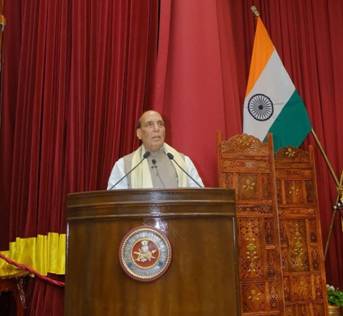
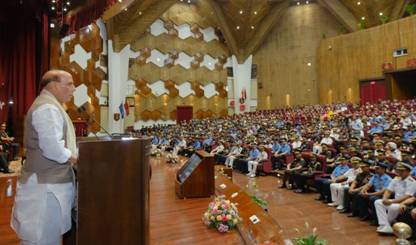
“Armed Forces must operate jointly and remain future-ready in today’s ever-evolving multi-domain environment where cyber, space & information warfare etc. are as potent as conventional operations,” said Raksha Mantri Shri Rajnath Singh while addressing the Armed Forces officers of India and friendly countries during the Convocation Ceremony of the 80th Staff Course of Defence Services Staff College (DSSC), Wellington, Tamil Nadu on April 10, 2025.

Raksha Mantri pointed out that today’s global geopolitics is being redefined by three key metrics: a major pivot towards prioritising national security, a technological tsunami sweeping the global landscape, and accelerating innovation. He urged the officers to study the nuances of these trends in-depth to stay ahead on strategic-military change curve, adding that Prime Minister Shri Narendra Modi-led Government is leaving no stone unturned to transform the Armed Forces into a technologically-advanced combat-ready force capable of multi-domain integrated operations.

Highlighting that Artificial Intelligence and other emerging technologies are revolutionising deterrence and war-fighting in critical ways, Shri Rajnath Singh termed the power of technological innovation in combat theatres as breathtaking. “In the Ukraine-Russia conflict, drones have virtually emerged as a new arm, if not a transformative science. The majority of losses of soldiers and equipment have been attributed neither to traditional artillery nor to armour but to drones. Similarly, space capacities in the Low Earth Orbit are transforming military intelligence, persistent surveillance, positioning, targeting and communications, thus taking combat to a new high,” he said.

Raksha Mantri stressed that the world is in the age of Grey Zone and Hybrid warfare where cyber-attacks, disinformation campaigns, and economic warfare have become tools that can achieve politico-military aims without a single shot being fired. He added that India faces persistent threats along its borders, which are further compounded by the challenge of proxy war and terrorism emanating from its neighbourhood.

Shri Rajnath Singh also spoke of the impact of the conflict in West Asia and the geopolitical tensions in the Indo-Pacific on the overall security calculus, in addition to non-traditional security threats such as natural disasters and climate change. He stressed on the need to vigorously pursue the transformation of the Armed Forces to remain capable and relevant for future wars, stating that PM Modi’s vision of Viksit Bharat by 2047 rests firmly on two foundational pillars – Surakshit Bharat and Sashakt Bharat.

Raksha Mantri pitched for the development and modernisation of the Armed Forces through self-reliance. “Lessons of the ongoing conflicts teach us that building a resilient, indigenous, and future-ready defence technological & manufacturing ecosystem is not an option, but a strategic necessity. There is a need to develop low-cost high-tech solutions and enhance the fighting capability of the Armed Forces. Our forces must not only keep pace with technological changes, but also lead it,” he said.

Shri Rajnath Singh also batted for enhanced synergy among all components to ensure national security. Fostering a ‘Whole of Nation’ approach while undertaking actions in the entire spectrum of diplomatic, informational, military, economic and technological domains is key to ensuring success in this endeavour, he said.

Referring to the Prime Minister’s vision of ‘MAHASAGAR’ (Mutual and Holistic Advancement for Security and Growth Across Regions) for the Global South, Raksha Mantri stated that achieving a better future and prosperity for the nations will always remain a collective pursuit. “Increasing connectivities and dependencies among countries and people implies that the multitude of challenges are better faced together than individually. Mutual interests and synergies will help us achieve our goal at sub regional, regional and even global levels,” he said.

Shri Rajnath Singh exhorted the officers to focus on five ‘A’s – Awareness, Ability, Adaptability, Agility and Ambassadors – to tackle future challenges. “As warfighters and protectors of national security, you need to remain aware of the environment and its implications. You must acquire the ability and skill set required by future leaders. You must imbibe adaptability and agility as key virtues. The battlefield of tomorrow will require leaders who can adapt to unforeseen circumstances, leverage technology to their advantage and come out with innovative solutions. You must become Ambassadors of your respective Armed Forces. Be an ambassador of change and the perfect role model amongst the society at large,” he added.

Raksha Mantri began his address by expressing solidarity and support of the people of India to Myanmar and Thailand in the wake of the recent massive earthquake. “India has always stood by its friends as a first responder in times of crisis and we consider it as our duty to be able to deliver timely relief to the people of Myanmar,” he said.

The 80th Staff Course comprises 479 student officers, including 38 personnel from 26 friendly countries. Three women officers are also participating in the course.

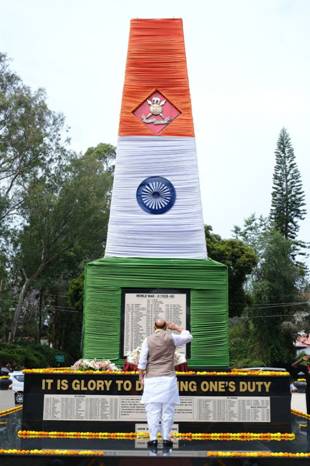
Ahead of the ceremony, Shri Rajnath Singh laid a wreath at the Madras Regiment War Memorial and paid homage to the bravehearts. He also interacted with the veterans, acknowledging their invaluable contributions to the nation. Chief of Defence Staff General Anil Chauhan was among the dignitaries present on the occasion.

Established in 1948, DSSC is a premier Tri-service training institution that imparts professional education to select middle-level officers of the Indian Armed Forces and friendly countries. It aims to enhance their professional competencies for assuming higher responsibilities. Over the years, more than 19,000 Indian officers and 2,000 international officers have graduated from DSSC, many of whom have risen to become heads of states and military forces worldwide.

Union Home Minister addresses Annual Trade Expo 2025 of Gujarat Chamber of Commerce and Industry

| Published on:

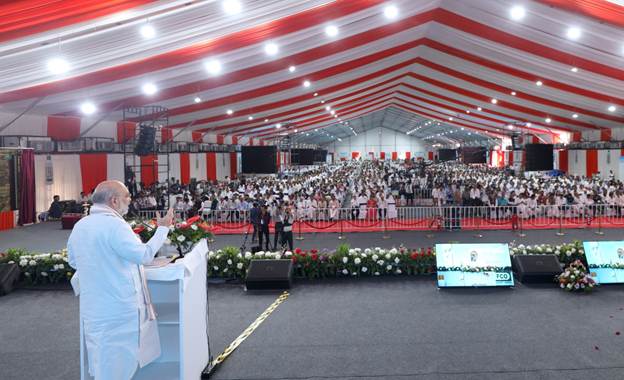
Union Home Minister and Minister of Cooperation Shri Amit Shah today addressed the inaugural session of theAnnual Trade Expo 2025 of Gujarat Chamber of Commerce and Industry via video conferencing. On this occasion, several dignitaries, including the Chief Minister of Gujarat, Shri Bhupendra Patel, were present.

In his address, Union Home Minister and Minister of Cooperation Shri Amit Shah said that the Gujarat Chamber of Commerce and Industry has played a very important role in the development of Gujarat. He mentioned that the foundation of the Chamber was laid under the leadership of Kasturbhai Sheth. Shri Shah said that the Chamber has inspired the youth with entrepreneurship, courage, and the enthusiasm to do business anywhere in the world. He further stated that for 75 consecutive years, the Chamber has upheld that tradition, maintained dialogue with the government, cared for public interest, and stood shoulder to shoulder with the people during natural calamities.

Shri Amit Shah said that the Chamber, having completed its 75-year journey, is now moving toward the milestone of 100 years. He emphasized that the leadership of the Chamber should professionally prepare a roadmap for this journey from 75 to 100 years and align it with Gujarat’s development to take it forward. He stated that to ensure the spirit of industrial entrepreneurship remains alive and is further encouragedamong Gujarat’s youth, the Chamber should formulate a plan.

He pointed out that MSMEs are our greatest asset, and if we look back, every major industry has once begun as a small-scale enterprise. Shri Shah said that Gujarat’s small industries have made a significant contribution to the nation’s industrial growth. He added that the Gujarat Chamber of Commerce and Industry should integrate the tradition of small industries with startups and modernize it to create a comprehensive ecosystem for the youth. He said, the Chambershould act as a bridge between the government, small industries, and aspiring young entrepreneurs.

Union Home Minister and Minister of Cooperation said that if the Chamber wants to remain relevant in the times to come, it must go beyond just organizing events and instead establish a permanent mechanism within the Chamber to support industries, industrial entrepreneurs, and industrialists. He stated that if the Chamber’s office bearers create such a system in collaboration with professionals, the relevance of the Chamber can be sustained for the next 25 years. He further added that the Chamber can easily serve as a bridge between the government and new industrialists, the government and the youth, and the government and the industrialists who are eager to contribute to development.

Union Home Minister Shri Amit Shah stated that Gujarat today showcases a vibrant and diverse industrial ecosystem—ranging from traditional industries to cutting-edge technology, IT, infrastructure, MSMEs, startups, and pioneering sectors. He emphasized that entrepreneurs looking to establish industries in Gujarat are assured of a business-friendly environment, free from political interference, supported by efficient systems and a strike-free atmosphere. Shri Shah recalled that during Shri Narendra Modi’s tenure as Chief Minister, the Gujarat government prioritized inclusive decision-making by engaging in meaningful dialogue with traders, industrialists, and small business owners through the Chamber of Commerce. He noted that Chief Minister Shri Bhupendra Patel has further strengthened this pro-industry environment. He also highlighted Shri Modi’s visionary policy that robust infrastructure is the foundation of a strong economy, and a strong economy, in turn, enhances the quality of life for every citizen. As a result, Gujarat today plays a vital role in India’s growth story and is emerging as a gateway to the global economy.

Union Home Minister said that the Chamber is advancing with the motto of ‘Gujarat’s Vision – Global Ambition’. He highlighted that over 300 individuals from diverse sectors and fields of innovation have been invited to participate in the expo that commenced today. He said that since its inception in 1949, the Chamber has made an exceptional contribution to Gujarat’s development. With more than 75 institutions and over 2.5 lakh small industrial organizations associated with it, the Chamber has played a pivotal role in shaping the state’s industrial landscape. The Home Minister emphasized the Chamber’s dedicated efforts toward realizing the motto ‘Grow Business and Transform Gujarat’, and its consistent, effective dialogue with the government. He also acknowledged the Chamber’s significant contribution to the global recognition and success of the Vibrant Gujarat initiative. Shri Shah remarked that the Chamber has been instrumental in Gujarat’s remarkable journey—from the devastating earthquake of 2001 to its emergence in 2025 as a hub for pioneering industries.

Shri Amit Shah highlighted that Gujarat has been a pioneer in launching several transformative initiatives across the country. He stated that the concept of smart infrastructure was first envisioned in Gujarat, and the state led the way by ensuring 24-hour electricity supply in villages. Gujarat also took the early initiative to position itself as a global financial hub. He added that in 2009, Gujarat launched the e-Gram project, bringing inter-connectivity and digital services to rural areas. The state also made significant strides in reducing maternal mortality rates. Shri Shah emphasized that all these achievements were made possible under the visionary leadership of Prime Minister Shri Narendra Modi.

Union Home Minister and Minister of Cooperation said that under the leadership of Prime Minister Shri Narendra Modi, India has made remarkable progress over the past 11 years, advancing in various sectors and emerging as a global leader across multiple domains. He emphasized that these achievements have been possible due to the holistic, multidimensional, and whole-of-government approach adopted under Shri Modi’s leadership. He also acknowledged that Chief Minister Shri Bhupendra Patel has played a key role in firmly upholding and continuing this tradition of development and good governance in Gujarat.

Shri Amit Shah stated that Gujarat has emerged as a pioneer in all the key sectors that will shape the global economy over the next 25 years. He highlighted that the world’s largest renewable energy park has been established in Kutch, while the largest greenfield project—Dholera Smart City—is taking shape in the state. He also mentioned that the Surat-Chennai Expressway, India’s second-longest expressway, originates in Gujarat. Moreover, India’s first international financial hub, GIFT City, has been developed in Gujarat, along with the country’s first bullet train project and the first Namo Bharat Rapid Rail. Shri Shah further emphasized that Chief Minister Shri Bhupendra Patel has provided Gujarat with a robust industrial development infrastructure, progressive policies, and an industry-friendly governance model.

PM inaugurates the Navkar Mahamantra Divas

| Published on:

Prime Minister Shri Narendra Modi inaugurated and participated in Navkar Mahamantra Divas at Vigyan Bhawan, New Delhi today. Addressing the gathering, he highlighted the profound spiritual experience of the Navkar Mantra, emphasizing its ability to bring peace and stability to the mind. He remarked on the extraordinary feeling of tranquility, which transcends words and thoughts, resonating deeply within the mind and consciousness. Shri Modi underscored the significance of the Navkar Mantra, reciting its sacred verses and described the mantra as a unified flow of energy, embodying stability, equanimity, and a harmonious rhythm of consciousness and inner light. Reflecting on his personal experience, he shared how he continues to feel the spiritual power of the Navkar Mantra within himself. He recalled witnessing a similar collective chanting event in Bengaluru years ago, which left a lasting impression on him. The Prime Minister highlighted the unparalleled experience of millions of virtuous souls across the nation and abroad coming together in a unified consciousness. He remarked on the collective energy and synchronized words, describing it as truly extraordinary and unprecedented.

Remarking on his roots in Gujarat, where the influence of Jainism is evident in every street, the Prime Minister highlighted how, from a young age, he had the privilege of being in the company of Jain Acharyas. “Navkar Mantra is not just a mantra but the core of faith and the essence of life”, he emphasised. He underlined its significance, which extends beyond spirituality, guiding individuals and society alike. He highlighted that every verse and even every syllable of the Navkar Mantra holds profound meaning. He added that when reciting the mantra, one bows to the Panch Parmeshthi and elaborated on the same. Shri Modi said Arihants, who have attained “Keval Gyan” and guide “Bhavya Jeevas,” embody 12 divine qualities while the Siddhas, who have eradicated eight karmas, attained Moksha, and possess eight pure qualities. He added that Acharyas follow Mahavrat and serve as pathfinders, embodying 36 virtues while Upadhyayas impart knowledge of the Moksha path, enriched with 25 qualities. He further added that Sadhus refine themselves through penance and progress toward Moksha, possessing 27 great qualities. He highlighted the spiritual depth and virtues associated with each of these revered beings.

“One bows to the 108 divine qualities and remembers the welfare of humanity when reciting the Navkar Mantra”, said Shri Modi highlighting that the mantra reminds us that knowledge and action are the true directions of life, with the Guru as the guiding light, and the path emerging from within. He emphasized the teachings of the Navkar Mantra, which inspire self-belief and the initiation of one’s own journey. He stated that the true enemy lies within—negative thoughts, distrust, hostility, and selfishness—and conquering these is the real victory. He underlined that Jainism motivates individuals to conquer themselves rather than the external world. “Self-conquest leads one to become an Arihant”, he added, stating that the Navkar Mantra is not a demand but a path—a path that purifies individuals from within and guides them toward harmony and goodwill.

“Navkar Mantra is truly a mantra of human meditation, practice, and self-purification”, exclaimed the Prime Minister highlighting its global perspective and its timeless nature, which, like other Indian oral and scriptural traditions, has been passed down through generations—first orally, then through inscriptions, and finally through Prakrit manuscripts—continuing to guide humanity even today. “The Navkar Mantra, along with venerating the Panch Parmeshthi, embodies right knowledge, right perception, and right conduct, serving as a path to liberation”, he emphasised. Underlining the importance of the nine elements of life, which lead to completeness, Shri Modi noted the special significance of the number nine in Indian culture. He elaborated on the prominence of the number nine in Jainism, mentioning the Navkar Mantra, nine elements, and nine virtues, as well as its presence in other traditions, such as the nine treasures, nine gates, nine planets, nine forms of Durga, and Navadha Bhakti. He highlighted that the repetition of chants—whether nine times or in multiples of nine like 27, 54, or 108—symbolizes the completeness represented by the number nine. The Prime Minister explained that the number nine is not just mathematics but a philosophy, as it represents completeness. He remarked that after achieving completeness, the mind and intellect stabilize and ascend, free from the desire for new things. Even after progress, one remains rooted in their essence and this is the essence of the Navkar Mantra, he stated.

Underlining that the philosophy of the Navkar Mantra aligns with the vision of a developed India, the Prime Minister reiterated his statement from the Red Fort, emphasizing that a developed India signifies both progress and heritage—a nation that will neither stop nor falter, will reach new heights, yet remain rooted in its traditions. He highlighted that a developed India will take pride in its culture. He emphasized the preservation of the teachings of the Tirthankaras. Recalling the nationwide celebration of the 2550th Nirvana Mahotsav of Lord Mahavir, Shri Modi noted the return of ancient idols, including those of the Tirthankaras, from abroad.  He proudly shared that over 20 Tirthankara idols have been brought back to India in recent years. He highlighted the unparalleled role of Jainism in shaping India’s identity and reaffirmed the government’s commitment to preserving this legacy. Referring to the new Parliament building in New Delhi, describing it as the temple of democracy, he pointed out the visible influence of Jainism. He mentioned the depiction of Sammed Shikhar in the architectural gallery at the Shardul Gate entrance, the Tirthankara idol at the entrance of the Lok Sabha, which was returned from Australia, the magnificent painting of Lord Mahavir on the ceiling of the Constitution Gallery and the depiction of all 24 Tirthankaras together on the wall of the South Building. The Prime Minister remarked that these philosophies guide India’s democracy and provide the right path. He highlighted the profound definitions of Jainism, encapsulated in ancient Agama scriptures, such as “Vatthu Sahavo Dhammo,” “Charittam Khalu Dhammo,” and “Jivana Rakkhanam Dhammo.” He reaffirmed that the government is advancing with the mantra of “Sabka Saath, Sabka Vikas,” inspired by these values.

“Jain literature has been the backbone of India’s intellectual heritage, and preserving this knowledge is a duty”, said Shri Modi, highlighting the government’s decision to grant classical language status to Prakrit and Pali, enabling further research on Jain literature. He emphasized that preserving language ensures the survival of knowledge, and expanding language leads to the growth of wisdom. The Prime Minister noted the existence of centuries-old Jain manuscripts in India, describing each page as a mirror of history and an ocean of knowledge, quoting profound Jain teachings. He expressed concern over the gradual disappearance of many significant texts and mentioned the launch of the “Gyan Bharatam Mission”, announced in this year’s Budget. He shared plans to survey millions of manuscripts across the country and digitize ancient heritage, connecting antiquity with modernity. He described this initiative as an ‘Amrit Sankalp’. “New India will explore possibilities through AI while guiding the world with spirituality”, he stressed.

Highlighting that Jainism is both scientific and sensitive, offering solutions to global challenges such as war, terrorism, and environmental issues through its core principles, the Prime Minister said the Jain tradition’s emblem, which states “Parasparopagraho Jivanam,” emphasises the interdependence of all living beings. He underscored Jainism’s commitment to non-violence, even at the most subtle levels, as a profound message of environmental conservation, mutual harmony, and peace. He acknowledged the five major principles of Jainism and emphasized the relevance of the philosophy of Anekantavada in today’s era. He stated that belief in Anekantavada prevents situations of war and conflict, fostering understanding of others’ emotions and perspectives. He emphasized the need for the world to embrace the philosophy of Anekantavada.

Underscoring that the world’s trust in India is deepening, with India’s efforts and results becoming a source of inspiration, Shri Modi highlighted that global institutions are now looking towards India because of its progress, which opens pathways for others. He connected this to the Jain philosophy of “Parasparopagraho Jivanam,” emphasizing that life thrives on mutual cooperation. He noted that this perspective has raised global expectations from India, and the nation has intensified its efforts. Addressing the pressing issue of climate change, he identified sustainable lifestyles as the solution and highlighted India’s launch of Mission LiFE. He remarked that the Jain community has been living the principles of simplicity, restraint, and sustainability for centuries. Referring to the Jain principle of Aparigraha, he emphasized the need to spread these values widely. He urged everyone, regardless of their location, to become flag bearers of Mission LiFE.

Prime Minister remarked that in today’s world of information, knowledge is abundant, but without wisdom, it lacks depth. He emphasized that Jainism teaches the balance of knowledge and wisdom to find the right path. He highlighted the importance of this balance for the youth, where technology must be complemented by human touch, and skills must be accompanied by the soul. He stated that the Navkar Mahamantra can serve as a source of wisdom and direction for the new generation.

Shri Modi urged everyone to take nine resolutions after the collective chanting of the Navkar Mantra. The first resolution being ‘Water Conservation’, he recalled the words of Buddhi Sagar Maharaj Ji, who predicted 100 years ago that water would be sold in shops. He emphasized the need to value and save every drop of water. The second resolution is to ‘plant a tree in Mother’s Name’. He highlighted the planting of over 100 crore trees in recent months and urged everyone to plant a tree in their mother’s name and nurture it like her blessings. He also recollected his efforts in Gujarat in this regard to plant 24 trees related to 24 Tirthankaras which could not be completed due to non-availability of few trees. Stressing the importance of cleanliness in every street, neighborhood, and city, urging everyone to contribute to this mission, Shri Modi mentioned ‘cleanliness mission’ as the third resolution. ‘Vocal for Local’ being the fourth resolution, he encouraged the promotion of locally made products, turning them global, and supporting items that carry the essence of Indian soil and the sweat of Indian workers. The fifth resolution is to ‘explore India’ and he urged people to explore India’s diverse states, cultures, and regions before traveling abroad, emphasizing the uniqueness and value of every corner of the country. ‘Adopting Natural Farming’ being the sixth resolution, the Prime Minister referred to the Jain principle of One living being should not harm another and called for freeing Mother Earth from chemicals, supporting farmers, and promoting natural farming. He proposed ‘Healthy Lifestyle’ as the seventh resolution and advocated for a return to Indian dietary traditions, including millets (Shri Anna), reducing oil consumption by 10%, and maintaining health through moderation and restraint. He proposed ‘Incorporating Yoga and Sports’ as the eighth resolution and emphasized making yoga and sports a part of daily life, whether at home, work, school, or parks, to ensure physical health and mental peace. Highlighting the importance of assisting the underprivileged, whether by holding a hand or filling a plate, as the true essence of service, he proposed ‘Helping the Poor’ as the ninth and final resolution. He emphasised that these resolutions align with the principles of Jainism and the vision of a sustainable and harmonious future. “These nine resolutions will infuse new energy into individuals and provide a fresh direction to the younger generation. Their implementation will foster peace, harmony, and compassion within society”, he added.

Noting that the principles of Jainism, including Ratnatraya, Daslakshan, Solah Karan, and the festivals like Paryushan, pave the way for self-welfare, Shri Modi expressed confidence that the World Navkar Mantra Day will continuously enhance happiness, peace, and prosperity globally. He expressed satisfaction at the unity displayed by all four sects coming together for this event, describing it as a symbol of unity, emphasising the importance of spreading the message of unity across the nation. He stated that anyone who chants “Bharat Mata Ki Jai” should be embraced and connected, as this energy strengthens the foundation of a developed India.

Prime Minister expressed gratitude for the blessings of Guru Bhagwants being received at various locations across the country. He extended his respects to the entire Jain community for organizing this global event. He offered his salutations to Acharya Bhagwants, Muni Maharajs, Shravak-Shravikas, and all those participating in the event from across India and abroad. He congratulated JITO for their efforts in organizing this historic event and acknowledged the presence of Home Minister of Gujarat, Shri Harsh Sanghavi, JITO Apex Chairman Shri Prithviraj Kothari, President Shri Vijay Bhandari, other JITO officials, and dignitaries from around the world, extending his best wishes for the success of this remarkable event.

Background

Navkar Mahamantra Divas is a momentous celebration of spiritual harmony and ethical consciousness that seeks to unite people through the collective chanting of the Navkar Mahamantra—the most revered and universal chant in Jainism. Rooted in the principles of non-violence, humility, and spiritual elevation, the mantra pays homage to the virtues of enlightened beings and inspires inner transformation. The Divas encourages all individuals to reflect on the values of self-purification, tolerance, and collective well-being.

People from more than 108 countries joined the global chant for peace and togetherness. They participated to foster peace, spiritual awakening, and universal harmony through the sacred Jain chant.


Prime Minister meets Crown Prince of Dubai

| Published on:

The Prime Minister, Shri Narendra Modi met with His Highness Sheikh Hamdan bin Mohammed bin Rashid Al Maktoum, the Crown Prince of Dubai in New Delhi. Shri Modi reaffirmed commitment to strengthen India-UAE Ties. He also said that Dubai has played a key role in advancing the India-UAE Comprehensive Strategic Partnership.

The Prime Minister wrote on X;

“Glad to meet HH Sheikh Hamdan bin Mohammed bin Rashid Al Maktoum, the Crown Prince of Dubai. Dubai has played a key role in advancing the India-UAE Comprehensive Strategic Partnership. This special visit reaffirms our deep-rooted friendship and paves the way for even stronger collaboration in the future.

PM interacts with MUDRA Yojana beneficiaries

| Published on:

The Prime Minister Shri Narendra Modi interacted with MUDRA Yojana beneficiaries on the occasion of completion of 10 years of Pradhan Mantri Mudra Yojana at 7, Lok Kalyan Marg in New Delhi today. He extended his heartfelt gratitude to all attendees, emphasizing the cultural significance of welcoming guests and the sanctity their presence brings to a home. He invited participants to share their experiences. Shri Modi, interacting with a beneficiary who has turned a pet supplies, medicines, and services entrepreneur, highlighted the importance of expressing gratitude to those who believed in one’s potential during challenging times. He asked the beneficiary to invite the bank officials who had approved loans and showcase the progress made due to the loan. Shri Modi emphasized that such actions would not only acknowledge their trust but also inspire confidence in their decision to support individuals who dared to dream big. He further noted that demonstrating the outcomes of their support would undoubtedly make them feel proud of their contribution to fostering growth and success.

Speaking to Shri Gopi Krishna, an entrepreneur from Kerala, the Prime Minister highlighted the transformative impact of the Pradhan Mantri Mudra Yojana which enabled him to transition into a successful entrepreneur, focusing on renewable energy solutions for households and offices while creating job opportunities. The Prime Minister noted the beneficiary’s journey, after deciding to resign from his company in Dubai upon learning about the Mudra Loan. He noted that the solar installations under the PM Surya Ghar initiative were completed within two days. He also heard about the reactions of beneficiaries of the PM Surya Ghar initiative, noting that households in Kerala now enjoy free electricity despite challenges such as heavy rainfall and dense tree cover. Shri Krishna remarked that electricity bills, previously around ₹3,000, have now reduced to ₹240-₹250, while his monthly earnings have reached ₹2.5 lakh and above.

The Prime Minister further interacted with a female entrepreneur and the founder of House of Puchka from Raipur, Chattishgarh, who shared her inspiring journey from cooking at home to establishing a successful café business. She said that research into profit margins and food cost management played a crucial role in this entrepreneurial success. She further added that there is fear in the minds of the youth, stating that many prefer settling into jobs rather than taking risks. The Prime Minister in response, highlighted the importance of risk-taking capacity and shared that the founder of House of Puchka, at the age of 23, leveraged her ability to take risks and her time effectively to build her business. The beneficiary remarked on the discussions among friends from Raipur, the corporate world, and students, noting their curiosity and questions about entrepreneurship. She further highlighted the lack of awareness among youth regarding government schemes that provide funding without requiring collateral. She expressed gratitude that schemes like Mudra Loan and PMEGP Loan offer significant opportunities for those with potential and encouraged the youth to research these schemes and take bold steps, stating that the sky has no limits for those willing to grow and succeed.

Another beneficiary, Shri Mudassir Naqshbandi, the owner of Bake My Cake in Baramulla, Kashmir, shared his journey of transitioning from being a job seeker to a job creator, adding that he has provided stable employment to 42 individuals from remote areas of Baramulla. The Prime Minister enquired about his earnings before receiving MUDRA loan, to which Mudassir replied that his earnings were in thousands, but his entrepreneurial journey has now elevated him to earning in lakhs and crores. The Prime Minister acknowledged the widespread use of UPI in Mudassir’s business operations. He noted Mudassir’s observation that 90% of transactions are conducted through UPI, leaving only 10% of cash in hand.

The Prime Minister then heard the inspiring journey of Shri Suresh, who transitioned from a job in Vapi to becoming a successful entrepreneur in Silvassa. Suresh said that in 2022, he realized that a job alone would not suffice and decided to start his own business. He added that with my success, some friends are now considering applying for Mudra Loans to start their own ventures. The Prime Minister emphasized the ripple effect of such success stories in motivating others to take bold steps toward entrepreneurship.

A woman entrepreneur from Raebareli, expressed her gratitude for the support extended to MSMEs under his leadership. She remarked on the ease of obtaining licenses and funding, which were previously challenging, and pledged to contribute to building a developed India. The Prime Minister acknowledged her emotional testimony and noted her success in running a bakery business with a monthly turnover of ₹2.5 to ₹3 lakh, providing employment to seven to eight individuals.

Shri Lavkush Mehra from Bhopal, Madhya Pradesh, started his pharmaceutical business in 2021 with an initial loan of ₹5 lakh. Despite initial apprehensions, he expanded his loan to ₹9.5 lakh and achieved a turnover of over ₹50 lakh, up from ₹12 lakh in the first year. The Prime Minister emphasized that the Mudra Yojana is not limited to any specific group but aims to empower the youth to stand on their own feet. He remarked on Lavkush’s recent achievements, including purchasing a house worth ₹34 lakh and earning over ₹1.5 lakh per month, a significant leap from his previous job earning ₹60,000 to ₹70,000. The Prime Minister congratulated him and acknowledged the role of hard work in achieving success. He also urged the beneficiaries to further spread the word to people about the MUDRA loan and its benefits.

The Prime Minister then heard the inspiring journey of a young entrepreneur from Bhavnagar, Gujarat, who founded Aditya Lab at the age of 21. The entrepreneur, a final-year Mechatronics student, successfully utilized a ₹2 lakh Mudra Loan under the Kishor category to start a business in 3D printing, reverse engineering, rapid prototyping, and robotics. The Prime Minister noted the entrepreneur’s dedication, balancing college on weekdays and business operations on weekends, earning ₹30,000 to ₹35,000 monthly while working remotely with support from family.

A woman entrepreneur from Manali shared her story of working in a vegetable market to running a successful business. She said that she started with a ₹2.5 lakh Mudra Loan in 2015-16, which she repaid within two and a half years. With subsequent loans of ₹5 lakh, ₹10 lakh, and ₹15 lakh, she expanded her business from a vegetable shop to a ration shop, achieving an annual income of ₹10 to ₹15 lakh. The Prime Minister commended their determination and the positive impact of the Mudra Yojana in empowering entrepreneurs across the country.

The Prime Minister further heard the inspiring journey of a woman entrepreneur from Andhra Pradesh, who transitioned from being a housewife to running a successful business in jute bags. She remarked that after receiving training at the Rural Self Employment Training Institute in 2019, she secured a ₹2 lakh Mudra Loan from Canara Bank without any collateral. Due to her excellent loan repayment history, she was sanctioned an additional ₹9.5 lakhs in 2022, showcasing the scheme’s scalability and support for growth. The Prime Minister noted her determination and the bank’s trust in her potential and acknowledged her dual role as a jute faculty member and entrepreneur, commending her efforts in empowering rural women through employment and skill development. The Prime Minister remarked on the transformative impact of the Mudra Yojana in fostering entrepreneurship and self-reliance.

Smt Poonam Kumari from Bihar, who overcame extreme financial hardships to become a successful entrepreneur with the support of the Mudra Yojana shared her story. She, being a member of a farmer family, said that her decision to start a business was after discussing the idea with her husband. She received an ₹8 lakh loan under the Mudra Yojana without the need for extensive documentation. With this support, she started her business in 2024, focusing on seeds, with her husband managing the marketing aspects.

Shri Modi lauded Poonam Kumari’s financial progress, noting that her monthly income has reached ₹60,000, enabling her to become self-reliant and gain her family’s confidence. He praised her for her commitment to repaying the loan promptly and for her belief in achieving greater success. The Prime Minister commended the transformative impact of the Mudra Yojana on individuals like Poonam Kumari, who have utilized the scheme to improve their lives and contribute to society.

Prime Minister highlighted the transformative impact of the Mudra Yojana on empowering citizens, particularly women, and fostering entrepreneurship across India. He emphasized how the scheme has provided financial support to individuals from marginalized and economically disadvantaged backgrounds, enabling them to start their own businesses without requiring guarantees or extensive paperwork. Shri Modi remarked on the silent revolution brought about by Mudra Yojana, noting the significant shift in societal attitudes towards entrepreneurship. He underlined that the scheme has empowered women by not only offering financial assistance but also creating opportunities for them to lead and grow their businesses. He pointed out that women are among the highest beneficiaries of the scheme, leading in loan applications, approvals, and swift repayments.

Prime Minister Shri Narendra Modi highlighted the discipline instilled in individuals through responsible utilization of Mudra loans. He remarked that the scheme provides an opportunity to build lives and careers, while discouraging misuse of funds or unproductive efforts. The Prime Minister pointed out that ₹33 lakh crore has been disbursed to the citizens of India under the Mudra Yojana without the need for guarantees. He emphasized that this amount is unprecedented and surpasses any financial support extended to wealthy individuals collectively. He expressed his trust in the nation’s talented youth who have utilized the funds effectively to generate employment and stimulate the economy.

Shri Modi remarked that job creation through Mudra Yojana has significantly contributed to economic growth. He observed that the earnings of common citizens have increased, enabling them to improve their living standards and invest in education for their children. He acknowledged the societal benefits brought by the scheme.

Reflecting on the government’s commitment, the Prime Minister noted that unlike traditional approaches, his administration is actively seeking feedback after 10 years of the scheme’s implementation. He stressed the importance of reviewing the scheme’s progress by consulting beneficiaries and groups nationwide, identifying opportunities for improvement, and implementing necessary reforms for further success.

Highlighting the remarkable confidence displayed by the government in expanding the scope of Mudra loans, which initially ranged from ₹50,000 to ₹5 lakh, to now reaching ₹20 lakh, Shri Modi noted that this expansion reflects the trust placed in the entrepreneurial spirit and capabilities of India’s citizens, which has strengthened through the successful implementation of the scheme.

Emphasising the importance of encouraging others to leverage the Mudra Yojana and start their own ventures, Shri Modi urged individuals to inspire and support at least five to ten others, fostering confidence and self-reliance among them. He highlighted that 52 crore loans have been disbursed under the scheme, a monumental achievement unparalleled globally.

Recalling his tenure in Gujarat, Shri Modi mentioned the “Garib Kalyan Mela,” where motivational street plays inspired people to overcome poverty. He shared an anecdote about individuals surrendering their government benefits after achieving financial independence, showcasing their transformation. He narrated an inspiring story of a tribal group in Gujarat who, with a small loan, transitioned from performing traditional music to forming a professional band. This initiative not only improved their financial status but also highlighted how small efforts can lead to significant changes. He remarked that such stories of transformation inspire him and reflect the potential of collective efforts in nation-building.

Shri Modi reiterated his belief in the Mudra Yojana as a tool to study and address people’s aspirations and circumstances. He expressed confidence in the scheme’s success and urged beneficiaries to give back to society, emphasizing the satisfaction derived from contributing to the community.

The Union Minister of State for Finance, Shri Pankaj Chaudhary was present during the interaction.

PM lauds transformative impact of MUDRA Yojana on its 10th Anniversary

| Published on:

The Prime Minister, Shri Narendra Modi today extended his heartfelt congratulations to the beneficiaries of the Pradhan Mantri MUDRA Yojana (PMMY) as the nation marks #10YearsOfMUDRA.

Celebrating a decade of empowering dreams and driving inclusive economic growth, the Prime Minister highlighted the pivotal role played by the MUDRA scheme in uplifting marginalized communities and promoting entrepreneurship across India.

The Prime Minister said in X threads;

“Today, as we mark, #10YearsOfMUDRA, I would like to congratulate all those whose lives have been transformed thanks to this scheme. Over this decade, Mudra Yojana has turned several dreams into reality, empowering people who were previously overlooked with the financial support to shine. It illustrates that for the people of India, nothing is impossible!”

“It is particularly heartening that half of the Mudra beneficiaries belong to SC, ST and OBC Communities, and over 70% of the beneficiaries are women! Every Mudra loan carries with it dignity, self-respect and opportunity. In addition to financial inclusion, this scheme has also ensured social inclusion and economic freedom.”

“In the times to come, our Government will continue focusing on ensuring a robust ecosystem where every aspiring entrepreneur, has access to credit thus giving him or her the confidence and a chance to grow.”

PM lays foundation stone, inaugurates development works worth over ₹8,300 crore in Rameswaram, TN

| Published on:

The Prime Minister Shri Narendra Modi laid the foundation stone and dedicated to the nation various rail and road projects worth over Rs 8,300 crore in Rameswaram, Tamil Nadu today. Earlier, he inaugurated the new Pamban Rail Bridge – India’s first vertical lift sea bridge and flagged off a train and a ship from the road bridge and witnessed the operation of the bridge. He also performed darshan and pooja at Ramanathaswamy temple at Rameswaram. Addressing the gathering on the occasion, Shri Modi said that today marks the auspicious occasion of Shri Ram Navami. He said that earlier today, the divine rays of the sun adorned Ram Lalla with a grand tilak at the magnificent Ram Mandir in Ayodhya. “Lord Shri Ram’s life and the inspiration of good governance from his reign serve as a significant foundation for nation-building”, he said. Adding that Tamil Nadu’s Sangam-era literature also mentions Lord Shri Ram, he extended heartfelt greetings to all citizens on the occasion of Shri Ram Navami from the sacred land of Rameshwaram.

“I feel blessed to have prayed at the Ramanathaswamy temple today”, said Shri Modi, adding that on this special day, he had the opportunity to hand over development projects worth ₹8,300 crore. He stressed that these rail and road projects will significantly boost connectivity in Tamil Nadu. He congratulated the people in Tamil Nadu for these transformative initiatives.

Noting that Rameswaram is the land of Bharat Ratna Dr. Kalam, whose life demonstrated how science and spirituality complement each other, the Prime Minister said, “the new Pamban bridge to Rameswaram symbolizes the union of technology and tradition”. He emphasized that a town thousands of years old is now connected by a 21st-century engineering marvel. He expressed gratitude to the engineers and workers for their dedication and hard work. Shri Modi highlighted that this bridge is India’s first vertical lift railway sea bridge, allowing big ships to sail underneath while enabling faster train travel. He mentioned flagging off a new train service and a ship earlier today and congratulated the people of Tamil Nadu for this remarkable project.

Underlining that the demand for this bridge had persisted for many decades, Shri Modi said that, with the blessings of the people, the privilege of completing this work was achieved. He emphasized that the Pamban bridge supports both Ease of Doing Business and Ease of Travel, positively impacting the lives of lakhs of people. The Prime Minister underscored that the new train service will enhance connectivity from Rameswaram to Chennai and other parts of the country. He added that this development will benefit trade and tourism in Tamil Nadu, while also creating new job and business opportunities for the youth.

“In the past 10 years, India has doubled the size of its economy”, mentioned Shri Modi, highlighting that one of the key reasons for this rapid growth is the country’s remarkable modern infrastructure. He stressed that in the last decade, the budget for infrastructure such as railways, roads, airports, ports, electricity, water, and gas pipelines has increased nearly sixfold. “Today, mega projects are progressing rapidly across the country”, he exclaimed pointing out that in the North, the Chenab Bridge in Jammu and Kashmir, one of the world’s tallest rail bridges, has been constructed. He added that in the West, Mumbai is now home to the country’s longest sea bridge, the Atal Setu. He further added that in the East, the Bogibeel Bridge in Assam stands as a testament to progress, while in the South, the Pamban Bridge, one of the world’s few vertical lift bridges, has been completed. The Prime Minister further highlighted that the Eastern and Western Dedicated Freight Corridors are nearing completion. He emphasized that work is progressing rapidly on the country’s first bullet train, while modern trains like Vande Bharat, Amrit Bharat, and Namo Bharat are making the rail network more advanced.

Stressing that when every region of India connects with one another, the path to becoming a developed nation strengthens, Shri Modi said that this has been the case in every developed nation and region across the world. He emphasized that as every state in India connects, the full potential of the country is being realized. He noted that this connectivity is benefiting every region of the nation, including Tamil Nadu.

“Tamil Nadu plays a significant role in India’s journey toward becoming a developed nation”, exclaimed the Prime Minister, underscoring that as Tamil Nadu’s potential grows, India’s growth will accelerate further. He emphasized that over the past decade, the central government has allocated three times more funds for Tamil Nadu’s development compared to the period before 2014. He noted that this increased funding has greatly contributed to Tamil Nadu’s economic and industrial growth.

Underlining that infrastructure development in Tamil Nadu is a priority for the Government of India, Shri Modi highlighted that over the past decade, Tamil Nadu’s railway budget has increased more than sevenfold. He added that before 2014, rail projects in Tamil Nadu received only ₹900 crore annually, while this year, the railway budget for Tamil Nadu exceeds ₹6,000 crore. He further highlighted that the Government of India is modernizing 77 railway stations in the state, including the Rameswaram station.

Pointing out the significant progress that has been made in the development of rural roads and highways over the last ten years, the Prime Minister highlighted that since 2014, with the support of the central government, 4,000 kilometers of roads have been constructed in Tamil Nadu, adding that the elevated corridor connecting Chennai Port will be another example of remarkable infrastructure. He further mentioned that today, foundation stones were laid and inaugurations were conducted for road projects worth approximately ₹8,000 crore. He said that these projects will enhance connectivity across various districts of Tamil Nadu and also improve links with Andhra Pradesh.

The Prime Minister noted that modern public transport systems like the Chennai Metro are enhancing ease of travel in Tamil Nadu, emphasising that extensive infrastructure development leads to the creation of new jobs across various sectors.

Underscoring the record investments in social infrastructure in India during the last decade, Shri Modi expressed happiness that crores of families in Tamil Nadu have benefited from these initiatives. He highlighted that in the last 10 years, more than 4 crore pucca houses have been provided to poor families across the country, including over 12 lakh pucca houses built in Tamil Nadu under the PM Awas Yojana. He further emphasized that in the past decade, nearly 12 crore rural families have received piped water for the first time. He noted that this includes 1 crore 11 lakh families in Tamil Nadu, who now have access to tap water in their homes for the first time.

“Providing quality and affordable healthcare to citizens is a commitment of our government”, said the Prime Minister, highlighting that under the Ayushman Bharat scheme, over 1 crore treatments have been conducted in Tamil Nadu, saving expenses of ₹8,000 crore for families in the state. He further emphasized that Tamil Nadu has over 1,400 Jan Aushadhi Kendras, where medicines are available at discounts of up to 80%. He noted that these affordable medicines have resulted in savings of ₹700 crore for the people.

Shri Modi reaffirmed that the Government is committed to ensuring that young Indians no longer feel compelled to go abroad to become doctors, highlighting that Tamil Nadu has received 11 new medical colleges in recent years. He urged the Government of Tamil Nadu to start courses in medical education in Tamil language which would help many children from poor families.

“Good governance ensures that every rupee contributed by taxpayers benefits even the poorest citizens”, said the Prime Minister, underlining that under the PM Kisan Samman Nidhi, small farmers in Tamil Nadu have received nearly ₹12,000 crore. He added that Tamil Nadu’s farmers have also benefited from the PM Fasal Bima Yojana, with claims amounting to ₹14,800 crore.

“India’s blue economy will play a significant role in the country’s growth, and Tamil Nadu’s strength in this sector will be recognized globally”, exclaimed Shri Modi. He highlighted the hard work of Tamil Nadu’s fisheries community and emphasized that the central government is providing all necessary support to strengthen the state’s fisheries infrastructure. He noted that over the past five years, Tamil Nadu has received substantial funds under the PM Matsya Sampada Yojana, stressing the government’s efforts to provide modern facilities for fishermen, including investments worth hundreds of crores in seaweed parks, fishing harbors, and landing centers. Shri Modi further highlighted the government’s commitment to the safety and security of fishermen, mentioning that over the past decade, more than 3,700 fishermen have been brought back from Sri Lanka, including over 600 in the past year alone.

Mentioning the growing global interest in India, with people eager to learn about and understand the country, Shri Modi highlighted the significant role of India’s culture and soft power in this attraction. “The government is continuously working to ensure that the Tamil language and heritage reach every corner of the world”, he added, expressing his belief that in the 21st century, this great tradition must be further advanced. He expressed confidence that the sacred land of Rameswaram and Tamil Nadu will continue to inspire and energize the nation.

Noting that today marks the foundation day of the Bharatiya Janata Party, Shri Modi underlined the goal of building a strong, prosperous, and developed India is driven by the relentless efforts of every BJP worker. He emphasized that the people of the country are witnessing the good governance of BJP governments and the decisions being taken in the national interest. He expressed pride in the way BJP workers across every state and corner of the country are working at the grassroots level and serving the poor. He concluded by conveying his gratitude to the millions of BJP workers and extended his best wishes to them.

The Governor of Tamil Nadu, Shri R N Ravi, Union Minister Shri Ashwini Vaishnaw, Union Minister of State Dr. L. Murugan were present amongst others at the event.

Background 

Prime Minister inaugurated the New Pamban Rail Bridge and flag off Rameswaram-Tambaram (Chennai) new train service. The bridge carries a deep cultural significance. According to the Ramayana, the construction of Ram Setu was initiated from Dhanushkodi near Rameswaram.

The Bridge, linking Rameswaram to the mainland, stands as a remarkable feat of Indian engineering on the global stage. It is built at a cost of over Rs 700 crore. It is 2.08 km in length, features 99 spans and a 72.5-metre vertical lift span that rises up to a height of 17 metres, facilitating smooth movement of ships while ensuring seamless train operations. Constructed with stainless steel reinforcement, high-grade protective paint, and fully welded joints, the bridge boasts increased durability and reduced maintenance needs. It is designed for dual rail tracks to accommodate future demands. A special polysiloxane coating protects it from corrosion, ensuring longevity in the harsh marine environment.

Prime Minister also laid the foundation stone and dedicated to the nation various rail and road projects worth over Rs 8,300 crore in Tamil Nadu. These projects include foundation stone for four-laning of 28 Km long Walajapet – Ranipet section of NH-40 and dedication to the Nation of 4-laned 29 Km long Viluppuram – Puducherry section of NH-332; 57 Km long Poondiyankuppam – Sattanathapuram section of NH-32 and 48 Km long Cholapuram – Thanjavur section of NH-36. These highways will connect many pilgrim centres and tourist places, reduce distance between cities and enable faster access to Medical College and Hospital, Ports besides empowering local farmers to transport agricultural products to the nearby markets and boost economic activity of local leather and small scale industries.

Tribhuvan Sahkari University will connect the cooperative sector with modern technologies: Amit Shah

| Published on:

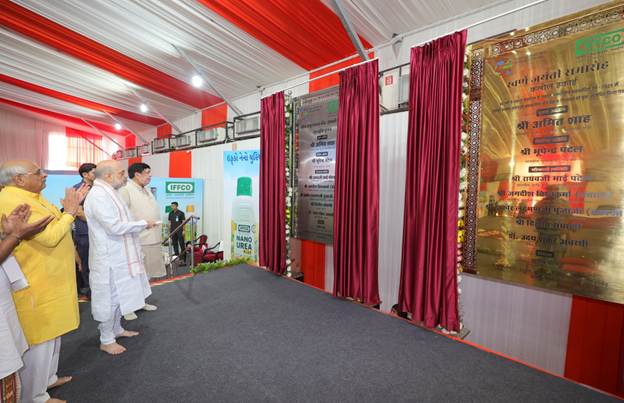
Union Home Minister and Minister of Cooperation Shri Amit Shah today attended the Golden Jubilee celebration of Indian Farmers Fertiliser Cooperative Limited(IFFCO’s) Kalol branch in Gandhinagar, Gujarat, and laid the foundation stone for the Beej Anusandhan Kendra. On this occasion, several dignitaries, including the Chief Minister of Gujarat, Shri Bhupendra Patel, were present.

In his address, Union Home Minister and Minister of Cooperation Shri Amit Shah stated that today marks the Golden Jubilee of IFFCO’s Kalol Plant, and the groundbreaking ceremony for the Beej Anusandhan Kendra. He said that the 50 years of IFFCO’s glorious journey demonstrate how incredible results are achieved when cooperative and corporate values work together. He mentioned that IFFCO has efficiently handled all aspects related to research and development, marketing, branding, and reaching every household.

Shri Shah emphasized that India is now self-reliant in the field of food grains, and IFFCO has played a significant role in this achievement. He said that IFFCO has connected farmers with fertilizers and has further worked to connect fertilizers with cooperatives. He added that IFFCO now stands proudly after completing fifty years of its glorious journey. Union Minister of Cooperation expressed confidence that when IFFCO celebrates its centenary, the reputation of IFFCO will have grown significantly among cooperative organizations worldwide.

Shri Amit Shah said that IFFCO has also carried out various types of research and development work. He mentioned that when the groundbreaking ceremony of IFFCO’s Kalol factory took place, it was considered a major revolution at that time. As time progressed, IFFCO conducted research and experiments in areas like Nano Urea, Nano DAP, Nano Liquid, Urea, Liquid DAP, etc., and increased production.

He highlighted that IFFCO has made India’s cooperative sector prominent globally in the field of Nano Urea and Nano DAP. He added that IFFCO’s Nano Urea and Nano DAP are now reaching all over the world. Shri Shah further said that IFFCO has increased its capacity, expanded its reach to farmers’ fields, and worked to bring the results of laboratory experiments through research and development directly to the fields.

Union Home Minister and Minister of Cooperation said that today marks the establishment of the Beej Anusandhan Kendra in Gandhinagar. He mentioned that Prime Minister Shri Narendra Modi has initiated several new ventures in every sector of the country. He stated that under the leadership of Prime Minister Shri Narendra Modi, the Ministry of Cooperation has undertaken nearly 62 unprecedented initiatives in the country’s cooperative sector. He further noted that recently, Parliament passed a bill for the establishment of the Tribhuvan Sahkari University.

Shri Shah said that in honor of Tribhuvan Das Patel’s contribution to the cooperative sector, Prime Minister Modi has named this Sahkari university after him. He explained that this university will work to bring modern cooperative education and transparency to every sector of cooperation, from PACS to apex bodies. He added that this university will work to steer the entire cooperative movement in the country, using modern technologies like AI, and will conduct various analyses to determine the direction for the next 50 years based on these findings.

CR3_9601.JPG

Shri Amit Shah said that today, IFFCO has launched the Beej Anusandhan Kendra, and IFFCO has a track record of successfully completing every task it has undertaken. He stated that this Beej Anusandhan Kendra will increase productivity on our land, make the produce more nutritious, reduce the use of water and fertilizers, and improve the quality of seeds. The center will also work on the preservation of our ancient seeds, some of which are thousands of years old.

Shri Shah further mentioned that when IFFCO was established 50 years ago, no one could have imagined that it would reach this level. Similarly, today, as the foundation for the Beej Anusandhan Kendra has been laid, this center will also prove to be a vital factor in enhancing the prosperity of our farmers.

Union Minister of Cooperation said that to strengthen our cooperative institutions, we need to focus on strengthening primary cooperative societies and cooperative dairies. He mentioned that for this, the government has worked on computerization, linking primary agricultural credit societies (PACS) with new activities, and including the entire economic cycle of dairies into the cooperative system under the leadership of Prime Minister Modi.

He stated that today, IFFCO has production units in five locations across three states — Kandla, Kalol, Phulpur, Amla, and Paradip — and we have become self-reliant in the fertilizer sector. Shri Shah further mentioned that the current fertilizer production capacity is 9 million metric tons, with sales reaching 11 million metric tons, a turnover of ₹40,000 crore, and a profit of ₹3,200 crore.

Shri Amit Shah said that in the past fifty years, the journey from chemical fertilizers to nano fertilizers and bio fertilizers has taken place under the leadership of IFFCO. He mentioned that when IFFCO was established, our focus in fertilizers was on bulk application, but today our focus is on targeted and controlled release, which ensures that nutrients are delivered without degrading our soil. He added that earlier, fertilizers had high costs and low efficiency, but now, IFFCO has made fertilizers low-cost and high-efficiency.

IMG_1061.JPG

Union Minister of Cooperation noted that with Nano Urea and Nano DAP Liquid, there is no need to apply additional fertilizers. He highlighted that today IFFCO has increased its production capacity to such an extent that its products are now being exported all over the world. He said that IFFCO’s 50 years have been dedicated to agriculture, grain production, the rural economy, and the prosperity of farmers. Similarly, he mentioned that IFFCO’s next 50 years, moving towards a century, will be focused on modernizing farming, making it the most productive, preserving our agricultural land, and protecting the environment.

PM’s remarks during Joint Press Statement with the President of Sri Lanka

| Published on:

Your Excellency President Disanayaka ji,

Delegates from both countries,

Friends from the media,

Namaskar!

Ayubowan!

Vanakkam!

It is a matter of great pride for me to be awarded the ‘Sri Lanka Mitra Vibhushana’ by President Disanayaka today. This award does not only honour me, but also honours 140 crore Indians. It is a tribute to the historic ties and deep friendship between the people of India and Sri Lanka.

I extend my heartfelt gratitude to the President, the Sri Lankan Government and to the people of Sri Lanka, for this honour.

Friends,

As Prime Minister, this is my fourth visit to Sri Lanka. My last visit in 2019 came at a very sensitive time. It was my firm belief at the time that Sri Lanka will rise, and rise stronger.

I applaud the courage and patience of the Sri Lankan people, and today, I am happy to see Sri Lanka back on the path of progress. India is proud to have fulfilled its duties as a true friendly neighbour. Whether it was the terrorist attack of 2019, the COVID pandemic, or the recent economic crisis, we have stood firmly with the people of Sri Lanka during every difficulty.

I am reminded of the words of the great Tamil saint Thiruvalluvar. He said:

Seyar Kariya Yaavul
Natt Pinn
Aadu Pul
Vinnaikkariya Yaavul Kaapu

Which means, in the face of challenges and enemies, there is no stronger assurance than a true friend and the shield of his friendship.

Friends,

President Disanayaka chose India for his first foreign visit after becoming President, and I have had the privilege of becoming his first foreign guest. This is a symbol of the depth of our special relations.

Sri Lanka has a special place in both our Neighbourhood First Policy and Vision ‘MAHASAGAR’. In the last four months, since President Disanayaka’s visit to India, we have made significant progress in our cooperation.

The Sampur Solar Power Plant will help Sri Lanka achieve energy security. The agreement reached to build a multi-product pipeline, and to develop Trincomalee as an energy hub will benefit all Sri Lankans. The Grid Inter-Connectivity Agreement between the two countries will create opportunities for Sri Lanka to export electricity.

I am pleased that today a 5,000 Solar Rooftop System will be inaugurated for religious places in Sri Lanka. India will also provide support for the Sri Lanka Unique Digital Identity project.

Friends,

India has adopted the vision of ‘Sabka Saath Sabka Vikas’. We also value the priorities of our partner countries.

In the last 6 months alone, we have converted loans worth more than USD 100 million into grants. Our bilateral ‘Debt Restructuring Agreement’ will provide immediate assistance and relief to the people of Sri Lanka. Today we have also decided to reduce interest rates. It symbolises that even today, India stands with the people of Sri Lanka.

For the social and economic development of the Eastern Provinces, a support package of approximately 2.4 billion Lankan Rupees will be provided. Today we also inaugurated Sri Lanka’s largest warehouse for the welfare of farmers.

Tomorrow we will inaugurate the ‘Maho-Omanthai’ railway line, and lay the foundation stone for the signalling system on the ‘Maho-Anuradhapura’ section. Work for the modernisation of the Kankesanthurai Port will begin soon.

For the Indian Origin Tamil Community in Sri Lanka, the construction work of 10,000 houses will be completed soon. Training will be provided to an additional 700 Sri Lankan personnel. They will include Members of Parliament, personnel associated with the judiciary, entrepreneurs, media persons, as well as young leaders.

Friends,

We believe that we have shared security interests. The security of both countries is interconnected and co-dependent.

I am grateful to President Disanayaka for his sensitivity towards India’s interests. We welcome the important agreements made in the area of Defence Cooperation. We have also agreed to work together on the Colombo Security Conclave and Security Cooperation in the Indian Ocean.

Friends,

There is centuries old spiritual ties between India and Sri Lanka.

I am extremely happy to announce that the Holy Relics of Lord Buddha found in 1960, in the Aravali region of my home state – Gujarat, are being sent to Sri Lanka for an exposition.

India will assist in the renovation of the Thirukoneswaram Temple in Trincomalee. India will also provide support in the construction of the sacred city in the Anuradhapura Mahabodhi temple complex, and the Sita Eliya temple in Nuwara Eliya.

Friends,

We also discussed issues related to fishermen’s livelihood. We agreed that we should proceed with a humane approach in this matter. We also emphasised on immediate release of the fishermen and their boats.

We also talked about reconstruction and reconciliation in Sri Lanka. President Disanayaka appraised me of his inclusive approach. We hope that the Sri Lankan Government will meet the aspirations of the Tamil people ​​and fulfil its commitment towards fully implementing the Constitution of Sri Lanka, and conducting Provincial Council Elections.

Friends,

Relations between India and Sri Lanka are based on mutual trust and goodwill. We will continue to work together to fulfill the hopes and aspirations of our people.

Once again, I extend my heartfelt gratitude to President Disanayaka for his warm welcome. I am confident that in the times to come we will take our partnership to new heights.

Thank you very much!

Prime Minister holds bilateral talks with President of Sri Lanka

| Published on:

Prime Minister had a productive meeting today with the President of Sri Lanka, H.E. Anura Kumara Disanayaka, at the Presidential Secretariat in Colombo. Ahead of the talks, Prime Minister was accorded a ceremonial welcome at Independence Square. Prime Minister is the first foreign leader to pay a State visit to Sri Lanka since President Disanayaka took office in September 2024.

2. ​The two leaders held detailed discussions in restricted and delegation level format on further deepening the special and close bilateral ties that are rooted in shared history and driven by strong people-to-people linkages. They reviewed cooperation in the fields of connectivity, development cooperation, economic ties, defence relations, reconciliation and fishermen issues. Prime Minister reiterated Sri Lanka’s importance in India’s Neighbourhood First Policy and Vision MAHASAGAR. He conveyed India’s continued commitment to assist in Sri Lanka’s economic recovery and stabilization.

3. ​Following the talks, the two leaders virtually inaugurated several projects. These include 5000 solar rooftop units installed at religious places across Sri Lanka and a temperature-controlled warehousing facility at Dambulla. They also virtually participated in the ground-breaking ceremony for the launch of the 120 MW Sampur Solar power project.

4. The two leaders witnessed the exchange of seven MoUs in the fields of energy, digitization, defence, health and multi-sectoral assistance in the Eastern Province. Prime Minister announced support for the development of the Thirukoneswaram temple in Trincomalee, the Sacred City project in Anuradhapura and the Sita Eliya temple complex in Nuwara Eliya. In the areas of capacity building and economic support, a comprehensive package for training an additional 700 Sri Lankan citizens annually, and the conclusion of Bilateral Amendatory Agreements on Debt Restructuring were also announced. In keeping with the shared Buddhist heritage of the two countries, Prime Minister announced that Holy Relics of Lord Buddha from Gujarat would be traveling to Sri Lanka for the International Vesak Day celebrations. List of MOUs and announcements may be seen here.