DRDO achieves significant milestone in Scramjet Engine Development

| Published on:

Defence Research & Development Laboratory (DRDL), a Hyderabad-based laboratory of Defence Research and Development Organisation (DRDO), has achieved a significant milestone in the field of Hypersonic Weapon Technology. DRDL conducted long-duration Active Cooled Scramjet Subscale Combustor ground testing for more than 1,000 seconds at the newly built state-of-the-art Scramjet Connect Test Facility at Hyderabad on April 25, 2025. The ground-test is in continuation of the earlier test reported for 120 seconds in January 2025. With the successful test, the system will be soon ready for full scale flight worthy combustor testing.

Hypersonic Cruise Missile is a class of weapons that can travel more than five times the speed of sound (> 6100 Kmph) for long duration and is powered by Air breathing engine. Air breathing propulsion systems, having supersonic combustion, plays a critical role for long-duration cruise conditions. This test validates the design of long duration scramjet combustor as well as test facility. It is an outcome of an integrated effort put by the DRDO labs along with industry & academia and paves a strong base for the nation’s Hypersonic Cruise Missile Development Programme.

Raksha Mantri Shri Rajnath Singh has complimented DRDO, Industry partners and academia for the remarkable achievement. He termed the success as a reflection of the Government’s strong commitment in realising critical Hypersonic Weapon Technologies for the nation.

Secretary, Department of Defence R&D and Chairman DRDO Dr Samir V Kamat congratulated Director General (Missiles & Strategic Systems) Shri U Raja Babu, Director DRDL Dr GA Srinivasa Murthy and the complete team for demonstrating the supersonic combustion for more than 1,000 seconds involving cutting edge technologies.

Dr. Jitendra Singh chairs a high-level meeting of IMD and other key ministries

| Published on:

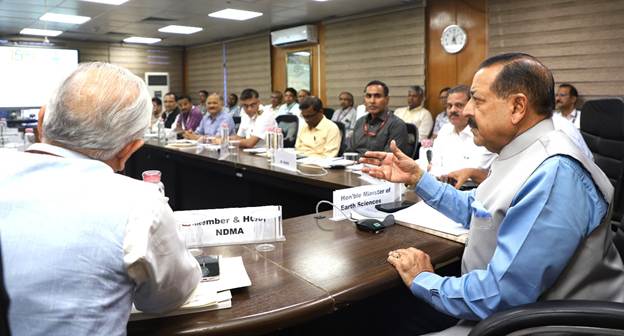
 In a decisive move to strengthen India’s meteorological capabilities, Union Minister of State (Independent Charge) for Science and Technology; Earth Sciences and Minister of State for PMO, Department of Atomic Energy, Department of Space, Personnel, Public Grievances and Pensions, Dr. Jitendra Singh on Thursday chaired a high-level meeting of India Meteorological Department (IMD) and key ministries to review India’s weather and disaster preparedness, and also rolled out roadmap for accurate forecast.

The Minister called for expediting expansion of Doppler Weather Radar (DWR) coverage and modernization of meteorological systems across the country.

At present, Delhi has 18 Automatic Weather Stations (AWS) in operation. During the review, the Minister directed officials to expedite the installation of 50 additional systems, with a long-term goal of scaling up to 100 AWS. This move aims to bring Delhi’s weather forecasting infrastructure on par with global standards. These automated systems are designed to deliver highly specific, accurate, and timely forecasts, significantly enhancing the city’s capacity to monitor and respond to changing weather conditions.

Amidst the growing frequency of extreme weather events, Dr. Jitendra Singh emphasized the urgent need for real-time, impact-based forecasting that can help minimize damage and save lives. “No weather hazard should go undetected or unpredicted,” the Minister asserted, underscoring the government’s resolve to build a resilient early warning system that reaches every corner of the country.

A key highlight of the review was the ambitious expansion of the Doppler Weather Radar network, which is set to rise from the current 37 operational radars to 73 by 2025-26, and further to 126 by 2026. The new installations are being planned in high-priority regions such as Bengaluru, Raipur, Ahmedabad, Ranchi, Guwahati, and Port Blair, among others.

The Minister was briefed on the selection of radar sites and the overall progress of the “Mission Mausam” launched by PM Narendra Modi, which aims to revolutionize India’s weather monitoring infrastructure. The plan includes improved satellite meteorology systems, upgraded numerical prediction models, and a more robust radar-based forecasting mechanism.

“The ability to track extreme weather events with greater precision will not only boost disaster management efforts but also directly benefit farmers, fishermen, aviation, and various other sectors,” Dr. Jitendra Singh noted during the meeting, which included senior officials such as Earth Sciences Secretary Dr. M. Ravichandran and IMD Director General Dr. Mrutyunjay Mohapatra.

The review also took stock of financial allocations and approvals pending for key weather-related infrastructure projects. Dr. Jitendra Singh urged ministries to fast-track decisions to ensure timely implementation.

With climate change intensifying the unpredictability of weather systems, the push for enhanced radar coverage and more efficient dissemination of forecasts is seen as critical for national preparedness. The meeting, according to ministry officials, marks a significant step in India’s journey toward becoming a global leader in climate resilience and disaster risk reduction.

The Minister’s review has now set the wheels in motion for a more coordinated and technologically advanced response to India’s meteorological challenges.

PM launches development works worth over Rs 13,480 crore in Madhubani, Bihar

| Published on:

The Prime Minister Shri Narendra Modi inaugurated, laid the foundation stone and dedicated to the nation multiple development projects worth over Rs 13,480 crore in Madhubani, Bihar today on the occasion of National Panchayati Raj Day. The Prime Minister appealed to everyone at the event to observe silence and pray for the departed souls in the Pahalgam attacks on 22 April 2025. Addressing the gathering on the occasion, he said that on the occasion of Panchayati Raj Day, the entire nation is connected with Mithila and Bihar. He remarked that projects worth thousands of crores of rupees, aimed at Bihar’s development, have been inaugurated and foundations laid for, emphasising that these initiatives in electricity, railways, and infrastructure will create new employment opportunities in Bihar. He paid tributes to the great poet and national icon, Ramdhari Singh Dinkar Ji, on his death anniversary.

Remarking that Bihar is the land where Mahatma Gandhi expanded the mantra of Satyagraha, Shri Modi highlighted Mahatma Gandhi’s firm belief that India’s rapid development is only possible when its villages are strong. He emphasized that the concept of Panchayati Raj was rooted in this sentiment. “Over the past decade, continuous steps have been taken to empower Panchayats. Technology has played a significant role in strengthening Panchayats, with over 2 lakh Gram Panchayats connected to the internet in the last decade”, he added. Shri Modi pointed out that more than 5.5 lakh Common Service Centers have been established in villages, underlining that the digitalization of Panchayats has brought additional benefits, such as easy access to documents like birth and death certificates, and landholding certificates. He remarked that while the nation received a new Parliament building after decades of independence, 30,000 new Panchayat Bhawans have also been constructed across the country. He also highlighted that ensuring adequate funds for Panchayats has been a priority for the government. “Over the past decade, Panchayats have received more than ₹2 lakh crore, all of which has been utilized for the development of villages”, he said.

Highlighting that one of the major issues faced by Gram Panchayats has been related to land disputes, the Prime Minister mentioned the frequent disagreements over which land is residential, agricultural, Panchayat-owned, or government-owned. He emphasized that to address this issue, the digitization of land records is being undertaken, which has helped resolve unnecessary disputes effectively.

Shri Modi underscored that Panchayats have strengthened social participation, remarking that Bihar was the first state in the country to provide 50% reservation for women in Panchayats. He emphasized that today, a significant number of women from economically weaker sections, Dalits, Mahadalits, backward, and extremely backward communities are serving as public representatives in Bihar, describing it as true social justice and genuine social participation. He underlined that democracy thrives and becomes stronger with greater participation. Reflecting this vision, Shri Modi noted that a law providing 33% reservation for women in the Lok Sabha and State Assemblies has also been enacted. He remarked that this will benefit women across all states, giving our sisters and daughters greater representation.

Emphasising that the government is working in mission mode to increase women’s income and create new opportunities for employment and self-employment, Shri Modi highlighted the transformative impact of the ‘Jeevika Didi’ program in Bihar, which has changed the lives of many women. He remarked that today, self-help groups of women in Bihar have been provided financial assistance of approximately ₹1,000 crore, noting that this will further strengthen the economic empowerment of women and contribute to the goal of creating 3 crore Lakhpati Didis across the country. He highlighted that the rural economy has gained new momentum over the past decade. He pointed out that villages have seen the construction of houses for the poor, roads, gas connections, water connections, and toilets, bringing lakhs of crores of rupees to rural areas. The Prime Minister remarked that new employment opportunities have been created, benefiting laborers, farmers, vehicle operators, and shopkeepers, providing them with new avenues for income. He emphasized that this has particularly benefited communities that have been deprived for generations. He cited the example of the PM Awas Yojana, which aims to ensure that no family in the country remains homeless and that everyone has a permanent roof over their heads. He noted that over the past decade, more than 4 crore permanent houses have been constructed under this scheme. He highlighted that in Bihar alone, 57 lakh poor families have received permanent houses. He remarked that these houses have been provided to families from economically weaker sections, Dalits, and backward and extremely backward communities like Pasmanda families. Shri Modi announced that in the coming years, 3 crore more permanent houses will be provided to the poor. He noted that today, approximately 1.5 lakh families in Bihar are moving into their new permanent homes. He said that across the country, 15 lakh poor families have been issued approval letters for the construction of new houses, including 3.5 lakh beneficiaries from Bihar. He highlighted that today, financial assistance has been sent to approximately 10 lakh poor families for their permanent houses, including 80,000 rural families and 1 lakh urban families from Bihar.

“The past decade has been a decade of infrastructure development for India”, said the Prime Minister, highlighting that this modern infrastructure is strengthening the foundation of a developed India. He noted that for the first time, over 12 crore rural families have received tap water connections in their homes, underlining that more than 2.5 crore households have been electrified, and those who never imagined cooking on gas stoves have now received gas cylinders. “Even in challenging regions like Ladakh and Siachen, where providing basic facilities is difficult, 4G and 5G mobile connections have now been established, reflecting the nation’s current priorities”, he pointed out. The Prime Minister highlighted advancements in healthcare, noting that institutions like AIIMS were once limited to major cities like Delhi. He announced that AIIMS is now being established in Darbhanga, and the number of medical colleges in the country has nearly doubled in the past decade and mentioned the construction of a new medical college in Jhanjharpur. He emphasized that to ensure quality healthcare in villages, over 1.5 lakh Ayushman Arogya Mandirs have been established across the country, including more than 10,000 in Bihar. He remarked that Jan Aushadhi Kendras have become a significant relief for the poor and middle class, offering medicines at an 80% discount. He noted that Bihar now has over 800 Jan Aushadhi Kendras, saving its people ₹2,000 crore in medical expenses. The Prime Minister highlighted that under the Ayushman Bharat scheme, lakhs of families in Bihar have received free treatment, resulting in savings of thousands of crores of rupees for these families.

“India is rapidly advancing its connectivity through infrastructure like railways, roads, and airports”, highlighted Shri Modi, noting that metro projects are underway in Patna, and over two dozen cities across the country are now connected with metro facilities. He announced the launch of the ‘Namo Bharat Rapid Rail’ service between Patna and Jaynagar, which will significantly reduce travel time between the two locations, and emphasized that this development will benefit lakhs of people from Samastipur, Darbhanga, Madhubani, and Begusarai.

The Prime Minister also mentioned the inauguration and launch of multiple new railway lines in Bihar, highlighting the commencement of the modern Amrit Bharat train service between Saharsa and Mumbai, which will greatly benefit the labor families. He remarked that the government is modernizing several railway stations in Bihar, including Madhubani and Jhanjharpur. He emphasized that air connectivity in Mithila and Bihar has improved significantly with Darbhanga Airport, and the expansion of Patna Airport is underway. “These development projects are creating new employment opportunities in Bihar”, he added.

“Farmers are the backbone of the rural economy, the stronger this backbone, the stronger the villages, and consequently, the nation”, said Shri Modi. He highlighted the persistent challenges of floods in the Mithila and Kosi regions, noting that the government is set to invest ₹11,000 crore to mitigate the impact of floods in Bihar. He said that this investment will facilitate the construction of dams on rivers such as Bagmati, Dhar, Budhi Gandak, and Kosi, adding that canals will be developed, ensuring irrigation arrangements through river water. “This initiative will not only reduce flood-related issues but will also ensure adequate water supply reaches every farmer’s field”, he added.

“Makhana, a cultural staple of Mithila, has now gained global recognition as a superfood”, highlighted Shri Modi, mentioning that makhana has been granted a GI tag, officially certifying it as a product of this region. He added that the Makhana Research Centre has been accorded national status. He also highlighted the Budget announcement of the Makhana Board, which is expected to transform the fortunes of makhana farmers, emphasising that Bihar’s makhana will now reach international markets as a superfood. He noted that the National Institute of Food Technology and Management is being established in Bihar, which will support the youth in setting up small enterprises related to food processing. He further emphasized that Bihar is making consistent progress in fisheries along with agriculture, highlighting that fishermen now have access to the benefits of the Kisan Credit Card, providing advantages to numerous families involved in fisheries. He remarked that under the PM Matsya Sampada Yojana, projects worth hundreds of crores have been executed in Bihar.

Expressing deep sorrow over the brutal killing of innocent civilians by terrorists in Pahalgam, Jammu and Kashmir, on April 22, Shri Modi remarked that the entire nation is distressed and stands in solidarity with the grieving families. He assured that every effort is being made by the government to ensure the speedy recovery of those undergoing treatment. He highlighted the profound loss suffered by families, where some lost their sons, brothers, or life partners, noting that the victims came from diverse linguistic and regional backgrounds—some spoke Bengali, Kannada, Marathi, Odia, Gujarati, and some were from Bihar. Underlining that from Kargil to Kanyakumari, the grief and outrage over this attack are shared equally across the nation, Shri Modi remarked that this attack was not just on unarmed tourists but was a brazen assault on the soul of India. “The terrorists responsible for this attack, along with those who conspired it, will face punishment beyond their imagination”, he declared in unequivocal terms, asserting that the time has come to eliminate the remaining strongholds of terrorism. “The willpower of 140 crore Indians will now break the backbone of the perpetrators of terror”, he stressed.

The Prime Minister declared from the soil of Bihar that India will identify, track, and punish every terrorist, their handlers, and their backers, emphasising that India will pursue them to the ends of the earth. “India’s spirit will never be broken by terrorism and terrorism will not go unpunished. Every effort will be made to ensure justice is served and the entire nation is firm in this resolve against terrorism”, he stressed. He further stated that everyone who believes in humanity stands with India during these times. He expressed his gratitude to the people and leaders of various countries who have supported India in these moments.

“Peace and security are the most critical prerequisites for rapid development”, said Shri Modi, remarking that a developed Bihar is essential for a developed India. He concluded by highlighting that efforts are being made to ensure development in Bihar and to extend the benefits of progress to every section and every region of the state. He expressed gratitude to everyone for joining the program on the occasion of Panchayati Raj Day.

The Governor of Bihar, Shri Arif Mohammed Khan, Chief Minister of Bihar, Shri Nitish Kumar, Union Ministers Shri Rajiv Ranjan Singh, Shri Jitan Ram Manji, Shri Giriraj Singh, Shri Chirag Paswan, Shri Nityanand Rai, Shri Ram Nath Thakur, Dr. Raj Bhushan Choudhary were present among other dignitaries at the event.

Background 

Prime Minister participated in the National Panchayati Raj Day programme in Madhubani, Bihar. He also presented National Panchayat Awards, recognizing and incentivizing best-performing Panchayats on the occasion.

Prime Minister laid the foundation stone of an LPG bottling plant with rail unloading facility at Hathua in Gopalganj District of Bihar worth around Rs 340 crore. This will help in streamlining the supply chain and improving efficiency of bulk LPG transportation.

Boosting power infrastructure in the region, Prime Minister laid the foundation stone for projects worth over Rs 1,170 crore and also inaugurated multiple projects worth over Rs 5,030 crore in the power sector in Bihar under the Revamped Distribution Sector Scheme.

In line with his commitment to boost rail connectivity across the nation, Prime Minister flagged off Amrit Bharat express between Saharsa and Mumbai, Namo Bharat Rapid rail between Jaynagar and Patna and trains between Pipra and Saharsa and Saharsa and Samastipur. He also inaugurated the Supaul Pipra rail line, Hasanpur Bithan Rail line and two 2-lane Rail over bridges at Chapra and Bagaha. He dedicated to the nation the Khagaria-Alauli Rail line. These projects will improve connectivity and lead to overall socio-economic development of the region.

Prime Minister distributed benefits of around Rs 930 crore under Community Investment Fund to over 2 lakh SHGs from Bihar under Deendayal Antyodaya Yojana – National Rural Livelihoods Mission (DAY- NRLM).

Prime Minister handed over sanction letters to 15 lakh new beneficiaries of PMAY-Gramin and released instalments to 10 lakh PMAY-G beneficiaries from across the country. He also handed over keys to some beneficiaries marking the Grih Pravesh of 1 lakh PMAY-G and 54,000 PMAY-U houses in Bihar.

PM addresses the India Steel 2025 programme

| Published on:

The Prime Minister Shri Narendra Modi delivered his remarks during the India Steel 2025 programme at Mumbai, via video message today. Addressing the gathering, he said that over the next two days, discussions will focus on the potential and opportunities of India’s sunrise sector—the steel industry. He remarked that this sector forms the foundation of India’s progress, strengthens the base of a developed India, and is scripting a new chapter of transformation in the country. The Prime Minister welcomed everyone to India Steel 2025 and expressed confidence that the event will serve as a launchpad for sharing new ideas, forging new partnerships, and promoting innovation. He emphasized that this event will lay the groundwork for a new chapter in the steel sector.

“Steel has played a pivotal role in modern economies, akin to a skeleton”, emphasised Shri Modi, remarking that whether it is skyscrapers, shipping, highways, high-speed rail, smart cities, or industrial corridors, steel is the strength behind every success story. “India is striving to achieve the goal of becoming a $5 trillion economy, with the steel sector playing a significant role in this mission”, he added, expressing pride in India being the world’s second-largest steel producer. He noted that under the National Steel Policy, India has set a target of producing 300 million tons of steel by 2030. He remarked that the current per capita steel consumption in India is approximately 98 kilograms and is expected to rise to 160 kilograms by 2030. Shri Modi emphasized that this increasing steel consumption serves as a golden standard for the country’s infrastructure and economy, adding that it is also a benchmark for the nation’s direction, as well as the government’s efficiency and effectiveness.

Underlining that the steel industry is brimming with renewed confidence about its future due to the foundation of the PM-Gati Shakti National Master Plan, the Prime Minister remarked that this initiative integrates various utility services and logistics modes. He emphasized that mine areas and steel units are being mapped for improved multi-modal connectivity. He noted that new projects are being introduced to upgrade critical infrastructure in eastern India, where most of the steel sector is concentrated. He further highlighted that the $1.3 trillion National Infrastructure Pipeline is being advanced. He remarked that large-scale efforts to transform cities into smart cities, along with unprecedented pace in the development of roads, railways, airports, ports, and pipelines, are creating fresh opportunities for the steel sector. The Prime Minister pointed out that crores of houses are being constructed under the PM Awas Yojana, and significant infrastructure is being built in villages through the Jal Jeevan Mission. He remarked that welfare initiatives like these are also providing new strength to the steel industry. He highlighted the government’s decision to use only ‘Made in India’ steel in government projects and noted that government-driven initiatives account for the highest consumption of steel in building construction and infrastructure.

Underscoring that steel is a primary component driving the growth of multiple sectors, Shri Modi remarked that government policies for the steel industry are playing a crucial role in making many other industries in India globally competitive. He highlighted that sectors such as manufacturing, construction, machinery, and automotive are gaining strength from the Indian steel industry. He mentioned that the government has introduced the National Manufacturing Mission in this year’s Budget to accelerate the ‘Make in India’ initiative. The mission caters to small, medium, and large industries and will open new opportunities for the steel sector, he added.

Noting that India was long dependent on imports for high-grade steel, which was critical for defense and strategic sectors, the Prime Minister expressed pride in the fact that the steel used in India’s first indigenous aircraft carrier was produced domestically. He also noted that Indian steel contributed to the success of the historic Chandrayaan mission, symbolizing India’s capability and confidence. The Prime Minister remarked that this transformation was made possible through initiatives such as the PLI scheme, which has allocated thousands of crores to support the production of high-grade steel. He emphasized that this is just the beginning and that there is a long road ahead. He pointed out the growing demand for high-grade steel due to mega-projects being initiated across the country. He mentioned that in this year’s Budget, shipbuilding has been classified as infrastructure, adding “India aims to manufacture modern and large ships domestically and export them to other countries”. The Prime Minister highlighted the rising demand for pipeline-grade steel and corrosion-resistant alloys in India. He remarked that the country’s rail infrastructure is expanding at an unprecedented pace. He stressed the need for a goal of “zero imports” and a focus on net exports. “India is currently working towards a target of exporting 25 million tons of steel and aims to increase production capacity to 500 million tons by 2047”, he noted emphasizing the importance of preparing the steel sector for new processes, grades, and scales, urging the industry to expand and upgrade with a future-ready mindset. The Prime Minister underlined the vast employment generation potential of the steel industry’s growth. He called upon both the private and public sectors to develop, nurture, and share new ideas. He emphasized collaboration in manufacturing, R&D, and technology upgrades to create more job opportunities for the country’s youth.

Shri Modi acknowledged that the steel industry faces certain challenges that need resolution for further growth, highlighting that raw material security remains a significant concern, with India still dependent on imports for nickel, coking coal, and manganese. He emphasized the need to strengthen global partnerships, secure supply chains, and focus on technology upgrades. He underlined the importance of moving swiftly towards energy-efficient, low-emission, and digitally advanced technologies. “The future of the steel industry will be shaped by AI, automation, recycling, and by-product utilization”, he remarked, stressing the need to enhance efforts in these areas through innovation. He expressed optimism that collaboration between global partners and Indian companies will help address these challenges more effectively and at a faster pace.

The Prime Minister remarked on the significant impact of coal imports, particularly coking coal, on both costs and the economy. He emphasized the importance of exploring alternatives to reduce this dependence. He highlighted the availability of technologies such as the DRI route and stressed efforts to promote them further. Pointing out that coal gasification can be effectively utilized to make better use of the country’s coal resources and decrease reliance on imports, he urged all stakeholders in the steel industry to actively participate in this endeavor and take the necessary steps to move forward in this direction.

Underlining the importance of addressing the issue of unused greenfield mines, Shri Modi noted that significant mining reforms have been introduced in the last decade, making iron ore availability easier. He stressed that it is now time to utilize the allotted mines effectively to ensure optimal use of the country’s resources. Cautioning that delays in this process would adversely impact the industry, Shri Modi urged for the acceleration of greenfield mining efforts to overcome this challenge.

The Prime Minister emphasized that India is no longer focused solely on domestic growth but is preparing for global leadership. He remarked that the world now views India as a trusted supplier of high-quality steel. He reiterated the importance of maintaining world-class standards in steel production and continually upgrading capabilities. He emphasized that improving logistics, developing multi-modal transport networks, and reducing costs will help India become a Global Steel Hub. The Prime Minister highlighted that India Steel provides a platform to expand capabilities and turn ideas into actionable solutions. He concluded by  expressing best wishes to all participants and called for collective efforts to build a resilient, revolutionary, and steel-strong India.

Union Health Minister launches National Zero Measles-Rubella Elimination Campaign

| Published on:

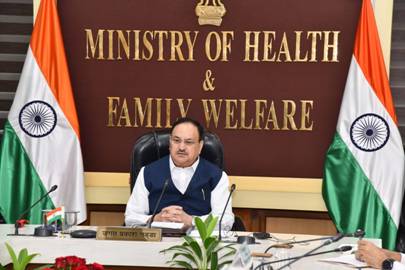
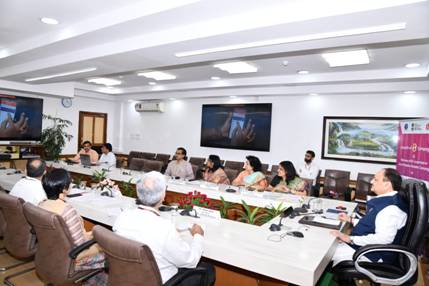
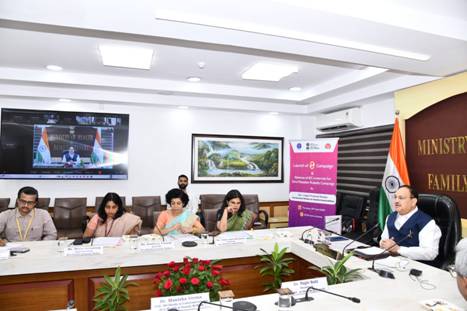
Union Minister of Health and Family Welfare, Shri Jagat Prakash Nadda today virtually launched the National Zero Measles-Rubella Elimination campaign 2025-26 on the first day of the World Immunization Week (24-30 April), marking a significant step towards India’s goal of eliminating Measles and Rubella by 2026.

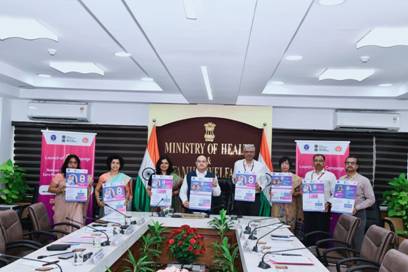
On the occasion, Union Health Minister released multi-language M-R IEC materials (posters, radio jingles, MR elimination and official U-WIN launch film) for creating awareness in the communities. These IEC materials were also shared with all States/UTs for adaptation and rollout during the MR Elimination Campaign 2025-26.

Addressing the occasion, Shri J P Nadda stated that, “today is momentous occasion as the launch of Measles-Rubella elimination campaign 2025-26 marks an opportunity to achieve 100% immunization coverage to provide high quality lifestyle to children by administering them with the two doses of Measles and Rubella vaccine.” Noting that this disease is of a highly contagious nature that hampers not only children’s life but also cause misery to their parents, Shri Nadda underlined the importance of ensuring that not even a single child is left behind.

The Union Health Minister congratulated the Ministry for getting recognition with the prestigious Measles and Rubella Champion Award by the Measles and Rubella Partnership in 2024. He highlighted that “332 districts in the country have reported zero measles cases and 487 districts have reported zero rubella cases during January- March 2025 which underscores the progress achieved in the goal of M-R elimination.”

Shri Nadda highlighted the need for keeping the IDSP activated and strengthening surveillance. “We have to target the elimination of M-R in the same way as Polio and Maternal and Neonatal Tetanus elimination was achieved”, he stated. He urged the states and UTs to be attentive, alert, and proactive and work with a ‘ACT NOW’ policy.

Shri Nadda also urged the State Ministers and Chief Medical Officers to hold public and press meetings where people at large can be informed about the vaccination drive through active Jan Bhagidari. He also called upon States for an inclusive participation of all MLAs, MPs, local and Panchayat heads to spread awareness about the vaccination against Measles and Rubella. He also urged the frontline workers to reach out to remote and hard to reach areas, slums, migratory population, areas with frequent outbreaks. “We have to reach out to people in the last mile to ensure that we achieve 100% coverage”, he stated. He also emphasized on the need for coordinating with line ministries. He concluded his address by stating that “if we work and act from today, we will be able to achieve success tomorrow.”

Background:

Measles and Rubella are highly infectious viral diseases that can lead to serious illnesses, lifelong complications, and even death. Due to their high infection rate, India has set a goal to eliminate these diseases by 2026. Under the Universal Immunization Programme (UIP), two doses of the Measles-Rubella (MR) vaccine are provided free of cost to all eligible children, at 9-12 months and 16-24 months of age, respectively. Currently, India’s MR vaccination coverage stands at 93.7% for the first dose (2024-25 HMIS data) and 92.2% for the second dose.

In 2024, India has recorded a remarkable decline of 73% in Measles cases and a 17% reduction in Rubella cases in comparison with 2023.

India’s plan for eliminating measles and rubella includes a comprehensive framework:

  1. Immunization: Achieve and maintain high population immunity with > 95% vaccination coverage with 2 doses of measles and rubella containing vaccines in each district of the country.
  1. SurveillanceSustain a sensitive and timely case-based surveillance system for measles & rubella.
  2. OutbreaksEnsure adequate preparedness and timely response to measles and rubella outbreaks.
  3. LinkagesStrengthen support and linkages to achieve the above strategic objectives.
  4. Demand Generation for Vaccination: Focused mass awareness campaigns to mitigate the risks of non-vaccination and dispel myths related to MR vaccine for addressing vaccine hesitancy and increasing coverage.

In recognition of country’s exceptional efforts in prevention of Measles and Rubella, India was awarded the prestigious Measles and Rubella Champion Award by the Measles and Rubella Partnership at the American Red Cross Headquarters in Washington D.C. on March 6, 2024.

Under the Universal Immunization Programme (UIP), India runs world’s largest vaccination programme for pregnant women and children – reaching out to 2.9 crore pregnant women and 2.6 crore newborns annually. This provides protection against 12 vaccine preventable diseases (VPDs) such as Polio, Measles, Rubella, Diphtheria, Tetanus, Rotavirus diarrhoea, Hepatitis B among others. U-WIN digital platform for vaccination, launched by the Hon’ble Prime Minister is being utilized extensively to record vaccination events, generate vaccination certificate and book appointment for vaccination across the country.

India’s Universal Immunization Programme, has been instrumental in reducing mortality rates and controlling infectious diseases among children under five years of age. From 2014 to 2020, under-5 mortality rates dropped from 45 to 32 per 1,000 live births (Sample Registration System – 2020).  Since 2014, under UIP, over 6 new vaccines have been introduced including MR vaccine.

Smt. Punya Salila Srivastava, Union Health Secretary; Dr Rajiv Bahl, Secretary, Dept. of Health Research and DG, ICMR; Smt. Aradhana Patnaik, Addl. Secretary and Mission Director (NHM), Union Health Ministry; Smt. Meera Srivastava, Joint Secretary, Union Health Ministry, Additional Commissioner (Immunization), Additional Chief Secretaries, Principal Secretaries (Health), Mission Directors (NHM) and State Immunization Officers from States/UTs had joined the virtual launch event.

India Achieves Breakthrough in Gene Therapy for Haemophilia: Dr. Jitendra Singh

| Published on:

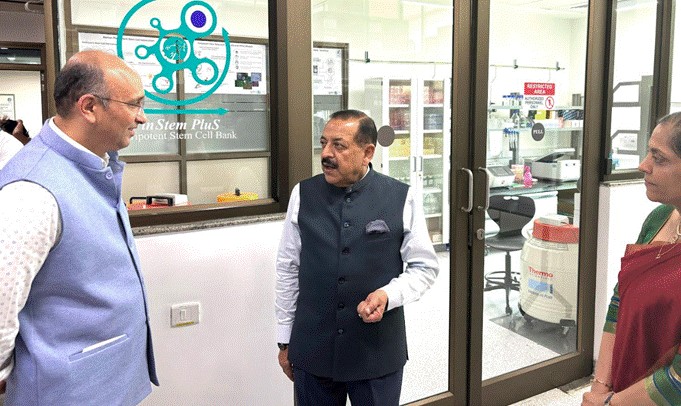
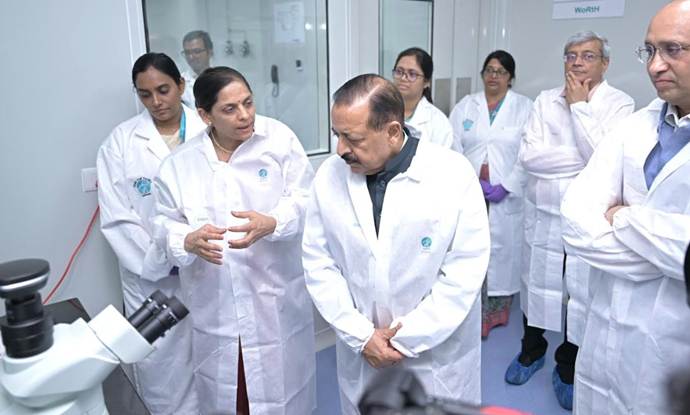
Union Minister of State (Independent Charge) for Science and Technology; Earth Sciences and Minister of State for PMO, Department of Atomic Energy, Department of Space, Personnel, Public Grievances and Pensions, Dr. Jitendra Singh inspected the various facilities at BRIC-inStem and reviewed ongoing clinical trials in collaboration with premier medical institutes and hospitals, including the landmark first-in-human gene therapy trial for Haemophilia conducted with CMC Vellore. Calling it a “milestone in India’s scientific journey,” the Minister hailed the institute’s contributions to preventive and regenerative healthcare.

During his visit, Dr. Jitendra Singh underscored the strategic importance of biotechnology in shaping India’s future economy and public health infrastructure. “This is not just about science—it’s about nation-building,” he said, commending the Department of Biotechnology’s (DBT) recent successes and its emergence from relative obscurity into national relevance.

India’s biotechnology sector has seen an extraordinary leap, growing 16-fold in the past decade to reach $165.7 billion in 2024, with a vision to touch $300 billion by 2030. The Minister credited this growth to enabling policy reforms, including the recently approved BIO-E3 Policy that aims to boost economy, employment, and environment through biotechnology. “We now have over 10,000 biotech startups compared to just 50 a decade ago,” he pointed out.

Dr. Jitendra Singh praised the creation of the Biotechnology Research and Innovation Council (BRIC) that unified 14 autonomous institutions under one umbrella. “BRIC-inStem is at the cutting edge of fundamental and translational science,” he said, highlighting innovations like the germicidal anti-viral mask during the COVID-19 pandemic and the ‘Kisan Kavach’ that protects farmers from neurotoxic pesticides.

A highlight of the visit was BRIC-inStem’s Biosafety Level III laboratory, a key national facility for studying high-risk pathogens under India’s One Health Mission. “The recent pandemic taught us that we must always be prepared. Facilities like this will help us stay a step ahead,” Dr. Jitendra Singh stated.

The Minister also praised the newly launched Centre for Research Application and Training in Embryology (CReATE), which addresses birth defects and infertility by advancing developmental biology research. “With about 3 to 4 percent of babies born with some form of defect, this centre is vital for improving maternal and neonatal health outcomes,” he said.

Calling for greater collaboration between scientific and medical institutions, he suggested that BRIC-inStem explore MD-PhD programs, integrate more with clinical research, and enhance visibility through coordinated communication strategies. “What’s being done here should echo across the country—not for publicity, but because the nation needs it,” he said.

Dr. Jitendra Singh concluded by noting that India’s economy of the future would be bio-driven, with institutions like BRIC-inStem serving as torchbearers of this transformation. “As Mark Twain said, the economy is too serious a subject to be left to economists alone. Biotechnology is not just a science anymore—it is a pillar of our national strategy.”

Dr. Mansukh Mandaviya Launches Issuance of Sports Certificates via DigiLocker

| Published on:

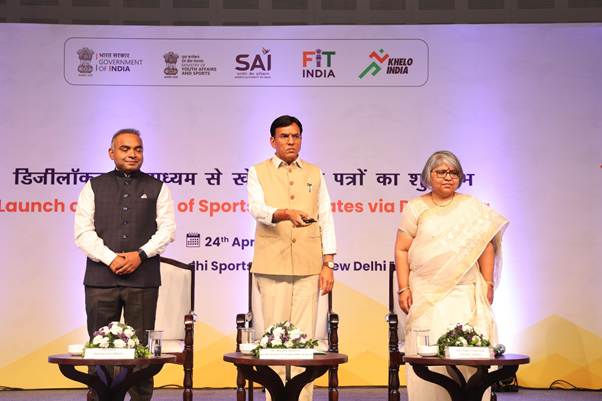
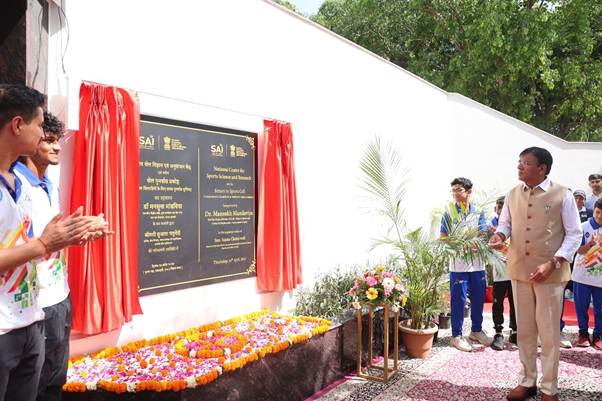
Union Minister of Youth Affairs & Sports and Labour & Employment, Dr. Mansukh Mandaviya today launched the issuance of sports certificates via DigiLocker at the Indira Gandhi Stadium in New Delhi.

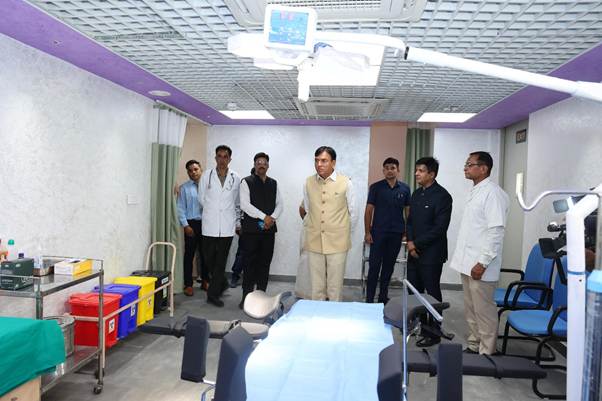
Prior to the launch, he inaugurated the National Centre for Sports Science and Research (NCSSR) at the same venue.

Addressing the gathering, Dr. Mandaviya reaffirmed the Government’s commitment to athlete welfare, stating that all sports initiatives undertaken by Modi Government are athlete-centric. Citing examples of the Draft National Sports Governance Bill 2024, Draft National Sports Policy 2024, and the Draft National Code Against Age Fraud in Sports (NCAAFS) 2025, the Minister said these reflect the Government’s resolve to ensure transparency, fairness and good governance in the Indian sports ecosystem.

He announced that sports certificates issued via DigiLocker will soon be integrated with the National Sports Repository System (NSRS), enabling automatic disbursal of Government cash rewards directly into athletes’ bank accounts through Direct Benefit Transfer (DBT), eliminating the need for paper applications.

“In the past what used to happen is that a sportsperson had to apply for Government cash rewards after winning medals in international competitions. I don’t want that the athletes have to suffer or face any roadblocks in getting their well-deserved reward. So, these initiatives are meant to make it smooth for them. If everyone has watched him/her win a medal internationally why do they need to apply,” Union Minister said.

Highlighting future plans, Dr. Mandaviya spoke about the comprehensive roadmap being implemented to support India’s bid to host the 2036 Olympics. He also reiterated India’s interest in hosting the Commonwealth Games in 2030.

Calling on National Sports Federations (NSFs) to prioritize good governance and athlete welfare, Union Minister urged collective efforts from athletes, federations, and the Government to strengthen the sports ecosystem. As a step in this direction, he announced that office space at IG Stadium in Delhi will be made available to interested NSFs.

Dr. Mandaviya also announced the forthcoming launch of a ‘One Sport–One Corporate’ policy aimed at facilitating federation handholding and attracting financial support for sports development. Additionally, Olympic training centres for high-priority sports disciplines will be developed under a Public-Private Partnership (PPP) model, he added.

Speaking on the inauguration of the NCSSR, Dr. Mandaviya said the Centre will serve as a hub for high-level research, education, and innovation aimed at enhancing elite athlete performance. He emphasized that such initiatives will be instrumental in fulfilling India’s long-term sporting vision under Viksit Bharat by 2047.

“Let us all work together to build a strong sports culture for a new India,” Dr. Mandaviya concluded.

Praising the initiative by the government, Olympic silver medallist and Major Dhyan Chand Khel Ratna awardee Mirabai Chanu said: “This is a really good scheme for players. The issuance of sports certificates by DigiLocker will take a lot of stress away from all sportspersons like me. Many times sportspersons have to rush back home for certain documents – for government jobs, visa etc. – as we don’t carry them with us always. I want to thank our Sports Minister on behalf of all players for this initiative.”

Prime Minister chairs a meeting of the CCS

| Published on:

Prime Minister, Shri Narendra Modi, chaired a meeting of the Cabinet Committee on Security at 7, Lok Kalyan Marg, today, in the wake of the terrorist attack in Pahalgam.

The Prime Minister posted on X :

“In the wake of the terrorist attack in Pahalgam, chaired a meeting of the CCS at 7, Lok Kalyan Marg.”

Those behind the cowardly terror attack in Pahalgam will soon get a befitting reply: Raksha Mantri

| Published on:

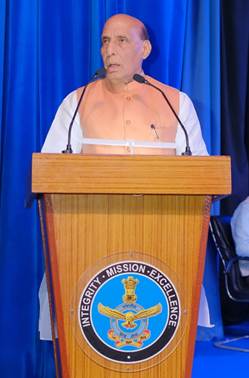
Raksha Mantri Shri Rajnath Singh has assured the people that those responsible for the cowardly terrorist attack on innocent citizens in Pahalgam, Jammu & Kashmir will soon get a befitting reply to their nefarious acts on Indian soil. Delivering a memorial lecture on the Marshal of the Indian Air Force (IAF) Arjan Singh in New Delhi on April 23, 2025, Raksha Mantri reiterated India’s firm resolve of zero tolerance against terrorism and stated that the Government, led by Prime Minister Shri Narendra Modi, will take every necessary and appropriate step.

“India is an old civilisation and such a big country can never be intimidated by any such terror activities. Every Indian is united against this cowardly act. Not just those who perpetrated the attack, but even those who conspired from behind the scenes to commit such nefarious acts on the Indian soil will soon get an appropriate response,” said Shri Rajnath Singh

In the context of cross-border-supported terrorist incidents, Raksha Mantri said “History is witness to the withering away of nations not due to the action of the adversary, but due to the result of their own misdeeds. I hope people across the border look at lessons of history more closely”.

Shri Rajnath Singh expressed deepest condolences to the families who lost their loved ones in the terror attack at Pahalgam. “Our country has lost many innocent citizens in a cowardly attack by terrorists targeting religion. This extremely inhuman act has left us in deep pain. In this hour of grief, I pray for peace to the departed souls,” he said.

Later, Raksha Mantri paid rich tributes to the Marshal of the Indian Air Force Arjan Singh, terming his leadership, vision and dedication as incredible. “He was a visionary military leader who, even today, inspires the youth. If today IAF is one of the world’s strongest air forces, it is because of the vision and ethos of military leaders like Marshal of the Indian Air Force Arjan Singh,” he said.

Shri Rajnath Singh described the journey of IAF as an aspiring, inspirational, and transformational epic, which is not just about touching the sky, but also turning the dreams of national security into reality. He stated that, despite challenges, IAF has grown stronger post-independence, and is today contributing significantly to national security as a strong pillar.

Raksha Mantri emphasised that the Government’s focus is on transforming the Armed Forces on the back of a self-reliant defence ecosystem. He reiterated the commitment towards establishing IAF as a dominant power in the region, stating that the journey towards Aatmanirbharta is a shared responsibility. Commitment, collaboration and unified vision is the need of the hour, he said. He added that India’s national security will further strengthen if IAF is well-equipped and highly technology-oriented.

Shri Rajnath Singh stressed that national security cannot be ensured through import dependency, and the Government is working relentlessly towards achieving defence sovereignty. He stated that emphasis is being laid on manufacturing defence equipment within the country and the efforts of Ministry of Defence are yielding positive results. He termed Light Combat Aircraft (LCA) Tejas, Advanced Light Helicopter Dhruv, Light Utility Helicopter Prachand, Akash & BrahMos Air Defence weapons as shining examples of the capability of Indian designers, engineers and scientists.

“Today, not only has there been unparalleled growth in defence manufacturing in the public sector, the private sector is also participating with great enthusiasm. As the field of defence production is becoming technology-oriented, the role of start-ups and MSMEs is also increasing rapidly. These are proving to be the backbone of defence innovation. In the times to come, the role of the private sector, start-ups and MSMEs in high-tech warfare is going to increase even more,” said Raksha Mantri.

Terming aero-engine development as a priority area of the Government in view of the needs of IAF, Shri Rajnath Singh stated that the effort is to make the engine in India on the model of co-development and co-production with full intellectual property rights. He added that special attention is being paid to the development of fifth generation fighter aircraft and LCA Mark-2. He further highlighted that self-reliance has been achieved to a large extent on many air defence systems, including Astra Mark-2, Pralay, SMART, anti-field weapon, NG Anti-radiation missile, and Very Short Range Air Defence System, and these are at various stages of production and development.

Raksha Mantri emphasised that due to the shift of power dynamics to Asia in the 21st century, the Indo-Pacific region has emerged as the most important region strategically, and the Government is leaving no stone unturned to address the complex challenges emanating from a fluid international order and technological revolution. He pointed out that the revolutionary breakthrough in the field of technology, including the growing use of Artificial Intelligence, Hypersonic Directed Energy weapons, Quantum Computing, drones, cyber & space tech, have brought unpredictability and lethality in modern-day warfare, making it unconventional & even more uncertain. He voiced Prime Minister Shri Narendra Modi-led Government’s commitment to tackle these challenges and uncertainties.

Chief of the Naval Staff Admiral Dinesh K Tripathi, Chief of the Air Staff Air Chief Marshal AP Singh, Chief of the senior civil & military officials and serving and retired IAF personnel were among those present on the occasion.

Union Home Minister pays his last respects to the deceased of Pahalgam terror attack

| Published on:

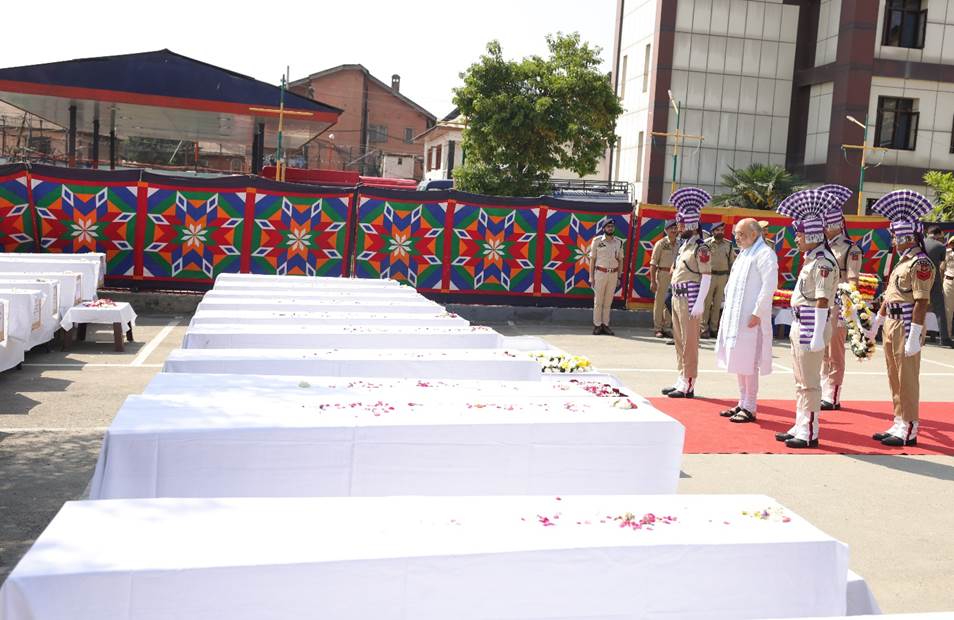
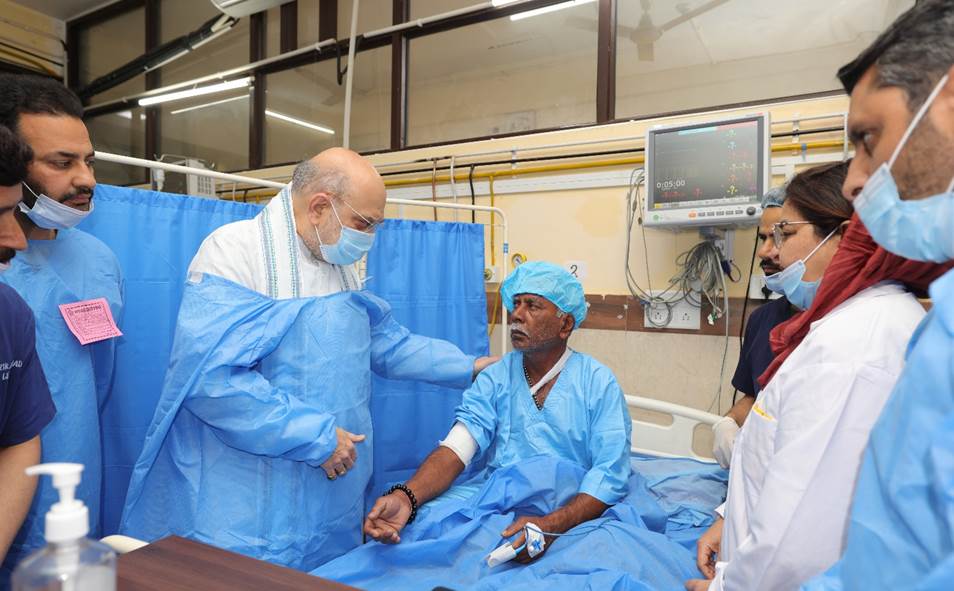
Union Home Minister and Minister of Cooperation Shri Amit Shah today paid his last respects to the deceased of yesterday’s Pahalgam terror attack. Union Home Minister said that Bharat will not bend to terror and the culprits of this dastardly terror attack will not be spared.

Shri Amit Shah also met families of victims of the Pahalgam terror attack. He said that every Indian feels the pain of losing loved ones in the terrorist attack in Pahalgam and this sorrow cannot be expressed in words.

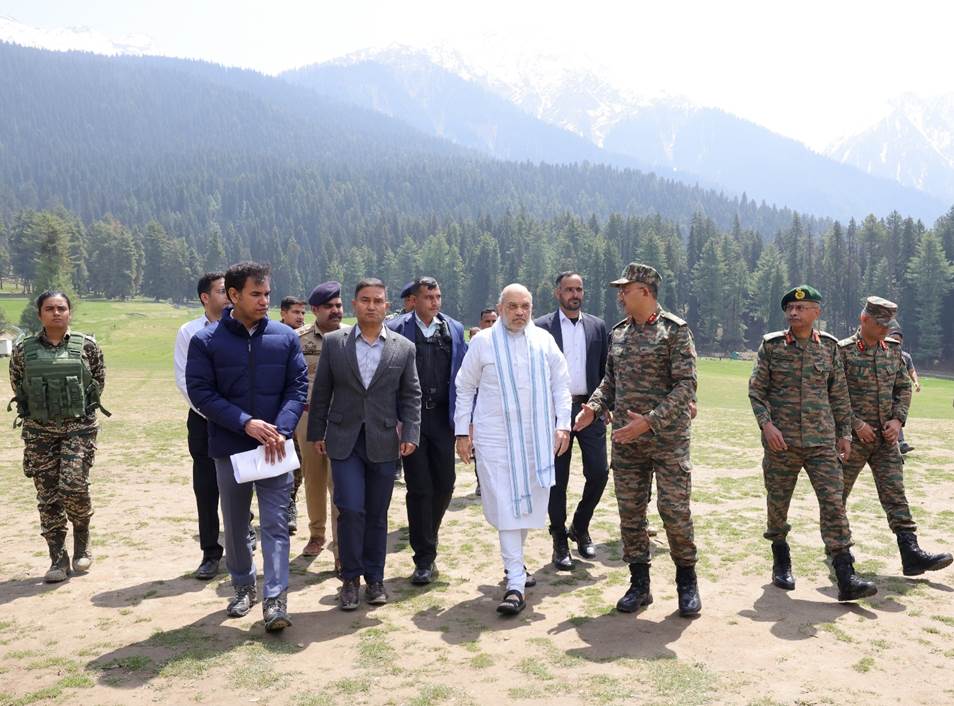
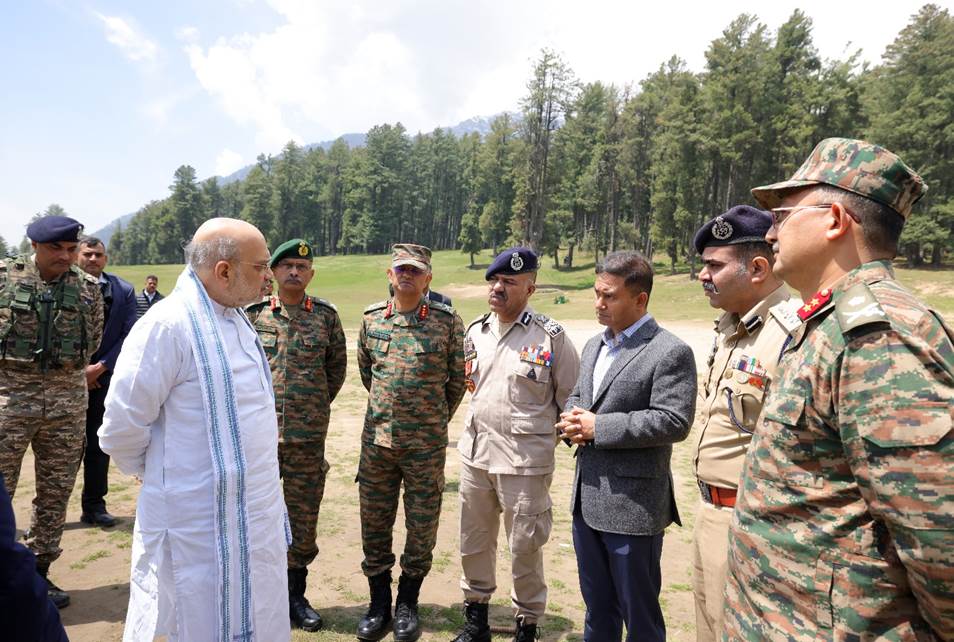
Union Home Minister visited the site of the Pahalgam terror attack and took a detailed briefing about the incident from officers.

Shri Shah also visited the injured of the Pahalgam terror attack, admitted to the hospital and assured them of every possible assistance.

PM strongly condemns the terror attack in Pahalgam, Jammu and Kashmir

| Published on:

Prime Minister, Shri Narendra Modi strongly condemned the terror attack in Pahalgam, Jammu and Kashmir, today.”Those behind this heinous act will be brought to justice. They will not be spared! Their evil agenda will never succeed. Our resolve to fight terrorism is unshakable and it will get even stronger”, Shri Modi added.

The Prime Minister posted on X :

“I strongly condemn the terror attack in Pahalgam, Jammu and Kashmir. Condolences to those who have lost their loved ones. I pray that the injured recover at the earliest. All possible assistance is being provided to those affected.

Those behind this heinous act will be brought to justice…they will not be spared! Their evil agenda will never succeed. Our resolve to fight terrorism is unshakable and it will get even stronger.”

Prime Minister highlights the growing ties between India and Saudi Arabia

| Published on:

The Prime Minister Shri Narendra Modi  highlighted the growing ties between India and Saudi Arabia, in an interview with  Arabnews. Shri Modi described Saudi Arabia as a trusted friend and strategic ally, emphasising the significant expansion of bilateral relations since the creation of the Strategic Partnership Council in 2019.

The Prime Minister’s Office wrote in a post on X:

“In an interview with @arabnews, PM @narendramodi highlighted the growing ties between India and Saudi Arabia. He described Saudi Arabia as “a trusted friend and strategic ally,” emphasising the significant expansion of bilateral relations since the creation of the Strategic Partnership Council in 2019.”

Read the interview here: https://arabnews.com/node/2597904/saudi-arabia