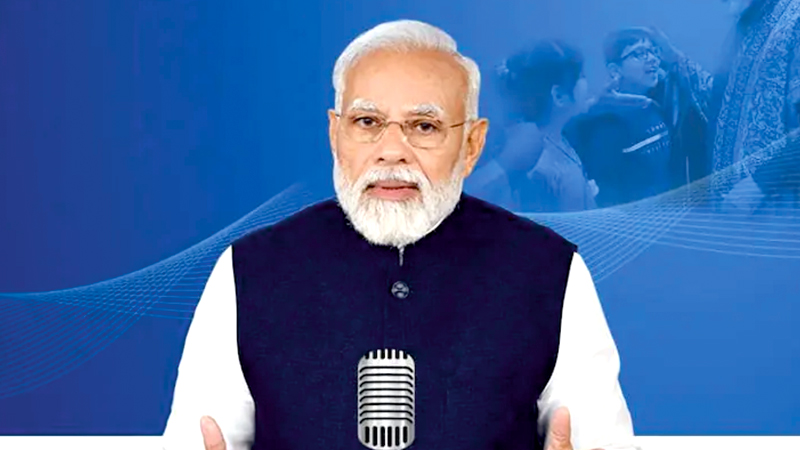
PM’s address in the 122nd Episode of ‘Mann Ki Baat’

| Published on:

My dear countrymen, Namaskar. Today the whole country is united against terrorism; filled up with anger and resolve. Today every Indian holds the same resolve that we have to end terrorism. Friends, the valour displayed by our forces during Operation Sindoor has made every Indian proud. The precision and accuracy with which our forces destroyed the terrorist hideouts across the border is amazing. Operation Sindoor has lent a new confidence and enthusiasm to the fight against terrorism across the world.

Friends, Operation Sindoor is not just a military mission; it is a picture of our resolve, courage and a transforming India and this picture has infused the whole country with a sense of patriotism and has painted it in the hues of the tricolour. You must have seen that in many cities, villages and small towns of the country, Tiranga Yatras were organised. Thousands of people came out holding the tricolour, to pay their respects & honour to the country’s armed forces. In many a city, a large number of youth came together to become Civil Defence Volunteers… and we saw that the videos from Chandigarh went viral. Poems were being written on social media, songs of resolve were being sung. Little children were creating paintings that carried great messages hidden in them.

I had gone to Bikaner just three days ago. There, children had gifted me one such painting. ‘Operation Sindoor’ has influenced the people of the country so much that many families have made it a part of their lives. In Katihar in Bihar, Kushinagar in UP, and many other cities, children born during that period have been named ‘Sindoor’.

Friends, our soldiers destroyed terror bases; it was their indomitable courage, along with the power of weapons, equipment and technology made in India. It also included the resolve of ‘Atmanirbhar Bharat’. The sweat of our engineers, our technicians, in fact, that of everyone… is involved in this victory. After this campaign, a renewed energy is visible in the whole country regarding ‘Vocal for Local’. Many things touch the heart. A parent remarked, “We will now buy toys only made in India, for our children. Patriotism will start from childhood.” Some families have taken a pledge, “We will spend our next vacation in some beautiful place in the country.” Many young persons have taken a pledge to ‘Wed in India’… that they would get married in the country itself. Someone also said, “Now whatever gift we will give, it will be made by an Indian artisan.”

Friends, this itself is the real strength of India – ‘connection between people and minds… public participation’. I urge all of you too… come, let us take a pledge on this occasion – wherever possible in our lives, we will accord priority to products made in the country.

This is not just a matter of economic self-reliance… it is a feeling of participation in nation building. One step of ours can become a huge contribution to the progress of India.

Friends, travelling to a place by bus is such a common thing. But I want to tell you about a village where a bus has reached for the first time. People there had been waiting for this day for years. And when the bus reached the village for the first time, people welcomed it by playing the Dhol-Nagara. Upon seeing the bus, their joy knew no bounds! There was a paved road in the village… people needed it, but a bus could never run here before. Why… because this village was affected by Maoist violence. This place is in Gadchiroli district of Maharashtra, and the name of this village is Katejhari. This change in Katejhari is being felt in the entire surrounding region. Now the situation here is becoming normal rapidly. On account of the collective fight against Maoism, basic facilities have started reaching such areas as well. The people of the village say that with the arrival of the bus, their lives would become much easier.

Friends, in ‘Mann Ki Baat’ we have already discussed the Bastar Olympics held in Chhattisgarh and the Science Lab in Maoist affected areas. The children here are passionate about science. They are also doing great in sports. Such efforts reflect how courageous the people living in these areas are. These people have chosen the path of improving their lives amidst so many challenges.

I am also very happy to know that the results of Dantewada district in the 10th and 12th standard examinations have been excellent. With nearly ninety five percent result, this district topped the 10th standard results. Whereas in the 12th standard examination, this district secured the sixth position in Chhattisgarh. Imagine! Dantewada, where Maoism was once at its peak… today the flag of education is flying high there. Such changes fill us all with pride.

My dear countrymen, I now want to share a piece of good news related to lions. In just the last five years, the population of lions in Gir, Gujarat has increased from 674 to 891. This number of lions that emerged after the lion census is very encouraging. Friends, many of you must be wondering how this animal census is conducted! This exercise is very challenging. You will be surprised to know that the Lion Census was conducted in 11 districts, in an area of ​​35 thousand square kilometres. For the census, the teams monitored these areas round the clock… twenty four hours. Both verification and cross verification were done in this entire campaign. This enabled the counting of lions to be completed with utmost precision.

Friends, the rise in the population of the Asiatic Lion shows that when the sense of ownership strengthens in the society, amazing results happen. A few decades ago, the situation in Gir was very challenging. But the people there came together to bring about a change.

Along with the latest technology, global best practices were also adopted there. During this time, Gujarat became the first state where women were appointed as Forest Officers on a large scale. All these have contributed to the results we are seeing today. We will have to remain vigilant and alert like this for wildlife protection.

My dear countrymen, just a couple of days ago, I went to the first Rising North East Summit. Before that, we also celebrated the ‘Ashtalakshmi Mahotsav’ dedicated to the strength of the North East. The North East is something extraordinary; its strength, its talent, is really amazing. I have come to know an interesting story about crafted fibres. Crafted fibres is not just a brand; it is a beautiful confluence of Sikkim’s tradition, the art of weaving, and the sense of fashion today. It was started by Dr. Chewang Norbu Bhutia. He is a Veterinary Doctor by profession and a true Brand Ambassador of Sikkim’s culture by heart. He thought… ”why not give a new dimension to weaving!” And this thought gave birth to Crafted Fibers. He connected traditional weaving with modern fashion and made it a social enterprise. Now he doesn’t just make clothes, he weaves lives. He provides skill training to local people, making them self-reliant. By connecting village weavers, cattle rearers and self-help groups, Dr. Bhutia has created new avenues of employment.

Today, local women and artisans are earning well through their skills. Crafted Fibers’ shawls, stoles, gloves, socks… all are made by local handloom. The wool used in it is obtained from the rabbits and sheep of Sikkim. The colors are also completely natural – no chemicals, only the hues of nature. Dr. Bhutia has lent a new identity to the traditional weaving and culture of Sikkim. Dr. Bhutia’s work teaches us how much tradition can attract the world when it is combined with passion.

My dear countrymen, today I want to tell you about a wonderful person who is an artist as well as a living inspiration. His name is – Jeevan Joshi; age 65 years. Now imagine, how full of life one who has ‘Jeevan’ in one’s name itself must be. Jeevan ji lives in Haldwani, Uttarakhand. During childhood, polio took away the strength of his legs, but polio could not snatch his courage.

Even though his walking speed slowed down, his mind kept soaring on every flight of imagination. In this flight, Jeevan ji gave birth to a unique art… he named it ‘Baget’. In this, he makes beautiful art pieces from the dry bark that falls apart off pine trees. The very bark, which people generally consider useless – becomes a heritage as soon as it comes into Jeevan ji’s hands. Every creation of his bears the fragrance of the soil of Uttarakhand. Sometimes it is the folk instruments of the hills, and at times it seems as if the soul of the hills has permeated that wood. Jeevan ji’s work is not just art, it is a sadhana.

He has dedicated his entire life to this art. Artists like Jeevan Joshi remind us that no matter what the circumstances are, if the intention is strong, nothing is impossible. His name is Jeevan and he has really shown what it means to live life.

My dear countrymen, today there are many women who are working in the fields as well as touching the heights of the sky. Yes! You heard it right, now the women of the village are flying drones as Drone Didi and ushering in a new revolution in agriculture.

Friends, in Sangareddy district of Telangana, women who had to depend on others till some time ago… today those very women are completing the work of spraying pesticides on 50 acres of land with the help of drones. Three hours in the morning, two hours in the evening and the work is done. Neither the scorching sun, nor the danger of poisonous chemicals. Friends, the villagers have also accepted this change wholeheartedly. Now these women are not known as ‘drone operators’ but as ‘sky warriors’. These women are telling us that change comes when technology and determination go together.

My dear countrymen, less than a month is left for ‘International Yoga Day’. This occasion reminds us that if you are still away from yoga, join yoga now. Yoga will change the way you live your life. Friends, since the beginning of ‘Yoga Day’ on 21 June 2015, attraction towards it is rising continuously.

This time too, the zeal and enthusiasm among people all over the world with regard to ‘Yoga Day’ is amply visible. Myriad institutions are sharing their preparations. The pictures of past years have been very inspiring. We have seen that during these years, people in various countries have made Yoga Chain or Yoga Ring. There are many pictures which depict four generations doing yoga together. Many people have chosen iconic places of their city for yoga. You too can think of celebrating Yoga Day in some interesting way this time.

Friends, the government of Andhra Pradesh has started YogAndhra Abhiyan. Its objective is to develop the yoga culture in the entire state. Under this campaign, a pool of 10 lakh people practising yoga is being created. I will get an opportunity to participate in the ‘Yoga Day’ program in Visakhapatnam this year. I am happy to know that this time too our young friends are going to perform yoga at iconic places related to the heritage of the country. Many youth have pledged to create a record and become a part of the Yoga Chain. Our Corporates too, are not lagging behind in this. Some institutions have set aside a separate place for yoga practice in their offices. Some start-ups have set up ‘office yoga hours’. There are also people who are preparing to go to villages and teach yoga. This awareness of people about health and fitness gives me immense joy.

Friends, along with ‘Yoga Day’, something has happened in the field of Ayurveda as well, which you will be very happy to know about. Just yesterday, i.e. on 24th May, an MoU was signed in the presence of WHO Director General and my friend Tulsi Bhai. Along with this agreement, work has started on a dedicated traditional medicine module under the International Classification of Health Interventions. This initiative will help in making AYUSH reach maximum number of people across the world in a scientific manner.

Friends, you must have seen blackboards in schools, but now ‘sugar boards’ are also being installed in some schools – not blackboard, but sugar board! The aim of this unique initiative of CBSE is to make children aware of their sugar intake. By understanding how much sugar should be consumed and how much sugar is being consumed, children have started choosing healthy options themselves. This is a unique effort and its impact will also be very positive. It can prove to be very helpful in inculcating healthy lifestyle habits from childhood. Many parents have appreciated it and I believe that such initiatives should also be taken in offices, canteens and institutions. After all, if there is health, there is everything. Fit India is the foundation of a strong India.

My dear countrymen, how can it be possible that there is talk of clean India and the listeners of ‘Mann Ki Baat’ stay behind? I have full faith that all of you are strengthening this campaign at your own level.

But today I want to tell you about an example where the resolve for cleanliness conquered even insurmountable challenges. Just imagine, a person is climbing snowy mountains, where it is difficult to breathe, there is danger to life at every step and still that person is engaged in cleaning there. Something similar has been done by members of our ITBP team. This team went to climb the world’s most difficult peak, Mount Makalu. But friends, they didn’t just climb the mountain… they added another mission of ‘cleanliness’ to their goal. They took up the task of removing the garbage lying near the peak. Just imagine, the members of this team brought down more than 150 kg of non-biodegradable waste with them. Cleaning at such a height is not an easy task. But this shows that where there is determination, the path is created automatically.

Friends, another important topic related to this is – paper waste and recycling. A lot of paper waste is generated in our homes and offices every day. Perhaps, we consider it normal, but you will be surprised to know that about a fourth of the country’s landfill waste is related to paper. Today, there is a need for every person to think in this direction. I am happy to know that many Start-Ups of India are doing excellent work in this sector. In many cities like Visakhapatnam and Gurugram, many Start-Ups are adopting innovative methods of paper recycling. Some are making packaging boards from recycled paper, others are making newspaper recycling easier through digital methods.

In cities like Jalna, some Start-Ups are making packaging rolls and paper cores from 100 percent recycled material. You will also be inspired by knowing that recycling one ton of paper saves 17 trees from being cut and thousands of litres of water is saved. Just think, when mountaineers can bring back waste under such difficult conditions, we too should definitely contribute to recycling by separating paper in our homes or offices. When every citizen of the country thinks what better one could do for the country, only then can we bring about a big change, together.

Friends, recently Khelo India Games were a big hit. Five cities of Bihar hosted the Khelo India games. Matches of different categories were held there. The number of athletes who reached there from all over India was more than five thousand. These athletes have praised the Sporting Spirit of Bihar and the warmth shown by the people of Bihar.

Friends, the land of Bihar is very special. Many unique things happened here in this event. This was the first edition of Khelo India Youth Games, which reached the whole world through the Olympic channel. People from all over the world saw and appreciated the talent of our young players. I congratulate all the medal winners, especially the top three winners – Maharashtra, Haryana and Rajasthan.

Friends, a total of 26 records were made in Khelo India this time. In the Weight Lifting competitions, the brilliant performances of Asmita Dhone of Maharashtra, Harshvardhan Sahu of Odisha and Tushar Chaudhary of Uttar Pradesh won everyone’s heart. Sairaj Pardesi of Maharashtra went on to create three records. In athletics, Qadir Khan and Sheikh Zeeshan of Uttar Pradesh and Hansraj of Rajasthan performed brilliantly. This time Bihar also won 36 medals. Friends, the one who plays, blooms. The tournament holds great significance for Young Sporting Talent. Such events will further enhance the future of Indian sports.

My dear countrymen, the 20th of May was celebrated as ‘World Bee Day’; a day which reminds us that honey is not just sweetness; it is also an example of health, self-employment and self-reliance. During the last 11 years, a sweet revolution has taken place in beekeeping in India. 10-11 years ago, honey production in India was around 70-75 thousand metric tons in a year. Today it has increased to around 1.25 lakh metric tons. That is, there has been an increase of about 60% in honey production. We have become one of the leading countries in the world in honey production and export. Friends, National Beekeeping and ‘Honey Mission’ have a big role in this positive impact. Under this, thousands of farmers associated with beekeeping were imparted training, equipment and their direct access to the market was created.

Friends, this change is not only visible in figures; it is also clearly visible on the ground level in the villages. There is an example of Korea district of Chhattisgarh, where tribal farmers have created a pure organic honey brand named ‘Sonhani’. Today that honey is being sold on many online portals including GeM, that is, the hard work of the village is now going global. Similarly, thousands of women and youth in Uttar Pradesh, Gujarat, Jammu & Kashmir, West Bengal and Arunachal Pradesh have become honey entrepreneurs. Friends, now work is being done not only on the quantity of honey but also on its purity. Some start-ups are now certifying the quality of honey with AI and digital technology. The next time you buy honey, do try the honey made by these honey entrepreneurs. Try to buy honey from a local farmer; from a woman entrepreneur as well. Because every drop of it contains not only taste but also the hard work and hopes of India. This sweetness of honey is the taste of a self-reliant India.

Friends, while we are talking about the efforts of countries related to honey, I would like to tell you about another initiative. It reminds us that the protection of honeybees is not just a protection of the environment, but also that of our agriculture and future generations. Here’s an example of the city of Pune, where a beehive was removed from a housing society – perhaps on account of security reasons or fear. But this incident forced someone to think something.

A young person named Amit decided that bees should not be removed but they should be saved. He learnt himself, researched on bees and started adding others too. Gradually he formed a team, which he named Bee Friends i.e. ‘Bee Mitra’. Now these Bee Friends transfer beehives from one place to another in a safe manner, so that people are not in danger and the honeybees also stay alive. The effect of this endeavour of Amit ji has also been great. Honeybee colonies are being saved. Honey production is increasing, and most importantly, awareness is also rising among people. This initiative teaches us that when we work in harmony with nature, everyone benefits from it.

My dear countrymen, that’s all for this episode of ‘Mann Ki Baat’. Keep sending me the achievements of the people of the country and their efforts for the society. We will meet again in the next episode of ‘Mann Ki Baat’… we will discuss many new topics and new achievements of countrymen. I am waiting for your messages. Thank you very much. Namaskar.

PM inaugurates Rising North East Investors Summit 2025

| Published on:

The Prime Minister Shri Narendra Modi inaugurated the Rising North East Investors Summit 2025 at Bharat Mandapam, New Delhi today. Extending a warm welcome to all the dignitaries to the event, the Prime Minister expressed pride, warmth, and immense confidence in the future of the North East region. He recalled the recent Ashtalakshmi Mahotsav held at Bharat Mandapam and emphasized that today’s event marks a celebration of investment in the Northeast. The Prime Minister highlighted the significant presence of industry leaders at the summit, underscoring the enthusiasm surrounding opportunities in the region. He extended his congratulations to all ministries and state governments, acknowledging their efforts in creating a thriving investment-friendly environment. Conveying his best wishes, Prime Minister lauded the Northeast Rising Summit, reaffirming his commitment to the region’s continued growth and prosperity.

Underscoring India’s status as the world’s most diverse nation, Shri Modi said, “the Northeast is the most diverse region of our diverse nation”. He emphasized the vast potential spanning trade, tradition, textiles, and tourism, stating that the region’s diversity is its greatest strength. He remarked that the Northeast is synonymous with a thriving bio-economy and bamboo industry, tea production and petroleum, sports and skill, as well as an emerging hub for eco-tourism. He further noted that the region is paving the way for organic products and stands as a powerhouse of energy. He affirmed that the Northeast embodies the essence of Ashtalakshmi, bringing prosperity and opportunity. With this strength, he stated, every Northeastern state is declaring its readiness for investment and leadership.

Emphasizing the critical role of Eastern India in achieving a Viksit Bharat, the Prime Minister underscored the Northeast as its most vital component. “For us, EAST is not just a direction but a vision—Empower, Act, Strengthen, and Transform—which defines the policy framework for the region”, he stated, highlighting that this approach has placed Eastern India, particularly the Northeast, at the center stage of India’s growth trajectory.

Prime Minister highlighted the transformative changes witnessed in the Northeast over the past 11 years, emphasizing that the progress is not merely reflected in statistics but is tangible on the ground. He stated that the government’s engagement with the region goes beyond policy measures, fostering a heartfelt connection with its people. The Prime Minister underscored the over 700 visits made by Union Ministers to the Northeast, demonstrating their commitment to understanding the land, witnessing the aspirations in people’s eyes, and translating that trust into development policies. He stressed that infrastructure projects are not just about bricks and cement but serve as a means of emotional connectivity. He reaffirmed the shift from Look East to Act East, stating that this proactive approach is yielding visible results. “While the Northeast was once regarded merely as a frontier region, it is now emerging as a front-runner in India’s growth story”, he added.

Underlining that robust infrastructure plays a key role in making the tourism sector attractive and instilling confidence among investors, Shri Modi highlighted that well-developed roads, power infrastructure, and logistics networks form the backbone of any industry, facilitating seamless trade and economic growth. He remarked that infrastructure is the foundation of development and that the government has initiated an Infrastructure Revolution in the Northeast. He acknowledged the region’s past challenges but asserted that it is now emerging as a Land of Opportunities. He stated that thousands of crores have been invested in enhancing connectivity, citing projects such as the Sela Tunnel in Arunachal Pradesh and the Bhupen Hazarika Bridge in Assam. Shri Modi also highlighted key advancements in the past decade, including the construction of 11,000 kilometers of highways, extensive new railway lines, a doubling of airport numbers, the development of waterways on the Brahmaputra and Barak rivers, and the installation of hundreds of mobile towers. He further noted the establishment of a 1,600-kilometer-long Northeast Gas Grid, ensuring a reliable energy supply for industries. Shri Modi underscored that highways, railways, waterways, and digital connectivity are all strengthening the Northeast’s infrastructure, creating a fertile ground for industries to seize the First Mover Advantage. He affirmed that over the next decade, the region’s trade potential will multiply significantly. He further pointed out that India’s trade volume with ASEAN currently stands at approximately $125 billion and is expected to exceed $200 billion in the coming years, positioning the Northeast as a strategic trade bridge and gateway to ASEAN markets. He reiterated the government’s commitment to accelerating infrastructure projects to enhance regional connectivity. Stressing the importance of the India-Myanmar-Thailand Trilateral Highway, which will provide direct access from Myanmar to Thailand, strengthening India’s connectivity with Thailand, Vietnam, and Laos, Shri Modi highlighted the government’s efforts to expedite the Kaladan Multimodal Transit Project, which will link the Kolkata Port to Myanmar’s Sittwe Port, providing a crucial trade route through Mizoram. He stated that this project will significantly reduce the travel distance between West Bengal and Mizoram, enhancing trade and industrial growth.

Highlighting the ongoing development of Guwahati, Imphal, and Agartala as Multi-Modal Logistics Hubs, the Prime Minister noted that the establishment of Land Custom Stations in Meghalaya and Mizoram is further expanding international trade opportunities. He emphasized that these advancements are positioning the Northeast as a rising force in trade with Indo-Pacific nations, unlocking new avenues for investment and economic growth.

Underscoring India’s vision of becoming a Global Health and Wellness Solution Provider, the Prime Minister stated that the Heal in India initiative is being developed as a worldwide movement. He highlighted the Northeast’s rich biodiversity, natural environment, and organic lifestyle, describing it as a perfect destination for wellness. The Prime Minister urged investors to explore the Northeast as a critical component of India’s Heal in India mission, reaffirming that the region’s climate and ecological diversity offer immense potential for wellness-driven industries.

Shri Modi highlighted the rich cultural heritage of the Northeast, emphasizing its deep-rooted connection to music, dance, and celebrations. He noted that the region is an ideal destination for global conferences, concerts, and destination weddings, positioning it as a complete tourism package. He stated that as development reaches every corner of the Northeast, its positive impact on tourism is evident, with visitor numbers doubling. He remarked that these are not just statistics—this surge has led to the rise of homestays in villages, new employment opportunities for young guides, and the expansion of the tour and travel ecosystem. Underscoring the need to elevate Northeast tourism further, he pointed out the vast investment potential in eco-tourism and cultural tourism. Reaffirming that peace and law and order are the most crucial factors for any region’s development, Shri Modi stated, “Our government has a zero-tolerance policy against terrorism and insurgency”. He noted that the Northeast was once associated with blockades and conflict, which severely impacted opportunities for its youth. He outlined the government’s consistent efforts toward peace agreements, stating that over the past 10-11 years, more than 10,000 young individuals have abandoned arms to embrace peace. He emphasized that this shift has unlocked new employment and entrepreneurial opportunities within the region. Shri Modi further highlighted the impact of the MUDRA scheme, which has provided thousands of crores in financial support to lakhs of youth in the Northeast. He further noted the rise of education institutes, helping young individuals develop skills for the future. He stated that the youth of the Northeast are not just internet users but emerging digital innovators. He emphasized advancements such as over 13,000 kilometers of optical fiber expansion, 4G and 5G coverage, and growing opportunities in the technology sector. “Young entrepreneurs are now launching major startups within the region, reinforcing the Northeast’s role as India’s digital gateway”, he added.

Emphasizing the critical role of skill development in driving growth and securing a better future, the Prime Minister stated that the Northeast provides a favorable environment for this advancement, with the central government making substantial investments in education and skill-building initiatives. The Prime Minister highlighted that over the past decade, ₹21,000 crore has been invested in the Northeast’s education sector. He noted key developments, including the establishment of over 800 new schools, the region’s first AIIMS, nine new medical colleges, and two new IIITs. Additionally, he cited the creation of the Indian Institute of Mass Communication campus in Mizoram and nearly 200 new skill development institutes across the region. He further remarked that India’s first sports university is being developed in the Northeast, with significant investments under the Khelo India program. He pointed out that eight Khelo India Centers of Excellence and more than 250 Khelo India Centers have been established, fostering sports talent across the region. The Prime Minister assured that the Northeast now offers top-tier talent across various sectors, encouraging industries and investors to leverage the region’s immense potential.

Shri Modi stressed on the growing global demand for organic food, stating that his vision is for an Indian food brand to be present on every dining table worldwide. He highlighted the Northeast’s pivotal role in realizing this dream. He said that over the past decade, the scope of organic farming in the Northeast has doubled, with the region producing high-quality tea, pineapples, oranges, lemons, turmeric, and ginger. He affirmed that the exceptional taste and superior quality of these products have led to rising international demand. He also encouraged stakeholders to capitalize on this growing market, recognizing the Northeast’s potential as a key driver of India’s organic food exports.

Underscoring the government’s commitment to facilitating the establishment of food processing units in the Northeast, the Prime Minister stated that while enhanced connectivity is already supporting this initiative, additional efforts are being made to develop mega food parks, expand cold storage networks, and provide testing lab facilities. He highlighted the launch of the Oil Palm Mission, recognizing the Northeast’s soil and climate as highly suitable for palm oil cultivation. He noted that this initiative offers a strong income opportunity for farmers while reducing India’s dependency on edible oil imports. He further added that palm oil farming presents a major opportunity for industries, encouraging stakeholders to tap into the region’s agricultural potential.

“Northeast is emerging as a key destination for two strategic sectors—energy and semiconductors”, stressed Shri Modi, highlighting the government’s extensive investments in hydropower and solar power across all Northeastern states, with several thousand crore worth of projects already approved. He noted that beyond investment opportunities in plants and infrastructure, there is significant potential in manufacturing, including solar modules, cells, storage solutions, and research. He underscored the importance of maximizing investment in these areas, stating that greater self-sufficiency today will reduce dependence on foreign imports in the future. Shri Modi further remarked on the growing role of Assam in strengthening India’s semiconductor ecosystem. He announced that the first Made in India chip from a Northeast-based semiconductor plant will soon be introduced, signaling a major milestone for the region. He affirmed that this development is unlocking opportunities for cutting-edge technology and solidifying the Northeast’s position in India’s high-tech industrial growth.

“Rising Northeast is more than just an investors’ summit—it is a movement and a call to action”, emphasised the Prime Minister, stating that India’s future will reach new heights through the Northeast’s progress and prosperity. The Prime Minister expressed full confidence in the business leaders present, urging them to unite in driving growth. Concluding his address, he called upon stakeholders to work together in transforming Ashtalakshmi—the symbol of Northeast’s potential—into a guiding force for a Viksit Bharat. He expressed confidence that by the next Rising Northeast, India would have propelled way ahead.

The Union Minister for Development of North Eastern Region, Shri Jyotiraditya M. Scindia, Governor of Manipur, Shri Ajay Kumar Bhalla, Chief Minister of Assam, Shri Himanta Biswa Sarma, Chief Minister of Arunachal Pradesh, Shri Pema Khandu, Chief Minister of Meghalaya, Shri Conrad Sangma, Chief Minister of Mizoram, Shri Lalduhoma, Chief Minister of Nagaland, Shri Neiphiu Rio, Chief Minister of Sikkim, Shri Prem Singh Tamang,  Chief Minister of Tripura, Shri Manik Saha, Union Minister of State for Development of North Eastern Region, Dr. Sukanta Majumdar were present among other dignitaries at the event.

Background

With an aim to highlight the North East Region as a land of opportunity, attracting global and domestic investment, and bringing together key stakeholders, investors, and policymakers on a single platform, Prime Minister Shri Narendra Modi inaugurated the Rising North East Investors Summit at Bharat Mandapam, New Delhi today.

The Rising North East Investors Summit, a two-day event from May 23-24 is the culmination of various pre-summit activities, such as series of roadshows, and states’ roundtables including Ambassador’s Meet and Bilateral Chambers Meet organized by the central government with active support from the state governments of the North Eastern Region. The Summit will include ministerial sessions, Business-to-Government sessions, Business-to-Business meetings, startups and exhibitions of policy and related initiatives taken by State Government and Central ministries for investment promotion.

The main focus sectors of investment promotion include Tourism and Hospitality, Agro-Food Processing and allied sectors; Textiles, Handloom, and Handicrafts; Healthcare; Education and Skill Development; Information Technology or Information Technology Enabled Services; Infrastructure and Logistics; Energy; and Entertainment and Sports.

PM inaugurates, lays foundation stone & dedicates development projects worth Rs 26,000 crore in Bikaner, Rajasthan

| Published on:

The Prime Minister Shri Narendra Modi inaugurated, laid the foundation stone and dedicated to the nation multiple development projects worth  Rs 26,000 crore in Bikaner, Rajasthan today. Addressing the occasion, he welcomed the large gathering at the event, acknowledging the significant participation of people from 18 states and union territories who joined online. He highlighted the presence of several governors, chief ministers, lieutenant governors, and other public representatives. The Prime Minister extended his greetings to all esteemed dignitaries and citizens connected from across the country.

Shri Modi stated that he arrived at the event after seeking the blessings of Karni Mata, emphasizing that these blessings further strengthen the nation’s resolve to build a developed India. Mentioning the inauguration and foundation stone laying of development projects worth ₹26,000 crore, he underscored their significance in advancing the country’s growth. He extended his congratulations to the citizens for these transformative initiatives.

Highlighting the ongoing transformation of India’s infrastructure, emphasizing the nation’s commitment to modernization, the Prime Minister pointed to the rapid advancements in roads, airports, railways, and railway stations over the past 11 years. “India is now investing six times more in infrastructure development compared to previous years, a progress that has captured global attention”, remarked the Prime Minister, pointing out iconic infrastructure projects across the country, citing the remarkable Chenab Bridge in the north, the Sela Tunnel in Arunachal Pradesh, and the Bogibeel Bridge in Assam in the east. In western India, he noted the Atal Setu in Mumbai, while in the south, he highlighted the Pamban Bridge, India’s first of its kind.

Emphasising India’s continuous efforts to modernize its railway network, Shri Modi underlined the introduction of Vande Bharat, Amrit Bharat, and Namo Bharat trains as symbols of the country’s new speed and progress. He remarked that nearly 70 routes now operate Vande Bharat trains, bringing modern rail connectivity to remote regions. He further pointed out the significant infrastructure advancements over the past 11 years, including the construction of hundreds of road overbridges and underbridges, as well as the laying of over 34,000 kilometers of new railway tracks. He noted that unmanned level crossings on broad gauge lines have been eliminated, enhancing safety. Shri Modi also highlighted the swift development of dedicated freight corridors to streamline cargo transportation and the ongoing construction of India’s first bullet train project. Alongside these efforts, the modernization of more than 1,300 railway stations is being carried out to improve passenger experience.

Prime Minister stressed that the modernized railway stations have been named Amrit Bharat Stations and that over 100 such stations have been completed. He noted that social media users have witnessed the striking transformation of these stations, which serve as showcases of local art and history. He pointed out significant examples, including Rajasthan’s Mandalgarh station, reflecting the grandeur of Rajput traditions, and Bihar’s Thawe station, depicting the sacred presence of Maa Thawewali along with Madhubani artwork. The Orchha railway station in Madhya Pradesh exudes the divine essence of Lord Ram, while the design of Srirangam station draws inspiration from the Sri Ranganatha Swamy temple. Gujarat’s Dakor station pays homage to Ranchhodrai ji, Tiruvannamalai station follows Dravidian architectural principles, and Begumpet station embodies the architectural legacy of the Kakatiya dynasty. The Prime Minister underscored that these Amrit Bharat Stations not only preserve India’s thousands-of-years-old heritage but also serve as catalysts for tourism growth across states, creating new employment opportunities for youth. He urged the people to ensure the cleanliness and safety of the stations as they were the true owners of these infrastructure.

Underlining that government investments in infrastructure not only drive development but also create employment opportunities and boost business activities, Shri Modi emphasized that the thousands of crores being spent are directly benefiting workers, shopkeepers, factory employees, and those involved in transport sectors such as truck and tempo operators. He noted that once infrastructure projects are completed, the benefits multiply. Farmers can transport their produce to markets at lower costs, reducing wastage. Well-developed roads and expanded railway networks attract new industries and significantly boost tourism. He underscored that infrastructure spending ultimately benefits every household, with young people gaining the most from emerging economic opportunities.

Shri Modi highlighted the substantial benefits Rajasthan is gaining from ongoing infrastructure development. He noted that high-quality roads are being constructed across villages and even in border areas. Over the past 11 years, approximately ₹70,000 crore has been invested in Rajasthan’s road infrastructure alone. He stated that the central government is set to spend nearly ₹10,000 crore on railway development in the state this year, marking a 15-fold increase compared to pre-2014 levels. He remarked on the flagging-off of a new train connecting Bikaner to Mumbai, further enhancing connectivity. Additionally, he emphasized the launch and foundation stone laying of various health, water, and electricity projects in multiple regions. These initiatives aim to accelerate the progress of both urban and rural areas of Rajasthan, ensuring that young people find promising opportunities within their own cities and towns.

Underlining the accelerated industrial development in Rajasthan under the Union and State governments, the Prime Minister noted that Chief Minister Shri Bhajanlal Sharma’s administration has introduced new industrial policies across various sectors, which will benefit regions like Bikaner. He emphasized that Bikaneri Bhujia and Bikaneri Rasgullas will expand their global recognition, further strengthening the state’s food processing industry. The Prime Minister remarked that Rajasthan’s refinery project is in its final stages, positioning the state as a key hub for petroleum-based industries. He also underscored the significance of the six-lane economic corridor from Amritsar to Jamnagar, passing through Shri Ganganagar, Hanumangarh, Bikaner, Jodhpur, Barmer, and Jalore. Additionally, he highlighted the near-completion of the Delhi-Mumbai Expressway in Rajasthan, stating that these connectivity projects will elevate the state’s industrial growth to new heights.

Shri Modi highlighted the rapid progress of the PM Surya Ghar Muft Bijli Yojana in Rajasthan, noting that over 40,000 people in the state have already benefited from this initiative, which has eliminated their electricity bills and provided them an opportunity to generate income through solar power. He remarked on the inauguration and foundation stone laying of several power-related projects, emphasizing that these developments will further enhance Rajasthan’s electricity supply. He underscored that the increasing power generation in the state is playing a crucial role in accelerating industrial growth.

Underlining the historical significance of Rajasthan’s land, Shri Modi recalled the visionary efforts of Maharaja Ganga Singh in transforming desert terrain into fertile landscapes. He highlighted the critical importance of water for the region and its role in advancing the development of areas such as Bikaner, Shri Ganganagar, Hanumangarh, and western Rajasthan. He stated that the government is actively working on completing irrigation projects while simultaneously implementing river-linking initiatives. He underscored the impact of the Parvati-Kalisindh-Chambal Link Project, which will benefit multiple districts across Rajasthan, ensuring better agricultural prospects for farmers and enhancing the region’s sustainability.

Emphasising the unwavering spirit of Rajasthan, stating that nothing is greater than the country and its people, the Prime Minister condemned the terrorist attack on April 22, where assailants targeted innocent lives based on their faith. He remarked that while the bullets were fired in Pahalgam, they wounded the hearts of 140 crore Indians, uniting the nation in resolve against terrorism. He highlighted the decisive response by India’s armed forces, stating that they were given full operational freedom. He noted that in a meticulously executed operation, the three forces collaborated to dismantle Pakistan’s defenses, forcing them into submission. He revealed that in response to the April 22 attack, India struck back within 22 minutes, destroying nine major terrorist hideouts. “This action demonstrated the nation’s strength, proving that when the sacred sindoor turns into firepower, the outcome is definitive”, exclaimed the Prime Minister. He also pointed out a significant coincidence—five years ago, after the Balakot air strike, his first public rally was in Rajasthan. Similarly, following the recent Operation Sindoor, his first rally is again in Rajasthan, in Bikaner, reaffirming the land’s deep-rooted valor and patriotism.

Shri Modi recalled his statement in Churu, reaffirming his commitment to the nation: “Swear by this soil, I will not let the country fall, I will not let the country bow.” He declared from Rajasthan that those who attempted to erase the sacred sindoor have been reduced to dust, and those who spilled India’s blood have now paid the price in full. The Prime Minister stated that those who assumed India would remain silent are now in hiding, while those who boasted about their weapons now lie buried beneath rubble. Emphasizing that Operation Sindoor was not an act of revenge, but a new form of justice, he remarked that it was not just an expression of outrage but a display of India’s unwavering strength and determination. He asserted that the nation has adopted a bold approach, striking the enemy directly and decisively. “Crushing terrorism is not just a strategy but a principle, this is India, this is the new India”, stressed Shri Modi.

Outlining the three key principles established through Operation Sindoor in India’s fight against terrorism, the Prime Minister stated the first principle – any terrorist attack on India would be met with a decisive response, with the timing, method, and terms determined solely by India’s armed forces. Second, he asserted that India would not be intimidated by nuclear threats. Third, he emphasized that India would no longer differentiate between terrorist masterminds and the governments that support them, rejecting Pakistan’s distinction between state and non-state actors. Highlighting ongoing global efforts to expose Pakistan’s role in fostering terrorism, seven distinct groups, comprising leaders from various political parties and foreign policy experts, are actively working to present Pakistan’s true face to the world, he added.

Shri Modi asserted that Pakistan can never win a direct confrontation with India, recalling its repeated failures in past conflicts. He emphasized that, unable to succeed in open battles, Pakistan has long used terrorism as a weapon against India, resorting to violence and creating an atmosphere of fear. He declared that Pakistan had underestimated India’s resolve, stating that under his leadership, the nation stands strong and unwavering. “Any terrorist attack on India would result in severe consequences, with Pakistan paying a heavy price—borne by its military and its economy”, stated Shri Modi.

Prime Minister stated that upon arriving in Bikaner, he landed at Nal Airport, which Pakistan had attempted to target but failed to inflict any damage. He highlighted that across the border, Pakistan’s Rahim Yar Khan Airbase has been forced to shut down for several days due to India’s precise military strikes, which severely impacted its operations. The Prime Minister firmly declared that there would be neither trade nor talks with Pakistan. He asserted that any discussions would solely revolve around Pakistan-occupied Kashmir. He warned that if Pakistan continued exporting terrorists, it would face economic ruin. He reiterated that India would not allow Pakistan access to its rightful share of water and that playing with Indian blood would come at a steep cost. “This resolve is India’s commitment, one that no force in the world can shake”, he stressed.

“Both security and prosperity are essential for building a developed India”, emphasised Shri Modi, asserting that this vision can only be realized when every corner of the country is strengthened. He stated that the event serves as an exemplary demonstration of India’s balanced and accelerated growth. Concluding his address, he extended his congratulations from the land of valor to all present.

The Governor of Rajasthan, Shri Haribhau Kisanrao Bagade, Chief Minister of Rajasthan, Shri Bhajanlal Sharma, Union Ministers Shri Ashwini Vaishnaw, Shri Arjun Ram Meghwal were present among other dignitaries at the event.

Background

In line with his commitment to constantly improve and enhance the rail infrastructure in the country, Prime Minister inaugurated 103 redeveloped Amrit Stations in 86 districts across 18 States and Union Territories of India developed at a cost of over Rs 1,100 crore. Over 1,300 stations are being redeveloped with modern facilities, designed to reflect regional architecture and enhance passenger amenities under the Amrit Bharat Station Scheme. Deshnoke railway station, serving pilgrims and tourists visiting the Karni Mata Temple among others, is inspired with temple architecture and arch and column theme. Begumpet railway station in Telangana is inspired by the architecture of the Kakatiya empire. Thawe station in Bihar incorporates various murals and art works representing Maa Thawewali, one of the 52 Shakti Peethas and depicting Madhubani paintings. Dakor station in Gujarat is inspired by Ranchhodrai Ji Maharaj. The redeveloped Amrit stations across India integrate modern infrastructure with cultural heritage, passenger-centric amenities including those for Divyangjan and sustainable practices to enhance the travel experience.

Indian Railway is marching towards 100% electrification of its network, making railway operations more efficient and environment friendly. In line with this, Prime Minister laid the foundation stone of Churu-Sadulpur rail line (58 km) and dedicated to the Nation Suratgarh-Phalodi (336 km); Phulera-Degana (109 km); Udaipur-Himmatnagar (210 km); Phalodi-Jaisalmer (157 km) and Samdari-Barmer (129 km) rail line electrification.

In a major boost to road infrastructure in the state, Prime Minister laid the foundation stone for construction of 3 Vehicle Underpasses, widening and strengthening of National highways. He will also dedicate 7 roadways projects in Rajasthan. The roadways projects, worth over Rs 4850 crore, will facilitate smoother movement of goods and people. The highways extend up to the Indo-Pak border, enhancing accessibility for security forces and strengthening India’s defence infrastructure.

Furthering the vision of electricity for all and green and clean energy, Prime Minister laid the foundation stone of power projects including Solar projects at Bikaner and Nawa in Didwana Kuchaman, and Transmission Systems for Evacuation of Power Part B PowerGrid Sirohi Transmission Ltd and Part E PowerGrid Mewar Transmission Ltd. He will also inaugurate power projects including Solar project at Bikaner, Transmission system for Evacuation of PowerGrid Neemuch and from Bikaner Complex, Augmentation of transformation capacity at Fatehgarh-II Power Station which will provide clean energy and reduce carbon emission.

Prime Minister also laid the foundation stone, inaugurated and dedicated 25 important state government projects across Rajasthan to enhance infrastructure, connectivity, power supply, health services, and water availability in the state. These include laying of foundation stone and dedication to the nation of projects for upgrading and maintaining 12 State Highways covering a total length of over 750 km worth over Rs 3,240 crore; further expansion under the program includes an additional 900 km of new highways. Prime Minister inaugurated power projects at Bikaner and Udaipur.  He also inaugurated Nursing Colleges in Rajsamand, Pratapgarh, Bhilwara, Dholpur which will play a key role in enhancing health infrastructure in the state. He also laid the foundation stone and dedicated to the nation various water infrastructure projects in the region including Rural Water Supply and Fluorosis Mitigation Project in Jhunjhunu District, Restructuring of Urban Water Supply Schemes in 7 Towns of Pali District under AMRUT 2.0, among others.

PM attends the Defence Investiture Ceremony-2025

| Published on:

The Prime Minister Shri Narendra Modi attended the Defence Investiture Ceremony-2025 (Phase-1) in Rashtrapati Bhavan, New Delhi today, where Gallantry Awards were presented.

He wrote in a post on X:

“Attended the Defence Investiture Ceremony-2025 (Phase-1), where Gallantry Awards were presented. India will always be grateful to our armed forces for their valour and commitment to safeguarding our nation.”

Union Health Minister chairs ‘Kayakalp Manthan’

| Published on:

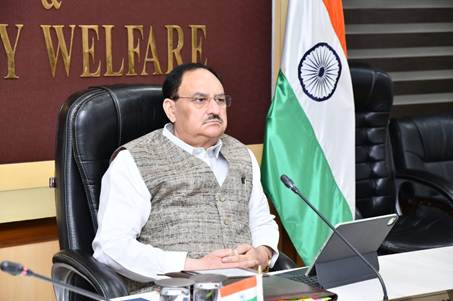
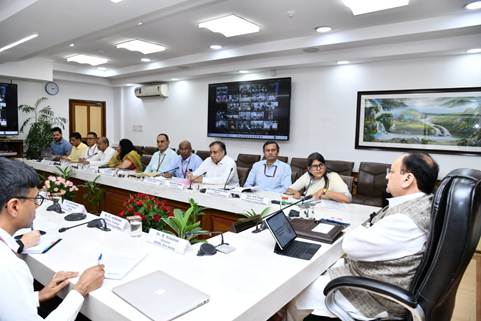
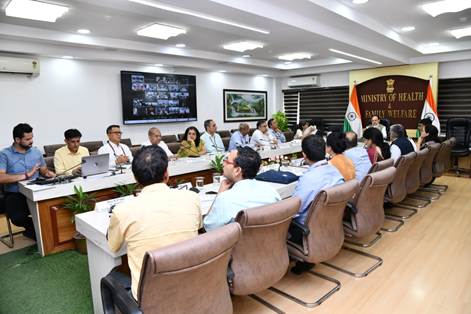
Union Minister of Health and Family Welfare, Shri Jagat Prakash Nadda chaired a ‘Kayakalp Manthan’ with Central Government Hospitals, NGOs and senior officials of the Union Health Ministry to boost Jan Bhagidari for achieving better health outcomes, here today. He highlighted the transformative journey of the Kayakalp Scheme, launched 10 years ago, to promote cleanliness, hygiene, and infection control practices in public healthcare facilities across India. Initially rolled out in 2015 with the participation of 10 Central Government Hospitals, the scheme now includes 25 Central Govt. hospitals and institutions, expanding its reach to numerous healthcare centres across the nation. In State Govt. Hospitals and healthcare Institutions, the Scheme is operative through national Health Mission (NHM).

In his remarks at the Manthan, Shri Nadda underlined that, while significant progress has made under the scheme, there is scope  to do better. He highlighted two main observations: (i) substantial improvements has been made over the last decade, but continued efforts are needed to further enhance public healthcare delivery, and (ii) evolving towards a patient-centric ecosystem is critical for meeting the ever-increasing expectations of public service delivery.

The Union Health Minister spoke about the importance of environment and ambiance in healthcare facilities, emphasizing that a positive hospital environment affects the mental wellbeing of both patients and staff. He pointed out that while thousands of patients visit hospitals daily and receive quality treatment, there is a noticeable lack of positive from the patient despite getting best of the clinical treatment, which calls for introspection and better communication from the hospitals to patients and the public.

A key point of discussion was the perception of government hospitals and the factors that contribute to the image building. The Minister urged all stakeholders to focus on understanding the root causes of these perceptions, including issues related to infrastructure, cleanliness, staff behaviour, amenities, and management, in order to identify and implement practical solutions.

Shri Nadda noted that while challenges encountered by hospitals may vary, many of these could be addressed through better management and prioritization of services. However, chronic challenges on account of lack of lack of prioritization and proper attention, and this leads to dilution of services provided to the patients.

Encouraged by the constructive discussions during the Manthan, the Union Health Minister underlined that identifying the issues is the first step towards improvement. He emphasized the importance of continuous monitoring, regular reviews, and meaningful enforcement to ensure that the quality of services remains high across all healthcare institutions.

A significant focus was placed on the role of Jan bhagidari (people’s participation) in achieving better healthcare outcomes. The Minister stressed that involving local communities and encouraging a sense of belongingness to the healthcare facilities can enhance the effectiveness of the Kayakalp Scheme. This needs to be fostered as a nationwide movement, he said, to ensure the sustained success of the initiative.

In response to the growing pressure on premium institutions in Delhi and other major cities, Shri Nadda called for a stronger focus on state hospitals, especially at the grassroots level, including Sub-Health Centres (SHC). The future strategy, he said, will emphasize training, capacity building, innovation, and the adoption of eco-friendly approaches. A focus on enhancing people’s participation and integrating technology into healthcare delivery will also be critical to easing the burden on top-tier institutions.

The Union Health Minister concluded by reiterating that “Kayakalp is more than just a cleanliness initiative, it is a transformation in the way healthcare services are delivered, conceived, and executed”. He expressed hope that all stakeholders will take the insights from today’s session and work collaboratively to ensure that the objectives of cleanliness, hygiene, and efficient public service delivery are met across all healthcare institutions in India.

Smt. Roli Singh, Addl. Secretary, Union Health Ministry; Shri Jaideep Kumar Mishra, Addl. Secretary and Financial Advisor, Union Health Ministry; Dr Vinod Kotwal, Addl. Secretary, Union Health Ministry; Dr Sunita Sharma, DGHS; heads of central healthcare institutions, NGOs and senior officials of the Union Health Ministry were present at the meeting.

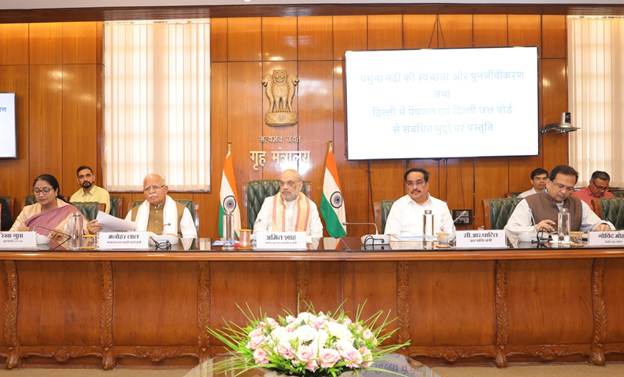
Union Home Minister holds meeting on the cleaning of Yamuna, drinking water, and sewage system in Delhi

| Published on:

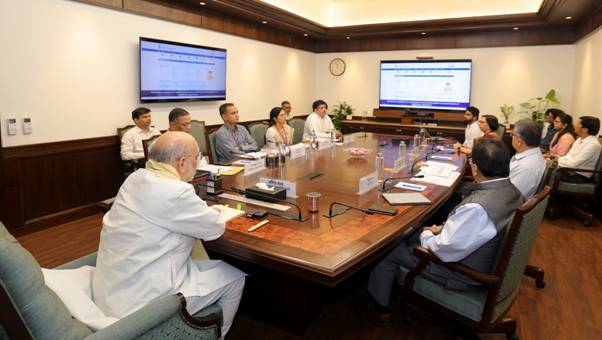
Union Home Minister and Minister of Cooperation Shri Amit Shah, in a high-level meeting in New Delhi today, directed to adopt a holistic approach to clean the Yamuna River, ensure drinking water supply, and improve sewage systems in Delhi. The meeting was attended by Union Housing and Urban Affairs Minister Shri Manohar Lal, Union Jal Shakti Minister Shri C.R. Patil, Delhi Chief Minister Smt. Rekha Gupta, Union Home Secretary, Secretaries of the Ministry of Housing and Urban Affairs and Ministry of Jal Shakti, Delhi’s Chief Secretary, and several senior officials from the Central and Delhi Governments.

Addressing the meeting, the Union Home Minister and Minister of Cooperation stated that the Yamuna is not just a river but also a symbol of faith, making its cleanliness a priority for the Modi government. Shri Shah said that the Ministry of Jal Shakti should develop a Standard Operating Procedure (SOP) for all Sewage Treatment Plants (STPs), establishing standards for their quality, maintenance, and discharge. He emphasized that this SOP should also be shared with other states.

Shri Amit Shah stressed that plans for the Yamuna, drinking water, and drainage in Delhi should be made with a 20-year vision. He highlighted the crucial role of the Delhi Jal Board in cleaning the Yamuna and emphasized the need to strengthen it, directing immediate filling of vacant posts in the Board.

IMG_3908.JPG

Union Home Minister underscored the need to enhance Delhi’s water distribution efficiency, stating that effective water management is essential to ensure drinking water supply across the city. He said, for water supply in Delhi, the Jal Board should strengthen the water distribution structure along with preventing leakage in the pipelines. Shri Shah also emphasized the use of world-class technology for desilting drains.

Prime Minister lauds the new OCI Portal

| Published on:

The Prime Minister, Shri Narendra Modi has lauded the new OCI Portal. “With enhanced features and improved functionality, the new OCI Portal marks a major step forward in boosting citizen friendly digital governance”, Shri Modi stated.

Responding to Shri Amit Shah, Minister of Home Affairs of India, the Prime Minister posted on X;

“With enhanced features and improved functionality, the new OCI Portal marks a major step forward in boosting citizen friendly digital governance.”

Union Home Minister launches new Overseas Citizen of India (OCI) Portal in New Delhi

| Published on:

Union Home Minister and Minister of Cooperation, Shri Amit Shah, launched the new Overseas Citizen of India (OCI) Portal in New Delhi today. The Union Home Secretary, the Director of the Intelligence Bureau (IB), and other senior officials of the Ministry of Home Affairs (MHA) were present on the occasion.

On this occasion, Union Home Minister Shri Amit Shah said that under the leadership of Prime Minister Shri Narendra Modi, India is continuously striving to provide world-class immigration facilities to its OCI cardholder citizens. He said that a revamped OCI portal with an updated user interface has been launched to simplify the registration process for Overseas Citizens. Shri Shah also emphasized that many Indian-origin citizens reside in various countries worldwide, and we must ensure they face no inconvenience when visiting or staying in India.

The new portal will provide enhanced functionality, advanced security, and a user-friendly experience for the existing over 5 million OCI cardholders and new users. The new OCI portal is available at the existing URL: https://ociservices.gov.in.

The Overseas Citizen of India (OCI) scheme was introduced through an amendment to the Citizenship Act, 1955, in 2005. The scheme provides for the registration of Persons of Indian Origin as Overseas Citizens of India, provided they were citizens of India on or after 26th January 1950, or were eligible to become citizens on that date. However, individuals who are or had been or whose parent or grandparent or great grandparent citizens of Pakistan or Bangladesh are not eligible.

The existing OCI Services portal was developed in 2013 and is currently operational in over 180 Indian missions abroad as well as 12 Foreigners Regional Registration Offices (FRROs), processing approximately 2000 applications per day. Given the significant technological advancements over the past decade and feedback received from OCI cardholders, a revamped OCI portal has been developed to address existing limitations and enhance user experience.

The new OCI portal introduces several user-friendly features, including:

  • User sign-up and segregation of registration menu,
  • Auto-fill of user profile details in registration forms,
  • Dashboard displaying completed and partially filled applications,
  • Integrated online payment gateway for those who filed in FRROs,
  • Seamless navigation across application steps,
  • Categorization of requisite documents to upload based on application type,
  • Editing option to the applicant at any stage before submission,
  • Integrated FAQ in the portal,
  • Reminder to the applicant to verify information before final submission,
  • Display of eligibility criteria and requisite documents based on selected application type,
  • In-built image cropping tool for uploading applicant photos and signatures.

Technical Features:

  1. Infrastructure Modernization
  • High Availability with multiple web servers and load balancer on latest operating system i.e. RedHat 9

2. Software and Platform Upgrades

  •  Framework Updates: Transitioning to latest versions of JDK, Struts 2.5.30 and Bootstrap 5.3.0 for multi device compatibility

3. Enhanced Security Protocols

  • SSL/TLS Encryption: Ensures data privacy and protection
  • Regular Penetration Testing & Patch Management

4. Process Automation Integration

  • Process Automation: Streamline backend operations and workflows

5. Data Management

  • Centralize and optimize data storage and access

6. User Experience (UX) Enhancements

  • Responsive Web Design: Optimized for all devices.
  • Faster Load Times & Mobile Optimization

7. Cybersecurity Enhancements

  • Multi-Factor Authentication (MFA)
  • Server Hardening and Latest AV integration.

Dharmendra Pradhan launches Bharatiya Bhasha Summer Camp

| Published on:

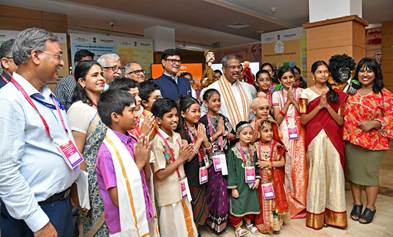
Union Minister for Education, Shri Dharmendra Pradhan, launched the Bharatiya Bhasha Summer Camp in New Delhi today. He also released Primers in Indian languages and Special Modules in thirteen languages. Secretary, Department of School Education and Literacy (DoSEL), Ministry of Education, Shri Sanjay Kumar; Director, NCERT, Prof. Dinesh Prasad Saklani; Chairman, Bharatiya Bhasha Samiti, Shri Chamu Krishna Shastry; Joint Secretary, DoSEL, Smt. Prachi Pandey; and other dignitaries were also present at the event. The Minister also visited the stalls at the exhibition prior to the event.

Shri Dharmendra Pradhan, while speaking at the event, appreciated the initiative of organising the Bharatiya Bhasha Summer Camp in schools across the country. He also commended NCERT for publishing the Primers in 117 languages, bringing it closer to the target of 122 Primers. He added that NCERT has become a strong backbone in propagating our knowledge system through their textbooks, which are being adopted by 22 states.

Shri Pradhan further highlighted the significance of the special modules released today and how they have been developed for different levels. He also emphasised the importance of teaching in the mother tongue until Class 8 to realise the goal of Viksit Bharat. He stressed that students must also be made aware of our environment, and this too should be done in their mother tongue. He added that technology should be used in achieving this.

The Minister also underscored the need to introduce AI to school students. He added that age-appropriate, AI-embedded textbooks in mother tongue are extremely important.

Shri Sanjay Kumar, in his speech, stated that language is connected to our identity, culture, and helps in developing our thought process. He also highlighted the recommendation of NEP 2020 on delivering Foundational Literacy and Numeracy in the mother tongue. He further stressed the importance of learning other languages once a child has gained proficiency in his or her mother tongue. He also expressed his gratitude to Shri Dharmendra Pradhan for motivating everyone in promoting multilingualism.

Bharatiya Bhasha Summer Camp

The National Education Policy 2020 envisions a nation where multilingualism is not just celebrated, but leveraged to enhance learning. The Bharatiya Bhasha Summer Camps are a direct manifestation of this vision. These camps, to be held across all states and UTs, will expose the children to the beauty and diversity of Indian languages in a fun and engaging way. The duration of the Summer Camp will be for 28 hours, based upon the Capsule Course designed by NCERT/SCERT. Various types of language learning material, both print and digital, produced by institutions like CIIL Mysore, NCERT, Central Hindi Directorate, Central Institute of Classical Tamil, National Council for Promotion of Sindhi, Sanskrit Universities and other such institutions have been utilised for the learning activities in the camps.

During the seven-day-long Summer Camp the students and teachers across the country will learn another Indian language of a different linguistic family, which will send a powerful message of affinity and unity through languages across the country. In the Camp, the students will learn basic greetings, expressions, alphabets, numbers, and practice writing signatures with the help of role-plays, flashcards, and translation of motivational and patriotic slogans. They will also engage in virtual city tours and real-life conversation practice using audio-visual tools. Focusing on art and culture, students will explore music, dance, and painting with activities such as singing patriotic songs in different languages, identifying local instruments, learning dance steps, and engaging with local art through videos or guest speakers. The students will also learn the names of spices, vegetables, and fruits, and prepare traditional dishes with teachers’ assistance. They will appreciate local culture, enhance listening skills, and learn about national heroes from various fields. With a focus on geography and history, they will learn about rivers, mountains, and historical monuments using physical maps and audio-visual resources. The Camp will be concluded with motivational sessions, student performances, quizzes, and certificate distribution.

Primers in Indian languages

Primers in Indian languages have been specially developed to support foundational literacy and numeracy (FLN) by using the child’s mother tongue, home, or local language. These Primers aim to facilitate early reading and writing through context-rich materials in the learner’s native language; promote emotional and cultural connection with language from a young age and support multilingual learning as a foundation for cognitive growth and social integration. The 104 language primers already developed by CIIL and NCERT are crucial for foundational literacy and numeracy (FLN) across ages. For young children, these primers provide a strong base for future learning and cognitive development. For older illiterate individuals, they offer empowerment, enhance daily life, and boost self-esteem. These primers, supporting 17 Scheduled, 23 Non-tribal, and 81 Tribal languages across 28 states/UTs, ensure linguistic inclusivity and accessibility, promoting lifelong learning and bridging educational gaps.

Primers in 13 languages have been prepared now includes Kashmiri (Perso-Arabic), Sindhi (Devanagari), Sindhi (Perso-Arabic), Kashmiri (Devanagari), Balti, Santali, Zeme, Urdu, Sangtam, Lai (Pawi), Gondi-Telugu, Bhili (Wagdi), and Chokri bringing the total number of Primers to 117. These Primers in Indian languages have been developed by Central Institute of Indian Languages (CIIL) and NCERT and the Special Modules that have been developed by NCERT. The primers are available online at https://ncert.nic.in/primers.php.

Special Modules

NCERT has developed special modules for differentiation stages – foundational, preparatory, middle, and secondary stages that are focusing on the national achievements and events. These modules are based on various themes, which includes – India as the Fifth Economic Power; Bharat – Mother of Democracy; India’s Digital Success and Power; COVID-19 Management; Asian Games Sporting Success; Swachhata and Virasat aur Vikas etc. These modules have numerous activities and age appropriate content that instil pride in the students towards the rich cultural heritage of our country. Content of these modules has been thoughtfully designed to be interactive and engaging. It includes graphics, photographs, illustrations, activities, challenging questions, and more. These modules cater to students across the stages of school education, spanning from grades 1 to 12. They have been created with a mindful approach towards the relevance of themes for different stages. The modules feature stories, cases, quiz questions, and activities, all designed to motivate self-paced learning among students and encourage teachers to guide their students through the suggested pedagogy of experiential learning.

Launching of the Special Module reflects India’s belief in “language as cultural identity” and “education as empowerment.” Stakeholders from across the educational ecosystem—including curriculum developers, teachers, linguists, and policymakers have gathered to mark this momentous step in strengthening India’s multilingual and democratic foundations. The Special Modules are available at: https://ncert.nic.in/special_modules.php.

Dr. Jitendra Singh Launches e-Civil List of IAS Officers, Emphasizes Transparency and Digital Reform

| Published on:

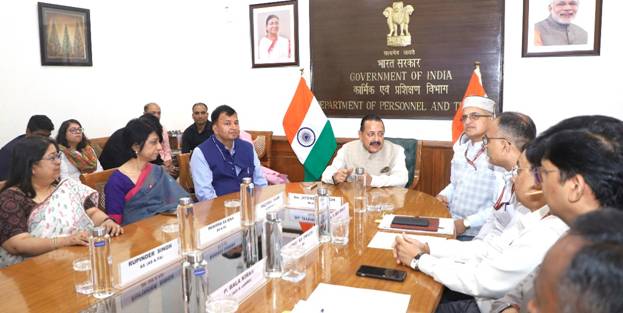
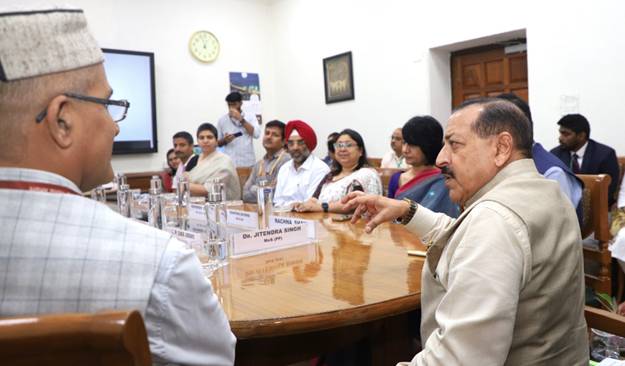
Union Minister of State (Independent Charge) for Science and Technology; Earth Sciences and Minister of State for PMO, Department of Atomic Energy, Department of Space, Personnel, Public Grievances and Pensions, Dr. Jitendra Singh today launched the electronic Civil List, 2025 in the form of an e-book – a digital compendium of serving Indian Administrative Service (IAS) officers across the country.

The launch marks a significant milestone as the 70th edition of the Civil List and the fifth to be presented in a fully digital format.

Dr. Jitendra Singh, while unveiling the e-book, said that the Indian Administrative Service continues to attract some of the finest minds in the country and plays a vital role in strengthening India’s federal governance. He highlighted the Civil List as an important tool for transparency, offering a structured view of the country’s administrative leadership.

Dr. Jitendra Singh proposed AI based options like AI based search option into the e-Civil List. This enhancement, he noted, could allow domain-specific searches to help identify suitable officers for mission mode and other targeted government projects, while ensuring that access to such features remains appropriately restricted. The Minister also stressed the importance of regularly updating the digital list to maintain its relevance and utility.

The e-book, published by the Department of Personnel and Training (DoPT), contains comprehensive details of IAS officers—including their name, batch, cadre, present posting, pay level, educational qualifications, and retirement dates—as updated on January 1, 2025. It also provides cadre-wise strength, the number of officers retiring over the next five years, and appointment data from 1969 onwards. For the first time, officers’ photographs have been included in the digital document.

Designed as a searchable PDF with embedded hyperlinks, the e-book offers a user-friendly interface that enables instant access to information. “The Civil List is an important resource not just for administrators and decision-makers but also for the general public,” Dr. Jitendra Singh said, adding that the move reflects the Centre’s larger push for digital governance.

The Minister described the initiative as part of the Government of India’s Digital India mission, aimed at modernizing systems and improving citizen-centric services. By discontinuing the printing of hard copies, the department is also saving on government expenditure and contributing to eco-friendly governance practices. He congratulated the Secretary and the entire DoPT team for their successful effort in bringing out this digital initiative.

The DoPT, as the cadre-controlling authority of IAS officers, compiles the Civil List annually using inputs from central records and state cadres. The 2025 edition reflects a total authorized cadre strength of 6,877 officers, with 5,577 officers in active service across 25 state cadres.

The launch event was attended by several senior dignitaries, including Director General of the Indian Institute of Public Administration (IIPA) Mr. S.N. Tripathi, Director and Chairperson of the Lal Bahadur Shastri National Academy of Administration (LBSNAA) Mr. Sriram Taranikanti, IAS, and Secretary, Department of Personnel and Training (DoPT), Ms. Rachna Shah, along with other senior officials.

The e-book Civil List, 2025 is now available to the public on the DoPT website at https://dopt.gov.in .

Sarbananda Sonowal Reviews Inland Waterways Infra Projects in Assam & Northeast

| Published on:

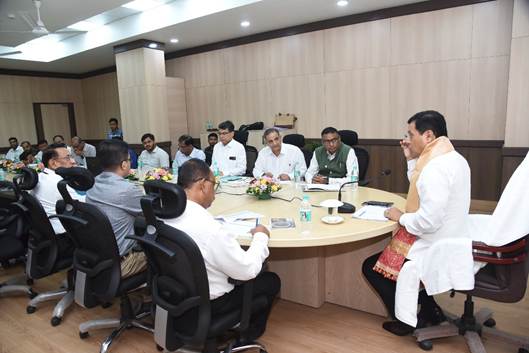
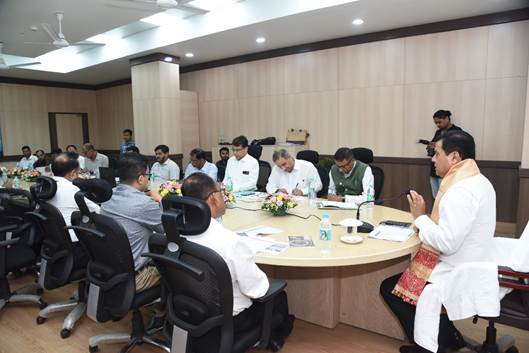
Union Minister of Ports, Shipping and Waterways (MoPSW), Shri Sarbananda Sonowal, today reviewed the ongoing projects in Assam and the Northeast with senior officials from the Ministry of Ports, Shipping and Waterways (MoPSW), the Inland Waterways Authority of India (IWAI), Public Works Department (PWD), Indian Port Rail and Ropeway Corporation Limited (IPRCL) and Cochin Shipyard Limited (CSL). The minister underscored the need to complete the projects on time in line with the broader vision of Prime Minister Shri Narendra Modi’s Viksit Bharat. “Northeast is the topmost priority for PM Narendra Modi ji, our work in the region must sync with the vision of Viksit Bharat,” asserted Sarbananda Sonowal at the meeting.

Speaking after the meeting, the Union Minister said, “As per the vision of Honble Prime Minister Shri Narendra Modi ji, we are developing robust waterway infrastructure in Assam and the Northeast with projects worth 1,000 crore on the anvil, targeted for completion by 2026. In last two years, more than 1,000 crore has been invested, with 300 crore worth of projects already completed. Following my review of ongoing works in the region, we are on track to complete the remaining 700 crore projects by the end of 2025. These efforts aim to boost cargo and passenger movement, improve last-mile connectivity, promote economic growth in the Northeast, and align with the broader vision of Atmanirbhar Bharat through sustainable and inclusive transport solutions.”

The Union Government is actively developing key infrastructure projects along NW2 (Brahmaputra) and NW16 (Barak), including the construction of passenger vessels of various capacities, terminal facilities, and capacity-building initiatives. Union Minister Shri Sarbananda Sonowal also reviewed progress on the proposed Inland Water Transport (IWT) project at Doyang Lake, and assessed the potential of Noune and Shilloi Lakes in Nagaland for water sports and tourism. Feasibility studies for IWT development on the Tiawng and Chhimtuipui rivers in Mizoram, as well as on Umiam Lake and the Ummgot River (NW106) in Meghalaya, were also reviewed.

Speaking at the event, Union Minister Shri Sarbananda Sonowal said, Under Prime Minister Narendra Modis visionary leadership, India is steadily moving towards the goal of Viksit Bharat. Assam and the Northeast are central to this progress, with inland waterways playing a vital role. Since 2014, the Modi government has revived this once-neglected mode of transport, especially through the Brahmaputra (NW2) and Barak (NW16) rivers. Schemes like Jalvahak are encouraging businesses to adopt this economical, efficient, and eco-friendly mode, reducing pressure on road and rail, and positioning Assam as a key driver in Indias journey towards a self-reliant economy by 2047.”

Reviewing multiple projects ranging from new infrastructure development for capacity enhancement on national waterways to scaling up with skill development initiatives for youth of Assam and the Northeast in the maritime sector, Union Minister Sarbananda Sonowal emphasised the urgency and the need for optimum utilisation of funds.

Adding further, Shri Sarbananda Sonowal said, “Under the visionary leadership of Prime Minister Shri Narendra Modi ji, the government is building new avenues for the youth of Assam and the Northeast to participate in India’s maritime growth. Through institutions like the Maritime Skill Development Centre in Guwahati and the Centre of Excellence for Inland Water Transport in Dibrugarh, we are training a future-ready workforce equipped for inland and global maritime opportunities. These efforts are part of a larger push to skill, empower and employ our youth in logistics, cargo handling, vessel operations and more—especially as we expand infrastructure on NW2 and NW16. The Northeast is not just a gateway to Southeast Asia, but a key contributor to Indias journey towards becoming a global maritime leader and achieving Viksit Bharat by 2047.”

To further enhance cruise tourism and cargo handling capacity across National Waterways 2 (Brahmaputra) and 16 (Barak), over ₹1,500 crore have been earmarked for key projects scheduled to be completed by 2027-28. These include construction of modern jetties equipped with onshore facilities at Silghat, Bishwanath Ghat, Neamati Ghat, and Guijan. Additionally, a new building for the Regional Office of the Mercantile Marine Department (MSDC), along with a guest house and office space for ITAT, will be constructed at Fancy Bazar in Guwahati.

Shri Sonowal also noted progress on the proposed Water Metro services in Guwahati and Dhubri, with a ₹315 crore investment and two electric catamarans being built by Cochin Shipyard Ltd. A ₹100 crore cruise terminal in Guwahati and a Regional Centre of Excellence (RCoE) in Dibrugarh worth ₹120 crore are also in the pipeline.

Infrastructure along Brahmaputra (NW2) includes five riverine lighthouses at key locations, fairway development between Pandu and Bogibeel with ₹150 crore, and procurement of two cutter suction dredgers. The IWAI is implementing ₹1,010 crore worth of projects across NW2 and NW16, including terminals at Bogibeel and Jogighopa, and a ₹208 crore ship repair facility at Pandu.

On Barak River (NW16), Shri Sonowal reaffirmed that survey and dredging equipment, and floating terminals at Karimganj and Badarpur projects reflect the Modi Government’s commitment to making the Northeast a hub of India’s maritime future.

To ensure consistent navigability along the Brahmaputra, the Dredging Corporation of India (DCI) has been entrusted with maintaining a minimum assured draft of 2.5 meter from the Bangladesh border to Pandu under NW-2 until 2026-27. For this effort, an additional ₹191 crore has been sanctioned. These measures are a part of the Union Government’s broader initiative to integrate Northeast India into the country’s maritime growth trajectory, aligning with the vision of a Viksit Bharat by 2047.

The review meeting was attended by senior officials from the MoPSW, the IWAI, the CSL and IPRCL among others.

PM greets the people of Sikkim on 50th anniversary of Sikkim’s statehood

| Published on:

The Prime Minister, Shri Narendra Modi, has greeted the people of Sikkim on their Statehood Day, today. “This year, the occasion is even more special as we mark the 50th anniversary of Sikkim’s statehood! Sikkim is associated with serene beauty, rich cultural traditions and industrious people”, Shri Modi added.

The Prime Minister posted on X;

“Warm greetings to the people of Sikkim on their Statehood Day! This year, the occasion is even more special as we mark the 50th anniversary of Sikkim’s statehood!

Sikkim is associated with serene beauty, rich cultural traditions and industrious people. It has made strides in diverse sectors. May the people of this beautiful state continue to prosper.”