PM addresses the Post-Budget Webinar on boosting job creation- Investing in People, Economy, and Innovation

| Published on:

The Prime Minister Shri Narendra Modi addressed the Post-Budget Webinar on Employment via video conferencing today. Addressing the gathering on the occasion, he highlighted the importance of the theme of the webinar, “Investing in People, Economy, and Innovation,” which defines the roadmap for Viksit Bharat. He remarked that this year’s budget reflects this theme on a large scale and serves as a blueprint for India’s future. He emphasized that investments have been prioritized equally across infrastructure, industries, people, economy, and innovation. Underlining that capacity building and talent nurturing are foundational for the nation’s progress, Shri Modi urged all stakeholders to step forward and invest more in these areas as the next phase of development requires it. He stressed that this is essential for the country’s economic success and forms the basis of every organization’s success.

“The vision of investing in people stands on three pillars: education, skill, and healthcare”, said Shri Modi, remarking that India’s education system is undergoing a significant transformation after several decades. He emphasized key initiatives such as the National Education Policy, the expansion of IITs, the integration of technology into the education system, and the utilization of AI’s full potential. Underlying the efforts like the digitization of textbooks and the availability of learning materials in 22 Indian languages, the PM said, “these mission-mode efforts have enabled India’s education system to align with the needs and parameters of the 21st-century world”.

Highlighting that since 2014, the government has provided skill training to over 3 crore youth, the Prime Minister mentioned the upgrade of 1,000 ITIs and the establishment of 5 Centers of Excellence. He emphasized the goal of equipping youth with training that meets the needs of industries. He remarked that with the help of global experts, efforts are being made to ensure that Indian youth can compete at the world level. Shri Modi underlined the critical role of industry and academia in these initiatives and urged industries and educational institutions to understand and fulfill each other’s needs, providing youth with opportunities to adapt to the rapidly changing world, gain exposure, and access platforms for practical learning. Highlighting the launch of the PM-Internship Scheme to provide youth with new opportunities and practical skills, he stressed the importance of ensuring maximum industry participation at every level in this initiative.

Touching upon the medical field, Shri Modi mentioned the addition of 10,000 new medical seats in this budget and a target of adding 75,000 seats in the medical field over the next five years has been set. He highlighted the expansion of telemedicine facilities across all Primary Health Centres. He also emphasized the establishment of daycare cancer centers and the development of digital healthcare infrastructure to ensure quality healthcare reaches the last mile. He said that these initiatives will have a transformative impact on people’s lives. The Prime Minister said that these efforts will create numerous new employment opportunities for youth and urged stakeholders to work swiftly to implement these initiatives, ensuring the benefits of budget announcements reach the maximum number of people.

Pointing out that over the past decade, investments in the economy have been guided by a futuristic vision, the Prime Minister remarked that by 2047, India’s urban population is projected to reach approximately 90 crore, necessitating planned urbanization. He announced the initiative to establish a ₹1 lakh crore Urban Challenge Fund, focusing on governance, infrastructure, and financial sustainability, while also boosting private investment. “Indian cities will be recognized for sustainable urban mobility, digital integration, and climate resilience plans”, emphasized the Prime Minister. He urged the private sector, particularly the real estate and industrial sectors, to prioritize and advance planned urbanization. He also stressed the importance of collaborative efforts to further initiatives like AMRUT 2.0 and the Jal Jeevan Mission.

Emphasising the need to focus on the potential of the tourism sector while discussing investments in the economy, Shri Modi highlighted that the tourism sector has the potential to contribute up to 10% of India’s GDP and create employment opportunities for crores of youth. He mentioned several measures in the budget to promote domestic and international tourism. “50 destinations across the country will be developed with a focus on tourism”, said the Prime Minister adding  that granting infrastructure status to hotels in these destinations will enhance ease of tourism and boost local employment. Highlighting the expansion of the Mudra Yojana to support homestays, Shri Modi also stressed that initiatives like ‘Heal in India’ and ‘Land of the Buddha’ to attract global tourists. “Efforts are being made to establish India as a global tourism and wellness hub”, he added.

Underscoring that tourism offers opportunities beyond the hotel and transport industries, extending to other sectors as well, the Prime Minister urged stakeholders in the health sector to invest in promoting health tourism. He stressed the need to fully utilize the potential of yoga and wellness tourism, remarking on the significant scope for growth in education tourism. He expressed his desire for detailed discussions in this direction and called for the development of a strong roadmap to advance these initiatives.

“The future of the nation is determined by investments in innovation”, exclaimed Shri Modi, highlighting that artificial intelligence has the potential to contribute several lakh crore rupees to India’s economy, underscoring the need for rapid progress in this direction. He mentioned the allocation of ₹500 crore in the budget for AI-driven education and research. Mentioning the plans to establish a National Large Language Model to develop AI capabilities in India, the Prime Minister urged the private sector to stay ahead of the global curve in this field. “The world awaits a reliable, safe, and democratic nation that can provide economical AI solutions”, he added, emphasising that investments made in this sector today will yield significant advantages in the future.

“India has become the third-largest startup ecosystem in the world”, said the Prime Minister, adding that several measures have been introduced in this budget to promote startups. He mentioned the approval of a ₹1 lakh crore corpus fund to boost research and innovation. The Prime Minister emphasized that this will increase investments in emerging sectors through the ‘Deep Tech Fund of Funds’. He noted the provision of 10,000 research fellowships at IITs and IISc, which will foster research and provide opportunities for talented youth. The Prime Minister also highlighted the role of the National Geo-spatial Mission and the National Research Foundation in accelerating innovation. He stressed the need for collective efforts at all levels to elevate India to new heights in research and innovation.

Underlining the significance of the Gyan Bharatam Mission in preserving India’s rich manuscript heritage, Shri Modi announced that over one crore manuscripts will be digitized under this mission, leading to the creation of a National Digital Repository. This repository will enable scholars and researchers worldwide to access India’s historical, traditional knowledge and wisdom, he added. The Prime Minister also mentioned the establishment of a National Gene Bank to preserve India’s plant genetic resources. He emphasized that this initiative aims to ensure genetic resources and food security for future generations. He urged for the expansion of such efforts and called on various institutes and sectors to actively participate in these initiatives.

Citing the remarkable observations made by the IMF regarding India’s economy in February 2025, Shri Modi noted that between 2015 and 2025, India’s economy has recorded a 66% growth, making it a $3.8 trillion economy. He emphasized that this growth surpasses that of several major economies, and that the day is not far when India will become a $5 trillion economy. He stressed the importance of making the right investments in the right direction to continue expanding the economy. He underlined the critical role of implementing budget announcements in achieving this vision and acknowledged the significant contributions of all stakeholders. He mentioned that the tradition of working in silos was broken and now the Government has both pre-budget consultations as well as post-budget discussions for better implementation of the schemes and initiatives with the stakeholders, highlighting the ‘Jan-Bhagidari’ model. He concluded by expressing hope that the fruitful discussions of the webinar will play a remarkable role in fulfilling the aspirations of 140 crore Indians.

Background

Employment generation has been one of the key focus areas of the government. Driven by the vision of the Prime Minister, the government has taken multiple steps to promote job growth and generate greater avenues of employment. The webinar will foster collaboration among government, industry, academia, and citizens encouraging discussions to help translate the transformative Budget announcements towards the same into effective outcomes. With a key focus on empowering citizens, strengthening the economy, and fostering innovation, the deliberations will aim at paving the way for sustainable and inclusive growth; leadership in technology and other sectors; and a skilled, healthy workforce working towards realising the goal of Viksit Bharat by 2047.

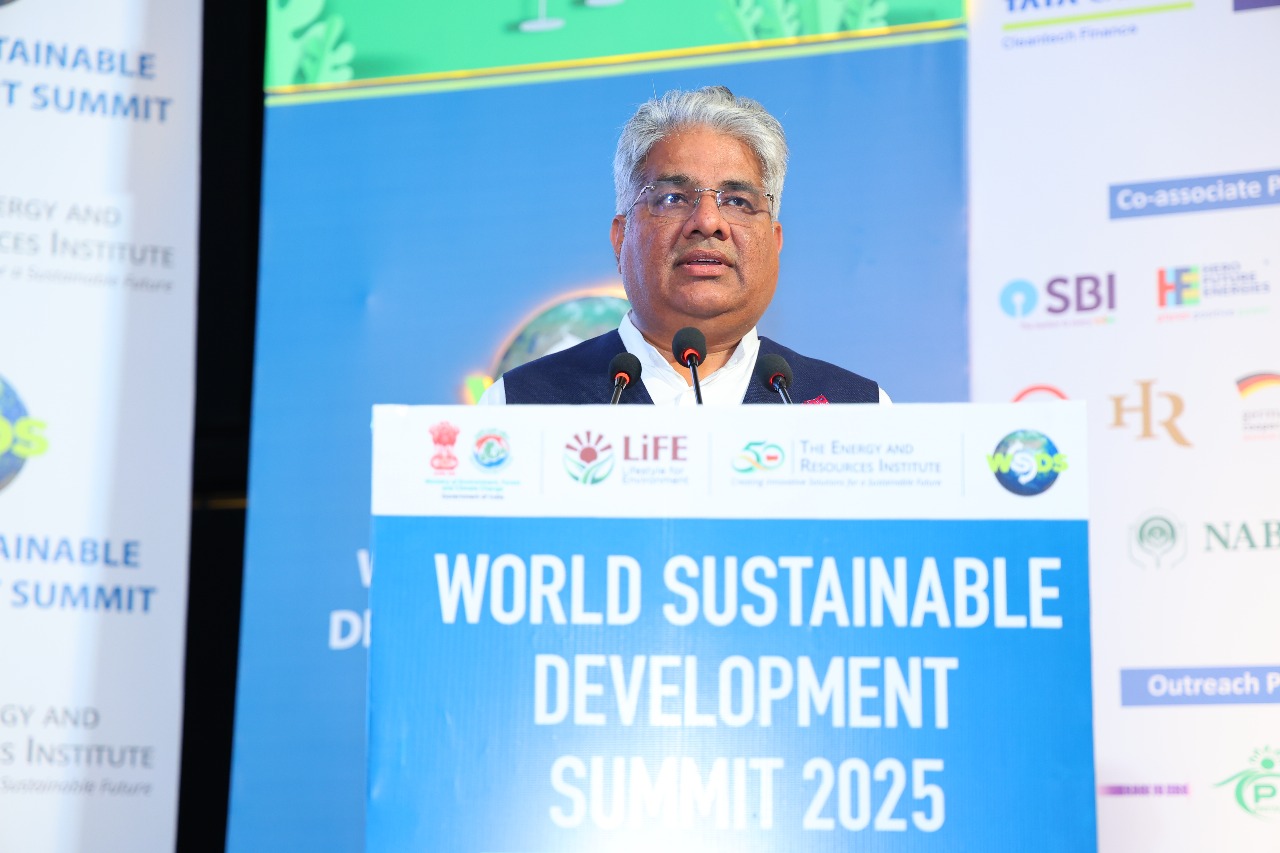
Bhupender Yadav addresses Inaugural Session at World Sustainable Development Summit, 2025

| Published on:

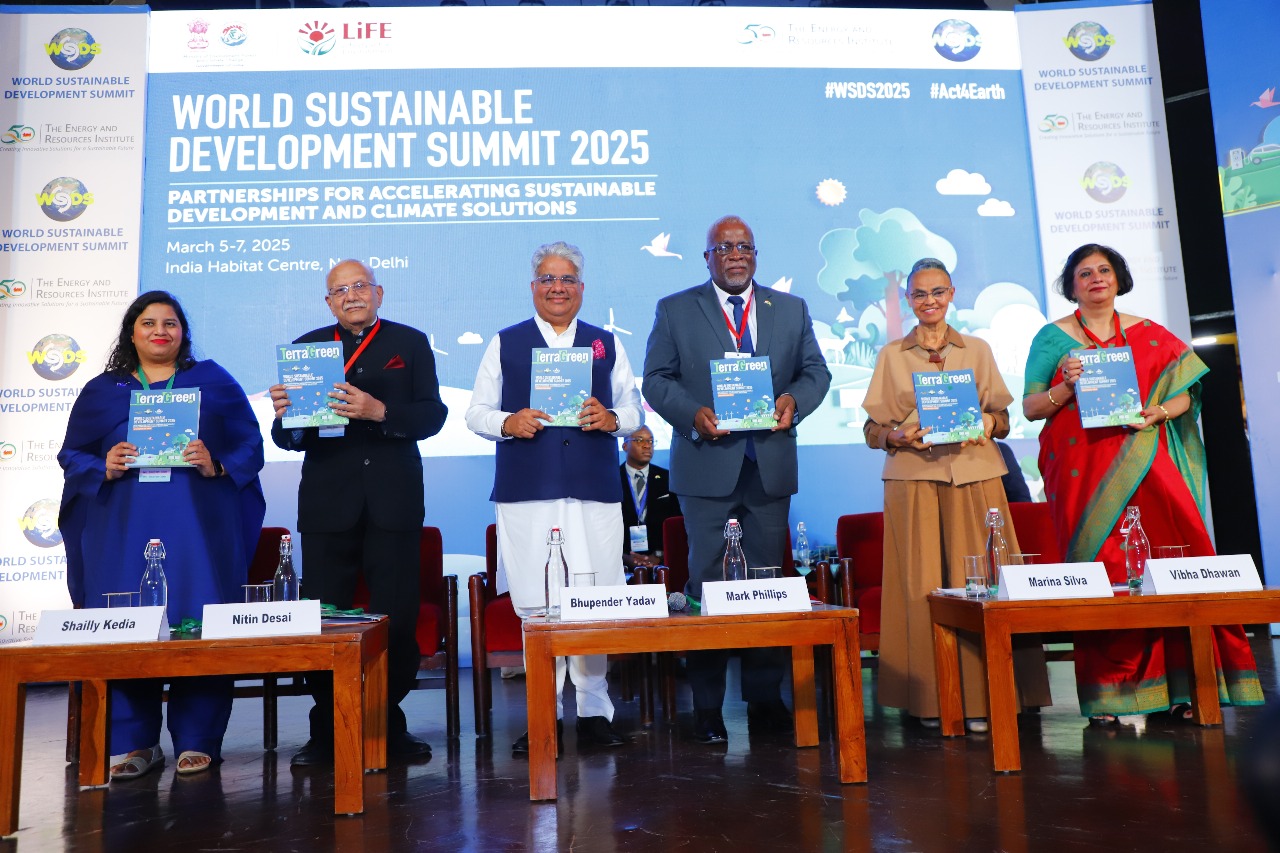
“The Global South is driving the climate agenda, and the world now looks to India as a leader. In 2020 alone, India slashed its GHG emissions by 7.93%—a testament to its commitment to climate action,” said Union Minister for Environment, Forest and Climate Change, Sh. Bhupender Yadav in his inaugural address today at the World Sustainable Development Summit 2025. The summit was organized by The Energy and Resources Institute (TERI) with the theme “Partnerships for Accelerating Sustainable Development and Climate Solutions.” Prime Minister of Guyana, HE Brigadier Mark Phillip and HE Ms. Marina Silva, Minister of Environment and Climate Change, Brazil were present on this occasion.

Speaking on the occasion, Union Minister Sh. Yadav underscored the critical role of the Global South in the fight against climate change, calling for increased collaboration, ambition, and action at the international level. He reaffirmed India’s commitment to global sustainability under the guidance of Prime Minister Shri Narendra Modi, who has spearheaded transformative global initiatives, including the International Solar Alliance (ISA), the Coalition for Disaster Resilient Infrastructure (CDRI), and Mission Lifestyle for Environment (LiFE).

Union Minister reiterated the need to confront the issue of speciesism, which, like racism, prioritizes human interests over the well-being of other species and ecosystems. He emphasized that true sustainability can only be achieved when all forms of life are considered equally important and when environmental policies account for the protection and restoration of wildlife and biodiversity.

Sh. Yadav observed India’s role as a global climate leader, committed to ensuring that climate action remains inclusive, ambitious, and collaborative. He emphasized that the Global South, including India, is essential in shaping climate discourse, as it faces the brunt of climate change impacts while also offering solutions rooted in sustainable development practices. He called on developed countries to honour their financial and technological commitments, especially in fulfilling their obligations under the Paris Agreement. He also underscored the need for enhanced international cooperation in strengthening Nationally Determined Contributions (NDCs), ensuring they address both the challenges and opportunities of climate action.

Union Minister Sh. Yadav addressed the pressing need for increased climate adaptation finance. He referenced the UNEP Adaptation Gap Report, which highlights the urgent need to scale up adaptation efforts to cope with rising climate impacts. He called for more robust financial support for adaptation, ensuring that the most vulnerable regions are able to implement solutions that build resilience and safeguard livelihoods.

Union Minister Sh. Bhupender Yadav outlined India’s long-term vision to become a Viksit Bharat by 2047, with a target of achieving net-zero emissions by 2070. He highlighted India’s progress, including the 36% reduction in emission intensity of GDP between 2005 and 2020 compared to the 45% target for 2030, and the Union Budget of 2025’s emphasis on energy security, expanding clean energy capacity, and fostering domestic manufacturing of green technologies. He emphasized that the fight against climate change cannot be fragmented. He emphasized on the importance of integrating climate action with the broader Sustainable Development Goals (SDGs) and called for strong global partnerships to address interconnected challenges such as poverty, inequality, and environmental degradation. The Minister called for reforms in global governance, urging the international community to place equity and justice at the heart of climate negotiations.

Union Minister Sh. Yadav also praised the leadership of TERI in uniting the Global South on climate action and reiterated the need for multi-sectoral partnerships to accelerate progress toward a sustainable, low-carbon future.

The summit was attended by Sh. Nitin Desai, Chairman, TERI, Dr Vibha Dhawan, Director General, TERI, subject experts and diginitaries.

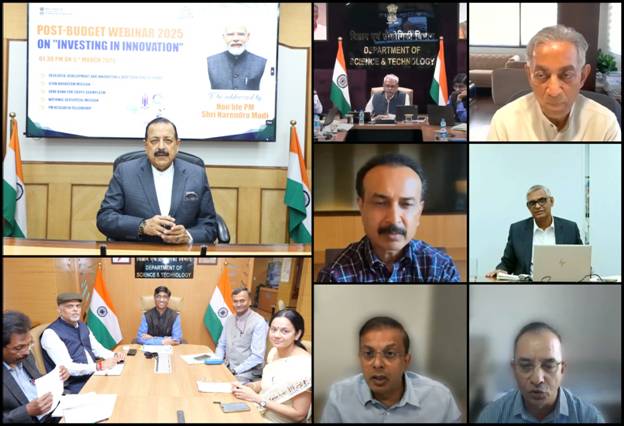
India achieved Global Rank 3 in StartUps in last one decade:Dr. Jitendra Singh

| Published on:

Union Minister of State (Independent Charge) for Science and Technology; Earth Sciences and Minister of State for PMO, Department of Atomic Energy, Department of Space, Personnel, Public Grievances and Pensions, Dr. Jitendra Singh said that India achieved global Rank 3 in StartUps in last one decade and reaffirmed the Union Government’s commitment to making India a global innovation hub, highlighting the ₹20,000 crore allocation in Budget 2025-26 for the Research, Development, and Innovation initiative.

He explained that the initiative aims to boost research and innovation in the private sector, with a strong focus on expanding efforts in sunrise industries. Speaking at the concluding session of the Post Budget Webinar 2025 on “Investing in Innovation,” he emphasized that this funding would drive cutting-edge research and technological advancements, particularly in deep-tech sectors.

The announcement builds on the ₹1 lakh crore corpus introduced in Budget 2024-25 to accelerate research and development (R&D) in the private sector, with a strong focus on sunrise technologies. Dr. Jitendra Singh underscored that these initiatives would strengthen India’s innovation ecosystem and encourage private sector investments in critical domains like semiconductor manufacturing, artificial intelligence, 5G, and quantum computing.

“India has made significant strides in innovation, with patent grants increasing 17 times since 2014 and our position in the Global Innovation Index rising from 81th to 39th among 133 economies. Today, we rank third globally as a leading contributor to scientific research,” Dr. Jitendra Singh stated.

Web 1.jpg

Recognizing the need to nurture world-class research talent, the government has tripled the intake under the Prime Minister’s Research Fellowship (PMRF) Scheme. Originally launched in 2018, the scheme has so far supported 3,688 scholars. The latest Budget expands its reach to 10,000 fellowships over the next five years, offering more opportunities for young scientists to pursue groundbreaking research at India’s premier institutions.

“The PMRF is not just about financial assistance; it is about fostering an ecosystem where academic excellence and intellectual curiosity thrive,” the Minister remarked.

Underscoring the significance of geospatial technology for economic growth and infrastructure planning, Dr. Jitendra Singh highlighted the National Geospatial Mission, an initiative launched under the 2022 National Geospatial Policy. “This mission is critical for India’s transition to a developed nation by 2047,” he said, citing its applications in urban planning, disaster management, and precision agriculture.

India’s agricultural security is also receiving a boost with the establishment of a National Enlarged Gene bank Replica. “India’s National Gene bank is the second largest globally, preserving over 4.7 lakh accessions of 2,147 species, including traditional crops. The new initiative will further safeguard our crop diversity and ensure long-term food security,” Dr. Jitendra Singh explained.

In an ambitious effort to protect India’s vast manuscript heritage, the Gyan Bharatam Mission has been launched to digitize over one crore ancient manuscripts and create a National Digital Repository. “India has an unparalleled intellectual and cultural wealth, much of which is fragile and inaccessible. This initiative will ensure its preservation and accessibility for scholars and researchers worldwide,” the Minister emphasized.

Concluding the session, Dr. Jitendra Singh reiterated that these initiatives align with the government’s broader vision of ‘Viksit Bharat 2047’, a roadmap for India’s transformation into a developed nation. “Investment in innovation is not just about economic growth—it is about empowering young minds, strengthening our technological sovereignty, and securing India’s future on the global stage,” he said.

With bold investments in research fellowships, deep-tech, and digital infrastructure, the government is making a decisive push to position India as a global leader in science and technology.

Cabinet approves development of two Ropeway Project in Uttarakhand

| Published on:

The Cabinet Committee on Economic Affairs (CCEA), chaired by the Prime Minister Shri Narendra Modi, has approved the construction of 12.9 km ropeway project from Sonprayag to Kedarnath (12.9 km) in Uttarakhand. The project will be developed on Design, Build, Finance, Operate and Transfer (DBFOT) mode at a total capital cost of Rs. 4,081.28 crore.

The ropeway is planned to be developed in public-private partnership and will be based on the most advanced Tri-cable Detachable Gondola (3S) technology with a design capacity of 1,800 passengers per hour per direction (PPHPD) carrying 18,000 passengers per day.

The ropeway project will be a boon to the pilgrims visiting Kedarnath as it would provide an environment-friendly, comfortable and fast connectivity and reduce travel time in one direction from about 8 to 9 hours to about 36 minutes.

The ropeway project will also generate substantial employment opportunities during construction and operations as well as in allied tourism industries like hospitality, travel, foods & beverages (F&B) and tourism throughout the year.

The development of ropeway project is a significant step towards fostering balanced socio-economic development, enhancing last – mile connectivity in hilly regions and fostering rapid economic growth.

The journey to the Kedarnath temple is a challenging 16-km uphill trek from Gaurikund and is currently covered on foot or by ponies, palanquins and helicopter. The proposed ropeway is planned to provide convenience to pilgrims visiting the temple and ensure all-weather connectivity between Sonprayag and Kedarnath.

Kedarnath is one of the 12 sacred Jyotirlingas situated at an elevation of 3,583 m (11968 ft) in the Rudraprayag district of the State of Uttarakhand. The temple is open for pilgrims for about 6 to 7 months in a year from Akshaya Tritiya (April-May) to Diwali (October-November) and is visited by about 20 lakh pilgrims annually during the season.

Apart from this the Cabinet Committee on Economic Affairs (CCEA), chaired by the Prime Minister Shri Narendra Modi, has also approved the construction of 12.4 km ropeway project from Govindghat to Hemkund Sahib Ji in Uttarakhand. The project will be developed on Design, Build, Finance, Operate and Transfer (DBFOT) mode at a total capital cost of Rs. 2,730.13 crore.

Currently, the journey to the Hemkund Sahib Ji is a challenging 21-km uphill trek from Govindghat and is covered on foot or by ponies or palanquins. The proposed ropeway is planned to provide convenience to pilgrims and visiting the Hemkund Sahib Ji and the tourists visiting the Valley of Flowers and will ensure all-weather last mile connectivity between Govindghat and Hemkund Sahib Ji.

The ropeway is planned to be developed in public-private partnership and will be based on Monocable Detachable Gondola (MDG) from Govindghat to Ghangaria (10.55 km), seamlessly integrated with the most advanced Tricable Detachable Gondola (3S) technology from Ghangaria to Hemkund Sahib Ji (1.85 km) with a design capacity of 1,100 passengers per hour per direction (PPHPD) carrying 11,000 passengers per day.

The ropeway project will also generate substantial employment opportunities during construction and operations as well as in allied tourism industries like hospitality, travel, foods & beverages (F&B) and tourism throughout the year.

The development of ropeway project is a significant step towards fostering balanced socio-economic development, enhancing last mile connectivity for pilgrims and fostering rapid economic growth of the region.

Hemkund Sahib Ji is a highly revered pilgrimage site situated at an elevation of 15,000 ft in Chamoli district of the State of Uttarakhand. The Gurudwara established at the holy site is open for about 5 months in a year between May and September and is visited by about 1.5 to 2 lakh pilgrims annually. The trek to Hemkund Sahib Ji also serves as the gateway to the famous Valley of Flowers, a national park recognized as the UNESCO World Heritage site, located in the pristine Garhwal Himalayas.

PM inaugurates Vantara, a unique wildlife conservation, rescue and rehabilitation initiative

| Published on:

The Prime Minister Shri Narendra Modi today inaugurated Vantara, a unique wildlife conservation, rescue and rehabilitation initiative in Jamnagar, Gujarat. Commending Shri Anant Ambani and his team for the compassionate efforts, he remarked that Vantara provides a safe haven for animals while promoting ecological sustainability and wildlife welfare.

In separate posts on X, he wrote:

“Inaugurated Vantara, a unique wildlife conservation, rescue and rehabilitation initiative, which provides a safe haven for animals while promoting ecological sustainability and wildlife welfare. I commend Anant Ambani and his entire team for this very compassionate effort.”

“An effort like Vantara is truly commendable, a vibrant example of our centuries old ethos of protecting those we share our planet with. Here are some glimpses…”

“Some more glimpses from my visit to Vantara in Jamnagar.”

“At Vantara, I saw an elephant which was the victim of an acid attack. The elephant was being treated with utmost care. There were other elephants too, which were blinded and that too ironically by their Mahout. Another elephant was hit by a speeding truck. This underscores an important question – how can people be so careless and cruel? Let us put an end to such irresponsibility and focus on kindness towards animals.”

“There were other instances too. A lioness was hit by a vehicle with severe spinal injuries. She was getting proper care. A leopard cub abandoned by her family got a new lease of life, with proper nutritional care. I compliment the team at Vantara for the care given to several such animals.”

MSMEs play a transformative role in the economic growth of our country: PM

| Published on:

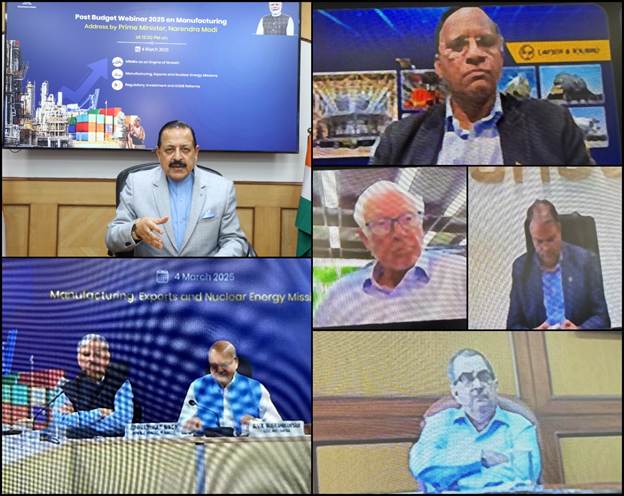
The Prime Minister Shri Narendra Modi today addressed the Post- Budget webinars via video conferencing. The webinars were held on MSME as an Engine of Growth; Manufacturing, Exports and Nuclear Energy Missions; Regulatory, Investment and Ease of doing business Reforms. Addressing the gathering on the occasion, he remarked that the post-budget webinars on manufacturing and export are of great importance. Mentioning that this budget is the first full budget of the Government’s third term, he emphasised that the most notable aspect of this budget is its delivery, which exceeded expectations. Shri Modi pointed out that in several sectors, the Government has taken steps beyond what experts had anticipated. He also highlighted that significant decisions have been made regarding manufacturing and export in this budget.

Pointing out that the country has witnessed consistent Government policies for over a decade, the Prime Minister highlighted that in the past 10 years, India had shown a commitment to reforms, financial discipline, transparency, and inclusive growth. He emphasized that the assurance of consistency and reforms has brought new confidence within the industry. He assured every stakeholder in manufacturing and export that this consistency will continue in the coming years. Encouraging stakeholders to take bold steps and open new avenues for manufacturing and export for the country, Shri Modi highlighted that every country in the world wants to strengthen its economic partnership with India. He urged the manufacturing sector to take full advantage of this partnership.

“Stable policy and a better business environment are crucial for the development of any country”, said the Prime Minister, highlighting that a few years ago, the Government introduced the Jan Vishwas Act and made efforts to reduce compliances. Over 40,000 compliances were eliminated at both central and state levels, promoting ease of doing business, he noted. Emphasizing that this exercise should continue, Shri Modi mentioned that the Government had introduced simplified income tax provisions and is working on the Jan Vishwas 2.0 Bill. A committee has been formed to review regulations in the non-financial sector, aiming to make them modern, flexible, people-friendly, and trust-based, he added further and highlighted the significant role of the industry in this exercise. He encouraged stakeholders to identify problems that take longer to resolve, suggest ways to simplify processes, and guide where technology can be used to achieve quicker and better results.

“The world is currently experiencing political uncertainty, and the entire world views India as a growth center”, said Shri Modi, highlighting that during the COVID crisis, when the global economy slowed down, India accelerated global growth. He added that this was achieved by advancing the vision of Aatmanirbhar Bharat and accelerating reforms. He emphasized that these efforts minimized the impact of COVID on the economy, helping India become one of the fastest-growing economies. He said, “India remains a growth engine for the global economy and has proven its resilience in challenging situations”. Pointing out that disruptions in the supply chain affect the global economy, and the world needs reliable partners that produce high-quality products and ensure reliable supply, Shri Modi emphasized that India was capable of fulfilling this need, presenting a significant opportunity for the country. He urged the industry not to be mere spectators but to actively seek their role and carve out opportunities. He pointed out that it is easier today compared to the past, as the country has friendly policies and the Government stands shoulder to shoulder with the industry. The Prime Minister called for a strong resolve, objectivity in seeking opportunities in the global supply chain, and accepting challenges. He emphasized that if every industry takes one step forward, collectively, they can achieve significant progress.

Highlighting that 14 sectors were currently benefiting from the PLI scheme, the Prime Minister said that under the scheme, more than 750 units have been approved, resulting in an investment of over ₹1.5 lakh crore, production worth over ₹13 lakh crore, and exports exceeding ₹5 lakh crore. He emphasized that this demonstrates how entrepreneurs can advance in new areas when given opportunities. Shri Modi announced the decision to launch two missions to promote manufacturing and export. He highlighted the focus on better technology and quality products, as well as the emphasis on skilling to reduce costs. He urged all stakeholders to identify new products in demand globally that can be manufactured in India and encouraged them to approach countries with export potential strategically.

“R&D has played a crucial role in India’s manufacturing journey and needs further advancement and acceleration”, remarked the Prime Minister. He highlighted that through R&D, the focus can be on innovative products and value addition to existing products. He emphasized that the world recognizes the potential of India’s toy, footwear, and leather industries and by combining traditional crafts with modern technologies, significant success can be achieved. He noted that India can become global champion in these sectors, leading to a substantial increase in exports. Shri Modi highlighted that this growth will create lakhs of job opportunities in labor-intensive sectors and promote entrepreneurship. Mentioning that the PM Vishwakarma Yojana provides end-to-end support to traditional artisans, he urged efforts to connect these artisans with new opportunities and called on all stakeholders to come forward to expand the hidden potential in these sectors.

“MSME sector is the backbone of India’s manufacturing and industrial growth”, said the Prime Minister. He highlighted that in 2020, the Government made a significant decision to revise the definition of MSMEs after 14 years, which eliminated the fear among MSMEs that they would lose government benefits if they grew. He noted that the number of MSMEs in the country has increased to over 6 crore, providing employment opportunities to crores. Shri Modi emphasized that in this budget, the definition of MSMEs has been further expanded to instill confidence in their continuous growth. This will create more employment opportunities for the youth, he said, highlighting that the biggest problem faced by MSMEs was the difficulty in obtaining loans. He added that ten years ago, MSMEs received loans worth approximately ₹12 lakh crore, which has now increased to around ₹30 lakh crore. The Prime Minister announced that in this budget, the guarantee cover for MSME loans has been doubled to ₹20 crore. Additionally, customized credit cards with a limit of ₹5 lakh will be provided to meet working capital needs.

Underlining that the Government had facilitated loan access and introduced a new type of loan, Shri Modi highlighted that people are now receiving loans without guarantees, something they never imagined before. Over the past 10 years, schemes like MUDRA, which provide loans without guarantees, have also supported small industries, he said, noting that the Trades portal is resolving many loan-related issues. The Prime Minister emphasized the need to develop new modes of credit delivery, ensuring that every MSME has access to low-cost and timely credit. He announced that five lakh first-time entrepreneurs from women, SC, and ST communities will receive loans of ₹2 crore. He highlighted that first-time entrepreneurs need not only credit support but also guidance and urged the industry to create a mentorship program to help these individuals.

Underscoring the role of states is crucial in boosting investment, Shri Modi emphasized that the more states promote ease of doing business, the more investors they will attract. He pointed out that this will benefit the respective states the most. He encouraged competition among states to see who can make the most of this budget. He noted that states with progressive policies will attract companies to invest in their regions.

Expressing confidence that all participants are seriously considering these topics, the Prime Minister emphasized that the webinar aims to determine actionable solutions. He highlighted the importance of participants’ cooperation in preparing policies, schemes, and guidelines. He noted that this will help in formulating implementation strategies post-budget. He concluded by expressing his belief that the participants’ contributions will prove to be very useful.

Several Union Ministers were present among other dignitaries over video conferencing on the occasion.

Background

The webinars will provide a collaborative platform for government officials, industry leaders, and trade experts to deliberate on India’s industrial, trade, and energy strategies. The discussions will focus on policy execution, investment facilitation, and technology adoption, ensuring seamless implementation of the Budget’s transformative measures. The webinars will engage private sector experts, industry representatives, and subject matter specialists to align efforts and drive impactful implementation of Budget announcements.

India’s security apparatus must remain adaptive to emerging threats: Raksha Mantri

| Published on:

Raksha Mantri Shri Rajnath Singh inaugurated the Ministry of Home Affairs (MHA) – Defence Research and Development Organisation (DRDO) Collaboration Conference-Cum-Exhibition on ‘Advanced Technologies for Internal Security and Disaster Relief Operations’ at DRDO Bhawan, New Delhi on March 04, 2025. Organised by the Directorate of Low Intensity Conflict (DLIC) under DRDO, the two-day conference aims to equip Central Armed Police Forces (CAPFs) officers with the latest advancements in technology to address challenges in their operations. The event provided a platform for the exchange of ideas and collaboration to strengthen India’s internal security and disaster response framework.

Addressing the gathering, Shri Rajnath Singh highlighted the growing complexities in global security and the increasing overlap between internal and external threats. “Security challenges in the modern world are evolving rapidly, and the overlap between internal and external security is increasing. It is imperative that our institutions break silos and work collaboratively to ensure a strong, secure, and self-reliant India,” he stated. He stressed that India’s national security must be viewed holistically, integrating efforts across different security agencies and leveraging the latest technological advancements.

Shri Rajnath Singh underscored that India’s security apparatus must remain adaptive to emerging threats such as cyber warfare, hybrid warfare, space-based challenges, and transnational organised crime. He noted that India’s internal security is not just about managing conventional threats like terrorism, separatist movements, and left-wing extremism but also about preparing for unconventional threats that can destabilise the nation’s economic and strategic interests. “The adversaries of today do not always come with traditional weapons; cyber-attacks, misinformation campaigns, and space-based espionage are emerging as new-age threats that require advanced solutions,” he stated.

“DRDO has played a pivotal role in enhancing India’s defence capabilities, and its contributions to internal security are equally commendable. From small arms and bulletproof jackets to surveillance and communication systems, DRDO’s innovations are empowering our security forces,” Raksha Mantri underlined. He urged DRDO and MHA to work together to create a common list of scalable products that can be jointly developed and deployed in a time-bound manner. “Our security forces require the best tools and technologies to remain ahead of the curve. It is encouraging to see DRDO’s focus on modernisation, with products like small arms, surveillance equipment and drone systems either inducted or undergoing evaluation for deployment in internal security agencies,” he highlighted.

Shri Rajnath Singh recalled his tenure as Home Minister, highlighting how the collaboration between security agencies and scientific institutions led to significant technological advancements. He cited examples of DRDO-developed technologies such as the corner shot weapon system, INSAS rifles, IED jammer vehicles and riot control vehicles, which were effectively integrated into the operations of CAPFs.

Shri Rajnath Singh also spoke about the importance of leveraging technology not just for security but also for disaster management and humanitarian relief. “The role of technology is not just in defence but also in ensuring peace and social welfare. Advanced systems like bulletproof jackets, drones, surveillance equipment and anti-drone technologies must be leveraged not only for security operations but also for disaster management and humanitarian relief,” he said. He cited the increasing frequency of natural calamities like cyclones, avalanches, earthquakes & cloud bursts and underscored the critical need for advanced rescue tools. He mentioned that the use of technologies such as thermal imaging cameras, drone-based detection systems, and victim locating devices can significantly reduce casualties and damage.

Referring to the recent avalanche in Mana, Uttarakhand, Raksha Mantri lauded the use of advanced rescue equipment in saving lives and reducing the impact of the disaster. He threw light on the fact that although disasters are tragic in themselves, their impact can be minimised with the use of advanced technology and how, in the recent avalanche, technologies like rotary rescue saws, thermal imaging, victim locating cameras, avalanche rods, and drone-based detection systems played a crucial role in saving lives.

Highlighting the importance of public awareness in disaster management, Shri Rajnath Singh called for greater involvement of civil society in disaster preparedness. “Today, India is a prospering nation, and disaster management must become an integral part of our preparedness. It is not enough for security agencies and technology developers to take the lead; we must also educate the general public. Every citizen should know how to respond in times of crisis,” he urged.

Raksha Mantri also stressed the need for focused conferences on specific security challenges faced by different regions of the country. “Security threats in India are not uniform. The issues faced in the Northeast due to insurgencies are different from those in Naxal-affected areas or border regions. Similarly, urban security concerns are different from those in rural areas. We need to organise dedicated conferences that focus on region-specific challenges and solutions,” he said.

As part of the event, the Transfer of Technology (ToT) of the ASMI 9x19mm Machine Pistol was handed over by DRDO to Lokesh Machinery Tool, marking a step forward in the ‘Aatmanirbhar Bharat’ initiative. Shri Rajnath Singh also inaugurated an exhibition showcasing DRDO-designed technologies developed in collaboration with the Indian defence industry, highlighting achievements in indigenisation. Three significant documents were also released to strengthen cooperation and technological advancements in internal security and disaster management. These include:

1. Compendium of DRDO Products for Internal Security

2. Compendium of DRDO Products for Police Operations

3. Compendium of DRDO Products for Disaster Relief Operations

The conference includes seven technical sessions focusing on key areas such as Left-Wing Extremism, border management, advanced weapon technologies, drone & counter-drone solutions, disaster management, policing & crowd control, and futuristic communication technologies.

Secretary DDR&D and Chairman DRDO Dr Samir V Kamat during the conference stated that more than 100 products from DRDO developed technologies have been or soon will be inducted into various agencies of MHA. He further mentioned that the technologies which DRDO develops for the services are also being utilised in internal security as well as disaster relief operations. Chief of the Army Staff General Upendra Dwivedi, Secretary (Border Management) MHA Shri Rajendra Kumar, Secretary (Defence Production) Shri Sanjeev Kumar, DG (Production, Coordination & Services Interaction) Dr Chandrika Kaushik, senior officials from Ministry of Defence and MHA were also present on the occasion.

Union Health Minister chairs 9th meeting of Mission Steering Group for National Health Mission

| Published on:

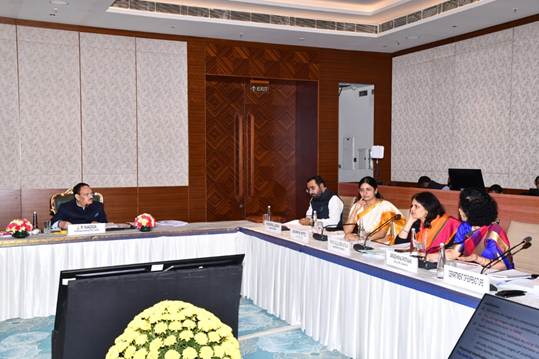
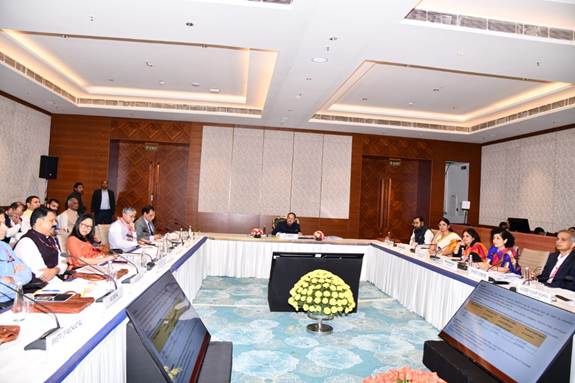
Union Minister for Health & Family Welfare, Shri Jagat Prakash Nadda chaired the ninth meeting of Mission Steering Group (MSG) of National Health Mission (NHM), today at Bharat Mandapam, New Delhi. Union Ministers of State for Health & Family Welfare, Shri Prataprao Jadhav and Smt. Anupriya Patel, Shri Suman K. Bery, Vice chairman, NITI Aayog, Shri V.K. Paul, Member, NITI Aayog were also present.

The Mission Steering Group is the highest policy-making and steering institution under the NHM, providing broad policy direction and governance for the health sector. Secretaries of Ministries of Government of India including MoHFW, AYUSH, Drinking Water & Sanitation, Punchayati Raj, Development of North Eastern Region along with officials from Women and Child Development, Social Justice & Empowerment, Education, Housing and Urban Affairs, Department of Expenditure, NHSRC and Secretaries from various central ministries, Health Secretaries from high-focus states including Uttarakhand, Chhattisgarh, Arunachal Pradesh, and Tripura and senior officials from NITI Aayog and MoHFW also attended the meeting.

Addressing the meeting, Shri Nadda commended NHM for its achievements and thanked the MSG for its role in ensuring the outputs of different initiatives and schemes. He stressed on the need “to ensure the translation of agendas and objectives of different health schemes” for which he underlined the importance of the roles of officers like the Chief Medical Officers (CMOs) at the ground level. Citing the administrative hindrances, he stressed on “enhancing and strengthening the capacities of Chief Medical Officers” and suggested the “need for training and capacity- building exercises so that their capacities can be utilized in the best way possible that will pave way for achieving required results of healthcare schemes at the grassroot level”.

Shri Nadda also commended the role of ASHA workers, “grassroot foot soldiers”, in the healthcare system and stressed on the need for their further empowerment and welfare through revised incentives for routine activities, and providing enhanced honorariums.

While commending the developments made in strengthening the health infrastructure through new technological advances and additions, he also stressed on the need to ensure quality of the latest additions like the BHISHM cubes (Bharat Health Initiative for Sahyog Hita & Maitri).

The MSG was apprised about the achievements made under NHM during the past few years while marking the future targets for different missions. For the first time, Pradhan Mantri-Ayushman Bharat Health Infrastructure Mission (PM-ABHIM) was also included in the MSG. Presentations on achievements and future targets of NHM and PM-ABHIM were also made that covered the developments made under the Mission, its components and agenda for the future.

The achievements highlighted in the meeting include:

  • India has achieved the National Health Policy (NHP) target of MMR 100 deaths per 1 lakh live births. Between 1990 to 2020, MMR in India declined 83% which is much higher than the Global MMR decline
  • 69% decline was observed in Infant Mortality Rate in India during this period, while the Global IMR decline was 55%
  • 75% decline in Under 5 Mortality Rate while the global decline rate was 58%. As per SRS 2020, 11 states/ UT have attained the SDGs target
  • Reduction in Total Fertility Rate from 3.4 in 199293 to 2.0 in 2019-21. 31 states have achieved replacement level of fertility as per National Family Health Survey (NFHS-5), 2019-21
  • Out of Pocket Expenditure has declined from 69.4 of the Total health expenditure (THE) in 200405 to 39.4 in 2021-22 of THE while the Government Health Expenditure has increased from 22.5% of the TFR in 2004-05 to 48% of THE in 2021-22
  • Increase in Health Human Resources Augmentation (HRH) under NHM, increased from 23 thousand in 200607 to 5.23 lakhs in 2023-24
  • On 15.05.2015, WHO certified India for eliminating maternal and neonatal tetanus
  • On 8th October 2024, WHO declared that Government of India has eliminated Trachoma as a public health problem
  • As of 28th February 2025, Expanded Package of Services is available at 85% of total operational Ayushman Arogya Mandirs
  • More than 1.76 lakh Ayushman Arogya Mandirs are operational in the country today
  • In the last 5 years, annual footfall at Ayushman Arogya Mandirs has increased from 13.49 crores in 201920 to 121.03 crores in 2023-24
  • The no. of wellness sessions conducted for Primary Healthcare have increased from 0.11 crores in 201920 to 1.54 crores in 2023-24
  • The no. of NCD screenings increased from 10.94 crores in 201920 to 109.55 crores in 2023-24
  • The no. Teleconsultations increased from 0.26 crores in 2019-20 to 11.83 crores in 2023-24
  • Under the National Tuberculosis Elimination Program, 18% reduction was observed in incidence of TB during 201523 which is more than double the global reduction; while 21% reduction in mortality was observed
  • Pradhan Mantri National Dialysis Program, all the states & UTs and 748 districts have been covered. 26.97 lakh patients have been covered and a total of 3.27 Crore sessions have been held
  • As of 28th February 2025, Under the Sickle Cell Anaemia Elimination Mission, more than 5 crore people have been screened, out of which 1.84 lakh patients have been diagnosed and 2.24 crore sickle cell cards have been distributed
  • Under the Malaria Elimination Mission, 79.3% reduction in Malaria cases was observed in 2023 as compared to 2014; while the number of deaths due to Malaria reduced 85.2% in 2023 compared to 2014
  • India achieved the Kalaazar elimination target in 2023 i.e. to reduce the annual incidence of Kala- azar cases to less than one case per ten thousand population at block level, ahead of the SDG target
  • ODK tool kit launched for selfassessment of health facilities in June 2024 and 95% of total health facilities have been assessed

The attendees commended the progress achieved under the National Health Mission (NHM) through targeted programs and the support extended to states over the years. They proposed several key suggestions, including emphasizing on the need to increase internet connectivity in the Ayushman Aarogya Mandirs that is necessary to ensure tele-consultations. To address the issue of obesity in the country, AYUSH interventions along with screening and management through Ayushman Arogya Mandirs was emphasized upon.

The meeting also covered crucial discussions on policy frameworks, operational strategies, and financial norms aimed at enhancing healthcare delivery and achieving the NHM’s objectives. The focus remained on ensuring universal access to equitable, affordable, and quality healthcare, reducing child and maternal mortality, stabilizing population growth, and maintaining gender and demographic balance.

Shri Nadda observed that the decisions made during the MSG meeting will enhance the delivery of healthcare services and bring about results at the grassroots level. He added that the feedback and suggestions from the meeting will be taken into consideration to build the roadmap for future interventions.

Background: The Mission Steering Group is the highest policy-making and steering institution under the NHM, providing broad policy direction and governance for the health sector. The MSG plays a critical role in shaping policies and strategies that drive the nation’s healthcare initiatives. It is fully empowered to approve financial norms for all schemes and components under the NHM and advises the Empowered Programme Committee (EPC) in policy formulation and operation.

Since its inception in 2005 under the National Rural Health Mission (NRHM), which was later subsumed into the NHM, the MSG has convened 8 meetings under the NHM and 9 meetings under the NRHM. The last meeting of the MSG was held on January 11, 2023, under the chairpersonship of the then Union Minister of Health & Family Welfare. These meetings have historically provided a platform for critical decision-making and alignment of policies to strengthen healthcare services across the country.

The Mission Steering Group has been instrumental in guiding initiatives that strengthen healthcare infrastructure, improve service delivery, and respond effectively to public health challenges. The meeting was held with an objective of contributing significantly to the ongoing efforts towards building a resilient and responsive health system in India.

The MSG has been instrumental in guiding initiatives that strengthen healthcare infrastructure, improve service delivery, and respond effectively to public health challenges. The meeting was held with an objective of contributing significantly to the ongoing efforts towards building a resilient and responsive health system in India.

Nuclear Energy is Critical for India’s Net Zero Goal, Major Expansion Planned: Dr. Jitendra Singh

| Published on:

Addressing a post-budget webinar organized by NITI Aayog, Union Minister of State (Independent Charge) for Science and Technology; Earth Sciences, and Minister of State for PMO, Department of Atomic Energy, Department of Space, Personnel, Public Grievances and Pensions, Dr. Jitendra Singh emphasized that Nuclear Energy is critical for India’s Net Zero goal.

He highlighted the Union Budget 2024-25’s vision for India’s nuclear power expansion, which sets a target of achieving 100 GW by 2047.

Pointing out the crucial role of nuclear energy in India’s transition to clean energy and achieving Net Zero emissions by 2070, he called for private sector participation, regulatory reforms, and sustained public engagement.

Highlighting the growing energy demand, Dr. Jitendra Singh stated that India’s electricity needs are expected to increase four to five times by 2047. While renewable energy sources are expanding, they alone cannot meet the base-load demand, making nuclear power a key component of India’s energy strategy. “Achieving 100 GW of nuclear power will require a focused and determined approach, adding around 4 GW annually from now onwards,” he said, expressing confidence in meeting the goal with proper planning and execution.

1 (3).jpg

A major shift in India’s nuclear policy is the proposed involvement of the private sector in designing, building, and operating nuclear power plants. Dr. Jitendra Singh acknowledged that legislative amendments to the Atomic Energy Act, Civil Liability for Nuclear Damage Act, and Electricity Act would be required to enable this participation. “Opening up the nuclear sector will send a strong policy signal to industry players, boosting investor confidence and encouraging long-term investments,” he noted.

He also highlighted that NPCIL, along with its subsidiaries, aims to contribute nearly half of the 100 GW target by leveraging domestic and international partnerships. Meanwhile, NTPC’s joint venture, Ashwini, has already taken the lead in constructing four 700 MWe PHWRs at Mahi-Banswara.

The Minister further announced the launch of a Small Modular Reactor (SMR) R&D Mission, with the objective of developing five SMRs by 2033. These reactors, known for their adaptability, could be deployed in industrial zones, remote areas, and hard-to-abate sectors like cement and steel manufacturing.

Dr. Jitendra Singh emphasized that India’s nuclear energy journey, pioneered by Dr. Homi Bhabha, was often met with skepticism, both domestically and internationally, due to restrictive global policies and misplaced concerns over nuclear proliferation. However, he noted that under Prime Minister Narendra Modi’s leadership since 2014, India has witnessed a paradigm shift, with greater acceptance of its nuclear energy program as a key component of clean and sustainable power generation. He pointed out that unlike in the past, the announcement of a 100 GW nuclear target has not faced any negative implications, reflecting India’s growing credibility in the global nuclear community and the recognition of its responsible and transparent approach to nuclear energy development.

Dr. Jitendra Singh also underscored the need for a nationwide awareness campaign to address public concerns regarding nuclear energy. “A much more vigorous and sustained public outreach program is necessary to dispel fears and highlight nuclear power as a safe and clean energy source,” he said, urging collaboration among government agencies, private players, and environmental groups.

With a roadmap now being formulated in consultation with stakeholders, the Minister affirmed that while challenges exist, achieving the 100 GW target by 2047 is both ambitious and achievable.

PM chairs the 7th meeting of National Board for Wildlife in Gir

| Published on:

Prime Minister Shri Narendra Modi visited Gir National Park in Gujarat earlier today, where he chaired the 7th meeting of the National Board for Wildlife.

The National Board for Wildlife reviewed various initiatives undertaken by the Government in wildlife conservation, highlighting achievements in the creation of new protected areas and species-specific flagship programs such as Project Tiger, Project Elephant, Project Snow Leopard, among others. The Board also discussed conservation efforts for dolphins and Asiatic lions, and the establishment of the International Big Cats Alliance.

During the meeting, Prime Minister released the report of the first-ever riverine dolphin estimation conducted in the country, which estimated a total of 6,327 dolphins. This pioneering effort involved surveying 28 rivers across eight states, with 3150 mandays dedicated to covering over 8,500 kilometers. Uttar Pradesh recorded the highest numbers, followed by Bihar, West Bengal, and Assam.

Prime Minister emphasised the importance of awareness on dolphin conservation by involvement of local population and villagers in the areas. He also advised organising exposure visits of school children in dolphin habitat areas.

Prime Minister also laid the foundation stone of the National Referral Centre for Wildlife at Junagadh, which will function as the hub for coordination and governance of various aspects related to wildlife health and disease management.

Population estimation of Asiatic Lions is carried out once every five years. The last such exercise was carried out in 2020. Prime Minister announced the initiation of the 16th cycle of lion estimation to be conducted in 2025.

Considering that the Asiatic Lions have now made Barda Wildlife Sanctuary their home through natural dispersal, Prime Minister announced that lion conservation in Barda will be supported through prey augmentation and other habitat improvement efforts. Underscoring the importance of eco-tourism as a means for development and conservation of wildlife habitats, he emphasised that there should be ease of travelling and connectivity for wildlife tourism.

For effective management of human-wildlife conflict, Prime Minister made an announcement for establishing a Centre of excellence at Wildlife Institute of India- Campus in SACON (Salim Ali Centre for Ornithology and Natural History), Coimbatore. The centre will also support the states and UTs in equipping Rapid Response Teams with advanced technology, gadgets for tracking, forewarning; prescribe surveillance and Intrusion Detection Systems in human-wildlife conflict hotspots; and build capacity of field practitioners and community to execute conflict mitigation measures.

Prime Minister stressed on the usage of remote sensing & geospatial mapping and Artificial Intelligence & Machine Learning to combat issues like forest fires and human-animal conflicts. He suggested engagement of the Wildlife Institute of India with the Bhaskaracharya National Institute for Space Applications and Geo-informatics (BISAG-N) to address the challenge of human-wildlife conflict.

To enhance the monitoring and management of forest fires, particularly in highly sensitive protected areas, focusing on prediction, detection, prevention, and control, the Prime Minister advised for a collaboration between the Forest Survey of India, Dehradun, and BISAG-N through use of space technology.

Prime Minister also announced that the Cheetah introduction will be expanded to other areas including the Gandhisagar Sanctuary in Madhya Pradesh and Banni Grasslands in Gujarat.

Prime Minister announced a scheme focused on the conservation of tigers outside tiger reserves. The initiative aims to address human-tiger and other co-predator conflicts in areas outside these reserves by ensuring co-existence with local communities.

Recognising the dwindling population of gharials and a view of ensuring the conservation of Gharials, Prime Minister also announced the initiation of a new Project on Gharials for their conservation.

Prime Minister commended the efforts undertaken towards conservation of Great Indian Bustard. Considering the need to upscale the conservation efforts, he announced a National Great Indian Bustard Conservation Action Plan.

During the review meeting, Prime Minister asked the Board and Environment Ministry to gather traditional knowledge and manuscripts of various regions of India with respect to conservation and management of forests and wildlife for research and development. Prime Minister chalked out a roadmap for wildlife conservation strategy and future actions for the Ministry and also asked to constitute various task forces to work on Indian Sloth Bear, Ghariyaal and Great Indian Bustard conservation and development.

Prime Minister noted that Gir is a good success story of Lion and Leopard conservation. He said that this traditional knowledge should be documented with the help of AI for use at other National Parks and Sanctuaries.

Prime Minister also suggested for enhanced cooperation in Co-ordination unit under the United Nations Convention on the Conservation of Migratory Species of Wild Animals (CMS).

Prime Minister commended the active participation of local communities in conservation, especially through the establishment of Community Reserves. Over the past decade, India has witnessed more than six fold increase in the number of community reserves. He also emphasized the importance of utilizing advanced technologies, including Artificial Intelligence in wildlife conservation.

Prime Minister also advised on research and documentation of medicinal plants in forest areas which can play a crucial role in animal health management.  He also mentioned the possibilities of promoting use of  plant based medicine systems for animal health management on a global scale.

After the meeting, Prime Minister also flagged off motorcycles for enhanced mobility of frontline forest staff.  He also interacted with field level functionaries at Gir which included frontline staff, eco guides and trackers.

PM goes on a Safari in Gir, Gujarat

| Published on:

The Prime Minister Shri Narendra Modi today went on a safari in Gir, Gujarat, well known as home to the majestic Asiatic Lion. He hailed the  collective efforts which have ensured the steady rise in population of Asiatic Lions over the past many years.

In separate posts on X, he wrote:

“This morning, on #WorldWildlifeDay, I went on a Safari in Gir, which, as we all know, is home to the majestic Asiatic Lion. Coming to Gir also brings back many memories of the work we collectively did when I was serving as Gujarat CM. In the last many years, collective efforts have ensured that the population of Asiatic Lions is rising steadily. Equally commendable is the role of tribal communities and women from surrounding areas in preserving the habitat of the Asiatic Lion.”

“Here are some more glimpses from Gir. I urge you all to come and visit Gir in the future.”

“Lions and lionesses in Gir! Tried my hand at some photography this morning.”

Raksha Mantri meets Princess Astrid of Belgium & Defence Minister in New Delhi

| Published on:

Raksha Mantri Shri Rajnath Singh held a meeting with Princess Astrid of Belgium and the Defence Minister Mr Theo Francken in New Delhi on March 03, 2025. Both sides discussed the possibility of defence engagements in the Indo-Pacific, particularly in maritime domain. They also discussed ways and means to enhance defence industrial cooperation between the two countries.

Raksha Mantri welcomed Belgian investments in the defence sector. He suggested that the Belgian companies could play an important role by expanding their footprint in India and integrating the Indian vendors in their supply chains. Further, both countries agreed to explore an institutionalised defence cooperation mechanism.