Union Home Minister inaugurates District BJP offices in Tamil Nadu

| Published on:

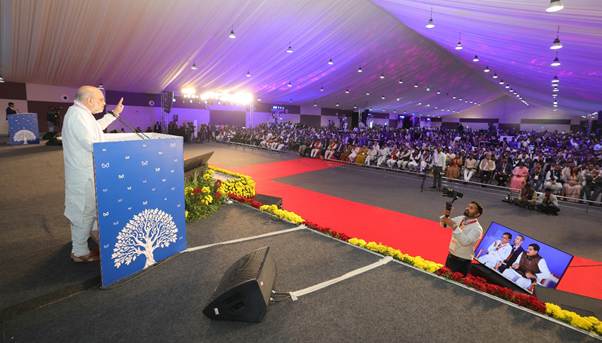
Hon’ble Union Home Minister & Minister of Cooperation and Senior BJP Leader Shri Amit Shah inaugurated BJP District Offices from Coimbatore, Tamil Nadu on Wednesday. In his address, Shri Shah criticized the Tamil Nadu government for corruption, lawlessness, and anti-national activities, pointing out the DMK leaders’ involvement in scandals. He asserted that in 2026, Tamil Nadu would witness the formation of an NDA government, signaling a new era. During the event, Tamil Nadu BJP President Shri K Annamalai, Union Minister Dr. L Murugan, Coimbatore District President Shri J Ramesh Kumar, and BJP National Secretary Shri Arvind Menon, among other leaders, were present.

Shri Shah extended his heartfelt wishes for Maha Shivratri to all the Shiva devotees in Coimbatore, Tamil Nadu, and across the country. He then mentioned that three offices had been inaugurated in the region, including the Coimbatore office, along with those in Thiruvannamalai and Ramanathapuram. The BJP offices are different from the offices of other political parties. While other parties considered their offices merely as workplaces, BJP karyakartas regard their party office as a temple from where the party’s operations are conducted.

Union Home Minister expressed his hope that the three newly inaugurated offices would soon become key centers for public outreach, responsiveness to people’s concerns, and mass movements for the BJP. He further stated that under the leadership of Hon’ble Prime Minister Shri Narendra Modi Ji, Union Finance Minister Smt Nirmala Sitharaman had recently presented the Union Budget. The budget introduced several initiatives focused on the welfare of farmers, the betterment of the middle class, and the growth of MSME businesses. Through this budget, Hon’ble Prime Minister Shri Narendra Modi Ji introduced numerous initiatives aimed at supporting these sectors.

Shri Shah stated that 2024 had been a landmark year for the BJP. In the year, Shri Narendra Modi Ji was sworn in as the Hon’ble Prime Minister of the country, for a third consecutive term. For the first time, the BJP formed a full-majority government in Odisha, while the NDA secured power in Andhra Pradesh after a long gap. BJP’s successive victories in Haryana, Maharashtra, and Delhi marked a hat-trick, reaffirming the people’s trust in the party. 2025 began with BJP’s triumph in Delhi, and 2026 would conclude with the NDA forming a government in Tamil Nadu.

Union Home Minister stated that he had come to call upon BJP karyakartas in Tamil Nadu, emphasizing that the time had come to end the corrupt and anti-national DMK government in the state. Everyone should step forward with renewed energy and determination to establish an NDA government in Tamil Nadu.

Shri Shah affirmed that in 2026, Tamil Nadu would witness the formation of an NDA government, marking the beginning of a new era. The dominance of nepotism in the state would come to an end, corruption would be eradicated permanently, and anti-national activities would be uprooted. The new government would pave the way for a development-driven future, where Tamil Nadu’s progress would contribute to the growth of the entire nation.

Union Home Minister conveyed that Hon’ble PM Shri Narendra Modi Ji has fostered a spirit of healthy competition among all states. After independence, Hon’ble Prime Minister Shri Narendra Modi Ji contributed the most to the Tamil language, culture, and dignity of Tamil Nadu. By placing the sacred Sengol in the Parliament House, the Hon’ble Prime Minister has honoured Tamil culture in the temple of Indian democracy. 

Hon’ble Shri Shah highlighted that currently, Tamil Nadu has the worst law and order situation in the country. Women are not safe even in prestigious institutions and universities. The culprits of the Vengaivayal incident have not been arrested even after 700 days. In Tamil Nadu, when complaints are made about illegal liquor, instead of taking action against those involved in making it, the students protesting against it are killed. There is also a severe rise in anti-national tendencies in the state. The Tamil Nadu government provided security for the funeral procession of the mastermind behind the 1998 bomb blast.

Union Home Minister stated that drug mafias have been allowed to freely sell drugs, illegal mining mafias are corrupting politics, and as far as corruption is concerned, all DMK leaders have earned a master’s degree in it. One leader is involved in a cash-for-job scam, another in money laundering and illegal red sand mining, a third is caught in a disproportionate assets case, a fourth is implicated in the coal scam, the fifth leader is accused in the 6,000 crore CRIDP scheme, and the 2G scam is still ongoing. It appears that the DMK has selectively included corrupt individuals in its membership drive. The people of Tamil Nadu are frustrated with all of this, which is why the Chief Minister of Tamil Nadu and his son are raising issues to divert the public’s attention. 

Shri Shah mentioned that Hon’ble Prime Minister Shri Narendra Modi Ji, while protecting all your interests, has ensured that on a pro-rata basis not a single seat is going to be reduced, and the southern states will get their rightful share on any increase in seats. While the Chief Minister of Tamil Nadu frequently accuses the Modi government of injustice towards Tamil Nadu, the reality is that between 2004 and 2014, the UPA government allocated only ₹1,52,901 crores in grants and devolution to Tamil Nadu, whereas the Modi government has provided ₹5,08,337 crores in grants and devolution funds from 2014 to 2024.

Hon’ble Shri Shah appealed to all the karyakartas to expose the corruption of the DMK government in Tamil Nadu, the deteriorating law and order situation, the insecurity of women, and anti-national activities. He also urged them to spread awareness about the efforts made by the Hon’ble Prime Minister Shri Narendra Modi Ji for the development of Tamil Nadu, Tamil pride, language, and culture. Shri Shah expressed confidence that the NDA government is set to form with an even larger majority than in Maharashtra and Haryana.

Union Home Minister addresses Maha Shivratri festival in Coimbatore, TN

| Published on:

Union Home Minister and Minister of Cooperation, Shri Amit Shah, today addressed the Maha Shivratri celebrations organized by the Isha Foundation in Coimbatore, Tamil Nadu.

Union Home Minister and Minister of Cooperation, Shri Amit Shah extended greetings to the countrymen on the occasion of of Maha Shivratri. He said that from Somnath to Kedarnath, Pashupatinath to Rameswaram, and Kashi to Coimbatore, the entire nation is immersed in the devotion of Lord Shiva today. Shri Shah highlighted the spiritual significance of this day, noting that while the Maha Kumbh concludes in Prayagraj, a grand “Maha Kumbh of devotion” is unfolding in Coimbatore. He emphasized that Maha Shivratri is not just a festival but a profound night of self-awakening. He said when the entire universe resonates itself with the presence of Shiva, only then can the true essence of Shivaratri be experienced. He further said that this sacred day marks the divine union of Lord Shiva and Goddess Parvati, paving the way for the soul’s union with Shiva, thereby opening the path to salvation through unwavering devotion.

Union Home Minister Shri Amit Shah said that Lord Shiva is not just a symbol but a benevolent consciousness who embodies both destruction and protection, each playing a vital role in our lives. He said Shiva is described as Shambhu and Swayambhu, representing both truth and beauty. Known as Bhole Nath and Maha Kaal, Shiva is present here in Coimbatore as Adi Yogi, the first yogi. Shri Shah emphasized that Shiva is not merely an idol but the fundamental foundation of existence itself. He said that Maha Shivratri is a testament to the culmination of devotion and faith, where the true offering is not material but our unwavering dedication to the path of devotion.

Shri Amit Shah said that this place created by Sadguru is not just a pilgrimage but has become a global center for yoga, sadhana, devotion, self-knowledge and liberation. He praised the Isha Yoga Center for bringing positive transformation into the lives of millions through yoga and meditation. He highlighted the significance of the 112-ft grand statue of Adi Yogi, which symbolizes the 112 paths to spiritual enlightenment. He said that visiting this sacred space reminds us that the ultimate goal of life is to attain Shivatva—the state of divine consciousness. Shri Shah said that the Isha Yoga Center serves as a bridge connecting people, especially the youth, with spirituality. He said that by coming here, one embarks on a journey from mere awareness to cosmic consciousness, self-interest to selflessness, and individual existence to universal oneness. He commended Sadguru for not only inspiring the youth towards spirituality but also offering them a profound and intelligent understanding of religion.

Union Home Minister said that the phrase “A Mystic Man on a Mission” perfectly describes Sadguru. He praised Sadguru Jaggi Vasudev for guiding the world on the path of a meaningful and conscious life. He said that through Sadguru, the world has come to understand the eternal wisdom that true knowledge begins with understanding oneself. Shri Shah emphasized that the journey to transforming the world starts with self-transformation. He lauded Sadguru’s efforts in making people aware to the value of India’s most precious heritage—its soil—and spreading a profound environmental message across the globe. He said that Sadguru has emerged as a true national asset, inspiring millions and bringing the essence of India’s spiritual heritage to the fore.

Shri Amit Shah said that Sadguru has given a new dimension to Yoga through Adi Yogi, while Prime Minister Shri Narendra Modi has brought global recognition to Yoga by commemorating International Yoga Day. He emphasized that Yoga is not just a practice but a journey that takes us from Sva (self) to Sarv (universal), from Aham (ego) to Vayam (togetherness), from Sankalp (resolve) to Siddhi (attainment), and from Vairagya (detachment) to Samadhi (ultimate consciousness). Shri Shah highlighted that despite its ancient roots, Yoga remains highly relevant in the modern world and continues to evolve dynamically. He described Yoga as a force that unites the mind, body, and soul, bridges the gap between the individual and the Supreme, and ultimately paves the way for deep devotion and spiritual fulfillment.

Union Home Minister Shri Amit Shah said that any account of India’s spiritual history is incomplete without mentioning rich Tamil culture. He said that Tamil Nadu is a land enriched with countless living examples of spirituality, carrying forward an unbroken legacy of wisdom and devotion. Shri Shah said the Maha Shivratri celebrations organized by Sadguru are amazing, unimaginable, and beyond words. He hailed Sadguru for creating a spiritual pilgrimage that seamlessly blends science and spirituality, proving that meditation, energy, and state of consciousness are not mere beliefs but fundamental aspects of science. He said that Sadguru has made people realize that Shiva is not just a deity but an eternal presence, a universal consciousness, and that awakening Shivatva—the essence of Shiva—is the true path to self-realization.

Sarbananda Sonowal unveils ₹4,800 crore plan to transform Assam’s Inland Waterways

| Published on:

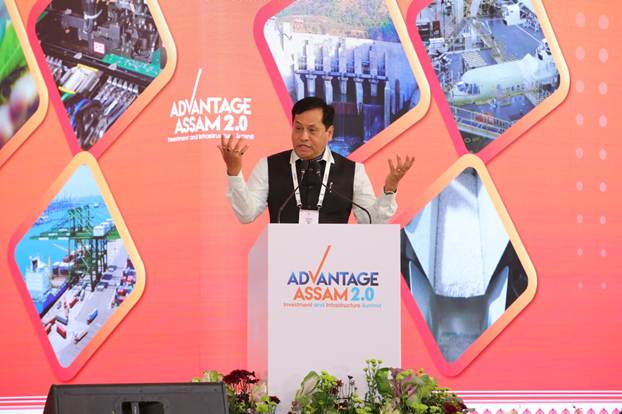
The Union Minister of Ports, Shipping and Waterways, Shri Sarbananda Sonowal announced an investment of more than ₹4,800 crore to transform the inland waterways sector of Assam at the Advantage Assam 2.0 in Guwahati, today. The investment is to enable the immense potential that the complex and dynamic waterways system of the state has to offer to propel the growth and development of the region towards realising the vision of Prime Minister Shri Narendra Modi’s Viksit Bharat, Shri Sonowal asserted at the session on Assam’s Roads, Railway and Riverine Tourism on the second day of the investment summit.

Speaking on the occasion, the Union Minister said, “Under the dynamic leadership of Prime Minister Shri Narendra Modi ji, the country is cruising ahead towards realising the vision of Viksit Bharat. Assam along with the Northeast plays an integral part in propelling this journey to realise the vision of Modi ji. Inland Waterways plays a crucial role in this scheme of things as the visionary Modi ji planned its revival since 2014 from near obscurity and neglect of the past. With its rich inter web of riverine system in the region, especially in Assam with Brahmaputra (NW2) and Barak (NW16), the inland waterways aims at rejuvenating its ageless role as the main conduit of trade and commerce. Globally considered as futuristic, the inland waterways provides an opportunity to opt for a more economic, efficient and environment friendly mode of transporting cargo and passengers. With the launch of schemes like ‘Jalvahak’, the Modi government has been incentivising the businesses to switch to inland waterways, thereby, improving the economies of scale, decongesting the railways and roadways and enabling a conducive ecosystem that is vital for pivotal role Assam is set to play towards India’s ascendency to become world’s biggest and an Atmanirbhar economy by 2047.”

At the summit, Shri Sarbananda Sonowal announced allocation of ₹1,500 crore for a planned transition into Green Vessels by 2030 under the ‘Harit Nauka’ scheme. An amount of more than ₹1,500 crore has been earmarked to facilitate cruise tourism and enhance cargo handling capacity by 2027-28 in NW2 and NW16. This includes construction of jetties with on shore facilities at Silghat, Bishwanath ghat, Neamati Ghat and Guijan along with construction of a new building for Regional Office, MSDC, Guest house and office space for ITAT at Fancy Bazar in Guwahati. An amount of ₹375 crore is pegged for development of Phase II of Ship Repair Facility at Pandu. In order to maintain fairway, the government has entrusted Dredging Corporation of India (DCI) to ensure assured draft of 2.5 meters from Bangladesh Border to Pandu in NW-2 till 2026-27. An amount of ₹191 crore has been earmarked for this, Shri Sonowal stated.

Adding further, he said, “Advantage Assam has always served as a catalyst for the region’s economic revival, providing businesses with a strategic platform to expand their trade and investment opportunities. With the immense support that Assam has received from our Hon’ble Prime Minister Shri Narendra Modi ji, we remain firmly committed to the holistic development of the economy of Assam and the Northeast. Among the various ongoing projects to enable inland waterways of Assam, we are also planning to transform the conventional vessels into Green Vessels under Harit Nauka scheme. This affirms the commitment of our government towards sustainable development, a milestone set by our dynamic leader Narendra Modi ji. Given the immense potential of riverine tourism in the state, we are developing an ecosystem including infrastructure and fairway for smooth, regular and viable operations. You may be happy to know that the Dredging Corporation of India (DCI), with its rich experience of dredging at the sea, has been entrusted with dredging the NW2, for the first time on any river in India.”

The Union Minister also announced the development of Water Metro Service in Guwahati and Dhubri for an estimated investment of ₹315 crore. Based on the success of Kochi Metro Service, the feasibility study is being conducted for this. Shri Sarbananda Sonowal also announced deployment of two Electric Catamarans being built by Cochin Shipyard Limited (CSL). A world class cruise terminal will also be built in Guwahati with an estimated investment of ₹100 crore.

In Dibrugarh, an estimated ₹120 crore has been earmarked for development of Regional Centre of Excellence (RCOE). Adding further to the capital development along the NW2, Riverine Lighthouses will be built at FIVE places — Bogibeel, Biswanath, Nimati, Pandu and Silghat — at an estimated cost of ₹100 crore. In addition, a sum of ₹150 crore has been earmarked for fairway development with LAD of 2.5 meters between Pandu and Bogibeel. TWO Cutter Section Dredger units will also be purchased for Brahmaputra (NW2).

The Inland Waterways Authority of India (IWAI), the nodal agency for the riverine transportation including national waterways under the Ministry of Ports, Shipping and Waterways (MoPSW), is implementing projects worth ₹1,010 crore along river Brahmaputra (NW2) and river Barak (NW16) in Assam. Among the major projects, the ship repair facility is being built at Panda with an investment of ₹208 crore while an alternate road from Pandu to NH27 is being built at an investment of ₹180 crore. New Inland Waterways Terminal (IWT) at Bogibeel as well as at Jogighopa —- with more than ₹66 crore and ₹82 crore of investment —- are being developed on Brahmaputra to ‘enable possibilities meet opportunities’, Shri Sonowal added.

An investment of more than ₹646 crore has been earmarked to construct riverine infrastructure across Brahmaputra under the Sagarmala Scheme, the flagship programme of the Ministry of Ports, Shipping and Waterways. For Barak River, the Union Minister announced procurement of Survey Vessel, procurement of THREE Amphibian Dredgers, construction of Crane Pontoon and Gangway for proving Floating Terminal facilities in Karimganj, construction of Steel Pontoon and Gangway for providing Floating Terminal facilities at Badarpur among other projects.

At this session, the Union Minister was joined by the Chief Minister of Assam, Dr Himanta Biswa Sarma; Minister of Animal Husbandry, Veterinary, Fishery and PWRD, Govt of Assam, Krishnendu Paul; Chairman of IWAI, Vijay Kumar; High Commissioner of Singapore, His Excellency Simon Wong among other officials and corporate leaders from infra, railways and marine sector.

PM inaugurates Advantage Assam 2.0 Investment & Infrastructure Summit 2025

| Published on:

The Prime Minister Shri Narendra Modi inaugurated the Advantage Assam 2.0 Investment & Infrastructure Summit 2025 in Guwahati, Assam today. Welcoming all the dignitaries to the event, Shri Modi said “East India and North East India are embarking on a new journey of future today and Advantage Assam is a mega initiative to intertwine the incredible potential and progress of Assam with the world”. He added that history is a witness to the major role played by Eastern India in India’s prosperity. Expressing hope, the Prime Minister said, “Today, when we are progressing towards Viksit Bharat, Eastern India and North East will display their true potential”.  He said that Advantage Assam was a representation of the same spirit and congratulated the Government and Chief Minister of Assam for organising such a grand event. He recalled his words from 2013, when he had said that it was not very far when ‘A for Assam’ would be the norm.

“Despite global uncertainties, experts unanimously agree on one certainty: India’s rapid growth”, said the Prime Minister. He emphasized that today’s India is working with a long-term vision for the next 25 years of this century. He highlighted that the world has immense trust in India’s young population, which is rapidly becoming skilled and innovative. He also noted the growing confidence in India’s neo-middle class, emerging from poverty with new aspirations. Underscoring the trust the world places in India’s 140 crore people who support political stability and policy continuity, Shri Modi highlighted India’s governance that continues to implement reforms. Furthermore, he pointed out that India is strengthening its local supply chains and entering free trade agreements with various global regions. He also mentioned the robust connectivity with East Asia and the new India-Middle East-Europe Economic Corridor, bringing new opportunities.

Highlighting the growing global trust in India, as witnessed by the gathering in Assam, Shri Modi remarked, “Assam’s contribution to India’s growth is steadily increasing”. He noted that the first edition of the Advantage Assam Summit was held in 2018, at which time Assam’s economy was valued at ₹2.75 lakh crore. Today, Assam has become a state with an economy of approximately ₹6 lakh crore, he added, emphasizing that under their government, Assam’s economy has doubled in just six years. Furthermore, he said that this is the double effect of their Governments at the Center and the state. The numerous investments in Assam have turned it into a state of unlimited possibilities, he stated. The Prime Minister highlighted that the Assam government is focusing on education, skill development, and creating a better investment environment. He noted that their Government had worked extensively on connectivity-related infrastructure in recent years. He provided an example, stating that before 2014, there were only three bridges over the Brahmaputra river, built over 70 years. However, in the past 10 years, four new bridges have been constructed. One of these bridges is named after Bharat Ratna Bhupen Hazarika. Shri Modi remarked that between 2009 and 2014, Assam received an average rail budget of ₹2,100 crore but their Government increased Assam’s railway budget more than four times to ₹10,000 crore. He added that over 60 railway stations in Assam are being modernized and also mentioned that the first semi high-speed train in the North East is now operational between Guwahati and New Jalpaiguri.

Touching upon the rapid expansion of air connectivity in Assam, the Prime Minister said that until 2014, flights operated on only seven routes, but now there are flights on nearly 30 routes. This expansion has provided a significant boost to the local economy and created employment opportunities for the youth, he added. Shri Modi emphasized that these changes are not limited to infrastructure alone, but there were unprecedented improvements in law and order, with numerous peace accords signed in the past decade and long-pending border issues resolved. He underscored that every region, every citizen, and every youth in Assam is working tirelessly for the state’s development.

“India is undergoing significant reforms across all sectors and levels of the economy and continuous efforts have been made to enhance the Ease of Doing Business, and a comprehensive ecosystem has been established to promote industry and an innovation culture”, emphasised Shri Modi. He highlighted that excellent policies have been formulated for startups, manufacturing through PLI schemes, and tax exemptions for new manufacturing companies and MSMEs. He also noted the substantial investment the Government is making in the country’s infrastructure. Prime Minister underscored that the combination of institutional reform, industry, infrastructure, and innovation forms the foundation of India’s progress. He stated that this progress is also being seen in Assam, which is advancing at double engine speed. He pointed out that Assam has set a target to achieve a $150 billion economy by 2030. He expressed confidence that Assam can achieve this goal, attributing it to the capable and talented people of Assam and the commitment of their Government. Remarking that Assam is emerging as a gateway between South East Asia and India, Shri Modi said, to further this potential, the Government has launched the North East Transformative Industrialization Scheme, ‘Unnati.’ He highlighted that the ‘Unnati’ scheme will accelerate industry, investment, and tourism across the entire North East region, including Assam. He urged industry partners to take full advantage of this scheme and Assam’s unlimited potential. The Prime Minister noted that Assam’s natural resources and strategic location make it a preferred destination for investment. He cited Assam tea as an example of Assam’s potential, stating that it has become a global brand over the past 200 years, inspiring progress in other sectors as well.

Highlighting the significant changes occurring in the global economy, with a growing demand for resilient supply chains worldwide, the Prime Minister said, “India has initiated mission-mode efforts to advance its manufacturing sector”. He emphasized that under the Make in India initiative, the focus is on promoting low-cost manufacturing in sectors such as pharmaceuticals, electronics, and automobiles. He noted that India’s industry is not only meeting domestic demands but also setting new benchmarks for manufacturing excellence in international markets. He pointed out that Assam is playing a significant role in this manufacturing revolution.

Stressing that Assam has always had a share in global trade, Shri Modi remarked that today, over 50 percent of India’s on-shore natural gas production comes from Assam and there has been a significant increase in the capacity of Assam’s refineries in recent years. He also pointed out that Assam is rapidly emerging in sectors such as electronics, semiconductors, and green energy. He emphasized that due to Government policies, Assam is becoming a hub for high-tech industries as well as startups.

Highlighting that in the recent budget, the Central government has approved the Namrup-4 plant, the Prime Minister remarked that this urea production plant will meet the demand of the entire North East and the country in the future. He said, “the day is not far when Assam will become a major manufacturing hub in Eastern India”. He emphasized that the Central Government is fully supporting the state Government of Assam in achieving this goal.

Emphasising that the progress of the 21st century world depends on digital revolution, innovation, and technological advancements, Shri Modi stated, “The better prepared we are, the stronger we will be globally”. He added that the Government was advancing with 21st century policies and strategies. He highlighted India’s significant leap in electronics and mobile manufacturing over the past decade and expressed the desire to replicate this success story in semiconductor production. Prime Minister proudly noted that Assam is developing as an important center for semiconductor manufacturing in India and mentioned the recent inauguration of the Tata Semiconductor Assembly & Test facility in Jagiroad, Assam, which will promote technological growth in the Northeast. He emphasized the collaboration with IIT for innovation in the semiconductor sector and the ongoing work on a semiconductor research center in the country. The Prime Minister projected that by the end of this decade, the value of the electronic sector will reach $500 billion. He confidently stated, “With India’s speed and scale, the country will emerge as a major force in semiconductor production, creating employment for millions and benefiting Assam’s economy”.

“India has made policy decisions over the past decade while understanding its environmental responsibilities and the world considers India’s Renewable Energy Mission as a model practice”, said the Prime Minister. He highlighted that India has made significant investments in solar, wind, and sustainable energy resources over the past ten years. This has not only fulfilled ecological commitments but also expanded the country’s renewable energy production capacity multiple times, he added. Shri Modi noted that the country has set a target to add 500 GW of renewable energy capacity by 2030. “Government is working on a mission to achieve an annual green hydrogen production of 5 million metric tons by 2030”, he said. Pointing out that the growing gas infrastructure in the country has led to increased demand, and the entire gas-based economy sector is rapidly expanding, Shri Modi remarked that Assam has a significant advantage in this journey. He emphasized that the Government has created many pathways for industries, including PLI schemes and policies for green initiatives. He expressed his desire for Assam to emerge as a leader state in the renewable energy sector and urged industry leaders to maximize the potential of Assam.

Impressing that Eastern India will play a significant role in making India a developed nation by 2047, Shri Modi remarked, “today, the Northeast and Eastern India are rapidly advancing in infrastructure, logistics, agriculture, tourism, and industry”. He expressed confidence that the day is not far when the world will see this region leading India’s development journey. He invited everyone to be partners and companions in this journey with Assam and concluded by calling for collective efforts to make Assam a state that elevates India’s capabilities to new heights across the global south. The Prime Minister boosted the confidence of the investors and industry leaders by saying that he stood by them in the journey of Viksit Bharat by fully supporting their contributions.

The Governor of Assam, Shri Lakshman Prasad Acharya, Chief Minister of Assam, Shri Himanta Biswa Sarma, Union Ministers Dr. S Jaishankar, Shri Sarbananda Sonowal, Shri Jyotiraditya Scindia, Chief Minister of Tripura, Dr. Manik Saha, Union Minister of State, Shri Pabitra Margherita were present among other dignitaries at the event.

Background

The Advantage Assam 2.0 Investment and Infrastructure Summit 2025 in Guwahati, is being held from 25th to 26th February. It includes an inaugural Session, seven ministerial sessions and 14 thematic sessions. It also includes a comprehensive exhibition illustrating the state’s economic landscape, with a focus on its industrial evolution, global trade partnerships, booming industries, and the vibrant MSME sector, featuring over 240 exhibitors.

Various international organisations, global leaders and investors, policymakers, industry experts, startups, and students among others will participate in the Summit.

Raksha Mantri confers 32 gallantry, distinguished service & meritorious service medals to ICG personnel

| Published on:

Raksha Mantri Shri Rajnath Singh conferred gallantry, distinguished service, and meritorious service medals to the personnel of the Indian Coast Guard (ICG) during the 18th ICG Investiture Ceremony held at Bharat Mandapam in New Delhi on February 25, 2025. A total of 32 medals – six President’s Tatrakshak Medals (Distinguished Service), 11 Tatrakshak Medals (Gallantry) and 15 Tatrakshak Medals (Meritorious Service) – for 2022, 2023 and 2024 were presented to the personnel for their exemplary service, acts of valour, and selfless dedication to duty, often in challenging & extreme conditions.

List of Awardees of PTM & TM

Congratulating the personnel, Raksha Mantri described the medals as not just a memento, but a symbol of bravery, perseverance and unwavering resolve towards maintaining the honour of the tricolour. He commended the personnel for their efforts in ensuring coastal security, organisational efficiency, seizure of drugs, rescue operations and international exercises.

Shri Rajnath Singh highlighted the growth of ICG into a formidable, trustworthy and one of the most efficient marine forces in the world. “Geographically, India is surrounded by sea on three sides and its coastline is vast. The nation’s strategic security faces two types of threats. The first is war which is dealt by the Armed Forces, and the second are the challenges of piracy, terrorism, infiltration, smuggling & illegal fishing for which the marine forces, especially ICG, are always alert. ICG, working proactively to tackle these challenges, is a key player in ensuring strategic security,” he said.

In the last one year, ICG has achieved significant achievements in maritime safety, security and humanitarian operations. It apprehended 14 boats and 115 pirates, apart from carrying out a major drug seizure of about Rs 37,000 crore. In addition, ICG saved 169 lives through various rescue operations and provided medical assistance to 29 seriously injured people.

Raksha Mantri termed these achievements as not just statistics, but a story of ICG’s courage and dedication towards national security. By being alert on the maritime borders, ICG not only stops illegal infiltration, but also helps in positively impacting India’s sovereignty and internal security, he said. Shedding light on the emergence of unconventional threats due to the latest technological advancements, he called upon the marine forces, especially ICG, to remain alert of challenges such as cyber attacks, data breach, signal jamming, radar disruption and GPS spoofing, in addition to the conventional threats.

Shri Rajnath Singh asserted that the vision of a secure & prosperous India can only be realised if its security system is robust and the forces are strong. He reiterated Prime Minister Shri Narendra Modi-led Government’s commitment to increasing the efficiency of ICG. “Indian Coast Guard has been allocated Rs 9,676.70 crore for the Financial Year 2025-26, which is 26.50% more than the previous budget. It is a crucial step towards modernising ICG. In addition, the procurement of 14 Fast Patrol Vessels, six Air Cushion Vehicles, 22 Interceptor Boats, six Next Generation Offshore Patrol Vessels and 18 Next Generation Fast Patrol Vessels has been approved to make ICG stronger,” he said.

Raksha Mantri acknowledged ICG’s focus on technological advancements, while commending the foundation laying of the Digital Coast Guard project. All these efforts will continuously strengthen the ICG to effectively deal with conventional and unconventional threats, he said, assuring the Government’s full support in achieving this objective.

Prior to the ceremony, Raksha Mantri inspected the Ceremonial Guard of Honour, reflecting the solemnity and importance of the occasion. The awardees and their families also interacted with Shri Rajnath Singh, marking a fitting conclusion to the event. Raksha Rajya Mantri Shri Sanjay Seth, Defence Secretary Shri Rajesh Kumar Singh, ICG Director General Paramesh Sivamani, other senior officials of ICG & Ministry of Defence and the families of the awardees were present on the occasion.

Union Home Minister addresses the closing ceremony of Global Investors Summit-2025, in Bhopal, Madhya Pradesh

| Published on:

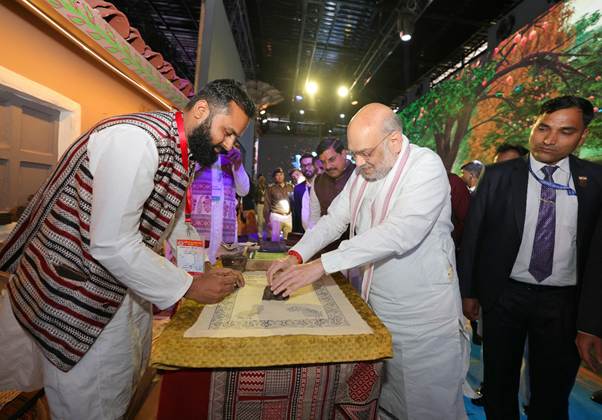
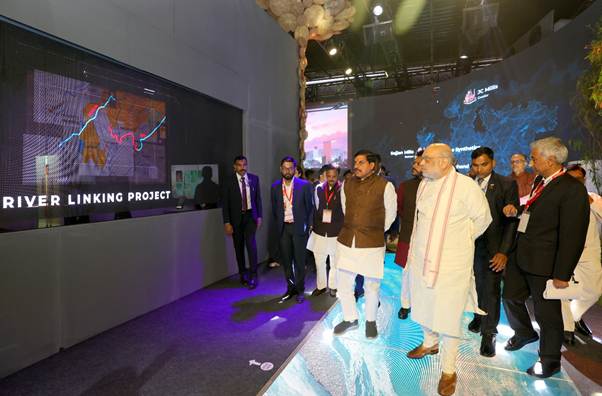
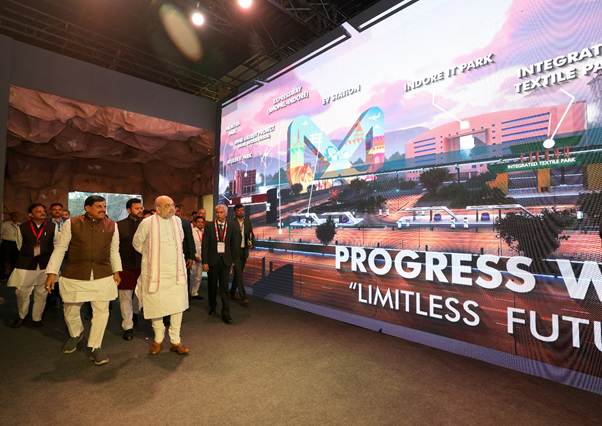
Union Home Minister and Minister of Cooperation Shri Amit Shah addressed the closing ceremony of Global Investors Summit-2025, in Bhopal, Madhya Pradesh, today. Many dignitaries including Chief Minister of Madhya Pradesh, Dr. Mohan Yadav were present on the occasion.

In his address, Union Home Minister and Minister of Cooperation Shri Amit Shah stated that during this two-day Global Investors Summit, MoUs worth a total of 30 lakh 77 thousand crore rupees were signed. He said that several MoUs will be implemented on the ground and help the state government establish not only large industries but also ancillary industries in Madhya Pradesh. Shri Shah said that more than 200 Indian companies, over 200 global CEOs, more than 20 unicorn founders, and representatives from more than 50 countries have come to invest and see the environment in Madhya Pradesh during the two-day summit. He stated that this time, Madhya Pradesh has done a new experiment by organizing separate investment summits for each sector, aiming for the overall development of the entire state, which will guide many states in the coming days.

CR5_9899.JPG

Shri Amit Shah said that in this summit, Madhya Pradesh has made efforts to explore all avenues for unlocking its industrial, sectoral and global potential for development. He mentioned that this summit has given a new dimension to the development of Madhya Pradesh. Shri Shah said that Madhya Pradesh is full of rich cultural heritage of our country and the state is making several efforts to realize the mantra of ‘Vikas Bhi Virasat Bhi’ given by Prime Minister Shri Narendra Modi.

Union Home Minister said that Prime Minister Modi has set a target before the youth and 130 crore people of the country to make India a fully developed nation by 2047 and the world’s third largest economy by 2027. He said that this Investment Summit of Madhya Pradesh will not only help in achieving both these goals but also make a huge contribution in achieving these goals. Shri Shah said that in Prime Minister Modi’s vision of Team India, the Government of India and all state governments come together with a goal to work towards the development of the entire nation and this event has taken that vision forward.

Shri Amit Shah said that many dimensions of increasing both local and global investment have been achieved in this summit. He said that this summit will also open many doors of skill development for India’s ‘Amrit generation’. Shri Shah said that by creating synergy between automation and job creation, the policies made by the Madhya Pradesh government for different sectors will move forward and this summit will also help in making India a manufacturing hub.

CR5_9876.JPG

Union Home Minister and Minister of Cooperation underlined that under the leadership of Prime Minister Shri Narendra Modi, there is a stable and strong administration working in Madhya Pradesh, which is creating new avenues of development. He emphasized that, as the heart of India, Madhya Pradesh enjoys a strategic location complemented with robust infrastructure. The state boasts of a large pool of skilled workers and an efficient administrative ecosystem that fosters growth. He highlighted that Madhya Pradesh has an unparalleled market access, with its rapidly increasing demand-driven economy. The transparent governance of the state has significantly boosted investor confidence. With ample land resources, a dedicated workforce, rich mineral resources, and numerous industrial opportunities, Madhya Pradesh stands as a prime destination for investment. The Home Minister affirmed that Madhya Pradesh is a major hub for investment in every aspect in India.

CR5_9853.JPG

Shri Amit Shah recalled that there was a time when Madhya Pradesh was counted among the BIMARU states, but after 20 years of continuous governance of our party, the state has undergone a remarkable transformation. He highlighted the development of a 5 lakh-kilometer road network, the presence of six operational airports, and an impressive energy capacity of 31 GW, including 30 per cent clean energy. He emphasized that prestigious institutions such as IIM, IIT, AIIMS, IITM, NIFT and NIFD are equipping the youth of Madhya Pradesh with the skills needed to seize emerging opportunities. With one of the richest reserves of minerals in the country, Madhya Pradesh has also emerged as the cotton capital of India, contributing 25 per cent of the nation’s organic cotton supply. Moreover, the state holds a significant position in the food processing sector. The Home Minister noted that the Madhya Pradesh government has designated 2025 as the “Year of Industries” to boost industrial growth. He also lauded the state for being the first in the country to pass the Jan Vishwas Bill, aimed at enhancing ease of doing business.

Union Home Minister and Minister of Cooperation stated that under Prime Minister Shri Narendra Modi’s leadership over the past 10 years, India’s foreign exchange reserves, Gross Domestic Product (GDP), and per capita income have doubled. He emphasized that the Modi government has built a strong foundation for a developed India, paving the way for new dimensions of growth and progress in coming decade.

Shri Amit Shah highlighted that in the last 10 years, Prime Minister Narendra Modi has brought 54 crore people into the banking system. He said that these people were without bank accounts for 75 years after independence. He emphasized that PM Modi has ensured financial inclusion for these citizens, marking a major transformation in the country’s banking sector. He further noted that significant economic reforms have been undertaken during this period, including reducing insolvency and bankruptcy cases, bringing Non-Performing Assets (NPAs) below 2.5 per cent, successfully implementing Goods and Services Tax (GST), and streamlining single-window clearance for businesses. Shri Shah pointed out the massive infrastructure growth under PM Modi’s leadership, with addition of 60,000 kilometers of highways, building 8 lakh kilometers of rural roads and the number of airports increasing from 74 to 157. He also highlighted the doubling of railway expansion and cargo handling capacity. He asserted that through several new initiatives, India has become founder of several sectors which will decide the global economic direction for the next 25 years.

IMG_6218.JPG

Union Home Minister stated that the Investment Summit in Madhya Pradesh is not just a catalyst for the state’s growth but also a significant boost for India’s overall development. He expressed confidence that in the coming years, Madhya Pradesh will emerge as a leading hub for major industries in the country. He emphasized that the state will continue to uphold transparent governance, implement sustainable policies, and foster a proactive administration that works hand in hand with investors and stakeholders.

PM participates in Jhumoir Binandini programme in Guwahati, Assam

| Published on:

The Prime Minister Shri Narendra Modi participated in the Jhumoir Binandini 2025, a Mega Jhumoir programme in Guwahati, Assam today. Addressing the gathering, he said there was a reverberating atmosphere filled with energy, enthusiasm and excitement at the event. He noted the impressive preparations by all the artists of the Jhumoir, which reflected the fragrance and beauty of the tea gardens. He mentioned that just as the people have a special bond with the Jhumar and tea garden culture, he too shares a similar connection. He added that such a large number of artists performing the Jhumar dance today will set a record. Recalling his visit to Assam in 2023 when a record was made involving 11,000 artists performing Bihu Dance, the Prime Minister said that it was an unforgettable memory for him and added that he was anticipating a similar enthralling performance. He congratulated the Government of Assam and its Chief Minister for organizing a resplendent cultural performance. He noted that today is a proud day for Assam, with the tea community and the tribal people participating in the celebrations. He conveyed his best wishes to everyone on this special day.

Noting that such grand events were not only a testament to the pride of Assam, but also showcase India’s great diversity, the Prime Minister noted that there was a time when Assam and the Northeast were neglected in terms of development and culture. He highlighted that now, he himself has become the brand ambassador of Northeastern culture. He mentioned that he is the first Prime Minister to stay in Kaziranga, Assam, and promote its biodiversity to the world. He also noted that a few months ago, the Assamese language was granted the status of a classical language, a recognition the people of Assam had been waiting for decades. Additionally, Charaideo Moidam has been included in the UNESCO World Heritage list, a significant achievement attributed to the efforts of their Government, he added.

Talking about the pride of Assam, the brave warrior Lachit Borphukan, who defended Assam’s culture and identity against the Mughals, Shri Modi highlighted the grand celebration of Lachit Borphukan’s 400th birth anniversary and mentioned that his tableau was also included in the Republic Day parade. The Prime Minister noted that a 125-foot bronze statue of Lachit Borphukan has been erected in Assam. He also mentioned the initiation of Janjatiya Gaurav Divas to celebrate the heritage of the tribal society. To immortalize the contributions of the tribal bravehearts, tribal museums are being established across the country, he added.

Remarking that their Government is developing Assam and serving the ‘Tea Tribe’ community, the Prime Minister highlighted the announcement of bonuses for Assam Tea Corporation workers to increase their income. He emphasized the support being provided to approximately 1.5 lakh women in tea gardens, who receive ₹15,000 during pregnancy to alleviate financial concerns. Additionally, the Assam government is opening over 350 Ayushman Arogya Mandirs in tea gardens for the families’ health, he added. Shri Modi noted that more than 100 model tea garden schools have been opened for the children of the Tea Tribe, with another 100 schools planned. He also mentioned the provision of a 3% reservation in the OBC quota for the youth of the Tea Tribe and the assistance of ₹25,000 for self-employment provided by the Assam government. The Prime Minister expressed confidence that the development of the tea industry and its workers will drive the overall growth of Assam and elevate the Northeast to new heights. He extended his advance thanks to all the participants for their upcoming performance and wished them well.

The Governor of Assam, Shri Lakshman Prasad Acharya, Chief Minister of Assam, Shri Himanta Biswa Sarma, Union Ministers Dr. S Jaishankar, Shri Sarbananda Sonowal, Chief Minister of Tripura, Dr. Manik Saha, Union Minister of State, Shri Pabitra Margherita were present among other dignitaries at the event.

Background

The Jhumoir Binandini (Mega Jhumoir) 2025, is a spectacular cultural extravaganza with 8,000 performers participating in the Jhumoir dance, a folk dance of Assam Tea Tribe and Adivasi Communities of Assam that embodies the spirit of inclusivity, unity and cultural pride, and symbolises Assam’s syncretic cultural mélange. The Mega Jhumoir event symbolises 200 years of the tea industry, and also 200 years of industrialisation in Assam.

PM releases 19th instalment of PM KISAN, launches development projects from Bhagalpur, Bihar

| Published on:

In line with his commitment towards ensuring Farmers welfare, the Prime Minister, Shri Narendra Modi today released the 19th instalment of PM KISAN from Bhagalpur, Bihar. He also launched many development projects during the occasion. Shri Modi welcomed all the dignitaries and the people who had joined the event virtually. He said it was a great fortune to step in the land of Mandarachal during the holy period of Maha Kumbh. He added that this place had spirituality, heritage as well as the potential for Viksit Bharat as well. Shri Modi remarked that it was the land of martyr Tilka Manjhi as well as renowned as Silk city. He added that there were preparations for the upcoming Maha Shivaratri too in the holy land of Baba Ajgaibinath. He said that he was fortunate to release the 19th instalment of PM KISAN during such a pious moment and around ₹22,000 crore was credited directly into the bank accounts of farmers through Direct Benefit Transfer.

The Prime Minister noted that there were around 75 lakh farmer families from Bihar who were beneficiaries of the PM KISAN scheme, whose 19th instalment was released today. He added that around ₹1,600 crore was credited directly into the bank accounts of Bihar farmers today. He extended his warm greetings to all the farmer families from Bihar and other parts of the country.

Reiterating the words from his speech at Red fort, Shri Modi said, “there are four main pillars of Viksit Bharat: poor, farmers, youth and women”. He added that whether it is the Central or the State Government, the  welfare of farmers remains a priority. “We worked with full force to solve every problem of the farmers in the last decade”, said Shri Modi. He noted that farmers need good seeds, sufficient and affordable fertilizers, irrigation facilities, protection for their livestock from diseases, and safety from losses during disasters. Previously, farmers were plagued by these issues. The Prime Minister stated that their Government has changed this situation, highlighting that in recent years, hundreds of modern seed varieties have been provided to farmers. Earlier, farmers had to struggle for urea and face black marketing, while today, farmers receive sufficient fertilizers, he added. Shri Modi highlighted that even during the major crisis of the pandemic, the Government ensured no shortage of fertilizers for farmers. Remarking that if their Government had not been elected, then the farmers would still be struggling for fertilizers. He emphasized that the Barauni fertilizer plant would still be closed, and fertilizers that are available to Indian farmers for less than ₹300 per bag are being sold for ₹3,000 per bag in many countries. The Prime Minister highlighted that their Government has ensured that urea bags, which would have cost ₹3,000, are available at an affordable price today. He stated that the Government is committed to the welfare of farmers and works for their benefit. The cost of urea and DAP, which farmers would have had to bear, is being covered by the central government, he added. Shri Modi said that over the past 10 years, the central government had provided approximately ₹12 lakh crore, which would have otherwise come from the pockets of the farmers. This has saved a significant amount of money for crores of farmers across the country, he added.

Asserting that farmers would not have received the benefits of the PM Kisan Samman Nidhi scheme, if their Government was not elected, the Prime Minister highlighted that in the six years since the scheme’s inception, approximately ₹3.7 lakh crore has been directly transferred to farmers’ accounts. Shri Modi emphasized that small farmers, who previously did not receive the full benefits of Government schemes, are now getting their due. He stated that intermediaries used to exploit the rights of small farmers, but he assured under his leadership and that of Shri Nitish Kumar, this will not be allowed to happen. The Prime Minister contrasted this with the previous governments, highlighting that the amount his Government has directly transferred to farmers’ bank accounts far exceeds the agricultural budget allocated by the previous Governments. He emphasized that such efforts can only be undertaken by a Government dedicated to the welfare of farmers and not by corrupt entities.

Shri Modi said that the previous dispensations did not care about the hardships faced by farmers. He noted that in the past, when floods, droughts, or hailstorms occurred, farmers were left to fend for themselves. He highlighted that after their Government received the people’s blessings in 2014, he declared that this approach would not continue. Their Government introduced the PM Fasal Bima Yojana, under which farmers have received claims worth ₹1.75 lakh crore during disasters, he added.

The Prime Minister said that their Government was promoting animal husbandry to increase the income of landless and small farmers. He highlighted that animal husbandry is helping to create “Lakhpati Didis” in villages and so far, around 1.25 crore Lakhpati Didis were created across the country, including thousands of Jeevika Didis in Bihar. “India’s milk production has increased from 14 crore tons to 24 crore tons over the past decade, strengthening India’s position as the world’s number one milk producer”, said Shri Modi lauding Bihar’s significant role in this achievement. He highlighted that cooperative milk unions in Bihar purchase 30 lakh liters of milk per day, resulting in over ₹3,000 crore annually being transferred to the accounts of livestock farmers, mothers, and sisters in Bihar.

Expressing his satisfaction that the efforts to promote the dairy sector are being skillfully advanced by Shri Rajiv Ranjan, the Prime Minister highlighted that two projects in Bihar are progressing rapidly due to their efforts. He mentioned that the Center of Excellence in Motihari will aid in the development of superior indigenous cattle breeds. Additionally, the milk plant in Barauni will benefit three lakh farmers in the region and provide employment opportunities for the youth, he added.

Criticising the previous governments for not helping the fishermen and boatmen, Shri Modi highlighted that, for the first time, their Government had provided Fishermen with Kisan Credit Cards. He emphasized that due to such efforts, Bihar has made remarkable progress in fish production. Ten years ago, Bihar was among the top 10 fish-producing states in the country, but today, Bihar has become one of the top five fish-producing states in India, he said. The Prime Minister noted that the focus on the fisheries sector has significantly benefited small farmers and fishermen. He mentioned that Bhagalpur is also known for the Ganga dolphins, which is a significant success of the Namami Gange campaign.

“Our Government’s efforts in recent years have significantly increased India’s agricultural exports”, said the Prime Minister. As a result, he added that the farmers are now receiving higher prices for their produce. Several agricultural products, which were never exported before, are now reaching international markets, he said. Shri Modi highlighted that it is now time for Bihar’s Makhana to enter the global market. He noted that Makhana has become a popular part of breakfast in Indian cities and is considered a superfood. He said the formation of a Makhana Board for Makhana farmers announced in this year’s budget will assist farmers in every aspect, including Makhana production, processing, value addition, and marketing.

Mentioning another significant initiative for the farmers and youth of Bihar in the budget, Shri Modi highlighted that Bihar is set to become a major center for the food processing industry in Eastern India. He announced the establishment of the National Institute of Food Technology and Entrepreneurship in Bihar. Additionally, three new Centers of Excellence in agriculture will be established in the state. One of these centers will be set up in Bhagalpur, focusing on the Jardalu variety of mangoes, the other two centers will be established in Munger and Buxar, providing assistance to tomato, onion, and potato farmers, he added. Shri Modi emphasized that the Government was leaving no stone unturned in making decisions that benefit farmers.

“India is becoming a major exporter of textiles”, said Shri Modi and highlighted that numerous steps are being taken to strengthen the textile industry in the country. He noted that in Bhagalpur, it is often said that even the trees produce gold. Bhagalpuri silk and tussar silk are renowned throughout India, and the demand for tussar silk is continuously increasing in other countries as well, he added. The Prime Minister emphasized that the Central government is focusing on infrastructure development for the silk industry, including fabric and yarn dyeing units, fabric printing units, and fabric processing units. These initiatives will provide modern facilities to the weavers of Bhagalpur, enabling their products to reach every corner of the world, he said.

Shri Modi remarked that the Government was addressing one of Bihar’s major issues by constructing numerous bridges over rivers to resolve transportation difficulties. He highlighted that insufficient bridges have caused many problems for the state. He emphasized that rapid progress is being made in building a four-lane bridge over the Ganga River, with more than ₹1,100 crore being spent on this project.

Remarking that Bihar faces significant losses due to floods, the Prime Minister highlighted that the Government had approved projects worth thousands of crores to address this issue. He mentioned that in this year’s budget the support for the Western Kosi Canal ERM Project, which will bring 50,000 hectares of land in the Mithilanchal region under irrigation, will benefit lakhs of farming families.

“Our government is working on multiple levels to increase farmers’ income”, said the Prime Minister highlighting the efforts to boost production, achieve self-reliance in pulses and oilseeds, establish more food processing industries, and ensure that Indian farmers’ produce reaches global markets. He shared his vision that every kitchen in the world should have at least one product grown by Indian farmers. He noted that this year’s budget supports this vision through the announcement of the PM Dhan Dhanya Yojana. Under this scheme, 100 districts with the lowest crop production will be identified, and special campaigns will be launched to promote agriculture in these areas, he added. He also emphasized that mission-mode work will be carried out to achieve self-reliance in pulses, with incentives for farmers to grow more pulses and increased MSP procurement.

Remarking that today is a very special day, the Prime Minister highlighted that the Government had set a target to establish 10,000 Farmer Producer Organizations (FPOs) in the country, and it has now achieved this goal. He shared his happiness that Bihar is witnessing the establishment of the 10,000th FPO. This FPO, registered in Khagaria district, focuses on maize, banana, and paddy, he added. He emphasized that FPOs are not just organizations but an unprecedented force to increase farmers’ income. Shri Modi noted that FPOs provide small farmers with direct access to significant market benefits. Opportunities that were previously unavailable are now accessible to our farmer brothers and sisters through FPOs. The Prime Minister mentioned that approximately 30 lakh farmers in the country are connected to FPOs, with around 40 percent of them being women. These FPOs are now conducting business worth thousands of crores in the agricultural sector, he said. He extended his congratulations to all the members of the 10,000 FPOs.

Touching upon the Government’s focus on the industrial development of Bihar, Shri Modi highlighted that the Bihar government is setting up a large power plant in Bhagalpur, which will receive ample coal supply. He emphasized that the central government has approved coal linkage for this purpose. He expressed confidence that the electricity generated here will provide new energy for Bihar’s development and create new employment opportunities for the youth of Bihar.

“The rise of a Viksit Bharat will begin with Purvodaya”, said Shri Modi, emphasizing that Bihar is the most important pillar of Eastern India and a symbol of India’s cultural heritage. He criticized the long misrule of the previous dispensation, which he claimed had ruined and defamed Bihar. He expressed confidence that in a developed India, Bihar will regain its position akin to ancient prosperous Pataliputra. The Prime Minister highlighted the continuous efforts being made towards this goal. He noted that their Government is committed to modern connectivity, road networks, and public welfare schemes in Bihar. He announced that a new highway from Munger to Bhagalpur to Mirza Chauki, costing approximately ₹5,000 crore, is being constructed. Additionally, the widening of the four-lane road from Bhagalpur to Anshdihwa is set to begin, he added. He also mentioned that the Indian government has also approved a new rail line and rail bridge from Vikramshila to Kataria.

Prime Minister remarked that Bhagalpur has been culturally and historically significant, highlighting that during the era of Vikramshila University, it was a global center of knowledge. He noted that the Government had initiated efforts to link the ancient glory of Nalanda University with modern India. Following Nalanda, a central university is being established at Vikramshila and the central government will soon commence work on this project, he added. He extended congratulations to Shri Nitish Kumar and the entire Bihar government team for their swift efforts to meet the needs of this project.

“Our Government is working together to preserve India’s glorious heritage and build a prosperous future”, said Shri Modi. He highlighted that the Maha Kumbh is currently taking place in Prayagraj, which is the largest festival of India’s faith, unity, and harmony. He noted that more people have bathed in the Maha Kumbh of Unity than the entire population of Europe. The Prime Minister emphasized that devotees from villages across Bihar are attending the Maha Kumbh. He criticized those parties who were insulting and making derogatory remarks about the Maha Kumbh. He noted that the same people who opposed the Ram Temple are now criticizing the Maha Kumbh. The Prime Minister expressed confidence that Bihar will never forgive those who insult the Maha Kumbh. He concluded by expressing that the Government will continue to work tirelessly to lead Bihar onto a new path of prosperity. He extended heartfelt congratulations to the farmers of the country and the residents of Bihar.

The Governor of Bihar, Shri Arif Mohammed Khan, Chief Minister of Bihar, Shri Nitish Kumar, Union Ministers Shri Shivraj Singh Chouhan, Shri Jitan Ram Manji, Shri Giriraj Singh, Shri Lalan Singh, Shri Chirag Paswan, Union Minister of State, Shri Ram Nath Thakur  were present among other dignitaries at the event.

Background

Prime Minister has been committed towards ensuring farmer welfare. In line with this, several key initiatives will be undertaken by him at Bhagalpur. Over 9.7 crore farmers across the country will receive direct financial benefits amounting to more than Rs 21,500 crore.

A significant focus of the Prime Minister has been on ensuring that farmers are able to get better remuneration for their produce. With this in mind, on 29th February, 2020, he launched the Central Sector Scheme for Formation and Promotion of 10,000 Farmer Producer Organizations (FPO), which help farmers collectively market and produce their agricultural products. Within five years, this commitment of Prime Minister to the farmers has been fulfilled, with him marking the milestone of the formation of the 10,000th FPO in the country during the programme.

Prime Minister also inaugurated the Centre of Excellence for Indigenous Breeds in Motihari, built under the Rashtriya Gokul Mission. Its major objectives include introduction of cutting edge IVF technology, production of elite animals of indigenous breeds for further propagation, and training of farmers and professionals in modern reproductive technology. He will also inaugurate the Milk Product Plant in Barauni that aims to create an organized market for 3 lakh milk producers.

In line with his commitment to boost connectivity and infrastructure, Prime Minister also dedicated to the nation the doubling of Warisaliganj – Nawada – Tilaiya rail section worth over Rs 526 crore and Ismailpur – Rafiganj Road Over Bridge.

PM inaugurates the Global Investors Summit 2025 in Bhopal, Madhya Pradesh

| Published on:

The Prime Minister, Shri Narendra Modi today inaugurated the Global Investors Summit (GIS) 2025 in Bhopal, Madhya Pradesh. Addressing the gathering, he apologised for the delay of his entry to the event as there were board exams for the 10th and 12th standard students and his  security measures enroute to the event could have caused inconvenience to the students. Shri Modi said it was his immense pride to welcome the investors and business leaders in the land of Raja Bhoj. He added that today’s event was important as a Viksit MadhyaPradesh or developed Madhya Pradesh is necessary in the journey towards Viksit Bharat. He congratulated the Government of Madhya Pradesh for a wonderful organization of the summit.

“The whole world is optimistic about India”, exclaimed Shri Modi and said that it was for the first time such an opportunity had risen in the history of India. He added that be it common citizens or policy experts or institutions or countries of the world, everyone had a lot of expectations from India. He highlighted that the comments received in the last few weeks about India will raise the enthusiasm of investors. Recalling the recent statement by the World Bank that India will continue to remain the fastest growing economy, the Prime Minister highlighted that a representative from the OECD remarked, “The future of the world is in India.” He added that recently, a UN organization on climate change declared India as a solar power superpower. This organization also mentioned that while many countries only talk, India delivers results. Shri Modi noted that a new report revealed how India is emerging as an excellent supply chain for global aerospace firms. These firms view India as a solution to global supply chain challenges. The Prime Minister quoted various examples showcasing the world’s confidence in India, which is also boosting the confidence of every Indian state. This confidence is evident at the Global Summit in Madhya Pradesh, he said.

Noting that Madhya Pradesh is the fifth largest state in India by population, Shri Modi said, “MP is one of the top states in India for agriculture and minerals”. He emphasized that Madhya Pradesh is blessed with the life-giving Narmada River and stated that MP has the potential to become one of the top five states in India by GDP.

Pointing out the transformative journey of Madhya Pradesh over the past two decades, the Prime Minister remarked that there was a time when the state faced significant challenges with electricity and water, and the law and order situation was even worse. These conditions made industrial development difficult. Shri Modi noted that with the support of the people, their government in Madhya Pradesh has focused on governance over the past two decades. Two decades ago, people were hesitant to invest in MP, while today, MP has become one of the top states in the country for investments, he added. He highlighted that the state, which once struggled with poor roads, is now one of the leading states in India’s EV revolution. He further said that by January 2025, around 2 lakh electric vehicles were registered in MP, reflecting a growth of approximately 90 percent, which demonstrates that MP is becoming an excellent destination for new manufacturing sectors.

“India has witnessed a boom in infrastructure over the past decade”, highlighted the Prime Minister and remarked that Madhya Pradesh has greatly benefited from this development. He emphasized that the Delhi-Mumbai Expressway, which connects two major cities, passes significantly through MP, providing fast connectivity to Mumbai’s ports and North India’s markets. He also highlighted that Madhya Pradesh now has a road network of over five lakh kilometers. He noted that MP’s industrial corridors are connected to modern expressways, ensuring rapid growth in the logistics sector.

Touching upon the air connectivity, Shri Modi highlighted that the terminals at Gwalior and Jabalpur airports have been expanded to improve air connectivity. He remarked that the modernization of Madhya Pradesh’s extensive rail network is also underway. He noted that the rail network in MP has achieved 100 percent electrification. He mentioned that the images of Bhopal’s Rani Kamalapati Railway Station continue to captivate everyone. Following this model, 80 railway stations in MP are being modernized under the Amrit Bharat Station Scheme.

“The past decade has seen unprecedented growth in India’s energy sector”, hailed Shri Modi and remarked that India has achieved remarkable progress in green energy, which was once unimaginable. Over the past 10 years, more than $70 billion (over ₹5 trillion) has been invested in the renewable energy sector, and this investment has created over 10 lakh jobs in the clean energy space last year alone, he added. The Prime Minister noted that Madhya Pradesh has greatly benefited from this boom in the energy sector. He said that today, MP is power surplus with a power generation capacity of around 31,000 MW, of which 30 percent is clean energy. He highlighted that Rewa Solar Park is one of the largest in the country, and recently, a floating solar plant was inaugurated in Omkareshwar. Shri Modi mentioned that the Government has invested around ₹50,000 crore in the Bina Refinery Petrochemical Complex, which will help make Madhya Pradesh a hub for petrochemicals. He emphasized that the MP government supports this infrastructure with modern policies and special industrial infrastructure. Noting that MP has over 300 industrial zones, and investment zones spanning thousands of acres are being developed in Pithampur, Ratlam, and Dewas, he highlighted the immense potential for better returns for investors in Madhya Pradesh.

Emphasising the critical importance of water security for industrial development, the Prime Minister remarked that, on one hand, efforts are being made towards water conservation, and on the other, a mega mission for river interlinking is being advanced. He highlighted that the agriculture and industry sectors in Madhya Pradesh will greatly benefit from these initiatives. Shri Modi mentioned that the ₹45,000 crore Ken-Betwa River Interlinking Project has recently commenced, which will enhance the productivity of approximately 10 lakh hectares of agricultural land and strengthen water management in MP. He stated that these facilities will unlock significant potential in the food processing, agro-industry, and textile sectors.

Remarking that after the formation of their Government in Madhya Pradesh, the pace of development has doubled, Shri Modi highlighted that the Central government was working shoulder to shoulder with the MP government for the development of the state and the country. He recalled his promise during the elections to work three times faster in his third term and said, “this speed is evident in the first 50 days of 2025”. Shri Modi highlighted the recent budget, which has energized every catalyst for India’s growth. He emphasized that the middle class, being the largest taxpayer, creates demand for services and manufacturing. Various steps have been taken to empower the middle class in this budget, including making income up to ₹12 lakh tax-free and restructuring tax slabs. He also mentioned that the RBI has reduced interest rates following the budget.

Pointing out that the budget emphasizes building local supply chains to achieve complete self-reliance in manufacturing, Shri Modi said that there was a time when the potential of MSMEs was limited by previous governments, preventing the development of local supply chains at the desired level. He highlighted that the current priority is to build MSME-led local supply chains. The definition of MSMEs has been improved, and credit-linked incentives are being provided, while access to credit is being made easier, and support for value addition and exports has been increased, he added.

“Over the past decade, significant reforms have been accelerated at the national level, now reforms are being encouraged at the state and local levels as well”, said the Prime Minister discussing the State De-regulation Commission mentioned in the budget. He noted that continuous dialogue is being maintained with the states and over 40,000 compliances have been reduced in recent years in collaboration with the states. Additionally, 1,500 obsolete laws have been eliminated, he added. The Prime Minister emphasized that the objective is to identify regulations that hinder the ease of doing business and the De-regulation Commission will help create an investment-friendly regulatory ecosystem in the states.

Stressing that the budget has simplified the basic customs duty structure and reduced rates on several essential inputs for the industry, Shri Modi  said that a time limit is being set for the assessment of customs cases. He highlighted the ongoing efforts to open new sectors for private entrepreneurship and investment. This year, avenues such as nuclear energy, bio-manufacturing, critical minerals processing, and lithium battery manufacturing have been opened for investment, he added and said, “these steps demonstrate the Government’s intent and commitment”.

“Textile, Tourism, and Technology sectors will play a significant role in India’s developed future and create crores of new jobs”, exclaimed the Prime Minister. He highlighted that India is the second-largest producer of cotton, silk, polyester, and viscose. He noted that the textile sector provides employment to crores and that India has a rich tradition, skills, and entrepreneurship in textiles. Madhya Pradesh, being the cotton capital of India, contributes to around 25 percent of the country’s organic cotton supply and is the largest producer of mulberry silk while the state’s Chanderi and Maheshwari sarees are highly appreciated and have received the GI Tag, he added. He emphasized that investments in this sector will significantly help Madhya Pradesh’s textiles make a global impact.

Talking about India exploring new avenues in addition to traditional textiles, the Prime Minister highlighted that technical textiles such as agro textiles, medical textiles, and geotextiles are being promoted, and a national mission has been initiated for this purpose, which has been encouraged in the budget. Shri Modi noted that the Government’s PM MITRA scheme is well-known, and seven large textile parks were being developed across the country, including one in Madhya Pradesh. This initiative will elevate the growth of the textile sector to new heights. The Prime Minister urged investors to take advantage of the PLI scheme announced for the textile sector.

Remarking that just as India is adding new dimensions to its textile sector, it is also enhancing the tourism sector, Shri Modi recalled the MP Tourism campaign, “MP Ajab Hai, Sabse Gajab Hai,” highlighting the significant development of tourism infrastructure around the Narmada River and in tribal areas of Madhya Pradesh. The Prime Minister spoke about the numerous national parks in the state and the immense potential for health and wellness tourism. He mentioned that the “Heal in India” mantra is gaining global popularity, and investment opportunities in the health and wellness sector are continuously increasing. The Government is encouraging public-private partnerships in this area. Shri Modi highlighted that India’s traditional treatments and AYUSH are being promoted on a large scale, and special AYUSH visas are being issued. He emphasized that these initiatives will greatly benefit Madhya Pradesh. He encouraged visitors to see the Mahakal Mahalok in Ujjain, where they will receive blessings from Mahakal and experience how the country is expanding its tourism and hospitality sector.

Reiterating his statement from the Red Fort, the Prime Minister concluded that now is the right time for investment and increasing investment in Madhya Pradesh.

The Governor of Madhya Pradesh, Shri Mangubhai Chhaganbhai Patel, Chief Minister of Madhya Pradesh, Shri Mohan Yadav were present among other dignitaries at the event.

Background

The two-day Global Investors Summit (GIS) 2025 in Bhopal, serves as an important platform to establish Madhya Pradesh as a global investment hub. The GIS includes departmental summits; specialized sessions on Pharma and Medical Devices, Transport and Logistics, Industry, Skill Development, Tourism and MSMEs among others. It also includes international sessions like the Global South countries conference, Latin America and Caribbean session and special sessions for key partner countries.

Three major industrial exhibitions are being held during the Summit. The Auto Show showcases Madhya Pradesh’s automotive capabilities and future mobility solutions. The Textile and Fashion Expo highlights the state’s expertise in both traditional and modern textile manufacturing. The “One District-One Product” (ODOP) Village showcases the state’s unique craftsmanship and cultural heritage.

Representatives from over 60 countries, officials from various international organizations, over 300 prominent Industry leaders from India and policymakers among others are participating in the Summit.

India’s technological sector is on rise & is expected to reach $300-350 billion in next five years: Raksha Mantri

| Published on:

“India’s technological sector is on the rise and is expected to reach 300-350 US billion dollars in the next five years. With more than 1.25 lakh start-ups and 110 unicorns, our country is emerging as the third-largest start up ecosystem in the world,” highlighted Raksha Mantri Shri Rajnath Singh while addressing the 16th Foundation Day of the Indian Institute of Technology (IIT) Mandi, Himachal Pradesh on February 24, 2025. He encouraged the students to leverage this period of growth and opportunity, ensuring that they not only contribute to India’s technological advancements but also lead the way globally in key areas of research and development.

Shri Rajnath Singh emphasised the necessity of innovation and knowledge creation in shaping the future of technology. He underscored the importance of fostering a culture of entrepreneurship and innovation that would allow India to lead in emerging fields such as Artificial Intelligence, machine learning, and digital technologies. He lauded the institution’s outstanding contributions to shaping India’s technological and scientific advancements. He also highlighted IIT Mandi’s pivotal role in fostering innovation and research, and laid stress on India’s rising prominence as a global leader in technology.

In the context of national security, Shri Rajnath Singh urged IIT Mandi to play a more significant role in defence-related technologies. He commended the existing collaboration with DRDO and called for further contributions in areas such as Artificial Intelligence (AI)-driven warfare, indigenous AI chip development, cybersecurity, and quantum technology.

Raksha Mantri also threw light on India’s progress in defence self-reliance, highlighting that “India has achieved 88% self-sufficiency in ammunition production, and defence exports have reached approximately Rs 23,000 crore in 2023-24. Our goal is to reach Rs 50,000 crore in defence exports by 2029.” He bolstered the government’s commitment in creating a robust defence industry in India, one that supports both the security of the nation and contributes to the country’s economic growth. He called on IIT Mandi’s students to contribute to this vision by focusing on technological solutions that can enhance India’s defence capabilities and further advance the nation’s self-reliance in this critical sector.

In line with India’s emerging digital economy, Shri Rajnath Singh shared key highlights on the country’s remarkable digital progress. “India’s telecom sector is now the second-largest in the world. With the success of initiatives like UPI, India is setting global standards in digital transactions. We are in the midst of an unparalleled digital revolution,” he said. He encouraged the students to actively contribute to the development of India’s digital ecosystem, reiterating that technological innovation is central to India’s growth story in the coming decades.

Further urging the students to excel in technological innovation in order to make the country developed by 2047, Raksha Mantri advised them to follow the principles of Initiate, Improve, and Transform (IIT). Shri Rajnath Singh also motivated them to be bold in their pursuit of knowledge and to remain persistent in the face of challenges. He also spoke about the need for courage and resilience as the country faced the challenges of the future, and highlighted the importance of working collectively to address national challenges with technology and innovation.

Shri Rajnath Singh also encouraged the students to be disruptors and not just adapters in the fast-paced world of technology. “The biggest challenge today is to adapt to the rapidly changing technology, but also to create new technologies. Don’t just be adapters; become the disruptors who lead innovation,” he added. He spoke about the significant opportunities available to young innovators, stressing the importance of shaping new paradigms rather than simply following existing trends. Raksha Mantri further stated that this is the time of the ‘Indian Dream’—a time where the aspirations and achievements can redefine the global landscape. He motivated the students to set ambitious goals and to aim high in their careers, as their work would have a lasting impact on India’s trajectory in this landscape.

Shri Rajnath Singh congratulated IIT Mandi on its achievements stating that “In the last 15 years, the institution has secured a distinguished place on the educational map, not only of India but the world. It is a perfect blend of ancient heritage and modern technological education.” He mentioned the region’s rich historical significance, emphasising that the existence of IIT Mandi at such a culturally and historically enriched location symbolises the union of antiquity and modernity. He further expressed confidence that the institution, with its strong foundation in academics, research, and innovation, would continue to make significant contributions to both India’s growth & global technological advancement.

Raksha Mantri inaugurated two new buildings, the Guidance & Counselling Centre and the Centre for Continuing Education during the event. Both buildings are designed to enhance the academic ecosystem and contribute to the personal and professional growth of the students and faculty. These additions will provide much-needed infrastructure to support the holistic development of students and ensure their success in the rapidly changing world of technology and innovation. “These new centres will play a crucial role in supporting students, faculty, and researchers, further strengthening IIT Mandi’s contribution to Science, Technology, Engineering, Mathematics, and Management,” he stated.

Union Home Minister interacts with 250 children from J&K under ‘Watan Ko Jano’ programme

| Published on:

Union Home Minister and Minister of Cooperation, Shri Amit Shah interacted with 250 children from Jammu and Kashmir under ‘Watan Ko Jano’ programme in New Delhi today. Union Home Secretary and Director of the Intelligence Bureau (IB) were also present on the occasion. The program aims to introduce the youth and children of Jammu and Kashmir to the nation’s dynamic progress, rich social fabric, and cultural diversity, fostering a strong sense of social, cultural, and emotional connection.


During the interaction, Union Home Minister Shri Amit Shah described the ‘Watan Ko Jano’ program as an initiative to deepen the understanding of our country. He said that our country is our home and just as we are familiar with every part of our home, we should also know our country in the same way. Shri Shah said that this vision led the Government of India to launch the ‘Watan Ko Jano’ program. Home Minister said that Prime Minister Shri Narendra Modi has united the whole country by abolishing Article 370 and now the citizens of Kashmir have the same rights on the country as the citizens of any other state.

Shri Amit Shah underlined that under the leadership of Prime Minister Shri Narendra Modi, significant efforts have been made over the past decade to make India prosperous, modern, and a global leader. He expressed confidence that in the future, students from around the world will come to India for education. As India advances, it will naturally drive progress for all. Home Minister emphasized that a more prosperous, modern, and developed India will bring benefits to everyone.

Union Home Minister said that under Prime Minister Modi’s leadership, Jammu and Kashmir has witnessed significant development in education, industry, healthcare, and infrastructure. He highlighted that the world’s highest railway arch bridge, Asia’s largest tunnel, and the country’s only cable suspension bridge have all been built in Kashmir. Jammu and Kashmir is also the only region in India to have two All India Institutes of Medical Sciences (AIIMS), along with two Indian Institutes of Management (IIMs). It also has 24 major colleges, and eight universities. He emphasized that Kashmir, once badly affected by bomb blasts and terrorism, has undergone a remarkable transformation over the past decade. Incidents of stone pelting, bomb blasts, and terrorism have been eliminated, allowing schools to function smoothly. Infrastructure development, including roads, hospitals, and universities, has progressed rapidly. Moreover, 36,000 elected public representatives now have their rightful authority at the Panchayat and Municipality levels, strengthening grassroots democracy in the region.

Shri Amit Shah said that development can only happen when there is peace. He said no one benefits from terrorism. In the last 30 years, 38 thousand people have been killed in Kashmir due to violence. Shri Shah said that there has been an 80 per cent reduction in the death of civilians in Kashmir, and people are happy about this, but true happiness will come when not a single citizen of Jammu and Kashmir loses their life. Union Home Minister said that it is our goal to make Jammu and Kashmir a place where not a single person dies due to terrorism. He said that the responsibility of creating such a Jammu and Kashmir lies with the children and youth.

Union Home Minister and Minister of Cooperation told the children that the entire country belongs to them and they should go back to Kashmir with the same spirit. He said that peace and tranquility is the most important thing and peace has come there under the rule of PM Modi. He said that under the Modi government, educational systems have been established, industries have come, hospitals have been built, drinking water facilities have been provided, and large infrastructure projects have been carried out. Shri Shah stated that no government can maintain peace in Jammu and Kashmir, only children can do so. He mentioned that if every child in Jammu and Kashmir explains to their parents and neighbours that the entire country belongs to us, and we need to live in peace with everyone while driving terrorism out of here, then there will be no need for police or army. He further said that the day is not far when there will be no weapons in anyone’s hands, and there will be no need for police or army with weapons.

Shri Amit Shah appealed to the children to go back to their villages and talk to their parents, siblings, friends, relatives, and people in their village about peace, harmony, and development. He said that this country belongs to everyone, and it is important to instill this belief in the people of Jammu and Kashmir. Shri Shah said that Prime Minister Modi has brought so much development to the country, creating numerous avenues and opportunities that await the youth and children, and they should take advantage of these opportunities. He added that we all must work together to transform the peace established in Jammu and Kashmir into lasting peace.

Two hundred fifty children from weaker sections of Jammu and Kashmir including 62 girls and 188 boys in the age group of 9-18 years visited Jaipur, Ajmer and Delhi under ‘Watan Ko Jano’ programme organized by Social Welfare Department of the Govt of J&K in coordination with Ministry of Home Affairs (MHA). During their exposure trip, started on 15th February, 2025, the children visited many important and historic places in Jaipur and Ajmer. They reached Delhi on 23rd February to meet dignitaries and to visit Qutub Minar, Red Fort and other important places in the national capital. The children will return to Jammu & Kashmir on 27th February, 2025.

The Ministry of Home Affairs and Government of Jammu and Kashmir have been conducting Youth Exchange programme.  The main objective of the programme is to expose the youth and children of Jammu and Kashmir to vibrant development and social and cultural diversity of India so that they can feel socially, culturally and emotionally integrated with rest of the country. The programme is expected to have positive impact on the thinking of the youth.

Under the leadership of Prime Minister Shri Narendra Modi and guidance of Union Home Minister Shri Amit Shah, the MHA is committed to such initiatives for development and progress of youth and children of Jammu and Kashmir. ‘Watan Ko Jano’ programme in one such initiative through which, children of terrorism affected families and/or weaker sections of society in Jammu and Kashmir identified by J&K Rehabilitation Council are taken for exposure trip.

The youth and children are mainly selected from the various orphanages in the districts of J&K. Preference is given to children from terrorism affected families, destitute children and children from weaker sections. The other criterion for selection apart from socio economic background, is proficiency in education, sports and cultural activities.  So far, about 2868 youth/children have participated in ‘Watan Ko Jano’ programme.

PM lays the foundation stone of Bageshwar Dham Medical and Science Research Institute

| Published on:

The Prime Minister, Shri Narendra Modi laid the foundation stone of Bageshwar Dham Medical and Science Research Institute in Garha village, Chhatarpur district, Madhya Pradesh today. Remarking that it was his good fortune to be back in Bundelkhand for the second time in a short span, Shri Modi said that the spiritual center Bageshwar Dham would soon be a health center too. He added that the Bageshwar Dham Medical and Science Research Institute would be built in an area of 10 acres and a 100 bed facility would be ready in the first phase. He congratulated Shri Dhirendra Shastri for the noble work and extended his greetings to the people of Bundelkhand.

The Prime Minister remarked that these days there was a class of political leaders who ridiculed religion and were involved in separating people. He added that at times, there was support to such individuals from foreign entities as well to weaken the nation and religion. He further said that the people who abhor Hindu religion have existed since a long time in various forms. The Prime Minister highlighted the persistent attacks on our beliefs, traditions, and temples and remarked that these elements attack our saints, culture, and principles. They target our festivals, customs, and rituals, and even dare to defame the inherently progressive nature of our religion and culture. Shri Modi underscored their agenda to divide our society and break its unity. In this context, he highlighted the efforts of Shri Dhirendra Shastri, who has been raising awareness about the mantra of unity in the country for a long time. Shri Modi announced that Shri Dhirendra Shastri had taken another pledge for the welfare of society and humanity in the form of establishing a cancer institute. Consequently, in Bageshwar Dham, the blessings of devotion, nourishment, and a healthy life will now be available, he added.

“Our temples, monasteries, and sacred sites have had dual roles as both centers of worship and hubs for scientific and social thought”, said the Prime Minister, remarking that our sages have provided us with the science of Ayurveda and Yoga, which is now globally recognized. He emphasized the belief that service to others and alleviating their suffering is true religion. He highlighted our tradition of serving all living beings with the sentiments of “Nara in Narayan” and “Shiva in all beings.” Noting the widespread discussions about the Maha Kumbh, which is nearing completion with crores of people having participated, taken a holy dip, and received blessings from saints, Shri Modi hailed it as a “Maha Kumbh of Unity” and thanked all the sanitation workers and police officers for their dedicated service. He pointed out that amidst the Maha Kumbh, a ‘Netra Maha Kumbh’ was  also being held, though it hasn’t garnered as much attention, where over two lakh eye check-ups have been conducted, around one and a half lakh people have received free medicine and glasses, and about sixteen thousand patients have been referred to various hospitals for cataract and other surgeries. The Prime Minister acknowledged the numerous health and service-related initiatives taking place during the Maha Kumbh under the guidance of our sages, with thousands of doctors and volunteers participating selflessly. The attendees of the Kumbh have appreciated these efforts, he said.

The Prime Minister underlined the role of religious institutions in running large hospitals across India. He remarked that many health and science research institutes are managed by religious trusts, providing treatment and service to crores of poor people. He noted that the sacred pilgrimage site of Chitrakoot in Bundelkhand, associated with Lord Rama, was a major center for serving the differently-abled and patients. He also expressed happiness that Bageshwar Dham was adding a new chapter to this glorious tradition by offering blessings of health. He announced that two days later, on Mahashivaratri, there will be a mass wedding ceremony for 251 daughters. The Prime Minister praised Bageshwar Dham for this noble initiative and extended his heartfelt congratulations and blessings to all the newlywed couples and daughters for a beautiful life ahead.

Quoting the scripture, “Shariramadyam Khalu Dharma Sadhanam,” emphasizing that our body and health are the primary means for achieving our religion, happiness, and success, the Prime Minister remarked that when the country entrusted him with the opportunity to serve, he made the mantra ‘Sabka Saath, Sabka Vikas’ as the Government’s resolution. He highlighted that a major foundation of ‘Sabka Saath, Sabka Vikas’ was ‘Sabka Ilaaj, Sabko Aarogya’ meaning Healthcare for all and underscored the focus on disease prevention at various levels.  Acknowledging that toilets had been constructed under the Swachh Bharat Abhiyan, Shri Modi pointed out that the construction of toilets had reduced diseases caused by unhygienic conditions. He cited a study indicating that households with toilets have saved thousands of rupees on medical expenses.

The Prime Minister remarked that before their Government came to power in 2014, the poor in the country feared the cost of treatment more than the illness itself and pointed out that a serious illness in a family would put the entire family in crisis. He shared that he also comes from a poor family and has witnessed such hardships and had resolved to reduce the cost of treatment and save more money for the people. Reiterating his commitment to ensuring that no needy person is left out of Government schemes, Shri Modi emphasized the importance of reducing the burden of medical expenses and highlighted the provision of free treatment for every poor person, up to Rs. 5 lakh, through the Ayushman Card. He urged those who have not to get it made as soon as possible.

Informing that Ayushman Cards were now being issued for free treatment to elderly individuals above 70 years of age, irrespective of whether the family is poor, middle-class, or wealthy,  Shri Modi said these cards can be obtained online without any cost and urged that no one should pay for the Ayushman Card and asked people to report if someone demands money. The Prime Minister remarked that many treatments do not require hospital admission, as prescribed medicines can be taken at home. To reduce the cost of medicines, over 14,000 Jan Aushadhi Centers have been opened across the country, providing affordable medicines, he added. He also pointed out that kidney disease is another significant health issue requiring continuous dialysis and over 1,500 dialysis centers have been opened in more than 700 districts, offering free dialysis services. The Prime Minister urged everyone to spread awareness about these Government schemes among their acquaintances and ensure no one misses out on the benefits.

“Cancer has become a significant issue everywhere; the Government, society, and saints are all united in the fight against cancer”, highlighted Shri Modi. He remarked on the difficulties faced by villagers when someone is diagnosed with cancer. He highlighted the lack of early detection and the tendency to rely on home remedies for fever and pain, resulting in late diagnosis when the situation worsens. The Prime Minister noted the fear and confusion that grips families upon hearing the diagnosis of cancer, with many only knowing about treatment centers in Delhi and Mumbai. He emphasized the Government’s efforts to address these challenges, including several announcements in this year’s budget to combat cancer. He added that he was committed to making cancer medications more affordable and announced the opening of cancer daycare centers in every district over the next three years. These centers will provide both diagnostic and respite care services. Shri Modi also highlighted the opening of cancer clinics in district hospitals and medical centers in local neighborhoods to ensure easier access to treatment.

Emphasising the importance of being cautious and aware to protect against cancer, the Prime Minister remarked that early detection is crucial, as cancer becomes harder to combat once it spreads. He highlighted the ongoing campaign to screen all individuals above 30 years of age and urged everyone to participate and avoid negligence. He stressed the need for immediate cancer screening if there is any doubt. Underscoring the importance of accurate information about cancer, stating that it is not a contagious disease and does not spread through touch, Shri Modi pointed out that the risk of cancer increases with the use of bidi, cigarettes, gutka, tobacco, and spices, and advised staying away from these substances. He urged everyone to take care of their body and health and to adopt these precautions diligently to avoid any negligence.

Stressing his dedication to serving the people, the Prime Minister remarked on his previous visit to Chhatarpur, where he inaugurated and laid the foundation stones for projects worth thousands of crores. He highlighted the inclusion of the Rs. 45,000 crore Ken-Betwa Link Project, which had been pending for decades despite multiple governments and leaders visiting Bundelkhand. Shri Modi noted the persistent water scarcity in the region and questioned whether any previous government had fulfilled its promises. He emphasized that the work commenced only after receiving the people’s blessings. He underlined the rapid progress in addressing the drinking water crisis. Under the Jal Jeevan Mission, or the Har Ghar Jal Project, piped water is being supplied to villages across Bundelkhand, he added. He also highlighted the ongoing efforts to alleviate the difficulties faced by farmers and increase their income, stating that the government is working tirelessly day and night.

Emphasizing the importance of empowering women for the prosperity of Bundelkhand, Shri Modi remarked on the introduction of initiatives like Lakhpati Didi and Drone Didi and announced the goal of making 3 crore women Lakhpati Didis. He highlighted that women are being trained to operate drones, which will be used for crop spraying and assisting in agriculture once irrigation water reaches Bundelkhand. The Prime Minister expressed confidence that these efforts will propel Bundelkhand rapidly towards prosperity.

The Prime Minister highlighted the significant use of drone technology in villages under the Swamitva Yojana for accurate land measurement and providing solid land records. He noted the successful implementation of this initiative in Madhya Pradesh, where people are now using these documents to easily obtain loans from banks, which are being utilized for businesses, thereby increasing people’s income.

Concluding the address, the Prime Minister emphasized the relentless efforts of the Governments at Center and state in making  Bundelkhand achieve new heights of development. He expressed hope that Bundelkhand continues on the path of prosperity and development and extended his best wishes to everyone.

The Governor of Madhya Pradesh, Shri Mangubhai Chhaganbhai Patel, Chief Minister of Madhya Pradesh, Shri Mohan Yadav were present among other dignitaries at the event.

Background

Bageshwar Dham Medical and Science Research Institute in Garha village, Chhatarpur district, Madhya Pradesh is being built to ensure better healthcare services for people from all walks of life. The Cancer hospital worth over Rs 200 crore will offer free treatment to underprivileged cancer patients and will be equipped with state-of-the-art machines and have specialist doctors.