PM’s address in the 119th Episode of ‘Mann Ki Baat’

| Published on:

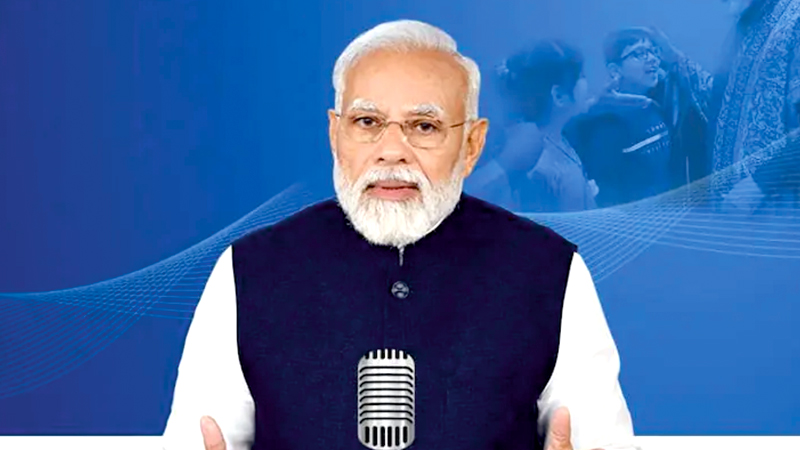
My dear countrymen, Namaskar. Welcome to ‘Mann Ki Baat’. These days the Champions Trophy is going on and there is an atmosphere of cricket everywhere. All of us know very well what the thrill of a century in cricket is… But today I am not going to talk to you about cricket, albeit about the wonderful century that India has made in Space. Last month, the country witnessed the launch of ISRO’s 100th rocket. This is not just a number; it also reflects our resolve to touch new heights in Space Science every day. Our space journey had commenced in a rather modest way. There were challenges at every step, but our scientists kept moving forward, conquering them. With time, the list of our successes in this space odyssey kept rising. Be it the manufacture of launch vehicles, the successes of Chandrayaan, Mangalyaan, Aditya L-1 or the unprecedented mission of sending 104 satellites into space at one go with a single rocket – the ambit of ISRO’s successes has been quite expansive. Over the last 10 years alone, around 460 satellites have been launched and this includes many satellites of other countries as well. Another important fact in recent years is that the participation of woman power is constantly on the rise among our team of Space Scientists. I am also very happy to see that today the Space Sector has become a favourite for our youth.

Who would have thought a few years ago that the number of start-ups and private sector Space companies in this field would be in hundreds. For our youth who want to do something thrilling and exciting in life, the Space Sector is turning out to be an excellent option.

Friends, in a few days to come, we are going to celebrate ‘National Science Day’. The interest and passion of our children and youth in science matters a lot. I have an idea for this, which you can call ‘One Day as a Scientist’. That is, you should try to spend one day as a scientist. You can choose any day as per your convenience and choice. On that day, you must visit a research lab, planetarium or a Space Centre. This will enhance your curiosity about Science. Like Space and Science, there is another field in which India is rapidly carving out a robust identity – this field is AI i.e. Artificial Intelligence. Recently, I went to Paris to participate in a big AI conference. There, the world praised India’s progress in this sector. We are also getting to see examples of how people of our country are using AI today. For example, there is Thodasam Kailash ji, a teacher in a government school in Adilabad, Telangana. His interest in digital music is performing a very important task in saving many of our tribal languages. He has done wonders by composing a song in Kolami language with the help of AI tools. He is using AI to compose songs in many languages ​​other than Kolami. His tracks are being liked a lot by our tribal brothers and sisters on social media. Be it the Space Sector or AI, the ever-increasing participation of our youth is begetting a new revolution. The people of India are second to none in adopting and trying new technologies.

My dear countrymen, next month, the 8th of March is ‘International Women’s Day’. This is a special occasion to salute our Nari Shakti. Devi Mahatmya says –

Vidya: Samastaas-tava Devi Bheda:

Streeya: Samasta: Sakala Jagatsu.

That is, all the Vidyas are the expressions of the various forms of the Goddess and all the woman power of the world is also her reflection. In our culture, respect for daughters has been paramount. The MatriShakti of the country has also played a big role in our freedom struggle and the creation of the Constitution. I am sharing with all of you what Hansa Mehta ji had said while presenting our National Flag in the Constituent Assembly, in her own voice.

It is in the fitness of things that this first flag that will fly over this August house, should be a gift from the women of India. We have donned the saffron colour, we have fought, suffered and sacrificed in the cause of our country’s freedom. We have today attained our goal. In presenting this symbol of our freedom, we once more offer our services to the nation. We pledge ourselves to work for a great India, for building up a nation that will be a nation among nations. We pledge ourselves for working for a greater cause to maintain the freedom we have attained.

Friends, Hansa Mehta ji had brought to the fore the contribution of women from all over the country, right from the making of our National Flag to sacrificing their lives for its sake. She was of the belief that the saffron colour in our tricolour also reflects this sentiment. She had expressed confidence that our woman power would make its valuable contribution in making India strong and prosperous; Today her words are proving to be true. If you observe at any field, you will find how extensive the contribution of women is. Friends, this time on Women’s Day I am going to embark upon an initiative for a day, which will be dedicated to our Nari-Shakti. On this special occasion, I am going to hand over my social media accounts like X, Instagram to some inspiring ladies of the country. Women who have achieved success in myriad fields; who have innovated and created a unique identity for themselves in various fields. On the 8th of March, they will share their work and experiences with the countrymen. The platform might be mine, but it will be about their experiences, their challenges and their achievements. If you want to avail of this opportunity, become a part of this experiment through the special Forum created on NamoApp and share your message with the whole world through my X and Instagram accounts. So come… this time on Women’s Day, let us all celebrate, honour and salute the indomitable power of women.

My dear countrymen, many of you would have enjoyed the thrill of the National Games in Uttarakhand. There, more than 11,000 athletes from all over the country performed brilliantly. This event presented a new Swaroop of Devbhoomi. Uttarakhand is now emerging as a strong sporting force in the country. The players of Uttarakhand too performed wonderfully. This time Uttarakhand finished 7th – this is the power of sports, which transforms individuals and communities as well as the entire State. It inspires future generations and also promotes a culture of excellence. Friends, today some memorable performances in these games are being discussed all over the country. My heartiest congratulations to the Services team which won the maximum number of gold medals in these games. I also appreciate every player who participated in the National Games. Many of our players are the contribution of the Khelo India campaign. Be it Sawan Barwal of Himachal Pradesh, Kiran Mhatre & Tejas Shirse of Maharashtra or Jyoti Yaraji of Andhra Pradesh, all of them have given new hope to the country. Javelin thrower Sachin Yadav of Uttar Pradesh, high jumper Pooja of Haryana and swimmer Dhinidhi Desindhu of Karnataka won the hearts of the countrymen. They surprised everyone by setting three new national records. The number of teenage champions in this year’s National Games is astonishing. 15-year-old shooter Gavin Antony, 16-year-old hammer thrower Anushka Yadav, from UP and 19-year-old pole vaulter Dev Kumar Meena from Madhya Pradesh have proved that India’s sporting future lies in the hands of a very talented generation. The National Games held in Uttarakhand also showed that those who never accept defeat, definitely win. No one becomes a champion amid comfort. I am happy that with the determination and discipline of our young athletes, India is rapidly progressing towards becoming a global sporting powerhouse.

My dear countrymen, during the opening of the National Games in Dehradun, I raised a very important topic, which has started a new discussion in the country – this topic is ‘obesity’. To become a fit and healthy nation, we will certainly have to deal with the problem of obesity. According to a study, one in every eight people today is troubled by the problem of obesity. Cases of obesity have doubled in the past years, but, what is even more worrying is that the problem of obesity has increased fourfold even among children. WHO data shows that in 2022, about 250 crore people around the world were overweight, that is, they had more weight than required. These statistics are very serious and force all of us to think why this is happening. Excess weight or obesity gives rise to many kinds of problems and diseases. We can together deal with this challenge with minor efforts. For example, one method I suggested was “reducing the consumption of edible oil by ten percent (10%)”. Decide that you will use 10% less oil every month. You can decide that while buying oil for cooking, you will buy 10% less oil. This will be an important step towards reducing obesity. Today, in ‘Mann Ki Baat’, I also want to share some special messages on this topic with you. Let us begin with Olympic medallist Neeraj Chopra, who has successfully overcome obesity:

Namaskar everyone. I, Neeraj Chopra want to tell you all today that our honourable Prime Minister Shri Narendra Modi ji has discussed obesity in ‘Mann Ki Baat’ this time, which is a very important issue for our country. And I somehow relate to this thing with myself too, because when I started going to the ground, I was also quite overweight at that time and when I started training and started eating well, my health improved a lot and after that when I became a professional athlete, I got a lot of help in that too. And I would also like to tell that parents should also play some outdoor sport or the other and take their children along and create a good healthy lifestyle, eat well and give your body an hour or however much time you can in a day for exercise. And I would like to add one more thing, recently our Prime Minister had said that the oil used in food should be reduced by upto 10%, because many times we eat a lot of fried food items which have a huge impact on obesity. So I would like to tell everyone to avoid these things and take care of their health. This is just what I request you and together we will uplift our country, thank you.

Neeraj ji, I am very grateful to you. Renowned athlete Nikhat Zareen ji has also expressed her views on this topic:

Hi, my name is Nikhat Zareen and I am two times world boxing champion. As our Prime Minister Narendra Modi ji has mentioned about Obesity in ‘Mann Ki Baat’ and I think it’s a national concern, we should be serious about our health because obesity is spreading so fast in our India, we should stop it and we should try to follow a healthy lifestyle as much as possible. Being an athlete myself, I try to follow a healthy diet because if by mistake I take an unhealthy diet or eat oily things, it impacts my performance and I get tired quickly in the ring and I try to use as little as possible things like edible oil and instead follow a healthy diet and do daily physical activity due to which I always remain fit. And I think common people like us, who go to work daily, I think everyone should be serious about health and do some daily physical activity due to which we stay away from diseases like heart attack and cancer and keep ourselves fit ‘because if we are fit then India is fit’.

Nikhat ji has really made some good points. Let us now listen to what Dr. Devi Shetty ji has to say. As all of you know, he is a very distinguished doctor, who is continuously working on this subject:

I would like to thank our Honourable Prime Minister for creating an awareness about obesity in his most popular ‘Mann Ki Baat’ programme. Obesity today is not a cosmetic problem; it is a very serious medical problem. Majority of the youngsters in India today are obese. The main cause of obesity today is poor quality of food intake especially excess intake of carbohydrates that is rice, chapatti and sugar and of course large consumption of oil. Obesity leads to major medical problems like heart disease, high blood pressure, fatty liver and many other complications. So my advice to all the youngsters… start exercising control your diet and be very very active and watch your weight. Once again I would like to wish all of you a very very happy healthy future, Good Luck and God Bless.

Friends, using less oil in food and dealing with obesity is not just a personal choice but also our responsibility towards the family. Excessive use of oil in food can cause many diseases like heart disease, diabetes and hypertension. By making small changes in our food habits, we can make our future stronger, fitter and disease-free. Therefore, without delay, we must increase our efforts in this direction and implement it in our lives. We can all do this together in a very playful & effective way. For example, today after this episode of ‘Mann Ki Baat’, I will request and challenge 10 people if they can reduce oil in their food by 10%. And I will also urge them to pass on the same challenge to 10 new people. I am sure that this will help a lot in fighting obesity.

Friends, do you know what the similarity between the Asiatic Lion, Hangul, Pygmy Hog and Lion-tailed Macaque is? The answer is that all of these are not found anywhere else in the world… they are found only in our country. Indeed, we have a very vibrant eco-system of flora and fauna. And these wild animals are deeply embedded in our history and culture. Many animals are also observed as the vehicles of our Gods and Goddesses. Many tribes in central India worship Bagheshwar. There is a tradition of worshipping Waghoba in Maharashtra. Lord Ayyappa also has a very deep connection with the tiger. Bonbibi, whose Vaahan is the tiger, is worshipped in Sundarbans. We have many cultural dances like Huli Vesha of Karnataka, Pooli of Tamil Nadu and Pulikali of Kerala, which are associated with nature and wildlife. I would also like to thank my tribal brothers and sisters, because they actively participate in work related to wildlife protection. The population of tigers has risen continuously in Karnataka’s BRT Tiger Reserve. A lot of credit for this goes to the Soliga tribe, who worship the tiger. Owing to them, there is almost no man-animal conflict in this area. In Gujarat as well, people have contributed significantly in the protection and conservation of Asiatic Lions in Gir. They have shown the world what co-existence with nature means. Friends, on account of these efforts, the population of tigers, leopards, Asiatic Lions, Rhinos and Barasingha has increased rapidly in the last few years. And it is also worth noting how beautiful the diversity of wildlife in India is. Asiatic Lions are found in the western part of the country, while the habitat of ​​Tigers is East, Central and South India. Rhinos are found in the Northeast. Every part of India is not only sensitive towards nature, but is also committed to wild life protection. I have been told about Anuradha Rao ji, many generations of whom have been associated with Andaman and Nicobar Islands. Anuradha ji had dedicated herself to animal welfare at an early age. For three decades, she has made the protection of deer and peacocks her mission. People here call her ‘Deer Woman’. We will celebrate World Wildlife Day at the beginning of next month. I urge you to encourage people associated with wildlife protection. It is a matter of great satisfaction for me that many start-ups have also emerged in this field.

Friends, this is the season of Board Exams. I wish my young friends, i.e., Exam Warriors, the best of luck for their exams. Appear for your papers without any stress and with a completely positive spirit. Every year in ‘Pariksha Pe Charcha’, we discuss various topics related to exams with our Exam Warriors. I am happy that this programme is now taking an institutional form… it is getting institutionalized. Many New experts are also joining it. This year, we tried to conduct ‘Pariksha Pe Charcha’ in a new format.  Along with the experts, eight different episodes were also included. We covered topics ranging from Overall Exams to Health Care and Mental Health as well as food and nutrition. Past toppers also shared their thoughts and experiences with everyone. Many youngsters, their parents and teachers have written letters to me on this. They have told me that they liked this format very much because every topic was discussed in detail. Our young friends have watched these episodes in large numbers on Instagram too. Many of you also liked the fact that this program was organized in Sundar Nursery, Delhi. Those of our young friends who have not been able to watch these episodes of ‘Pariksha Pe Charcha’ till now, must watch them. All these episodes are available on NaMoApp. Once again, my message to our Exam Warriors is “Be happy and stress free”.

My dear friends, that’s all for me in this episode of Mann Ki Baat. Next month we will again conduct ‘Mann Ki Baat’ together with new topics. Keep sending me your letters, your messages. Stay healthy, stay happy. Thank you very much. Namaskar.

Delhi Chief Minister meets Prime Minister

| Published on:

The Chief Minister of Delhi, Smt. Rekha Gupta met the Prime Minister, Shri Narendra Modi today.

The Prime Minister’s Office handle posted on X:

“CM of Delhi, Smt. @gupta_rekha Ji, met Prime Minister @narendramodi.”

Union Home Minister distributes sanction letters to 20 lakh beneficiaries of PMAY (G)

| Published on:

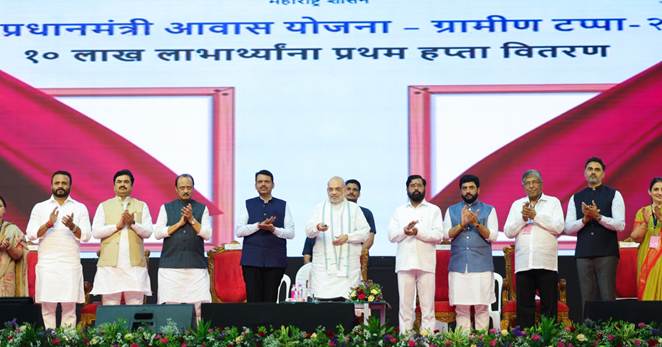
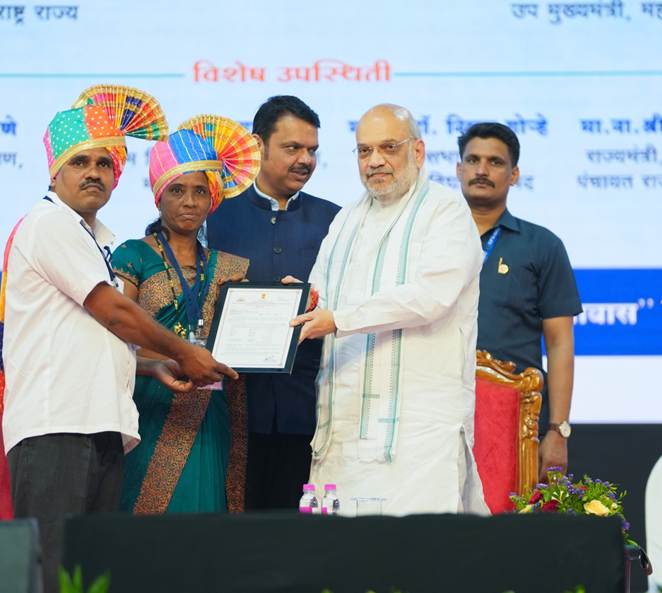
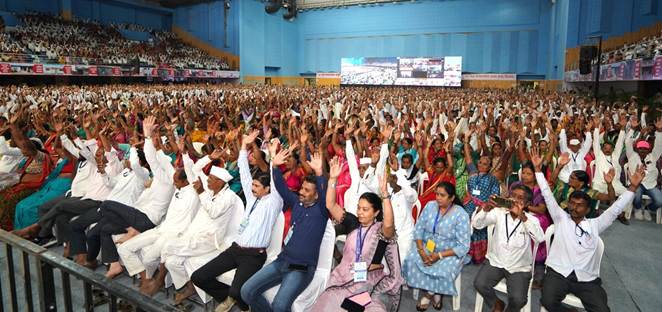
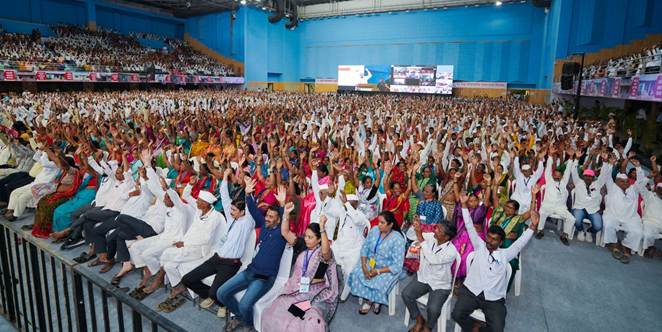
Union Home Minister and Minister of Cooperation Shri Amit Shah distributed sanction letters to 20 lakh beneficiaries and the first installment to 10 lakh beneficiaries under Pradhan Mantri Awas Yojana ‘Gramin’ (Phase-2) in Pune, Maharashtra today. The event was attended by Union Minister of State for Cooperation Shri Murlidhar Mohol, Maharashtra Chief Minister Shri Devendra Fadnavis, Deputy Chief Ministers Shri Eknath Shinde and Shri Ajit Pawar, along with several other dignitaries.

Awas 1.JPG

In his address, Union Home Minister and Minister of Cooperation Shri Amit Shah said that it is the leadership of Prime Minister Shri Narendra Modi which has led to India witnessing for the first time, simultaneous allocation of 20 lakh homes to the beneficiaries. He said that 20 lakh houses have been allotted, and before the event concluded, Maharashtra also distributed their first installment to 10 lakh beneficiaries. He emphasized that the joint efforts of the central and state governments are turning the dream of home ownership for 20 lakh people into reality.

Shri Shah said that along with the house, beneficiaries will also receive toilets, solar panels, and soon gas cylinders, and it has been possible because of the work carried out by Prime Minister Shri Narendra Modi and Chief Minister Shri Devendra Fadnavis.

Shri Amit Shah remarked that Prime Minister Modi has set a target to make India a fully developed nation by 2047, ensuring growth of every citizen, shelter for his family, and access to basic infrastructural facilities.

He noted that under Pradhan Mantri Awas Yojana Phase-2, Maharashtra has been allotted the highest number of houses. Shri Shah said that the homes signify the realization of dreams of development and they serve as the first step toward the progress of future generations.

Awas 2.JPG

Union Home Minister said that by providing homes and toilets, Prime Minister Modi has safeguarded the dignity and self-respect of the poor. Under the “Housing for All” scheme, a target has been set to allocate 5 crore houses to women, backward classes, SC, ST, and other economically weaker sections by 2029, out of which 3 crore 80 lakh families have already been provided homes. He said that under the scheme, Maharashtra was initially allotted 13.50 lakh houses, which has now increased to 19.50 lakh houses, and arrangements have been made to ensure that all these houses are provided in a timely manner.

Awas 3.JPG

Prime Minister Modi has ensured food security for millions by providing 5 kg of free food grains per person per month for the last 10 years, home security by providing houses to 4 crore families, and electricity access by bringing light into the homes of 4 crore people.

Additionally, 13 crore toilets have been constructed to enhance the dignity of mothers, 36 crore Ayushman Bharat cards have been distributed for ensuring healthcare security, and 1 crore ‘LakhpatiDidis’ have been empowered, helping poor women gain self-reliance. Shri Amit Shah said that Prime Minister Modi has uplifted 25 crore people above the poverty line.

Awas 4.JPG

Shri Amit Shah highlighted that Prime Minister Narendra Modi has initiated several infrastructure projects for Maharashtra’s development. He noted that under the leadership of Shri Devendra Fadnavis, Shri Eknath Shinde, and Shri Ajit Pawar, the government has effectively implemented all welfare schemes across Maharashtra.

He added that various irrigation projects have helped Maharashtra tackle droughts, 11 Vande Bharat trains have been launched, and under the Amrit Bharat Scheme, 128 railway stations are being redeveloped.

Shri Shah said that Metro projects in Mumbai, Pune, and Nagpur are progressing rapidly, and new airports in Shirdi and Sindhudurg are under construction. He added that the Atal Setu Trans-Harbour Link is an engineering marvel and will serve as a model worldwide. Union Home Minister said that India’s largest and the world’s biggest container port is being developed in Maharashtra at an estimated cost of ₹76,000 crore under the leadership of Prime Minister Modi.

Bhupender Yadav Highlights the Core Values of Leadership at SOUL Leadership Conclave in New Delhi

| Published on:

Union Minister for Environment, Forest and Climate Change, Shri Bhupender Yadav, delivered an insightful address at the SOUL Leadership Conclave today, focusing on the key elements of effective leadership, self-discipline, and personal growth. In his speech, Yadav emphasized the importance of continuous learning, personal conduct, and philosophical insights in shaping leaders who are committed to the greater good.

Continuous Learning: A Cornerstone of Ultimate Leadership

Shri Bhupender Yadav congratulated the SOUL for its mission to cultivate ultimate leadership. He shared his experience of working with his mentor, who remained dedicated to learning and self-improvement, even in the face of fame and recognition. Sh. Yadav highlighted that leadership is not just about achieving a high position but about consistently learning, evolving, and seeking excellence throughout one’s life.

Union Minister emphasized the importance of humility and the willingness to learn, regardless of one’s age or stage in life. Citing the example of his mentor, Sh. Yadav pointed out that even at the peak of one’s career, the pursuit of knowledge remains vital for personal growth and leadership.

Personal Conduct and Discipline: Building a Strong Foundation for Leadership

The Minister further stressed that leadership is deeply connected to one’s personal conduct and discipline. Drawing inspiration from ancient Indian philosophies, including the Geeta and Patanjali’s Yogasutra, Sh. Yadav explained that true discipline goes beyond external practices and focuses on the balance between the soul, body, and society. He emphasized that discipline is not just about rules, but about aligning one’s inner values with their external actions.

Sh. Yadav also touched upon the significance of adopting a disciplined life to enhance one’s leadership qualities. For example, he explained how Patanjali’s teachings encourage practicing yoga as a means to achieve self-control and inner balance. Through discipline, he said, one could achieve a state of ultimate leadership.

The Power of Mind Control and Practice

Sh. Yadav pointed out that in today’s fast-paced world, it is easy to become distracted by external events and thoughts. However, he stressed that leaders must practice detachment and self-control to maintain focus and calm amidst the chaos of everyday life.

“The body is unrestrained, but practice, only through practice, is what leads to self-mastery,” said Sh. Yadav. He highlighted that, whether in politics, administration, or any other field, one must cultivate the ability to stay grounded and maintain mental clarity. He shared an anecdote to illustrate how people often become distracted by fleeting thoughts and external pressures, but it is through sustained practice that one can truly lead with composure.

Embracing Philosophical Wisdom: The Role of Yoga and Detachment in Leadership

Sh. Yadav further explored the philosophical teachings of Yogasutra, emphasizing that leadership is not only about external achievements but also about one’s inner journey. He discussed the importance of creating a deep, internal relationship with oneself and the world around, which is the essence of leadership.

The Minister cited Patanjali’s principles of practice (Abhyasa) and detachment (Vairagya), pointing out that both are critical to transforming one’s life and achieving success. He explained that detachment does not mean abandoning the world, but rather being unaffected by distractions and external disturbances. Through this approach, leaders can build resilience and inner strength, which are necessary to lead with integrity and purpose.

Friendship, Compassion, and Contribution: The Pillars of Leadership

The Union Minister shared a powerful message on the importance of friendship, compassion, and contributing to society. He emphasized that true leadership is rooted in positive relationships, where leaders not only seek to elevate themselves but also support those around them. “Friendship and compassion are essential qualities for a leader,” he said. “One should always extend compassion to those who are in pain and be mindful of one’s own expectations.”

Sh. Yadav urged the audience to adopt a contributory attitude rather than a competitive one. In his view, contributing positively to society leads to greater fulfillment and personal growth. He shared an insightful thought on the importance of living life with a sense of contribution rather than comparing oneself with others, as true success comes from adding value to the world.

The Path to Ultimate Leadership

Shri Bhupender Yadav concluded his address by reiterating that leadership is a continuous process of growth and transformation. He encouraged the audience, especially the youth, to embrace discipline, philosophical wisdom, and self-control as the foundation of their leadership journey. He emphasized that it is only through consistent practice, detachment from worldly distractions, and contributing to the greater good that one can achieve ultimate leadership.

As he wrapped up his speech, the Minister left the audience with a thought-provoking quote: “To become truly great, one must keep practicing, stay calm amidst chaos, and remain rooted in compassion and contribution.”

The session concluded with an engaging question-answer segment, where participants had the opportunity to interact with the Minister and further explored the concepts of leadership and personal growth.

PM inaugurates 98th Akhil Bharatiya Marathi Sahitya Sammelan

| Published on:

The Prime Minister, Shri Narendra Modi inaugurated the 98th Akhil Bharatiya Marathi Sahitya Sammelan in Vigyan Bhawan, New Delhi today. Addressing the gathering on the occasion, he welcomed all the Marathis to the grand event of Marathi language being organized in New Delhi. He said that the Akhil Bharatiya Marathi Sahitya Sammelan was not confined to a language or a region and added that the Sammelan comprised the essence of freedom struggle as well as the cultural heritage of Maharashtra and the nation.

Remarking that Akhil Bharatiya Marathi Sahitya Sammelan, from its first edition in 1878 till now, has been a witness to 147 years of India’s journey, Shri Modi said that many luminaries like Shri Mahadev Govind Ranade, Shri Hari Narayan Apte, Shri Madhav Shrihari Ane, Shri Shivram Paranjpe, Shri Veer Savarkar had presided the Sammelan. Expressing his gratitude for being invited by Shri Sharad Pawar to be part of this proud tradition, he extended his congratulations to all Marathi enthusiasts across the country and the world for this event.

Highlighting that today was International Mother language day, the Prime Minister remarked that it was quite natural to be reminded of verses of Sant Dnyaneshwar when he thought of Marathi language. Reciting a verse of Sant Dnyaneshwar, Shri Modi explained that the Marathi language was sweeter than nectar and hence his love and affection towards the Marathi language and culture was immense. Informing that although he was not as proficient as Marathi scholars at the event, the Prime Minister humbly said that he has always been in a constant endeavour to learn Marathi.

Shri Modi highlighted that the Sammelan was taking place at a significant time when the nation was witnessing the 350th anniversary of Chhatrapati Shivaji Maharaj’s coronation, the 300th birth anniversary of Punyashlok Ahilyabai Holkar, and the 75th anniversary of our Constitution, created through the efforts of Babasaheb Ambedkar. Expressing pride over the fact that a century ago, a distinguished Marathi individual planted the seed of the Rashtriya Swayamsevak Sangh (RSS) on the soil of Maharashtra, Shri Modi highlighted that today, it has grown into a vast tree, celebrating its centenary year. He emphasized that for the past 100 years, the RSS has carried forward the great tradition and culture of India, from the Vedas to Vivekananda, to the new generation through its cultural efforts. He noted that it has been his privilege, along with millions of others, to be inspired by the RSS to live for the country. The Prime Minister also acknowledged that it was through the RSS that he had the opportunity to connect with the Marathi language and tradition. He highlighted that a few months ago, Marathi was accorded the status of a classical language, for which over 12 crore Marathi speakers in India and around the world had been waiting for decades for this recognition. He considered it a great fortune of his life to have had the opportunity to accomplish this task.

“Language is not just a medium of communication but a carrier of our culture”, exclaimed the Prime Minister. He noted that while languages are born in society, they also play a crucial role in shaping it. He highlighted that Marathi has given expression to the thoughts of many individuals in Maharashtra and the nation, contributing to our cultural development. Citing Samarth Ramdas Ji’s words on the importance of the Marathi language, the Prime Minister remarked, “Marathi is a complete language, embodying valor, beauty, sensitivity, equality, harmony, spirituality, and modernity”. He noted that Marathi includes devotion, strength, and intellect. Shri Modi pointed out that when India needed spiritual energy, Maharashtra’s great saints made the wisdom of the sages accessible in Marathi. He acknowledged the contributions of Sant Dnyaneshwar, Sant Tukaram, Sant Ramdas, Sant Namdev, Sant Tukdoji Maharaj, Gadge Baba, Gora Kumbhar, and Bahinabai, who showed society a new direction through the Bhakti movement in Marathi. In modern times, the Prime Minister highlighted the impact of Shri Gajanan Digambar Madgulkar and Shri Sudhir Phadke’s Geet Ramayan.

Highlighting that during centuries of oppression, the Marathi language became a proclamation of liberation from invaders, the Prime Minister mentioned the valor of Maratha warriors like Chhatrapati Shivaji Maharaj, Sambhaji Maharaj, and Bajirao Peshwa, who fiercely opposed their enemies. He noted that in the freedom struggle, fighters like Vasudev Balwant Phadke, Lokmanya Tilak, and Veer Savarkar disrupted the British. He emphasized the significant role of Marathi language and literature in their contributions. Shri Modi highlighted that newspapers like Kesari and Maratha, the powerful poems of poet Govindagraj, and the plays of Ram Ganesh Gadkari nurtured the spirit of nationalism. He pointed out that Lokmanya Tilak wrote the Geeta Rahasya in Marathi, which infused new energy across the nation.

“Marathi language and literature have opened the doors of social emancipation for the oppressed and deprived sections of society”, highlighted Shri Modi. He mentioned the contributions of great social reformers such as Jyotiba Phule, Savitribai Phule, Maharshi Karve, and Babasaheb Ambedkar, who nurtured new age thinking in Marathi. He noted that Marathi language has given the country rich Dalit literature. He emphasized that due to its modern thinking, Marathi literature has also produced science fiction. Acknowledging the exceptional contributions of the people of Maharashtra in Ayurveda, science, and logic in the past, Shri Modi highlighted that this culture has always invited new ideas and talents, leading to Maharashtra’s progress. He remarked that Mumbai has emerged as the economic capital not only of Maharashtra but of the entire country. The Prime Minister remarked that when speaking of Mumbai, one cannot complete the discussion of literature without mentioning films. He highlighted that it is Maharashtra and Mumbai that have elevated both Marathi films and Hindi cinema. He noted the current popularity of the movie ‘Chhava,’ which has introduced the valor of Sambhaji Maharaj through Shivaji Sawant’s Marathi novel.

Quoting poet Keshavsut, Shri Modi emphasized that we cannot remain stagnant in old thoughts and human civilization, thoughts, and language continually evolve. He highlighted that India is one of the world’s oldest living civilizations because it has consistently evolved, embraced new ideas, and welcomed changes. Pointing out that India’s vast linguistic diversity is a testament to this evolution and serves as a fundamental basis for unity, the Prime Minister noted that Marathi exemplifies this diversity, comparing language to a mother who imparts new and vast knowledge to her children without discrimination. He added that language embraces every idea and every development. Shri Modi noted that Marathi originated from Sanskrit and has significant influences from Prakrit. He highlighted the contribution of great thinkers and writers who have broadened human thought. He mentioned Lokmanya Tilak’s Geeta Rahasya, which interpreted the Sanskrit Gita and made it more accessible through Marathi. He also mentioned that the Dnyaneshwari Gita, with its Marathi commentary on Sanskrit, has become a standard for scholars and saints to understand the Gita. The Prime Minister remarked that Marathi has enriched and been enriched by other Indian languages. He cited examples like Bhargavram Vitthal Varekar, who translated works like ‘Anandmath’ into Marathi, and Vinda Karandikar, whose works based on the lives of Panna Dhai, Durgavati, and Rani Padmini have been translated into many languages. “Indian languages have never had mutual enmity; instead, they have always adopted and enriched each other”, he emphasised.

Pointing out that attempts to create divisions in the name of language are countered by the shared heritage of our languages, the Prime Minister emphasized the responsibility of enriching and embracing languages, urging everyone to keep away from such misconceptions. He highlighted that today, all languages in the country are viewed as mainstream languages. He pointed out the efforts to promote education in all major languages, including Marathi. Shri Modi mentioned that now, the youth in Maharashtra can pursue higher education, engineering, and medical studies in Marathi. He emphasized that the mindset of neglecting talents due to the lack of English proficiency has been changed.

“Literature is a mirror as well as a guide for society”, said Shri Modi. He remarked on the crucial role of Sahitya Sammelan and related institutions in the country. He expressed hope that the Akhil Bhartiya Marathi Sahitya Mahamandal will carry forward the ideals established by great personalities like Govind Ranade, Harinarayan Apte, Acharya Atre, and Veer Savarkar. The Prime Minister highlighted that the tradition of the Sahitya Sammelan will complete 150 years in 2027, which will mark the 100th Sahitya Sammelan. He urged everyone to make this occasion special and to start preparations now. He acknowledged the efforts of many young people who are serving Marathi literature through social media and encouraged providing them with a platform to recognize their talents. The Prime Minister emphasized the importance of promoting Marathi learning through online platforms and initiatives like Bhashini. He suggested organizing competitions related to Marathi language and literature among the youth. He expressed confidence that these efforts and inspirations from Marathi literature will energize 140 crore citizens for a Viksit Bharat. He concluded by urging everyone to continue the great tradition of distinguished personalities like Mahadev Govind Ranade, Harinarayan Apte, Madhav Shrihari Ane, and Shivram Paranjape, and thanked everyone.

The Chief Minister of Maharashtra, Shri Devendra Fadnavis; Member of Parliament (Rajya Sabha), Shri Sharad Pawar; President of the 98th Sammelan, Dr. Tara Bhawalkar were present among other dignitaries at the event.

Background

The 98th Akhil Bharatiya Marathi Sahitya Sammelan is being held from 21st to 23rd February and will host a diverse array of panel discussions, book exhibitions, cultural performances, and interactive sessions with eminent literary figures. The Sammelan will celebrate Marathi literature’s timeless relevance and explore its role in contemporary discourse, including themes of language preservation, translation, and the impact of digitalization on literary works.

The Marathi literary gathering being held in the national capital after 71 years also includes a symbolic literary train journey from Pune to Delhi, carrying 1,200 participants, showcasing the unifying spirit of literature. It will feature over 2,600 poetry submissions, 50 book launches, and 100 bookstalls among others. Distinguished scholars, authors, poets, and literature enthusiasts from across the country will participate.

We remain committed to deepening the unique and historical partnership between India and Bhutan: PM

| Published on:

Appreciating the address of Prime Minister of Bhutan, H.E. Tshering Tobgay at SOUL Leadership Conclave in New Delhi, Shri Modi said that we remain committed to deepening the unique and historical partnership between India and Bhutan.

The Prime Minister posted on X;

“Pleasure to once again meet my friend PM Tshering Tobgay. Appreciate his address at the Leadership Conclave @LeadWithSOUL. We remain committed to deepening the unique and historical partnership between India and Bhutan.

PM inaugurates the first edition of the SOUL Leadership Conclave

| Published on:

The Prime Minister, Shri Narendra Modi inaugurated the School of Ultimate Leadership (SOUL) Leadership Conclave 2025, the first of its edition, at Bharat Mandapam, New Delhi today. Welcoming all the distinguished leaders and the upcoming young leaders of the future, Shri Modi remarked that some events are very dear and today was one such event. “Development of better citizens is necessary for Nation building, Development of excellent Leaders is necessary in every field”, said the Prime Minister. He remarked that it was necessary to groom excellent leaders in every sector, which is the need of the hour. Therefore, he highlighted, the School of Ultimate Leadership is an important milestone in the development journey of Viksit Bharat. Adding that SOUL was not just in the name of the organization, the Prime Minister remarked that SOUL would be the soul of the social life of India. He added that in another sense, SOUL also beautifully captures the essence of spiritual experience. Extending his greetings to all the stakeholders of SOUL, Shri Modi announced that a new, vast campus of SOUL would be ready near GIFT City, Gujarat in the near future.

The Prime Minister said that today when SOUL is taking the first step in its journey, India has to remember its critical role in shaping the institutes’ future. Quoting Swami Vivekanand, Shri Modi said the visionary leader always wanted to free India from the shackles of slavery and transform it with the help of merely 100 effective and efficient leaders. He remarked that the country has to move ahead with the same zeal. Noting that every citizen is working round the clock to achieve the dreams of a 21st-century Viksit Bharat, Shri Modi underlined the need for good leadership across all sectors in a country with a population of 140 crores. He expressed hope that the School of Ultimate Leadership will create leaders who will leave a mark all over the world, including in the field of Politics. The Prime Minister also highlighted the critical role of both human and natural resources and their role in the progress of any nation. He also cited an instance to show how Gujarat has emerged as a top state due to its leadership driven by its human capital, despite lack of sufficient natural resources. He added, “Human Resource has the greatest potential”. He said that the 21st century calls for resources capable of leading innovation and channelizing skills. He pointed out the growing importance of skills across various sectors. Shri Modi further stressed the need for leadership development for embracing new skills, which must be pursued through scientific and structured approach. Acknowledging the significant role that institutes like SOUL will play in the process, the Prime Minister was pleased to learn that it has already begun work in this direction. He also mentioned that workshops have been conducted for State Education Secretaries, State Project Directors, and other officials for the effective implementation of the new National Education Policy. Additionally, a leadership development camp has been organized for the Chief Minister’s Office staff in Gujarat. He stated that this is just the beginning, and SOUL must aim to become the world’s leading institution for leadership development.

“India is emerging as a global powerhouse”, emphasized the Prime Minister. He remarked that for this momentum and speed to increase across all sectors, world-class leaders and international leadership are needed. Highlighting the potential of leadership institutions like SOUL to be game changers, he stated that such international institutions are not only a choice but a necessity. “There is a need for energetic leaders in every sector who can find solutions to global complexities and needs while prioritizing the nation’s interests on the global stage”, underscored Shri Modi. He emphasized that these leaders should have a global approach but retain a local mindset. He noted the importance of preparing individuals who understand both the Indian mind and the international mindset, and who are ready for strategic decision-making, crisis management, and futuristic thinking. The Prime Minister highlighted that to compete in international markets and global institutions, leaders who understand international business dynamics are required. He added that the role of SOUL is to prepare such leaders, with a large scale and scope, and with high expectations from them.

Shri Modi advised everyone to keep in mind that future leadership will not be limited to power, but leadership roles will require capabilities in innovation and impact. He highlighted the need for individuals in the country to emerge according to this necessity. He stated that SOUL will develop critical thinking, risk-taking, and solution-driven mindsets in these individuals. He expressed confidence that the institution will produce leaders who are prepared to work amidst disruptive changes.

Stressing the need to create leaders who set trends rather than just follow them, the Prime Minister remarked that as India advances new leadership in sectors ranging from diplomacy to tech innovation, the influence and impact of the country will multiply across various sectors. Highlighting that India’s entire vision and future depend on a strong leadership generation, Shri Modi stressed the importance of treading forward by combining global thinking with local upbringing. Underscoring the need to make governance and policy-making world-class, the Prime Minister said that this can be achieved when policymakers, bureaucrats, and entrepreneurs frame policies incorporating global best practices. He emphasised the significant role institutions like SOUL will play in this regard.

Reiterating the need for rapid progress in all sectors to build a Viksit Bharat, Shri Modi quoted the scriptures emphasizing that people follow the conduct of great individuals. Therefore, he underscored the importance of leadership that reflects and conducts itself according to India’s national vision. He highlighted that the objective of SOUL should be to instill the necessary strength and spirit for constructing a developed India. He expressed confidence that the necessary changes and reforms will follow naturally once strong leadership is established.

Emphasizing the need to develop both strength and spirit in public policy and social sectors, the Prime Minister remarked on the necessity of preparing leadership for emerging sectors such as deep-tech, space, biotech, and renewable energy. He highlighted the importance of creating leadership for conventional sectors like sports, agriculture, manufacturing, and social service. He stressed that India must not only aspire to excellence in all sectors but also achieve it. Shri Modi remarked “India needs leaders who can develop new institutions of global excellence”. He noted that India’s history is filled with glorious stories of such institutions and emphasized the need to revive that spirit. Expressing confidence that there are many capable individuals among those present at the event, Shri Modi stated that the institute should be a laboratory for their dreams and vision. He stressed that the foundation being laid today should be a source of pride for future generations, who will remember it with pride 25-50 years from now.

Shri Modi emphasized the need for the institute to have a clear understanding of the aspirations and dreams of crores of Indians. He remarked that the sectors and factors that present both challenges and opportunities should be well-defined. “When we move forward with a common goal and collective effort, the results are extraordinary”, said the Prime Minister. He stated that the bond forged by a shared purpose is stronger than blood, uniting minds, fueling passion, and standing the test of time. He remarked that a significant common goal and purpose lead to the development of leadership and team spirit. He noted that individuals dedicate themselves to their goals, bringing out their best capacities. Shri Modi stressed that a shared purpose not only brings out the best in individuals but also enhances their capabilities according to the larger objective. He highlighted that this process develops leaders who strive to acquire the necessary skills to reach higher levels.

“A shared purpose fosters an unprecedented sense of team spirit”, said Shri Modi. He remarked that when people walk together as co-travellers with a shared purpose, a strong bond develops. He highlighted that this process of team building also gives rise to leadership. He cited the example of India’s freedom struggle as the best illustration of a shared purpose, noting that it produced leaders not just in politics but in other sectors as well. Shri Modi stressed the need to revive the spirit of the freedom movement and draw inspiration from it to move forward.

Quoting a Sanskrit verse, the Prime Minister emphasised that there is no word that cannot be turned into a mantra, no herb that cannot become medicine, and no person who is incapable. He highlighted the need for a planner to properly utilize and guide individuals. He remarked that SOUL plays the role of such a planner. Shri Modi noted that many leaders who were present at the event, have learned and honed their leadership skills. He cited a quote emphasizing the different levels of development: personal success through self-development, organizational growth through team development, and explosive growth through leadership development. He stressed that these principles should always remind everyone of their duties and contributions.

Highlighting the formation of a new social order in the country, being shaped by the youth born in the 21st century as well as in the past decade, Shri Modi said that this generation will truly be the first developed generation of India, referring to them as the “Amrit Peedhi”. Expressing confidence that the new institution, SOUL, will play a significant role in preparing the leadership of this “Amrit Peedhi”, he extended his best wishes to everyone associated with the institute.

The Prime Minister of Bhutan, H.E. Mr. Dasho Tshering Tobgay, Chairman of the SOUL Board, Shri Sudhir Mehta and Vice Chairman, Shri Hasmukh Adhia were present among other dignitaries and delivered the keynote address at the event. Shri Modi also thanked the Prime Minister of Bhutan for being present at the event on such an important day of the birthday of the King of Bhutan.

Background

The two day SOUL Leadership Conclave from 21st to 22nd February will serve as a premier platform where leaders from diverse domains like politics, sports, arts and media, the spiritual world, public policy, business and the social sector will share their inspiring life journeys and discuss aspects relating to leadership. The conclave will foster an ecosystem of collaboration and thought leadership, facilitating learning from both failures and successes, to inspire young audiences.

School of Ultimate Leadership is an upcoming leadership institution in Gujarat to enable authentic leaders to advance public good. The aim is to broaden the landscape of political leadership in India through formal training and to include those who rise through merit, commitment, and passion for public service and not just from political lineage. SOUL brings in insights, skills and expertise necessary to navigate the complex challenges of leadership in today’s world.

Union Home Minister interacts with students from rural and tribal communities in New Delhi

| Published on:

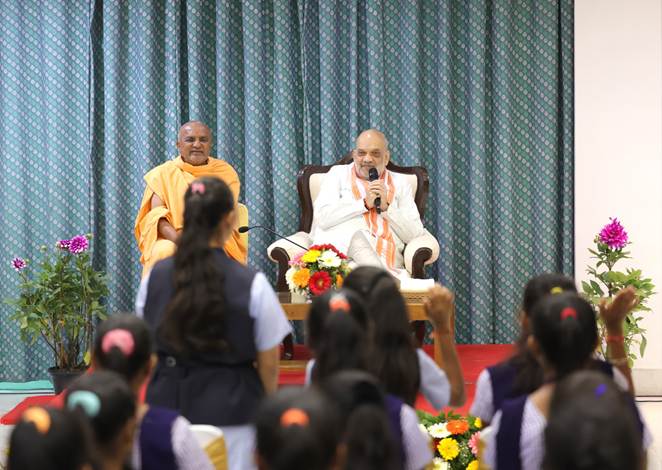
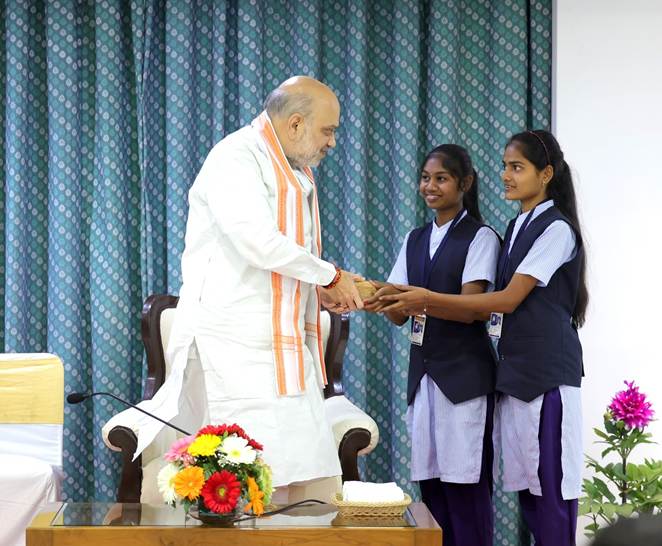
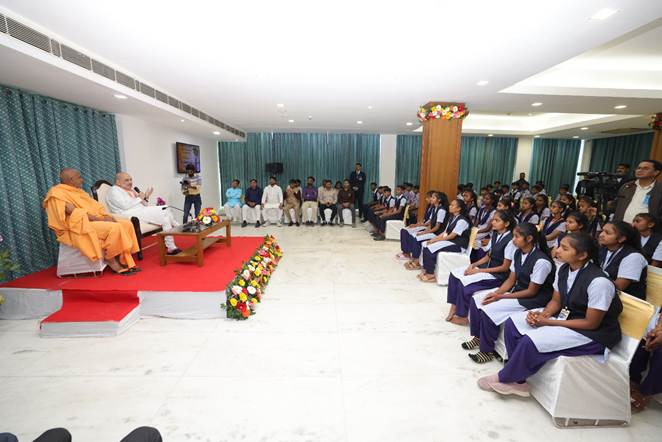
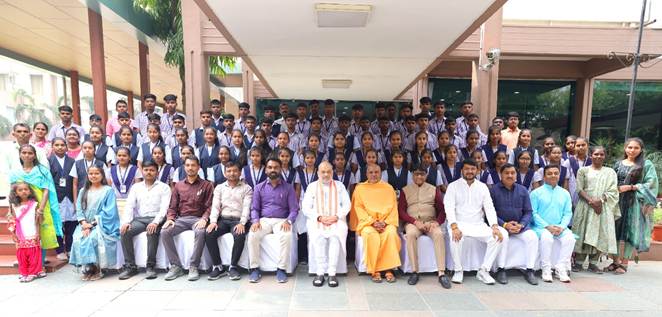
Union Home Minister and Minister of Cooperation, Shri Amit Shah held an inspiring educational interaction with the students of the rural and tribal community of Santokba Dholakiya Vidya Mandir, Dang District, Gujarat at Gujarat Bhawan, Chanakyapuri, New Delhi today. This special event was a unique opportunity for these students to be inspired and share their experiences. This initiative is part of the Union Home Minister’s commitment to directly interact with youth and motivate them.

The program not only served as a source of inspiration for all these rural and tribal students, but it also provided them with the opportunity to openly interact with the country’s Home Minister.

On this occasion, Shri Amit Shah shared profound thoughts on education, youth empowerment, and the role of students in national development. The goal of this dialogue was to inspire students and address their queries related to academics and careers. While answering students’ questions, the Home Minister emphasized the importance of hard work, dedication, and determination.

Union Home Minister said that be it the celebration of ‘Janjatiya Gaurav Divas’ or the election of Smt Droupadi Murmu as the President of India, these decisions have helped take the pride of the tribal society to newer heights. He emphasized that the upliftment and empowerment of the tribal community is our priority, and it is Prime Minister Shri Narendra Modi who gave the tribal community their rightful recognition after independence.

Shri Amit Shah said that students are the foundation of the country’s progress, and their hard work and dedication will take India to new heights. He encouraged students to pursue careers as doctors, engineers, and civil servants, stating that if they make the development of the country their goal, their personal growth will naturally be assured. Therefore, their primary objective should be to work for the development of the nation.

Union Home Minister and Minister of Cooperation stated that the Modi government is providing quality education to tribal students by establishing Eklavya Model Residential Schools in every block having more than 50% ST population having at least 20,000 tribals. He further mentioned that language has been a barrier for tribal students in the fields like medicine, engineering, and technical education. In response to this, the Modi government has provided the option for students to take exams in their mother tongue. Shri Shah said that these decisions have given tribal students a new hope. He further mentioned that in the six decades after independence, there was only one central tribal university in the country, whereas in the past decade, under the Modi government, two new tribal universities have been established.

The students shared their thoughts on education and career with the Home Minister. Shri Amit Shah provided suggestions on how they could contribute to the progress of the country. At the end of the program, the Home Minister encouraged the students to pursue their goals with hard work and integrity, stating that the role of students in nation-building is extremely important, and their success will play a key role in making India a leading nation.

PM congratulates Smt. Rekha Gupta on taking oath as Delhi’s CM

| Published on:

The Prime Minister, Shri Narendra Modi has congratulated Smt. Rekha Gupta on taking oath as Chief Minister of Delhi. Shri Modi said that she has risen from the grassroots, being active in campus politics, state organisation, municipal administration and now MLA as well as Chief Minister.

The Prime Minister wrote on X;

“Congratulations to Smt. Rekha Gupta Ji on taking oath as Delhi’s Chief Minister. She has risen from the grassroots, being active in campus politics, state organisation, municipal administration and now MLA as well as Chief Minister. I am confident she will work for Delhi’s development with full vigour. My best wishes to her for a fruitful tenure.

PM also congratulates new Ministers of Delhi Government

The Prime Minister, Shri Narendra Modi has congratulated and extended best wishes to Shri Parvesh Sahib Singh, Shri Ashish Sood, Sardar Manjinder Singh Sirsa, Shri Ravinder Indraj Singh, Shri Kapil Mishra and Shri Pankaj Kumar Singh on taking oath as Ministers in the Delhi Government.

In a X post, the Prime Minister said;

“Congratulations to Shri Parvesh Sahib Singh Ji, Shri Ashish Sood Ji, Sardar Manjinder Singh Sirsa Ji, Shri Ravinder Indraj Singh Ji, Shri Kapil Mishra Ji and Shri Pankaj Kumar Singh Ji on taking oath as Ministers in the Delhi Government. This team beautifully mixes vigour and experience, and will surely ensure good governance for Delhi. Best wishes to them.

PM extends greetings to the people of Mizoram & Arunachal Pradesh on their Statehood Day

| Published on:

The Prime Minister, Shri Narendra Modi has extended warm greetings to the people of Mizoram on their Statehood Day. Shri Modi said that the Mizo culture reflects a beautiful mix of heritage and harmony. He has also wished that Mizoram may continue to prosper, and may its journey of peace, development and progress reach even greater heights in the years to come.

In a X post, the Prime Minister said;

“Warm greetings to the people of Mizoram on their Statehood Day! This vibrant state is known for its breathtaking landscapes, deep-rooted traditions and the remarkable warmth of its people. The Mizo culture reflects a beautiful mix of heritage and harmony. May Mizoram continue to prosper, and may its journey of peace, development and progress reach even greater heights in the years to come.”

Apart from this PM Shri Narendra Modi has also extended his greetings to the people of Arunachal Pradesh on their Statehood Day. Shri Modi also said that Arunachal Pradesh is known for its rich traditions and deep connection to nature. Shri Modi also wished that Arunachal Pradesh may continue to flourish, and may its journey of progress and harmony continue to soar in the years to come.

The Prime Minister posted on X;

“Greetings to the people of Arunachal Pradesh on their Statehood Day! This state is known for its rich traditions and deep connection to nature. The hardworking and dynamic people of Arunachal Pradesh continue to contribute immensely to India’s growth, while their vibrant tribal heritage and breathtaking biodiversity make the state truly special. May Arunachal Pradesh continue to flourish, and may its journey of progress and harmony continue to soar in the years to come.”

Prime Minister pays homage to Chhatrapati Shivaji Maharaj on his Jayanti

| Published on:

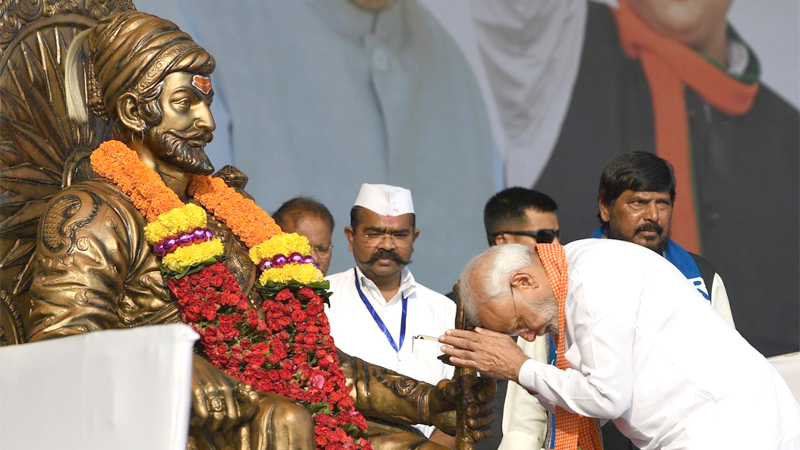
The Prime Minister, Shri Narendra Modi has paid homage to Chhatrapati Shivaji Maharaj on his Jayanti.

Shri Modi wrote on X;

“I pay homage to Chhatrapati Shivaji Maharaj on his Jayanti.

His valour and visionary leadership laid the foundation for Swarajya, inspiring generations to uphold the values of courage and justice. He inspires us in building a strong, self-reliant and prosperous India.”

“छत्रपती शिवाजी महाराज यांच्या जयंतीनिमित्त मी त्यांना अभिवादन करतो.

त्यांच्या पराक्रमाने आणि दूरदर्शी नेतृत्वाने स्वराज्याची  पायाभरणी केली,  ज्यामुळे अनेक पिढ्यांना धैर्य आणि न्यायाची मूल्ये जपण्याची प्रेरणा मिळाली. ते आपल्याला एक बलशाली, आत्मनिर्भर आणि समृद्ध भारत घडवण्यासाठी प्रेरणा देत आहेत.”

India – Qatar Joint Statement

| Published on:

At the invitation of Prime Minister of India His Excellency Shri Narendra Modi, His Highness the Amir of the State of Qatar, Sheikh Tamim bin Hamad Al-Thani paid a State Visit to India on 17-18 February 2025. HH the Amir was accompanied by a high-level delegation comprising Ministers, officials and business leaders. This was the second State Visit of HH the Amir to India.

HH the Amir was received by Hon’ble President of India Smt Droupadi Murmu and Prime Minister Shri Narendra Modi at the Forecourt of Rashtrapati Bhawan on 18 February and was accorded a ceremonial welcome. Hon’ble President also hosted a banquet reception in honour of HH the Amir and accompanying delegation.

Prime Minister Shri Narendra Modi held bilateral talks with HH the Amir at Hyderabad House on 18 February. Both leaders recalled the historic trade linkages, deep-rooted people-to-people ties and robust bilateral relations between both countries. They expressed the desire for further expanding and deepening of the multifaceted relationship between both countries. In this context, they expressed happiness on the signing of the ‘Agreement on the Establishment of Bilateral Strategic Partnership’ between the two sides.

In light of the newly established Strategic Partnership, the two sides reaffirmed their commitment to further strengthen the bilateral relations through regular and structured cooperation in all areas, including political, trade, investment, security, energy, culture, education, technology, innovation, sustainability and people-to-people ties. In this regard, the two sides expressed happiness at the signing of the revised Double Taxation Avoidance Agreement and also agreed to expedite negotiations on the India-Qatar Bilateral Investment Treaty.

The two sides noted with satisfaction that regular interactions at various levels have helped provide momentum to the multifaceted bilateral cooperation. They recalled the successful visit of HH the Amir to India in March 2015 and the visits of Prime Minister to Qatar in June 2016 and February 2024. The two sides agreed to continue the high-level exchanges through regular bilateral mechanisms at Ministerial and senior-official levels.

The two sides noted that trade and commerce has been a strong pillar of bilateral economic cooperation between the two countries and emphasized on the potential for further growth and diversification in bilateral trade. The two sides welcomed the elevation of the existing Joint Working Group on Trade and Commerce into a Joint Commission on Trade and Commerce. The Joint Commission will be an institutional mechanism to review and monitor the entire spectrum of economic ties between the two countries and will be headed by the Ministers of Commerce and Industry on both sides.

The two sides laid emphasis on strengthening collaborations between their business and industry bodies. In this context, they welcomed the holding of the first meeting of the Joint Business Council on 13 February 2025.

The two sides agreed on the need to explore strategies for enhanced and diversified trade between the two countries and address on priority market access issues related to trade in goods and services. In this regard, the two sides agreed to explore the possibility of entering into a bilateral Comprehensive Economic Partnership Agreement. Both sides set the target to double bilateral trade by 2030.

Qatar and India have a strong strategic relationship and given that the Indian economy is one of the fastest growing economies, the Indian side welcomed the decision of Qatar Investment Authority (QIA) to open an office in India. Both sides expressed satisfaction with the progress made by the Joint Task Force on Investments during its first meeting in June 2024, where various avenues for investments in India were discussed.

The Qatar side commended the steps taken by India in making a conducive environment for Foreign Direct Investment and Foreign Institutional Investment and expressed interest to explore investment opportunities in different sectors, including infrastructure, technology, manufacturing, food security, logistics, hospitality, and other areas of mutual interest. In this regard, the Qatar side announced a commitment to invest USD 10 billion in India. The Indian side also appreciated Qatar’s efforts in enhancing its investment environment and its initiatives to attract Foreign Direct Investment. India also recognized Qatar’s growing role as a regional hub for goods and services, leveraging its strategic location, world-class infrastructure, and business-friendly policies. Both sides emphasized the importance of deepening cooperation between investment authorities, financial institutions, and businesses to explore new opportunities for investment and trade expansion.

The parties shall expand and deepen mutually beneficial trade and economic cooperation between the two countries in accordance with their respective legislations and the provisions of international conventions to which they are parties. They shall cooperate in order to achieve stable growth and diversification of trade, increase the volume of exchanged products, and provide mutual services on a systematic and long-term basis. Additionally, they shall implement measures to attract and encourage the establishment of joint projects between the private sectors of both countries. In this regard, both sides welcomed convening of the Joint Business Forum inaugurated by the Ministers of Commerce and Industry of both countries on 18 February 2025.

Recognizing the pivotal role of businesses in driving economic growth, both sides emphasized the importance of trade exhibitions as a strategic platform for promoting commercial partnerships, increasing and diversifying bilateral trade, and facilitating investments. In pursuit of these objectives, both sides will strengthen collaboration between their export promotion agencies to support enterprises in identifying opportunities, addressing market challenges, and increasing participation in international trade exhibitions. This initiative will enable businesses from both nations to showcase their products, explore joint ventures, and establish sustainable commercial ties.

The two sides welcomed the operationalization of India’s Unified Payment Interface (UPI) in QNB’s Points of Sales in Qatar and looked forward to implement nation-wide roll-out of UPI acceptance in Qatar. They agreed to explore settlement of bilateral trade in respective currencies. QNB’s expansion is also welcomed in India through setting up of an office in GIFT City.

The two sides shall work to further enhance bilateral energy cooperation, including through promotion of trade and mutual investments in energy infrastructure and regular meetings of the relevant stakeholders from both sides, including the Joint Task Force on Energy.

The two leaders unequivocally condemned terrorism in all its forms and manifestations including cross-border terrorism and agreed to cooperate in combating this menace through bilateral and multilateral mechanisms. They agreed to enhance cooperation in information and intelligence sharing, developing and exchanging experiences, best practices and technologies, capacity building and to strengthen cooperation in law enforcement, anti-money laundering, drug-trafficking, Cybercrime and other transnational crimes. The two leaders also discussed ways and means to promote cooperation in cybersecurity, including prevention of use of cyberspace for terrorism, radicalisation and for disturbing social harmony. They emphasized the importance of holding regular meetings of the Joint Committee on Security and Law Enforcement.

The two sides acknowledged health cooperation as one of the important pillars of bilateral ties and expressed their commitment to further strengthen collaboration in this important sector. The two sides appreciated the bilateral cooperation during the Covid-19 pandemic including through the Joint Working Group on Health. The Indian side expressed interest in enhancing exports of Indian pharmaceutical products and medical devices to Qatar. Both sides also expressed their desire to facilitate the registration of national companies and pharmaceutical products.

The two sides expressed interest in pursuing deeper collaboration in technology and innovation, including emerging technologies, startups, and Artificial Intelligence. They discussed avenues for furthering e-Governance and sharing best practices in the digital sector. Both sides welcomed the participation of Indian startups in Web Summits in Doha, Qatar in 2024-25.

The importance of food security and protection of supply chains was emphasized by the two sides and they agreed to further strengthen cooperation in this field.

The two sides stressed the importance of enhancing cultural cooperation through exchanging participation in cultural events and supporting effective partnerships between cultural institutions in both countries. They also decided to further strengthen cooperation in the area of sports including mutual exchange and visits of sportsmen, organising workshops, seminars and conferences, exchange of sports publications between both nations. In this regard, the two sides welcomed the decision to celebrate India-Qatar Year of Culture, Friendship and Sports in the near future.

The two sides highlighted that education is an important area of cooperation including strengthening institutional linkages and exchanges between higher educational institutions of both countries. They also emphasized on enhanced interactions among educational institutions, including through academic exchanges, joint research, students and scholar exchanges, and University-to-University cooperation of both countries.

The two sides acknowledged that the centuries old people-to-people ties represent a fundamental pillar of the historic India-Qatar relationship. The Qatari leadership expressed deep appreciation for the role and contribution made by the Indian community in Qatar for the progress and development of their host country, noting that Indian citizens in Qatar are highly respected for their peaceful and hard-working nature. The Indian side conveyed deep appreciation to the leadership of Qatar for ensuring the welfare and well-being of this large and vibrant Indian community in Qatar. The Qatar side welcomed extension of e-visa facility by India to Qatari nationals.

The two sides stressed upon the depth and importance of long standing and historical cooperation in the field of manpower mobility and human resources. The two sides agreed to hold regular meetings of the Joint Working Group on Labour and Employment to address issues related to expatriates, manpower mobility, dignity, safety and welfare of workers and matters of mutual interest.

The two sides exchanged views on regional and international issues of mutual interest, including the security situation in the Middle East. They emphasized the importance of dialogue and diplomacy for peaceful resolution of international disputes. The two sides also appreciated the excellent coordination between the two sides in the UN and other multilateral fora.

The Indian side thanked the Qatari side for its support to the growing India-GCC cooperation and for facilitating the inaugural India-GCC Joint Ministerial Meeting for Strategic Dialogue at the level of Foreign Ministers held in Riyadh on 9 September 2024 under Qatar’s Chairmanship. The two sides welcomed the outcomes of the inaugural India-GCC Joint Ministerial Meeting for Strategic Dialogue. Qatar side assured full support for deepening of the India-GCC cooperation under the recently adopted Joint Action Plan.

In the context of UN reforms, both leaders emphasized the importance of a reformed and effective multilateral system, centered on a UN reflective of contemporary realities, as a key factor in tackling global challenges. The two sides stressed the need for UN reforms, including of the Security Council. Both sides stressed the importance of addressing shared global challenges through coordinated efforts within the framework of the United Nations, its specialized agencies, and programs, as well as through technical cooperation to advance the achievement of UN Sustainable Development Goals (SDGs). Both sides agreed to engage in close cooperation and support each other at the United Nations including supporting each other’s candidatures to multilateral forums.

The following documents were signed/exchanged during the visit, which will further deepen the multifaceted bilateral relationship as well as open avenues for newer areas of cooperation:

· Agreement on the Establishment of Bilateral Strategic Partnership

· Revised Agreement for the Avoidance of Double Taxation and the Prevention of Fiscal Evasion with Respect to Taxes on Income and its Protocol

· MoU between Ministry of Finance, India and Ministry of Finance, Qatar on Financial and Economic Collaboration

· MoU on Cooperation in Field of Youth and Sports

· MOU for Cooperation in the field of Documents and Archives

· MoU between Invest India and Invest Qatar

· MoU between Confederation of Indian Industry and Qatari Businessmen Association

HH the Amir thanked Prime Minister Shri Narendra Modi for the warm hospitality accorded to him and his delegation. The visit reaffirmed the strong bonds of friendship and cooperation between India and Qatar. The leaders expressed optimism that this renewed partnership would continue to grow, benefiting the people of both countries and contributing to regional and global stability.