U.S Director of National Intelligence calls on Prime Minister

| Published on:

The U.S. Director of National Intelligence, Ms. Tulsi Gabbard, called on Prime Minister Shri Narendra Modi today.

Prime Minister fondly recalled his earlier interactions with Ms Gabbard. The discussions touched on enhancing bilateral intelligence cooperation, particularly in counter-terrorism, cybersecurity, emerging threats, and strategic intelligence sharing. They also exchanged views on regional and global developments of mutual interest, reaffirming their commitment to a secure, stable, and rules-based international order.

India – France Joint Statement on the visit of Prime Minister of India to France

| Published on:

At the invitation of the President of the French Republic, H.E. Mr. Emmanuel Macron, the Prime Minister of India, Shri Narendra Modi, paid a visit to France on 10-12 February 2025. On 10 and 11 February 2025, France and India co-chaired the Artificial Intelligence Action Summit, gathering Heads of State and Government, leaders of international organizations, small and large enterprises, representatives of academia, non-governmental organizations, artists and members of civil society, in order to build on the important milestones reached during the Bletchley Park (November 2023) and Seoul (May 2024) summits. They underlined their commitment to take concrete actions to ensure that the global AI sector can drive beneficial social, economic and environmental outcomes in the public interest. Prime Minister Modi congratulated President Macron on France’s successful organization of AI Action Summit. France welcomed India’s hosting of the next AI Summit.

This was Prime Minister Modi’s sixth visit to France, and follows President Macron’s visit to India in January 2024 as the Chief Guest for the 75th Republic Day of India. Prime Minister Modi and President Macron held bilateral discussions on the entire gamut of the exceptionally strong and multifaceted bilateral cooperation and on global and regional matters. Both leaders also went to Marseille where President Macron hosted a private dinner for Prime Minister Modi, reflecting the excellent relationship between the two leaders. They jointly inaugurated India’s Consulate General in Marseille. They also visited the International Thermonuclear Experimental Reactor facility.

President Macron and Prime Minister Modi reaffirmed their shared vision for bilateral cooperation and international partnership, outlined in the Joint Statement issued following President Macron’s State Visit to India in January 2024 and in the Horizon 2047 Roadmap published during the visit of Prime Minister Modi to France in July 2023 as the Chief Guest of the Bastille Day Celebrations on the occasion of the 25th anniversary of the Strategic Partnership. They commended the progress achieved in their bilateral cooperation and committed to accelerating it further across its three pillars.

The two leaders reiterated their call for reformed and effective multilateralism to sustain an equitable and peaceful international order, address pressing global challenges and prepare the world for emerging developments, including in the technological and economic domains. The two leaders stressed, in particular, the urgent need for the reform of the United Nations Security Council and agreed to coordinate closely in multilateral fora, including on UNSC matters. France reiterated its firm support for India’s permanent membership of the UNSC. The two leaders agreed to strengthen conversations on regulation of use of the veto in case of mass atrocities. They held extensive discussions on long-term global challenges and current international developments and agreed to intensify their global and regional engagement, including through multilateral initiatives and institutions.

Acknowledging the paramount importance of advancing scientific knowledge, research and innovation, and recalling the long and enduring engagement between India and France in those areas, President Macron and Prime Minister Modi announced the grand inauguration of the India-France Year of Innovation in New Delhi in March 2026 by launching its Logo.

Partnership for Security and Sovereignty

Recalling the deep and longstanding defence cooperation between France and India as part of the Strategic Partnership, President Macron and Prime Minister Modi welcomed the continuation of the cooperation of air and maritime assets in line with the ambitious Defence Industrial Roadmap agreed in 2024. Both leaders commended progress in collaboration in construction of Scorpene submarines in India, including indigenization, and in particular the work carried out with a view to the integration of DRDO developed Air Independent Propulsion (AIP) into P75-Scorpene submarines and the analyses conducted regarding the possible integration of the Integrated Combat System (ICS) into the future P75-AS submarines. Both leaders welcomed the commissioning of the sixth and final submarine of the P75 Scorpene-class project, INS Vaghsheer, on 15 January 2025.Both sides welcomed the ongoing discussions in missiles, helicopter engines and jet engines. They also welcomed the excellent cooperation between the relevant entities in the Safran group and their Indian counterparts. Prime Minister Modi also invited the French Army to take a closer look at the Pinaka MBLR, emphasizing that an acquisition of this system by France would be another milestone in Indo-French defence ties. In addition, President Macron welcomed the decision to include India as an observer to the Eurodrone MALE programme managed by OCCAR, which is another step forward in the growing strength of our partnership in defence equipment programmes.

Both leaders appreciated the regular conduct of military exercises in all domains including maritime exercises and joint patrolling by maritime patrol aircraft. They noted the recent visit of the French Carrier Strike Group Charles De Gaulle to India in January 2025, followed by the Indian Navy’s participation in the French multinational exercise La Perouse, and the future conduct of the Varuna exercise in March 2025.

They welcomed the launch of FRIND-X (France-India Defence Startup Excellence) in Paris on 5-6 December 2024, involving the DGA and the Defence Innovation Agency, in line with the vision enshrined in HORIZON 2047 and the India-France Defence Industrial Roadmap. This collaborative platform brings together key stakeholders across both defence ecosystems, including defence startups, investors, incubators, accelerators, and academia, fostering a new era of defence innovation and partnership.

In order to deepen the research and development partnerships in defence, both leaders stressed on the early launch of an R&D framework through a Technical Arrangement for cooperation in defence technologies between DGA and DRDO. Inaddition, both leaders welcomed the ongoing discussions between L’Office National d’Etudes et de Recherches Aérospatiales (ONERA) and Defence Research and Development Organisation (DRDO) to identify technologies for R&D partnerships. Further, India welcomes the participation of Indian students, alongside French students, in the challenge on distributed intelligencelaunched recently by Interdisciplinary Center for Defence and Security from the Institut Polytechnique de Parisand encourages organizing of more joint challenges in the future to evoke the interest of students in defence.

Both leaders had a detailed conversation on international issues, including on the Middle-East and the war in Ukraine. They agreed to pursue their efforts to coordinate and remain closely engaged on a regular basis.

The two leaders recalled the launch of the India-Middle East-Europe Corridor (IMEC) on the margins of the G20 Summit in Delhi in September 2023 and agreed to work together more closely on implementing the initiative. Both leaders stressed the importance of IMEC to foster connectivity, sustainable growth trajectories and access to clean energy across these regions. In this regard, they acknowledged the strategic location of Marseille in the Mediterranean Sea.

They underlined the key importance of strengthening EU-India relations, in view of the upcoming India-EU summit at the earliest possible in New Delhi.

They appreciated the growing cooperation in trilateral format with Australia and with the United Arab Emirates. They commended the joint military exercises that took place between France, India and the United Arab Emirates, as well as the participation of India, France and Australia in each others’ multilateral military exercises. At the invitation of the United Arab Emirates and India, France joined the Mangrove Alliance for Climate. They directed their concerned officials to work together with officials from the Governments of United Arab Emirates and Australia, towards identifying concrete projects of trilateral cooperation in the field of economy, innovation, health, renewable energy, education, culture, and the maritime domain, including under the IPOI and IORA as identified during the focal points meeting held virtually last year for both the trilateral dialogues.

The two leaders underlined their common commitment to a free, open, inclusive, secure and peaceful Indo-Pacific region.

They reiterated their desire to continue to deepen bilateral cooperation in the space sector. Taking note of the substantial contribution of the first two sessions of the India-France Strategic Space Dialogue to furthering this objective, they agreed to hold its third session in 2025. They commended the strength of the partnership between CNES and ISRO and supported the development of collaborations and synergies between their space industries.

The two leaders reaffirmed their unequivocal condemnation of terrorism in all its forms and manifestations, including cross-border terrorism. They called for the disruption of terrorism financing networks and safe havens. They further agreed that no country should provide safe haven to those who finance, plan, support, or commit terrorist acts. The leaders also called for concerted action against all terrorists, including through designations of individuals affiliated with groups that are listed by the UN Security Council 1267 Sanctions Committee. The two sides emphasized the importance of upholding international standards on anti-money laundering and combating the financing of terrorism, consistent with Financial Action Task Force recommendations. Both countries reiterated their commitment to work together in FATF, No Money For Terror (NMFT) and other multilateral platforms.

They commended the cooperation between the National Security Guard (NSG) of India and the Groupe d’Intervention de la Gendarmerie Nationale (GIGN) for agency-level cooperation in the field of counter-terrorism. The two leaders welcomed the outcomes of the counter-terrorism dialogue held in April 2024, reflecting the growing India – France counter-terrorism and intelligence cooperation. The two leaders also looked forward to the successful organization of Milipol 2025 in New Delhi.

They welcomed the ongoing discussions to create a comprehensive framework for an enhanced bilateral cooperation in the civil aviation sector, which are at advanced stages.

Prime Minister Modi and President Macron launched an India-France Roadmap on Artificial Intelligence (AI), rooted in the philosophical convergence in their approaches focusing on the development of safe, open, secure and trustworthy artificial intelligence. They welcomed the inclusion of Indian startups at the French Startup Incubator Station F. They also welcomed the expanded possibilities for using India’s real-time payment system – Unified Payments Interface (UPI) – in France. The two leaders reiterated the strategic significance of cyberspace and their wish to strengthen their coordination at the United Nations regarding the application of international law and the implementation of the framework for responsible State behaviour in cyberspace, as well as the need to address issues arising from the proliferation of malicious cyber tools and practices. They looked forward to the next India-France Strategic Cybersecurity and Cyberdiplomacy Dialogues to be held in 2025.

Partnership for the Planet

Prime Minister Modi and President Macron stressed that nuclear energy is an essential part of the energy mix for strengthening energy security and transitioning towards a low-carbon economy. Both leaders acknowledged the India-France civil nuclear ties and efforts in cooperation on the peaceful uses of nuclear energy, notably in relation with the Jaitapur Nuclear Power Plant Project. They welcomed the first meeting of the Special Task Force on Civil Nuclear Energy, and welcomed the signing of a letter of intent on Small Modular Reactor (SMR) and Advanced Modular Reactor (AMR) and the Implementing Agreement between India’s GCNEP, DAE and France’s INSTN, CEA for cooperation in training and education of nuclear professionals.

The two leaders reaffirmed their countries’ commitment to jointly address the environmental crises and challenges including climate change and promoting sustainable lifestyles. The leaders welcomed the renewal of bilateral cooperation in the field of environment between the Ministries of Environment. Both leaders reiterated their commitment to the principles established by the Paris Pact for People and the Planet for reform of the international financing system towards supporting vulnerable countries in addressing both the eradication of poverty and the preservation of the planet. Both leaders affirmed the significance of United Nations Oceans Conference (UNOC-3) as an important milestone in international efforts towards conservation and sustainable use of oceans. In the context of upcoming UNOC-3 to be held in Nice in June 2025, France and India recognize the importance of the Agreement on the Conservation and Sustainable Use of Marine Biological Diversity Beyond Areas of Natural Jurisdiction (BBNJ Agreement), as one of the pillars of inclusive and holistic international ocean governance. Having already signed the treaty, they called for its entry into force at the earliest. Prime Minister Modi offered India’s support to France for UNOC-3 in June 2025.

They lauded the launching of the India-France Indo-Pacific Triangular Development Cooperation, aiming to support climate- and SDG-focused projects from third countries in the Indo-Pacific region. The two leaders welcome the partnership between Proparco and the concerned Indian microfinance institutions for an equity agreement of 13 million Euros in the areas of financial inclusion and women empowerment. They also commended the strong and fruitful cooperation within the framework of the Franco Indian presidency of the Coalition for Disaster Resilient Infrastructure and the International Solar Alliance.

Noting the record level of bilateral trade in 2024, they acknowledged that there is vast untapped potential for trade and investment between the two countries. Both leaders highlighted the need to maintain strong confidence for companies investing in France and in India. They commended the numerous economic cooperation projects announced in 2024 in the field of urban development. They recalled the participation of India as guest of honor of the 7th Choose France Summit in Versailles in May 2024. The two leaders were delighted with the organization of the bilateral CEOs Forum in November 2024 and February 2025.

The two leaders expressed their satisfaction with the unprecedented momentum initiated for cooperation between the two Ministries of Health, with the first mission in Paris of India’s Ministry for Health and Family Welfare last January. Digital health, anti-microbial resistance and exchange of health professionals have been identified as the main priorities for bilateral cooperation in 2025. The two leaders welcomed the signature of a Letter of Intent between PariSante Campus and the C-CAMP (Centre for Molecular Platforms), and the creation of the Indo-French Life Sciences Sister Innovation Hub.

Partnership for the People

Recalling the ambition underpinning the Letter of Intent signed on the occasion of Prime Minister Modi’s visit to France in July 2023, President Macron and Prime Minister Modi welcomed the signature of the Agreement between the National Museum in Delhi and France Muséums Développement in December 2024. This agreement paves the way for further collaboration as well as broader museum cooperation including training of Indian professionals. France offered to continue consultations on its participation in the development of the National Maritime Heritage Complex.

To celebrate the 60th Anniversary of the signing of the first cultural agreement between India and France in 1966, both sides agreed to undertake multiple cultural exchanges and programs in the context of the Year of Innovation 2026 which is a cross-sectoral initiative that includes culture.

Prime Minister Modi congratulated President Macron on the successful organization of the Paris Olympics and Paralympics 2024 and thanked President Macron’s willingness to share France’s experience and expertise regarding the organization and securing of major international sporting events in the context of India’s bid to host the Olympics and Paralympics Games in 2036.

Both Leaders welcomed the launch of a regional edition of the Raisina Dialogue focusing on Mediterranean issues in Marseille in 2025, to foster high-level dialogue involving representatives of governments, industry leaders, experts on trade and connectivity issues and other relevant stakeholders with an aim to enhance trade and connectivity between the Mediterranean and the Indo-Pacific regions.

Both leaders welcomed the successful launch in September 2024 of the International Classes Scheme under which Indian students are taught French as a foreign language, and methodology and academic contents in highly reputed French universities in France during one academic year, before entering their chosen curricula in France. It will create conducive conditions to increase student mobility and meet the target of 30,000 Indian students in France by 2030. In that regard, they welcomed the rising number of Indian students in France, with 2025 figures expected to reach an unprecedented 10,000.

Both leaders also welcomed the operationalization of the Young Professionals Scheme (YPS) under India-France Migration and Mobility Partnership Agreement (MMPA) which will facilitate two way mobility of youth and professionals, further strengthening the bonds of friendship between people of India and France. Moreover, both leaders stressed on early conclusion of the Memorandum of Understanding to foster cooperation in the fields of skill development, vocational education and training which will create opportunities for both countries to strengthen cooperation in this field.

To foster their dynamic and comprehensive Strategic Partnership, both countries committed to constantly deepen their long-term cooperation following the ambitions expressed in the bilateral Horizon 2047 Roadmap.

Prime Minister and President of France visit the Mazargues War Cemetery

| Published on:

Prime Minister Shri Narendra Modi and President Emmanuel Macron visited the Mazargues War Cemetery in Marseille this morning and paid tribute to the Indian soldiers who lost their lives during World Wars I and II. Both leaders laid wreaths to honour the sacrifices of the fallen.

The Mazargues War Cemetery preserves the history of valor and sacrifice of Indian soldiers who fought for peace in Europe. Their saga continues to inspire many. The Cemetery commemorates the deep people-to-people links that continue to nurture India-France ties.

Prime Minister’s remarks at the India-France CEO Forum, Paris

| Published on:

Your Excellency, President Macron,
Industry leaders from India and France present here,
Namaskar, Bonjour!

I feel a wonderful energy, excitement and dynamism in this room. This isn’t just a normal business event.

It is a confluence of the best business minds of India and France. The report of the CEO Forum that has just been presented is welcome.

I see that all of you are moving ahead with the mantra of Innovate, Collaborate and Elevate. You are not just making boardroom connections. You all are also strengthening the Indo-French strategic partnership.

Friends,

It is a pleasure for me to join this forum with my friend President Macron. This is our sixth meeting in the last two years. Last year, President Macron was the Chief Guest at our Republic Day.

This morning we had co-chaired the AI Action Summit together. I heartily congratulate President Macron for this successful summit.

Friends,

India and France are not just linked by democratic values. The foundation of our friendship is based on the spirit of deep trust, innovation, and public welfare.

Our partnership is not limited to just two countries. We are cooperating together to address global problems and challenges. During my last visit, we had outlined the 2047 roadmap for our partnership. Following that, we are pursuing cooperation in a comprehensive manner in every field.

Friends,

Most of your companies are already present in India. You are active in different areas like aerospace, ports, defence, electronics, dairy, chemicals and consumer goods.

I have had the opportunity to meet many CEOs in India as well. You are well aware of the changes that have taken place in India in the last decade. We have established a stable polity, and predictable policy ecosystem.

Following the path of reform, perform, and transform, today India is the fifth largest economy in the world. It is the fastest growing major economy in the world.

It will soon become the world’s third largest economy. India’s skilled young talent factory and innovation spirit are our identity on the global stage.

Today, India is fast becoming a preferred global investment destination.

We have launched AI, semiconductor and quantum missions in India. In defence, we are promoting Make in India and Make for the World. Many of you are associated with it. We are scaling new heights in space technology. This sector has been opened up for FDI. We are rapidly making India a global biotech powerhouse.

Infrastructure development is a matter of priority for us. And on this, we are doing public expenditure of more than $114 billion a year. We have laid railway tracks on a massive scale, using technology to modernize and upgrade the railways.

We are fast moving towards the target of 500 Gigawatts of renewable energy by 2030. For this, we have promoted solar cell manufacturing. We have also launched the Critical Mineral Mission.

We have also taken up the Hydrogen Mission. For this, electrolyser manufacturing is being emphasized. By 2047, we are aiming for 100 gigawatts of nuclear power. I am happy to share that this sector is being opened up to the private sector. We are focusing on SMR and AMR technologies.

Friends,

Today India is becoming the biggest center of diversification and de-risking. A few days ago, a new generation of reforms were outlined in our budget.

New steps have been taken for ease of doing business. In the last few years, we have rationalized more than 40,000 compliances. To promote trust-based economic governance, a high level committee for regulatory reforms has been formed. The custom rate structure has been rationalised.

To facilitate international trade, “India Trade Net” is being introduced with the help of digital public infrastructure. We are bringing a new simplified income tax code towards Ease of Living.

The National Manufacturing Mission has been announced. And, new sectors, such as the insurance sector, have been opened for 100 percent FDI. You must study all these initiatives carefully.

Let me tell you all, this is the right time to come to India. Everyone’s progress is linked to India’s progress. An example of this was seen in the aviation sector, when Indian companies placed large orders for airplanes. And, now, when we are going to open 120 new airports, you can imagine the future possibilities for yourselves.

Friends,

The 1.4 billion people of India have resolved to build a developed India by 2047. Be it defence or advanced technology, fintech or pharma, tech or textile, agriculture or aviation, healthcare or highways, space or sustainable development. There are many opputunities for investments and collaborations in all these areas for all of you.

I welcome you all to join India’s development journey.

When France’s finesse and India’s scale meet…

When India’s pace and France’s precision join…

When France’s technology and India’s talent unite…

Then, not just business landscape, but global transformation will happen.

Once again, I thank you all very much for taking your precious time to come here.

DISCLAIMER – This is the approximate translation of Prime Minister’s remarks. Original remarks were delivered in Hindi.

Prime Minister co-chairs AI Action Summit in Paris

| Published on:

Prime Minister Shri Narendra Modi co-chaired the AI Action Summit today along with the President of France, H.E. Mr. Emmanuel Macron in Paris. The week-long summit, which began with the Science Days on February 6-7, followed by the Cultural Weekend on February 8-9, culminated in a High-Level Segment attended by global leaders, policymakers, and industry experts.

The High-Level Segment commenced with a dinner hosted by President Emmanuel Macron at the Élysée Palace on February 10, bringing together Heads of State and Government, leaders of international organizations, CEOs of major AI companies and other distinguished participants.

At the Plenary Session today, President Macron invited Prime Minister to deliver the opening address as the co-chair of the summit. In his address, Prime Minister noted that the world was at the dawn of the AI age where this technology was fast writing the code for humanity and re-shaping our polity, economy, security and society. Emphasizing that AI was very different from other technological milestones in human history in terms of impact, he called for collective global efforts to establish governance and standards that uphold shared values, address risks and build trust. He further added that governance was not just about managing risks but also about promoting innovation and deploying it for the global good. In this regard, he advocated for ensuring access to AI for all, especially the Global South. He called for democratizing technology and its people-centric applications so that achieving the Sustainable Development Goals becomes a reality. Alluding to the success of India-France sustainability partnership through initiatives such as the International Solar Alliance, PM stated that it was only natural that the two countries were joining hands to forge an innovation partnership for a smart and responsible future.

Prime Minister highlighted India’s success in building a Digital Public Infrastructure for its 1.4 billion citizens based on open and accessible technology. Talking about India’s AI Mission, PM noted that India, considering its diversity, was building its own Large Language Model for AI. He underlined that India was ready to share its experience to ensure that the benefits of AI reach everyone. Prime Minister announced that India will be hosting the next AI Summit. The full address of Prime Minister may be seen here [ Opening Address ; Concluding Address ]

The Summit concluded with the adoption of the Leaders’ Statement. The summit featured discussions on critical themes, including greater access to AI infrastructure to ensure inclusion, the responsible use of AI, AI for public interest, making AI more diverse and sustainable, and ensuring safe and trusted governance of AI.

PM’s remarks at India Energy Week 2025

| Published on:

The Prime Minister Shri Narendra Modi delivered his remarks at the India Energy Week 2025 via video message today. Addressing the gathering at Yashobhoomi, he emphasized that the attendees are not just part of the Energy Week, but are also integral to India’s energy ambitions. He extended a warm welcome to all participants, including distinguished guests from abroad, highlighting their crucial role in this event.

Highlighting that experts worldwide are asserting that the 21st century belongs to India, Shri Modi remarked, “India is driving not only its growth but also the growth of the world, with the energy sector playing a significant role”. He emphasized that India’s energy ambitions are built on five pillars: harnessing resources, encouraging innovation among brilliant minds, economic strength and political stability, strategic geography making energy trade attractive and easier, and commitment to global sustainability. The Prime Minister noted that these factors are creating new opportunities in India’s energy sector.

Underlining that the next two decades are crucial for a Viksit Bharat, the Prime Minister highlighted that several significant milestones will be achieved in the next five years. He noted that many of India’s energy goals are aligned with the 2030 deadline, including the addition of 500 gigawatts of renewable energy capacity, achieving net zero carbon emissions for Indian Railways, and producing five million metric tons of green hydrogen annually. He acknowledged that these targets may seem ambitious, but the achievements of the past decade have instilled confidence that these goals will be attained.

“India has grown from the tenth largest to the fifth largest economy in the past decade”, remarked Shri Modi. He highlighted that India’s solar energy generation capacity has increased thirty-two times in the last ten years, making it the third-largest solar power generating nation in the world. He noted that India’s non-fossil fuel energy capacity has tripled and that India is the first G20 country to achieve the goals of the Paris Agreement. The Prime Minister emphasized India’s achievements in ethanol blending, with a current rate of nineteen percent, leading to foreign exchange savings, substantial farmer revenue, and significant reductions in CO2 emissions. He highlighted India’s goal of achieving a twenty percent ethanol mandate by October 2025. He remarked that India’s biofuels industry is ready for rapid growth, with 500 million metric tonnes of sustainable feedstock. He further noted that during India’s G20 presidency, the Global Biofuels Alliance was established and is continuously expanding, now involving 28 nations and 12 international organizations. He highlighted that this alliance is transforming waste into wealth and setting up Centers of Excellence.

Highlighting that India is continuously reforming to fully explore the potential of its hydrocarbon resources, Shri Modi highlighted that major discoveries and extensive expansion of gas infrastructure are contributing to the growth of the gas sector, increasing the share of natural gas in India’s energy mix. He noted that India is currently the fourth largest refining hub and is working to increase its capacity by 20 percent.

Pointing out that India’s sedimentary basins hold numerous hydrocarbon resources, some of which have already been identified, while others await exploration, the Prime Minister highlighted that to make India’s upstream sector more attractive, the Government introduced the Open Acreage Licensing Policy (OALP). He emphasized that the Government has provided comprehensive support to the sector, including opening the Exclusive Economic Zone and establishing a single-window clearance system. Shri Modi noted that changes to the Oilfields Regulation & Development Act now offer stakeholders policy stability, extended leases, and improved financial terms. He emphasized that these reforms will facilitate the exploration of oil and gas resources in the maritime sector, increase production, and maintain strategic petroleum reserves.

Prime Minister underlined that due to several discoveries and the expanding pipeline infrastructure in India, the supply of natural gas is increasing. He emphasized that this will lead to a rise in the utilization of natural gas in the near future. He also highlighted that there are numerous investment opportunities in these sectors.

“India’s major focus is on Make in India and local supply chains”, exclaimed Shri Modi. He highlighted the significant potential for manufacturing various types of hardware, including PV modules, in India. The Prime Minister noted that India is supporting local manufacturing, with the solar PV module manufacturing capacity expanding from 2 gigawatts to approximately 70 gigawatts in the past ten years. He emphasized that the Production Linked Incentive (PLI) scheme has made the sector more attractive, promoting the manufacturing of high-efficiency solar PV modules.

Highlighting the significant opportunities for innovation and manufacturing in the battery and storage capacity sector, the Prime Minister remarked that India is rapidly advancing towards electric mobility and emphasized the need for swift action to meet the demands of such a large country in this sector. Shri Modi noted that the current year’s budget includes numerous announcements supporting green energy. He highlighted that the Government has exempted several items related to the manufacturing of EV and mobile phone batteries from basic customs duty. This includes cobalt powder, lithium-ion battery waste, lead, zinc, and other critical minerals. He remarked that the National Critical Minerals Mission will play a crucial role in building a robust supply chain in India. He also highlighted the promotion of the non-lithium battery ecosystem. The Prime Minister emphasized that the current year’s budget has opened the nuclear energy sector, and every investment in energy is creating new jobs for the youth and generating opportunities for green jobs.

“To strengthen India’s energy sector, the Government is empowering the public”, emphasised the Prime Minister. He highlighted that ordinary families and farmers have been made energy providers. He remarked that the PM Suryagarh Free Electricity Scheme was launched last year, and its scope is not limited to energy production. He noted that this scheme is creating new skills in the solar sector, developing a new service ecosystem, and increasing investment opportunities.

Concluding his address, the Prime Minister reiterated India’s commitment to providing energy solutions that energize growth and enrich nature. He expressed confidence that this Energy Week would yield concrete outcomes in this direction. He encouraged everyone to explore every possibility emerging in India and extended his best wishes to all participants.

PM pays tributes to Pandit Deendayal Upadhyaya on his Punya Tithi

| Published on:

The Prime Minister, Shri Narendra Modi has paid tributes to Pandit Deendayal Upadhyaya on his Punya Tithi. “Pandit Deendayal Upadhyaya Ji was a visionary thinker who dedicated himself to the service of India. His philosophy of uplifting the last person in society continues to inspire our journey towards a strong nation”, Shri Modi remarked.

The Prime Minister posted on X;

“On his Punya Tithi, we pay heartfelt tribute to Pandit Deendayal Upadhyaya Ji, a visionary thinker who dedicated himself to the service of India. His philosophy of uplifting the last person in society continues to inspire our journey towards a strong nation. His sacrifice and ideals remain a guiding force in our collective mission for progress and unity.”

PM’s Departure statement ahead of his visit to France and USA

| Published on:

At the invitation of President Macron, I will be visiting France from 10 to 12 February. In Paris, I look forward to co-chairing the AI Action Summit, a gathering of the world leaders and global tech CEOs, where we will exchange views on collaborative approach to AI technology for innovation and larger public good in an inclusive, secure and trustworthy manner.

The bilateral segment of my visit will provide an opportunity to review the progress on 2047 Horizon Roadmap for India-France strategic partnership along with my friend President Macron. We will also travel to the historic French city of Marseille to inaugurate the first Indian Consulate in France and also visit the International Thermonuclear Experimental Reactor project, in which India is a member of the consortium of partner countries including France, to harness energy for the global good. I will also pay tribute to the Indian soldiers who laid down their lives during World Wars I and II at the Mazargues War Cemetery.

From France, I will proceed on a two day visit to the United States at the invitation of President Donald Trump. I look forward to meeting my friend, President Trump. Although this will be our first meeting following his historic electoral victory and inauguration in January, I have a very warm recollection of working together in his first term in building a Comprehensive Global Strategic Partnership between India and the US.

This visit will be an opportunity to build upon the successes of our collaboration in his first term and develop an agenda to further elevate and deepen our partnership, including in the areas of technology, trade, defence, energy, and supply chain resilience. We will work together for the mutual benefit of the people of our two countries and shape a better future for the world.

PM interacts with students during Pariksha Pe Charcha 2025

| Published on:

The Prime Minister, Shri Narendra Modi interacted with students at Sunder Nursery, New Delhi today during the 8th edition of Pariksha Pe Charcha (PPC). The Prime Minister in an informal interaction with the students from across the country discussed a host of topics. He distributed sweets made of Til (sesame) which is traditionally served during winters to keep the body warm.

Nourish to Flourish

On the topic of Nutrition, Shri Modi remarked that the United Nations had declared 2023 as the ‘International Year of Millets’ and promoted it across the world on a proposal from India. He added that the Government of India strongly urged that there should be a lot of awareness regarding nutrition, as proper nutrition helps prevent many diseases. The Prime Minister highlighted that Millets were known as a superfood in India. He added that in India, most things like crops, fruits were linked to our heritage and cited an example where every new crop or season was dedicated to God and festivals were celebrated in most places across India. He further mentioned that the offerings to the God were distributed as Prasad. Shri modi urged the children to eat seasonal fruits. He encouraged the children to avoid Junk food, oily food and food products made of Maida. Touching upon the importance of how to eat food correctly, the Prime Minister encouraged the children to chew their food at least 32 times before swallowing. He also shared tips to the children to take small sips of water and savor its taste, whenever they drink water. On the topic of eating the right food at the right time, Shri Modi citing the example of farmers, said that they had a hearty breakfast in the morning before going to the fields and completed their supper before the sunset. He encouraged the students to follow similar healthy habits.

Nutrition and wellness

Discussing Wellness, the Prime Minister underlined that absence of wellness does not mean that one is healthy, and urged the children to focus on wellness. He added that the right amount of sleep was important to ensure the fitness and wellness of the body. He mentioned that there were many research projects being conducted on the importance of sleep in human wellness. Shri Modi, stressing on the importance of sunlight for the human body, encouraged the children to cultivate a daily habit of soaking in the morning sunlight for a few minutes. He also told them to take deep breaths standing under a tree right after the sunrise. The Prime Minister summed it up by informing that for an individual to progress in life, the importance of nutrition lies in what, when, how and why one eats.

Mastering Pressure

On the topic of Mastering Pressure, the Prime Minister remarked that it is unfortunate how our society has ingrained the idea that not scoring high marks in school exams like 10th or 12th means life is ruined. This, he said, added to the pressure on the children. Citing a reference to the batsman’s concentration on the ball in a cricket match, Shri Modi encouraged the children to evade the outside pressure like the batsman and focus and concentrate on their studies only which would help them overcome the pressure.

Challenge Yourself

Asking the students to be well prepared and keep challenging themselves every time, the Prime Minister remarked that many people do not fight their own battles against themselves. He remarked on the importance of self-reflection, urging individuals to frequently ask themselves what they can become, achieve, and what actions will bring them satisfaction. He highlighted that one’s focus should not be swayed by daily external influences like newspapers or TV, but rather should be steadily cultivated over time. The Prime Minister pointed out that many people often let their minds wander without direction. He advised them not to be frivolous in their decisions and make up their mind to find stillness on something which will help them to tackle the challenges.

The Art of Leadership

On being asked by a student to share tips on effective leadership, Shri Modi said that outer appearance does not define a leader but a leader is one who leads by setting an example for others. To achieve this, he said that individuals must change themselves, and their behavior should reflect this change. “Leadership is not imposed, but accepted by those around you”, said the Prime Minister. He remarked that preaching to others will not earn acceptance; it is one’s behavior that is accepted. He cited an example, noting that if one gives a speech on cleanliness but does not practice it, they cannot be a leader. Shri Modi emphasised that teamwork and patience are essential for leadership. He underlined that when delegating tasks, it is important to understand the challenges faced by the team members and helping them through difficulties will build their confidence and trust in leadership. The Prime Minister illustrated this by sharing a childhood story about a child holding a parent’s hand at a fair. The child preferred the parent to hold their hand, ensuring a sense of security and trust. This trust is a significant strength in leadership, he emphasised.

Beyond Books – 360º Growth

On the topic of balancing hobbies with studies, while the general belief is that academics is the only path to success, the Prime Minister stated that students are not robots and emphasized the importance of holistic development. He noted that education is not solely for advancing to the next class but for comprehensive personal growth. Reflecting on the past, he highlighted how the lessons from early schooling like gardening might have seemed irrelevant, but they contribute to overall development. The Prime Minister urged parents and teachers not to confine children to a rigid academic environment, as this stunts their growth. He added that Children need an open environment and activities they enjoy, which in turn enhances their studies. He emphasized that exams are not everything in life, and told students that adopting this mindset will help convince families and teachers. The Prime Minister also clarified that he is not advocating against reading books; rather, he emphasized the importance of acquiring as much knowledge as possible. He remarked that exams are not everything and that knowledge and exams are two different things.

Finding Positives

The Prime Minister remarked that people often question advice given to them, wondering why it was said and if it reflects a flaw in them. This mentality hinders one’s ability to help others. Instead, he advised identifying the good qualities in others, such as singing well or dressing neatly, and discussing these positive traits. This approach shows genuine interest and builds rapport. He further suggested offering assistance by inviting others to study together. The Prime Minister also highlighted the importance of developing the habit of writing. He noted that those who develop the habit of writing would capture their thoughts effectively.

Find your Uniqueness


Recounting an incident in Ahmedabad where a child was about to be expelled from school for lack of attention, the Prime Minister said however, the child excelled in a tinkering lab and won a robotics competition, showcasing unique strengths. The Prime Minister emphasized that it is the teacher’s role to recognize and nurture unique talents and strengths of children. Shri Modi proposed an experiment for self-reflection and understanding relationships. He suggested recalling 25-30 childhood friends and writing their full names, including their parents’ names. This exercise often reveals how little we know about those we consider close friends. The Prime Minister encouraged identifying positive traits in people and cultivating the habit of finding positivity in others. This practice, he noted, would be beneficial for personal growth.

Master your time, Master your life

On being asked by a student about time management, Shri Modi pointed out that everyone has 24 hours in a day, yet some people accomplish a lot while others feel nothing is achieved. He highlighted the importance of time management, noting that many lack an understanding of how to utilize their time effectively. The Prime Minister advised being mindful of time, setting specific tasks, and reviewing progress daily. He also emphasized the importance of focusing on subjects that are challenging rather than avoiding them. He cited an example of how to take up the subject which one feels difficult first and tackle it head on. By taking on these challenges with determination, individuals can overcome obstacles and achieve success. Addressing the issue of distractions caused by various ideas, possibilities, and questions during exam time, the Prime Minister remarked that students often do not truly know themselves and engage in conversations with friends, making excuses for not studying. He noted that common excuses include being too tired or not in the mood. The Prime Minister highlighted that such distractions, including those from phones, hinder focus and academic performance.

Live in the moment

The Prime Minister emphasized that the most valuable thing is the present moment. Once it passes, it is gone, but if lived fully, it becomes a part of life. He highlighted the importance of being mindful and appreciating the moment, such as noticing a gentle breeze.

The Power of Sharing

On the topic of Coping with anxiety and depression while managing their studies, Shri Modi said the issue of depression often starts with feeling disconnected from family and gradually withdrawing from social interactions. He emphasized the importance of expressing inner dilemmas openly to prevent them from escalating. The Prime Minister highlighted the traditional family structure, where open communication with family members acted as a pressure release valve, preventing emotional build-up. He reflected on how his teachers worked hard to improve his handwriting, which deeply touched him and emphasized the impact of genuine care from educators. The Prime Minister noted that this care and attention can greatly influence a student’s well-being and academic performance.

Follow your interests

Shri Modi addressed parental pressure on children to choose certain careers. He remarked that parents’ expectations often stem from comparing their children to others, which can hurt their ego and social status. He advised parents not to showcase their children as models everywhere, but to love and accept their strengths. He cited the previous example of a child who excelled in robotics after being on the verge of expulsion from school, illustrating that every child has unique talents. He also cited the example of cricket legend Sachin Tendulkar. The Prime Minister encouraged parents to recognize and nurture their children’s strengths, even if they are not academically inclined. He emphasized the importance of skill development and mentioned that he would have chosen the Skill Development Department if he were not the Prime Minister. By focusing on their children’s abilities, parents can reduce the pressure and help them thrive.

Pause, Reflect, Reset

The Prime Minister illustrated how focusing on identifying different sounds can help in concentrating. He shared that practicing breathing exercises, such as Pranayama, can generate a different kind of energy, helping to manage anxiety. The Prime Minister provided a technique to balance breathing through both nostrils, which can bring the body under control in seconds. He mentioned how learning about meditation and breath control can alleviate stress and help maintain focus.

Realising your potential, Achieving targets

Addressing the concern of staying positive and finding happiness in small victories, Shri Modi highlighted that sometimes people become negative due to their own thoughts or the influence of others. Interacting with a student who aimed for 95% in the 10th grade but achieved 93%, which led to disappointment, the Prime Minister considered this a success and congratulated the student for setting a higher target. He emphasized that targets should be ambitious yet realistic. Shri Modi encouraged viewing achievements from a positive perspective, understanding one’s strengths, and appreciating the effort put into reaching close to the target.

Every Child is Unique

On the topic of maintaining good health during exams, the Prime Minister remarked that the primary issue lies less with students and more with their families. He highlighted that many parents pressure their children to pursue specific careers, like engineering or medicine, despite the child’s interests in fields like art. This constant pressure leads to a life of stress for the child. He urged parents to understand and recognize their children’s abilities and interests, monitor their progress, and provide support. For instance, if a child shows interest in sports, parents should encourage and motivate them by taking them to watch sports events. The Prime Minister also addressed teachers, urging them to avoid creating an environment where only top-performing students receive attention while others are neglected. He emphasized the importance of not comparing students and encouraging each child’s unique abilities. He reminded the students to strive for improvement and perform well, but also recognize that academics is not everything in life.

Self – Motivation

On the topic of self- motivation, the Prime Minister advised never to isolate oneself and emphasized the importance of sharing thoughts and seeking motivation from family or seniors. He suggested challenging oneself with small goals, such as cycling 10 kilometers, to build confidence and enjoy the sense of accomplishment. Shri Modi highlighted that these small experiments with oneself help overcome personal limitations and live in the present, allowing the past to remain in the past. The Prime Minister stated that he finds motivation from the people – 140 crore Indians. He shared that while he authored “Pariksha Pe Charcha,” individuals like Ajay in their villages are transforming it into their poetry. This makes him feel that he should continue such work, as there are many sources of motivation around us. On being asked about Internalising things, Shri Modi advised that merely contemplating advice, such as waking up early, is not enough without implementation. He emphasized the importance of applying learned principles practically and refining oneself through personal experimentation. The Prime Minister illustrated that by making oneself a laboratory and testing these principles, one can truly assimilate and benefit from them. Shri Modi highlighted that most people compete with others rather than themselves, often comparing themselves to those who may be less capable, which leads to disappointment. He emphasized that self-competition builds unwavering confidence, whereas comparing oneself to others can cause discouragement.

Failure as fuel

On the topic of how to overcome failure, Shri Modi remarked that even if 30-40% of students fail in their 10th or 12th grades, life does not come to an end. He emphasized the importance of deciding whether to succeed in life or only in academics. He advised making failures one’s teacher, using cricket as an example where players review their mistakes and strive for improvement. The Prime Minister urged viewing life holistically, not just through the lens of exams. He highlighted that differently-abled individuals often possess extraordinary strengths and that everyone has unique capabilities. He stressed the importance of working on these strengths rather than focusing solely on academic achievements. He stated that in the long run, it is one’s life and abilities that speak for success, not just academic marks.

Mastering Tech

Emphasising that we are all fortunate, and especially so in an era where technology is widespread and impactful, the Prime Minister remarked that there is no need to shy away from technology, but instead, individuals should determine whether they spend their time on non-productive activities or delve deeper into their interests. By doing so, technology will become a strength rather than a destructive force. Shri Modi highlighted that researchers and innovators develop technology for the betterment of society. He urged people to understand and optimally utilize technology.

On being asked how to give one’s best in any task, Shri Modi emphasized the importance of continuous improvement, stating that the first condition for doing one’s best is to strive to be better than yesterday.

How to Convince Your parents?

Addressing the dilemma of choosing between following family advice or personal interests, Shri Modi remarked that it’s important to acknowledge family suggestions and then persuade them by asking how to proceed with their advice and seeking their assistance. By showing genuine interest and discussing alternative options respectfully, families may gradually understand and support one’s aspirations.

Dealing with Exam Pressure

Discussing the common issue of students not finishing their exam papers on time, leading to stress and pressure, the Prime Minister advised thorough practice with previous exam papers to learn how to write concise answers and manage time effectively. He highlighted the importance of focusing on questions that require more effort and not spending too much time on questions that are difficult or unfamiliar. He emphasized that regular practice helps in better time management during exams.

Caring for Nature

The Prime Minister addressed climate change and commended the young generation for their concern about it. He noted that much of the development in the world has led to a culture of exploitation, where people prioritize personal gain over environmental protection. Shri Modi mentioned Mission LIFE (Lifestyle for Environment), which promotes a lifestyle that protects and nurtures nature. He shared cultural practices in India, such as apologizing to Mother Earth and worshipping trees and rivers, which demonstrate respect for nature. He also highlighted the campaign “Ek Ped Maa ke Naam,” encouraging people to plant trees in memory of their mothers. This initiative fosters a sense of attachment and ownership, leading to the protection of nature.

Growing your own Green Paradise

Shri Modi encouraged the students to plant their own trees and suggested practical tips for watering them. He advised placing a clay pot filled with water next to the tree and refilling it once a month. This method helps the tree grow quickly with minimal water usage. The Prime Minister congratulated everyone and expressed his gratitude for their participation.

Raksha Mantri  inaugurates India, iDEX & Karnataka Pavilions at Aero India 2025 in Bengaluru

| Published on:

Raksha Mantri Shri Rajnath Singh inaugurated the India, iDEX and Karnataka Pavilions at Aero India 2025 in Bengaluru, Karnataka on February 10, 2025. The India Pavilion is showcasing the design, development, innovation and manufacturing capabilities of the domestic defence industries through state-of-the-art products and technologies. It signifies the ‘Flight of Self-Reliance’ which encapsulates synergy among the three Services and the space sector and India’s journey towards becoming a global aerospace and defence powerhouse. After the inauguration, Raksha Mantri visited  various stalls set-up in the pavilion and interacted with the representatives of the companies, inspecting their products.

At the India Pavilion, more than 275 exhibits are being displayed through various mediums, represented by complete defence ecosystem of the country including Defence PSUs, design houses and private companies including MSMEs and start-ups. The exhibits at the Central Area include a striking display of marquee platforms including Advanced Medium Combat Aircraft, Combat Air Teaming System and Twin-Engine Deck-Based Fighter.

At the iDEX Pavilion, leading innovators are displaying indigenously-developed products spanning a wide range of advanced domains including Aerospace, DefSpace, Aero Structures, Anti-drone systems, Autonomous Systems, Robotics, Communication, Cybersecurity, Surveillance & Tracking, Unmanned Ground Vehicles etc. The Pavilion is also featuring a dedicated section highlighting the winners of the ADITI (Acing Development of Innovative Technologies with iDEX) scheme, showcasing their ground-breaking works in critical and niche technologies.

Raksha Mantri unveiled three publications – iDEX Report 2024, iDEX Coffee Table Book and iDEX Finance Manual on the occasion. The iDEX Report and Coffee Table Book highlight the key milestones of the defence innovation ecosystem, celebrating the contributions of innovators & stakeholders. The iDEX Finance Manual simplifies the existing finance procedures to enhance the pace of projects, and facilitate ease of doing innovation for the iDEX winners.

The Karnataka Pavilion is showcasing cutting-edge technologies from the defence and aerospace industries from the state. These innovations highlight Karnataka’s robust ecosystem in defence and aerospace, supported by over 2,000 SMEs. Deputy Chief Minister of Karnataka Shri DK Shiva Kumar was present on the occasion.

‘India has and will continue to remain steadfast in its commitment to eliminate Lymphatic Filariasis’

| Published on:

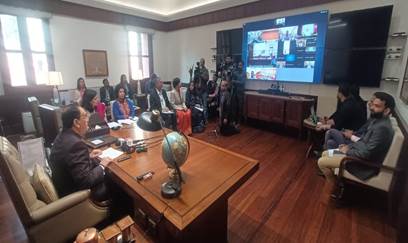
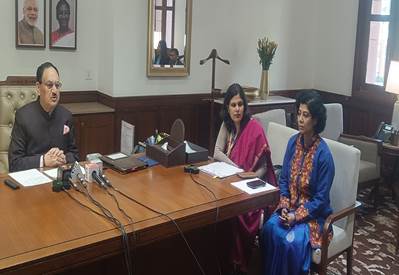
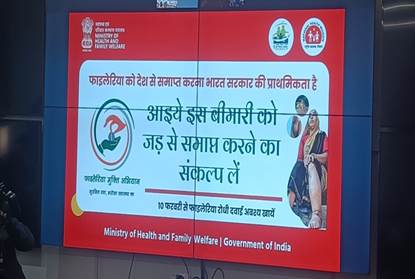
Union Minister for Health and Family Welfare, Shri Jagat Prakash Nadda launched the Annual Nationwide Mass Drug Administration (MDA) Campaign for Lymphatic Filariasis (LF) Elimination through a video conference with State Health Ministers and senior officers of 13 identified LF endemic States, here today. The participants were provided an overview of the campaign, its objectives, the key strategic activities being undertaken, and the critical role of participating states in ensuring high coverage and compliance with the MDA program. The campaign covers 111 endemic districts across 13 States with door-to-door administration of filaria prevention medications.

The State Health Ministers who participated the meeting included Shri Satya Kumar Yadav (Andhra Pradesh), Shri Ashok Singhal (Assam), Shri Shyam Bihari Jaiswal (Chhattisgarh), Shri Rushikesh Ganeshbhai Patel (Gujarat), Shri Irfan Ansari (Jharkhand), Shri Dinesh Gundu Rao (Karnataka), Shri Rajendra Shukla (Madhya Pradesh), Shri Mukesh Mahaling (Odisha), Shri Mangal Pandey (Bihar), Shri Prakashrao Abitkar (Maharashtra) and Shri Brijesh Pathak (Uttar Pradesh).

The MDA campaign is a core component of India’s LF elimination strategy, led by the National Center for Vector Borne Diseases Control (NCVBDC) under the Ministry of Health & Family Welfare. The program focuses on the door-to-door administration of anti-filarial medication, ensuring that every eligible individual consumes the prescribed medicine to stop the transmission of the disease. LF, commonly known as “Hathi Paon,” is a parasitic disease transmitted by infected mosquitoes. It can lead to physical disabilities such as lymphoedema (swelling of the limbs) and hydrocele (scrotal swelling) and impose long-term burdens on affected individuals and families.

Speaking at the event, the Union Health Minister emphasized “An LF-free India is our commitment, and achieving this goal requires the participation of every citizen and with active community involvement. With a shared sense of responsibility, we can eliminate Lymphatic Filariasis, ensuring protection for crores”. “Under the able leadership of our Hon’ble Prime Minister, Shri Narendra Modi ji, this campaign will be driven by the spirit of Jan Bhagidari, turning this into a Jan Andolan and with active community participation and a sense of collective ownership, India can eliminate Lymphatic Filariasis, ensuring that millions are protected from this disease”, he reaffirmed.


Noting that Lymphatic Filariasis incapacitates people and deteriorates their quality of life, Shri Nadda called for the implementation of a five-pronged strategy to ensure that the disease is eliminated much ahead of the Sustainable Development Goal of 2030. He emphasized the importance of ensuring that no one is left out during the MDA campaign which takes place twice a year in 111 districts in 13 states. He stated, “From February 10 onward, these medicines will be made available free of cost to a population of over 17.5 crore across endemic districts. It is imperative that residents in these areas consume the medicines, protecting themselves and their families from this debilitating disease.” Highlighting the importance of achieving high coverage, he underlined, “the endemic districts must ensure that over 90% of the eligible population consume anti-filaria medicines. Our collective commitment and determination will help transform lives and ensure a future free from Lymphatic Filariasis.”

Shri Nadda urged the States/UTs to monitor the campaign at a state level to ensure early diagnosis of affected people. He also called for the personal involvement of the political and administrative leadership at the identified state/district levels for the same.

The Union Minister emphasized the importance of adopting a whole-of-government approach by engaging various ministries and departments to support campaign activities. He highlighted that this integrated approach, coupled with high-level advocacy across allied ministries, would foster intersectoral convergence.

Shri Nadda urged states to implement effective IEC activities to increase awareness among people. He called for engaging digital technologies for wider reach. On this note, he highlighted the good work done by UP and Odisha and appreciated them using digital technologies effectively.

He underscored the importance of political involvement of the State Health Ministers. He exhorted them to involve other elected representatives, particularly Members of Parliament and Legislative Assemblies and Councils, as well as Panchayati Raj Institutions, and encourage their active participation in mobilizing communities to ensure the effective implementation of MDA activities.

Shri Nadda stated that efforts are underway to integrate MMDP services fully in Ayushman Arogya Mandir (AAM) facilities for access to better self-care and approximately 50% lymphodema cases receive Morbidity Management and Disability Preventaion (MMDP) kits annually. He stated that under NHM, there is provision for hydrocelectomy surgeries and PMJAY scheme also has option of hydrocelectomy for the beneficiaries. He informed that close to 50% hydrocele surgeries were conducted in endemic states in 2024. He highlighted that through these efforts, Arogya Mandirs would help in reducing the burden of LF, allowing affected individuals to lead healthier lives and promoting the vision of a disease-free, developed Viksit Bharat.

The Union Health Minister concluded his address by reiterating the importance of effectively managing this disease which has a high mortality. Noting that this is a last mile challenge, he urged health workers to work in targeted areas from the ground level in a focused manner. “India has and will continue to remain steadfast in its commitment to eliminate Lymphatic Filariasis. Our resolve is to achieve that target by 2027”, he stated.

About MDA:

The MDA campaign, will cover 111 endemic districts across 13 states—Andhra Pradesh, Assam, Bihar, Chhattisgarh, Gujarat, Jharkhand, Karnataka, Kerala, Madhya Pradesh, Maharashtra, Odisha, Uttar Pradesh, and West Bengal. This campaign reaffirms the government’s unwavering commitment to eliminating Lymphatic Filariasis through comprehensive prevention strategies, enhanced awareness, and ensuring widespread compliance with MDA.

The Mass Drug Administration (MDA) campaign involves the supervised administration of a combination of anti-filarial medicines to all eligible individuals in LF-endemic areas, regardless of whether they show symptoms. The medication regimen includes:

  • Double Drug Regimen (DA): Diethylcarbamazine Citrate (DEC) and Albendazole
  • Triple Drug Regimen (IDA): Ivermectin, Diethylcarbamazine Citrate (DEC), and Albendazole

The goal of MDA is to reduce the spread of LF by eliminating the microscopic filarial parasites present in the bloodstream of infected individuals, thus preventing further transmission by mosquitoes. While the MDA medication is extremely safe and effective, it should not be consumed on an empty stomach. The following groups should not consume the drugs:

– Children below 2 years of age

– Pregnant women

– Seriously ill individuals

All other eligible individuals should consume the medicine in the presence of a trained health worker to ensure proper consumption and avoid wastage or misuse.

Smt. Punya Salila Srivastava, Union Health Secretary; Smt. Aradhana Patnaik, Addl. Secretary and MD (NHM), Health Ministry; senior officials of the Union Health Ministry and Additional Chief Secretary, Principal Secretary and MD (NHM) from states were present in the meeting.

Dr. Jitendra Singh today launched India’s first indigenous Automated Bio Medical Waste Treatment Plant at AIIMS New Delhi

| Published on:

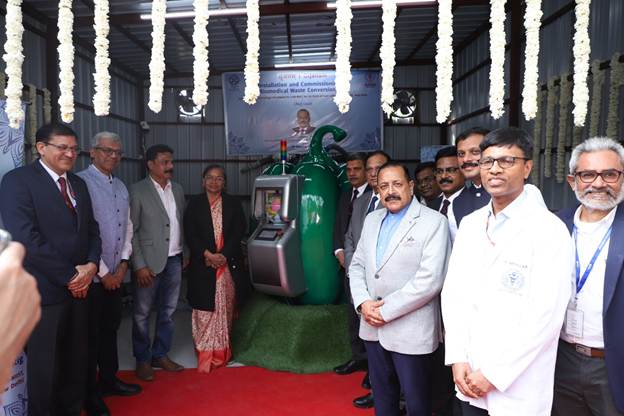
Union Minister Dr. Jitendra Singh today launched India’s first indigenous Automated Bio Medical Waste Treatment Plant at AIIMS New Delhi.

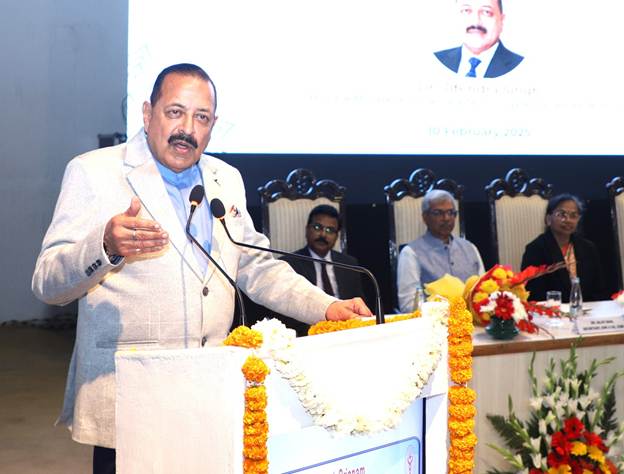
The Automated Biomedical Waste Treatment Rig, named “Sṛjanam,” was officially dedicated to the nation by the Minister at a ceremony held in the AIIMS auditorium. Following the ceremony, he, accompanied by Director General of CSIR Dr. N. Kalaiselvi and Director of AIIMS Dr. M. Srinivas, walked to the site within the AIIMS premises where the machinery had been installed and formally switched it on.

This innovative, environmentally friendly technology, developed by CSIR-NIIST (National Institute for Interdisciplinary Science and Technology), offers a significant advancement in the sustainable management of biomedical waste.

Speaking on the Commissioning, Minister of State (Independent Charge) Science & Technology; MoS PMO, Personnel, Public Grievances, Pensions, Atomic Energy and Space, Dr Jitendra Singh called for a paradigm shift from ‘Waste to Wealth’ and emphasized the importance of sustainability and environmental concerns. He noted that India’s economy has transitioned from being part of the fragile five to a member of the First Five and is poised for continued growth. He highlighted the significance of the new biomedical waste treatment rig, which is set to revolutionize waste management in healthcare facilities.

The “Sṛjanam” rig can disinfect pathogenic biomedical waste such as blood, urine, sputum, and laboratory disposables, without the use of costly and energy-intensive incinerators. Additionally, the rig imparts a pleasant fragrance to the otherwise foul-smelling toxic waste. With a daily capacity of 400 kg, the equipment is capable of handling 10 kg of degradable medical waste per day in the initial phase. Once validated, this technology will be ready for full-scale implementation after receiving approval from relevant authorities.

With the growing demand for better waste disposal solutions, the “Sṛjanam” rig offers a safer and more efficient approach, eliminating the risks associated with human exposure to harmful waste and minimizing the chances of spills and accidents. The technology has been third-party validated for its antimicrobial action, and studies have shown that the treated material is safer than organic fertilizers like vermicompost.

Dr. Jitendra Singh lauded CSIR-NIIST for its innovative and cost-effective solution to dispose of pathogenic biomedical waste in an eco-friendly manner. He referenced the 2023 annual report of the Central Pollution Control Board (CPCB), which indicated that India generates 743 tonnes of biomedical waste daily, presenting a significant challenge in its safe and proper disposal. The new technology addresses this issue and presents an environmentally responsible alternative to traditional incineration methods.

Dr. Jitendra Singh further explained that improper segregation, open dumping, open burning, and inadequate incineration of biomedical waste lead to severe health hazards, including the release of carcinogens and particulate matter. He emphasized the need for effective waste management to prevent the spread of infectious diseases and reduce the risk of antimicrobial resistance.

Dr. Jitendra Singh also acknowledged the efforts of Prime Minister Narendra Modi, whose leadership continues to drive India’s progress in science, technology, and green initiatives. He praised Shri. Tanmay Kumar, Secretary, Ministry of Environment, Forest, and Climate Change (MoEFCC), for his prompt actions in securing the necessary clearances for this project.

In his address, Dr. Singh mentioned other technological milestones achieved by India, including the first indigenous DNA vaccine, the development of India’s first HPV vaccine to combat cervical cancer, and rapid advancements in space technology. He also highlighted India’s breakthrough in pharmaceuticals with the creation of the indigenous antibiotic ‘Nafithromycin’ and India’s first gene therapy trial for hemophilia, supported by the Department of Biotechnology (DBT).

Vice-President of CSIR, Dr. Jitendra Singh, recalled the ‘One Week One Lab’ initiative, which aims to raise awareness about CSIR’s groundbreaking projects, such as the first hydrogen buses developed by NCL Pune, off-season tulips developed by CSIR Palampur, the 108-petal lotus, and more.

The Science and Technology Minister also emphasized the priorities of the government during its first 100 days, which include the approval of India’s first Bio E3 policy, the sanctioning of 1000 crores for Viability Gap funding for space startups, 2000 crores for Mission Mausam, and 50,000 crores for the Anusandhan National Research Foundation (NRF). Furthermore, he highlighted the recent Union Budget, which proposes 20,000 crores for Bharat Small Modular Reactors (SMRs).

Dr. Jitendra Singh concluded by urging for increased academic collaboration between institutions and proposed making postgraduate students co-guides in exchange programs, fostering synergy and shared learning. He emphasized the government’s unwavering support for science, technology, and innovation under the leadership of PM Modi. He said “This initiative aligns with the government’s vision of a “Viksit Bharat” by 2047, and with continued progress in innovation and sustainable technologies, India is set to become a global leader in environmental and healthcare solutions”.

The ceremony was attended by distinguished dignitaries including Dr. V. K. Paul, Member, Niti Aayog, Dr. Rajiv Bahl, Secretary, DHR and DG, ICMR, Tanmay Kumar IAS, Secretary MoEFCC, Dr. N. Kalaiselvi, Secretary DSIR and DG, CSIR, and Dr. M. Srinivas, Director, AIIMS.