Union Cooperation Minister inaugurates the “Workshop on Sustainability and Circularity in Dairy Sector”

| Published on:

Union Home Minister and Minister of Cooperation Shri Amit Shah inaugurated the “Workshop on Sustainability and Circularity in Dairy Sector” in New Delhi today. Sustainability, efficiency and circularity of resources in the dairy sector will help realize Prime Minister Shri Narendra Modi’s vision of ‘Sahkar se Samriddhi’.

In his address, Union Home Minister and Minister of Cooperation Shri Amit Shah said that today when we are moving towards the White Revolution 2.0, the importance of sustainability and circularity takes precedence. He said that apart from what we have achieved so far with the help of first White Revolution, sustainability and circularity in dairy sector are still to be fully accomplished. Shri Shah said that the main goal of White Revolution 2.0 is sustainability and circularity and we need to take care of it from the very beginning of White Revolution 2.0.

Shri Amit Shah said that India’s dairy sector plays a huge role in the country’s as well as rural development and in making landless and small farmers prosperous. He said that it has taken care of our country’s nutrition, contributed in making the country the world’s number one milk producer and also provided additional income to farmers apart from agricultural income.

Union Minister of Cooperation said that Prime Minister Shri Narendra Modi has set three goals for us, viz. to become a 5 trillion-dollar economy, to be the third largest economy in the world, and become a fully developed country in 2047. He said that to achieve these three goals, we will have to develop a mechanism to explore and utilize all possibilities in every sector to the fullest. He said that the dairy sector has today taken a visionary initiative to spread good practices related to circularity to 250 milk producer associations.
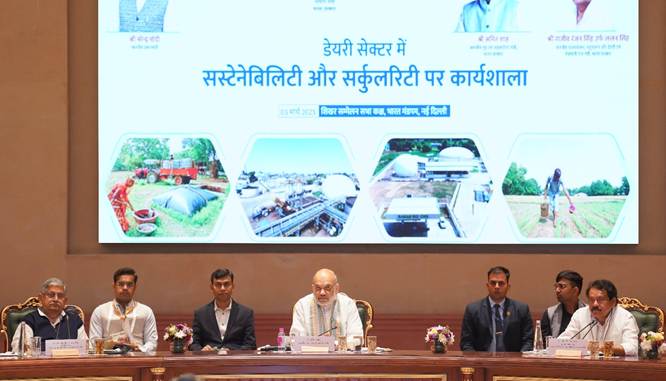
Shri Amit Shah said that India’s agriculture system is based on small farmers and their migration from villages to cities is associated with their prosperity. He said that dairy is an important option to make small farmers prosperous along with overcoming the problem of rural migration. Shri Shah said that this seminar will prove to be very useful to work with a holistic approach to explore all the possibilities of the dairy sector to the fullest.

Union Home Minister and Minister of Cooperation said that under the leadership of Prime Minister Shri Narendra Modi, in the last 10 years, a good beginning has been made to bring prosperity in agriculture in the country. He said that farmers have got the confidence and means also to go from village to global, their faith is also increasing on collective success in groups through cooperatives. Shri Shah said that, at present, the emphasis should be given on setting up the entire chain from farm to factory in the village itself. He added that to uplift marginal farmers, it is crucial to map a journey from villages to the global stage, fostering confidence through collective efforts and establishing a comprehensive farm-to-factory value chain. He said that the Modi Government is realizing the mantra of profit for people along with the three principles of Sahkar Se Shakti, Sahkar Se Sahyog and Sahkar Se Samriddhi.

Shri Amit Shah said that the objective of cooperatives is to earn profit as well as to put “people first”. He said that we can realize the principle of “profit for people” only through cooperatives. He said that today the release of the “Margdarshika” on circularity in the dairy sector, NDDB’s schemes for financial assistance to small, large and compressed biogas projects and the launch of NDDB and Sustain Plus project have also taken place.

Union Minister of Cooperation said that to fully utilize organic manure, the district level milk unions and rural dairies will have to bring those farmers also in the net of cooperation who are not yet connected with the cooperative. He said that many farmers give milk to private dairies, but the cooperative sector should manage their dung, which will solve our minimum viability problem and we will be successful in attracting the farmers who are moving towards the private sector back to the cooperative sector. Shri Shah said that a program should be made to successfully implement the successful experiments done for gas production as a model in 250 district milk producing unions with a target of 2 years.

Shri Amit Shah said that we have also started “Cooperation Amongst Cooperatives” to open all accounts in cooperative banks and today 93 percent of the institutions in Gujarat have accounts in cooperative banks. He said that this has automatically made funds available for cooperatives and banks have also become stronger. He said that the Micro ATM model in Gujarat is providing unprecedented benefits to the livestock farmers of the state, NABARD should take this model to every district of the country. Shri Shah said that our effort should be that all machines, from measuring fat to all dairy products, should be manufactured in India. He said that carbon credit should be made a part of our system and a scientific system should be made on the cooperative model to ensure that it reaches the farmers.

Union Home Minister and Minister of Cooperation said that today there are 23 state level unions in the country but we should envision forming a state level union in every state and union territory under White Revolution 2.0. He said that in White Revolution 2.0, we can aim to form milk unions in 80 percent of the districts of the country and increase the number of marketing dairies from the current 28 to 3 times in number. Shri Shah said that in the cooperative dairy sector, more than 75 per cent of the money coming from the consumer goes directly to the farmers. He said that in the corporate sector, farmers get only 32 per cent of the money. He said that we should aim to reduce this profit gap between farmers and companies for every farmer in the country. Along with this, we should also try to bring 16 crore tonnes of cow dung for the benefit of cooperatives.

Shri Amit Shah said that there has been huge reduction in the emission of Methane and Carbon dioxide and its 100 per cent carbon credit should go to the farmers in their bank accounts and this is the real meaning of circularity. He said that the dairy cooperative sector also works a lot in terms of providing employment to women and today 72 per cent women are working in the cooperative dairy sector. Shri Shah said that this proves that in the cooperative dairy sector, work is taking place for the employment and empowerment of women.
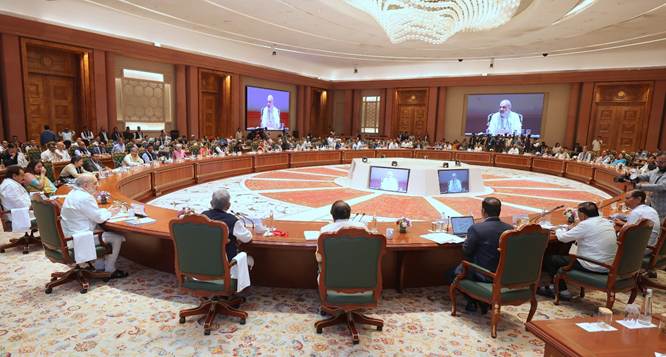
The workshop was organized by the Department of Animal Husbandry and Dairying (DAHD), Government of India in collaboration with National Dairy Development Board (NDDB). Union Minister for Fisheries, Animal Husbandry and Dairying Shri Rajiv Ranjan Singh alias Lallan Singh, Union Ministers of State, Ministry of Fisheries, Animal Husbandry and Dairying, Professor S.P. Singh Baghel and Shri George Kurien, Smt. Alka Upadhyay, Secretary, Ministry of Fisheries, Animal Husbandry and Dairying and many other dignitaries attended the event.

Union Health Minister visits Rural Health Training Center, Najafgarh

| Published on:

Union Health Minister, Shri Jagat Prakash Nadda visited the Rural Health Training Center (RHTC), Najafgarh and Ayushman Arogya Mandir, Palam, today. Shri Ramvir Singh Bidhuri, Member of Parliament (Lok Sabha) from South Delhi and Smt. Kamaljeet Sehrawat, Member of Parliament (Lok Sabha) from West Delhi was also present.

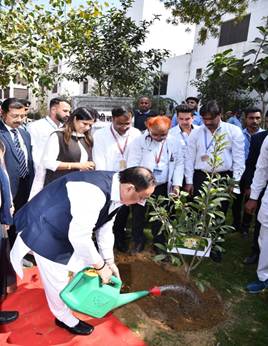
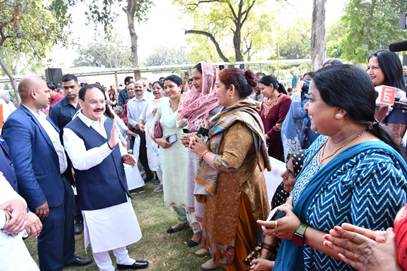
Shri Nadda interacted with patients and medical staff in both the health centres. He also planted a sapling in both the campuses under the “Ek Ped Maa ke Naam” initiative.

The Union Health Minister also reviewed the progress report of RHTC and approved the retention of PHCs at Najafgarh, Ujwa, and Palam under Government of India and directed NQAS & IPHS certification within 3 months and full operationalization of the RHTC hospital within 6 months. Emphasizing skill development, he highlighted RHTC’s role as a model for integrated primary, secondary, AYUSH, and training services and assured the support of the Centre in augmenting the health facilities of the institute.

Background:

The Rural Health Training Center (RHTC) in Najafgarh, New Delhi under Ministry of Health & Family Welfare, Government of India, has been serving as a key institution for primary and secondary healthcare, along with skill development in the field of health. Established in 1937 as a health centre and upgraded over the years across 3 campus (Najafgarh, Palam and Ujwa), the RHTC is now being developed as a model integrated centre for Primary, Secondary, AYUSH, and Skill Development and in future Tertiary care.

Najafgarh is set to witness a significant transformation in healthcare services with the expansion of primary services, already introduced secondary health care servicesThe Ayushman Arogya Mandirs (AAM) will be NQAS accredited reinforcing Government’s commitment to deliver standardized, high-quality healthcare services at doorstep.

To bridge the gap between primary and tertiary healthcare, RHTC Hospital has been developed as a 183-bedded general hospital. It is a unique healthcare setting providing primary, secondary care and AYUSH services are provided in the same campus at present. This hospital is poised to deliver quality medical treatment, emergency care, and specialized healthcare interventions, ensuring that residents have access to advanced medical facilities closer to home.

RHTC is embracing IT-enabled healthcare solutions under the Ayushman Bharat Digital Mission (ABDM) to create a digitally empowered healthcare ecosystem, enhancing efficiency, accessibility, and patient-centric care.

To support the growing healthcare infrastructure, significant efforts are being made in skill development and training. The existing ANM School will be upgraded to develop world class frontline healthcare workers. The ANM course started in 1985 with 20 students per batch, diploma course for girls. An ANM school building was also established in 1985. As on date, 44 students are selected annually, totaling 88 students at a time. RHTC conducts online combined entrance exam every year for RHTC (44) & Lady Reading Health School (LRHS) (44), in 2024, 672 children applied for 88 seats. Post of principal & 8 Sister tutor being created for ANM school.

The curriculum of Nursing requires mandatory rural community posting. RHTC with rural setup, a dedicated community and subcenters fulfills the norms of Delhi Nursing Council for compulsory Internship Program. The courses for which nursing interns come to RHTC and its various branches are ANMs, GNMs, B.Sc. Nursing and M. Sc. Nursing.  A total of 19 colleges with 2821 students were provided internship at RHTC in all its AAM & its community through subcentres.

The strengthening of primary, secondary, and AYUSH services in one campus of Najafgarh reflects a strong commitment of Government of India to public health and community well-being. The initiative of integrating Allopathic facilities, Indigenous AYUSH system with skill development programs, aims to strengthen healthcare accessibility, improve patient outcomes, and create a robust medical workforce for the future.

These facilities will hugely improve the accessibility and availability of the healthcare facilities in and around the Najafgarh area covering people of adjoining districts from Delhi and Haryana.

Smt. Punya Salila Srivastava, Union Health Secretary; Dr. Manashvi Kumar, Joint Secretary, Union Health Ministry; Dr G Kausalya, Director, RHTC and senior officers of the Union Health Ministry were present at the event.

PM addresses the post-budget webinar on agriculture and rural prosperity

| Published on:

The Prime Minister Shri Narendra Modi addressed the post-budget webinar on agriculture and rural prosperity today via video-conferencing. Emphasizing the importance of participation in the post-budget webinar, the Prime Minister thanked everyone for joining the program and highlighted that this year’s budget is the first full budget of the Government’s third term, showcasing continuity in policies and a new expansion of the vision for Viksit Bharat. He acknowledged the valuable inputs and suggestions from all stakeholders before the budget, which were very helpful. He stressed that the role of stakeholders has become even more crucial in making this budget more effective.

“Our resolve towards the goal of Viksit Bharat is very clear and together, we are building an India where farmers are prosperous and empowered”, exclaimed Shri Modi and highlighted that the effort is to ensure no farmer is left behind and to advance every farmer. He stated that agriculture is considered the first engine of development, giving farmers a place of pride. “India is simultaneously working towards two major goals: the development of the agriculture sector and the prosperity of villages”, he mentioned.

Shri Modi highlighted that the PM Kisan Samman Nidhi Yojana, implemented six years ago, has provided nearly ₹3.75 lakh crore to farmers and the amount has been directly transferred to the accounts of 11 crore farmers. He emphasized that the annual financial assistance of ₹6,000 is strengthening the rural economy. He mentioned that a farmer-centric digital infrastructure has been created to ensure the benefits of this scheme reach farmers across the country, eliminating any scope for intermediaries or leakages. The Prime Minister remarked that the success of such schemes is possible with the support of experts and visionary individuals. He appreciated their contributions, stating that any scheme can be implemented with full strength and transparency with their help. He expressed his appreciation for their efforts and mentioned that the Government is now working swiftly to implement the announcements made in this year’s budget, seeking their continued cooperation.

Underlining that India’s agricultural production has reached record levels, the Prime Minister said that 10-11 years ago, agricultural production was around 265 million tons, which has now increased to over 330 million tons. Similarly, horticultural production has exceeded 350 million tons. He attributed this success to the Government’s approach from seed to market, agricultural reforms, farmer empowerment, and a strong value chain. Shri Modi emphasized the need to fully utilize the country’s agricultural potential and achieve even bigger targets. In this direction, the budget has announced the PM Dhan Dhanya Krishi Yojana, focusing on the development of the 100 least productive agricultural districts, he added. The Prime Minister mentioned the positive results seen from the Aspirational Districts program on various development parameters, benefiting from collaboration, convergence, and healthy competition. He urged everyone to study the outcomes from these districts and apply the learnings to advance the PM Dhan Dhanya Krishi Yojana, which will help increase farmers’ income in these 100 districts.

Prime Minister underscored that efforts in recent years have increased the country’s pulse production, however, 20 percent of domestic consumption still relies on imports, necessitating an increase in pulse production. Heremarked that while India has achieved self-sufficiency in chickpeas and mung, there is a need to accelerate the production of pigeon peas, black gram, and lentils. To boost pulse production, it is essential to maintain the supply of advanced seeds and promote hybrid varieties, he stated, stressing on the need to focus on addressing challenges such as climate change, market uncertainty, and price fluctuations.

Pointing out that in the past decade, ICAR has utilized modern tools and cutting-edge technologies in its breeding program, and as a result, over 2,900 new varieties of crops, including grains, oilseeds, pulses, fodder, and sugarcane, have been developed between 2014 and 2024, the Prime Minister emphasized the need to ensure that these new varieties are available to farmers at affordable rates and that their produce is not affected by weather fluctuations. He mentioned the announcement of a national mission for high-yield seeds in this year’s budget. He urged private sector participants to focus on the dissemination of these seeds, ensuring they reach small farmers by becoming part of the seed chain.

Shri Modi remarked that there was a growing awareness about nutrition among people today and underscored that significant investments have been made in sectors such as horticulture, dairy, and fishery products to meet the increasing demand. He mentioned that various programs were being implemented to boost the production of fruits and vegetables, and the formation of the Makhana Board in Bihar has been announced. He urged all stakeholders to explore new ways to promote diverse nutritional foods, ensuring their reach to every corner of the country and the global market.

Recalling the launch of the PM Matsya Sampada Yojana in 2019, aimed at strengthening the value chain, infrastructure, and modernization of the fisheries sector, the Prime Minister stated that this initiative had improved production, productivity, and post-harvest management in the fisheries sector, while the investments in this sector had increased through various schemes, resulting in a doubling of fish production and exports. He underlined the need to promote sustainable fishing in the Indian Exclusive Economic Zone and open seas, and a plan will be prepared for this purpose. Shri Modi urged stakeholders to brainstorm ideas to promote ease of doing business in this sector and start working on them as soon as possible. He also stressed the importance of protecting the interests of traditional fishermen.

“Our Government is committed to enriching the rural economy”, said the Prime Minister and highlighted that under the PM Awas Yojana-Gramin, crores of poor people are being provided with homes, and the Swamitva Yojana has given property owners ‘Record of Rights.’ He mentioned that the economic strength of self-help groups has increased, and they have received additional support. He noted that the Pradhan Mantri Gram Sadak Yojana has benefited small farmers and businesses. Reiterating the goal to create 3 crore Lakhpati Didis, while efforts have already resulted in 1.25 crore women becoming Lakhpati Didis, Shri Modi emphasized that the announcements in this budget for rural prosperity and development programs have created numerous new employment opportunities. Investments in skilling and technology are generating new opportunities, he added. The Prime Minister urged everyone to discuss how to make the ongoing schemes more effective. He expressed confidence that positive results will be achieved with their suggestions and contributions. He concluded by stating that active participation from everyone will empower villages and enrich rural families. He expressed confidence that the webinar will help ensure swift implementation of the schemes of the budget. He urged all the stakeholders involved to work in unison to achieve the targets of the budget.

PM participates in the NXT Conclave

| Published on:

The Prime Minister Shri Narendra Modi participated in the NXT Conclave in the Bharat Mandapam, New Delhi today. Addressing the gathering, he extended his heartfelt congratulations on the auspicious launch of NewsX World. He highlighted that the network includes channels in Hindi, English, and various regional languages, and today, it is going global. He also remarked on the initiation of several fellowships and scholarships, extending his best wishes for these programs.

Remarking that he had attended similar media events in the past, but NewsX World had set a new trend today, Shri Modi extended special congratulations for this achievement. He highlighted that media events of this nature are a tradition in the country, but NewsX World has given it a new dimension. He added that their summit focused on discussion of policies and was policy-centric as compared to politics-centric. He added that this summit had given great importance to discussions and deliberations by many dignitaries from across various fields. He acknowledged that they have worked on an innovative model, and expressed hope that other media houses will enrich this trend and template in their own innovative ways.

“The world is keenly watching 21st-century India”, exclaimed the Prime Minister. He said that people from around the globe want to visit and understand India. He emphasized that India is a country where positive news is being created, new records are being set daily, and something new is happening every day. Mentioning the recent completion of the Maha Kumbh in Prayagraj on February 26th, which amazed the world with crores of people bathing in a temporary city along the riverbank, Shri Modi said, “the world is witnessing India’s organizing and innovating skills”. He pointed out that India is manufacturing everything from semiconductors to aircraft carriers and that the world wants to learn about India’s success in detail and expressed that this is a significant opportunity for NewsX World.

Highlighting that a few months ago, India conducted the world’s largest election, Shri Modi said that for the first time in 60 years, a Government in India has returned to power for the third consecutive term. He emphasized that this public trust is based on India’s numerous achievements over the past 11 years. He expressed confidence that the new channel will bring India’s real stories to the world without any bias, showcasing the country as it truly is.

“Few years ago, I had presented the vision of ‘Vocal for Local’ and ‘Local for Global’ to the nation and today, we are seeing this vision turn into reality”, exclaimed the Prime Minister. He emphasized that India’s AYUSH products and yoga have gone from local to global and noted that India’s superfood, makhana, is also gaining global recognition, along with millets, referred to as “Shri Anna.” He mentioned that his friend, Tony Abbott, the former PM of Australia experienced Indian millets first hand at Delhi Haat and enjoyed the millet dishes, which pleased him.

Stressing that not only millets but also India’s turmeric has gone from local to global, with India supplying over 60 percent of the world’s turmeric, Shri Modi remarked that India’s coffee has also achieved global recognition, making India the seventh-largest coffee exporter in the world. He emphasized that India’s mobile phones, electronic products, and medicines are gaining global recognition. He noted that India is leading several global initiatives. Mentioning the recent opportunity to attend the AI Action Summit in France, where India was the co-host and will now take on the responsibility of hosting it, the Prime Minister highlighted India’s successful G-20 summit during its presidency, where the India-Middle East-Europe Corridor was introduced as a new economic route. He mentioned that India has given a strong voice to the Global South and prioritized the interests of island nations. To address the climate crisis, India has presented the Mission LiFE vision to the world, he added. Shri Modi also mentioned India’s leadership in initiatives such as the International Solar Alliance and the Coalition for Disaster Resilient Infrastructure. He expressed his happiness that as many Indian brands are going global, India’s media is also understanding and embracing this global opportunity.

Remarking that for decades, the world referred to India as its back office, the Prime Minister said, “today, India is becoming the new factory of the world”. He emphasized that India is not just a workforce but a world-force and highlighted that the country, which once imported many products, is now emerging as an export hub. He noted that farmers, who were once limited to local markets, are now reaching global markets with their produce. Shri Modi mentioned the increasing global demand for Pulwama’s snow peas, Maharashtra’s Purandar figs, and Kashmir’s cricket bats. He emphasized that India’s defense products showcase the strength of Indian engineering and technology to the world. He pointed out that from electronics to the automobile sector, the world has witnessed India’s scale and capability. “India is not only providing products to the world but is also becoming a trusted and reliable partner in the global supply chain”, he added.

“India’s leadership in various sectors is the result of years of hard work and systematic policy decisions”, said Shri Modi and highlighted the progress made over the past ten years, where incomplete bridges and stalled roads have now transformed into dreams moving forward at a new pace with good roads and excellent expressways. He emphasized that reduced travel time and costs have provided the industry with an opportunity to decrease logistics turnaround time, benefiting the automobile sector significantly. He noted the increased demand for vehicles and the encouragement of EV production, adding that today, India has emerged as a major automobile producer and exporter.

Prime Minister remarked that a similar transformation has been observed in electronics manufacturing. Over the past decade, electricity has reached more than 2.5 crore families for the first time, leading to increased demand and production of electronic equipment, he added. He highlighted that affordable data has boosted the demand for mobile phones, and the increased availability of services on mobile phones has led to higher consumption of digital devices. He mentioned that programs like PLI Schemes have turned this demand into an opportunity, making India a major electronics exporter. Emphasising that India’s ability to set and achieve large targets is rooted in the mantra of “Minimum Government, Maximum Governance,” which promotes efficient and effective governance without Government interference or pressure, Shri Modi provided an example of how the Government had abolished around 1,500 obsolete laws over the past decade, many of which were enacted during British rule. One such law was the Dramatic Performance Act, which allowed the arrest of people dancing in public places. This law was in effect for 70 years after independence and was abolished by the current Government. The Prime Minister also mentioned the example of bamboo, which is the lifeline of tribal areas and the North East. Previously, cutting bamboo could lead to arrest, as it was classified as a tree. The Government has now changed this decades-old law, recognizing bamboo as grass. He remarked at the silence of previous leaders and the Lutyens’ elite on such outdated laws and emphasized the current Government’s efforts to remove them.

Mentioning that ten years ago, filing an ITR was a difficult task for an ordinary person but today, it can be done in a few moments, and refunds are credited to accounts within days, the Prime Minister highlighted that the process of simplifying income tax laws is ongoing in Parliament. He added that income up to ₹12 lakh has been made tax-free, benefiting the salaried class significantly and emphasized that the budget has helped young professionals fulfill their aspirations and increase their savings. Shri Modi stated that the goal is to provide ease of living, ease of doing business, and open skies for the country’s people and their aspirations. He noted that many startups are benefiting from geospatial data, which previously required government permission to create maps. The government has changed this, allowing startups and private companies to make excellent use of this data, he added.

Highlighting that India, the land that gave the world the concept of zero, is now becoming the land of infinite innovations, the Prime Minister stressed that India was not only innovating but also “Indovating,” meaning innovating the Indian way. He highlighted that India is creating solutions that are affordable, accessible, and adaptable, and offering these solutions to the world without gatekeeping. He mentioned that when the world needed a secure and cost-effective digital payment system, India developed the UPI (Unified Payments Interface) system. Shri Modi said that Professor Carlos Montes was impressed by the people-friendly nature of UPI technology and mentioned that today, countries like France, UAE, and Singapore are integrating UPI into their financial ecosystems. He also mentioned that many countries are signing agreements to connect with India’s digital public infrastructure, India Stack. During the COVID-19 pandemic, India’s vaccine demonstrated the country’s quality healthcare solutions to the world. The Prime Minister highlighted that the Aarogya Setu app was made open source to benefit the world. He emphasized that India is a major space power and is helping other countries achieve their space aspirations. He stated that India is working on AI for public good and sharing its experience and expertise with the world.

Lauding the ITV Network for launching numerous fellowships today, Shri Modi emphasized that the youth of India are the biggest beneficiaries and stakeholders of a developed India, making them a top priority. He highlighted that the National Education Policy has provided children with the opportunity to think beyond textbooks. He added that from middle school, children are learning coding and preparing for fields like AI and data science. Talking about the Atal Tinkering Labs, which  are giving children hands-on experience with emerging technologies. He said this year’s budget has announced the creation of 50,000 new Atal Tinkering Labs.

Shri Modi remarked that in the world of news, various agencies’ subscriptions help in better news coverage. Similarly, students in the field of research need access to as many information sources as possible. He added that previously, they had to subscribe to different journals at high costs but the Government had relieved researchers of this concern by introducing the “One Nation, One Subscription” initiative, ensuring free access to renowned journals worldwide for every researcher in the country. The government is set to spend over ₹6,000 crore on this initiative, he said. Emphasising that the Government was ensuring the best research facilities for every student, whether in space exploration, biotech research, or AI, the Prime Minister highlighted that India’s children are emerging as future leaders. Mentioning about the remarkable experiences of Dr. Brian Greene’s meeting with IIT students, and astronaut Mike Massimino’s meeting with Central School students, the Prime Minister expressed confidence that a significant future innovation will come from a small school in India.

Emphasizing that India’s aspiration and direction are to see its flag waving on every global platform, the Prime Minister remarked that this is not the time for small thinking or small steps. He expressed happiness that as a media institution, NewsX World has understood this sentiment. He highlighted that ten years ago, the focus was on reaching different states within the country, but today, the network has taken the bold step of going global. Shri Modi stated that this inspiration and resolve should be present in every citizen and entrepreneur. He shared his vision of seeing an Indian brand in every market, drawing room, and dining table worldwide. He emphasized that “Made in India” should become the world’s mantra. The Prime Minister expressed his dream that people think of “Heal in India” when they are ill, “Wed in India” when they plan a wedding, and prioritize India for travel, conferences, exhibitions, and concerts. He highlighted the importance of fostering this positive attitude and strength within ourselves and acknowledged the significant role of the network and channel in this endeavor. He stated that the possibilities are endless, and it is now up to us to turn them into reality with courage and determination.

“India is moving forward with the resolve to become a developed nation in the next 25 years”, emphasised Shri Modi and concluded by encouraging the ITV network to take a similar resolve to establish itself on the world stage, expressing confidence in their success.

The Founder of ITV Media Network and Rajya Sabha MP, Shri Karthikeya Sharma, Former Prime Minister of Australia, H.E. Mr. Tony Abbott, Former President and Prime Minister of Sri Lanka, H.E. Mr. Ranil Wickremesinghe were present among other dignitaries at the event.
Union Home Minister chairs high-level review meeting on the security situation of Manipur in New Delhi

| Published on:

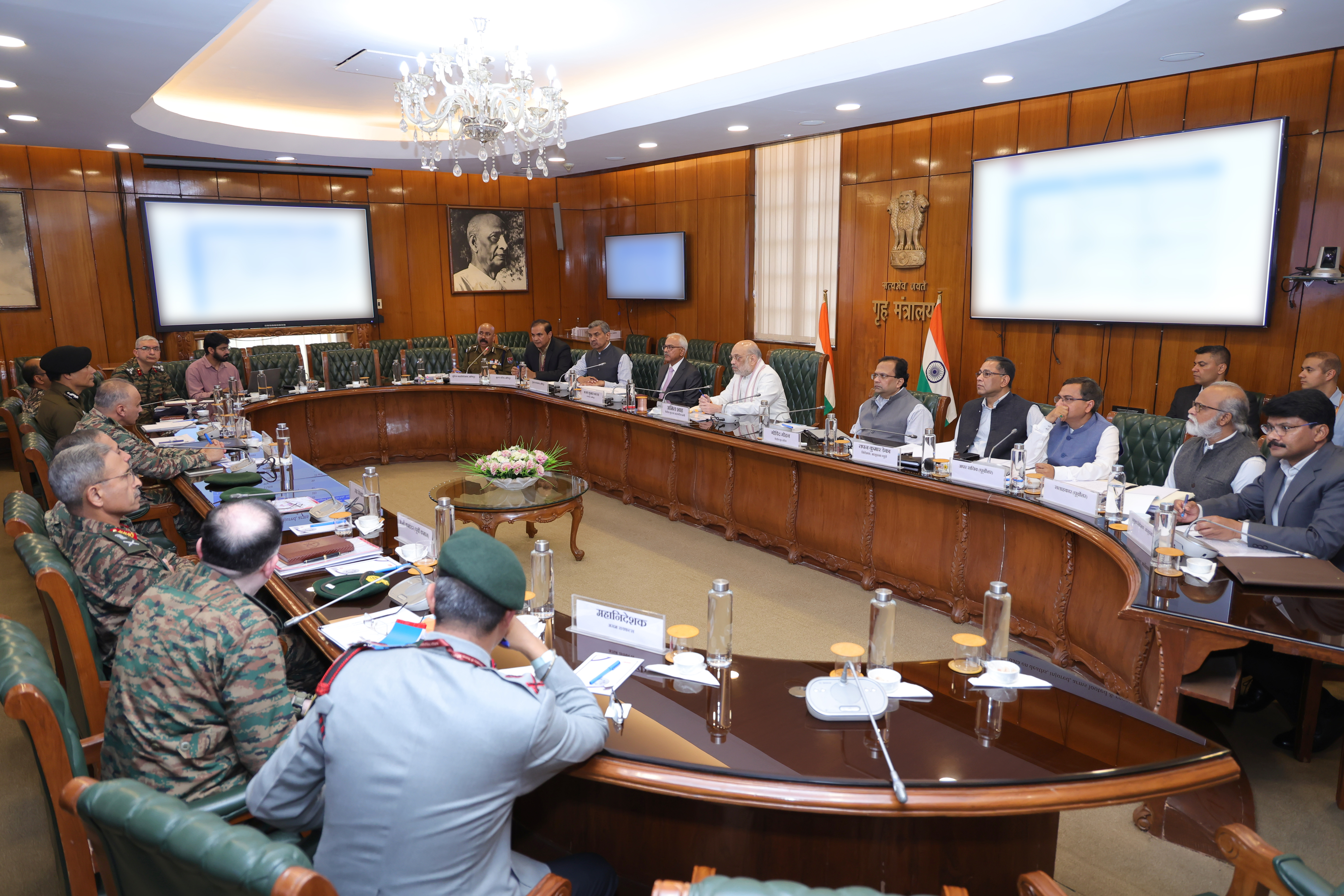
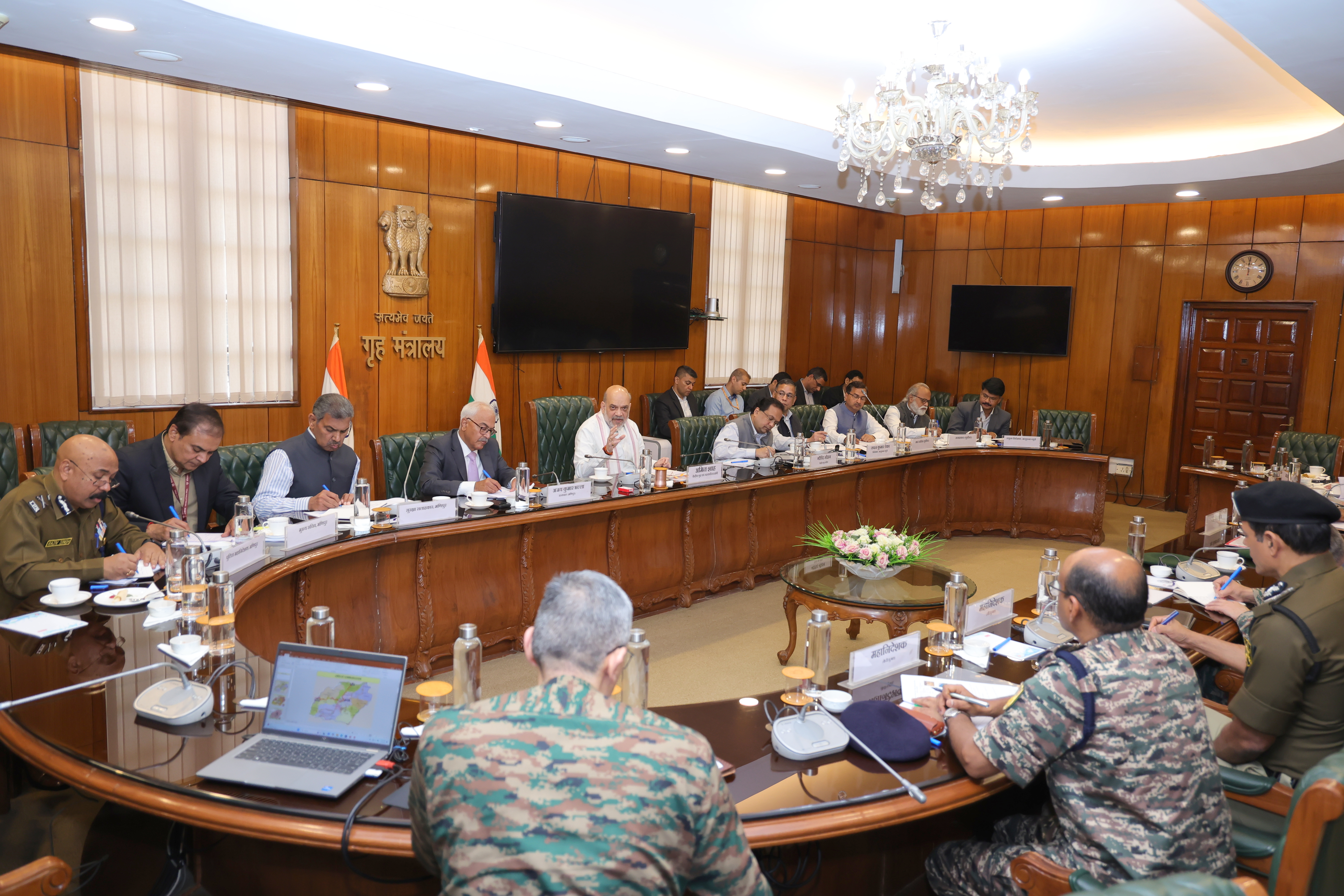
Union Home Minister and Minister of Cooperation, Shri Amit Shah, chaired a high-level review meeting on the security situation of Manipur in New Delhi today. The meeting was attended by the Governor of Manipur, Union Home Secretary, Director, Intelligence Bureau, Deputy Chief of Army Staff, Army Commander of the Eastern Command, Directors General of Border Security Force (BSF), Central Reserve Police Force (CRPF) and Assam Rifles, Security Advisor, Manipur and senior officers of the Ministry of Home Affairs (MHA), Army and Manipur administration.

During the meeting, Union Home Minister and Minister of Cooperation Shri Amit Shah said that the Government of India, under the leadership of Prime Minister Shri Narendra Modi, remains fully committed to restoring lasting peace in Manipur and is providing all necessary assistance in this regard.

Union Home Minister Shri Amit Shah directed that free movement to be ensured for people on all roads in Manipur from March 8, 2025. He also directed that strict action should be taken against anyone attempting to create obstructions.

Shri Amit Shah directed that the fencing work on both sides of the designated entry points along Manipur’s international border should be completed at the earliest. He said that to make Manipur drug-free, the entire network involved in the drug trade should be dismantled.

Piyush Goyal emphasises mutual funds industry’s role in India’s growth at AMFI Summit 2025

| Published on:

The mutual funds industry has played a pivotal role in India’s growth story by encouraging financial literacy and taking innovative financial ideas to the industry and the investors. This was stated by Union Minister of Commerce & Industry Shri Piyush Goyal during his address as a Chief Guest at the Association of Mutual Funds in India (AMFI) Mutual Fund Summit 2025 today in Mumbai.

The Minister further complimented the domestic investors for filling the gap created by the foreign institutional investors (FIIs) post-Covid. “Collective investment methods like SIPs along with domestic investors supported the market. They helped in spreading financial awareness and financial products to every part of the country, he said.

Highlighting the importance of safeguarding the importance of small investors and other key stakeholders, Shri Goyal urged the industry leaders to reflect on ways to minimise volatility in the stock market. Large fund inflows, compulsions of the market to deploy capital, fear among investors on missing out on attractive stocks brought crises among investors during rightsizing. There has been a lot of misinformation flow about the unending ability of the market to go on a one-way street, he noted, and described the unpredictability of the stock market as a wakeup call for the industry and its small investors.

AMFI should also become conscious of its duties by isolating misguided investors from the rest. Companies with mettle have maintained reasonable prices at the stock market during recent turbulence, he noted. He said that duties and responsibilities of the industry towards the market are larger than the profitable returns investors enjoy in the short term. He also added that government spending and private capex are showing signs of comeback.

Elaborating on the responsibilities of the mutual funds industry towards its investors, the Minister urged the participants to be more diligent in cautioning investors from taking risks. He hoped that initiatives as such will spur India’s growth story for the next 22 years. Shri Goyal urged the industry to support and handhold investors, look at financial inclusion as a collective responsibility and take up financial education as its duty.

Shri Goyal asserted that assets under management (AUM) in the mutual funds industry at nearly Rs 70 lakh crore and soon to be Rs 100 lakh crore will dominate the market and domestic investors will determine India’s future not the foreign institutional investors. He also highlighted the need for the industry as wealth creators to have a fair and organised market.

Leaders’ Statement: Visit of President of the European Commission and EU College of Commissioners to India

| Published on:

Prime Minister Shri Narendra Modi and President of the European Commission Ms. Ursula von der Leyen affirmed that the EU-India Strategic Partnership has delivered strong benefits for their peoples and for the larger global good. They committed to raise this partnership to a higher-level, building upon 20 years of India-EU Strategic Partnership and over 30 years of India-EC Cooperation Agreement.

President von der Leyen was on her landmark official visit as she led the European Union College of Commissioners to India on 27-28 February 2025. This is the first visit of the College of Commissioners outside the European continent since the start of their new mandate and also the first such visit in the history of India-EU bilateral ties.

As the two largest democracies and open market economies with diverse pluralistic societies, India and EU underscored their commitment and shared interest in shaping a resilient multipolar global order that underpins peace and stability, economic growth and sustainable development.

The leaders agreed that shared values and principles including democracy, rule of law, and the rules-based international order in line with the purposes and principles of the UN Charter make India and the EU like-minded and trusted partners. The India-EU Strategic partnership is needed now, more than ever, to jointly address global issues, foster stability, and promote mutual prosperity.

In this context, they stressed the importance of intensifying cooperation between India and Europe in trade and de-risking of supply chains, investment, emerging critical technologies, innovation, talent, digital and green industrial transition, space and geospatial sectors, defence and people-to-people contacts. They also highlighted the need to cooperate on tackling common global challenges, including climate change, the governance of Artificial Intelligence, development finance, and terrorism in an interdependent world.

The two leaders welcomed the progress made by the second ministerial meeting of the India-EU Trade and Technology Council (TTC) that took place during the visit in fostering deeper collaboration and strategic co-ordination at the intersection of trade, trusted technology, and green transition.

They also welcomed the specific outcomes emerging from deliberations conducted between the EU College of Commissioners and their Indian counterpart Ministers.

The leaders committed to as follows:

i. Task their respective negotiating teams to pursue negotiations for a balanced, ambitious, and mutually beneficial FTA with the aim of concluding them within the course of the year, recognizing the centrality and importance of growing India EU trade and economic relations. The leaders asked the officials to work as trusted partners to enhance market access and remove trade barriers. They also tasked them to advance negotiations on an Agreement on Investment Protection and an Agreement on Geographical Indications.

ii. Direct the India-EU Trade and Technology Council to further deepen its engagement to shape outcome-oriented cooperation in areas of economic security and supply chain resilience, market access and barriers to trade, strengthening of semiconductor ecosystems, trustworthy and sustainable Artificial Intelligence, high-performance computing, 6G, Digital Public Infrastructure, joint research and innovation for green and clean energy technologies with a focus on trusted partnerships and industry linkages across these sectors, including the recycling of batteries for electric vehicles (EVs), marine plastic litter, and waste to green/renewable hydrogen. In this context, they welcomed the progress in the implementation of MoU on semiconductors for boosting the semiconductor supply chains, leveraging complementary strengths, facilitating talent exchanges and fostering semiconductor skills among students and young professionals; as well as the signing of MoU between Bharat 6G alliance and the EU 6G Smart Networks and Services Industry Association for creating secured and trusted telecommunications and resilient supply chains.

iii. Further expand and deepen cooperation under India-EU partnerships in areas of connectivity, clean energy and climate, water, smart and sustainable urbanization, and disaster management as well as work to intensify cooperation in specific areas such as clean hydrogen, offshore wind, solar energy, sustainable urban mobility, aviation, and railways. In this context, they welcomed the agreement on holding an India-EU Green Hydrogen Forum and the India-EU Business Summit on Offshore Wind Energy.

iv. Develop new specific areas of co-operation identified during the bilateral discussions between the EU Commissioners and Indian Ministers to be reflected in the future joint Strategic Agenda to drive mutual progress.

v. Undertake concrete steps for the realization of the India-Middle East-Europe Economic Corridor (IMEC) announced during the G20 Leaders’ Summit in New Delhi, deepen their cooperation in the framework of the International Solar Alliance (ISA), the Coalition for Disaster Resilient Infrastructure (CDRI), Leadership Group for Industry Transition (LeadIT 2.0), and Global Biofuels Alliance.

vi. Strengthen people-to-people ties especially in the areas of higher education, research, tourism, culture, sports, and between their youths, and create an enabling environment for enhancing such exchanges. Also to promote legal, safe and orderly migration in areas of skilled workforce and professionals in view of India’s growing human capital and taking into account EU member states’ demographic profile and labour market needs.

The leaders reaffirmed their commitment to promote a free, open, peaceful and prosperous Indo-Pacific built on international law and mutual respect for sovereignty and peaceful resolution of disputes underpinned by effective regional institutions. India welcomed the EU joining the Indo-Pacific Oceans Initiative (IPOI). Both sides also committed to explore trilateral co-operation including in Africa and the Indo-Pacific.

The two leaders expressed satisfaction at growing cooperation in the defence and security domain, including joint exercises and collaboration between Indian Navy and EU Maritime security entities. The EU side welcomed India’s interest in joining the projects under the EU’s Permanent Structured Cooperation (PESCO) as well as to engage in negotiations for a Security of Information Agreement (SoIA). The leaders also committed to explore a security and defence partnership. They reiterated their commitment to international peace and security, including maritime security by tackling traditional and non-traditional threats to safeguard trade & sea lanes of communication. They emphasised the need to deepen collaboration in counter terrorism and to strengthen international cooperation to combat terrorism, including cross-border terrorism and terrorism financing in a comprehensive and sustained manner.

The two leaders also discussed key international and regional issues, including on the situation in the Middle-East and the war in Ukraine. They expressed support for a just and lasting peace in Ukraine based on respect for international law, principles of the UN charter and territorial integrity and sovereignty. They also reiterated their commitment to the vision of the two-State solution with Israel and Palestine living side by side in peace and security within recognized borders, consistent with international law.

The Leaders recognized the productive and forward-looking nature of the discussions and agreed on the following concrete steps:

(i) Expedite the conclusion of the FTA by the end of the year.

(ii) Further focused discussions on defence industry and policy to explore opportunities from new initiatives and programmes.

(iii) A review meeting with partners to take stock on the IMEC initiative.

(iv) Engage on maritime domain awareness with a view to promoting shared assessment, coordination and interoperability.

(v) Convene the next meeting of the TTC at an early date to deepen cooperation in semiconductors and other critical technologies.

(vi) Enhance the dialogue on clean and green energy between governments and industry, with a focus on green hydrogen.

(vii) Strengthening collaboration in the Indo-Pacific including through trilateral cooperation projects.

(viii) Strengthen cooperation on Disaster Management through the development of appropriate arrangements including on policy and technical level engagement for preparedness, response capacities and coordination.

Both leaders expressed confidence that this momentous visit will mark the beginning of a new chapter in the history of relations and reaffirmed their commitment to further expand and deepen the India-EU Strategic Partnership. They looked forward to the next India EU Summit being organized in India at the earliest mutually convenient time and to the adoption of a new joint Strategic Agenda on that occasion. President von der Leyen thanked Prime Minister Modi for his warm hospitality.

PM chairs a High-Level Meeting to review Ayush sector

| Published on:

Prime Minister Shri Narendra Modi chaired a high-level meeting at 7 Lok Kalyan Marg to review the Ayush sector, underscoring its vital role in holistic wellbeing and healthcare, preserving traditional knowledge, and contributing to the nation’s wellness ecosystem.

Since the creation of the Ministry of Ayush in 2014, Prime Minister has envisioned a clear roadmap for its growth, recognizing its vast potential. In a comprehensive review of the sector’s progress, the Prime Minister emphasized the need for strategic interventions to harness its full potential. The review focused on streamlining initiatives, optimizing resources, and charting a visionary path to elevate Ayush’s global presence.

During the review, the Prime Minister emphasized the sector’s significant contributions, including its role in promoting preventive healthcare, boosting rural economies through medicinal plant cultivation, and enhancing India’s global standing as a leader in traditional medicine. He highlighted the sector’s resilience and growth, noting its increasing acceptance worldwide and its potential to drive sustainable development and employment generation.

Prime Minister reiterated that the government is committed to strengthening the Ayush sector through policy support, research, and innovation. He also emphasised the need to promote holistic and integrated health and standard protocols on Yoga, Naturopathy and Pharmacy Sector.

Prime Minister emphasized that transparency must remain the bedrock of all operations within the Government across sectors. He directed all stakeholders to uphold the highest standards of integrity, ensuring that their work is guided solely by the rule of law and for the public good.

The Ayush sector has rapidly evolved into a driving force in India’s healthcare landscape, achieving significant milestones in education, research, public health, international collaboration, trade, digitalization, and global expansion. Through the efforts of the government, the sector has witnessed several key achievements, about which the Prime Minister was briefed during the meeting.

• Ayush sector demonstrated exponential economic growth, with the manufacturing market size surging from USD 2.85 billion in 2014 to USD 23 billion in 2023.

•India has established itself as a global leader in evidence-based traditional medicine, with the Ayush Research Portal now hosting over 43,000 studies.

• Research publications in the last 10 years exceed the publications of the previous 60 years.

• Ayush Visa to further boost medical tourism, attracting international patients seeking holistic healthcare solutions.

• The Ayush sector has witnessed significant breakthroughs through collaborations with premier institutions at national and international levels.

• The strengthening of infrastructure and a renewed focus on the integration of artificial intelligence under Ayush Grid.

• Digital technologies to be leveraged for promotion of Yoga.

• iGot platform to host more holistic Y-Break Yoga like content

• Establishing the WHO Global Traditional Medicine Centre in Jamnagar, Gujarat is a landmark achievement, reinforcing India’s leadership in traditional medicine.

• Inclusion of traditional medicine in the World Health Organization’s International Classification of Diseases (ICD)-11.

• National Ayush Mission has been pivotal in expanding the sector’s infrastructure and accessibility.

•  More than 24.52 Cr people participated in 2024, International Day of Yoga (IDY) which has now become a global phenomenon.

• 10th Year of International Day of Yoga (IDY) 2025 to be a significant milestone with more participation of people across the globe.

The meeting was attended by Union Health Minister Shri Jagat Prakash Nadda, Minister of State (IC), Ministry of Ayush and Minister of State, Ministry of Health & Family Welfare, Shri Prataprao Jadhav, Principal Secretary to PM Dr. P. K. Mishra, Principal Secretary-2 to PM Shri Shaktikanta Das, Advisor to PM Shri Amit Khare and senior officials.

Ekta Ka Mahakumbh – the Dawn of a New Era

| Published on:

The Mahakumbh has successfully concluded in the holy city of Prayagraj. A grand Mahayajna of Unity has been completed. When the consciousness of a nation awakens, when it breaks free from the shackles of a centuries-old mindset of subjugation, it breathes freely in the fresh air of renewed energy. The result of this was witnessed at the Ekta Ka Mahakumbh (Mahakumbh of Unity) in Prayagraj since January 13.

On January 22, 2024, during the Pran Pratishtha of the Ram Mandir in Ayodhya, I spoke about Devbhakti and Deshbhakti – devotion to the divine and to the nation. During the Mahakumbh in Prayagraj, Gods and Goddesses, saints, women, children, youth, senior citizens and people from all walks of life came together. We witnessed the awakened consciousness of the nation. This was Ekta Ka Mahakumbh, where the sentiments of 140 crore Indians converged at the same place, at the same time, for this sacred occasion.

In this holy region of Prayagraj is Shringverpur, a sacred land of unity, harmony and love, where Prabhu Shri Ram and Nishadraj met. Their meeting symbolized the confluence of devotion and goodwill. Even today, Prayagraj inspires us with the same spirit.

For 45 days, I witnessed crores of people from every corner of the country making their way to the Sangam. The wave of emotions at the confluence kept rising. Every devotee came with one purpose – taking a dip in the Sangam. The holy confluence of Ganga, Yamuna, and Saraswati filled every pilgrim with enthusiasm, energy, and confidence.

This Mahakumbh in Prayagraj is a subject of study for modern management professionals, planning, and policy experts. Nowhere in the world is there any parallel or example of this scale.

The world watched in wonder how crores of people gathered at Prayagraj at the banks of the confluence of rivers. These people had no formal invitations, no prior communication on when to go. Yet crores of people left for the Mahakumbh of their own accord and felt the bliss of taking a dip in the sacred waters.

I cannot forget those faces radiating immense joy and satisfaction after the holy dip. Women, elders, our Divyang brothers and sisters – everyone found a way to reach the Sangam.

It was particularly heartening for me to see the overwhelming participation of India’s youth. The presence of the younger generation at the Mahakumbh sends a profound message that the youth of India will be the torchbearers of our glorious culture and heritage. They understand their responsibility towards preserving it and are committed to carrying it forward.

The number of people who arrived in Prayagraj for this Mahakumbh has undoubtedly created new records. But beyond those physically present, crores of people who could not reach Prayagraj were also deeply connected emotionally to the occasion. The sacred water brought back by pilgrims became a source of spiritual bliss for millions. Many of those returning from the Mahakumbh were received with respect in their villages, honoured by society.

What has happened in the last few weeks is unprecedented and has laid a foundation for centuries to come.

More devotees arrived in Prayagraj than anyone had imagined. The administration had estimated attendance based on past experiences of the Kumbh.

Nearly twice the population of the United States participated in this Ekta Ka Mahakumbh.

If scholars of spirituality analyse the enthusiastic participation of crores of Indians, they will find that India, proud of its heritage, is now surging ahead with a new-found energy. I believe this is the dawn of a new era, which will script the future of a new India.

For thousands of years, the Mahakumbh has strengthened India’s national consciousness. Every Purnakumbh used to witness a gathering of saints, scholars and thinkers deliberating upon the state of society in their times. Their reflections used to provide a new direction to the nation and society. Every six years, during the Ardhkumbh, these ideas were reviewed. After 12 Purnakumbh occurrences spanning 144 years, obsolete traditions were given up, newer ideas were embraced, and new traditions were created to move ahead with times.

After 144 years, in this Mahakumbh, our saints have once again given us a new message for India’s development journey. That message is Developed India – Viksit Bharat.

At this Ekta Ka Mahakumbh, every pilgrim, whether rich or poor, young or old, from villages or cities, from India or abroad, from the East or the West, from the North or the South, irrespective of caste, creed and ideology, came together. This was an embodiment of the vision of Ek Bharat Shreshtha Bharat that filled confidence in crores of people. Now, we must come together in the same spirit for the mission of building a developed India.

I am reminded of the incident where, as a little boy, Shri Krishna revealed a snapshot of the whole universe within His mouth to His mother Yashoda. Similarly, in this Mahakumbh, the people of India and the world have witnessed the massive potential of India’s collective strength. We must now move forward with this self-confidence and dedicate ourselves towards building a developed India.

Earlier, the saints of the Bhakti movement had identified and encouraged the strength of our collective resolve across India. From Swami Vivekananda to Sri Aurobindo, every great thinker reminded us of the power of our collective resolve. Even Mahatma Gandhi experienced it during the freedom movement. Post-independence, if this collective strength had been correctly recognised and harnessed towards boosting the welfare of all, it would have become a great force for a newly independent nation. Unfortunately, it was not done earlier. But now, I am gladdened to witness the way in which this collective strength of the people is coming together for a developed India.

From the Vedas to Vivekananda, from the ancient scriptures to modern satellites, India’s great traditions have shaped this nation. As a citizen, I pray that we draw new inspiration from the memories of our ancestors and saints. May this Ekta Ka Mahakumbh help us move ahead with new resolutions. Let us make unity our guiding principle. Let us work with the understanding that service to the nation is service to the divine.

During my election campaign in Kashi, I had said, “Maa Ganga has called me.” This was not just an emotion but also a call of responsibility, towards the cleanliness of our sacred rivers. Standing at the confluence of the Ganga, Yamuna, and Saraswati in Prayagraj, my resolve became even stronger. The cleanliness of our rivers is deeply linked to our own lives. It is our responsibility to celebrate our rivers, big or small, as life-giving mothers. This Mahakumbh has inspired us to keep working towards the cleanliness of our rivers.

I know that organizing such a massive event was no easy task. I pray to Maa Ganga, Maa Yamuna, and Maa Saraswati to forgive us in case there were any shortcomings in our devotion. I see Janata Janardan, the people, as an embodiment of divinity. In case there has been any shortcoming in our efforts to serve them, I also seek the forgiveness of the people.

Crores of people came to the Mahakumbh with a feeling of devotion. Serving them was also a responsibility that was carried out with the same feeling of devotion. As a Member of Parliament from Uttar Pradesh, I can proudly say that under the leadership of Yogi Ji, the administration and the people worked together to make this Ekta Ka Mahakumbh a success. Be it the state or Centre, there were no rulers or administrators and instead, everyone was a devoted sevak. Sanitation workers, police, boatmen, drivers, people serving food – everyone worked tirelessly. The way the people of Prayagraj welcomed the pilgrims with open hearts despite facing many inconveniences was particularly inspirational. I express my heartfelt gratitude and appreciation to them and the people of Uttar Pradesh.

I have always had unwavering confidence in the bright future of our nation. Witnessing this Mahakumbh has strengthened my conviction manifold.

The way 140 crore Indians turned the Ekta Ka Mahakumbh into a global occasion is truly wonderful. Moved by the dedication, devotion and efforts of our people, I will soon visit Shri Somnath, the first among the 12 Jyotirlingas, to offer the fruits of these collective national efforts to Him and to pray for every Indian.

The physical form of the Mahakumbh may have culminated successfully on Mahashivratri, but just like the eternal flow of the Ganga, the spiritual strength, national consciousness and unity that Mahakumbh has awakened will continue to inspire us for generations to come.

Nanaji’s efforts were instrumental in changing the socio-economic landscape of the country’s villages: Amit Shah

| Published on:

The Union Home Minister and Minister of Cooperation Shri Amit Shah addressed the Remembrance Day ceremony on 15th death anniversary of Bharat Ratna, Nanaji Deshmukh in Chitrakoot Madhya Pradesh today. On this occasion, several dignitaries, including the Chief Minister of Madhya Pradesh, Dr. Mohan Yadav, and the Deputy Chief Minister, Shri Rajendra Shukla, were present.

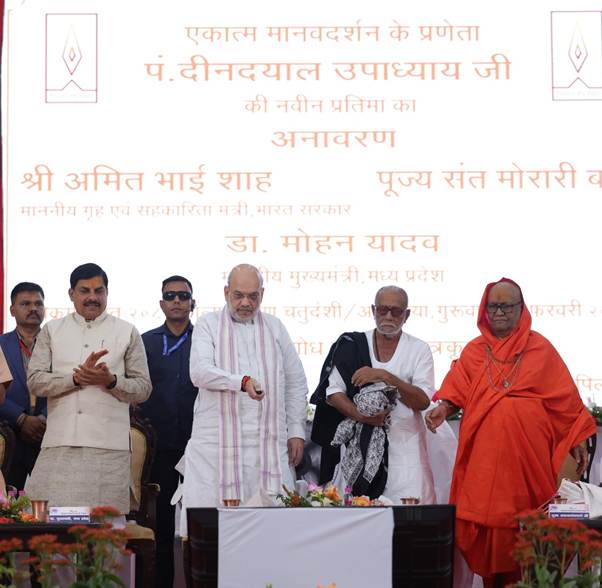
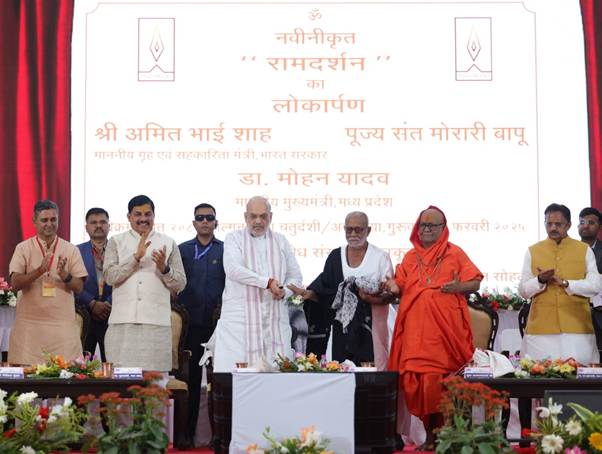
In his address, Shri Amit Shah said that on the occasion of Nanaji Deshmukh’s death anniversary, a tribute program was organized along with the inauguration of the statue of Pandit Deendayal Upadhyaya and the presentation based on the life of Lord Ram, “Ram Darshan.” He said that Nanaji Deshmukh is among those individuals whose life leaves an impact not for just a few years, but for centuries, and such people work towards making the era transformative.

Shri Shah said that Nanaji, who was born in Maharashtra, was associated with the Rashtriya Swayamsevak Sangh (RSS) from his childhood. He became a pracharak of the RSS, made Uttar Pradesh his area of work, became the General Secretary of the Bharatiya Jana Sangh, and, along with Pandit Deendayal, traveled to every block and region in Uttar Pradesh to lay the foundation of the Jana Sangh. Nanaji got the privilege of being a centenarian by dedicating every moment of his life and every particle of his body to Mother India. He said that it is very difficult to go from the world as Ajatashatru while being in politics, but till today neither the ruling party nor any leader of the opposition heard anything wrong about Nanaji.

The Union Home Minister said that it is very difficult to gain universal acceptance while being in politics, as one often has to face opposition for political purposes. However, in his long life, no one had the courage to oppose Nanaji, nor did anyone consider it appropriate to oppose him. He said that Nanaji made connections in almost every field, including art, literature, industry, service, and politics, and earned acceptance and respect in each of those fields. Achieving so much in one lifetime is quite difficult. He said that through rural development, Nanaji Deshmukh implemented Pandit Deendayal’s principle of ‘Antyodaya’ on the ground.

2.JPG

Shri Amit Shah said that when Nanaji was just 60 years old, he decided to leave politics and pursue Ekatm Manavvaad (‘Integral Humanism’) for the rest of his life. He was also like a lotus in politics, kept himself aloof from every evil and spent his entire life removing evils. Nanaji, through his hard work, has established principles in politics that will remain role models for generations to comeHe said Nanaji’s efforts were instrumental in changing the socio-economic landscape of the country’s villages.

The Union Home Minister said that the Bharatiya Jana Sangh gave two great men to the country’s politics in the same period in the form of Nanaji Deshmukh and Pandit Deen Dayal Upadhyaya. Both were born in 1916. He said that after the country’s independence, when policies were being made, people were watching the country’s policies with concern. In policies related to foreign affairs, economy, agriculture, and education, there was no fragrance of our ancient nation’s soil. At that time, the government was satisfied with creating policies by merely translating principles borrowed from the West. During that time, Pandit Deendayal established the principle of ‘Integral Humanism,’ showing how our economic philosophy should be, what our foreign policy should look like, and how our perspective on the world should be based on global brotherhood. He said that this very principle is now leading us toward becoming the best in the world.

3.JPG

Shri Amit Shah said that Pandit Deendayal named India’s development model as ‘Antyodaya,’ meaning that until the last person in the line is developed, it holds no meaning. He said that the development of the last person should be a reflection of the nation’s development. He said that Prime Minister Modi, who considers the “Antyodaya politics” of Nanaji and Pandit Deendayal as an ideal, is today bringing about a change in the lives of millions of poor people. Shri Shah further said that development should take place while preserving our heritage.

Union Home Minister Shri Amit Shah stated that under the leadership of Prime Minister Shri Narendra Modi, the government has significantly improved the lives of 60 crore poor citizens over the past decade. He highlighted key welfare initiatives, including housing, sanitation, clean drinking water, gas connections, free grain distribution, electricity access, and health coverage of up to ₹5 lakh. He emphasized that these efforts align with Nanaji Deshmukh’s vision for rural development, working towards transforming villages into self-sustaining Gokul Grams.

Reflecting on Nanaji Deshmukh’s contributions, Shri Amit Shah described him as an exceptional organizer who played a crucial role in resisting the Emergency, when democracy and personal freedoms were under threat. He noted that despite a scattered opposition, public awareness was awakened, leading to a 19-month-long struggle that resulted in the defeat of the ruling government and the triumph of democracy. Nanaji was instrumental in the formation of the Janata Party and laid the foundation of the current ruling party by championing the principle of Nation First.

4.JPG

Shri Amit Shah further stated that Nanaji’s life was deeply rooted in the ideals of the Sangh. He said that the unique combination of Sangh’s sanskars, Bal Gangadhar’s nationalism and Gandhiji’s Gram Swaraj is seen in Nanaji Deshmukh’s personality.

Recognizing his lifelong service, he was awarded with the Padma Vibhushan. Prime Minister Shri Narendra Modi later honored him with the Bharat Ratna, acknowledging his transformative contributions to society. Shri Shah remarked that Nanaji was among those rare individuals whose legacy elevates the honors bestowed upon them.

He also highlighted Nanaji’s role in education, particularly in establishing the first Saraswati Shishu Mandir in Gorakhpur, today thousand of these schools across the country are imparting education and values to children. Nanaji remained committed to cultural nationalism throughout his life.

5.JPG

Speaking about Pandit Deendayal Upadhyaya, Shri Amit Shah noted his pivotal role in foundation of the Bharatiya Jana Sangh. He credited Pandit Deendayal with shaping the ideological foundation of the party and developing Ekatm Manavvaad (Integral Humanism), a philosophy that encompasses the holistic development of individuals, society, and the nation.

Shri Amit Shah highlighted Chitrakoot’s spiritual significance, recalling that it was where Lord Shri Ram spent a significant portion of his exile. He reiterated Chitrakoot’s deep connection to devotion and Indian cultural heritage.

Raksha Mantri releases first edition of bi-annual Hindi magazine ‘Sashakt Bharat’

| Published on:

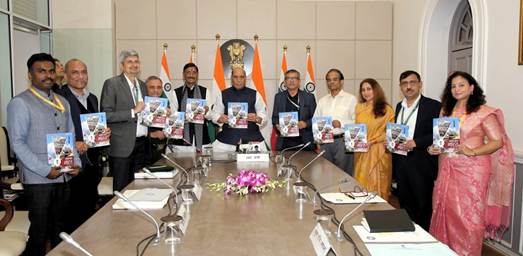
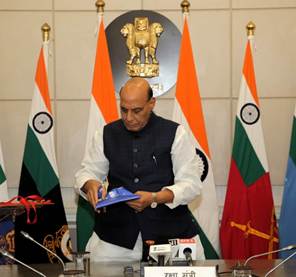
Raksha Mantri Shri Rajnath Singh released the first edition of Ministry of Defence’s bi-annual Hindi magazine ‘Sashakt Bharat’ at South Block, New Delhi on February 27, 2025. The magazine comprises poems on the valour, patriotism and sacrifices of the Armed Forces personnel as well as articles on the policies of the Government written by the personnel of the Ministry, irrespective of their ranks, showcasing inclusivity and unity in diversity.


Raksha Mantri appreciated the efforts of the MoD wing of the Department of Official Language towards promoting Hindi. He stressed on the need to adopt and increase the use of Hindi, describing the language as the thread that binds the social and cultural fabric of India.

The objective of ‘Sashakt Bharat’ magazine is to highlight the creative talent of the employees of MoD and encourage them to carry out their day-to-day activities in Hindi. The e-version of the magazine will be available on the official MoD website (https://mod.gov.in/).

Sashakt Bharat Hindi Magazine

Raksha Rajya Mantri Shri Sanjay Seth, Chief of Defence Staff General Anil Chauhan, Defence Secretary Shri Rajesh Kumar Singh, Secretary (Defence Production) Shri Sanjeev Kumar, Secretary (Ex-servicemen Welfare) Dr Niten Chandra, Secretary, Department of Defence R&D and Chairman DRDO Dr Samir V Kamat and other senior officials of MoD were present on the occasion.

Piyush Goyal, inaugurates ‘Bharat Calling Conference 2025’

| Published on:

Union Minister for Commerce and Industry, Shri Piyush Goyal, inaugurated ‘Bharat Calling Conference 2025’ organized by IMC Chamber of Commerce and Industry in Mumbai today. The Union Minister was the keynote speaker in the conference on the theme ‘Path to Viksit Bharat 2047: Pioneering Prosperity for All’.  The conference highlights how India stands at the forefront of global economic growth, offering unparalleled opportunities for investment across diverse sectors. With a robust and resilient economy, a large and dynamic consumer market and a Government committed to fostering business-friendly policies, India is poised to become one of the world’s leading investment destinations.

Delivering the keynote address, Shri Piyush Goyal stated that there are huge opportunities unfurling in a country of 1.4 billion people, many of whom are aspirational young people. There is a deep commitment towards manufacturing, skill development, innovation, as advocated by the Prime Minister himself, which truly makes India as the world’s emerging investment destination. Various strategic initiatives of the Government of India, including Make in India, Digital India, Startup India, Swacch Bharat and Atmanirbhar Bharat, have collectively prepared the mindset of the nation to be resilient, self-sufficient and become a bigger player in the global trade, even as the the country’s economy is transformed in the Amrit Kaal of the coming two decades leading up to 2047. “We are collectively committed to bring about a prosperous and developed India”, he added.

Union Commerce and Industry Minister Shri Goyal further said that India cannot become a developed nation if it does not open up its businesses for international trade. In this context, he named five key enablers for bringing about Viksit Bharat@2047, namely Quality Management and Handholding of Small Business, Sustainability, Inclusive Growth, Skill Development and Competitiveness and Efficiency.

Shri Goyal stated that India is at the crux of a quality revolution. He said that quality has been the biggest casualty in our country in the past and urged that it is time for businesses to adopt modern quality standards and ensure that our ecosystem is trained towards good quality and follow good manufacturing practices. There are around 700 quality control orders in the country, he informed.  Advocating for quality control by business chambers like IMC would be a great service to the nation, he added.  Shri Goyal further said, adopting and handholding small businesses by the big players of a business for quality control and upgrading their manufacturing practices is also very important.

Speaking about sustainability, he said that it is another important aspect in trade and commerce. Indian ethos traditionally reflect consciousness for sustainability for thousands of years, he added. It is important to recognize sustainability as a challenge in present times, which along with energy efficiency should be a focus area for businesses. He further said development cannot happen if there is no inclusive growth in the country, for which targeted interventions like ease of living initiatives for various communities and infrastructure development across the country has been taken up by the government. The Union Commerce and Industry Minister urged that businesses will also have to cater to the agenda of inclusive development through better CSR initiatives.

Shri Goyal stated that skill-building initiatives for the people will add more jobs and make our economy stronger. In this context, he stated that two more skill development centres are coming up in North Mumbai, after the launch of the first state-of-the-art skill centre in Mumbai’s Kandivali area last year.

Shri Goyal also urged that increasing efficiency and competitiveness is the need of the hour. Businesses should thrive on competitive strength and engage with the world with confidence, instead of depending on the Government for subsidies, support, incentives and so on, he added. He further said that competitiveness in an industry also depends on its capacity building for innovation, upgrading manufacturing practices, skillsets and efficiency.

Dignitaries present on the occasion included Ms. Rosslyn Bates, Minister for Finance, Trade, Employment and Training, Queensland, Australia and President, IMC Chamber of Commerce and Industry, Shri. Sanjaya Mariwala among others.