
PM addresses the Aadi Thiruvathirai Festival at Gangaikonda Cholapuram, Tamil Nadu

| Published on:

Prime Minister Shri Narendra Modi addressed the Aadi Thiruvathirai Festival at Gangaikonda Cholapuram temple in Tamil Nadu today. Bowing to the almighty Lord Shiva, reflecting on the profound spiritual energy experienced through the divine Shiva Darshan in the holy land of Raja Raja Chola, accompanied by the music of Shri Ilaiyaraaja and the sacred chanting of the Odhuvars,  Shri Modi remarked that the spiritual atmosphere deeply moved the soul.

Noting the significance of the holy month of Sawan and the historic occasion marking 1,000 years since the construction of the Brihadeeswarar Shiva Temple, Shri Modi expressed his privilege in being present at the feet of Lord Brihadeeswarar Shiva during such an extraordinary moment and performing worship at the revered temple. He prayed at the historic Brihadeeswarar Shiva Temple for the welfare of 140 crore Indians and the continued progress of the nation and  expressed his wish that Lord Shiva’s blessings reach everyone, invoking the sacred chant of Lord Shiva.

Shri Modi urged the people to visit the exhibition on 1000 years of history related to the roadmap by our ancestors for human welfare & prosperity organised by the Union Ministry of Culture. He also attended the launch of the Tamil Gita album, facilitated by the Chinmaya Mission, remarking that the initiative energizes the nation’s resolve to preserve its heritage. He congratulated all individuals associated with this effort.

Further, the Prime Minister highlighted that the Chola rulers had extended their diplomatic and trade relations to Sri Lanka, the Maldives, and Southeast Asia. He noted the coincidence of having returned from the Maldives just yesterday and today being part of this programme in Tamil Nadu.

Quoting scriptures stating that those who meditate upon Lord Shiva become eternal like Him, Shri Modi remarked that India’s Chola heritage, rooted in unwavering devotion to Shiva, has attained immortality. “The legacy of Rajaraja Chola and Rajendra Chola is synonymous with India’s identity and pride”, exclaimed the Prime Minister, stating that the history and heritage of the Chola Empire proclaim the true potential of India. He emphasized that this heritage inspires the national aspiration of building a developed India, paying tribute to Rajendra Chola the Great, acknowledging his enduring legacy. Noting that the Aadi Thiruvathirai festival was recently celebrated, Shri Modi  stated that today’s grand programme marks its conclusion and congratulated all those who contributed to the event.

“The historians consider the Chola period to be among the golden eras of India, an era distinguished by its military strength”, stated the Prime Minister, underlining that the Chola Empire advanced India’s democratic traditions, often overlooked in global narratives. He noted that while historians speak of Britain’s Magna Carta in the context of democracy, the Chola Empire had implemented democratic election practices centuries earlier through the Kudavolai Amaippu system. Shri Modi  pointed out that global discourse today often centers around water management and ecology preservation, emphasising that India’s ancestors understood the importance of these issues long ago. He cited that while many kings are remembered for acquiring gold, silver, or livestock from other regions, Rajendra Chola is recognized for bringing sacred Ganga water. The Prime Minister recalled that Rajendra Chola transported Ganga water from North India and established it in the South. He referred to the phrase “Ganga Jalamayam Jayastambham,” explaining that the water was channeled into the Chola Ganga Lake, now known as the Ponneri Lake.

Highlighting that Rajendra Chola established the Gangaikonda Cholapuram Temple, which continues to be recognized globally as an architectural wonder, Shri Modi remarked that the celebration of Ganga on the land of Mother Kaveri is also a legacy of the Chola Empire. He expressed his delight that, in memory of this historic episode, Ganga water has once again been brought from Kashi to Tamil Nadu, noting that a formal ritual was conducted at the site. As the elected representative from Kashi, the Prime Minister shared his deep emotional connection with Mother Ganga. He stated that the efforts and programmes associated with the Chola kings are akin to a sacred endeavour—symbolic of “Ek Bharat, Shreshtha Bharat”, giving the initiative a new and fresh momentum.

“The Chola rulers had woven India into a thread of cultural unity. Today, our government is carrying forward the same ideals from the Chola era”, stated the Prime Minister. He highlighted that programmes like the Kashi Tamil Sangamam and the Saurashtra Tamil Sangamam are reinforcing centuries-old bonds of unity. Shri Modi added that ancient temples such as Gangaikonda Cholapuram in Tamil Nadu are being preserved through the Archaeological Survey of India. Recalling that during the inauguration of the new Parliament building, saints from the Shiv Adheenam led the ceremony with spiritual guidance, the Prime Minister noted that the sacred Sengol, associated with Tamil tradition, has been ceremonially installed in Parliament, a moment which he still remembers with immense pride.

Recalling his meeting with Dikshitars from the Chidambaram Nataraja Temple, Shri Modi shared that they presented him with the sacred offering from the divine temple where Lord Shiva is worshipped in his Nataraja form. He remarked that this form of Nataraja symbolizes India’s philosophy and scientific foundations. The Prime Minister added that a similar Ananda Tandava idol of Lord Nataraja adorns Bharat Mandapam in Delhi, where global leaders had gathered during the G-20 summit in 2023.

“India’s Shaivite tradition has played a vital role in shaping the nation’s cultural identity. The Chola emperors were key architects in this cultural development and Tamil Nadu continues to be an important center of vibrant Shaivite heritage”, exclaimed the Prime Minister, highlighting the legacy of the revered Nayanmar saints, their devotional literature, Tamil literary contributions, and the spiritual influence of the Adheenams. He stated that these elements catalyzed a new era in both social and spiritual spheres.

Noting that the world today is facing challenges like instability, violence, and environmental crises, Shri Modi emphasized that Shaivite philosophy offers pathways to meaningful solutions. He cited the teachings of Tirumular, who wrote ‘Anbe Sivam’, meaning “Love is Shiva.” The Prime Minister remarked that if the world embraced this thought, many crises could resolve on their own, stating that India is advancing this philosophy through the motto ‘One World, One Family, One Future’.

“Today, India is guided by the mantra of ‘Vikas Bhi, Virasat Bhi’, and modern India takes pride in its history”, said Shri Modi, remarking that over the past decade, the nation has worked in mission mode to preserve its cultural legacy. He noted that ancient statues and artifacts, which had been stolen and sold abroad, have been brought back to India. The Prime Minister pointed out that since 2014, more than 600 ancient artifacts have been repatriated from various countries around the world, with 36 of these artifacts are specifically from Tamil Nadu. He highlighted that many valuable heritage items—including Nataraja, Lingodbhavar, Dakshinamurthy, Ardhanarishwara, Nandikeswara, Uma Parameshwari, Parvati, and Sambandar—are once again adorning the land.

Emphasizing that India’s heritage and the influence of Shaiva philosophy are no longer confined to its geographic borders, Shri Modi recalled that when India became the first country to land on the Moon’s South Pole, the designated lunar site was named “Shiv-Shakti” and is recognized globally.

“The economic and strategic advancements achieved during the Chola era remain a source of inspiration for modern India; Rajaraja Chola established a powerful navy, which was further strengthened by Rajendra Chola”, cited the Prime Minister, remarking that the Chola period witnessed key administrative reforms, including the empowerment of local governance systems and implementation of a robust revenue structure. He noted that India progressed swiftly in all directions through commercial advancement, utilization of maritime routes, and the promotion of art and culture, emphasising that the Chola Empire serves as an ancient roadmap for building a new India. Shri Modi further stated that to become a developed nation, India must prioritize unity, strengthen its navy and defense forces, seek new opportunities, and safeguard its core values. He expressed satisfaction that the country is moving forward inspired by this very vision.

Underscoring that today’s India places the highest priority on its national security, the Prime Minister citing Operation Sindoor, stated that the world witnessed India’s firm and decisive response to any threat against its sovereignty. He affirmed that the operation has sent a clear message—there is no safe haven for terrorists and enemies of the nation. He further added that Operation Sindoor has raised a new confidence in the people of India and the whole world is witnessing it. Shri Modi then drew a thoughtful parallel to the legacy of Rajendra Chola, highlighting the construction of Gangaikonda Cholapuram. Out of deep respect, its temple gopuram was built lower than that of his father’s Brihadeeswarar Temple in Thanjavur. Despite his achievements, Rajendra Chola exemplified humility. “Today’s New India embodies this same spirit—becoming stronger, yet rooted in values of global welfare and unity”, stated the Prime Minister.

Affirming his resolve to advance the spirit of pride in India’s heritage, Shri Modi announced that grand statues of Rajaraja Chola and his son, the illustrious ruler Rajendra Chola I, will be installed in Tamil Nadu in the coming time. He stated that these statues will serve as modern pillars of India’s historical consciousness. Noting that today marks the death anniversary of former President of India, Dr. A. P. J. Abdul Kalam, the Prime Minister remarked that to lead a developed India, the country needs millions of youth like Dr. Kalam and the Chola kings. He concluded by emphasising that such youth—filled with strength and devotion—will fulfill the dreams of 140 crore Indians. He added that together, we will advance the resolve of Ek Bharat, Shreshtha Bharat and extended his greetings to the nation on the occasion.

Revered Saints, the Governor of Tamil Nadu, Shri R. N Ravi, Union Minister Dr. L Murugan were present among other dignitaries at the event.

Background

Prime Minister released a commemorative coin honouring one of the greatest emperors of India, Rajendra Chola I, celebrating Aadi Thiruvathirai Festival during a public event at Gangaikonda Cholapuram Temple.

This special celebration also commemorates 1,000 years of the legendary maritime expedition of Rajendra Chola I to South East Asia and the commencement of the construction of the iconic Gangaikonda Cholapuram temple, a magnificent example of Chola architecture.

Rajendra Chola I (1014–1044 CE) was one of the most powerful and visionary rulers in Indian history. Under his leadership, the Chola Empire expanded its influence across South and Southeast Asia. He established Gangaikonda Cholapuram as the imperial capital after his victorious campaigns, and the temple he built there served as a beacon of Shaiva devotion, monumental architecture, and administrative prowess for over 250 years. Today, the temple stands as a UNESCO World Heritage Site, renowned for its intricate sculptures, Chola bronzes, and ancient inscriptions.

The Aadi Thiruvathirai festival also celebrates the rich Tamil Shaiva Bhakti tradition, fervently supported by the Cholas and immortalized by the 63 Nayanmars—the saint-poets of Tamil Shaivism. Notably, Rajendra Chola’s birth star, Thiruvathirai (Ardra), begins on 23rd July, making this year’s festival all the more significant.
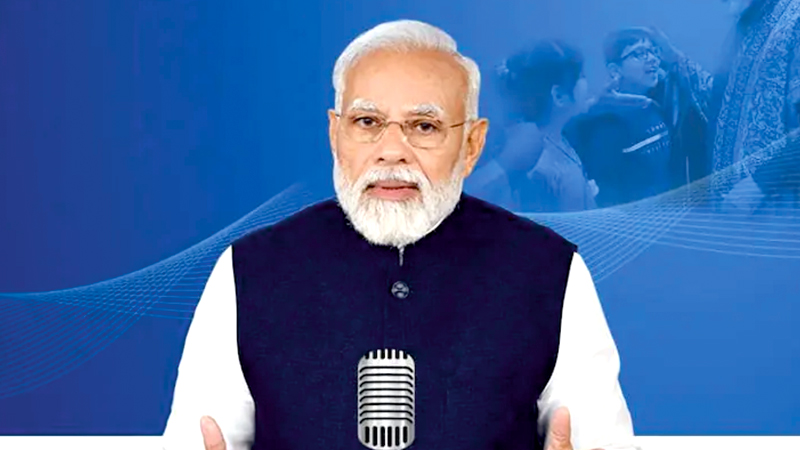
PM’s address in the 124th Episode of ‘Mann Ki Baat’

| Published on:

My dear countrymen, Namaskar.

In ‘Mann Ki Baat’, once again, we shall touch upon the successes of the country; the achievements of the countrymen. During the last few weeks, be it sports, science or culture, a lot has happened that every Indian is proud of. Recently, there was a lot of talk in the country over Shubhanshu Shukla’s return from Space. As soon as Shubhanshu landed safely on earth, people jumped with joy; a wave of happiness rippling through every heart. The entire country was filled with pride. I remember, when Chandrayaan-3 successfully landed in August 2023, a new ambience was created in the country. A new curiosity also arose among children about science; about space. Little children now say, we will also go to Space; we will also land on the moon – we will become space scientists.

Friends,

you must have heard the name of the INSPIRE-MANAK Abhiyan. This is a campaign to promote innovation among children. In this, five children are selected from each school. Each child brings up a new idea. So far, lakhs of children have joined this and after Chandrayaan-3, their number has doubled. Space start-ups are also growing rapidly in the country. Five years ago, there were less than 50 start-ups. Today, there are more than 200, just in the Space sector.

Friends,

Next month, on the 23rd of August, it is National Space Day. How will you celebrate it…, do you have any new ideas? Do send me a message on the NaMo App.

Friends,

In 21st century India, science is progressing with a renewed energy. A few days ago, our students won medals in the International Chemistry Olympiad. Devesh Pankaj, Sandeep Kuchi, Debdutt Priyadarshi and Ujjwal Kesari, all four of them brought glory to India. India has strengthened her image in the world of Mathematics as well. In the International Mathematical Olympiad held in Australia, our students won 3 gold, 2 silver and 1 bronze medal. Friends, next month the Astronomy and Astrophysics Olympiad is going to be held in Mumbai. Students from more than 60 countries will participate in this. Scientists too will be there. This will be the biggest Olympiad till date. In a way, India is now moving ahead for both Olympics and the Olympiads.

My dear countrymen,

Another news that will fill us all with pride has come in from UNESCO. UNESCO has recognized 12 Maratha forts as World Heritage Sites. Eleven forts in Maharashtra; one in Tamil Nadu. Each fort has a chapter of history attached to it. Every stone is a testimony to a historical event. Salher Fort, where the Mughals were defeated, Shivneri, where Chhatrapati Shivaji Maharaj was born. A fort that is unbreachable for the enemy. Khanderi Fort, an amazing fort built in the middle of the sea.

The enemy wanted to stop him but Shivaji Maharaj made the impossible possible. Pratapgarh Fort, where Afzal Khan was defeated, the echo of that saga still remains entrenched in the walls of the fort. Vijaydurg, which had secret tunnels, is a proof of Chhatrapati Shivaji Maharaj’s farsightedness. I visited Raigad a few years ago… bowed in front of Chhatrapati Shivaji Maharaj’s statue. This experience will stay with me all my life.

Friends,

There are such amazing forts in other parts of the country too, which have faced attacks, faced the vagaries of weather, but never let their self-respect bow down. Chittorgarh Fort, Kumbhalgarh Fort, Ranthambore Fort, Amer Fort, Jaisalmer Fort of Rajasthan are world famous. Gulbarga Fort in Karnataka is also very big. The vastness of Chitradurga Fort will also fill you up with curiosity about how this fort would have been built in those times!


Friends,

Kalinjar Fort is in Banda, Uttar Pradesh. Mahmud Ghaznavi attacked this fort many times and failed every time. There are many such forts in Bundelkhand – Gwalior, Jhansi, Datia, Ajaygarh, Garhkundar, Chanderi. These forts are not just bricks and stones; they are symbols of our heritage. Sanskar and self-respect still peep from the high walls of these forts. I urge all the countrymen to visit these forts, know their history, feel proud.

My dear countrymen,

Imagine, early morning, Muzaffarpur city of Bihar, the date – the 11th of August 1908… every street, every square, every movement seemed to have come to a halt at that time. There were tears in the eyes of the people, but there was fire in their hearts. People had surrounded the jail, where an 18-year-old youth was paying the price for expressing his patriotism against the British. Inside the jail, British officers were preparing to hang a young man. There was no fear on the face of that youth; rather it was full of pride. The very pride, that those who die for their country feel. That brave, courageous youth was Khudiram Bose. At the age of just 18, he showed such courage that shook the whole country. Even the newspapers reported then – “When Khudiram Bose walked towards the gallows, there was a smile on his face”. After such countless sacrifices, after centuries of penance, we got independence. The country’s diehard patriots nurtured the freedom movement with their blood.

Friends,

The month of August is therefore the month of revolution. The 1st of August is the death anniversary of Lokmanya Bal Gangadhar Tilak. During the same month, on the 8th of August, the ‘Quit India Movement’ began under the leadership of Gandhiji. Then comes the 15th of August, our Independence Day… we remember our freedom fighters, get inspired by them… but friends, the pain of Partition of the country is also associated with our independence. That is why we observe the 14th of August as ‘Partition Horrors Remembrance Day’.

My dear countrymen,

Another revolution started on the 7th of August 1905. The Swadeshi Movement lent a new energy to local products… especially handloom. To commemorate that, the country celebrates ‘National Handloom Day’ on the 7th of August every year. This year, 7th August marks the completion of 10 years of ‘National Handloom Day’. Just like our Khadi gave new strength to the freedom movement during the freedom struggle, today when the country is moving towards becoming a developed India, the textile sector is turning out to be the strength of the country. In these 10 years, lakhs of people associated with this sector in different parts of the country have scripted many success stories. Kavita Dhawale of Paithan village in Maharashtra used to work in a small room earlier – there was neither space nor facilities. She received help from the government; now her skill is soaring high. She is earning thrice more. She is selling her own self-made Paithani sarees. There is a similar success story in Mayurbhanj, Odisha. Here, more than 650 tribal women have revived the Santhali saree. Now these women are earning thousands of rupees every month. They are not just making cloth, but also carving their own identity. The achievement of Naveen Kumar from Nalanda, Bihar is also inspiring. His family has been associated with this work for generations.

But the best thing is that his family has now incorporated modernity in this field. Now his children are studying handloom technology. They are working with big brands. This change is not of just one family; it is making many families in the vicinity move forward.

Friends,

Textile is not just a sector of India. It is an example of our cultural diversity. Today, the textile and apparel market is growing very fast, and the most beautiful thing about this development is that women from villages, designers from cities, elderly weavers and our youth who have began start-ups are all taking it forward together. Today, more than 3000 textile start-ups are active in India. Many start-ups have lent global height to India’s handloom identity. Friends, the path to a developed India in 2047 passes through self-reliance and the biggest basis of ‘Atmanirbhar Bharat’ is – ‘vocal for local’. Buy and sell only those things that are made in India, in which an Indian has shed sweat. This should be our resolve.

My dear countrymen,

The most beautiful glimpse of India’s diversity is found in our folk songs and traditions and our bhajans and kirtans are a part of this. But have you ever heard that people are made aware about forest fires through kirtans? You may not believe it, but amazing work is happening in Keonjhar district of Odisha. Here, there is a group named Radhakrishna Sankirtan Mandali.

Along with devotion, today, this group is also chanting the mantra of environmental protection. The inspiration behind this initiative is – Pramila Pradhan ji. To protect the forest and the environment, she has added new lyrics and new messages to traditional songs. Her troupe went across from village to village. Through songs, people were made to understand how much damage forest fires cause. This example reminds us that our folk traditions are not something of the past; they still have the power to give direction to society.

My dear countrymen,

Our festivals and traditions are a major basis of Indian culture, but there is another aspect of the liveliness of our culture – this aspect is to keep documenting our present and our past. Our real strength is the knowledge that has been preserved in the form of manuscripts for centuries. These manuscripts contain science, medical procedures, music, philosophy, and most importantly, the thought that can make the future of humanity brighter. Friends, it is the responsibility of all of us to preserve such extraordinary knowledge, this heritage. In every era in our country, there have been some people who have made it their Sadhana. One such inspiring personality is Mani Maran Ji, who is from Thanjavur, Tamil Nadu. He felt that if today’s generation does not learn to read Tamil manuscripts, this precious heritage will be lost in the future. For that, he started evening classes, where students, working youth, researchers, everyone started coming over to learn.

Mani Maran Ji taught people the method of reading and understanding “Tamil Suvadiyiyal” i.e. Palm Leaf Manuscipts. Today, through a number of efforts, many students have become proficient in this art. Some students have even started research on a Traditional Medicine System based on these manuscripts. Friends, imagine… if such efforts are made across the country, our ancient knowledge will not remain confined within walls, it will become a part of the consciousness of the new generation. Inspired by this very thought, the Government of India has announced a historic initiative in this year’s budget – ‘Gyan Bharatam Mission’. Under this mission, ancient manuscripts will be digitized. Then a National Digital Repository will be created, where students and researchers from all over the world will be able to connect with India’s knowledge tradition. I too urge all of you that if you are associated with any such effort, or wish to be associated, do contact MyGov or the Ministry of Culture…since these are not just manuscripts, these are those chapters of the soul of India, which we have to impart to the coming generations.

My dear countrymen,

If you are asked how many kinds of birds there are, around you – what will you say? Perhaps that I see 5-6 birds everyday – some are familiar, some are unfamiliar. But, it is very interesting to know what species of birds live around us. Recently, one such grand effort has been made… the place is – Kaziranga National Park of Assam.

Though this area is famous for its Rhinos – this time the topic of discussion is its grasslands and the birds living in them. For the first time, a Grassland Bird Census has been conducted here. You will be happy to know that on account of this Census, more than 40 species of birds have been identified. These include many rare birds. You must be wondering how so many birds were identified! Technology did wonders in this. The team conducting the census installed sound recording devices. Then those sounds were analysed on the computer; AI was used. The birds were identified just by their sounds – that too without disturbing them. Imagine! When technology and sensitivity come together, understanding nature becomes so easy and deep. We should promote such efforts so that we can recognize our biodiversity and connect the next generation to it.

My dear countrymen,

Sometimes the most radiant light emerges from where darkness dwells the most. One such example is Gumla district of Jharkhand. There was a time when this area was known for Maoist violence. The villages of Basia block were getting deserted. People lived in the shadow of fear. There was no possibility of employment, lands were lying vacant and the youth were migrating… but then, a change began quietly and with a lot of patience. A young man named Om Prakash Sahu ji left the path of violence. He started fish farming. Then he inspired many friends like himself to do the same.

His efforts also had an impact. Those who were earlier holding guns, have now taken up fishing nets.

Friends,

Om Prakash Sahu ji’s beginning was not easy. There were protests; threats were received, but the courage did not wane. When the Pradhan Mantri Matsya Sampada Yojana was launched, he gained new strength. He received training from the government…and help in making ponds… within no time, the fisheries revolution started in Gumla. Today, more than 150 families of Basia block have joined fish farming. There are many people who were once in the Naxalite organization; now they are living a life of respect in the village itself and providing employment to others. This journey of Gumla teaches us – if the path is right and there is trust in the mind, the lamp of development can be lit even in the most difficult circumstances.

My dear countrymen,

Do you know which is the biggest sporting event other than the Olympics? The answer is – ‘World Police and Fire Games’… a sports tournament between policemen, fire fighters, security personnel from all over the world. This time this tournament was held in America and India created history in it. India won close to 600 medals. We reached the top-three out of 71 countries. The hard work of those uniformed personnel who stand for the country day and night, paid off. These friends of ours are now holding the flag high in the sports field as well. I congratulate all the players and the coaching team.

By the way, it will also be interesting for you to know that in 2029 these games will be held in India. Players from all over the world will come to our country. We will showcase to them India’s hospitality and introduce them to our sports culture.

Friends,

During the past few days, I have received messages from many young athletes and their parents. In these, the ‘Khelo Bharat Niti 2025’ has been highly appreciated. The goal of this policy is clear – to make India a sporting superpower. Villages, the poor and daughters are the priority of this policy. Schools and colleges will now make sports a part of everyday life. Startups related to sports, whether they be sports managements or manufacturing – will be helped in every way. Imagine how much strength the mission of self-reliance would gain when the youth of the country would play with self-made racket, bat and ball. Friends, sports create team spirit. This is the path to fitness, self-confidence and building a strong India. So play a lot, blossom a lot.

My dear countrymen,

Sometimes a task comes across as impossible to some people. They wonder, would this even be possible? But, when the country comes together on one thought, even the impossible becomes possible. ‘Swachh Bharat Mission’ is the biggest example of this. Soon this mission will complete 11 years. But, its strength and its need is still the same.

In these 11 years, ‘Swachh Bharat Mission’ has become a mass movement. People consider it their duty and this is real public participation.

Friends,

The Swachh Survey conducted every year has lifted this feeling further. This year more than 4500 cities and towns of the country joined it. More than 15 crore people participated in it. This is not an ordinary number. This is the voice of Swachh Bharat.


Friends,

When it comes to cleanliness, our cities and towns are working in different ways according to their needs and surroundings. And their impact is not just limited to these cities; the whole country is adopting these methods. The people of Kirtinagar in Uttarakhand are setting a new example of waste management in the hills. Similarly, organic waste management is being done with the help of technology in Mangaluru. There is a small city called Roing in Arunachal. There was a time when waste management was a big challenge confronting the health of the people there. The people there took responsibility for it. ‘Green Roing Initiative’ was started and then an entire park was created from recycled waste. Similarly, many new examples of water management have been set in Karad; in Vijayawada. The cleanliness at the River Front in Ahmedabad has also caught everyone’s attention.

Friends,

A team in Bhopal is called ‘Sakaratmak Soch’. It comprises 200 women. They don’t just clean, they also change mindsets. Cleaning 17 parks in the city together, distributing cloth bags, every step of theirs is a message. Owing to such efforts, Bhopal has now come a long way in the Swachh Survey. It is also important to mention the Gomti River team of Lucknow. Every Sunday for the last 10 years, tirelessly, without stopping, the members of this team are engaged in the cleanliness work. The example of Bilha in Chhattisgarh is also great. Here, women were imparted training in waste management, and together, they changed the face of the city. The example of Panaji city in Goa is also inspiring. There, waste is divided into 16 categories and that is also being led by women. Panaji has even received the President’s award. Friends, cleanliness is not a one-time, one-day task. Only when we accord priority to cleanliness every day, every moment of the year, will the country remain clean.

Friends,

Amid the showers of Sawan, the country is once again going to be adorned with the fervour of festivals. Today is Hariyali Teej, then comes Nag Panchami and Raksha Bandhan, then Janmashtami, the celebration of the birth of our naughty little Kanha. All these festivities are connected to our emotions here, they also give us the message of connection and balance with nature. Many best wishes to all of you for these holy festivals.

My dear friends,

Keep sharing your thoughts and experiences. We will meet again next month with some more new achievements and inspirations of countrymen. Take care of yourselves.

Thank you very much.

PM lays foundation stone, inaugurates & dedicates development works worth over ₹4800 crore in Thoothukudi, TN

| Published on:

The Prime Minister Shri Narendra Modi laid the foundation stone, inaugurated and dedicated to the nation development projects worth over ₹4800 crore  in Thoothukudi, Tamil Nadu today. A series of landmark projects across multiple sectors which will significantly enhance regional connectivity, boost logistics efficiency, strengthen clean energy infrastructure, and improve the quality of life for citizens across Tamil Nadu. On the occasion of Kargil Vijay Diwas, Shri Modi paid tributes to the brave soldiers of Kargil and saluted the valiant warriors and offered heartfelt homage to the martyrs who made the ultimate sacrifice for the nation.

Addressing the gathering, Prime Minister expressed his privilege in arriving directly on the sacred land of Lord Rameshwar after a four-day foreign tour. He highlighted the historic Free Trade Agreement signed between India and the United Kingdom during the overseas tour. Noting that this development symbolizes the growing global trust in India and the nation’s renewed confidence, Shri Modi remarked that this confidence will drive the creation of a developed India and a developed Tamil Nadu. He further stated that today, with the blessings of Lord Rameshwar and Lord Tiruchendur Murugan, a new chapter of development is unfolding in Thoothukudi. “Thoothukudi continues to witness the mission initiated in 2014 to elevate Tamil Nadu to the pinnacle of development”, the Prime Minister said.

Recalling laying the foundation stone for the Outer Harbour Container Terminal at V.O. Chidambaranar Port in February 2024, Shri Modi highlighted the inauguration of several projects worth hundreds of crores during that visit. He remarked that in September 2024, the new Thoothukudi International Container Terminal was also inaugurated. He stated that today, once again, projects worth ₹4,800 crore have been launched and inaugurated in Thoothukudi. The Prime Minister noted that these initiatives span across key sectors, including airports, highways, ports, railways, and critical power sector advancements. He extended his congratulations to the people of Tamil Nadu for these significant developments.

“Infrastructure and energy form the backbone of any state’s development. Over the past eleven years, the sustained focus on these sectors reflects the priority accorded to Tamil Nadu’s progress”, emphasised the Prime Minister. He remarked that the projects inaugurated today will transform Thoothukudi and Tamil Nadu into hubs of enhanced connectivity, clean energy, and new opportunities.

Shri Modi paid tribute to the rich cultural and historical legacy of Tamil Nadu and Thoothukudi, acknowledging the region’s enduring contribution to building a prosperous and strong India. He lauded the visionary freedom fighter Shri V.O. Chidambaram Pillai, who foresaw the potential of maritime trade during colonial times and challenged British dominance by launching indigenous shipping ventures. The Prime Minister also honored legendary figures like Veerapandiya Kattabomman and Alagu Muthu Kon for their dream of a free and empowered India, rooted in courage and patriotism. Recalling the birthplace of national poet Subramania Bharati near Thoothukudi, Shri Modi highlighted the deep emotional bond between Thoothukudi and his own constituency, Kashi. He emphasized that cultural initiatives like the Kashi-Tamil Sangamam continue to fortify India’s shared heritage and unity.

Recalling that last year, he had gifted the renowned pearls of Thoothukudi to Mr. Bill Gates, the Prime Minister highlighted that Mr. Gates greatly appreciated the pearls. He noted that the Pandya Pearls of this region were once considered a symbol of India’s economic power across the world.

“India is advancing the vision of a developed Tamil Nadu and a developed India through its ongoing efforts”, stated Shri Modi, remarking that the Free Trade Agreement (FTA) signed between India and the United Kingdom further accelerates this vision. “The world now sees its own growth reflected in India’s progress”, emphasized Shri Modi stating that the FTA will strengthen India’s economy and accelerate the country’s journey toward becoming the world’s third-largest economy.

The Prime Minister stated that following the Free Trade Agreement, 99 percent of Indian products sold in the UK will be tax-free. He highlighted that with Indian goods becoming more affordable in the UK, demand will increase, leading to greater manufacturing opportunities in India. Shri Modi also emphasized that the India–UK FTA will greatly benefit Tamil Nadu’s youth, small industries, MSMEs, and startups. He remarked that this agreement will support sectors such as industry, the fishing community, and research and innovation, ensuring broad-based gains.

Highlighting that the Government is placing strong emphasis on Make in India and Mission Manufacturing, the Prime Minister stressed that during Operation Sindoor, the strength of Make in India was clearly demonstrated. He remarked that domestically manufactured weapons played a significant role in neutralizing terrorist strongholds. Shri Modi emphasized that weapons made in India continue to unsettle the masterminds of terrorism.

Affirming the Union Government’s commitment to unlocking the full potential of Tamil Nadu by modernizing its infrastructure, Shri Modi stated that significant strides are being made to upgrade port facilities with advanced technologies. In parallel, efforts are underway to integrate airports, highways, and railways, enhancing seamless connectivity across the state. The Prime Minister remarked that the inauguration of the new advanced terminal at the Thoothukudi Airport marks another major milestone in this direction. Constructed at a cost of ₹450 crore, the terminal is now equipped to host over 20 lakh passengers annually—up from the previous capacity of just 3 lakh passengers, he stated.

Noting that the newly inaugurated terminal will significantly enhance Thoothukudi’s connectivity to multiple destinations across India, Shri Modi highlighted that the development will benefit corporate travel, educational hubs, and healthcare infrastructure throughout Tamil Nadu. Additionally, he mentioned that the region’s tourism potential is expected to gain fresh momentum through this improved accessibility.

The Prime Minister announced the dedication of two major road projects in Tamil Nadu to the public. Developed at an investment of approximately ₹2,500 crore, these roads are designed to link two key development zones with Chennai. He stated that the enhanced road infrastructure has significantly improved connectivity between the Delta districts and the state capital, paving the way for greater economic integration and accessibility.

Underscoring that the road projects have significantly boosted connectivity to the Thoothukudi Port, Shri Modi said these developments are expected to enhance ease of living for residents across the region and open up new avenues for trade and employment.

The Prime Minister emphasized that the Union Government considers the railway network as a lifeline of industrial growth and Aatmanirbhar Bharat. Noting that over the past eleven years, India’s railway infrastructure has entered a transformative phase of modernization, with Tamil Nadu emerging as a central hub of this campaign, the Prime Minister remarked that under the Amrit Bharat Station Scheme, seventy-seven stations across Tamil Nadu are undergoing comprehensive redevelopment. Modern Vande Bharat trains are now providing Tamil Nadu’s citizens with a new travel experience. Shri Modi emphasised that India’s first vertical lift rail bridge—Pamban Bridge—was also constructed in Tamil Nadu, a unique engineering feat that has improved both ease of doing business and ease of travel in the region.

“India is undergoing a transformative campaign to build mega and modern infrastructure across the nation”, underscored the Prime Minister. He described the recently inaugurated Chenab Bridge in Jammu & Kashmir as an engineering marvel, noting that it has, for the first time, connected Jammu and Srinagar via rail. Shri Modi also outlined that in addition to this, India has completed several landmark projects, like the longest sea bridge in the country—Atal Setu, the Bogibeel Bridge in Assam and the Sonamarg Tunnel, which spans over six kilometers. These initiatives, he said, reflect the Union Government’s commitment to integrated development and have generated thousands of employment opportunities nationwide.

The Prime Minister stated that the newly dedicated railway projects in Tamil Nadu will benefit millions across the southern region of the state. He noted that with the electrification of the Madurai–Bodinayakkanur railway line, the path has now opened for operating advanced trains such as Vande Bharat in the region. “These railway initiatives are poised to accelerate Tamil Nadu’s pace of progress and expand its scale of development with renewed momentum”, stated Shri Modi.

The Prime Minister also laid the foundation for a key transmission project linked to the 2,000 MW Kudankulam Nuclear Power Project in Tamil Nadu. Built at an estimated cost of ₹550 crore, the system is expected to play a pivotal role in supplying clean energy in the years ahead. Shri Modi noted that this energy initiative will contribute meaningfully to India’s global energy targets and environmental commitments. With increased electricity production, both industrial sectors and domestic users in Tamil Nadu stand to gain substantial benefits from improved energy availability.

Expressing satisfaction over the rapid progress of the PM Surya Ghar Muft Bijli Yojana in Tamil Nadu, Shri Modi stated that the Government has already received approximately one lakh applications under the scheme. He highlighted that over forty thousand solar rooftop installations have been completed so far. The Prime Minister remarked that the scheme not only provides free and clean electricity but is also generating thousands of green jobs.

Reiterating that the development of Tamil Nadu and the vision of a developed Tamil Nadu remains a core commitment of the Union Government, the Prime Minister emphasized that policies related to Tamil Nadu’s growth have consistently been accorded top priority. He highlighted that over the past decade, the Union Government has transferred ₹3 lakh crore to Tamil Nadu through devolution—more than three times the amount disbursed by the previous dispensation. Shri Modi further stated that in these eleven years, Tamil Nadu has received eleven new medical colleges. He remarked that for the first time, a government has shown such dedicated concern for communities involved in the fisheries sector across coastal  regions. He affirmed that through the Blue Revolution, the Government is expanding the coastal economy, ensuring inclusive development.

“Thoothukudi is witnessing the dawn of a new chapter in development”, said Shri Modi, highlighting that the initiatives in connectivity, power transmission, and infrastructure are laying a strong foundation for a developed Tamil Nadu and a developed India. He concluded by extending his congratulations to all the people of Tamil Nadu for these transformative projects.

The Governor of Tamil Nadu, Shri R. N Ravi, Union Ministers Shri Rammohan Naidu Kinjarapu, Dr. L Murugan  were present among other dignitaries at the event.

Background

In line with his commitment to developing world-class air infrastructure and enhancing connectivity, Prime Minister inaugurated the New Terminal Building at Thoothukudi Airport developed at a cost of  around ₹450 crore, designed to meet the growing aviation demands of the southern region. Prime Minister also undertook a walkthrough of the new terminal building at Thoothukudi Airport.

Spread across 17,340 square meters, the terminal will be equipped to handle 1,350 passengers during peak hours and 20 lakh passengers annually, with future expansion capacity up to 1,800 peak hour passengers and 25 lakh passengers annually. With 100% LED lighting, energy-efficient E&M systems, and treated water reuse through an on-site Sewage Treatment Plant, the terminal has been built to achieve a GRIHA-4 sustainability rating. This modern infrastructure is expected to significantly enhance regional air connectivity and stimulate tourism, trade, and investment in southern Tamil Nadu.

In the road infrastructure sector, Prime Minister dedicated to the nation two strategically significant highway projects. The first is the 4-laning of the 50 km Sethiyathope–Cholapuram stretch of NH-36, developed at more than ₹2,350 crore under the Vikravandi–Thanjavur corridor. It includes three bypasses, a 1-km four-lane bridge over the Kollidam River, four major bridges, seven flyovers, and several underpasses, reducing travel time by 45 minutes between Sethiyathope–Cholapuram and boosting connectivity to Delta region’s cultural and agricultural hubs. The second project is the 6-laning of the 5.16 km NH-138 Thoothukudi Port Road, built at around ₹200 crore. Featuring underpasses and bridges, it will ease cargo flow, cut logistics costs, and support port-led industrial growth around V.O. Chidambaranar Port.

In a major boost to augment port infrastructure and clean energy initiatives, Prime Minister inaugurated North Cargo Berth–III with a cargo handling capacity of 6.96 MMTPA at V.O. Chidambaranar Port worth  around ₹285 crore. This will help in meeting the growing demand of handling dry bulk cargo requirements in the region, thereby improving overall port efficiency and optimizing cargo handling logistics.

Prime Minister dedicated three key railway infrastructure projects in southern Tamil Nadu to boost sustainable and efficient connectivity. The electrification of the 90 km Madurai–Bodinayakkanur line will promote eco-friendly transport and support tourism and commuting in Madurai and Theni. The ₹650 crore doubling of the 21 km Nagercoil Town–Kanniyakumari section, part of the Thiruvananthapuram–Kanniyakumari project, will strengthen links between Tamil Nadu and Kerala. Additionally, the doubling of the Aralvaymozhi–Nagercoil Junction (12.87km) and Tirunelveli–Melappalayam (3.6 km) sections will reduce travel time on major southern routes like Chennai–Kanyakumari and enhance regional economic integration by improving passenger and freight capacity.

Further strengthening the state’s power infrastructure and ensuring, Prime Minister laid the foundation stone for a major power transmission project – the Inter-State Transmission System (ISTS) for evacuation of electricity from Kudankulam Nuclear Power Plant Units 3 and 4 (2×1000 MW). This project, developed at a cost of around ₹550 crore,  will include a 400 kV (quad) double-circuit transmission line from Kudankulam to the Thoothukudi-II GIS substation and associated terminal equipment. It will play a pivotal role in strengthening the national grid, ensuring reliable clean energy distribution, and meeting the rising power demands of Tamil Nadu and other beneficiary states.

PM attends the 60th anniversary celebrations of the independence of Maldives as Guest of Honour

| Published on:

During his ongoing visit to Male, Prime Minister Shri Narendra Modi today attended the 60th anniversary celebrations of the independence of Maldives as the ‘Guest of Honour’. This is the first time that an Indian Prime Minister is attending the Independence Day celebrations in Maldives. Prime Minister Modi is also the first foreign leader at the level of Head of State or Government to be hosted by President Muizzu.

Prime Minister, accompanied by H.E Dr. Mohammed Muizzu, President of Maldives, witnessed the Independence Day parade at Republic Square. On the occasion, Prime Minister extended warm greetings to the people and government of Maldives. The celebrations showcased a lively parade by the Maldivian National Defence Forces and other local units, along with a string of cultural performances that dwelt on the achievements of Maldives as a modern nation.

Prime Minister thanked President Muizzu and the people of Maldives for their gracious invitation. His participation in the Independence Day celebrations as the ‘Guest of Honor’ marks a milestone in the bilateral ties between the two countries. The year 2025 also marks 60 years of the establishment of diplomatic relations between India and Maldives.

Prime Minister greets countrymen on Kargil Vijay Diwas

| Published on:

Prime Minister Shri Narendra Modi today greeted the countrymen on Kargil Vijay Diwas.”This occasion reminds us of the unparalleled courage and valor of those brave sons of Mother India who dedicated their lives to protect the nation’s pride”, Shri Modi stated.

The Prime Minister in post on X said:

“देशवासियों को कारगिल विजय दिवस की ढेरों शुभकामनाएं। यह अवसर हमें मां भारती के उन वीर सपूतों के अप्रतिम साहस और शौर्य का स्मरण कराता है, जिन्होंने देश के आत्मसम्मान की रक्षा के लिए अपना जीवन समर्पित कर दिया। मातृभूमि के लिए मर-मिटने का उनका जज्बा हर पीढ़ी को प्रेरित करता रहेगा। जय हिंद!

Prime Minister meets the President of Maldives

| Published on:

​Prime Minister Shri Narendra Modi met today with H. E. Dr. Mohamed Muizzu, President of the Republic of Maldives, at the President’s Office in Male. Ahead of the meeting, Prime Minister was received by President Muizzu and accorded a ceremonial welcome at Republic Square. The meeting was marked by warmth and a reaffirmation of the deep-rooted friendship between the two nations.

Prime Minister expressed heartfelt appreciation for the gracious hospitality extended to him and his delegation and conveyed his best wishes on the historic occasion of the 60th anniversary of the independence of Maldives as also on the special occasion of the 60th anniversary of establishment of diplomatic relations between the two nations.

The two leaders reflected on the deep bonds of friendship and trust that have been built over centuries, strengthened by strong people-to-people ties. Both leaders also took stock of the progress in the implementation of the India-Maldives Joint Vision for a ‘Comprehensive Economic and Maritime Security Partnership’, adopted during the State Visit of the President of Maldives to India in October 2024. Prime Minister reiterated India’s commitment to further deepen ties with Maldives in keeping with its “Neighbourhood First’ and Vision MAHASAGAR policies. President Muizzu appreciated India’s commitment of being the First Responder for Maldives when it came to dealing with any crises. The two leaders discussed cooperation in the fields of development partnership, infrastructure support, capacity building, climate action and health. They also called for further strengthening defence and maritime security cooperation and, in this regard, noted the collaboration between the two countries under the Colombo Security Conclave.

The two leaders also reviewed the economic partnership between the two countries. Prime Minister underscored that the proposed Free Trade Agreement and the Bilateral Investment Treaty would open new opportunities for both sides. Noting that the two countries must take advantage of the digital economy, especially to promote tourism, he welcomed the recent understandings on UPI adoption, acceptance of RUPAY card and trade in local currencies. The two leaders highlighted that the close development partnership between the countries was adding new value to the already strong people-to-people ties.

The two leaders noted that, as Global South partners, they would continue to work on issues such as climate change, promotion of renewable energy, disaster risk reduction and weather science in the interests of the planet and its people.

Prime Minister thanked President Muizzu for his strong condemnation of the Pahalgam terror attack, and the solidarity extended to India in the fight against terrorism.

The two leaders witnessed exchange of 6 MOUs in the fields of fisheries and aquaculture, meteorology, digital public infrastructure, UPI, Indian pharmacopoeia and concessional Line of Credit. The new Line of Credit offers Rupees 4850 crores [ approx USD 550 million] in support of infrastructure development and other activities in Maldives. An Amendatory Agreement for the existing LoCs was also exchanged. It reduces Maldives’s annual debt repayment obligations by 40% [from USD 51 million to 29 million]. Both sides also exchanged Terms of Reference of the proposed Free Trade Agreement.

The two leaders also virtually inaugurated a roads and drainage system project in Addu city and 6 High Impact Community Development Projects in other cities. Prime Minister handed over 3,300 social housing units and 72 vehicles for Maldives National Defence Force and Immigration authorities.

Prime Minister also handed over two units of Aarogya Maitri Health Cube [BHISHM] sets to the Government of Maldives. With state-of-the-art medical equipment as part of the cube, it can provide medical aid to 200 casualties with in-built support to sustain a crew of six medical personnel for up to 72 hours.

In keeping with their deep commitment to conserving nature, the two leaders planted mango saplings as part of India’s “Ek Pedh Maa Ke Naam” [Plant for Mother] and Maldives’s “Pledge of 5 million Tree Plantation” campaigns.

Prime Minister reiterated India’s commitment to support Maldives and its people, as per its requirements and priorities, and for the peace, progress and prosperity of the Indian Ocean region.

PM and President of Maldives jointly inaugurate the Ministry of Defence building of Maldives

| Published on:

​Prime Minister Shri Narendra Modi and the President of Maldives, H. E. Dr. Mohamed Muizzu, jointly inaugurated today the state-of-the-art Ministry of Defence (MoD) building of Maldives in Male.

Overlooking the Indian Ocean, the eleven-storey building is a symbol of the strong and long-standing defence and security cooperation between the two countries.

The MoD building has been constructed with India’s financial assistance and will contribute towards enhancing the capabilities of the defence and law enforcement authorities of Maldives.

Prime Minister meets Prime Minister of the United Kingdom

| Published on:

During his official visit to the United Kingdom from 23-24 July 2025, Prime Minister Shri Narendra Modi met today with the Prime Minister of the United Kingdom, Rt. Hon. Sir Keir Starmer. On arrival at the UK Prime Minister’s country residence at Chequers in Buckinghamshire, he was warmly received by Prime Minister Starmer. The two leaders held a one-on-one meeting as well as delegation level talks.

The two Prime Ministers welcomed the signing of the historic India-UK Comprehensive Economic and Trade Agreement (CETA) which will raise the Comprehensive Strategic Partnership to a new level, while significantly enhancing bilateral trade, investment, economic collaborations and job creation in both economies. The two sides have also agreed to negotiate a Double Contribution Convention, which will come into effect along with the CETA and will facilitate professionals and service industry in both countries by promoting competitiveness and reducing the cost of doing business for commercial entities. Noting the growing collaboration in the fields of capital markets and financial services, Prime Minister Modi underlined that the two sides could work to promote greater interaction between GIFT City in Gujarat, India’s first international financial services centre, and UK’s vibrant financial ecosystem.

The two leaders reviewed the entire gamut of the bilateral relationship and adopted the India-UK Vision 2035. The Vision 2035 document will infuse greater ambition and renewed momentum in the Comprehensive Strategic Partnership by steering the relationship for the next ten years in key areas of economy and growth, technology, innovation, research and education, defence and security, climate action, health and people-to-people ties.

The two leaders also welcomed the finalization of a Defence Industrial Roadmap to promote collaboration in co-design, co-development and co-production of defence products to meet the growing demand in both countries as well as for the world market. Welcoming the regular engagement of armed forces of the two countries, they expressed satisfaction at the deepening defence and security partnership.

The two leaders expressed satisfaction at the growing collaboration in new and emerging technologies and called for accelerated implementation of the Technology and Security Initiative (TSI), which focuses on telecom, critical minerals, AI, biotechnology and health technology, semiconductors, advanced materials and quantum. The TSI completed one year today.

The two Prime Ministers also welcomed the growing partnership between India and the UK in the education sector, with six UK universities working to open campuses in India under the New Education Policy (NEP). Southampton University which opened its campus in Gurugram on 16 June 2025, is the first foreign university to open its campus in India under the NEP.

Both sides acknowledged the valuable contribution of the Indian diaspora in the UK in the areas of academia, arts, literature, medicine, science, sports, business and politics. They agreed that this living bridge is a key pillar of the growth and development of India-UK relations.

Prime Minister Modi thanked Prime Minister Starmer for his strong support and solidarity extended to the people of India in the wake of the Pahalgam terror attack. The two leaders committed to strengthen the global fight against terrorism. While noting that extremism and radicalisation pose threat to both societies, they agreed to further enhance bilateral cooperation to deal with the menace. Prime Minister Modi also sought UK’s cooperation to bring to justice economic offenders and fugitives.

The two leaders also exchanged views on global and regional issues of mutual interest, including on the developments in the Indo-Pacific, West Asia and the Russia-Ukraine conflict.

Prime Minister thanked Prime Minister Starmer for his warm hospitality and invited him to visit India at the earliest convenience.

The following documents were signed/adopted by the two sides during the visit:

● Comprehensive Economic and Trade Agreement [CETA]

● India-UK Vision 2035 [Link]

● Defence Industrial Roadmap

● Statement on Technology and Security Initiative [Link]

● MoU between Central Bureau of Investigation, India and National Crime Agency of UK

Press Statement by PM during Joint Press Statement with Prime Minister of the United Kingdom

| Published on:

Prime Minister Starmer,

Friends,

Namaskar!

First of all, I extend my heartfelt gratitude to Prime Minister Starmer for his warm welcome and gracious hospitality. Today marks a historic milestone in our bilateral relations. I am pleased that, after years of dedicated efforts, the Comprehensive Economic and Trade Agreement between our two countries has been concluded today.

This agreement is more than just an economic partnership; it is also a blueprint for shared prosperity. On the one hand, it paves the way for enhanced market access in the UK for Indian textiles, footwear, gems and jewellery, seafood, and engineering goods. It will also unlock new opportunities for India’s agricultural produce and processed food industry. Above all, this agreement will be especially beneficial for India’s youth, farmers, fishermen, and the MSME sector.

On the other hand, UK-made products such as medical devices and aerospace components will become more accessible and affordable for Indian consumers and industries.

Alongside the trade agreement, a consensus has also been reached on the Double Contribution Convention. This will inject new momentum into the service sectors of both countries, particularly in technology and finance. It will enhance the ease of doing business, reduce operational costs, and boost confidence of doing business. Additionally, the UK economy will benefit from access to skilled Indian talent.

These agreements will boost bilateral investment and generate new employment opportunities in both countries. Moreover, these agreements between two vibrant democracies and major global economies, will also contribute to strengthening global stability and shared prosperity.

Friends,

To infuse new momentum and energy into our Comprehensive Strategic Partnership over the next decade, Vision 2035 is being launched. This will serve as a roadmap for a strong, trusted, and ambitious partnership in the areas of technology, defence, climate, education, and people-to-people connectivity.

A Defence Industrial Roadmap has been developed to deepen our collaboration in defence and security. We will also work to further strengthen our Technology Security Initiative.

It is our commitment that, from AI to Critical Minerals, Semiconductors to Cyber Security, we shall create the future together.

Friends,

In the field of education as well, both our countries are writing a new chapter together. Six universities from the UK are opening campuses in India. Just last week, the University of Southampton inaugurated its campus in Gurugram, India.

Friends,

We thank Prime Minister Starmer and his government for their strong condemnation of the terrorist attack in Pahalgam. We are united in our view that there can be no place for double standards in the fight against terrorism. We also agree that forces with extremist ideologies must not be allowed to misuse democratic freedoms.

Those who misuse democratic freedoms to undermine democracy itself must be held to account.

On the matter of extradition of economic offenders as well, our agencies will continue to work together in close coordination and cooperation.

Friends,

We have continued to share our perspectives on peace and stability in the Indo-Pacific, the ongoing conflict in Ukraine, and the situation in West Asia. We support early restoration of peace and stability. Respect for sovereignty and territorial integrity of all countries is essential. Today’s era demands development, not expansionism.

Friends,

Last month, in the tragic accident that took place in Ahmedabad, several of those who lost their lives were our brothers and sisters from the UK. We extend our heartfelt condolences to their families.

The people of Indian origin living in the UK serve as a living bridge in our relationship. They did not just bring curry from India, but also creativity, commitment, and character. Their contribution is not limited to the UK’s thriving economy — it is equally visible in the country’s culture, sports, and public service.

Friends,

I would be remiss not to mention cricket when India and the UK are coming together, especially during a Test series. For both of us cricket is not just a game but a passion. And also, a great metaphor for our partnership. There may be a swing and a miss at times. But we always play with a straight bat. We are committed to building a high scoring solid partnership.

The agreements concluded today, along with our Vision 2035, are milestones that carry forward this very spirit.

Prime Minister,

I thank you once again for your warm hospitality. I would also like to take this opportunity to extend an invitation to you to visit India. I am eagerly looking forward to hosting you in India soon.

Thank you very much.

DISCLAIMER – This is the approximate translation of Prime Minister’s Press Statement. Original Press Statement were delivered in Hindi.

India and UK Sign Comprehensive Economic and Trade Agreement (CETA)

| Published on:

India and the United Kingdom have taken a major step in building a stronger economic partnership with the signing of the Comprehensive Economic and Trade Agreement (CETA) today under the visionary leadership of  Prime Minister Shri Narendra Modi. The agreement was signed by Commerce and Industry Minister, Mr. Piyush Goyal and Secretary of State for Business and Trade, Mr. Jonathan Reynolds in the presence of the two Prime Ministers.

This FTA marks a significant milestone in India’s engagement with major developed economies and reflects a shared commitment to strengthening economic integration. As the world’s fourth and sixth largest economies respectively, India and the UK’s bilateral engagement holds global economic significance. The signing of the India-UK CETA follows the successful conclusion of negotiations announced on 6th May 2025. The bilateral trade between the two countries stand at nearly USD 56 billion, with a joint goal to double this figure by 2030.

CETA secures unprecedented duty-free access for 99% of India’s exports to the UK, covering nearly the entire trade basket. This is expected to open new opportunities for labour-intensive industries such as textiles, marine products, leather, footwear, sports goods, toys, and gems and jewellery, alongside fast-growing sectors like engineering goods, auto components, and organic chemicals.

The services sector, a strong driver of India’s economy, will also see wide-ranging benefits. The agreement provides greater market access in IT and IT-enabled services, financial and legal services, professional and educational services, and digital trade. Indian professionals, including those deployed by companies to work in UK across all services sectors, professionals deployed on contracts such as architects, engineers, chefs, yoga instructors, and musicians, will benefit from simplified visa procedures and liberalised entry categories, making it easier for talent to work in the UK.

Union Minister for Commerce and Industry, Mr. Piyush Goyal, conveyed profound gratitude to the Prime Minister Shri Narendra Modi for his visionary leadership and resolute commitment, which have been instrumental in achieving this historic agreement. He stated:

“This CETA marks a milestone in the trade relations between two major economies, setting an ambitious and balanced framework. It unlocks tariff-free access on 99% of Indian exports to the UK, covering nearly 100% of trade value- including labour-intensive sectors advancing the ‘Make in India’ initiative and setting the stage for bilateral trade to double by 2030. It includes ambitious commitments in goods and services, covering various sectors, while enhancing mobility for Indian professionals by simplifying access for contractual service providers, business visitors, and independent professionals. The innovative Double Contribution Convention will exempt Indian workers and their employers from UK social security contributions for three years, boosting competitiveness and earnings. This FTA will serve as a catalyst for inclusive growth, benefiting farmers, artisans, workers, MSMEs, startups, and innovators while safeguarding India’s core interests and accelerating our journey towards becoming a global economic powerhouse.”

India has also secured an agreement on the Double Contribution Convention. This will exempt Indian professionals and their employers from social security payments in the UK for up to three years, improving the cost competitiveness of Indian talent.

The agreement has been designed to make trade more inclusive. Women and youth entrepreneurs, farmers, fishermen, startups, and MSMEs will gain new access to global value chains, supported by provisions that encourage innovation, promote sustainable practices, and reduce non-tariff barriers.

CETA is expected to boost trade volumes significantly in the coming years, creating jobs, expanding exports, and supporting a deeper, more resilient economic relationship between India and the United Kingdom.

Departure Statement by PM on the eve of the visits to the United Kingdom and the Maldives

| Published on:

I am embarking on a visit to the UK and the Maldives from 23 to 26 July.

India and UK share a Comprehensive Strategic Partnership that has witnessed significant progress in recent years. Our collaboration spans a wide range of sectors, including trade, investment, technology, innovation, defence, education, research, sustainability, health and people-to-people ties. During my meeting with Prime Minister Rt Hon Sir Keir Starmer, we will have the opportunity to further enhance our economic partnership, aimed at fostering prosperity, growth and jobs creation in both countries. I also look forward to calling on His Majesty King Charles III during the visit.

I will thereafter travel to the Maldives at the invitation of the President H.E. Dr. Mohamed Muizzu to join the celebrations marking the 60th anniversary of the Independence of Maldives. This year also marks the 60th anniversary of the establishment of diplomatic relations between our two countries. I look forward to my meetings with President Muizzu and other political leadership, to advance our joint vision of a Comprehensive Economic and Maritime Security Partnership, and to strengthen our cooperation for peace, prosperity and stability in the Indian Ocean Region.

I am confident that the visit will yield tangible outcomes, benefiting our  people and advancing our Neighbourhood First Policy.

PM pays tributes to Chandra Shekhar Azad on his birth anniversary

| Published on:

The Prime Minister, Shri Narendra Modi has paid tributes to Chandra Shekhar Azad on his birth anniversary. “His role in India’s quest for freedom is deeply valued and motivates our youth to stand up for what is just, with courage and conviction”, Shri Modi stated.

In a X post, the Prime Minister said;

“Tributes to Chandra Shekhar Azad on his birth anniversary. He epitomised unparalleled valour and grit. His role in India’s quest for freedom is deeply valued and motivates our youth to stand up for what is just, with courage and conviction.”