
PM’s remarks in Leaders’ Plenary Session during the India AI Impact Summit 2026

| Published on:

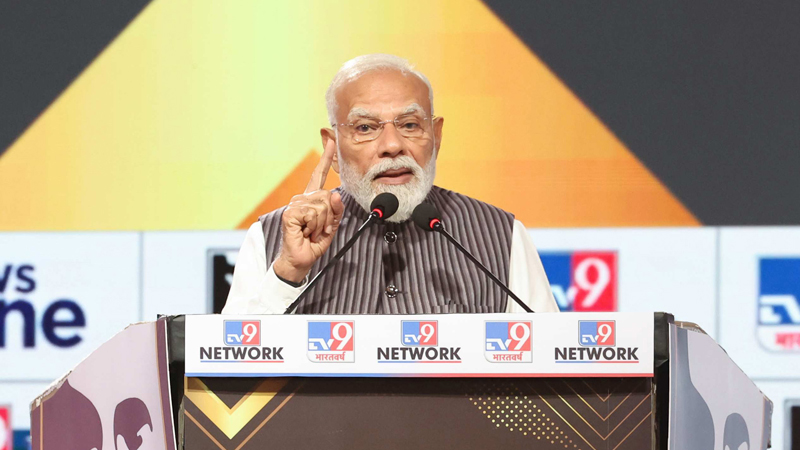
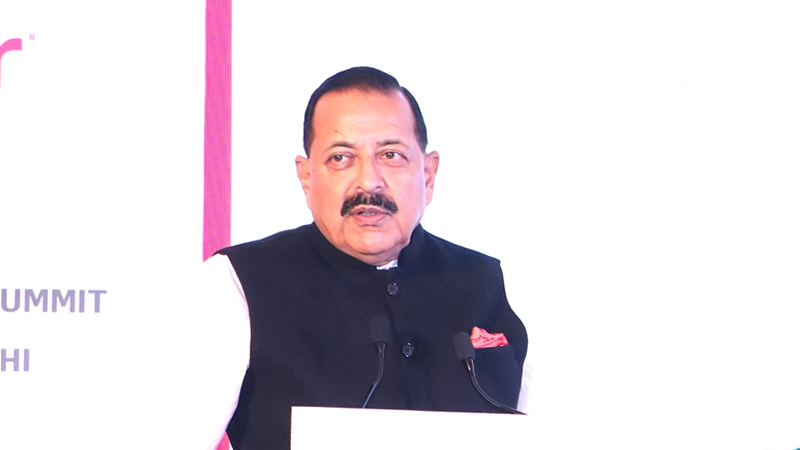
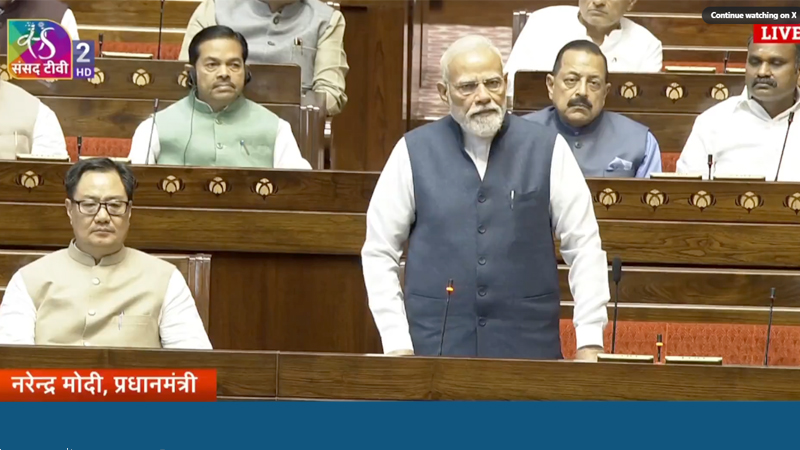
Prime Minister Shri Narendra Modi shared his remarks at the Leaders’ Plenary Session during the India AI Impact Summit 2026 at Bharat Mandapam in New Delhi today. Welcoming the participants once again to the AI Impact Summit in India, the Prime Minister expressed confidence that the summit will play a crucial role in building a human‑centric and sensitive global AI ecosystem. He remarked that history shows humanity has always turned disruptions into opportunities, and today presents another such moment to transform disruption into humanity’s greatest opportunity.

Shri Modi recalled Lord Buddha’s teaching that “Right Action comes from Right Understanding,” stressing the importance of creating a roadmap that ensures AI’s positive impact through timely, well-intentioned, and correct decisions.

Prime Minister remarked that during the COVID global pandemic, the world witnessed that when nations stand together, even the impossible becomes possible. He highlighted that cooperation provided solutions—from vaccine development to supply chains, from data sharing to saving lives. He noted that India saw how technology can serve humanity, citing the digital vaccination platform that helped vaccinate millions on time. Shri Modi emphasized that UPI ensured seamless online transactions even in difficult circumstances and played a major role in bridging the digital divide. He stated that in recent years India has built a vibrant digital public infrastructure and is sharing it with the world, because for India technology is not a medium of power but of service, not to dominate but to empower. He underlined that AI too must follow this direction to ensure the welfare of humanity.

The Prime Minister remarked that while technology in the past created divisions, AI must now be accessible and within everyone’s reach. He stressed that as the future of AI is discussed, the aspirations and priorities of the Global South must be placed at the center of AI governance.

Shri Modi highlighted that ethics have always been central to human progress, but with AI the scope of unethical behavior is unlimited. He emphasized that ethical norms for AI must also be unlimited. He stated that AI companies carry a major responsibility to focus not only on profit but also on purpose, and underscored the need for strong ethical commitments. He added that at a personal level, AI is already influencing human learning, intelligence, and emotions.

For ethical AI use, the Prime Minister offered three suggestions:

  • AI training must respect data sovereignty and be based on a trusted global data framework. He highlighted the principle of “garbage in, garbage out,” stressing that if data is not secure, balanced, and reliable, the output cannot be trustworthy.

  • AI platforms must keep their safety rules clear and transparent. He called for a “glass box” approach instead of a “black box,” where safety rules are visible and verifiable. He noted that this would ensure accountability and strengthen ethical behavior in business.

  • AI must be guided by clear human values. He cited the “paper clip problem” as an example, where a machine given a single goal could exhaust all global resources to achieve it. He underlined that while technology is powerful, direction must always be determined by humans.

Prime Minister remarked that Aspirational India has a major role in the global journey of Artificial Intelligence and, recognizing this responsibility, India is taking significant steps. He highlighted that under India’s AI Mission, 38,000 GPUs are already available and 24,000 more will be added in the next six months. Shri Modi stated that India is providing its startups with world‑class computing power at highly affordable rates. He noted that India has also created AIKosh (National Dataset Platform), through which more than 7,500 datasets and 270 AI models have been shared as national resources.

The Prime Minister emphasized that India’s direction and vision for AI are clear—AI is a shared resource for the welfare of humanity. He underlined the need to build an AI future that advances innovation, strengthens inclusion, and integrates human values. Shri Modi concluded that when technology and human trust move together, the true impact of AI will be visible across the world.

Prime Minister inaugurates India AI Impact Summit 2026

| Published on:

Prime Minister Shri Narendra Modi inaugurated the India AI Impact Summit 2026 at Bharat Mandapam in New Delhi today. Addressing the gathering on the occasion, Shri Modi remarked that the world’s largest and historic AI Impact Summit is being held in India, a nation representing one-sixth of humanity. He highlighted that India is home to the world’s largest youth population, the biggest tech talent pool, and a thriving tech-enabled ecosystem. He emphasized that India not only creates new technologies but also adopts them at an unprecedented pace. The Prime Minister noted that 140 crore Indians are eager to embrace new technologies and, on their behalf, he extended a warm welcome to Heads of Governments, leaders of the global AI ecosystem, and innovators participating in the summit. He expressed gratitude for their presence and underlined that hosting this summit in India is a matter of pride not only for the country but also for the entire Global South.

Pointing out that the summit has brought together the “who’s who” of the AI world, with representation from over 100 countries and distinguished participants from across the globe, taking its success to new heights, Shri Modi highlighted the strong presence of the young generation at the summit, which he said instills new confidence. He observed that while new technologies often face initial skepticism, the speed and trust with which the youth worldwide are accepting AI, taking ownership of it, and using it, is unprecedented. The Prime Minister also remarked on the enthusiasm surrounding the AI Summit’s exhibition, particularly the large participation of young talent. He highlighted that solutions presented in areas such as agriculture, security, assistance for divyangjan, and meeting the needs of multilingual populations reflect the strength of ‘Made in India’ and showcase India’s innovative capabilities in the AI field.

Prime Minister remarked that in human history, every few centuries a turning point emerges that resets the direction of civilization. He highlighted that such moments change the pace of development and transform paradigms of thinking, understanding, and working. He observed that during such periods of transformation, the true impact is often not immediately understood. He recalled that when sparks were first generated from stones, no one imagined that the same spark would become the foundation of civilization. Shri Modi noted that when spoken language was first converted into script, no one realized that written knowledge would become the backbone of future systems. He further remarked that when signals were first transmitted wirelessly, no one could have imagined that one day the entire world would be connected in real time.

“Artificial Intelligence represents a transformation of the same magnitude as historic turning points in human civilization”, remarked Shri Modi, highlighting that what is being seen and predicted today are only the initial signs of its impact. He stated that AI is making machines intelligent, but more importantly, it is multiplying human capability many times over. The Prime Minister emphasized that the difference this time lies in the unprecedented speed and unexpected scale. He noted that earlier, the impact of technology took decades to manifest, but today, the journey from machine learning to learning machines is fast, deep, and wide. He underlined that this requires a larger vision and equally greater responsibility. Shri Modi stressed that along with the present generation, there must also be concern about the form of AI that will be handed over to future generations. He remarked that the real question is not what AI can do in the future, but what humanity chooses to do with AI in the present. Drawing parallels with nuclear power, the Prime Minister noted that humanity has witnessed both its destructive potential and its positive contributions. He asserted that AI too is a transformative power—if directionless, it leads to disruption, but with the right direction, it becomes a solution. Shri Modi highlighted that the core purpose of the Global AI Impact Summit is to deliberate on how AI can be made human-centric rather than machine-centric, and how it can be made sensitive and responsible.

Prime Minister Modi remarked that India’s vision for AI is clearly reflected in the theme of the summit— ‘Sarvajan Hitaya, Sarvajan Sukhaya’—Welfare for all, Happiness of all. He emphasized that this is the benchmark for India. He cautioned that humans must not become mere data points or raw material for AI, and therefore AI must be democratized. He highlighted that AI should serve as a medium of inclusion and empowerment, especially in the Global South.

The Prime Minister stated that AI must be given an open sky, while command must remain in human hands. He compared this to GPS, which suggests the route but leaves the final decision to the user. He underlined that the direction in which humanity takes AI today will determine the future.

At the New Delhi AI Impact Summit, the Prime Minister presented India’s M.A.N.A.V. Vision for AI. He explained that M.A.N.A.V. stands for:

  • M – Moral and Ethical Systems: AI must be based on ethical guidelines.

  • A – Accountable Governance: Transparent rules and robust oversight.

  • N – National Sovereignty: Data belongs to its rightful owner.

  • A – Accessible and Inclusive: AI must not be a monopoly, but a multiplier.

  • V – Valid and Legitimate: AI must be lawful and verifiable.

He asserted that India’s M.A.N.A.V. Vision will become a crucial link for humanity’s welfare in the AI-driven world of the 21st century.

Prime Minister Modi remarked that decades ago, when the internet began, no one could imagine how many jobs it would create. He highlighted that the same is true for AI today, as it is difficult to predict what kinds of jobs will emerge in the future. He emphasized that the future of work in AI is not pre-defined, but will depend on collective decisions and actions. Shri Modi stated that the future of work is a new opportunity, marking an era where humans and intelligent systems co-create, co-work, and co-evolve. He underlined that AI will make work smarter, more efficient, and more impactful, enabling better design, faster building, and improved decision-making.

Shri Modi noted that AI will also open higher-value, creative, and meaningful roles for more people, creating opportunities for innovation, entrepreneurship, and new industries. He stressed the importance of making skilling, reskilling, and lifelong learning a mass movement.

Asserting that the future of work will be inclusive, trusted, and human-centric, the Prime Minister remarked that if humanity moves forward together, Artificial Intelligence will elevate human potential to new heights.

Prime Minister remarked that transparency is the greatest safeguard, noting the saying “Sunlight is the best disinfectant.” He observed that while some countries and companies consider AI a strategic asset to be developed confidentially, India believes AI will benefit the world only when it is shared. He emphasized that open code and shared development will allow millions of young minds to make AI better and safer. He called for a collective resolve to develop AI as a Global Common Good.

Highlighting the urgent need for global standards, the Prime Minister pointed out that deepfakes and fabricated content are destabilizing open societies. Drawing a parallel with nutrition labels on food, he said that digital content too must carry authenticity labels so people can distinguish between real and AI-generated material. Shri Modi underlined the growing need for watermarking and clear source standards as AI increasingly generates text, images, and videos, stressing that trust must be built into technology from the start.

Emphasising the importance of child safety, the Prime Minister stated that just as school syllabi are curated, the AI space must also be child-safe and family-guided. He remarked that today there are two kinds of people—those who see fear in AI and those who see fortune. He asserted that India sees fortune and future in AI, backed by talent, energy capacity, and policy clarity. Shri Modi expressed happiness that three Indian companies have launched their AI models and apps during the summit. He said these models reflect the talent of India’s youth and showcase the depth and diversity of solutions that India is contributing to the global AI landscape.

Prime Minister Modi remarked that India is building a resilient ecosystem ranging from semiconductors and chip-making to quantum computing. He highlighted that secure data centers, a strong IT backbone, and a dynamic startup ecosystem make India a natural hub for affordable, scalable, and secure AI solutions. Shri Modi emphasized that India possesses diversity, demography, and democracy. He noted that any AI model that succeeds in India can be deployed globally. He extended an invitation to the world with the call: ‘Design and Develop in India. Deliver to the World. Deliver to Humanity’. He concluded by conveying his best wishes to all participants.

President of the Republic of France, H.E. Mr Emmanuel Macron, Secretary General of United Nations, Heads of State, ministers, senior representatives from multilateral institutions and tech and AI industry leaders were present among other dignitaries at the event.

Background

The theme of India AI Impact Summit 2026 is सर्वजन हिताय, सर्वजन सुखाय i.e. welfare for all, happiness of all. It aims to position India as a leader in the field of AI and envisions a future where AI advances humanity, fosters inclusive growth, and safeguards our shared planet.

Seven Working Groups anchor the Summit, aligned to three pillars: People, Planet, and Progress. These groups will work on delivering concrete outcomes demonstrating AI’s impact across sectors. The seven themes are: AI for Economic Growth and Social Good; Democratizing AI Resources; Inclusion for Social Empowerment; Safe and Trusted AI; Human Capital; Science; Resilience, Innovation and Efficiency.

The Summit will bring together more than 500 Global AI Leaders, including CEOs/CXOs, around 100 CEOs and Founders, 150 Academicians and Researchers, and 400 CTOs, VPs, and Philanthropists. It will also engage over 100 government representatives, including more than 20 Heads of State and Government and around 60 Ministers and Vice Ministers.

Raksha Mantri interacts with visiting Navy Chiefs and Naval delegations from nine ASEAN member states

| Published on:

On the sidelines of the MILAN 2026 Naval exercise, Raksha Mantri Shri Rajnath Singh held an interaction with visiting Navy Chiefs and Naval delegations from nine ASEAN member states in Visakhapatnam, Andhra Pradesh on February 19, 2026. The meeting underscored India’s commitment to its ‘Act East Policy’ and the vision of Mutual and Holistic Advancement for Security and Growth Across Regions (MAHASAGAR).

Raksha Mantri welcomed the significant participation of ASEAN navies in MILAN 2026, noting that the exercise has grown from its modest 1995 beginnings with four foreign navies to its largest-ever edition in February 2026, involving 74 nations. He emphasised the importance of the Indian Ocean Naval Symposium (IONS) – Conclave of Chiefs and the International Fleet Review 2026 in fostering trust and operational familiarity among Indo-Pacific partners. The discussions also covered the ongoing Sea Phase of MILAN 2026, focusing on complex maritime drills including anti-submarine warfare (ASW), air defence, and search-and-rescue operations.

Shri Rajnath Singh described ASEAN as a central pillar of India’s Indo-Pacific strategy, stating that shared security is the foundation of regional prosperity. He invited ASEAN partners to benefit from India’s defence technology ecosystem which has matured due to the ‘Aatmanirbhar Bharat’ efforts of the Government, led by Prime Minister Shri Narendra Modi. He highlighted the INS Vikrant and Visakhapatnam-class destroyers as symbols of India’s transformation into a ‘Builder’s Navy’.

Reiterating sentiments from India-ASEAN informal meeting in late 2025, the ASEAN delegates lauded India’s role as a first responder in the region. Raksha Mantri proposed expanding joint activities, specifically through the ASEAN-India Defence Think-Tank Interaction and initiatives involving younger generations of naval officers to ensure long-term maritime stability.

The interaction concluded with a shared commitment to a free, open, and inclusive Indo-Pacific, anchored by the spirit of ‘Camaraderie, Cooperation, and Collaboration’ – the official theme of MILAN 2026.

Google CEO meets Prime Minister

| Published on:

The CEO of Google, Shri Sundar Pichai met the Prime Minister, Shri Narendra Modi in Delhi today.

In a post on X,  Shri Modi said:

“It was a delight to meet Mr. Sundar Pichai on the sidelines of the AI Impact Summit in Delhi. Talked about the work India is doing in AI and how Google can work with our talented students and professionals in this field.

@sundarpichai”

Founder of Sun Microsystem meets the Prime Minister

| Published on:

The Prime Minister, Shri Narendra Modi, today interacted with founder of Sun Microsystem, Shri Vinod Khosla.

During the meeting, the Prime Minister and Shri Khosla discussed various aspects relating to Artificial Intelligence and India’s vibrant StartUp ecosystem.

In a post on X, Shri Modi stated:

“It was wonderful interacting with Mr. Vinod Khosla earlier today. We discussed aspects relating to AI and India’s vibrant StartUp ecosystem.

@vkhosla”

ISKCON has inspired everyone to follow the path of Gita: Amit Shah

| Published on:

Union Home Minister and Minister of Cooperation, Shri Amit Shah today addressed the 152nd birth anniversary celebrations of most Srila Bhaktisiddhanta Saraswati Thakur Ji as the Chief Guest in Nadia, West Bengal. Union Minister Shri Bhupender Yadav, along with several other dignitaries, was present on the occasion.

Union Home Minister and Minister of Cooperation, Shri Amit Shah said that in Mayapur, Bhaktisiddhanta Saraswati Thakur Ji and A.C. Bhaktivedanta Swami Prabhupada Ji not only carried forward the Bhakti movement initiated by Shri Chaitanya Mahaprabhu Ji, but also modernized it, paving the way for the welfare of youth and people across the world. He said that during his lifetime, Shri Chaitanya Mahaprabhu Ji illuminated the path of devotion to liberate millions suffering from the darkness of ignorance, both in India and globally. Shri Shah stated that when an individual dissolves their existence and becomes immersed in devotion to Lord Krishna, all becomes well. He noted that Shri Chaitanya Mahaprabhu Ji spread the profound message of the Gita through kirtan, devotional music, and dance in a simple and accessible manner across eastern India, lighting the lamp of devotion in millions of lives. He said that this movement was not only advanced but also connected with modernity by Bhaktisiddhanta Saraswati Thakur Ji and A.C. Bhaktivedanta Swami Prabhupada Ji for the welfare of the youth and the entire world.

Shri Amit Shah said that today is the 152nd birth anniversary of Bhaktisiddhanta Saraswati Thakur Ji, the commander of devotion of Shri Chaitanya Mahaprabhu Ji and the founder of Gaudiya sect. He said that by fulfilling the resolution of chanting one billion names of Shri Krishna, Bhaktisiddhanta Saraswati Thakur Ji presented a unique ideal of penance, sacrifice and discipline. Shri Shah said that through this, Bhaktisiddhanta Saraswati Thakur Ji dedicated his entire life to Shri Krishna. Bhaktisiddhanta Saraswati Thakur Ji liberated religion from rigid traditions and narrowness, demonstrating that modernity is not opposed to religion, but rather its companion. Referring to his vision, Shri Shah noted that he described the printing press as the ‘Vrihad Mridang’, symbolizing how books printed in press can travel across the oceans and spread devotion worldwide.

Union Home Minister said that only unwavering and exclusive devotion to Lord Krishna gives one the courage to break social rigidities. Those who hold God in their hearts consider themselves servants of all. He said that a true Guru is one who, with the spirit of service, elevates disciples from the smallest to the greatest heights. Shri Shah described Bhaktisiddhanta Saraswati Thakur Ji as a true Guru who introduced the dignity and essence of the Guru’s role to the world and undertook significant efforts to break caste barriers. He added that detachment does not mean abandoning the world entirely, but giving up evils and engaging the entire world in devotion to Lord Krishna.

Shri Amit Shah further said that many regard Bhaktisiddhanta Saraswati Thakur Ji as a living encyclopedia. Though deeply knowledgeable in mathematics and Sanskrit, he dedicated everything at the feet of Lord Krishna and spent his life on the path of devotion. He expressed hope that the spiritual center being developed at Mayapur Dham would serve not only the nation but devotees worldwide and would continue to guide the path of devotion for generations to come. The spiritual center being developed by ISKCON in Mayapur will become a global abode dedicated to the welfare of the world. Shri Shah said that one of Bhaktisiddhanta Saraswati Thakur Ji’s greatest contributions was preparing a disciple like A.C. Bhaktivedanta Swami Prabhupada Ji to carry forward the tradition.

Union Home Minister and Minister of Cooperation said that it is the result of the life’s work of Bhaktisiddhanta Saraswati Thakur Ji and A.C. Bhaktivedanta Swami Prabhupada Ji that today the ISKCON is spreading the flag of Sanatan Dharma across the globe. He said that  Harichand Thakur Ji and Guruchand Thakur Ji gave a new direction to social welfare and social harmony through the ‘Matua Mahasangha’. Shri Shah said, ISKCON has inspired everyone to follow the path of Gita, Prime Minister Shri Narendra Modi also presents a copy of Gita as a gift to every head of state or minister visiting India. He added that ISKCON has not only strengthened the Bhakti movement by promoting India’s traditions and scriptures, but has also made significant contributions in the field of service. He said, through relief work during disasters and initiatives in education, healthcare, and environmental protection, ISKCON is also making a significant contribution to the service of the nation. From free food distribution and establishing hospitals and colleges to strengthening ecological systems and reconnecting youth with Indian festivals, ISKCON has played a major role in social upliftment.

 BJP National President addresses Panna Pramukh Sammelan in Dibrugarh, Assam

| Published on:

Hon’ble Bharatiya Janata Party National President Shri Nitin Nabin arrived in Dibrugarh during his two-day visit to Assam, where he received a grand and enthusiastic welcome from party office-bearers and Karyakartas at the Dibrugarh Airport (Dr. Bhupen Hazarika Airport). Thereafter he addressed the Panna Pramukh Sammelan held at Mancotta Tea Estate Garden, Chiring Gaon, Dibrugarh, where he called upon Panna Pramukhs to work with dedication to strengthen the organization. In view of the upcoming Assembly elections, he held a meeting with BJP state office-bearers, Panna Pramukhs, district presidents, and party Karyakartas to discuss organisational strategy. He also emphasized the importance of taking the BJP’s public welfare schemes and policies to every household. BJP National President further guided party Karyakartas on strengthening the party structure down to the booth level and achieving organizational objectives. During the Panna Pramukh Sammelan, the dignitaries present on the stage included Shri Himanta Biswa Sarma, Chief Minister of Assam; Shri Dilip Saikia, President of the BJP Assam State Unit, Shri Sarbananda Sonowal, Union Minister and former Chief Minister of Assam; Shri Baijayant Panda, National Vice President of the BJP and Election In-charge for Assam and Shri Harish Dwivedi, BJP’s Assam In-charge, along with other senior leaders.

Shri Nitin Nabin conveyed that as the Mishing community’s festival is being celebrated here, heartfelt greetings are extended to everyone on the auspicious occasion of Ali-Aye-Ligang. The visit to Dibrugarh holds special significance. Even before entering politics, a personal connection had already been formed with Tinsukia and Dibrugarh. During those days, friends from Dibrugarh and Tinsukia had travelled to Delhi to pursue education, and from that time itself a quiet dream remained about visiting these places one day. Friendships that began nearly thirty years ago, in 1996, have now come full circle, with the opportunity finally arising after three decades to set foot on this land. The importance of friendship in life is something everyone understands deeply. During an earlier visit to Assam, when Shri Dilip Saikia was serving as the State President of the Yuva Morcha, travel had taken place across 22 of the 26 districts of the state, yet the fortune of visiting this land came only today. The warmth and respect shown by people from various communities on this occasion is received with deep gratitude. Gratitude was specifically expressed to brothers and sisters from the Moran and Motok communities, the Morang people, tea garden workers, the Ahom community, the Sutia community, the Gorkha community, Bengali-speaking society, Hindi-speaking society, and the Deori community, all of whom extended honour and affection during this visit.

BJP National President remarked that the visit was not driven by any narrow political objective, but by the representation of an idea and tradition guided by the principle of ‘Nation First, Party Next, Self Last.’  Assam, once regarded merely as the gateway to the development of the North-East, had for a long period been associated with an atmosphere of conflict. Today, that same gateway stands as a living symbol of progress and transformation across the entire North-East. For this change, Hon’ble Prime Minister Shri Narendra Modi Ji and Chief Minister Shri Himanta Biswa Sarma were acknowledged as deserving of appreciation. Assam has long symbolised cultural consciousness, courage, and self-respect. Yet there was a time when the state was known more for unrest than for opportunity. During that phase, the people of Assam did not receive the dignity they deserved, and discussions of social tension often reached the corridors of Delhi. This remains a subject for reflection. In contrast, present-day Assam is recognised not for struggle, but for limitless possibilities. Leadership has emerged that has provided the people of Assam with new confidence and a distinct identity across the nation. For this achievement, appreciation was extended to the Chief Minister and the entire team working with dedication. Recalling the years of student life, reference was made to a time when young people from Bihar and various North-Eastern states travelled to Delhi in search of education and employment. Today, seeing the confidence and the visible sense of pride and happiness on the faces of people from Assam brings deep satisfaction. This transformation reflects the character of governance under Bharatiya Janata Party, a model of development-oriented leadership that works to bring dignity, confidence, and prosperity into the lives of the people.

Shri Nabin mentioned that the confidence visible among the people today is clearly reflected in the fact that every poor family is receiving a home, women are being provided LPG gas connections, and free healthcare facilities are being made accessible. Some critics allege that Bharatiya Janata Party represents a harsh form of governance. The response to this allegation is unequivocal, BJP is firm when it comes to national security, firm in protecting the identity and dignity of Assam, and firm because it follows a policy of zero tolerance against corruption. Carrying forward the principle of “Na Khaayenge, Na Khaane Denge” BJP government continues to function with determination. The Assam that people once dreamed of seeing as a land of peace, security, and development was used by previous governments merely as an instrument of vote-bank politics. In a state where a clear development vision, capable leadership, and genuine intent to serve the people were required, Congress governments displayed neither policy, nor intent, nor leadership. BJP takes pride in the fact that it possesses a clear policy framework, clean intent, and strong leadership. The leadership of Hon’ble Prime Minister Shri Narendra Modi Ji and Chief Minister Shri Himanta Biswa Sarma stands as proof that a BJP government works in close partnership with the people. In earlier periods under Congress rule, the beheading of soldiers was met with silence from those in power. In contrast, under the leadership of Hon’ble Prime Minister Shri Narendra Modi Ji, the present government has established a clear doctrine: even a single hostile shot invites a decisive and full response from the armed forces. This transformation has not occurred by chance. It has emerged through the mandate of the people, through public struggle, and through the tireless efforts of thousands of dedicated Party Karyakartas. Questions may be raised about what has changed, but the change is unmistakable. Today, the Tricolour flies proudly in Kashmir. There was a time when Pakistani flags were hoisted in Kashmir and the government in Delhi remained silent. That era has ended. Today, the Indian national flag flies high in Kashmir, symbolising sovereignty, confidence, and a decisive shift in governance.

BJP National President mentioned that visits to Assam have taken place on several occasions. A particular memory stands out from the programme marking 50 years of the 1962 martyrs, when participation took place in the Shaheed Shraddhanjali Yatra in 2012. During the journey from Guwahati to Tawang, questions were repeatedly raised with soldiers and local residents about why Indian roads remained unpaved. While looking towards the Chinese side of the border, well-built roads were clearly visible, whereas on the Indian side only kaccha roads extended up to the frontier. The response at that time was that no government permission existed for such construction. Roads were deliberately not built up to the border due to fear that foreign forces might gain access to Indian territory. That reflected the mindset of the government in power during that period. Pride was expressed in the leadership of Hon’ble Prime Minister Shri Narendra Modi Ji , who took a clear and decisive stand that all-weather roads would be constructed right up to the borders. Beyond roads, the current government has also undertaken the construction of air bases in border areas. This shift was described as real change, a change of intent, a change of policy, and a transformation driven by capable and decisive leadership.

Shri Nitin Nabin asserted that participation in the programme was guided by a clear purpose, during which booth-level Panna Pramukhs across the area were closely observed. As each Assembly constituency Dibrugarh, Lahowal, Chabua, Duliajan, Naharkatia, Tingkhong and Khowang came under discussion, the enthusiasm displayed by Karyakarta from every segment reinforced a firm conviction: when the Panna Pramukh is strong, the booth becomes strong, and electoral victory faces no difficulty. The objective is not merely to secure a hat-trick of victories; satisfaction will not come from a hat-trick alone. Presence among Party Karyakartas today, in the capacity of National President, also carries an appeal and a responsibility. Shri Dilip Saikia, Chief Minister Shri Himanta Biswa Sarma, and the entire state leadership have worked tirelessly alongside Karyakartas; therefore, the results must be commensurate with that effort. Information indicates that more than 21 of the 26 seats in this zone have already been won. This conference must energise not only the Assembly segments represented today, but also inspire a clear resolve for upcoming programmes across remaining constituencies: all 26 of 26 seats should go into the BJP–NDA fold. Achieving this will require additional effort. In the Assembly elections, vote share stood at around 37–38 percent, while the Lok Sabha elections delivered 46–47 percent. Every Karyakarta is urged to commit to crossing the 50 percent mark at each booth this time. Such a resolve will not only ensure victory, but will also decisively sink the Congress enterprise that has repeatedly played with the nation’s interests and its security.

Bharatiya Janata Party National President Shri Nitin Nabin remarked that if a strong response is to be given, it must be directed at those forces who compromise the nation’s security by colluding with foreign elements, and that the people of Dibrugarh will deliver that response. It was urged to all BJP Karyakartas to engage with every individual, visit every household, and communicate the achievements, development initiatives, vision, and policies of the party’s leadership to the public. He expressed confidence that the people would stand firmly with them and that there would be no obstacle in achieving the set goals. While tall claims are being made, he wished to ask whether anyone has the right to deprive the people of Assam of what is rightfully theirs. It was questioned whether there has been any attempt to hand over the resources and facilities meant for the people of Assam to Bangladeshis, and whether the interests of the state have been compromised for vote-bank politics. Shri Nabin said he was pleased and extended congratulations to Chief Minister Shri Himanta Biswa Sarma for choosing the people of Assam over vote-bank politics. There is a firm resolve to safeguard the rights of the people of Assam over their resources and welfare schemes, adding that this is the reason for the Congress party’s present unease, the impact of which is not limited to Assam alone.

Shri Nabin asserted that the ongoing campaign in Assam to identify and remove Bangladeshi infiltrators is no longer confined to Assam alone; its impact is now visible in West Bengal and Kerala as well, with the entire country gradually aligning itself with this mission. Collective effort will continue to strengthen this campaign to protect and secure the nation’s people. There was a time when a former Prime Minister described 45 crore citizens of the country as a liability or a challenge, and later another former Prime Minister referred to 57 crore citizens in similar terms. In contrast, the nation today has leadership that views the people very differently. Under the leadership of Hon’ble Prime Minister Shri Narendra Modi Ji, 140 crore Indians are regarded as an asset, as the nation’s strength, and as the foundation on which development becomes possible. This marks the fundamental difference in leadership mindset, one that sees population not as a burden, but as a resource and a source of power. If 140 crore citizens move forward together with unity, resolve, and collective struggle, no force in the world can prevent India from attaining the status of a global leader.

Shri Nitin Nabin noted that he is speaking on these issues today because Assam is undergoing transformation, and this transformed Assam needs to be further strengthened. Over the past ten years, the focus has not only been on development but also on preserving and reinforcing Assam’s rich heritage. Efforts are made such as incorporating the historic Battle of Saraighat into the national curriculum, establishing a research centre dedicated to Ahom history, and the committed decision to celebrate Lachit Divas at the national level on November 24 in honour of Lachit Borphukan. These initiatives demonstrate the government’s deep respect for its cultural legacy. 162 acres of land in the Nagaon region were freed from encroachment and was used to construct a memorial to Srimanta Sankardev. The ongoing campaign to reclaim every inch of land from encroachers is commendable. The inclusion of the Charaideo Moidams, often referred to as the pyramids of Assam, built by the Ahom kings, into the UNESCO World Heritage List is a symbol of respect for culture and history. Additionally, the decision to declare Dibrugarh as the second capital of Assam after Guwahati was a significant step. For these initiatives, Shri Nabin extended his congratulations to Chief Minister Shri Himanta Biswa Sarma and his entire team.

BJP National President highlighted that the manner in which women’s entrepreneurship has been promoted, along with the financial assistance provided to poor and needy families under the Arunodaya scheme in Assam, has carried the light of development into households that earlier knew only deprivation and despair. Faces that once reflected worry and hardship now display confidence and smiles. On the completion of the newly constructed Kumar Bhaskar Varman Bridge connecting North and South Guwahati across the Brahmaputra River, congratulations were extended to the Assam government and the people of the state. From semiconductor initiatives to the introduction of Vande Bharat Express trains, the northeastern states have received several landmark initiatives from Hon’ble Prime Minister Shri Narendra Modi Ji, clearly reflecting a strong commitment to development. There was a time when Pt. Jawaharlal Nehru would say, “My heart goes out to the people of Assam,” and during times of crisis the response largely remained limited to expressions of sympathy. In contrast, over the past 11–12 years, Hon’ble Prime Minister Shri Narendra Modi Ji has visited Assam 38 times, demonstrating through action that the commitment is firmly aligned with the people of the state. The government does not merely describe the North East as a gateway to development; it proves this vision through tangible development works in Guwahati and across Assam. These efforts clearly reflect the intent, emotional connect, and steadfast commitment of the leadership toward the progress of the region.

Shri Nabin stated that the purpose of attending the programme was to urge everyone to take a collective pledge. Assam was once identified with insurgency, insecure borders, frightened investors, and shattered dreams of the youth. Today, the goal is no longer limited to merely electing MLAs and MPs. The task ahead is to realise the dream of development while preserving heritage and to take Assam further ahead on every parameter of progress. This resolve has gained strength because Hon’ble Prime Minister Shri Narendra Modi Ji has given Assam a special place in his heart and has advanced development across every dimension. When Jan Dhan bank accounts were being opened, the initiative was mocked. There was also a time when a former Prime Minister used to say that out of one rupee sent from Delhi, only fifteen paise reached the poor. Today, the reality is that when one rupee is transferred from Delhi through Jan Dhan accounts, it reaches directly into the bank account of the poor. This stands as one of the greatest achievements of recent years. Commitments are not merely announced; they are delivered. The smiles seen on the faces of the poor are the result of leadership such as that of Hon’ble Prime Minister Shri Narendra Modi Ji and Assam Chief Minister Shri Himanta Biswa Sarma, and the outcome of BJP–NDA governance. The BJP National President called upon all Karyakartas to take a pledge for building a strong, developed, and secure Assam. The call included remembering Lachit Borphukan as a symbol of valour, invoking the strength of Maa Kamakhya, and drawing inspiration from the energy of the Brahmaputra. The message was clear: Assam will neither bow nor stop; Assam will move forward. All Karyakartas were urged to resolve that Assam’s victory should become an example for the entire nation, to further strengthen the trust that Hon’ble Prime Minister Shri Narendra Modi Ji has placed in Assam, and to ensure a resounding victory whose echo is heard across the country. The appeal concluded with a call to pledge unwavering commitment to Assam’s development and to make the BJP win at every booth.

Shivraj Singh Chouhan issues instructions on war footing to achieve target of 6 crore ‘Lakhpati Didis’

| Published on:

Union Minister for Rural Development and Agriculture & Farmers’ Welfare, Shri Shivraj Singh Chouhan on Wednesday chaired a review meeting of the Deendayal Antyodaya Yojana – National Rural Livelihoods Mission (DAY–NRLM) at Krishi Bhavan in New Delhi, where officials of the Ministry of Rural Development presented updates on the implementation and progress of the mission.

During the meeting, the Union Minister sought a detailed briefing from senior officials of the Ministry on the latest progress of the scheme. Expressing satisfaction over the overall performance of the mission, Shri Chouhan directed officials to formulate a special, focused strategy and work on a war footing to achieve the revised target of creating 6 crore ‘Lakhpati Didis’.

The Union Minister underlined that achieving the ambitious goal of 6 crore ‘Lakhpati Didis’ would require connecting at least 10 crore women to the various financial inclusion initiatives of the Ministry of Rural Development. He instructed officials to work in close coordination with state governments and prepare a concrete, time-bound action plan to ensure the successful attainment of the target.

Shri Shivraj Singh Chouhan emphasised that financial inclusion is the backbone of women’s empowerment and sustainable livelihoods in rural India. He said that bringing more women into the formal financial system through bank linkages, credit access, insurance coverage and financial literacy is essential to transform Self-Help Group (SHG) members into economically independent and self-reliant individuals.

The Union Minister also directed officials to ensure the effective and optimal utilisation of the budget allocated under the mission. He said that states whose performance is below expectations, or where the allocated funds are not being fully utilised, should be provided with necessary guidance, handholding and encouragement. This, he said, is crucial to ensure that the objectives of the scheme are achieved within the stipulated timeframe.

Highlighting the importance of continuous engagement with states, Shri Shivraj Chouhan stressed that sustained dialogue and coordination with state governments would strengthen the implementation of DAY – NRLM. He said that such an approach would help extend the benefits of the scheme to a larger number of Self-Help Groups and ‘Lakhpati Didis’, enabling them to derive maximum advantage from various livelihood and empowerment initiatives.

The Union Minister reiterated the government’s firm commitment to ensuring that ‘Lakhpati Didis’ receive the maximum possible benefits from the schemes and programmes of the Ministry of Rural Development. He noted that the success of the mission lies not only in numerical targets but also in creating lasting economic empowerment and improved quality of life for rural women and their families.

It was highlighted during the meeting that the Deendayal Antyodaya Yojana–National Rural Livelihoods Mission operates through four major components. These include institutional building and capacity development, social inclusion and social development, financial inclusion, and livelihood promotion. Together, these components aim to create robust community institutions, enhance skills, promote inclusive growth, and strengthen income-generating opportunities for rural households.

Under the mission, significant progress has been made in expanding access to formal credit through the bank linkage programme. So far, approximately ₹1.5 lakh crore in financial assistance has been extended to beneficiaries through bank linkages, enabling Self-Help Groups and their members to invest in livelihood activities and strengthen their economic base.

In addition, around 5 crore individuals have been connected with financial literacy initiatives, equipping them with the knowledge and skills required to manage finances, savings, credit and investments more effectively. The mission has also played a major role in expanding social security coverage, with nearly 7 crore people receiving insurance benefits under various social security schemes.

Shri Shivraj Singh Chouhan said that these achievements demonstrate the transformative impact of DAY – NRLM on rural livelihoods and women’s empowerment. He added that with focused implementation, close monitoring and strong coordination with states, the mission can play a decisive role in achieving the government’s vision of creating millions of ‘Lakhpati Didis’ and building a more inclusive, self-reliant (Atmanirbhar) rural economy.

The Union Minister concluded by reiterating that the government is fully committed to accelerating progress under the mission and ensuring that rural women emerge not only as income earners, but also as confident, empowered contributors to the nation’s development.

India – France Joint Statement

| Published on:

At the invitation of Hon’ble Prime Minister of India, Shri Narendra Modi, President of the French Republic H.E. Mr. Emmanuel Macron paid an official visit to India from 17 to 19 February 2026 and participated in the Artificial Intelligence Impact Summit 2026. During the visit, the two leaders held bilateral talks and jointly inaugurated the 2026 India-France Year of Innovation in Mumbai on 17 February. This is President Macron’s 4th visit to India and it follows Prime Minister Modi’s visit to France in February 2025.

On this occasion, both leaders agreed to elevate relations to a “Special Global Strategic Partnership” to guide bilateral cooperation in the coming decades. The upgrading of relations reflects the growing ambitions and vision shared by the two leaders on India-France relationship, to act as a force for global good that can help build not only prosperity and resilience in their economies and advance their countries’ security, but also work collectively towards addressing challenges in an increasingly uncertain global environment and, thus, help build a stable rules-based international order. Both countries celebrated the 25th anniversary of the Strategic Partnership in 2023, on the occasion of which they adopted the Horizon 2047 Roadmap to set the course for the bilateral relationship up to 2047, the centenary year of India’s independence, the centenary of diplomatic relations between the two countries and 50 years of Strategic Partnership. The leaders established an annual Foreign Ministers Comprehensive Dialogue for regularly reviewing the progress of bilateral cooperation and implementation of the elevated partnership, and the Horizon 2047, in particular, in the areas of economic security, global issues and people to people exchanges.

India and France have a long history of collaboration in defence and security which has only deepened with a focus on co-design, co-development and co-production of defence platforms and France has emerged as India’s one of the foremost defence partners in the world. Both countries have deepened collaboration in civil nuclear energy, through fruitful discussions on potential collaborations in both large capacity nuclear power plants and emerging areas such as Small Modular Reactors and Advanced Modular Reactors. Both countries have long-standing cooperation in the domain of space, including in areas such as joint satellite development, launchers and human flight programs. Both countries have expanded and diversified cooperation in areas such as artificial intelligence, innovation, research, technology, digital and cyber space, health, culture, economy, educational links and people to people exchanges. Trade and investment links between the two countries have deepened and both countries are cooperating on building trusted, reliable and resilient supply chains, as well as safeguarding their economic security. Through the establishment of a Special Global Strategic Partnership, India and France are committed to deeper cooperation and coordination at bilateral, regional and global levels, guided by the India-France Horizon 2047 Roadmap.

Both Leaders, acknowledging the importance of advancing scientific knowledge, research and innovation, and the long and enduring engagement between India and France in these areas, jointly inaugurated the 2026 India-France Year of Innovation. This year will feature a series of high-impact collaborations in India and France spanning diverse sectors such as Innovation, Science and Technology, Cyberspace and Artificial Intelligence, Healthcare, Sustainable Development, Cultural and Creative Economy, and Research and Education. These engagements aim to enrich existing collaborations and foster new collaborations between startups, academic institutions, research bodies and industry, showcasing the shared commitment of India and France to co-develop solutions for a smarter, more sustainable future.

President Macron congratulated Prime Minister Modi on India’s successful organization of AI Impact Summit. The summit, while addressing the risks, also highlighted the opportunities offered by AI and built on the progress made in the AI Action Summit, hosted by France and co-chaired by President Macron and Prime Minister Modi in Paris in February 2025. Recalling the India-France Declaration on Artificial Intelligence, both leaders expressed their commitment towards a secure and trustworthy AI serving people, public interest, planet and the progress of our peoples. Both sides also affirmed democratizing AI resources through openness and bridging the global AI divide as important principles. France also contributed significantly as a co-chair of the Working Group on Resilience, Innovation and Efficiency.

President Macron extended an invitation to Prime Minister Narendra Modi to participate in the G7 Summit to be hosted by France in 2026 and invited India to participate actively in the discussions and preparatory work ahead of the Summit, mainly on the key issues of tackling global macroeconomic imbalances and defining a new paradigm for international partnerships and solidarity. Prime Minister Modi warmly welcomed the invitation, noting India’s longstanding partnership with the G7 and its commitment to contributing constructively to global discussions on addressing global economic imbalances, development financing, international partnership, economic security, resilient supply chains, climate action and international security. Both leaders expressed confidence that India’s participation would further strengthen collective efforts to address global challenges and promote a more balanced, inclusive, and resilient international order. Both leaders stressed the importance of collective efforts in order to address together global challenges, especially macroeconomic issues.

President Macron recalled the invitation extended jointly with President Ruto to Prime Minister Modi to participate in the “Africa Forward: Partnerships between Africa and France for Innovation and Growth” Summit, to be held on May 11 and 12, 2026, in Nairobi, Kenya. Considering India’s longstanding and friendly engagement with both France and African countries, Prime Minister Modi thanked for the invitation and reaffirmed support in areas of mutual interest, in particular energy transition, artificial intelligence, health, agriculture and blue economy.

The two Leaders reaffirmed their commitment to a rules-based order in the Indo-Pacific region and beyond. The elevation of the relationship will strengthen cooperation between the two countries in sectors of the future, so as to reinforce their sovereignty and decision-making autonomy, and to respond together to the major challenges confronting our world, including through cooperation between India and the European Union.

They reiterated their call for reformed and effective multilateralism to sustain an equitable and peaceful international order, address pressing global challenges and prepare the world for emerging developments, including in the technological and economic domains. The two leaders stressed, in particular, the urgent need for the reform of the United Nations Security Council. They agreed to coordinate closely in multilateral fora, including on UNSC matters, and pledged to continue their efforts to conclude intergovernmental negotiations on the reform of the United Nations Security Council. France reiterated its firm support for India’s permanent membership of the United Nations Security Council. They agreed to strengthen conversations on regulation of use of the veto in cases of mass atrocities. They held extensive discussions on long-term global challenges and current international developments and agreed to intensify their engagement.

Both leaders also underlined the key importance of strengthening EU-India relations and welcomed the historic summit between India and the EU, during which the negotiations of the India-EU Free Trade Agreement were concluded. The FTA will open opportunities for further economic collaboration between India, France and Europe, strengthening the competitiveness of our businesses, ushering in a new era of sustainable prosperity and resilient value chains. Both leaders welcomed the conclusion of the Security and Defense Partnership, which will contribute to the strategic autonomy of the EU and India, and will provide a framework for in-depth exchanges and cooperation on common security challenges such as maritime security, cybersecurity, hybrid threats, space and counterterrorism, and for promoting mutually beneficial defence industrial collaboration.

The two leaders reiterated their concern over the war in Ukraine, which continues to cause immense human suffering and negative global consequences. They stressed the importance of cessation of hostilities and expressed support for a comprehensive, just and lasting peace in Ukraine through dialogue and diplomacy in accordance with the principles of the UN Charter and international law, including independence, sovereignty and territorial integrity.

The two sides discussed the recent developments of concern in Iran and the region. They underscored the importance of dialogue and diplomacy in resolving issues in a peaceful manner.

Both Leaders expressed their support to the implementation of the Peace Plan for Gaza in accordance with the Resolution 2803 adopted by the United Nations Security Council and principles enshrined in the New York Declaration. They encouraged all parties to implement the resolution in its entirety. Both sides restated their readiness to support efforts towards just and durable peace and stressed the need for rapid, safe and unimpeded aid delivery throughout the Gaza strip. Both Leaders reiterated the commitment of India and France for a just and lasting solution, based on the implementation of the two-state solution, through dialogue and diplomacy.

I. Partnership for Security and Sovereignty

Recalling the deep and long-standing defence cooperation between France and India, Prime Minister Modi and President Macron agreed to intensify joint research, co-design, co-development and co-production of advanced defence platforms, including in the field of air, naval and land systems, and emerging dual-use technologies, in line with the ambitious Defence Industrial Roadmap agreed in 2024. They looked forward to the convening of the Annual Defence Dialogue between the Ministers of Defence of both countries during this visit. They also welcomed the signing of a Technical Arrangement for cooperation in defence technologies between DGA and DRDO in November 2025 that will provide a platform for research and development partnerships between the two agencies. Building on the existing trust in high technology collaboration between India and France, both leaders agreed to constitute a Joint Advanced Technology Development Group to explore opportunities to co-develop emerging and critical technologies in identified niche areas to retain a competitive military edge, and mitigate supply chain vulnerabilities.

They welcomed ongoing discussions on furthering defence cooperation in helicopter and jet engines and the excellent cooperation between the relevant entities on both sides. In particular, both leaders commended the contract to procure 26 Rafale-Marine fighter jets. They expressed their wish to further strengthen their partnership in defence aeronautics, especially in the field of manufacturing of fighter aircraft and combat aircraft engines under the Make in India initiative, and welcomed recent positive developments in this regard. They noted the excellent cooperation between the relevant entities in the Safran group and their Indian counterparts. They appreciated the ongoing partnership between Safran and HAL for the development of the Indian Multi Role Helicopter (IMRH). Both sides welcomed the inauguration of Maintenance, Repair and Overhaul (MRO) facility for LEAP engine, the establishment of MRO facility for M-88 engines mounted on Rafale aircrafts and the Joint Venture with Bharat Electronics Limited to produce the HAMMER Missiles in India. Both leaders also jointly inaugurated the H125 Final Assembly Line, a first of its kind private sector helicopter manufacturing facility in India, a historic make in India milestone, that will combine the strength of TATA Advanced Systems and Airbus to serve India’s growing market and export to third countries. Prime Minister Modi appreciated the growing interest on the French side in India’s Pinaka MBRL.

Both leaders highlighted the success of the made-in-India Scorpène program (P75 – Kalvari), whose 6th submarine was delivered on January 15, 2025 to the Indian Navy, and welcomed the continuation of the cooperation in Submarines.

Both leaders appreciated the regular conduct of bilateral military exercises in all domains, with three major bilateral exercises held in 2025 (Varuna, Shakti and Garuda), as well as both sides’ participation in multilateral exercises, including India’s participation in French Space Military Exercises. They also welcomed conduct of regular port calls between the two countries. The two leaders also welcomed the deployment of officers in our respective armies in 2026, which will contribute to strengthening the mutual knowledge between our armed forces. The two leaders looked forward to increasing operational engagements between the armed forces of the two countries.

The two leaders reaffirmed their commitment to deepen bilateral cooperation in the field of defense space, in line with the Letter of Intent signed in January, 2024. The Technical Arrangement between DRDO and DGA which includes the field of defense space in its scope provides a framework for innovative state-level and industrial cooperation of mutual interest.

Recognizing the key role of critical minerals in supporting a green and digital economy, emerging technologies and advanced manufacturing, the two leaders agreed to deepen cooperation in exploration, extraction, processing and recycling technologies of critical minerals and rare earths in order to create diversified, sustainable, responsible and resilient supply chains. In this regard, both sides welcomed the Joint Declaration of Intent on cooperation in the field of critical minerals between France and India.

Both leaders reaffirmed their commitment to cooperate on the India-Middle East-Europe Economic Corridor (IMEC), recognizing its transformational potential in reshaping and promoting global trade, connectivity and prosperity. Appreciating the preliminary discussions around the project, they encouraged the first IMEC Ministerial Meeting to take concrete steps for advancing this initiative in 2026.

They appreciated the cooperation in trilateral formats with Australia and the United Arab Emirates and directed their concerned officials infuse new ambition to work together with officials from the Governments of Australia and United Arab Emirates to implement the mutually identified areas of work under these initiatives.

They reaffirmed their commitment to a free, open, prosperous and rules-based Indo-Pacific region and called for closer collaboration in the Indo-Pacific region, in line with their ‘Joint Strategic Vision of India-France Cooperation in the Indian Ocean Region’ of 2018 and ‘India-France Indo-Pacific Roadmap’ of 2023. They also looked forward to enhanced engagement under the Indo-Pacific Oceans Initiative (IPOI) and to strengthening cooperation in the Indian Ocean Rim Association under India’s Chairship. They welcomed the latest development of joint initiatives in the region, including recent new solar energy trainings in countries in the Indo-Pacific region through the International Solar Alliance (ISA) with both Indian and French fundings, as well as the signing of a Memorandum of Understanding between the Coalition for Disaster Resilient Infrastructures (CDRI) and the AFD Group to reinforce disaster resilience in third countries. They appreciated the progress on the Indo-Pacific Triangular Development Cooperation (IPTDC) aimed at supporting climate and SDG focused projects from third countries of the Indo-Pacific, with the two sides having jointly identified projects in the fields of Digital Startups, Health, and Digital Public Infrastructure to be implemented together.

In the space sector, they commended the strength of the partnership between CNES and ISRO and supported the development of deeper collaborations between their space industries. Taking note of the substantial contribution of the first two sessions of the India-France Strategic Space Dialogue to further this objective, they called for early convening of the third session in 2026. Building on the Letter of Intent on cooperation on defence space, inter alia, both leaders agreed to strengthen their synergies in terms of sovereign access to space and enhancing space situational awareness. India welcomed the organization by France of the International Space Summit in July 2026, for strengthening multilateralism in space, and confirmed participation.

The two leaders also stressed the importance of deepening cooperation between their major oceanographic institutions and developing synergies in the Ocean-Space nexus, notably through strengthened collaboration between CNES and INCOIS to improve ocean observation in relation to oceanographic fleets and support sustainable management, which reconciles prosperity and protection of the Ocean.

In the cyber sector, both leaders commended the strong bilateral partnership, based on the development of synergies between Indian and French industries. Both sides emphasized strengthening of cyber cooperation through regular bilateral cyber dialogue and engagements. They called for the next dialogue to take place in 2026. The two leaders reiterated the strategic significance of cyberspace and their wish to strengthen their coordination at the United Nations regarding the application of international law and the implementation of the framework for responsible State behaviour in cyberspace, as well as the need to address issues arising from the proliferation of malicious cyber tools and practices.

The two leaders unequivocally and strongly condemned terrorism and violent extremism in all its forms and manifestations including cross border terrorism. President Macron strongly condemned the April 2025 Pahalgam terror attack and expressed support to India’s right to defend itself against terrorism. He also condemned the November 2025 terror incident near Red Fort, New Delhi. The leaders reiterated their commitment to cooperate in the fight against terrorists and terrorist groups and their affiliates including those listed by the UN Security Council 1267 Sanctions Committee. Both sides also called upon all countries to continue to work towards eliminating terrorist safe havens and infrastructure as well as to disrupt terrorist networks and combat the financing of terrorism, consistent with the Financial Action Task Force (FATF). Both countries reiterated their commitment to work together in UN, FATF and other multilateral platforms. India expressed support to France’s hosting of the next No Money For Terror (NMFT) Conference that will be held in Paris in May 2026.

Both Leaders appreciated the signing of a Letter of Intent for cooperation on counter terrorism between the National Security Guard (NSG) of India and the Groupe d’Intervention de la Gendarmerie Nationale (GIGN) in November 2025. They appreciated mutual support between the two countries in organization of MILIPOL exhibitions in each other’s countries in the year 2025, and looked forward to the successful organization of MILIPOL 2027 in New Delhi and Paris, respectively. The two leaders welcomed the outcomes of the counter-terrorism dialogue held in September 2025, reflecting the growing India-France counter-terrorism and intelligence cooperation.

II. Partnership for the Planet

Both leaders recognized the worsening impacts of climate change — marked by the increasing intensity and frequency of extreme weather events — and reaffirmed the importance of the Paris Agreement and promoting sustainable lifestyles. They agreed to cooperate closely for its effective implementation and to join forces to raise global ambition, including by holding the increase in the global average temperature to well below 2°C above pre-industrial levels and pursuing efforts to limit the temperature increase to 1.5°C above pre-industrial levels. France and India reaffirmed their determination to defend the role of science as the basis of climate action, and support the work of the Intergovernmental Panel on Climate Change (IPCC). They welcomed the bilateral cooperation carried out in multilateral fora, within the framework of the Franco-Indian presidencies of the Coalition for Disaster Resilient Infrastructure (CDRI) since 2024 and the International Solar Alliance (ISA) since 2018. They reiterated their commitment to these two organizations based in New Delhi, reflected in the hosting in France, as co-president, of the international conference of the CDRI in 2025 and the concrete support of India and France to both organizations. They also welcomed the ongoing discussions for establishment of a European office of the International Solar Alliance in Paris. They will engage for decarbonization and resilience of the buildings sector, notably through the Declaration de Chaillot and its Intergovernmental Council for Buildings and Climate and support efforts to decarbonise hard-to-abate sectors, including through the Leadership Group for Industry Transition (LeadIT) initiative.

Both leaders commended the strong bilateral cooperation between India and France on climate and environment issues. They welcomed the renewal of the Memorandum of Understanding between the Ministry of New and Renewable Energy and the Ministry of Economies, Finance and Industrial and Digital Sovereignty on renewable energy cooperation. They expressed appreciation at the bilateral cooperation in projects in urban mobility, energy transition, green finance, biodiversity preservation and disaster management in India with involvement of the AFD Group. They noted the progress in discussions on the Statement of Intent between Niti Aayog and the AFD Group to develop jointly a new macroeconomic modelling of the impacts of the energy transition in India.

Both leaders welcomed the success of the United Nations Ocean Conference (UNOC-3) held in Nice in June 2025. France and India welcomed the entry into force of the Agreement on the Conservation and Sustainable Use of Marine Biodiversity in Areas Beyond National Jurisdiction (BBNJ Treaty), which is one of the pillars of an inclusive and comprehensive international ocean governance. Aware of the major breakthrough that the agreement offers for multilateralism, science and future generations, the Leaders agreed on the importance of the ratification by the largest number of States to ensure effective implementation starting from the first Conference of the Parties. Convinced of the crucial importance of protecting the Ocean biodiversity, France and India called for the expansion of marine protected areas worldwide. India and France also reaffirmed their commitment to the full and effective implementation of the Kunming-Montreal Global Biodiversity Framework. France and India reaffirmed their commitment to strengthen their cooperation in the exploration and observation of the Ocean, to support the generation and sharing of reliable scientific data for the implementation of the Treaty on the High Seas, the strengthening of governance of international marine spaces and the development of new marine protected areas.

Recognizing the complementarity between all low carbon energies among which nuclear energy would be important for strengthening energy security and transitioning towards a low-carbon economy, President Macron lauded India’s ambitious target to achieve 100 GW nuclear power capacity by 2047 and India’s recent reforms of its nuclear sector, including the allowing of private investment in this sector. The leaders agreed to deepen India-France cooperation in nuclear energy across the value chain from research, skills development to industrial applications, and explore possibilities to collaborate, for making it a major pillar in India’s energy mix. They also noted the regular meetings of the Special Task Force on civil nuclear energy, including the evolving discussions on the Jaitapur Nuclear Power Plant Project. In the same context, they expressed satisfaction over the participation of Indian companies and industry delegates in the 6th World Nuclear Exhibition (WNE) held in Paris in 2025 and the forthcoming participation of India in the second World Nuclear Energy Summit in France in cooperation with the IAEA.

In this regard, the leaders welcomed the longstanding relationship between Department of Atomic Energy (DAE) and Commissariat a l’Energie Atomique et aux Energies Alternatives (CEA) and called for a renewed and strengthened cooperation in the field of Nuclear Science and Technology for peaceful purposes. Furthermore, both Leaders agreed to explore possibility of strengthening cooperation between their respective regulatory bodies.

Recalling the Declaration of Intent (DoI) for establishing cooperation on Small and Advanced Modular Reactors (SMR/AMR) between India and France signed in 2025 and their commitment to apply the highest standards of safety, security and non-proliferation, the two leaders noted efforts from both sides to strengthen cooperation between French start-up companies and relevant Indian companies in this sector. Separately, within the framework of this DoI, the two sides agreed to explore the possibility of establishing cooperation in research and development on SMR/AMR between the French Alternative Energies and Atomic Energy Commission (CEA) and India’s Department of Atomic Energy (DAE).

The Leaders welcomed the sustained growth in bilateral trade and the strong two-way investments between the countries. They reaffirmed their commitment to fully realizing untapped economic potential, including through MSMEs, startups, digitalization, AI and innovation-driven enterprises. In this context, both leaders expressed happiness at the holding of the India-France CEO Forum during this visit. They also shared a commitment of holding the Economic and Financial Dialogue this year. The leaders expressed happiness at the deepening of business ties between companies of both countries, especially in the areas of aerospace, energy and logistics, agri-food, telecoms and tech sectors. The CEO Forum being held tomorrow will take further the agenda of business partnerships between the two countries.

The Leaders also welcomed the signature of the amendment to the bilateral tax treaty, which will secure economic activity for French and Indian businesses and pave the way for greater investments and collaborations between the two countries.

Both leaders expressed their satisfaction over continuous progress made by UPI in France, the first European country to offer UPI. Several flagship stores already accept UPI, making Paris a more attractive destination for Indian tourists. Both leaders agreed to work towards greater acceptance of secure and efficient digital payment methods in order to improve payments made by tourists.

Both leaders welcomed cooperation in the railway sector and expressed their intent to collaborate across a wide range of domains, including operations and maintenance, passenger amenities, sustainability and environmental impact management, training and upskilling of railway personnel, construction technologies such as high-speed rail, infrastructures, as well as manufacturing technologies, including hydrogen-powered trains. In this regard, they looked forward to the signing of a Joint Declaration of Intent on cooperation on railway and high-speed railway development in India.

III. Partnership for the People

Recalling the rich history of India-France cooperation in science and technology, the leaders emphasized the need to further deepen the cooperation in this field, especially in the context of the India-France Year of Innovation 2026. They welcomed the progress in existing bilateral cooperation on critical and emerging technologies, including on space, civil nuclear energy, cyber and AI, and encouraged to go further in technology cooperation. They welcomed the launch of the India-France Innovation Network to bring together the innovation ecosystems of France and India through a digital network, by connecting key stakeholders including innovators, start-ups, businesses and incubators of both countries.

Following the success of the ten Indian startups at Station F last year, the leaders welcomed ongoing discussions on further startup incubation and greater interactions of Indian and French startup ecosystems and the LoI signed between T-Hub and Nord France Invest for collaboration between the two startup ecosystems. In this context, the French side also expressed its commitment to bring VivaTech, Europe’s largest tech fair, to India, in partnership with the Bangalore Tech Summit. Taking forward the existing strong scientific partnership on multiple projects, the two leaders also welcomed the announcement on the opening of a binational center on digital sciences and technology in India between lnstitut National de Recherche en Informatique et en Automatique (INRIA) and the Department of Science and Technology (DST) towards which both sides have signed a Joint Declaration of Intent, and the renewal of the Memorandum of Understanding for Scientific Collaboration between The Centre National de la Recherche Scientifique (CNRS) and DST as well as Letter of Intent between DST and CNRS to establish a Joint Center for Advanced Materials. They called for early finalization of the joint call for projects by ANR and DST in the field of AI and applied mathematics.

In line with their objective of deepening bilateral cooperation in civil aviation, both parties welcomed the recent signing of a declaration of intent in the field of civil aviation. They welcomed the launch of a new airline route between Saint-Denis de la Réunion and Chennai, which will help develop economic and cultural exchanges between La Réunion and India. Both Leaders welcomed signing of the Letter of Intent for establishment of a National Centre of Excellence in Aeronautics and allied sectors at the National Skill Training Institute (NSTI), Kanpur, and underscored the importance of further strengthening bilateral cooperation under the existing Memorandum of Understanding in the fields of skill development, vocational education, and training, with a focus on enhancing skilling outcomes.

India and France welcomed the unprecedented dynamism in the field of Health cooperation. Following the signing of the Declaration of Intent for Cooperation in the Field of Health and Medicine during the last presidential visit in New Delhi in January 2024, India and France have placed AI and digital health at the core of this strategic cooperation. In furtherance of this, both leaders look forward to the launch of a unique research Centre dedicated to AI in healthcare during the visit, involving a collaboration between Sorbonne University, All India Institute of Medical Sciences (AIIMS), New Delhi, and the Paris Brain Institute. Promising Indo-French cooperation in the field of digital health will strengthen this dynamic, including partnerships between PariSanté Campus and the C-CAMP (Centre for Cellular and Molecular Platforms), and between Health Data Hub and ICMR (Indian Council of Medical Research). The two leaders also hailed the progress and ambition of the French-Indian Campus on Life Sciences for Health, a flagship project bringing together over 22 prestigious higher education and research institutions in both countries to address major global health challenges. They both welcomed the signing of a Letter of Intent on India-France Collaboration to promote Research and Development on Infectious Diseases and Global Health Research.

Building on the long-standing cultural collaboration between the two nations, both leaders reaffirmed their commitment to deepening cultural ties, particularly in the context of the India–France Year of Innovation 2026, by organizing a series of cultural events in both countries, aimed at celebrating and promoting the rich cultural heritage shared by India and France. Both leaders acknowledged the importance of the reciprocal ‘Villa Swagatam’ residency network to foster cultural exchanges.

Recalling the signing of the Agreement between the National Museum in Delhi and France Muséums Développement in December 2024, both Leaders commended the progress made in establishing the Yuge Yugeen Bharat Museum as a global cultural landmark. Both leaders also welcomed progress in discussions for cooperation on the National Maritime Heritage Complex in Lothal. They welcomed the announcement of a cultural year dedicated to India at the French National Museum of Asian Arts (Guimet Museum) in 2028 and an exhibition dedicated to contemporary Indian photography at the Musée du Quai Branly – Jacques Chirac to celebrate the 30th anniversary of the Franco-Indian strategic partnership in 2028. The exhibition “Ce qui se trame” / “Textile Matters”, devoted to the textile expertise of both countries, which was presented at the Mobilier National at the end of 2025, will soon be shown in India.

Both France and India, with their rich cultural and creative traditions, announce their wish to cooperate in promoting cultural and creative industries (CCIs) aimed at encouraging new collaborations and sharing of best practices.

Building on the success of the reciprocal invitation of India to the Paris Book Festival 2022 and of France to the New Delhi World Book Fair 2023, France and India intend to strengthen their cooperation in fields of books and literature by encouraging reciprocal invitations of professionals, two-way translation flows and collaborative ventures.

Building on the success of Namaste France in 2023, both leaders agreed to celebrate the next edition of Namaste France to mark the 30 years of strategic partnership in the year 2028 and to make it as a regular feature of bilateral cultural cooperation.

They hailed the work accomplished by the Alliance française network in India and the Indian cultural Centre in La Réunion. They welcomed the opening of the Indian Cultural Centre in Paris (Swami Vivekananda Cultural Centre – SVCC) and further directed their officials to conclude a bilateral agreement in order to acknowledge the specific missions of the Indian Cultural Centre in Paris and the Alliance française network in India. In this context, both sides remain committed to the goal of expanding the teaching of the French language in secondary schools, universities and vocational education centers in India, including through the French for All, French for a Better Future program.

Both leaders reaffirmed the priority given to strengthen educational cooperation and student mobility. To this end, they appreciated the International Classes initiative, which facilitates access to French universities for students from the Indian secondary school system by offering them dedicated linguistic and methodological training. This will promote student mobility with the objective to meet the target of welcoming 30,000 Indian students to France by 2030 from the present 10,000. Both leaders welcomed the establishment of a hub in Mumbai that will bring together ESSEC Business School and CentraleSupélec engineering school. The two leaders welcomed the upcoming revision of the agreement on Mutual Recognition of Academic Qualifications.

Both Leaders commended the growth of Academic and Scientific cooperation and the success of the High Level Academic and Scientific Meetings hosted by AIIMS in New Delhi on the 18th and the 19th of February. These high-level meetings brought together more than 200 universities and research institutes and scientific organisations from both countries and highlighted the vibrant cooperation between the leading universities and academic institutions on both sides including double and joint degree arrangements. In the field of social sciences, both leaders expressed their appreciation and support to the work accomplished by CEFIPRA in promoting and funding bilateral scientific research.

With a view to expanding mutually beneficial skills and talent mobility between the countries, both leaders emphasised the importance of the India-France Migration and Mobility Partnership Agreement (MMPA) and Young Professional Scheme (YPS). Both leaders welcomed the signing of Memorandum of Understanding on cooperation in the fields of skill development, vocational education and training that would strengthen opportunities for mobility of youth and professionals and strengthen people-to-people bonds between India and France. In this spirit, the leaders welcomed the announcement of the upcoming visa free transit of Indian nationals through French airports, which will be reviewed after a six month pilot period.

Both leaders welcomed the inaugural Mediterranean Edition of Raisina Dialogue, held in Marseille, to foster high-level dialogue involving representatives of governments, industry leaders, experts on trade and connectivity issues and other relevant stakeholders with an aim to enhance trade and connectivity between the Mediterranean and the Indo-Pacific regions and noted that it will further enhance bilateral exchanges between the academics and think-tanks of both sides as well as with those of the countries in the Mediterranean region. In this regard, both leaders are looking forward to the upcoming edition of this Forum.

The establishment of the India-France Special Global Strategic Partnership opens a new chapter in the India-France relationship creating further opportunities for the peoples of the two countries and advancing international peace, stability and prosperity.

PM’s Press Statement during the Joint Press Statement with the President of France

| Published on:

Your Excellency, My Dear Friend, President Macron,

Delegates from both countries,

Friends from the media,

Namaskar!

Bonjour!

It gives me immense pleasure to welcome my dear friend, President Macron, to Mumbai. Last year, he invited me to France for the AI Action Summit.

At that time, we visited Marseille — France’s largest port and a major gateway for France and all of Europe. Marseille is the city where, during the First World War, Indian soldiers first set foot in Europe. Their bravery is still remembered across many parts of Europe.

It is also the city where freedom fighter Veer Savarkar leapt into the sea to escape British captivity. That act symbolized his unwavering resolve for India’s independence. Last year in Marseille, I had the opportunity to pay tribute to him.

This time, as President Macron visits India for the AI Impact Summit, it is our privilege to welcome him in Mumbai — India’s own gateway.

Friends,

India and France share a very special relationship. France is among India’s oldest strategic partners. Together with President Macron, we have infused unprecedented depth and energy into this partnership. Based on this trust and shared vision, today we are elevating our ties to a Special Global Strategic Partnership.

This partnership is not only strategic. In today’s turbulent times, it is a partnership for global stability and global progress.

Friends,

The inauguration of the helicopter assembly line in India today is another shining example of this deep trust. We take pride in the fact that India and France will jointly manufacture the world’s only helicopter capable of flying to the heights of Mount Everest — and export it worldwide.

Indeed, the India–France partnership knows no boundaries. It can reach from the deepest oceans to the tallest mountains.

Friends,

The year 2026 marks a turning point in India–Europe relations. Just days ago, we signed the largest and most ambitious Free Trade Agreement in India’s history with the European Union. This agreement will also bring unprecedented momentum to India–France relations.

To promote mutual investment, today we are signing an agreement to avoid double taxation for our people and companies. These initiatives will energize trade, investment, and mobility — charting a roadmap for shared prosperity.

Friends,

With the launch of the India–France Year of Innovation, we are transforming our strategic partnership into a partnership of the people. Innovation does not happen in isolation; it thrives through collaboration.

Our goal in the Year of Innovation is to strengthen people-to-people connections. Whether in defense, clean energy, space, or emerging technologies, we will connect our industries and innovators. We will build strong networks between start-ups and MSMEs, facilitate exchanges among students and researchers, and establish new joint innovation centers.

Friends,

Today we are also enhancing cooperation in critical minerals, biotechnology, and advanced materials. We are launching the Indo-French Centre for AI in Health, the Indo-French Centre for Digital Science and Technology, and the National Centre of Excellence for Skilling in Aeronautics. These are not merely institutions — they are platforms for building the future.

Friends,

The world is passing through a period of uncertainty. In such times, the India–France partnership is a force for global stability. We are combining France’s expertise with India’s scale. We are developing trusted technologies. Through the International Solar Alliance, the India–Middle East–Europe Economic Corridor (IMEC), and joint development projects, we are ensuring human development. Through multilateralism, dialogue, and diplomacy, we will continue to strengthen efforts for stability and prosperity.

Friends,

India and France both believe in democratic values, the rule of law, and a multipolar world. We are united in our conviction that reforming global institutions is essential to address global challenges.

Whether in Ukraine, West Asia, or the Indo-Pacific, we will support all efforts for peace. Eliminating terrorism in all its forms and manifestations remains our shared commitment.

Friends,

India and France are both ancient and rich civilizations. We attach great importance to cultural and people-to-people ties. We are delighted to have collaborated in the Yuge Yugin Bharat Museum. Now, at the National Maritime Heritage Complex in Lothal, we will also work together with France.

To bring Indian culture closer to the people of France, we will soon open the Swami Vivekananda Cultural Centre in France.

Your Excellency,

Your deep commitment to the India–France partnership has always been evident. I am especially pleased that today we are together inaugurating a new chapter in our relations.

Let us work together for global stability and prosperity.

Thank you very much.

Merci beaucoup.

Raksha Mantri & his French counterpart co-chair 6th Annual Defence Dialogue in Bengaluru

| Published on:

Raksha Mantri Shri Rajnath Singh and Minister of the Armed Forces and Veterans Affairs of France Ms Catherine Vautrin co-chaired the 6th India-France Annual Defence Dialogue in Bengaluru, Karnataka on February 17, 2026. The two Ministers discussed a range of bilateral security and defence issues including priority areas for co-development & co-production of equipment. They emphasised on the need for a closer defence partnership and connecting the industries of both nations, especially in the field of niche technology.

A group of people sitting at a tableDescription automatically generated

​The two Ministers reaffirmed the commitment to enhance military-to-military cooperation as a key pillar of the Strategic Partnership. Raksha Mantri brought out that the recent India-EU Security & Defence Partnership marks a significant step in deepening the collective engagement. Both Ministers agreed to leverage this framework, both bilaterally and in the wider European context for tangible outcomes that will strengthen regional stability, enhance joint capabilities, and reinforce the enduring Indo-French strategic alignment.

Both countries announced Reciprocal deployment Officers at Indian Army and French Land Forces establishments. The renewal of 10-year defence cooperation agreement was signed by the Defence Secretary from the Indian side and Deputy Director General for International Relations and Strategy from the French side.

An MoU on Joint Venture was also signed for the manufacturing of Hammer missiles in India between by the CMD, Bharat Electronics Limited and Executive Vice President, Safran Electronics and Defence.

A person sitting at a table with a microphoneDescription automatically generated

Congratulating Ms Catherine Vautrin on taking over as the French Defence Minister and welcoming her to her maiden visit to India, Shri Rajnath Singh stated that Ms Vautrin’s tenure comes at a critical moment for European and global security, and India deeply appreciates France’s steadfast commitment to strategic autonomy and a robust European defence posture. The French Defence Minister appreciated the conversion of Exercise Shakti with the Army from biennial to an annual event.

A person sitting at a table with a microphoneDescription automatically generated

Raksha Mantri emphasised that India has been the ‘First Responder’ and ‘Net Security Provider’ for countries in the Indian Ocean Region and always extends assistance to them in the defence, security and maritime domains to augment their capabilities & ward off any adversary.

​On the issue of terrorism, Shri Rajnath Singh stated that Pakistan has a long history of nurturing, nourishing, and promoting cross-border terrorism to create disturbance and violence in India. This, he said, has created a serious threat to peace in the region.

The Annual Defence Dialogue is a structured ministerial level bilateral meeting to review and guide defence and security cooperation. Prior to the meeting, the French Defence Minister was presented with the Guard of Honour at HAL airport upon her arrival.

Union Home Minister unveils the equestrian statue of Chhatrapati Shivaji Maharaj in Gandhinagar, Gujarat

| Published on:

Union Home Minister and Minister of Cooperation, Shri Amit Shah today unveiled the equestrian statue of Chhatrapati Shivaji Maharaj constructed by Maharashtra Samaj Gandhinagar in Gandhinagar, Gujarat. On this occasion, Deputy Chief Minister of Gujarat, Shri Harsh Sanghavi, along with several other dignitaries, was present.

Description: IMG_0850.JPG.jpeg

Addressing the gathering, Union Home Minister and Minister of Cooperation, Shri Amit Shah said that it is a matter of great pride and joy for the entire Gandhinagar that the grand statue of Chhatrapati Shivaji Maharaj, the founder of ‘Hindavi Swaraj’, has been unveiled here. He said that the nearly 21-foot-tall statue will continue to inspire the residents of Gandhinagar, especially the youth, for many years to come.

Shri Amit Shah said that the life and great achievements of Chhatrapati Shivaji Maharaj will never become irrelevant. For many generations, the nation will remain indebted to his unparalleled contributions. He said that when a deep darkness of slavery had engulfed the country—from Afghanistan to Kanyakumari and from Somnath to Odisha—and the entire nation was bound in chains, it seemed as though the power of the Mughal rule would never diminish and India would never attain freedom. During that period, the dominance of the Mughal Empire was widespread, and people had almost forgotten the very idea of self-rule. The values of one’s own faith, language, and self-respect had nearly disappeared due to the prolonged suffering and oppression of foreign rule. At that time, at just sixteen years of age, Shivaji Maharaj took a firm pledge at the Raireshwar Temple in Raigad to establish ‘Hindavi Swaraj’ and showed a new direction to the entire nation.

Union Home Minister and Minister of Cooperation said that at that time there were no resources—no army, no weapons, and no large state or empire. The father of Chhatrapati Shivaji Maharaj himself was in the service of Bijapur. Yet, in his adolescence, Shivaji Maharaj took a solemn pledge before Raireshwar Mahadev that he would struggle throughout his life and work for Swaraj, Swadharma, and Swabhasha. Shri Shah said that within just forty years, Shivaji Maharaj broke the chains of two and a half centuries of slavery and was coronated as Chhatrapati, thereby realizing the dream of ‘Hindavi Swaraj.’

Shri Amit Shah said that Chhatrapati Shivaji Maharaj never abandoned the path of struggle throughout his life. Aurangzeb deployed the entire Mughal Empire in an attempt to break his resolve, but Shivaji Maharaj never retreated. When the temples of Kashi and Mathura were demolished in an effort to weaken the freedom struggle, Shivaji Maharaj protected the temples in the south and re-consecrated and restored the Saptakoteshwar Temple. He said, Chhatrapati Shivaji Maharaj, who protected the country’s pilgrimage sites and temples, conveyed a message to the Mughals that Sanatan Dharma would not come to an end by demolishing temples. He said that Shri Narendra Modi has undertaken the restoration of the Kashi Vishwanath Corridor and the Somnath Temple, which had been damaged by invaders. He said that this shows that the resolve of Chhatrapati Shivaji Maharaj has today been embraced by the entire nation.

Union Home Minister said that Chhatrapati Shivaji Maharaj established a navy for the first time and declared, “Jyache Armar, Tyacha Samudra” — meaning, “He who has the navy, controls the sea.” He said that the Modi government has honored the legacy of Chhatrapati Shivaji Maharaj by removing colonial symbols from the flag of the Indian Navy.Shri Shah said that at the time of Shivaji Maharaj’s coronation, the scholar Gaga Bhatt had remarked that in the years to come, India would stand before the world in full glory. He added that those words now appear to be coming true.

Union Home Minister and Minister of Cooperation said that Bal Gangadhar Tilak, Gurudev Rabindranath Tagore, Subramania Bharati, Sri Aurobindo, Atul Chandra Hazarika, Shri Vachinath and many other poets and literary figures composed works in praise of Chhatrapati Shivaji Maharaj. Zaverchand Meghani composed “Shivaji Nu Halaradu” to instill the values of bravery in children. Even today, a mother who wishes her son to serve the nation narrates the heroic tales of Shivaji to him.

Description: IMG_0847.JPG.jpeg

Shri Amit Shah said that Chhatrapati Shivaji Maharaj also worked for the upliftment of Indian languages. After coming to power, he promoted Marathi and Sanskrit in administration. He nurtured a generation that lived for Swaraj, Swabhasha, and Swadharma. Within a hundred years of Shivaji Maharaj’s demise, his saffron flag was seen flying from Attock to Cuttack and from Cuttack to Pune. Today, that very India, guided by the values of Shivaji Maharaj, stands before the world in a radiant and resplendent form.