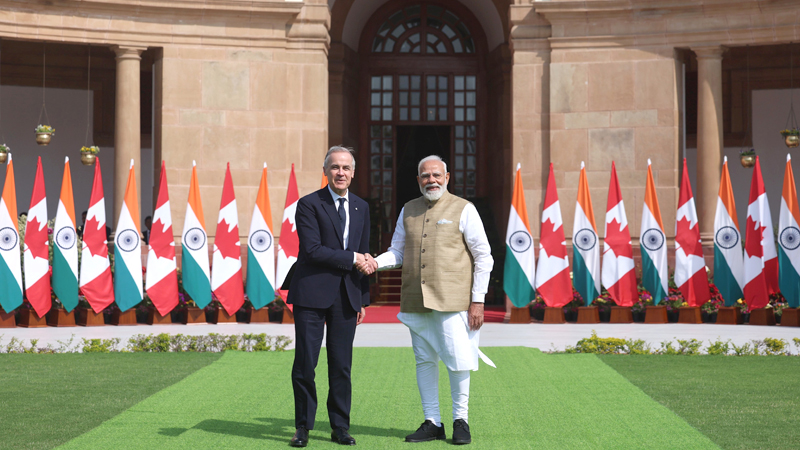
PM received by Prime Minister of Malaysia on arrival in Kuala Lumpur

| Published on:

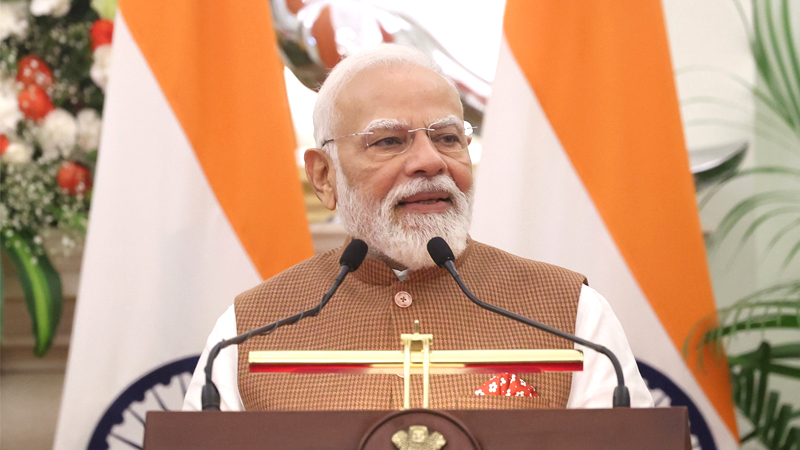
Prime Minister Shri Narendra Modi is visiting Malaysia on 7-8 February 2026 at the invitation of Prime Minister of Malaysia H.E. Dato’ Seri Anwar Ibrahim. This is the third visit of Prime Minister to Malaysia since 2015.

In a special gesture, Prime Minister on his arrival in Kuala Lumpur was warmly received by Prime Minister Dato’ Seri Anwar Ibrahim along with Malaysian Minister of Human Resources Dato’ Sri Ramanan Ramakrishnan and Deputy Foreign Minister of Malaysia, Dato’ Lukanisman bin Awang Sauni. This was followed by a colorful cultural welcome highlighting the shared heritage of both countries.

The visit seeks to further strengthen the India-Malaysia Comprehensive Strategic Partnership established in 2024. It reflects India’s strong commitment to strengthening India-Malaysia ties which is a key pillar of our Act East Policy, Indo-Pacific vision and Vision MAHASAGAR.

Union Home Minister chairs a review meeting in Jammu to assess the progress of development projects in J&K

| Published on:

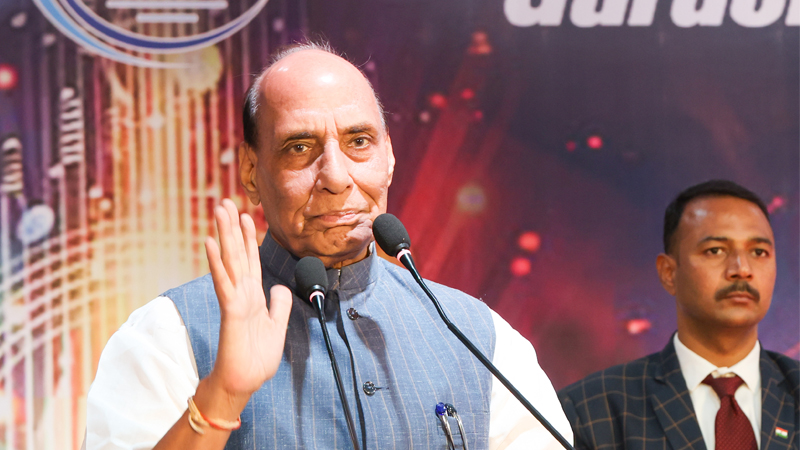
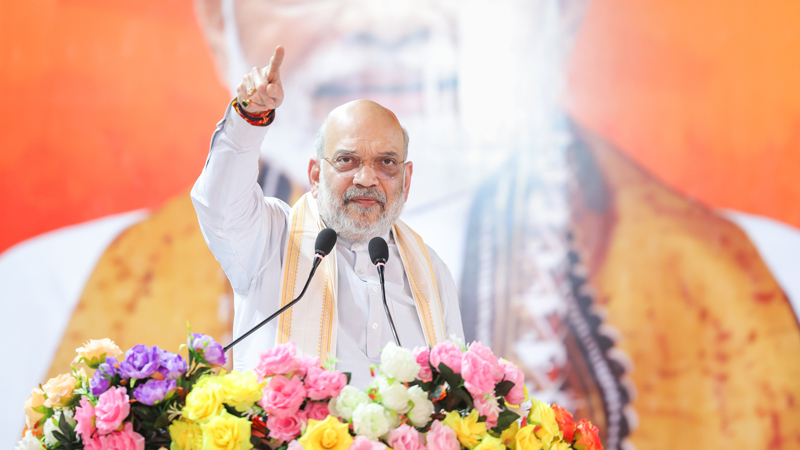
Union Home Minister and Minister of Cooperation Shri Amit Shah today chaired a review meeting in Jammu to assess the progress of development projects in the Union Territory of Jammu and Kashmir. During the meeting, Union Home Minister Shri Amit Shah undertook a comprehensive review of key sectors such as road infrastructure, power, industry, tourism, 4G and optical fibre connectivity. The meeting was attended by Lieutenant Governor of Jammu and Kashmir, Shri Manoj Sinha, Chief Minister Shri Omar Abdullah, Union Home Secretary, and senior officials from both, the Central Government and the Government of Jammu and Kashmir.

Union Home Minister said that the under the leadership of Prime Minister Shri Narendra Modi, the Government of India remains firmly committed to the vision of building a developed and prosperous Jammu and Kashmir. He said that due to the continuous and dedicated efforts being made by the Modi government to accelerate development, the development projects in Jammu and Kashmir have made unprecedented progress. He said that Jammu and Kashmir needs to develop the full potential of its hydropower projects. He said that special focus should be laid on achieving 100% saturation of the government’s welfare schemes and ensuring that the benefits of all development projects reach the intended beneficiaries

Shri Amit Shah said that the enthusiasm of tourists from across the country to visit Jammu and Kashmir has not diminished. He said that there is a need for aggressive marketing of Jammu and Kashmir’s tourist destinations in other states of the country to explore the tourism potential available here. He said that the Government of India will provide all possible assistance in the plan to develop new tourist destinations in Jammu and Kashmir.

Union Home Minister and Minister of Cooperation said that focus should be given to developing sports infrastructure and establishing sports academies to connect youth with development. In this regard, efforts will be made to secure an investment of about ₹200 crore by engaging with various sports bodies. Shri Shah also said that efforts should be made to promote the dairy sector in Jammu and Kashmir through the National Dairy Development Board (NDDB).

Marking a significant step, Jammu & Kashmir has been brought under the ambit of the Special Assistance to States for Capital Investment (SASCI) scheme for the first time in FY 2025–26, enabling access to 50-year interest-free loans for capital projects. Home Minister underlined that strengthened fiscal discipline would assist in stabilising the UTs fiscal deficit over time.

Shri Amit Shah said that India is steadily progressing towards the goal of Viksit Bharat by 2047, marking 100 years of independence and the Government of India will continue to extend wholehearted support to Jammu and Kashmir in pursuit of this goal. Union Home Minister Shri Amit Shah’s visit highlights the Government of India’s firm resolve to make the development, peace, and security of Jammu and Kashmir a foremost national priority.

Second Phase of Amrit Kaal Brings Opportunity and Responsibility for Youth: Union Health Minister

| Published on:

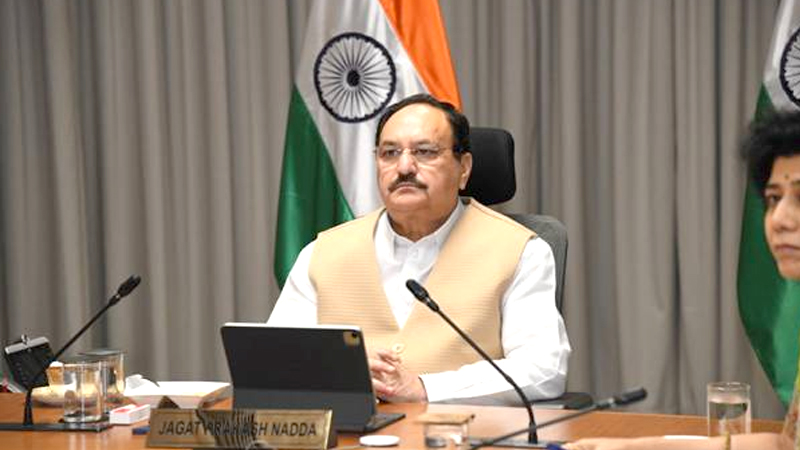
Union Minister for Health & Family Welfare and Chemicals & Fertilizers, Shri Jagat Prakash Nadda, addressed the Convocation Ceremony 2025–26 of Manav Rachna Educational Institutions (MREI), held with academic grandeur and enthusiasm.

Addressing the gathering, Union Health Minister Shri Jagat Prakash Nadda described the convocation as a milestone achieved through years of hard work, perseverance, discipline, and dedication, marking not just the culmination of an academic journey but the beginning of a new phase of responsibility towards the nation and society. He urged the graduating students to move forward guided by strong values, ethical conduct, and a commitment to public service.

Shri Nadda emphasized that the graduating cohort is privileged to be entering their professional lives during the second phase of Amrit Kaal, leading up to 2047, when India aspires to become a fully developed nation. He underlined that this phase presents both immense opportunities and equally significant responsibilities, calling upon the youth to contribute meaningfully to national development.

Highlighting the transformative progress achieved under the visionary leadership of Hon’ble Prime Minister Shri Narendra Modi over the last eleven years, the Union Minister noted that 23 AIIMS have been established, up from just 6 earlier, creating a robust network of state-of-the-art healthcare institutions across the country. He further stated that India has made remarkable advances across healthcare indicators, ranging from maternal and child health to communicable and non-communicable diseases.

He pointed out that institutional deliveries have increased from 78 percent to 89 percent, while Maternal Mortality Ratio (MMR) and Infant Mortality Rate (IMR) have declined at nearly three times the global average rate. Referring to tuberculosis control efforts, Shri Nadda highlighted that the World Health Organization (WHO) has acknowledged India’s significant progress, with TB notification increasing substantially and the decline rate being twice the global average. He also noted that Malaria related death prevalence has reduced to 0.6% despite India accounting for nearly one-sixth of the world’s population.

Shri Nadda further emphasized that out-of-pocket healthcare expenditure has declined sharply from 62 percent to 39.4 percent, driven by initiatives such as Ayushman Bharat, Ayushman Arogya Mandirs, and large-scale population screening programmes, making healthcare more accessible and affordable.

Underscoring the challenges ahead, he urged students to maintain both quality and scale in service delivery while addressing the needs of India’s vast population. He also acknowledged the collective contribution of parents, faculty members, institutional leadership, and support staff in shaping the students’ academic success.

Concluding his address, Shri Nadda exhorted graduates to always carry the sentiment that society has enabled their success and, in return, they must strive to give back by serving society selflessly and meaningfully.

Speaking at the occasion, Dr. Prashant Bhalla, Chancellor, Manav Rachna International Institute of Research and Studies (MRIIRS) and Manav Rachna University (MRU), congratulated the graduating students and emphasized the institution’s commitment to academic excellence, innovation-driven learning, industry collaboration, and global exposure. He encouraged students to remain rooted in ethical values while striving for professional excellence and societal impact.

During the ceremony, Honoris Causa degrees were conferred upon distinguished personalities in recognition of their outstanding contributions to society. The recipients included Justice Gita Mittal (MRU); Ms. Shreyasi Singh, Sports Minister of Bihar (MRIIRS); Dr. Anil Kumar J. Nayak, National President, Indian Medical Association (MRIIRS); and H.E. Dr. Ian Borg, Honourable Deputy Prime Minister and Minister of Foreign Affairs & Tourism, Republic of Malta (MRIIRS).

A total of 2,150 students from diverse disciplines including engineering, management, law, education, sciences, and healthcare were awarded degrees during the convocation. This included 521 undergraduate students, 58 postgraduate students, and 11 doctoral scholars, marking a significant academic milestone for the graduating cohort. Meritorious students were also honoured with gold medals and academic awards for their exemplary academic performance and outstanding achievements.

Senior dignitaries, faculty members, parents, and graduating students were present on the occasion.

Prime Minister’s departure statement ahead of his visit to Malaysia

| Published on:

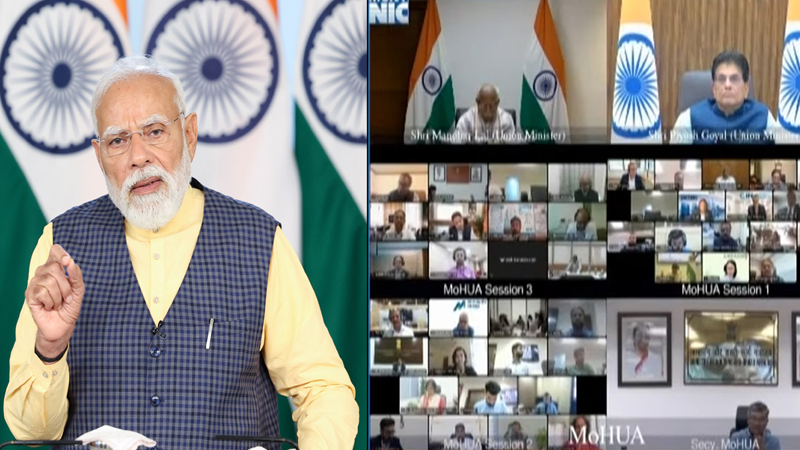
I am embarking on an Official Visit to Malaysia at the invitation of my friend, Prime Minister Anwar Ibrahim today.

The historic ties between India and Malaysia have seen steadfast progress in recent years. I look forward to my discussions with Prime Minister Anwar Ibrahim, and further enhancing our Comprehensive Strategic Partnership. We will aim to deepen our defence and security ties, enhance our economic and innovation partnership, and expand our collaboration into new domains.

I am also eager to meet the Indian community in Malaysia. Numbering nearly three million, they represent one of the largest Indian diasporas in the world. Their immense contribution to Malaysia’s progress and their role as a living bridge between our two nations provides a strong foundation to our historic friendship.

PM interacts with students during Pariksha Pe Charcha 2026

| Published on:

The Prime Minister, Shri Narendra Modi interacted with students today during the 9th edition of Pariksha Pe Charcha (PPC). The Prime Minister had an informal interaction with Exam Warriors, at his residence in Delhi.

Your Style, Your Pace

A Student from Gujarat asked that while parents worry for them and teachers support them, the issue arises when teachers suggest one study pattern, parents insist on another, and students follow a different trend, leaving them confused about which pattern is correct. The Prime Minister remarked that this continues throughout life, noting that even as Prime Minister people advise him differently. He highlighted that just as siblings at home have different eating patterns—some starting with vegetables, some with dal, some mixing everything together—everyone has their own way. He emphasized that enjoyment comes from following one’s own pattern. Shri Modi explained that some prefer studying at night, others early in the morning, and each has their own rhythm. He cautioned against dishonesty, mentioning how some students tell their mothers they will study in the morning but then avoid it. He stressed that students must trust their own pattern, listen carefully to suggestions, and add improvements only through personal experience, not merely because someone says so. He highlighted that when he began Pariksha Pe Charcha there was one pattern, but over time he improved it, even conducting sessions in different states, changing the format while retaining the core. Students noted that the Prime Minister’s nature was very friendly and that he mingled easily with them, explaining that everyone should listen to different patterns, take good qualities from each, focus on their own, and gradually strengthen it.

Interacting with the Prime Minister, another student who asked that often students cannot match the speed of school or teachers, and in trying to cover what is missed, they lose track of further chapters and fall behind. Shri Modi highlighted that teachers should keep their speed just one step ahead of the students, not too much, with the goal being within reach but not easily achievable. When the student recalled Exam Warrior mantra 26, “goal should be within reach but not easily achievable,” the Prime Minister praised the memory. He explained that if teachers go fifty steps ahead, students will give up, but like a farmer ploughs the field, teachers must plough the minds of students. He suggested that teachers should announce in advance the chapters to be taught in each week, so students can begin reading, asking, or searching online before the lesson. He emphasized that when the actual teaching happens, curiosity will arise, understanding will deepen, and focus will improve. He noted that if a chapter is very interesting, students will want to explore more, making revision stronger. The Prime Minister remarked that this is a simple method, and asked whether then the problem of teacher’s speed would remain. When the student replied yes, Shri Modi corrected, saying it would not, as students would no longer feel left behind because they had moved one step ahead of the teacher. He concluded, “Plough the mind, then connect the mind, and then place the subjects of study. You will always find students successful.” Students expressed that not everyone gets the opportunity to sit face-to-face with the Prime Minister, ask questions, and share conversations, and highlighted that he advised them to stay two steps ahead of teachers rather than two steps behind, ensuring they never fall behind.

A musical moment

A Student from Sikkim shared that she had composed a song in three languages—Hindi, Nepali, and Bengali—titled ‘Hamara Bharat Bhumi’, a patriotic song. The Prime Minister remarked with delight, asked if she enjoyed writing poetry, and upon her confirmation, encouraged her to recite. He lauded her and remarked on how she spoke of the unity of the nation—Ek Bharat, Shreshtha Bharat. Shri Modi then asked another student, Mansi, to sing. Mansi presented a song written by her mother, dedicated to students. The Prime Minister lauded her and asked to convey his congratulations to your mother. The student shared that she runs a YouTube channel, Facebook page, and Instagram account, with 1.5 lakh followers on Facebook. The Prime Minister expressed surprise and appreciation, and remarked that it was a matter of pride to meet such talented youth.

Shri Modi then welcomed all students, explaining that he had greeted them with Assam’s Gamosa, which he described as his most cherished possession. He highlighted that the Gamosa is a symbol of women’s empowerment in Assam and the North East, crafted at home by the region’s women, reflecting their strength and contribution. He said it was his heartfelt desire to gift the children the Gamosa as a mark of respect.

Preparation with Purpose

Student Sabavat Venkatesh then asked the Prime Minister whether skill or marks are more important, noting the confusion and fear among students. The Prime Minister remarked that balance is essential in life, whether between eating and sleeping, studying and playing, or skills and marks. He emphasized that leaning too far one way leads to imbalance, while proper balance ensures stability. He explained that skills are of two types—life skills and professional skills—and both are equally important. He stressed that no skill can develop without knowledge, observation, and study, and that skill begins with knowledge.

Shri Modi illustrated with examples: without life skills, one may struggle even in daily tasks like cooking or buying a ticket at a railway station. He emphasized that life skills must be fully achieved, including discipline, confidence, and adaptability. On professional skills, he explained that doctors must constantly update their skills, as books alone cannot make one a heart specialist—real skill comes from working with patients. Similarly, lawyers must practice under seniors to develop courtroom skills beyond knowing constitutional provisions. He underscored that professional skills require continuous learning and adaptation to new technologies, even at age 40, as advancements in medicine and other fields demand constant updating. He underlined that education and skill are twin siblings, inseparable, and that skill is indispensable in life.

Beyond marks and education as a medium

Further, a student from Sainik School, Imphal, Manipur, expressed admiration for Prime Minister Shri Narendra Modi, noting that his birthday coincides with the Prime Minister’s. Responding, Shri Modi remarked that he does not count the years that have passed but focuses on those that remain, urging students not to waste time dwelling on the past but to think of living what lies ahead.

When asked about exam preparation strategies based on past years’ questions, the Prime Minister highlighted that students often struggle when papers feel tough, not because they are outside the syllabus, but because focus is limited to repeated patterns. He noted that this issue existed even during his own student days and is sometimes perpetuated by teachers aiming only for marks. Shri Modi emphasized that good teachers ensure holistic development by covering the full syllabus and explaining its relevance to life. Using the example of a bowler in cricket, he explained that strengthening only shoulder muscles is insufficient; one must exercise, do yoga, strengthen the whole body and mind, adjust diet, and sleep properly. He stressed that education, similarly, is not only for exams but for life, and exams are meant to examine oneself. Marks are not the ultimate goal; complete development of life is. He advised that focusing solely on ten questions or patterns is limiting, and while they can be practiced, they should form only a small part of preparation, with the majority effort directed towards overall learning.

In response to a question on balancing study pressures, especially during pre-boards, the Prime Minister remarked that this is a common concern. He emphasized that education should not be seen as compulsion or burden but requires total involvement. Without full engagement, incomplete education cannot lead to success. He cautioned against the obsession with marks, asking whether anyone remembers the name of a student who scored highest marks last year in boards. When the student replied no, Shri Modi underscored that even if such achievements are praised briefly, they are soon forgotten, showing how little importance marks hold. He advised students not to tie their minds to marks but to focus on where their life is heading, continuously testing themselves not only in classrooms or exam halls but in life itself.

Less Pressure, More Learning

Continuing the interactive session, a student asked Prime Minister Modi how to remain calm and focused while studying, as many distracting thoughts arise and lessons are quickly forgotten. The Prime Minister responded by giving an example: “Just as you have come here today, even after 25 years if someone asks you about this program, will you forget or remember?” The student replied it would always be remembered as a special moment. Shri Modi explained that this is because the student is fully involved, thinking about the present, which ensures lasting memory.

He highlighted that memories remain when one is completely involved and when experiences are shared with friends. He advised students to make friends with those less confident and teach them, while also seeking guidance from brighter peers for a few minutes to validate their own understanding. He emphasized that this double benefit brings new ideas, opens the mind, and strengthens focus.

Another student from Punjab interacted and greeted Prime Minister Modi and asked about the challenge faced by Class 12 students who prepare simultaneously for board examinations and competitive exams, given their differing patterns and overlapping schedules. The Prime Minister acknowledged the concern, likening it to playing cricket and football at the same time, and emphasized that priority must be given to the Class 12 boards. He remarked that if students thoroughly absorb their syllabus, competitive exams will become a by-product without requiring separate effort. He further advised parents to allow children to blossom according to their capacity, ability, and interest.

Balancing marks, games and laughter

A student raised a question about pursuing a future in gaming despite societal pressure to focus only on studies. The Prime Minister explained that parents often discourage initially, but once success is achieved, they take pride and celebrate it. He encouraged the student to channel interest in gaming productively by creating games based on India’s rich stories such as Panchatantra or mythological events, and to share them on social media platforms to gain recognition. He highlighted that gaming is a skill requiring speed and alertness, which contributes to self-development, and advised focusing on building expertise in high-quality games. He cautioned against gambling in gaming, noting that laws have been enacted to prevent such practices, and stressed that gaming should be pursued as a constructive skill.

Students expressed excitement at visiting the Prime Minister’s residence, noting his friendly manner, genuine interest in their questions, and the thoughtful answers he provided.

Turning Fear into strength – managing stress, time & confidence

The students shared how reading Exam Warrior transformed their approach to examinations. One student remarked that earlier exams caused stress and fear, but after reading the book, exams had become a friend. Another highlighted that previously they felt anxious comparing themselves to others, but realized their own technique was unique and effective. A student noted that time management had always been a struggle, but after learning from Exam Warrior, they resolved to wake up early and manage tasks better.

Prime Minister Modi advised a simple method for time management: writing tasks in a diary before sleeping, tallying them the next day, and analyzing why some tasks were left incomplete. He emphasized that learning to use time productively removes pressure and fatigue, sharing that his own habit of proper time use keeps him stress-free despite numerous responsibilities.

Students expressed how their fear of subjects like mathematics had turned into interest, with one noting that maths was once a ghost but now had become a passion. The Prime Minister encouraged exploring Vedic Mathematics, describing it as enjoyable and magical, and suggested sharing such methods with friends to increase interest.

Another student shared that exam dates once caused fear, but the book’s mantra of treating exams as a celebration brought motivation. The Prime Minister advised that lessons from Pariksha Pe Charcha should also be shared with family members, as they can benefit equally.

Students reflected on how they overcame fear of low marks, realizing that marks are not everything and citing Dr. APJ Abdul Kalam’s example of persistence despite failures. The Prime Minister emphasized that reduced tension opens the mind to learning new skills such as singing, painting, or writing poems, and praised students who had begun creative pursuits.

Confidence gained from the book also helped students overcome fear of presentations. The Prime Minister explained that confidence comes from truth and experience, just as ordinary people can speak clearly when narrating events they witnessed. He stressed that students’ confidence arises from the truth of their own efforts and achievements.

One student shared that lengthy literature papers once caused panic, but now they practice writing faster and improving handwriting. The Prime Minister advised techniques such as pausing for 30 seconds, taking deep breaths, and resetting the mind before tackling papers, noting that mistakes occur not because of lack of knowledge but due to haste. He concluded that with proper techniques and confidence, students can overcome exam fear and succeed.

Holding on through the noise

A student asked how to study amidst household noise and lack of parental support. The Prime Minister recalled a video of a child reading atop a bullock cart loaded with goods, emphasizing that comfort is not essential for success. He highlighted that many top scorers in board exams come from small villages without luxuries, and shared the inspiring story of blind girls who won in cricket despite hardships. He remarked that life is shaped not by comfort zones but by the way one lives.

Another student from Tamil Nadu, raised the issue of guests disrupting exam preparation. The Prime Minister advised turning the situation around by asking guests about their own childhood experiences, thereby shifting the focus and easing pressure.

Big Dreams, Bigger Actions

A student from Ladakh asked whether children should dream big and how to begin fulfilling those dreams. The Prime Minister stated that not dreaming is a crime, but dreams must be backed by action. He explained that aspirations like becoming an astronaut require study, biographies, and focused interest, while cautioning against making dreams public to avoid ridicule. He encouraged students to write down their dreams and nurture them privately.

Responding to another query on daily habits to achieve big dreams, Shri Modi suggested reading biographies of great personalities. He explained that understanding their struggles and early steps helps students relate and gain confidence, showing them how to progress step by step.

A student then recited a heartfelt poem dedicated to the Prime Minister, describing him as the pride of India, a servant of humanity, and a leader carrying forward the dreams of the nation. The Prime Minister praised the poem warmly and lauded the student.

When PM became a teacher

Prime Minister Modi remarked that he envisions a developed India by 2047, coinciding with the centenary of independence, and emphasized that the youth, then aged 35 to 45, will be at the most crucial stage of their lives to reap the benefits of this vision. He highlighted that Mahatma Gandhi returned from Africa in 1915 and led the freedom struggle until 1947, and that sacrifices by leaders like Bhagat Singh inspired generations to fight for independence. He stressed that if such a monumental freedom could be achieved, then through collective effort a developed India can certainly be realized.

The Prime Minister urged students to write down their personal commitments towards developed India and asked them to identify five actions they could take, noting their responses on skill development, self-confidence, and use of indigenous products. He highlighted that adopting Swadeshi begins with preparing the mind and shedding the colonial mentality, pointing out how fascination with foreign goods persists even in schools. He directed students to list all items they use daily, identify foreign-made products, and gradually replace them with Indian alternatives, ensuring that within a year their households are filled with Indian goods. He asserted that if Indians themselves do not take pride in their own products, the world will not. He criticized the tendency to blame “Indian time” for delays, remarking that such attitudes demean the nation, and called for adherence to duty beginning with cleanliness. He stressed that developed nations appear clean not because of cleaners but because citizens do not litter, and urged that Indians must resolve never to compromise on cleanliness, even picking up litter themselves to instill shame in those who discard it. He underlined that maintaining health is also a duty, and if citizens fulfill such responsibilities, no force can stop India from becoming developed, with the youth enjoying the greatest benefits when they reach maturity. He asked whether work that yields fruit for them should be done, and students affirmed. He then highlighted the vast opportunities available to the current generation, particularly in technology, and remarked that while his era lacked such opportunities, today’s youth must use Artificial Intelligence wisely. He explained that using AI merely to summarize biographies adds little value, but asking AI to recommend biographies based on age and interests, then reading those books, leads to genuine development. He stressed that AI should be a tool to enhance strength and wisdom, not just entertainment. Students expressed appreciation for his guidance on AI usage, noting its relevance to their own technological pursuits.

The Prime Minister listened to a student’s flute performance in Carnatic classical style and praised it. He appreciated a handmade bouquet presented by a student, noting its traditional Uttarakhand significance during Basant Panchami, acknowledged references to Tripura traditions, and commended organic tea and Assamese gamocha gifted by students, encouraging them to continue writing poetry. He extended warm thanks and best wishes to all.

Sharing glimpses from the upcoming episode of Pariksha Pe Charcha, the PM remarked that many students had suggested holding “Pariksha Pe Charcha” across different parts of the country, which was reflected in this special episode. He emphasized that within families, one should learn from the good qualities of siblings, and that aspiring to greatness is not wrong but should not be tied to comparisons. He highlighted the importance of education in both personal and social life, while also stressing that sports must be an essential part of life. He invited students to share their thoughts and experiences openly.

The next episode will be aired on 9th February 2026 at 10 AM.

BJP National President addresses Booth Adhyaksh Sammelan in Ernakulam, Kerala

| Published on:

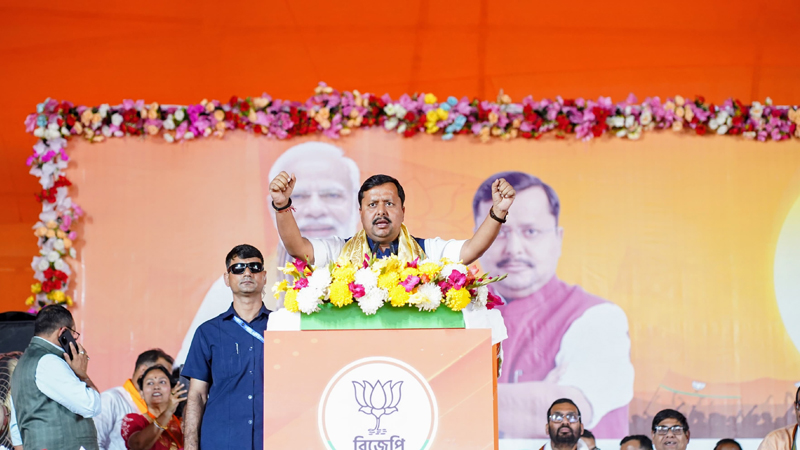
In a resounding display of political strength and ideological conviction, BJP National President Shri Nitin Nabin ignited the spirit of thousands of party’s faithful during his landmark visit to Kerala. Addressing the Booth Adhyaksh Sammelan at the Adlux International Convention Center in Karukutty (Ernakulam), Shri Nabin delivered a blistering critique of the state’s current political duopoly while laying out a vision for a “Viksit Keralam” under the leadership of Prime Minister Shri Narendra Modi ji. Earlier, Party Karyakartas accorded him a grand and enthusiastic welcome at the Cochin International Airport in Kochi. Thereafter, Shri Nabin chaired a meeting of the state BJP Core Committee. Subsequently, Shri Nitin Nabin also held a meeting with National Democratic Alliance leaders at the Renai Cochin in Palarivattom, Kochi. During the Booth Adhyaksh Sammelan, BJP State President Shri Rajeev Chandrasekhar, National General Secretary and Kerala Election In-charge Shri Vinod Tawde, Union Minister Sushri Shobha Karandlaje, senior BJP leader Shri A. N. Radhakrishnan, Shri K. Soman, Union Minister Shri George Kurian, Shri V. Muraleedharan, and other leaders were present on the stage.

BJP National President Shri Nitin Nabin delivered a stirring tribute to the resilience of the party in Kerala, describing it as a battlefield where the BJP has thrived despite the most hostile of circumstances. Invoking the profound wisdom of Pt. Deendayal Upadhyaya ji, Shri Nabin declared that a true nation is forged only when its people are bound by a single goal, a singular ideal, and an unshakeable devotion to the motherland. “Without ideals, life loses its compass; without the motherland, our very existence is hollow,” he asserted.

Driven by the sacred mantra of “Nation First, Party Next, Self Last,” Shri Nabin paid a tearful and solemn homage to the more than 250 immortal martyrs of the Sangh and BJP. He made it clear: the party’s expansion in Kerala is not mere political luck—it is a house built upon the valour, blood, and supreme sacrifice of these heroes. The fruits of this relentless struggle are now undeniable. Today, the BJP stands tall in Kerala with a historic Member of Parliament, a sitting Mayor and two Municipal Presidents, over 30 Panchayat Presidents and nearly 2,000 elected representatives. Shri Nabin credited this meteoric rise entirely to the indomitable spirit of the Karyakartas, whose dedication is finally dismantling the old political order.

Shri Nitin Nabin delivered a scathing indictment of the political forces that have systematically throttled Kerala’s progress. He reminded the audience that while this land is blessed with unparalleled natural beauty and brilliance in Ayurveda, sports, and science, its growth has been hijacked by a cynical political duopoly. For decades, the LDF and UDF have treated Kerala as their personal fiefdom, alternating in power only to exploit, rather than elevate, the state’s immense potential. While the rest of India surged forward, these two parties engaged in a calculated “power-sharing” tussle designed to keep Kerala stagnant. Instead of building an “Ideal State,” they institutionalized a culture of development-blockade. Kerala’s brightest minds—the very engine of its future—have been intentionally held back and denied the opportunities they deserve. Under their collusion, the state has been pushed into an abyss of rampant corruption, lawlessness, and extreme appeasement politics. “The winds of total transformation are finally blowing,” Shri Nabin declared, “and it is the youth who will lead this charge.” He asserted that as the mask falls off this unholy alliance and their misdeeds are laid bare before the public, the people of Kerala will no longer settle for the status quo. The hour of change has arrived.

Shri Nitin Nabin launched a fierce offensive against the UDF and LDF, accusing them of a shameful “race to the bottom” to see who can be more anti-Sanatan. He exposed a sinister pattern of hostility where the UDF openly allies with extremist elements like Jamaat-e-Islami and the Muslim League, while simultaneously working to suppress Hindu traditions—even going so far as to obstruct the reading of the Ramayana. Shri Nabin did not mince words, linking heinous acts of temple desecration directly to the shadow of government complicity. The LDF, he charged, has not only shattered all records of corruption but has committed the ultimate sacrilege by targeting Bhagwaan Ayyappa, the very heartbeat of Kerala’s faith. This is not an isolated incident, but a coordinated assault on Sanatan traditions by the INDI alliance. Targeting Congress, he said, this is the same party that filed affidavits questioning the existence of Prabhu Shri Ram, that once locked the doors of the Ram Mandir, and that recently attempted to extinguish the Deepam Puja in Tamil Nadu. Shri Nabin slammed the “tacit collusion” between the LDF and UDF that allowed the culprits of the Sabarimala incidents to walk free on bail. “The people of Kerala will not be trapped by those who try to milk Sabarimala for political gain after desecrating it,” Shri Nabin thundered. He issued a final, ironclad warning: The Bharatiya Janata Party will not rest. No matter the sacrifice, BJP Karyakartas will take to the streets to ensure that those who insulted the faith of crores are punished. “Those who wound our traditions will find no forgiveness. We will fight this battle with every ounce of our strength until justice is served!”

Shri Nitin Nabin drew a sharp, undeniable line between the civilizational awakening led by the Centre and the moral decay permitted by the state government. He reminded the people that while Prime Minister Shri Narendra Modi ji is restoring India’s soul—constructing the magnificent Shri Ram Mandir, revitalizing the glory of Mahakal in Ujjain, and breathing new life into sacred sites like Somnath—the government in Kerala is actively working to insult and undermine these very faiths. The President issued a blistering reminder of the security risks Kerala faced under the current regime: Kerala was allowed to become the nerve center for the PFI, an organization that recruited 50,000 members and weaponized 140 offices to train for terror. It was only the decisive courage of the Modi Government that dismantled this network, banning the organization on September 28, 2022, and stripping away the protection previously enjoyed by these criminals. Furthermore, Shri Nabin expressed deep outrage over the betrayal of Kerala’s women. In a land where women have historically led in education and service, the state now shamefully reports the highest figures for crimes and atrocities against women. “This government is not just failing; it is sitting in silent complicity while our sisters and mothers are exploited,” Shri Nabin declared. He vowed that the BJP would stand as an unbreakable wall between the public and those who seek to degrade their faith and safety. The BJP will not remain silent; we will be the voice of the silenced.

Shri Nitin Nabin delivered a stinging indictment of the catastrophic “brain drain” currently bleeding the state dry. He revealed a heartbreaking reality: every year, 3 to 4 lakh young men and women are forced to abandon their homes, fleeing Kerala in a desperate search for the jobs and dignity denied to them by the state. It is a tragic irony that Kerala, once the world’s beacon of academic excellence and a global center of education, is now driving its own children into exile. The President placed the blame squarely at the feet of the INDI Alliance. He exposed the “political theatrics” of the ruling LDF and the so-called opposition UDF, branding them as two sides of the same corrupt coin. * The Staged Conflict: While they pretend to fight in public, they are partners in a system that delivers only corruption, anarchy, and stagnation. Instead of justice and growth, they have gifted the youth of Kerala a “No-Opportunity Zone.” Against this backdrop of despair, Shri Nabin offered a bold, transformative alternative. The BJP is not just a political choice; it is a new culture of enthusiasm, visionary leadership, and clean governance. > “This is a battle for the soul of Kerala,” Shri Nabin thundered. He called upon every citizen to reject the status quo and join the BJP’s crusade for ‘Viksit Keralam, Viksit Bharat.’ The time has come to stop the migration and start the transformation!

Shri Nitin Nabin showcased the sheer scale of Prime Minister Shri Narendra Modi’s global economic diplomacy, contrasting a surging India with a stagnant state regime. He hailed the “Mother of All Deals” with the European Union and the historic trade pact with the United States as game-changers that will revolutionize the lives of Indian traders, farmers, and—most crucially—the fishing communities of Kerala’s coastline. While the world looks to India for leadership in Semiconductors and Artificial Intelligence, Shri Nabin took a moment to salute the “commendable” brilliance of Kerala’s youth. From the high-stakes missions of ISRO to the boardrooms of global tech giants, he celebrated Kerala’s students as the backbone of India’s scientific renaissance. But the Prime Minister’s vision isn’t just global—it is deeply personal to every household in Kerala. Shri Nabin listed the monumental investments flowing into the state, saying that Providing assistance of ₹13,000 crore to 29 lakh farmers of Kerala through the PM Kisan Samman Nidhi, extending support of ₹444 crore to 10 lakh mothers under the Matru Vandana Yojana, and providing ₹1,400 crore in assistance to fishing communities reflects the resolve of the successful Hon’ble Prime Minister Shri Narendra Modi ji’s government to include the people of Kerala in its development vision. “The Modi government does not just make promises; it delivers,” Shri Nabin asserted. He highlighted Kerala’s strategic role in the Rare Earth Corridor and the surge in ecological tourism, proving that the Centre views Kerala as a crown jewel of national development. “Whenever a pledge is made for Kerala, the Modi government ensures its total fulfillment. We are not just dreaming of a better Kerala—we are building it!”

Shri Nitin Nabin delivered a stirring tribute to the resilience of the BJP family, declaring that the nation stood stunned and inspired by the powerful presence of Shri Sadanand Master in the Rajya Sabha. His journey from a grassroots Karyakarta to the Upper House is not just a political promotion—it is a triumph of the human spirit over decades of brutal struggle, making him the true, unyielding Voice of Kerala. In a direct and scathing challenge to the Leader of the Opposition, Shri Nabin exposed the hypocrisy of those who claim to protect democracy – Rahul Gandhi parades the Constitution at every opportunity. He must answer – On which page of that sacred book is it written that a man’s limbs should be severed for his ideology? Where does it say that political opponents should be sentenced to death?” He accused Rahul Gandhi of nothing but the cold exploitation of Kerala’s trust, warning that the people are no longer silent—they are ready to deliver a crushing reply. With deep humility, Shri Nabin bowed before the Karyakartas in attendance, hailing them as the bravest soldiers of the movement. He lauded their refusal to break under the crushing weight of state-sponsored oppression, pervasive fear, and visceral violence. > “While others retreated, the Karyakartas of Kerala marched forward. You held the saffron flag high in the face of injustice and never took a single step back. The entire Bharatiya Janata Party salutes your unmatched courage!”

Shri Nitin Nabin declared that the relentless struggle of Kerala’s Karyakartas is the ultimate personification of his core political belief: politics is not a 100-meter sprint; it is a grueling marathon. He hailed the Kerala unit as a global gold standard for ideological devotion, stating that if anyone on earth wants to see what true grit looks like, they must look at the brave soldiers of Kerala who refused to let the saffron flag bow, even in the face of the most brutal adversity. The proof of this “marathon” strategy is written in the hard, undeniable numbers of the BJP’s meteoric rise – A massive leap from 11% in 2014 to 16% in 2019, culminating in a historic 20% in 2024. By seizing the Mayor’s seat in the capital, Thiruvananthapuram, the BJP has annihilated 45 years of entrenched Left dominance. A party that began with just two MPs has now become the world’s largest political force, boasting the highest number of MPs, MLAs, and Karyakartas in the nation. “The momentum is now irreversible,” Shri Nabin asserted. “The expansion of our support base proves that the upcoming elections will be the final turning point for the state’s future.” He concluded with a powerful signal to the people of Kerala: the era of the status quo is over. The BJP and the NDA alliance are no longer just “challengers”—they are the inevitable future leadership of Kerala.

Shri Nitin Nabin stated that just as the Left government was brought to an end in Tripura after 30 years, BJP and the NDA have similarly already hoisted their flag across the entire North-East. In Bengal too, BJP Karyakartas are fighting with full strength and dedication and are continuously making sacrifices to form a BJP government. The struggle of Kerala’s Karyakartas will also not go in vain, and in the forthcoming elections, on the strength of their hard work and valour, a BJP government will be formed in Kerala as well, with the NDA alliance coming to power. All BJP Karyakartas must take a resolve to reach every booth, every neighbourhood, every village and hamlet with the schemes of the government led by Hon’ble Prime Minister Shri Narendra Modi ji, his achievements, and the party’s ideology, and to carry information about BJP’s development chariot to every individual. The vision of the Hon’ble Prime Minister Shri Narendra Modi ji must be taken to the people, and that the time has now come for the countdown of the LDF and the UDF to begin. Shri Nabin urged booth presidents and all Karyakartas in the Kerala elections to carry forward BJP’s resolve in the state and work towards forming a government under the leadership of Hon’ble Prime Minister Shri Narendra Modi ji that delivers development schemes to the last person in the queue, makes Kerala an ideal state, takes Kerala’s tourism, science, and education to a new and higher level, and ensures that a BJP government is formed in Kerala as well.

Prime Minister Congratulates India’s U-19 Cricket Team on World Cup Victory

| Published on:

The Prime Minister, Shri Narendra Modi, has lauded the outstanding performance of India’s Under-19 cricket team for clinching the World Cup title.

Prime Minister commended the team for playing very well through the tournament, showcasing exceptional skill. This win will inspire several young sportspersons too, he added.

In a message on X, Shri Modi said:

“India’s cricketing talent shines!

Proud of our U-19 team for bringing home the World Cup. The team has played very well through the tournament, showcasing exceptional skill. This win will inspire several young sportspersons too. Best wishes to the players for their upcoming endeavours.”

Union Home Minister visits ‘Gurnam’ and ‘Bobiya’ BOPs in Jammu

| Published on:

Union Home Minister and Minister of Cooperation, Shri Amit Shah, today visited the Border Out Posts (BOPs) ‘Gurnam’ and ‘Bobiya’ located on the India-Pakistan border during the second day of his visit to Jammu. The Home Minister paid floral tributes to the martyrs at the “Ajey Prahari” memorial and also planted a sapling at the Border Outpost Bobiya. Shri Shah inaugurated projects worth ₹ 7 Crore for the welfare of troops, including newly built Solar Water Heaters, Solar Power Plants, and an Officers’ mess. He also laid foundation stone for the BSF infrastructure projects worth ₹ 242 Crore. The event was attended by Jammu and Kashmir Lieutenant Governor Shri Manoj Sinha, Union Home Secretary, Director of the Intelligence Bureau (IB), Director General of the Border Security Force, and other senior officials.

Addressing BSF personnel, Shri Amit Shah said that whenever he visits BSF posts located in remote and challenging areas of Kutch, Rajasthan, or Jammu and Kashmir, he always returns with values of duty consciousness and unwavering commitment from the soldiers posted there. He said that during such visits, he witnesses how BSF personnel perform their duties with deep dedication under difficult and challenging conditions. The Home Minister described BSF personnel as the finest example of discipline and dedication, standing firm day and night to protect the nation’s borders. He added that the BSF’s glorious 60-year history has instilled the same sense of discipline among the people of the country.

Union Home Minister Shri Amit Shah said that whenever the nation’s borders have faced threats of intrusion or infiltration, the BSF has stood like an impregnable wall, resolute in its commitment to safeguarding the country. He stated that the bravery and valor displayed by the BSF during ‘Operation Sindoor’ have added a golden chapter to its six-decade-long history. Even in the most challenging times, BSF personnel upheld the spirit of “We are the sentinels of the border.” He said that the BSF’s Jammu and Kashmir Frontier completely destroyed 118 Pakistani posts and three terrorist launch pads. In this operation, Sub-Inspector Mohammad Imtiaz Ahmad and Constable Deepak Chingakham, who laid down their lives in the line of duty, were awarded the Vir Chakra. which is a matter of immense pride for us. Shri Shah also said that during this period BSF also received 16 gallantry medals and several commendation certificates.

Shri Amit Shah said that whether deployed along the borders, in the difficult terrain of Manipur, or in Maoist-affected areas of Odisha and Chhattisgarh, the BSF has demonstrated impeccable courage everywhere. He praised the force for its outstanding humanitarian service during natural disasters, particularly in Punjab. Shri Shah said that the Chief Minister of Punjab informed him that without the BSF, the challenges during floods would have multiplied manifold. The BSF rendered invaluable service to the people of Punjab and extended extensive assistance during the crisis.

Union Home Minister Shri Amit Shah said that it is a shared responsibility to ensure that the nation’s borders remain fully secure and vigilant. He noted that border-related challenges have changed significantly over the past 60 years. While the courage, alertness, and dedication of personnel remain crucial, many emerging challenges are now technology-driven. Therefore, advanced technological solutions must be adopted to effectively address them. He recalled that during the BSF Raising Day celebrations, he had announced that the 61st year of the BSF would be dedicated to modernization, as well as to the welfare of BSF personnel and their families. He added that a dedicated team in the Ministry of Home Affairs (MHA) is continuously working on both fronts.

Shri Amit Shah said that under the leadership of Prime Minister Shri Narendra Modi, the Government of India is fully committed to the welfare of security personnel. He announced that a special welfare scheme for BSF personnel will be introduced soon. Moreover, the Government will invest substantial funds to technologically modernize the entire border security system. This modernization will provide improved border infrastructure and advanced equipment for BSF personnel, enabling them to perform their duties more effectively. Shri Shah said these facilities will significantly reduce hardships faced by the soldiers and enhance their operational efficiency. He added that it is because of the unwavering sense of duty, dedication, and commitment of BSF personnel stationed along the borders that the entire nation sleeps peacefully and feels secure.

The Home Minister also appreciated the significant contribution of women personnel in the BSF towards border security. He later had lunch with the soldiers.

PM’s reply to the Motion of Thanks on the President’s Address in Rajya Sabha

| Published on:

The Prime Minister, Shri Narendra Modi replied to the Motion of Thanks on the President’s Address in the Rajya Sabha today. Addressing the House, the Prime Minister expressed gratitude for the President’s address, stating that it was his privilege to share his sentiments in support of the motion of thanks. He remarked that the past year has been one of rapid progress in the journey of a developed India, with transformation visible across every sector and among all sections of society, as the nation moves forward in the right direction with great speed. Shri Modi highlighted that the President presented these themes with sensitivity and clarity.

Shri Modi emphasized that the President spoke in detail about the middle class, the lower middle class, the poor, villages, farmers, women, science, technology, and agriculture, presenting the voice of India’s progress in Parliament. He noted that the President also elaborated on how the youth are advancing India’s strength, and underlined that every section’s capabilities were articulated, along with a strong expression of confidence in India’s bright future, which is inspiring for all.

Shri Modi further remarked that the first quarter of the 21st century has concluded, and just as the second quarter of the last century was decisive in India’s freedom struggle, this second quarter will be equally powerful and fast-paced in building a developed India. He said that every citizen feels the nation has reached a crucial stage, where there is no question of stopping or looking back, only moving forward with speed, achieving the goal, and breathing only after reaching it, and in this direction the country is advancing.

Highlighting that India is currently witnessing a rare confluence of favorable circumstances, Prime Minister called it a highly auspicious alignment. He underlined that while the richest nations of the world are aging, India is simultaneously reaching new heights of development and becoming increasingly youthful, a nation with a growing young population. Shri Modi emphasized that the world’s attraction towards India has grown significantly, with global recognition of India’s talent pool. He noted that India possesses a vital pool of young talent with dreams, determination, and capability, which he described as a second blessing of strength.

The Prime Minister stated that India has emerged as a beacon of hope, providing solutions to global challenges, and pointed out the unique combination of high growth and low inflation in India’s economy, reflecting its resilience. He recalled that when his government was given the opportunity to serve, India was counted among the ‘Fragile Five,’ and though the country was once the sixth largest economy at independence, it had slipped to eleventh, but today India is advancing rapidly towards becoming the third largest economy.

Shri Modi highlighted that in every sector—science, space, sports—India is brimming with confidence. He observed that in the post-COVID world, as global instability grows, a new world order is emerging, and impartial analysis shows a clear tilt towards India. He stressed that India has become a trusted partner and friend to many nations, contributing shoulder to shoulder to global welfare. The Prime Minister underscored that India has become the strong voice of the Global South on international platforms and is entering into “future-ready trade deals” with major countries. He noted that nine significant trade agreements have been signed recently, including the “Mother of all Deals” with the European Union involving 27 countries. He criticized past governments for leaving India in a state where no country was willing to engage in trade deals, contrasting it with the current scenario where developed nations are eager to partner with India.

Recalling his experience in Gujarat, where the Vibrant Gujarat Summit had Japan as a partner country, Shri Modi said that today India as a nation is demonstrating similar strength. He emphasized that this is possible only when there is economic power, citizen energy, and a strong manufacturing ecosystem. He criticized vote-bank politics for neglecting these priorities and asserted that opposition governments lacked vision, willpower, and ideas, which led the nation to suffer.

Shri Modi expressed gratitude to the people for giving him the opportunity to serve, noting that much of his government’s energy has gone into correcting past mistakes and rebuilding India’s global image. He stressed that India is now driven by policy, not adhocism, and that the mantra of “Reform, Perform, Transform” has put the nation on the “Reform Express.” He detailed structural, process, and policy reforms aimed at strengthening manufacturing, empowering entrepreneurs, and ensuring value addition, declaring that India is now fully prepared to compete globally.

Highlighting that global CEO forums now view Indian entrepreneurs as equals, Shri Modi said even delegations from all political parties have experienced this parity abroad, returning with pride. He emphasized the strength of India’s MSME network, which provides long-term economic power, and noted that many components of aircraft are manufactured by India’s small MSMEs, earning global trust. He stated that the results of these efforts are evident, with major nations eager to build trade relations with India. He pointed to the European Union trade deal and the recent agreement with the United States, which have been widely praised internationally. He remarked that the EU deal gave the world confidence in global stability, and the US deal reinforced the sense of momentum, both serving as positive signals for the world.

Prime Minister Modi remarked that the greatest benefit of current opportunities will go to the youth of India, stressing that when he speaks of youth, it includes the middle-class youth, urban youth, rural youth, sons and daughters alike, and should not be seen in fragments. He highlighted that the nation must take pride in the strength of its youth, as the global market has now opened for them, presenting opportunities everywhere. Shri Modi encouraged the youth, saying he stands shoulder to shoulder with them, urging them to move forward with courage, as the nation supports them and the world awaits their contribution. The Prime Minister noted the rising global demand for Indian professionals, including caregivers, with companies even setting up special offices in India to recruit qualified talent, which demonstrates the vast opportunities opening up for Indian professionals worldwide.

Shri Modi observed that the Rajya Sabha represents the states, yet the level of debate he witnessed should have been higher, especially from those who have governed for decades, but they missed the opportunity, raising questions about how the nation can trust them. He pointed out the irony of a member who proudly calls himself a king speaking about economic equality, questioning whether such contradictions are what the country is left to witness. The Prime Minister criticized the ruling party of West Bengal, urging them to look within, as their governance has set new records in decline across all parameters, leaving the people’s future in darkness while they lecture others. He condemned the defense of illegal infiltrators, stating that such infiltrators deprive Indian youth of their rights, livelihoods, tribal lands, and threaten the lives of sons and daughters, while atrocities against women continue unchecked. He asserted that those who pressure courts to protect infiltrators are betraying the youth of India, and such actions cannot be forgiven.

The Prime Minister further criticized members whose governments are mired in corruption and excesses, noting that their palaces have become symbols of hatred. He declared that opposition parties have all been in power for decades at the Centre and in states, yet their identity remains one of corruption and failed governance. He said that when bills are discussed today, they are spoken of with pride, but in the past, discussions of deals only brought up scandals like the Bofors deal, as those governments focused only on filling their own pockets, not on improving citizens’ lives.

Shri Modi gave the example of the banking sector, describing it as the grid of the economy. He recalled that before 2014, the era of “phone banking” prevailed, where leaders’ calls determined the disbursement of crores of rupees, while the poor were treated with disdain and denied access. He highlighted that more than 50% of the population had never seen the doors of a bank, while the then ruling leaders ensured billions were handed out to their associates, who treated the money as personal property. He noted that under the then ruling dispensation rule, and now under the states governed by opposition alliance, the banking system was on the verge of collapse. Shri Modi recounted that when he first became Prime Minister, a foreign leader advised him to study India’s banking system before attempting reforms, reflecting the dire state of affairs. He emphasized that the previous governments allowed NPAs to pile up into mountains, with constant discussions revolving around how to survive the NPA crisis, showing the neglect and mismanagement of the banking system.

Prime Minister Shri Narendra Modi remarked that the challenge was immense, but the government acted wisely, taking into confidence all stakeholders of the banking system. He highlighted that reforms were necessary and were carried out with courage, creating a transparent system. He stated that numerous banking reforms were undertaken, and weak public sector banks that were unable to function properly were merged with stronger banks. Shri Modi recalled that one intellectual had once written that if the Modi government could achieve this, it would be a major reform for India, and he emphasized that this was accomplished immediately upon assuming office. The Prime Minister underlined that as a result, banks were freed from the deep-rooted malaise, their health improved steadily, and they are now progressing rapidly. He noted that with healthier banks, transactions increased, people gained access to funds, and ordinary citizens received money. Shri Modi stressed that loans reached poor people who were once denied entry to banks. He highlighted the success of the Mudra Yojana, which empowers youth to stand on their own feet and inspires self-employment, not just through speeches but by extending real support. He stated that through Mudra Yojana, loans worth more than ₹30 lakh crore were disbursed without guarantees to the youth, enabling them to expand their businesses, with a significant number of women beneficiaries. The Prime Minister emphasized that rural women, through self-help groups, are now dreaming big and standing independently, with 10 crore women receiving direct financial assistance. He added that the MSME sector was provided ample loans. Shri Modi expressed satisfaction that NPAs, which were towering before 2014, have now been reduced to below one percent, strengthening the health of banks. He highlighted that banks are recording unprecedented profits, which in turn strengthens the overall economy.

The Prime Minister further gave the example of PSUs, noting that they were once perceived as institutions destined to fail, collapse, or shut down. He remarked that this mindset was successfully changed based on realities. Shri Modi criticized those who spread negativity about PSUs, likening their actions to urban Naxals who misled workers outside PSU gates. He pointed out that institutions like LIC, SBI, and HAL were once mismanaged under previous governments, but his government showed courage and implemented continuous reforms. He highlighted that LIC has delivered its best performance period, and PSUs that were once on the verge of closure under opposition rule, are now recording profits. Shri Modi emphasized that PSUs are now driving Make in India as catalytic agents, creating record employment, and expanding globally by securing large orders domestically and internationally. He remarked that PSUs are now participating in the development journeys of several countries, reflecting India’s significant progress in this crucial 25-year period.

Prime Minister Modi criticised the opposition for betraying even the nation’s farmers, noting that 10 crore small farmers with less than two hectares of land were neglected. He remarked that the opposition believed managing a few big farmers was enough to run the system, ignoring the small farmers. Shri Modi highlighted that his government felt the pain of small farmers and, being aware of ground realities, introduced the PM Kisan Samman Nidhi scheme. He stated that in a short span, ₹4 lakh crore has been directly transferred to small farmers’ accounts, empowering them with new strength and the ability to dream bigger. He expressed confidence that farmers will deliver results in line with India’s aspirations.

The Prime Minister addressed criticisms regarding implementation, remarking that some members seemed predetermined to raise complaints, revealing their alliance. He narrated an incident, clarifying that he was only presenting facts. Shri Modi recounted that a senior opposition leader and past prime minister herself admitted struggling with the Planning Commission, which refused to design separate schemes for hilly regions. Shri Modi stressed that despite acknowledging the flawed work culture, no corrective steps were taken. He pointed out that the Planning Commission continued to function ineffectively for decades, leaving people distressed until 2014. Shri Modi emphasized that after coming to power, his government abolished the Planning Commission and established NITI Aayog, which is now working at great speed. He highlighted the success of Aspirational Districts, which global institutions are recognizing as a development model for developing countries. He remarked that districts once considered backward and neglected are now witnessing transformation. Shri Modi criticized the earlier culture of sending officers to such districts as punishment postings, worsening conditions. He stated that his government changed this by appointing young, talented officers for three-year tenures, taking decisive steps. He highlighted Bastar in Chhattisgarh, once an Aspirational District, now known nationwide for the Bastar Olympics, with development reaching villages where buses are being seen for the first time, celebrated as festivals. Shri Modi remarked that this transformation reflects the new direction of the nation, contrasting sharply with the neglect of the past.

Prime Minister Shri Narendra Modi highlighted that the Aspirational Districts are a shining example of what true implementation means, noting that while there are hundreds of such examples, he cited this one specifically. He remarked that opposition leaders fail to see the change brought about by implementation, being stuck in the old Planning Commission model of jeeps and mules, knowing nothing beyond that. Shri Modi recalled that even before his birth, Sardar Vallabhbhai Patel had envisioned a dam on the Narmada river, the foundation stone was laid by Shri Jawaharlal Nehru, but it was only after he became Prime Minister that the inauguration took place, underscoring the failure of implementation by previous governments. He recounted that as Chief Minister he had to sit on a three-day fast for the farmers of Gujarat to push the construction of the Sardar Sarovar Dam, risking himself to compel the central government to act, and eventually the project gained momentum. He expressed pride that today pure Narmada water reaches as far as Khavda in Kutch where BSF personnel are stationed.

The Prime Minister criticized the opposition for announcing projects for political gain without execution, lighting lamps and laying stones but doing nothing thereafter. He stated that to change this work culture, he created a technology platform called PRAGATI, which reviews stalled projects. He gave the example of a train announced in Parliament for Himachal Pradesh, possibly Una, which until his arrival did not even have a drawing prepared, yet was declared for electoral advantage. Shri Modi explained that through PRAGATI, he examined why projects were stuck, which departments were responsible, what difficulties states faced, and how costs escalated from ₹900 crore to ₹90,000 crore due to mismanagement. He emphasized that by personally reviewing these projects every month, completing 50 episodes of such meetings, and involving states, he ensured progress. He proudly stated that due to this detailed monitoring at the Prime Minister’s level, projects worth ₹85 lakh crore were unlocked and accelerated, demonstrating what implementation truly means. He added that railways, roads, irrigation, and rural infrastructure were all addressed under this mechanism.

Shri Modi cited the Jammu–Udhampur–Srinagar–Baramulla rail line as an example, noting that the project was stalled for three decades, spanning two generations, but his government completed it. He mentioned the viral video showing the Vande Bharat train running through snow-clad landscapes, with people remarking that it looked foreign, but it was India. He stressed that this was the power of implementation.

The Prime Minister then referred to Assam, criticizing the opposition citing the Bogibeel Bridge connecting Arunachal and Assam, which was stalled for years. He highlighted that his government reviewed it under PRAGATI and completed it, providing immense benefit to Assam and the entire North East.

Shri Modi asserted that his government not only completes projects on time but often ahead of schedule. He remarked that India had committed to achieving certain solar targets by 2030, but they were accomplished by 2025. Similarly, ethanol targets were achieved two to three years in advance. He emphasized that this demonstrates the strength of his government’s implementation, which goes beyond promises to delivering results ahead of time.

Prime Minister Shri Narendra Modi emphasized that the approach of their party towards challenges and solutions is fundamentally different from that of opposition, describing it as a difference as vast as sky and earth. He remarked that the government’s belief is that 140 crore citizens are capable of providing solutions to challenges, and this trust in people is the true strength of democracy. In contrast, he highlighted that the opposition considers citizens themselves as problems. Citing an example from the past, the Prime Minister underscored that this reflected a mindset where citizens were seen as problems, unlike his government’s conviction that 140 crore solutions exist within the people of India. He reiterated that for his government, citizens are supportive capital, the architects and drivers of India’s bright future, and cannot be considered problems.

Shri Modi stated that insulting the people has become ingrained in the opposition’s nature and culture. He highlighted that the opposition recently insulted the President of India, and the words used after the elections were shameful. He noted that even in the Lok Sabha, discussion on the President’s address could not take place, which he described as a grave insult to the highest constitutional office. He stressed that when a woman from a poor, tribal family rises to the highest constitutional position, insulting her is not only an insult to her but also to the tribal community, to women, to the Constitution, and to the nation itself.

The Prime Minister further recounted the painful incident in the Lok Sabha where papers were thrown and tables climbed upon while a Member from Assam was presiding. He asked whether this was not an insult to the North East and its citizens. He added that when a son from a Dalit family in Andhra Pradesh was in the Chair, he too was insulted, showing opposition’s disdain for marginalized communities. Shri Modi remarked that the opposition seems to harbor hatred towards the people of Assam, as they feel betrayed by them. He recalled the immense respect for Bharat Ratna Bhupen Hazarika, whose voice and expression united the nation, and noted that his government honored him with the Bharat Ratna. He criticized the opposition for opposing this, calling it an insult to Assam, to art lovers across the country, and to the legacy of Hazarika.

Shri Modi further condemned the incident where an opposition leader called a Sikh Member of Parliament a “traitor,” stating that arrogance has reached its peak. He pointed out that many leaders have left the opposition, but none were called traitors, except this Sikh MP, which he described as an insult to Sikhs, to the Gurus, and an expression of the opposition’s deep-seated prejudice against the Sikh community. He stressed that calling a citizen a traitor is unacceptable, especially one from a family that has sacrificed for the nation.

The Prime Minister contrasted this with the dignity of Sadanandan Master, who lost both his legs due to political vendetta but continues to serve the nation with humility and without bitterness. He described the moment when Sadanandan ji placed his artificial limb in the House during his first speech as deeply painful yet inspiring for the country. Shri Modi condemned the opposition alliance for being responsible for such violence against a young teacher respected by society. He praised Sadanandan Master for continuing his vow of service despite the brutal attack and contributing to policymaking, calling it a matter of pride. He concluded by affirming that such individuals embody the spirit of sacrifice and service, and it is through the dedication of countless workers like them that the nation draws inspiration to live and work for India’s progress.

Prime Minister Modi remarked that irrespective of responsibilities assigned, he has learned to live for the nation and is working to strengthen the foundation of a developed India, preparing solid ground for the youth. Shri Modi emphasized that the opposition show no regret, and even claim the Prime Minister cried in the Rajya Sabha, reflecting the kind of values and tendencies they have grown up with. He recalled that since 2002, whether in opposition or in power from 2004, and since his entry in Parliament in 2014, for 25 years not a single session has passed without opposition abusing him.

The Prime Minister noted that his government removed Article 370, brought peace and development to the North East, responded to Pakistani terrorists by entering their homes, carried out Operation Sindoor, took bold steps to free the nation from Maoist terror, and placed the unjust Indus Water Treaty signed by the then PM in abeyance. Shri Modi highlighted that the opposition’s real problem is their inability to accept how he reached this position and their growing frustration at his continued presence. He remarked that the opposition believes democracy and the Constitution have no meaning, assuming the Prime Minister’s chair is their family’s inheritance, and that no one else can occupy it.

Prime Minister Modi highlighted that the opposition was given decades of opportunities by the nation, with the people even staking their future on them, but they misled the country with slogans of poverty removal. He remarked that every opposition Prime Minister spoke of poverty removal from the Red Fort, yet none ever presented concrete action, as their slogans remained hollow. Shri Modi emphasized that he chose the path of empowering the poor, saluted the poor of India for understanding and embracing government schemes, and praised their efforts to enhance their own capabilities. He celebrated the trust of the poor in the government’s intent and noted that 25 crore families defeated poverty and rose out of despair, becoming partners in progress. He saluted these 25 crore citizens who found hope and stood up to walk alongside the nation.

The Prime Minister recalled that before 2014, hundreds of people died at railway crossings, with tragic incidents of school buses colliding and children losing their lives. He stressed that unmanned railway crossings were not an impossible task to address, yet no one acted until his government closed them all, saving countless lives.

Shri Modi further pointed out that before 2014, 18,000 villages had never seen electricity, never heard of a bulb or light. After being entrusted with responsibility in 2014, his government brought light to those villages.

PM further recalled that earlier headlines repeatedly reported shortages at the borders—no ammunition, no bulletproof jackets, soldiers standing in snow without proper boots. Shri Modi stated that his government opened the nation’s treasury for soldiers, resolved to provide whatever they needed.

The Prime Minister recounted how the current Chief Minister of Uttar Pradesh once broke down in Parliament while speaking of countless children dying due to encephalitis, a crisis that earlier governments never sought to resolve. He added that trachoma, a disease that robbed people of their eyesight despite scientific progress, was also ignored. Shri Modi underscored that his government freed the nation from encephalitis and saved eyes from trachoma, reflecting sensitivity, commitment, and the resolve to live and sacrifice for society. He remarked that this dedication, this constant toil for the people, disturbs his opponents.

Prime Minister Modi remarked that while earlier governments were run by remote control, his government too runs by remote—but that remote is the 140 crore citizens of India, their dreams, aspirations, and the resolve of the youth. He emphasized that power is not a path to pleasure but a medium of service, citing the Mudra Yojana which empowered millions through self-employment. He highlighted that opposition never promoted startup culture, barely aware of a few hundred startups, while his government has nurtured over 2 lakh startups. He noted that success wins the hearts of the people.” Shri Modi recalled the days when BSNL was ridiculed, but under his government a swadeshi 4G stack was established and India rolled out 5G at the fastest pace globally, advancing communication technology and innovation.

The Prime Minister stated that serving the poor is his privilege, expressing satisfaction in providing 4 crore poor families with pucca houses, electricity, water, gas cylinders, and toilets. He highlighted the transformation where rural women proudly declare themselves “Lakhpati Didis,” with aspirations now rising to become crorepatis. He underscored that with the blessings of crores of citizens and the protective shield of mothers and sisters. He stressed that his reverence for mothers and sisters, whom no one cared for but whom Modi worships, is the reason opponents are disturbed.

Shri Modi criticized the opposition for theft being their hereditary trade, even stealing the surname of a Gujarati—Mahatma Gandhi. He remarked that the people of India are wise enough to deliver resounding blows to such deceit. He emphasized that his government carries the dream of a developed India, which has now transformed into a national resolve powered by the energy of the people. He expressed surprise at the pessimism of some members who question the vision of 2047, reminding them that freedom fighters sacrificed without knowing if independence would come in their lifetime. He argued that without such vision and sacrifice, India would never have achieved freedom.

The Prime Minister recalled how skeptics mocked Digital India, fintech, and UPI, claiming poor people could never transact on mobile phones. Within three years, India proved them wrong, and he noted that the real answer lies in the mobile phone in people’s hands, not in speeches. He pointed out that during the opposition’s time, the phrase “India missed the bus” was common, symbolizing lost opportunities. Today, he declared, India is not missing any bus but it will now lead from the front.

Shri Modi stressed that building a bright future requires continuous work to brighten the present. He explained that his government plans in five-year cycles, prepares annual budgets, and sets direction not for electoral gains but for the goal of a developed India by 2047. He emphasized that elections will come and go, but the nation is eternal, and his mission is to hand over a prosperous India to the youth. He reflected that even when he sees children today, he dreams of leaving them a strong India to ensure satisfaction in his work.

The Prime Minister highlighted that India is advancing in every field—space, science, technology, oceans, land, sky, and outer space—with new energy and achievements. He noted initiatives in green hydrogen, quantum computing, and the AI mission, which the world now believes India can contribute significantly to. He stressed that India is focusing on critical minerals and rare earths, which have become geopolitical weapons, to ensure the nation never has to extend its hand to others.

Prime Minister Modi remarked that countless projects are attracting foreign investment because the world now sees its future in India’s land, trusts India’s talent, and connects its own bright future with India’s promising path. He highlighted that while some fail to grasp why India speaks of becoming a developed nation, the world understands that India has chosen the right direction, and discussions globally have shifted from “India misses the bus” to “let us not be late in reaching India.”

Shri Modi emphasized that the coming era is full of opportunities for India, especially for the youth, and policies are being framed to harness these possibilities. He extended an invitation to citizens and urged Members of Parliament to encourage people in their constituencies to focus on quality, stressing that sustainability of opportunities depends on uncompromising standards. He underscored that profit may be less, but quality must continuously improve through innovation, research, and material upgrades, so that India is recognized globally for excellence. He appealed to citizens to support him in ensuring uncompromised quality, declaring that the world will sing praises of “Made in India, Made in Bharat.”

The Prime Minister expressed gratitude to opposition colleagues, noting that they had earlier tried to stop him from speaking five or six times in the past decade, aware that once he begins, he does not stop. He remarked that they have now learned from experience that no benefit comes from such attempts, and he wished that this understanding continues to grow. Shri Modi also conveyed heartfelt thanks to all Members of Parliament who contributed to the President’s address, affirming that the valuable ideas shared will aid the nation’s progress. He concluded by expressing deep gratitude to the Hon’ble President for the address.

Union Cooperation Minister formally launched India’s first cooperative-based taxi service ‘Bharat Taxi’

| Published on:

Union Home and Cooperation Minister Shri Amit Shah today formally launched India’s first cooperative-based taxi service ‘Bharat Taxi’ in New Delhi. On this occasion, Union Minister of State for Cooperation Shri Krishan Pal Gurjar and Shri Murlidhar Mohol, and Cooperation Secretary Dr. Ashish Kumar Bhutani, along with several dignitaries, were present. More than 1,200 “Sarathis” (driver partners) from various States participated in this historic programme, reflecting broad support for Bharat Taxi’s driver-empowerment and cooperative-ownership-based model.

Addressing the programme, Union Home and Cooperation Minister Shri Amit Shah said that under the leadership of Prime Minister Shri Narendra Modi ji, the Ministry of Cooperation is developing an ownership-rights model for people working in the unorganised sector. He said that within three years, from Kashmir to Kanyakumari and from Dwarka to Kamakhya, Sahakar Taxi will become a very big medium for the welfare of our taxi Sarathis. Shri Shah said that when he first raised the subject of Sahakar Taxi before Parliament, many people—especially companies connected with taxi operations—questioned why the government was entering the taxi sector. He said such people do not know the difference between ‘Sahakar’ (cooperation) and ‘Sarkar’ (government). Shri Shah said the government is not entering the taxi sector; rather, cooperation (Cooperation) is entering the taxi sector.

Union Cooperation Minister Shri Amit Shah said that perhaps for the first time in the whole world, such a unique company is coming into existence whose real owner is neither any individual nor any external company, but the Sarathi who drives the taxi. Every Sarathi brother-sister associated with Sahakar Taxi is the true owner of this cooperative taxi society. He said this concept will bring a fundamental transformation in the life, self-confidence, and economic condition of the Sarathis who join Sahakar Taxi. Shri Shah also said that many such models have succeeded in our country earlier. Only 11 milk producers started Amul. Today, in Gujarat, a huge banyan tree of more than 36 lakh women livestock-rearers has taken shape. These women livestock-rearers do business worth more than one lakh twenty-five thousand crore rupees. He said this model shows that when ordinary people themselves become owners, even a small beginning can yield very big results. He said that today, women livestock-rearers are earning up to one crore rupees annually by selling milk, which is the marvel of the cooperative model.

Shri Amit Shah appealed to taxi Sarathis that they are driving taxis now; they will continue to drive taxis even after joining Sahakar Taxi, but there will be one major difference between the two. He said that at present, the wheel of the taxi puts money into someone else’s pocket, but now the earnings from the wheel of the Sarathis’ taxis will go into the Sarathis’ own pockets. He said this idea is born from the spirit of cooperation. The real meaning of cooperation is that when many people with small amounts of capital pool their strength, they can together accomplish very big tasks. Those with very large capital do big work alone and the profit also remains limited to only a few people. Shri Shah said that the cooperative model being discussed today is the newest and most successful beginning in today’s time. He said now the wheel of the taxi will not run for someone else’s earnings, but for the prosperity and well-being of taxi Sarathis.

Union Cooperation Minister Shri Amit Shah said that many world-class cooperative models have already been built in India, including Amul, IFFCO, KRIBHCO and similar institutions. He said none of these cooperative institutions had very large initial capital. Similarly, in Sahakar Taxi, the highest share capital is only 500 rupees, and that very 500 rupees is giving Sarathis the status of real owners. He said this small amount is going to become the foundation of the taxi Sarathis’ hard work, self-respect, and economic freedom.

Shri Amit Shah said that after elections held every five years, two representatives chosen by taxi Sarathis will sit on the Board. They will look after their interests and take decisions for them. This is the soul of cooperatives and the spirit of true ownership rights. He said Sahakar Taxi will keep only 20 percent of the total profit with itself; that is, out of 100 rupees, Sahakar Taxi will keep only 20 rupees with itself—whose owners are Sarathis themselves. Shri Shah said the entire profit will go into the account of the Sarathi associated with Bharat Taxi. He said the owners of the 20 rupees that remain in Bharat Taxi’s capital account will also be Sarathis themselves.

The Union Home and Cooperation Minister said that Bharat Taxi has been conceptualised by bringing together all three existing types of taxi vehicles, including four-wheeler taxis, three-wheelers, and two-wheelers. He conveyed a message to the nation’s Matri Shakti that Bharat Taxi will accord the highest priority to their safety. He said we have prepared a special concept of Sarathi Didi under which, in the coming time, there will be a separate window for ‘Sarathi Didi’ in the app, through which any woman who registers will be picked up only by ‘Sarathi Didis’. Shri Shah said ‘Sarathi Didis’ will arrive on two-wheelers and will safely take women to their destination at a very low fare. He said this facility will prove to be a very big and practical relief for women. In the coming days, through Sarathi Didi, the nation’s Matri Shakti will have access to an option of safe, affordable, and dignified travel. This is not merely a service, but an important step towards women’s safety, self-reliance, and dignity.

The Union Home and Cooperation Minister said that Bharat Taxi has entered into agreements (MoUs) with a total of nine major institutions including Delhi Traffic Police, Delhi Metro Rail Corporation, Airport Authority, IFFCO Tokio Insurance, State Bank of India. Through these agreements, Bharat Taxi’s customers will get many additional facilities, and at the same time, all these institutions will be able to avail Bharat Taxi’s services easily. He said these institutions have now become stakeholders in Sahakar Taxi’s success. This new taxi concept based on an ownership model has been launched for the first time in India today, which not only brings the spirit of ownership rights for Sarathis, but also presents a reliable and convenient option for passengers and various institutions.

Shri Amit Shah said that the fixed charge decided by Bharat Taxi will remain separate from the Sarathis’ account. Besides this, Bharat Taxi will not deduct even one percent commission from the sweat-earned income of Sarathis, due to which their prosperity will increase rapidly. He said the objective of Bharat Taxi is not to increase the company’s capital, but to increase the profit and income of Bharat Taxi’s real owners—the Sarathi brothers and Sarathi Didis. Shri Shah said the payment made by the customer will be transferred directly and immediately, automatically, into the Sarathi’s account. There will be no need to wait for this. No Sarathi’s account will be closed without proper hearing. However, Sarathis also have a responsibility to behave well with customers, maintain the goodwill of their taxi, and focus on service quality. He said a complete system has been put in place for hearing complaints, and action will be taken only after a fair hearing.

Union Cooperation Minister Shri Amit Shah said that until now, terms like booking fee, platform fee, and heavy commission used to fatten the company’s balance sheet and reduce the Sarathi’s earnings. In Bharat Taxi, there is no arrangement for any such fee or commission, and Sarathis themselves will be the owners. This idea may not be understood by people with a western mindset, but this is the real strength of cooperation.

Shri Amit Shah said that the beginning of Bharat Taxi is also the beginning of opening new dimensions for the cooperative sector. The cooperative movement has been running in India for the last 125 years, but now the time has come to take the cooperative model into newer and newer sectors. He said that under the leadership of Prime Minister Shri Narendra Modi ji, the Ministry of Cooperation is preparing an ownership-rights model for people working in the unorganised sector. In the coming time, we will take this model forward in three to four such sectors where the fruits of the sweat and hard work of the person who works will remain with that person.

The Union Home and Cooperation Minister said that the four core mantras of Bharat Taxi are—Ownership, Security Cover, Dignity, and “Everyone’s Wheel, Everyone’s Progress”, i.e., fair distribution of dividends for all. With these four objectives, Bharat Taxi has been started, and in the coming time it will prove to be a very successful experiment. He said it was established on 6 June 2025 and from today it is being commercially launched. Within just 8 months, in Delhi and Gujarat, more Sarathis and customers have joined Bharat Taxi than any other taxi company. No other company has achieved registrations on such a large scale in such a short time. He said that in the coming days, our Sarathi brothers and sisters will automatically be able to get the benefit of insurance, government employment schemes, loans, subsidies, and all government schemes related to gig workers. We are continuously working in this direction so that every Sarathi gets full dignity, security, and economic strength.

Shri Amit Shah said that Prime Minister Shri Narendra Modi ji had started an important initiative in 2020-21 for the welfare of gig workers. Now, in the 2025-26 budget, the Government of India has brought many schemes and facilities for more than one crore twenty-five lakh gig workers across the country. Earlier, the right to register on the e-Shram portal was only for those whose pension used to be deducted or who were formally recognised and registered as workers. Now, by removing this limit, one crore twenty-five lakh gig workers of the country can register themselves on the e-Shram portal. He said that all Sarathis associated with Bharat Taxi can now easily get registered on the e-Shram portal. After registration, they will automatically get free treatment up to five lakh rupees for themselves and their family under the Pradhan Mantri Jan Arogya Yojana. As soon as they join Bharat Taxi, Sarathis will start getting this free medical facility. In addition, several other social security schemes available for workers registered on the e-Shram portal will also automatically become active for you.

The Union Home and Cooperation Minister said that Bharat Taxi’s model will not only strengthen the economic condition of Sarathis, but will also ensure their dignity, security, and ownership. He said that the facility of SOS alert has been made available in the Bharat Taxi app, through which security and assistance can be obtained immediately in an emergency. At present, eight helplines and assistance centres have been established in Delhi-NCR, and in the coming time, an extensive network of such centres will be laid across the country. The entire grievance redressal process will be operated at three levels—through the app, on the website, and through a toll-free number. Along with this, our representatives will regularly meet with Sarathis so that every problem can be resolved on time. He said that from today Sarathis are completely free from hidden charges. Taking hidden charges is a kind of deception with the Sarathi. There will also be freedom from toll, parking and all other additional charges. Also, a 24 hours, seven days helpline will always be available for Sarathis. For now, it is beginning in some cities of Gujarat, Delhi and NCR. But in less than the next three years, we will reach every State and every big city of the country.

Union Cooperation Minister Shri Amit Shah said that in the coming days, we will include many new services in Bharat Taxi and expand it continuously. He conveyed a message to all customers and Sarathis of Delhi-NCR that from today Bharat Taxi is fully starting in their service. This is not just a taxi service, but is going to become a strong medium to increase the prosperity, self-respect, and economic strength of crores of Sarathis of our country. He said that so far, more than 2.5 lakh drivers in Delhi-NCR have joined Bharat Taxi, more than 8.5 lakh passengers have become part of this family, and our agreements with several big companies are also in the final stage. He expressed confidence that Bharat Taxi’s future is very bright.

Earlier in the day, Bharat Taxi’s launch was symbolically marked by a grand rally of 100 cars from Indira Gandhi International Airport to Vigyan Bhawan. This rally presented a strong display of unity, pride, and collective strength of the country’s taxi community.

During the programme, the top five Sarathis with outstanding performance were felicitated for their notable contribution, to encourage driver ownership and participation under the cooperative model. Each honoured Sarathi was provided personal accident insurance certificates and family health insurance coverage of ₹5 lakh, reflecting Bharat Taxi’s commitment to driver welfare and social security.

During the programme, in the presence of the Union Home and Cooperation Minister, nine Memorandums of Understanding (MoUs) were also exchanged with leading public and private partners, with the objective of strengthening operational integration, digital enablement, and service quality.

Under the MoU signed between Delhi Traffic Police and Sahakar Taxi Cooperative Limited, Bharat Taxi will be permitted to digitally operate 34 prepaid taxi booths across 21 locations in Delhi, thereby enhancing passenger safety, transparency, driver income, and service quality. With the support of Delhi Traffic Police, Bharat Taxi has also established a Joint Command and Control Centre, which includes real-time ride monitoring, SOS alerts, and rapid emergency response mechanisms, promoting road safety, regulatory compliance, and commuter security.

Under the MoU with the National e-Governance Division (NeGD), MeitY, advisory and technical support will be provided to Bharat Taxi under the Digital India framework, enabling integration with DigiLocker, UMANG, and API Setu. This will provide Sarathis with paperless onboarding, unified access to government services, secure interoperable operations, cashless payments, and improved operational efficiency.

Under the partnership with Delhi Metro Rail Corporation (DMRC), last-mile connectivity will be provided at 10 major metro stations through bike taxis, e-autos/CNG autos, and cabs, allowing passengers to plan and pay for end-to-end journeys on a single platform, while enabling higher trip volumes and reduced idle time for drivers.

The MoU with the Airports Authority of India (AAI) will regulate Bharat Taxi operations at AAI airports nationwide, including pickup zones, signage permissions, and strict security and service standards, thereby enabling regulated airport operations across India.

Under the agreement with Delhi Tourism and Transportation Development Corporation / Delhi Airport Parking Services (DAPS – GMR supported), Bharat Taxi’s white cab services have been permitted at multiple parking locations across IGI Airport terminals. DAPS will provide a 20% discount on the ₹245 per-trip pickup fee for the first year, which will complement Bharat Taxi’s Kaali Peeli services and significantly increase airport ride volumes and revenues.

IFFCO Tokio has been onboarded as Bharat Taxi’s insurance partner, providing personal accident cover of ₹5 lakh for drivers at nominal rates, along with advisory support for long-term driver welfare and insurance solutions.

Under the MoU with Paytm, digital payments, co-branded offerings, and fintech enablement will be enabled, including payment gateway integration and access to Paytm’s partner ecosystem. Paytm is also supporting driver group health insurance with family coverage.

The partnership with GMR will further strengthen airport mobility operations and reinforce Bharat Taxi’s regulated access and service expansion at IGI Airport terminals.

Under the MoU signed with SBI, priority financing will be made available for commercial passenger vehicles under schemes such as Pradhan Mantri Mudra Yojana. Sahakar Taxi will identify and support eligible driver-owners, while SBI will ensure expeditious consideration in line with its prevailing guidelines.

Raksha Mantri flags-off NIM-JIM&WS joint expedition to Argentina’s Mt Aconcagua

| Published on:

Raksha Mantri Shri Rajnath Singh flagged-off a joint expedition to Mount Aconcagua in Argentina from South Block, New Delhi on February 05, 2026. The mountain at 6,961 metres stands as the highest peak of South America and the highest mountain outside Asia. The joint expedition is being undertaken by the Nehru Institute of Mountaineering (NIM), Uttarkashi and Jawahar Institute of Mountaineering & Winter Sports (JIM&WS), Pahalgam.

Raksha Mantri commended the NIM and JIM&WS for preparing the personnel to face challenges with courage, grit and determination. Extending his best wishes to the team, he stated that scaling this formidable peak is not merely a test of physical endurance but a true examination of leadership, teamwork and mental resilience which define the finest mountaineers of India. He exuded confidence that the members will successfully complete the expedition to the highest peak of South America & the highest mountain outside Asia, and make the nation proud.

The six-member team comprises highly-trained instructors – Col Hem Chandra Singh, Capt G Santhosh Kumar, Shri Deep Bahadur Sahi, Shri Vinod Gusain, Nb Sub Bhupinder Singh, and Hav Ramesh Kumar. The journey will commence on February 06, 2026, and the expedition is expected to conclude by the end of the month.

The knowledge, experience and confidence gained on Mt Aconcagua will directly contribute to safer, stronger and more effective training of youth, Armed Forces personnel and adventure enthusiasts across the country. This expedition also symbolises India’s growing presence in global adventure and mountain exploration.

India Rewrites Its Research Playbook as ANRF Leads Partnership-Driven Innovation: Dr Jitendra Singh

| Published on:

India’s research ecosystem is entering a decisive new phase with the Anusandhan National Research Foundation (ANRF) emerging as a catalyst for globally aligned, mission-driven and partnership-based research, Union Minister of State (Independent Charge) for Science & Technology, Earth Sciences and MoS PMO, Personnel, Public Grievances, Pensions, Atomic Energy and Space, Dr Jitendra Singh said at the ANRF Foundation Day Function held in New Delhi on Wednesday.

The Foundation Day event was organised at Prithvi Bhawan, Ministry of Earth Sciences. The programme was attended by Principal Scientific Adviser to the Government of India, Prof. Ajay Kumar Sood; Secretary, Department of Science & Technology, Prof. Abhay Karandikar; CEO, ANRF, Dr Shivkumar Kalyanaraman; senior officials from science departments, and representatives from academia, industry, and research institutions.

Speaking on the occasion, Dr Jitendra Singh traced the journey of ANRF from its conception to its operational launch, describing it as a rare institutional reform shaped through sustained deliberations and wide-ranging consultations. He said the Foundation was designed after studying global research models while creating a framework suited to India’s scientific, social, and cultural context.

The Minister said ANRF differs from conventional research funding agencies by its emphasis on collaboration across disciplines and sectors. Along with science and industry, the Foundation brings social sciences, humanities and culture into its governance and programme design, reflecting the integrated nature of contemporary research and innovation.

Referring to recent global developments, Dr Jitendra Singh said the post-pandemic period has renewed international interest in life sciences and indigenous knowledge systems. India, he said, is uniquely positioned to contribute original research perspectives, including in areas where traditional knowledge complements modern science.

The Minister said ANRF is steadily moving towards a model where a significant share of research support is expected to come from non-government sources, including industry and philanthropy. Early response to the Foundation’s programmes, particularly the strong participation from the private sector, signals a gradual shift in India’s research culture towards outcome-oriented collaboration.

Dr Jitendra Singh also spoke about mission-mode initiatives being taken up under ANRF, including programmes on electric mobility, advanced materials, batteries, power technologies and artificial intelligence for science and engineering. These initiatives, he said, reflect a move away from ministry-bound approaches towards team-based national research efforts.

Principal Scientific Adviser to the Government of India, Prof. Ajay Kumar Sood, said ANRF has been conceived as a bridge between laboratories, universities, and industry, with the aim of taking science beyond publications and into society. He said the Foundation places equal emphasis on research funding and building a culture of inquiry, especially at a time when technological capability has become central to national resilience, economic strength, and global standing. Prof. Sood said ANRF’s mission-mode programmes and private sector participation have the potential to reshape how research translates into real-world impact.

Concluding his address, the Minister said ANRF will play a central role in building an ecosystem that supports research, innovation, and technology translation, with long-term impact on India’s economic and technological growth. He said science and innovation will remain key pillars as India advances towards its national development goals.