BJP National President addresses Booth Karyakarta Sammelan in Mahbubnagar, Telangana

| Published on:

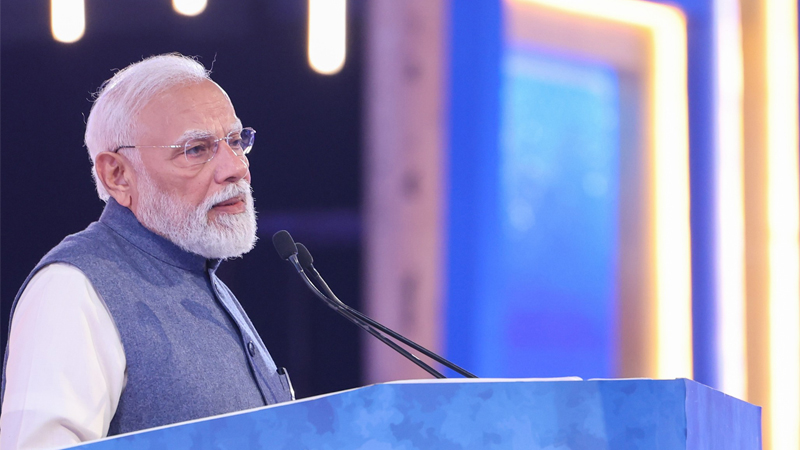
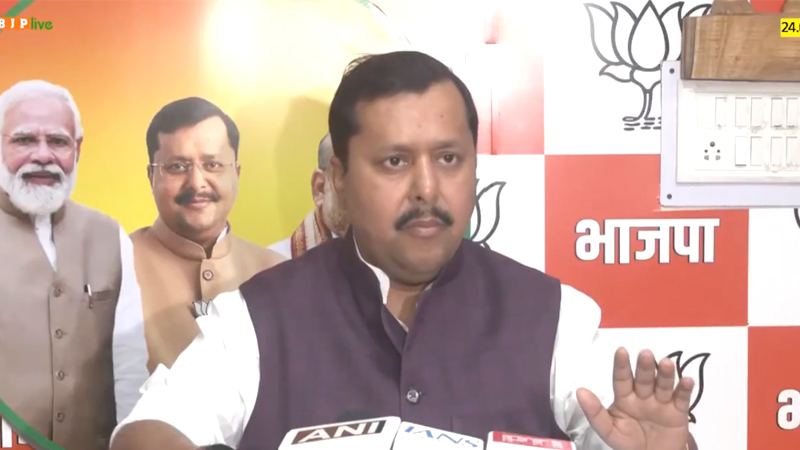
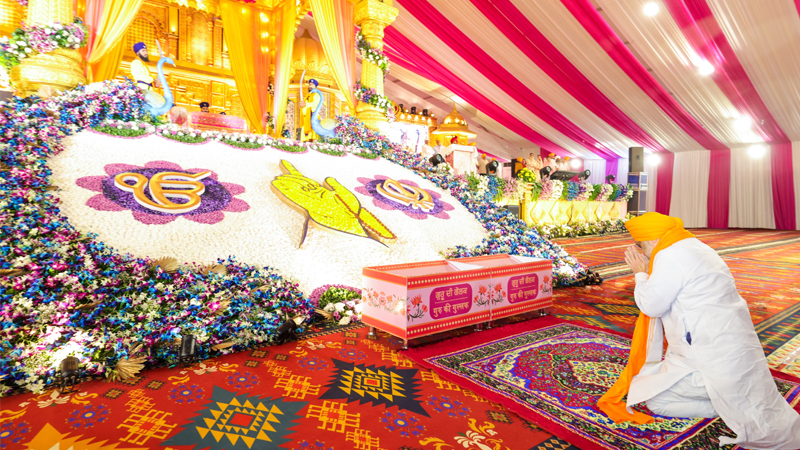
Bharatiya Janata Party National President Shri Nitin Nabin addressed the BJP Karyakarta Sammelan in Mahbubnagar (Telangana) on Wednesday and criticized the Congress and the state government in Telangana. He stated that Chief Minister Revanth Reddy does Muslim appeasement and neglects Dalits, SC-STs, and tribal communities. BJP National President termed the state government’s indifference towards women, attacks on temples, and disrespect for religious traditions as serious concerns. Shri Nitin Nabin described the municipal elections in Telangana as an opportunity for new leadership and strengthening BJP, and expressed his resolve to ensure the party’s stability by 2028 with public support. During the event, BJP State President Shri N. Ramchandran Rao, Union Minister Shri G. Kishan Reddy, National Vice President Smt. D. K. Aruna, OBC Morcha President Dr. K. Laxman, along with other leaders, were present on the stage.

Shri Nitin Nabin mentioned that politics in Telangana has reached a critical juncture. The Chief Minister’s politics is trapped in multiple layers, with the sole objective of advancing appeasement politics within society. Repeated actions and statements have suppressed the Telugu language and culture, making this intent evident on several occasions. Disregarding cultural values and Sanatani traditions, the slogan “Congress is Muslim, Muslim is Congress” was raised exposing both the character of the Chief Minister and the nature of Congress politics, which was described as driven purely by Muslim vote-bank considerations rather than public welfare. A lack of empathy toward the Telugu people was asserted. The Congress government in the state reduced budget allocations meant for SCs and STs while increasing allocations for the Minority Commission and Minority Department, indicating that Dalits and backward classes are not a priority in its approach. A similar indifference toward tribal communities was highlighted. Budgetary changes were characterized as being made to secure a small segment of minority votes, with the response expected from the public through elections. It was further stated that in Telangana, a few individuals have become among the wealthiest in the country, owning up to 70,000 acres of land presented as a symbol of exploitation of the common people. The state government was described as intent on strengthening the Waqf Board, reinforcing the claim that Congress politics rests on minority appeasement. In this context, Bharatiya Janata Party Karyakartas were said to be standing firm, prepared to intensify the movement. Revanth Reddy was accused of acting to appease Muslim voters, and it was emphasized that this reality must be brought before the people.

Hon’ble BJP National President highlighted that over the past two years, there have been repeated attempts in several places to damage temples. Temples have been attacked, vandalized by mobs, significant damage has been caused to the Lamba Mandir, and attempts have been made to desecrate the Gandhinagar Mandir. The information that has come to light is extremely serious. A direct message was conveyed to the Congress that Sanatan Dharma is India’s tradition, its identity, and the soul of the nation. Any actions taken against Sanatan traditions will not be met with silence by Bharatiya Janata Party Karyakartas. Party Karyakartas will take to the streets and will be prepared to make every sacrifice necessary to protect Sanatan traditions. If attempts are made to insult temples, Hindu deities, or places of worship, or if efforts are made to impose restrictions on Hindu festivals, such forces will not be able to remain in power for long. This was issued as a clear and unequivocal warning.

Shri Nabin asserted that while Hon’ble Prime Minister Shri Narendra Modi Ji is working to empower women, give them dignity, and make them Aatmanirbhar through initiatives like Lakhpati Didi, the approach of the state government is deeply unfortunate. The Congress government in the state has failed to fulfill the promises made to women. When this government was formed two years ago, it claimed that women would receive ₹2,500 as monthly assistance, but till date this promise has not been implemented. On the contrary, crimes against women in the state are continuously rising. The same conditions that prevailed during the previous government, which remained in power for 11 years, are visible even today, showing no difference between the old and the present government. Incidents of humiliation and harassment of women are occurring repeatedly. It was asserted that Bharatiya Janata Party Karyakartas are fully prepared, and with the formal launch of the election campaign, the party will become the voice of women and take this struggle forward. BJP Karyakartas will go door to door, raise their voice against the oppression of women, and firmly place this issue before the public.

Shri Nitin Nabin asserted that Congress leaders operate with a single refrain of betrayal of the people. This has been the consistent character of the Congress, and there is hardly any section of society that has not been deceived. Farmers, SC–ST communities, and OBC groups have all faced repeated breaches of promises made by the Congress. There is no ally left whom the Congress has not let down. Whether it is the ₹15,000 Rythu Yojna for farmers, the Ambedkar Abhay Hastam for SC–ST communities, or housing schemes announced in Indira Gandhi’s name, no meaningful work has been carried out on these promises for the past two years. This, it was asserted, clearly shows that an inefficient Congress government is in place. Promises made to women have also remained unfulfilled. It was further stated that even after the BRS government exited and the Congress came to power, the rule of commissioners and mafias did not end. What exists today was described not as a Congress government, but as a government of commissions and extortion, marked by collections and irregularities everywhere. The governments led by Rahul Gandhi and Revanth Reddy were accused of focusing on extracting taxes from the public. Raising public awareness against this was termed essential. In the upcoming electoral battle, Bharatiya Janata Party Karyakartas will go among the people to expose this entire system of collections and corruption and raise a strong voice against it.

Hon’ble BJP National President remarked that while the government led by Hon’ble Prime Minister Shri Narendra Modi Ji remains firmly committed to the people of Telangana and is focused on the state’s development, the Central Government has proposed a ₹5,454 crore plan for railways. The announcement in the budget of high-speed corridors connecting Hyderabad–Pune, Hyderabad–Bengaluru, and Hyderabad–Chennai clearly demonstrates that the Hon’ble Prime Minister’s affection and commitment toward the people of Telangana remain steadfast. It was further stated that the announcement and inauguration of the National Turmeric Board underline the Hon’ble Prime Minister’s credibility that what is promised is delivered. The Hyderabad–Nagpur Industrial Corridor and the Hyderabad–Warangal projects were also cited as clear reflections of this commitment. The Central Government was described as standing firmly with the people of Telangana and determined to further advance this chain of development. In return for the affection and support shown by the people of Telangana toward Bharatiya Janata Party, the party remains fully committed to ensuring comprehensive welfare and development for the state.

Shri Nabin asserted that the people of the country have given Bharatiya Janata Party an opportunity, and there is pride in the leadership of Hon’ble Prime Minister Shri Narendra Modi Ji, as today the world’s major powers are strengthening friendship and cooperation with India. Through what was described as the “Mother of All Deals,” India’s relations with the European Union and the United States have been advanced diplomatically, and a significant achievement has been realized by bringing tariffs imposed on the country down to 18 percent through trade agreements under the Hon’ble Prime Minister Shri Narendra Modi ji’s leadership. Gratitude and appreciation were conveyed on behalf of the people of Telangana to the Hon’ble Prime Minister. The hard work and dedication of party Karyakartas during the 2023 elections were acknowledged, which translated into securing 35 percent of the vote for the BJP in the 2024 elections. The resolve now is to take the fight further, working with full commitment toward the goal of securing 50 percent of the vote at every booth. It was further stated that after the 2024 Lok Sabha elections, the people have continued to place their trust in the Hon’ble Prime Minister across successive elections nationwide. This confidence was reflected in recent municipal elections in Maharashtra, as well as elections in Kerala, Chandigarh, and Arunachal Pradesh. In every state where elections have taken place even Bihar public faith and support for the Hon’ble Prime Minister have remained clear. This trust and confidence were described as a major opportunity for the BJP in Telangana. All Telangana BJP Karyakartas were called upon to seize this opportunity with determination and, under the leadership of the Hon’ble Prime Minister Shri Narendra Modi Ji, work with complete dedication and effort to ensure the party’s victory in the state.

Shri Nitin Nabin remarked that when Union Home Minister Shri Amit Shah was the National President of the party, he had asserted that BJP governance would not be established until the saffron flag flew from the Panchayat to Parliament. Today, the party stands close to achieving that goal, with the saffron flag rising from grassroots institutions to the national legislature. Through these local body elections, young leadership will be brought forward, a new leadership cadre will be prepared, and BJP will advance with renewed vigor and a new standard. On the strength of organizational capability, the time has come to reach out to the people. If the organization demonstrates complete dedication and commitment to the work and ideas of Hon’ble Prime Minister Shri Narendra Modi Ji, the BJP will certainly win in Telangana, and that victory will be placed in the Hon’ble Prime Minister’s hands. This struggle was described not as a fight for power, but as a battle to safeguard the future of Telangana. Through this effort, the dignity of the people of Telangana will be protected, their future will be secured, and new leadership will be nurtured ensuring that the flag of Bharatiya Janata Party remains firmly planted in Telangana in 2028.

Prime Minister Congratulates Newly Sworn-in Chief Minister and Ministers of Manipur

| Published on:

The Prime Minister, Shri Narendra Modi, today extended congratulations to Shri Yumnam Khemchand Singh Ji on taking oath as the Chief Minister of Manipur.

The Prime Minister also conveyed his best wishes to Smt. Nemcha Kipgen Ji and Shri Losii Dikho Ji on assuming office as the Deputy Chief Ministers of the state. He further congratulated Shri Konthoujam Govindas Singh Ji and Shri Khuraijam Loken Singh Ji on being sworn in as Ministers in the Manipur Government.

Expressing confidence in the new leadership, Shri Narendra Modi stated that they will work diligently towards furthering development and prosperity for the sisters and brothers of Manipur.

In a post on X, Shri Modi said:

“Congratulations to Shri Yumnam Khemchand Singh Ji on taking oath as the Chief Minister of Manipur.

I would like to congratulate Smt. Nemcha Kipgen Ji and Shri Losii Dikho Ji on taking oath as the Deputy Chief Ministers of the state and Shri Konthoujam Govindas Singh Ji as well as Shri Khuraijam Loken Singh Ji on being sworn in as Ministers in the Manipur Government.

I’m confident they will work diligently towards furthering development and prosperity for my sisters and brothers of Manipur.”

 Dr. Jitendra Singh unveils First TDB Window to Fund High-Risk Technology Commercialisation

| Published on:

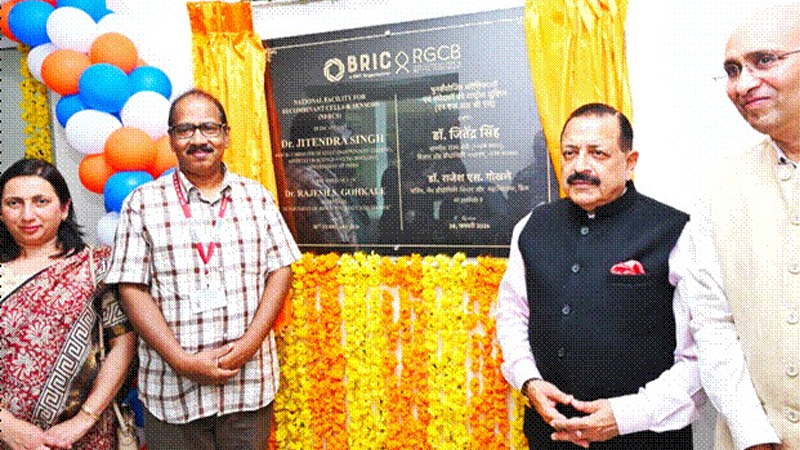
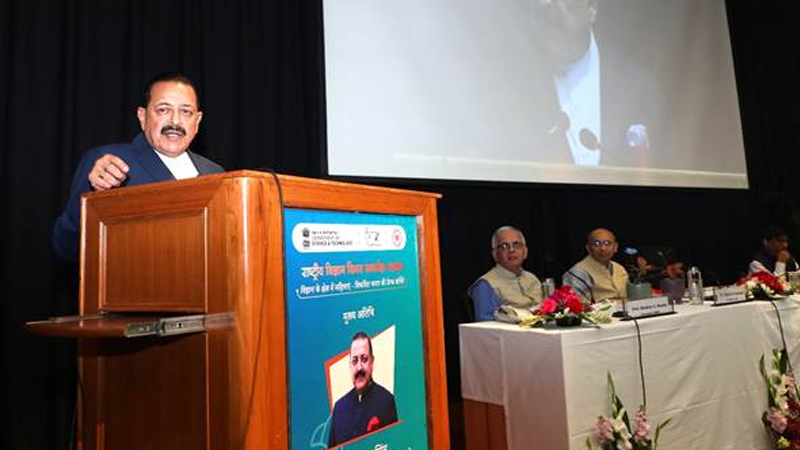
Union Minister of State (Independent Charge) for Science & Technology, Earth Sciences, and MoS PMO, Personnel, Public Grievances, Pensions, Atomic Energy and Space, Dr. Jitendra Singh today launched the first Open Call of the Technology Development Board (TDB) under the Research, Development and Innovation (RDI) Fund of the Anusandhan National Research Foundation (ANRF), with the objective of strengthening India’s innovation ecosystem by supporting the commercialisation of indigenous technologies through structured, long-term financing.

Addressing the event, Dr. Jitendra Singh, said that the initiative represents a rare and significant departure from conventional government funding models. He observed that while governments have traditionally encouraged philanthropy or CSR-led investments, direct government-backed financial support to private sector innovation has been limited. He said the RDI Fund seeks to bridge this gap by enabling private enterprises to scale technologies in sectors that were earlier largely confined to the public domain.

The Minister noted that the opening of strategic areas such as space and nuclear sectors for private participation has changed long-standing conventions, and the RDI Fund has been designed to support this transition by reducing financial risk while ensuring accountability. He said the fund provides long-term, affordable financing and includes equity-linked options to share risk, thereby supporting responsible commercialisation.

Dr. Jitendra Singh informed that the RDI Fund has a total corpus of ₹1 lakh crore and offers financing at concessional interest rates of around 2–4 per cent, with long tenures of up to 15 years, including moratorium provisions. He said the structure has been designed to make access to capital easier for technology developers while maintaining financial discipline.

Referring to the response received under the first call, the Minister said that nearly 191 proposals have been received, with a significant majority coming from the private sector. He said this response reflects growing confidence among private enterprises in the government’s commitment to support innovation-led growth. The Minister added that it is important to ensure that applications are aligned with the spirit of the scheme and that funding is utilised for genuine technology development and scale-up.

The event was attended by senior officials and stakeholders from the science, technology, and innovation ecosystem. Those present on the dais included Shri Rajesh Pathak, Secretary, Technology Development Board, and Professor Abhay Karandikar, Secretary, Department of Science and Technology.

As outlined during the event, the first TDB Call under the RDI Fund focuses on supporting projects at Technology Readiness Level (TRL) 4 and above. Funding support will be provided through Second Level Fund Managers (SLFMs) in the form of loans, equity, or hybrid instruments, depending on project requirements. The maximum funding support will be up to 50 per cent of the total project cost, with matching contributions from companies or private investors.

The funding framework provides for collateral-free financing, with no requirement for personal or corporate guarantees. Proposal evaluation will be based on scientific, technological, financial, and commercial merit, with defined timelines for evaluation and disbursement. The initiative does not provide grant funding and is focused on enabling sustainable commercial deployment of technologies.

The RDI Fund was approved by the Union Cabinet in July 2025 and was launched by Prime Minister Shri Narendra Modi in November 2025 as part of the government’s long-term vision to build indigenous technological capabilities and strengthen India’s innovation-led economy.

The formal launch of the first TDB Call under the RDI Fund was carried out during the event in the presence of senior officials and stakeholders. The Minister also called upon innovators, industry, and the media to actively disseminate information about the initiative so that eligible enterprises across the country can participate meaningfully in India’s technology development journey.

Prime Minister’s remarks on Union Budget 2026

| Published on:

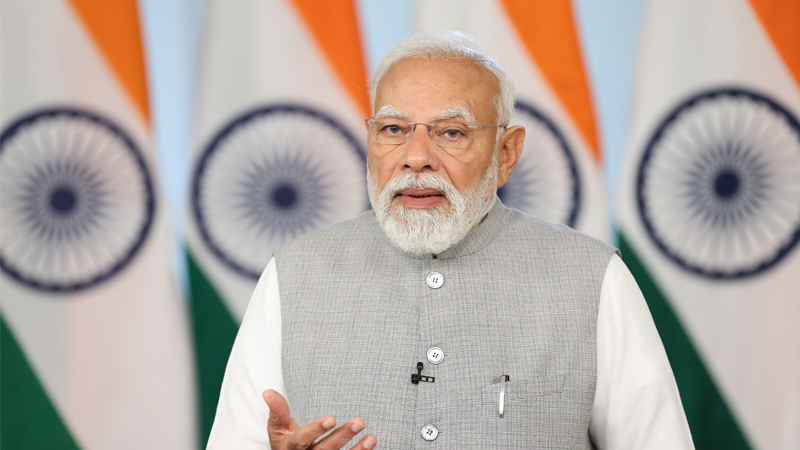
Prime Minister Shri Narendra Modi shared his remarks on Union Budget 2026 via video message today. Speaking on the occasion, Prime Minister remarked that today’s budget is historic and reflects the empowered spirit of the nation’s women. He highlighted that Union Finance Minister Smt Nirmala Sitharaman, as a woman finance minister, has set a new record by presenting the country’s budget for the ninth consecutive time. The Prime Minister stated that this budget is a highway of immense opportunities, one that fulfills the dreams of the present and strengthens the foundation of India’s bright future. He emphasized that the budget serves as the basis for India’s high flight towards becoming a developed nation by 2047.

Shri Modi noted that the reform express on which India is riding will gain new energy and new momentum through this budget. He underlined that the path-breaking reforms undertaken provide the aspiring, courageous, and talented youth of India with an open sky to soar. He further remarked that the budget realizes the vision of trust-based governance and a human-centric economic framework. The Prime Minister stressed that this is a unique budget, focused on reducing fiscal deficit and controlling inflation, while simultaneously ensuring high capital expenditure and high growth.

Prime Minister Modi remarked that this budget strengthens India’s global role anew. He highlighted that India’s 140 crore citizens are not satisfied with being the fastest growing economy, and the nation is determined to soon become the world’s third largest economy. He emphasized that this is the collective resolve of millions of Indians. The Prime Minister stated that India’s role as a trusted democratic partner and trusted quality supplier is continuously expanding. He underlined that the recent major trade deals India has undertaken are aimed at ensuring maximum benefit for the country’s youth and for small and medium enterprises, with significant steps taken in this budget to advance that direction.

Emphasising that the budget presents an ambitious roadmap to accelerate Make in India and the Atmanirbhar Bharat campaign, Shri Modi noted that the unprecedented support given to sunrise sectors such as the BioPharma Shakti Mission, Semiconductor Mission 2.0, Electronic Component Manufacturing Scheme, creation of a Rare Earth Corridor, strengthening critical minerals sector, new schemes in the textile sector, promotion of high-tech tool manufacturing, and preparation of champion MSMEs is futuristic and addresses both present and future needs of the nation. The Prime Minister remarked that the support extended to MSMEs, including small and cottage industries, will empower them to grow from local to global.

Shri Modi further highlighted that the budget takes several major steps to strengthen infrastructure, including a dedicated freight corridor, expansion of waterways across the country, a high-speed rail corridor, special focus on the development of tier-2 and tier-3 cities, and promotion of municipal bonds to provide stronger economic foundations for cities. He stressed that all these measures will accelerate the journey towards a developed India.

Prime Minister remarked that the greatest capital of any nation is its citizens, and in recent years the government has made unprecedented investments to enhance their capabilities. He highlighted that the continuous effort has been to strengthen skill, scale, and sustainability. Reiterating Union Finance Minister Smt. Nirmala Sitharaman’s statement that this is a youth power budget,  Shri Modi emphasized that the provisions made in the budget will prepare leaders, innovators, and creators across different sectors. He noted that through the establishment of medical hubs, allied health professionals, promotion of the orange economy including audio-visuals, encouragement of gaming, tourism, and the Khelo India Mission, new opportunities will open for the youth. He remarked that a major tax concession has been announced to make India the world’s data center hub. Extending special congratulations to the youth, he said this budget will give a significant boost to the employment generation. The Prime Minister expressed happiness that concrete steps have been taken to promote tourism, particularly in the North East, and that the foundation of balanced development has been strengthened by empowering different states.

Highlighting that more than 10 crore women are associated with self-help groups, Shri Modi said the budget prioritizes building a modern ecosystem for women-led and women-run self-help groups, with the aim that every household welcomes prosperity. He noted that the campaign to build new hostels for girl students in every district will make education more accessible.

The Prime Minister stressed that agriculture, dairy, and fisheries have always been given the highest priority by the government. He pointed out that in this budget, important measures have been taken for farmers engaged in the production of coconut, cashew, cocoa, and sandalwood. He remarked that the Bharat Vistaar AI tool will greatly help farmers by providing information in their own language. He further stated that promoting entrepreneurship in fisheries and animal husbandry will create more employment and self-employment opportunities in villages. The Prime Minister concluded by saying that this budget is ambitious and addresses the aspirations of the nation. He once again congratulated Union Finance Minister Smt. Nirmala Sitharaman and her team for presenting a futuristic, sensitive budget, and a budget dedicated to the welfare of villages, the poor, and farmers.

Press statement by BJP National President on Union Budget 2026-27

| Published on:

Under the leadership of Hon’ble Prime Minister Shri Narendra Modi ji, the Union Budget 2026-27 presented by Union Finance Minister Smt. Nirmala Sitharaman Ji, is a revolutionary budget centering youth power to realize the vision of “Viksit Bharat.” I heartily congratulate Hon’ble Prime Minister Shri Narendra Modi Ji for this historic Budget. The fact that Smt. Nirmala Sitharaman Ji has presented the Union Budget for the ninth consecutive time is a clear reflection of the continuity of policy and good governance. This budget fully reflects the unwavering trust that the people have in Hon’ble Prime Minister Shri Narendra Modi Ji. We have seen that his guiding principle of “Sabka Saath, Sabka Vikas” is clearly evident in every dimension of this budget.

This budget moves with resolve toward realizing the vision of a developed India by 2047, a dream envisioned by Hon’ble Prime Minister Shri Narendra Modi Ji. Despite global uncertainties, the way India’s economy continues to grow at nearly 7 percent indicates that our GSP and GDP have been consistently strengthened, while inflation has been kept under control. This is evidence that this budget is well thought out, reflects confidence in inclusive progress, and clearly shows the government’s intention to strengthen projects related to education and infrastructure.

This is a youth-driven budget. Through infrastructure growth, it aims to advance manufacturing units and emphasizes the creation of new employment opportunities. The support extended by the government to sectors such as semiconductors, electronics, sports, and biopharma is commendable. The strong support system established through approximately ₹400 crore for the semiconductor sector and ₹10,000 crore for the biopharma sector clearly demonstrates the government’s serious focus on generating new employment opportunities.

Additionally, the budget clearly reflects Mahatma Gandhi’s vision of Gram Swaraj. It will benefit our artisans and small cottage industries and strengthen employment in rural areas. The government’s continued efforts are also evident in the development of tourism and cultural centers, aligning with Hon’ble Prime Minister Shri Narendra Modi Ji’s vision.

The initiative to develop 20 new waterways is a step toward opening new dimensions in transportation. While we have traditionally focused on airways, roadways, and railways, the development of waterways now offers better opportunities for progress. Plans to develop Patna and Varanasi as ship-repairing centers will also generate large-scale new employment opportunities in these regions.

The priority given to the coconut industry and fisheries clearly shows the government’s intention to progress inclusively, bringing all sectors and communities along. I also congratulate Hon’ble Prime Minister Shri Narendra Modi Ji and Finance Minister Smt. Nirmala Sitharaman Ji for increasing the budget allocation for the transport sector. Similarly, the provision of ₹7.8 lakh crore for defense clearly indicates that the nation’s security is non-negotiable.

This budget reflects a clear intention to include every section of society in development and progress. Whether it is the youth, women, the middle class, or any other segment of society, clear direction and resources have been allocated for all. For this, I heartily congratulate Hon’ble Prime Minister Shri Narendra Modi Ji and Finance Minister Smt. Nirmala Sitharaman Ji. This budget is a step toward realizing the dreams of a developed India by 2047.

‘In the Viksit Bharat Budget, the Modi government has strengthened its commitment to advancing development with financial prudence’

| Published on:

Union Home Minister and Minister of Cooperation Shri Amit Shah has extended heartfelt congratulations, on behalf of every Indian, to Prime Minister Shri Narendra Modi Ji and Finance Minister Smt. Nirmala Sitharaman ji for the budget that reflects the vision of building a developed India by 2047 and outlines the roadmap for the next 25 years.

In a series of posts on X, Union Home Minister Shri Amit Shah said, “From manufacturing to infrastructure, from health to tourism, from rural areas to AI, from sports to pilgrimage sites, the Viksit Bharat Budget is one that empowers and fulfills the dreams of the youth, women, and farmers in every village, every town, and every city. Heartfelt congratulations, on behalf of every Indian, to PM Shri Narendra Modi Ji and Finance Minister Smt. Nirmala Sitharaman Ji for this budget that reflects the building of a developed India by 2047 and outlines the roadmap for the next 25 years.”

Shri Amit Shah said, “I congratulate PM Modi Ji on the remarkable landmark set by the Viksit Bharat Budget with the resounding reaffirmation of the Modi government’s commitment to drive growth and development with fiscal prudence. This budget fulfills the target of keeping the fiscal deficit below 4.5%.”

Union Home Minister said, “Through the Budget 2026-27, Prime Minister Modi ji has proven that self-reliant and developed India is not merely a slogan, but the firm resolve of our government. This budget not only provides a clear blueprint for empowering every sector, every class, and every citizen, but also offers a practical, on-the-ground vision to encourage and support them at every step. The Viksit Bharat Budget is a vision for building an India that leads the world in every field.”

Shri Amit Shah said, “Viksit Bharat Budget embodies Bharat as a nation forging its new identity as an emerging economic power center with resolute trust in its own strengths. Post covid, PM Narendra Modi Ji’s visionary economic policies have fuelled the Indian economy. Viksit Bharat Budget turbocharges the momentum to bolster India’s position on the global stage as the most attractive investment destination for a wide range of sectors, from traditional to the new-age ones.”

Union Home Minister and Minister of Cooperation said, “Viksit Bharat Budget accelerates Modi Ji’s vision of a Future Ready Bharat where growth reaches beyond big cities, by allocating ₹12.2 lakh crore for capital expenditure. The target of reaching out to Tier 2 and Tier 3 cities through new rail corridors, National Waterways and improved connectivity will boost jobs growth elevating India’s aspirations to new heights.”

Shri Amit Shah said, “Viksit Bharat Budget will give unprecedented momentum to connectivity in India. Seven high-speed rail corridors announced today aimed at supercharging inter-city connectivity and slashing down travel time across key economic and population centres of our country.”

Union Home Minister said, “In a historic decision, the Viksit Bharat Budget has launched the “Mahatma Gandhi Gram Swaraj Yojana” to realise Mahatma Gandhi’s dream of Gram Swaraj. This will strengthen the rural economy and provide new support to weavers, farmers, and the handloom industry. The Coconut Promotion Scheme in coastal areas, benefiting 3 crore farmers; the push to boost cashew and cocoa production and exports; and the decision to conserve sandalwood all show that Modi Ji is fully committed to farmers’ prosperity and to making agriculture a profitable enterprise.’”

Shri Amit Shah said, “Making MSMEs the champions of India’s growth story Viksit Bharat Budget realises Modi Ji’s vision of galvanising the economy from the grassroots through a clear three pronged framework with a ₹10,000 crore Growth Fund. The provision will propel the MSMEs in tier 2 and tier 3 cities to hit their targets through structured professional handholding.”

Union Home Minister and Minister of Cooperation said, “The Viksit Bharat Budget has taken a visionary decision to increase farmers’ incomes through livestock. By increasing the number of veterinarians and expanding veterinary centres and training centres, the livestock-based economy will be strengthened. Decisions such as providing credit-linked subsidies for the dairy and poultry sectors, promoting fisheries through the development of 500 ponds, and providing access to global markets will prove to be major milestones in the Modi government’s resolve to raise farmers’ income”.

Shri Amit Shah said, “The Modi government’s decision in the Viksit Bharat Budget to develop 15 archaeological sites, including Dholavira, as cultural destinations will establish India’s ancient culture on the global stage. The construction of a Buddhist Circuit in five northeastern states, the development of mountain trails in Himachal Pradesh, Uttarakhand, Jammu & Kashmir and the Araku Valley, and turtle trails in Odisha, Karnataka and Kerala will give fresh momentum to development in these regions and promote eco-tourism. Additionally, the establishment of a National Institute of Hospitality will provide youth with skills and employment opportunities and further strengthen the tourism sector.”

Union Home Minister said, “The Viksit Bharat Budget is a powerful reflection of Modi ji’s vision from education to self-employment. The development of five university townships around major industrial and logistics corridors will promote education–industry integration. At the same time, the construction and upgradation of four telescope infrastructure facilities will give fresh momentum to research. The establishment of AVGC labs at the National Institute of Design, in 15,000 secondary schools and 500 colleges, and the formation of a high-powered committee on “Education to Employment and Enterprise” reflect the resolve to make the new generation skill-equipped and to build a India that leads in every field.”

Shri Amit Shah said that the Viksit Bharat Budget is taking the country into a new era of prosperity by harnessing the power of our youth. For this, content creation training has been started in 15,000 schools, and special initiatives have been launched to provide affordable sports equipment. He said that by launching youth careers in sectors such as semiconductors, IT, textiles, hospitality, tourism, and corporate compliance, the Budget is accelerating the vehicle of their progress.

Union Home and Cooperation Minister said, “Viksit Bharat Budget is taking connectivity to the next level by opening new connectivity corridors. He said that 20 new national waterways and a freight corridor linking Dankuni in the east with Surat in the west will open new pathways of prosperity for trade and commerce.”

Shri Amit Shah said, “Viksit Bharat Budget is a major step towards realising Prime Minister Modi’s vision of a Healthy India. He said that the ₹10,000 crore BioPharma Shakti Yojana, 1,000 trial sites, customs duty exemptions on 17 cancer medicines, assistive devices for persons with disabilities, the NIMHANS-2 initiative for mental health, and five medical tourism centres will make healthcare more accessible.”

The Union Home Minister said, “The Modi government is continuously working towards educating, enriching, and empowering women. In the Viksit Bharat Budget, the plan to open girls’ hostels in every district will provide our sisters with better and safer access to education. After making women “Lakhpati Didis,” the Modi government is now moving towards opening SHE Marts for women. These retail outlets will create a strong foundation for making women enterprise owners. Additionally, with the launch of the She-Mark badge, easy access to financing for women will be ensured.”

Defence Budget 2026-27 post-Op Sindoor further strengthens Govt’s resolve of creating a robust & foolproof security system: Raksha Mantri

| Published on:

Raksha Mantri Shri Rajnath Singh has expressed gratitude to Prime Minister Shri Narendra Modi for allocating Rs 7.85 lakh crore to the defence sector in the Union Budget 2026-27, stating that the budget, which comes after the historic success of Operation Sindoor, further strengthens the Government’s resolve of creating a robust and foolproof security system of the country. In a post on X, he asserted that the budget augments the security-development-self-reliance balance.

Raksha Mantri noted that over Rs 2.19 lakh crore have been allocated under the capital head to the Defence Forces, and out of this, Rs 1.85 lakh crore is earmarked for capital acquisition, which is approx. 24% higher than the capital acquisition budget for FY 2025-26. This will further enhance India’s military capabilities. Modernisation of the Armed Forces is an important aspect of this budget, he said.

Reiterating the Government’s commitment towards the welfare of veterans and their families and providing them with quality healthcare, Shri Rajnath Singh said Rs 12,100 crore have been allocated the Ex-Servicemen Contributory Health Scheme, which is 45.49% higher than the Budgetary Estimates of Financial Year 2025-26. He termed it as a testimony to the Government’s resolve of the welfare of ex-servicemen and their families.

Raksha Mantri congratulated Finance Minister Smt Nirmala Sitharaman for presenting an “excellent” budget, prepared under the guidance of Prime Minister Shri Narendra Modi. “The budget meets public sentiments and expectations. It provides a strong foundation for the Prime Minister’s resolve for an Aatmanirbhar and Viksit Bharat, with adequate provisions for the upliftment of all sections of society,” he said.

https://x.com/rajnathsingh/status/2017872468552397101

Shri Rajnath Singh added that under PM Modi’s visionary leadership, India’s journey towards a Viksit Bharat continues to gather momentum, emphasising that the “Yuva Shakti–driven Budget” budget seeks to “transform aspiration into achievement” and “potential into performance”. He underlined that inspired by the three ‘Kartavyas’, this budget aims to accelerate and sustain economic growth, fulfil the aspirations of the people and ensure meaningful participation for all. “Together, these priorities will drive inclusive development, promote the manufacturing sector, and create sustainable infrastructure. This budget is designed to ensure that the dividends of growth reach every section of society, with special focus on the poor, the underprivileged, and the disadvantaged,” he said.

https://x.com/rajnathsingh/status/2017879997294469350

SUMMARY OF UNION BUDGET 2026-27

| Published on:

Union Minister for Finance and Corporate Affairs, Smt Nirmala Sitharaman presented the Union Budget 2026-2027 in Parliament today.

PART-A

On the sacred occasion of Magha Purnima and the birth anniversary of Guru Ravidas, the Finance Minister said, as this is the first Budget prepared in Kartavya Bhawan, it is inspired by 3 kartavya:

  1. First kartavya is to accelerate and sustain economic growth, by enhancing productivity and competitiveness, and building resilience to volatile global dynamics.
  2. Second kartavya is to fulfil aspirations of  people and build their capacity, making them strong partners in India’s path to prosperity
  3. Third kartavya, aligned with vision of Sabka Sath, Sabka Vikas, is to ensure that every family, community, region and sector has access to resources, amenities and opportunities for meaningful participation.

Presenting the Yuva Shakti-driven Budget which emphasizes on Government’s ‘Sankalp’ to focus on poor, underprivileged and the disadvantaged, the Finance Minister said, India will continue to take confident steps towards Viksit Bharat, balancing ambition with inclusion. As a growing economy with expanding trade and capital needs, India must also remain deeply integrated with global markets, exporting more and attracting stable long-term investment.

She also mentioned that the country is facing an external environment in which trade and multilateralism are imperilled and access to resources and supply chains are disrupted. New technologies are transforming production systems while sharply increasing demands on water, energy and critical minerals.

The Finance Minister said that after the Prime Minister’s announcement on Independence Day in 2025, over 350 reforms have been rolled out. These include GST simplification, notification of Labour Codes, and rationalisation of mandatory Quality Control Orders. High Level Committees have been formed and in parallel, the Central Government is working with the State Governments on deregulation and reducing compliance requirements.

Under the first kartavya to accelerate and sustain economic growth, interventions were proposed in six areas:

  1. Scaling up manufacturing in 7 strategic and frontier sectors;
  2. Rejuvenating legacy industrial sectors;
  3. Creating “Champion MSMEs”;
  4. Delivering a powerful push to Infrastructure;
  5. Ensuring long-term energy security and stability; and
  6. Developing City Economic Regions

To develop India as a global Biopharma manufacturing hub, the Biopharma SHAKTI with an outlay of ₹ 10,000 crores to build the ecosystem for domestic production of biologics and biosimilars will be set up  over the next 5 years. The Strategy will include a Biopharma-focused network with 3 new National Institutes of Pharmaceutical Education and Research (NIPER) and upgrading 7 existing ones. It will also create a network of over 1000 accredited India Clinical Trials sites. The Central Drugs Standard Control Organisation will be strengthened to meet global standards and approval timeframes through a dedicated scientific review cadre and specialists.

For the labour-intensive Textile Sector, an Integrated Programme with 5 sub-parts was proposed: The National Fibre Scheme for self-reliance in natural fibres such as silk, wool and jute, man-made fibres, and new-age fibres;  Textile Expansion and Employment Scheme to modernise traditional clusters with capital support for machinery, technology upgradation and common testing and certification centres; A National Handloom and Handicraft programme to integrate and strengthen existing schemes and ensure targeted support for weavers and artisans; Tex-Eco Initiative to promote globally competitive and sustainable textiles and apparels; Samarth 2.0 to modernize and upgrade the textile skilling ecosystem through collaboration with industry and academic institutions.

Recognising MSMEs as a vital engine of growth, a dedicated ₹10,000 crore SME Growth Fund was proposed to create future Champions, incentivizing enterprises based on select criteria.

The Finance Minister said, Public capex has increased manifold from ₹2 lakh crore in FY2014-15 to an allocation of ₹11.2 lakh crore in BE 2025-26. In FY2026-27, she proposed to increase it to ₹12.2 lakh crore to continue the momentum.

Capital-Expenditure.jpg

To promote environmentally sustainable movement of cargo, the Finance Minister proposed new Dedicated Freight Corridors connecting Dankuni in the East, to Surat in the West; b) operationalise 20 new National Waterways (NW) over next 5 years, starting with NW-5 in Odisha to connect mineral rich areas of Talcher and Angul and industrial centres like Kalinga Nagar to the Ports of Paradeep and Dhamra. Training Institutes will be set up as Regional Centres of Excellence for development of the required manpower.

The Budget aims to further amplify the potential of cities to deliver the economic power of agglomerations by mapping city economic regions (CER), based on their specific growth drivers. An allocation of ₹ 5000 crore per CER over 5 years is proposed for implementing their plans through a challenge mode with a reform-cum-results based financing mechanism.

To promote environmentally sustainable passenger systems, seven High-Speed Rail corridors between cities will be developed as ‘growth connectors’, namely i) Mumbai-Pune, ii) Pune-Hyderabad, iii) Hyderabad-Bengaluru, iv) Hyderabad-Chennai, v) Chennai-Bengaluru, vi) Delhi-Varanasi, vii) Varanasi-Siliguri.

The Finance Minister said that second kartavya is to fulfil aspirations and build capacity. Close to 25 crore individuals have come out of multidimensional poverty through a decade of Government’s sustained and reform-oriented efforts.

To promote India as a hub for medical tourism services, the Finance Minister proposed a Scheme to support States in establishing five Regional Medical Hubs, in partnership with the private sector. These Hubs will serve as integrated healthcare complexes that combine medical, educational and research facilities. They will have AYUSH Centres, Medical Value Tourism Facilitation Centres and infrastructure for diagnostics, post-care and rehabilitation. These Hubs will provide diverse job opportunities for health professionals including doctors and AHPs.

To scale up availability of veterinary professionals by more than 20,000, a loan-linked capital subsidy was proposed to support scheme for establishment of veterinary and para vet colleges, veterinary hospitals, diagnostic laboratories and breeding facilities in the private sector.

India’s Animation, Visual Effects, Gaming and Comics (AVGC) sector is a growing industry, projected to require 2 million professionals by 2030. The Finance Minister proposed to support the Indian Institute of Creative Technologies, Mumbai in setting up AVGC Content Creator Labs in 15,000 secondary schools and 500 colleges.

In Higher Education STEM institutions, prolonged hours of study and laboratory work pose some challenges for girl students. Through VGF/capital support, 1 girls hostel will be established in every district.

The Finance Minister proposed to set up a National Institute of Hospitality by upgrading the existing National Council for Hotel Management and Catering Technology. It will function as a bridge between academia, industry and the Government. She further proposed a pilot scheme for upskilling 10,000 guides in 20 tourist sites through a standardized, high-quality 12-week training course in hybrid mode, in collaboration with an Indian Institute of Management.

Taking forward the systematic nurturing of sports talent which is set in motion through the Khelo India programme, the Finance Minister proposed to launch a Khelo India Mission to transform the Sports sector over the next decade. The Mission will facilitate: a) An integrated talent development pathway, supported by training centres b) systematic development of coaches and support staff; c) integration of sports science and technology; d) competitions and leagues to promote sports culture and provide platforms; and, e) development of sports infrastructure for training and competition.

The Finance Minister said that the Budget’s third kartavya aligns with the vision of Sabka Sath, Sabka Vikas towards a Viksit Bharat. This requires targeted efforts for increasing farmer incomes, empowering Divyangjan, empowering the vulnerable to access mental health and trauma care, focus on the Purvodaya States and the North-East Region to accelerate development and employment opportunities.

The Finance Minister proposed Bharat-VISTAAR (Virtually Integrated System to Access Agricultural Resources), a multilingual AI tool that shall integrate the AgriStack portals and the ICAR package on agricultural practices with AI systems. This will enhance farm productivity, enable better decisions for farmers and reduce risk by providing customised advisory support.

Building on the success of the Lakhpati Didi Programme, Self-Help Entrepreneur (SHE) Marts will be set up as community-owned retail outlets within the cluster level federations through enhanced and innovative financing instruments.

Reaffirming the commitment to Mental Health and Trauma Care, the Finance Minister announced to setup a NIMHANS-2 and also upgrade National Mental Health Institutes in Ranchi and Tezpur as Regional Apex Institutions.

She further proposed the development of an integrated East Coast Industrial Corridor with a well-connected node at Durgapur, creation of 5 tourism destinations in the 5 Purvodaya States, and the provision of 4,000 e-buses. She also proposed to launch a Scheme for Development of Buddhist Circuits in Arunachal Pradesh, Sikkim, Assam, Manipur, Mizoram and Tripura. The Scheme will cover preservation of temples and monasteries, pilgrimage interpretation centers, connectivity and pilgrim amenities.

Fiscal Consolidation

The debt-to-GDP ratio is estimated to be 55.6 percent of GDP in BE 2026-27, compared to 56.1 percent of GDP in RE 2025-26. A declining debt-to-GDP ratio will gradually free up resources for priority sector expenditure by reducing the outgo on interest payments. In RE 2025-26, the fiscal deficit has been estimated at par with BE of 2025-26 at 4.4 percent of GDP. In line with the new fiscal prudence path of debt consolidation, the fiscal deficit in BE 2026-27 is estimated to be 4.3 percent of GDP.

Revised Estimates 2025-26

The Revised Estimates of the non-debt receipts are ₹34 lakh crore of which the Centre’s net tax receipts are ₹26.7 lakh crore. The Revised Estimate of the total expenditure is ₹49.6 lakh crore, of which the capital expenditure is about ₹11 lakh crore.

Budget Estimates 2026-27

Coming to 2026-27, the non-debt receipts and the expenditure are estimated as ₹36.5 lakh croreand ₹53.5 lakh crore respectively. The Centre’s net tax receipts are estimated at ₹28.7 lakh crore.

To finance the fiscal deficit, the net market borrowings from dated securities are estimated at ₹11.7 lakh crore. The balance financing is expected to come from small savings and other sources. The gross market borrowings are estimated at ₹17.2 lakh crore.

PART-B

Direct Taxes:

In Direct Taxes, many new reforms are proposed in the Union Budget 2026-27. The New Income tax Act, 2025 will come into effect from April 2026. Also the simplified Income Tax Rules and Forms will be notified shortly. The forms for the purpose are redesigned for easy compliance of ordinary citizens.

There is also a proposed reduction in the TCS rates. The Overseas tour program package is reduced from the current 5 percent and 20 percent to 2 percent without any stipulation of amount. Further, TCS for pursuing education and for medical purposes under the Liberalized Remittance Scheme (LRS) reduced from 5 percent to 2 percent.

It is also proposed that the supply of manpower services to be brought within the ambit of payment to contractors for the purpose of TDS. TDS on these services will be at the rate of either 1 percent or 2 percent only. For small taxpayers, a rule-based automated process will enable obtaining a lower or nil deduction certificate instead of filing an application with the assessing officer. Also, the time available for revising returns is proposed to be extended from 31st December to up to 31st March with the payment of a nominal fee. Further, the timeline for filing of tax returns is to be staggered.

To address practical issues of small taxpayers, a One-time 6-month foreign asset disclosure scheme for students, young professionals, tech employees, relocated NRIs, and such others to be introduced to disclose income or assets below a certain size.

Rationalising Penalty and Prosecution

With a view to rationalizing penalty and prosecution, the Union Budget 2026-27 proposes to reduce the multiplicity of proceedings. Assessment & penalty proceedings will be integrated by way of a common order for both. Further, the quantum of pre-payment will be reduced from 20 percent to 10 percent, calculated only on core tax demand. In order to reduce litigations, taxpayers will be allowed to update their returns even after reassessment proceedings have been initiated, at an additional 10 percent tax rate over and above the rate applicable for the relevant year.

The Budget proposes to extend the provisions for immunity from penalty and prosecution in the cases of under reporting, to misreporting as well. Taxpayer will need to pay 100 percent of the tax amount as an additional income tax over and above the tax and interest due. In addition, prosecution framework under the Income Tax Act will be rationalized. Non-production of books of account and documents, and requirement of TDS payment, where payment is made in kind, will be decriminalised. Non-disclosure of non-immovable foreign assets with aggregate value less than 20 lakh rupees will be provided with immunity from prosecution with retrospective effect from 1.10.2024.

Cooperatives

In her Budget speech in the Parliament today, Smt. Nirmala Sitharaman stated that the deduction already available to a primary cooperative society engaged in supplying milk, oilseeds, fruits or vegetables raised or grown by its members, will be extended to also include supply of cattle feed and cotton seed produced by its members. Inter-cooperative society dividend income will be allowed as deduction under the new tax regime to the extent it is further distributed to its members. In addition, an exemption of three years is to be allowed to dividend income received by a notified national cooperative federation, on their investments made in companies up to 31.1.2026, for dividends further distributed to its member co-operatives.

Supporting IT sector as India’s growth engine

Underscoring the significance of the IT sector for India’s growth trajectory, the Budget proposes to club software development services, IT enabled services, knowledge process outsourcing services and contract R&D services relating to software development under a single category of Information Technology Services with a common safe harbour margin of 15.5 percent. Further, the threshold for availing safe harbour for IT services will be enhanced from 300 crore rupees to 2,000 crore rupees. Safe harbour for IT services shall be approved by an automated rule-driven process, and once applied by an IT Services company, the same safe harbour can be continued for a period of 5 years at a stretch.

Unilateral  Advanced Pricing Agreement (APA) process for IT services is proposed to be fast-tracked with an endeavour to conclude it within two years, which can be extended by 6 months on taxpayer’s request. Further, the facility of modified returns available to the entity entering APA is to be extended to its associated entities.

Attracting global business and investment

While presenting the Union Budget 2026-27 in the Parliament today, the Union Finance and Corporate Affairs Minister said that any foreign company that provides cloud services to customers globally by using data centre services from India will be provided tax holiday till 2047. She added that a safe harbour of 15 percent on cost is to be provided if the company providing data centre services from India is a related entity. Moreover, a safe harbour will be provided to non-residents for component warehousing in a bonded warehouse at a profit margin of 2 percent of the invoice value. The resultant tax of about 0.7 percent will be much lower than in competing jurisdictions, the Union Minister said.

The Budget proposes to provide exemption from income tax for 5 years to any non-resident who provides capital goods, equipment or tooling, to any toll manufacturer in a bonded zone. To encourage vast pool of global talent to work in India for a longer period of time, exemption will be provided to global (non-India sourced) income of a non-resident expert, for a stay period of 5 years under notified schemes. Further, all non-residents who pay tax on presumptive basis, will be exempted from Minimum Alternate Tax (MAT).

Tax Administration

In a significant step towards strengthening tax administration, the Budget proposes the constitution of a Joint Committee of Ministry of Corporate Affairs and Central Board of Direct Taxes for incorporating the requirements of Income Computation and Disclosure Standards (ICDS) in the Indian Accounting Standards (IndAS) itself. Separate accounting requirement based on ICDS will be done away with from the tax year 2027-28. The definition of accountant for the purposes of Safe Harbour Rules will also be rationalized.

Other Tax Proposals

In the interest of minority shareholders, the Union Budget 2026-27 proposes that buyback for all types of shareholders will be taxed as Capital Gains. It requires promoters to pay an additional buyback tax, making effective tax 22 percent for corporate promoters and 30 percent for non-corporate promoters.

Smt. Nirmala Sitharaman said that TCS rate for sellers of specific goods namely alcoholic liquor, scrap and minerals will be rationalized to 2 percent and that on tendu leaves will be reduced from 5 percent to 2 percent. Another notable tax proposal is the move to raise STT on Futures to 0.05 percent from present 0.02 percent. STT on options premium and exercise of options will also be raised to 0.15 percent from the present rate of 0.1 percent and 0.125 percent, respectively.

To encourage companies to shift to the new regime, the Budget proposes that the set-off of brought forward MAT credit is to be allowed to companies only in the new regime. Set-off using available MAT credit will be allowed to an extent of 1/4th of the tax liability in the new regime. Proposing to make MAT the final tax, Smt. Sitharaman said that there will be no further credit accumulation from 1st April 2026. The rate of final tax will be reduced to 14 percent from the current MAT rate of 15 percent. Further, the brought forward MAT credit of taxpayers accumulated till 31st March 2026, will continue to be available to them for set-off as above.

Indirect Taxes:

The Finance Minister stated that the proposals for Customs and Central Excise aim to further simplify the tariff structure, support domestic manufacturing, promote export competitiveness, and correct inversion in duty.

Rationalisation of Custom Duties:

In Marine, Leather, and Textile products, the limit for duty-free imports of specified inputs used for processing seafood products for export, is to be increased from the current 1 per cent to 3 per cent of the FOB value. The duty-free imports of specified inputs, which is currently available for exports of leather or synthetic footwear will be allowed.

In Energy sector, the basic customs duty exemption given to capital goods used for manufacturing Lithium-Ion Cells for batteries will be extended and the basic customs duty on import of sodium antimonate for use in manufacture of solar glass will be exempted.

The Finance Minister added that the existing basic customs duty exemption on imports of goods required for Nuclear Power Projects will be extended till the year 2035 and the basic customs duty on specified parts used in the manufacture of microwave ovens will be exempted.

The basic customs duty to the import of capital goods required for processing of critical minerals will be exempted and the entire value of biogas while calculating the Central Excise duty payable on biogas blended CNG will be excluded.

In the Civil and Defence Aviation sector, the basic customs duty on components and parts required for the manufacture of civilian, training and other aircrafts will be exempted and the basic custom duty on raw materials imported for manufacture of parts of aircraft to be used in maintenance, repair, or overhaul requirements by Units in the Defence sector will be exempted.

Further, a special one-time measure, to facilitate sales by eligible manufacturing units in Special Economic Zone to the Domestic Tariff Area (DTA) at concessional rates of duty is proposed.

To enhance the Ease of Living, the Finance Minister stated that the tariff rate on all dutiable goods imported for personal use will be reduced from 20 per cent to 10 per cent. The basic customs duty on 17 drugs or medicines will be exempted. 7 more rare diseases will be added for the purposes of exempting import duties on personal imports of drugs, medicines and Food for Special Medical Purposes (FSMP) used in their treatment.

Custom Processes:

The Custom processes to have minimal intervention for smoother and faster movement of goods. Further, Duty deferral period for Tier 2 and Tier 3 Authorised Economic Operators, known as AEOs, is to be enhanced from 15 days to 30 days. Same is extended to the eligible manufacturer-importers. The Validity period of advance ruling, binding on Customs, is proposed to be extended from the present 3 years to 5 years. The government agencies will be encouraged to leverage AEO accreditation for preferential treatment in clearing their cargo.

The Budget also proposes that the Customs warehousing framework is to be transformed into a warehouse operator-centric system with self-declarations, electronic tracking and risk-based audit.

Ease of Doing Business:

Multiple initiatives have been taken in the Ease of Doing Business sector. For instance, Cargo clearance approvals from various Government agencies to be seamlessly processed through a single and interconnected digital window by the end of the financial year. For goods not having any compliance requirement, clearance is to be done by Customs immediately after online registration is completed by the importer. The Customs Integrated System (CIS) is to be rolled out in 2 years as a single, integrated and scalable platform for all the customs processes.  Also, the Utilization of non-intrusive scanning with advanced imaging and AI technology for risk assessment is to be expanded in a phased manner with the objective to scan every container across all the major ports.

The Union Budget 2026-27 makes the Fish catch by an Indian fishing vessel in Exclusive Economic Zone (EEZ) or on the High Seas free of duty. Landing of such fish on foreign port will be treated as export of goods. The budget also proposes complete removal of the current value cap of ₹10 lakh per consignment on courier exports-supports aspirations of India’s small businesses, artisans and start-ups to access global markets through e-commerce

The Provisions governing baggage clearance are also to be revised during international travel. Revised rules to enhance duty-free allowances in line with the present day travel realities. Further, Honest taxpayers, willing to settle disputes will be able close cases by paying an additional amount in lieu of penalty.

BJP National President reviews organisational activities in Goa

| Published on:

Bharatiya Janata Party National President Shri Nitin Nabin participated in various programmes on the first day of his Goa visit on 30th January. During the visit, he undertook a comprehensive review of organisational activities and took part in important meetings with the objective of further strengthening the party. Upon his arrival in Goa, Shri Nitin Nabin was accorded a grand and warm welcome at the Manohar International Airport in North Goa by Chief Minister Shri Pramod Sawant, BJP State President Shri Damodar Naik, along with senior party leaders and MLAs.  

Shri Nitin Nabin stated that the organisational unity in Goa and the enthusiasm of Karyakartas clearly reflect that Bharatiya Janata Party is moving forward in the state with full strength. BJP National President held a detailed meeting with the party’s core group, during which in-depth discussions were held on organisational strengthening, upcoming programmes, and public outreach campaigns. Shri Nabin also met party MLAs and reviewed the state’s progress in Sushasan, development works, and the impact of public welfare schemes, while guiding them on conveying the government’s achievements to the people in a more effective manner. 

In the evening, Shri Nitin Nabin offered prayers at the state’s renowned religious site, Shri Mahalasa Narayani Devalaya, and prayed for the happiness, prosperity, peace, and development of the nation and the state. He also interacted with Karyakartas, boosting their morale, and called upon them to take the resolve of a ‘Viksit Bharat’ to every section of society under the leadership of the Hon’ble Prime Minister Shri Narendra Modi Ji. Shri Nabin remarked that the visit proved to be highly significant and successful in infusing new energy into Goa BJP organisation, motivating Karyakartas, and further strengthening the party’s ideology.

Union Home Minister addresses 10th ‘Mising Youth Festival’ in Dhemaji, Assam

| Published on:

Union Home Minister and Minister of Cooperation Shri Amit Shah addressed the 10th Mising Youth Festival today in Dhemaji, Assam. On this occasion, Assam Chief Minister Dr. Himanta Biswa Sarma, Union Minister Shri Sarbananda Sonowal, and many other dignitaries were present.

On this occasion, Union Home Minister and Minister of Cooperation Shri Amit Shah said that the Mising Youth Festival has shown a distinct direction to the tribes across the country. He said that the path to protect one’s rights, culture, language, literature, dance, and music is not through taking up arms, but the such youth festivals. He remarked that India’s culture is formed by blending many cultures, just like the Mising culture. He said that this vision is taking Assam forward. He added that Donyi-Polo not only makes Assam and Arunachal famous but makes India famous across the world.

Shri Amit Shah said that in the past, different tribes used to struggle to protect their culture, and opposition governments wanted to crush all of them and keep them suppressed within Assam. He stated that the interlocutor appointed by the Ministry of Home Affairs, Government of India, will work towards resolving all your issues. He said that under the leadership of Prime Minister Shri Narendra Modi ji, the Government of India believes that every culture, language, and tradition has an equal right to exist, and it is only through the promotion of all these that we can progress. He said that the Bogibeel Bridge was built with the hard work of our Mising worker brothers and sisters. He added that this bridge has today become a symbol of the vision of the new India across the world and the work to complete it in just 4 years was accomplished under Shri Narendra Modi ji.

Union Home Minister said that the Mising society is the heartbeat of our Brahmaputra Valley, the Mising culture is the soul and vibrant identity of Assam and India’s culture, and also a symbol of India of the future. He stated that we must not forget the contribution of the Mising society in India’s freedom struggle, and in every struggle, the Mising society has made the supreme sacrifice for defending the country. He said that the Mising society has attempted to reduce floods by giving way to the rivers. Shri Shah said that Ali-Aye-Ligang is an excellent example of achieving balance with nature. He added that in the coming days, there will also be special recruitment of Mising youth into the Central Armed Police Forces (CAPFs), which will enable the local youth to contribute to the internal security of India.

Shri Amit Shah said that under the leadership of Prime Minister Modi ji, Assam is moving forward on the path of peace. He said that the Modi government has signed several agreements, leading to the disarming of nearly 10,000 youths. He said that the Assam government has accepted the Mising language as a medium of education in 200 lower primary schools. He said that today the youth of Assam are imbibing vision in place of weapons and dreams in place of fear. He added that we have provided more than 1 lakh 56 thousand government jobs without any recommendations. He said that the semiconductor factory being set up here will provide jobs to more than 27,000 youths, and by the end of 2026, Made in Assam chips will reach the entire world.

Union Home Minister and Minister of Cooperation said that it is the responsibility of the Mising society to make the entire Assam free from infiltrators. He said that in our seven districts, the number of infiltrators has increased, and during the 20 years of rule by the opposition government, the population of infiltrators in these districts has crossed lakhs. He said that under the leadership of Dr. Himanta Biswa Sarma, infiltrators will not only be stopped but will also be identified and deported one by one. He remarked that for decades, opposition governments kept their eyes closed, and, as a result of that, the demography of Assam has completely changed, and it is our government that will reverse it. He said that on 15 August 2025, Prime Minister Modi ji had announced the High-Powered Demographic Mission, which will study the unnatural demography changes happening across the country and suggest remedies for it. He said that the Assam government has freed 1 lakh 26 thousand acres of land from infiltrators.

Shri Amit Shah said that the Narendra Modi government has left no stone unturned in the development of Assam. He said that the previous central government had given Assam ₹1 lakh 28 thousand crore in its 10 years, whereas Prime Minister Modi ji has given ₹4 lakh 50 thousand crore to Assam in the last 10 years. He added that the Modi government has provided ₹30 thousand crore for road construction in Assam, ₹95 thousand crore for railways and ₹10 thousand crore for airports.

Union Home Minister said that the Narendra Modi government is a government dedicated to the welfare of tribals. He stated that Atal Bihari Vajpayee ji established the Tribal Commission and the Ministry of Tribal Affairs, while Prime Minister Modi ji declared November 15 as Janjatiya Gaurav Divas and has built tribal museums across the country with a budget of ₹200 crore. He said that from 2004 to 2014, under the previous central government, the total budget for the Ministry and ST component was ₹28 thousand crore, whereas in the recent budget, Prime Minister Modi ji has allocated ₹1 lakh 35 thousand crore for tribal development. Shri Shah said that Prime Minister Modi ji has also increased the budget for Eklavya Model Residential Schools by 25 times.


Union Home Minister lays foundation stone for new building of Assam Legislative Assembly in Dibrugarh

| Published on:

Union Home Minister and Minister of Cooperation Shri Amit Shah today laid the foundation stone for the new building of the Assam Legislative Assembly in Dibrugarh, along with the ground-breaking and inauguration of 5 projects at a total cost of approximately ₹1,715 crore. On this occasion, Assam Chief Minister Shri Himanta Biswa Sarma, Union Minister of Ports, Shipping and Waterways Shri Sarbananda Sonowal, Minister of State for External Affairs Shri Pabitra Margherita, and many other dignitaries were present.

Addressing the program, Union Home Minister and Minister of Cooperation Shri Amit Shah said that Assam Chief Minister Shri Himanta Biswa Sarma had announced in 2025 that, as part of efforts to make Assam inclusive, Dibrugarh would be made the state’s second capital. He said that in the governments of opposition parties, many announcements remained just announcements, but now it is our party’s government. The Chief Minister Shri Sarma had made the announcement, and today the foundation stone of Assam’s second Legislative Assembly complex has been laid on 57 bigha of land. He said that now the residents of Dibrugarh will also be considered residents of Assam’s capital. Shri Shah said that as part of efforts to make Assam inclusive, the decision has been taken to make Dibrugarh the state’s second capital. He said that many castes, communities, and tribes live here; all of them have a right over Assam, and together we will build a great Assam.

Union Home Minister and Minister of Cooperation said that Assam’s rivers are the heritage of our culture, the economic lifeline of our farmers, and like a mother to us. He said that for years, Assam has been plagued by the problem of floods. To protect Assam from floods, we conducted a survey of the state through the Space Application Centre and, based on that, identified large wetlands. Shri Shah said that the Ministry of Home Affairs of the Government of India has spent ₹692 crore to develop 15 wetlands in the first phase. This will save about 7.5 lakh people from floods, irrigate approximately 77,000 hectares of land, reduce the intensity of floods, and increase the groundwater level due to enhanced water-holding capacity. He said that irrigation will be provided from these 15 large ponds, which will help Assam’s farmers produce crops three times a year, boost animal husbandry, and also promote the dairy industry. These will also be used for water sports and will become centres of attraction for tourists.

Shri Amit Shah said that under the leadership of Prime Minister Modi ji, the Government of India has recently signed a free trade agreement with the 27 countries of the European Union, and the biggest benefit of this will go Dibrugarh. He said that Prime Minister Modi ji has signed the EU trade deal, enabling Assam’s tea to reach from Paris to Berlin with zero tariff.

Union Home Minister and Minister of Cooperation said that opposition governments did nothing for the development of Assam for decades. He said that in every sector—including infrastructure, wildlife and environmental protection, semiconductors and chip industry—the Modi government’s first priority is Assam. Shri Shah also said that whether it is railways, waterways, airports, or setting up industries, in every field Prime Minister Modi ji gives priority to Assam. He said that Prime Minister Shri Narendra Modi Ji gives priority to Assam and the North East everywhere, as this region lives in his heart.

Shri Amit Shah said that opposition governments gave Assam bullets, bomb blasts, conflict, and the deaths of youths. He said that since Modi ji became Prime Minister, more than 10,000 youths have laid down their arms across the entire Northeast under more than 20 agreements, making Assam and the Northeast secure. Shri Shah said that there was once a time when curfews, bomb explosions, and the sound of gunfire prevailed here, but today the music of Bhupen da reaches the entire world from this region. He said that it is the Modi government that has conferred the Bharat Ratna—the nation’s highest civilian honour—upon Bhupen Hazarika and the great son of Mother India, Gopinath Bordoloi. We have started a new tradition here of peace, good governance, development, and taking everyone along together.

Union Home Minister and Minister of Cooperation said that in 2021, on the soil of Dibrugarh, the opposition government had circulated a toolkit that was anti-Assam and aimed at tarnishing the image of Assam’s tea worldwide. He said that opposition governments have done nothing till date for the welfare of our tea garden workers in Assam. Shri Shah said that our party’s government passed the Land Holding Amendment Act in 2025, thereby making more than 3 lakh Santhal, Kol, Bhil, Munda, and Bengali workers from 825 tea gardens owners of the land. He said that Prime Minister Modi ji and the Government of Assam have had the biography of Lachit Borphukan translated into 23 languages of the country.

Shri Amit Shah said that opposition governments, by allowing infiltration into Assam, turned it into a weapon for vote-bank politics to gain power. He said that the Assam government has stopped the process of changing demographics and has freed 1 lakh 26 thousand acres of land from infiltrators. Shri Shah said that under the leadership of Himanta Biswa Sarma ji, we will evict every single infiltrator from Assam. He said that infiltrators cannot benefit Assam or the country in any way because they are changing our demographics and also pose a threat to the country’s security. He said that if demographic change is not stopped, Assam may face difficulties in the coming days, and only our government can stop it. Shri Shah said that earlier Assam’s borders were open to infiltrators, but Prime Minister Modi ji and the Assam government together have stopped infiltrators from entering Assam’s borders. Shri Shah said that the opposition party, for the sake of vote banks, had handed over the sacred land of Srimanta Sankardev Ji to infiltrators, which the Himanta government of Assam is now making infiltrator-free.

Shri Amit Shah said that in the last 5 years, we have also achieved very significant economic reforms in Assam. He said that we have increased Assam’s GSDP from ₹4.1 lakh crore to ₹7.2 lakh crore. He said that under the opposition party’s rule, Assam was known for bomb blasts, violence, and the deaths of youths, whereas under the Modi government, the income of youths has increased by up to 50 percent. He said that if we want peace, development, education, industry, and employment, only our government can deliver that.

Union Home Minister and Minister of Cooperation said that Prime Minister Shri Narendra Modi ji has instilled enthusiasm for sports among the youth across the entire country. He said that whether in national or international competitions, India’s youth are today performing very well in sports. Shri Shah said that mere enthusiasm among the youth does not achieve anything unless there is infrastructure, playing facilities, modern training arrangements, transparent selection processes, and full support from the government for the players. He said that today in Dibrugarh, the inauguration of the first phase of a world-class Multi-Disciplinary Sports Complex equipped with state-of-the-art facilities has taken place. At a cost of ₹238 crore, on 106 bighas of land, an indoor stadium, swimming pool, football ground, lawn tennis courts, basketball court, volleyball court, hostel for players, and accommodation for coaches have been constructed. He said that along with this, the foundation stone for the second phase of the sports complex has also been laid at a cost of ₹209 crore.

The Home Minister said that along with the Assam Legislative Assembly complex in Dibrugarh, the foundation stone has also been laid for the housing project for the state’s legislators. He said that at a cost of ₹292 crore, a Wildlife Research Institute will also be constructed in Dibrugarh. This institute will have facilities for disease surveillance, research and diagnosis, as well as capacity building. He requested the state government to make necessary arrangements in this institute not only for animals but also for birds. Shri Shah said that this institute will also have arrangements for scientific research and the study of genetic diseases, due to which it will be established as an important institution in the world.

Union Home Minister and Minister of Cooperation paid tribute to Mahatma Gandhi on his death anniversary. He said that Bapu awakened the entire country through his movements and secured Swaraj for us, and he bows in reverence to the virtuous soul, Mahatma Gandhi ji.

Union Health Minister addresses NCW Foundation Day Programme

| Published on:

Union Minister for Health & Family Welfare and Chemicals & Fertilizers, Shri Jagat Prakash Nadda, today addressed the Foundation Day Programme of the National Commission for Women (NCW), reaffirming the Government of India’s steadfast resolve to promote women’s health, safety, dignity, and holistic empowerment.

Delivering the Keynote address, Shri J.P. Nadda, Union Minister for Health & Family Welfare and Chemicals & Fertilizers, underscored the Government’s vision of women-led development, emphasizing that the empowerment of women is central to India’s inclusive growth and social transformation. He also stated that, the 34-year journey of the Commission reflects how institutions earn recognition not merely through legislation, but through their commitment, sensitivity, and sustained action in addressing complex issues related to women.

Highlighting the paradigm shift in India’s healthcare policy under the leadership of Hon’ble Prime Minister Shri Narendra Modi, the Union Health Minister said that the country has moved from a predominantly curative approach to a comprehensive preventive and promotive healthcare model. He noted that the National Health Policy, 2017 laid the foundation for integrated healthcare covering preventive, promotive, curative, palliative, and rehabilitative services. To deliver this vision, over 1.81 lakh Ayushman Arogya Mandirs have been established across the country to serve more than 1.4 billion citizens, with special focus on maternal and reproductive healthcare, which remains central among the twelve comprehensive healthcare service packages.

The Union Health Minister further informed that from the time a woman conceives until the child attains the age of 16 years, the Government ensures continuous healthcare monitoring, primarily through the dedicated efforts of ASHA workers. Through the U-WIN digital platform, a cohort of over 2.5 crore pregnant women and 2.5 crore children is currently being tracked to ensure timely immunization, antenatal care, and essential health interventions. Between 2016 and 2024, more than 7.5 crore antenatal check-ups have been conducted, while institutional deliveries have increased by 89 percent over the past decade, significantly improving maternal and child health outcomes. He also highlighted the pivotal role of ASHA workers in ensuring free drugs, diagnostics, and timely transportation to healthcare facilities.

Shri Nadda also noted with satisfaction that India’s Maternal Mortality Ratio (MMR) has declined sharply from 130 per lakh live births in 2014–15 to 88 per lakh live births, marking a faster reduction than the global average. Emphasizing the preventive dimension of healthcare, he said that Ayushman Arogya Mandirs are playing a transformative role in early screening and detection of diseases. As of Today, over 40 crore individuals have been screened for hypertension, leading to 6.8 crore diagnoses, while 40 crore have been screened for diabetes, resulting in 4.6 crore diagnoses. Similarly, 33.8 crore oral cancer screenings have identified over two lakh cases, 8.5 crore cervical cancer screenings have led to 90,000 diagnoses, and 15.8 crore breast cancer screenings have resulted in 75,800 detections, enabling early treatment and improved survival outcomes.

Addressing mental healthcare, the Union Minister highlighted the significance of Tele-MANAS, which provides round-the-clock mental health counselling in 20 languages, ensuring accessible, stigma-free support for women across diverse socio-cultural settings.

Furthermore, Union Health Minister highlighted that last year the Government launched the ‘Swastha Nari, Sashakt Parivaar Abhiyaan’, which witnessed an overwhelming participation of over 11 crore women across the country. Under the campaign, large-scale screening for non-communicable diseases (NCDs), tuberculosis, leprosy, and other health conditions was conducted, reflecting the Government’s proactive approach towards preventive and promotive healthcare. He noted that such targeted interventions are instrumental in early detection, timely treatment, and improved health outcomes for women.

In his concluding remarks, Shri Nadda affirmed that under the visionary leadership of Hon’ble Prime Minister Shri Narendra Modi, women-centric governance would continue to remain at the forefront of national policy-making. He called upon all stakeholders to renew their resolve for sustained reforms, stronger implementation, and accelerated progress to ensure better outcomes for women and to build a more inclusive, equitable, and empowered India.

The Foundation Day Programme witnessed the release of several important publications and the launch of key initiatives, reflecting the National Commission for Women’s comprehensive approach towards awareness generation, capacity building, and women’s empowerment. These included the release of “Jagriti”, the monthly magazine of the National Commission for Women (NCW), aimed at promoting awareness on women-centric laws, rights, government initiatives, and inspirational success stories, and the Handbook on the “Maternity Benefit Act” (English & Hindi Versions), designed to enhance understanding and ensure effective implementation of maternity-related legal provisions, thereby strengthening protection of women’s rights and workplace equity.\

The programme also marked the launch of Pre-Marital Communication – Digital Training Modules, an innovative digital initiative to promote healthy communication, mutual respect, emotional well-being, and informed decision-making among couples, contributing to stronger family bonds and social harmony.

In addition, the ‘NCW Calendar on Women Scientists’ was released to celebrate the achievements and contributions of women scientists and to inspire young girls to pursue careers in science, technology, engineering, and mathematics (STEM). The occasion further featured the felicitation of eight Women Space Scientists under the theme “Aangan se Antariksh”, recognizing their exemplary contributions to India’s space and scientific endeavours and their role in motivating the next generation of women scientists.

The programme also included the award of scholarships under the ‘Shakti Scholars Youth Research Fellowship’, aimed at encouraging young women researchers and scholars to pursue innovative research and contribute meaningfully to nation-building.

Smt. Annpurna Devi, Hon’ble Minister of Women and Child Development, Smt. Savitri Thakur, Minister of State, Ministry of Women and Child Development, Shri Sudeep Jain, Member Secretary, NCW, and Smt. Vijaya Rahatkar, Chairperson, National Commission for Women and Senior officials from Ministry, representatives of civil society and academicians were also present at the event.